

🇲🇪 Montenegro at a Glance
🌍 Overview — Very Small, Very Vertical
Montenegro is 13,812 km² — smaller than the Central Bohemian Region — with 633,158 people at the 2023 census. Inside that space it manages 293 km of Adriatic coast, a drowned river canyon that everybody calls a fjord, mountains over 2,500 m, the deepest gorge in Europe and one of the continent's last primeval forests.
It is also the country closest to joining the European Union. The government intends to close all accession chapters by the end of 2026 and become the 28th member state in 2028 — a timetable no other candidate is anywhere near.
Where it is
On the Adriatic, between Croatia and Albania, with Bosnia and Herzegovina, Serbia and Kosovo inland. Dubrovnik airport is about 25 km from the Croatian border crossing; Tirana is three hours south. It is squarely in the middle of the western Balkans and everything is close.
What it looks like
Three strips. A narrow Mediterranean coast, then an abrupt wall of karst mountain that rises to over 1,700 m within a few kilometres of the sea, then a high northern plateau of canyons, forest and pasture. The highest point is Zla Kolata, 2,534 m, on the Albanian border in the Prokletije.
Who lives there
633,158 at the December 2023 census. The identity figures are the ones to know: 41.1% declared themselves Montenegrin, 32.9% Serb, 9.5% Bosniak, 5.0% Albanian. On language the balance flips — 43.2% named Serbian as their mother tongue and 34.5% Montenegrin. This is the central fact of Montenegrin politics.
Religion
71.1% Orthodox, 20.0% Muslim, 3.3% Catholic, 2.3% declared atheist. The Orthodox majority is itself split between the Serbian Orthodox Church, which owns most of the buildings, and the smaller, unrecognised Montenegrin Orthodox Church — another line along which the identity argument runs.
Money and alliances
Montenegro uses the euro unilaterally — it adopted the Deutsche Mark in 1999 and simply carried on when the euro replaced it, without ever being in the eurozone. It has been a NATO member since 5 June 2017, a decision taken against significant domestic opposition and against Russian objection.
2026 in one line
Jakov Milatović is president and Milojko Spajić prime minister; 18 of 33 accession chapters are provisionally closed, six of them in 2026 alone; GDP is around $10 billion and growing about 3.2%; and the Aman resort on Sveti Stefan reopened on 1 July 2026 after five years shut.
🏷️ Crna Gora — the Name and the Argument
Black Mountain
Crna Gora means "black mountain", and Montenegro is the Venetian rendering of the same thing. The name is usually taken to describe the dark forest that once covered Mount Lovćen and the karst behind Kotor, seen from the sea. The Montenegrin form is what the country calls itself; the Venetian form is what the world uses.
The language question
Montenegrin, Serbian, Bosnian and Croatian are one pluricentric language whose speakers understand each other perfectly. Montenegrin was made the official language by the 2007 constitution and added two letters — ś and ź — for sounds the local dialect has. Serbian, Bosnian, Albanian and Croatian are in official use. Both Latin and Cyrillic scripts are current.
Why the census matters
The 2023 figures are worth restating because they are so unusual: a plurality declare themselves Montenegrin (41.1%), but a plurality name Serbian (43.2%) as their mother tongue. In other words a substantial number of people call themselves Montenegrin and their language Serbian. This is not a contradiction to them; it is a description of a country where national identity and language identity genuinely came apart.
The church
The Serbian Orthodox Church in Montenegro is the largest religious body and holds the historic monasteries. The Montenegrin Orthodox Church, revived in 1993, is not recognised by any other Orthodox church. A 2019 law on religious property triggered months of mass processions and contributed directly to the fall of the government in 2020. The dispute is calmer now, not resolved.
Serbs and Montenegrins
The distinction is political and historical rather than linguistic or religious, and it has shifted repeatedly within living memory — the same family may contain both. Do not raise it casually with people you have just met, and do not assume you can tell which side of it anyone is on. It is a subject on which Montenegrins are perfectly willing to talk, on their own terms and in their own time.
What everyone agrees on
That the country is beautiful, that Njegoš is the national poet, that the coast is being overbuilt, that the government is corrupt whoever is in it, and that everything was better before the last lot. Some of this is universal; some of it is specifically, warmly Montenegrin.
🗺️ Sea to 2,500 Metres in Twenty Kilometres
The scale
13,812 km², about 180 km from end to end. You can drive from the beach at Budva to a ski lift on Durmitor in three hours, and from the Croatian border to the Albanian one in about the same. It is the smallest country in this series that genuinely contains two different climates and two different cultures.
The coast
293 km of Adriatic shoreline, most of it rocky and steep, with the country's few sandy beaches concentrated in the far south around Ulcinj — where Velika Plaža runs for about 12 km. Between the sea and the mountains there is often less than two kilometres of flat ground.
The karst
Behind the coast the ground rises into a limestone landscape of sinkholes, poljes and bare grey rock. The Orjen and Lovćen massifs get some of the highest rainfall in Europe — Crkvice in the Orjen has recorded over 5,000 mm in a year — and almost none of it stays on the surface. It all goes underground.
The northern mountains
Durmitor (Bobotov Kuk, 2,523 m), the Komovi, the Prokletije or Accursed Mountains on the Albanian border with the country's highest point at Zla Kolata, 2,534 m, and the Bjelasica. This is a genuinely alpine landscape with glacial lakes, and it is where Montenegrins go in summer to get away from the tourists.
The canyons
The Tara canyon is about 1,300 m deep and 82 km long — the deepest gorge in Europe and, on most counts, second in the world after the Grand Canyon. The Piva and Morača canyons are only slightly less spectacular and considerably less visited.
The lake
Lake Skadar is the largest lake in southern Europe, roughly two thirds in Montenegro and one third in Albania, with a surface that swells and shrinks by nearly half between summer and winter. It is fed partly by cryptodepressions — spring vents whose beds lie below sea level — and it is one of the most important bird wetlands in the Mediterranean.
⛴️ The Bay of Kotor — Not a Fjord
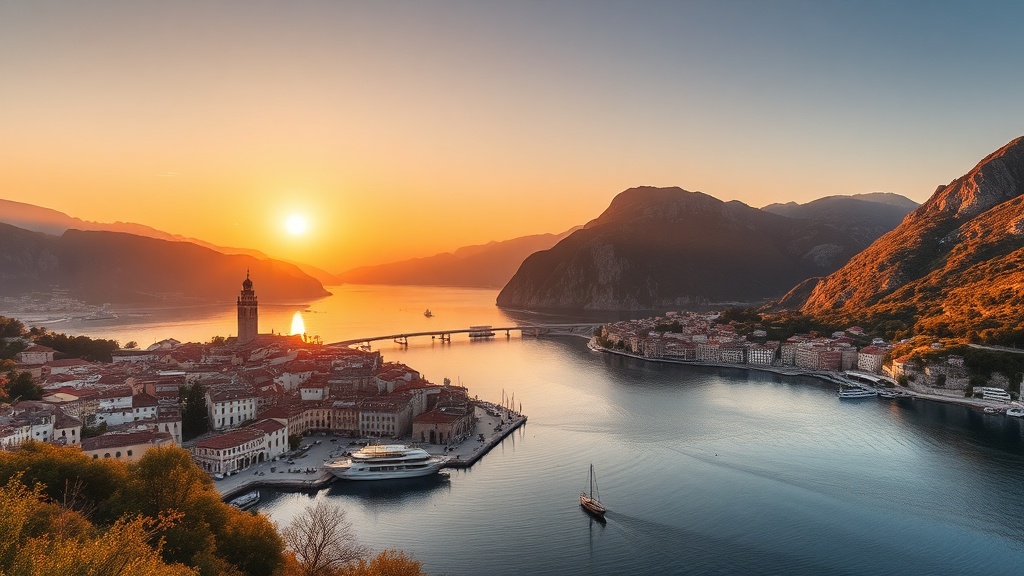
Boka Kotorska is the most photographed thing in Montenegro and the most consistently mislabelled. It is not a fjord. A fjord is carved by a glacier; the Boka is a submerged river canyon — a ria — cut by water and then flooded when the sea rose after the last ice age. The distinction matters, because it is why the walls are limestone and full of springs rather than scoured granite.
The shape
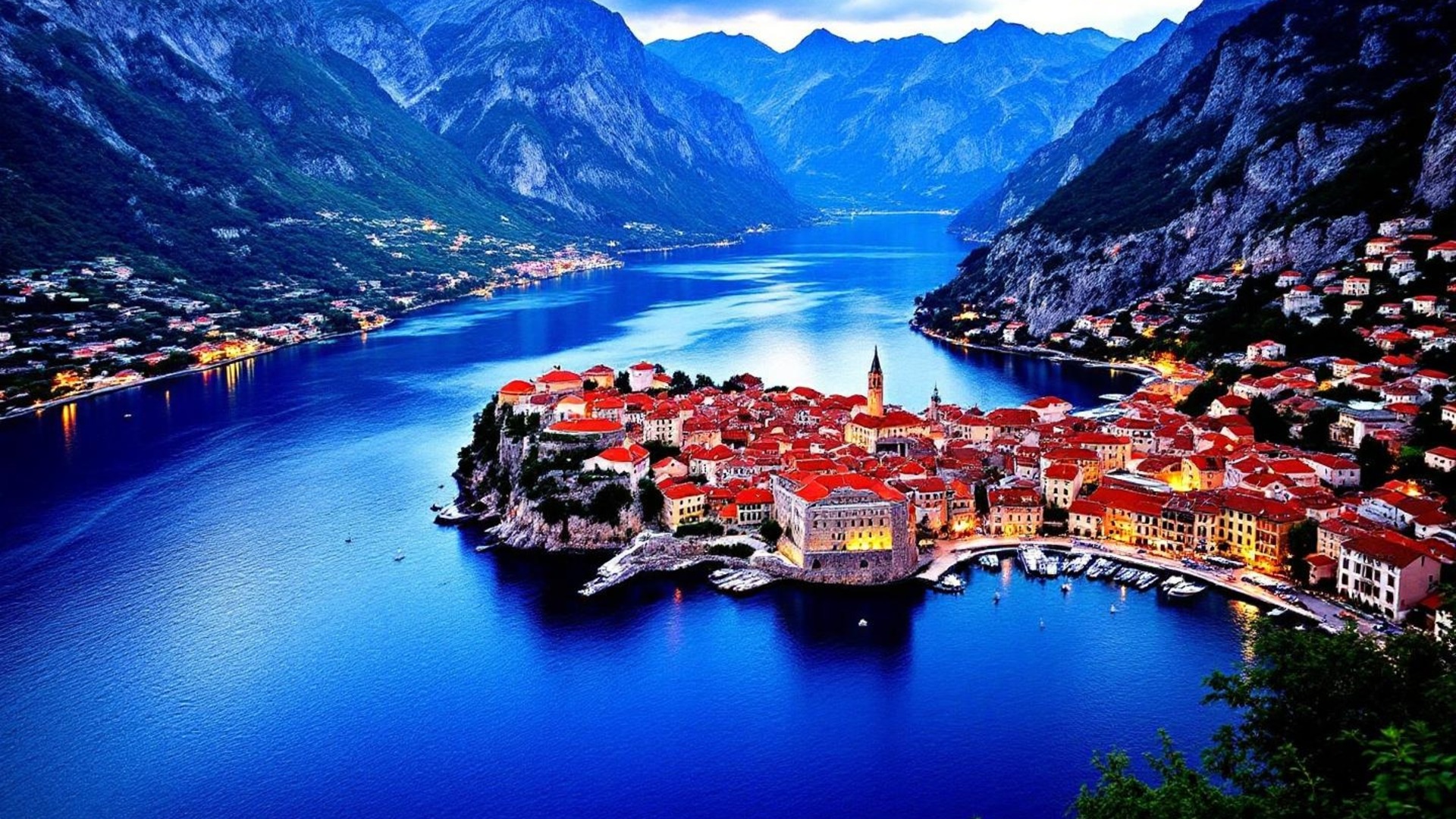
Four linked basins — Herceg Novi, Tivat, Risan and Kotor — joined by the narrow Verige strait, which is only about 300 m across. From the sea you sail through what looks like a closing door and find another bay behind it, three times. It is roughly 28 km from the mouth to Kotor.
Kotor
A walled medieval town at the very head of the bay, under a mountain wall 1,700 m high, with 4.5 km of fortifications climbing the slope behind it to the fortress of San Giovanni. UNESCO-listed since 1979, partly in response to the earthquake of 1979 that badly damaged it. The climb up the walls is 1,350 steps and worth every one, early in the morning.
Perast
A single street of baroque captains' palaces facing two islets, with no cars and one of the finest small townscapes on the Adriatic. Offshore, Our Lady of the Rocks is an artificial island built up over centuries by sailors dropping stones — a practice still marked every 22 July in the Fašinada, when boats row out at sunset to add more.
Herceg Novi and Risan
Herceg Novi, at the mouth, is layered Bosnian, Venetian, Ottoman, Spanish and Austrian, built in terraces up a hillside and full of stairs. Risan, the oldest settlement in the bay, has Roman mosaics including a rare depiction of Hypnos, the god of sleep — and almost nobody goes to see them.
Why the bay was rich
Perast and Prčanj were serious maritime powers under Venice: Boka captains ran fleets, trained the Russian navy under Peter the Great, and built the palaces you are looking at. The maritime museum in Kotor tells the story properly. This is not a fishing-village coast that got lucky with tourism — it was wealthy first.
The cruise ship problem
Kotor takes a very large number of cruise passengers into a town of a few thousand residents, and on a two-ship day the old town is impassable between ten and four. Go early or stay late, and consider basing yourself in Perast, Prčanj or Dobrota instead.
📜 Duklja, Venice, the Prince-Bishops and 2006
Duklja and Zeta
The medieval predecessor states: Duklja, a Slavic principality around Lake Skadar that was recognised as a kingdom in 1077, and then Zeta, which survived as a semi-independent unit under and after the Serbian Nemanjić empire. Montenegro's claim to a continuous statehood tradition rests on this line.
The coast under Venice
From 1420 the Boka and much of the coast were Venetian for nearly four centuries, which is why Kotor, Perast and Budva look Italian and why the local Catholic minority exists. The interior went a different way entirely, and the two histories were only joined in the twentieth century.
The prince-bishops
From 1516 the mountainous interior was ruled by vladikas — Orthodox prince-bishops — of whom the Petrović-Njegoš family held the office from 1696. They kept an effective autonomy from the Ottomans that no other Balkan territory managed, on the strength of terrain, clan organisation and continuous fighting. This is the core of the Montenegrin self-image.
Njegoš
Petar II Petrović-Njegoš (1813–1851), prince-bishop, reformer and the greatest poet in the language. His verse drama The Mountain Wreath (1847) is the national epic — and its treatment of the killing of converts to Islam has been argued about ever since, including by people who revere it. He is buried in a mausoleum on Lovćen, at 1,657 m, reached by 461 steps.
Kingdom, Yugoslavia, war
Montenegro became a fully recognised independent principality at the Congress of Berlin in 1878 and a kingdom in 1910 under Nikola I. In 1918 it was absorbed into the new Yugoslav state in a contested vote, and it stayed inside Yugoslavia in all its forms until 2006. Montenegrin units took part in the 1991 attack on Dubrovnik, for which President Vujanović formally apologised in 2000.
21 May 2006
Montenegro left the state union with Serbia after a referendum in which 55.5% voted for independence — against a threshold, set by the EU, of exactly 55%. Independence was declared on 3 June 2006. It is one of the narrowest and most peaceful separations in modern European history, and the 0.5-point margin explains a great deal about the country's politics ever since.
🕊️ Since 2006 — Three Ruptures
Thirty years of one party
Milo Đukanović and the DPS ran Montenegro without interruption from 1991 to 2020 — through communism, war, sanctions, independence and NATO accession. It is one of the longest continuous holds on power in modern Europe, and it produced both the independent state and a deeply entrenched system of patronage.
2020 — the church processions
A 2019 law requiring religious communities to prove pre-1918 ownership of their property was read by the Serbian Orthodox Church as a move to expropriate it. Months of enormous litije — candlelit processions — followed, and in August 2020 the DPS lost power for the first time in three decades. Three governments then fell in quick succession.
2023 — the reset
Jakov Milatović beat Đukanović in the presidential election of April 2023, and the new Europe Now movement won the June parliamentary election, putting Milojko Spajić in office as prime minister. Both are economists in their thirties and forties who campaigned on Europe, wages and anti-corruption rather than on identity.
What changed and what didn't
The new government has moved the EU file faster than anyone expected and has kept the identity question deliberately off the agenda. What has not changed is the underlying structure: a small state, a large grey economy, entrenched clientelism and a judiciary that international reports still describe as under-resourced and under pressure.
Organised crime
Montenegro has a genuine problem with two rival clans from the Boka — the Kavač and Škaljari groups — whose feud has produced dozens of killings across Europe. The breaking of the encrypted Sky ECC network gave prosecutors a large volume of evidence and there have been significant arrests and convictions since. It has essentially no effect on visitors, but it is a real part of the country's public life.
The Russian and Ukrainian arrivals
After February 2022 a substantial number of Russians and Ukrainians moved to Montenegro, which is visa-free for Russians and cheap by western standards. The 2023 census recorded 2.06% of the population as Russian. They have raised rents markedly on the coast, brought money and skills, and complicated an already delicate set of questions about Montenegro's alignment.
🏛️ Politics — Small, Loud and Genuinely Competitive
The system
A parliamentary republic. The Skupština has 81 seats elected by proportional representation for four years, and it elects the prime minister, who holds the real executive power. The president is directly elected for five years and is largely ceremonial, with a role in nominating a prime minister and in vetoing legislation.
Who holds office
Jakov Milatović, president since May 2023, having beaten Milo Đukanović in a run-off. Milojko Spajić, prime minister since October 2023, leading a coalition built around his Europe Now (PES) movement. Both were finance-ministry technocrats before entering electoral politics.
The party landscape
Fragmented, and organised as much around identity as around left and right. Broadly: the formerly dominant DPS, the pro-European and deliberately identity-neutral Europe Now, the Serb-oriented New Serb Democracy and its allies, the civic URA and SDP, and the Bosniak and Albanian minority parties, whose votes are frequently decisive.
Europe Now
The name is the programme. Its signature policy — "Europe Now 1" in 2022 — abolished the mandatory health contribution and raised the minimum wage sharply, which visibly increased take-home pay and made its authors nationally popular. Whether the public finances can carry it is the standing criticism, and the IMF has said so politely and repeatedly.
Minorities in government
Montenegro's Bosniak and Albanian parties have been a routine part of governing coalitions for two decades, and minority representation is one of the areas where the country genuinely outperforms its neighbours. It is also, cynically, a function of arithmetic in an 81-seat chamber where nobody wins outright.
What is hard
Corruption and the judiciary. Every European Commission report on Montenegro for a decade has said the same thing: the legal framework is good, the enforcement is weak, and high-level cases rarely reach a final conviction. The current government has made this its own test, and the closing of the rule-of-law chapters is where the EU timetable will actually be decided.
🇪🇺 The Accession — Closest of Anyone
Montenegro applied in 2008, opened negotiations in 2012, and then spent a decade closing almost nothing. Since 2024 it has moved faster than any candidate in a generation, and its declared aim is to close all chapters by the end of 2026 and to be the EU's 28th member state in 2028.
Where it stands
Of 33 negotiating chapters, 18 are provisionally closed — six of them in 2026 alone, including competition policy and the customs union in the summer. The government describes the remaining fifteen as at or near completion technically, with the work now being validation by member states rather than reform at home.
The IBAR
The turning point was the Interim Benchmark Assessment Report in June 2024, which confirmed Montenegro had met the interim rule-of-law benchmarks and unlocked the ability to close other chapters. Everything since has followed from it — which is also why the rule-of-law file remains the thing that could still derail the timetable.
The 2028 target
Prime Minister Spajić has said publicly that all chapters will close by the end of 2026, with ratification by the member states following. Treat 2028 as an ambition rather than a date: every enlargement in EU history has slipped, ratification by 27 parliaments is not quick, and the Union's own absorption debate is unresolved. But Montenegro is not being unrealistic in the way earlier candidates were.
Why it is plausible
Montenegro is tiny — 633,000 people, an economy of around $10 billion, already using the euro, already in NATO, no border disputes, no unresolved bilateral vetoes of the kind that have frozen North Macedonia. Admitting it costs the Union almost nothing and buys it a demonstration that enlargement still functions.
What still worries Brussels
Judicial independence and the record on high-level corruption; media freedom and the pressure on journalists; the capacity of a very small public administration to actually implement the acquis; and money-laundering exposure through real estate and the citizenship-by-investment scheme, which was wound up under EU pressure.
What it means for visitors
Practically, very little will change on the ground — the euro is already in your pocket and the border with Croatia is already routine. What it will change is the sense of the country: Montenegro has organised its entire public conversation around this for fifteen years, and getting there would be the biggest thing to happen to it since 2006.
💼 The Economy — Tourism, and Then What?
The numbers
GDP of roughly $10 billion nominal, growing about 3.2% in 2026 after 3.4% in 2024 and a post-Covid rebound of 6% in 2023. Income per head is around the middle of the western Balkans and roughly a third of the Czech level in nominal terms, considerably closer in purchasing power.
Tourism dominance
Travel and tourism directly and indirectly account for something in the order of a quarter of GDP — one of the highest ratios in Europe. That is a strength in a good summer and an acute vulnerability in a bad one, as 2020 demonstrated with brutal clarity.
What else there is
Aluminium (the KAP smelter at Podgorica, long the largest single industrial enterprise and long a fiscal problem), hydropower, Nikšić steel and brewing, agriculture and wine in the south, and a growing services and IT sector in Podgorica. The port of Bar is the country's link to the wider world and is well below capacity.
The euro without the eurozone
Montenegro's unilateral euroisation means it has no monetary policy at all: no exchange rate to adjust, no lender of last resort of its own, no seat at the ECB. It gives price stability and investor comfort, and it removes every tool a small open economy would normally use in a shock. The arrangement is tolerated rather than endorsed by the EU.
The Chinese motorway
The first section of the Bar–Boljare motorway, 41 km from Smokovac to Mateševo, opened in July 2022 after being built by a Chinese state contractor on a roughly $1 billion loan from China's Exim Bank. It is a genuine feat of engineering through the Morača canyon, it cost more per kilometre than almost any road in Europe, and the debt it created dominated Montenegrin fiscal politics for years. The remaining sections are still unbuilt.
The structural problem
A small domestic market, high public-sector employment, a substantial grey economy, seasonal jobs and steady emigration of the young. Wages went up sharply under Europe Now; productivity did not follow at the same rate. Turning a summer economy into a year-round one is the question every Montenegrin government says it is answering.
🌍 Between Serbia, Russia and Brussels
Serbia
The relationship is family and it is complicated. A third of Montenegro's population declares itself Serb, the church is Serbian, the language most people name is Serbian, and Belgrade is three hours from Podgorica. Relations swing between warm and glacial depending on who is in office in each capital, and Montenegrin domestic politics is never entirely separable from Serbian domestic politics.
NATO, and 2016
Montenegro joined NATO on 5 June 2017. On the night of the October 2016 election, Montenegrin prosecutors say a plot to storm parliament and assassinate the prime minister was disrupted; Russian nationals were among those charged and convictions followed, later partly overturned on procedural grounds and retried. Moscow denied involvement. Whatever the final legal position, the episode ended any ambiguity about the country's direction.
Russia today
Montenegro has aligned with EU sanctions on Russia — which cost it a valuable tourist market and a slice of its property business — while simultaneously receiving thousands of Russian arrivals after February 2022. The result is a country that is formally firmly in the Western camp and socially full of Russians, which is more comfortable in practice than it sounds.
China
Present mainly through the motorway loan and associated infrastructure. The debt was restructured and hedged, and the episode is now the standard European case study in what happens when a very small state borrows very large sums for a single project. Montenegro has been notably more cautious since.
The neighbours
Relations with Croatia are good, with one long-running unresolved maritime boundary at Prevlaka which has been managed for a quarter century without incident. Relations with Albania are good and improving, with joint work on Lake Skadar. Relations with Kosovo and Bosnia are normal. Montenegro has no serious external dispute — a rarity in the region.
The strategic point
Montenegro is a NATO member with 293 km of Adriatic coast, sitting between Croatia and Albania, closing the alliance's continuous hold on the eastern Adriatic. That is the whole of its strategic significance, and it is the reason a country of 633,000 people gets more attention than its size would suggest.
🏰 Kotor — the Town and the Walls
Kotor is a walled Venetian-Byzantine town of a few thousand people, wedged between a bay and a mountain that goes up 1,700 m directly behind it. It has been on the UNESCO World Heritage list since 1979, and it is the single thing most visitors to Montenegro come for.
The old town
A triangle of squares and lanes with no street names in the usual sense — you navigate by squares: Trg od oružja (Arms Square) at the sea gate, Flour Square, Milk Square, St Tryphon's Square. The Cathedral of St Tryphon, consecrated in 1166, is one of the oldest Catholic cathedrals in this part of the Adriatic, with mismatched towers rebuilt after successive earthquakes.
The walls
4.5 km of fortification climbing 260 m up the cliff to the fortress of San Giovanni, built and rebuilt from the ninth century to the nineteenth. The stair is about 1,350 steps, there is a small entry fee in season, and the view from the top over the bay is the best in the country. Go at 07:00 — by ten in July it is both crowded and dangerously hot.
The Ladder of Kotor
The alternative and better walk: the old caravan trail of serpentines that zigzags up the mountain behind the walls towards Krstac and the Lovćen road. It is free, far emptier, gives the same view and more, and passes the abandoned village of Špiljari on the way. Take water; there is none up there.
The cats
Kotor's stray cats are a genuine civic institution, fed and looked after by residents, with their own small museum and a great deal of merchandise. They are also the town's most photographed residents by a wide margin and entirely unbothered by it.
The maritime museum
In a baroque palace on Trg Bokeljske Mornarice, and much better than a small-town museum has any right to be: models, portraits, weapons and the record of the Boka's centuries as a serious seafaring power. If you visit one indoor thing in Kotor, make it this.
When to be there
Cruise ships arrive in the morning and leave in the late afternoon, and in July and August there may be two or three a day. Kotor before nine and after six is a different town — quiet, lived-in and one of the most atmospheric places on the Adriatic. In between, in high summer, it is a queue.
🏖️ The Coast — Budva, Sveti Stefan and the Rest
Budva
The centre of Montenegrin mass tourism: a small and genuinely handsome walled old town, ringed by a great deal of concrete, a strip of beaches and the loudest nightlife on this coast. The old town is worth an hour; whether the rest is worth a week depends entirely on what you came for. It is not subtle, and it does not pretend to be.
Sveti Stefan
The postcard: a fifteenth-century fortified fishing village on a tied island, converted into a hotel in the 1950s and run by Aman since 2009. It closed in 2021 after a dispute over public access to the beaches — and reopened on 1 July 2026 under a settlement in which two of the three beaches are open to the public and the state takes a 10% share of profits. Villa Miločer reopened in May 2026.
Petrovac and Perazića Do
South of Budva, smaller and considerably calmer: a red-sand bay, a Venetian fort, a promenade of restaurants and a genuine family-holiday feel. If you want the Montenegrin coast without the Budva volume, this stretch is the usual answer.
Bar and Stari Bar
Bar is the country's port and ferry terminal, unlovely and useful. Stari Bar, 4 km inland, is a ruined Ottoman-Venetian hill town destroyed by an explosion in 1878 and left as it fell — an atmospheric, largely empty archaeological site with a 2,000-year-old olive tree nearby.
Ulcinj
The far south, near the Albanian border, and culturally distinct: a majority-Albanian town with minarets, a fine walled old quarter on a headland, and Montenegro's only real sand — Velika Plaža, about 12 km of it, plus the salt pans behind, which are a major bird site. Ulcinj was a corsair port in the seventeenth century and it still feels like somewhere else.
The building problem
Montenegro's coast has been built on hard and fast, often illegally, for twenty years, and the result between Budva and Bar is in places genuinely ugly. Say so plainly: it is the country's clearest self-inflicted wound, everyone there knows it, and it is why the Boka and the north matter more than the beach strip.
⛰️ Durmitor and the Tara — the Other Montenegro
Two hours inland from the beach the country turns into an alpine plateau of limestone peaks, glacial lakes and canyons. Durmitor National Park has been on the UNESCO list since 1980, and it is where Montenegrins themselves go in August.
Durmitor
48 peaks over 2,000 m, topped by Bobotov Kuk (2,523 m), and eighteen glacial lakes known as gorske oči, "mountain eyes". The base is Žabljak at 1,456 m — the highest town in the Balkans — which is a functional ski resort in winter and a walking base in summer.
The Black Lake
Crno jezero, twenty minutes' walk from Žabljak, is two joined lakes under the wall of Meded, and it is the easy, beautiful, entirely non-technical thing everyone does. The loop round it is 3.5 km and flat. Bobotov Kuk, by contrast, is a full and quite serious day.
The Tara canyon
1,300 m deep, 82 km long, the deepest gorge in Europe and second in the world by most measures. The river is exceptionally clear and cold and the whole basin is a UNESCO biosphere reserve. Rafting the accessible section, mostly grade II–III in summer, is the standard trip — half a day from Žabljak, and genuinely one of the best things to do in the country.
The Đurđevića Tara bridge
A 365 m concrete arch bridge of 1940, 172 m above the river, and one of the most photographed structures in the Balkans. Its engineer, Lazar Jauković, was ordered to destroy his own bridge in 1942 to stop the Italian advance, and was shot by the occupiers shortly afterwards. There is a memorial at the northern end.
Biogradska Gora
A small national park on the Bjelasica containing one of the last three primeval forests in Europe — about 1,600 hectares never logged, with trees over 500 years old and 60 m tall, around a glacial lake. It is a 45-minute detour off the main road and almost nobody stops.
Piva and the north-west
Lake Piva is a deep reservoir in a canyon, created by a dam in 1975 — which required the monastery of Piva, with its sixteenth-century frescoes, to be dismantled stone by stone and rebuilt 3 km uphill over eleven years. The road along the canyon has 56 tunnels and is one of the great drives in Europe.
⛪ Ostrog, Cetinje and Lovćen
Ostrog
A monastery built directly into a vertical cliff face at about 900 m, founded in 1665 around the relics of Saint Basil of Ostrog. It is the most visited pilgrimage site in Montenegro and receives Orthodox, Catholic and Muslim pilgrims alike — genuinely, and in numbers. The upper monastery is two white chapels wedged into the rock, and the effect on arriving is considerable whatever you believe.
Visiting Ostrog
Free, open daily, and busy. There is a road to the upper monastery and a 3 km footpath from the lower one that pilgrims walk, some of them barefoot. Dress properly — covered shoulders and knees, no shorts — and expect a queue at the reliquary. Go early; coach parties arrive from the coast mid-morning.
Cetinje
The old royal capital, in a karst polje at 670 m, and the historical heart of the state. It holds the Cetinje Monastery (1484, rebuilt 1701), King Nikola's palace, the Biljarda, and the former embassies of the great powers — a small town of grand nineteenth-century buildings that is still officially the seat of the president.
The relics
Cetinje Monastery holds two of the most significant relics in Orthodox Christianity: the right hand of St John the Baptist and a fragment of the True Cross. They are shown to visitors on request, without ceremony, in a small side chapel. Whatever your view of relics, the matter-of-factness of it is startling.
Lovćen and Njegoš
The mountain above Kotor, a national park, and the site of the Njegoš Mausoleum at 1,657 m — a modernist granite structure by Ivan Meštrović, reached through a tunnel and up 461 steps. From the circular terrace behind it you see, on a clear day, most of Montenegro and a good deal of Croatia, Bosnia and Albania. It is the best single viewpoint in the country.
Njeguši
The village on the Lovćen road between Kotor and Cetinje where the Petrović-Njegoš dynasty came from, and where the country's best-known pršut and cheese are made. The 25 hairpins of the old Kotor–Njeguši road are a serious drive and an unforgettable one; stop at the top and look back down at the bay.
🦩 Lake Skadar and the South
The lake
Skadarsko jezero is the largest lake in southern Europe, about 370–530 km² depending on the season, two thirds Montenegrin and one third Albanian. It is shallow, warm, full of water lilies in summer, and ringed by karst hills, villages and abandoned monasteries on islets.
The birds
One of the most important wetlands in the Mediterranean, with over 280 recorded species and a nesting colony of the Dalmatian pelican — a bird with a three-metre wingspan that came close to disappearing here and has recovered under protection. Boat trips from Virpazar are the standard way to see the lake; go at dawn if you actually want birds rather than a boat ride.
Virpazar and the wine villages
Virpazar is the little lakeside town where the boats leave from and where the road and railway meet. Behind it the Crmnica region is Montenegro's traditional wine country — small family producers, mostly Vranac, in hillside vineyards above the water, and the best place in the country to taste wine at the source.
The monasteries
Islets in and around the lake hold a series of small medieval monasteries — Kom, Beška, Starčevo, Moračnik — several of them recently restored and inhabited again by a few monks or nuns. They can be reached by boat and are almost never busy.
Podgorica
The capital, and the least visited capital in the region. Bombed heavily in 1944, rebuilt as socialist Titograd from 1946 to 1992, and now a low-rise city of about 150,000 with good cafés, the Millennium Bridge, the Ottoman quarter of Stara Varoš, and the striking Cathedral of the Resurrection. It is not beautiful and it is not trying to be; it is where the country actually works.
Ada Bojana and the salt pans
At the very southern tip, the river Bojana splits around Ada Bojana, a triangular sand island that is a long-established naturist resort and a serious kitesurfing spot. Beside it, the Ulcinj salt pans — disused industrially, now protected — are one of the most important migratory bird stopovers on the Adriatic flyway, with flamingos in numbers.
👥 Living There — Coffee, Wages and Emigration
The coffee
Sitting over a coffee for two hours is not a stereotype here, it is the actual social structure. Cafés are full at every hour of the working day, and the phrase polako — slowly, take it easy — is close to a national motto, deployed with a mixture of pride and self-mockery. Do not try to rush anything; it does not work and it marks you out.
Wages and prices
Average net wages rose sharply after the 2022 reform and now sit around €900–1,000 a month, which is high for the western Balkans and low against coastal property prices driven by foreign buyers. The gap between what Montenegrins earn and what the coast costs is the single biggest source of domestic economic resentment.
Emigration and return
Young Montenegrins leave for Germany, Austria, Serbia and increasingly for remote work — and a meaningful number come back, because the country is small, safe and pleasant and because remote wages go a long way here. The diaspora is proportionally large and remittances matter.
Height
Montenegrins are, on measured averages, among the tallest people in the world — men average close to 1.83 m — a fact of which they are entirely and openly aware. It shows up in basketball, water polo and volleyball, where a country of 633,000 competes at a level that makes no demographic sense.
Water polo
The national sport in all but name. Montenegro has won the European Championship and been a fixture in Olympic and world finals for two decades. The club rivalry between Primorac Kotor and Jadran Herceg Novi is taken extremely seriously, and a match is one of the more revealing evenings you can spend here.
Safety and manners
Montenegro is a safe country with very low violent crime against visitors. Standard courtesies matter: greet people when you enter a small shop, dress modestly in monasteries and mosques, accept the offered drink, and do not be loudly dismissive about politics, the church or Serbia in a bar. Hospitality is genuine and offered quickly.
🎭 Culture — Epic Poetry and a Navy That Only Dances
The gusle
A one-stringed bowed instrument with a horsehair string and a carved head, used to accompany epic song — long narrative poems about battles, heroes and betrayals, half sung and half declaimed. It is on the UNESCO intangible heritage list, it sounds difficult to a first-time listener, and it is the deepest layer of the culture. Ask an older man in the north about it and set aside your evening.
Njegoš
The country's poet and the closest thing it has to a secular saint. The Mountain Wreath (1847) and The Ray of the Microcosm are the works; Njegoš is quoted in parliament, on beer bottles and in bar arguments. His treatment of religious violence in The Mountain Wreath is genuinely contested and worth reading about before quoting him.
The Boka Navy
The Bokeljska mornarica, an association of seafarers from the Bay of Kotor that traces itself to 809, is now a ceremonial brotherhood that performs a formal circular sword dance in period uniform, most visibly on 3 February, the feast of St Tryphon. It is on the UNESCO intangible list and it is one of the oldest continuously observed civic traditions in Europe.
The oro
The eagle dance: a circle of singers clapping while dancers take turns leaping and mimicking an eagle in the middle, usually ending with men standing on each other's shoulders. It is performed at weddings and festivals and, unlike much folklore, is still done by people who are enjoying themselves rather than performing for a coach party.
The festivals
The Mimosa Festival in Herceg Novi (February), the Kotor carnival (February) and its summer counterpart, Budva City Theatre (July–August), the Boka Night regatta of decorated boats in Kotor in August, and the Fašinada at Perast on 22 July. The country's calendar is fuller than its size suggests.
Reading and watching
For a way in: Njegoš in translation; Milovan Đilas, the Montenegrin partisan turned dissident, whose Land Without Justice is the best single account of the old highland world; and for the Boka, the maritime museum in Kotor. Montenegrin cinema is small but active, and the country appears constantly as somebody else's location.
🍽️ Two Cuisines in One Small Country
The mountains and the coast eat completely differently, and the boundary is about twenty kilometres wide. On the coast it is Adriatic-Italian: fish, olive oil, garlic, wine, risotto, grilled squid. Inland it is Balkan-highland: smoked meat, dairy, maize, cabbage and slow cooking. Both are excellent and the second is the one visitors miss.
Njeguši
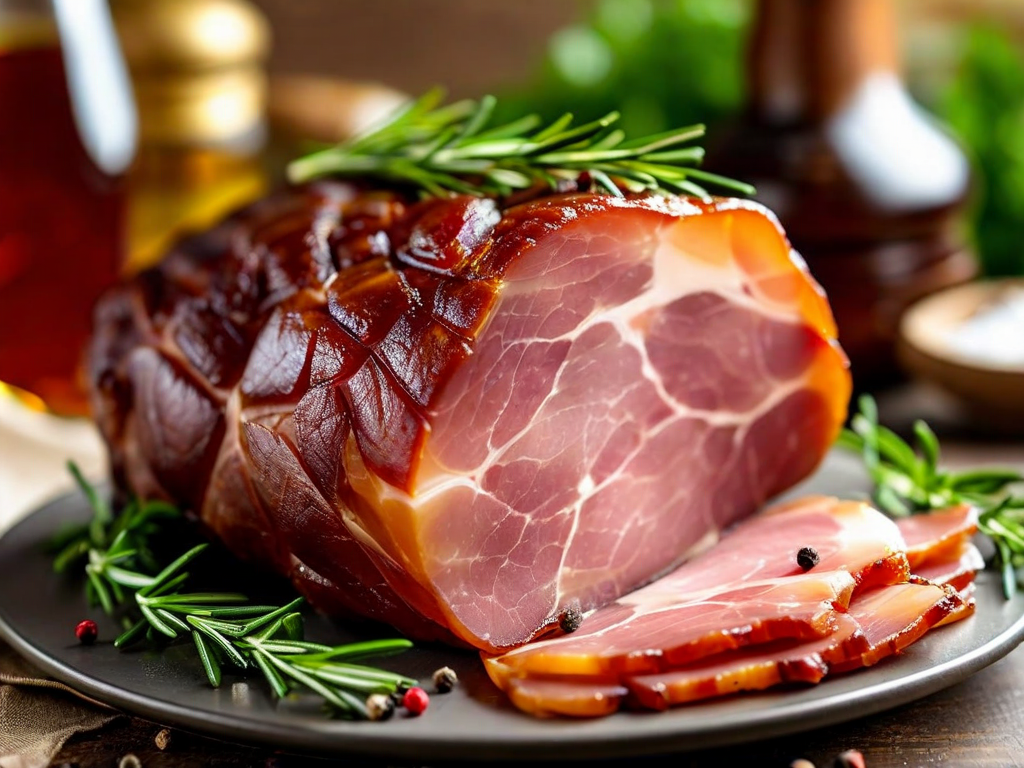
The village produces the country's two signature products: the pršut above and njeguški sir, a cow's-milk cheese matured in olive oil. The classic restaurant dish of the interior, njeguški steak, is a veal or pork escalope stuffed with both and fried. Every menu between Kotor and Cetinje has it.
Kačamak and cicvara
The highland staples, and the food Montenegrins are sentimental about. Kačamak is maize flour and potato beaten with butter, cheese and kajmak — the thick clotted cream skimmed from boiled milk — into something between polenta and mashed potato. Cicvara is the richer version, made with more kajmak and less potato. Both are enormously heavy and completely correct at 1,400 m in November.
Raštan and japraci
Raštan is collard greens stewed slowly with smoked meat and potatoes — the national vegetable dish, and much better than that description suggests. Japraci are its festive form: the same collard leaves rolled around minced meat and rice, like a sarma but with a firmer, greener wrapper.
From the sea
Buzara — mussels or prawns opened in white wine, garlic, olive oil and breadcrumbs — is the coastal dish to order. Also crni rižot (cuttlefish-ink risotto), grilled fish sold by weight, and from Lake Skadar the smoked ukljeva (bleak) and carp, which are freshwater and quite different.
Ispod sača
Meat and vegetables cooked under a sač — a heavy metal dome buried in embers — for two or three hours. Lamb or veal done this way is the standard celebration food inland, it usually has to be ordered in advance, and it is worth the phone call.
Priganice
Small deep-fried balls of yeast dough, served hot with honey, cheese, kajmak or jam. They are the national breakfast, the national dessert and the national thing to make when guests arrive unannounced. Recipe below.
👨🍳 Two Montenegrin Recipes
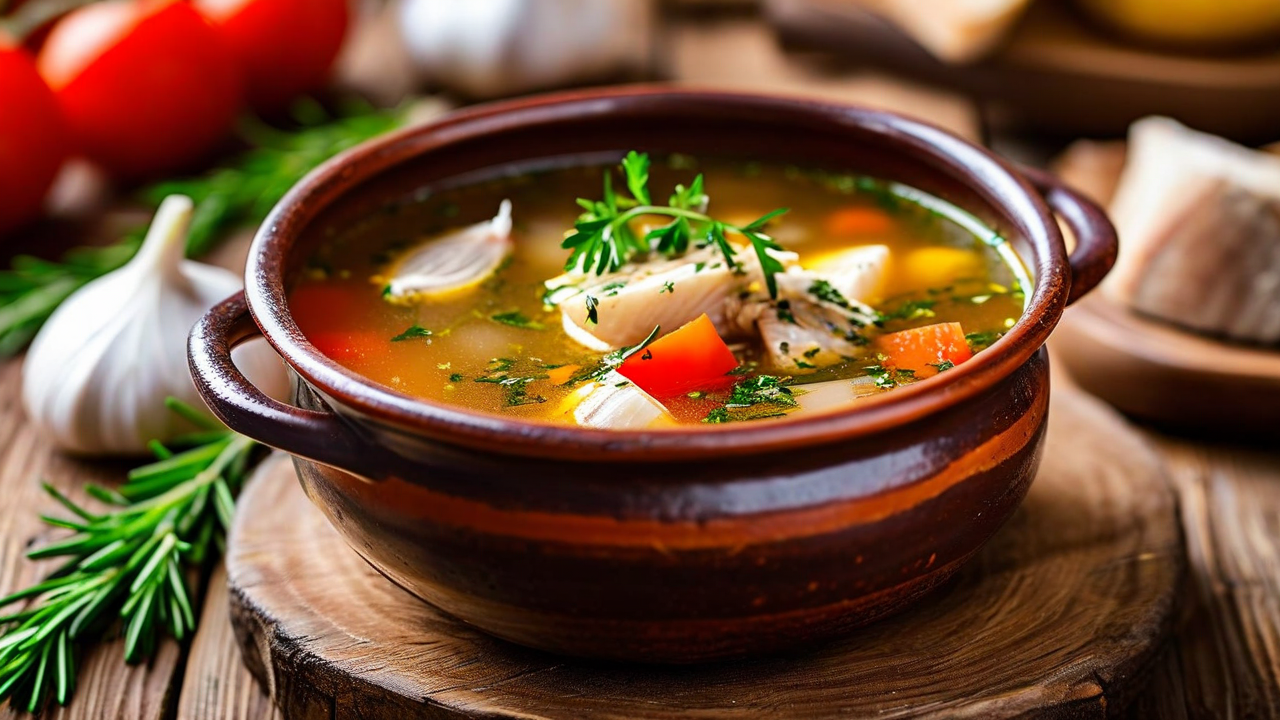
Riblja čorba — Adriatic Fish Soup
Serves 4 · 1 hour · Simmered
Ingredients: 1 kg mixed white fish — scorpionfish, gurnard, sea bass heads and frames are ideal, or 600 g fillet plus 400 g bones, 1 onion, 2 carrots, 2 potatoes, 2 cloves garlic, 2 ripe tomatoes or 1 tbsp tomato purée, 1 stick celery, 1 bay leaf, a glass of dry white wine, 4 tbsp olive oil, parsley, salt, pepper, optionally 1 tsp sweet paprika.
Method: Make a stock first: cover the heads and bones with cold water, add the bay leaf, half the onion and the celery, bring gently to a simmer and hold it there for 25 minutes without boiling, then strain and discard the solids. In the same pot soften the remaining chopped onion, the diced carrot and the garlic in olive oil, add the tomato and the paprika if using and cook for two minutes, then pour in the wine and let it reduce. Add the strained stock and the diced potato and simmer for 15 minutes until the potato is nearly done. Add the fish cut into large pieces, season, and simmer very gently for a further 8–10 minutes only. Finish with chopped parsley and a thread of raw olive oil.
💡 Two rules. Never let the stock boil — it goes cloudy and bitter. And add the fish at the end: white fish needs eight minutes, not thirty, and overcooked čorba is the commonest failure. Serve with bread and the same white wine you cooked with.
Priganice — Fried Dough with Honey and Cheese
Makes about 30 · 25 min plus 1 hour rising · Fried
Ingredients: 500 g plain flour, 7 g dried yeast (or 20 g fresh), 1 tsp sugar, 1 tsp salt, about 350 ml lukewarm water, 1 litre neutral oil for frying. To serve: honey, young white cheese or feta, kajmak if you can get it, and jam.
Method: Dissolve the yeast and sugar in a little of the warm water and leave ten minutes until foaming. Mix into the flour with the salt and the rest of the water to give a soft, sticky batter-dough — much wetter than a bread dough, roughly the consistency of thick porridge. Cover and leave in a warm place for about an hour, until doubled and bubbling. Heat the oil to 175 °C. Wet your hand, take a walnut-sized piece of dough between thumb and forefinger and drop it into the oil — traditionally squeezed off the fist — and fry a few at a time for about 3 minutes, turning, until deep gold and puffed. Drain on paper and serve immediately.
💡 The dough must be wet: a stiff one gives heavy, greasy priganice. If they sink and stay down the oil is too cool; if they brown before they puff it is too hot. Serve straight from the pan with honey and cheese side by side — the salt-and-sweet combination is the whole point, and it is why priganice work equally as breakfast and as pudding.
🍷 Vranac, Krstač and a Great Deal of Rakija
Vranac
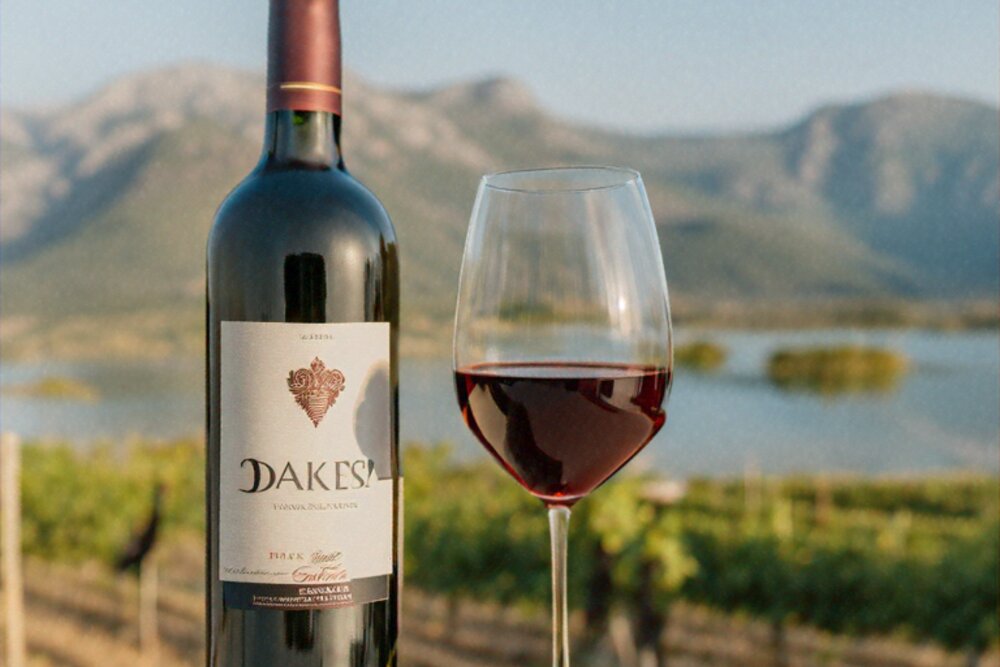
The national red grape — the name means "black stallion" — giving deep, dark, tannic wines with sour cherry and a slightly bitter finish. It is grown across the region but Montenegro treats it as its own, and the best examples, given five or ten years, are seriously good. If you drink one Montenegrin wine, make it a reserve Vranac.
Krstač
The native white, grown almost nowhere else, named for the cross shape its bunches form. It gives a fresh, faintly floral, medium-bodied wine that goes properly with grilled fish and buzara. Kratošija, the other native red, is genetically the same variety as Zinfandel and Primitivo — a fact Montenegrin producers mention within about ninety seconds of meeting you.
Plantaže
The 13. jul Plantaže estate at Ćemovsko polje outside Podgorica is around 2,300 hectares in one block and is routinely described as the largest single vineyard in Europe. Its cellar at Šipčanik is a converted underground aircraft hangar. It makes most of the country's wine, and it is competent rather than thrilling — the interesting bottles are from the small producers around Lake Skadar.
Rakija
The universal spirit, distilled from anything available: loza from grape pomace is the default, then šljivovica (plum), kruškovača (pear) and various herbal infusions. Home production is normal and the homemade stuff is usually stronger than it tastes. It is offered as a greeting, and refusing the first one is harder than accepting it.
Nikšićko
The national beer, brewed at Nikšić since 1896 — a straightforward pale lager that is what you actually want after a day on Durmitor. There is a growing craft scene in Podgorica and Kotor, and Montenegrins drink beer with lunch far more than they drink wine.
Coffee
Ordering matters. Domaća kafa or turska is the traditional unfiltered cup with grounds in the bottom, served with a glass of water and never stirred at the end. Espresso is everywhere on the coast. Either way, the coffee is not the point — the two hours you spend over it are.
🏛️ Four World Heritage Sites and an Ecological State
Kotor
The Natural and Culturo-Historical Region of Kotor was inscribed in 1979 — days before an earthquake devastated it, which is why it was simultaneously placed on the list of World Heritage in Danger, where it stayed until 2003. The listing covers the whole inner bay, not just the town.
Durmitor
Inscribed in 1980 as a natural site: the massif, the glacial lakes and the Tara canyon, about 34,000 hectares. It is one of the relatively few European natural sites where the boundary genuinely encloses an intact system rather than a fragment.
The stećci
Medieval tombstones — massive carved limestone blocks with sun, moon, dancing figures and raised hands — inscribed in 2016 as a shared site with Bosnia and Herzegovina, Croatia and Serbia. Montenegro's are at Grčko Groblje in Žabljak and Novakovići near Nikšić. Nobody is entirely sure who made them or exactly what the symbols mean, which is a good part of their appeal.
The Venetian defences
Venetian Works of Defence between the 16th and 17th Centuries, inscribed in 2017 across Italy, Croatia and Montenegro. The Montenegrin component is the fortified town of Kotor itself, which therefore appears on the World Heritage list twice, under two different logics.
The ecological state
In 1991, in the middle of Yugoslavia's collapse, the Montenegrin assembly declared the republic the world's first "ecological state" in the Žabljak Declaration. It is written into the constitution. It is also, as any Montenegrin environmentalist will tell you at length, contradicted daily by coastal construction, small hydro schemes on mountain rivers and waste management — but the declaration is real, and it is occasionally used in court.
Five national parks
Durmitor, Biogradska Gora, Lovćen, Skadar Lake and Prokletije — roughly 10% of the national territory. Entry fees are small, marking is variable, and the parks are managed on budgets that would embarrass a Czech regional authority. They are nonetheless the best thing the country has.
🌲 Nature — What Is Actually Protected
The parks
Five national parks cover roughly a tenth of the country: Durmitor (mountain and canyon), Biogradska Gora (primeval forest), Lovćen (karst and the mausoleum), Skadar Lake (wetland) and Prokletije (high alpine, on the Albanian border, and the least developed of the five).
Biogradska Gora
Worth stating on its own: about 1,600 hectares of forest that has never been cut, protected since 1878, when it was given to Prince Nikola and he ordered it left alone. Some trees are over 500 years old and 60 m tall. There are only about three such stands left in Europe, and this is the most accessible of them.
The bears and wolves
Montenegro holds a few hundred brown bears and a viable wolf population in the northern mountains, along with chamois, lynx in very small numbers and golden eagles. Encounters with bears are very rare and almost always the bear leaving. Follow the ordinary rules: noise on the trail, no food in the tent.
Birds
Lake Skadar and the Ulcinj salt pans are the two internationally important sites — Dalmatian pelican, pygmy cormorant, glossy ibis, and flamingos in the salt pans on migration. Over 280 species have been recorded at Skadar. Spring and autumn passage are the times to come.
The rivers
The Tara is the flagship: the "Tear of Europe", one of the cleanest large rivers on the continent, protected as a biosphere reserve. A 2004 plan to dam it was defeated by public campaigning, which remains the country's proudest environmental moment. Small hydro schemes on other mountain rivers are the current battleground and have been genuinely damaging.
The honest caveat
Montenegro declared itself an ecological state in 1991 and then let its coast be built over, its rivers dammed in small increments and its waste go largely unsorted. The protection on paper is real; the enforcement is thin and underfunded. Both halves of that are true and the second is what local environmental groups spend their lives on.
📅 When to Go
May and June — the answer
Warm enough to swim from about mid-June, the mountains clear of snow by late May, everything open, prices moderate and the coast not yet full. If you can choose, come in June. The Tara has good water for rafting from late May as the snowmelt eases.
July and August — hot and full
28–33 °C on the coast, sea at 24–26 °C, and the entire Serbian, Bosnian and Russian holiday population in Budva at once. Accommodation doubles in price, the Kotor–Budva road jams, and the cruise ships are at maximum. The mountains, by contrast, are perfect — this is when to be at Žabljak, not on the beach.
September — the best compromise
The sea is at its warmest all year, the crowds thin out sharply after the 15th, the light turns, and prices fall. Ferries and buses still run on summer timetables into early October. For a first trip covering both coast and mountains, the first three weeks of September are the single best window.
October and November
Beautiful and wet. The Boka gets serious rain in autumn — remember that the mountains behind it are among the wettest places in Europe — and the mountain roads start closing. Kotor without cruise ships in late October is a genuine pleasure if you accept that you will be rained on.
Winter
Two different countries. On the coast, 10–15 °C, empty, cheap, and many restaurants shut. In the mountains, real winter: Žabljak and Kolašin have small ski areas, snow is reliable, and lift passes cost a fraction of Alpine prices. Kolašin 1600 is the more developed of the two.
Dates to know
3 February St Tryphon and the Boka Navy in Kotor; February Mimosa festival, Herceg Novi; 22 July Fašinada at Perast; July–August Budva City Theatre and Kotor's Boka Night; 13 July Statehood Day; 21 May Independence Day.
✈️ Getting There from the Czech Republic
Montenegro is one of the easier long-weekend destinations from Prague in summer and one of the harder ones in winter, because almost the entire direct air link is seasonal.
Direct flights from Prague
Air Montenegro flies Prague–Tivat in the summer season, roughly 11 June to 26 September, twice a week on Wednesdays and Fridays, and Prague–Podgorica two to three times a week in season. Returns commonly start around 5,000 Kč. Flight time is about two hours.
Out of season
There is no direct link in winter. Connect through Belgrade, Vienna, Istanbul, Zurich or Rome to Podgorica or Tivat, or fly to Dubrovnik — the Croatian airport is only about 25 km from the Montenegrin border and roughly an hour from Herceg Novi, which is often the cheapest way in.
The two airports
Tivat (TIV) is right on the bay, 5 km from Kotor and 20 from Budva, and is the one you want for the coast. Podgorica (TGD) is 12 km from the capital, better for the mountains and the lake, and has more year-round traffic. Both are small; both are being expanded under a long-argued concession process.
Driving from Prague
About 1,400 km and 15–17 hours via Austria, Slovenia, Croatia and either Bosnia or the Croatian coast. Perfectly feasible over two days. You need a green card (Montenegro is outside the EU insurance area), Austrian and Slovenian vignettes, and cash or a card for Croatian and Bosnian tolls. Montenegro has no vignette; the Sozina tunnel between Podgorica and the coast costs a few euros.
Buses and the train
Long-distance coaches run from Prague and Vienna via Belgrade or Sarajevo — cheap, and around 24 hours. The Belgrade–Bar railway is one of the great European rail journeys: 476 km, 254 tunnels, 435 bridges including the Mala Rijeka viaduct at 198 m, which was the highest railway bridge in the world when it opened. Reach Belgrade by air or coach and take the day train.
Documents
Czech citizens enter with an ID card or passport and may stay up to 90 days without a visa. Montenegro is outside the EU and outside Schengen, so it is a real border with real queues in August — the Croatian crossings north of Herceg Novi can take a long time on a summer Saturday.
🚗 Getting Around
A car, realistically
Montenegro rewards a car more than almost anywhere its size, because the good parts are dispersed and the mountain roads are the point. Hire is cheap — €25–45 a day in season — and the roads are mostly decent. The exceptions are memorable: the Kotor–Njeguši serpentines, the Piva canyon's 56 tunnels and the old road over Lovćen are narrow, unguarded and spectacular.
Driving conditions
Overtaking on blind bends is a national sport, so drive defensively. There is one short motorway, the rest is two-lane. Alcohol limit 0.03% — effectively zero. Headlights are compulsory day and night. Fuel stations are frequent on the coast and sparse in the north; fill up before Durmitor.
The Verige ferry
The Kamenari–Lepetane ferry crosses the narrows of the bay in five minutes for a few euros and saves about 25 km of driving round the inner bay. It runs 24 hours in summer. In July and August there can still be a queue, but it is almost always faster than the road.
Buses
Genuinely good and very cheap between towns: Kotor–Budva, Budva–Podgorica, Podgorica–Žabljak all run several times a day. Tickets are bought at the station, luggage costs a euro extra in the hold, and the bus stations are the usual mixture of chaotic and efficient. It is a perfectly viable way to see the country without a car.
The train
One line matters: Bar–Podgorica–Kolašin–Bijelo Polje, continuing to Belgrade. The stretch through the Morača canyon and up to Kolašin is superb and costs a few euros. Trains are old and slow; that is not a reason to skip it.
Taxis and apps
Taxis are cheap and metered in the cities and negotiable elsewhere; agree the price first outside Podgorica. Local ride apps operate in the capital and on the coast. Parking in Kotor and Budva in August is a genuine problem — use the paid lots outside the walls and walk.
📋 Practical Information
Money
The euro, used unilaterally — so no exchange, no surprises, and prices that are easy to read for a Czech visitor. Cards are accepted in hotels, supermarkets and most restaurants; carry cash for small konobas, markets, mountain villages, park entries and the ferry.
Registration — the white card
Every visitor must be registered with the police within 24 hours of arrival. Hotels, apartments and campsites do this automatically and give you a bijeli karton. If you stay privately or move around, you must register yourself at a tourist office or police station. It is rarely checked, and it is occasionally checked at the border on exit.
Health
The EHIC does not apply — Montenegro is not in the EU. Buy commercial travel insurance and make sure it names Montenegro. Care in Podgorica is adequate, in the mountains basic; serious cases go to the capital or across the border. Pharmacies are good and many medicines are available over the counter.
Phones and internet
Not in EU roaming, so Czech operators may charge non-EU rates — check before you travel; some tariffs include the western Balkans and some emphatically do not. Local SIMs from Crnogorski Telekom, One or M:tel are cheap. Coverage is good on the coast and in the valleys, patchy in the high mountains.
The Czech embassy
The Czech Republic has an embassy in Podgorica: Partizanski put 6a, Tološi, telephone +382 20 281 103, e-mail podgorica@mzv.gov.cz, with consular hours on Tuesday and Thursday mornings and a 24-hour emergency line on +382 69 33 88 00. Register in DROZD before you travel — it takes two minutes.
Safety and small print
Montenegro is safe; the realistic risks are road accidents, sunburn and dehydration, rip currents on the open-sea beaches and petty theft in Budva in season. Wildfires are a real summer hazard — do not light anything. Nudity is fine only on designated beaches. Drone use needs permission near ports, airports and the Boka.
💶 What It Costs
Montenegro is cheaper than Croatia and dearer than Albania, and the difference between the coast in August and everywhere else in June is larger than the difference between countries. Prices are in euro, so no conversion is needed — a Czech visitor can read a Montenegrin menu at a glance.
Sleeping
A private apartment on the coast €40–80 a night in June and September, €80–150 in August. A mid-range hotel in Kotor €90–160. A room in Žabljak or Kolašin €35–60. Hostels from €15. Sleeping in Dobrota, Prčanj or Muo instead of inside Kotor's walls saves a third and is nicer.
Eating
A konoba main course €9–16; grilled fish is sold by the kilo and is the one thing that can surprise you — ask the price per kilo before ordering. Ćevapi or a burek €3–5. Coffee €1.50–2.50. A bottle of decent Vranac in a shop €6–12, in a restaurant double. Beer €2–3.50.
Getting about
Car hire €25–45 a day, petrol around €1.50 a litre. Bus Kotor–Budva about €4, Podgorica–Žabljak about €10. The Kamenari–Lepetane ferry €4.50 for a car. The Sozina tunnel €3.50.
Doing things
National park entry €3–8. Kotor city walls about €15 in season, free out of it. Ostrog free. The Njegoš mausoleum about €5. A half-day Tara rafting trip €45–70 including transport and lunch. A Skadar lake boat trip €20–30.
A week for two
A week in June with a hire car, an apartment on the bay, eating out daily and doing rafting, the walls and the lake: roughly €900–1,200 for two people excluding flights, or about 22,000–30,000 Kč. The same week in the first half of August is 40–60% more.
With flights from Prague
Add 5,000–9,000 Kč per person for a seasonal direct return to Tivat or Podgorica. A well-planned week in Montenegro from Prague therefore lands around 20,000–28,000 Kč per person — comparable with Croatia and for a country with mountains, a canyon and a UNESCO bay behind the beach.
🇨🇿 Notes for Czech Visitors
Getting there
Air Montenegro flies Prague–Tivat twice weekly and Prague–Podgorica two or three times weekly through the summer season, roughly mid-June to late September, from around 5,000 Kč return and about two hours in the air. Out of season, connect through Vienna, Belgrade or Istanbul, or fly to Dubrovnik and drive the last hour.
Documents and insurance
An ID card is enough and Czech citizens may stay 90 days. But Montenegro is outside the EU, which has three practical consequences: the EHIC does not work, EU roaming rules do not apply, and if you drive you need a green card for the vehicle. All three catch Czech visitors out every summer.
The white card
Register with the police within 24 hours of arrival. Any hotel or booked apartment does it for you and hands you a bijeli karton; if you are staying with friends or moving around independently, do it yourself at a tourist office. It is cheap, quick, and occasionally asked for when you leave.
The Czech embassy
In Podgorica at Partizanski put 6a, Tološi — telephone +382 20 281 103, e-mail podgorica@mzv.gov.cz, consular hours Tuesday and Thursday mornings, and a 24-hour emergency line on +382 69 33 88 00. Register in DROZD before you go. There is no MZV ČR travel warning for Montenegro.
The language
This is the easiest Balkan country for a Czech speaker. It is a South Slavic language, so the grammar is familiar and a great deal of vocabulary is transparent — but the false friends are dangerous. Godina is a year, not an hour; čas is an hour, not time; stan is a flat; brz means fast; pozor means attention, which at least is the same. A week and you will be reading menus.
The name, in Czech
Czech is one of the few languages that translates the country's name rather than borrowing the Venetian form — Černá Hora, exactly as the Montenegrins say it themselves (Crna Gora). It is also, confusingly, a village and a well-known brewery in the Blansko district of Moravia, which produces a certain amount of mutual amusement when it comes up.
🎲 Curiosities, Including One That Is Probably a Myth
Independent by half a percentage point
The EU set the threshold for the 2006 referendum at 55%. The result was 55.5%. Fewer than 2,000 votes separated the modern state from continued union with Serbia — which is why Montenegrin politics still divides so cleanly along that line, and why both sides can plausibly say the country is theirs.
The euro nobody granted
Montenegro adopted the Deutsche Mark in 1999 to escape Yugoslav hyperinflation and simply kept going when the euro replaced it in 2002. It has therefore used the currency for a quarter of a century without ever being in the eurozone and without an agreement with the ECB — a situation the EU has tolerated while pointedly declining to endorse it.
Kotor is listed twice
The town appears on the UNESCO World Heritage list as part of the Region of Kotor (1979) and again as a component of the Venetian Works of Defence (2017). Two inscriptions, two logics, one set of walls.
The war with Japan
You will be told that Montenegro declared war on Japan in 1904 in solidarity with Russia, was forgotten at the Portsmouth peace conference, and remained technically at war until 2006, when it made peace on becoming independent. It is a wonderful story and it is almost certainly folklore: historians have found no formal declaration and no state of war to end. Enjoy it, but do not repeat it as fact.
The tallest in Europe
Montenegrin men average close to 1.83 m, among the very tallest measured populations anywhere, alongside the Dutch and their Dinaric neighbours in Herzegovina. It is why a country of 633,000 people plays serious international basketball, volleyball and water polo, and why doorways in old Kotor houses come as a surprise.
The self-deprecating commandments
Montenegrins circulate a satirical text, the "Montenegrin commandments", which begins roughly "Man is born tired and lives to rest" and continues in that vein. It is a joke about themselves, told constantly and with obvious pleasure. Laugh at it with them; do not be the foreigner who repeats it as an observation.
🔮 What Happens Next
2028, or later
Everything in Montenegrin public life currently points at one date. If the remaining fifteen chapters close in 2026 and 27 parliaments ratify without incident, Montenegro joins in 2028. Assume slippage — every enlargement has slipped — but the direction is not in doubt, and a delay of two or three years would still make Montenegro the first new member since Croatia in 2013.
The rule-of-law test
The chapters that decide the timetable are the ones on judiciary and fundamental rights. Montenegro has the laws; what Brussels wants is a track record of final convictions in high-level corruption cases. That is not something a government can deliver by decree, and it is the single most likely reason for the date to move.
The coast
The pressure to build has not stopped, and the political economy of a country a quarter of whose GDP is tourism makes it very hard to stop. The counter-pressure — EU environmental chapters, UNESCO scrutiny of the Boka, and a domestic public that can see what has been done to Budva — is real but weaker. What happens to the coast in the next decade will define what kind of country this is.
The identity question
It has not gone away; it has been parked. Europe Now won by deliberately not talking about it, and the church property dispute is quieter rather than settled. A future government that finds Europe less useful as a unifying project will find identity waiting where it was left.
Water, and the north
The north — Pljevlja, Bijelo Polje, Berane — is emptying, poorer and further from the coastal boom, and the Pljevlja coal power station, the country's only one, is both its largest polluter and a substantial employer. Reconciling decarbonisation with the northern economy is a genuine, unglamorous problem that gets far less attention than the beaches.
The upside
Montenegro has no unresolved external disputes, a currency that works, NATO membership, a functioning if noisy democracy, a small and manageable population, and a landscape that half of Europe would like to visit. Very few small countries have a clearer road in front of them. The question is entirely about execution.
🧳 Tourism — Numbers and How to Travel Well
Montenegro recorded 2,728,564 tourist arrivals and 15,367,166 overnight stays in 2025, up 4.7% on 2024 and a record. That is more than four visitors for every resident, concentrated into three months and about a hundred kilometres of coast.
The concentration problem
The arithmetic is the whole story: 15 million overnights in a country of 633,000 people, of which the great majority fall between June and September on the strip from Herceg Novi to Bar. Montenegro does not have too many tourists; it has almost all of them in the same place at the same time.
The obvious fix
Go in June or September, and spend at least half your time inland. Durmitor, Biogradska Gora, the Piva canyon, Lake Skadar and the whole north are empty by comparison, cheaper, and — for most visitors — better. The country's own tourism strategy says exactly this; the market has not yet followed.
Where the money goes
Foreign-owned apartments and hotels on the coast repatriate a good deal of what visitors spend. Money left with a family konoba in Njeguši, a guesthouse in Žabljak, a rafting operator on the Tara or a small winery in Crmnica stays in the country. This is the single most useful thing a visitor can control.
Kotor and the ships
If your visit coincides with two cruise ships, the old town between 10:00 and 16:00 is not worth attempting. Walk the walls at seven, do the Ladder of Kotor mid-morning, come back into town at six. You will see a better Kotor than most of the people photographing it.
Behave in the monasteries
Ostrog, Cetinje and the Skadar island monasteries are working religious houses receiving genuine pilgrims. Cover shoulders and knees, take hats off, do not photograph people praying and do not walk in front of the reliquary queue. This should not need saying and, in July, it does.
Fire and litter
Summer wildfires are a serious annual problem on the coast and in the karst. Do not light anything, do not throw cigarettes, and be careful with glass. Waste collection outside the towns is thin — carry your rubbish out of the parks, including from the picnic sites where you will find plenty of other people's.
📸 Gallery — Eight Files, Two of Them Rejected
The AWS connection was unavailable again, so the inventory was built by HTTPS probing of about 1,800 candidate filenames across both prefixes. Eight files exist and all eight were downloaded and looked at. Two were rejected as misleading and are not used anywhere on this page. Montenegro is also clean of the Abkhazian naming scheme found in Lithuania, Luxembourg and Micronesia.
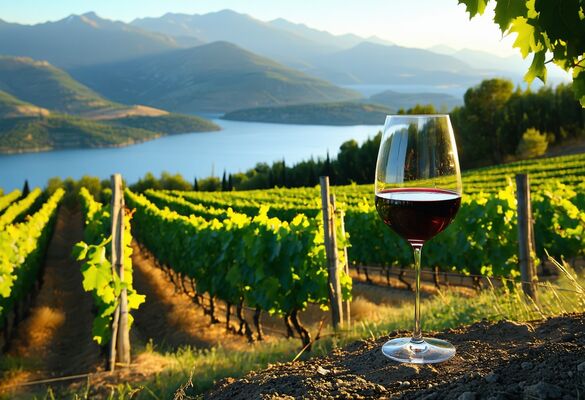
Correction: this inventory was built blind
The AWS listing came back after this page was written, and it showed that the HTTPS probing used to build the inventory had missed files in every country in this batch — it can only find names somebody thinks to guess. The real listing for Montenegro holds 11 files, not the 8 this page found — including montenegro-vranac.jpg, now used in the wine section in place of the small wine-culture.jpg, and a fourth naming variant of the fish soup, montenegro-riblja-orba-final.jpg. The manifest and the images above have been corrected from the authoritative listing, and the probing method is recorded here as unreliable so that no later page relies on it while the AWS connection is available.
The best image, heavily edited
countries/images/montenegro/hero.jpg, at the top of the overview, is the only large photograph in the set (1920×1080) and is almost certainly Kotor from the Lovćen road — the town on its shelf, the marina, the bay receding towards Verige. The colour is the problem: the water has been pushed to an electric blue that does not exist, and the whole frame reads as a wallpaper rather than a photograph. Used, with the manipulation stated in the caption, because the landform is exactly right and there is nothing else of this quality.
Two names for two different pictures
This country has the diacritic-mangling defect found on Moldova, and here it is worse: both spellings exist and they are different images. montenegro-njeguki-prut.jpg and montenegro-njeguski-prsut.jpg are two distinct files, as are montenegro-riblja-orba.jpg and montenegro-riblja-corba.jpg. The mangled names are what happens when njeguški pršut and riblja čorba have their š, ř and č deleted rather than transliterated — and the old page linked the mangled ones.
Njeguški pršut — the old page used the wrong file
montenegro-njeguki-prut.jpg, which the old page linked, shows glazed braised pork belly in an earthenware dish. Pršut is air-dried, lightly smoked, and sliced thin and raw; this is not it. Rejected. The correctly-spelled and previously unreferenced montenegro-njeguski-prsut.jpg shows a cured ham with slices cut from it, which is much closer, and it is the one used above — with a note that the meat is still paler and moister than the real thing.
Priganice — rejected
montenegro-priganice.jpg shows pale, soft, filled dough rolls garnished with parsley. Priganice are small deep-fried balls of wet yeast dough eaten hot with honey and cheese. This is a different food entirely, and putting it beside the recipe would mislead anyone trying to recognise the dish. Not used anywhere on this page, and recorded here so the decision is on the record.
Riblja čorba — both versions work
montenegro-riblja-orba.jpg (the mangled name) shows the soup in a rustic earthenware bowl and is the more Montenegrin-looking of the two; it is the one used beside the recipe. montenegro-riblja-corba.jpg shows the same dish in a white restaurant bowl. Both are accurate; only one was needed. Note that riblja-orba is a PNG carrying a .jpg extension, as is njeguski-prsut — the fourth and fifth instances of that defect in this run.
What is not here
There is no photograph of Perast, Ostrog, Cetinje, Durmitor, the Tara canyon, Lake Skadar, Sveti Stefan or Podgorica anywhere in the bucket for this country. For a nation whose entire draw is its landscape, the usable visual inventory is one manipulated bay photograph, one generated bay illustration, one generic vineyard and two plates of food. The sections above are written to work without pictures.
Support This Project 🌍
This World Travel Factbook is a labor of love – free to use for all travelers. If you find it helpful, consider supporting its continued development.