From New England’s coastal cooking to immigrant neighborhoods and the many kitchens of the South and West, food offers another way to read America.
English · Expanded October 4, 2026
01
🍔 American Cuisine
American food is far more diverse and sophisticated than the hamburger stereotype suggests — though a genuinely great American burger remains a thing of beauty. Regional cuisines are essentially distinct worlds: New England clam chowder and lobster rolls, Tex-Mex along the southern border, Cajun and Creole cooking in Louisiana, Carolina pulled-pork barbecue versus Kansas City's sauced ribs versus Texas brisket, Hawaiian poke, and a farm-to-table movement that has quietly transformed restaurant menus nationwide over the past two decades.
The US is also the world's great melting pot of immigrant cuisine, arguably its most under-appreciated culinary strength. Some of the best Chinese food outside Asia is in Los Angeles' San Gabriel Valley. New York's pizza and bagels reflect a century of Italian and Jewish tradition. Ethiopian food thrives in Washington D.C., Vietnamese pho in Houston, and Mexican taquerias define entire neighborhoods of Los Angeles and Chicago — each immigrant community building culinary traditions that are now simply American. Craft beer, bourbon, and the wine country of California, Oregon, and Washington round out the picture; see the next section for that story in full.
The colonies lived by work. Farming, fishing, shipbuilding, trade, crafts, port labor, printing, taverns, households, plantations, mills, and markets formed the world in which politics did not exist apart from economics. Taxes, duties, trade restrictions, and British regulation were not abstract ideas. They touched tea, paper, glass, commerce, ships, land, credit, prices, and family life.
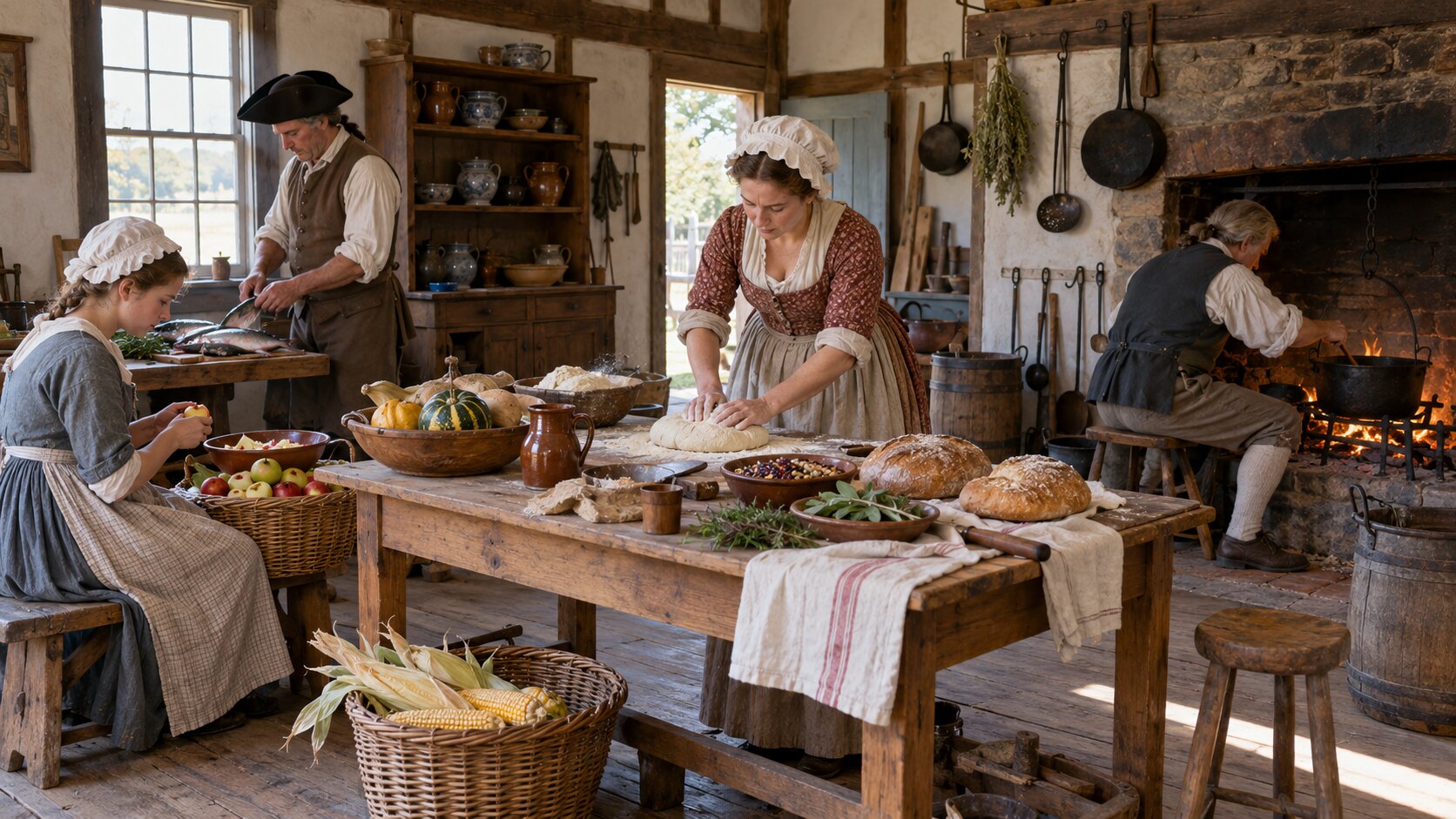
Food in colonial America was regional and socially divided. In New England, fish, corn, beans, squash, apples, bread, cider, and simple farm cooking mattered. In the South, European, African, and Indigenous influences combined, especially in rice, corn, legumes, pork, greens, and the later development of Southern cooking. In ports, Caribbean products, molasses, rum, sugar, spices, and trade connections brought the Atlantic into the kitchen. Incidentally, lobster — today's luxury — was so abundant in colonial New England that it was considered humble fare for servants; taste and prestige shift with history.
The people of the colonies were not only the Founding Fathers. They were women who managed households, bore children, worked, read, boycotted goods, and sometimes entered political culture indirectly but meaningfully. They were artisans and sailors who felt the consequences of commercial policy. They were enslaved Africans whose labor made plantation wealth possible. They were Native peoples whose land was constantly targeted by colonial expansion. They were poor settlers, wage workers, indentured servants, immigrants, and people on the edges of society.
The American Revolution cannot therefore be told only as the story of a few men with pens. The pen mattered. But beneath it stood a whole society that cooked, worked, printed, loaded ships, farmed fields, served in militias, prayed, traded, fled, protested, and survived.
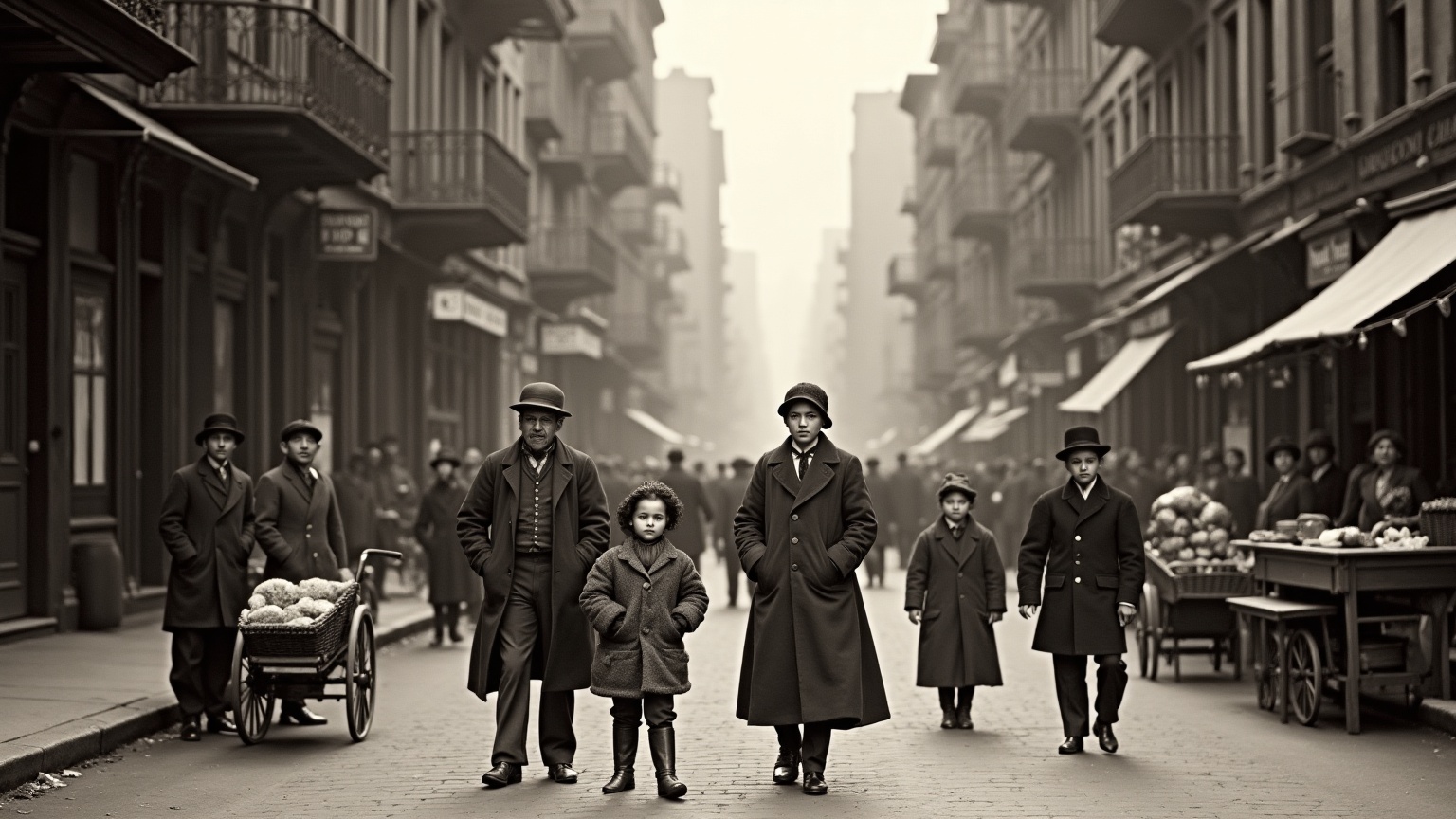
Immigrant neighborhoods are living archives of flavor — every community brought its food and transformed it into something American.
New York Lower East Side: Katz's Deli (pastrami since 1888), Russ & Daughters (lox and cream cheese since 1914), Yonah Schimmel Knish Bakery (since 1910).
New York Little Italy/Chinatown: dim sum in Chinatown, cannoli at Ferrara Bakery (since 1892), wonton soup.
Chicago: Italian beef sandwich (Al's Beef), deep-dish pizza (Pizzeria Uno), Polish kielbasa on Maxwell Street.
Pittsburgh: Primanti Brothers sandwich (meat, vegetables, coleslaw, and fries inside the bread) — legendary working-class food.
Bagel: New York style (boiled before baking, denser crust) vs. Montreal style (sweeter, smaller) — a crucial distinction for connoisseurs.
04
Reading & Sources
The colonial and immigrant-kitchen passages are selected from Radim Kaufmann’s United States of America — The Kaufmann Traveler’s Guide to the USA, working English edition v1.9, chapters 4 and 8. The guide is in preparation. Named venues illustrate the manuscript’s culinary history; consult their current official information before planning a visit.
George B. Tindall and David E. Shi, A History of the United States.