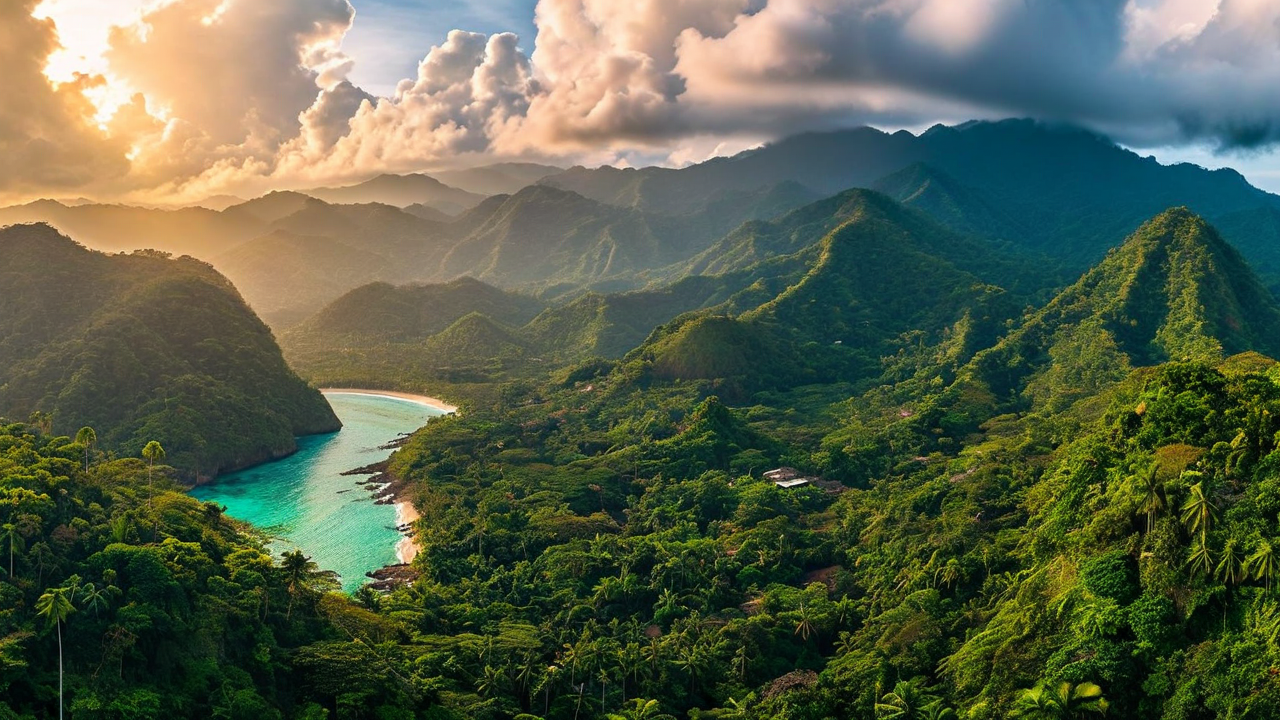


🇭🇳 Honduras at a Glance
🌍 Overview
Honduras is the second-largest country in Central America — 112,492 km², about 1.4 times Czechia — with roughly 10.6 million people, a long Caribbean coast, a short Pacific one on the Gulf of Fonseca, and a mountainous interior that occupies most of the middle. It borders Guatemala, El Salvador and Nicaragua, and it is the only Central American country that touches all three of its neighbours' most difficult histories without having had a civil war of its own.
It has two UNESCO World Heritage sites, and they could hardly be more different. Copán is a Classic Maya city whose sculptors were, by a wide margin, the best in the Maya world — the carving there is three-dimensional in a way nothing at Tikal or Palenque approaches, and its Hieroglyphic Stairway carries the longest Maya text ever found. Río Plátano is a biosphere reserve of lowland rainforest in La Mosquitia, one of the largest surviving tracts in Central America, and it has been on the World Heritage in Danger list for most of the last three decades.
Offshore lies the second great asset: the Bay Islands — Roatán, Utila and Guanaja — sitting on the Mesoamerican Barrier Reef, the largest reef system in the Atlantic and the second largest on Earth. Utila has spent thirty years being one of the two or three cheapest places in the world to qualify as a scuba diver, and the islands are English-speaking, culturally Caribbean and only loosely attached to the mainland in the way people there think about themselves.
And then there is the phrase. "Banana republic" was coined about Honduras, in Honduras, by an American writer hiding here from an embezzlement charge — a genuinely accurate label at the time, and one the country has spent a century not being able to shake off. What is less well known is that bananas stopped being the main export a long time ago. Honduras today is Central America's largest coffee producer and one of the world's biggest.
🏷️ Honduras, the Lempira and Being a Catracho
Honduras means "depths" in Spanish. The traditional story has Columbus, on his fourth voyage in 1502, escaping a fortnight of storms off the north-east cape and saying "Gracias a Dios que hemos salido de esas honduras" — thanks be to God that we have come out of those depths — which is why the cape is called Cabo Gracias a Dios to this day. The anecdote is very likely a later embellishment; the name almost certainly refers plainly to the deep water off that coast. Either way, Honduras is one of the few countries named after a hydrographic observation.
The lempira
The currency (HNL) is named after Lempira, the Lenca war leader who fought the Spanish in 1537. Around 26 to the US dollar, which works out at roughly one Czech crown to the lempira — a rare case where the mental arithmetic is trivial. A department is named after him too, and his face is on the one-lempira note.
Catracho
Hondurans call themselves catrachos, and the word has an excellent origin. In 1856–57 General Florencio Xatruch led Honduran troops into Nicaragua against the American filibuster William Walker. The Nicaraguans called his men los xatruches, which slurred to catruches and then catrachos. A national demonym derived from a mispronounced surname is not something many countries can claim.
Languages
Spanish is official and universal on the mainland. The Bay Islands speak English — a Caribbean creole English, first language for much of the native island population. The coast speaks Garífuna. La Mosquitia speaks Miskito. There are also Lenca, Tolupán, Pech, Tawahka and Ch'orti' communities, several of whose languages are down to a few hundred speakers or fewer.
The flag
Blue-white-blue horizontal bands with five blue stars in the centre. The bands are the two oceans; the five stars are the five states of the old Federal Republic of Central America — Guatemala, El Salvador, Honduras, Nicaragua and Costa Rica — and they are a standing statement that Honduras has never entirely given up on the idea of the union.
🗺️ Geography: Mountains With a Coast Attached
Roughly 80% of Honduras is mountainous, and unlike its neighbours it has almost no active volcanoes — the Central American volcanic arc runs along the Pacific side, and Honduras only just touches the Pacific. What it has instead are old, eroded, heavily folded ranges of sedimentary and metamorphic rock, which is why Honduran mountains look nothing like the perfect cones of Guatemala or Nicaragua.
The highlands
A tangle of ranges — the Sierra de Celaque, Merendón, Montecillos, Agalta — cut by deep valleys. The high point is Cerro Las Minas in Celaque National Park at 2,870 m, which carries genuine cloud forest at the top and is a two-day walk. Tegucigalpa sits at about 1,000 m; the western towns of Gracias, La Esperanza and Santa Rosa are higher and can be cold at night.
The Caribbean coast
About 700 km of it, from the Guatemalan border past Puerto Cortés, Tela, La Ceiba and Trujillo and on into the Mosquitia. Hot, wet, banana country in the west and rainforest in the east. This is where the Garífuna towns are and where most of the country's tourism happens.
The Sula valley
The flat, fertile, hot corridor running inland from Puerto Cortés to San Pedro Sula. It is the economic engine of Honduras — bananas, then textiles, now most of the country's industry — and it is also where the hurricanes do the most damage, because a river valley full of cities floods.
La Mosquitia
The eastern third: a huge lowland of rainforest, savannah, lagoons and rivers with almost no roads, reached by boat and light aircraft. It contains the Río Plátano Biosphere Reserve and the country's largest indigenous populations, and it is effectively a different country from the highlands in every respect that matters.
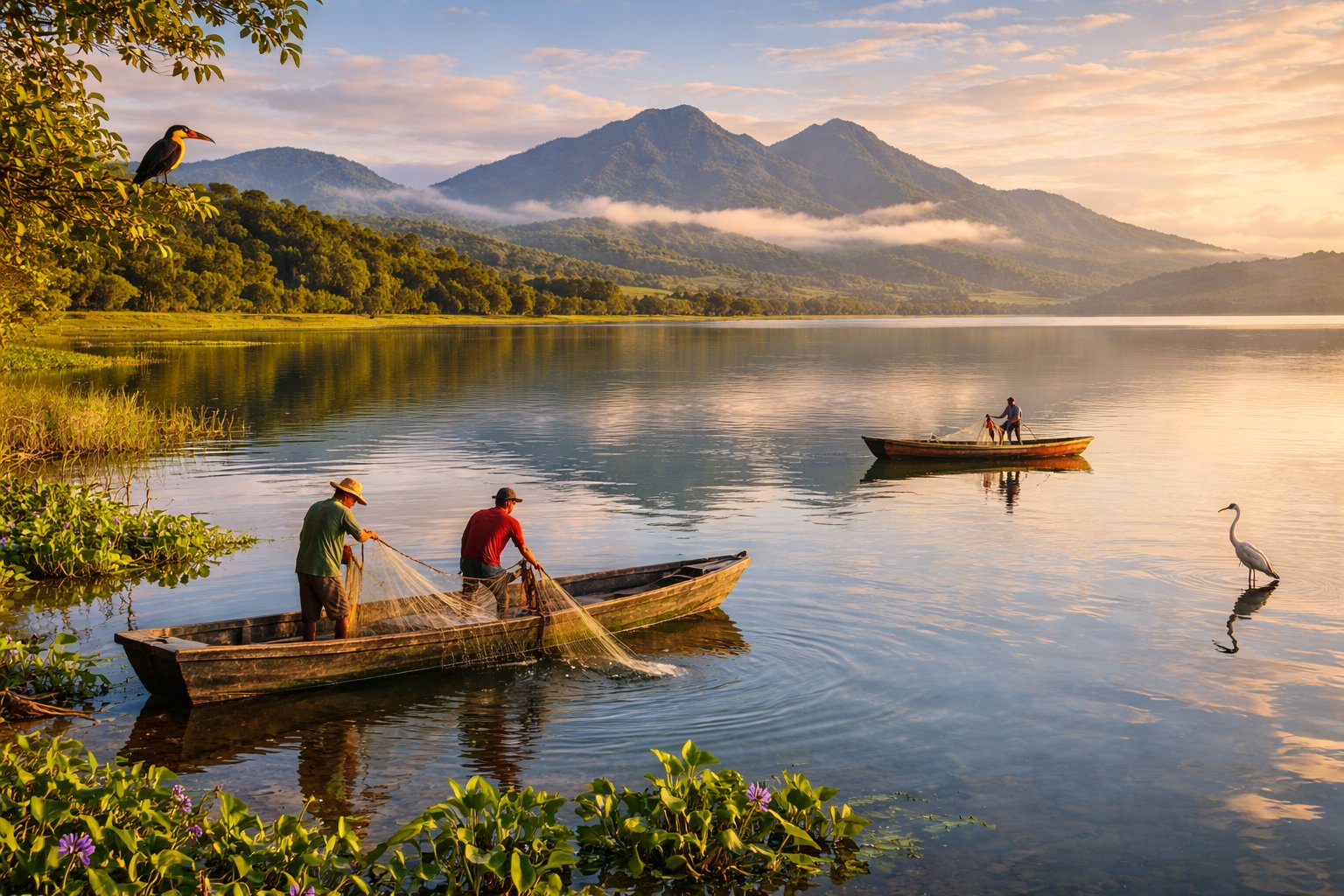
🌡️ Climate: Three Countries' Worth of Weather
Honduras is tropical, but altitude and which coast you are on matter far more than the calendar. The country effectively runs three climates at once, and a trip that takes in Copán, Roatán and Tegucigalpa will need three different sets of clothes.
The Caribbean side
Hot (26–32 °C) and humid year-round, with no true dry season — La Ceiba gets rain in every month. The wettest stretch is roughly September to January. The clearest and calmest water for diving is usually March to April and again in August to September, which is also when whale sharks are most likely off Utila.
The interior highlands
The pleasant one. Tegucigalpa averages 20–26 °C by day and drops to the mid teens at night; Gracias and La Esperanza are cooler again. A real dry season from December to April and a wet one from May to October, with a curious mid-summer dip in the rain in July and August that Central Americans call the canícula.
The Pacific south
The Gulf of Fonseca and Choluteca: hot and dry, part of the Central American Dry Corridor, with a sharp wet season May to October and very little rain otherwise. April is genuinely punishing — 38 °C is normal. This is also the part of the country most damaged by recurring drought.
Hurricanes
The Atlantic season is 1 June to 30 November, with the risk concentrated in September and October. Honduras has been hit twice in the modern era in ways that reset the country: Mitch in 1998 and Eta and Iota two weeks apart in November 2020. The mountains turn heavy rain into landslides and the Sula valley into a lake.
The short answer on when to go: February to April works for everything at once — dry in the highlands, clear underwater, and before the heat peaks. December and January are fine inland but are the wettest months on the north coast. Avoid September and October unless you are watching the forecast closely and are flexible.
🌳 Forests, Reefs and What Is Being Lost
Honduras is extraordinarily biodiverse for its size — cloud forest, lowland rainforest, pine savannah, mangrove and coral reef within a few hundred kilometres of each other — and it is losing that at a rate that puts it near the top of every deforestation table in the hemisphere. Both things are true at once and neither cancels the other.
Río Plátano
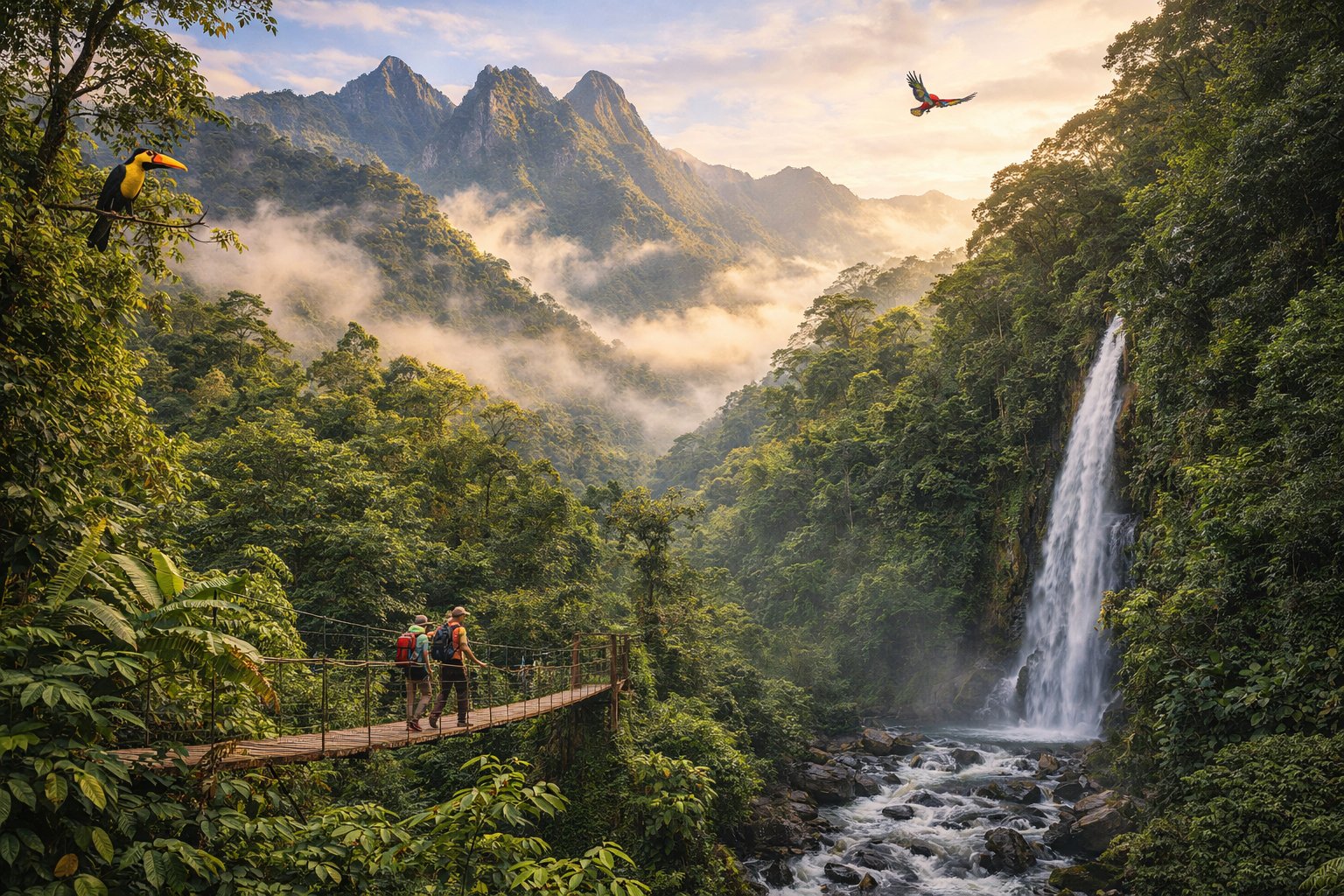
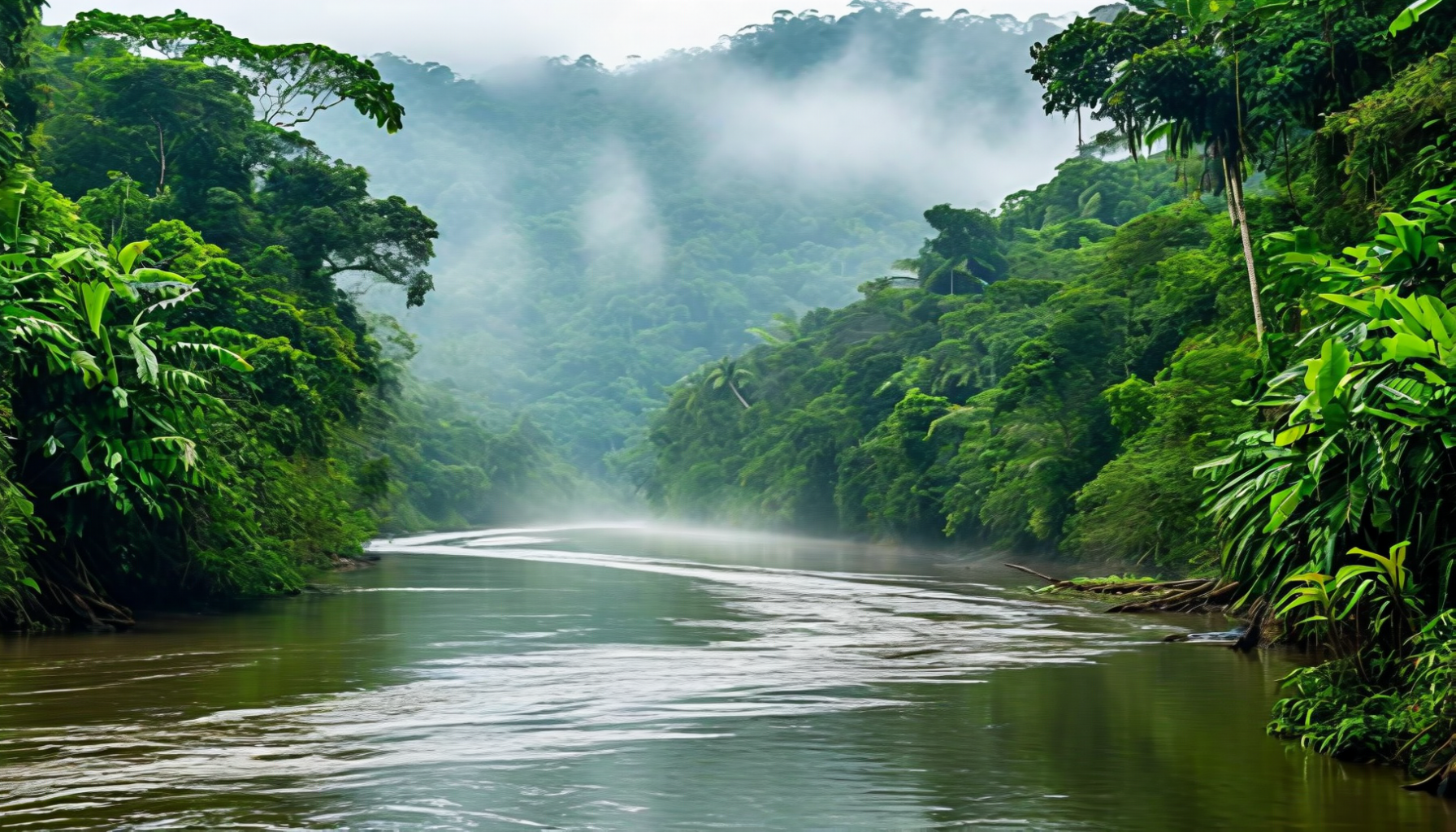
Inscribed by UNESCO in 1982, over 5,000 km² of the Mosquitia, and one of the last large blocks of Central American lowland rainforest. It has been on the World Heritage in Danger list twice — 1996–2007 and continuously since 2011 — because of illegal logging, cattle ranching pushing into the reserve, and the fact that the drug trade uses the same roadless country for the same reasons the wildlife does.
The reef
The Honduran section of the Mesoamerican Barrier Reef is in better condition than much of the system, and Roatán, Utila, Guanaja and the Cayos Cochinos all sit on it. It has still lost a great deal of coral cover to bleaching, disease and the invasive lionfish, and stony coral tissue loss disease arrived in the late 2010s and did serious damage.
The pine forests
Less famous and just as important: Honduras has the largest pine forests in Central America, mostly Pinus oocarpa in the highlands. A southern pine beetle outbreak from 2013 killed a very large share of them — estimates run to hundreds of thousands of hectares — in one of the worst forest pest events the region has recorded.
Berta Cáceres
The environmental fight here is not abstract and it is not safe. Berta Cáceres, a Lenca leader who organised against the Agua Zarca dam on the sacred Gualcarque river and won the Goldman Prize in 2015, was murdered in her home in March 2016. Eight men were convicted, including an executive of the dam company. Honduras has for years been among the most dangerous countries in the world to be an environmental defender.
🗺️ Map
Honduras sits between about 13° and 16° north, with Guatemala to the west, El Salvador to the south-west, Nicaragua to the south and east, and the Caribbean along the whole north. Tegucigalpa is in the middle of the highlands; San Pedro Sula is 240 km north-west in the Sula valley; Copán is on the Guatemalan border in the far west; Roatán is 60 km off the north coast.
Getting around the shape
The useful mental model is a triangle: San Pedro Sula in the north-west for the coast, the islands and Copán; Tegucigalpa in the centre-south for the capital and the western highlands; and La Ceiba in the middle of the north coast as the gateway to the islands and the Mosquitia.
Real distances
San Pedro Sula to Copán: about 3 hours. San Pedro Sula to La Ceiba: 3 hours. San Pedro Sula to Tegucigalpa: 4 hours on the country's best road. La Ceiba to Roatán: 90 minutes by ferry or 20 by air. Tegucigalpa to Gracias: about 5 hours, and worth it.
The border with El Salvador
Settled by the International Court of Justice in 1992, which awarded most of the disputed land sectors to Honduras and split the Gulf of Fonseca islands — a genuinely successful judicial resolution of a border that had already caused a war.
Swan Islands
The Islas del Cisne, 250 km out in the Caribbean, are Honduran and are worth mentioning only because the United States claimed them until 1972 and ran a CIA propaganda station there aimed at Cuba during the Bay of Pigs.
🗿 Copán: The Best Sculptors in the Maya World
Copán sits in a small green valley in the far west, twelve kilometres from the Guatemalan border, and it was never one of the biggest Maya cities. Tikal was bigger. Calakmul was more powerful. What Copán had was stone that could be carved — a fine local volcanic tuff — and several generations of sculptors who did things with it that nobody else in Mesoamerica managed.
The difference is immediately visible and does not require any expertise to see. Maya stelae elsewhere are carved in low relief; the figures are pressed into the surface. At Copán the rulers stand almost fully in the round, their headdresses undercut so deeply that you can put your hand behind them, their faces individual. Nothing at Palenque, Tikal or Chichén Itzá looks like this. The stelae in the Great Plaza are the reason the site is a World Heritage property and the reason it is worth crossing the country for.
The dynasty
Sixteen rulers over almost four hundred years. The founder, K'inich Yax K'uk' Mo', arrived in 426 CE — and isotope analysis of his bones says he came from somewhere in the central Petén or further, not from Copán, confirming a dynastic foundation story that had been treated as propaganda. The dynasty ended around 822 with an unfinished altar.
The Hieroglyphic Stairway
Sixty-three steps carrying about 2,200 glyph blocks — the longest Maya inscription in existence, a dynastic history in stone. It collapsed centuries ago and was reassembled by early archaeologists largely in the wrong order, which means much of the text remains unreadable. It stands under a vast protective canopy and is the single most frustrating object in Maya studies.
18-Rabbit and the disaster
The thirteenth ruler, Uaxaclajuun Ub'aah K'awiil ("18-Rabbit"), commissioned most of the best sculpture — and then, in 738 CE, was captured and beheaded by his own former vassal, the king of Quiriguá downriver in what is now Guatemala. It is one of the sharpest reversals recorded in Maya history and Copán never fully recovered its authority.
Rosalila
Maya cities were built by burying the previous building inside the next one. Under Structure 16, archaeologists found Rosalila — an entire earlier temple, sealed intact, with its original red, green and cream paint still on the stucco. It is still down there; a full-size replica in the site museum is the only way to see it, and it is worth the museum ticket on its own.
Copán also produced one of archaeology's better lessons in humility. The valley's population was estimated at its peak at something over 20,000, and the collapse here has been studied in unusual detail: soil cores show erosion and deforestation on the valley slopes intensifying before the dynasty ended, and skeletal evidence shows worsening nutrition. It is not a simple story of drought or invasion, and Copán is one of the reasons the field stopped telling simple stories about the Maya collapse.
⚔️ Conquest and the Man on the Banknote
Columbus reached the Honduran coast on 30 July 1502, on his fourth and last voyage, landing near what is now Trujillo — where the first Catholic mass on the American mainland was said. Neither he nor anyone else did much with it for twenty years. The actual conquest came in the 1520s from two directions at once, and its early history is mostly Spaniards fighting each other: Cortés marched overland from Mexico in 1524–26 specifically to deal with a subordinate who had gone into business for himself.
Indigenous Honduras was not a single polity. The west was Maya and, further from Copán, Lenca and Ch'orti'; the centre and east were Lenca, Pech, Tolupán and Tawahka; the Caribbean lowlands were Miskito country. Resistance was accordingly local and prolonged rather than a single war — and it produced the national hero.
Lempira
A Lenca war leader who from about 1537 organised a broad coalition in the Cerquín highlands around present-day Gracias and held out against the Spanish for months from a fortified peak. He was killed in 1537 or 1539; the Spanish account says he was shot during a parley, an act of straightforward treachery. He is on the currency, a department carries his name, and 20 July is Lempira Day.
What conquest cost
Catastrophic. Between disease, warfare and the slave trade — Honduras exported indigenous slaves to the Caribbean islands in enormous numbers in the 1520s and 1530s — the indigenous population is estimated to have fallen by something in the region of 90% within a century. Honduras today is overwhelmingly mestizo precisely because of that collapse and the mixing that followed.
Silver
The colony's point was silver. Mines around Tegucigalpa, opened from the 1570s, are the reason the capital exists at all — the name is usually glossed as "silver hill", though the etymology is disputed and may be Nahuatl for something else entirely. The mines were never Potosí, and colonial Honduras stayed poor and thinly governed.
The English on the coast
Spain never controlled the Caribbean shore. English and Dutch buccaneers used it from the 1600s; Britain held a protectorate over the Mosquito Coast and settlements on the Bay Islands, and only gave up its formal claims to the islands in 1859 and the mainland coast in 1860. This is why the Bay Islands speak English and why the Miskito have a separate history.
🕊️ Independence, the Federation, and Morazán
Central America declared independence from Spain on 15 September 1821 without a shot being fired — the news arrived from Guatemala City and was accepted. It was briefly annexed to the Mexican Empire, and when that collapsed in 1823 the region formed the Federal Republic of Central America: Guatemala, El Salvador, Honduras, Nicaragua and Costa Rica, in a union that lasted fifteen years and has never stopped being mourned.
Francisco Morazán
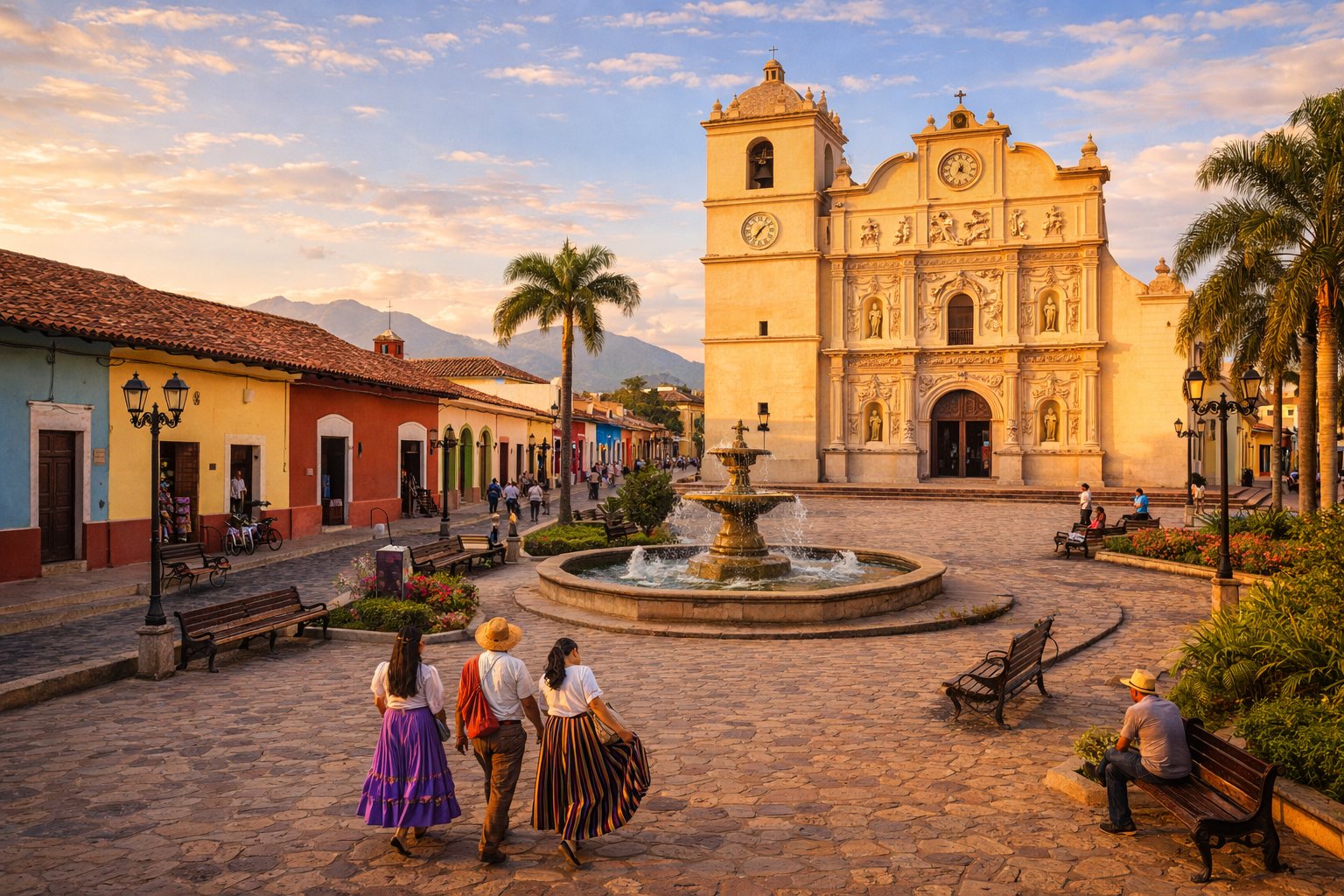
Born in Tegucigalpa in 1792, the Federation's dominant figure and its president for most of its life — a liberal who tried to build a single Central American state with secular schools, civil marriage and no church courts. The Federation broke apart in 1838 against conservative and regional resistance. Morazán was executed in Costa Rica in 1842, still trying to rebuild it. He is the national hero of Honduras and a national figure in several countries at once.
Why it failed
Geography and Guatemala. The five states were separated by mountains and weeks of travel, the conservative church-aligned elites of Guatemala resented liberal control from anywhere, and there was no shared economy to hold them. Every attempt at reunion since — and there have been many — has run into the same arithmetic.
The nineteenth century
Honduras spent it poor, thinly populated and politically unstable, with the capital moving between Comayagua and Tegucigalpa depending on who held power. It had no export crop of consequence until the North Americans arrived with bananas, and that fact shaped everything that followed.
The stars on the flag
Added in 1866: five blue stars for the five federal states, arranged in an X. They are not decorative. Honduras kept the union's colours and its arithmetic on the flag for a century and a half after the union died.
🍌 Where "Banana Republic" Comes From
The phrase was coined here, and the story is precise enough to be worth telling properly. In 1896 an American bank teller and writer named William Sydney Porter was indicted for embezzlement in Austin, Texas. He fled to Honduras and spent several months in Trujillo, drinking with another American fugitive. He came home, served his sentence, and published under the name O. Henry. In 1904 he brought out Cabbages and Kings, a set of linked stories about a fictional Central American country called Anchuria, and in it he used the phrase "banana republic" for the first time.
The label stuck because it was accurate. From the 1890s the American fruit companies — United Fruit, Standard Fruit and Cuyamel — acquired vast concessions on the north coast, built the railways, ran the ports, issued their own scrip, imported their own labour and, when it suited them, chose the government.
Sam the Banana Man
Samuel Zemurray, a Bessarabian immigrant who started selling overripe bananas off the docks in Mobile and ended up owning Cuyamel and then running United Fruit. In 1911 he financed a coup in Honduras — hiring a mercenary, a boat and a former president — because the sitting government would not give him the tax concession he wanted. It worked. He got the concession.
The railways
Honduras has almost no railway network to this day, and the reason is that the lines that were built went from the plantations to the ports and nowhere else. The capital has never been connected to the sea by rail. Infrastructure built for an export enclave does not become national infrastructure by accident.
The 1954 strike
In May 1954, banana workers on the north coast walked out — tens of thousands of them, for 69 days. It was the largest strike in Honduran history, it won recognition of unions, an eight-hour day and a labour code, and it is the founding event of the modern Honduran labour movement. It is also the reason Honduras developed unions rather than a guerrilla movement.
Bananas today
Still exported, still important on the north coast, but no longer the point. Coffee overtook bananas decades ago and Honduras is now the largest producer in Central America and among the top handful worldwide. Textiles from the maquilas of the Sula valley are the other big earner — and, at 25% or more of GDP, so are remittances from Hondurans in the United States.
⚽ The Football War of 1969, Correctly Explained
In July 1969 Honduras and El Salvador fought a war lasting about 100 hours, in which somewhere between two and three thousand people were killed, most of them Honduran civilians. It is universally known as the Football War, and almost everything the name implies is wrong.
What actually happened: El Salvador was the most densely populated country on the American mainland and had almost no unclaimed land, because its own land was concentrated in very few hands. Over decades, perhaps 300,000 Salvadorans had crossed into far emptier Honduras and settled, many of them without title. In 1969 the Honduran government passed a land reform that redistributed land to Honduran peasants — and expelled Salvadoran squatters to do it. Tens of thousands were driven out, with real violence, and the press on both sides went to work.
The football part
The two countries were drawn against each other in the 1970 World Cup qualifiers, playing three matches in June 1969. The crowds were ugly, there were riots and deaths around the fixtures, and the tie became the vehicle for a rage that already existed. El Salvador won the play-off in Mexico City on 27 June and broke off diplomatic relations the same day. War began on 14 July.
The war itself
The Salvadoran army pushed several kilometres into Honduras; the Honduran air force, flying Second World War Corsairs, bombed Salvadoran fuel depots and won what is generally considered the last dogfight ever fought between piston-engined fighters. The OAS brokered a ceasefire on 18 July and El Salvador withdrew in August.
What it cost
Beyond the dead: the Central American Common Market collapsed, setting regional integration back by more than two decades, and both economies suffered badly. A formal peace treaty was not signed until 1980, and the border was only finally settled by the International Court of Justice in 1992.
Why the name matters
Calling it the Football War makes it sound absurd, and that framing has let a serious story about land, inequality and forced expulsion be told for fifty years as a joke about Latin Americans and sport. Ryszard Kapuściński, who covered it, is partly responsible for how well the joke travelled. If you take one thing from this section, take that the football was the spark and not the fuel.
🚁 The Contra Decade and Hurricane Mitch
In the 1980s every one of Honduras's neighbours was at war: civil war in El Salvador and Guatemala, the Sandinistas and the Contras in Nicaragua. Honduras did not have a war of its own. What it had instead was everybody else's — the country became, in the phrase of the period, the "USS Honduras": an unsinkable American aircraft carrier for the regional conflict.
The base
US military presence expanded enormously at Palmerola (Soto Cano) in the Comayagua valley. Nicaraguan Contra forces were based, supplied and trained on Honduran soil; Salvadoran units trained there too. American aid to Honduras rose roughly tenfold over the decade, and the Honduran military's political weight rose with it.
Battalion 3-16
The cost at home. Batallón 3-16 was an army intelligence unit, trained in part by the CIA and by Argentine officers, which between 1980 and 1984 kidnapped, tortured and disappeared at least 184 people — students, unionists, teachers. Its existence was denied for years. The US ambassador of the period, John Negroponte, was later found to have systematically minimised the unit's activity in his reporting to Washington.
Mitch, 1998
Hurricane Mitch stalled over Honduras between 29 October and 1 November 1998 and dropped in some places well over a metre of rain. Roughly 7,000 people died in Honduras, around 1.5 million were displaced, most of the country's bridges went, and the president said the storm had destroyed fifty years of development. That was close to literally true, and much of the migration northward that the world noticed twenty years later began here.
Eta and Iota, 2020
It happened again, twice in two weeks, in November 2020. Two hurricanes made landfall in almost the same place; the Sula valley flooded for the second time in a generation, San Pedro Sula's airport went under water, and hundreds of thousands were displaced in the middle of the pandemic. Honduras is on almost every list of the countries most exposed to climate-related extreme weather, and this is what that looks like.
🏛️ 2009 to Now: A Coup, a Conviction, a First
Honduran politics over the last fifteen years is unusually dramatic even by Central American standards, and the outline is worth having because it explains a great deal about how the country is currently governed and how it is currently reported.
The 2009 coup
On 28 June 2009, soldiers took President Manuel Zelaya from his residence and flew him out of the country in his pyjamas. The trigger was a non-binding referendum on constitutional reform that the courts had ruled illegal; the underlying cause was that a president elected from the traditional right had swung sharply left and towards Venezuela. Congress installed Roberto Micheletti. Most of the hemisphere called it a coup; the United States did not, quite, and the fudge shaped the following decade.
Juan Orlando Hernández
President from 2014 to 2022, re-elected in 2017 in a contest widely regarded as fraudulent, and re-elected at all only because the same Supreme Court that had helped remove Zelaya over a re-election referendum then permitted re-election. In 2022 he was arrested and extradited to the United States; in March 2024 a New York jury convicted him of cocaine trafficking and weapons offences, and he was sentenced to 45 years. His brother is serving life.
Xiomara Castro
Elected in November 2021 by a wide margin and inaugurated in January 2022 as the first woman president of Honduras. She is Manuel Zelaya's wife, which means the man removed by the army in 2009 returned to the presidential palace as first gentleman. Her government has faced a difficult congress, a fiscal squeeze and continuing pressure over security policy.
The ZEDEs
"Employment and Economic Development Zones" — semi-autonomous charter cities with their own legal and tax regimes, of which Próspera on Roatán is the best known. Congress repealed the enabling law in 2022 with unanimous support; the investors responded with an international arbitration claim against Honduras running into the billions. The dispute is unresolved and is one of the sharper current tests of investor-state arbitration anywhere.
A note on how to read all this: it would be easy to conclude from the above that Honduras is ungovernable. What the record actually shows is a state that has repeatedly been captured — by fruit companies, by the army, by drug money — and a society that keeps producing the unions, journalists, prosecutors and voters who eventually pry it back. The conviction of a sitting-era president in a foreign court is a humiliation and also a fact that many countries have never managed to produce.
👥 The People
Around 10.6 million people, of whom roughly 90% are counted as mestizo — of mixed indigenous and European descent. The remaining tenth is where most of the country's cultural distinctiveness lives, and Honduras officially recognises nine indigenous and Afro-descendant peoples.
Lenca
The largest indigenous group, perhaps 450,000 people, in the western highlands around Intibucá, Lempira and La Paz — Lempira's people, and Berta Cáceres's. The Lenca language is effectively extinct as a first language, but Lenca identity, land organisation, pottery and religious practice are very much alive, and La Esperanza on market day is the place to see it.
Garífuna
Around 200,000 along the Caribbean coast, with their own language, religion, music and cuisine — and a story unlike anyone else's in the Americas. See the next section; it deserves it.
Miskito, Pech, Tawahka
The peoples of La Mosquitia. The Miskito are much the largest, with their own language widely spoken and a long history of autonomy under British protection. The Tawahka number only a couple of thousand and the Pech a few thousand more; both languages are seriously endangered.
Bay Islanders
The islands' native population descends from Cayman Islanders who settled from the 1830s and from freed and escaped Africans, and speaks an English-based creole. Many are Protestant in a Catholic country and hold a distinct identity: an islander will often say they are going "to Honduras" when taking the ferry to La Ceiba.
Two demographic facts shape modern Honduras more than any other. It is young — the median age is around 25 — and it is emigrating. Something on the order of a million Hondurans live in the United States, remittances are worth roughly a quarter of GDP, and the caravanas that made international news from 2018 onward were overwhelmingly Honduran. Almost every family has someone north, and the money they send is what keeps a very large number of households above water.
🥁 The Garífuna: The Only People Who Beat the Slave Trade
This is the most remarkable story in Honduras and it does not begin in Honduras. In the 1600s, on the island of St Vincent in the eastern Caribbean, shipwrecked and escaped West Africans mixed with the island's Kalinago and Arawak population. The result was a people — the Garífuna, or Black Caribs — who were never enslaved, who spoke an Arawakan language with Carib and African elements, and who held their island against the French and then the British for a century and a half.
The British finally defeated them in 1796 after a two-year war. Rather than enslave them, the British deported them: about 5,000 people were held on Baliceaux, where roughly half died, and the survivors were shipped across the Caribbean and put ashore on Roatán on 12 April 1797. There were about 2,000 of them. They moved to the mainland, spread along the coast, and their descendants now number several hundred thousand across Honduras, Belize, Guatemala and Nicaragua.
The language
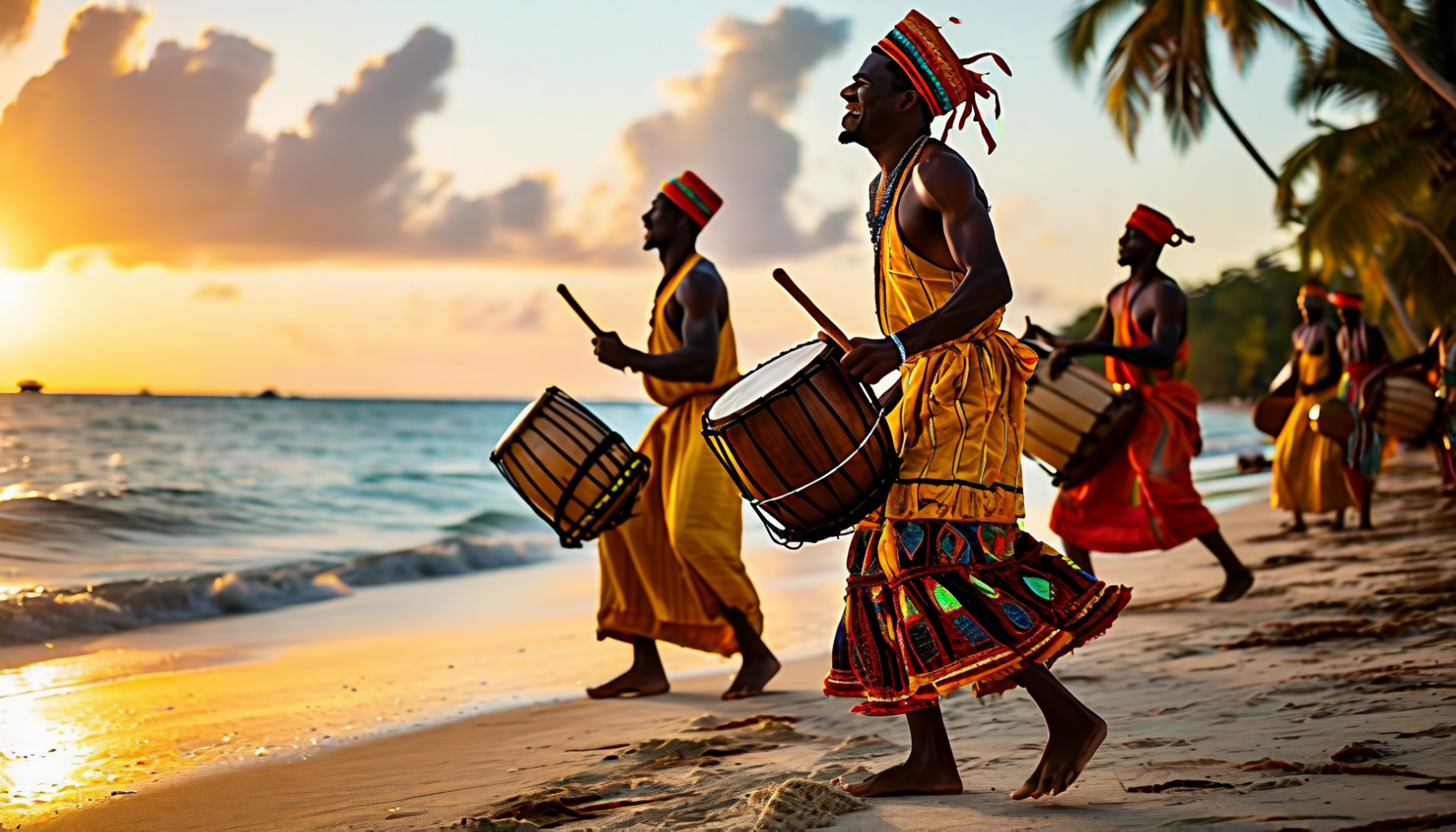
Garífuna is an Arawakan language — genuinely indigenous American in its grammar and core vocabulary — with a substantial Carib and African overlay and later French, English and Spanish loans. It famously has partly distinct male and female registers, a fossil of the Carib–Arawak conquest that produced the population in the first place. It is spoken daily in the coastal towns and is being actively taught.
Punta and punta rock
Punta is the traditional drum-and-voice form, played at wakes and celebrations. In the 1980s it was electrified into punta rock and became the pop music of the whole country: in 1991 the Honduran band Banda Blanca released Sopa de Caracol, which sold millions of copies across Latin America and Europe and made a Garífuna rhythm and a Honduran soup internationally famous at the same time.
Dügü
The Garífuna religion is a living syncretic practice, not a folklore exhibit. The dügü is a multi-day ancestor ceremony, led by a buyei, involving drumming, possession and the feeding of the ancestors, and it coexists comfortably with Catholicism. It is not a performance and visitors are not entitled to attend.
Where to find them
The towns: Triunfo de la Cruz and Tornabé near Tela, Sambo Creek and Corozal near La Ceiba, Chachahuate out on the Cayos Cochinos, and communities all along the coast east to Trujillo. Several run community tourism properly, with local guides and local money. Land rights on the coast are a live and sometimes violent conflict — Garífuna communities have won cases at the Inter-American Court and are still fighting developers.
🎶 Music, Words and Paint
Punta rock and the rest
Punta rock is the national sound. Beyond it, Honduras listens to what the region listens to — reggaetón, bachata, ranchera on the buses — plus parranda and paranda from the Garífuna coast, an unhurried guitar-and-voice style that the Belizean Andy Palacio made internationally known and which has an equally strong Honduran lineage.
Sopa de Caracol
Worth its own entry. Banda Blanca's 1991 recording, built on a Garífuna song by Chico Ramos, was the first Honduran record to become a genuine international hit — number one across Latin America, big in Spain and France. The lyric is partly in Garífuna. A country with very little global cultural export got one very large one, and it was about soup.
Ramón Amaya Amador
The country's major novelist, a communist writer from the banana zone whose Prisión Verde ("Green Prison", 1950) is the standard novel of life on the plantations — and one of the sharpest pieces of writing produced anywhere about what the fruit companies actually were. He died in a plane crash in Czechoslovakia in 1966, which gives the book an unexpected Czech footnote.
Painting
José Antonio Velásquez (1906–1983), a barber and telegraph operator from the mountain village of San Antonio de Oriente, painted his village over and over in a meticulous naïve style and became the first Latin American primitivist to get serious international attention. His paintings are the visual shorthand for highland Honduras and the village itself is still there, an hour from Tegucigalpa, looking much as he painted it.
Handicraft is the everyday art form and it is regional: Lenca pottery from La Campa and Ojojona, with its distinctive black-on-cream painted designs; junco palm weaving from Santa Bárbara, which produces some of the best straw hats in Central America; wood carving from Valle de Ángeles; and Garífuna basketry and casabe graters on the coast. Buying directly in the villages costs less than buying in Tegucigalpa and puts the money where it belongs.
⛪ Religion and the Calendar
Honduras is majority Catholic — somewhere around half the population — with a very large and still growing evangelical Protestant minority, now approaching or exceeding forty per cent. That shift, common across Central America, has changed the country's politics as much as its Sundays, and evangelical churches are a serious force in Honduran public life.
La Virgen de Suyapa
The patroness of Honduras is a wooden statue of the Virgin six centimetres tall, found in a field near Tegucigalpa in 1747 and now housed in a large basilica in the Suyapa district. Her feast on 3 February draws hundreds of thousands of pilgrims and is the single biggest religious event of the year. The scale mismatch between the object and the basilica is part of the point.
Semana Santa
Holy Week, and the country empties towards the coast. The great sight is in Comayagua, where the streets are covered overnight in enormous alfombras — carpets made of dyed sawdust, flowers and fruit in elaborate religious designs — which are laid in the small hours and destroyed by the procession that walks over them in the morning. It is one of the best Holy Week traditions in Latin America and far less crowded than Antigua's.
La Feria de San Isidro
La Ceiba's carnival, in the third week of May, is the biggest party in Honduras: a week of neighbourhood carnavalitos building to an all-night parade along the Avenida San Isidro with punta blasting from every block. It is genuinely enormous and genuinely fun, and it is when the north coast is fullest.
The civic dates
15 September — independence, with school parades everywhere. 3 October, Morazán's birthday. 12 April, Garífuna Settlement Day on the coast, marked with a re-enactment of the 1797 landing by canoe. 20 July, Lempira Day. And the football, which functions as a religion in its own right.
🏆 Football, and the Rest
Football is not a pastime in Honduras, it is the national temperature. The country has reached the World Cup three times — 1982 in Spain, 2010 in South Africa and 2014 in Brazil — which for a country of ten million against the strength of CONCACAF is a respectable record, and it has an intensity of domestic support out of proportion to its size.
The clásico
Club Olimpia and Motagua, both of Tegucigalpa, contest the fiercest derby in the country; Real España and Marathón do the same in San Pedro Sula. Olimpia is the most successful club by a long way. The atmosphere is real and so occasionally is the trouble; the Estadio Nacional in Tegucigalpa has a serious history of crowd disasters and the standard advice is to go with someone who knows the ground.
1982
Honduras's debut, and much the best of the three. They drew 1–1 with the hosts Spain in Valencia and 1–1 with Northern Ireland, and went out having lost only to Yugoslavia by a late penalty. Being eliminated without being beaten in open play remains a point of national pride.
The players
Wilson Palacios at Wigan, Birmingham, Tottenham and Stoke; Maynor Figueroa, whose goal from inside his own half for Wigan against Stoke in 2009 is still on every compilation; David Suazo at Cagliari and Inter, probably the best Honduran footballer of the modern era. And Honduras took fourth place at the 2016 Olympic tournament, beating Argentina on the way.
Everything else
Baseball on the Bay Islands, which is a Caribbean rather than a Central American thing. Boxing, where Teófimo López — born in the US to Honduran parents — became unified lightweight champion in 2020. And surfing and diving, which are what most visitors actually do.
🍽️ Food: Corn, Beans, Coconut and a Great Deal of Cream
Honduran food is the least internationally known of any Central American cuisine, and it does not deserve to be. It runs on three traditions that barely overlap: the highland mestizo kitchen of corn, beans, cream and grilled meat; the Garífuna kitchen of coconut milk, fish, cassava and plantain; and the Bay Islands' Caribbean cooking, which is closer to Jamaica than to Tegucigalpa.
Baleadas
The national dish and the thing you will eat most. A thick soft wheat flour tortilla, folded once over refried red beans, mantequilla — which in Honduras means a thin sour cream, not butter — and crumbled hard white queso seco. That is the sencilla. Add egg, avocado, chorizo or shredded beef and it becomes especial. It costs a euro or two, it is sold everywhere from dawn, and it is genuinely excellent.
Plato típico
The full plate: grilled beef, refried beans, rice, fried plantain (tajadas), chismol salsa, cream, cheese, sometimes chorizo and a curl of pickled cabbage. Every comedor does one and they are all slightly different. Anafres — a clay pot of bean-and-cheese fondue kept hot over coals, eaten with tortilla chips — is the standard thing to order before it.
Sopa de caracol
Conch soup, from the Garífuna coast: conch simmered in coconut milk with yuca, green plantain, malanga, coriander and chilli. Rich, thick and pale rather than a clear broth. It is the country's most famous dish abroad, entirely because of the 1991 Banda Blanca song, and it is worth the reputation.
Machuca and casabe
Two more Garífuna staples. Machuca is green plantain pounded in a wooden mortar into a dense mash, served with a coconut-milk fish soup poured over it. Casabe is flat bitter-cassava bread, grated, pressed to squeeze out the toxic juice, and baked into brittle discs — a technique inherited directly from the Caribbean Arawak and unchanged for centuries.
Things worth ordering that nobody mentions: pastelitos de perro (fried corn turnovers with mince and potato — no dog is involved, the name is a mystery), catrachas (fried tortilla, beans, cheese), yuca con chicharrón, pollo con tajadas, pescado frito whole on the coast, and tamalitos de elote in the highlands when the young corn is in. On the Bay Islands: coconut bread, stewed fish, and conch in every form.
🫓 Recipe: Baleadas Sencillas
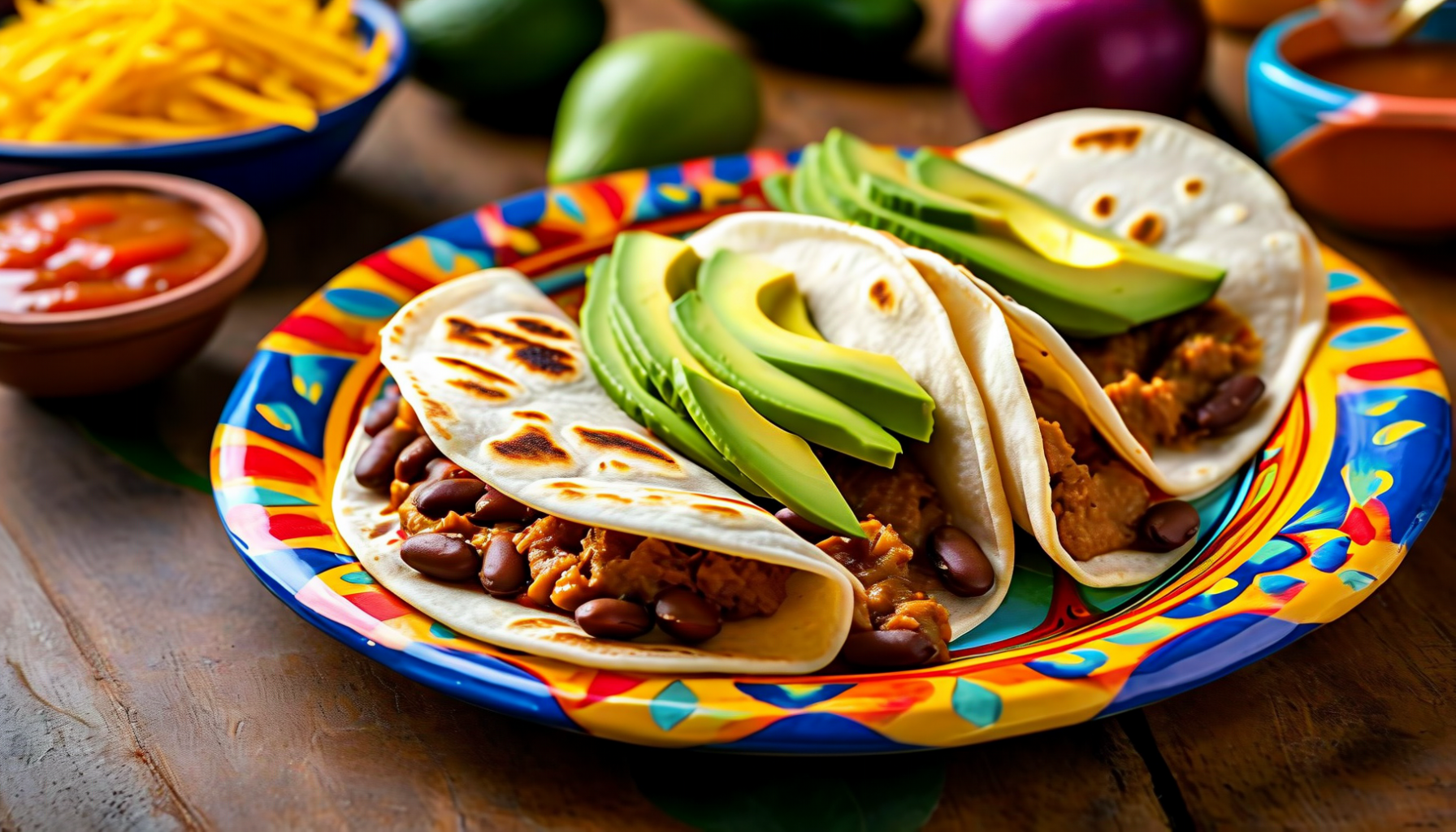
Baleadas
Honduran national dish · makes 6 · 30 min
Ingredients: For the tortillas: 400 g plain flour; 1 tsp salt; 1 tsp baking powder; 60 g lard or vegetable shortening; about 250 ml warm water. For the filling: 400 g cooked red kidney or small red beans with some of their liquid; 1 small onion, chopped; 1 garlic clove; oil; 200 ml sour cream or crème fraîche thinned with a little milk; 150 g hard salty white cheese (queso seco, or a dry feta or ricotta salata), crumbled.
Method: Rub the fat into the flour, salt and baking powder, then add warm water gradually and knead 5 minutes to a soft, smooth dough. Cover and rest 30 minutes — this matters, an unrested dough will not roll thin. Meanwhile fry the onion and garlic in oil until soft, add the beans with a little of their liquid and mash to a thick paste, cooking until it holds its shape; season well. Divide the dough into six, roll each into a thin round about 20 cm across, and cook on a dry hot griddle for about a minute a side until it puffs and takes brown spots — it must stay soft and foldable, not crisp. Spread beans over one half, spoon over the cream, scatter the crumbled cheese, fold in half, and eat immediately with your hands.
💡 For a baleada especial, add scrambled egg, sliced avocado, fried chorizo or shredded beef before folding. What you must not do is roll it up: a rolled one is a burrito and a Honduran will tell you so.
🌽 Recipe: Nacatamales
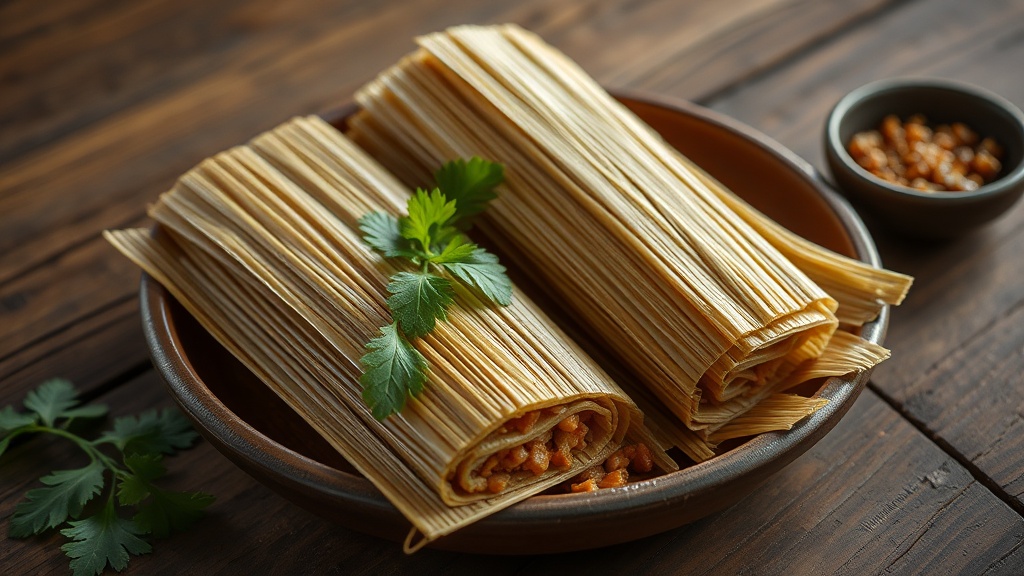
Nacatamales
Honduran Christmas and Sunday dish · makes 8 large · 1 h prep + 2–3 h steaming
Ingredients: For the dough: 750 g masa harina (nixtamalised corn flour); about 900 ml warm chicken stock; 200 g lard; 1 tbsp achiote paste dissolved in a little warm water; salt. For the filling: 800 g pork shoulder or chicken in large pieces, marinated overnight in sour orange or lime juice, garlic, cumin, salt and pepper; 3 potatoes, sliced; 1 onion, sliced; 1 red pepper, in strips; 100 g rice, soaked; a handful of green olives, capers and prunes or raisins; fresh coriander and mint. Plus large banana or plantain leaves and kitchen string.
Method: Pass the banana leaves briefly over a flame or dip them in boiling water until they soften and turn glossy, then cut into rough 30 cm squares. Beat the lard until light, then work in the masa harina, achiote and warm stock a little at a time until you have a soft spreadable dough the texture of thick mashed potato; season it aggressively, because the filling is not salty enough for both. Spread a thick layer of dough on each leaf square, lay a piece of meat on it with potato, onion, pepper, a spoon of soaked rice, an olive, a caper, a prune and a few herb leaves. Fold the leaf into a tight parcel — sides in, ends over — and tie with string. Stack the parcels upright in a big pot over a rack with a few centimetres of water, cover, and steam for 2½ to 3 hours, topping up the water. Rest 15 minutes before opening.
💡 Nacatamales are Christmas Eve and Sunday-morning food, made in batches of twenty or more by several people at once, and they freeze perfectly. Reheat by steaming, never in a microwave.
🐚 Recipe: Sopa de Caracol
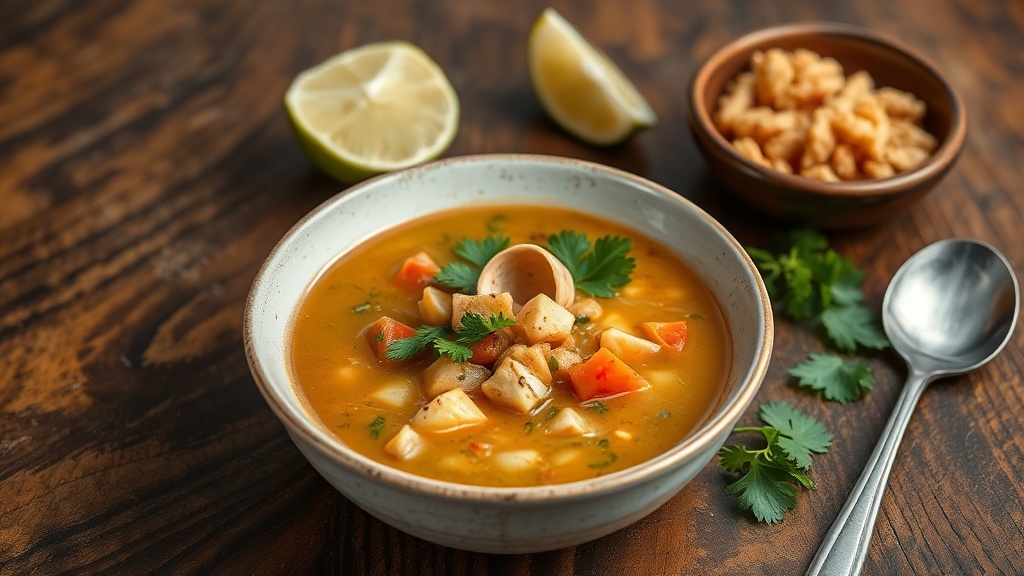
Sopa de Caracol
Garífuna conch soup · serves 4 · 25 min prep + 40 min cooking
Ingredients: 500 g conch meat (or, realistically, whelks, squid, or firm white fish plus a few prawns); juice of 2 limes; 800 ml coconut milk; 500 ml fish or chicken stock; 300 g yuca (cassava), peeled and cubed; 1 green plantain, in thick slices; 200 g malanga or taro, cubed (or waxy potato); 1 onion, chopped; 3 garlic cloves; 1 red pepper; 1 small chilli; 1 tsp ground cumin; a large bunch of coriander; salt, pepper; a knob of butter.
Method: If using real conch, tenderise it properly — pound it flat, then rub with lime juice and salt and leave 20 minutes; skipping this gives you rubber. Cut into bite-sized pieces. Soften the onion, garlic, pepper and chilli in butter in a heavy pot, add the cumin and cook a minute. Pour in the stock, add the yuca, plantain and malanga, and simmer until the roots are almost tender, about 20 minutes. Add the coconut milk and bring back to a bare simmer — do not let it boil hard or it will split. Add the conch and cook only 5–8 minutes; long cooking ruins it. Stir in most of the coriander, check the salt, and serve very hot with the rest of the coriander, lime wedges and fried plantain.
💡 Queen conch is a CITES-listed species and is overfished across the Caribbean, Honduras included. If you are cooking this outside the region, use a sustainable substitute — the soup is really about the coconut, the root vegetables and the coriander, and it works beautifully with white fish.
☕ Coffee, Beer and Guifiti
Honduras is Central America's largest coffee producer and sits among the top five or six in the world by volume — well ahead of Guatemala or Costa Rica, both of which have far better reputations. That gap is the story of Honduran coffee: for decades almost all of it left the country as anonymous bulk arabica to be blended, and the country got no credit for any of it.
That has been changing since the 2000s. Honduras now has six recognised growing regions — Copán, Opalaca, Montecillos, Comayagua, El Paraíso and Agalta — and Marcala, in La Paz, holds Central America's first coffee denomination of origin. Honduran lots win the Cup of Excellence outright and fetch specialty prices. Almost all of it is grown by smallholders on a hectare or two, in shade, at 1,200–1,700 m.
Drinking it there
The good news is that Honduran specialty coffee is now easy to drink in Honduras, which was not true fifteen years ago — Copán Ruinas, Santa Rosa de Copán, Marcala and Gracias all have proper cafés and roasters, and several fincas around Copán and Marcala run tours and stays. In an ordinary comedor, though, expect café con leche made from something forgettable.
Beer
Salva Vida — "lifesaver" — is the national lager and is what you will be handed. Port Royal is a slightly better pilsner, Imperial the third. All three come from the same brewery. Craft beer exists in Tegucigalpa, San Pedro Sula and on Roatán and is improving.
Guifiti
The Garífuna drink: rum infused with roots, barks and herbs — a couple of dozen ingredients, the recipe varying by household — left to steep until it turns dark. It is drunk as a medicine and as a shot, it is bitter and aromatic, and it is one of the more distinctive things to drink anywhere in Central America. Buy it in a coastal Garífuna town, not in a souvenir shop.
Soft drinks
Horchata here is rice-and-cinnamon; refrescos of tamarind, hibiscus and passion fruit are everywhere; and fresh licuados of mango, papaya, banana and soursop are the standard breakfast drink. Water: drink bottled or filtered, which is what Hondurans do too.
🗿 Visiting Copán
The site sits a kilometre outside the town of Copán Ruinas, which is one of the pleasantest small towns in Central America — cobbled, low, wrapped around a leafy plaza, and entirely geared to the ruins without having been ruined by them. Most people stay two nights and wish they had stayed three.
What to see, in order
The Great Plaza and its stelae first, in early light. Then the Hieroglyphic Stairway under its canopy. Then the Acropolis, the ball court and Altar Q — the extraordinary square altar showing all sixteen rulers seated around its four sides, passing the sceptre from the founder to the man who commissioned it. Finish at the site museum for the full-scale Rosalila replica, which is the single best thing at Copán.
The tunnels
A separate and more expensive ticket buys you into the excavation tunnels under the Acropolis, where you can see the buried earlier structures directly, including a corner of the real Rosalila and the Jaguar Tomb. It is a short walk, it is hot and cramped, and if you have any interest in how Maya cities were actually built it is worth every lempira.
Las Sepulturas and Los Sapos
Two satellite sites within walking or short-drive distance. Las Sepulturas is a residential compound of the nobility — houses rather than temples, and much better for imagining the place inhabited. Los Sapos is a small carved outcrop on a hill with a view.
Macaw Mountain and the birds
Macaw Mountain outside the town is a rescue and breeding centre for scarlet macaws, and it is the source of the birds now flying free over the ruins — the reintroduction has been genuinely successful and macaws in the Great Plaza at dawn are a normal sight rather than a lucky one.
Practicalities: the site opens at 8:00 and the light and the temperature are both best in the first two hours. Guides wait at the entrance and a good one is worth taking — the inscriptions are meaningless without one. Copán Ruinas is 3 hours from San Pedro Sula by shuttle or bus, and it is also a short hop from Antigua Guatemala, which is how a large share of visitors arrive. The border at El Florido is straightforward.
🤿 Roatán, Utila and Guanaja
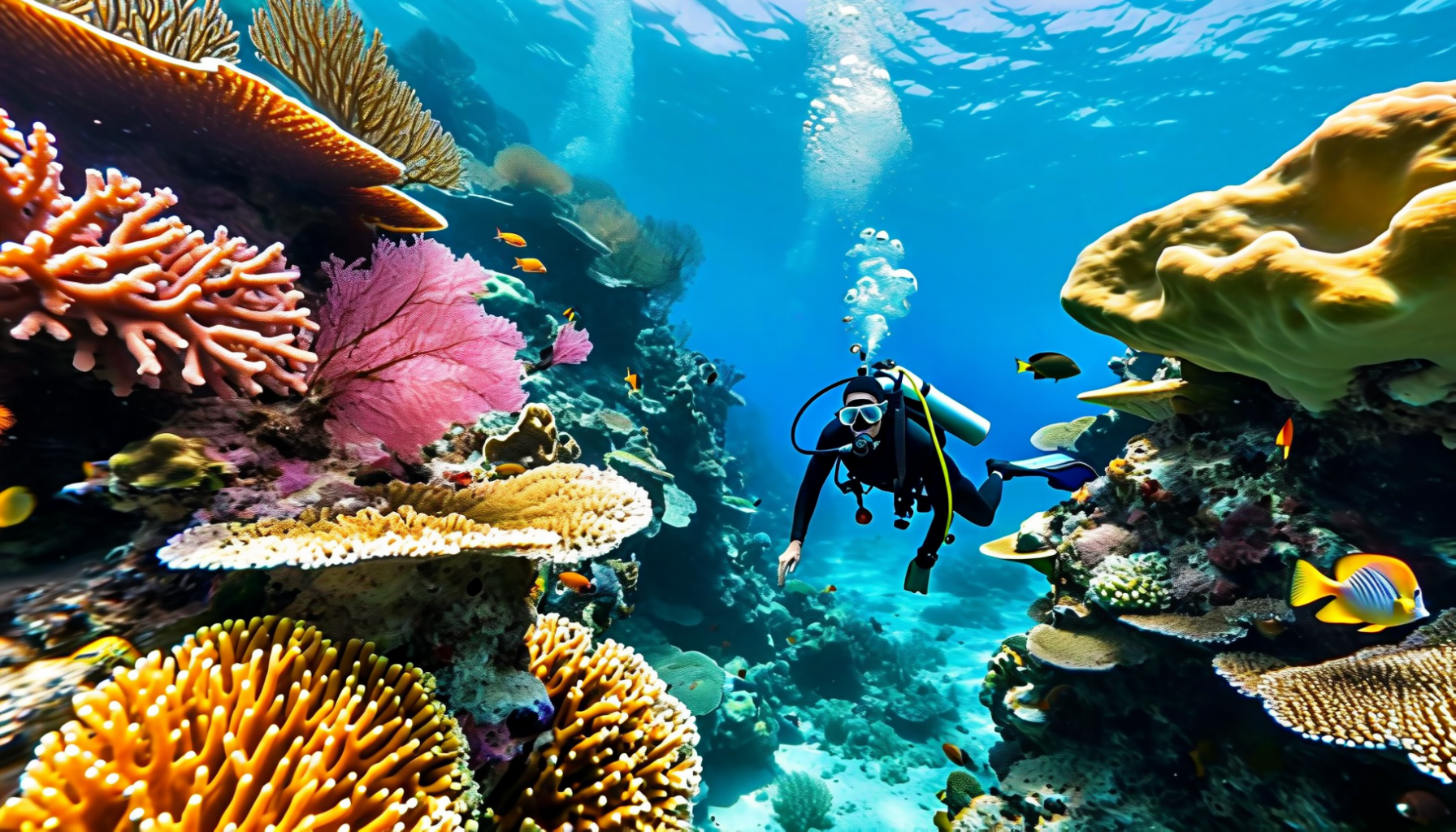
The Bay Islands sit 50–70 km off the north coast on the Mesoamerican Barrier Reef — the largest reef system in the Atlantic and the second largest on Earth. The reef here comes very close to shore and drops off steeply, which means world-class diving is reachable from the beach and a boat ride is measured in minutes rather than an hour.
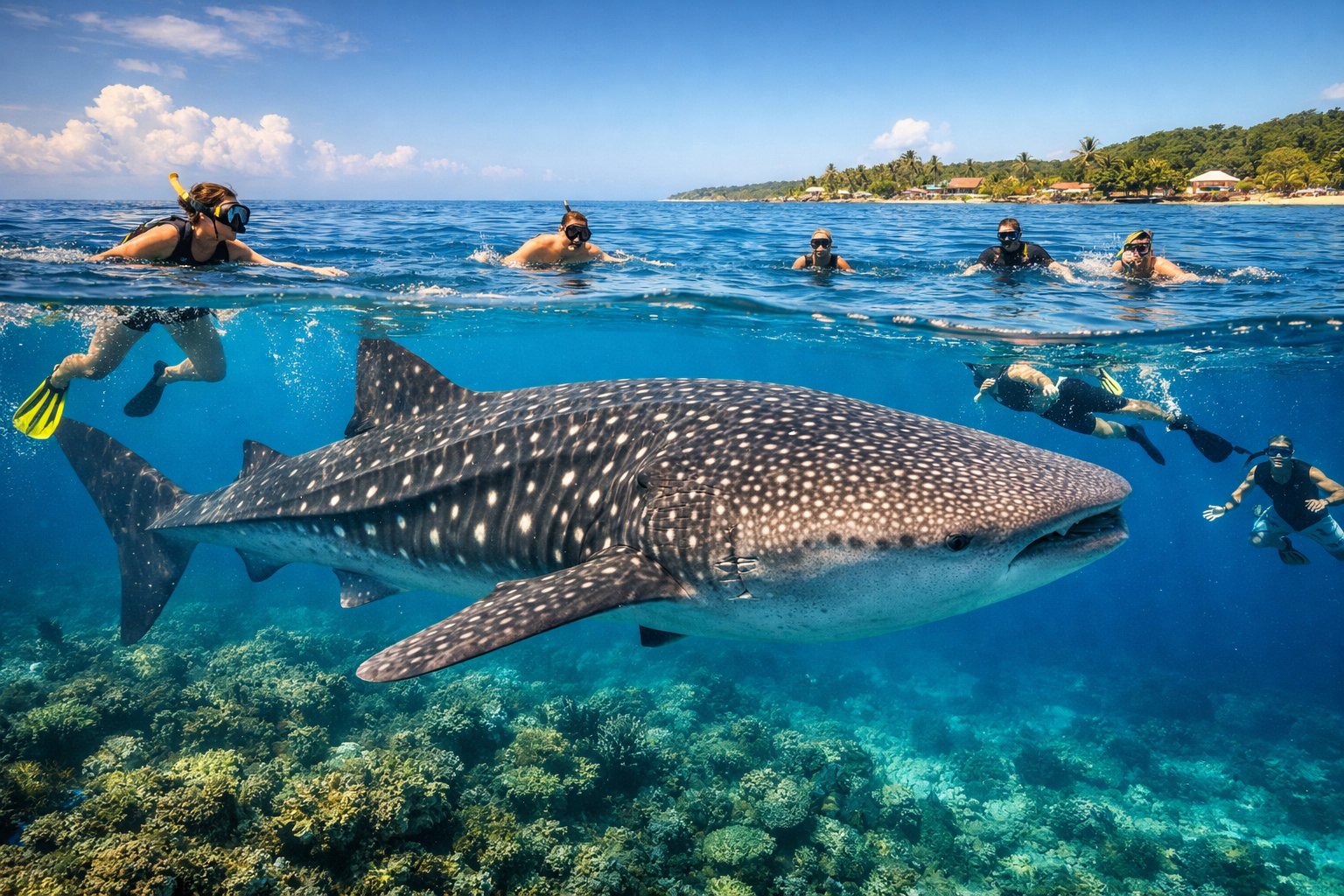
Utila
Small, flat, cheap and dive-obsessed. For thirty years Utila has been one of the two or three cheapest places in the world to do a PADI Open Water course, and the town is essentially a strip of dive shops, cheap rooms and bars. It is where you go to learn to dive and to see whale sharks, and it has a scruffy, sociable, entirely un-luxurious character that people either love or leave after a day.
Roatán
Much bigger, much more developed, and now a major cruise port — two terminals at Coxen Hole and Mahogany Bay, and up to several thousand passengers ashore on a busy day. The west end (West End and West Bay) has the beaches, resorts and diving; the east end is quieter, more local and more interesting. On a cruise day the west end is unrecognisable; go east, or go diving.
Guanaja
The forgotten one. Hilly, green, almost roadless, reached by a small plane or a slow boat, with most of its people living in a dense settlement built out over the water called Bonacca. It was flattened by Hurricane Mitch in 1998 and never fully rebuilt for tourism, which is exactly why people who want the Bay Islands of thirty years ago go there.
The diving
Wall diving, swim-throughs, sponges and a good chance of eagle rays and turtles. Signature sites: the wreck of the Prince Albert and Mary's Place off Roatán, Black Hills and the Halliburton wreck off Utila. The reef has taken real damage from bleaching and disease and the lionfish invasion is being fought with organised culling — several shops will hand you a spear.
🏖️ The North Coast
The mainland coast between Puerto Cortés and Trujillo is where most Hondurans go on holiday, and it is a very different proposition from the islands: hotter, greener, cheaper, Garífuna, and with rainforest coming down almost to the sand.
La Ceiba
The coast's main city and the gateway to everything — ferries to Roatán and Utila, flights to the Mosquitia, and the road up the Río Cangrejal into Pico Bonito. The city itself is more useful than beautiful, except in the third week of May when its carnival makes it the best place in the country to be.
Tela and the Lancetilla garden
Tela has the better beaches and two national parks either side of it — Punta Sal (Jeannette Kawas) to the west and Punta Izopo to the east, both reachable by boat through mangrove with howler monkeys and a very good chance of manatee. Just inland is Lancetilla, planted by United Fruit in 1926 as a research station and now one of the largest tropical botanical gardens in the world.
Trujillo
The oldest Spanish town on the coast, where Columbus's people said the first mainland mass in 1502, where O. Henry hid in 1896, and where the American filibuster William Walker was executed by firing squad in 1860 — his grave is in the old cemetery. It is quiet, has a hilltop fort and a long sweep of bay, and almost nobody stops there.
Pico Bonito
The park behind La Ceiba climbs from near sea level to 2,435 m in about fifteen kilometres, which produces an absurd density of habitats and one of the best bird lists in Central America. The accessible part is the Cangrejal valley — lodges, whitewater rafting, waterfall hikes and a suspension bridge — while the interior is genuinely trackless.
🌴 La Mosquitia
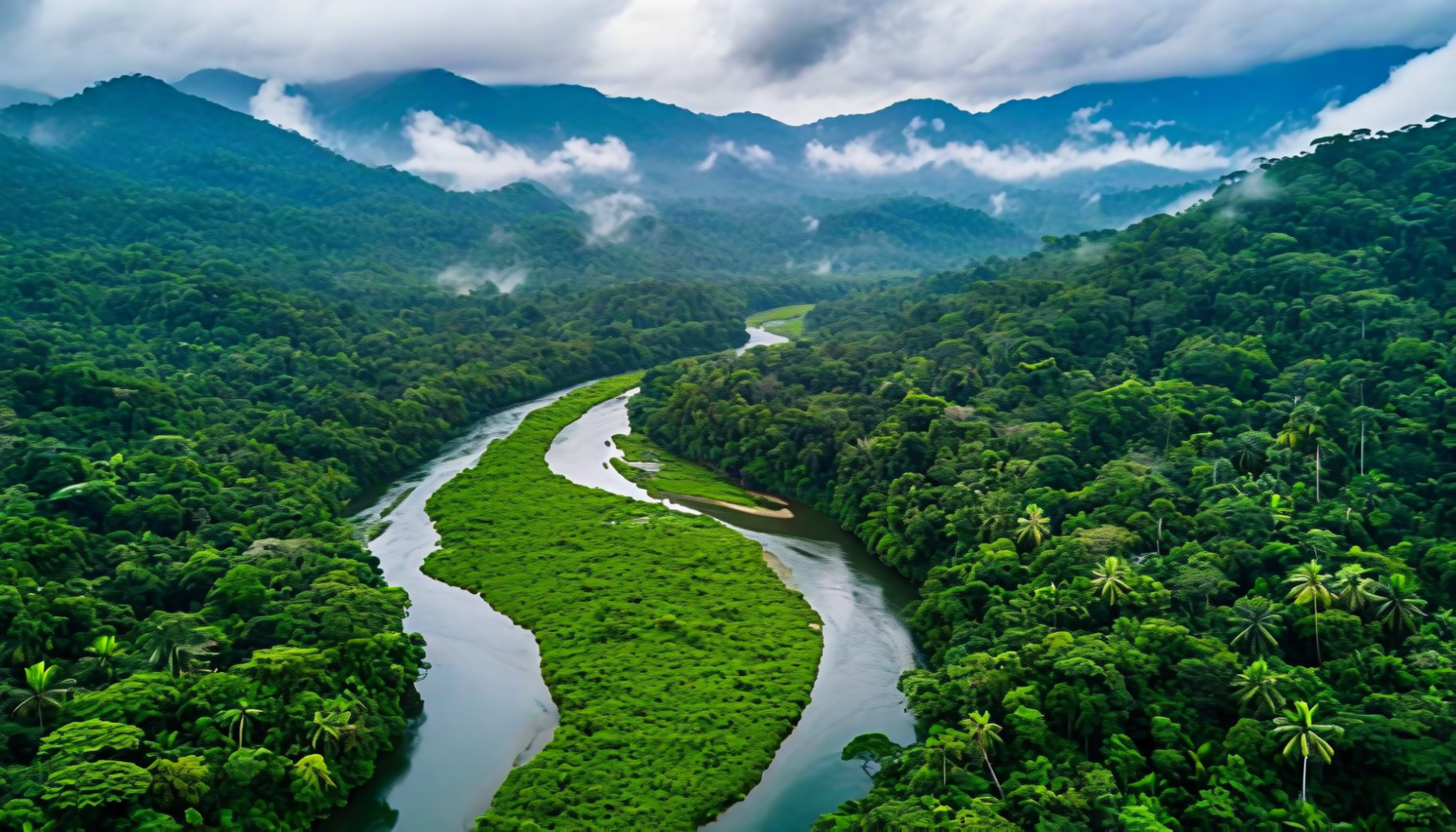
The eastern third of Honduras has no road connection to the rest of the country worth the name. La Mosquitia is rainforest, pine savannah, coastal lagoons and rivers, home to the Miskito, Pech, Tawahka and Garífuna, and it contains the Río Plátano Biosphere Reserve — one of the last big pieces of Central American lowland rainforest and a World Heritage site since 1982.
Getting in
Small aircraft from La Ceiba to Palacios, Brus Laguna, Ahuas or Puerto Lempira, then boat. There is also a rough overland-and-boat route via Batalla. Trips into the reserve are organised through community tourism operators such as those in Las Marías, and they take days, not hours. This is expedition travel, not a day out.
What is there
Jaguar, tapir, giant anteater, harpy eagle, scarlet macaw, four species of monkey and West Indian manatee in the lagoons. Also petroglyphs at Walpaulban Sirpi on the upper Plátano, whose makers are unknown. The birding and the sheer intactness of the forest are the draw.
The pressure on it
Serious. Illegal logging, cattle ranching cutting into the reserve from the west, and the fact that a roadless region with an unpatrolled coastline is extremely useful to the cocaine trade — clandestine airstrips in the Mosquitia have been a documented problem for two decades. The reserve has been on the World Heritage in Danger list continuously since 2011.
Safety
Realistically the least straightforward part of Honduras to travel in, and not because of ordinary crime — it is remote, medical help is hours or days away, and the drug economy is present. Go with an established community operator, do not improvise, and check current advice before committing.
⛰️ The Western Highlands
The west is the part of Honduras that most visitors skip and the part that most rewards a slow week: cool colonial towns at 1,000–1,800 m, coffee country, Lenca villages, the highest mountain in the country and almost no other foreigners.
Gracias
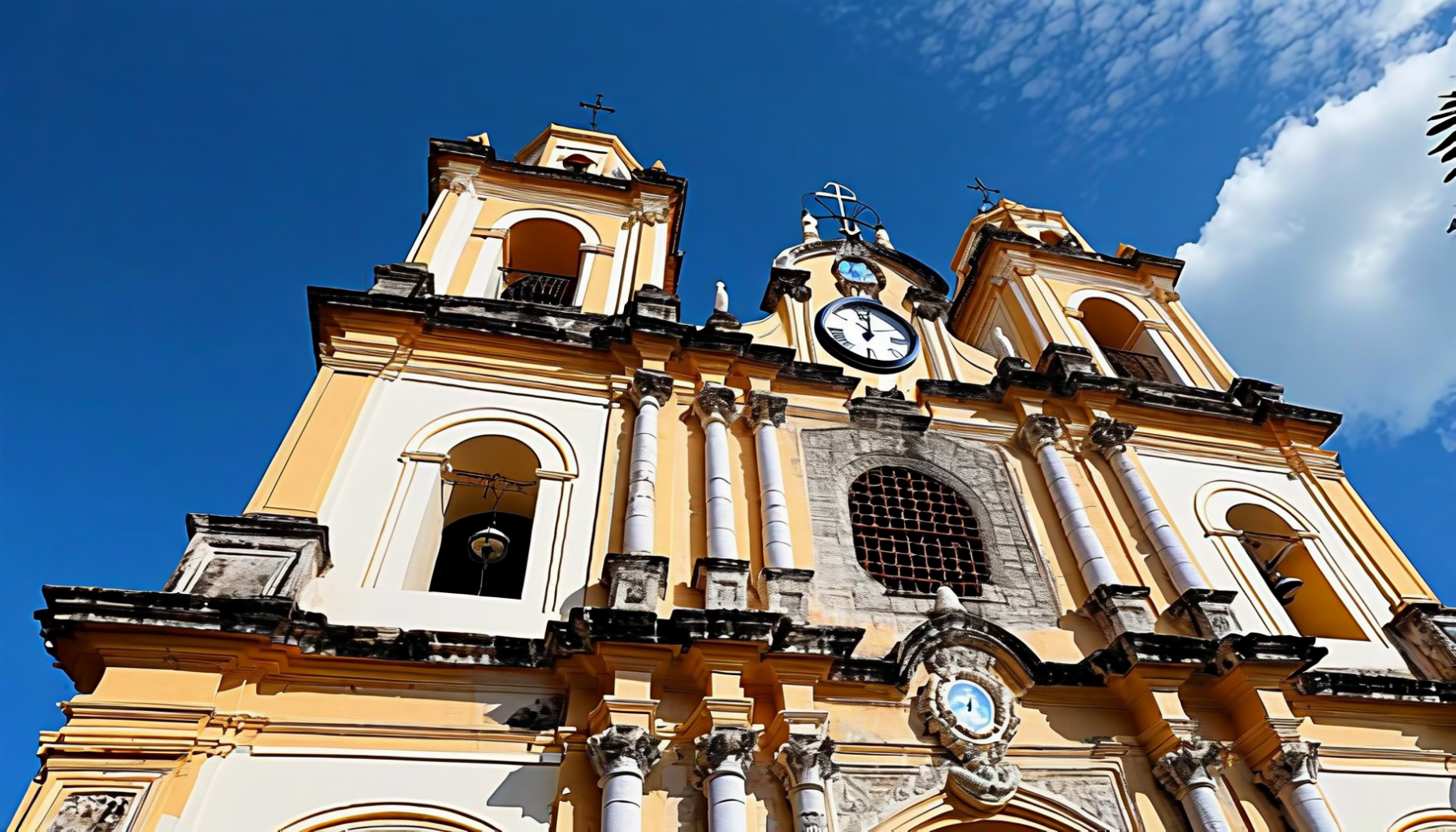
A small colonial town below the Celaque massif that was, improbably, the seat of the Audiencia de los Confines — the Spanish high court for all of Central America — in the 1540s. It has a fort on a hill, three fine old churches, and the excellent Aguas Termales hot springs in the forest just outside, which are the single most pleasant thing to do in western Honduras after dark.
Celaque National Park
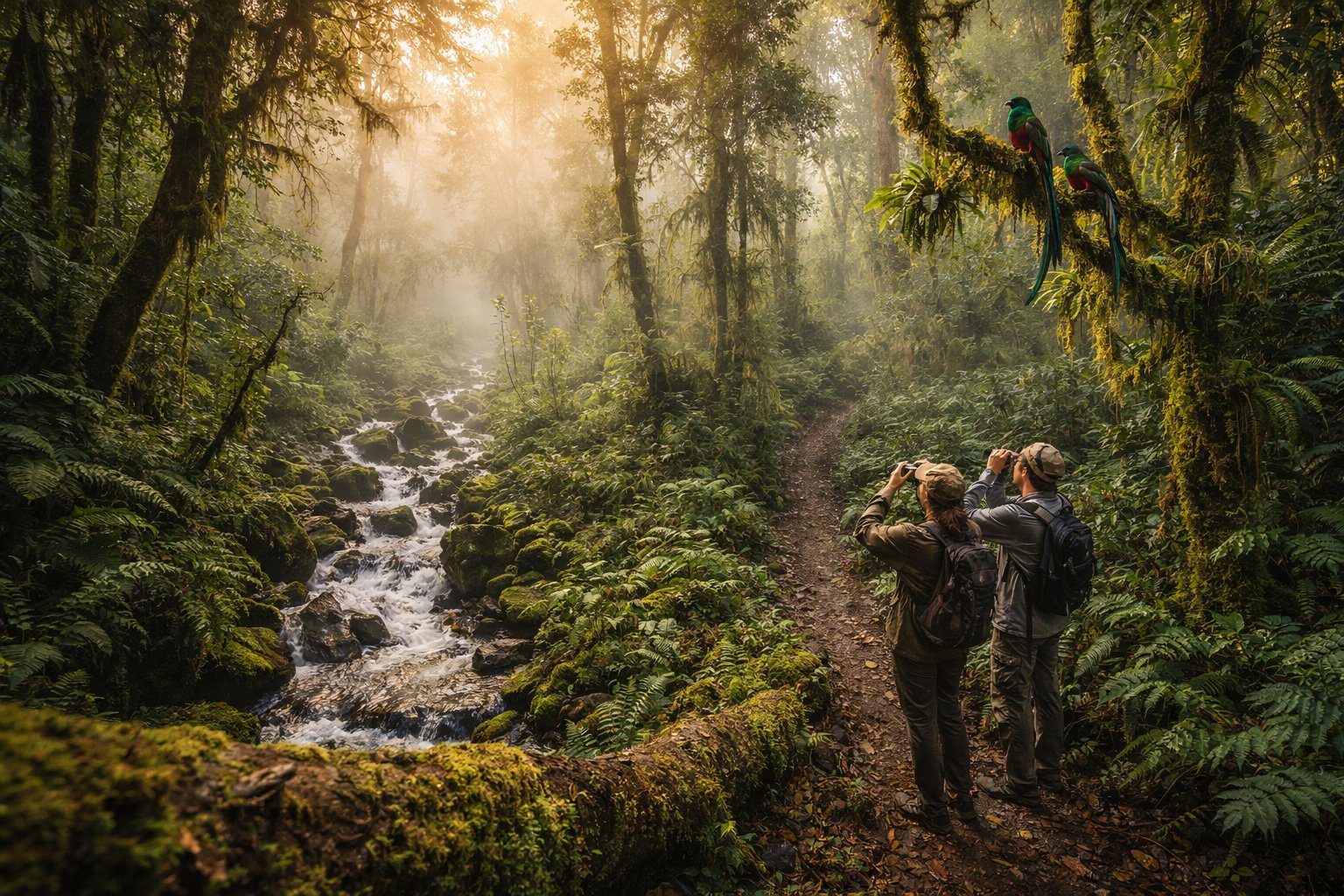
The country's high point, Cerro Las Minas at 2,870 m, in dense cloud forest above Gracias. The standard ascent is a hard two days with a night at a shelter; the lower trails are a straightforward day walk and get you into the mossy forest without the summit push. Quetzals are present and are seen more reliably here than at La Tigra.
La Esperanza and the Lenca towns
La Esperanza is the highest town in Honduras and the centre of Lenca country; the Thursday and Sunday markets are the real thing rather than a tourist market. Around it, La Campa, San Manuel Colohete and Belén Gualcho have astonishing colonial churches in villages of a few hundred people, and the road between them is one of the best drives in the country.
Santa Rosa de Copán
The coffee capital and a genuinely handsome hill town with a cigar factory you can tour, good cafés and no tourism to speak of. It works well as a base between Copán Ruinas and Gracias, and the coffee is served the way it should be.
🏙️ Tegucigalpa
Tegucigalpa is not a beautiful city and it does not pretend otherwise. It is a mining town that became a capital, built into a bowl of hills at around 1,000 m, with a colonial core, a great deal of unplanned sprawl up the slopes, and a traffic problem that the geography makes insoluble. It also has the best museums in the country and a climate that is a relief after the coast.
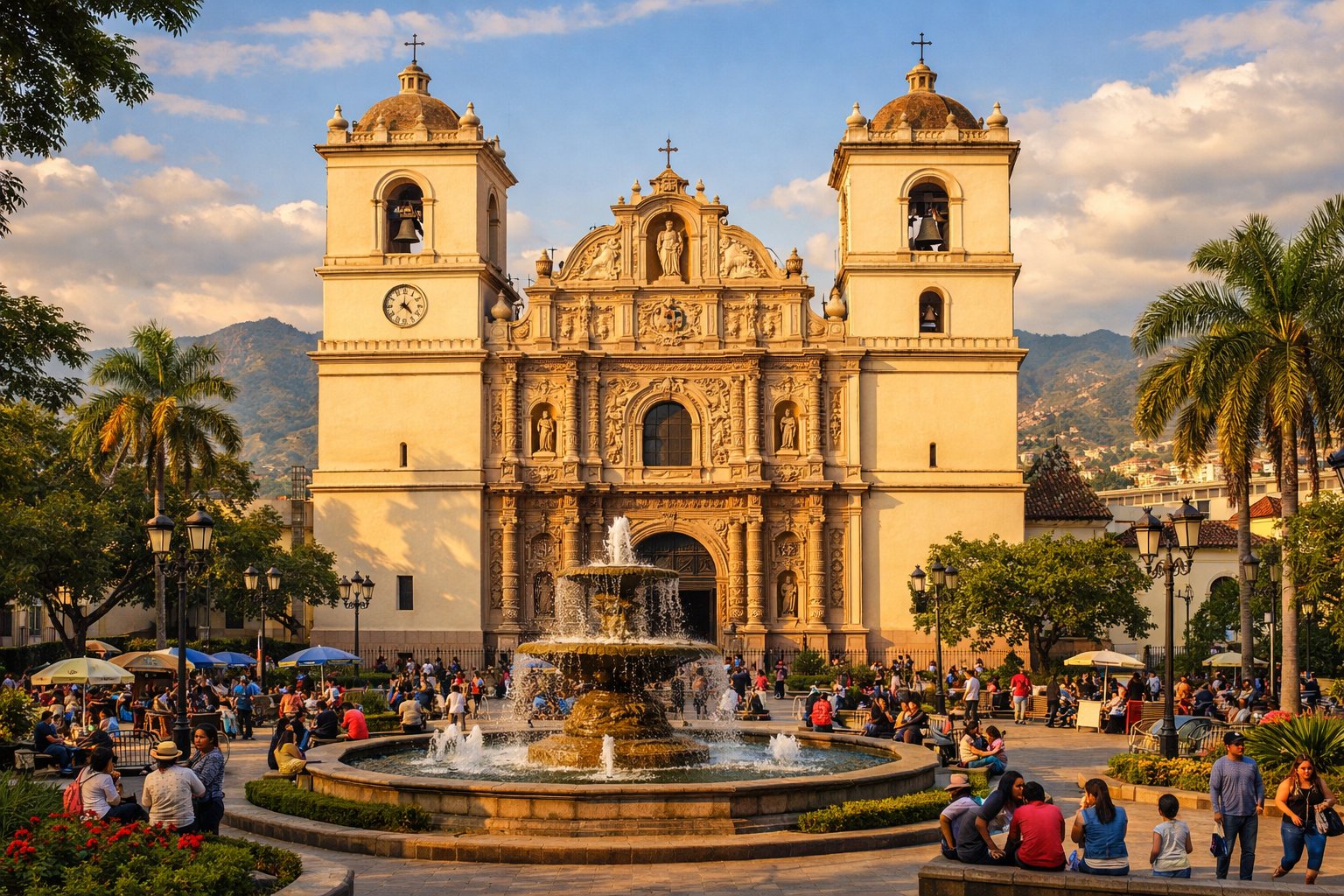
The centre
The Plaza Morazán with the cathedral and Morazán's statue, the pedestrianised Calle Peatonal, the old presidential palace, and the Museo para la Identidad Nacional — much the best museum in Honduras, with a very good Copán section including a virtual reconstruction of the site. Nearby, the Iglesia Los Dolores is the prettiest church in the city.
Comayagüela
Across the Choluteca river, the capital's twin and its market district. It is where the buses go from and where the big markets are; it is also the part of the city with the worst reputation, and the standard advice is to go by day, with purpose, and without valuables on show.
Valle de Ángeles and Santa Lucía
Two small former mining villages half an hour up in the pine hills, cobbled, cool and full of craft shops, and the standard Sunday outing for the capital. Santa Lucía is the prettier and quieter; Valle de Ángeles has the shopping and the food.
El Picacho and the Christ
The hill above the city carries a large concrete Cristo del Picacho and a park, and the view over the bowl is the only way to understand the city's shape. Go in the late afternoon.
🚨 Safety: The Honest Version
⚠️ Check the current advisory before you book. Honduras is not a country where a page written months ago should be your last word on safety. Most Western foreign ministries currently advise increased caution for the country as a whole, with stronger warnings for specific areas. Read your own ministry's current text, and register your trip if your country offers it.
Now the substance, because the reputation and the current reality have come apart. Around 2011–2012 Honduras had the highest murder rate in the world — roughly 86 per 100,000 nationally, and San Pedro Sula was repeatedly named the world's most violent city. Those numbers were real and that is where the reputation comes from.
They are also more than a decade old. The rate has fallen a long way since: to somewhere in the region of 30 per 100,000 in recent years — still very high by European standards, roughly forty times the Czech rate, and comparable to its regional neighbours rather than exceptional among them. Honduras is no longer the most dangerous country in the hemisphere and has not been for years. Both halves of that sentence matter.
Who it actually happens to
The violence is overwhelmingly concentrated: gang territory in specific neighbourhoods of Tegucigalpa, San Pedro Sula and La Ceiba; land and drug conflicts in the countryside; and disputes between people who know each other. Tourists are very rarely the victims of homicide. What tourists actually encounter is opportunistic theft, phone snatching and, occasionally, armed robbery — the same things that happen in every large Latin American city.
Where visitors mostly go
Roatán, Utila, Copán Ruinas, Gracias, Santa Rosa and the Cangrejal valley are all substantially safer than the national figures suggest, because the national figures are driven by places tourists never see. Roatán has its own crime problems, but they are those of a Caribbean resort island, not of San Pedro Sula.
Practical rules
Move between cities by day, and prefer ejecutivo or first-class buses over local ones. Don't hail street taxis in the big cities — use a hotel taxi or an app. Keep a phone in your pocket rather than your hand on the street. Don't wear jewellery or show a laptop. If you are robbed, hand it over immediately; resistance is what turns a robbery into something worse. And keep a copy of your passport rather than the original on you.
Specific areas to think about
The Mosquitia and remote parts of Gracias a Dios and Colón departments carry stronger warnings in most advisories, largely because of the drug trade and remoteness. So do certain colonias of the two big cities, which no visitor has any reason to enter. The state of emergency in force in parts of the country since 2022 suspends some constitutional guarantees — expect police and army checkpoints and carry ID.
✈️ Getting There and Getting Around
There are no direct flights to Honduras from Europe. Every route involves at least one change, and the sensible options are through a US hub, through Panama City, through Mexico City, or through Madrid to a neighbouring Central American capital and onward.
From Europe
The common routings are Madrid → San Salvador or Guatemala City and on; Madrid or Amsterdam → Panama City with Copa, which connects to both Honduran mainland airports and to Roatán; or a US hub — Miami, Houston, Atlanta — which is usually the fastest but requires a US transit authorisation (ESTA or a visa) even if you never leave the airport. Expect 16–22 hours door to door and one long layover.
The airports
San Pedro Sula (SAP) is the main international gateway and the right arrival point for the coast, the islands and Copán. Palmerola (XPL), opened in 2021 near Comayagua, now handles most international traffic for the capital and is about 80 minutes' drive from Tegucigalpa. Roatán (RTB) takes direct flights from the US and Canada, which is how most divers arrive. La Ceiba (LCE) serves the islands and the Mosquitia.
A word about Toncontín
Tegucigalpa's old airport (TGU) was for decades on every list of the world's most dangerous approaches — a short runway in a bowl of hills requiring a steep banking turn on final. It still handles some domestic and regional flights, but the opening of Palmerola in 2021 moved most traffic away. If you read that flying into Tegucigalpa is terrifying, that was written before 2021.
Getting around
Long-distance buses are good and cheap: Hedman Alas and Viana run comfortable first-class services between San Pedro Sula, Tegucigalpa, La Ceiba and Copán. Tourist shuttles connect Copán, Antigua and León. Domestic flights (CM Airlines, Lanhsa) link the mainland to Roatán, Utila and the Mosquitia. Ferries — the Galaxy Wave and Utila Dream — run La Ceiba to Roatán and Utila; the Roatán crossing is notoriously rough and the crew hand out sick bags without being asked.
💰 What It Costs
Honduras is one of the cheapest countries in the Americas outside the Bay Islands, and one of the more expensive Caribbean islands on Roatán's west end. Budget for two different countries.
Money
The lempira (HNL), around 26 to the US dollar — conveniently close to one Czech crown per lempira. US dollars are widely accepted on the Bay Islands and in tourist businesses; on the mainland use lempiras. Cards work in cities and resorts, not in villages. ATMs are common but charge; withdraw larger amounts less often, and use machines inside banks or malls rather than on the street.
Daily budget, mainland
Backpacker: €25–35 a day — dorm or basic room €8–15, comedor meals €3–5, bus fares in single euros. Comfortable: €55–90 — a good hotel, restaurant meals, shuttles and guides. Copán's site entry is around €15, the tunnels a similar amount again, and a guide roughly €25 for a group.
Bay Islands
Utila stays cheap: a PADI Open Water course runs roughly €270–330 including several nights' accommodation at most shops, which is about as low as it goes anywhere on Earth. Roatán's west end is a different market — €100–250 a night for a decent hotel in season, restaurant prices closer to US levels, and a two-tank dive around €70.
Value tips
Eat where the buses stop. Take Hedman Alas rather than a private transfer between the big cities — it costs a fraction and is more comfortable. On Roatán, stay in West End rather than West Bay and walk to the beach. Book Utila dive courses on arrival rather than online. And go in the shoulder months: May and September–October are much cheaper everywhere and, if you dodge the weather, no worse.
📋 Practical Information
Visas
Most European citizens, including Czechs, and citizens of the US, Canada, the UK and Australia enter visa-free for 90 days. The trap: Honduras is part of the CA-4 agreement with Guatemala, El Salvador and Nicaragua, and the 90 days are shared across all four countries — crossing between them does not reset the clock. Passport valid six months; a small departure fee may apply at land borders.
Health
No vaccination is required unless you are arriving from a yellow-fever country. Recommended: hepatitis A, typhoid, and up-to-date tetanus and MMR. Dengue is the real and constant risk — Honduras has had major outbreaks in recent years — so use repellent by day as well as at night. Malaria risk is low nationally but real in Gracias a Dios and the Mosquitia. Drink bottled or filtered water. Good private hospitals exist in Tegucigalpa, San Pedro Sula and on Roatán; take proper insurance including diving cover if you plan to dive, and note that Roatán has a hyperbaric chamber.
Connectivity and power
Mobile coverage from Tigo and Claro is good in cities and along the main roads and patchy in the Mosquitia; a local SIM or eSIM is cheap and worth having. Electricity is 110 V, 60 Hz with US-style flat two-pin sockets — bring an adapter, and check that anything you plug in is dual-voltage, because European 230 V-only appliances will not work.
Etiquette and language
Spanish is essential outside the islands and the resorts — very little English is spoken on the mainland. Greet before you ask (buenos días first, question second); Hondurans are notably courteous and abruptness reads badly. Tipping is around 10% where service is not included. Ask before photographing people, particularly in Lenca and Garífuna communities. And Hondurans are catrachos, not hondureños, when they are talking among themselves — using it is a small courtesy that lands well.
Emergency numbers: 911 covers police, fire and ambulance nationally. Most European countries do not have an embassy in Tegucigalpa and are accredited from Mexico City or Guatemala City — check where your own consular cover actually sits before you go, because it will not be in Honduras, and note the address of the nearest honorary consul.
❓ Misconceptions
"It's the murder capital of the world."
It was, around 2011–12, and San Pedro Sula genuinely topped the global city rankings. The homicide rate has since fallen by roughly two thirds, to around 30 per 100,000. That is still high — but it is no longer the highest in the hemisphere, and travel writing that leads with the 2012 figure is thirteen years out of date.
"The Football War was about football."
It was about land and 300,000 Salvadoran migrants in a country that had just passed a land reform expelling them. The World Cup qualifiers in June 1969 were the flashpoint and the excuse. Two to three thousand people died and the Central American Common Market collapsed; it was not a comic incident.
"Honduras is a banana republic."
The phrase was coined here, in 1904, by O. Henry, and at the time it was accurate. Today bananas are not even close to the main export: coffee is, and Honduras is Central America's largest producer. Textiles and remittances — around a quarter of GDP — outweigh all agriculture combined.
"Copán is a minor site."
Copán is smaller than Tikal and less famous than Chichén Itzá, and it has the finest sculpture in the Maya world and the longest Maya inscription in existence. Art historians rank it first; anyone who has seen the stelae in the Great Plaza understands why within about a minute.
"Ciudad Blanca, the lost White City, was discovered in 2015."
A LiDAR survey in 2012 and an expedition in 2015 did find a genuine, substantial, previously unmapped archaeological site in the Mosquitia — that part is real and important. What followed was a wave of coverage about a "lost city" and a "City of the Monkey God" that a large number of Honduran and international archaeologists publicly objected to, both for the sensationalism and for the erasure of the local people who had always known the area. There is a site; there is no legendary white city.
"The Bay Islands are just like the mainland."
They speak English, they are largely Protestant, their population descends from Cayman Islanders and freed Africans, they were British until 1859, and islanders talk about "going to Honduras" when they take the ferry. Politically Honduran; culturally Caribbean.
✍️ Author's Note
Honduras is the Central American country people skip. Guatemala has Antigua and Tikal, Costa Rica has the brand, Belize has the reef and the English, Nicaragua has the volcanoes — and Honduras has a reputation from 2012 that has outlived the numbers behind it by more than a decade. That is a shame, because it holds the best Maya sculpture in existence, one of the world's cheapest places to learn to dive, a stretch of the second-largest barrier reef on the planet, and a coastal people whose ancestors are the only Africans in the Americas who were never enslaved.
It is also a country with real problems and this page has not soft-pedalled them: a former president serving 45 years in an American prison for cocaine trafficking, an environmental defender murdered in her home, a World Heritage rainforest on the danger list, and a quarter of the economy consisting of money sent home by people who left. None of that is decoration and none of it should be skipped in favour of the beaches.
But the honest summary for a traveller is straightforward. Go via San Pedro Sula. Give Copán two nights and take a guide. Spend a week on Utila or the quiet end of Roatán. Get to the Garífuna coast and eat something with coconut in it. If you have a second week, go west to Gracias and the Lenca towns, which almost nobody does. Move between cities by day, don't flash a phone, and check the current advisory before you book — that last one is not a Honduras-specific instruction, it is just one that matters more here than in Austria.
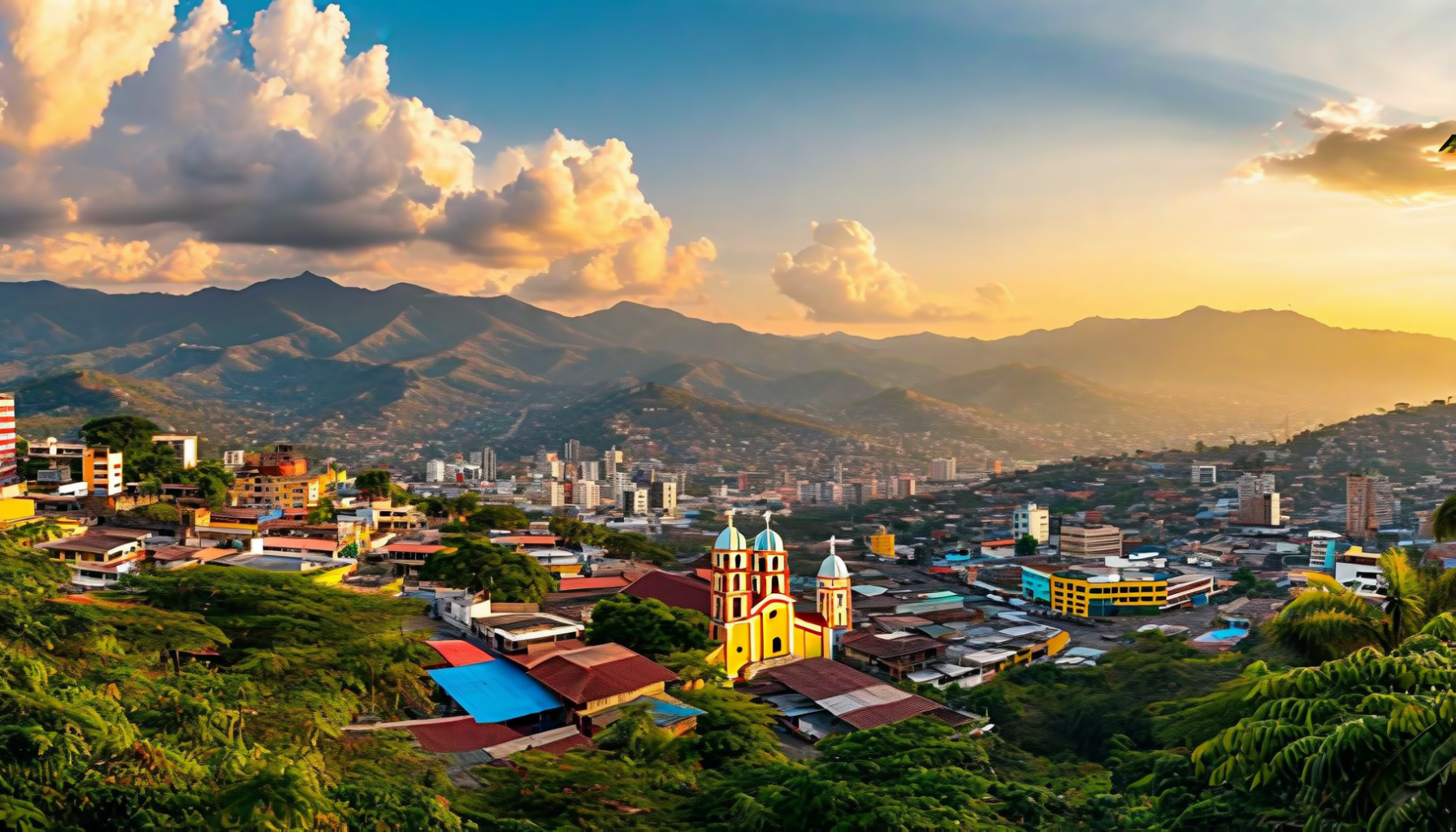
On the images
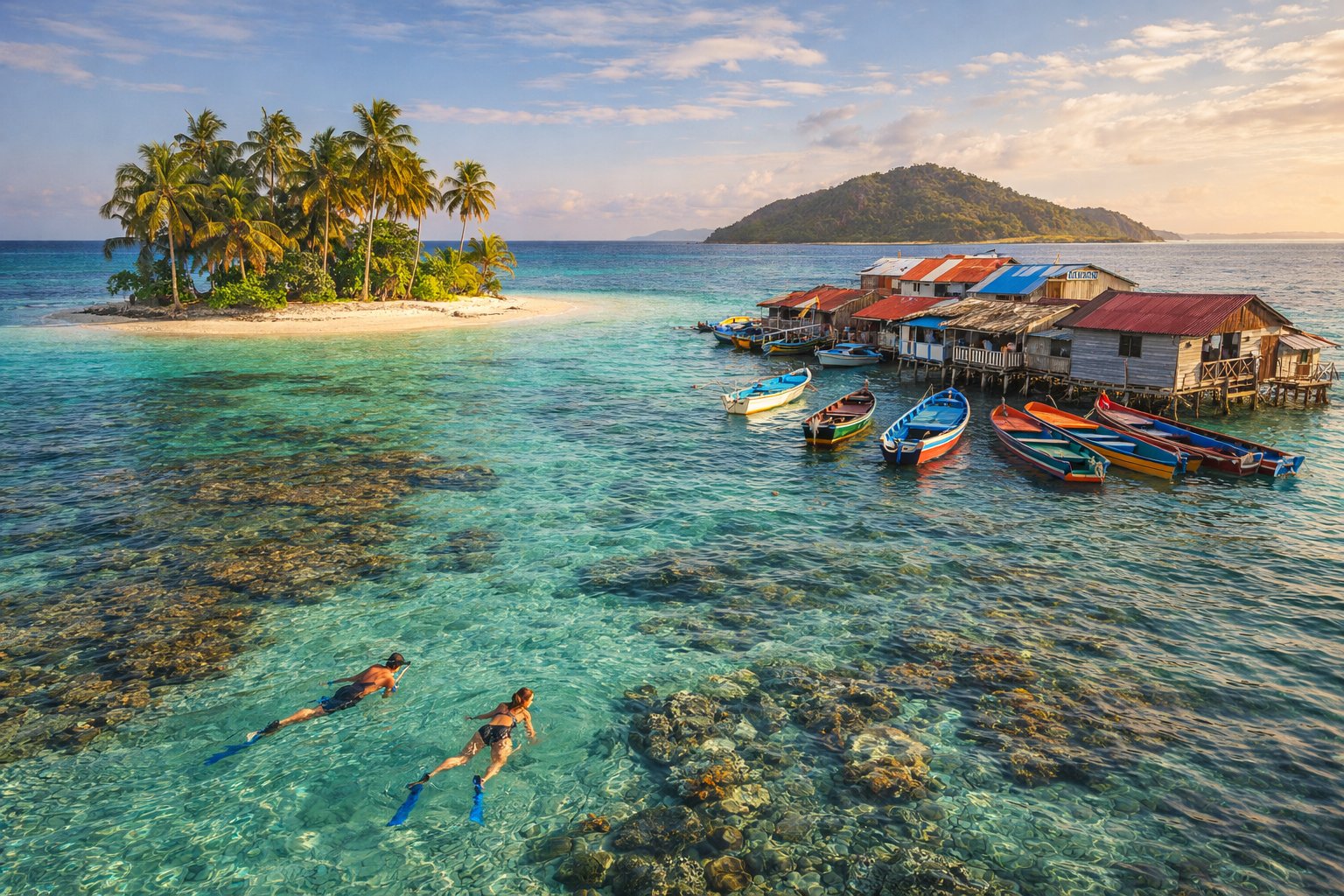
The photographs here are illustrative reconstructions rather than documentary images, and where one diverges from reality the caption says so and corrects it: Tegucigalpa's cathedral has one tower and not two; the reef in the diving picture is Indo-Pacific rather than Caribbean; the whale sharks are met in open water, not on a shallow reef; Chachahuate's houses stand on sand, not on stilts; the quetzals in La Tigra are a lucky day. Two further notes for the record. Two images this page's predecessor relied on — of Copán and of Roatán — are missing from the site's own storage and returned 404s, so a different Copán image is doing the work of the hero and there is no picture of Roatán at all. And one supplied recipe image of "baleadas" showed three tortillas rolled around minced beef, which is a burrito rather than the national dish; it was left out entirely rather than published with a caption explaining it away.
Support This Project 🌍
This World Travel Factbook is a labor of love – free to use for all travelers. If you find it helpful, consider supporting its continued development.