01 Overview
Suriname is South America's smallest sovereign nation and its only Dutch-speaking country — a place where Hindu temples stand beside mosques, where Javanese gamelan echoes through colonial streets, and where about 93% of the land remains covered in pristine Amazon rainforest — the highest forest cover of any country on Earth. This is one of the most ethnically diverse countries on Earth, a cultural kaleidoscope born from centuries of colonial plantation labor that drew people from Africa, India, Indonesia, China, and beyond.
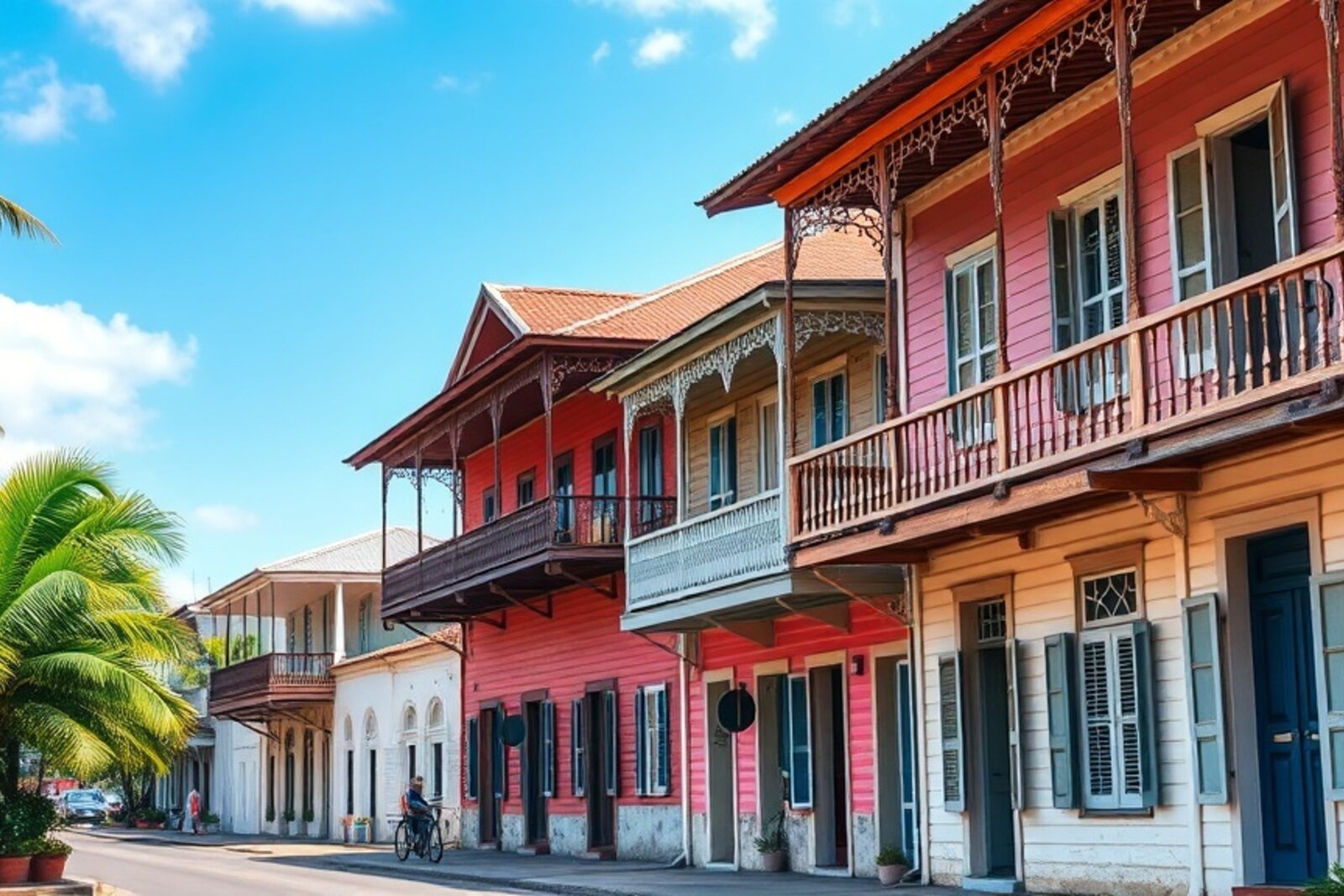
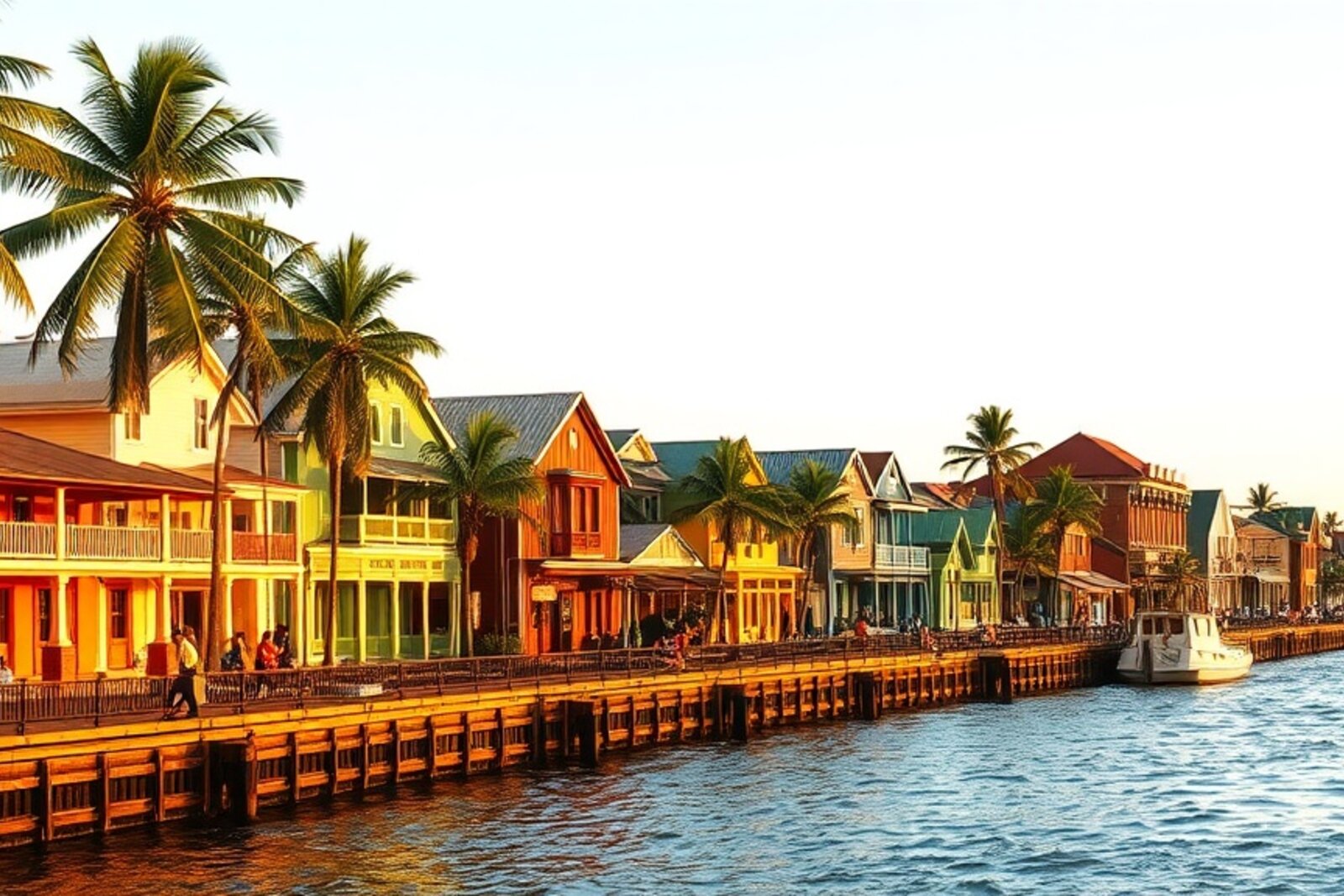
The Waterkant — Paramaribo's historic waterfront along the Suriname River
The capital Paramaribo, a UNESCO World Heritage Site, enchants visitors with its wooden Dutch colonial architecture painted in tropical pastels. But the real adventure lies in the interior — a vast, roadless wilderness of rivers, jungle canopy, and isolated Maroon and Indigenous communities accessible only by boat or small aircraft. Suriname is not on most travelers' radars, and that is precisely what makes it so rewarding.
02 Name & Identity
The name Suriname derives from the Surinen, an Arawak-speaking Indigenous people who inhabited the region before European contact and who had been displaced from it by the 16th century. The suffix -ame, recurring across Surinamese river names, is thought to come from the Lokono word for a river or creek mouth. The country was known as Dutch Guiana during the colonial period, a name it carried from 1667 until independence on November 25, 1975. The Republic of Suriname maintains its Dutch legal and administrative heritage while forging a uniquely South American identity that draws from dozens of ethnic traditions.
Suriname is a constitutional democracy and a member of CARICOM (the Caribbean Community), despite being located on the South American mainland. The national motto Justitia – Pietas – Fides (Justice – Piety – Fidelity) reflects the country's aspiration for harmony among its remarkably diverse population. The green, white, red, and gold flag features a central star symbolizing unity and the golden future of the nation.
03 Geography
Suriname occupies 163,821 square kilometers on the northeastern shoulder of South America, bordered by Guyana to the west, French Guiana to the east, Brazil to the south, and the Atlantic Ocean to the north. The country divides naturally into three zones: a narrow coastal plain where most people live, a central savanna belt, and the vast southern interior of dense Amazonian rainforest stretching to the Brazilian border.
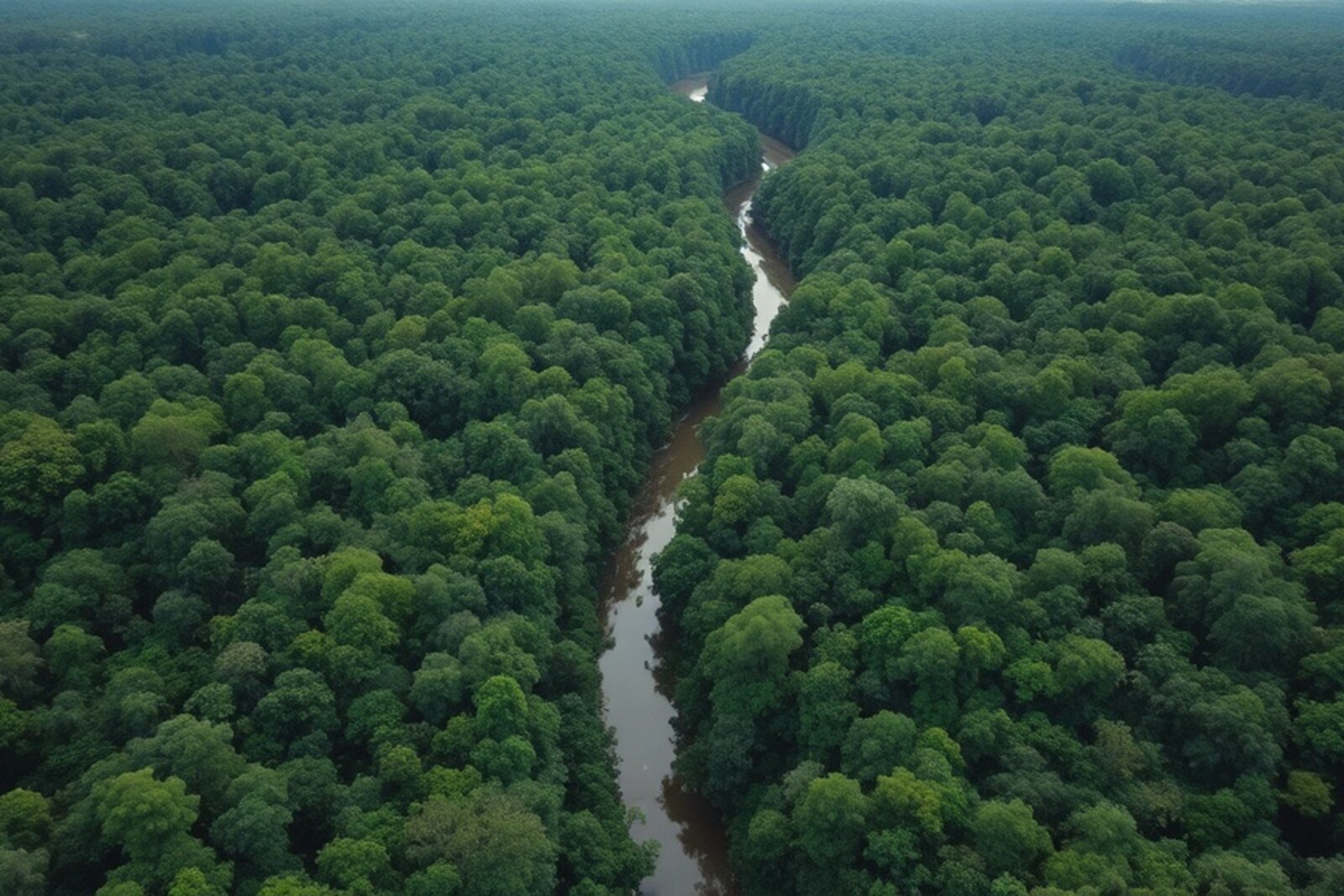
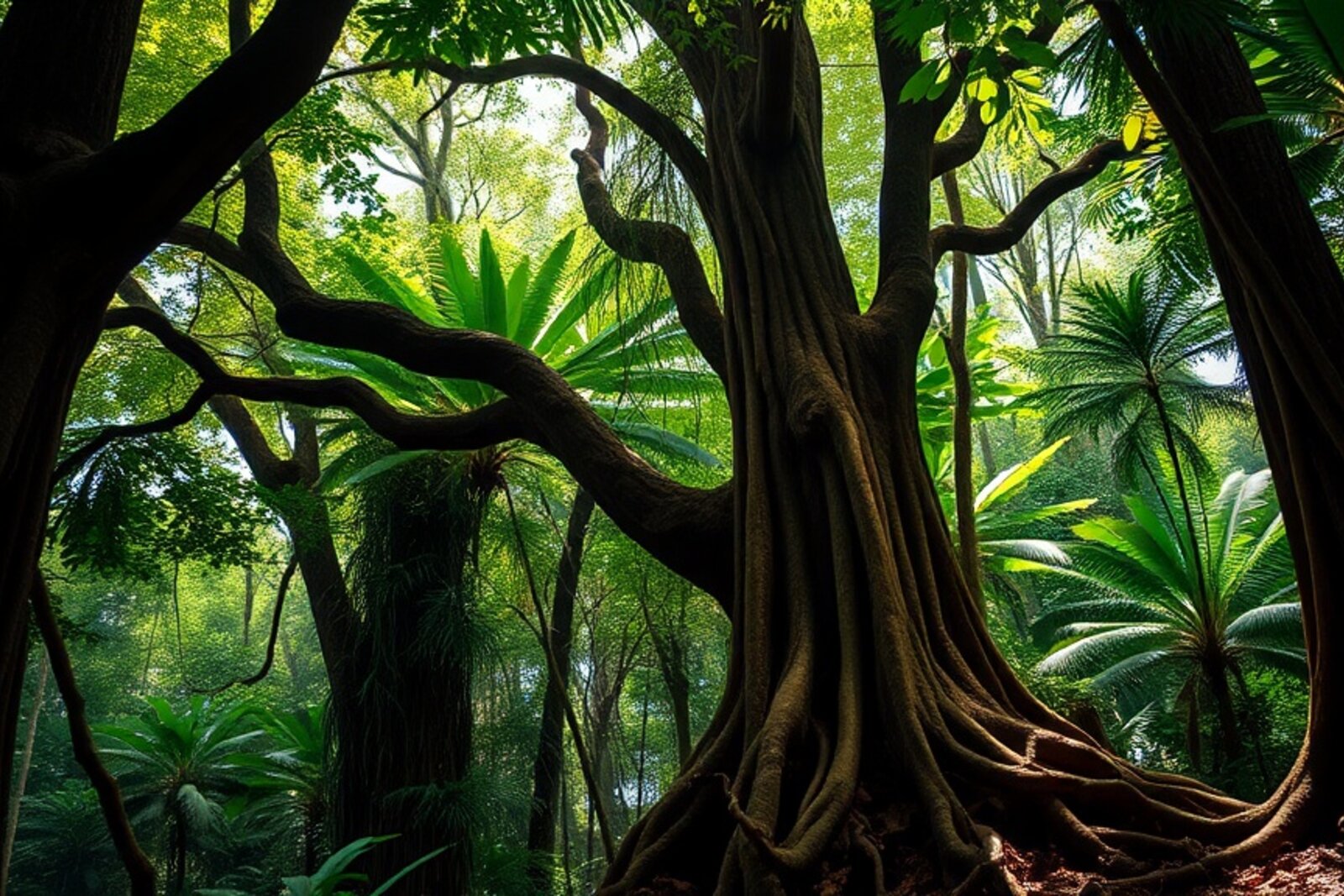
About 93% of Suriname is covered in pristine Amazon rainforest
The Suriname River, Coppename, Saramacca, and Marowijne rivers are the country's lifelines, serving as highways into the interior where roads do not reach. The Brokopondo Reservoir, one of the world's largest artificial lakes, was created in the 1960s to power an aluminum smelter. The country's highest point, Juliana Top at 1,280 meters, rises in the remote Wilhelmina Mountains inside the Central Suriname Nature Reserve; its Indigenous name is Ipinumin, “he who stands alone.”
03b Map
Suriname on the northeastern shoulder of South America — Paramaribo on the coast, roadless rainforest to the south
04 History
Suriname's history is defined by one of history's most remarkable trades: in the 1667 Treaty of Breda, the Dutch exchanged New Amsterdam (Manhattan) with the English in return for keeping Suriname. The Dutch prized the colony's sugar plantations over what would become New York City — a decision that seems astonishing in hindsight but reflected the economics of the seventeenth century.
The plantation system brought enslaved Africans in enormous numbers, many of whom escaped into the jungle to establish free Maroon communities that survive to this day. The Maroon wars of the eighteenth century forced the colonial government into peace treaties recognizing Maroon autonomy — a rare concession in the Americas. After abolition in 1863, indentured laborers arrived from British India and the Dutch East Indies (Java), creating the ethnic mosaic visible today.
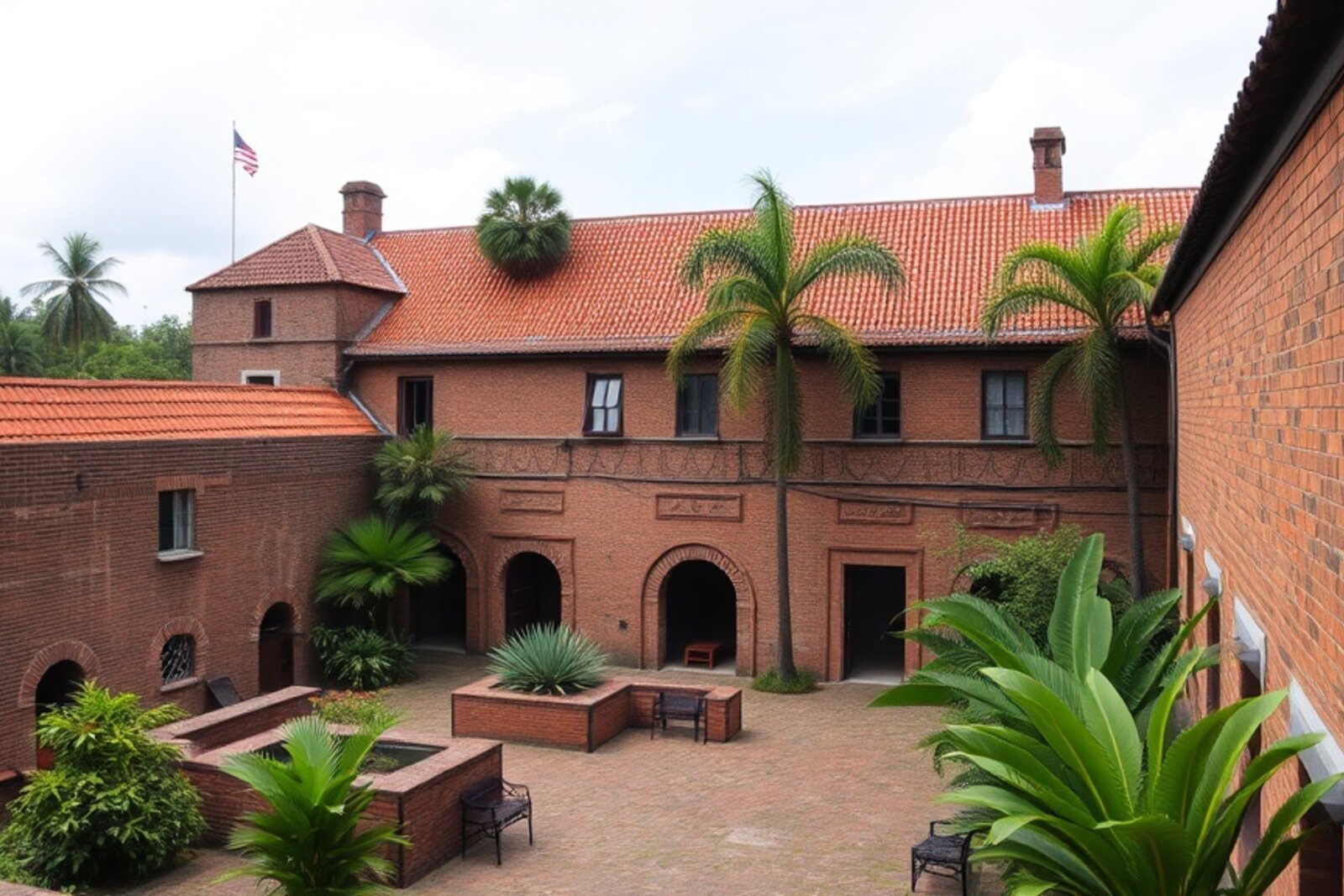
Fort Zeelandia — the colonial fortress at the heart of Paramaribo's history
Independence came peacefully in 1975, though roughly a third of the population emigrated to the Netherlands. Military coups in 1980 and 1990, including the December Murders of fifteen political opponents, scarred the young nation. Democracy was restored in 1991, and Suriname has since maintained civilian government while grappling with economic challenges and the legacy of its turbulent past. The May 2025 general election ended Chan Santokhi's single term after a period of severe austerity; on 16 July 2025 the National Assembly installed Jennifer Geerlings-Simons, a physician and leader of the National Democratic Party, as Suriname's eleventh president and the first woman to hold the office. She inherits a country on the edge of transformation: TotalEnergies and APA took a US$10.5 billion final investment decision on the offshore GranMorgu field in Block 58, with first oil targeted for 2028 — a windfall that could reshape a nation of 645,000 people, for better or worse.
05 People & Culture
No country in the Americas matches Suriname's ethnic diversity. The population of approximately 645,000 (2026 estimate) includes Hindustani (27%), Maroons (22%), Creoles (16%), Javanese (14%), mixed-race (13%), Indigenous peoples (4%), Chinese (2%), and others. This extraordinary mix creates a society where Diwali, Eid al-Fitr, Chinese New Year, and Christmas are all nationally recognized holidays.
Sranan Tongo, an English-based Creole language, serves as the lingua franca alongside official Dutch. Many Surinamese are multilingual, switching between Dutch, Sranan Tongo, Sarnami Hindi, Javanese, and various Maroon and Indigenous languages. The Maroon communities of the interior maintain West African cultural practices including woodcarving, textile arts, and the Winti spiritual tradition that have survived largely intact for over three centuries.
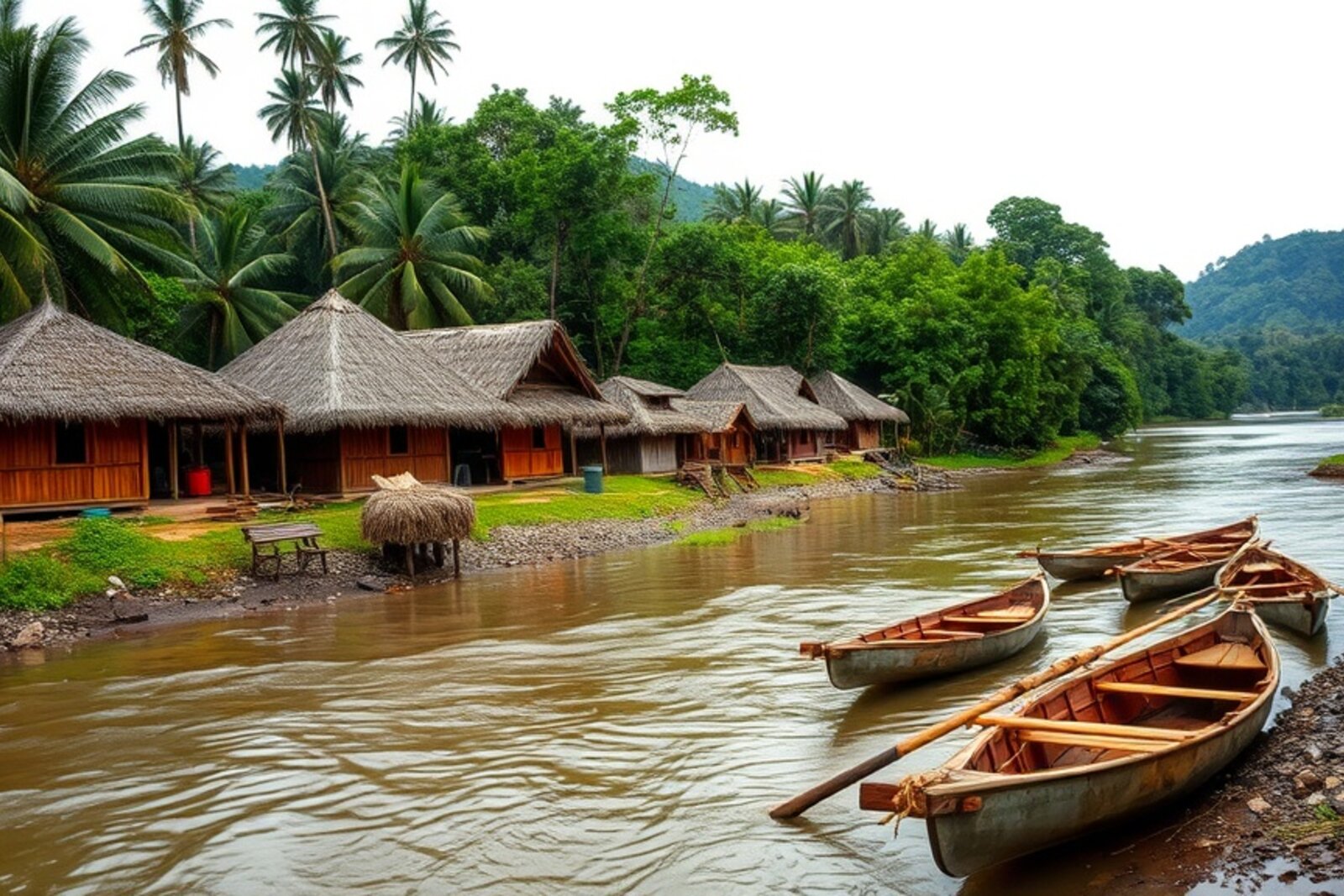
A Maroon village along the Upper Suriname River — living heritage of resistance
06 Paramaribo
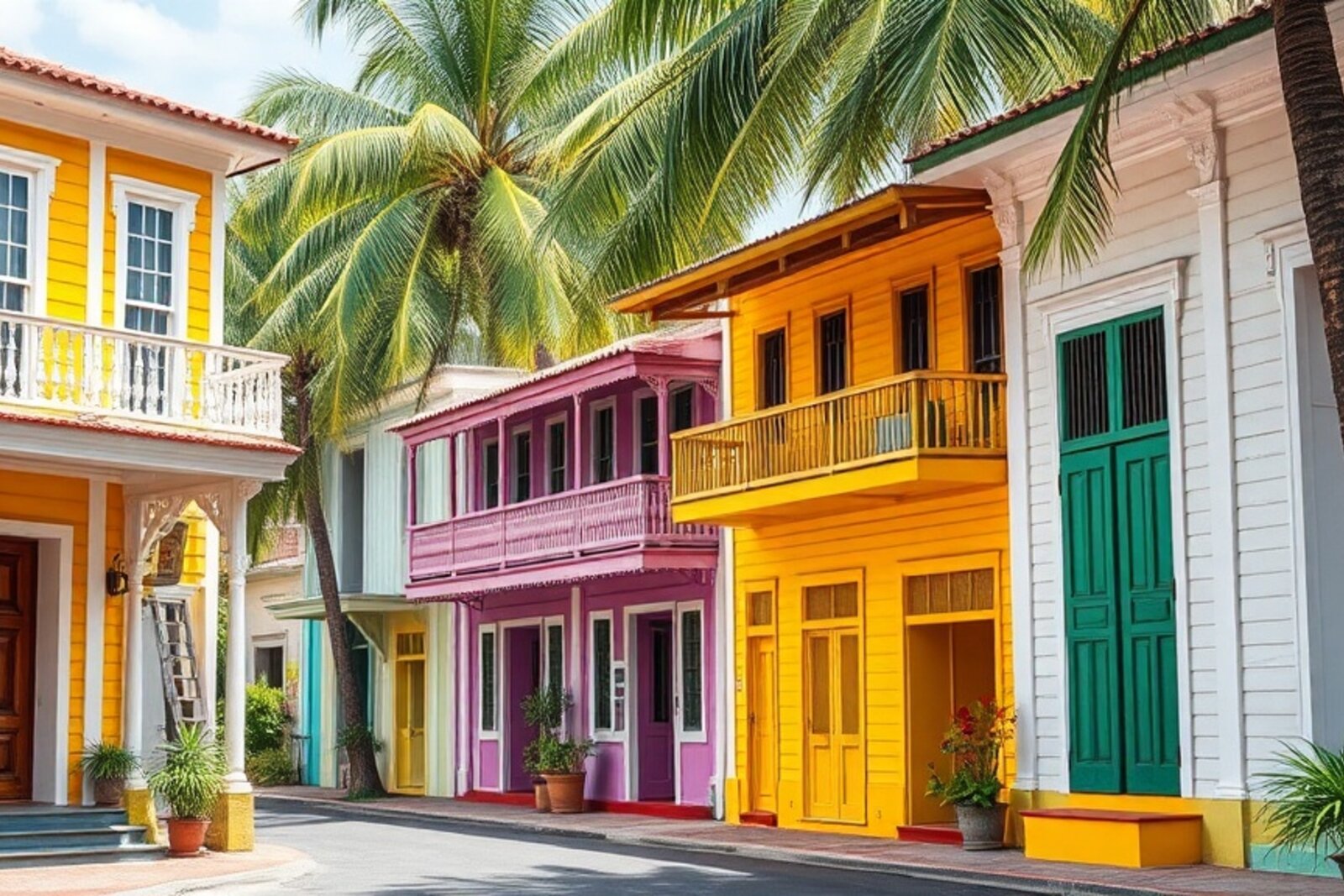
Paramaribo is unlike any other capital in the Americas. Its UNESCO-listed historic center showcases seventeenth- and eighteenth-century Dutch colonial architecture rendered entirely in tropical hardwood rather than the brick and stone typical of the Netherlands. Wooden buildings with elaborate facades, painted in whites, yellows, and greens, line streets shaded by mahogany trees. The city is small enough to explore on foot, with most attractions concentrated along the Suriname River waterfront.
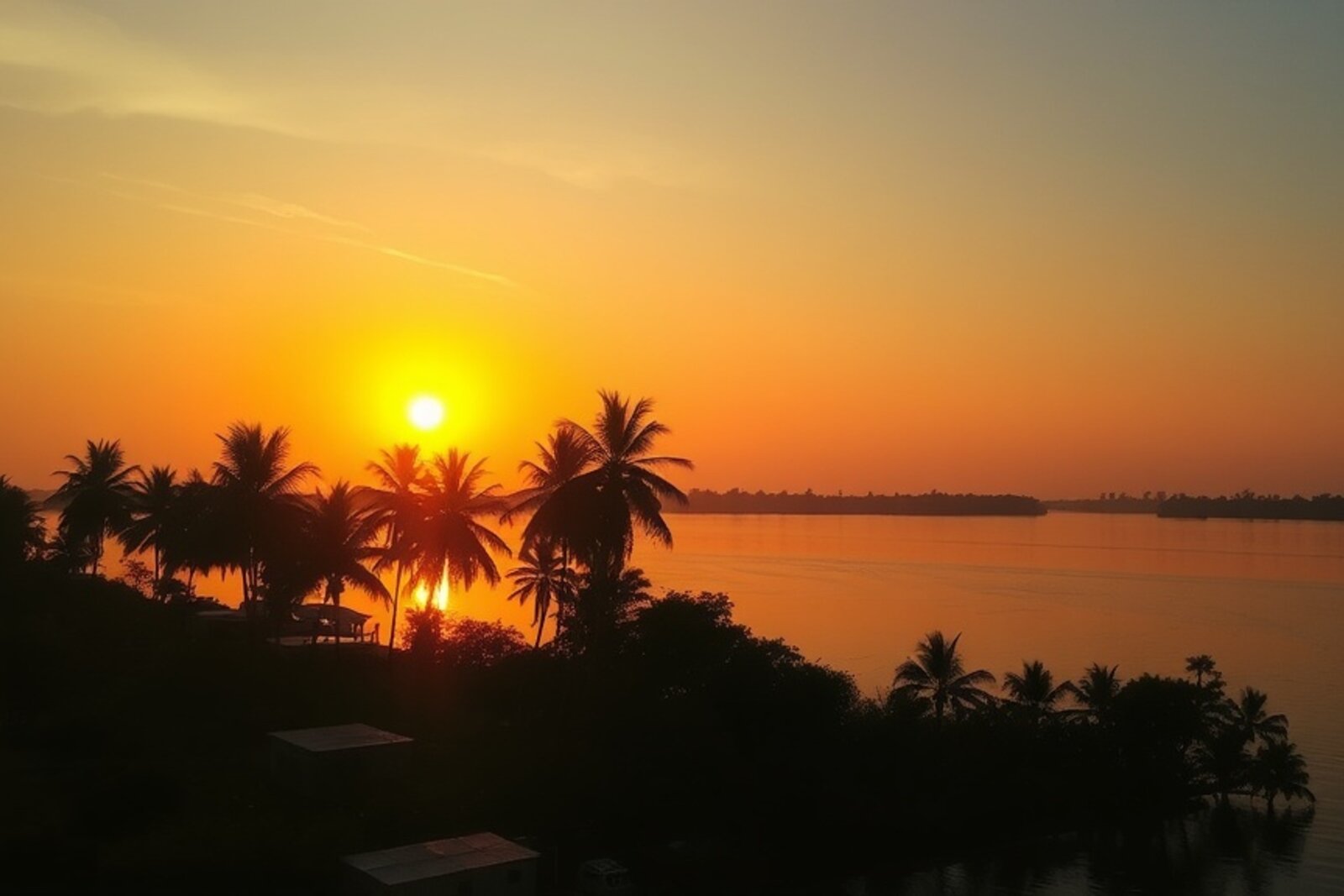
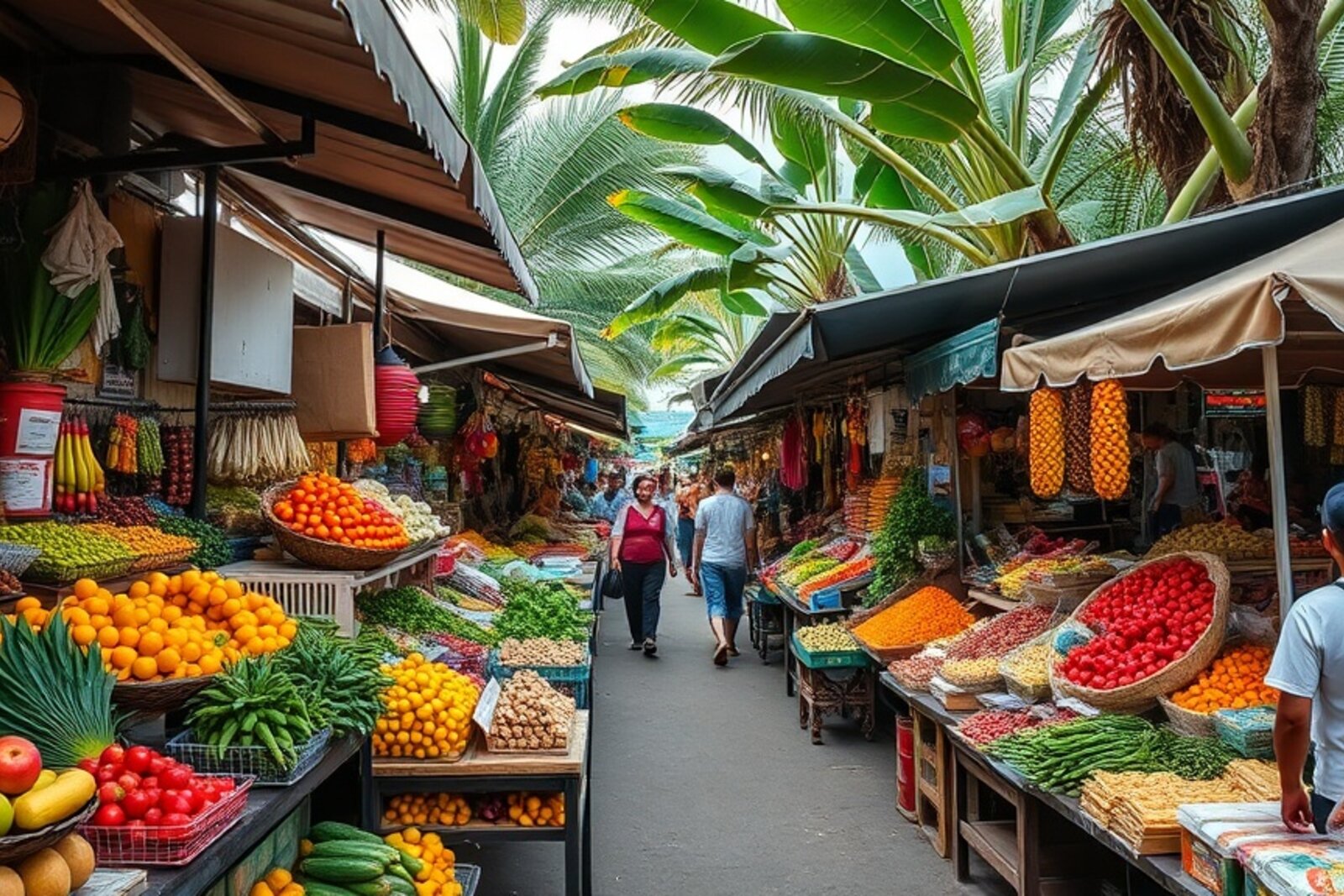
The Waterkant (waterfront) is the heart of social life, particularly at sunset when families gather along the river. Fort Zeelandia, built in 1651, houses a museum documenting the country's complex history. The Central Market is a sensory explosion of tropical fruits, Indonesian spices, Indian fabrics, and Maroon handicrafts. St. Peter and Paul Cathedral, built entirely of wood, is reportedly the largest wooden structure in the Western Hemisphere.
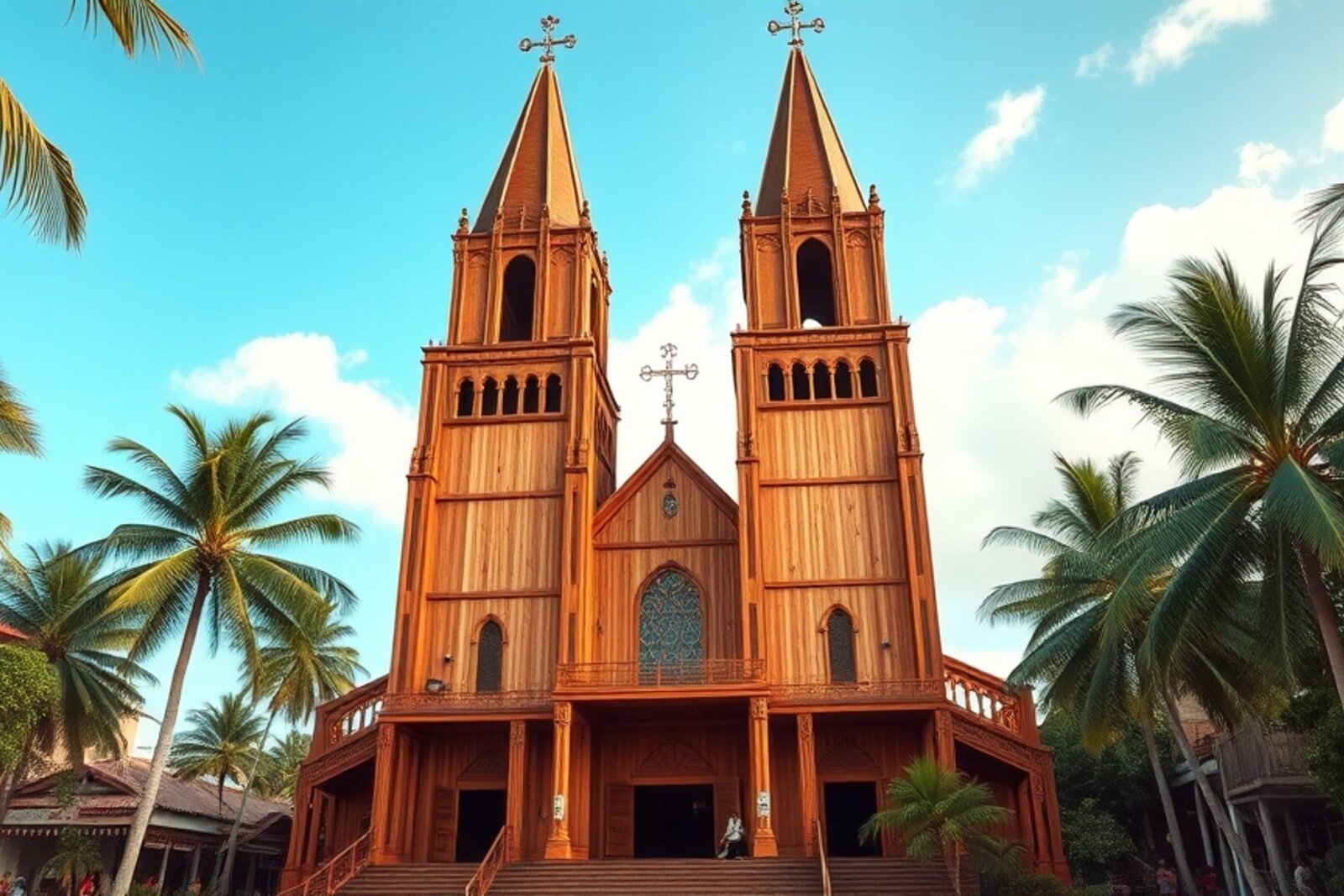
St. Peter and Paul Cathedral — the Western Hemisphere's largest wooden church
Perhaps most remarkably, Paramaribo's Keizerstraat features a synagogue and a mosque standing side by side — a symbol of the religious tolerance that has characterized Surinamese society for centuries. Independence Square, the Presidential Palace, and the lively Palmentuin (Palm Garden) complete the compact city center.
07 The Interior
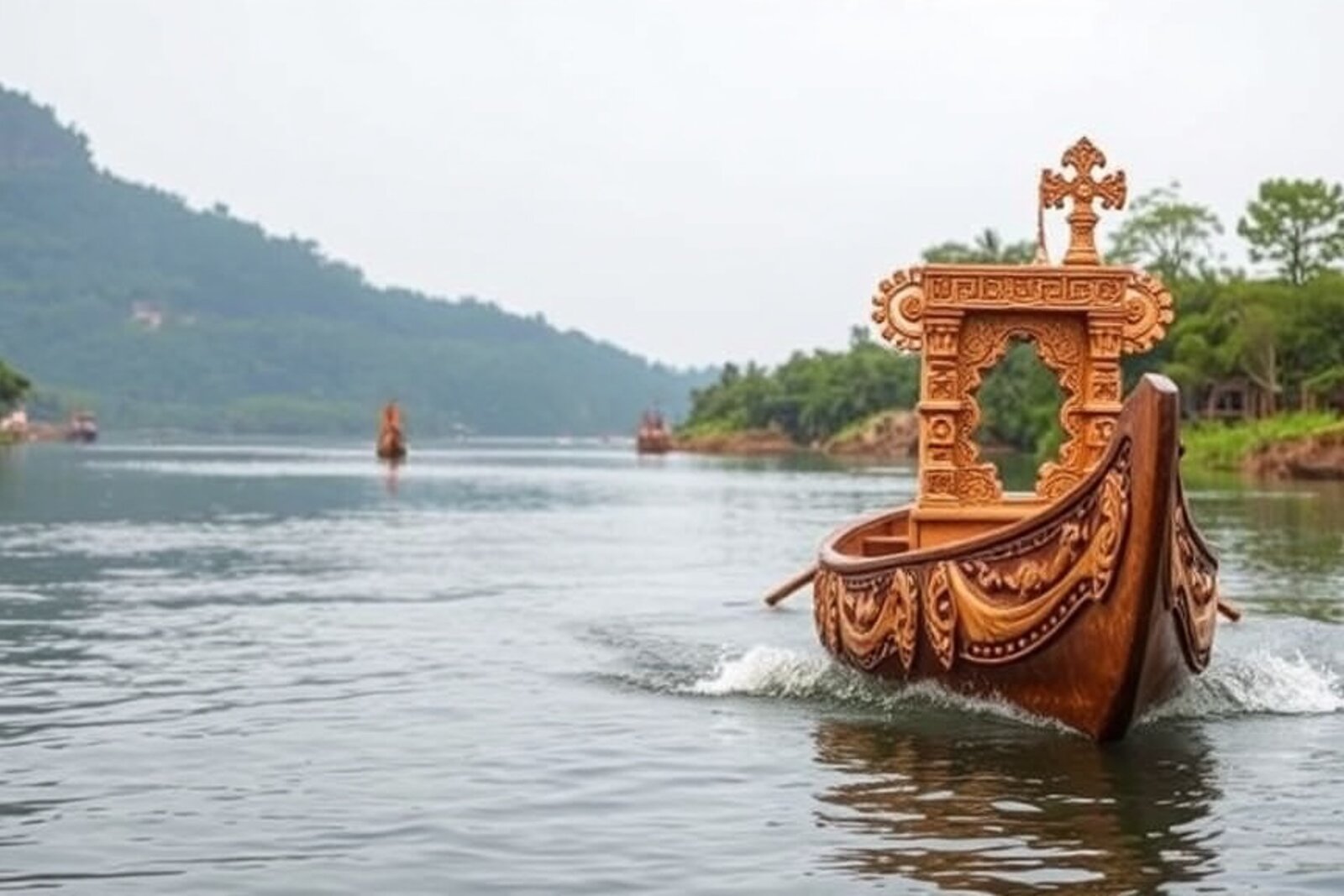
The Surinamese interior is one of the last great wildernesses in the Americas — a vast expanse of primary rainforest, navigable rivers, and scattered communities accessible only by pirogue (dugout canoe) or bush plane. The Central Suriname Nature Reserve, a UNESCO World Heritage Site covering 1.6 million hectares, protects pristine montane and lowland forest, granite inselbergs, and extraordinary biodiversity.
Brownsberg Nature Park, the most accessible interior destination from Paramaribo, offers hiking trails through tropical forest to viewpoints overlooking the Brokopondo Reservoir. Raleighvallen Nature Reserve features the Voltzberg granite dome and is prime habitat for the cock-of-the-rock bird. For deeper immersion, multi-day river trips to Maroon villages along the Upper Suriname River offer authentic cultural experiences, with guests staying in traditional lodges and learning about centuries-old traditions of woodcarving, storytelling, and forest medicine.
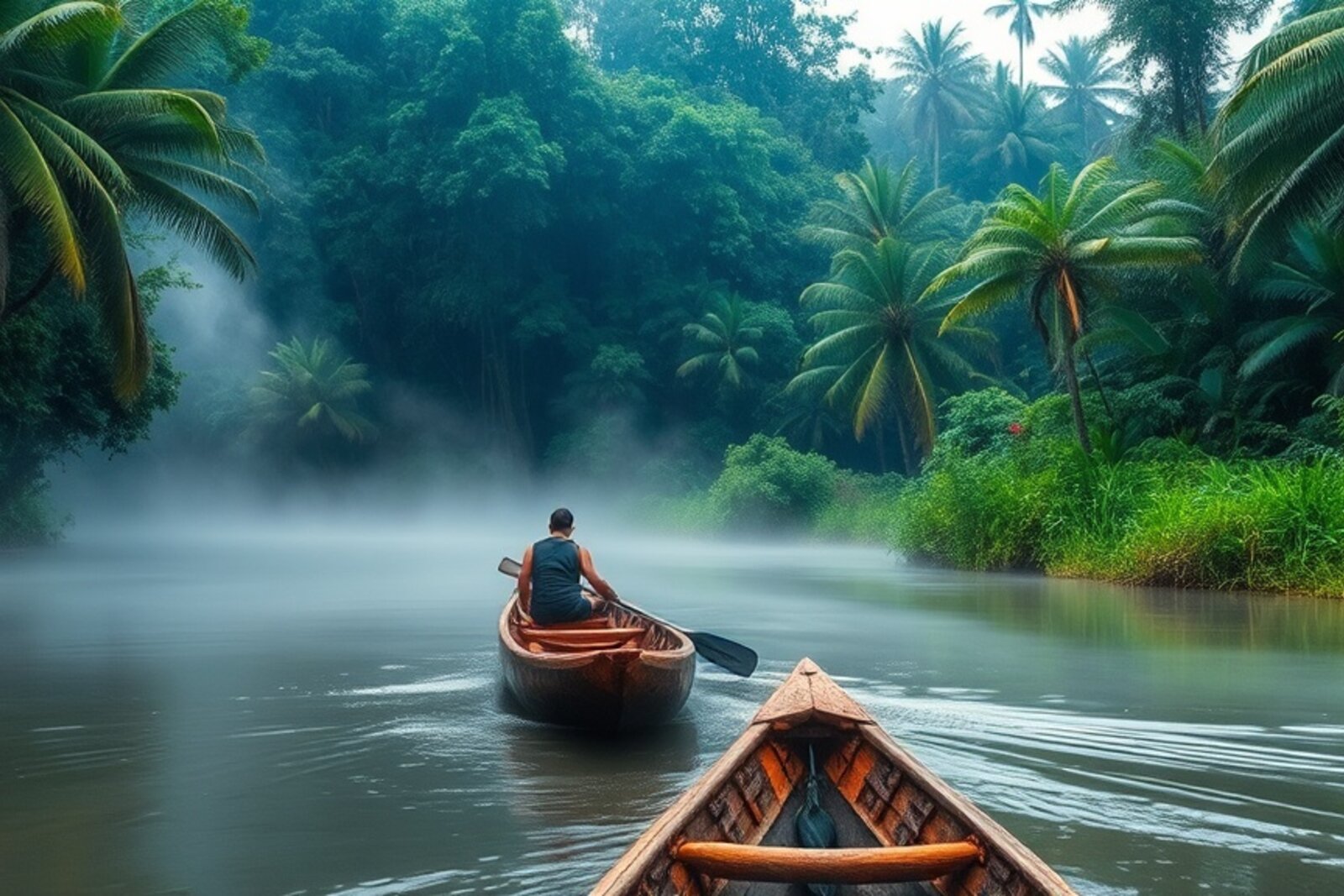
Traveling by pirogue — the only way to reach communities deep in the interior
08 Cuisine
Surinamese cuisine is a magnificent collision of continents. The Hindustani community contributes roti (flatbread with curried chicken, potatoes, and long beans) — Suriname's most popular street food and a national obsession. Javanese cuisine brings nasi goreng (fried rice), bami (fried noodles), and satay with peanut sauce. The Creole kitchen offers pom (a baked casserole of grated tayer root with chicken), brown beans with rice, and heri heri (a fish and root vegetable stew).
Street food culture thrives in Paramaribo, where warungs (Javanese food stalls) line the streets alongside roti shops and Chinese takeaways. Bakabana (fried plantain with peanut sauce) is the quintessential snack. Dawet, a sweet coconut milk drink with green jelly, refreshes on hot afternoons. For beverages, Parbo beer (brewed locally since 1955) and fresh tropical juices are ubiquitous.
09 Wildlife & Nature
With roughly 93% forest cover — the highest of any country on Earth — Suriname is a biodiversity hotspot of global significance. The forests harbor jaguars, giant armadillos, giant river otters, eight species of primates, harpy eagles, and over 700 bird species. The country's rivers teem with piranhas, electric eels, and the arapaima — one of the world's largest freshwater fish.
Poison dart frogs in electric blues and oranges populate the forest floor, while scarlet macaws, toucans, and cock-of-the-rock birds paint the canopy with color. From February to August, leatherback and green sea turtles nest on beaches at Galibi Nature Reserve near the mouth of the Marowijne River — historically one of the most important turtle rookeries in the Western Atlantic. Visitors should arrive with realistic expectations: Suriname's leatherback nesting has collapsed by roughly 98% since its 2001 peak, driven by fisheries bycatch and by the loss of the nesting beaches themselves, and the once-celebrated Braamspunt sandbank near Paramaribo is eroding away. Green turtles remain the more reliable sighting.
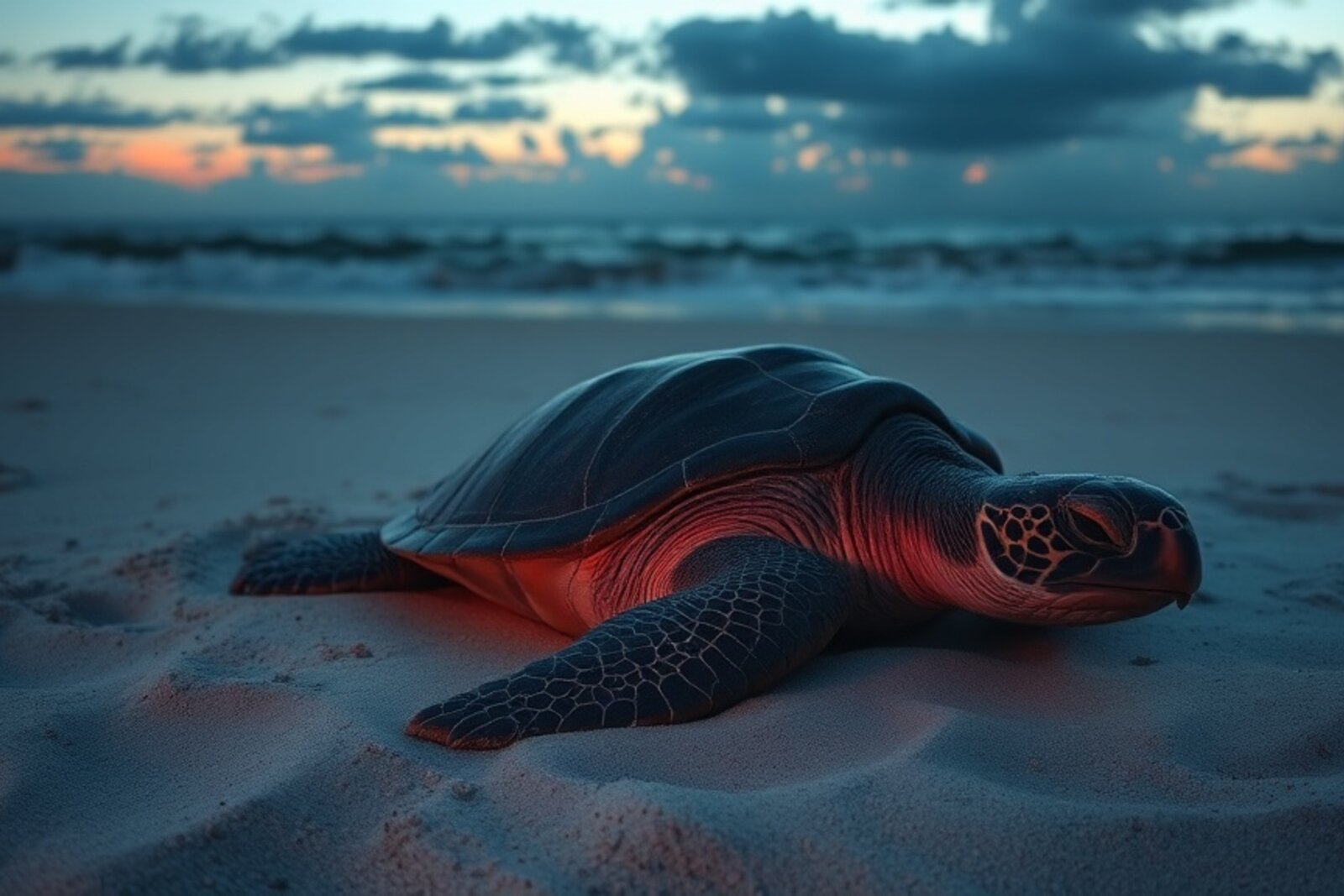
Sea turtle nesting at Galibi — a primordial spectacle, and a fragile one
10 🍷 Drinks & Spirits
Suriname has no wine production. The South American nation — the continent's smallest, covered by dense Amazonian rainforest, tropical and humid year-round — has no conditions suited to grape cultivation.
Suriname's remarkably diverse population — Hindustani, Creole, Javanese, Maroon, Indigenous, Chinese, and Dutch — creates one of the world's most eclectic drinking cultures. Parbo Bier (Surinaamse Brouwerij, founded 1955) is the national lager and a genuine source of national pride. Borgoe Rum (aged in ex-bourbon barrels, produced at the SAB distillery) is Suriname's most important spirit — the rum tradition reflects the country's sugar plantation heritage. Dawet (a Javanese-influenced coconut milk drink with pandan and palm sugar) and gember bier (ginger beer, from the Creole tradition) are distinctive non-alcoholic options. The kasiri (fermented cassava beer) brewed by the Indigenous Wayana and Trio peoples in the interior is one of the oldest surviving Amazonian fermented beverages. Dutch colonial influence means that Dutch gin (jenever) has a long local history, and the warung (Javanese street food stalls) serve both Javanese and Surinamese drinks alongside Indonesian-inspired cuisine.
11 Climate
Suriname has a tropical equatorial climate with high humidity year-round and average temperatures between 24°C and 31°C (75–88°F). Four seasons are distinguished by rainfall rather than temperature: the short rainy season (December–January), the short dry season (February–April), the long rainy season (May–July), and the long dry season (August–November).
The best time to visit is during the long dry season from August to November, when trails are passable and rivers are navigable but not flooded. The short dry season (February–April) is also excellent. Sea turtle nesting at Galibi peaks between April and July. Paramaribo's urban attractions are enjoyable year-round, as rain showers are typically brief and intense rather than prolonged.
12 Practical Info
⚠️ Travel Advisory. Suriname is one of the calmer destinations in South America and carries a low-risk rating from most Western foreign ministries — the standing guidance is normal precautions. Petty theft and street robbery do occur in Paramaribo, particularly after dark around the Waterkant and in the Palmentuin, so keep valuables out of sight. The real hazards are logistical rather than criminal: interior travel depends on small aircraft and river boats with limited safety oversight, medical facilities outside the capital are basic, and there is malaria risk in the far interior and the gold-mining districts. Check your own government's current advisory before booking.
Getting There: Johan Adolf Pengel International Airport (PBM) near Paramaribo receives flights from Amsterdam (KLM), Miami, and regional Caribbean destinations. Overland entry is possible from Guyana (ferry at Moleson Creek) and French Guiana (ferry at Albina/Saint-Laurent-du-Maroni).
Visas: Suriname liberalised its entry rules on 1 May 2023. Most visitors — including EU, UK, US, Canadian and Australian nationals — may now enter visa-free for up to 90 days, but must pay a US$50 / €50 entry fee online before arrival; budget for it, as it is easy to miss. Travellers from countries outside the visa-free list use the online e-Tourist Card (apply at least 72 hours ahead) or a full e-Visa. Everything is handled online — no embassy visit required. Confirm current rules before booking.
Currency: The Surinamese Dollar (SRD) fluctuates significantly. US dollars and euros are widely accepted in Paramaribo. ATMs are available in the capital but scarce elsewhere — bring cash for interior trips.
Language: Dutch is official. Sranan Tongo is the everyday lingua franca. English is not widely spoken outside tourist contexts.
Budget: Expect $30–50/night for guesthouses, $3–8 for street food, and $150–400+ for multi-day interior trips including guides and boat transport.
13 UNESCO Sites
Suriname has three inscribed World Heritage properties.
Historic Inner City of Paramaribo (2002) — The Dutch colonial urban plan with its unique wooden architecture represents a remarkable fusion of European planning with South American tropical building traditions. The historic core along the Suriname River demonstrates how Dutch colonial techniques were adapted using local materials and Indigenous craftsmanship. In July 2026 the World Heritage Committee placed Paramaribo on the List of World Heritage in Danger, citing an under-resourced management authority and the absence of any strategy for managing visitor pressure on the property. The site remains fully open to visitors — the listing is a warning about its stewardship, not a closure.
Jodensavanne Archaeological Site: Jodensavanne Settlement and Cassipora Creek Cemetery (2023) — Suriname's newest World Heritage property, on the forested banks of the Suriname River south of Paramaribo. The serial site preserves the ruins of what is believed to be the earliest architecturally significant synagogue in the Americas, together with the Cassipora Creek cemetery, documenting a 17th-century Sephardic Jewish plantation settlement unlike anything else in the New World.
Central Suriname Nature Reserve (2000) — Covering 1.6 million hectares of pristine tropical forest, this is one of the largest protected areas of undisturbed tropical rainforest in the world. The reserve encompasses the upper watershed of the Coppename River and protects granite inselbergs, mountain savanna, and lowland and montane forest with exceptional biodiversity.
14 Fascinating Facts
Traded for Manhattan: The 1667 Treaty of Breda saw the Dutch trade New Amsterdam (modern New York) to England in exchange for keeping Suriname. Sugar-rich Suriname was considered far more valuable than a fur-trading outpost on the Hudson.
Religious harmony: Paramaribo's Keizerstraat features a synagogue and a mosque standing side by side — one of the most iconic symbols of religious coexistence in the world.
Forest champion: With about 93% forest cover — over 15 million hectares — Suriname has the highest proportion of forested land of any country on Earth, and is one of only a handful of nations that is a net carbon sink. In 2025 the government pledged to protect 90% of that forest in perpetuity.
Smallest but mighty: Suriname is the smallest sovereign state in South America (163,821 km²), yet its Central Suriname Nature Reserve alone is larger than many Caribbean nations.
Language mosaic: More than twenty languages are spoken daily across the country, including Sranan Tongo, Sarnami Hindi, Javanese, several Maroon Creoles, and at least four Indigenous languages.
15 Gallery
16 Resources
🔗 Suriname Tourism Foundation — Official tourism portal
🔗 Wikipedia: Suriname — Comprehensive overview
🔗 UNESCO World Heritage in Suriname
17 ✍️ Author's Note
Suriname is the trip you cannot prepare for — because nothing quite prepares you for a place where roti shops sit next to Javanese warungs in a city built by Dutch planters and liberated by African Maroons. I spent an evening on the Waterkant with a cold Parbo, watching dugout canoes and river ferries share the same brown water, a synagogue and a mosque sharing the same street a few blocks inland. It shouldn't work, and it does.
Then the interior strips all of that away. Riding a pirogue upstream through morning mist, howler monkeys roaring somewhere in the canopy above, existence reduces to river, forest and sky — and you understand why the Dutch once traded Manhattan to keep this place. Go before the offshore oil money arrives and starts rewriting the coast.
—Radim Kaufmann, 2026