Tuvalu · Tuvalu mo te AtuaPolynesia · Central Pacific
FunafutiCapital atoll
10,643Total population · 2022–23 census
AUD · A$Currency · local coins also circulate
Tuvaluan · EnglishLanguages
01
UNESCO — A Living Cultural Landscape
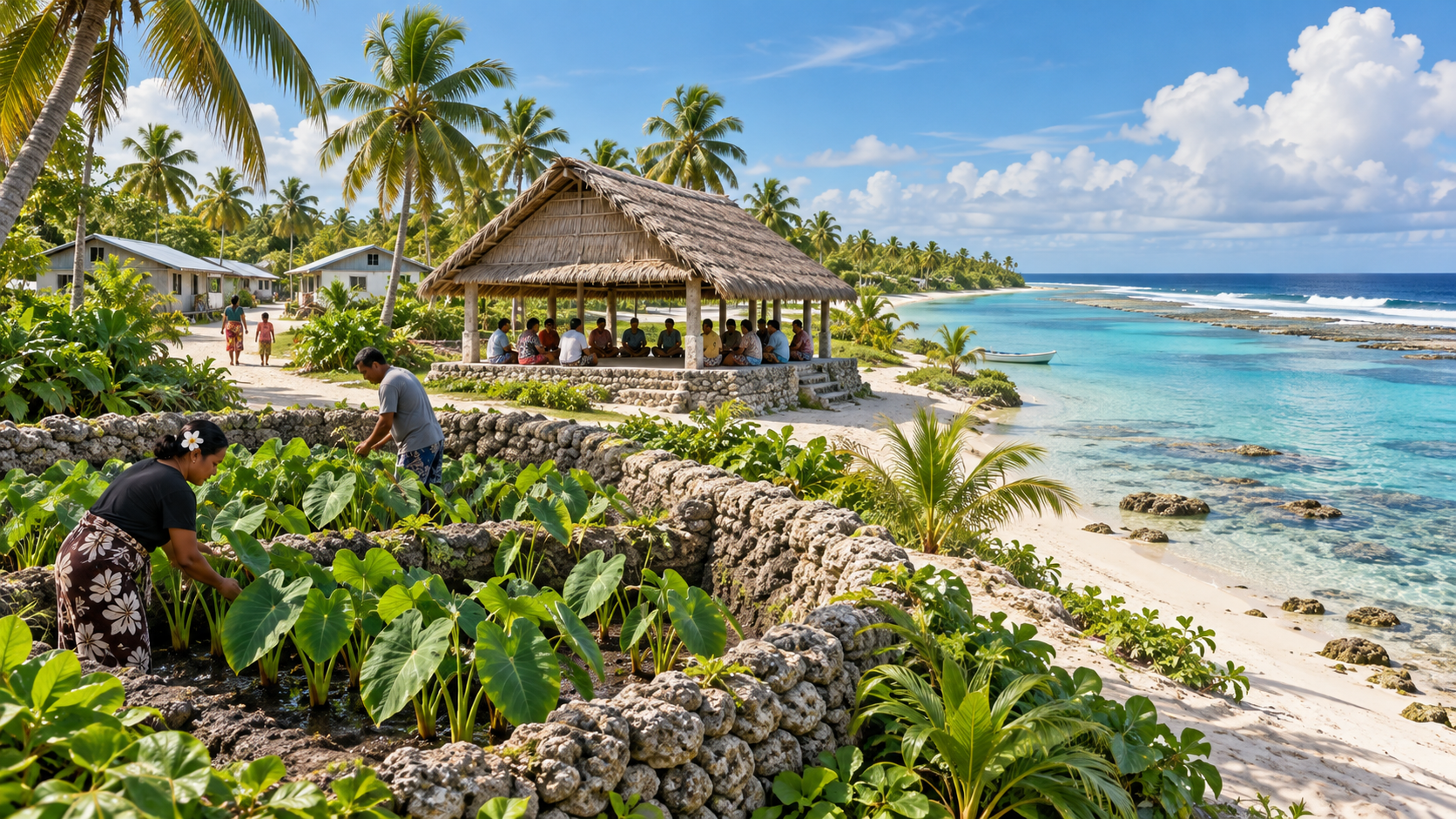
The Pacific atoll-island cultural landscape of Tuvalu was submitted to UNESCO’s Tentative List on January 24, 2024. A tentative-list entry is a proposed heritage property, not an inscribed World Heritage Site. The proposal emphasizes the connections among settlement, cultivated pulaka pits, meeting places and surrounding reef and ocean landscapes.
That distinction is valuable for travelers: the country’s heritage is expressed through living practices as well as physical sites. Respect for landowners and community rules remains essential regardless of a place’s international designation. Consult the UNESCO record for the proposal’s scope rather than treating every attractive lagoon as a listed monument.
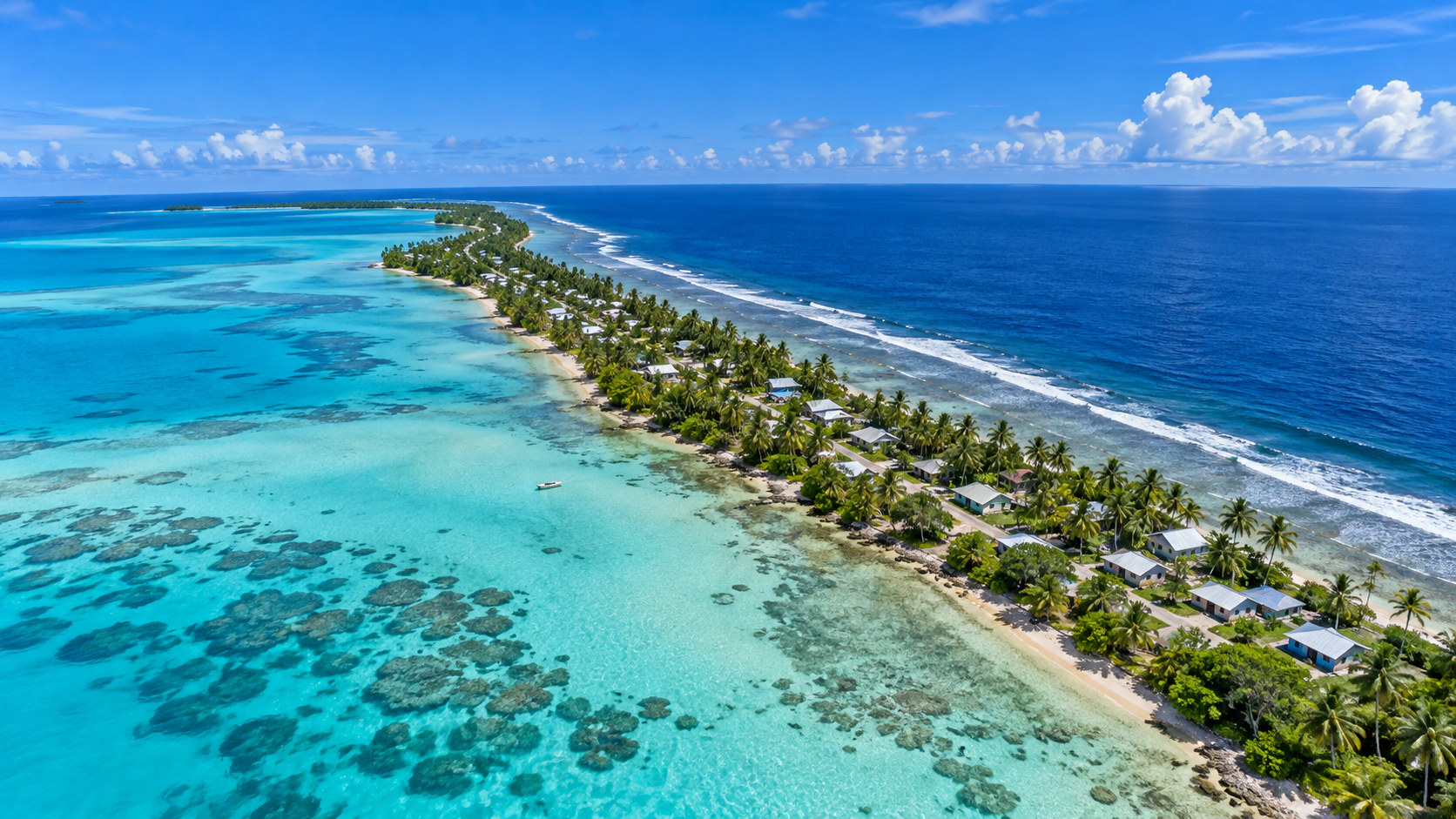
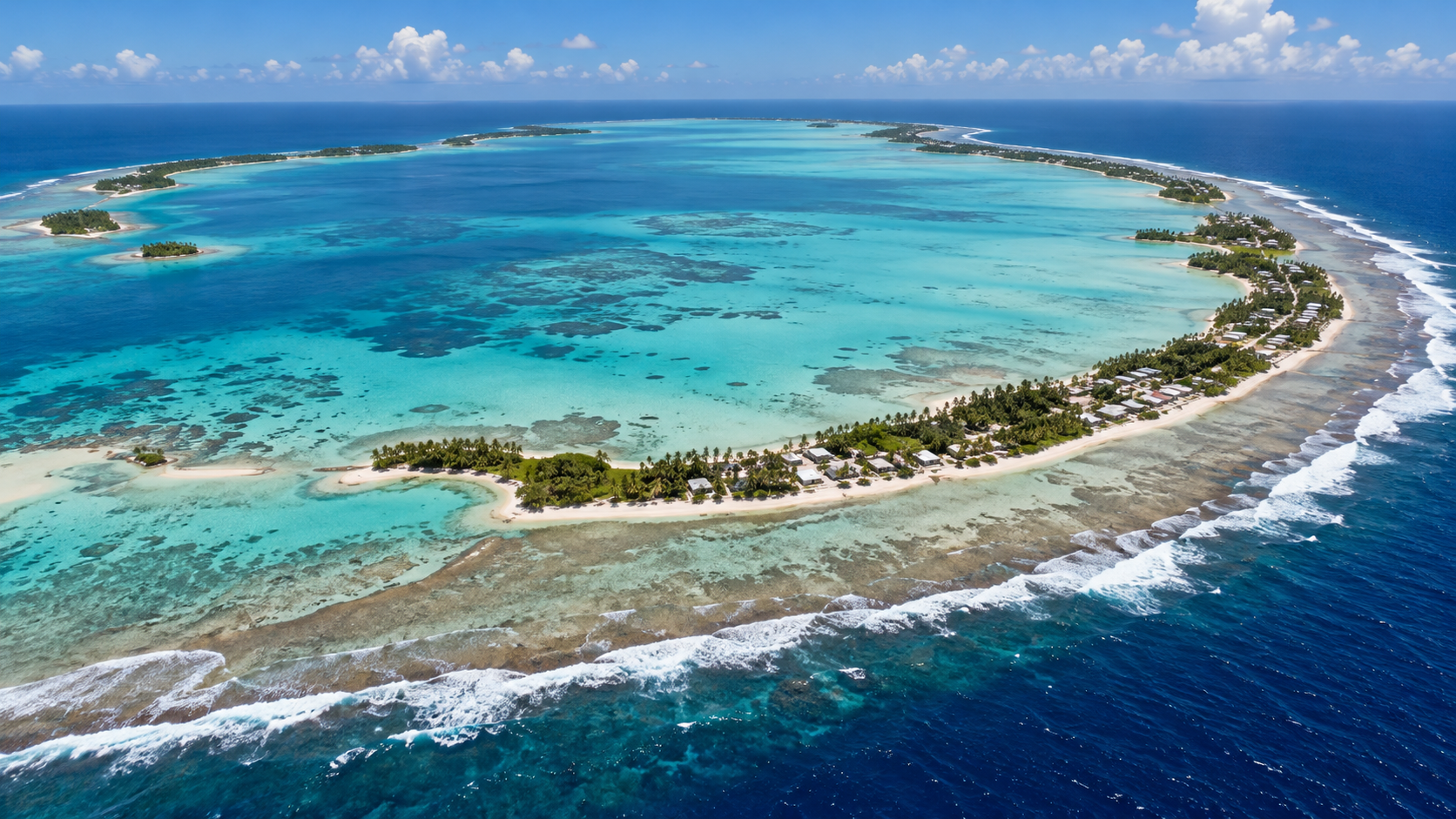
Tuvalu consists of six atolls and three reef islands: Funafuti, Nanumea, Nui, Nukufetau, Nukulaelae, Vaitupu, Nanumaga, Niutao and Niulakita. These different landforms shape lagoon access, cultivation and the relationship between each settlement and the reef. The chain extends northwest to southeast through the central Pacific, on the western side of Polynesia.
An atoll is a reef landscape with ocean-facing shores, lagoon-facing shores and often several motu, or islets. A map that draws only tiny dots cannot explain these relationships. Reef passages govern boat access, waves reshape shorelines, and the condition of the freshwater lens matters to settlement and cultivation. Land area figures around 25–26 square kilometers are commonly quoted, but should be treated as approximate descriptions rather than precise measurements of an unchanging shoreline.
Funafuti concentrates many services on Fongafale, while the outer islands require longer transport planning. The ocean between them is part of the country’s everyday geography, not a blank space between attractions. When planning a route, distinguish a flight to the capital from a voyage to an outer island: the second may depend on shipping schedules, cargo needs, accommodation and sea conditions.
Pulaka, or giant swamp taro, connects Tuvaluan food with a carefully maintained agricultural landscape. Its pits are cultivated and enriched over generations. UNESCO’s description of the cultural landscape emphasizes this inherited knowledge, including the relationship between cultivation, water and island settlement. Saltwater intrusion and freshwater management are therefore questions of food security as well as physical geography.
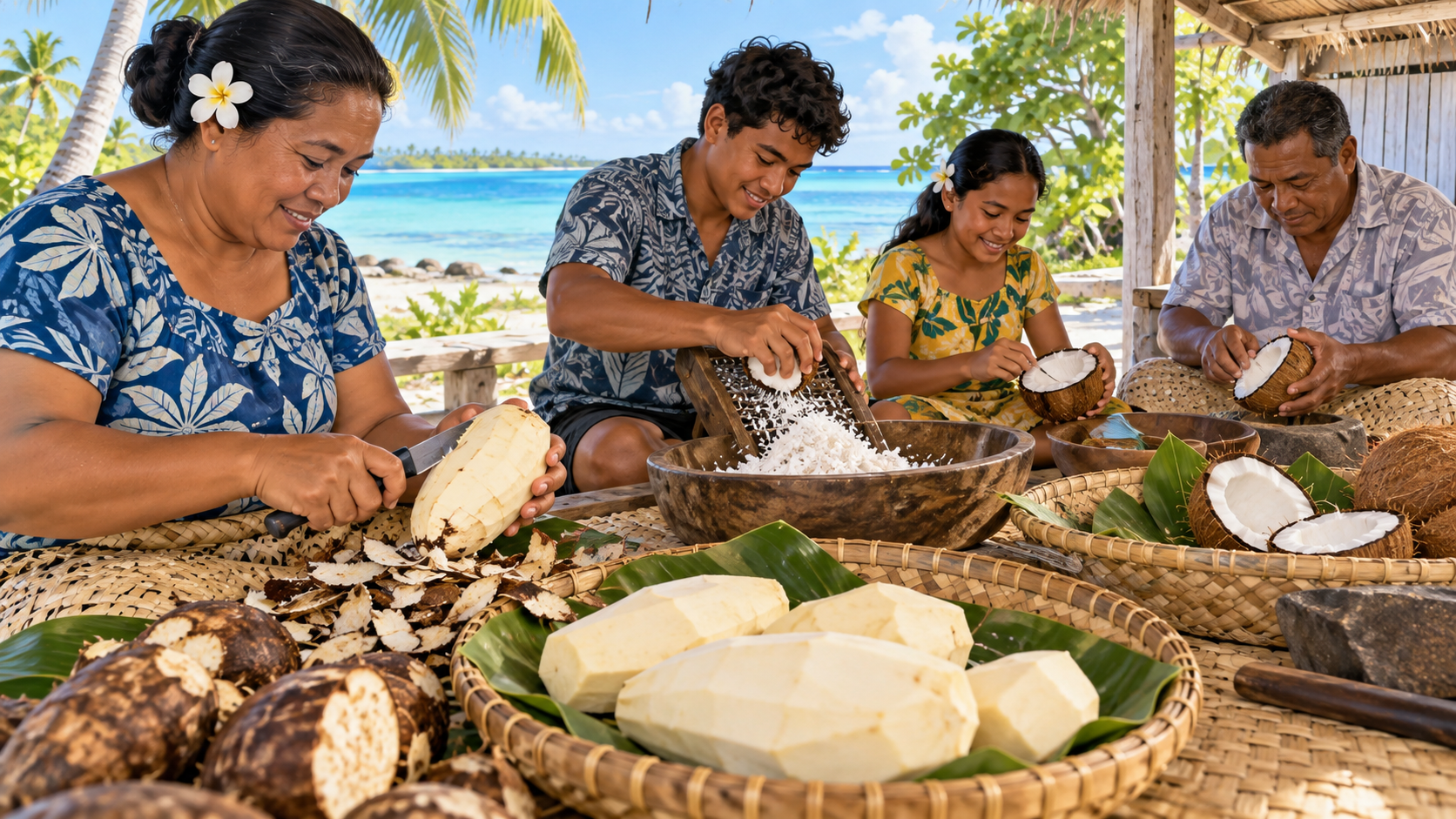
Fekei is associated with the preparation of starchy staples and coconut, with recipes and names varying among islands and households. A cook’s account of ingredients and preparation offers a valuable introduction to these traditions. Ask hosts how a dish is prepared and what ingredients are used; the answer can reveal family practice and local variation more clearly than a generic recipe copied across travel websites.
For a home adaptation, use an established cooking method for the ingredient available to you and cook taro thoroughly. Avoid treating unfamiliar raw roots or fermented palm sap as an experiment. The richness of island cooking lies in the knowledge carried through households and communities. Supporting a local cook and listening to their account of a dish is often the best way to learn.
Hidden Gems — Quiet Encounters and Protected Water
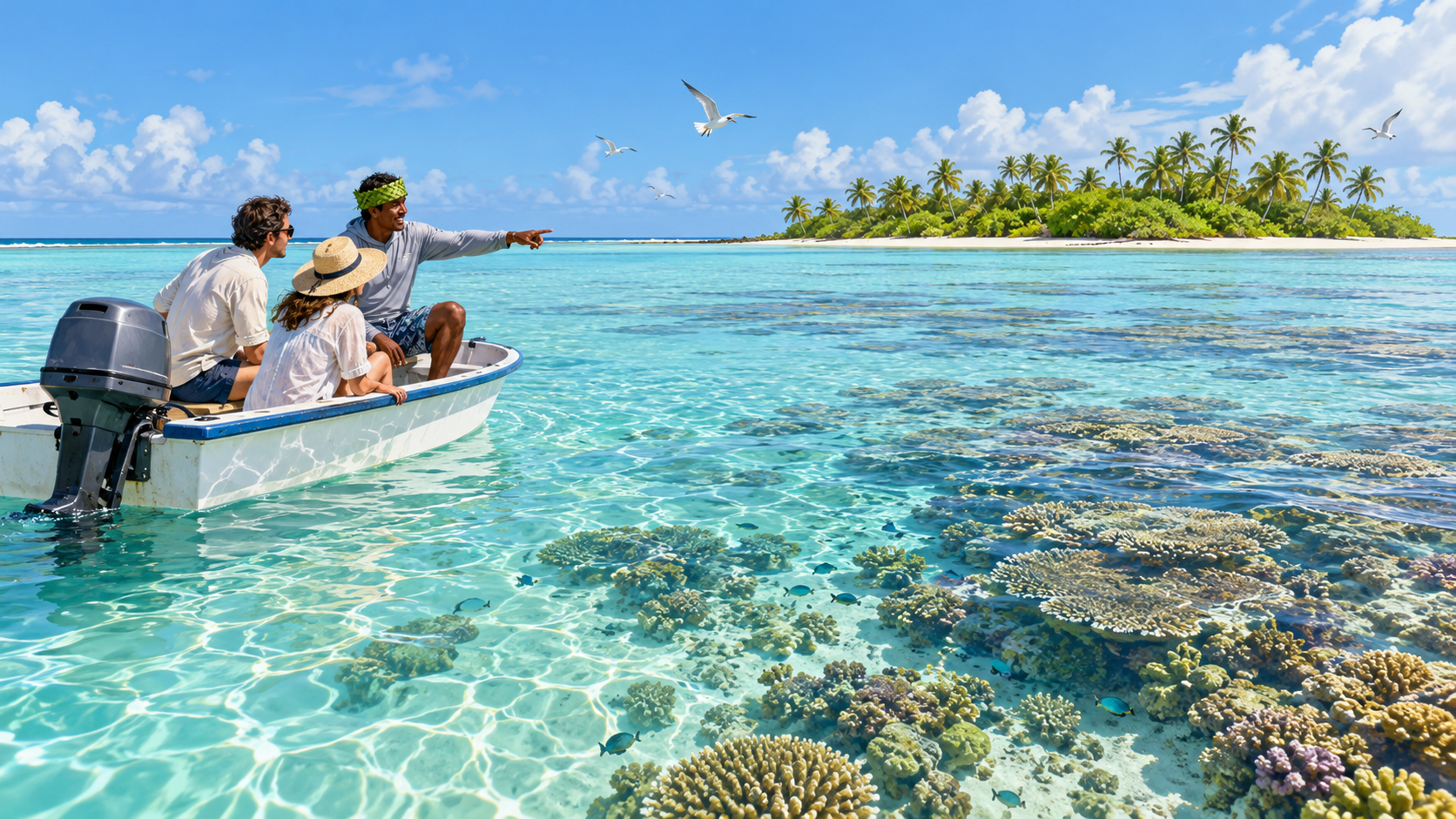
The Funafuti Conservation Area is one of Tuvalu’s most important visitor experiences. The tourism department describes a protected area of about 33 square kilometers of reef, lagoon and motu on the western side of the atoll. A visit should be arranged locally, with the operator explaining access rules, sea conditions and how to avoid disturbing wildlife.
Smaller experiences can be just as rewarding: a permitted walk, a conversation about island histories, a meal prepared by a local cook or a look at craft traditions when invited. These encounters are not hidden because residents are waiting to be discovered; they depend on relationships and the willingness of hosts to share their time.
King tides and flooding affect homes, transport and livelihoods. They should not be promoted as a spectacle or treated as a reason to intrude on affected families. If conditions disrupt your visit, follow local guidance and keep roads and services clear. Respectful curiosity leaves room for a community’s privacy as well as its hospitality.
The following primary sources support the dated corrections and provide places to check current arrangements. Travel advice is nationality-specific; consult the appropriate authority for your own passport.