Tuvalu · Tuvalu mo te AtuaPolynesia · Central Pacific
FunafutiCapital atoll
10,643Total population · 2022–23 census
AUD · A$Currency · local coins also circulate
Tuvaluan · EnglishLanguages
01
Overview — An Ocean Nation
Tuvalu is a sovereign Pacific nation whose nine island communities occupy a small amount of land within an immense ocean setting. Six of its islands are atolls and three are reef islands. Funafuti, the capital atoll, brings together government, transport and much of the population, while the outer islands maintain distinct histories and community traditions. The official 2022–23 census records a total population of 10,643; that dated count is more useful than presenting an undated estimate as today’s population.
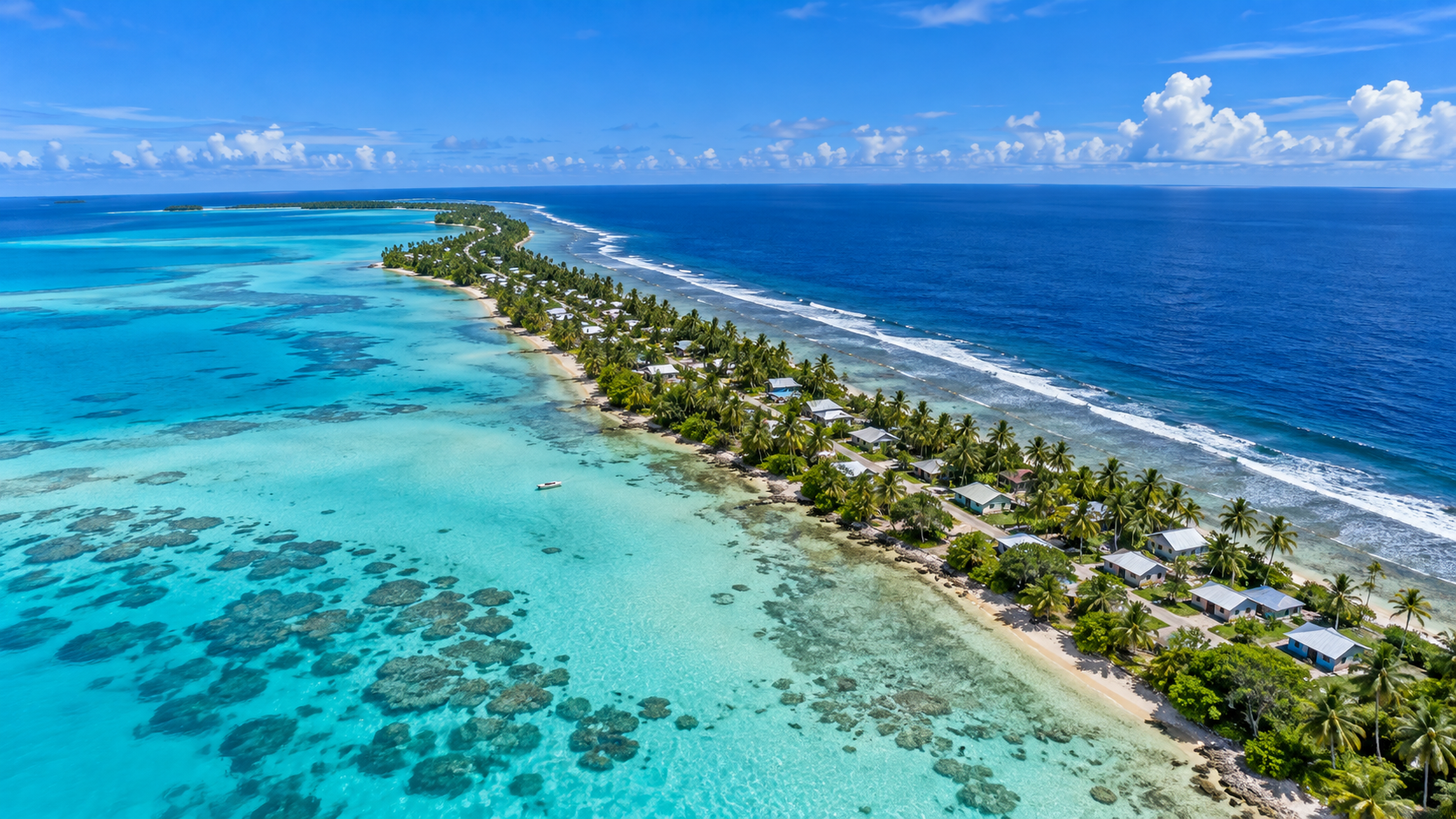
The landscape is striking: reef platforms, coconut palms and narrow strips of land separate the lagoon from the open ocean. Yet Tuvalu is also a working country, with schools, churches, public services, imported supplies and family connections extending across the Pacific. Visiting well means looking beyond an image of an empty tropical paradise, allowing time for conversation and understanding that boats, weather and community priorities govern the pace.
Climate change is inseparable from Tuvalu’s public life, but it does not explain everything about the country. Coastal flooding, freshwater security and the future of settlement matter alongside education, employment and cultural continuity. This guide approaches the islands as a living nation whose people shape their own future. Travel arrangements should begin with locally confirmed accommodation and transport, followed by room in the itinerary for delays.
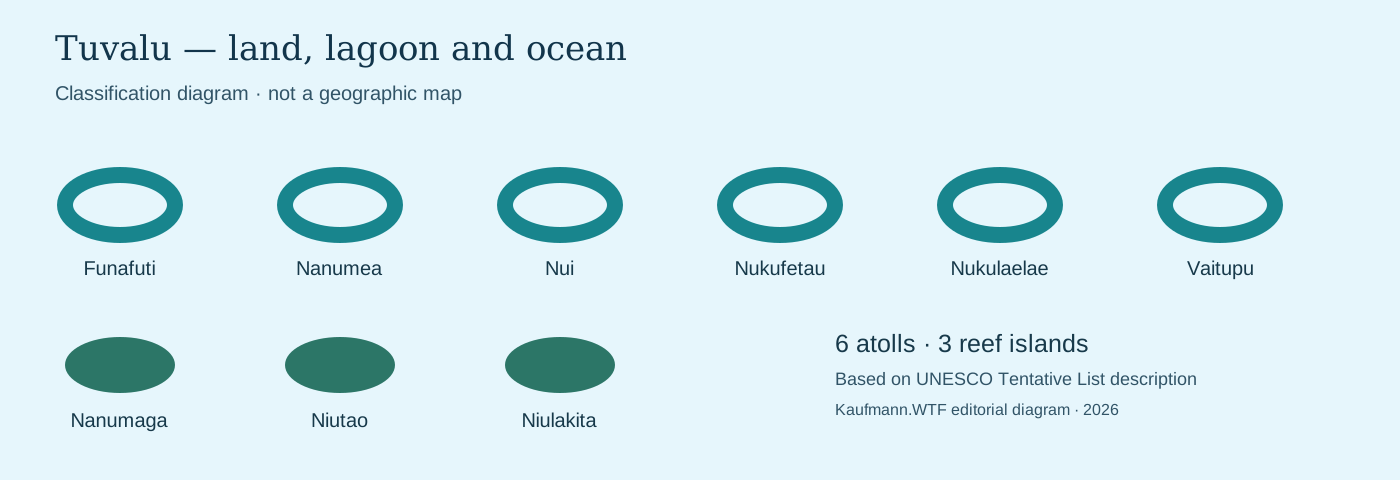
Tuvalu’s islands and their ocean setting · editorial diagram.
02
Name & Identity
Tuvalu is usually translated as “eight standing together,” referring to the eight islands traditionally inhabited before Niulakita’s later settlement. The country’s name expresses a relationship among communities rather than the size of their land. Island affiliation remains meaningful even for families living in Funafuti or overseas: language, genealogy, church life and communal responsibilities connect people to particular places.
The islands were known under British administration as the Ellice Islands. Separation from the Gilbert Islands followed a 1974 referendum, and independence came on October 1, 1978. Today the .tv country-code domain gives a small island state an unusual place in the global digital economy. The domain remains a national asset even as its commercial use connects Tuvalu with broadcasters, streaming services and businesses around the world.
The flag places stars representing the islands on a light-blue field. In explaining national identity, a traveler should recognize both the constitutional state and the communities that sustain it. Tuvalu’s climate diplomacy insists that geography, sovereignty and identity cannot be reduced to a prediction about where coastlines may lie in the future.
Tuvalu consists of six atolls and three reef islands: Funafuti, Nanumea, Nui, Nukufetau, Nukulaelae, Vaitupu, Nanumaga, Niutao and Niulakita. These different landforms shape lagoon access, cultivation and the relationship between each settlement and the reef. The chain extends northwest to southeast through the central Pacific, on the western side of Polynesia.
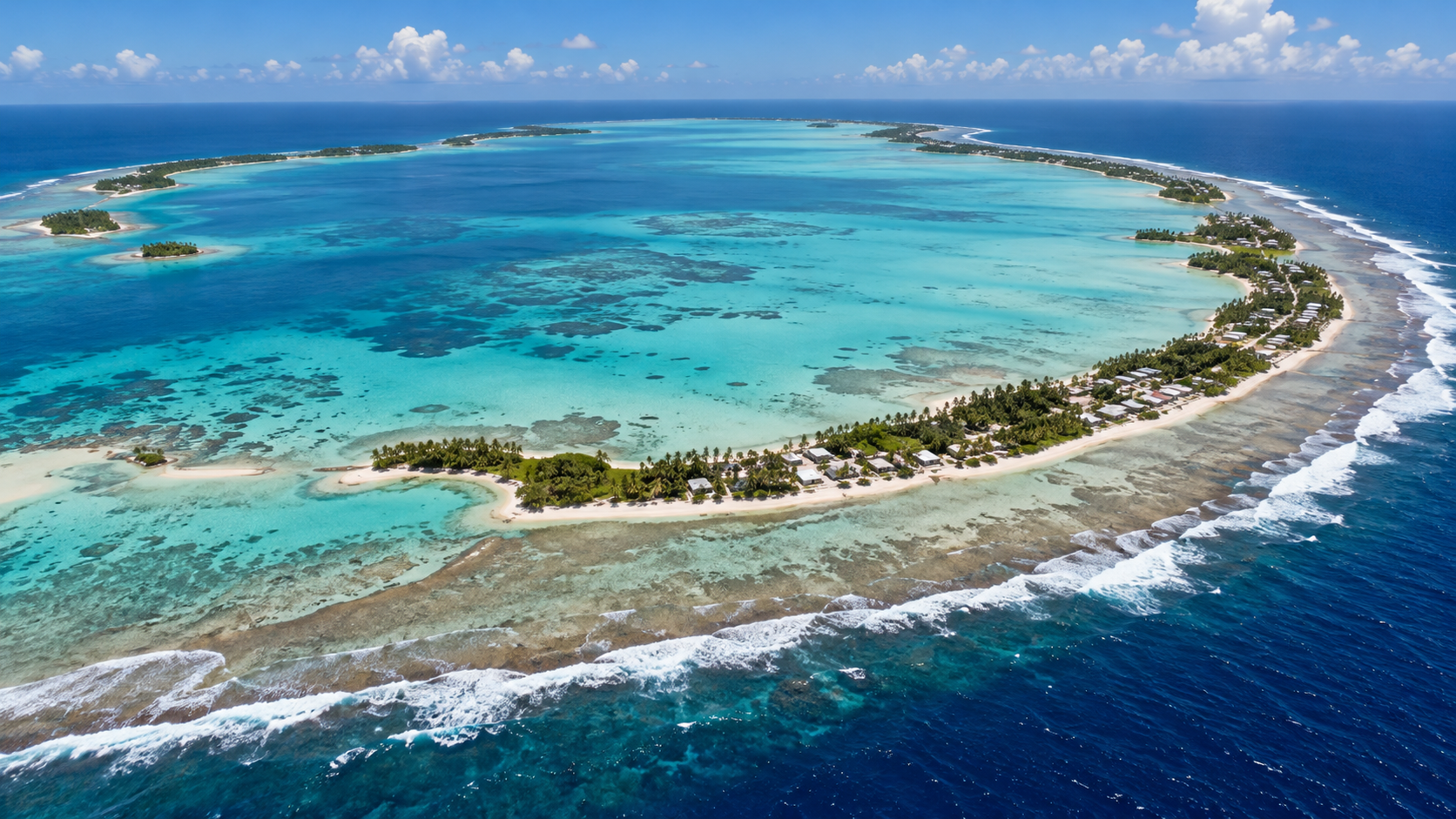
An atoll is a reef landscape with ocean-facing shores, lagoon-facing shores and often several motu, or islets. A map that draws only tiny dots cannot explain these relationships. Reef passages govern boat access, waves reshape shorelines, and the condition of the freshwater lens matters to settlement and cultivation. Land area figures around 25–26 square kilometers are commonly quoted, but should be treated as approximate descriptions rather than precise measurements of an unchanging shoreline.
Funafuti concentrates many services on Fongafale, while the outer islands require longer transport planning. The ocean between them is part of the country’s everyday geography, not a blank space between attractions. When planning a route, distinguish a flight to the capital from a voyage to an outer island: the second may depend on shipping schedules, cargo needs, accommodation and sea conditions.
Use this map for orientation across the island chain. Boat access, reef passages and permission to visit land need local confirmation; a map marker is not a transport timetable.
05
UNESCO — A Living Cultural Landscape
The Pacific atoll-island cultural landscape of Tuvalu was submitted to UNESCO’s Tentative List on January 24, 2024. A tentative-list entry is a proposed heritage property, not an inscribed World Heritage Site. The proposal emphasizes the connections among settlement, cultivated pulaka pits, meeting places and surrounding reef and ocean landscapes.
That distinction is valuable for travelers: the country’s heritage is expressed through living practices as well as physical sites. Respect for landowners and community rules remains essential regardless of a place’s international designation. Consult the UNESCO record for the proposal’s scope rather than treating every attractive lagoon as a listed monument.
Tuvalu’s history begins with Pacific voyaging, settlement and relationships among island communities. Oral traditions preserve different accounts of origin and migration; they should not be flattened into a single confident arrival date. European encounters added another layer, including Álvaro de Mendaña’s sighting of Nui in 1568. Nineteenth-century labor recruitment and slave raiding caused severe losses and remain part of the islands’ historical memory.
Christian missions and British protection changed island life in the nineteenth century. The Gilbert and Ellice Islands became a British protectorate in 1892 and a colony in 1916. During the Second World War, American forces established bases in the islands. The official tourism service notes surviving wartime remains on Fongafale and the earlier scientific drilling undertaken to investigate coral-atoll formation.
The separation referendum of 1974 led toward a distinct Tuvaluan state, which achieved independence in 1978. These events belong to a longer story of island identity and self-government. Visitors can encounter that history through community conversations and permitted visits to historic sites, while respecting private land and leaving wartime objects where they are.
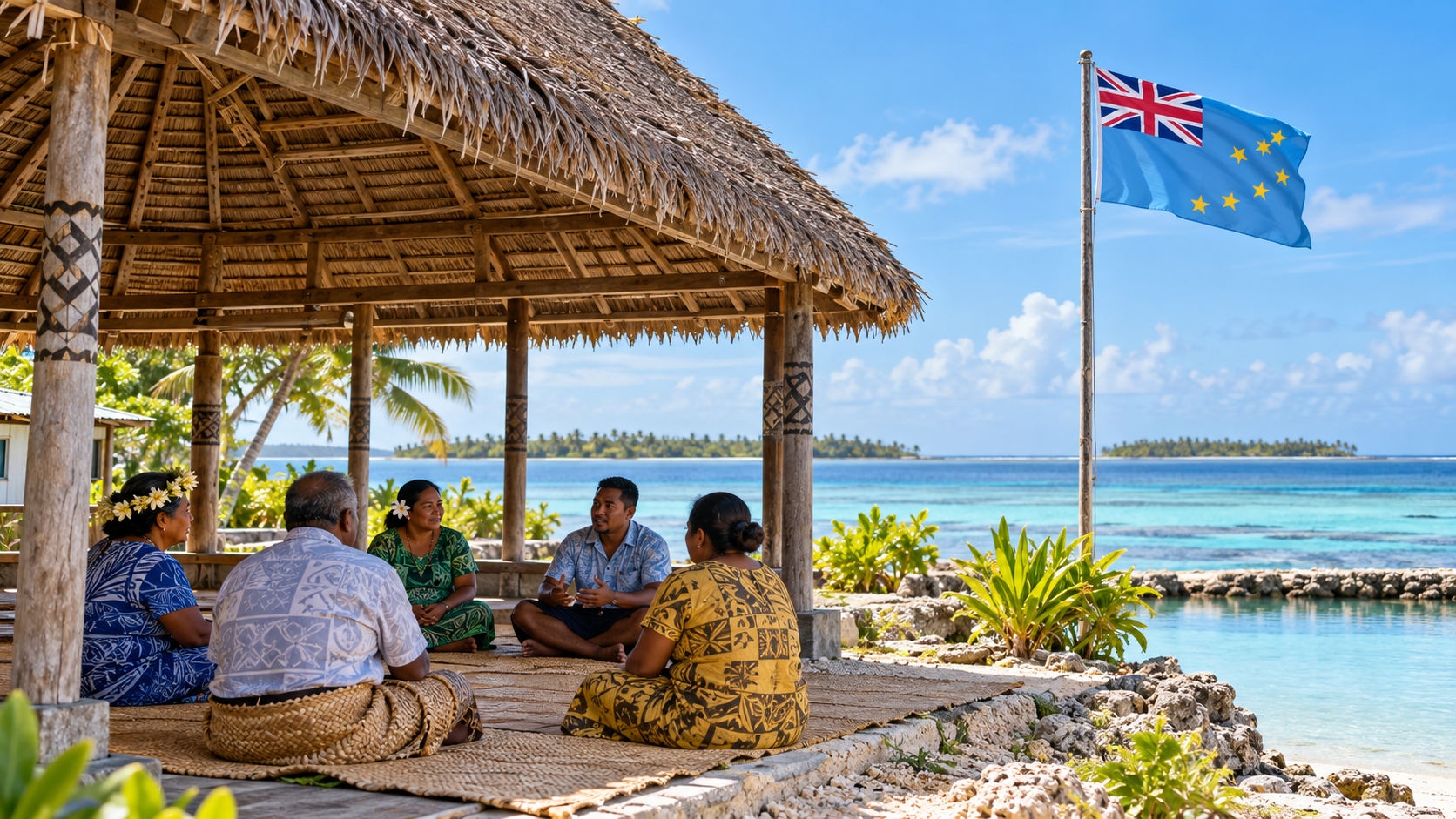
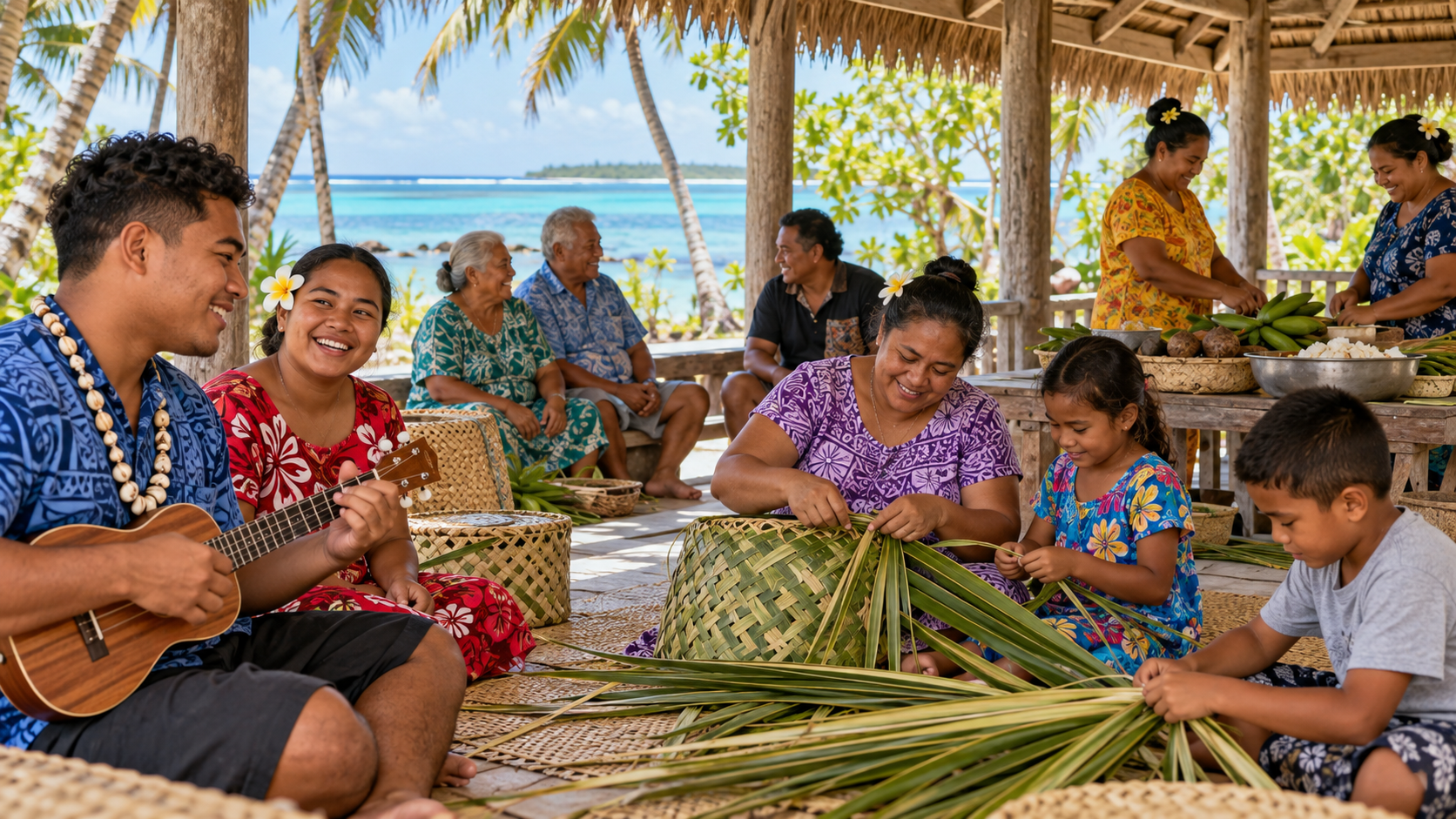
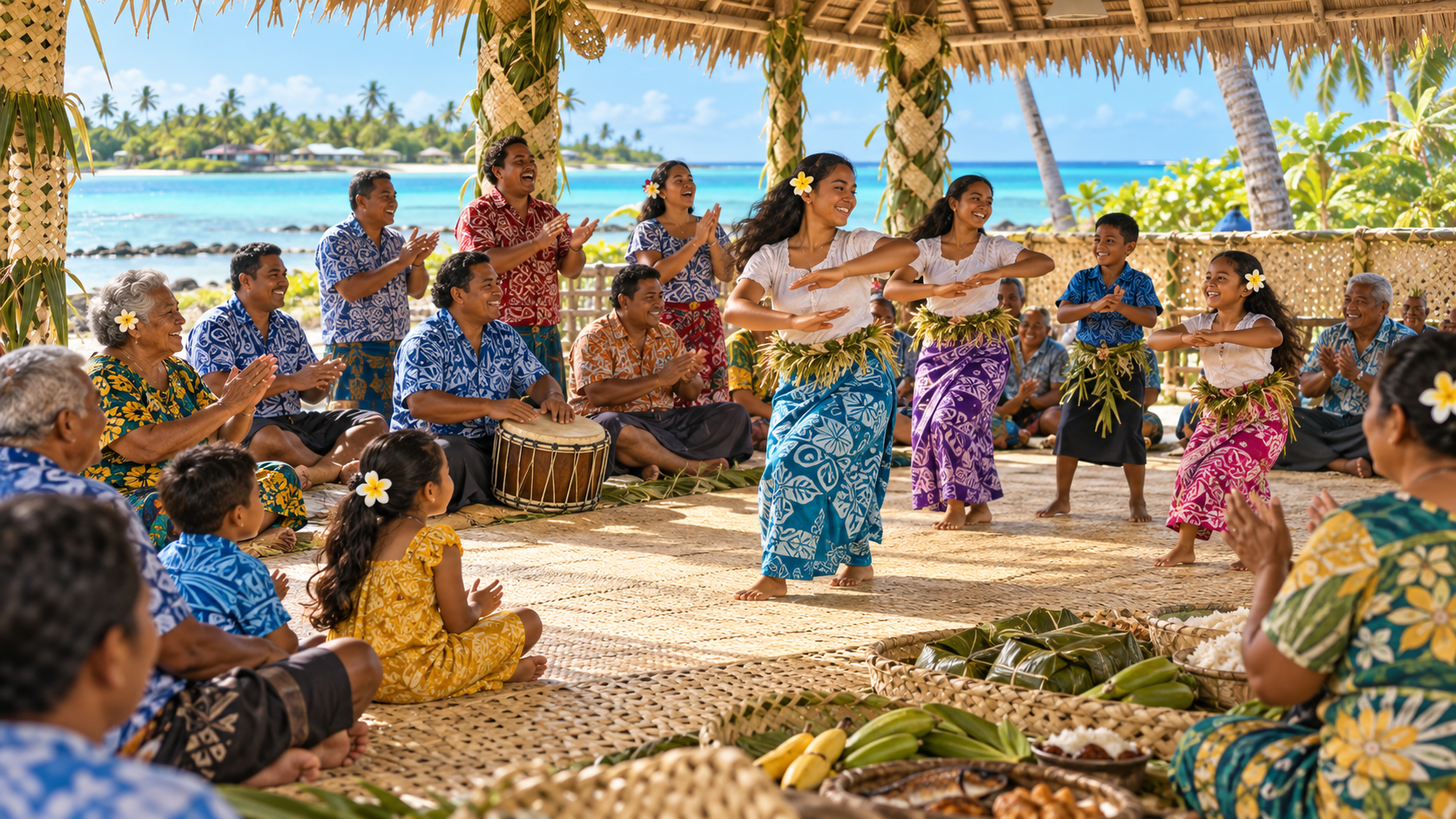
Most Tuvaluans are Polynesian, with distinct Micronesian traditions also important on Nui, with life organized around extended family and island community. The maneapa (communal meeting house) serves as the center of social life on each atoll. Fatele — energetic group dances performed sitting cross-legged with vigorous upper-body movements — is the signature cultural expression, performed at celebrations and to welcome visitors. Toddy cutting (extracting sweet sap from coconut palms) is a daily ritual. The Church of Tuvalu (Congregational) plays a central role, with Sunday worship drawing entire communities. Families maintain connections with communities overseas, alongside a strong commitment to life on their home islands.
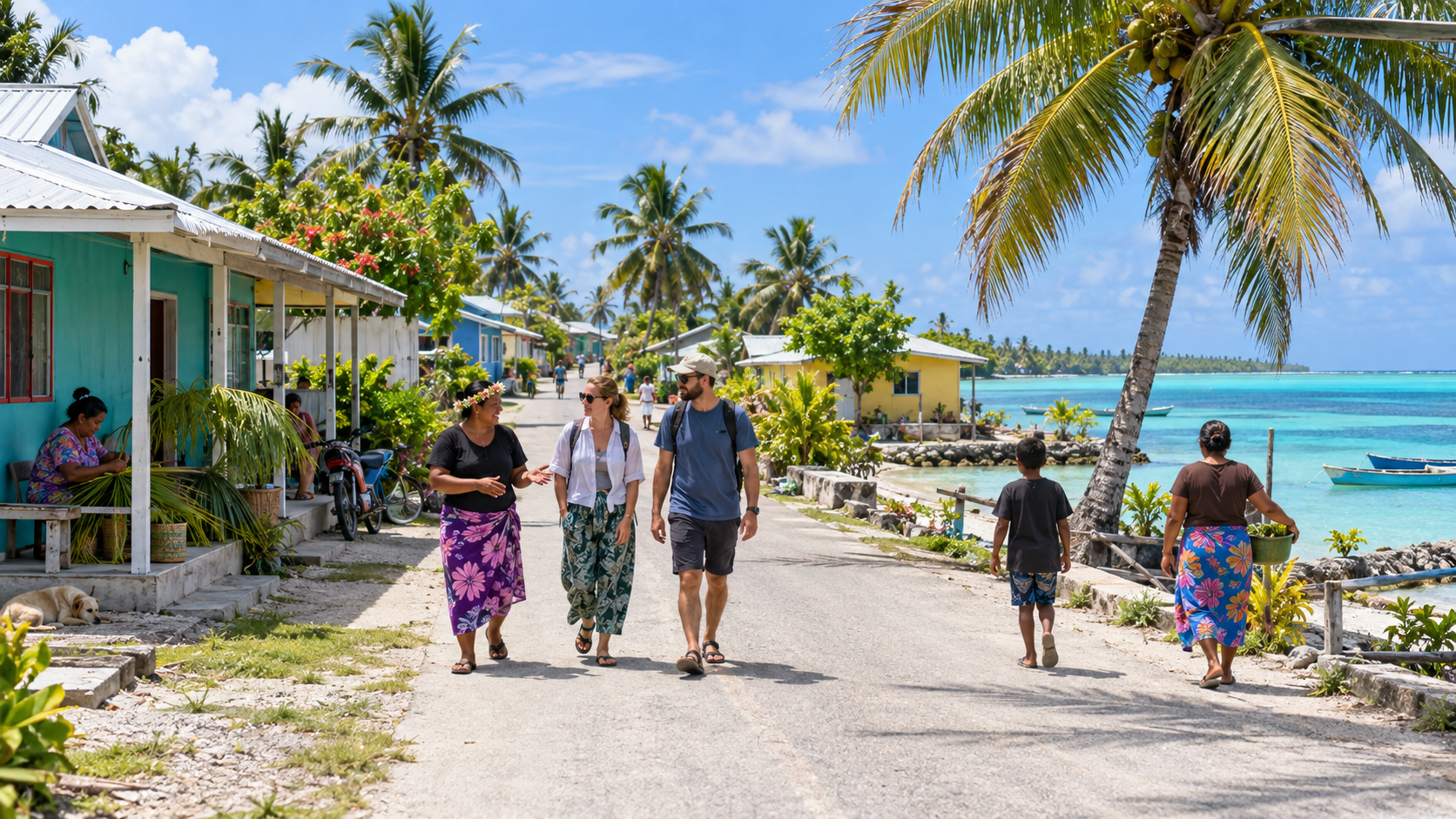
Funafuti is the capital atoll, and Fongafale is its main populated islet. The airport, government offices, shops, churches and accommodation lie within a compact setting where both lagoon and open ocean are close. This proximity makes a visit feel intimate, but the place is a functioning capital rather than a staged village. Residents are commuting, shopping, maintaining households and organizing the ordinary work of a country.
The official census counted 6,613 people in Funafuti in 2022–23, a substantial share of the national total. Population concentration puts pressure on land, water and public services, so the capital’s geography cannot be understood simply as a postcard of palms. Walk considerately, ask before photographing people or homes and allow space for local activities. Airport facilities remain operational infrastructure: a quiet runway is never an invitation to enter without permission.
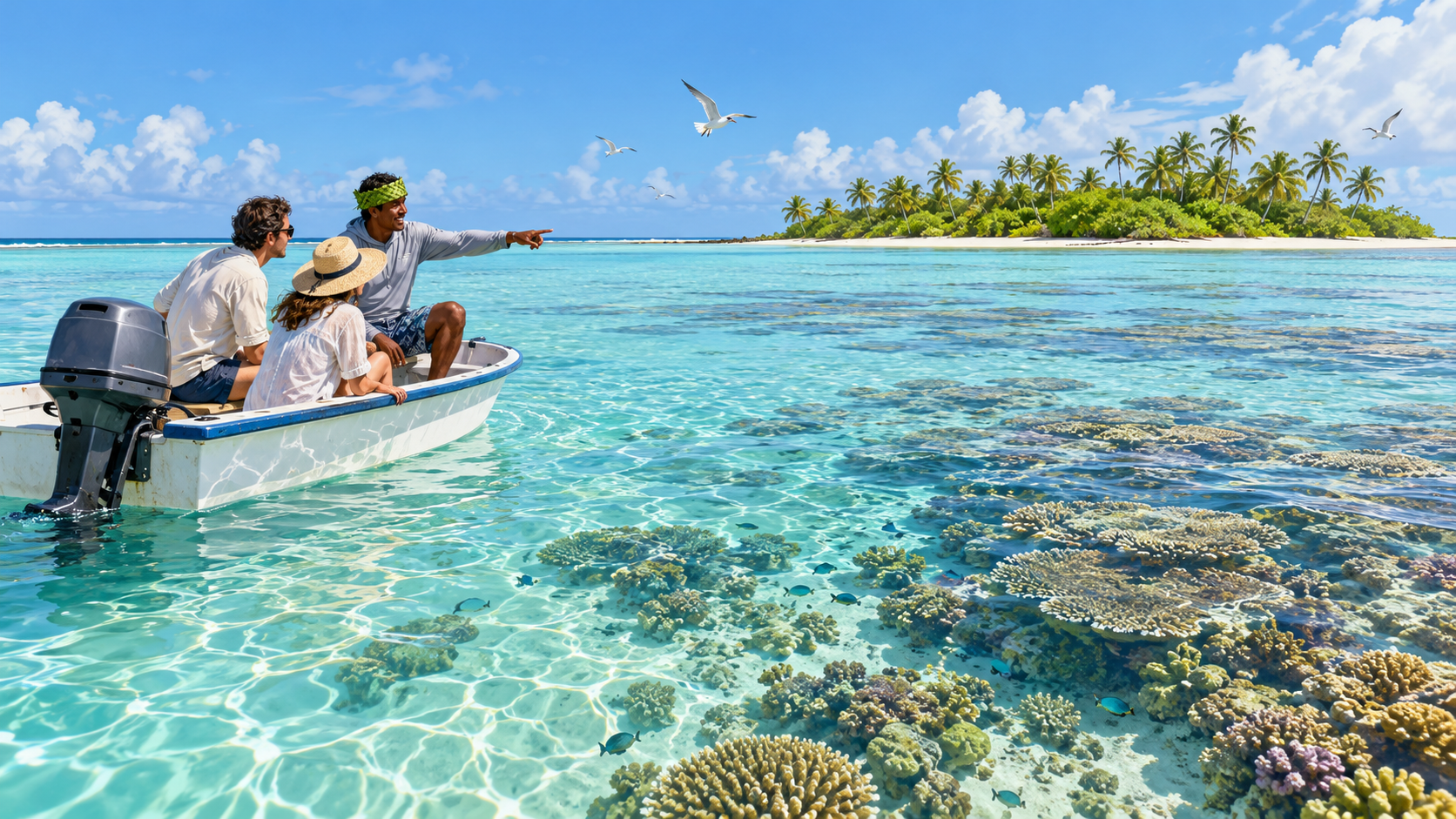
The lagoon is a natural focus of a visit, but access to reef areas should be arranged with an appropriate local operator. Conditions differ between protected water, reef passages and the ocean-facing coast. A guesthouse or the tourism office can help connect travelers with current local arrangements. Leave time between a boat outing and a departure flight, and avoid assuming that a capital-island stay gives automatic access to every surrounding islet.
The islands outside Funafuti are distinct communities, not interchangeable stops on a resort circuit. Nanumea, Nanumaga, Niutao, Nui, Vaitupu, Nukufetau, Nukulaelae and Niulakita each deserve to be approached with their own history and local relationships in mind. The physical difference between an atoll and a reef island also changes what visitors can expect from lagoon access and shoreline travel.
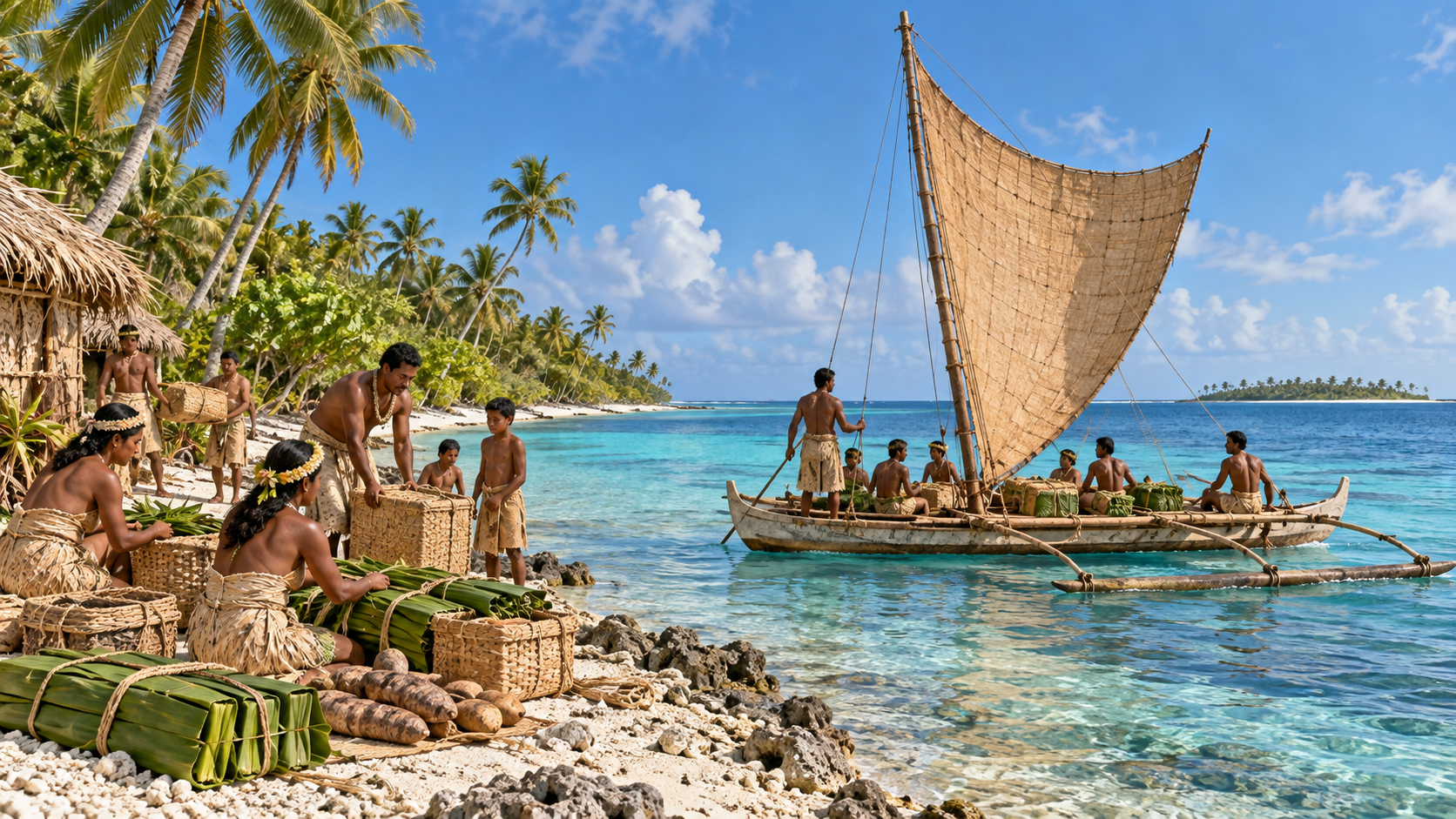
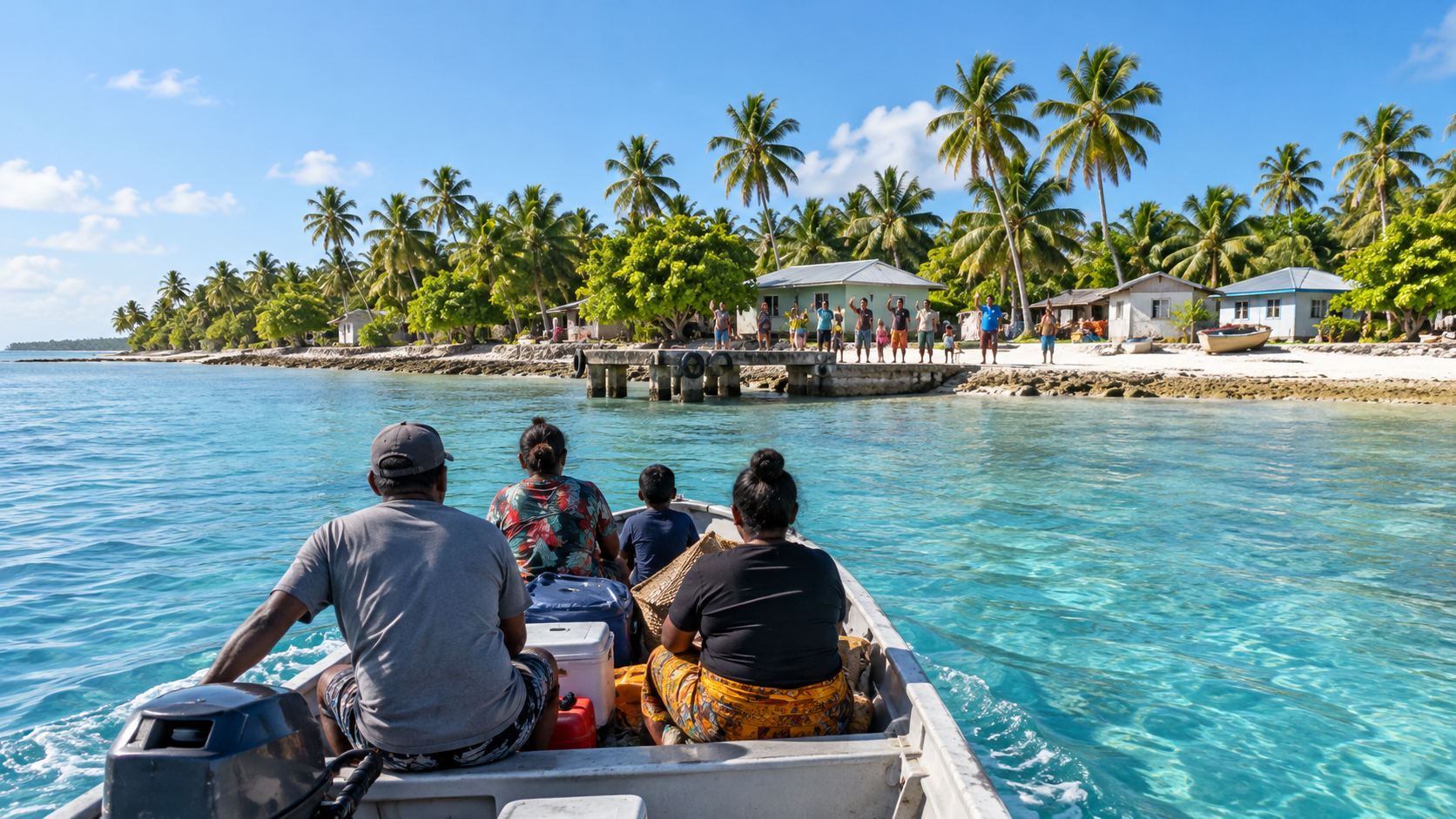
Inter-island travel is usually a maritime planning problem. Confirm a current sailing and passenger arrangements locally rather than relying on a fixed circuit, a named vessel or an old estimate of travel hours. Weather and cargo priorities can change departure and return dates. A short international holiday may not provide enough margin for an outer-island voyage and a dependable flight connection.
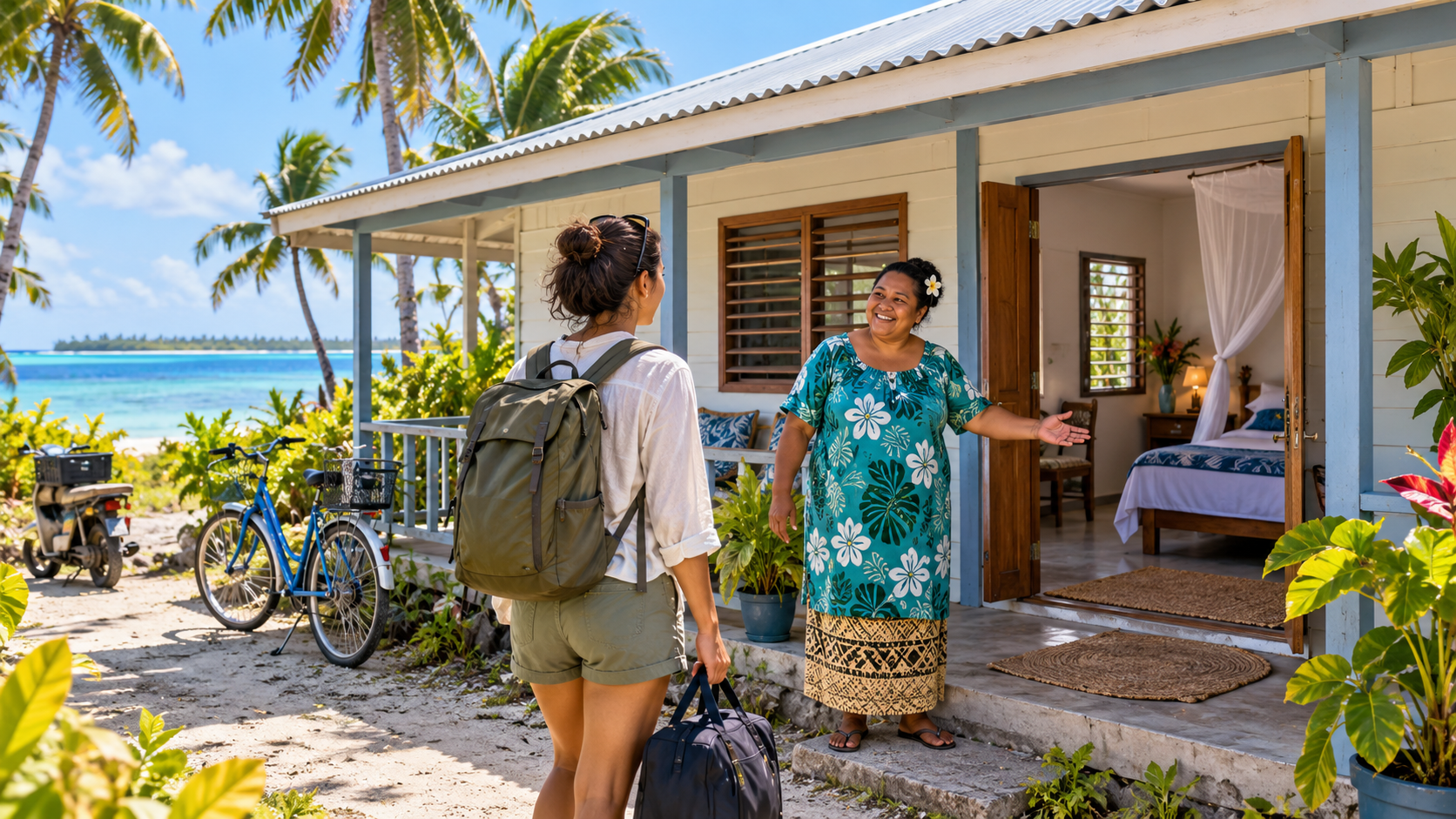
Accommodation and meals should be agreed before arrival, with the island council or a verified host involved where appropriate. Ask what supplies are useful and what fees apply; unsolicited gifts are not a substitute for paying agreed costs. Community life continues around visitors, and the strongest experience often comes from staying in one place long enough to understand its daily rhythm.
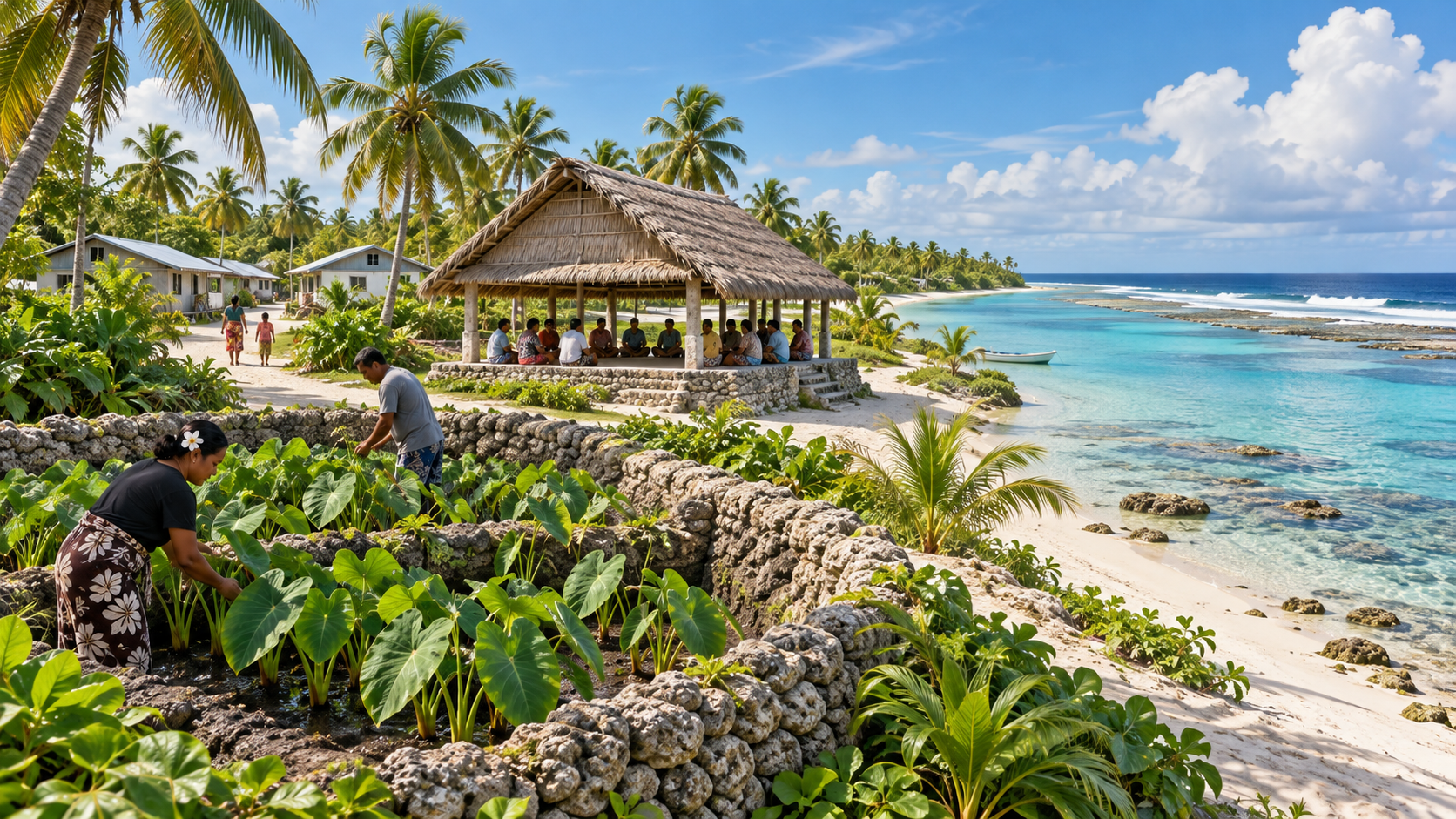
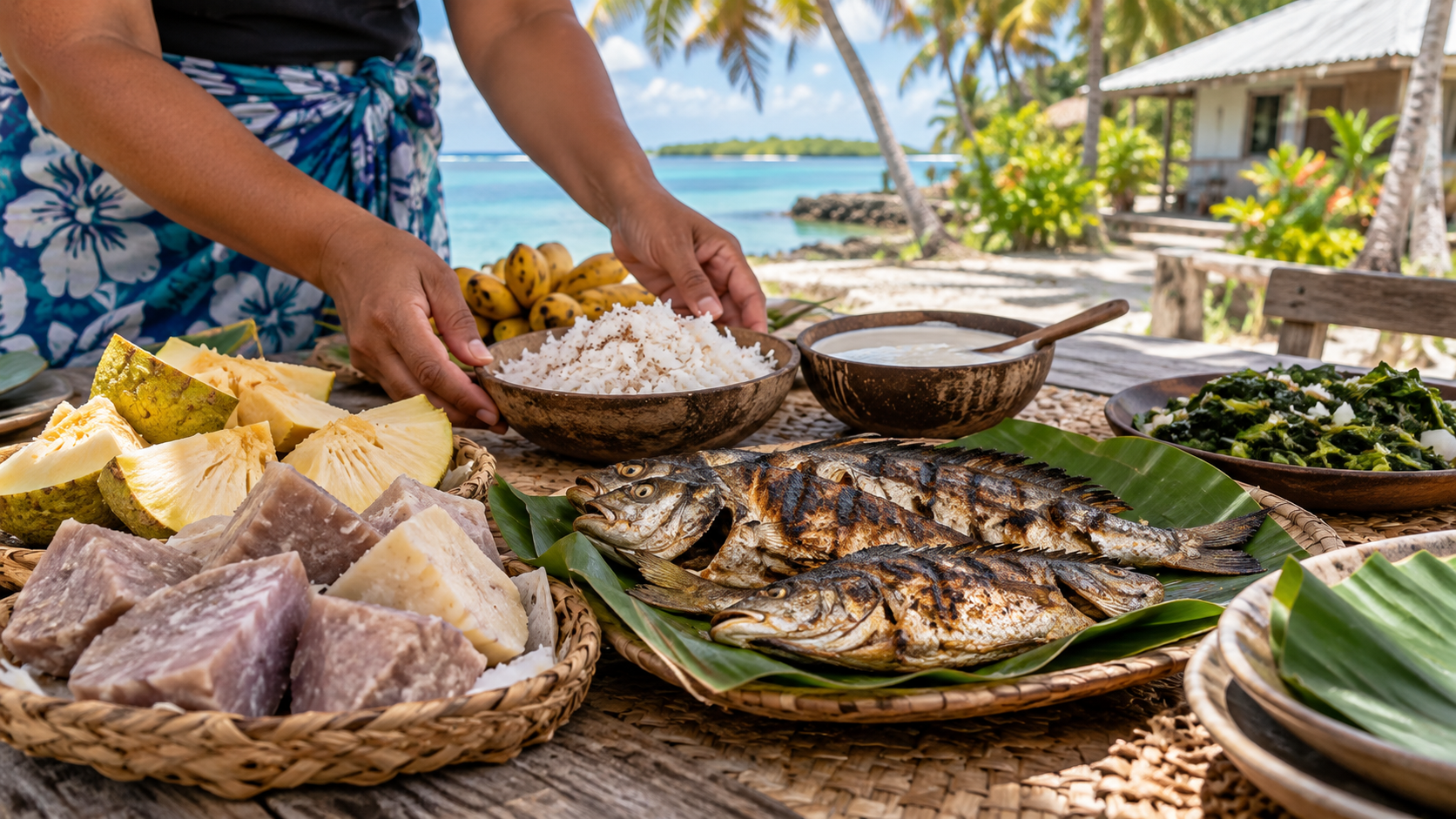
Tuvaluan food is simple and ocean-dependent. Fresh fish (tuna, skipjack, reef fish) is the primary protein, prepared grilled, in coconut cream, or eaten raw. Pulaka (giant swamp taro) is the traditional staple crop, grown in cultivated pits that reach the water table — its cultivation is increasingly threatened by saltwater intrusion. Coconut features in virtually everything: cream, oil, toddy (sweet or fermented palm sap), and copra. Breadfruit, bananas, and pandanus supplement the limited produce. Imported rice and canned goods have become dietary staples due to limited arable land.
Pulaka, or giant swamp taro, connects Tuvaluan food with a carefully maintained agricultural landscape. Its pits are cultivated and enriched over generations. UNESCO’s description of the cultural landscape emphasizes this inherited knowledge, including the relationship between cultivation, water and island settlement. Saltwater intrusion and freshwater management are therefore questions of food security as well as physical geography.
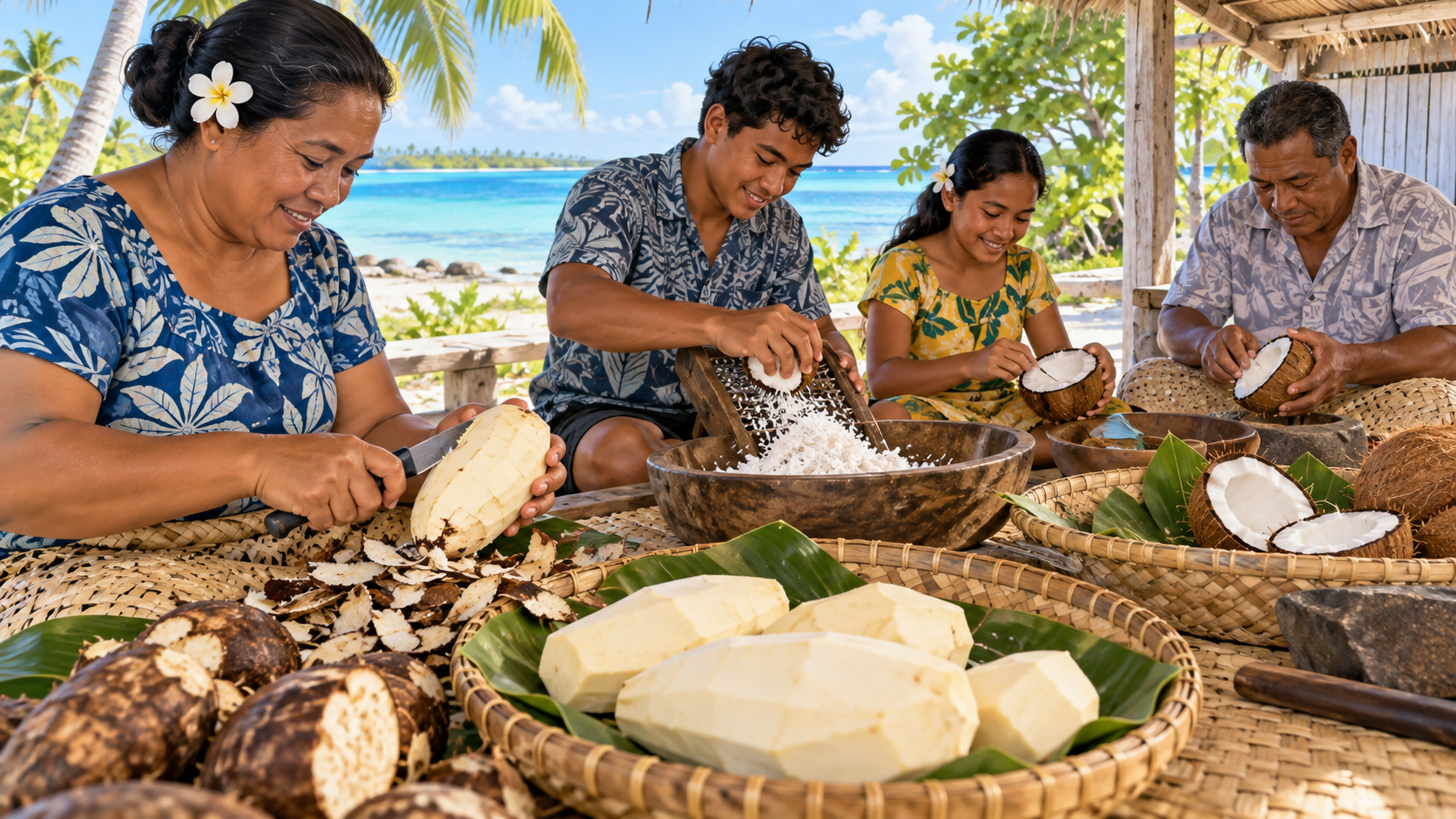
Fekei is associated with the preparation of starchy staples and coconut, with recipes and names varying among islands and households. A cook’s account of ingredients and preparation offers a valuable introduction to these traditions. Ask hosts how a dish is prepared and what ingredients are used; the answer can reveal family practice and local variation more clearly than a generic recipe copied across travel websites.
For a home adaptation, use an established cooking method for the ingredient available to you and cook taro thoroughly. Avoid treating unfamiliar raw roots or fermented palm sap as an experiment. The richness of island cooking lies in the knowledge carried through households and communities. Supporting a local cook and listening to their account of a dish is often the best way to learn.
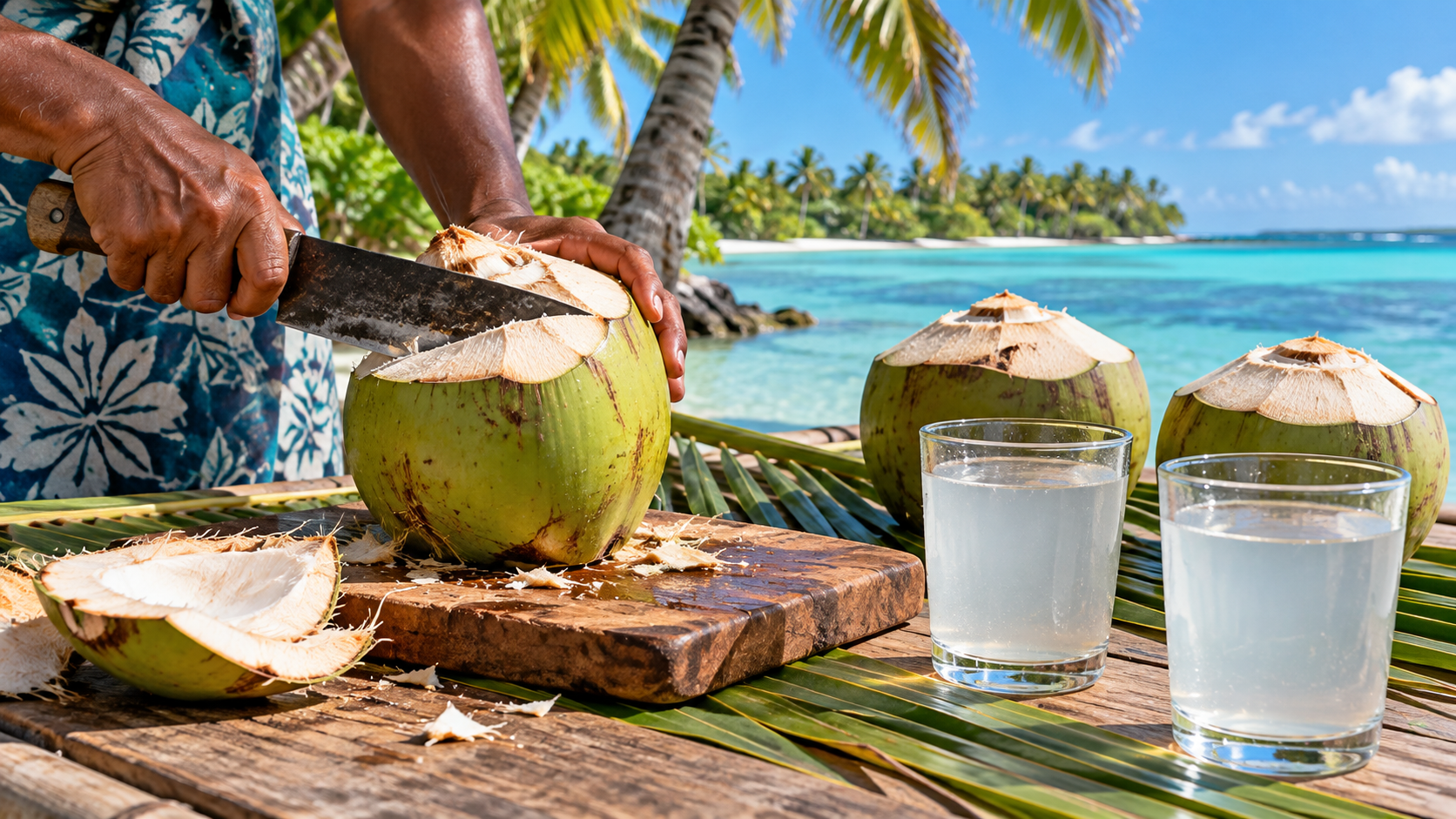
Young coconut water and coconut-based preparations belong to island food culture, while the sap collected from coconut flower stems can be consumed fresh or fermented. Fresh sap and fermented toddy are different products: flavor, alcohol content and storage conditions vary. Ask the person preparing the drink about its ingredients and condition before consuming it.
Imported soft drinks, beer, wine and spirits reflect Tuvalu’s connections with regional supply chains. Availability changes with shipments, so an imported beverage selection is best confirmed locally. Ask an accommodation provider what is available and whether a drink is locally prepared or imported.
For daily hydration, follow reliable advice about drinking water, use a refillable bottle where safe and distinguish sealed commercial drinks from water of uncertain quality. Alcohol is optional, and respectful participation in a gathering does not require drinking it. Sunday customs, household preferences and church-related events deserve consideration when choosing where and when to consume alcohol.
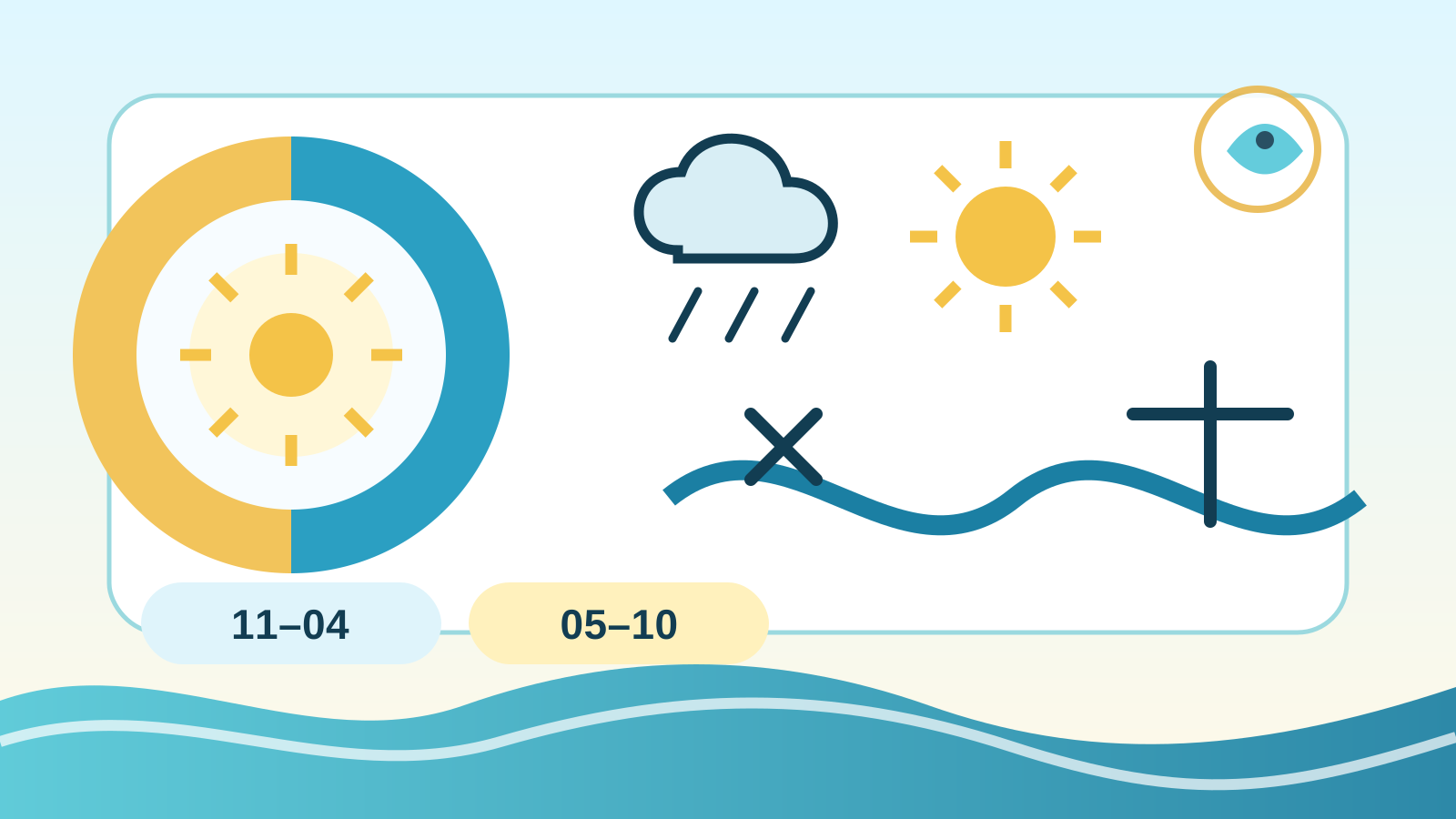
Tuvalu has a hot, humid tropical maritime climate with temperatures averaging 28-30°C year-round. The wet season (November-April) brings heavy rainfall and occasional cyclones. Rising sea levels, extreme tides and storms put pressure on low-lying settlements, freshwater supplies and coasts; their effects vary among islands and should not be reduced to one universal annual rate. Tuvalu has been among the most vocal nations in international climate negotiations, arguing that its very survival depends on global emissions reductions.
For a practical itinerary, treat marine weather and transport advice as local decisions. A calmer season is not a promise that every boat departure will operate, and a rainfall average does not describe an individual week. Plan protection from heat and strong sun, leave time for delays and respect any instructions issued by the operator or community.
Seasonal planning: wetter November–April, warm conditions year-round, and marine weather that can change transport. · Kaufmann.WTF editorial graphic
14
Getting There — Confirm the Current Flight
Funafuti International Airport (FUN) is Tuvalu’s international air gateway. Fiji Airways advertises service to Funafuti, making Fiji the usual starting point for an air itinerary. Routes, operating days and fares change; confirm the exact airport in Fiji, baggage conditions and connection time directly with the airline before booking. Leave space for changes in both the outbound journey and the return connection.
Book accommodation alongside the flights and arrange the arrival transfer directly with the host. Keep a buffer before a costly onward international connection, since disruptions have fewer alternatives than in a large hub. Travel insurance should cover the itinerary you actually book, including delays and any planned boat travel.
Arrival in Funafuti does not establish an outer-island connection. If that is part of the plan, obtain current passenger and return arrangements separately. A visit built around one short, rigid transfer may be less practical than spending time in the capital and its lagoon. Download essential booking details and carry contact information that remains useful without internet access.
Arrival sequence: fly to Funafuti, confirm every air segment, and arrange outer-island boat travel separately. · Kaufmann.WTF editorial graphic
15
Practical Information — Documents, Cash and Care
Entry rules depend on nationality and can change. Check the current official advice for your passport, onward travel and intended length of stay before departure; make sure the requirements cover your individual circumstances. British readers can use FCDO entry guidance, U.S. readers the State Department’s country information, and other travelers their own consular sources. This page is a cultural guide rather than an immigration decision.
The Australian dollar is used, alongside Tuvaluan coins. Current U.S. State Department guidance says credit-card services and ATMs are not available in Tuvalu. Bring enough cash in Australian dollars for accommodation, meals, boat outings and disrupted return travel, and confirm the current position directly with your host before departure.
Medical facilities and evacuation options are limited compared with a major regional city. Arrange suitable insurance, carry personal medicines and seek professional travel-health advice before leaving. Download documents, store emergency contacts offline and ask your accommodation provider about locally available communications. Respect modest dress, private property and Sunday customs; low crime levels do not remove the need for care around roads, reef edges, boats and strong sun.
Core practical checks: valid documents, confirmed cash needs, insurance and medicines, plus contacts stored offline. · Kaufmann.WTF editorial graphic
16
Cost of Living — Build a Confirmed Budget
Tuvalu’s travel costs reflect distance, limited transport capacity and imported goods. Start your budget with an actual airfare and a written accommodation quotation. Request the nightly rate in Australian dollars and clarify whether meals, airport transfers, laundry and taxes are included.
Boat excursions and outer-island travel should be quoted separately. Ask what the fee covers, how many people share the boat and how a cancellation is handled. For a homestay, agree payment and meals beforehand rather than assuming that gifts settle the cost. Imports can be expensive or intermittently unavailable, while the availability of local fish and produce follows its own patterns.
Keep every comparison in a named currency. Australian-dollar figures are not equal to U.S.-dollar figures, and a conversion needs a dated exchange rate. Record confirmed prices and their dates so that your plan remains clear. Add a contingency for extra nights, transport changes and the supplies you need personally, then confirm the full cash requirement before traveling.
A confirmed budget separates accommodation, meals, boat transport and a contingency reserve, all stated in AUD. · Kaufmann.WTF editorial graphic
17
Accommodation — Guesthouses, Lodges and Hosts
Tuvalu’s accommodation is limited in scale, with guesthouses, lodges and homestays offering different ways to stay. The official tourism service lists local guesthouses and homestays, including Esfam Lodge in central Funafuti. Book through a verified operator and obtain a direct confirmation rather than assuming an online listing represents an available room.
Ask about bathroom arrangements, meals, drinking water, cooling, electricity and transport. A small property may be welcoming while offering different facilities from a regional resort; the important question is whether those facilities suit your needs. If arriving late or staying through Sunday, agree meal arrangements in advance.
An outer-island stay requires a host and a transport plan, including a return contingency. Camping is not automatically permitted wherever land appears empty. Land access, community consent and the practical availability of water and sanitation all matter. Clear arrangements allow visitors to participate respectfully while supporting the people providing accommodation.
Tuvalu’s international importance is much larger than its land area. Its .tv domain connects national identity with global communications, while fishing, public administration, family remittances and development partnerships link island life to regional and global economies. Each of these relationships deserves more attention than a list of tiny-country rankings.
The nine islands include six atolls and three reef islands. More than half the population recorded in the 2022–23 census lived in Funafuti. These facts explain why the capital is busy despite the country’s small total population, and why island affiliation remains significant for families whose home island is elsewhere.
Tuvalu’s climate diplomacy also seeks continuity of sovereignty, culture and citizenship. The Australia–Tuvalu Falepili Union treaty entered into force on August 28, 2024. It addresses climate-related cooperation, a mobility pathway and security assistance. At its heart are questions of partnership and choice while Tuvaluans continue to sustain their own country.
Nine island communities — six atolls and three reef islands — connect a small land area with the global .tv domain. · Kaufmann.WTF editorial graphic
19
Festivals & Events — Community Before Calendar
Independence Day on October 1 marks the country’s independence in 1978 and is an important national occasion. Community celebrations can include music, dance, church activities, sports and shared meals, but the program is organized locally. Check what is actually planned during your visit rather than booking around a supposed permanent tourist festival.
Church observance and island-specific commemorations shape the calendar. A celebration is also a gathering of relatives and community members, so visitors should ask how they may attend, what clothing is appropriate and whether photography is welcome. A performance offered to guests is different from an event whose primary purpose is communal or religious.
Fatele, singing and group performance are important cultural expressions, with local variation. Listen to explanations of the songs and the occasion rather than describing culture as a show staged for travelers. Invitations, consent and paying agreed costs where relevant help visitors support celebrations without imposing on them.
Hidden Gems — Quiet Encounters and Protected Water
The Funafuti Conservation Area is one of Tuvalu’s most important visitor experiences. The tourism department describes a protected area of about 33 square kilometers of reef, lagoon and motu on the western side of the atoll. A visit should be arranged locally, with the operator explaining access rules, sea conditions and how to avoid disturbing wildlife.
Smaller experiences can be just as rewarding: a permitted walk, a conversation about island histories, a meal prepared by a local cook or a look at craft traditions when invited. These encounters are not hidden because residents are waiting to be discovered; they depend on relationships and the willingness of hosts to share their time.
King tides and flooding affect homes, transport and livelihoods. They should not be promoted as a spectacle or treated as a reason to intrude on affected families. If conditions disrupt your visit, follow local guidance and keep roads and services clear. Respectful curiosity leaves room for a community’s privacy as well as its hospitality.
Tuvalu’s public figures have carried island concerns into international forums, particularly in debates over climate change and sovereignty. Former prime minister Enele Sopoaga and former foreign minister Simon Kofe are associated with this diplomacy. Their speeches and public work bring the concerns of a small island state into debates with global consequences.
Public life also includes teachers, health workers, church leaders, artists, athletes and community organizers whose influence may never appear in international coverage. The most useful guide avoids implying that a tiny population produces only a handful of important people. It invites readers to recognize the institutions and relationships that sustain everyday life.
Tuvalu is a constitutional monarchy. Names of serving officeholders change, so readers who need current government contacts should consult official sources. Historical roles are distinguished here from present appointments, rather than allowing a static travel page to appear more up to date than it is.
Community leadership and achievement are represented symbolically without inventing the likeness of any named person. · Kaufmann.WTF editorial graphic
22
Gallery
Funafuti atoll — a thin strip of land in vast Pacific blue · Kaufmann project archive; existing project copyright metadata. Image creditsFunafuti lagoon — reef, water and the inhabited shore · Kaufmann project archive; existing project copyright metadata. Image creditsThe airstrip — runway by day, gathering place by evening · Kaufmann project archive; existing project copyright metadata. Image creditsCoconut palms — the tree of life on every atoll · Kaufmann project archive; existing project copyright metadata. Image credits
23
Packing Tips — Prepare for Limited Resupply
Pack personal medicines, copies of documents, offline contacts, sun protection and clothing suitable for both warm weather and community settings. A reusable bottle is useful where a reliable refill is available; ask hosts about drinking water rather than assuming every local source is suitable. Carry the cash contingency agreed during your planning.
For a permitted marine excursion, confirm what equipment the operator provides and whether your insurance covers the activity. Footwear should protect you without encouraging walking on living coral. Dry bags, spare charging options and a simple first-aid kit may be useful, but the best packing list follows your actual itinerary instead of a generic survival checklist.
Outer-island supplies should be discussed with the host before departure. Do not assume that unsolicited food or gifts are wanted, and avoid leaving packaging that adds to local waste. Pack fewer disposable products, consider how you will carry waste away and leave room for weather-related changes rather than filling every day with fixed activities.
Pack for the confirmed itinerary, limited resupply and respectful island travel rather than for an imagined expedition. · Kaufmann.WTF editorial graphic
24
Media & Communications — Follow Local Information
Radio and community networks matter to public information in a country of dispersed islands. International climate coverage can help explain diplomacy, but it does not replace local announcements about weather, transport and public services. Ask hosts where current practical information is shared, especially if your itinerary depends on a boat journey.
Telecommunications are developing, and an old description of the entire country as having almost no internet is not a reliable current specification. Actual coverage, service packages and speeds depend on location and provider. Confirm connectivity needs before arrival, download essential records and keep alternatives for contacting family or accommodation.
Photography and reporting carry responsibilities. Obtain consent for close portraits and private settings; a person affected by coastal flooding is not automatically available for an interview. When sharing images or stories, identify what you personally observed, what a source explained and what remains uncertain. Local people deserve credit and context rather than serving as anonymous illustrations of a global problem.
Local announcements, radio and direct contacts remain distinct from assumptions about internet availability. · Kaufmann.WTF editorial graphic
25
Films & Sources — Look Beyond the Disaster Image
Choose films that identify their makers, date and sources, and that allow Tuvaluan people to speak about more than environmental vulnerability. A documentary about climate diplomacy and a travel video about a lagoon answer different questions. Neither should be used to establish current entry rules, flight schedules or medical arrangements.
The official tourism portal is a starting point for activities and accommodation, while the UNESCO tentative-list description explains the cultural landscape. Government sources offer context for the Falepili Union. Following these records alongside film helps separate a compelling visual narrative from a claim that can be checked.
Local voices and clearly identified sources add depth to a film’s visual account. When you find a useful documentary, check that the publicly available copy is legitimate and note when it was made. A portrait of island life from several years ago can be valuable while still requiring current practical information.
An edited historical account of the islands, useful alongside current primary sources.
📗
We Are the Ocean
Epeli Hau'ofa, 2008
Essays by the great Pacific scholar reframing island nations as oceanic peoples, not small vulnerable states.
Reading across history, culture and contemporary policy gives the islands a fuller context. · Kaufmann.WTF editorial graphic
27
2026 Review — What to Recheck Before Traveling
This page was reviewed on October 11, 2026. For planning, begin with the country’s basic geography and current service arrangements. Tuvalu has six atolls and three reef islands, the official 2022–23 census counted 10,643 people in total, and visitors can choose among locally operated accommodation while confirming the flights available for their dates.
The Australia–Tuvalu Falepili Union entered into force on August 28, 2024. Its official treaty information is the appropriate starting point for understanding the relationship, including cooperation, mobility and security. Visitors should distinguish this framework from speculation about the future of island settlement.
Banking, connectivity, air services and local prices can develop faster than a country overview is revised. Confirm these with an airline, a verified host or a relevant authority immediately before travel. A review date records editorial work; it does not guarantee that every service will remain available or that future departures will run as planned.
A review date records editorial work, while flights, prices and services still require direct confirmation. · Kaufmann.WTF editorial graphic
28
Author’s Note — A Nation Beyond a Headline
Tuvalu is too often introduced by a prediction of its disappearance. Such a framing may draw attention to a serious environmental challenge, but it can also obscure the people, history and political agency of a country that continues to make decisions about its future. This guide seeks to give cultural life and everyday geography the same attention as climate diplomacy.
The editorial approach is to read Tuvalu as an ocean nation: its islands are connected by kinship, voyages and shared institutions, while families also maintain connections overseas. The small area of land is only one measure of the place. A community’s attachment to an island is not interchangeable with a photograph of its shoreline.
This guide brings together documented sources and an editorial interest in the country’s cultural life. Local knowledge and clearly identified sources help the portrait grow more accurate over time. Readers who know the islands are invited to send corrections and properly credited photographs so that future revisions better represent the country.
The editorial note frames Tuvalu as a living ocean nation rather than a single environmental headline. · Kaufmann.WTF editorial graphic
29
Resources
The following primary sources support the dated corrections and provide places to check current arrangements. Travel advice is nationality-specific; consult the appropriate authority for your own passport.