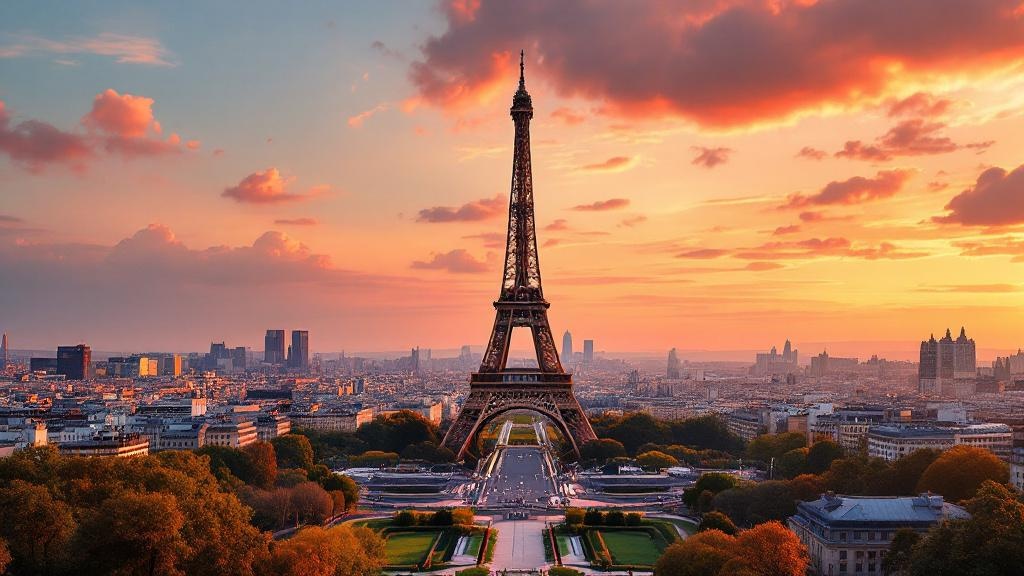


🇫🇷 France at a Glance
🌍 Overview — Why France
France receives around 100 million international visitors a year, more than any other country on Earth, and manages to be simultaneously the most over-visited place in Europe and one of the most under-explored. Nearly everyone goes to Paris, Provence and the Riviera. Almost nobody goes to the Auvergne, the Jura, the Cévennes or the Lot, and those are where the country still behaves like itself.
It helps to understand the scale. France is the largest country in the EU — 551,695 km² in Europe alone, plus overseas territories that put French sovereign land in the Caribbean, the Indian Ocean, the Pacific and South America. It runs from the Channel to the Mediterranean and from the Atlantic to the Alps, and it can produce almost every landscape Europe has except desert and fjord.
What makes it worth the crowds is a stubborn national insistence that ordinary life should be good. Lunch is an hour, not fifteen minutes. Bread is bought daily. The state pays for a village of 400 people to keep a boulangerie. There are 1,200 or so cheeses, several hundred protected wine appellations, and a legal framework defending both. That is not a marketing story; it is a set of priorities you can feel within a day of arriving.
The France that irritates visitors — the bureaucracy, the strikes, the shopkeeper who will not serve you at 12:05 — comes from the same place. It is a country that has decided some things are not negotiable, and that includes the shopkeeper's lunch.
Best for
Food and wine at every price level, art and architecture in quantity, world-class hiking and skiing, cycling, and a rail network that makes a car optional.
Not so good for
Anyone in a hurry, anyone expecting service to be friendly rather than correct, or anyone visiting Paris or the Riviera in August without a booking.
The single best decision
Go one region further than the guidebook. Instead of Provence, the Drôme. Instead of the Loire châteaux, the Loire's own villages. Instead of the Côte d'Azur, the Corniche des Cévennes.
Language
Speak the first four words in French — bonjour above all — and everything gets easier. This is not about fluency; it is about acknowledging that you have entered someone's shop.
🏷️ The Hexagon
The French call their own country l'Hexagone as often as they call it France, because on a map metropolitan France is a rough six-sided shape — a habit of thinking that shows how much the physical outline matters to national self-image. The name France itself comes from the Franks, the Germanic confederation who took the Roman province of Gaul in the fifth century.
The Republic, not the nation
France defines itself politically rather than ethnically: the Republic is indivisible, secular, democratic and social by the first article of its constitution. Officially there are no ethnic minorities in France, only citizens — a position with both admirable and problematic consequences.
Liberté, Égalité, Fraternité
The motto dates from the Revolution, became official in 1848, and is carved on the front of every town hall and school in the country. It is taken seriously enough to be argued about constantly.
Marianne
The female personification of the Republic, in every mairie, on the stamps and the coins. She is deliberately not a monarch, not a saint and not a real person.
The tricolore
Blue and red for Paris, white for the Bourbon monarchy — a revolutionary compromise from 1790 that put the king's colour between the city's two.
Overseas France
Guadeloupe, Martinique, Réunion, Mayotte and French Guiana are full départements, not colonies: their residents are French and EU citizens, they vote in French elections and they use the euro. France therefore borders Brazil and Suriname.
What the French argue about
Whether the Republic's universalism protects minorities or erases them. It is the live question behind almost every French political controversy, from headscarves to statistics on ethnicity, which the state does not collect.
🗺️ Geography and Regions
France's landscape variety is the reason it can absorb a hundred million visitors without feeling uniformly full. It has Europe's highest mountain, its largest forest of maritime pine, the second-longest Atlantic coast, and a Mediterranean shore that could be a different country entirely — and all of it fits inside a day's train travel from Paris.
The great rivers
The Loire (1,006 km, the longest and the last largely wild river in Europe), the Seine, the Rhône — fast, Alpine and industrial — the Garonne, and the Rhine along the German border.
The mountains
The Alps with Mont Blanc at 4,806 m, the Pyrenees along the Spanish border, the volcanic Massif Central, the wooded Jura and the Vosges above Alsace.
The coasts
The Channel and its cliffs and D-Day beaches, Brittany's granite and tides, the long straight Atlantic beaches and dunes of the Landes, and the Mediterranean from the Camargue to Menton.
The plains
The Paris basin, Beauce and Picardy — some of the most productive farmland in Europe and the reason France is the EU's largest agricultural producer.
The 13 regions
Metropolitan France was reorganised in 2016 from 22 regions into 13, with names ranging from the ancient (Bretagne, Normandie) to the bureaucratic (Auvergne-Rhône-Alpes, Nouvelle-Aquitaine). Nobody likes the new names.
Corsica
The Île de Beauté, closer to Italy than to Nice, mountainous, fiercely distinct, with its own language and a long autonomy movement. It deserves a fortnight of its own and the GR20 is the hardest long-distance path in Europe.
🗺️ Map of France
Paris sits well north of centre; almost everywhere else is a radial spoke from it, which is exactly how the French rail and motorway networks were built. Getting between two provincial cities often means going through Paris, and that is a genuine planning constraint.
Paris → Lyon
2 hours by TGV, and the fastest way to reach the Alps, Provence and the south.
Paris → Marseille
3 h 15 by TGV for 750 km. The train beats flying door to door and always will.
Paris → Bordeaux
2 hours since the 2017 line opened, which changed Bordeaux's property market overnight.
Paris → Strasbourg
1 h 45, and Strasbourg to Prague is a straightforward day by train through Germany.
📜 History — Gaul to the Revolution
France has been a recognisable political entity for longer than almost anywhere in Europe, and the continuity shows: Roman roads under motorways, medieval market days still held on the same day of the week, and a centralised state that Louis XIV would recognise instantly.
Gaul and Rome
Caesar's conquest, completed in 51 BC, left Latin, roads, cities and vineyards. Nîmes, Arles, Orange and Lyon are as Roman as anywhere outside Italy, and Provence takes its name from being simply the Roman province.
The Franks
Clovis converted to Christianity around 496 and united the Frankish kingdoms. Charlemagne, crowned emperor in 800, ruled from Aachen an empire that split into the ancestors of France and Germany — a division whose consequences ran until 1945.
The Capetians and the Hundred Years' War
From 987 a single dynasty held Paris and slowly absorbed the rest. The war with England (1337–1453) nearly destroyed it, and produced Joan of Arc, burned at Rouen in 1431 and canonised in 1920.
The Wars of Religion
Catholic against Huguenot, culminating in the St Bartholomew's Day massacre of 1572 and ending with Henri IV's Edict of Nantes in 1598 — revoked by Louis XIV in 1685, which drove 200,000 Protestants abroad and is still a live memory in the Cévennes.
Louis XIV
The Sun King, 72 years on the throne, absolutism made architecture at Versailles. He centralised power in a way France has never really undone, and left the state bankrupt enough to matter a century later.
1789
The Revolution: the Bastille in July, the Declaration of the Rights of Man in August, the king executed in 1793, the Terror, and then Napoleon. Everything about modern France — the departments, the legal code, the metric system, the secular state — dates from this rupture.
🕰️ Napoleon to the Fifth Republic
Since 1789 France has had five republics, two empires, three monarchies and one collaborationist state. The current constitution dates from 1958. This is a country that has genuinely changed its system of government roughly every generation, and it makes the French relationship with authority quite different from the German or British one.
Napoleon
Consul then Emperor, he redrew Europe, lost in Russia, was defeated at Waterloo in 1815, and left behind the Code civil that still underpins the legal systems of much of the world.
The nineteenth century
Restoration, revolution in 1830 and 1848, the Second Empire, defeat by Prussia in 1870, and the Paris Commune of 1871, crushed with around 20,000 dead. Haussmann rebuilt Paris in the middle of it.
The Third Republic and the Dreyfus affair
From 1870 to 1940, and the era in which the modern secular Republic was built: free compulsory schooling in the 1880s and the separation of church and state in 1905. The Dreyfus affair split the country and created the modern idea of the public intellectual.
The First World War
1.4 million French dead, a generation gone, and the trenches of the Somme, Verdun and the Chemin des Dames. Every village in France has a monument with too many names on it. Verdun alone killed around 300,000.
1940–44
Defeat in six weeks, occupation, the Vichy regime and its collaboration in deportations, the Resistance, and the Liberation. France spent decades not discussing Vichy honestly and only formally acknowledged state responsibility in 1995.
Since de Gaulle
The Fifth Republic from 1958, decolonisation and the brutal Algerian war, May 1968, the founding of the EEC, the euro, and a politics now organised around the fracture between the metropolitan centre and everywhere else — the argument that produced the gilets jaunes.
🗼 Paris
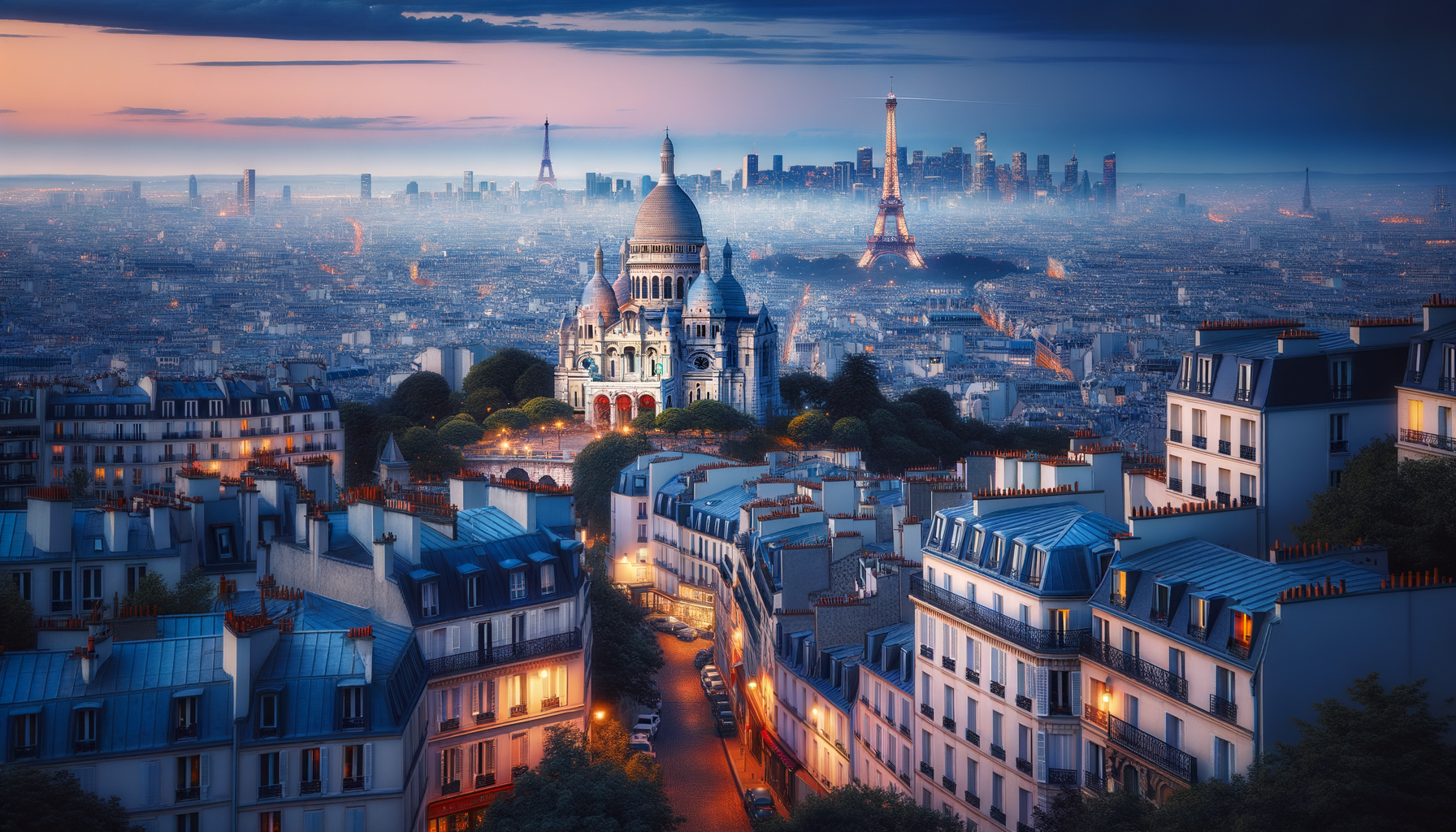
Paris is small. That is the first useful thing to know: the city proper is 105 km² with 2.1 million people, and you can walk across it in three hours. The metropolitan area holds 12 million, but the Paris people come to see fits inside a ring road you could cycle around in an afternoon.
The museums
The Louvre (book a slot, go at opening, skip the Mona Lisa scrum and find the Richelieu wing empty), the Musée d'Orsay in a former railway station and better than the Louvre for most visitors, and the Orangerie, where Monet's water lilies occupy two oval rooms built for them.
Notre-Dame
Reopened in December 2024 after the 2019 fire, cleaned to a paleness nobody alive had seen. Free to enter, and the queue moves. The rebuilt spire is a faithful copy of Viollet-le-Duc's nineteenth-century one.
Where to actually walk
The Marais for the oldest surviving streets and the Place des Vosges; Canal Saint-Martin on a summer evening; Belleville and Ménilmontant for the Paris that is not a museum; the Coulée verte, the elevated park that the New York High Line copied.
Père-Lachaise
The great cemetery: Wilde, Chopin, Piaf, Morrison, and 44 hectares of cobbled paths. Go early on a weekday and it is one of the quietest places in the city.
Eating
Avoid anywhere with a photo menu or a tout. Look for a chalkboard, a short menu, a formule at lunch for €18–25, and a room full of people who work nearby. The bistro renaissance of the last decade is real and it is mostly in the 10th, 11th and 18th.
Getting around
The metro is dense, cheap and fast; buy a Navigo Easy card or use contactless. Almost everything central is walkable. The RER B from Charles de Gaulle is the cheap airport route and also the one where bags get taken — keep yours in front of you.
👑 Versailles and the Shape of Power
Versailles is not really a palace. It is an argument, built at enormous cost, that the French nobility should live where the king could watch them — and it worked so well that it eventually helped destroy the monarchy that built it.
What Louis XIV built
A hunting lodge turned into a court of 10,000 people between 1661 and 1710, with 2,300 rooms, 800 hectares of gardens by Le Nôtre and a water system that required diverting rivers. The point was to make the aristocracy compete for the king's attention rather than plot in their own provinces.
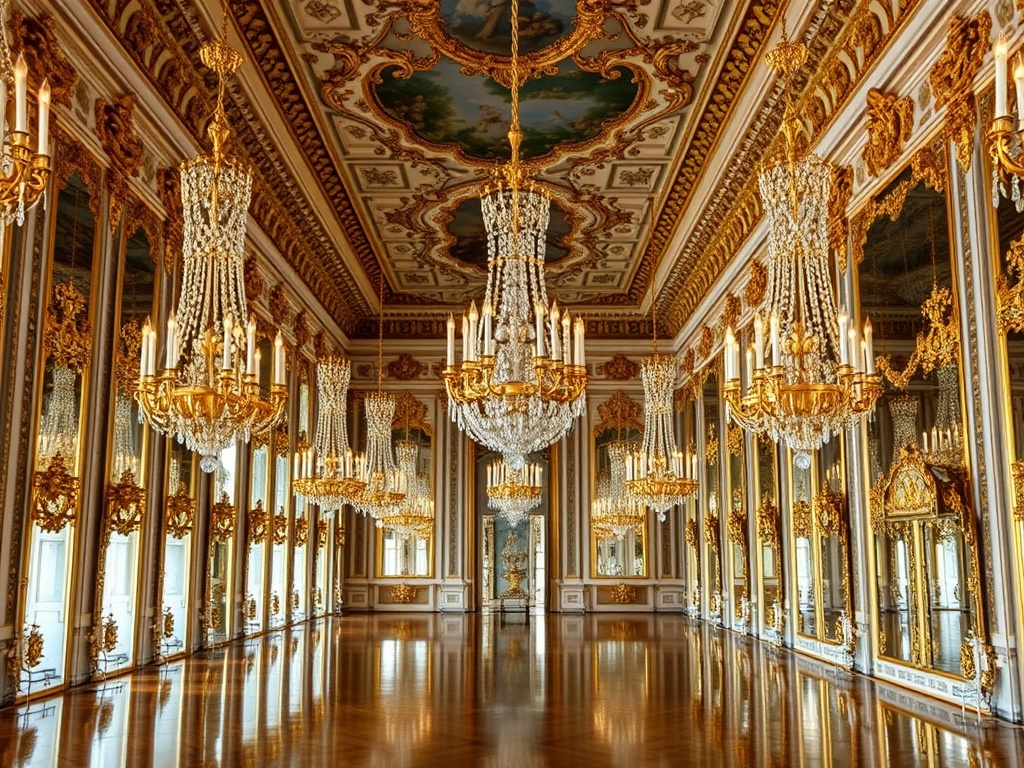
The Hall of Mirrors
73 metres long, 357 mirrors, built because Venetian mirror glass was the most expensive luxury in Europe and France had just learned to make its own. The German Empire was proclaimed here in 1871 and the Treaty of Versailles signed here in 1919 — both deliberate humiliations in the same room.
Marie-Antoinette's hamlet
The Hameau de la Reine: a fake rustic village with a working dairy, built so a queen could play at peasant life. It is the single most efficient explanation of 1789 available anywhere.
Visiting it
Book online, go on a weekday, arrive at opening, and do the gardens first if the Grandes Eaux fountains are running. Allow a full day. The Trianons and the hamlet are far less crowded than the château and better.
Getting there
RER C from central Paris, about 45 minutes, on a standard ticket extension. Do not drive.
The other palaces
Fontainebleau, which every French monarch from François I to Napoleon III actually lived in and which is half as crowded; and Vaux-le-Vicomte, the private château whose beauty got its owner arrested by a jealous Louis XIV and whose architects then built Versailles.
🎨 Art
For roughly a century — from the 1860s to the 1940s — Paris was where Western art happened, and France has kept most of it. But the best art experiences in the country are increasingly not in Paris.
Impressionism
Born at Nadar's studio in 1874 with a show that critics mocked. The Musée d'Orsay holds the core collection; Giverny holds Monet's garden and lily pond; and Rouen's cathedral façade is still there to compare against the thirty canvases he made of it.
The Riviera modernists
Matisse and the Chapelle du Rosaire at Vence, the Musée Matisse in Nice, the Chagall museum, Picasso at Antibes, and the Fondation Maeght at Saint-Paul-de-Vence. This is a better modern-art itinerary than Paris offers.
Prehistoric art
Lascaux (a facsimile — the original has been closed since 1963), the Chauvet cave replica in the Ardèche with paintings 36,000 years old, and the Vézère valley in the Dordogne, which has fifteen decorated caves and a UNESCO listing.
Gothic
Chartres for the twelfth-century glass, Reims for the coronations, Amiens for the sheer height, and Sainte-Chapelle in Paris for what happens when you build a building out of stained glass and almost no wall.
Regional museums worth the detour
The Musée Unterlinden at Colmar for Grünewald's Isenheim Altarpiece; Lille's Palais des Beaux-Arts, the second-largest collection in France; and the Louvre-Lens, a satellite in a former mining town, which is free of charge and free of crowds.
The Bayeux Tapestry
70 metres of eleventh-century embroidery telling the Norman conquest of England from the winners' side, in a museum at Bayeux. It is far more gripping in person than any reproduction suggests.
👥 People and Culture
France has 68.4 million people, a fifth of them in the Paris region, and a national culture that is genuinely different from its neighbours in ways that go beyond food. The two things most likely to trip up a visitor are formality and the meaning of directness.
Bonjour is not optional
Entering a shop, a bakery, a lift, a doctor's waiting room without saying bonjour is rude in a way it is not in English-speaking countries. Say it first, before your question. Nearly all reported French rudeness begins here.
Vous and tu
Use vous with everyone until invited otherwise. Getting this wrong is more conspicuous than a bad accent.
Directness
The French argue as a form of respect. A shopkeeper telling you that you have chosen the wrong cheese for that wine is being helpful, not hostile. Disagreement is not conflict here.
Lunch
12:00 to 14:00 and it is real. Kitchens close, shops close, and in small towns nothing reopens until 15:00. Plan around it rather than fighting it.
The strike
La grève is a constitutional right exercised often, and a country that has changed government by street protest repeatedly does not regard it as a failure of the system. Check SNCF before travelling and build in slack.
A diverse country that does not count itself
France has large populations of North African, West African, Caribbean and Asian origin, and Europe's largest Muslim and Jewish communities. The state collects no ethnic statistics on principle, which makes both discrimination and integration hard to measure and easy to argue about.
🗣️ French
French is spoken by around 300 million people across five continents and is co-official in 29 countries. In France itself it is treated as a matter of state: the Académie française has been ruling on it since 1635, and the 1994 Toubon law requires French in advertising, workplaces and public services.
How much you need
Very little, but the little matters enormously. Bonjour, s'il vous plaît, merci, au revoir, excusez-moi, parlez-vous anglais ? — that sequence transforms nearly every interaction.
English in France
Better than the stereotype, worse than in the Netherlands or Scandinavia. Good in Paris, tourist areas and among the young; patchy in rural France and among people over sixty.
The regional languages
Breton, Basque, Catalan, Corsican, Occitan and Alsatian all survive, all were actively suppressed by the Republic's schools into the twentieth century, and all now have bilingual signage and small immersion school networks. France has still never ratified the European Charter for Regional Languages.
False friends
Actuellement means currently, not actually. Éventuellement means possibly, not eventually. Sensible means sensitive. Demander means to ask, not demand.
Numbers
Ninety-seven is quatre-vingt-dix-sept — four twenties ten seven. The Belgians and Swiss fixed this; the French declined.
Franglais
Officially resisted, universally used. Le weekend, le parking, un mail. The Académie's alternatives — courriel, logiciel — sometimes stick and sometimes do not.
⚖️ Laïcité
The single French concept most often misunderstood abroad. Laïcité is not the separation of church and state in the American sense, which protects religion from government. It is the removal of religion from public space, which protects the state and its citizens from religion — and it is genuinely different.
Where it comes from
The 1905 law separating church and state, the end of a century-long fight between the Republic and the Catholic Church over who controlled schools, hospitals and civil records. The Republic won comprehensively.
What it means in practice
No religious symbols worn by state employees or by pupils in state schools. No state funding for religion. No religious instruction in public schools. No official record of anyone's religion.
Why it is contested
Applied to a Catholic majority in 1905, it now falls most visibly on a Muslim minority — the 2004 headscarf ban in schools, the 2010 face-covering ban, the 2023 abaya ban. Defenders call it consistent; critics call it selective.
What it is not
It is not hostility to belief. Churches built before 1905 are owned and maintained by the state, which is why every French village church is publicly funded and free to enter.
Alsace-Moselle
The exception that proves nothing: annexed by Germany in 1905, these departments never received the law, and to this day the French state pays the salaries of Catholic, Lutheran, Reformed and Jewish clergy there.
As a visitor
It affects you almost not at all, but it explains a great deal of French news. Dress as you like; the rules apply to state institutions, not to the street.
🏰 The Loire Valley
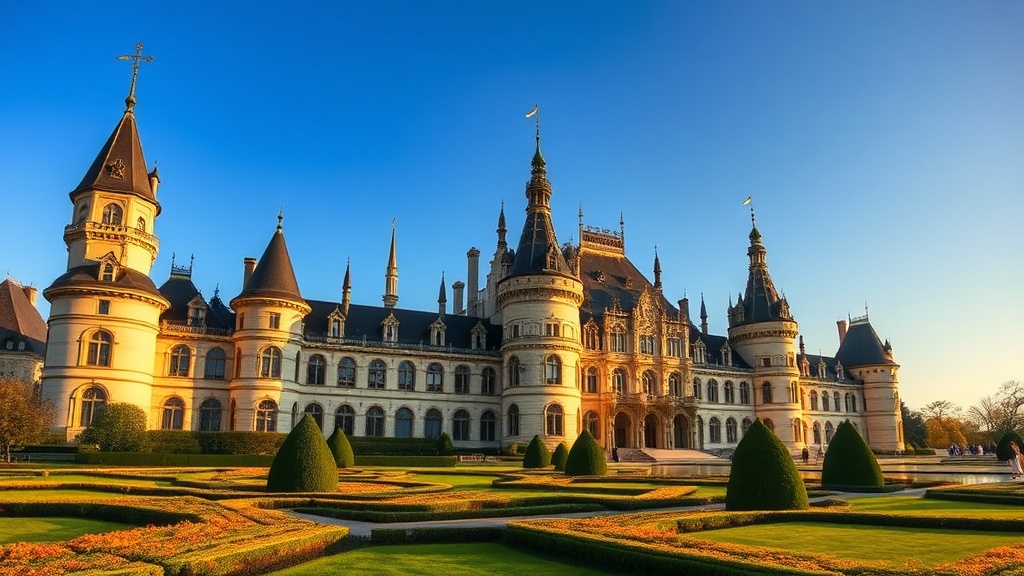
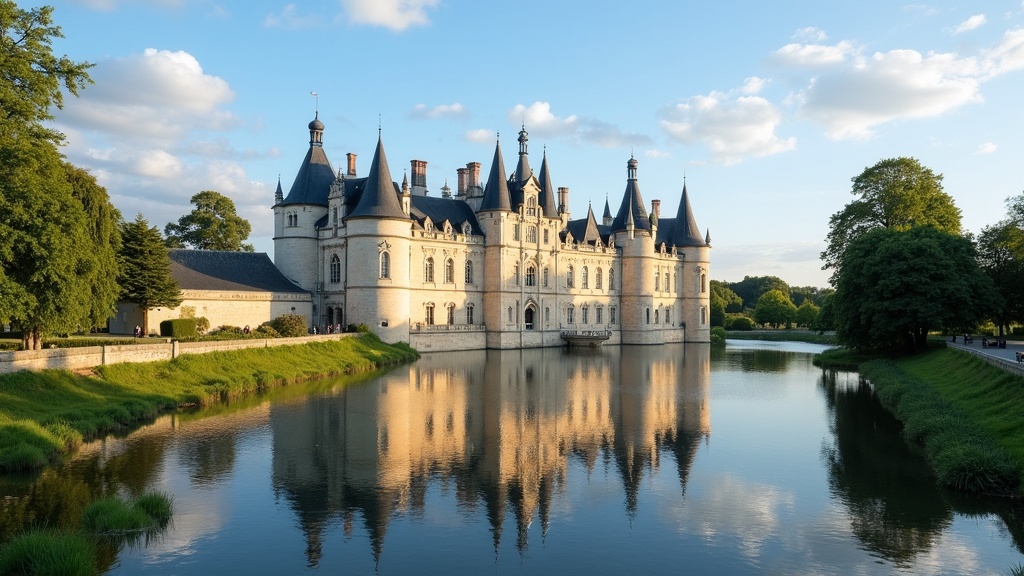
Three hundred kilometres of river between Sully and Chalonnes, UNESCO-listed as a cultural landscape, with something over 300 châteaux along it. This was where the French court spent the sixteenth century when Paris was unhealthy and Italy had just taught France what a palace could look like.
Chambord
François I's hunting lodge with 440 rooms, 282 fireplaces and a double-helix staircase possibly designed by Leonardo, who died nearby. Enormous, cold, barely furnished and unforgettable. The king stayed in it for about seven weeks in total.
Chenonceau
The one built across the river on arches, and the most beautiful. Its history is a sequence of women — Diane de Poitiers, Catherine de' Medici, and a First World War hospital in the gallery.
Villandry
Not for the house but for the gardens: a reconstructed Renaissance potager where vegetables are planted as geometry. Best in late summer.
Amboise and Clos Lucé
Where Leonardo da Vinci spent his last three years as François I's guest, and where he is buried. The Clos Lucé holds working models built from his drawings.
Doing it by bike
The Loire à Vélo is 900 km of well-signed, almost entirely flat cycle route along the river, with bike-friendly hotels the whole way. It is the single best way to see the valley and better than driving between car parks.
The wine
Sancerre and Pouilly-Fumé at the eastern end, Vouvray and Chinon in the middle, Muscadet at the Atlantic. Cool-climate, high-acid, food-friendly and consistently underrated.
⛪ Normandy and Brittany
The Atlantic north: apples instead of grapes, butter instead of oil, cider and calvados instead of wine, and a coastline that carries both the country's most photographed abbey and its most consequential beaches.
Mont-Saint-Michel
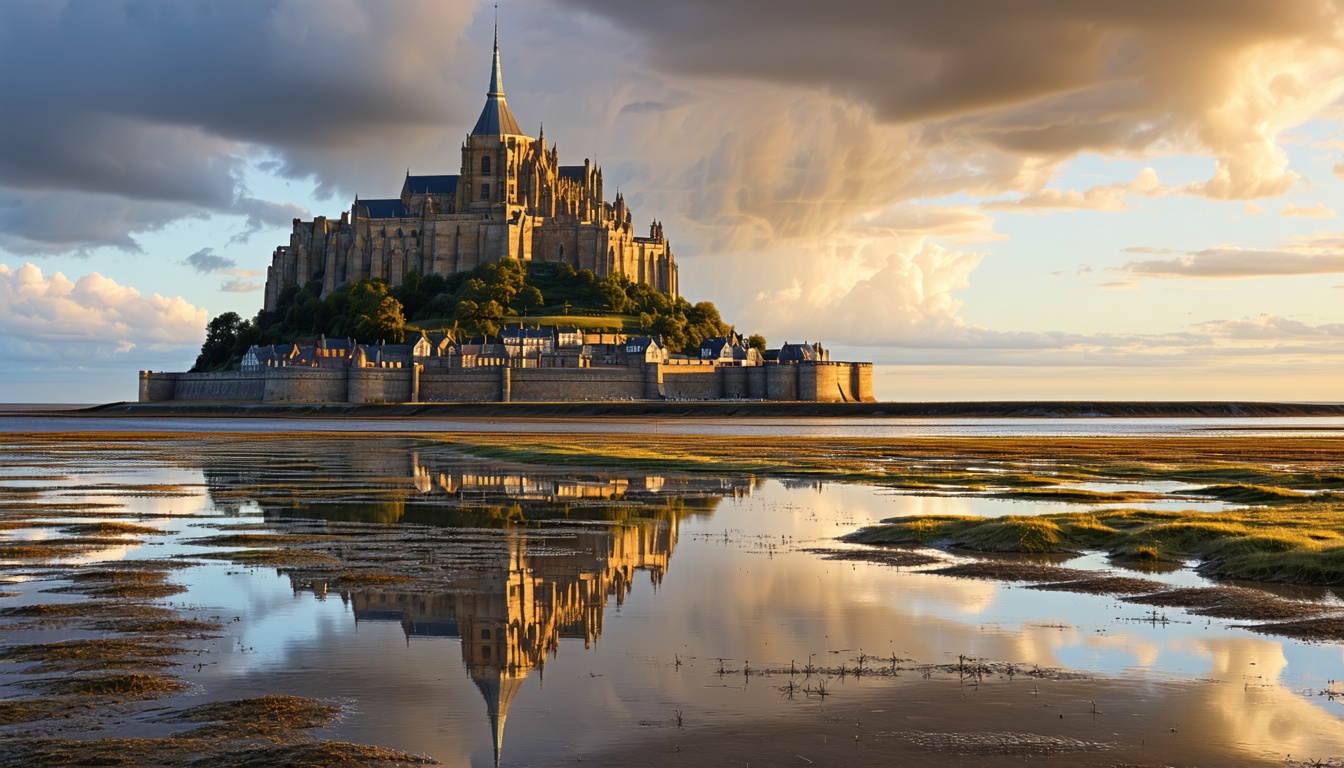
A Benedictine abbey begun in the eighth century on a tidal island, UNESCO-listed, and visited by 2.5 million people a year. Go at opening or stay overnight on the mount; the day-trippers arrive at eleven and leave at five, and the hours either side are a different place.
The D-Day beaches
Omaha, Utah, Gold, Juno and Sword, the American cemetery at Colleville, the artificial harbour at Arromanches, and Pointe du Hoc still cratered. Allow two days and use a guide; the landscape means nothing without the narrative.
Rouen and Honfleur
Rouen for the cathedral Monet painted thirty times and the square where Joan of Arc was burned; Honfleur for the harbour that half of Impressionism was painted from.
Brittany's coast
Granite, tides and a Celtic identity that is not a tourist invention: the Breton language is still spoken by around 200,000 people. The Pink Granite Coast, the Crozon peninsula and the Gulf of Morbihan are the highlights.
Carnac
Around 3,000 standing stones in rows, older than Stonehenge and the Pyramids, and far less visited than either. Nobody knows why they are there.
Eating and drinking
Oysters from Cancale, salted butter caramel, galettes of buckwheat with an egg, and cider drunk from bowls rather than glasses. Calvados between courses is called the trou normand and is exactly what it sounds like.
🌻 Provence
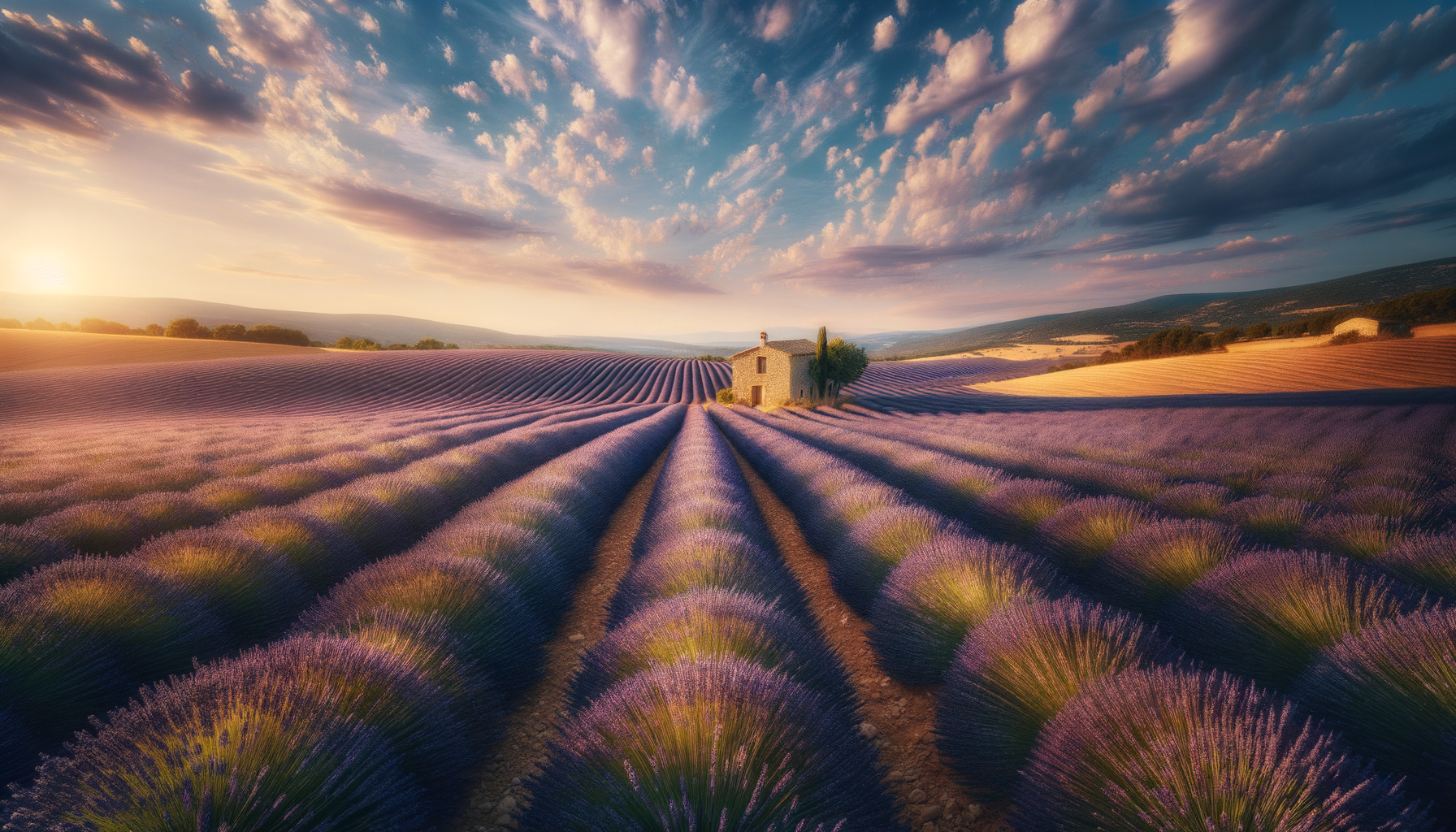
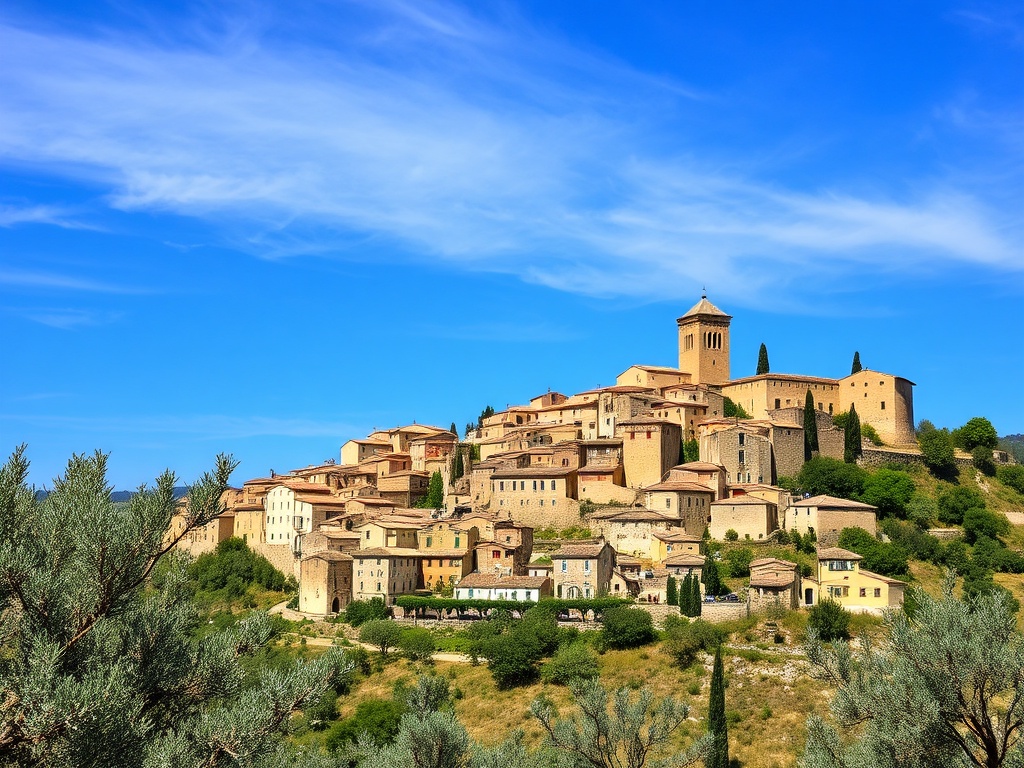
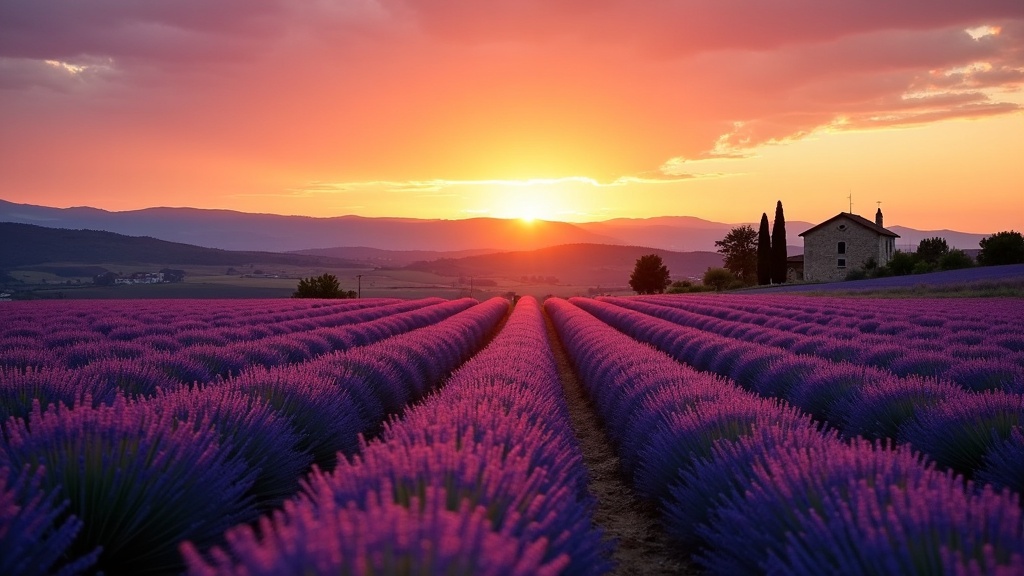
The Roman province, and the part of France that looks most like the postcard sold abroad. It is also badly over-visited in July and August, which is exactly when the lavender is out — so the choice is between the flowers and the room to see them.
The Roman south
The arena at Arles and its theatre, the Maison Carrée and arena at Nîmes, the theatre at Orange with its intact stage wall, and the Pont du Gard aqueduct — a three-tier bridge 49 m high, built without mortar, that carried water 50 km to Nîmes.
The villages
Gordes, Roussillon in its ochre quarries, Ménerbes, Bonnieux and the whole Luberon. Beautiful, and in season, full. The Alpilles and the Drôme provençale to the north are the same landscape with a third of the traffic.
Avignon and Aix
Avignon for the papal palace — seven popes ruled from here in the fourteenth century — and the July theatre festival. Aix for Cézanne, plane trees, and the Mont Sainte-Victoire he painted more than sixty times.
Marseille
France's oldest city, founded by Greeks around 600 BC, and nothing like the rest of Provence: loud, Mediterranean, North African, and much improved since its 2013 turn as European Capital of Culture. The Calanques just east are limestone fjords you can walk or kayak into.
The Camargue
The Rhône delta: salt flats, white horses, black bulls and 20,000 flamingos. Genuinely strange and unlike anywhere else in France.
The mistral
The cold north wind that funnels down the Rhône valley for days at a time, clears the sky to a hard blue and drives everyone slightly mad. It is why Provençal farmhouses have almost no windows on the north side.
🏖️ The Côte d'Azur
The Riviera invented the modern seaside holiday, first as a winter resort for tubercular English aristocrats and then, from the 1920s, as the summer playground it still is. It is expensive, crowded and, in the right places, still exactly as good as its reputation.
Nice
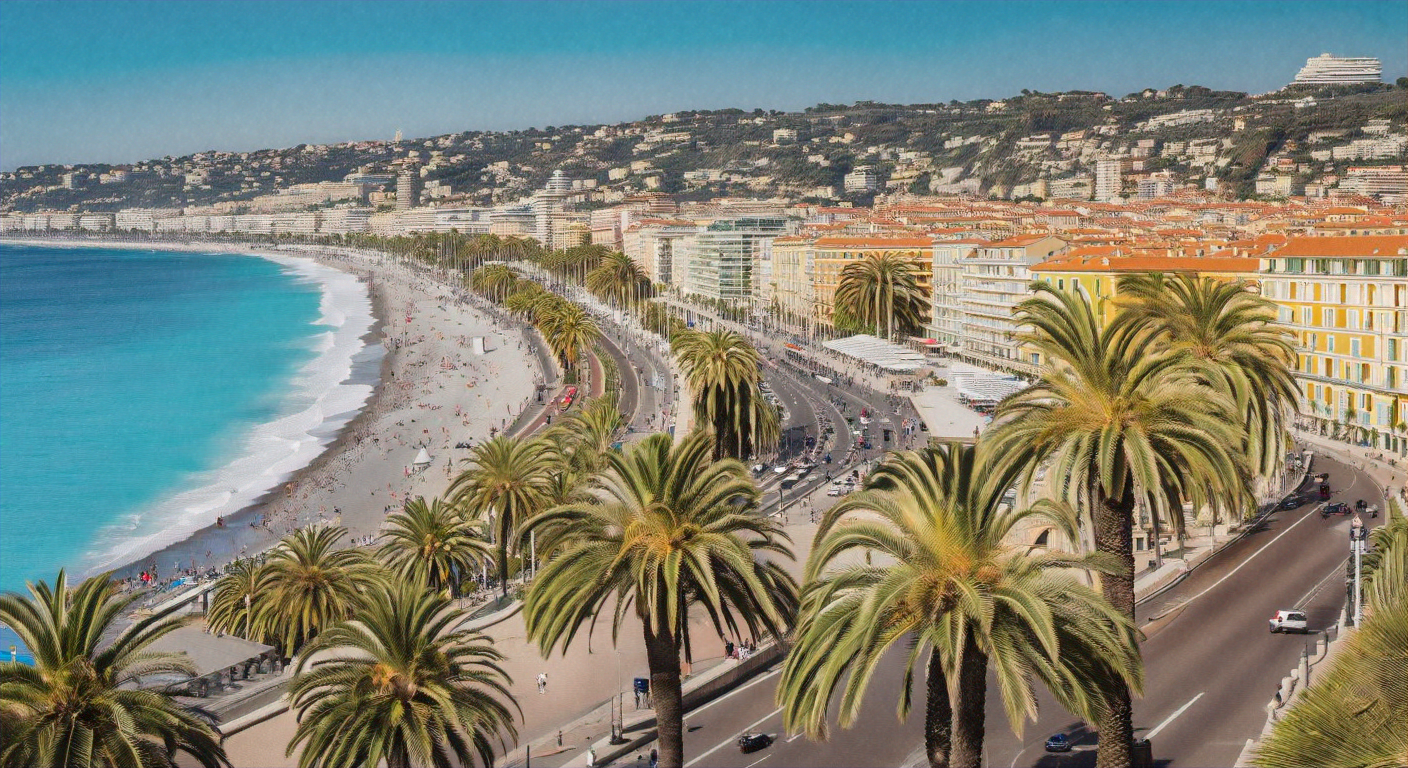
The one to base yourself in: a real city with a real old town, the best market in the region on the Cours Saleya, the Promenade des Anglais, and cheap flights. Eat socca — chickpea pancake from a wood oven — standing up.
Villefranche, Èze, Menton
Villefranche for the deepest natural harbour on the coast; Èze for the perched village above it; Menton for lemons, gardens and being pleasantly out of fashion.
Antibes and Cannes
Antibes for the Picasso museum in the Château Grimaldi and the old town; Cannes for the festival in May and for the fact that it is otherwise a fairly ordinary resort town.
Saint-Tropez
A fishing village until Bardot arrived in 1956. Now traffic-choked in August and lovely in October. The sentier du littoral coastal path around the peninsula is free and better than any beach club.
Monaco
Two square kilometres of sovereign principality, no income tax, and a Grand Prix run on public roads. Worth a half-day for the oceanographic museum and the sheer absurdity.
The unfashionable coast
Between Toulon and Marseille the Var coast and the Îles d'Hyères — Porquerolles and Port-Cros — are national park, car-free and a fraction of the price.
🍇 Alsace and Strasbourg
The most contested piece of ground in modern European history — French, then German in 1871, French in 1918, German in 1940, French since 1945 — and the reason the European Parliament sits in Strasbourg. It does not look or eat like the rest of France, and that is the point of going.
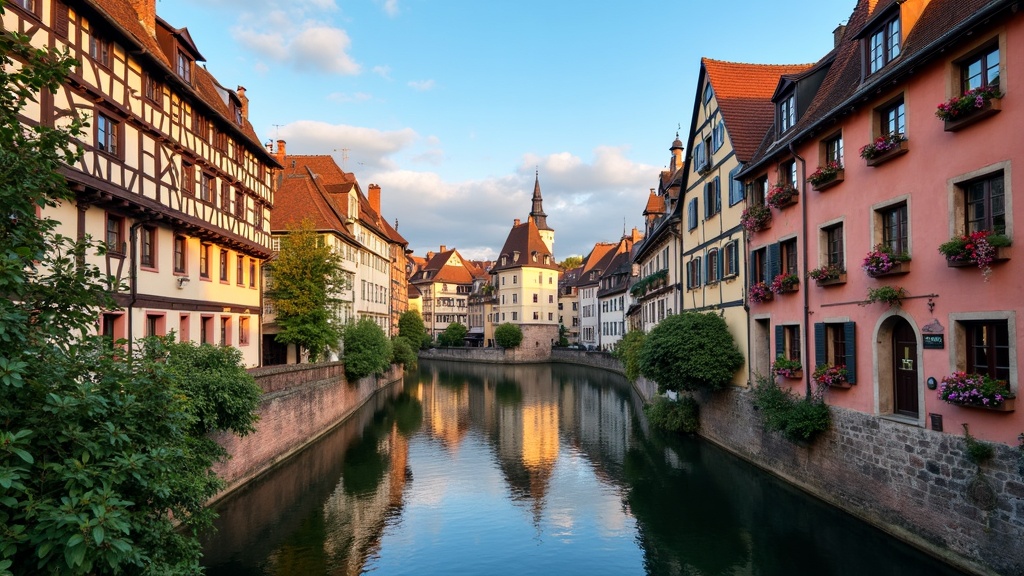
Strasbourg
The cathedral was the tallest building in the world until 1874, and its astronomical clock still performs at 12:30. The Petite France quarter, the Alsatian Museum, and the European institutions on the far side of the Ill.
Colmar
Smaller, prettier, and holder of the Isenheim Altarpiece at the Musée Unterlinden — a fifteenth-century masterpiece painted for a hospital, showing a crucifixion of genuine horror. Worth a journey on its own.
The Route des Vins
170 km from Marlenheim to Thann through Riquewihr, Ribeauvillé, Eguisheim and Kaysersberg. Prettier than any wine road has a right to be, and the tasting rooms are free and unpretentious.
Alsatian wine
Riesling, Gewürztraminer, Pinot Gris and Sylvaner, bottled in tall green flutes, labelled by grape rather than place — the only French region that does. Mostly dry despite the aromatics.
The food
Choucroute garnie, baeckeoffe, flammekueche and kougelhopf: this is German food cooked by people who learned French technique, and it is excellent. Winstubs are the local wine taverns.
Christmas markets
Strasbourg's dates from 1570 and is the oldest in France. It is also, in December, so crowded that the smaller markets in Colmar, Kaysersberg and Riquewihr are the better choice.
🏔️ The Alps and the Pyrenees
France has the largest connected ski terrain on Earth and the highest mountain in western Europe, and in summer both ranges empty out and become the best hiking in the country at a fraction of the winter price.
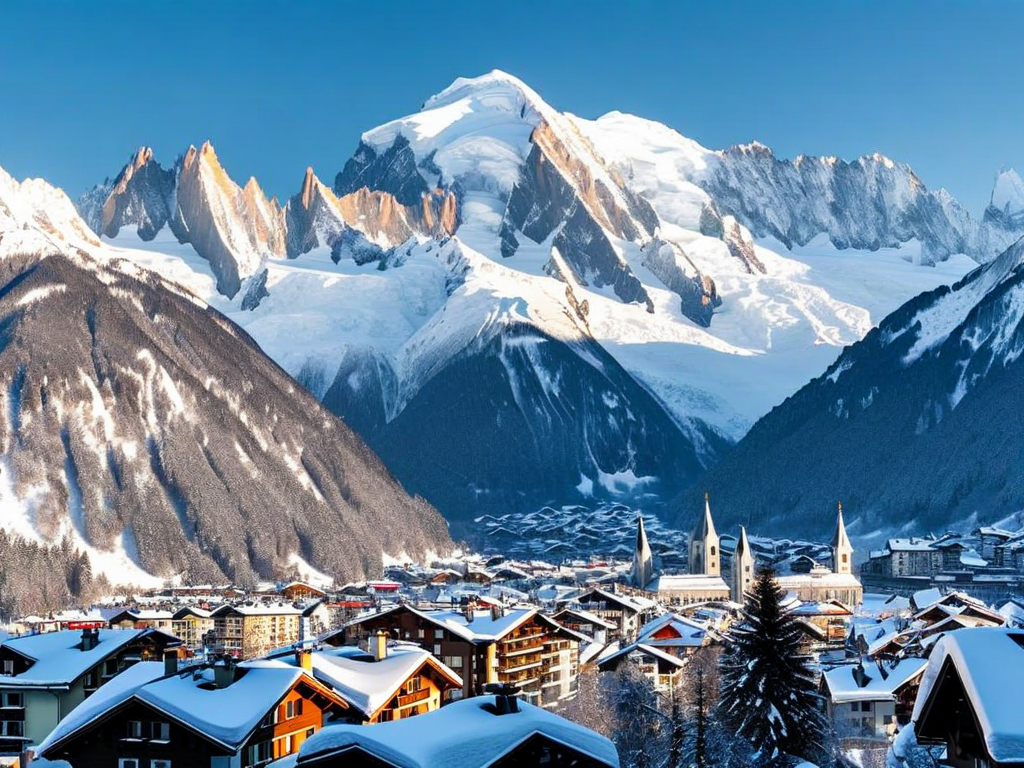
Chamonix and Mont Blanc
The birthplace of alpinism. The Aiguille du Midi cable car climbs to 3,842 m in twenty minutes — take altitude seriously — and the Mer de Glace glacier has retreated so far that the staircase down to it grows longer every year, with the dates marked on the rock.
The big ski areas
Les Trois Vallées (Courchevel, Méribel, Val Thorens) is the largest linked area in the world; Paradiski and the Espace Killy (Tignes–Val d'Isère) are close behind. February is French school holidays and should be avoided at all costs.
Summer in the Alps
The Tour du Mont Blanc — 170 km around the massif through three countries in 7–11 days, sleeping in refuges. Plus the Vanoise and Écrins national parks, via ferrata, and paragliding at Annecy.
Annecy and Chambéry
Annecy's lake is the cleanest large lake in Europe and its old town is genuinely lovely; both make good low-altitude bases.
The Pyrenees
Wilder, poorer, emptier and cheaper: the Cirque de Gavarnie, the Pic du Midi observatory, the GR10 traverse, and brown bears reintroduced against significant local opposition. Also Lourdes, which receives 4 million pilgrims a year.
The Tour de France
Three weeks each July, and if you are near a mountain stage the roads close and the whole country stops. Watching a col from the roadside is free, extraordinary, and requires arriving about six hours early.
🍽️ French Food
UNESCO listed the gastronomic meal of the French as intangible heritage in 2010 — not any particular dish, but the ritual: aperitif, starter, main, cheese, dessert, wine matched to each, and several hours. That is the Sunday version. The weekday version is a €16 lunch formule in a bistro, and it is one of the best-value meals in Europe.
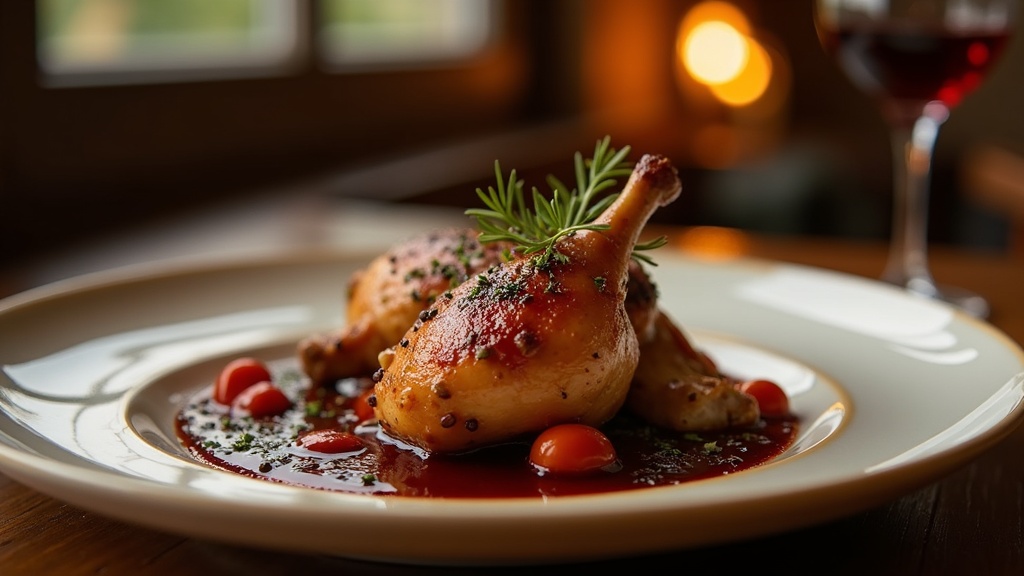
The regional map
There is no single French cuisine. Butter and cream in the north and Normandy, duck fat in the southwest, olive oil in Provence, pork and cabbage in Alsace, and seafood everywhere there is a coast. Eat regionally and the country makes far more sense.
The classics worth ordering
Confit de canard in the southwest, boeuf bourguignon and coq au vin in Burgundy, cassoulet around Toulouse and Castelnaudary, bouillabaisse in Marseille (expensive and worth it only where they serve the fish separately), choucroute in Alsace.
The bistro standards
Steak frites, entrecôte with sauce au poivre, blanquette de veau, soupe à l'oignon gratinée under its raft of bread and Gruyère, and tarte Tatin. Cheap, reliable, everywhere.
How a meal is ordered
The formule at lunch — starter plus main, or main plus dessert, for a fixed price — is where the value is. Bread and tap water (une carafe d'eau) are free and you should ask for both.
Markets
Every town has a market day and it is the best meal-planning available. Look for the queue: the French queue for the good stall and ignore the empty one next to it.
Vegetarians
Historically poorly served and improving fast in cities, still difficult in rural bistros where the vegetarian option may be an omelette. Say je ne mange pas de viande rather than assuming végétarien excludes ham, which in some kitchens it does not.
Soupe à l'oignon gratinée
French onion soup · serves 4 · 1 h 30
Ingredients: 1 kg onions, thinly sliced; 60 g butter; 1 tbsp flour; 1.5 l good beef stock; 150 ml dry white wine; 1 bay leaf; thyme; 8 slices of baguette; 150 g Gruyère or Comté, grated; salt and pepper.
Method: Cook the onions in butter over low heat for at least 45 minutes, stirring often, until deep brown and jammy — this is the entire dish and it cannot be hurried. Stir in the flour, cook two minutes, add the wine and let it reduce, then the stock, bay and thyme. Simmer 30 minutes. Ladle into ovenproof bowls, float toasted baguette on top, cover thickly with cheese and grill until blistered.
💡 If your onions are pale gold after twenty minutes you have not cooked them long enough. The colour is the flavour.
Boeuf bourguignon
Burgundy beef · serves 6 · 3 hours plus marinating
Ingredients: 1.5 kg beef chuck or shin in large cubes; 1 bottle of red Burgundy or other decent Pinot Noir; 200 g smoked lardons; 250 g button mushrooms; 20 small onions; 2 carrots; 2 cloves garlic; 2 tbsp flour; bouquet garni; butter and oil; salt and pepper.
Method: Marinate the beef in the wine with the carrots, garlic and bouquet garni overnight. Drain, keeping the wine, and dry the meat thoroughly. Brown the lardons, then the beef in batches in the fat — hard, in a hot pan, in small batches. Dust with flour, cook two minutes, return everything to the pot with the wine and enough stock to cover. Simmer at the barest bubble, covered, for 2.5–3 hours. Brown the onions and mushrooms separately in butter and add for the last 20 minutes.
💡 Dry the meat and do not crowd the pan; steamed grey beef never recovers. Made a day ahead it is better.
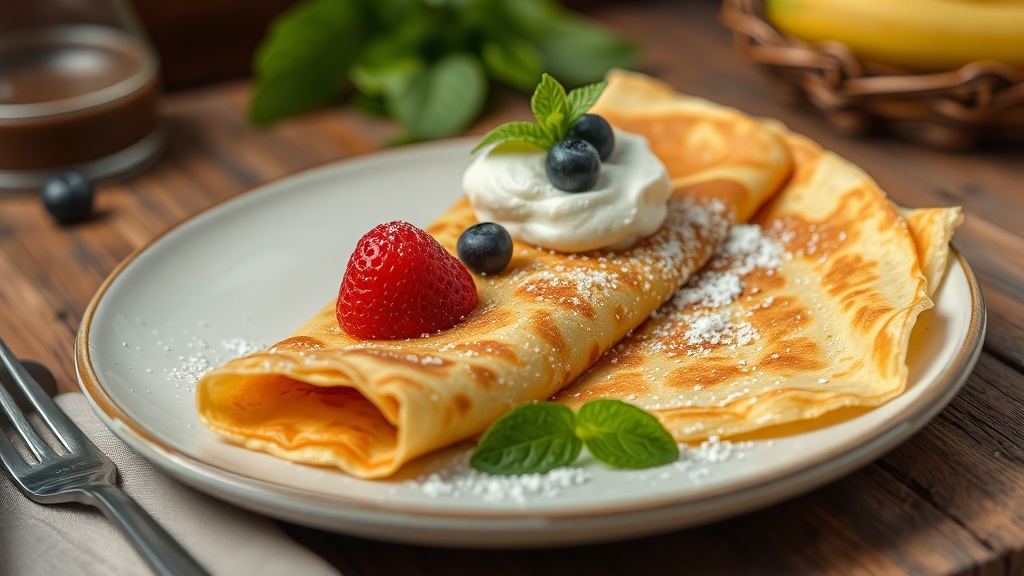
Crêpes and galettes
Two batters, one pan · makes about 12 · 30 min plus resting
Ingredients: Sweet crêpes: 250 g plain flour; 4 eggs; 600 ml milk; 50 g melted butter; 2 tbsp sugar; a pinch of salt; a splash of rum or orange-flower water. Savoury galettes: 250 g buckwheat flour; 1 egg; 500 ml water; 10 g salt.
Method: Whisk each batter smooth and rest it at least an hour — this is not optional, the flour needs to hydrate or the crêpes tear. Heat a wide pan or a flat griddle, wipe it with butter, pour a small ladleful and swirl immediately to the edges. Cook until the underside is lacy and dry, about a minute, then flip for thirty seconds. For a galette complète, break an egg onto the buckwheat galette on the pan, scatter grated cheese and ham, and fold the four sides in to leave the yolk showing.
💡 The first crêpe is always a failure and is the cook's. Buckwheat batter can rest overnight and improves for it.
🥖 Bread, Cheese and the Market
Two things France protects by law that most countries leave to the market. The result is that a village of 600 people can still support a baker, and that a supermarket cheese counter in France is better than a specialist shop in most of Europe.
The baguette
Protected since the 1993 décret pain: to be called a baguette de tradition it may contain only flour, water, salt and yeast — no additives, no freezing. UNESCO listed the craft in 2022. Buy it twice a day, because it is genuinely stale by evening; that is a feature.
What to buy instead
Tradition over ordinary baguette; pain de campagne for keeping; ficelle if you are one person. And a croissant au beurre rather than an ordinary croissant, which may be made with margarine.
The cheeses
De Gaulle's line about a country with 246 cheeses being ungovernable was an undercount: there are around 1,200 varieties and 46 with protected AOP status. Comté alone accounts for 65,000 tonnes a year.
Six to start with
Comté — nutty, aged, from the Jura. Roquefort — sheep's milk, blue, cave-aged. Camembert de Normandie — raw milk, boxed, ripe. Reblochon — the tartiflette cheese. Crottin de Chavignol — small, hard goat. Époisses — washed rind, banned on French public transport by legend if not by law.
Raw milk
Around 15% of French cheese is au lait cru and it is the good 15%. Pregnant travellers should avoid soft raw-milk cheeses; everyone else should seek them out.
Where cheese goes in a meal
After the main course and before dessert, never after. Cut a wedge so the next person also gets some of the point and some of the rind.
🍷 Wine
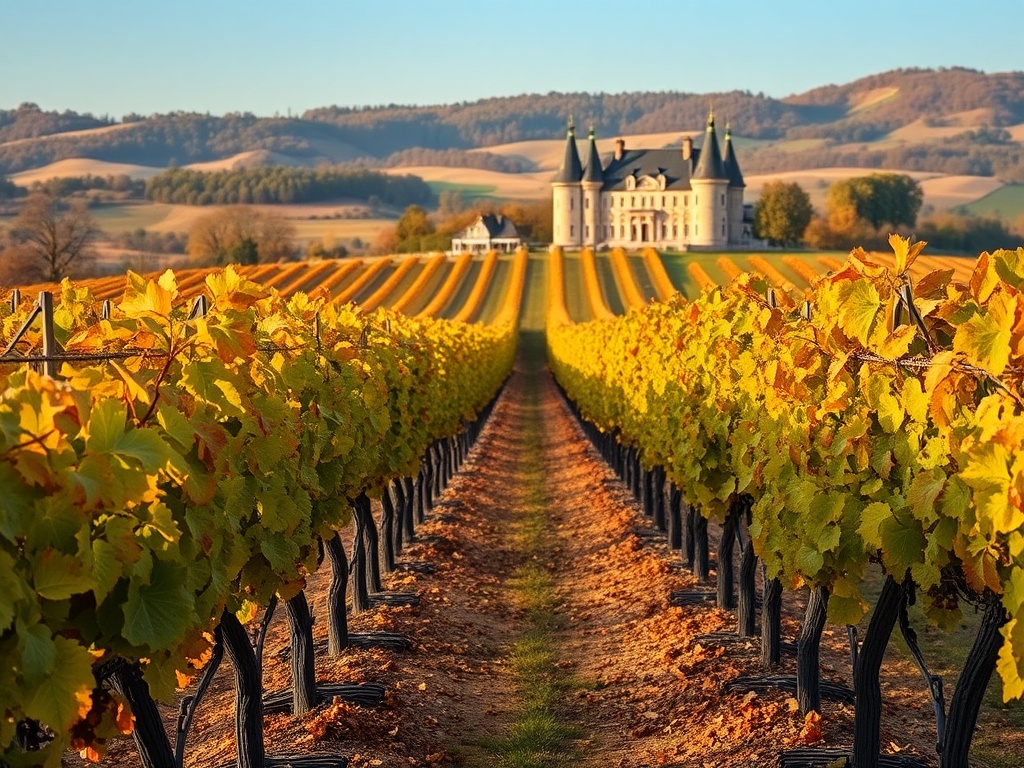
France produces around 45 million hectolitres a year — vying with Italy for first place — across roughly 360 protected appellations. The French label by place rather than grape because the underlying belief is that the ground matters more than the variety, and that belief has a name: terroir.
Bordeaux
The biggest fine-wine region: Cabernet Sauvignon-led on the Left Bank (Médoc, Graves), Merlot-led on the Right (Saint-Émilion, Pomerol), and Sauternes for sweet. The 1855 classification still governs prices 170 years later.
Burgundy
Pinot Noir and Chardonnay only, and the most obsessive land division in wine — the Côte d'Or is cut into climats a few rows wide, each with its own name and UNESCO listing. Expensive and, at village level, still findable.
Champagne
Only from Champagne, only by the second fermentation in the bottle, and the region is 145 km east of Paris. Visit Reims and Épernay; the small grower-producers (look for RM on the label) are better value than the great houses.
The Rhône
Syrah in the steep north (Côte-Rôtie, Hermitage), Grenache blends in the broad south (Châteauneuf-du-Pape, Gigondas). The best price-to-quality ratio in serious French wine.
Loire and Alsace
Loire for Sancerre, Vouvray, Chinon and Muscadet — high acid, low alcohol, brilliant with food. Alsace for aromatic dry whites labelled by grape.
Languedoc and the south
The largest vineyard area in the world by surface, once a bulk-wine factory and now the most interesting place in France for value and for natural wine. Corbières, Minervois, Faugères, Pic Saint-Loup.
Tasting without embarrassing yourself
Visiting a domaine
Email ahead — most small producers are farms, not visitor centres. Tastings are often free or a few euros refunded on purchase, and buying a bottle or two is the polite close.
Reading a label
AOP/AOC means a protected place with rules. IGP is a looser regional category and often excellent value. Mis en bouteille au domaine means the grower bottled it themselves.
What to drink cheaply
Côtes du Rhône, Beaujolais-Villages, Muscadet, Languedoc reds and Crémant — the méthode traditionnelle sparkling from Alsace, the Loire, Burgundy or Limoux at a third of Champagne's price.
Drinking rules
Legal age 18. Drink-driving limit is 0.5 g/l, and 0.2 for drivers licensed under three years. Rural gendarmerie checks after Sunday lunch are a real thing.
☕ Cafés, Bakeries and the Rhythm of the Day
The café is not a coffee shop. It is a licensed public room where you may sit for two hours over one drink, and the price of that drink is legally required to be posted and is higher at a table than at the bar. Understanding this makes France far easier to navigate.
How to order coffee
Un café is an espresso. Un noisette is an espresso with a drop of milk. Un café allongé is a long black. Un crème is the milky one and is a morning drink — ordering it after lunch marks you instantly and harms nobody.
The three prices
Standing at the bar (au comptoir) is cheapest, a table inside costs more, and the terrace most. All three prices are on the posted tariff by law.
The apéro
The hour before dinner, taken seriously: pastis in the south, a kir (white wine and crème de cassis) anywhere, a glass of crémant, with olives and saucisson. It is the most sociable hour of the French day.
Meal times
Lunch 12:00–14:00, dinner from 19:30 and mostly 20:00. Kitchens genuinely close between, and a restaurant with hot food at 16:00 is usually a tourist trap.
Tipping
Service is included by law — service compris. Leave a couple of euros for good service or round up; anything like 15% marks you as American and is not expected.
Sunday and Monday
Most bakeries close one day a week and most restaurants close Sunday evening and Monday. In small towns, Sunday afternoon is dead. Buy your bread on Saturday.
🎉 Festivals and the Calendar
14 July
Bastille Day: a military parade down the Champs-Élysées in the morning, fireworks at the Eiffel Tower at 23:00, and — much better — a bal des pompiers, a dance held in fire stations across the country on the 13th and 14th.
Fête de la Musique · 21 June
Free live music on every street in every town on the solstice, started in 1982 and now copied worldwide. The best single night of the French year.
Avignon and Aix festivals · July
Avignon for theatre — the official festival plus a thousand-show fringe — and Aix for opera. Both fill their towns completely; book everything months ahead.
Cannes · May
The film festival, and closed to the public. The city is nonetheless interesting during it, and the parallel Quinzaine screenings can be attended.
Christmas markets · Alsace
Strasbourg since 1570, plus Colmar, Kaysersberg and Riquewihr. Mulled wine, bredele biscuits and, in Strasbourg in December, remarkable crowds.
Les Vendanges · September–October
Harvest, and the best time to be in wine country: warm, uncrowded, and every village has a fête. Beaujolais Nouveau arrives on the third Thursday of November and is mostly an excuse.
🏭 The Economy and the State
The eurozone's second-largest economy, and one built on a relationship between state and market that neither Anglo-Saxon nor Nordic models quite explain. The state owns or part-owns the railways, the electricity company and much of the aerospace industry, and nobody in France finds this remarkable.
Agriculture
The EU's largest agricultural producer: wheat, dairy, beef, sugar beet and of course wine. Farming is 1.5% of GDP and a vastly larger share of French politics, which is why tractors reach Paris so often.
Nuclear power
Around 65% of French electricity comes from 56 reactors — the highest share in the world — a decision taken after the 1973 oil shock. It makes French electricity among the least carbon-intensive in Europe and French energy policy an argument with Germany.
Industry
Airbus, Dassault, Safran, Thales, L'Oréal, LVMH, Michelin, Danone, TotalEnergies. Luxury goods alone — LVMH, Kering, Hermès — are a substantial export sector built almost entirely on the idea of France.
Tourism
Around 7% of GDP and two million jobs, from the world's largest visitor numbers. Paris and the Riviera take the bulk; distributing it is an explicit policy goal.
The social model
35-hour week, five weeks of paid holiday, universal healthcare rated among the world's best, and a public-spending share of GDP near 57% — the highest in the OECD. It works, it is expensive, and the argument about it never ends.
The fracture
Metropolitan France — Paris, Lyon, Bordeaux, Toulouse — is prosperous and globalised. The France périphérique of small towns and deindustrialised regions is not, and the gap between them explains the gilets jaunes, the far-right vote and most French elections since 2017.
🌦️ Climate and When to Go
Four climates in one country: oceanic in the west, continental in the east and centre, Mediterranean in the south, and alpine in the mountains. That means there is almost always somewhere in France with good weather, and it is rarely the place everyone else is going.
Spring · April–June
The best season almost everywhere. Warm without being hot, everything open, Paris in May is as good as cities get, and the lavender starts at the very end of it.
Summer · July–August
Hot and full. The French take August off almost universally — Paris empties of Parisians and fills with visitors, while the south and the Atlantic coast are at capacity. Heatwaves above 40 °C are now regular and much French housing has no air conditioning.
Autumn · September–October
The other best season: harvest in wine country, warm sea on the Mediterranean into October, mushrooms, and prices down sharply after the 1st of September.
Winter · November–March
Grey and wet in the north and west; cold and clear in the east; sunny and mild on the Riviera; and the entire Alpine economy at full pace. Paris in December is dark by 17:00 but the museums are empty.
The regional rule
Brittany is wet year-round and beautiful anyway. Provence is dry, sunny and windy. Alsace has real winters. The Atlantic coast is milder than its latitude and the Massif Central colder than its.
Dates to avoid
The first weekend of August (chassé-croisé, when the entire country changes holiday and the motorways gridlock), February school holidays in the ski resorts, and the fortnight around 15 August anywhere south.
🇨🇿 From the Czech Republic
Easy, cheap and close. Prague to Paris is a 2-hour flight or a comfortable day by train, both countries are in the EU and Schengen, France uses the euro, and there is no time difference — France and Czechia are in the same zone.
Flights
Prague–Paris on Air France, Smartwings, Transavia and easyJet; also direct to Lyon, Marseille, Nice, Bordeaux and Toulouse in season. Returns commonly 1,500–5,000 Kč, and Nice or Marseille is often cheaper than Paris.
By train
Prague–Paris in about 13 hours via Frankfurt or via Munich and Stuttgart, all daytime and comfortable, or the overnight Nightjet to Zurich or Munich and a TGV onward. Not fast, but it puts you in the centre of the city and lets you carry as much wine home as you like.
By car
Prague–Paris is about 1,050 km and 10–11 hours through Germany. French motorways are excellent, tolled, and expensive — budget roughly €60–80 for that route on the French side alone. A Crit'Air emissions sticker is compulsory for driving in Paris, Lyon, Grenoble, Strasbourg and other low-emission zones; order it online weeks ahead.
Documents
An ID card is enough. The European Health Insurance Card covers state healthcare — note that France reimburses rather than treating free, so you pay first and claim back, and commercial travel insurance is genuinely worth having, especially for the mountains.
Czech consular cover
The Czech Embassy in Paris is at 15 avenue Charles Floquet in the 7th, with a consulate general in Marseille. Register in DROZD for anything involving high mountains or a long stay.
What surprises Czechs
How early restaurants stop serving, how much better the cheap wine is, how bad the coffee can be, and how completely a French town shuts between noon and two.
🚄 Getting Around
France has the best rail network in Europe outside Switzerland and Japan, and using it is almost always better than driving or flying domestically. The one structural flaw is that everything radiates from Paris.
TGV
320 km/h on dedicated lines. Paris–Lyon 2 h, Paris–Marseille 3 h 15, Paris–Bordeaux 2 h, Paris–Strasbourg 1 h 45. Fares are yield-managed like airline seats — book on SNCF Connect two to three months ahead and pay a third of the walk-up price.
Ouigo
SNCF's low-cost TGV: same trains, out-of-centre stations sometimes, strict baggage rules, fares from €16. Excellent value if you read the conditions.
TER and Intercités
Regional and slower long-distance trains, cheap and unreserved, and the way to reach anywhere without a TGV station. Buy at the machine and validate your ticket in the yellow post before boarding if it is a paper one.
Buses and cars
FlixBus and BlaBlaCar cover what rail does not, cheaply. Car hire is worth it only for rural regions — the Dordogne, the Luberon, Brittany's coast — and a genuine liability in any city.
Driving rules
Right-hand drive, 130 km/h on toll motorways (110 in rain), 80 or 90 on rural roads depending on the department, and speed cameras everywhere. Priorité à droite still applies in some towns and will surprise you.
Cycling
France has built an extraordinary network of long-distance routes — La Loire à Vélo, ViaRhôna, the Vélodyssée along the Atlantic, the Canal des Deux Mers. Bikes go free on most TER trains.
🧭 Practical France
Money
The euro. Cards are accepted almost everywhere including markets; contactless is standard. Some rural bakeries and small bistros still have a minimum for cards, so carry €30 or so in cash.
Opening hours
Shops 10:00–19:00 with a lunch closure outside cities. Most shops shut on Sunday; bakeries open Sunday morning and close another weekday instead. Museums usually close Monday or Tuesday — check which.
Connectivity
Excellent 4G/5G, EU roaming applies at no extra cost on Czech SIMs, and free wifi in most cafés and all TGVs.
Water and toilets
Tap water is safe everywhere and free in restaurants if you ask for une carafe d'eau. Public toilets are patchy; cafés will let you use theirs if you buy a coffee, and it is normal to ask.
Health
Among the best systems in the world. Pharmacies (green cross) handle a great deal and pharmacists give real advice. Emergency 15 for medical, 112 for everything, 17 for police. You pay up front and reclaim on the EHIC.
Museum passes
The Paris Museum Pass covers 50-odd sites and skips ticket queues but not security. National museums are free on the first Sunday of the month in many cases, and free for EU residents under 26 at all times — including at the Louvre.
💰 Costs
France is mid-priced for western Europe and much cheaper than it looks if you eat and travel the way the French do. Paris and the Riviera in season are the two genuine outliers.
Accommodation
Hostel dorm €25–40 (600–1,000 Kč). Two-star hotel in a provincial town €60–90. Paris mid-range €130–220 and rising sharply in summer. A rural gîte sleeping six is often €600–900 a week — the best value in the country.
Food
Bakery lunch €5–7. Bistro lunch formule €16–25 and the single best deal in France. Dinner à la carte €30–50. A Michelin star from €90 at lunch and several hundred at dinner.
Wine
€5–9 for a genuinely good bottle in a supermarket, €12–20 at a wine shop, and roughly triple retail in a restaurant. House wine by the pichet — 25 or 50 cl — is usually fine and always cheaper.
Transport
TGV Paris–Lyon €35–90 depending on how far ahead you book, €19 on Ouigo. Paris metro ticket €2.50, day pass around €12. Motorway tolls roughly €8–10 per 100 km. Petrol around €1.75–1.95 a litre.
Attractions
Louvre €22, Versailles €21, Mont-Saint-Michel abbey €13, Eiffel Tower €14–30 by level. Village churches, most cathedrals and all national parks are free.
Realistic budget
Backpacking €60–90 a day (1,500–2,200 Kč). Comfortable mid-range €130–200. Paris adds roughly 40% to accommodation and 20% to everything else.
🛡️ Safety
France is a safe country with a specific and well-known pickpocketing problem in a handful of tourist locations. Violent crime against visitors is rare; theft in the Paris metro is not.
Pickpockets
Line 1 of the Paris metro, the RER B to the airport, around the Eiffel Tower, Sacré-Cœur, Barbès, and the Nice and Marseille seafronts. Bag in front, phone away, and be suspicious of anyone with a clipboard or a friendship bracelet.
Scams
The petition, the gold ring found on the pavement, the string bracelet at Montmartre, and the taxi at Charles de Gaulle that is not a taxi. All are ancient and all still work.
Car break-ins
The most common serious loss: rental cars at trailheads, beach car parks and Riviera hotels. Leave absolutely nothing visible, and take valuables with you even for a short walk.
Cities at night
Broadly safe. Northern Paris (Barbès, Stalingrad, La Chapelle), parts of Marseille's northern quarters and Saint-Denis are worth avoiding late. This is ordinary urban caution, not a special warning.
Strikes and demonstrations
Frequent, usually announced, and occasionally destructive at the edges. Do not walk into one to photograph it; French riot policing is robust and does not distinguish tourists.
Mountains and sea
The actual causes of most tourist deaths: alpine weather, avalanche, and Mediterranean rip currents. Check Météo-France and the avalanche bulletin, respect beach flags, and take the mountain seriously.
🏨 Where to Stay
Gîtes
Self-catering rural houses, usually let by the week, often a converted farm building, and the best-value accommodation in France by a wide margin. Gîtes de France is the long-established network.
Chambres d'hôtes
French bed and breakfast, frequently in a family home, with an optional evening meal (table d'hôte) eaten with the hosts. The single best way to meet French people who are not in the hospitality industry.
Hotels
Logis de France for reliable family-run provincial hotels; Ibis, B&B and Campanile for cheap and predictable. French hotel rooms are small and that is normal, not a downgrade.
Camping
France has around 8,000 campsites and camping here is not roughing it — the four-star ones have pools, restaurants and mobile homes. Municipal campsites in small towns cost €12–20 and are consistently good.
Refuges and gîtes d'étape
Mountain huts and walkers' hostels along the GR paths, €25–55 with half board. Book ahead in July and August; the Tour du Mont Blanc huts fill months in advance.
Paris specifically
Stay in the 5th, 6th, 11th or 3rd rather than near a station. Anything advertising 'near the Eiffel Tower' is in the 15th, which is dull. Rooms are small everywhere and August air conditioning is not a given.
🗺️ Suggested Itineraries
Long weekend · Paris
Three days: Orsay and the Orangerie rather than only the Louvre, Notre-Dame and Sainte-Chapelle, the Marais on foot, Père-Lachaise, and one evening in the 11th eating in a bistro with a chalkboard.
One week · Loire and Paris
Two days Paris, then the train to Tours and five days of châteaux by bicycle along the Loire à Vélo. Flat, easy, and the best-value week in France.
Ten days · Provence and the coast
Avignon, the Luberon villages, Arles and the Camargue, then Marseille and the Calanques, ending in Nice. Train and one week of car hire in the middle.
Two weeks · the great southwest
Bordeaux and Saint-Émilion, the Dordogne and its caves, Toulouse, Carcassonne's double-walled cité, and the Canal du Midi. Wine, duck and prehistory.
For walkers
The Tour du Mont Blanc (170 km, 7–11 days), the GR20 in Corsica for the very fit, or the Stevenson Trail across the Cévennes — 272 km, gentle, and you can hire a donkey as Stevenson did.
The anti-crowd trip
The Jura, the Auvergne volcanoes, the Cévennes, the Aubrac, the Gorges du Tarn. Empty, cheap, spectacular, and the France that French people go to.
📸 Gallery
A short gallery of the France that fits on a postcard — with the honest note that these are illustrations rather than documentary photographs, and the captions say where they diverge from the real thing.
🤯 Fascinating Facts
The most visited country on Earth
Around 100 million international arrivals a year — more people than live in France. Spain is second and the United States third.
France borders Brazil
French Guiana is a French department, so the France–Brazil border at 730 km is France's longest land border — longer than the one with Spain.
The metric system is French
Defined during the Revolution, with the metre originally one ten-millionth of the distance from the equator to the North Pole through Paris. The kilogram prototype sat in Sèvres until 2019.
Twelve time zones
Counting the overseas territories, France spans more time zones than any other country — twelve, ahead of Russia's eleven.
The baguette is protected by law
The 1993 décret pain specifies exactly what may go into one. UNESCO added the craft to its intangible heritage list in 2022.
A revolutionary calendar
For twelve years from 1793 France used ten-day weeks, months named after the weather (Thermidor, Brumaire) and a decimal clock. Napoleon abolished it in 1806.
The Eiffel Tower was temporary
Built for the 1889 exposition and due for demolition in 1909; it survived because it made a good radio antenna. It grows about 15 cm taller in summer as the iron expands.
Cheese by the hundred
Roughly 1,200 varieties, 46 with AOP protection. De Gaulle's famous complaint about governing a country with 246 of them was a considerable undercount.
Wine consumption has collapsed
The French drank around 130 litres a head a year in 1960 and drink about 40 now. They drink far less and far better, and the surplus vines are being pulled up with EU money.
👤 Notable French People
Joan of Arc (c. 1412–1431)
A peasant girl who claimed divine instruction, lifted the siege of Orléans at seventeen, was burned as a heretic at nineteen, and is now the patron saint of France — claimed by every part of the political spectrum, which says a great deal.
Louis XIV (1638–1715)
Seventy-two years on the throne, the longest reign of any European monarch, and the architect of a centralised French state that has outlasted every regime since.
Napoleon Bonaparte (1769–1821)
Corsican artillery officer, emperor, lawgiver, and the reason so much of the world's legal system descends from the Code civil. Still argued about in France with genuine heat.
Marie Curie (1867–1934)
Polish-born, French by adoption and career, and the only person ever to win Nobel Prizes in two different sciences. She is buried in the Panthéon, the first woman there on her own merits.
Claude Monet (1840–1926)
Gave Impressionism its name by accident with Impression, soleil levant, then spent thirty years painting his own garden at Giverny, which you can still walk through.
Charles de Gaulle (1890–1970)
Led the Free French from London, founded the Fifth Republic, gave Algeria independence against his own supporters, and left behind a whole political tendency named after him.
Simone de Beauvoir (1908–1986)
The Second Sex, 1949, and the intellectual foundation of second-wave feminism. Also the centre, with Sartre, of the Left Bank existentialist world that Paris still sells.
Simone Veil (1927–2017)
Auschwitz survivor, health minister, and the woman who forced abortion rights through a hostile parliament in 1975 while being abused in the chamber. Later the first president of the elected European Parliament, and buried in the Panthéon.
Édith Piaf and Jacques Brel
Piaf from the Paris streets, Brel Belgian but inseparable from the French chanson tradition — between them the sound the rest of the world hears when it thinks of France.
✍️ Author's Note
The mistake almost everyone makes with France is to treat it as a list. Louvre, Eiffel Tower, Versailles, a château, a lavender field, a beach. You can do all of that in ten days, photograph it competently, and come home having spent your entire trip in the company of other people doing exactly the same thing.
The France worth the journey is smaller and slower. It is a Tuesday market in a town you had not heard of, where the man selling goat cheese asks how ripe you want it and then argues with your answer. It is a two-hour lunch on a Thursday in a bistro with eleven tables and no English menu, for twenty euros including wine. It is a village church, unlocked, empty, cold, with a Romanesque tympanum over the door that nobody has come to see.
Two pieces of advice. First, say bonjour. Every time, first, before anything else. Nine tenths of the French rudeness that visitors report is a response to being addressed as if the person in front of them were a vending machine. Second, go one region further. Whatever the guidebook recommends, look at the map and take the next valley. The Drôme instead of the Luberon, the Aveyron instead of the Dordogne, the Jura instead of the Alps.
And eat lunch properly. Not a sandwich at a monument — a real lunch, sitting down, for an hour, in the middle of the day, at the moment when the rest of the country is doing exactly the same thing. It costs less than dinner, it is the meal French cooking is actually built around, and it will tell you more about the place than any museum on the list.
— Radim Kaufmann
Support This Project 🌍
This World Travel Factbook is a labor of love – free to use for all travelers. If you find it helpful, consider supporting its continued development.