

🇫🇮 Finland at a Glance
🌍 Overview — Why Finland
Finland is the country that keeps winning the World Happiness Report while its own citizens shrug and say the survey must be measuring something else. Both things are true. This is a place of very high trust, very good institutions and very little small talk, where the water comes out of the tap cleaner than most bottled water in Europe and where nobody will speak to you on a bus unless the bus is on fire.
It is also enormous and almost empty. 338,455 km² — bigger than Poland, bigger than Italy — holding 5.6 million people, three quarters of whom live in the southern third. Around 75% of the land is forest, the highest proportion in Europe, and there are 188,000 lakes depending on where you draw the line between a lake and a large puddle. A quarter of the country lies north of the Arctic Circle.
The two things visitors come for pull in opposite directions and both work. In winter it is Lapland: darkness, snow, aurora, huskies, reindeer, and a cold that is genuinely serious. In summer it is the lakes: a wooden cottage, a rowing boat, a sauna at the water's edge, and daylight that never fully goes away. Helsinki, which most people treat as a transit lounge, deserves two or three days on its own.
What you should not skip, whichever season you come in, is the sauna. There are around three million of them in a country of 5.6 million people — in flats, in offices, in the parliament building, at petrol stations, on a Burger King in Helsinki. It is not a spa treatment here. It is where Finns are born, in the historical sense, and where they still do the talking they do not do anywhere else.
Best for
Winter — aurora, snow, husky and reindeer safaris, ice swimming, Christmas in Rovaniemi. Summer — lakes, cottages, canoeing, berries, midnight sun, and hiking in Lapland's fells.
Not so good for
Anyone needing constant stimulation, cheap alcohol, or crowds. Also anyone who cannot cope with November, which is genuinely bleak — dark, wet and snowless.
Language
Finnish and Swedish are both official. English is spoken to a very high standard by almost everyone under sixty. You will never need Finnish, though the two words below will make people smile.
The one rule
Silence is not awkward here. A pause in conversation is a pause, not a failure. Fill it and you mark yourself as a tourist; sit in it and you have basically been accepted.
🏷️ Suomi, Not Finland
Finns call their country Suomi and themselves suomalaiset. The word "Finland" is Germanic, arrived from outside, and is what the Swedes called the place. Where Suomi comes from is genuinely unresolved — candidates include a word for the Finns' own name for themselves, a Baltic word for land, and suomaa, "swampland", which Finns enjoy quoting because it sounds appropriately unglamorous.
Not Scandinavian, but Nordic
Finland is a Nordic country, not a Scandinavian one — Scandinavia proper is Norway, Sweden and Denmark. Finns will not usually correct you, but they notice.
Not Slavic, not Germanic
Finnish is a Finno-Ugric language, related to Estonian and, distantly, Hungarian, and unrelated to Swedish, Russian or English. Genetically Finns are ordinary northern Europeans; linguistically they are an island.
Two national languages
Around 5% of the population are Swedish-speaking Finns, concentrated on the west and south coasts and in the Åland Islands. Street signs in Helsinki are bilingual, and this is a settled arrangement rather than a live grievance.
The Sámi
The indigenous people of Lapland, with three Sámi languages spoken in Finland and their own parliament. Around 10,000 Sámi live in Finland. Their status, and land rights in particular, is one of the few genuinely unresolved political questions in the country.
Sisu
The untranslatable national virtue: stubborn endurance, getting on with it, doing the hard thing without discussing it. Finns are half embarrassed by how much the word gets exported.
The flag
The blue cross on white — siniristilippu — adopted in 1918. Blue for the lakes and sky, white for the snow. It is one of the few flags whose stated symbolism is exactly what it looks like.
🗺️ Geography
Flat, forested, wet and long. Finland stretches 1,160 km from the Baltic to the Arctic — roughly the distance from Prague to Naples — and almost all of it is under 200 m above sea level. The land is still rising after the last ice age, gaining a few square kilometres of new coast from the sea each year.
The south
Helsinki, Turku, Tampere and most of the population. Mild by Finnish standards, urban, and where the country's economic and cultural life sits.
The Lakeland
The middle of the country, a maze of water and forest centred on Saimaa — Europe's fourth-largest lake at 4,400 km² and so branched it has 14,000 islands. This is where Finns go in summer.
Ostrobothnia
The flat western farm belt along the Gulf of Bothnia, with the Swedish-speaking coast and the flattest landscape in the country.
Lapland
The northern third — Lappi — above the Arctic Circle: fells, bogs, reindeer, and 180,000 people in an area the size of Portugal. Empty even by Finnish standards.
The fells
Finland has no real mountains. The high point, Halti, reaches 1,324 m on the Finnish side of the Norwegian border, and the whole northwest arm is bare rounded tunturi fells above the treeline.
The archipelago
The southwest coast dissolves into the world's largest archipelago by island count — roughly 40,000 islands and skerries between Turku and the autonomous, Swedish-speaking Åland Islands.
🗺️ Map of Finland
Helsinki sits on the south coast facing Tallinn across 80 km of the Gulf of Finland. Rovaniemi, on the Arctic Circle, is 800 km north of it; Utsjoki, at the top, is another 450 km beyond that. Plan distances in hours, not kilometres — Finland is a long country with excellent but slow-feeling roads.
Helsinki → Rovaniemi
800 km. Overnight train roughly 12 hours with sleeper cabins and a car-carrier wagon, or 1 h 25 by air. The train is the better experience.
Helsinki → Tallinn
2 hours by ferry, and a very common day trip or cheap-alcohol run for Finns.
Helsinki → Turku
2 hours by train, and the gateway to the archipelago and the Åland ferries.
Rovaniemi → Inari
330 km north through the fells, four hours by bus, and the heart of Sámi Finland.
📜 History — Sweden and Russia
Finland's history is largely the history of being the ground between two larger powers. For six hundred years it was part of Sweden; for a hundred and eight years it was a Grand Duchy of Russia; and it has been independent since 1917. Understanding that sequence explains most of what the country is like.
Prehistory
Settled from around 9,000 BC as the ice retreated. The Finnic peoples were established well before written records, and the Sámi were pushed steadily north over centuries of expansion from the south.
Swedish rule · c. 1150–1809
Sweden's crusades and settlement brought Christianity, Swedish law, Swedish administration and a Swedish-speaking upper class. Finland was not a colony but the eastern half of the Swedish realm, and the legal and civic culture it left behind is the foundation of the modern state.
Mikael Agricola · 1548
The bishop who created written Finnish in order to translate the New Testament, and in doing so invented an enormous amount of the modern vocabulary. Finns date their literary language to him.
The Grand Duchy · 1809–1917
Russia took Finland from Sweden in 1809 and — crucially — governed it as an autonomous Grand Duchy with its own laws, currency and diet. Finnish national identity was largely built during Russian rule, not against Swedish rule.
The Kalevala · 1835
Elias Lönnrot's compiled folk epic, assembled from oral poetry collected in Karelia. It gave a people with no state a national mythology, and it fed Sibelius, Gallen-Kallela and eventually Tolkien.
Russification and independence
Late-nineteenth-century attempts to absorb Finland into the empire pushed nationalism hard. Finland declared independence on 6 December 1917, six weeks after the Bolshevik revolution, and then fought a short, vicious civil war in 1918 between Reds and Whites that killed around 36,000 people and shaped politics for decades.
🕰️ The Wars and After
Finland's twentieth century turns on three wars with the Soviet Union and the long, careful peace that followed. This is not distant history here — it is the reason for the conscript army, the bomb shelters under Helsinki, the grain reserves, and the near-total absence of naivety about the neighbour to the east.
The Winter War · 1939–40
The Soviet Union invaded on 30 November 1939 with overwhelming force and expected a quick victory. Finland held out for 105 days in −40 °C, inflicted enormous casualties, and lost — ceding Karelia and 11% of its territory, but keeping its independence. It is the central story Finns tell about themselves.
The Continuation War · 1941–44
Finland fought again alongside Germany to regain the lost territory, then extracted itself in 1944 and turned on the German forces in Lapland, who burned most of Rovaniemi and northern Finland as they withdrew.
The price
Finland lost Karelia permanently and resettled 420,000 Karelian refugees — over 10% of its population — inside its remaining borders. It also paid the full war reparations to the USSR, on time, which forced the industrialisation that made it rich.
Finlandisation · 1945–91
A democratic, capitalist, Western country that carefully avoided provoking the Soviet Union: no NATO, no Marshall Plan, self-censorship in the press. Criticised abroad as appeasement, defended in Finland as the policy that kept the country free.
The turn west
EU membership in 1995 and the euro in 1999 — Finland is the only Nordic country in the eurozone. Nokia made it briefly the most mobile-phone-obsessed country on Earth and then collapsed, and the economy took a decade to recover.
NATO · 2023
Russia's invasion of Ukraine ended eighty years of non-alignment in about eight weeks. Finnish public support for NATO went from around 20% to over 75%, and Finland joined in April 2023, adding 1,340 km to NATO's Russian border.
🧖 The Sauna
There are roughly three million saunas in Finland for 5.6 million people. Every apartment block has one; most flats built since the 1990s have their own; offices have them, the parliament has one, the Finnish embassy in Washington has one, and the Burger King in central Helsinki has one you can book. UNESCO listed Finnish sauna culture as intangible heritage in 2020, which Finns found both gratifying and slightly absurd.
This is not a spa. It is closer to a bathroom that people also socialise in. Business gets done in saunas, family arguments get settled in them, and until the mid-twentieth century most Finns were born in one, because it was the cleanest warm room on the farm.
How to do it
Shower. Go in naked — swimsuits are for public pools and mixed tourist saunas, and elsewhere they read as odd. Sit on a towel. Stay until you have had enough, cool off outside or in the lake, and repeat two or three times. Drink water or beer between rounds.
Löyly
The steam that rises when you throw water on the stones — and the word for the whole experience of it. You will be asked whether you want lisää löylyä, more steam. The honest answer is fine.
Temperature
70–100 °C in a normal sauna. The heat should be enjoyable, not a competition; the Finns who treat it as an endurance test are showing off, and there was a World Sauna Championship until someone died at it in 2010.
Smoke sauna · savusauna
The original: no chimney, a fire burning for hours, then the smoke cleared and the residual heat used. Softer, gentler and far better than an electric sauna. Worth going out of your way for.
Vihta
A bundle of fresh birch twigs used to beat the skin. It sounds violent and feels wonderful — the smell of birch in hot steam is one of the great sensory experiences of the country.
Avanto
The hole in the ice. Sauna, then straight into a frozen lake, then back into the sauna. Around 200,000 Finns swim in ice water regularly and are convinced it is why they are fine. Do not attempt it drunk.
Where to try one as a visitor
Löyly, Helsinki
The architectural showpiece on the southern waterfront — public, bookable, mixed, swimsuits required, with sea access. The easy first sauna.
Kotiharju, Helsinki
A 1928 wood-heated public sauna in Kallio, still run the old way, single-sex, and full of regulars. The real thing.
Rajaportti, Tampere
Finland's oldest working public sauna, open since 1906. Tampere calls itself the sauna capital of the world and has the count to back it up.
Any lakeside cottage
The best sauna in Finland is a wood-fired one at the edge of a lake at eleven at night in July. If anyone invites you to theirs, cancel whatever else you had planned.
🤐 Sisu, Silence and Social Rules
Finland has a reputation for reserve that is entirely deserved and almost entirely misunderstood. Finns are not unfriendly. They are unwilling to perform friendliness, which is a different thing, and once the performance requirement is off the table they are among the most straightforward people in Europe to deal with.
Silence
A pause in conversation is not a problem to be solved. Finns are comfortable with several seconds of quiet and will find your instinct to fill it slightly frantic. Sit it out; you will be rewarded.
Personal space
Famously large. The photographs of Finns queueing at bus stops with two metres between them are real. Do not close the gap.
What is said is meant
There is very little social padding. If a Finn says the food was good, it was good. If they say a plan will not work, it will not work. Take statements at face value and do not look for subtext, because there is none.
Sisu
Endurance without complaint or drama — the quality Finland claims as its own and demonstrated in 1939. Complaining about the cold, the dark or the difficulty of something is a small failure of sisu, and you will notice Finns do very little of it.
Trust
One of the highest-trust societies in the world. Prams are left outside cafés with babies in them. Lost wallets come back with the money in. Do not mistake this for naivety — the same country runs a conscript army and keeps grain reserves.
Alcohol changes everything
The reserve is real and so is the fact that it dissolves entirely after a few drinks. Finnish drinking is more intense than Nordic neighbours' and the transition from silent to extremely talkative can be abrupt.
🗣️ The Language
Finnish is famously difficult and famously unnecessary. Almost everyone under sixty speaks good English and many speak it extremely well. But knowing what you are looking at makes the country far less opaque.
Fifteen cases
Finnish has no prepositions; it attaches endings instead. Talo is house, talossa in the house, talosta from the house, taloon into the house. This is why Finnish words on signs get so long.
No future tense, no gender
There is no grammatical future — context handles it — and one pronoun, hän, for he and she alike. Finns find the English obsession with gendered pronouns genuinely odd.
It sounds exactly as it looks
Finnish spelling is perfectly phonetic. Stress is always on the first syllable. Double letters are held twice as long and the difference matters: tapan is "I kill", tapaan is "I meet".
Swedish everywhere
Every official sign is bilingual and every Finn learns Swedish at school, which they call pakkoruotsi — "compulsory Swedish" — with varying degrees of affection.
Words worth having
Kiitos — thank you. Moi — hi. Anteeksi — sorry/excuse me. Kippis — cheers. Yksi olut, kiitos — one beer, please.
The exports
Sauna is the only Finnish word in universal English use. Sisu and kalsarikännit — drinking at home alone in your underwear, an officially promoted national emoji — are catching up.
🏙️ Helsinki
Most visitors treat Helsinki as an airport with a city attached, which is a mistake. It is a small capital — 660,000 in the city, 1.5 million in the region — built on a peninsula and a scatter of islands, with a neoclassical core, a great deal of good twentieth-century architecture, and a food and design scene that is much better than its reputation.
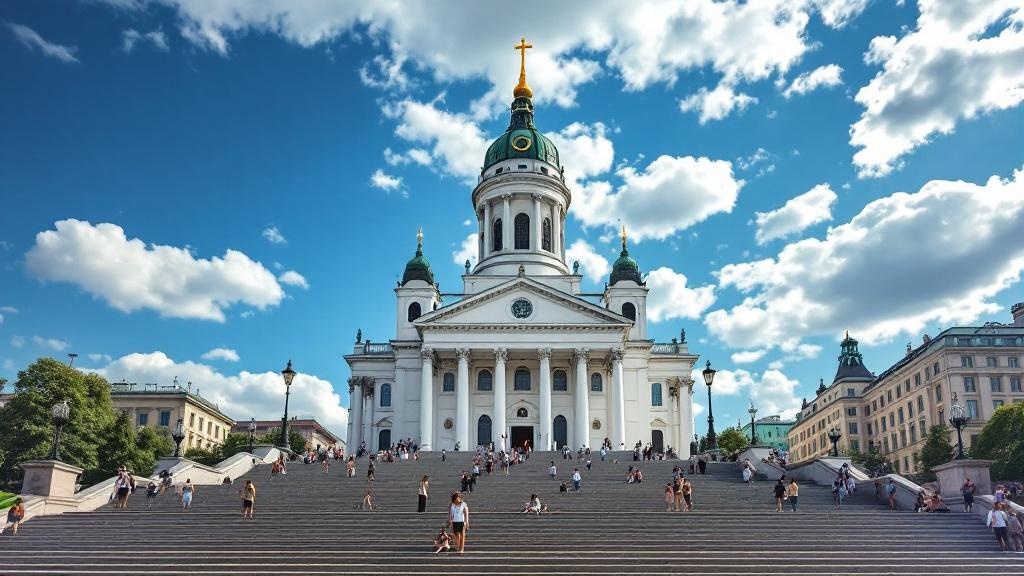
Senate Square
Carl Ludvig Engel's neoclassical ensemble from the 1820s and 30s, built to make the new Russian capital of Finland look imperial. It is so convincingly Petersburgian that Soviet-era films used it as a stand-in for Leningrad.
Suomenlinna
The eighteenth-century sea fortress across six islands, UNESCO-listed, fifteen minutes by public ferry on a normal tram ticket. Allow half a day; it is a place to walk, not a museum.
Oodi and Temppeliaukio
The 2018 central library — a public building of genuine ambition, with a 3D printer and a sewing room — and the church blasted into solid rock in 1969 with a copper-coil ceiling and remarkable acoustics.
The market and Kallio
Kauppatori and the old market hall for the tourist version; Hakaniemi hall and the Kallio district for what Helsinki actually eats and drinks. Kallio is the old working-class quarter and now the best bars in the city.
Design District
A couple of hundred shops, studios and galleries in Punavuori. Marimekko, Iittala, Artek and Fiskars are all Finnish, and this is where the small independents are.
Getting around
Trams, metro and ferries on one HSL ticket bought in the app. The city is compact enough to walk and flat enough to cycle. The airport train reaches the centre in 30 minutes.
🪑 Design and Architecture
Finland's outsized reputation in design comes from a specific idea: that good objects should be affordable, useful and available to everyone, not luxury goods. That was a political position as much as an aesthetic one, and it is why Finnish design looks the way it does — plain, warm, wooden and built to survive being used.
Alvar Aalto (1898–1976)
The one architect everybody knows, and rightly. Finlandia Hall, the Paimio Sanatorium, his own house in Helsinki, and the bent-plywood furniture still in production at Artek. Aalto's answer to modernism's cold rationality was to make it out of wood.
Marimekko
The 1951 textile house, and specifically Maija Isola's 1964 Unikko poppy — a print the founder initially refused to allow because she disliked florals. It is now shorthand for the whole country.
Iittala and Arabia
Glass and ceramics. Aalto's 1936 Savoy vase, Kaj Franck's plain tableware, Oiva Toikka's glass birds. Franck's dictum — that a plate should not be signed — is the whole philosophy in a sentence.
Fiskars
The orange-handled scissors, designed in 1967, from a company founded in 1649. The original ironworks village west of Helsinki is now an artisans' colony and a good day trip.
National Romanticism
Before modernism came the granite-and-forest style of Eliel Saarinen and Lars Sonck around 1900 — the Helsinki railway station, the National Museum. Built as a nationalist statement under Russian rule.
Churches worth the detour
Temppeliaukio in rock, Kamppi Chapel of Silence in curved timber, and Aalto's church at Vuoksenniska. Finland does modern sacred architecture better than almost anywhere.
🛶 The Lakes and the Mökki
Finland has 188,000 lakes and roughly 500,000 summer cottages. From late June the country simply empties — cities go quiet, offices shut, and people go to the water with a rowing boat, a sauna and no particular plan. The mökki is the single most important institution in Finnish leisure and it is defined by what it lacks: usually no road-quality plumbing, often no electricity, and increasingly deliberately no wifi.
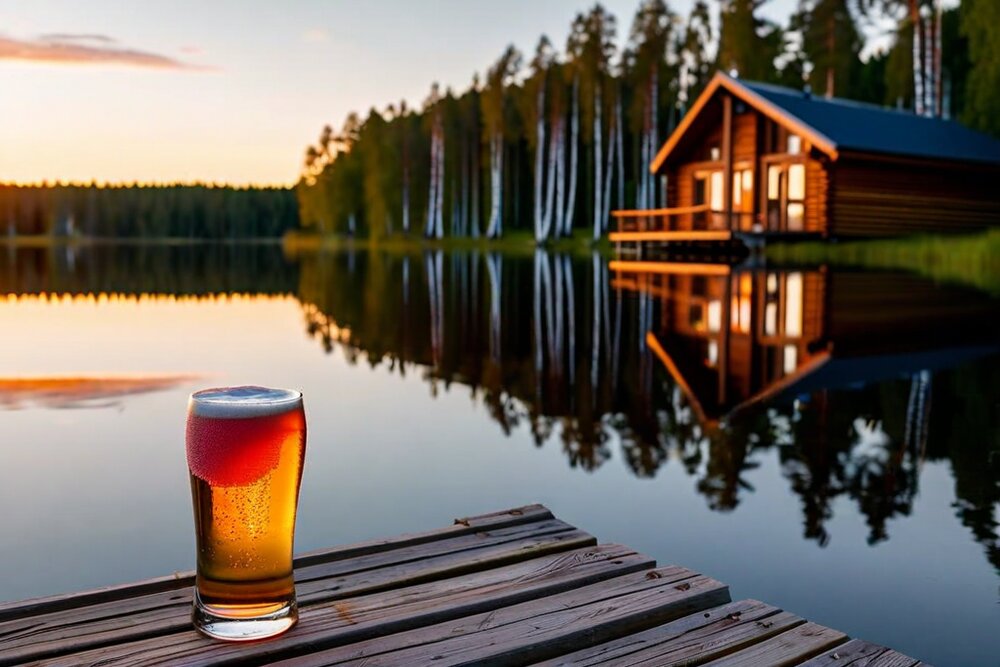
Saimaa
Europe's fourth-largest lake, 4,400 km², with 14,000 islands and a shoreline so convoluted it runs to nearly 15,000 km. Base yourself in Savonlinna, Puumala or Mikkeli.
The Saimaa ringed seal
One of the rarest seals on Earth — a landlocked freshwater population of around 500 animals, isolated since the ice age. Conservation shapes fishing rules across the whole lake, and volunteers shovel snowbanks for their birthing dens in mild winters.
Savonlinna
Olavinlinna, a 1475 castle on an island in the lake, hosting an opera festival every July that is one of the genuinely great European summer events.
Koli
The ridge above Lake Pielinen that Finnish national-romantic painters made into the national landscape. The view from the top is the one Finns picture when they think of their country.
Renting a mökki
Straightforward and the best way to spend a Finnish summer week. Nuuksio and Lohja within an hour of Helsinki; the Lakeland proper for the real version. Expect €80–200 a night and bring your own food.
On the water
Canoe and kayak routes everywhere, lake ferries and old steamships on Saimaa and Päijänne, and enough shoreline that you can paddle for a week without repeating yourself.
❄️ Lapland
A third of Finland, above the Arctic Circle, with 180,000 people in an area larger than Portugal and around 200,000 reindeer. Lapland is what most winter visitors come for, and it delivers — but it is a working region with its own population and its own politics, not a theme park, however hard Rovaniemi's Santa industry tries.
Rovaniemi
The regional capital on the Arctic Circle, rebuilt after the Germans burned it in 1944 to an Aalto street plan supposedly shaped like reindeer antlers. Santa Claus Village, the excellent Arktikum museum, and the transport hub for everything north.
Levi and Ylläs
The two big ski resorts. Finnish skiing is gentle — these are fells, not Alps — but the season runs from November to May and the cross-country trail networks are superb.
Saariselkä and Urho Kekkonen NP
Further north and much wilder: one of Europe's largest national parks, with free open wilderness huts and hundreds of kilometres of marked trails.
Inari
The centre of Sámi Finland, on a lake of 3,000 islands. Siida, the Sámi museum and nature centre, is the single best place in the country to understand the north.
Kilpisjärvi and the arm
The far northwest between Sweden and Norway, with Finland's only real fells and the Halti summit. Serious hiking country and the best of Lapland in summer.
Reindeer
Semi-domesticated, individually owned, and free-ranging across the whole region — which is why they are on the roads and why hitting one is a paperwork event. Herding is a legal right reserved to residents, most but not all of them Sámi.
🌌 The Northern Lights
In Finnish Lapland the aurora is visible on roughly 200 nights a year, which sounds like a guarantee and is not — you still need clear skies, darkness and patience. In southern Finland you might see it a dozen times a year. Plan three or four nights minimum, and treat any sighting as luck rather than schedule.
When
September to March, with the best odds around the equinoxes in late September and March. You need real darkness, so the midnight-sun months of May to July are impossible however strong the activity.
Where
The further north the better. Above Rovaniemi is good, above Sodankylä better, Inari and Utsjoki best. Get away from town lights and find an open northern horizon — a frozen lake is ideal.
What it actually looks like
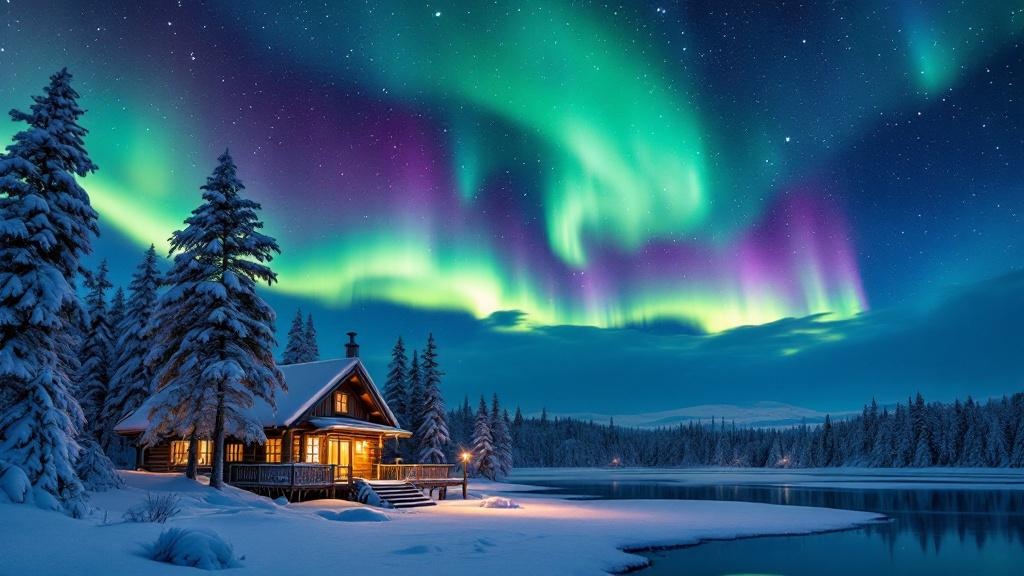
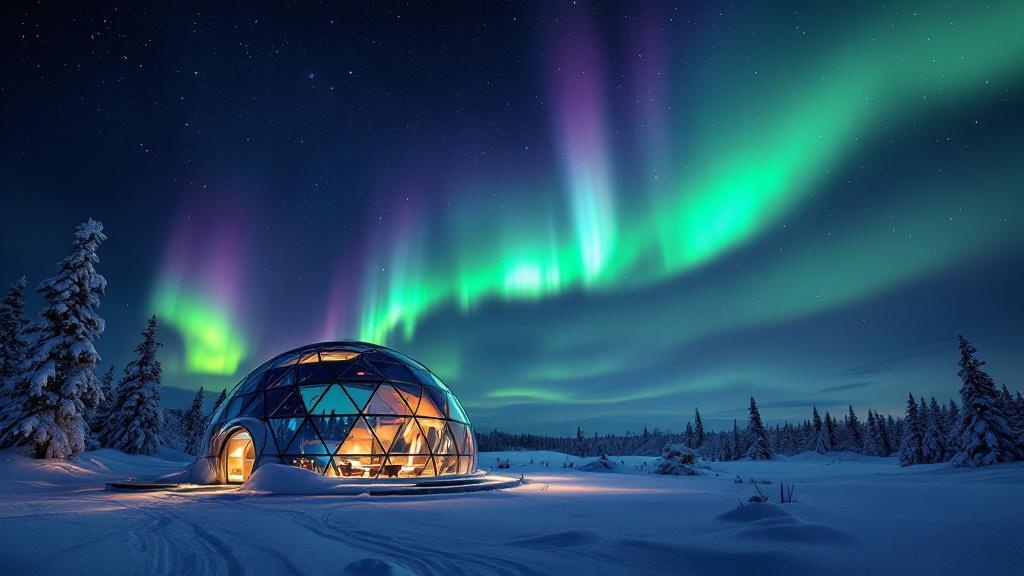
Often a faint grey-green arc that the camera renders far more vividly than the eye does. On a strong night it moves, curtains and pulses, and there is no mistaking it. Photographs like the ones on this page are real but they are the top few per cent of nights.
Tools
Watch the Kp index and the Finnish Meteorological Institute's aurora service, and the local forecast — cloud beats activity every time. The Auroras Now! alert service is Finnish and reliable.
Glass igloos and aurora cabins
Kakslauttanen started it and dozens have followed. Expensive, comfortable, and they let you watch from bed. Worth one night rather than a week.
The folklore
The Finnish name is revontulet — "fox fires" — from the tale of an arctic fox whose tail throws sparks off the snow into the sky. It is a better story than the solar-wind one.
🛷 Winter
Finnish winter is long, dark and genuinely cold, and the country's answer is to organise almost everything around it. From December to March, Lapland runs on snow: this is the single best-organised winter-activity destination in Europe.
Husky safaris
Half a day to a week, driving your own sled. The best operators are small kennels where you meet the dogs and learn to handle them rather than being towed behind a guide. Expect €150–250 for a half day.
Reindeer sledding
Slower, quieter and more traditional — and usually run by actual herders, which makes it the better cultural choice. Sámi-owned operations around Inari are the ones to look for.
Snowmobiles
Fast, loud, and how people actually get around in winter. A driving licence is required and alcohol limits are strictly enforced.
Cross-country skiing
The real national sport. Thousands of kilometres of lit, groomed ladut trails, including in city parks. Equipment rents cheaply and beginners are welcome everywhere.
Ice swimming and ice breakers
Avanto after a sauna, and in Kemi the Sampo icebreaker cruise, where you can float in the Gulf of Bothnia in a survival suit among the broken floes. Kemi's SnowCastle is rebuilt each winter.
The cold, honestly
Lapland sits at −10 to −25 °C through midwinter and −35 °C happens. Proper layers, wool base, mittens rather than gloves, and covered face. Operators supply overalls and boots; do not economise on your own base layers.
☀️ Summer and the Midnight Sun
Finns will tell you the summer is short. It is — roughly ten weeks — and it is spectacular. Above the Arctic Circle the sun does not set at all for weeks; in Helsinki in June it barely gets properly dark. The whole country moves outside and stays there.
The midnight sun
Continuous daylight from roughly mid-May to late July at Utsjoki, around 70 days. In southern Finland the sun sets but twilight lasts all night. Bring an eye mask; you will sleep badly otherwise.
Juhannus
Midsummer, the weekend nearest 24 June, and the biggest holiday of the year. Cities empty completely, bonfires burn by the lakes, everyone goes to a cottage, and shops and restaurants close. Do not plan a city break for that weekend.
Hiking
Best from late June to September. The Karhunkierros (Bear's Ring) at Oulanka, the Hetta–Pallas trail, and Urho Kekkonen NP. Free wilderness huts along most northern routes, first come first served.
Mosquitoes
Real, numerous and taken seriously. Lapland in July is genuinely difficult without repellent and a head net; August is much better.
Water
Swimming in lakes from late June, and the sea in the archipelago. Boat hire, canoes and lake ferries everywhere, and the water is cleaner than you expect.
Autumn · ruska
Late August to late September, when the tundra and birch forest turn red and gold. Finns take a week off for it. Fewer mosquitoes, first aurora, best hiking of the year.
🌲 Everyman's Right
Jokamiehenoikeus — everyman's right — is the legal principle that anyone may walk, ski, cycle, camp for a night, swim and pick berries and mushrooms on almost any land in Finland, private property included, without asking permission. It is one of the defining facts about the country and it changes how travel here works.
What you may do
Walk, ski and cycle anywhere outside gardens and cultivated fields. Camp for a night at reasonable distance from homes. Swim and boat on any water. Pick wild berries, mushrooms and flowers. Fish with a rod and line.
What you may not
Disturb people or damage property. Camp in someone's garden or on a field with a crop on it. Light an open fire without the landowner's permission, or at all during a forest-fire warning. Take moss, lichen, fallen timber or anything from a nature reserve with stricter rules.
Berries
Blueberries (mustikka, properly bilberries — dark all the way through), lingonberries, and the rare golden cloudberry of the northern bogs, which Finns will not tell you the location of. Picking is free and untaxed even commercially, which is why thousands of seasonal pickers arrive from Thailand each August.
Mushrooms
Chanterelles, ceps and milk caps in abundance from July. Finns are serious foragers and the forests are not picked over. Learn what you are doing or go with someone who does.
The 41 national parks
All free to enter, all with marked trails, most with free huts, lean-tos, firewood and composting toilets maintained by Metsähallitus. Nuuksio near Helsinki, Oulanka in the northeast, Urho Kekkonen in Lapland, and the Archipelago NP off Turku.
Wilderness huts
Open autiotupa huts in the north are free, unlocked, and available to anyone — with the rule that the last arrival gets the bed and everyone leaves firewood behind. It works because Finland works.
🐻 Wildlife
Finland has Europe's largest population of brown bears outside Russia, a small and fiercely protected wolf population, wolverines, lynx and around 200,000 reindeer. Almost nothing here is a threat to you; the exception is a moose on a road at dusk.
Brown bear
Around 2,000–2,500, mostly in the eastern forests near the Russian border. Bear-watching hides around Kuhmo and Martinselkonen have very high success rates from May to August, and are the best wildlife experience in the country.
Wolf and wolverine
Roughly 300 wolves and a few hundred wolverines, both rarely seen and both the subject of a permanent political argument between conservationists and reindeer herders.
Moose · hirvi
Around 100,000, and the single most dangerous animal in Finland — not because they attack but because hitting one with a car at dusk is often fatal. Take the warning signs seriously.
Saimaa ringed seal
About 500 animals, endemic to one lake system, and a national conservation cause. Boat trips from Savonlinna give a decent chance in early summer.
Birds
Whooper swan — the national bird — cranes, capercaillie, and Europe's best owl-watching. Liminka Bay near Oulu is a major migration site.
Nothing to fear
No dangerous snakes beyond the adder, which is shy and rarely serious. No dangerous spiders. Ticks are present in the south and Åland, and tick-borne encephalitis vaccination is worth considering for a summer spent outdoors.
🍽️ Finnish Food
Finnish cooking was for centuries the food of a poor northern country: rye, fish, potatoes, milk, whatever the forest gave. That is still the backbone, and in the last twenty years Helsinki has built a genuinely good restaurant scene on top of it — Nordic in method, Finnish in ingredients, and much less precious about it than Copenhagen.
Karjalanpiirakka
Karelian pies: a thin rye crust crimped around rice porridge, oval and flat, eaten with munavoi — egg butter. The single most recognisable Finnish food, sold in every shop, and the correct breakfast.
Rye bread
Ruisleipä is dense, dark, sour and eaten at every meal. Finns abroad have it posted to them. Try hapankorppu crispbread too.
Fish
Baltic herring, salmon, pike-perch, and above all muikku — tiny vendace, floured and fried whole in butter, eaten by the plateful at summer markets. Also lohikeitto, the creamy salmon and dill soup that is the best thing to eat in winter.
Meat and game
Reindeer — poronkäristys, sautéed reindeer with mashed potato and lingonberry, is the northern national dish. Elk, and meatballs with lingonberry in the Nordic manner.
Kalakukko
A Savonian speciality from Kuopio: vendace and pork baked inside a sealed rye loaf for hours until the bones dissolve. It looks like a dark rye football and it is a proper regional obsession.
Things to be warned about
Salmiakki — salty liquorice, loaded with ammonium chloride, which Finns adore and almost no visitor does. Mämmi, the black Easter rye pudding, which looks terrible and tastes better than it looks. And mustamakkara, Tampere's blood sausage with lingonberry jam.
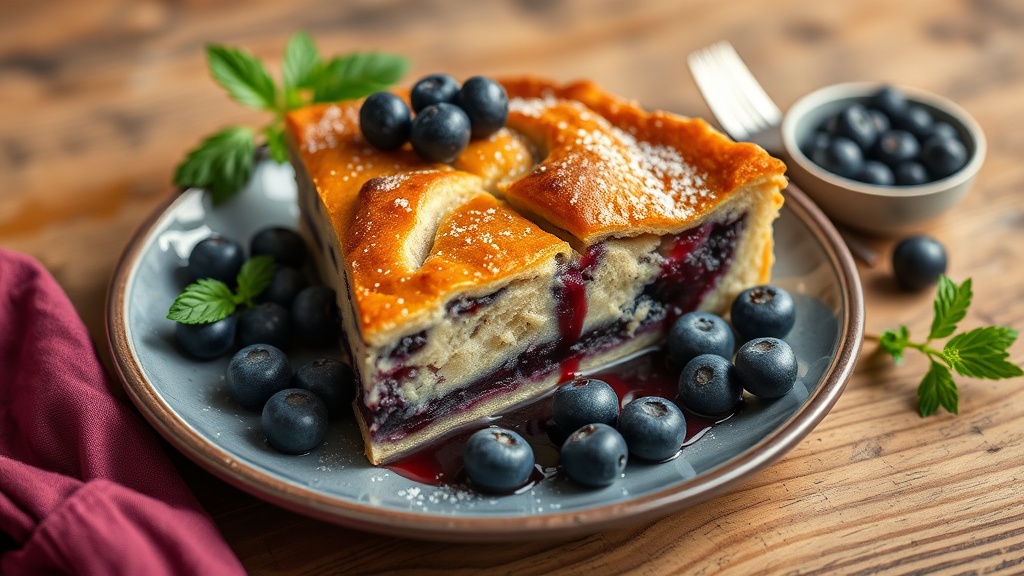
Karjalanpiirakka
Karelian pies · makes 16 · 2 hours
Ingredients: Crust: 200 ml water; 1 tsp salt; 300 ml rye flour; 100 ml plain flour. Filling: 200 ml short-grain rice; 500 ml water; 500 ml milk; salt; butter. Egg butter: 3 hard-boiled eggs; 100 g soft butter; salt.
Method: Cook the rice in the water until absorbed, add the milk and simmer 30–40 minutes to a thick porridge; salt and cool. Mix the crust to a firm dough, roll into a log, cut 16 pieces and roll each into a very thin oval about 15 cm long. Spread filling down the middle, crimp the two long edges up over it leaving the centre open, and bake at 250 °C for 12–15 minutes. Brush the hot pies with a mixture of melted butter and warm milk. Serve with mashed egg butter.
💡 The crust must be rolled thinner than feels sensible — almost translucent. The butter-and-milk brush at the end is what makes them soft rather than brittle.
Lohikeitto
Salmon soup · serves 4 · 40 minutes
Ingredients: 600 g salmon fillet, skinned and cubed; 1 l fish or light stock; 500 g potatoes, diced; 1 leek, sliced; 1 carrot; 200 ml cream; 2 bay leaves; a large bunch of dill; 20 g butter; allspice; salt and white pepper.
Method: Soften the leek and carrot in butter. Add the stock, potatoes, bay and a few allspice berries and simmer until the potatoes are almost done, about 15 minutes. Add the salmon and cook 5–6 minutes more — no longer, or it falls apart. Stir in the cream, take off the heat, season, and add a very large amount of chopped dill.
💡 More dill than you think, added off the heat. This is Finland's most reliable comfort food and it is nearly impossible to get wrong except by overcooking the fish.
Poronkäristys
Sautéed reindeer · serves 4 · 45 minutes
Ingredients: 600 g frozen shaved reindeer (or shaved beef or venison); 100 g butter or lard; 200 ml water or dark beer; 1 tsp crushed black pepper; salt. To serve: mashed potato and lingonberry jam.
Method: Fry the still-frozen shavings in very hot butter in batches so they brown rather than steam. Return everything to the pan, add the water or beer, cover and simmer gently 30 minutes until tender. Season heavily with black pepper. Serve on mashed potato with a spoonful of lingonberry and pickled cucumber.
💡 The meat is sold frozen and shaved for exactly this dish and should go into the pan frozen. Lingonberry is not optional — the sharpness is what the dish is built around.
🫐 Berries and the Forest Larder
Around 50 million kilos of wild berries ripen in Finnish forests each year and something like five to ten per cent get picked. Everyman's right makes all of it free to anyone, and berry-picking is not a quaint tradition here — freezers across the country are full of it by October.
Mustikka · bilberry
July to August, everywhere, and the backbone of Finnish baking. Smaller and darker than a cultivated blueberry, purple all the way through, and much stronger in flavour.
Puolukka · lingonberry
August to October. Sharp, keeps almost indefinitely without sugar, and served with everything savoury from meatballs to reindeer.
Lakka · cloudberry
The prize: golden, bog-grown, ripe for about two weeks in late July, and worth many times any other berry. Finns guard their picking spots with real seriousness. Eat it with leipäjuusto, the squeaky bread cheese.
Sea buckthorn and rowan
Coastal and roadside, sharp and increasingly used by Helsinki restaurants and distillers.
Mushrooms
Chanterelles from July, ceps from August, and the milk caps Finns salt for winter. Bring a knife and a basket, not a bag.
How to pick
A marjanpoimuri berry comb costs a few euros in any supermarket and multiplies your yield. Do not pick in nature reserves with special rules, do not damage the plants, and stay away from gardens and yards.
🍺 What Finns Drink
Coffee first — Finland drinks more of it per head than any country on Earth, roughly 12 kg a year per person, and it is light-roasted, filtered and constant. Then beer, then the state monopoly, then a set of home-made things that have no equivalent anywhere.
Alko
Anything above 8% ABV is sold only by the state monopoly, which closes at 21:00 on weekdays, 18:00 on Saturdays and all day Sunday. Supermarkets sell beer, cider and wine up to 8% until 21:00. Plan accordingly or spend Sunday sober.
Beer
Karhu, Lapin Kulta, Olvi and Koff are the mass-market lagers. The craft scene is very good — look for Sonnisaari, Mallaskoski, Fat Lizard and the Helsinki brewpubs in Kallio.
Sahti
The ancient rye farmhouse ale of Häme, filtered through juniper twigs, unhopped or barely hopped, cloudy, strong and completely unlike anything else in Europe. One of the world's genuinely surviving ancient beer styles. Seek it out in Lammi or Hollola.
Koskenkorva and lakka
The national clear spirit, 38% and drunk cold, plus a whole shelf of berry liqueurs — cloudberry lakka, mesimarja arctic bramble, and the sweet Minttu peppermint that Finns drink and nobody else understands.
Salmiakki koskenkorva
Salty-liquorice vodka, black, sold in bottles that look like industrial solvent. It is the single most Finnish drink there is and it tastes exactly as advertised.
Kalsarikännit
Getting drunk at home in your underwear with no intention of going out. The Finnish government made it an official national emoji, which tells you most of what you need to know about Finnish self-image.
🎉 Festivals
Finland's calendar is organised around light: what to do when there is too much of it, and what to do when there is none.
Juhannus · midsummer weekend
The big one. Bonfires by the lakes, cottages full, cities completely empty, and everything closed. If you are in Helsinki that weekend you will have the city to yourself and nowhere to eat.
Vappu · 1 May
Student carnival and spring release: white caps, sparkling wine, sima mead and tippaleipä funnel cakes, and the entire country outdoors regardless of weather. Helsinki's Ullanlinnanmäki picnic is the sight to see.
Independence Day · 6 December
Sombre rather than festive: candles in windows, the war films on television, and the President's ball watched by half the country as a national fashion review.
Savonlinna Opera Festival · July
Opera in a medieval castle courtyard on an island in the lake. One of Europe's great festival settings and worth planning a trip around.
Music festivals
Ruisrock in Turku since 1970, Flow in Helsinki, Provinssi, and — for the other end of the spectrum — Tuska, because Finland has more metal bands per head than any country on Earth.
The eccentric ones
Wife-carrying in Sonkajärvi, mobile-phone throwing, the Air Guitar World Championships in Oulu, and swamp football. All real, all played straight, all funnier for it.
🏭 Forest, Phones and What Came After
A small, rich, open economy that has reinvented itself twice in living memory — from timber to electronics, and then, after Nokia collapsed, into a diversified technology sector nobody outside the country pays much attention to.
The forest
Still the foundation: pulp, paper, sawn timber and increasingly engineered wood and bio-products. Finland is one of the world's largest paper exporters and the industry shapes rural employment and land policy alike.
Nokia
At its 2000 peak it was 4% of Finnish GDP and a fifth of exports. Its collapse after 2007 cost tens of thousands of jobs and a decade of growth — but the engineers it released seeded a startup scene that produced Supercell, Rovio and several hundred smaller firms.
Games
Finland punches absurdly above its weight: Angry Birds, Clash of Clans, Max Payne, Control. Helsinki is one of the world's serious game-development cities.
Education
The PISA results that made Finnish schooling internationally famous have slipped, but the model remains: no school inspections, no standardised testing before 16, highly trained and trusted teachers, and free education including university.
The welfare state
Comprehensive, expensive and broadly supported. Income tax is high, public services are genuinely good, and the country ran the world's most-watched basic-income trial in 2017–18.
The demographic problem
One of Europe's lowest birth rates and a rapidly ageing population in a country that has historically had little immigration. This, not competitiveness, is the argument that dominates Finnish politics.
🌦️ Climate, the Dark and the Cold
Milder than the latitude suggests, thanks to the Gulf Stream — Helsinki sits level with southern Greenland but has winters like Warsaw's, only longer. The thing to plan for is not the temperature. It is the light.
Winter · December–March
Helsinki −5 to −10 °C, Lapland −10 to −25 °C with −35 °C possible. Snow cover reliable in Lapland from November to April and increasingly unreliable in the south.
Kaamos · the polar night
At Utsjoki the sun does not rise at all for around 51 days. It is not pitch dark — there are several hours of blue twilight — but it is relentless, and it is the reason for the light therapy lamps in every Finnish office.
November
The single worst month: dark, wet, above freezing, no snow, no light. Finns are unanimous about this. Do not come in November.
Summer · June–August
Helsinki 20–25 °C and increasingly hot spells above 30 °C. Lapland 15–20 °C with continuous daylight. The best weather is usually July.
Spring and ruska
April and May are unreliable and muddy — kelirikko, the breaking of the roads. Late August to late September brings the autumn colours and the best hiking of the year.
What to pack
Winter: wool base layers, proper insulated boots, mittens, hat, and a face covering. Summer: layers, rain jacket, and serious insect repellent for Lapland. A sleep mask in June, and in midwinter, a tolerance for darkness.
🇨🇿 From the Czech Republic
One of the easiest countries in Europe to reach from Prague and one of the easiest to travel in once you arrive. Direct flights to Helsinki take 2 hours, there is no time difference worth worrying about (+1 hour), both countries are in the EU and the Schengen area, and Finland uses the euro.
Flights
Finnair flies Prague–Helsinki directly, usually daily, and there are seasonal low-cost options. Return fares typically 3,000–8,000 Kč, cheapest in shoulder season and dramatically more expensive around Christmas for the Lapland flights.
Straight to Lapland
In winter there are charter and seasonal direct flights from Prague to Rovaniemi and Kittilä, mostly sold as packages. Otherwise connect through Helsinki — Finnair's domestic network is good and the connection is quick.
The overnight train
Fly to Helsinki and take the Santa Claus Express to Rovaniemi: 12 hours, sleeper cabins with en-suite showers, and a car-carrier wagon. It costs less than a hotel plus a flight and is far better than either.
Documents
Czech citizens need only an ID card. No visa, no border checks arriving from Schengen. The European Health Insurance Card covers state healthcare, but take commercial travel insurance as well — winter-activity injuries and mountain rescue are not covered by the EHIC.
Czech consular cover
The Czech Embassy in Helsinki is at Armfeltintie 14. Register in DROZD if you are heading into Lapland in winter, where distances are long and mobile coverage is not universal.
What surprises Czechs
How expensive alcohol is, how good the tap water is, how empty the roads are, and how quiet everything is. Also that everyone speaks English and nobody expects you to try Finnish.
✈️ Getting There and Around
Helsinki-Vantaa is a genuinely excellent airport and Finnair has built a business on being the short way between Europe and Asia over the pole. Inside the country, trains are good, buses fill the gaps, and driving is easy in summer and a specialist skill in winter.
Helsinki-Vantaa
Thirty minutes from the centre by the ring rail, running every 10 minutes on a normal HSL ticket. Small, fast and consistently well rated.
Ferries
Helsinki–Tallinn in 2 hours, Helsinki and Turku to Stockholm overnight on Viking and Silja. The Stockholm ferries are an institution and a very cheap way to travel if you can sleep through the onboard nightlife.
Trains
VR is comfortable, punctual and reasonably priced if booked ahead. Helsinki–Tampere 1 h 30, Helsinki–Turku 2 h, Helsinki–Rovaniemi 12 h overnight. Book the sleeper weeks ahead in December.
Buses
Matkahuolto and OnniBus cover everything the trains do not, and OnniBus fares can be absurdly cheap. Essential for Lapland beyond Rovaniemi.
Driving
Easy, empty and well signed. Winter tyres are legally required from November to March, headlights on at all times, and speeding fines are income-linked — a Nokia executive once paid €116,000 for one. Watch for moose and reindeer at dusk.
Domestic flights
Finnair and Norwegian to Rovaniemi, Kittilä, Ivalo, Oulu and Kuopio. Worth it for Lapland given the distances; otherwise take the train.
🧭 Practical Finland
Close to frictionless. Everything works, everything is signposted in English, cards are accepted everywhere including public toilets, and public information is accurate. The only real planning problems are the seasons and the alcohol laws.
Money
The euro. Finland is close to cashless — cards and phones work everywhere, and some places no longer take cash at all. There is no need to carry any.
Tipping
Not expected and not customary. Service is included. Rounding up a restaurant bill is a generous gesture, not an obligation, and taxi drivers do not expect anything.
Connectivity
Finland invented the modern mobile industry and it shows: excellent coverage, cheap unlimited data, and free wifi almost everywhere. EU roaming applies for Czech SIMs at no extra cost.
Water
Helsinki tap water is among the best in the world and there is no reason ever to buy a bottle. The same is true almost everywhere in the country, including from streams in Lapland.
Shops and hours
Supermarkets open late and on Sundays; K-Market and S-Market are everywhere. Alko for spirits closes early and all Sunday. Restaurants stop serving earlier than in central Europe.
Health
Excellent, EHIC accepted at public health centres, and pharmacies (apteekki) are well stocked. Emergency number 112, which also has an app that transmits your location — worth installing before heading into Lapland.
💰 Costs
Expensive, and honestly so — roughly Nordic prices with alcohol and restaurants the worst offenders and transport and accommodation more reasonable than you expect. Lapland in December is a separate and much steeper price list.
Accommodation
Hostel dorm €30–45 (750–1,100 Kč). Mid-range hotel €90–150. Lapland glass igloo €300–600 a night in season. A summer mökki for a week is often €500–900 total, which is the best value in the country.
Food
Lunch buffet (lounas) €11–14 and the single best deal in Finland — weekdays, huge, and how the whole country eats at midday. Restaurant main €22–35. Supermarket shopping is moderate; eating out is not.
Alcohol
The shock. Beer in a bar €7–9. A bottle of ordinary wine in Alko €10–15. Spirits are heavily taxed. This is why Finns take the Tallinn ferry.
Transport
Helsinki day ticket €9. Train Helsinki–Tampere €15–35 booked ahead. Sleeper to Rovaniemi €80–150 with a cabin. Car hire €50–90 a day, more with winter equipment.
Activities
Husky half-day €150–250. Reindeer sled €80–120. Public sauna €15–25. Aurora tour €100–180. National parks, hiking and everyman's right are free, which is the great equaliser.
Realistic budget
Backpacking €70–100 a day (1,700–2,500 Kč). Comfortable mid-range €150–220. A Lapland winter week with activities €1,500–2,500 per person before flights. A summer lake week can be done for a third of that.
🛡️ Safety
One of the safest countries in the world by any measure. Violent crime is rare, corruption is close to non-existent, and the police are trusted and approachable. Essentially everything that can hurt you here is weather or wildlife on a road.
Crime
Minimal. Pickpocketing occasionally in Helsinki tourist spots and around the ferry terminals in summer. Ordinary precautions are more than enough.
Cold
The real hazard. Hypothermia and frostbite are genuine risks in Lapland in winter, particularly on snowmobiles and at aurora viewpoints where you stand still for hours. Cover skin, layer properly, and tell someone your route.
Ice
Never walk on lake or sea ice without local advice — thickness varies enormously and river mouths and currents are treacherous. Ice-fishing operators know where it is safe; you do not.
Roads
Moose and reindeer, black ice, and long distances between services in the north. Winter tyres are mandatory, and reindeer collision requires reporting to police even when the animal walks away.
Ticks
Present in the south, the archipelago and Åland. TBE vaccination is worth considering if you will spend a summer outdoors; check yourself after hiking.
Emergency
112 for everything. The 112 Suomi app transmits your GPS position to the operator, which matters in a country with a great deal of empty ground.
🏨 Where to Stay
Helsinki
Kamppi and Kluuvi for convenience, Punavuori and the Design District for character, Kallio for cheaper and livelier. Hotel Torni and Klaus K are the interesting mid-range choices; Löyly is a sauna rather than a hotel but shapes the neighbourhood.
Lapland resorts
Levi, Ylläs, Saariselkä and Ruka: apartments and cabins rather than hotels, sold by the week, with ski and activity packages. Book Christmas and New Year six months ahead.
Glass igloos and aurora cabins
Kakslauttanen, Levin Iglut, Apukka and a growing field of imitators. Expensive and genuinely memorable — plan one or two nights inside a longer trip rather than the whole stay.
Mökki rental
The real Finnish holiday: a lakeside cottage with a wood-fired sauna and a rowing boat. Nettimökki and Lomarengas are the main booking sites. A car is essential.
Wilderness huts
In northern national parks: free open huts, first come first served, with firewood and a stove. Reservable huts cost €12–15. This is the cheapest serious travel available anywhere in Europe.
Hostels and camping
Good hostel network in the cities, and campsites everywhere with cabins as well as pitches. Everyman's right also lets you pitch a tent for a night almost anywhere, free.
🗺️ Suggested Itineraries
Long weekend · Helsinki
Three days: Senate Square and the Design District, Suomenlinna, Oodi and Temppeliaukio, a public sauna, Hakaniemi market hall, and dinner in Kallio. Add the Tallinn ferry if you want a fourth day.
One week · Lapland in winter
Fly to Helsinki, sleeper train to Rovaniemi, then base in Saariselkä or Levi. Husky day, reindeer afternoon, three aurora nights, one glass igloo, and Siida at Inari if you get as far north as that.
One week · lakes in summer
Helsinki for two days, then a mökki on Saimaa for five: rowing, swimming, sauna twice a day, berries, and Savonlinna castle. This is the trip Finns themselves take.
Ten days · south and centre
Helsinki, Porvoo, Turku and the archipelago, Åland by ferry, then Tampere and Koli. Trains and buses throughout, no car needed until Koli.
Two weeks · the whole length
Helsinki, Lakeland, Oulu, Rovaniemi, Inari, and out through Kilpisjärvi or north to Norway. Best from late August to late September for the ruska colours.
For hikers
Karhunkierros at Oulanka (80 km, 4–5 days) or Hetta–Pallas (55 km, 3–4 days), sleeping in free wilderness huts. Late August avoids the mosquitoes and catches the colour.
🤯 Fascinating Facts
Three million saunas
For 5.6 million people — more saunas than cars. UNESCO listed the culture as intangible heritage in 2020.
Income-linked speeding fines
Fines are calculated from the offender's income. The record is around €120,000, paid by a Nokia board member for doing 75 km/h in a 50 zone.
The happiest country, repeatedly
Finland has topped the World Happiness Report every year since 2018. Finns respond to this with visible discomfort and a strong suspicion that the survey is measuring institutional trust rather than joy.
A baby box for every newborn
Since 1938 every expectant mother has received a state maternity package of clothes, bedding and supplies in a cardboard box designed to be used as a cot. Take-up is near universal.
More metal bands than anywhere
Finland has around 50 metal bands per 100,000 people, comfortably the world's highest, and won Eurovision in 2006 with monster-costumed Lordi.
Everyman's right
You may legally walk, camp, swim and pick berries on almost anyone's land. Commercial berry-picking on private forest is untaxed and unrestricted.
Wife-carrying and air guitar
The Wife Carrying World Championship in Sonkajärvi awards the wife's weight in beer. The Air Guitar World Championships in Oulu are held annually and taken entirely seriously.
The 51-day night
At Utsjoki the sun stays below the horizon for around 51 days in midwinter — and then stays above it for around 70 in summer.
Nokia was a paper mill
Founded in 1865 on a river in Tampere, it made pulp, then rubber boots and cables, and only became a phone company in the 1990s. Its rubber-boot brand still exists.
👤 Notable Finns
Jean Sibelius (1865–1957)
The composer who gave Finland a musical identity. Finlandia was performed under disguised titles during Russian censorship, and the seven symphonies are among the twentieth century's finest.
Elias Lönnrot (1802–1884)
The country doctor who walked Karelia collecting oral poetry and assembled the Kalevala — giving a stateless people a national epic.
Alvar Aalto (1898–1976)
Architect and designer, and the single most influential Finn abroad. Made modernism warm by building it out of wood.
Carl Gustaf Mannerheim (1867–1951)
Tsarist cavalry officer, White general in the civil war, commander in both wars against the USSR, and finally president. The most consequential and most argued-over figure in Finnish history.
Tove Jansson (1914–2001)
Swedish-speaking Finnish artist and writer who created the Moomins — books far stranger, sadder and better than the cartoons suggest — and wrote The Summer Book, the finest thing ever written about a Finnish island.
Paavo Nurmi (1897–1973)
The Flying Finn: nine Olympic golds in distance running in the 1920s, and the man who made running with a stopwatch a discipline.
Linus Torvalds (b. 1969)
Wrote the Linux kernel as a student in Helsinki in 1991 and gave it away. Most of the internet runs on the result.
Kimi Räikkönen (b. 1979)
Formula 1 world champion in 2007 and the sport's most reluctant interviewee — an almost parodic export of Finnish taciturnity.
Tarja Halonen (b. 1943)
President 2000–2012, the first woman in the office, and — with Sanna Marin's later government of five parties led by women — part of why Finnish politics looks the way it does.
🧭 Visiting Responsibly
Finland asks very little of visitors beyond behaving the way locals do. But everyman's right is a genuine privilege built on mutual restraint, and Lapland's tourism boom has real costs that are worth being aware of.
Leave no trace
Everyman's right works because people do not abuse it. Take everything out, including toilet paper. Do not light fires without permission or during a fire warning. Camp away from houses and move on the next morning.
Reindeer are not wildlife
Every reindeer in Finland is owned by someone. Do not feed them, do not chase them for photographs, and slow down when they are on the road.
Choose Sámi-run operators
There is a real problem with generic "Lapland shaman" theatre marketed as Sámi culture. Look for Sámi-owned businesses and the Siida museum's guidance, and do not buy fake Sámi handicraft — the genuine article carries the Sámi Duodji mark.
Huskies
Standards vary enormously between kennels. Ask how many dogs, how long they run, what happens to retired animals, and prefer operators who let you meet the kennel rather than only the sled.
The Saimaa seal
Fishing restrictions across Saimaa exist because of a 500-animal population. Observe the seasonal net bans, keep your distance from haul-out rocks, and use the licensed operators.
Winter carbon
A Lapland winter week is flight-heavy and snowmobile-heavy. Taking the train north instead of the domestic flight, and choosing dog or ski over snowmobile, are the two changes that actually count.
✍️ Author's Note
I have never been anywhere that is so much better than its own reputation, or so uninterested in correcting it. Finland is marketed abroad as Santa Claus, saunas and the northern lights, and Finns will let you believe that is what the country is, because the alternative would involve explaining themselves, and they would rather not.
What actually got me was the ordinary stuff. A public library in the middle of Helsinki with a sewing room and a 3D printer that anyone can walk into. A wilderness hut two days' walk from a road, unlocked, with dry firewood stacked by someone who left before you arrived and will never meet you. The fact that you can put up a tent on a stranger's land and that this is not a loophole but a right. These are not tourist attractions. They are what a country looks like when it decides that trust is cheaper than enforcement.
Two pieces of advice. First, do not go in November — every Finn will tell you this and every Finn is right. Second, go to a real public sauna rather than a hotel one, take your clothes off, and stay for the second round. Nothing about this country makes sense until you have sat naked in a hot wooden room with strangers who do not feel obliged to talk to you.
And if anyone invites you to their cottage, go. Cancel whatever you had planned. The mökki, the lake, the wood-fired sauna at eleven at night when the sky is still light — that is Finland, and no amount of glass igloo will substitute for it.
— Radim Kaufmann
Support This Project 🌍
This World Travel Factbook is a labor of love – free to use for all travelers. If you find it helpful, consider supporting its continued development.