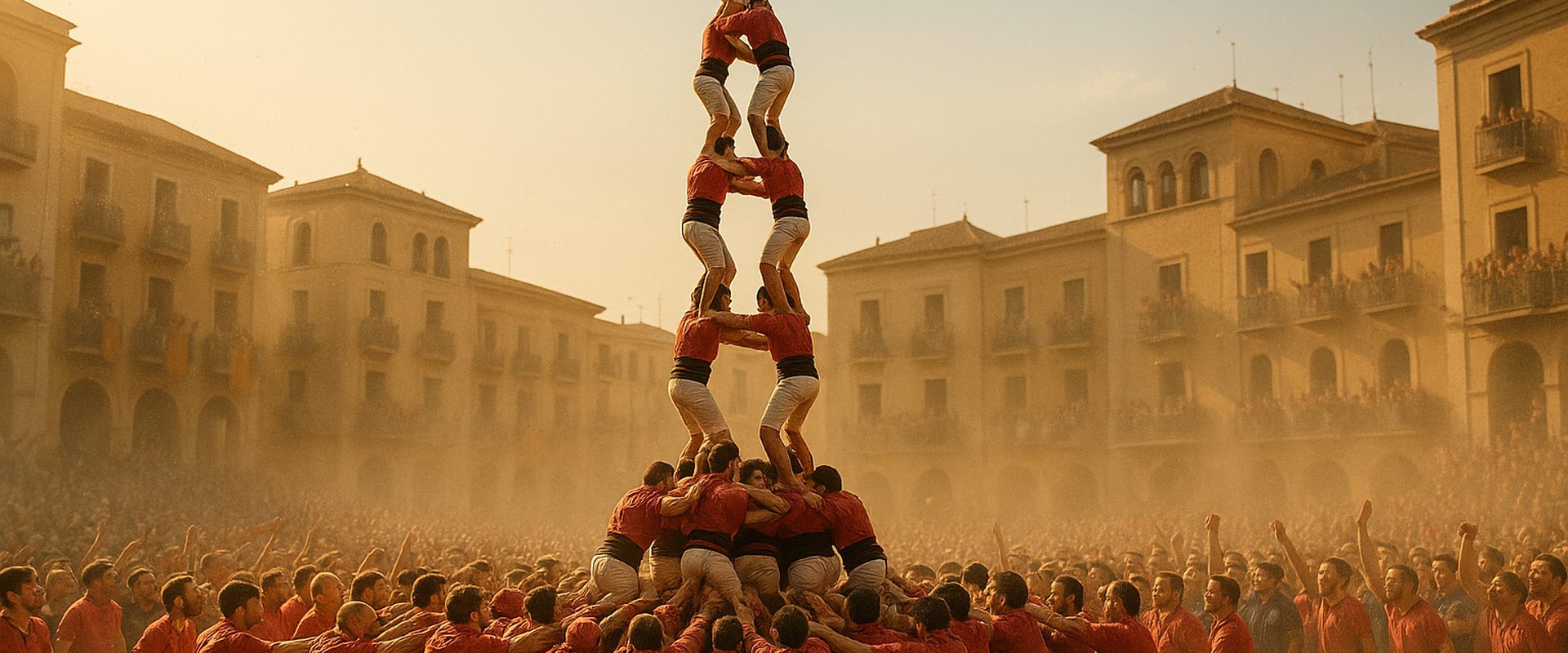
In Catalonia, in the northeast of Spain, teams of castellers dressed in matching uniforms climb on each other's shoulders to build the tallest, most stable human tower they can. The Spanish call them castells. The biggest competitions are held in Tarragona, where thousands of spectators gather to watch — and where, when a tower collapses, the crowd watches a piece of folklore unfold in real time.
How a Castell Is Built
The base of every castell is the pinya — four men braced shoulder-to-shoulder, forming what is known as the "drum." Layer by layer, more castellers climb their backs, building progressively higher floors. At the very top, by tradition, sits a child, ideally younger than ten years old. The child's only job — and the goal of the entire so-called "Babylonian" tower — is not to fall. When the child reaches the summit, they wave to the crowd and ideally lower the Catalan flag from the peak. The tallest castell ever built reached 13 metres.
A Tradition With Real Risks
Despite the festive atmosphere, castells are genuinely dangerous. Injuries during competitions are not unusual, and participants regularly end up in hospital. The most perilous moment is not the climb up but the descent — once the tower has stood, the castellers must dismantle it without anyone falling. Training therefore focuses heavily on safe descent technique.
In 2006, in the Spanish town of Mataró, a young girl fell from the top of a tower and died. Since then, children climbing the upper floors are required to wear helmets — easy to spot in any modern photograph of a castell as splashes of yellow, red, and white amid the human structure.
From Valencia Street Dance to UNESCO Heritage
The tradition dates back to the 18th century and originally evolved from the historical street dances of the Muixeranga — acrobatic performances staged by troupes in the former Kingdom of Valencia. From those folk roots, castells grew into a defining symbol of Catalan identity. In 2010, UNESCO inscribed castells on the Representative List of the Intangible Cultural Heritage of Humanity, recognising both the cultural depth of the practice and the trust, balance, and collective discipline it demands.
Women Made the Towers Taller
For most of its history, casteller teams (colles castelleres) were exclusively male. That changed in the 1980s, when women were finally allowed to compete. Their lower body weight turned out to be a structural advantage — teams that integrated women could build towers with even more storeys than before. Today, mixed teams are the norm, and the tradition is more popular than at any point in its history.
Where to See It
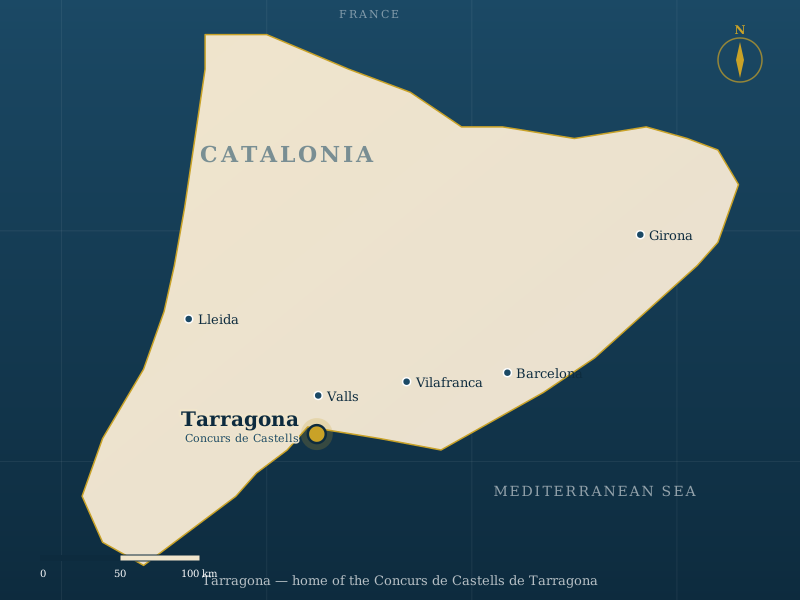
The biennial Concurs de Castells de Tarragona, held at the Tarraco Arena Plaça in early October of even-numbered years, is the world championship of the discipline — the most ambitious and visually staggering competition on the calendar. Smaller exhibitions take place throughout the year across Catalan towns, especially during the Festes de la Mercè in Barcelona (September) and the patron saint festivals of villages such as Vilafranca del Penedès and Valls.
💡 If You Go
Tarragona itself is a Roman heritage city worth two full days even outside the festival — the amphitheatre and forum are UNESCO-listed in their own right. The Concurs falls on the first weekend of October in even years (next: 2026). Tickets sell out months ahead; book through the official site. For a quieter alternative, Valls hosts the famous Diada de Santa Úrsula on the Sunday closest to 21 October every year, with the leading colles attempting their highest towers of the season.
The image of dozens of red-shirted castellers climbing across one another's backs in the heart of Tarragona — a tower one moment, a tangled mass of fallen bodies the next — is one of the most arresting sights in European traditional culture. Entertainment that can end in tragedy, and a deeply local tradition that has earned global recognition. For travellers willing to look beyond Barcelona's tourist core, this is what the soul of Catalonia actually looks like.
📍 Read more about Spain: 🇪🇸 Spain — Castells section in our country guide.
