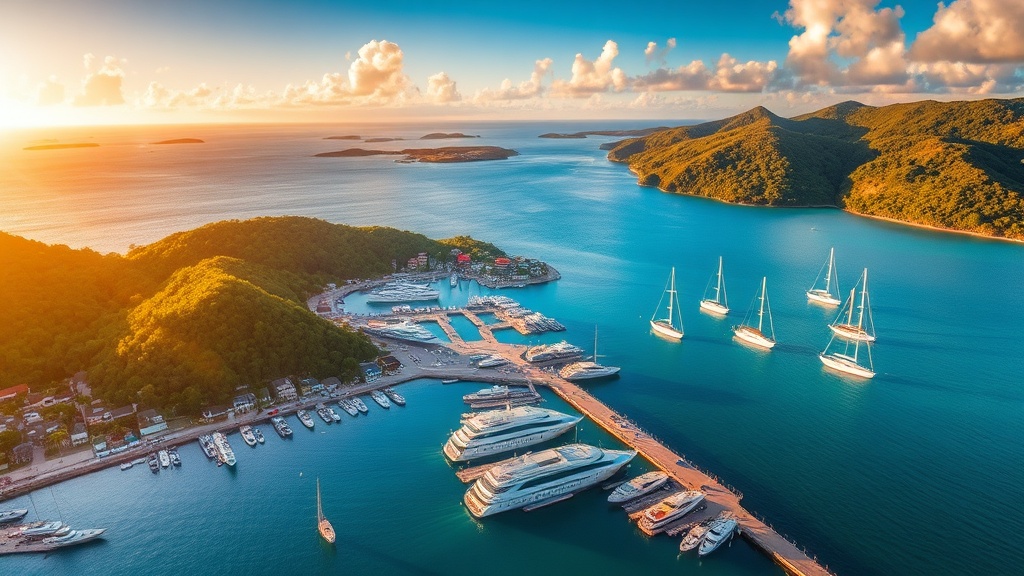
Antigua and Barbuda is a sovereign Caribbean state formed by two inhabited islands and uninhabited Redonda. Antigua carries the capital, airport and most tourism; Barbuda offers a lower, quieter landscape centered on Codrington Lagoon. Their shared story joins Indigenous settlement, plantation colonialism, emancipation, independence, maritime culture and repeated recovery after hurricanes.
02
🏷️ Name & Identity
The country’s formal name gives equal constitutional place to Antigua and Barbuda, while Redonda remains a dependency within the state. Antiguan and Barbudan identities are closely related but not interchangeable. Island, village, family, church, cricket and migration all contribute to how people describe belonging.
03
🗺️ Geography & Regions
The state lies in the Leeward Islands of the eastern Caribbean. Antigua is volcanic and limestone in origin, with an indented coast and many natural harbors. Barbuda is flatter and largely limestone, with lagoons, broad beaches and fragile coastal systems. Redonda rises steeply from the sea about 35 miles southwest of Antigua.
04
🧭 Map
The map places Antigua at the center of the state, Barbuda to the north and Redonda to the southwest. Zoom out to understand the country’s position between Guadeloupe, Montserrat, Saint Kitts and Nevis, and the open Atlantic. Ferry and air routes matter more than the short straight-line distances suggest.
05
🏺 First Peoples
Archaeology records human presence long before Europeans arrived. Archaic communities were followed by Ceramic Age peoples connected to wider Caribbean networks. Arawakan-speaking societies farmed, fished and traded across the islands; later Kalinago influence shaped the region. Their history belongs at the beginning of the national story, not as a brief preface to colonization.
Christopher Columbus named Antigua in 1493, but sustained English settlement began in the seventeenth century. The island’s harbors and position made it strategically important. Colonial government, private estates and imperial warfare reshaped the landscape, while Barbuda developed under a different land-use history associated for centuries with the Codrington family.
07
🌾 Sugar and Slavery
Sugar transformed Antigua into a plantation economy. Enslaved Africans cleared land, cultivated cane, worked mills and boiling houses, built roads and sustained the colony under violent coercion. Estate ruins are therefore evidence of labor, resistance and dispossession as much as industrial heritage. Responsible interpretation names the people whose work created colonial wealth.
08
🕊️ Emancipation and Its Limits
Slavery ended in the British Caribbean in 1834, but freedom did not bring equal access to land, capital or political power. Formerly enslaved communities built villages, churches, mutual support networks and new forms of labor organization. The long struggle over wages, land and representation shaped modern Antiguan society.
09
✊ Road to Independence
After periods within the Leeward Islands colony and the short-lived West Indies Federation, Antigua became an associated state of Britain in 1967. Full independence followed on November 1, 1981. Independence Day remains a central national observance, combining ceremony, food, music and reflection on statehood.
Antigua and Barbuda is a parliamentary democracy and constitutional monarchy. The governor-general represents the monarch, while executive authority is exercised by the prime minister and cabinet responsible to parliament. Public debate often centers on development, public services, climate resilience, land, tourism and the relationship between Antigua and Barbuda.
11
🏛️ Antigua — The Main Island
Antigua holds most of the population, the national institutions and the largest concentration of hotels and services. Its coast alternates among sheltered bays, reefs, headlands and working harbors. Inland, villages, former estates and dry scrub landscapes reveal a country more varied than the familiar beach image.
Barbuda lies about 30 miles north of Antigua and has its own strong community identity. Its low limestone landscape, lagoon and long beaches differ sharply from Antigua. Land tenure, post-hurricane rebuilding and large development proposals remain sensitive; visitors should listen to Barbudan perspectives rather than treating the island as an empty extension of Antigua.
Redonda is a steep, uninhabited island that few visitors ever see closely. Mining, introduced animals and erosion once damaged its ecosystem. A major restoration program removed invasive goats and rats, allowing vegetation and seabird habitat to recover. Landing is difficult and controlled; its importance is ecological rather than touristic.
St. John’s is the administrative, commercial and transport center. The market area, ferry and cruise terminals, museum and cathedral skyline sit within a compact but busy urban fabric. Beyond the waterfront retail zone, everyday St. John’s is best understood through its streets, vendors, schools, churches and surrounding residential communities.
English Harbour is both a historic naval landscape and a working maritime community. Restored dockyard buildings share the waterfront with boatyards, yachts, restaurants and local businesses. Its protected shape explains centuries of strategic use, but the surrounding settlement should not be reduced to a museum or marina.
16
⚓ Nelson’s Dockyard
Nelson’s Dockyard forms the core of the UNESCO-listed Antigua Naval Dockyard and Related Archaeological Sites. Georgian structures were built and maintained through the labor of enslaved Africans in a strategic naval setting. The museum, workshops and harbor explain technology and empire, while the wider landscape preserves forts, batteries and observation points.
Shirley Heights overlooks English and Falmouth harbors from a former military complex. The panorama is famous, especially near sunset, but the ruins also belong to the defensive system of the dockyard. Popular music gatherings can be crowded; arrive with transport arranged and respect both the historic fabric and other visitors.
18
🏛️ Betty’s Hope
Betty’s Hope was one of Antigua’s earliest large sugar estates. Restored windmill towers and archaeological remains make plantation technology visible, but interpretation must begin with enslaved labor and the lives controlled by the estate system. The open, dry landscape helps visitors understand how extensively sugar once organized the island.
19
🌅 Devil’s Bridge
Atlantic surf carved this limestone arch on Antigua’s eastern coast. The exposed site can be dangerous when waves sweep across the rock, so viewpoints and local warnings matter. Oral histories connect the area with the suffering of enslaved Africans; visitors should approach that memory with care rather than turning it into spectacle.
Antigua’s bays range from calm, developed west-coast beaches to more exposed Atlantic shores. Dickenson Bay, Half Moon Bay, Pigeon Point and smaller coves offer different conditions rather than one interchangeable experience. Public access, shade, sea state, facilities and transport should be checked separately for every beach.
Codrington is Barbuda’s principal settlement and the practical base for lagoon visits, accommodation and local services. Hurricane Irma caused catastrophic damage in 2017 and forced a complete evacuation. Rebuilding has changed the town, but community institutions and family networks continue to anchor island life.
22
🏖️ Codrington Lagoon
The large lagoon along Barbuda’s west coast supports fisheries, mangroves and internationally important bird habitat. Visits normally require a local licensed boat operator and depend on wind, water level and conservation rules. The lagoon is a working ecosystem and livelihood, not simply a scenic attraction.
23
🛶 Magnificent Frigatebirds
Barbuda protects one of the Caribbean’s most important colonies of magnificent frigatebirds. Males display inflated red throat pouches during courtship, while nesting activity varies through the year. Boats must keep an appropriate distance and follow sanctuary guidance so photography does not disturb birds or damage mangroves.
24
🏘️ Hurricane Irma and Recovery
Hurricane Irma struck Barbuda in September 2017 with catastrophic force. Buildings, infrastructure and natural systems were heavily damaged, and residents were evacuated to Antigua. Recovery is inseparable from debates over communal land, outside investment and climate justice. Travelers should avoid disaster tourism and support locally owned services.
Reefs reduce wave energy, shelter juvenile fish and support tourism and fisheries. They are stressed by warming seas, storms, pollution and physical damage. Use reef-safe practices: never stand on coral, control fins, keep distance from wildlife and choose moorings rather than anchoring on living reef.
26
🌀 Climate & Seasons
The climate is tropical, warm throughout the year and moderated by trade winds. A relatively drier period usually runs from December into spring, while humidity and rainfall tend to increase later in the year. Conditions vary locally, and short tropical showers can interrupt otherwise bright days.
27
🪸 Hurricane Season
The Atlantic hurricane season officially runs from June through November, with the highest regional risk often later in summer and early fall. A quiet forecast is not a guarantee. Monitor the Antigua and Barbuda Meteorological Service, understand accommodation procedures and keep flexible, insured plans.
Most citizens are of African-Caribbean heritage, alongside communities shaped by regional and international migration. Family, church, school, village, music and sport remain important social institutions. Culture is contemporary and changing; it should not be presented as a collection of colorful traditions created for visitors.
29
☀️ English and Antiguan Creole
English is the official language. Antiguan and Barbudan Creole English is widely used in everyday speech and carries identity, humor and social nuance. Usage varies by island, community, age and setting; it has no single universally accepted spelling system. Visitors should listen respectfully and avoid imitation performed for amusement.
Antigua Carnival developed as a major celebration of emancipation and national culture. Mas bands, calypso, soca, steelpan, pageants and street events fill the season. Dates, routes and admission rules change, so use the official program. Participate with consent and avoid treating costumes or performers as props.
Calypso combines storytelling, humor and political commentary; soca drives contemporary carnival energy; steelpan connects Antigua and Barbuda to a wider Caribbean musical history. Live performance is the best introduction. Local radio, community events and smaller venues reveal more than hotel entertainment alone.
Cricket is a national language of memory, rivalry and excellence. Sir Vivian Richards, born in Antigua, became one of the most formidable batters in international cricket and a symbol of Caribbean confidence. Matches range from informal community games to international fixtures at Sir Vivian Richards Stadium.
Local food reflects African-Caribbean traditions, island agriculture and maritime resources. Fungee and pepperpot are often presented as national dishes; saltfish, ducana, fungi, seafood, goat water, rice dishes and seasonal produce appear in homes and restaurants. Ask what is fresh rather than expecting every specialty every day.
Rum is embedded in Caribbean trade and plantation history as well as modern hospitality. Local bars serve rum neat, in punches and in mixed drinks, while mauby and fresh fruit beverages offer non-rum traditions. Drink water in the heat, ask prices before ordering and never drive after drinking.
Antigua Sailing Week is one of the Caribbean’s best-known regattas. Racing, shore events and visiting crews transform English and Falmouth harbors. Spectators should use designated viewpoints or licensed boats, respect race operations and book transport well ahead during the busiest dates.
36
🍲 Economy & Development
Tourism and related services dominate the economy, supported by construction, transport, financial services, public administration and a small agricultural sector. This concentration creates jobs but also exposure to hurricanes, global recessions and travel disruptions. Development debates frequently involve coastal access, foreign investment, public debt and local ownership.
37
🥃 How to Get There
V. C. Bird International Airport is the main gateway, with regional and long-haul connections that change seasonally. Cruise ships call at St. John’s. Barbuda is reached by scheduled ferry or short flight, both vulnerable to weather and operational changes. Confirm every segment directly before departure.
38
⛵ Getting Around
Driving is on the left. Rental cars, taxis and local buses serve Antigua, though schedules and coverage vary outside main corridors. Roads can be narrow, poorly lit or uneven, and animals may enter the carriageway. Barbuda transport should be arranged locally in advance, especially outside busy periods.
39
📈 Accommodation
Accommodation ranges from large resorts and villas to guesthouses, apartments and small locally owned properties. Location matters: a beach resort may be distant from St. John’s or English Harbour, and an isolated stay may require a car. On Barbuda, capacity is limited and current availability should be confirmed directly.
40
✈️ Costs, Currency and Payments
The Eastern Caribbean dollar is the national currency and is pegged to the US dollar. US dollars are widely accepted in tourism, but change may be returned in local currency and quoted prices can be ambiguous. Cards work at many businesses; carry some local cash for buses, markets and smaller vendors.
41
🚕 Health & Safety
Use sun protection, drink enough water and take mosquito precautions. Sea conditions, traffic and opportunistic theft are more common practical risks than dramatic scenarios. Medical capacity is limited compared with larger countries, especially on Barbuda. Carry suitable travel insurance and verify current health guidance before departure.
Choose locally owned accommodation, guides, restaurants and transport where possible. Ask before photographing people, reduce single-use plastics and conserve water and electricity. Do not remove shells, coral or artifacts. On Barbuda, respect community decisions, conservation rules and the continuing sensitivity of land and rebuilding.
43
💳 UNESCO & Heritage
The Antigua Naval Dockyard and Related Archaeological Sites entered the UNESCO World Heritage List in 2016. Its value lies in the complete defensive and dockyard landscape adapted to Caribbean geography. Interpretation should connect architecture and naval strategy with enslaved African labor and the colonial system that sustained the base.
Use official meteorological information for severe weather, the national tourism authority for current visitor information, UNESCO for the dockyard’s heritage record and transport operators for same-day schedules. Government entry rules and airline requirements can change, so archived blogs should never be the final authority.
Jamaica Kincaid’s A Small Place is an essential, fiercely critical meditation on tourism, colonialism and Antigua. Historical works by local scholars and the Museum of Antigua and Barbuda add context on Indigenous life, plantations and independence. Read multiple perspectives, especially on Barbuda’s land and recovery.
46
🏛️ Fascinating Facts
The state includes three very different islands; Antigua’s indented coast contains many natural harbors; Barbuda’s lagoon shelters a globally significant frigatebird colony; and Redonda has become a major restoration success. The country has also produced cricket figures whose influence extends far beyond its population size.
47
🌿 Notable People
Sir Vivian Richards transformed international cricket; Jamaica Kincaid became one of the Caribbean’s most influential literary voices; V. C. Bird dominated the labor and independence era; and contemporary athletes, musicians, writers and public figures continue to shape the country’s global presence. Any list should remain selective rather than definitive.
48
🎒 Sports Beyond Cricket
Football, sailing, athletics, basketball and other sports share space with cricket. Water sports are highly visible to visitors, while school and community competitions reveal the broader sporting culture. Conditions, instruction and safety standards vary, so choose established operators for activities at sea.
Antigua and Barbuda first appears as light, water and a coastline drawn with extraordinary generosity. Yet the islands ask for a deeper reading: the labor embedded in dockyard stone, the violence behind plantation ruins, the confidence of cricket and carnival, and Barbuda’s determination to recover without surrendering its identity.
A responsible visit recognizes beauty without ignoring history, supports local voices and leaves fragile coasts and reefs unharmed.
— Radim Kaufmann, 2026
Support This Project 🌍
This World Travel Factbook is free to use. Support its continued research, translation and photography.