
🌍 Belgium at a Glance
🌏 Overview
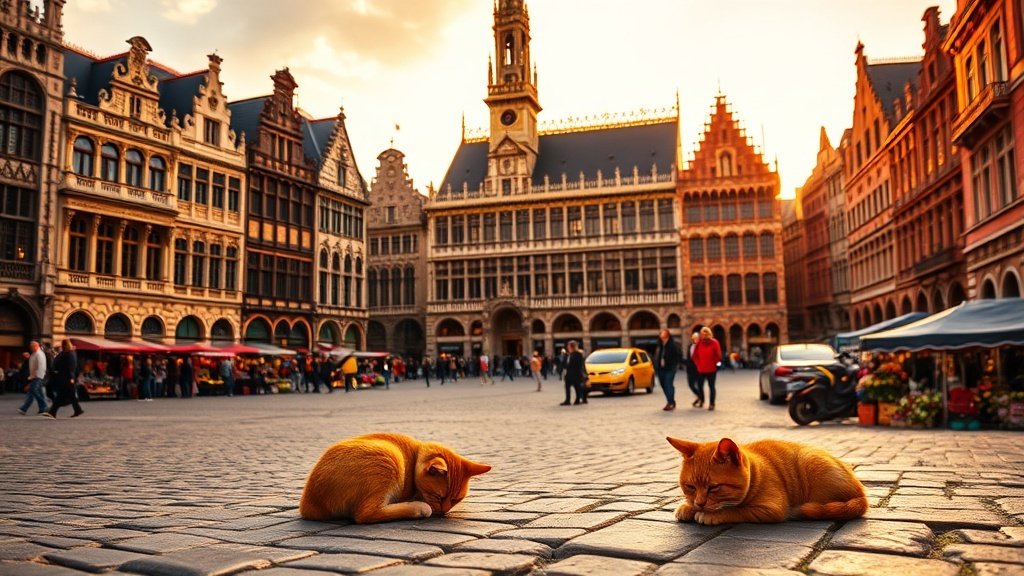
Belgium packs an almost absurd density of cultural riches into a country roughly the size of Maryland. The Grand Place in Brussels, widely considered Europe's most beautiful square, glows with gilded guild houses beneath a Gothic town hall. Bruges' medieval canals reflect gabled houses unchanged since Flemish merchants traded here in the 15th century. Ghent's medieval castle stands watch over a vibrant student city. Antwerp reigns as the world's diamond capital and a fashion powerhouse.
But Belgium's true genius lies in the art of living well. This is a country that has elevated beer to an UNESCO-recognized cultural heritage — over 1,500 distinct beers brewed in Trappist monasteries, family lambic blenders, and cutting-edge craft breweries. Belgian chocolate isn't just confection; it's an obsession refined over centuries, with praline inventors, bean-to-bar artisans, and (so the chocolatiers claim) more chocolate shops per capita than anywhere else. Waffles come in two rival traditions (Brussels and Liège), frites are served in paper cones with dozens of sauces, and mussels arrive in enormous steaming pots.
Straddling the fault line between Germanic and Latin Europe, Belgium is a country of contradictions — officially trilingual (Dutch, French, German), constitutionally complex, and perpetually self-deprecating. It's the de facto capital of the European Union, the home of NATO headquarters, the birthplace of surrealism, Art Nouveau, and Tintin. For travelers, it offers world-class art museums (Van Eyck, Bruegel, Rubens, Magritte), battlefields from two world wars, and a quality of daily life — the food, the beer, the café culture — that makes neighboring countries envious.
🏷️ Name & Identity
Belgium takes its name from the Belgae, Celtic tribes whom Julius Caesar described as "the bravest of all the Gauls." The modern state was created in 1830, carved from the southern provinces of the United Kingdom of the Netherlands. Belgium's complexity is its defining feature: Flanders in the north speaks Dutch, Wallonia in the south speaks French, a small eastern community speaks German, and Brussels is officially bilingual (French-Dutch) though predominantly French-speaking in practice.
This linguistic divide runs deep — separate political parties, media, universities, and even cultural institutions exist on each side. Yet Belgians share a national character marked by pragmatism, dry humor, love of good food and drink, and a talent for compromise that has kept the country together (and running the EU). The national symbols — Manneken Pis, chocolate, beer, and the Atomium — transcend the language border.
🗺️ Geography
Belgium's 30,689 km² divide into three distinct zones. The flat coastal plain along the 67-kilometer North Sea coast gives way to the gently rolling central plateau where most cities are located. The Ardennes in the southeast — a forested upland reaching 694 meters at Signal de Botrange — offers hiking, cycling, and the forested terrain that shaped the Battle of the Bulge in 1944.
Major rivers include the Scheldt (connecting Antwerp to the sea), the Meuse (carving dramatic valleys through the Ardennes), and the Sambre. Belgium's position at the crossroads of Western Europe — bordering France, Luxembourg, Germany, the Netherlands, and the North Sea — has shaped both its history (as Europe's battlefield) and its modern role as the EU capital.
🗺️ Map
Brussels in the centre; Bruges, Ghent and Antwerp in Flanders to the north and west; Leuven and Mechelen between them; Liège, Namur and Dinant on the Meuse; Spa, the Hautes Fagnes and Bastogne in the Ardennes; Ypres and the WWI sites on the French border; Tournai and Mons in Hainaut. Scroll-zoom is off — use the +/− buttons.
📜 History
Belgium's territory has been coveted by every major European power. The medieval County of Flanders was one of Europe's wealthiest regions — Bruges was the financial center of northwestern Europe, and Ghent was, after Paris, the largest city north of the Alps. The Burgundian era (15th century) produced the Flemish Primitives — Van Eyck, Memling, and Van der Weyden — whose revolutionary oil paintings transformed Western art.
Spanish, Austrian, French, and Dutch rule followed in succession. The Belgian Revolution of 1830 created an independent kingdom under Leopold I. The Congo Free State (1885-1908), the personal colony of Leopold II, represents one of colonialism's darkest chapters — a brutal exploitation that Belgium has only recently begun to fully reckon with. Both World Wars devastated Belgium: Ypres became synonymous with the horrors of trench warfare, and the Ardennes offensive was Hitler's last major gamble.
Post-war Belgium became a founding member of the EU, NATO, and the Benelux Union. Brussels evolved into Europe's de facto capital, hosting the European Commission, European Council, and NATO headquarters. The country's federal structure, established in 1993, grants significant autonomy to its linguistic communities.
👥 People & Culture
Belgium's 11.9 million people (Statbel, 1 January 2026) are divided between Dutch-speaking Flemings (about 60%), French-speaking Walloons (about 40%), and a small German-speaking community. Immigration has diversified the country significantly — Brussels is one of Europe's most cosmopolitan cities, with residents from 184 nationalities. Morocco, Turkey, Italy, and the DR Congo are the largest diaspora communities.
Belgian culture punches far above its weight. In art, Belgium produced the Flemish masters, the surrealists (Magritte, Delvaux), and the Art Nouveau movement (Horta). In comics, Belgium gave the world Tintin, the Smurfs, and Lucky Luke — the "bande dessinée" tradition is celebrated in Brussels' Comic Strip Center and murals across the city. Music ranges from Tomorrowland (the world's biggest electronic music festival) to the chanson tradition of Jacques Brel.
Football (soccer) is the national obsession — the "Red Devils" reached the quarter-finals of the 2026 World Cup, beating the United States 4–1 in the last 16 before losing to eventual champions Spain. Cycling culture runs deep — Belgium has produced more Tour de France winners than any country except France, and Remco Evenepoel finished second in the 2026 Tour with two stage wins — and the spring classics (Tour of Flanders, Liège-Bastogne-Liège) are considered cycling's monuments.
🏛️ Government & Politics
Belgium is a federal parliamentary constitutional monarchy. King Philippe has reigned since July 2013 as head of state; his role is largely ceremonial but constitutionally decisive during the country's famously long government formations.
Prime Minister Bart De Wever (N-VA) was sworn in on 3 February 2025 — the first Flemish nationalist ever to lead the federal government. His five-party “Arizona coalition” unites N-VA, Vooruit and CD&V from Dutch-speaking Flanders with the Mouvement Réformateur and Les Engagés from French-speaking Wallonia. Key portfolios: Maxime Prévot (Foreign Affairs), Jan Jambon (Finance), Vincent Van Peteghem (Budget), David Clarinval (Labour & Economy). The next federal election is due in 2029. The coalition survived a bruising autumn: a budget deal cutting the deficit by €9.2 billion by 2029 was struck in November 2025 against a wave of national strikes, and tens of thousands marched in Brussels against the austerity package in March 2026.
The Brussels-Capital Region, meanwhile, set a Belgian record of its own: 614 days after the June 2024 election, a seven-party coalition led by the liberal MR finally agreed a programme on 13 February 2026, and Boris Dilliès (MR) was sworn in as Minister-President on 14 February 2026, ending Rudi Vervoort’s long PS tenure. Flanders is governed by Matthias Diependaele (N-VA), Wallonia by Adrien Dolimont (MR).
The federal state is layered over three Regions (Flanders, Wallonia, Brussels-Capital) and three Communities (Flemish, French, German-speaking), each with its own parliament and government — which is why a country of roughly 11.9 million people supports six legislatures. The federal Parliament comprises a 150-seat Chamber of Representatives and a 60-member Senate, indirectly composed of regional delegates.
Brussels hosts the European Commission, the Council of the EU, sessions of the European Parliament and NATO headquarters, making Belgium the diplomatic centre of gravity for the continent — and a city where roughly one in three residents is a foreign national.
🏛️ Brussels
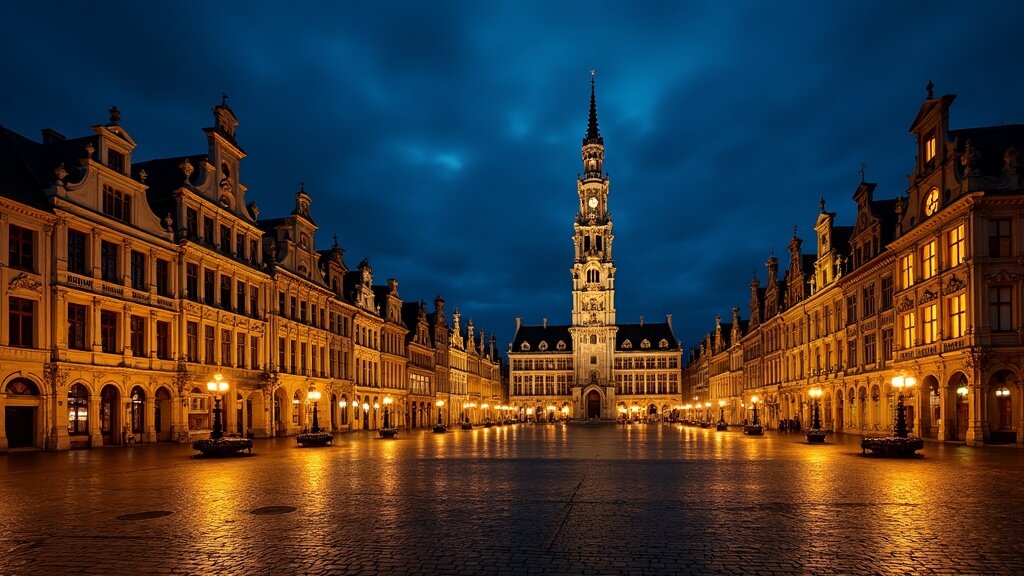
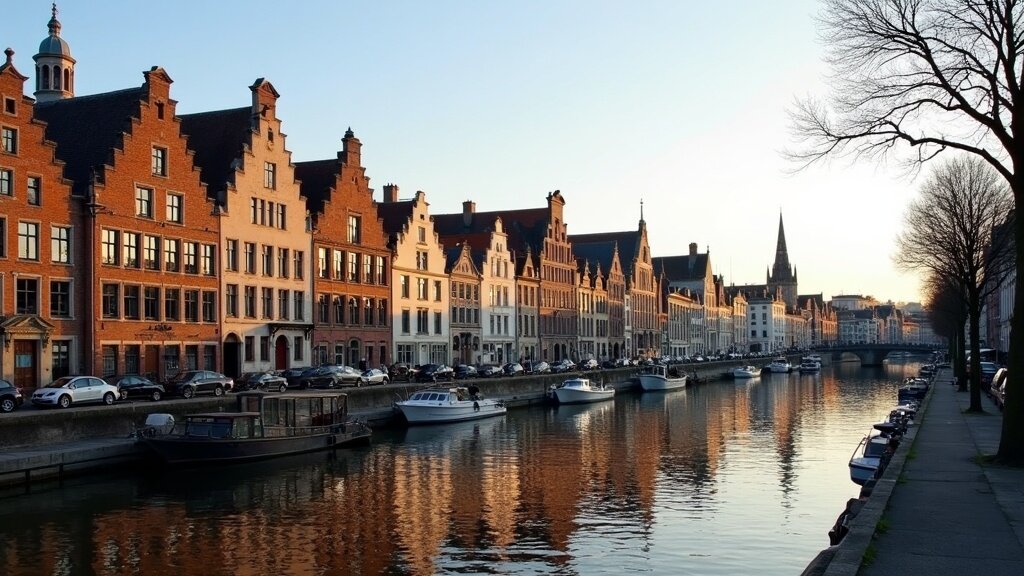
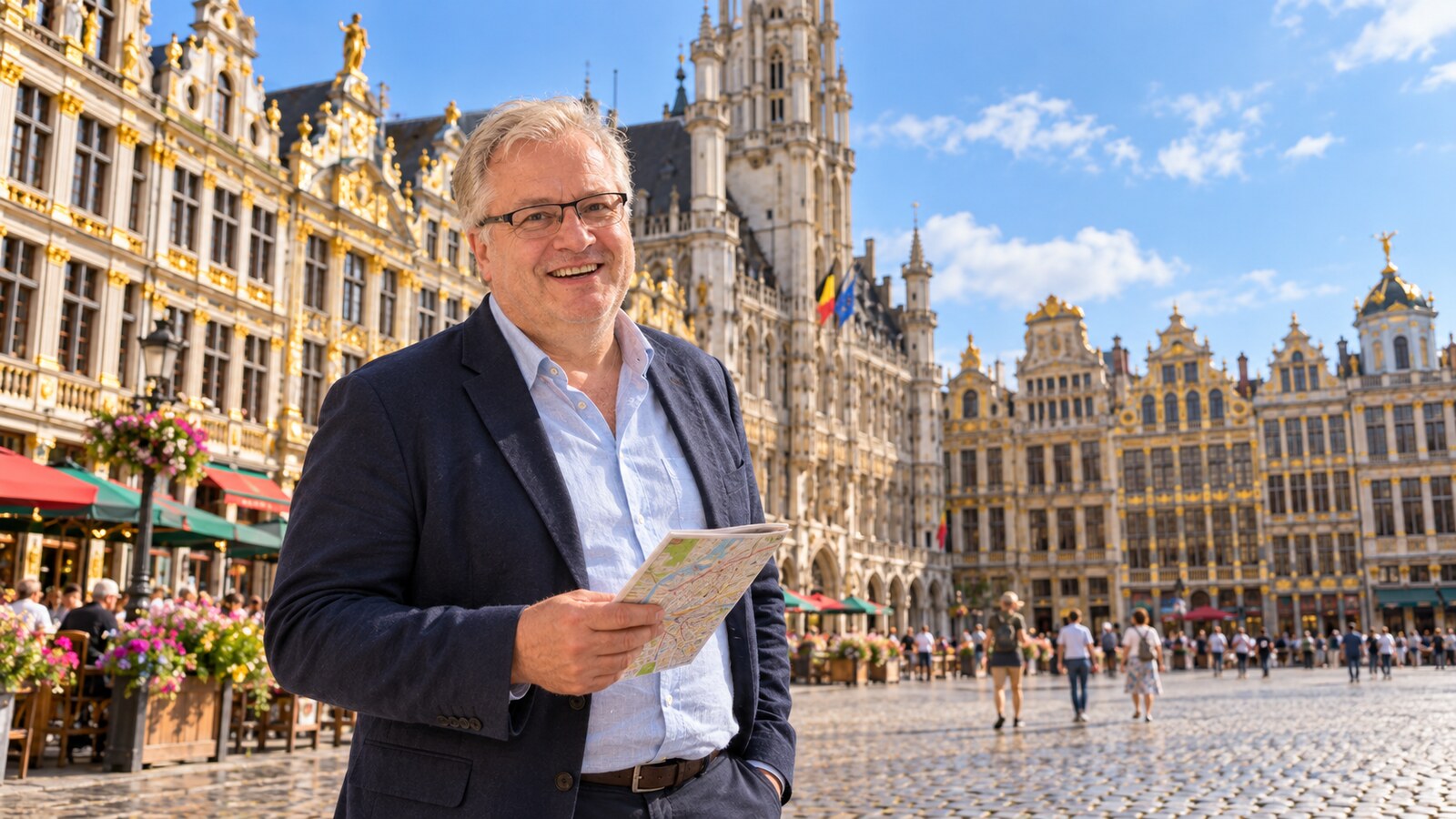
Brussels is a city of layers — the grand squares and Art Nouveau facades, the EU institutional quarter, the multicultural Matonge district, and the working-class neighborhoods where the world's best frites are still served from tiny stands. The Grand Place, a UNESCO World Heritage site, is the starting point — its gilded baroque guild houses illuminated at night create a spectacle that has awed visitors since the 17th century.
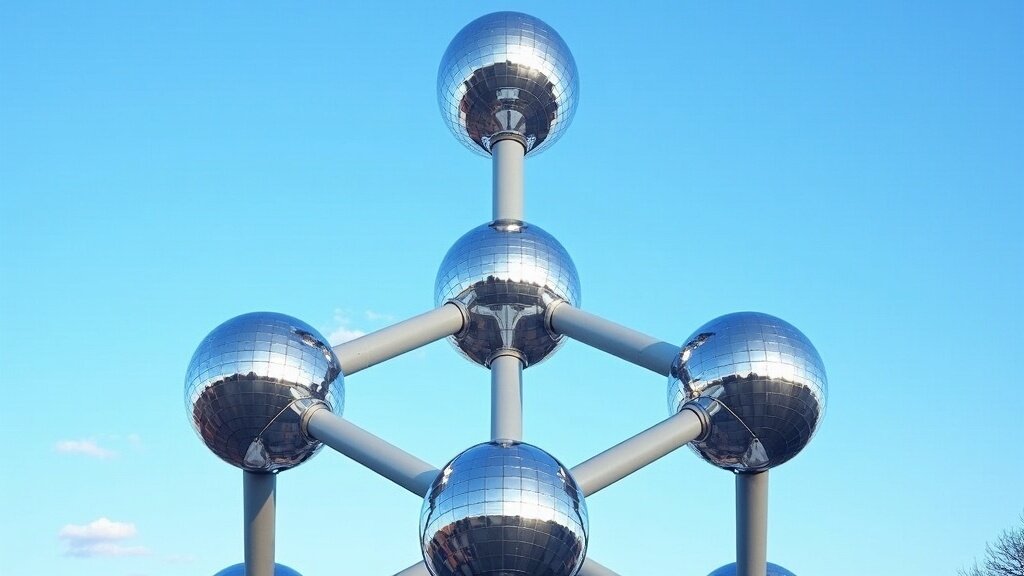
The Magritte Museum houses the world's largest collection of the surrealist master's work. Victor Horta's Art Nouveau townhouses are UNESCO-listed. The Atomium — a 102-meter structure of interconnected spheres built for the 1958 World's Fair — offers panoramic views. The EU Quarter (European Parliament, Commission) can be visited for free. And Manneken Pis, the tiny bronze fountain of a urinating boy, remains the city's most beloved and most dressed-up citizen, with a wardrobe of over 1,000 costumes.
🏰 Bruges
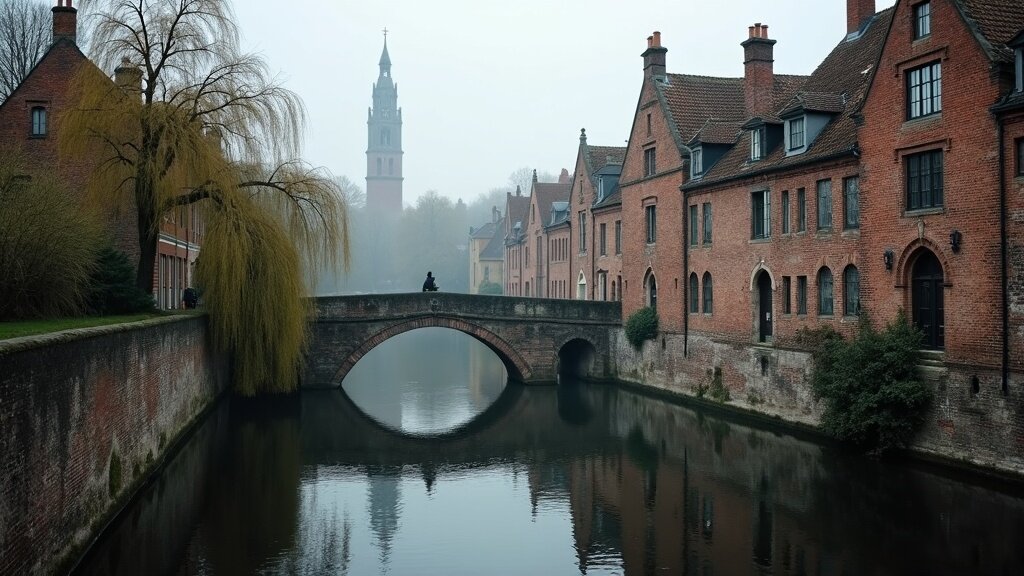
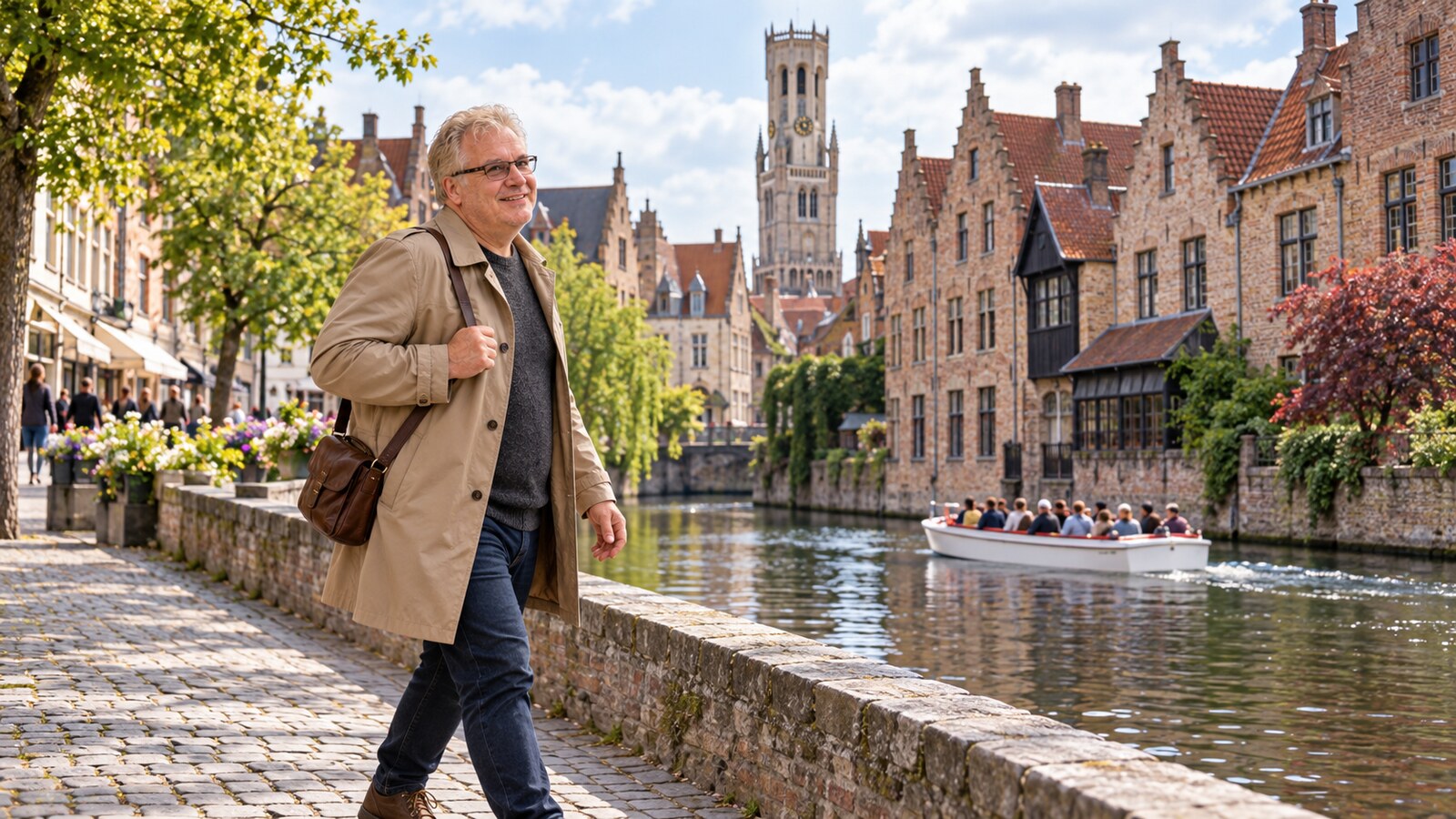
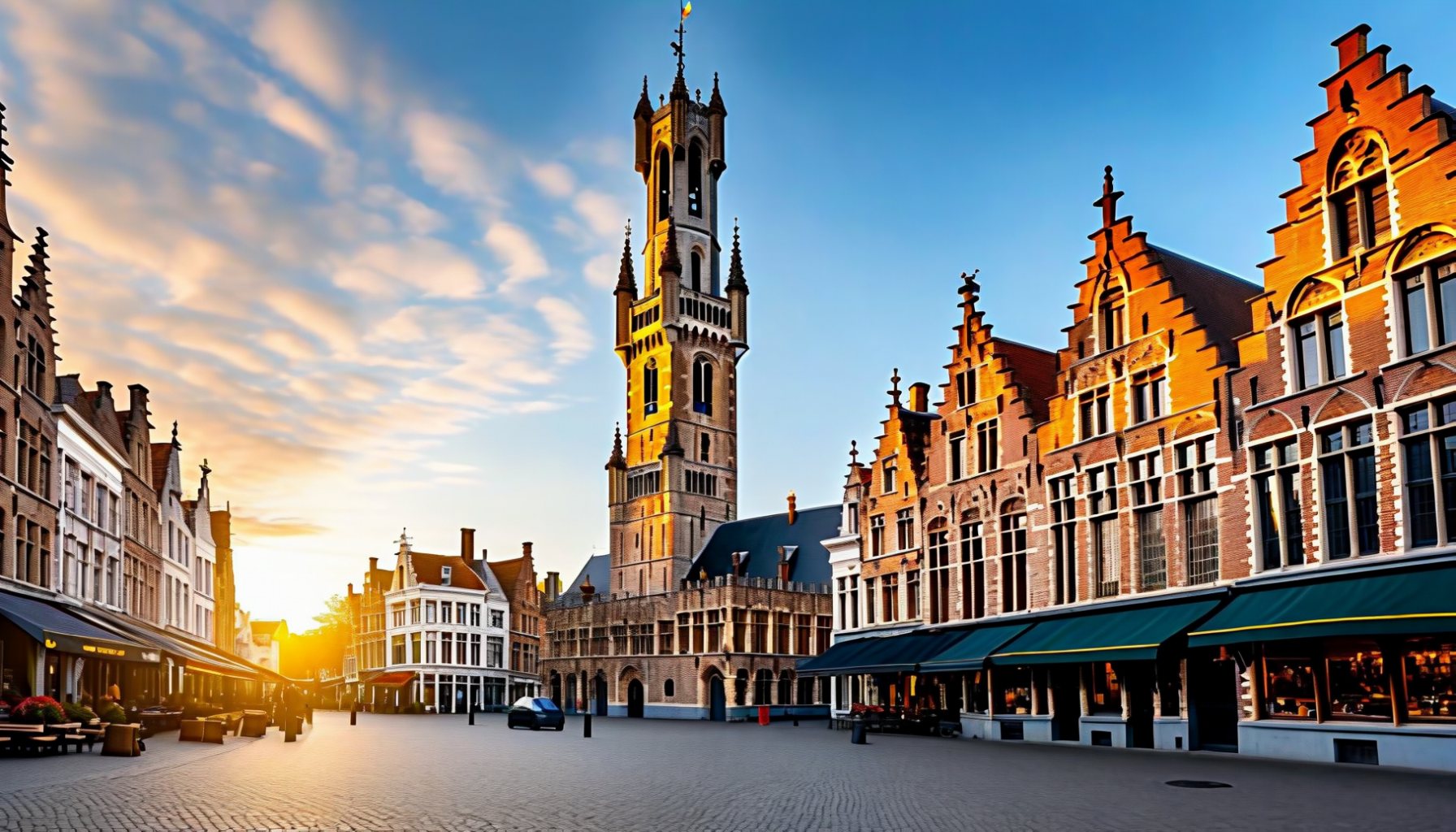
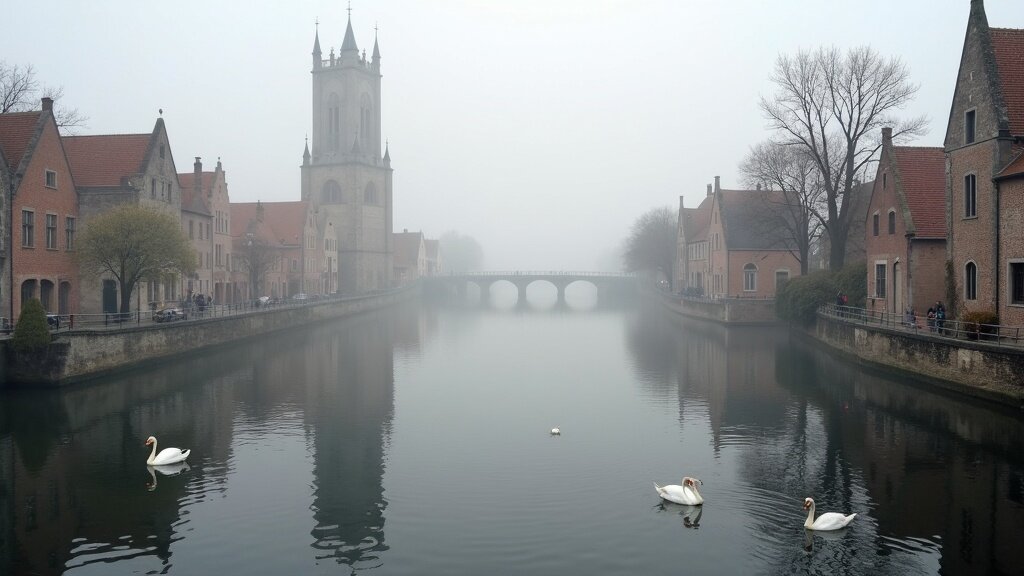
Bruges (Brugge) is Belgium's medieval jewel — a UNESCO-listed historic center where canals wind past gabled houses, horse-drawn carriages clatter over cobblestones, and the Belfry tower chimes over the Markt square. The city's golden age in the 14th-15th centuries as a major trading port left an extraordinary legacy: the Groeninge Museum houses Van Eyck's masterpieces, the Basilica of the Holy Blood holds a revered relic, and the Beguinage offers a glimpse of monastic serenity.
A canal boat ride reveals Bruges from its most photogenic angle. The Minnewater ("Lake of Love"), the medieval Hospital of St. John (now a Memling museum), and the lace shops along narrow streets complete the fairy-tale atmosphere. Despite being Belgium's most visited city after Brussels, Bruges rewards those who stay past day-trip hours, when the tour groups depart and the city glows in evening light.
🎨 Ghent & Antwerp
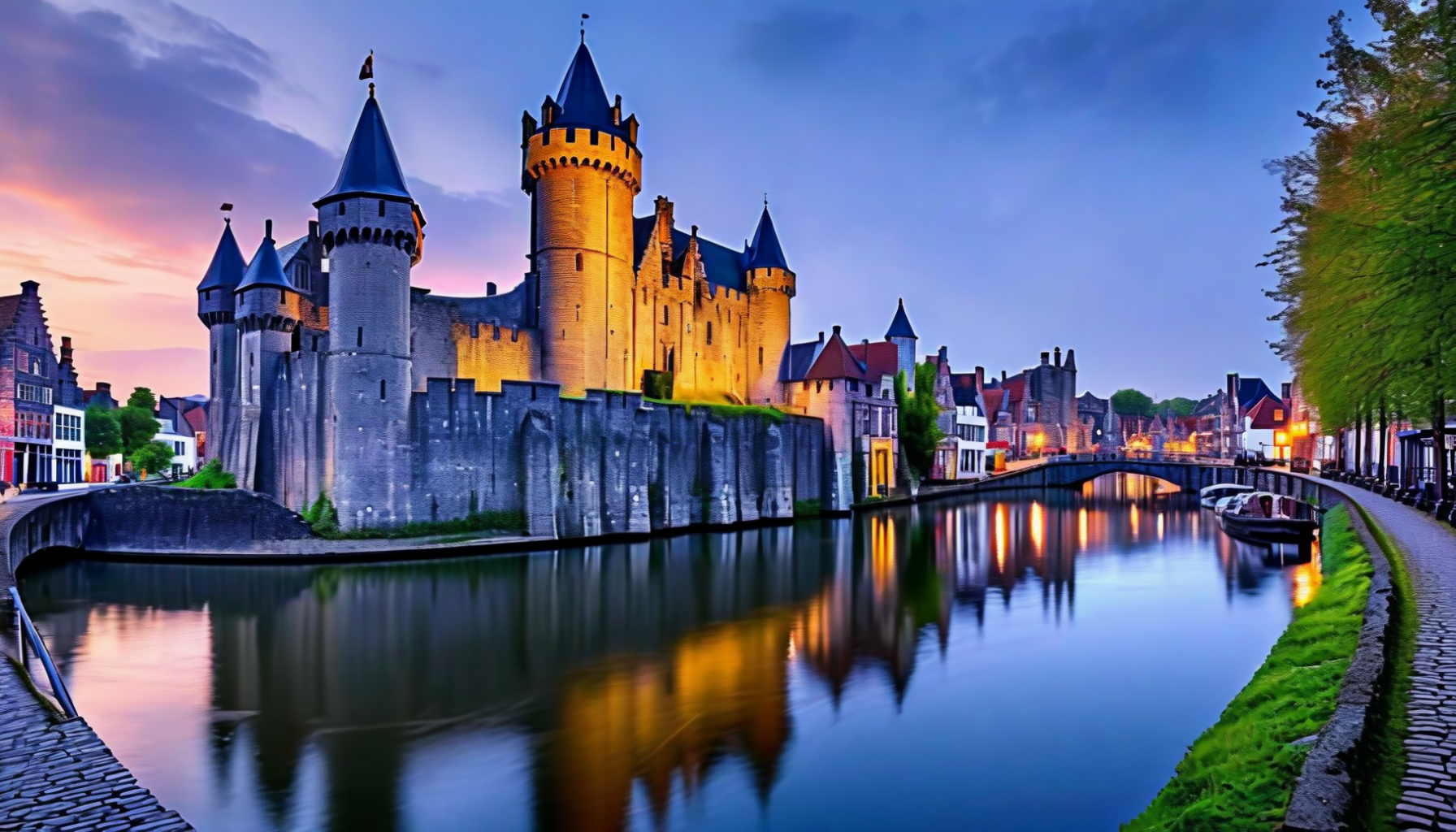
Ghent combines medieval grandeur with youthful energy — a university city of 260,000 where Gothic churches tower over craft beer bars and organic markets. St. Bavo's Cathedral houses the Ghent Altarpiece (The Adoration of the Mystic Lamb), Van Eyck's 1432 masterpiece and arguably the most influential painting in Western art. Gravensteen, a 12th-century castle, looms over the Graslei waterfront where medieval guild houses reflect in the Leie river.
Antwerp is Belgium's second city and creative capital — the world's diamond centre — though a shrinking one: Antwerp handled about a third of global rough-diamond trade and two-thirds of polished trade in 2025, after the EU ban on Russian stones from 1 January 2024 cut its trade by 23% in a single year, a fashion hub (the "Antwerp Six" designers), and home to the magnificent Cathedral of Our Lady housing four Rubens masterpieces. The Meir shopping street, the trendy Het Zuid district, MAS museum with panoramic rooftop views, and one of Europe's best zoo complexes round out a city that rewards extended exploration.
🍽️ Cuisine & Beer
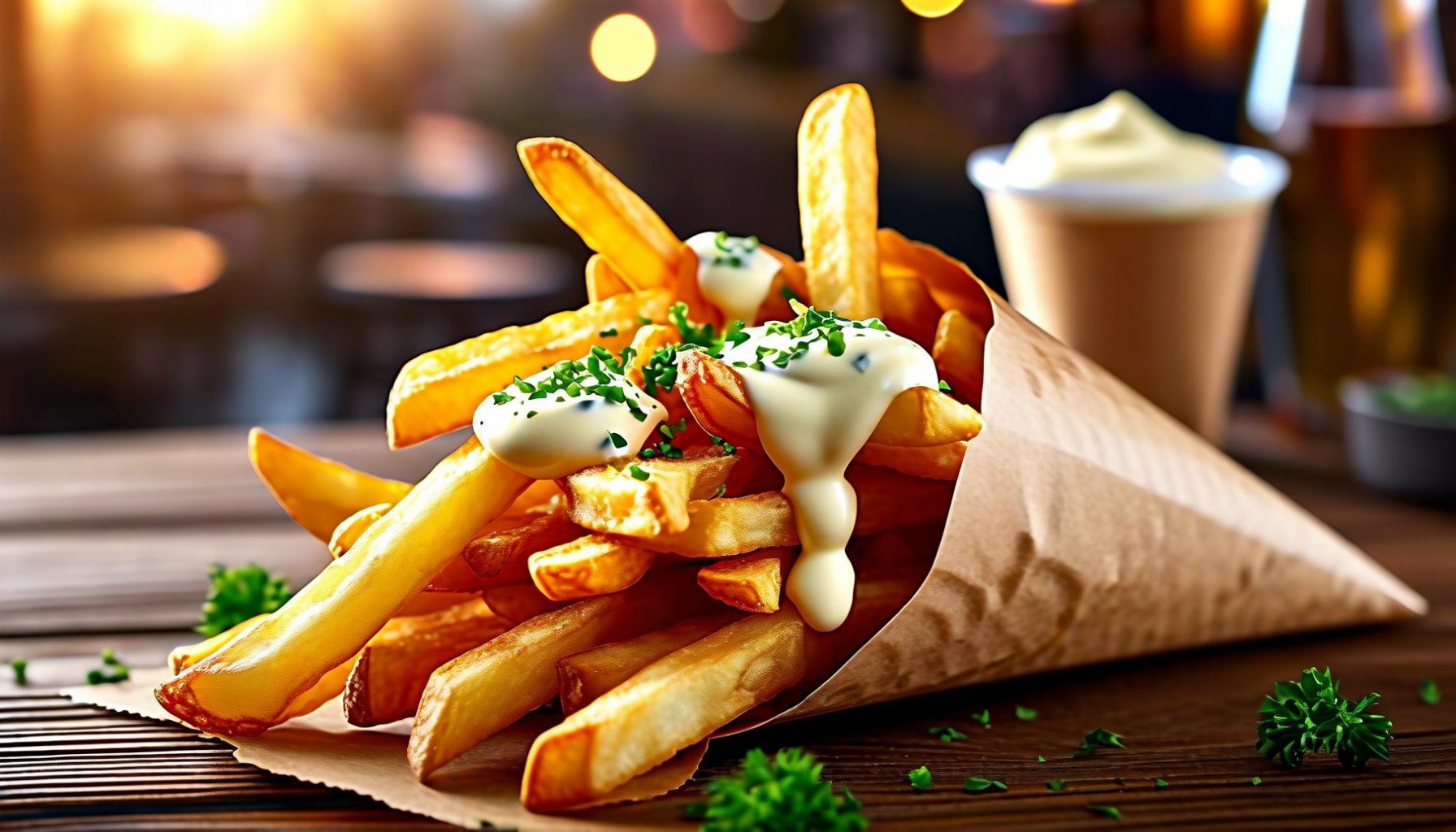
Belgian cuisine is among Europe's finest, combining French technique with hearty Flemish portions. Moules-frites (mussels in white wine with fries) is the national dish, served in enormous pots from September through April. Belgian frites — double-fried in beef tallow — are a source of fierce national pride and served from friture stands with dozens of sauces (not just mayo). Stoofvlees/carbonnade flamande (beef stewed in beer) and waterzooi (creamy chicken or fish stew from Ghent) anchor the traditional menu.
Beer is Belgium's liquid heritage. UNESCO recognized Belgian beer culture in 2016. Five Trappist monasteries (Chimay, Orval, Westmalle, Westvleteren, Rochefort) produce world-revered ales — Achel lost its Trappist designation when its last monks left in January 2021 and the abbey was sold in 2023; its beer is now an “abbey beer”. Lambic beers, spontaneously fermented in the Senne Valley using wild yeasts, are unique to Belgium — gueuze blends and fruit kriek varieties are irreplaceable. Witbier (wheat beer), dubbel, tripel, and Belgian strong ales complete a beer landscape unmatched anywhere.
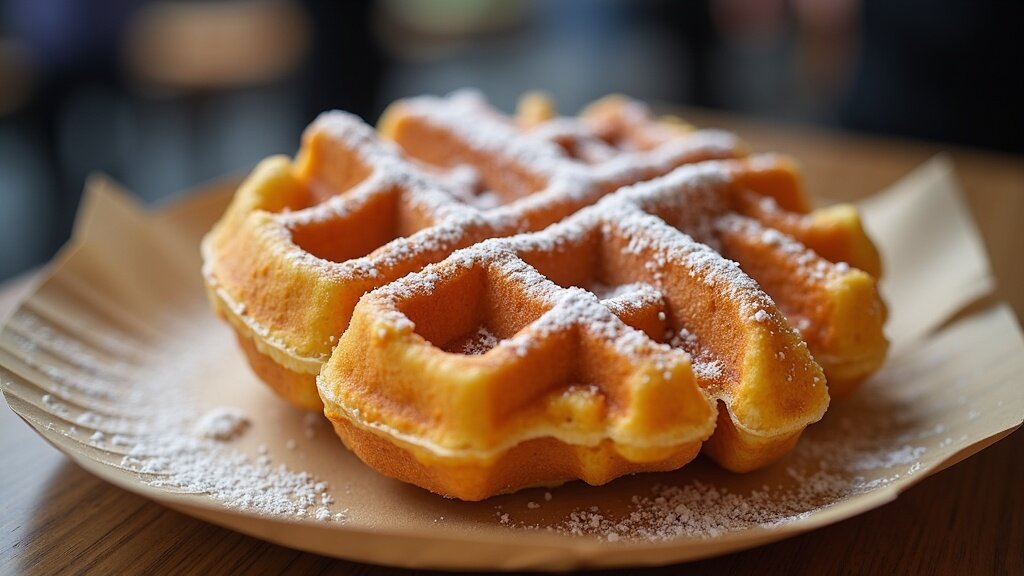
Waffles come in two traditions: the rectangular Brussels waffle (light and crispy) and the round, caramelized Liège waffle (denser, sweeter). Both are best from street vendors, not tourist traps.
COOKBOOK NOTE -- Radim Kaufmann
Belgium is Europe's most underrated food nation. While its neighbours hog the gastronomic spotlight, this small kingdom quietly produces the continent's best fries, finest chocolate, most diverse beer culture, and some of its most satisfying comfort food. In a cramped Brussels estaminet with steamed-up windows, eating moules-frites from a cast-iron pot while a Trappist ale settled in its glass, I understood that Belgian food is not about pretension — it is about doing simple things with an obsessive attention to quality that borders on the religious.
Moules-Frites KCS 88
Mussels and Fries
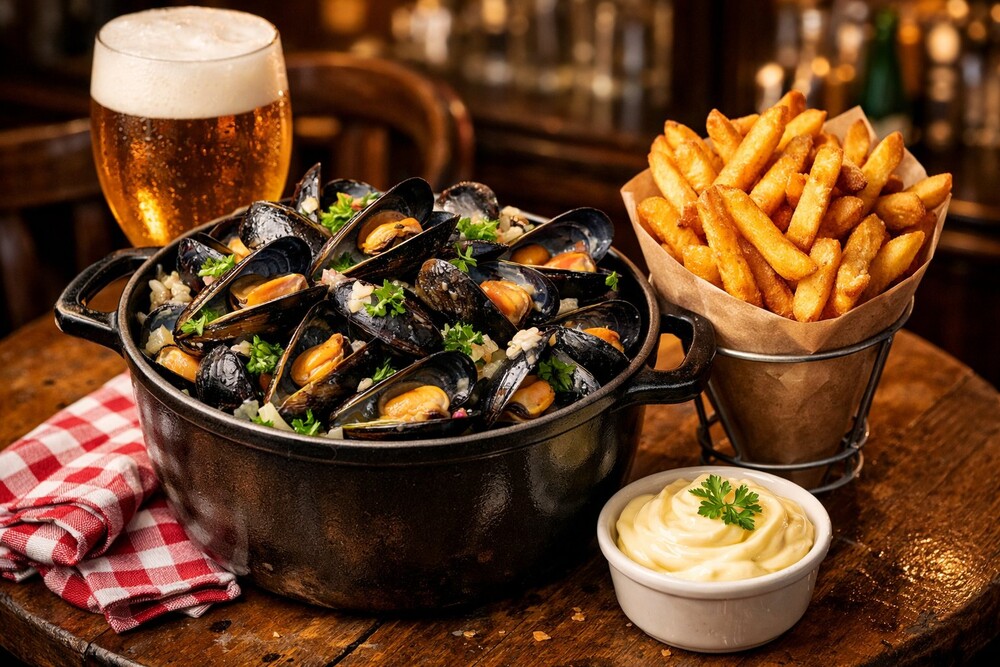
The national dish: a black enamel pot of mussels steamed in wine, shallots and celery, with double-fried Bintje frites and mayonnaise on the side. Mussel season runs roughly September to April.
Ingredients: 2 kg fresh mussels, 40 g butter, 2 shallots, 2 celery stalks, 2 garlic cloves, 250 ml dry white wine (or Belgian witbier), bay leaf, thyme, 100 ml cream, 1 tbsp Dijon mustard, flat-leaf parsley. For the frites: 1 kg floury potatoes (Bintje), beef tallow or sunflower oil, salt, mayonnaise.
Preparation: Start with the frites, as they take time: peel 1kg of large floury potatoes (Bintje is the traditional Belgian variety) and cut into batons about one centimetre thick. Rinse in cold water and dry thoroughly with a clean tea towel — excess moisture prevents proper crisping. Heat beef tallow or sunflower oil to 150 degrees in a deep fryer or heavy pot. Blanch the frites in batches for six to eight minutes until cooked through but still pale. Remove and drain on a wire rack. This first fry cooks the interior. For the mussels, scrub 2kg of fresh mussels under cold running water, pulling off any beards and discarding any that are cracked or refuse to close when tapped. In a large pot (the classic Belgian mussel pot is black enamelled steel), melt 40g of butter over medium heat. Add two finely diced shallots and two stalks of diced celery, cooking gently for five minutes until softened but not browned. Add two cloves of minced garlic and cook for another minute. Pour in 250ml of dry white wine (or a light Belgian white beer for authenticity), add a bay leaf and a sprig of fresh thyme, and bring to a vigorous boil. Tip in all the mussels at once, cover tightly with a lid, and steam for four to five minutes, shaking the pot vigorously every minute. The mussels are done when they have all opened — discard any that remain closed. Meanwhile, reheat the oil to 180 degrees for the second fry. Cook the blanched frites in batches for two to three minutes until deeply golden and crispy. Drain on paper towels and season immediately with fine salt. The double-frying technique is the secret to Belgian frites — crispy shell, fluffy interior. For the sauce, strain the mussel cooking liquid through a fine sieve into a small pan. Whisk in 100ml of heavy cream and a tablespoon of Dijon mustard. Simmer for two minutes until slightly thickened. Pour this sauce back over the mussels in the pot. Serve the mussels directly in the cooking pot at the table, scattered with generous handfuls of fresh flat-leaf parsley. Place the frites in a paper cone or bowl alongside with a ramekin of homemade mayonnaise (not ketchup — this is Belgium). A cold Belgian beer is the only acceptable accompaniment. Use an empty mussel shell as a pincer to pluck the meat from the other shells — this is the proper Belgian technique.
TIP: Double frying creates the perfect crispy-fluffy frite.
Carbonnade Flamande KCS 84
Flemish Beef Stew
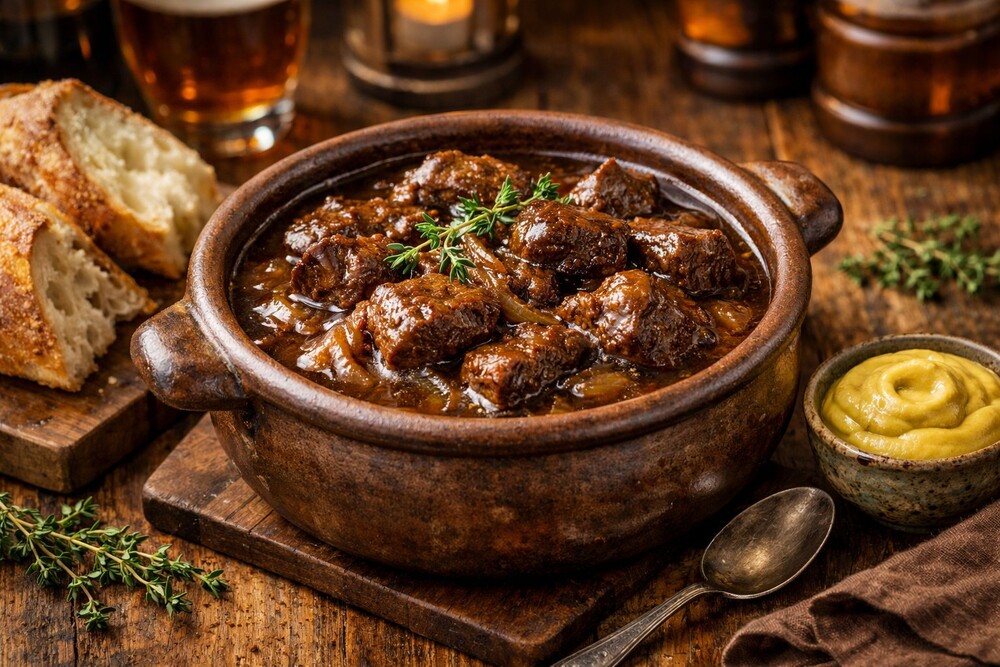
Flanders’ answer to boeuf bourguignon — beef braised slowly in dark abbey ale with caramelised onions, sweet-and-sour with brown sugar and vinegar, thickened the old way with a mustard-smeared slice of bread.
Ingredients: 1 kg beef chuck or shin, 4 large onions, 2 garlic cloves, 2 tbsp flour, 500 ml Belgian brown ale (dubbel), 200 ml beef stock, 2 tbsp dark brown sugar, 2 tbsp red-wine vinegar, Dijon mustard, 1 slice crusty bread, thyme, bay leaf, parsley, butter or beef dripping.
Preparation: Cut 1kg of beef chuck or shin into large five-centimetre cubes — do not cut too small, as the meat shrinks during the long braise. Pat the pieces completely dry and season generously with salt and pepper. Heat two tablespoons of beef dripping or butter in a heavy Dutch oven over high heat until smoking. Brown the beef in batches, turning to develop a deep dark crust on all sides — about four minutes per batch. This browning is critical for the stew's depth of flavour. Remove and set aside. Reduce heat to medium and add another tablespoon of butter. Add four large onions, sliced into thick half-moons, and cook for 15 to 20 minutes, stirring occasionally, until deeply caramelised and sweet. The onions should be a rich mahogany colour — do not rush this step. Add two cloves of minced garlic and cook for one more minute. Sprinkle two tablespoons of flour over the onions and stir for two minutes. Pour in 500ml of Belgian brown ale (a dubbel like Chimay or Westmalle is ideal — avoid anything too bitter or hoppy) and 200ml of beef stock. Stir to deglaze the bottom of the pot, scraping up all the caramelised bits. Add two tablespoons of dark brown sugar, two tablespoons of red wine vinegar, a tablespoon of Dijon mustard, a bouquet garni of thyme, bay leaf, and parsley, and a generous grinding of black pepper. Return the beef to the pot and bring to a gentle simmer. The liquid should almost cover the meat — add more stock if needed. Take a slice of crusty bread, spread one side thickly with Dijon mustard, and press it mustard-side down into the stew — this is the traditional Flemish technique that thickens the gravy and adds a subtle mustardy bite as the bread dissolves. Cover and transfer to a 160-degree oven for two and a half to three hours, or simmer on the lowest stovetop heat, until the beef is meltingly tender and the sauce has reduced to a thick, glossy, mahogany gravy. Check occasionally and stir gently. Taste and adjust the balance of sweet and sour with more sugar or vinegar as needed. Serve in deep bowls or the pot itself, with crusty bread for mopping up the gravy and a pot of strong Dijon mustard on the side. Carbonnade is even better the next day, reheated gently. In Flanders, it is traditionally served with frites, though boiled potatoes are equally welcome.
TIP: Use a good Belgian dubbel or abbey ale.
Liège Waffles KCS 80
Pearl Sugar Waffles
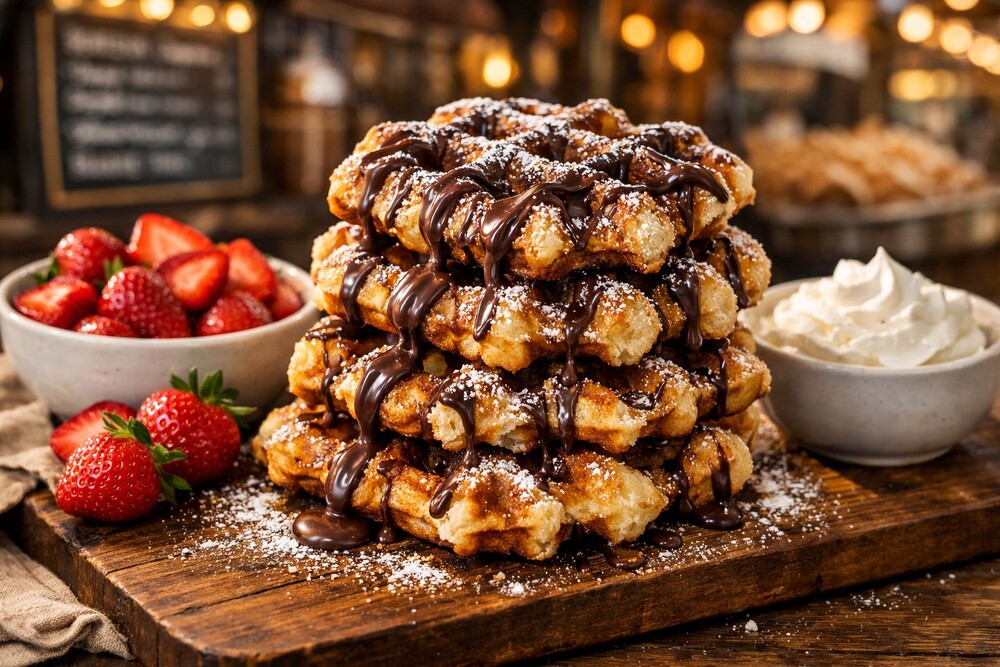
The dense, chewy, yeasted street waffle of Wallonia, studded with pearl sugar that caramelises on the iron. Eaten warm from a paper napkin, never with a knife and fork.
Ingredients: 300 g strong bread flour, 120 ml whole milk, 7 g dried yeast, 50 g caster sugar, 1 egg, 150 g soft butter, 1 tsp vanilla, pinch of salt, 150 g Belgian pearl sugar. Makes 8.
Preparation: Warm 120ml of whole milk to about 37 degrees — blood temperature, warm but not hot. Sprinkle 7g of dried yeast over the surface and let it bloom for five minutes until frothy. In a large bowl, combine 300g of strong bread flour, 50g of caster sugar, a teaspoon of vanilla extract, a pinch of salt, and one whole egg. Pour in the yeast mixture and stir until a shaggy dough forms. Now add 150g of softened butter, a few pieces at a time, kneading or mixing with your hands after each addition until fully incorporated. The dough will be very rich, sticky, and brioche-like — this is correct. Knead for about eight minutes until it becomes smooth, elastic, and pulls away from the bowl. Cover with cling film and leave to rise in a warm place for one and a half hours until doubled in size. Punch down the dough gently and fold in 150g of Belgian pearl sugar (sucre perle). These large, irregular sugar chunks are what make a Liège waffle — they caramelise on the hot iron to create pockets of crunchy, toffee-like sweetness. Do not substitute with regular sugar; the pearl sugar must remain in distinct pieces throughout the dough. Fold and knead just enough to distribute evenly. Divide the dough into eight equal portions and roll each into a rough ball. Let them rest for 15 minutes while you preheat your waffle iron to medium-high heat. Brush the iron lightly with melted butter. Place one dough ball in the centre of the iron and close firmly. Cook for three to four minutes until the exterior is deeply golden and caramelised, with visible patches of melted pearl sugar forming a crunchy, toffee-like shell. The sugar will occasionally leak out and caramelise on the iron plates — this is normal and desirable. The waffle should be irregular in shape, with a dense, chewy interior quite different from the light, crisp Brussels waffle. Serve warm — a Liège waffle needs no toppings, though melted Belgian chocolate drizzled over the top, a dusting of powdered sugar, and fresh strawberries with whipped cream are traditional embellishments. In Liège and Brussels, these waffles are eaten on the street, held in a paper napkin, still warm from the iron. They are the ultimate Belgian street food and possibly the most perfect sweet snack ever invented.
TIP: Pearl sugar creates the caramelized pockets—no substitute.
🍫 Chocolate
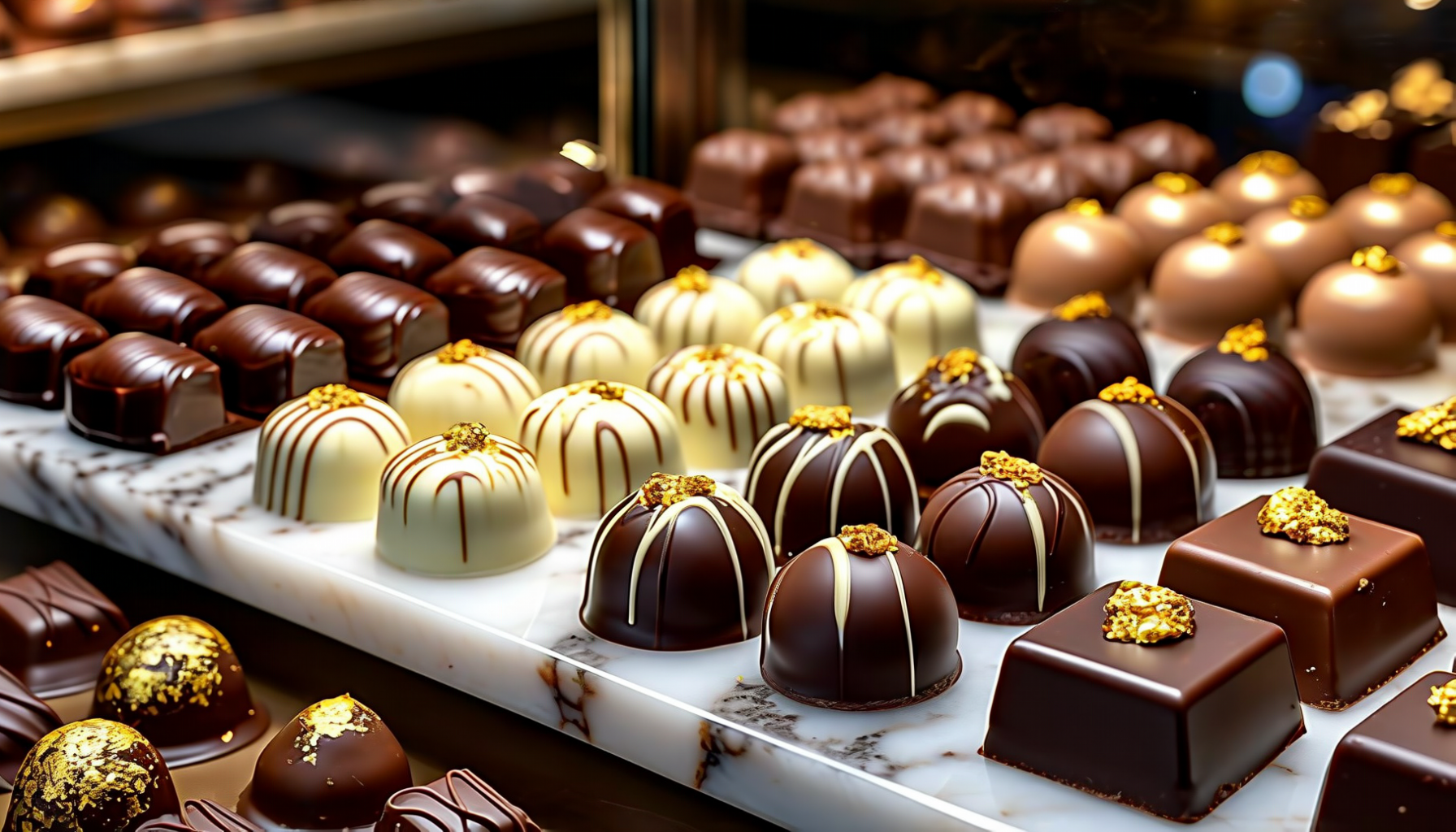
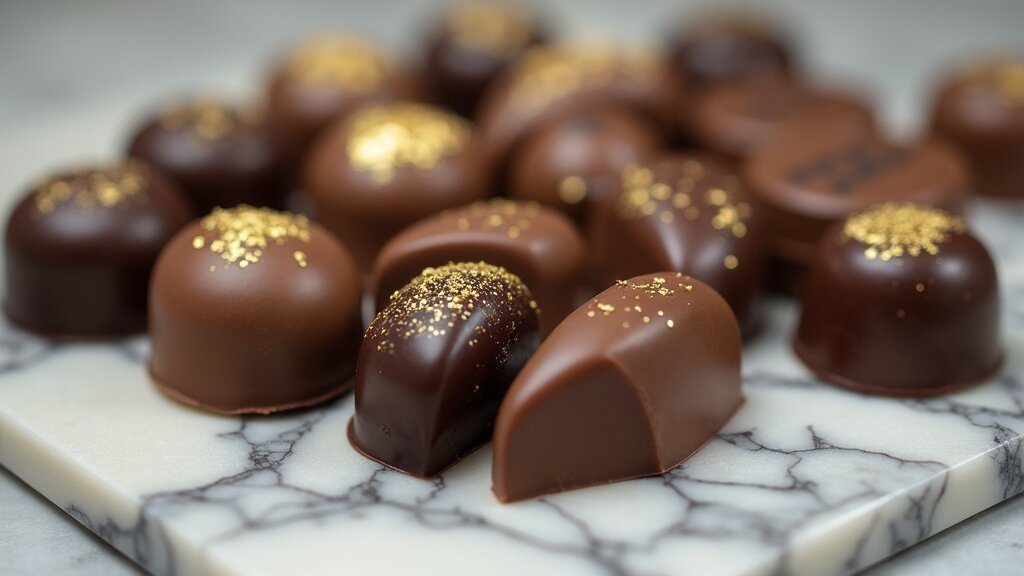
Belgium is synonymous with chocolate. The praline was invented here in 1912 by Jean Neuhaus in the Galeries Royales Saint-Hubert. Today, over 2,000 chocolate shops dot the country — by the industry’s own count, more per capita than anywhere else. Names like Côte d'Or, Leonidas, Neuhaus, Pierre Marcolini, and Dominique Persoone represent everything from accessible to avant-garde. Brussels' Sablon district is chocolate heaven, with shops from nearly every major chocolatier within walking distance.
A new generation of bean-to-bar artisans is pushing Belgian chocolate beyond its praline tradition. The Choco-Story museum in Bruges traces the history from Aztec cacao to modern confection. There is no special Belgian chocolate law — the industry’s voluntary Belgian Chocolate Code (2007) commits signatories to mixing, refining and conching in Belgium with 100% cocoa butter — but the craft standard is real at every price point.
🌡️ Climate
Belgium has a temperate maritime climate. Summers (June–August) average 18-23°C with long daylight hours — ideal for beer terraces and canal cruises. Winters (December–February) are 0-6°C with frequent cloud cover and rain. The Ardennes see snow. Rain is possible any time of year — always carry a layer. The best months are May through September, though December brings magical Christmas markets in Brussels, Bruges, and Ghent.
🍷 Wine, Spirits & Drinking Culture
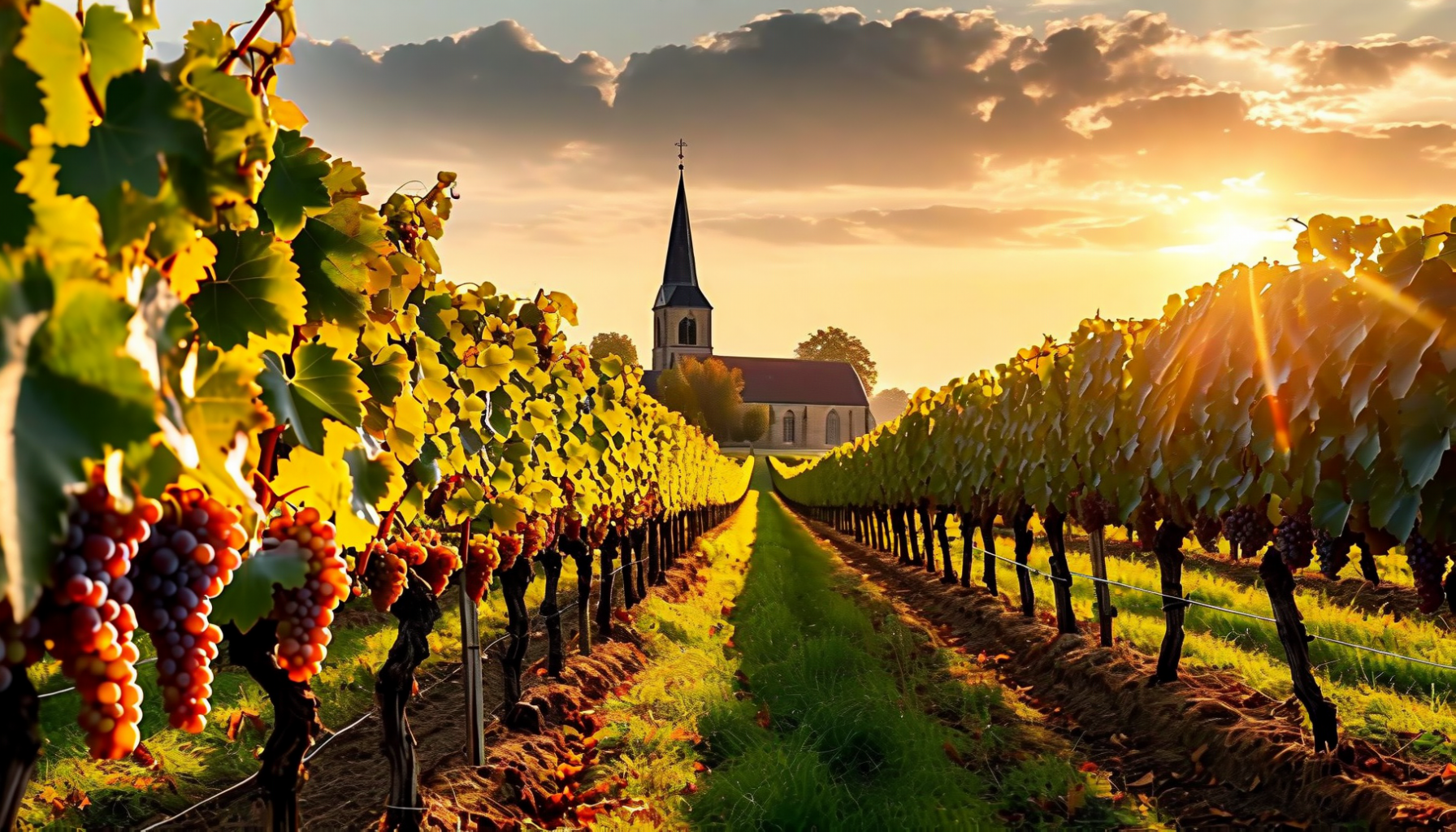
Belgium has a small and growing wine industry — climate change has made viticulture increasingly viable, with approximately 350 hectares under vine and 170+ wineries. Cold-hardy hybrids (Johanniter, Solaris, Regent) and, in the warmest sites, Chardonnay and Pinot Noir are planted primarily in Flanders (Hageland, Heuvelland) and Wallonia (Côtes de Sambre et Meuse, Torgny). Belgian sparkling wines have won international medals. But wine is emphatically not Belgium's primary contribution to the world of beverages.
🏆 Kaufmann Wine Score — Belgium
Rated on four criteria: Aroma (/25), Taste (/30), Finish (/20), Value (/25) — Total /100
| Wine | 🔴 Aroma | 🟡 Taste | 🟢 Finish | 🔵 Value | Total |
|---|---|---|---|---|---|
| Ruffus Brut (Domaine des Agaises, Hainaut) — méthode traditionnelle | 22 | 26 | 17 | 21 | 86 |
| Schorpion Chardonnay (Wijnkasteel Genoels-Elderen, Limburg) | 21 | 25 | 17 | 20 | 83 |
| Hageling Chardonnay (Wijnkasteel Vandeurzen, Hageland) | 20 | 24 | 16 | 20 | 80 |
| Entre-deux-Monts Pinot Noir (Heuvelland, West Flanders) | 21 | 24 | 16 | 19 | 80 |
| Domaine du Chenoy "Taille du Loup" (Côtes de Sambre et Meuse) | 20 | 23 | 15 | 21 | 79 |
| Vin de Liège "Jardin de Pierres" (organic, Wallonia) | 20 | 23 | 16 | 20 | 79 |
95–100 Legendary · 90–94 Outstanding · 85–89 Very Good · 80–84 Good · 75–79 Average · <75 Below Average
🍺 The World's Greatest Beer Culture
Belgium possesses what many experts consider the world's greatest and most diverse beer culture — a UNESCO-recognized Intangible Cultural Heritage. With over 1,500 distinct beers from 300+ breweries, Belgium produces an unmatched range of styles: Trappist ales (only five authentic Trappist breweries remain in Belgium — Westvleteren, Chimay, Orval, Rochefort, Westmalle; Achel was struck off in 2021 — producing ales within monastery walls under monastic supervision); lambic and gueuze (spontaneously fermented beers from the Pajottenland and Senne Valley, the world's most complex beer style — Cantillon and 3 Fonteinen are the legendary producers); dubbel and tripel (abbey-style strong ales, the Westmalle Tripel defining the entire style); and saison (farmhouse ales from Wallonia, led by Brasserie Dupont). Genever (Belgian juniper spirit, ancestor of gin) adds further depth. Westvleteren XII, consistently rated the world's finest beer, is available only at the monastery gate and by phone reservation — the rarest and most sought-after beer on Earth.
📋 Practical Info
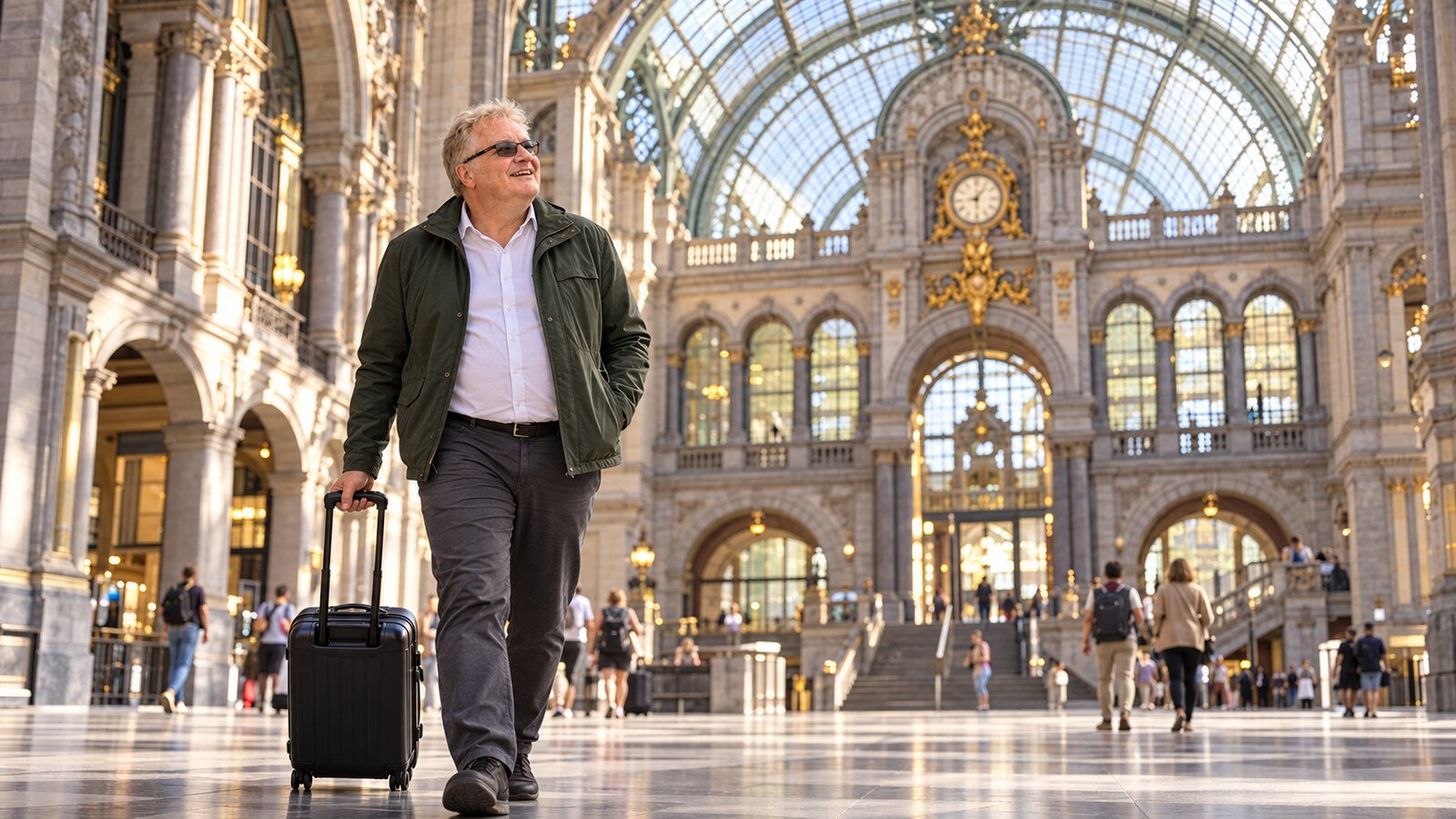
Getting there: Brussels Airport (BRU) has extensive international connections. Brussels South Charleroi (CRL) serves budget airlines. Eurostar connects London to Brussels-Midi in about 2 hours; the same operator (Thalys was absorbed into Eurostar in 2023) links Paris (1h22), Amsterdam (under 2 hours) and Cologne (1h50). From 9 September 2026 European Sleeper runs a three-times-weekly night train Brussels–Cologne–Milan via the Gotthard line (from €49.99), extended to Antwerp and the Netherlands from 14 December 2026.
Getting around: Belgium's rail network is dense and efficient — you can reach any major city within 2 hours. Bruges, Ghent, and Antwerp are all under an hour from Brussels. Inter-city trains run frequently. Cities are walkable and bike-friendly (Antwerp and Ghent have bike-share systems).
Visa: Belgium is in the Schengen Area. US, Canadian, UK, Australian and other visa-exempt nationals may stay 90 days in any 180-day period without a visa. Since 10 April 2026 the EU Entry/Exit System (EES) is live — on your first crossing of a Schengen external border you register fingerprints and a facial image at an automated kiosk instead of receiving a passport stamp; allow extra time at Brussels Airport and Brussels-Midi Eurostar terminal. ETIAS (the EU’s ESTA-style pre-travel authorisation, €20) is not yet in force as of September 2026 — the EU quietly dropped its Q4-2026 target in July 2026 and a 2027 start is now expected; applications are not open, so ignore any site charging you for one.
Currency: Euro (€). Cards accepted everywhere.
Language: Dutch in Flanders, French in Wallonia, bilingual in Brussels. English widely spoken in tourist areas and business contexts.
Budget: Mid-range European. Budget €70-100/day, mid-range €120-200, luxury €250+. Beer is remarkably affordable (€3-5 in bars). Food is generally cheaper than France but pricier than the Netherlands.
⚠️ Travel Advisory & Safety
🇺🇸 U.S. State Department — Level 2: Exercise Increased Caution
Issued 23 July 2026. Belgium sits at the same level as France, Germany, Spain and the United Kingdom — the standard rating for major Western European destinations. Risk indicators: crime, terrorism and civil unrest.
Crime: Violent crime against visitors is rare. Pickpocketing and bag-snatching are the real problem — concentrated around Brussels-Midi/Zuid station, the Grand Place and Metro line 1/5 during rush hour, and on the Bruges and Ghent tourist circuits in summer. Keep phones off café tables and bags in front of you on trains.
Terrorism: Belgium maintains a national threat-assessment system (OCAD/OCAM) running from Level 1 to 4; the country has generally sat at Level 2 (“average” threat) in recent years, briefly rising to Level 3 after the October 2023 Brussels shooting. Expect visible armed police and bag checks around EU institutions, major stations and large public events.
Demonstrations and strikes: Large but overwhelmingly peaceful protests are a Brussels fixture, and national strike days can shut down rail, metro and even Brussels Airport for 24 hours with only a few days' notice. Check SNCB/NMBS and airline notices before travel days.
Emergency numbers: 112 (all emergencies, EU-wide) · 101 (police) · 100 (ambulance and fire). Belgium's healthcare is excellent; EU citizens use the EHIC, everyone else should carry travel insurance.
🏛️ UNESCO World Heritage
Belgium has 16 UNESCO World Heritage sites — extraordinary for such a small country — plus Belgian Beer Culture (Intangible Heritage, 2016) and the processions of the Holy Blood. Below are the highlights, each one worth its own pilgrimage.
⛪ Historic Centre of Bruges (2000)
An outstanding example of a medieval historic settlement that has preserved its urban fabric since the 12th–15th centuries, when Bruges was one of the wealthiest commercial cities in Europe. Concentric canals, gabled brick guildhalls, the Burg square and the Markt with the Belfry form an almost untouched late-medieval ensemble. Bruges was also the cradle of the Flemish Primitives — Jan van Eyck and Hans Memling worked here.
🔔 Belfries of Belgium and France (1999/2005)
A serial site of 56 bell towers — 33 in Belgium (26 in Flanders, 7 in Wallonia) and 23 in northern France. Built between the 11th and 17th centuries in Romanesque, Gothic, Renaissance and Baroque styles, the belfries symbolised civic freedom in the face of feudal and religious power. The most spectacular Belgian examples are the Belfry of Bruges (83 m, climbable via 366 steps), Ghent, Antwerp, Tournai, Mons and Mechelen.
🏛️ La Grand-Place, Brussels (1998)
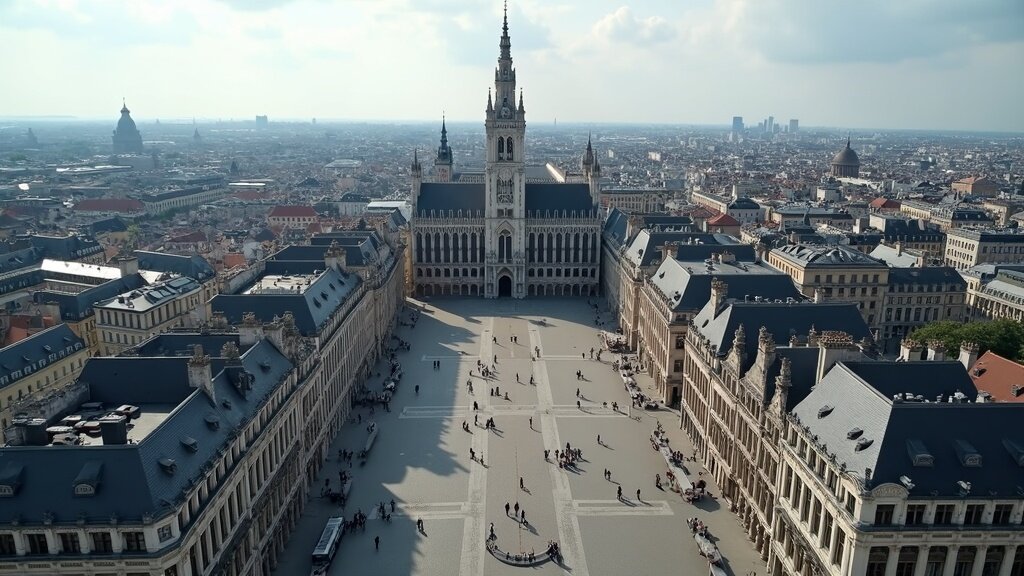
Victor Hugo called it "the most beautiful square in the world." Rebuilt in just five years after Louis XIV's bombardment of 1695, it juxtaposes the Gothic Town Hall (Hôtel de Ville, 1402) with a unified ensemble of Baroque guildhalls in stone, gold leaf and painted statuary. Every two years a flower carpet of nearly a million begonias covers the cobbles.
🌿 Major Town Houses of the Architect Victor Horta (2000)
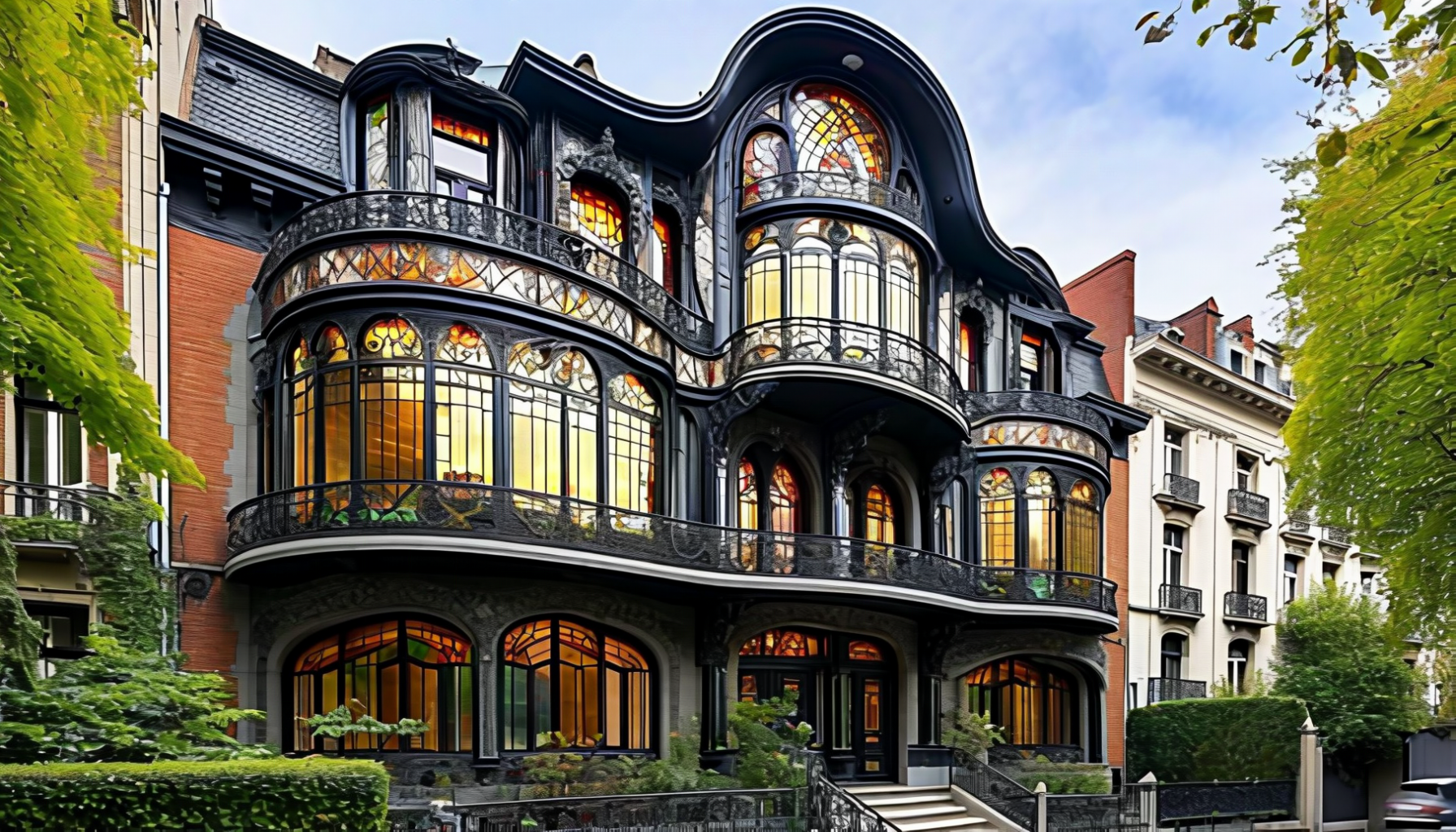
Four townhouses in Brussels — Hôtel Tassel (1893), Hôtel Solvay, Hôtel van Eetvelde and Maison & Atelier Horta — that mark the birth of Art Nouveau as a coherent architectural language. Curving wrought iron, bare steel structure, mosaic floors, stained glass and total integration of furniture and ornament: Horta invented modern domestic architecture here.
⛪ Flemish Béguinages (1998)
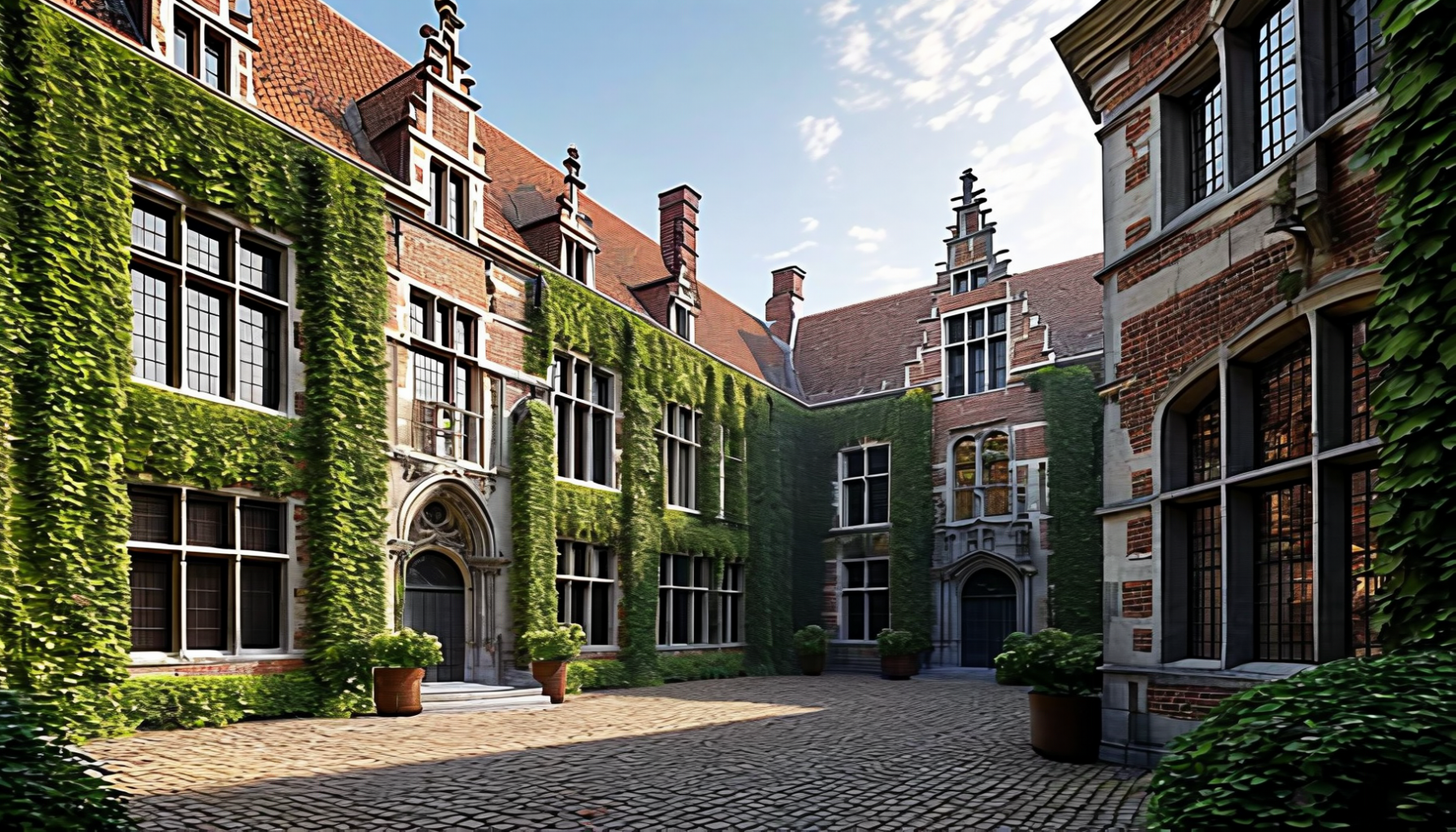
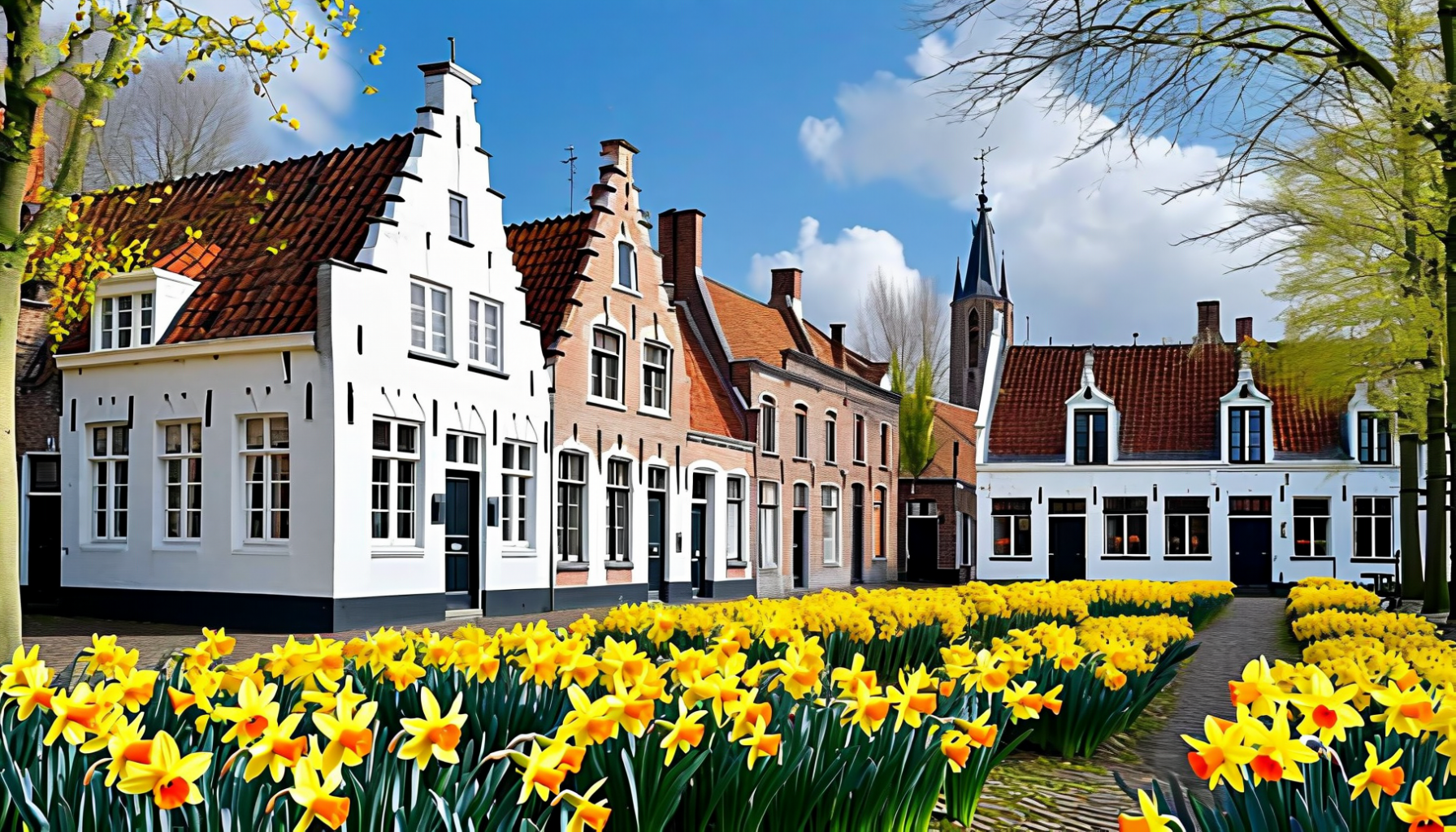
Thirteen walled communities (Bruges, Leuven, Mechelen, Lier, Diest, Sint-Truiden, Tongeren, Hoogstraten, Turnhout, Dendermonde, Kortrijk and two in Ghent — the Klein Begijnhof and Sint-Amandsberg) where lay religious women — beguines — lived in semi-monastic independence from the 13th century onwards. Quiet courtyards of whitewashed houses around a church and meadow: a uniquely Flemish, uniquely female form of urbanism.
⛪ Notre-Dame Cathedral, Tournai (2000)
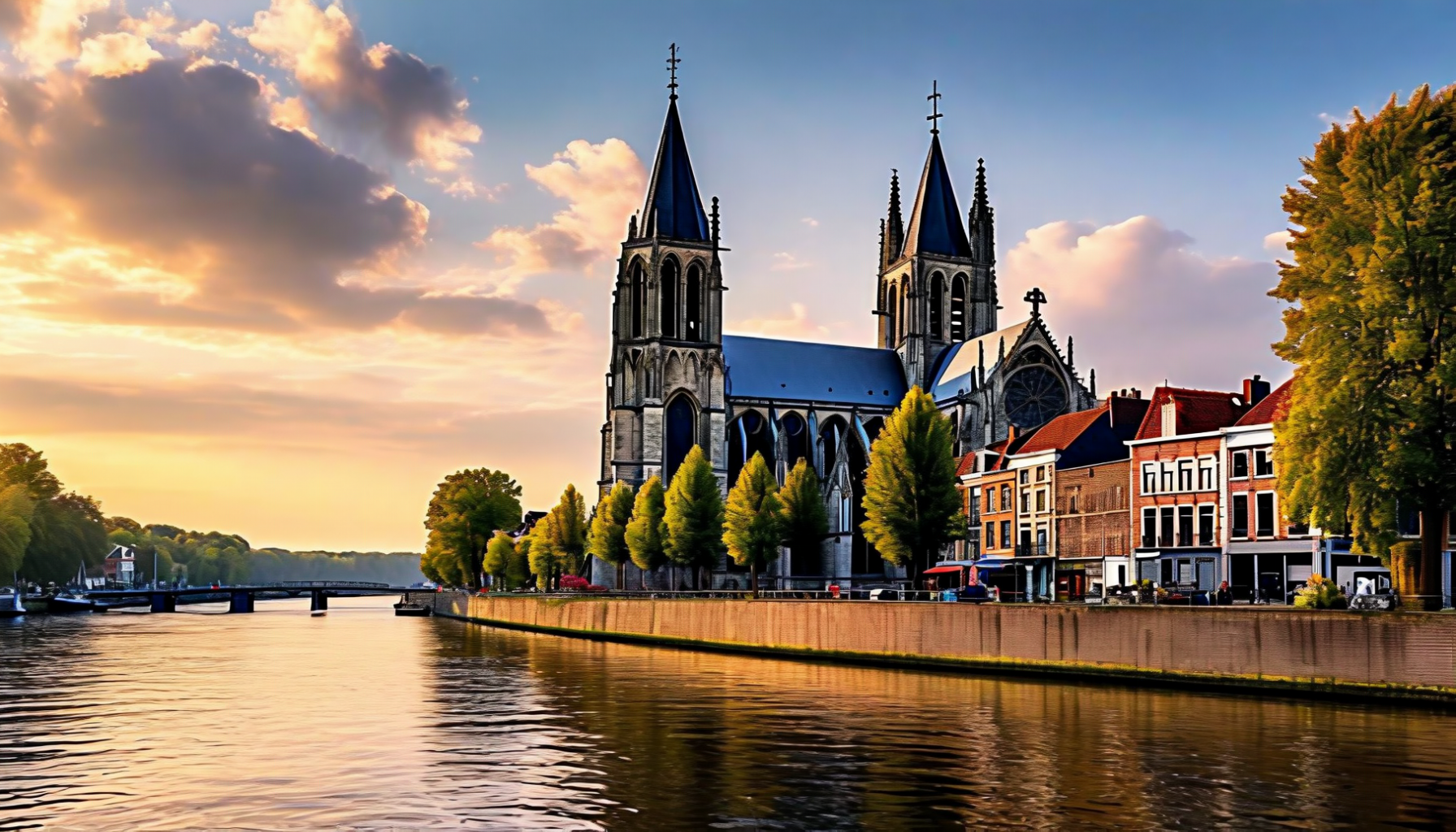
A vast church begun in the 12th century that spans two epochs: a heavy Romanesque nave and transept with five towers, married to an early Gothic choir of light and verticality. One of the great architectural hinges of medieval Europe.
📚 Plantin-Moretus House-Workshops-Museum Complex, Antwerp (2005)
The only Renaissance printing workshop in the world preserved with its original presses, type, archives and family residence intact. Christophe Plantin and his Moretus heirs printed the eight-volume Polyglot Bible (1568–73), scientific atlases and Bibles in five languages; the family lived and worked at this Vrijdagmarkt house from 1576 until 1876. A UNESCO site that is also a working museum of the book.
🏠 Stoclet House, Brussels (2009)
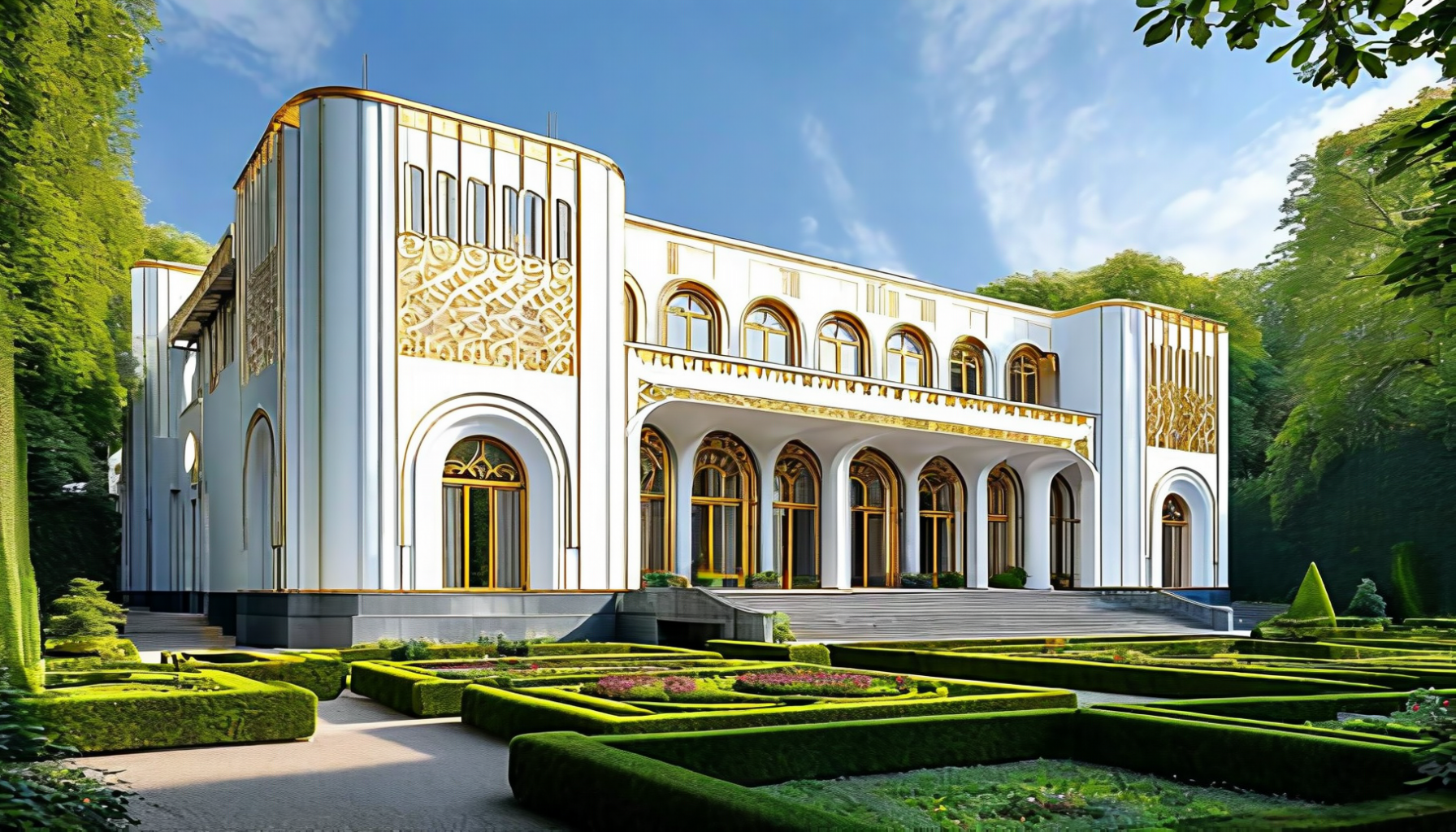
A private mansion designed by Vienna Secession architect Josef Hoffmann (1905–1911) for banker Adolphe Stoclet. The total work of art — exterior, garden, furniture, cutlery, and Gustav Klimt's mosaic frieze in the dining room — is the masterpiece of the Wiener Werkstätte and a direct ancestor of Modernism.
⛏️ Major Mining Sites of Wallonia (2012)
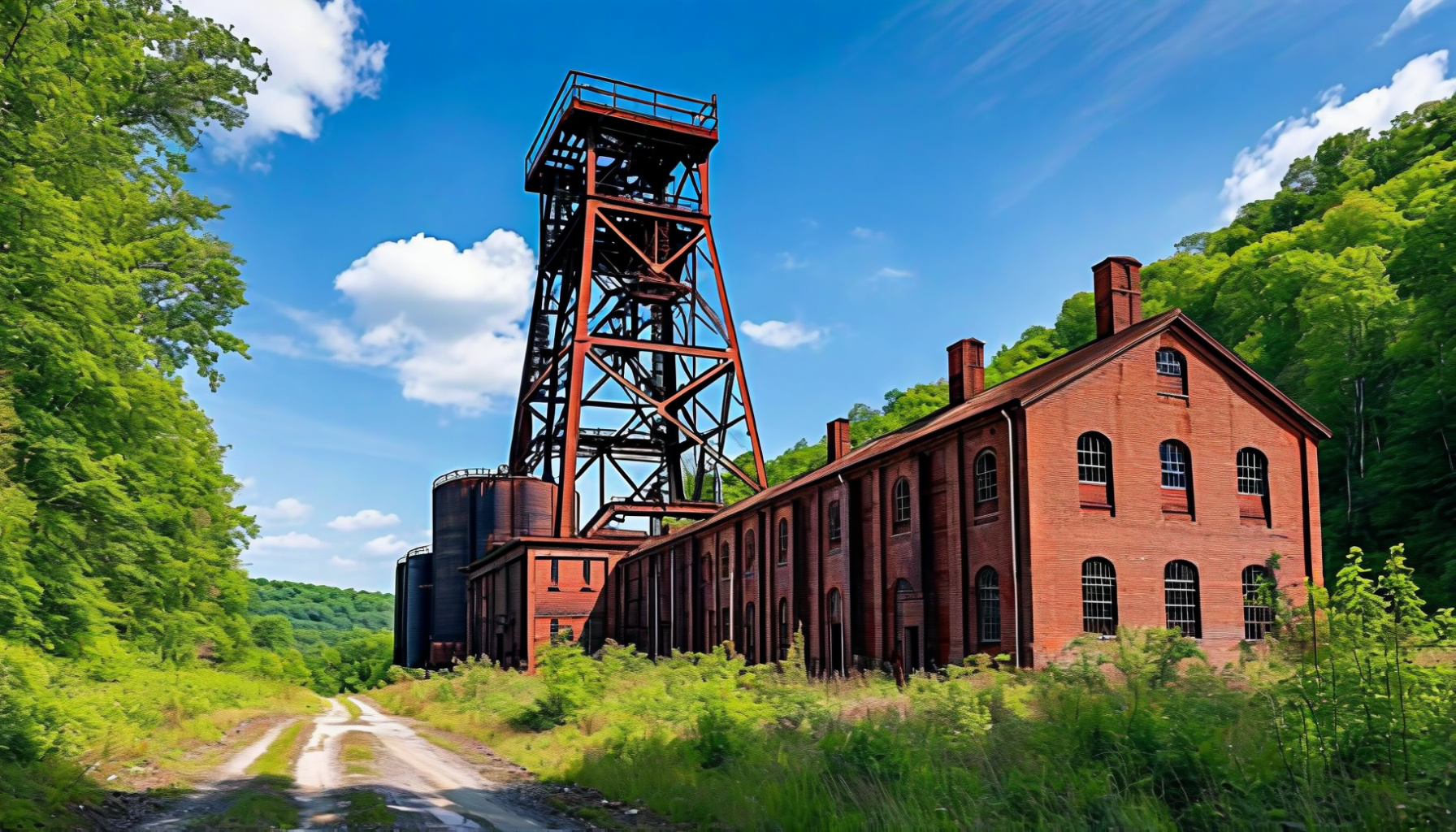
Four 19th–20th-century coal mines (Grand-Hornu, Bois-du-Luc, Bois du Cazier and Blegny) that drove the Industrial Revolution on the European continent. Bois du Cazier, near Charleroi, was the site of the 1956 Marcinelle disaster in which 262 miners died — most of them Italian immigrants — a tragedy that reshaped European labour law.
🪨 Neolithic Flint Mines at Spiennes (2000)
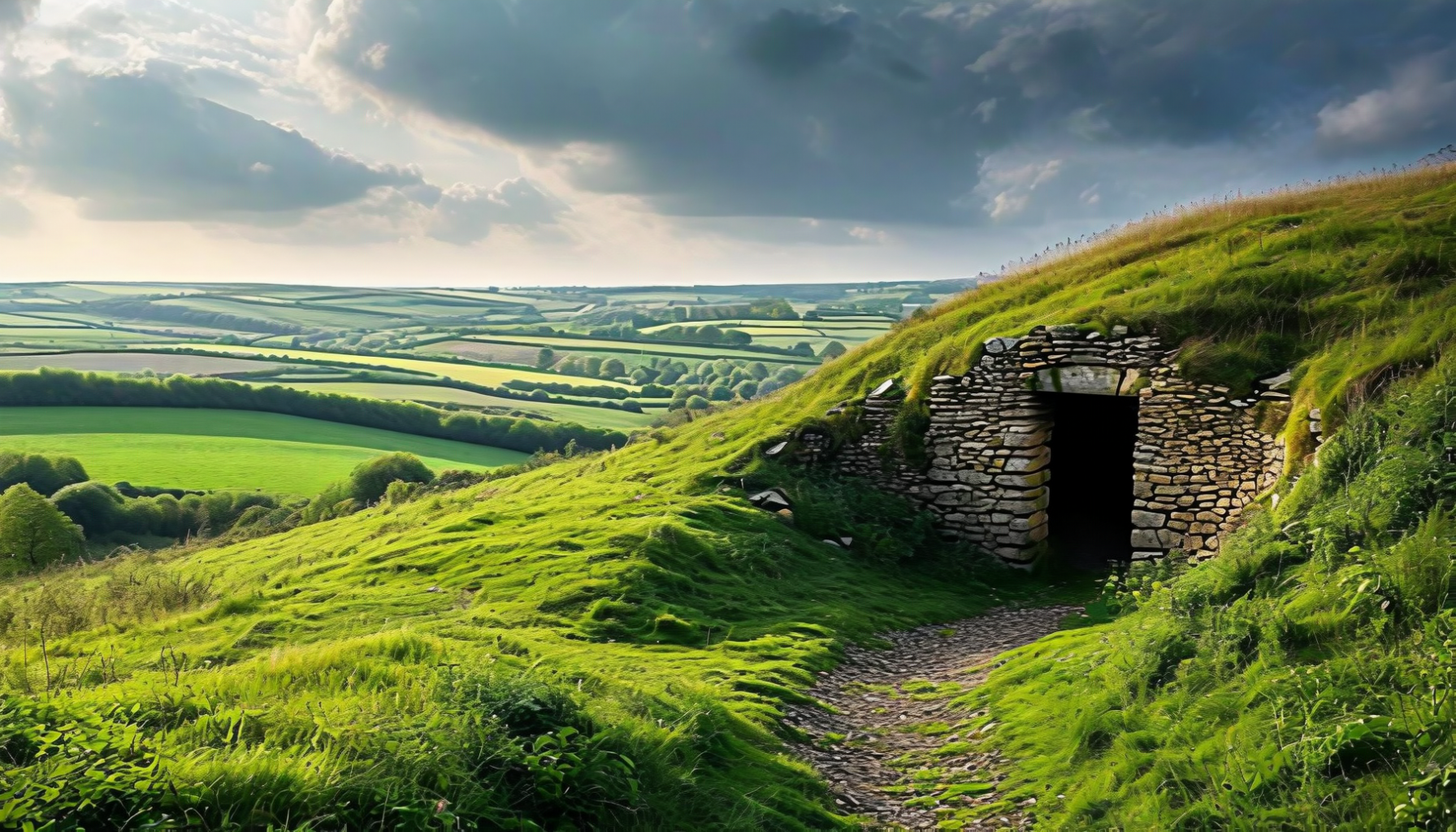
The oldest and largest concentration of prehistoric flint mines in Europe — vertical shafts up to 16 m deep dug some 6,000 years ago in the chalk of Hainaut. Mute evidence of how systematic, large-scale "industry" existed in the Neolithic.
🏠 Plus the rest of the sixteen
The Four Lifts on the Canal du Centre (La Louvière, 1998), Le Corbusier's Maison Guiette in Antwerp (part of the transnational Le Corbusier site, 2016), the Colonies of Benevolence at Wortel and Merksplas (transnational with the Netherlands, 2021), the Ancient and Primeval Beech Forests of the Sonian Forest (transnational, 2017), the Spa thermal town as part of the "Great Spa Towns of Europe" (2021) and — the newest, 2023 — the Funerary and Memory Sites of the First World War (Western Front), which in Belgium include the Menin Gate and Tyne Cot cemetery at Ypres, complete the list of sixteen (confirmed on whc.unesco.org, September 2026; no Belgian inscription at the 2026 session).
🤯 Fascinating Facts
- 🍫 Belgium produces 220,000 tonnes of chocolate per year — Brussels Airport claims to be the world's largest single chocolate sales point
- 🍺 Over 1,500 distinct Belgian beers exist from some 400 breweries — among the highest counts per capita of any country
- 🏛️ Belgium holds the record for the longest post-election government formation — 541 days (2010–11); the Brussels Region then took 614 days to form its government after the June 2024 vote
- 🎭 The Smurfs, Tintin, and Lucky Luke were all created by Belgian artists
- 💎 Antwerp still handles about a third of the world's rough-diamond trade and two-thirds of polished-diamond trade (AWDC, 2025) — down sharply since Russian diamonds were banned in 2024
- 🍟 Belgians claim to have invented French fries ("frites" were first fried in Belgium, they insist, not France)
- 🎵 Tomorrowland in Boom, Belgium is the world's largest electronic dance music festival, selling out in minutes
🎉 Festivals & Events
Flower Carpet, Brussels (even years, mid-August). The 24th edition covered the Grand-Place from 13 to 16 August 2026 with a 1,680 m² rendition of Hokusai’s Great Wave in 700,000 Belgian-grown dahlias, marking 160 years of Belgian–Japanese relations — and, for the first time, a second carpet (hops-themed) at the Bourse. Next edition: August 2028.
Tomorrowland, Boom (two weekends in late July). The 2026 edition ran 17–19 and 24–26 July with 500+ artists on 16 stages under the theme Consciencia; tickets sell out within minutes of release in January. In July 2025 the main stage burned down two days before the gates opened and was rebuilt in 48 hours.
Gentse Feesten, Ghent (ten days in mid-July) — Europe’s largest free city festival, over a million visitors. Ommegang, Brussels (early July) — a 16th-century pageant re-enacted on the Grand-Place. Carnival of Binche (Shrove Tuesday, Feb/Mar) — the orange-throwing Gilles, on UNESCO’s Intangible Heritage list since 2008. Procession of the Holy Blood, Bruges (Ascension Day) — UNESCO-listed since 2009. Winter Wonders, Brussels (late Nov–early Jan) and the Christmas markets of Bruges and Ghent close the year.
🏅 Sports
Football. The Red Devils topped their group at the 2026 World Cup, beat Senegal in the round of 32 and the hosts United States 4–1 in the last 16 before losing to eventual champions Spain in the quarter-finals — their best finish since the 2018 bronze. Kevin De Bruyne’s late winner in the 4–3 thriller against Wales in June 2025 had set the qualifying campaign on its way.
Cycling. Remco Evenepoel — double Olympic champion (time trial and road race, Paris 2024) — moved to Red Bull–Bora–Hansgrohe for 2026 and finished second in the Tour de France with two stage wins (Plateau de Solaison and the time trial), his best Grand Tour placing. Wout van Aert won Paris–Roubaix 2026, the only rider to beat Tadej Pogačar in a Monument that spring; Pogačar took a record-equalling third Tour of Flanders in April 2026 ahead of Van der Poel and Evenepoel (third, on his Ronde debut).
Olympics. Paris 2024 was Belgium’s best Games since 1924: 10 medals, 3 gold (Evenepoel ×2, Nafi Thiam’s third straight heptathlon title). At Milano Cortina 2026 the short-track mixed relay (Hanne and Stijn Desmet, Ward Pétré, Tineke den Dulk) took Belgium’s only medal, a bronze. Motorsport: Kimi Antonelli won the 2026 Belgian Grand Prix at Spa-Francorchamps in July; under the new rotation deal Spa hosts F1 in 2026, 2027, 2029 and 2031.
📰 Media & Press Freedom
Belgium ranks 16th of 180 in the 2026 RSF World Press Freedom Index (score 81.17, up from 18th in 2025). The media landscape is split along the language border: public broadcasters VRT (Dutch) and RTBF (French) plus BRF for the German-speaking community; dailies De Standaard, Het Laatste Nieuws, De Morgen and De Tijd in Flanders, Le Soir, La Libre Belgique and L’Écho in Wallonia and Brussels. RSF’s concerns are economic (concentration in the DPG Media / Mediahuis / Rossel groups and public-broadcaster budget cuts) rather than political. English-language sources for visitors: The Brussels Times, Belga News Agency and VRT NWS in English.
📸 Gallery
📚 Resources
🌐 Official
🔗 Quick Links
✍️ Author's Note
"Belgium is the most underrated country in Europe. Everyone rushes through to Paris or Amsterdam, treating Brussels as a layover and Bruges as a day trip. They're missing a country where a random Tuesday evening can involve a Trappist ale in a medieval cellar, frites from a stand that's been open since your grandparents were young, and chocolate that makes Swiss confection taste like grocery store candy."
"The Belgians don't boast — it's not their style. They just quietly produce some of the world's best beer, chocolate, and cuisine, host the EU, and get on with life. Spend a week here and you'll understand why people who know Belgium always come back."
— Radim Kaufmann, 2026
Support This Project 🌍
This World Travel Factbook is a labor of love – free to use for all travelers. If you find it helpful, consider supporting its continued development.
