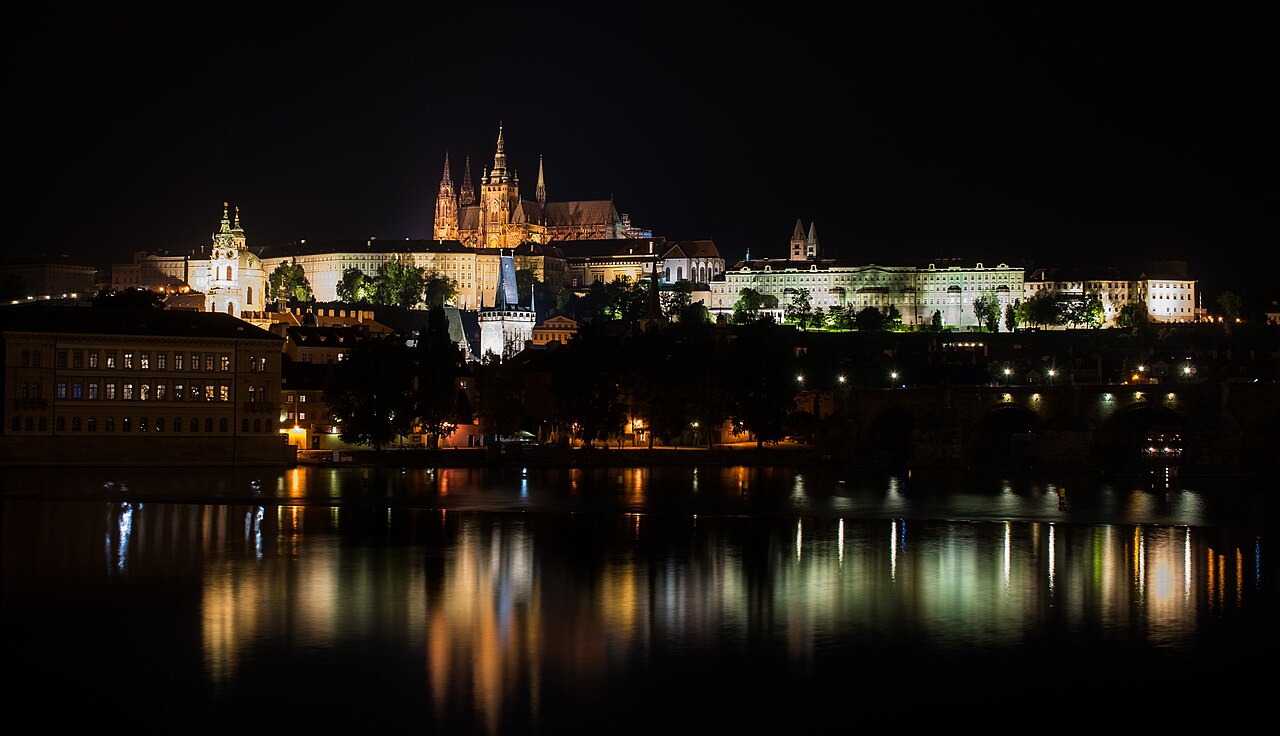
🇨🇿 Czech Republic at a Glance
Archived exhibition feature: the September 19–28, 2026 display has ended. The historical discussion and former visiting arrangements below are retained as a dated record, not a current admission offer.
The Crown, the Kingdom, and Seven Keys
Bohemian Crown Jewels · Prague Castle · September 2026
A crown invites us to look at its stones. The more interesting question is what holds them together: a ruler’s ambition, a sacred promise, and a community’s idea of itself. At Prague Castle, those meanings meet in objects that have outlived the monarchy they once served. Look slowly; the small details offer a different way into the great historical narrative.
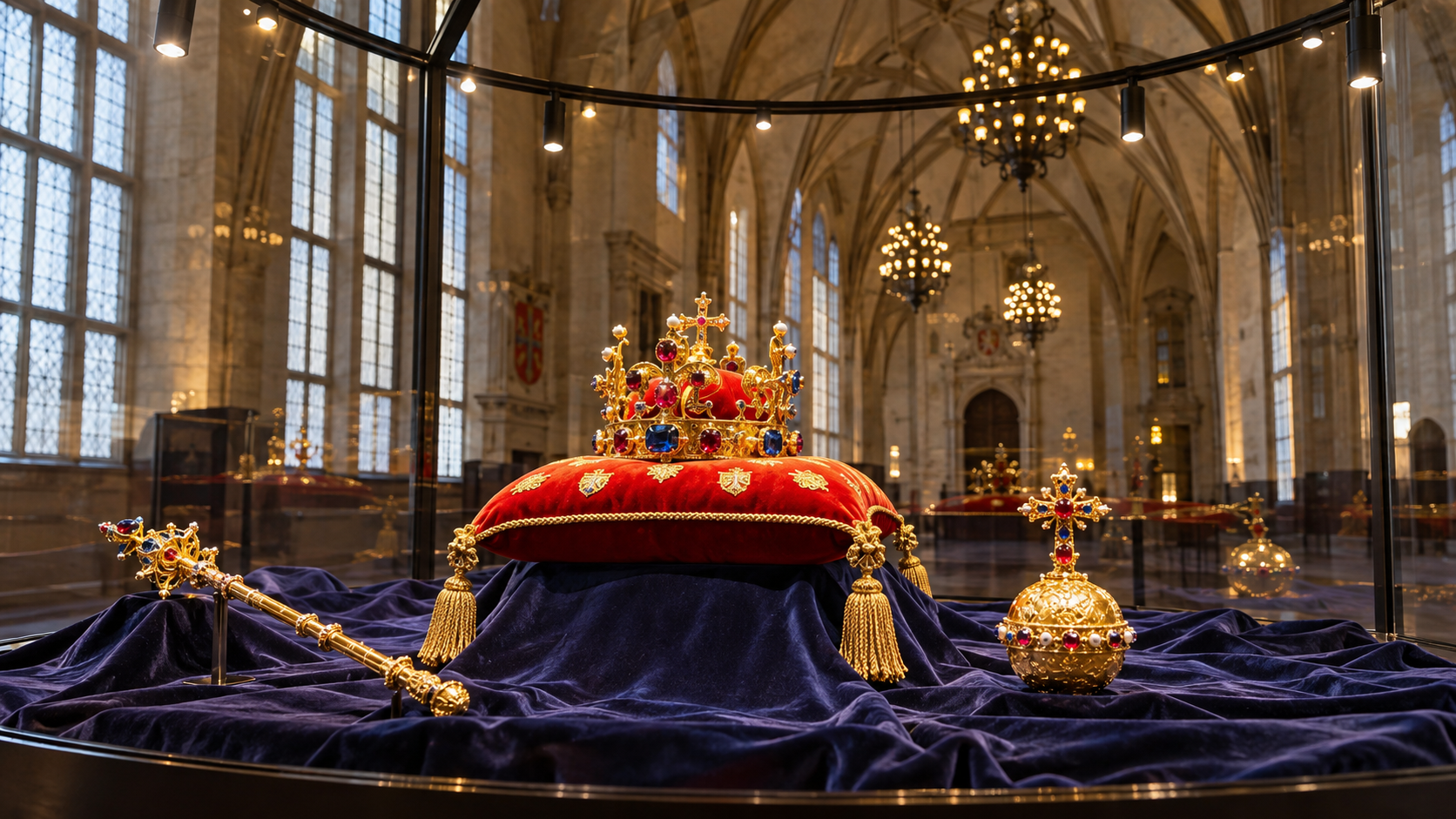
The crown and its companions
Charles IV commissioned the St. Wenceslas Crown for his 1347 coronation and dedicated it to Bohemia’s patron saint. Its four lily-shaped sections, crossed arches, gemstones, and pearls made kingship visible. The surviving gold scepter and orb are Renaissance works associated with Ferdinand I, rather than companions made with the medieval crown. The scepter’s plant ornament rewards close attention; the orb bears biblical scenes beneath its cross. Prague Castle’s collection account.
A kingdom across generations
The coronation ritual framed authority as an obligation: the scepter expressed just government, the orb power understood as coming from God. This year’s exhibition follows the jewels between Karlštejn, Vienna, and their return to Prague in 1791. It marks Ferdinand I’s accession in 1526, showing how one dynastic anniversary can illuminate a longer Czech story. The display also includes a coronation robe dated to 1653. Official bilingual exhibition brochure.
Seven keys, no permanent display
The crown, scepter, and orb normally rest in the Crown Chamber at St. Vitus Cathedral. Seven keyholders must assemble to open it. The tradition dates to the 1791 return. These are not permanent museum exhibits; however, the present policy is annual public display around Czech Statehood Day, rather than an unpredictable wait of many years.
Visiting “Habsburgs 500”
September 19–28, 2026 · 9 a.m.–5 p.m. · Vladislav Hall, Old Royal Palace · free admission. Enter from Hradčanské Square through the South Gardens and Bull Staircase. Capacity may close the line hours early. Expect security screening; travel light. Strollers cannot enter, and the waiting route is not step-free. The organizer specifies wheelchair access from the Third Courtyard with a valid ZTP/ZTP/P card and one companion; international visitors should confirm their arrangements with the Castle. Photograph without flash and follow staff instructions.
Practical details checked September 19, 2026 against the official exhibition page. Recheck before departure; this dated feature does not promise entry or a particular waiting time.
🌏 Overview
The Czech Republic, also known as Czechia, is a landlocked country in Central Europe that has captivated travelers for centuries with its fairy-tale castles, medieval old towns, and world-renowned beer culture. Nestled between Germany, Poland, Austria, and Slovakia, this compact nation packs an extraordinary density of cultural treasures into its modest 78,871 square kilometers.
With 17 UNESCO World Heritage Sites, one of the highest castle densities in Europe (over 2,000 castles, châteaux and ruins), and a brewing tradition dating back to 993 AD, the Czech Republic offers an unparalleled blend of history, architecture, and gastronomy. The capital Prague, with its stunning Gothic, Baroque, and Art Nouveau architecture, consistently ranks among Europe's most beautiful cities.
For international travelers, the Czech Republic represents exceptional value — world-class experiences at roughly half the cost of Western European destinations. The country's central location makes it an ideal hub for exploring Central Europe, with excellent rail connections to Vienna, Berlin, Munich, and beyond.
🏷️ Name & Identity
The country's official short name "Czechia" was adopted in 2016, though "Czech Republic" remains widely used internationally. The Czech name is Česko (short form) or Česká republika (formal). The nation comprises three historic lands: Bohemia (Čechy) in the west, Moravia (Morava) in the east, and Czech Silesia (Slezsko) in the northeast.
The term "Bohemia" derives from the Celtic Boii tribe who inhabited the region before Slavic settlement in the 6th century. The Czech people take great pride in their distinct identity, shaped by centuries at the crossroads of European powers — from the Holy Roman Empire to the Habsburg Monarchy to Soviet influence.
🔤 Quick Language Guide
- HelloAhoj / Dobrý den
- Thank youDěkuji
- BeerPivo
- Cheers!Na zdraví!
- How much?Kolik to stojí?
🗺️ Geography & Regions
The Czech Republic's geography is defined by mountain ranges forming natural borders, fertile lowlands in the interior, and more than 20,000 fishponds — the Třeboň Basin network alone is on the UNESCO Tentative List. The country is divided into 14 regions (kraje), each with a distinct character. Bohemia, the western two-thirds of the country, features the Bohemian Basin surrounded by mountain ranges: the Krkonoše (Giant Mountains) in the north, Šumava (Bohemian Forest) in the southwest, and the Ore Mountains along the German border.
Moravia, the eastern third, is known for its rolling hills, wine regions, and the Moravian Karst cave system. The highest point is Sněžka (1,603 m / 5,259 ft) in the Krkonoše Mountains. Major rivers include the Vltava (Moldau), which flows through Prague, and the Elbe (Labe), which continues to Germany and the North Sea.
🏔️ Geographic Facts
- Area78,871 km² (30,452 sq mi)
- Highest PointSněžka, 1,603 m
- Longest RiverVltava, 430 km
- BordersGermany, Poland, Austria, Slovakia
- Time ZoneCET (UTC+1) / CEST (UTC+2)
🗺️ Map of the Czech Republic
Key destinations marked below — Prague and the Bohemian castle country in the west, the Moravian wine and karst country in the south-east, and the mountain ranges that ring the border. Drag to pan; use the +/− buttons to zoom.
Open map📜 History
Czech history is a dramatic saga of kingdoms, empires, occupations, and peaceful revolutions. The Great Moravian Empire (833–907 AD) was the first significant Slavic state in the region, where Saints Cyril and Methodius introduced Christianity and the Slavic alphabet. The Přemyslid dynasty established the Bohemian kingdom, which reached its golden age under Charles IV (1346–1378), Holy Roman Emperor, who transformed Prague into the imperial capital of Europe.
Charles IV, known as the "Father of the Nation" (Pater Patriae), was Bohemia's greatest ruler and one of medieval Europe's most enlightened monarchs. Born in Prague in 1316, educated in Paris, and crowned King of Bohemia in 1347 and Holy Roman Emperor in 1355, Charles presided over Bohemia's Golden Age. He founded Charles University in 1348 — Central Europe's first university — commissioned the iconic Charles Bridge, expanded Prague Castle, and built the stunning Karlštejn Castle to house the imperial crown jewels and holy relics. Under his rule, Prague became a major imperial city, a center of Gothic art, architecture, and learning that attracted scholars, artists, and merchants from across the continent.
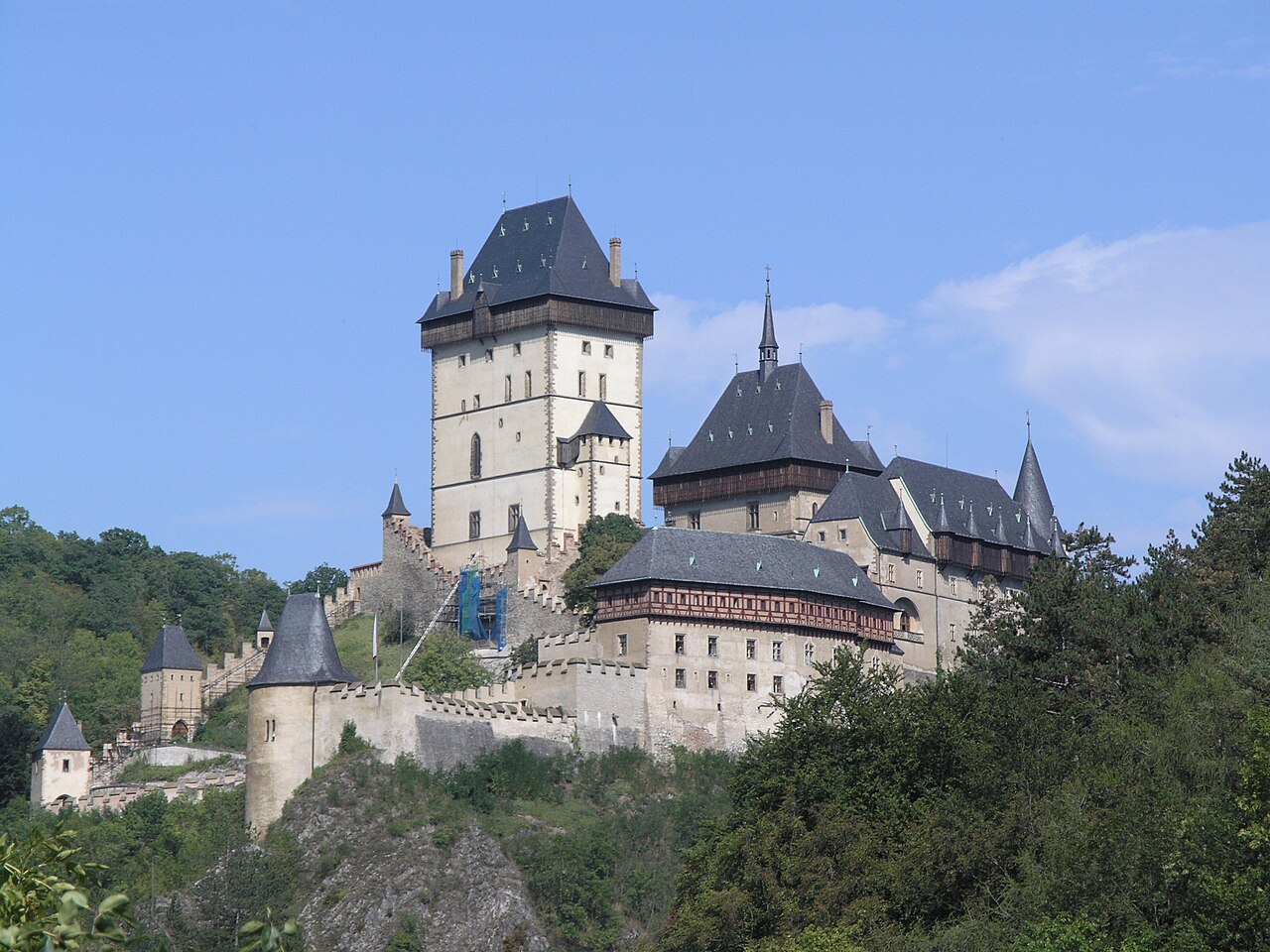
Karlštejn Castle.
The Hussite Wars (1419–1434) made Bohemia a center of religious reform a century before Luther. The 1618 Defenestration of Prague sparked the Thirty Years' War, beginning the Habsburg period that would profoundly shape Czech lands for nearly four centuries.
During Habsburg rule (1526–1918), Bohemia experienced another remarkable flowering under Rudolf II (1552–1612), Holy Roman Emperor who made Prague his imperial seat from 1583 to 1612. Rudolf transformed Prague into Europe's cultural and scientific capital, assembling the Kunstkammer (Cabinet of Curiosities), inviting astronomers Tycho Brahe and Johannes Kepler to work at Prague Castle, and patronizing painters like Arcimboldo and Spranger. Though politically weak and increasingly withdrawn, Rudolf's obsessive collecting and patronage created an unparalleled treasury of art and scientific instruments, much of which forms today's collections in Prague's museums.
Under Habsburg rule, Czech national identity persevered through cultural revival movements. The creation of Czechoslovakia in 1918, Nazi occupation (1939–1945), Communist rule (1948–1989), and the peaceful Velvet Revolution of 1989 shaped modern Czech identity. In 1993, Czechoslovakia peacefully dissolved into the Czech Republic and Slovakia in what became known as the "Velvet Divorce." The country joined NATO in 1999, the EU in 2004 and the Schengen Area in 2007, and maintains one of Central Europe's strongest economies.
Czechia today (2026): The head of state is President Petr Pavel, a retired NATO general elected in January 2023 and in office since 9 March 2023. In the parliamentary election of 3–4 October 2025, Andrej Babiš's ANO movement won 34.5% of the vote and ended Petr Fiala's centre-right coalition (2021–2025). Babiš was appointed prime minister on 9 December 2025 and his third cabinet — ANO with the far-right SPD and the Motorists for Themselves party — took office on 15 December 2025. The new government began in open conflict with the presidency: Pavel refused to appoint the Motorists' Filip Turek as environment minister over racist and homophobic social-media posts, the coalition survived a no-confidence vote in February 2026, and the 2026 budget was signed in March 2026 with a CZK 310 billion deficit. Municipal elections and the first Senate round were held on October 9–10, 2026; Senate runoffs are scheduled for October 16–17. Two recent national traumas also shape the mood: the mass shooting at Charles University's Faculty of Arts on 21 December 2023 (14 killed, the deadliest in Czech history) and the September 2024 floods, which devastated Moravia-Silesia and the Jeseníky foothills.
👥 People & Culture
With a population of approximately 10.9 million, the Czech Republic combines a strong Czech identity with diverse minority communities. The society is notably secular, with surveys consistently showing one of the world's lowest rates of religious belief, a tradition dating back to the Hussite movement and reinforced during Communist rule.
Czechs are known for their dry humor, love of beer and pub culture, passion for ice hockey, and pride in their musical heritage — from classical composers Dvořák and Smetana to contemporary rock and electronic scenes. The concept of "pohoda" (relaxed contentment) captures the Czech approach to life: enjoying simple pleasures, good conversation, and time with friends at the local hospoda (pub).
The country has produced remarkable figures including writer Franz Kafka, composer Antonín Dvořák, playwright-president Václav Havel, tennis legend Martina Navrátilová, and the inventor of soft contact lenses, Otto Wichterle.
🏰 Prague — The City of a Hundred Spires
Prague (Praha) is one of Europe's most stunning capitals, a living museum of Gothic, Renaissance, Baroque, and Art Nouveau architecture that miraculously survived World War II largely intact. With 1.3 million residents and over 8 million annual visitors, it's both a major European capital and a top tourist destination.
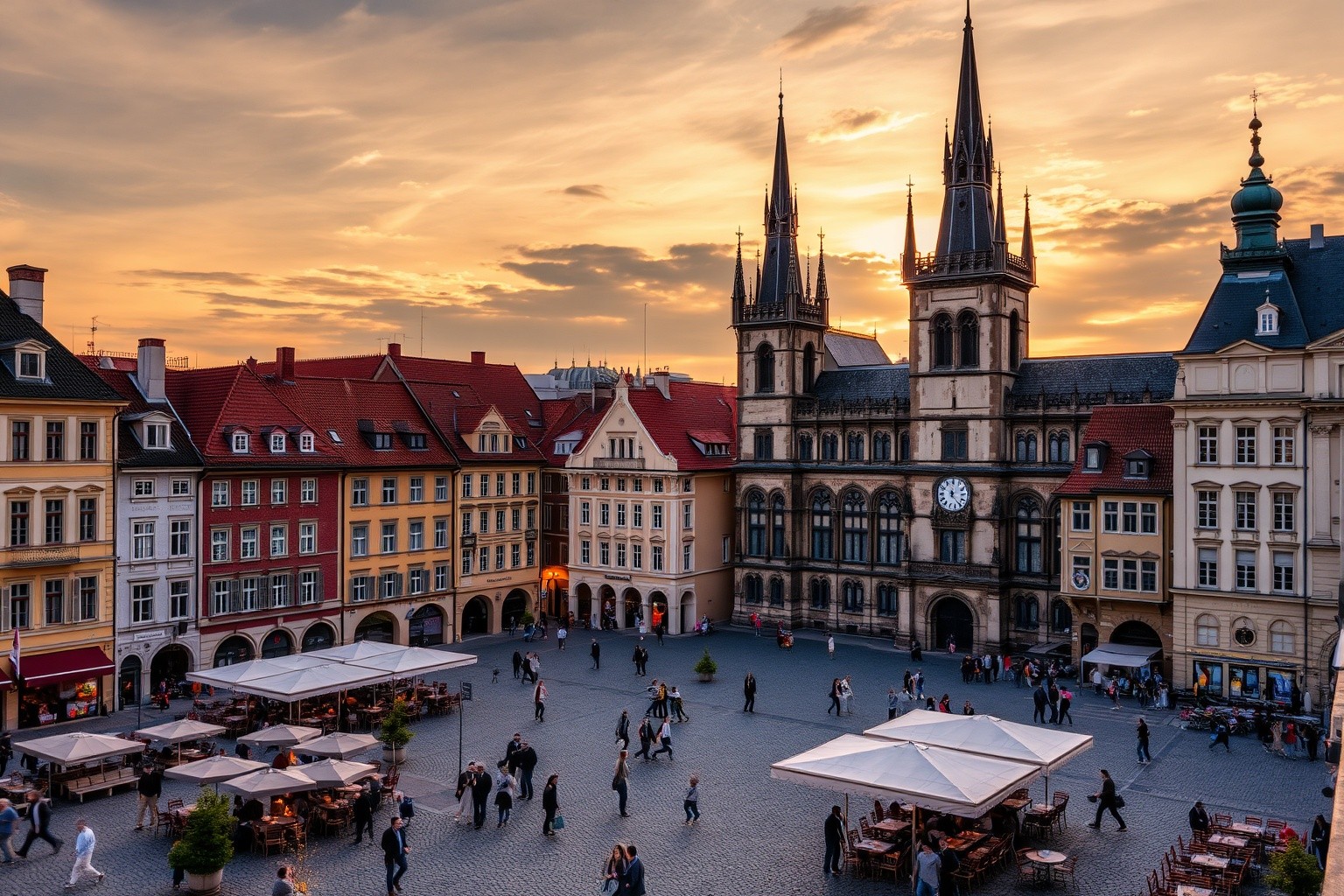
Old Town Square at Golden Hour
The Astronomical Clock tower and Gothic spires of Týn Church glow in warm evening light
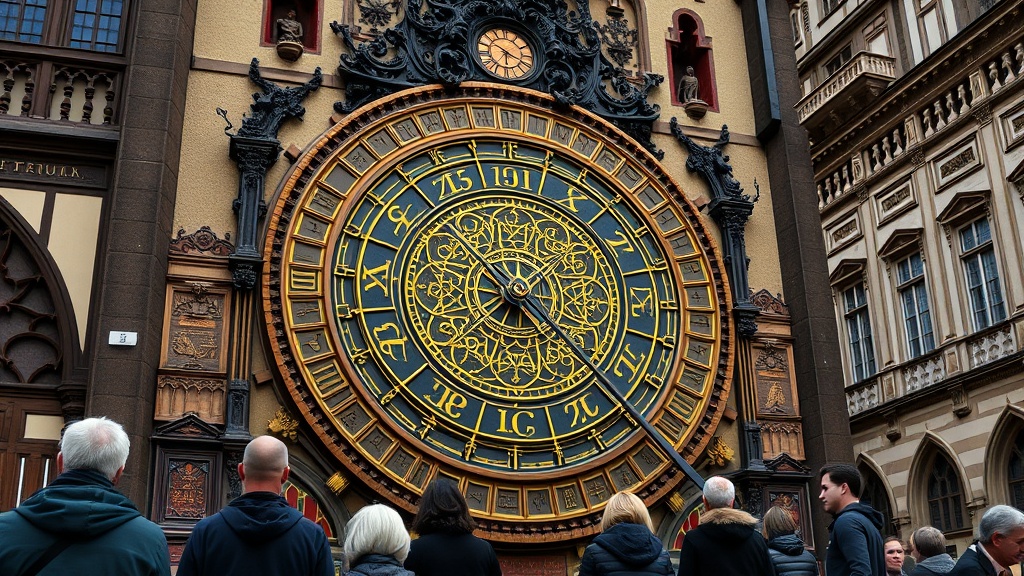
The Prague Castle complex, dating to the 9th century, is the world's largest ancient castle (70,000 m²) and seat of Czech presidents. Below it, the Charles Bridge (Karlův most), built in 1357, connects the castle district with the medieval Old Town (Staré Město), where the famous Astronomical Clock has marked time since 1410. The Jewish Quarter (Josefov) contains Europe's oldest functioning synagogue and a hauntingly beautiful cemetery.
Beyond the tourist centers, neighborhoods like Vinohrady, Žižkov, and Karlín offer authentic Czech life, excellent restaurants, and vibrant nightlife. Prague's cultural offerings include world-class opera, the National Gallery's collections, and countless music venues from jazz cellars to classical concert halls.
🏰 Prague Must-See
- Prague CastleWorld's largest castle complex
- Charles BridgeGothic bridge with 30 statues
- Old Town SquareAstronomical Clock, Týn Church
- Jewish Quarter6 synagogues, Old Cemetery
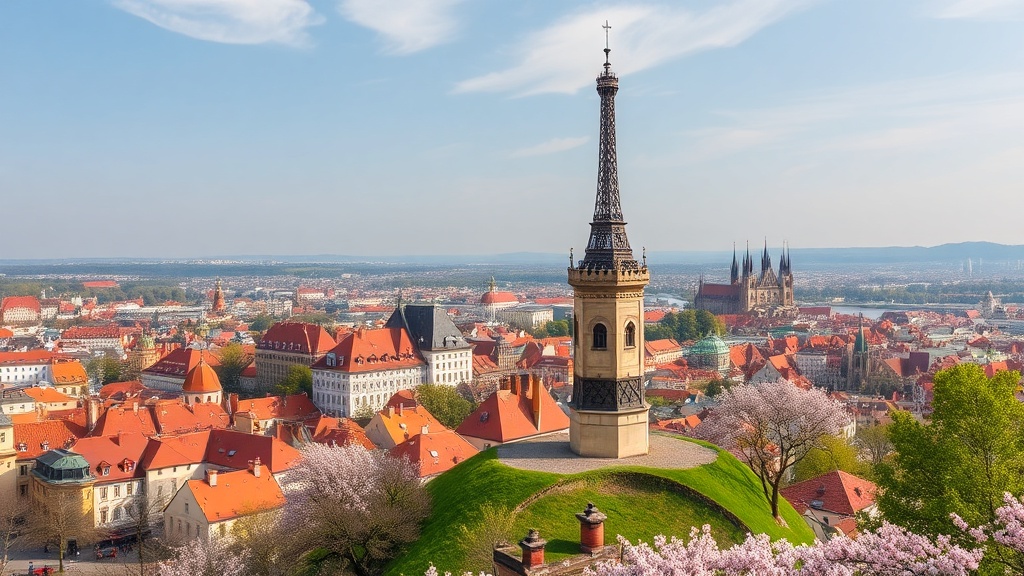
- Petřín HillMini Eiffel Tower, gardens
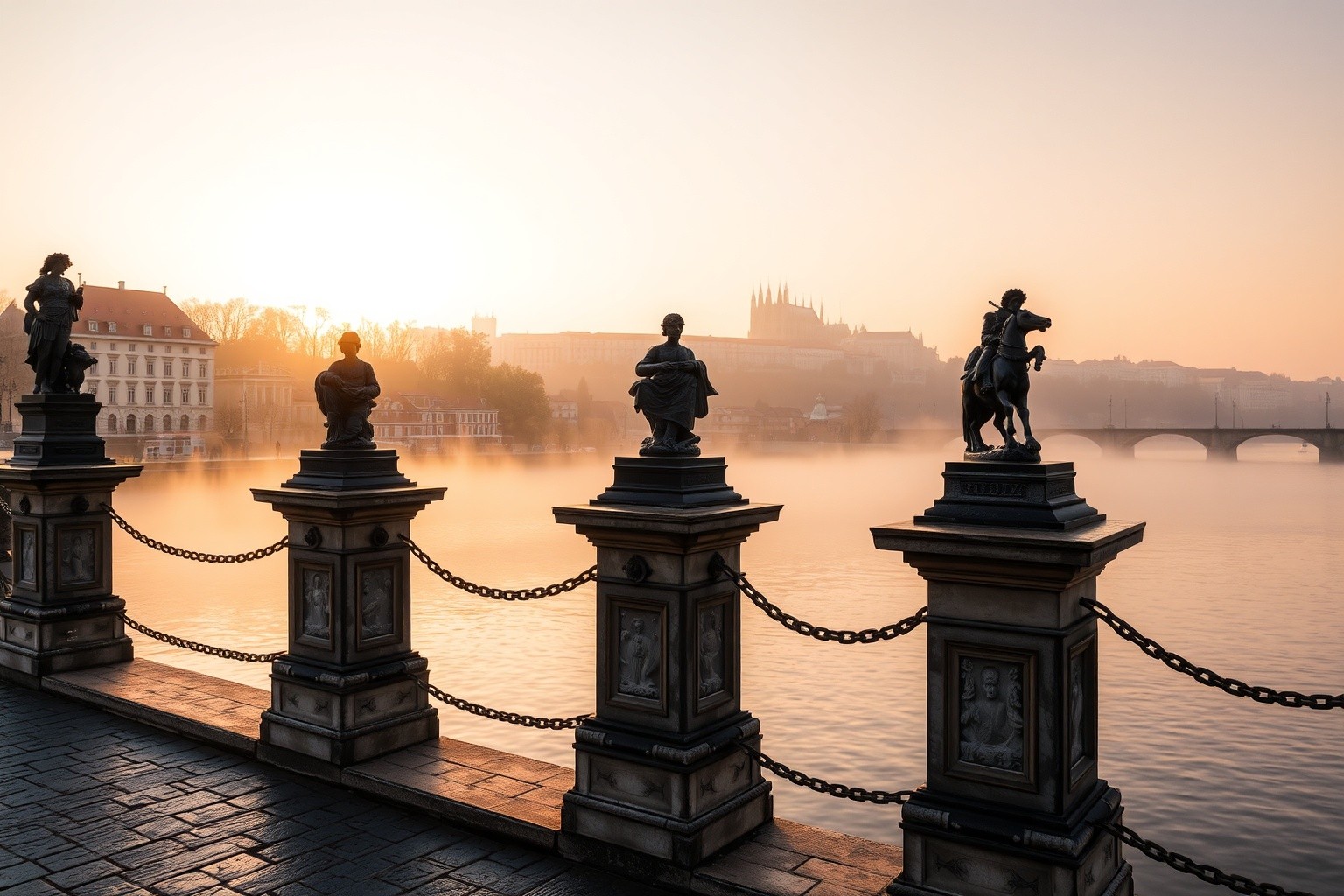
Charles Bridge
A beloved backdrop where Prague Castle watches over the Vltava, statues, street musicians, and portrait artists lining its length day and night
🏛️ Český Krumlov — Fairytale Town
Český Krumlov, a UNESCO World Heritage Site since 1992, is a perfectly preserved medieval town wrapped in a dramatic S-bend of the Vltava River. Dominated by a castle second in size only to Prague Castle, this town of 13,000 feels frozen in time, its Gothic, Renaissance, and Baroque architecture creating an almost theatrical atmosphere.
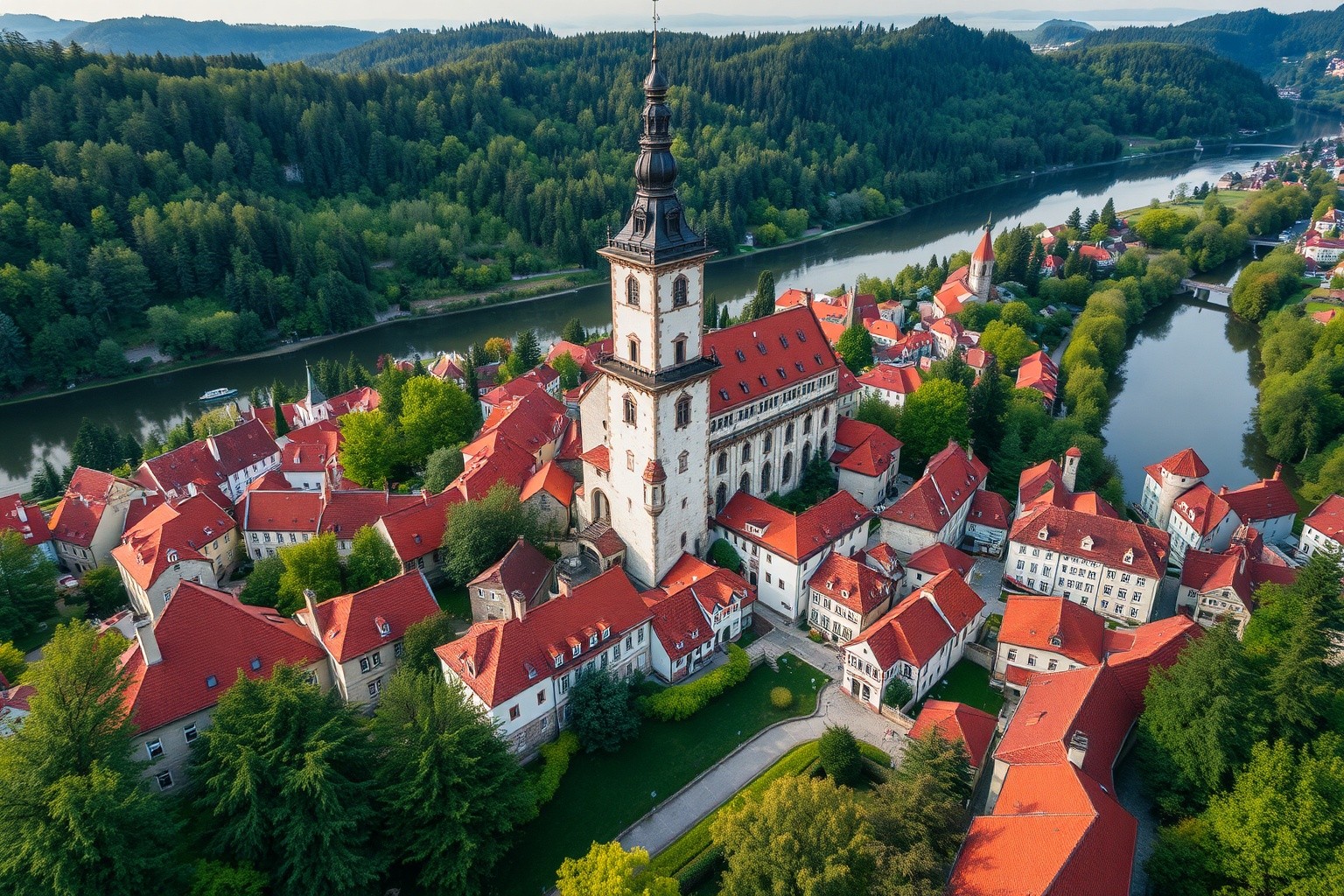
Český Krumlov from Above
A medieval fairy-tale wrapped in the Vltava River's embrace, crowned by a painted castle tower
The castle complex features a unique Baroque theater still using original 18th-century stage machinery, beautiful castle gardens, and a distinctive painted tower. Below, the old town's winding cobblestone streets reveal artisan workshops, cozy restaurants, and the Egon Schiele Art Centrum, dedicated to the Austrian expressionist who lived here.
In summer, the Vltava comes alive with rafters and kayakers floating through town — a quintessentially Czech experience. Despite its popularity, the town retains authentic charm, especially in the quiet morning hours or evening after day-trippers depart.
⛪ Kutná Hora — Silver & Bones
Kutná Hora was once Bohemia's second most important city, its wealth built on silver mines that funded the medieval Czech kingdom. Today, this UNESCO-listed town offers two extraordinary and contrasting attractions that draw visitors from around the world.
Sedlec Ossuary Interior
Sacred artistry fashioned from tens of thousands of souls, a haunting meditation on mortality and memory
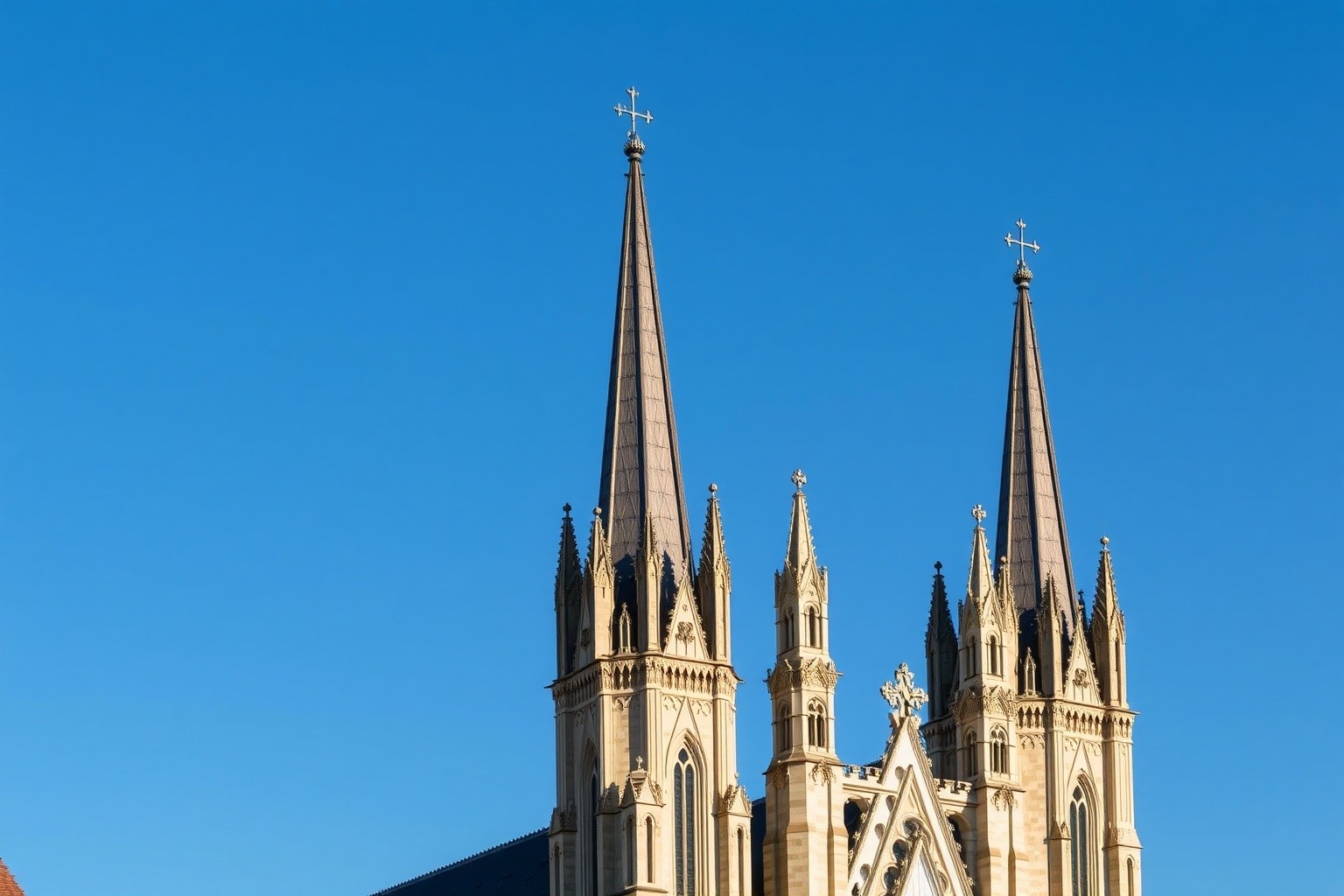
The Sedlec Ossuary ("Bone Church") is a small chapel artistically decorated with the bones of an estimated 40,000–70,000 people, including chandeliers, a coat of arms, and garlands made entirely from human skeletal remains — both macabre and strangely beautiful. In stark contrast, the magnificent St. Barbara's Cathedral is a Gothic masterpiece rivaling Prague's finest, with stunning flying buttresses and medieval mining-themed frescoes.
The town center features the Italian Court (former royal mint), Gothic stone fountains, and streets lined with Baroque townhouses. Kutná Hora makes an easy day trip from Prague (1 hour by train) or a worthwhile overnight stay to experience the atmospheric old town without crowds.
♨️ Karlovy Vary — The Spa Capital
Karlovy Vary (Carlsbad) is the crown jewel of Czech spa towns, founded in 1370 when Emperor Charles IV allegedly discovered its hot springs while hunting. Today, this elegant resort city in a forested valley features 13 main mineral springs, Belle Époque colonnades, and a glamorous atmosphere that has attracted royalty, celebrities, and health-seekers for centuries.
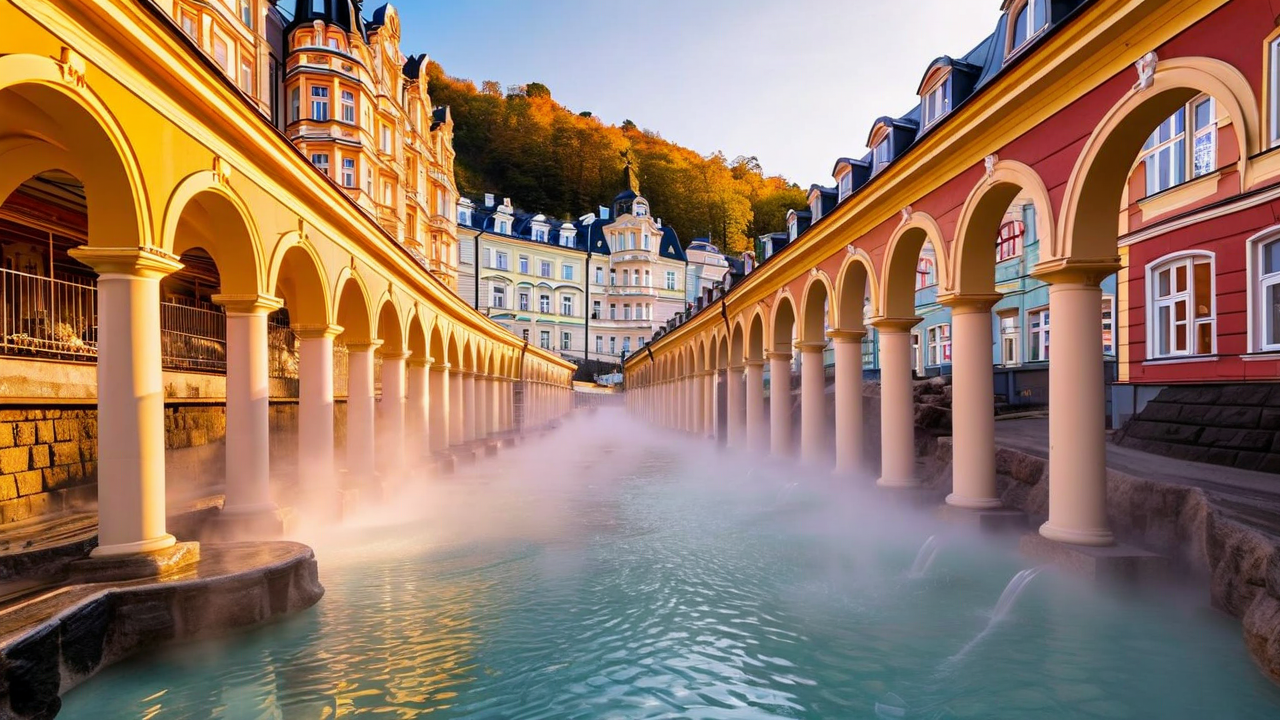
Mill Colonnade at Golden Hour
Steam rises from healing springs as visitors sip mineral waters beneath elegant columns
The town's fame extends beyond wellness — it's home to the prestigious Karlovy Vary International Film Festival (one of Europe's oldest), the iconic Moser glassworks, and the Becherovka herbal liqueur distillery. The traditional ritual involves strolling the colonnades while sipping mineral water from special spa cups with built-in straws.
The surrounding West Bohemian spa triangle includes Mariánské Lázně (Marienbad) and Františkovy Lázně, collectively recognized as a UNESCO World Heritage Site since 2021 as "Great Spa Towns of Europe."
🏛️ Brno — Moravia's Capital
Brno, the Czech Republic's second-largest city (population 380,000), is the historic capital of Moravia and a vibrant university city often overlooked by tourists rushing between Prague and Vienna. This oversight is their loss — Brno offers world-class architecture, excellent dining, and an authentic Czech atmosphere without the tourist crowds.
The city's crown jewel is Villa Tugendhat, a UNESCO-listed masterpiece of modern architecture designed by Mies van der Rohe in 1930 — considered one of the most important buildings of the 20th century. Špilberk Castle offers panoramic views and a sobering prison history, while the underground Ossuary rivals Sedlec in scale. The Old Town Hall houses Brno's famous crocodile (the hanging dragon) and a legendary cartwheel. The crooked pinnacle on the Gothic portal is a separate architectural feature.
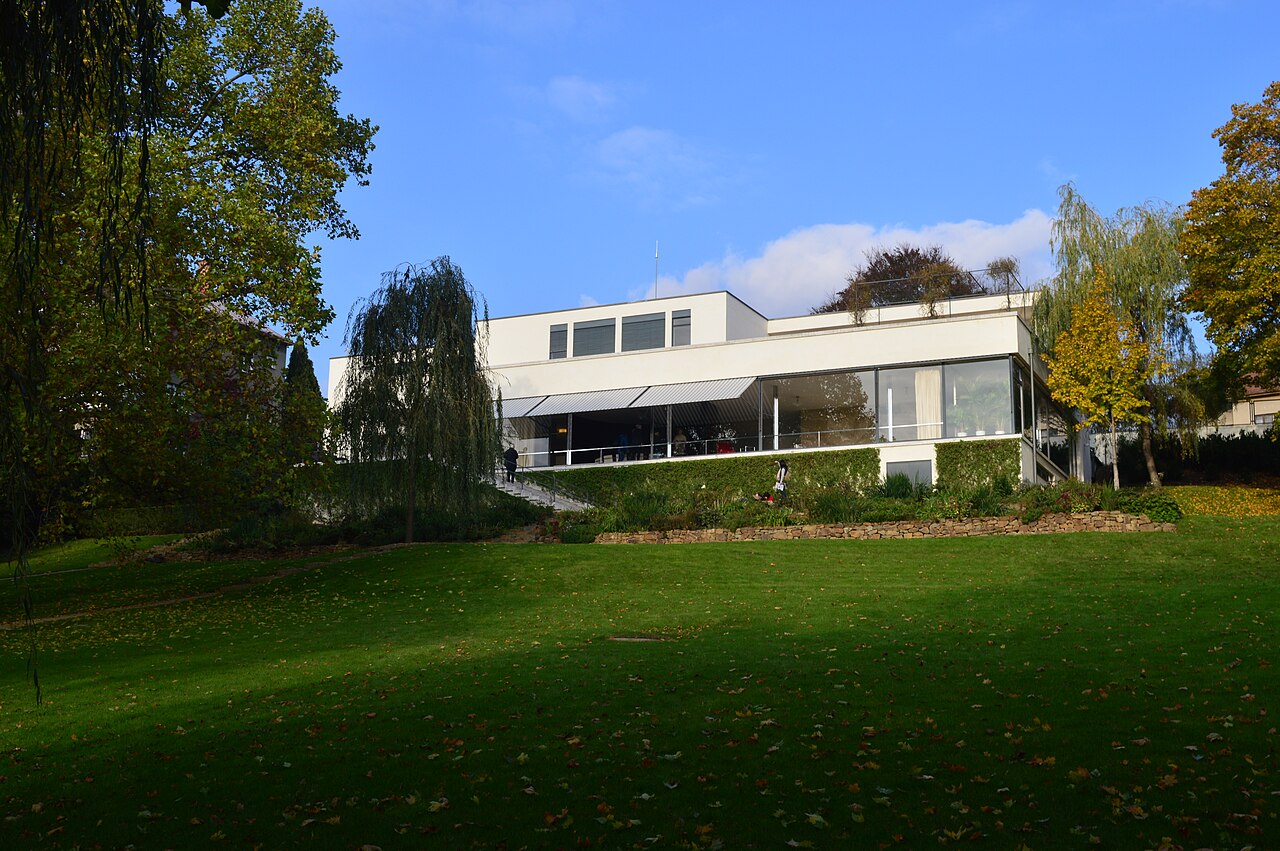
Villa Tugendhat in Brno, viewed from the garden.
Brno's nightlife and café culture rival Prague's at a fraction of the cost. The nearby Moravian Karst features dramatic caves and the 138-meter-deep Macocha Abyss, while the Moravian wine region produces excellent whites often compared to Austrian wines.
🏘️ More Cities Worth Visiting
Olomouc is Moravia's hidden gem — a stunning university city with the second-largest historic preservation zone after Prague, magnificent Baroque fountains, and the UNESCO-listed Holy Trinity Column. Plzeň (Pilsen) is the birthplace of Pilsner beer, home to the original Pilsner Urquell brewery and excellent museums. Liberec offers striking Art Nouveau architecture and access to the Jizera Mountains.
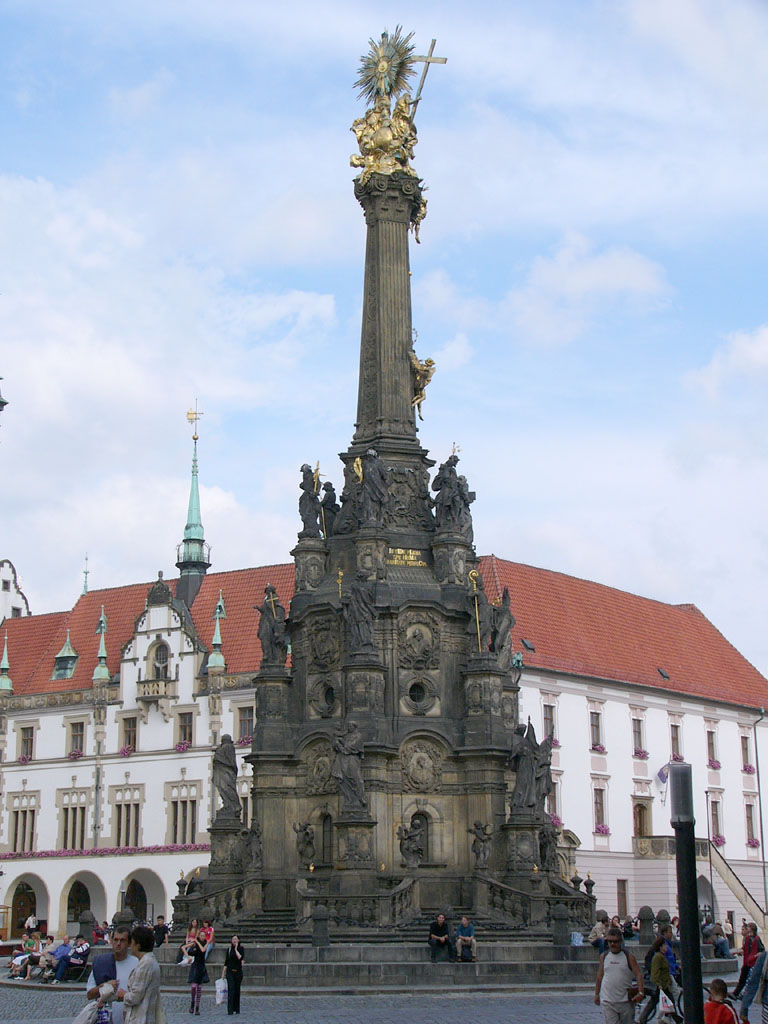
The Holy Trinity Column in Olomouc.
Telč, a UNESCO site, features perhaps the most photogenic main square in Central Europe — a perfect Renaissance ensemble reflected in surrounding fishponds. Třebíč's Jewish Quarter and basilica are UNESCO-listed, while Litomyšl boasts a Renaissance castle and hosts a famous music festival. České Budějovice (Budweis) offers a massive main square and the original Budweiser Budvar brewery.
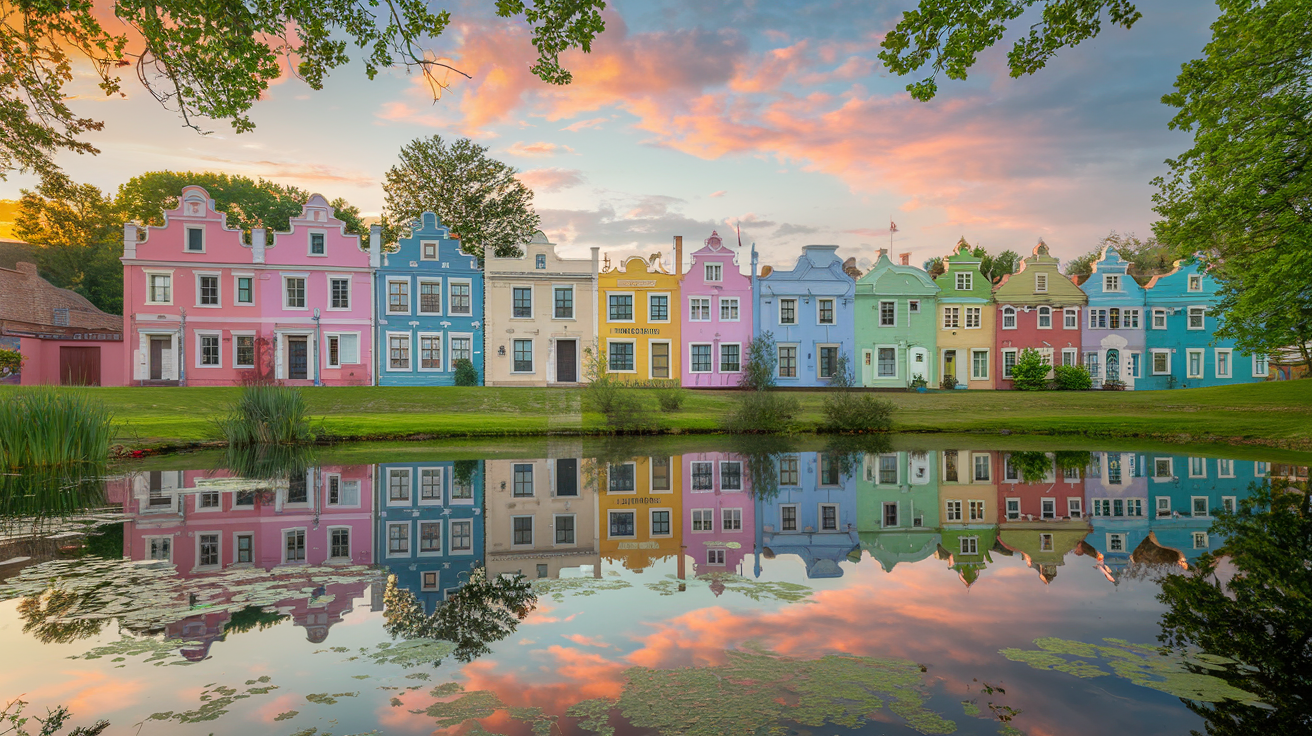
Telč Renaissance Square
Pastel façades mirror perfectly in still water, creating one of Europe's most photogenic reflections
🍺 Cuisine & Beer
Czech cuisine is hearty Central European fare perfected over centuries — rich meat dishes, dumplings, sauces, and the world's finest beer. The national dish is svíčková na smetaně — marinated sirloin with creamy vegetable sauce, bread dumplings, and cranberry sauce. Vepřo-knedlo-zelo (roast pork with dumplings and sauerkraut) is the ultimate comfort food.
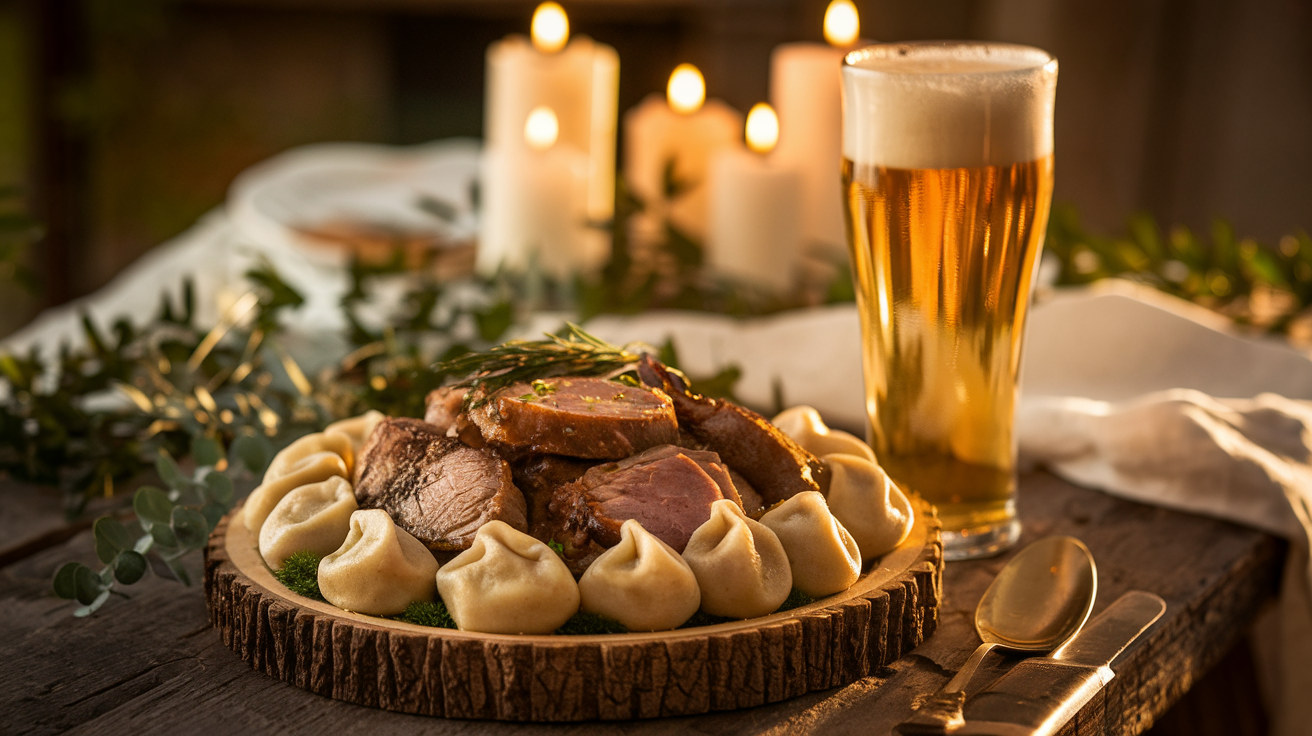
Svíčková na Smetaně
The soul of Czech cuisine: tender beef in cream sauce, bread dumplings, and a cold pivo
Czechs still consume more beer per capita than any nation on Earth — about 121 litres in 2025, a record low for the 32nd consecutive year at number one, down from 160-plus litres in the 2000s. The country invented Pilsner-style lager in 1842, and today offers incredible variety: Pilsner Urquell, Budweiser Budvar, Staropramen, Kozel, Bernard, and countless microbreweries. Beer is cheaper than bottled water, and ordering "pivo" is a way of life.
Must-try dishes include trdelník (chimney cake — a Slovak-Hungarian import that became a Prague tourist staple only in the 2000s), smažený sýr (fried cheese), guláš (goulash), bramboráky (potato pancakes), and palačinky (crepes). Pair with Becherovka herbal liqueur or slivovice (plum brandy) for the full experience.
🍽️ Food & Drink Guide
- SvíčkováMarinated beef with cream sauce
- KnedlíkyBread or potato dumplings
- Pilsner UrquellWorld's first golden lager
- BecherovkaHerbal digestif from Karlovy Vary
- TrdelníkSweet spiral pastry
📜 Traditional Czech Recipes
Vepřo Knedlo Zelo
Pork, Dumplings, Sauerkraut
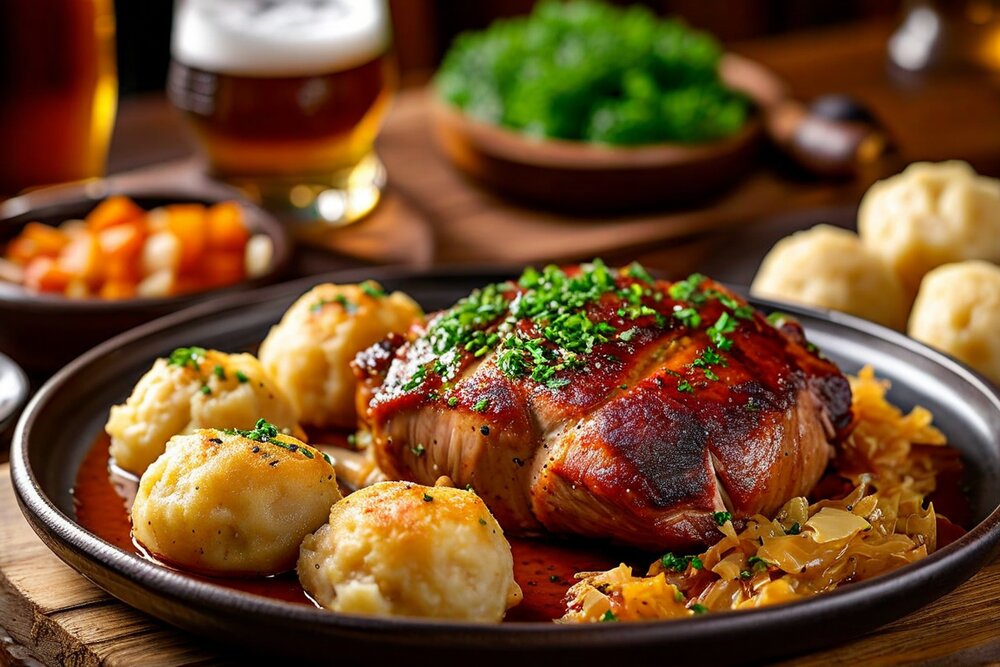
Often called the true Czech national dish alongside svíčková — roast pork with bread dumplings and cabbage.
Ingredients: 500g pork shoulder, caraway seeds; for dumplings: 480ml flour, 1 egg, yeast, milk; sauerkraut; onion.
Preparation: Roast pork with caraway and onion. Make dumpling dough, roll into a log. Boil dumplings 20 minutes. Slice with thread. Braise sauerkraut. Serve together with gravy.
💡 Slice dumplings with thread, never a knife — it keeps them fluffy.
Svíčková
Beef in Cream Sauce
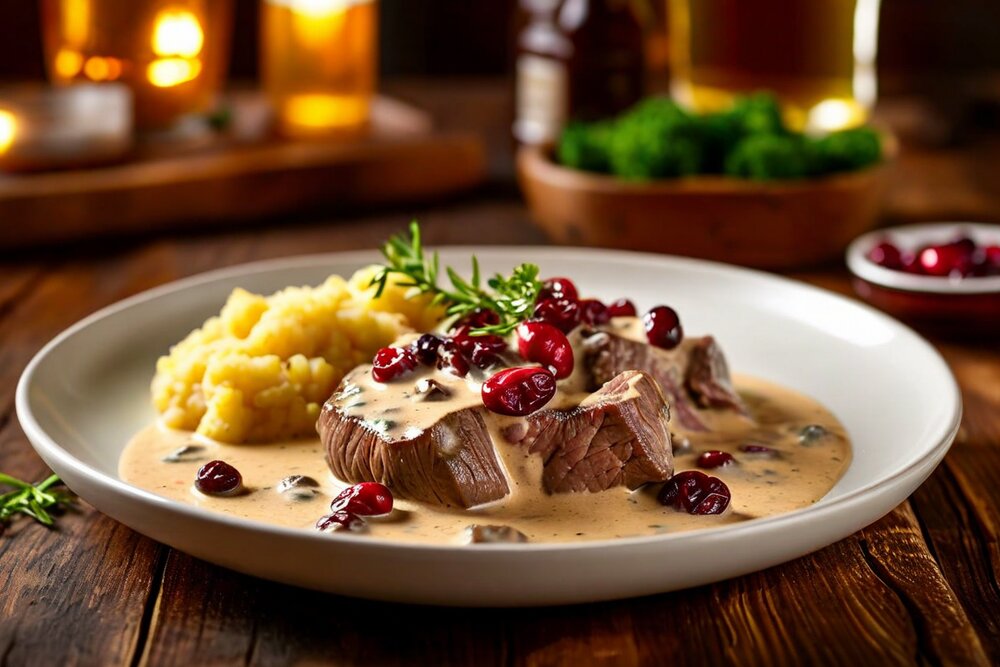
Beef sirloin in creamy vegetable sauce with cranberries.
Ingredients: 400g beef sirloin; carrot, celery, parsnip; cream, lemon; allspice, bay leaf; cranberry sauce; bread dumplings.
Preparation: Brown beef, set aside. Roast vegetables until dark. Add spices, cream, return beef. Braise until tender. Strain and blend sauce. Serve with dumplings and cranberries.
💡 The sauce must be smooth — strain well.
Trdelník
Chimney Cake
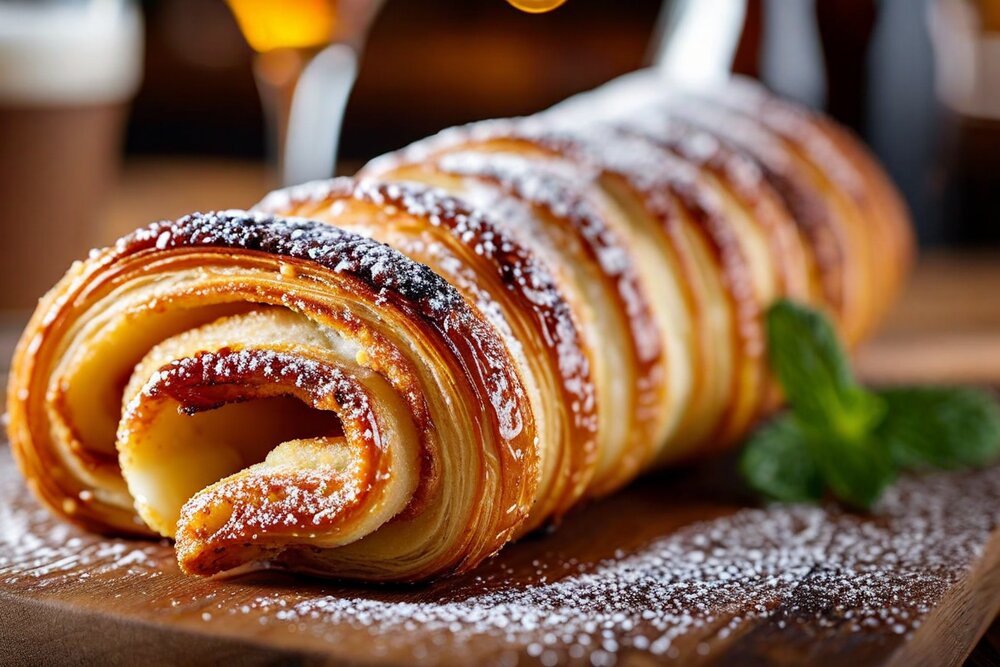
Spiral pastry grilled over charcoal, coated in sugar and cinnamon.
Ingredients: 480ml flour, 1 packet yeast, 120ml milk, 2 egg yolks, 45ml sugar; cinnamon sugar; walnut crumbs.
Preparation: Make sweet yeast dough. Roll into long strips. Wrap around a wooden cylinder. Grill over coals, turning. Roll in cinnamon sugar while hot. Add walnut crumbs if desired.
💡 Rotate constantly for even cooking — watch for burning.
🍷 Wine, Spirits & Drinking Culture
The Czech Republic is known globally as a beer nation — the birthplace of Pilsner and the country with the highest per-capita beer consumption on Earth. Yet in the rolling hills of southern Moravia, stretching along the Austrian border from Znojmo to Mikulov to Valtice, lies one of Central Europe's most fascinating and least-known wine regions. Czech viticulture dates to the 3rd century under Roman influence, was cultivated by Benedictine and Cistercian monks throughout the Middle Ages, and was championed by Emperor Charles IV, who in 1358 ordered Burgundy vines planted on the slopes around Prague. Today, the Czech Republic has approximately 17,600 hectares of vineyards with domestic wine production supplemented by imports.
🍇 Wine Regions & Varieties
Over 96% of Czech wine production is concentrated in Moravia (Morava), divided into four sub-regions: Mikulovská (centered on the spectacular Pálava limestone hills, producing the country's finest whites), Velkopavlovická (the largest area, known for versatile reds and rosés), Slovácká (traditional folk-culture wine country along the Slovak border), and Znojemská (cool-climate whites reminiscent of neighboring Austrian Weinviertel). The tiny Bohemia region around Mělník and Karlštejn contributes just 4%, producing light wines in small quantities.
The dominant white varieties are Grüner Veltliner (Veltlínské zelené), Riesling, Müller-Thurgau, Welschriesling (Ryzlink vlašský), and the uniquely Czech Pálava — an aromatic cross of Müller-Thurgau and Gewürztraminer bred by Josef Veverka at the Perná research station in 1953 and registered as a variety in 1977, producing perfumed, off-dry wines with lychee and rose petal character. For reds, Frankovka (Blaufränkisch), Svatovavřinecké (Saint Laurent), and Zweigeltrebe dominate, with Rulandské modré (Pinot Noir) gaining prestige in the best sites around Pavlov and Dolní Kounice.
🏰 Wine Culture & Classification
Czech wine culture is deeply intertwined with Moravian identity — the annual vinobraní (wine harvest festivals) in Znojmo and Mikulov are among the country's largest celebrations, and the network of medieval sklepy (wine cellars) carved into the loess soil of villages like Petrov-Plže and Šatov form unique architectural ensembles. Czech wine classification follows the German/Austrian model with stolní víno (table wine), zemské víno (regional wine), jakostní víno (quality wine), and přívlastkové víno (predicate wine, with subcategories for kabinet, pozdní sběr, výběr z hroznů, výběr z bobulí, výběr z cibéb, and ledové víno). The naturally sweet ice wines (ledové víno) and straw wines (slámové víno) from Moravia are world-class, benefiting from the region's reliably cold winters.
🌟 Key Producers
The Czech wine scene has undergone a quality revolution since the Velvet Revolution of 1989. Leading producers include Sonberk (Moravian winery near the Pálava hills with striking architecture), Lahofer (large-scale modern winery in Znojmo), Gotberg (boutique wines from Popice), Dobrá Vinice (natural-wine movement leader), Milan Nestarec (internationally known for funky, avant-garde natural wines), Stapleton & Springer (British-Czech partnership producing elegant Pinot Noir), and Château Valtice (historic estate within the UNESCO-listed Lednice-Valtice Cultural Landscape). The natural-wine movement has found particularly fertile ground in Moravia, with Czech natural wines now exported to top restaurants in London, Berlin, and Tokyo.
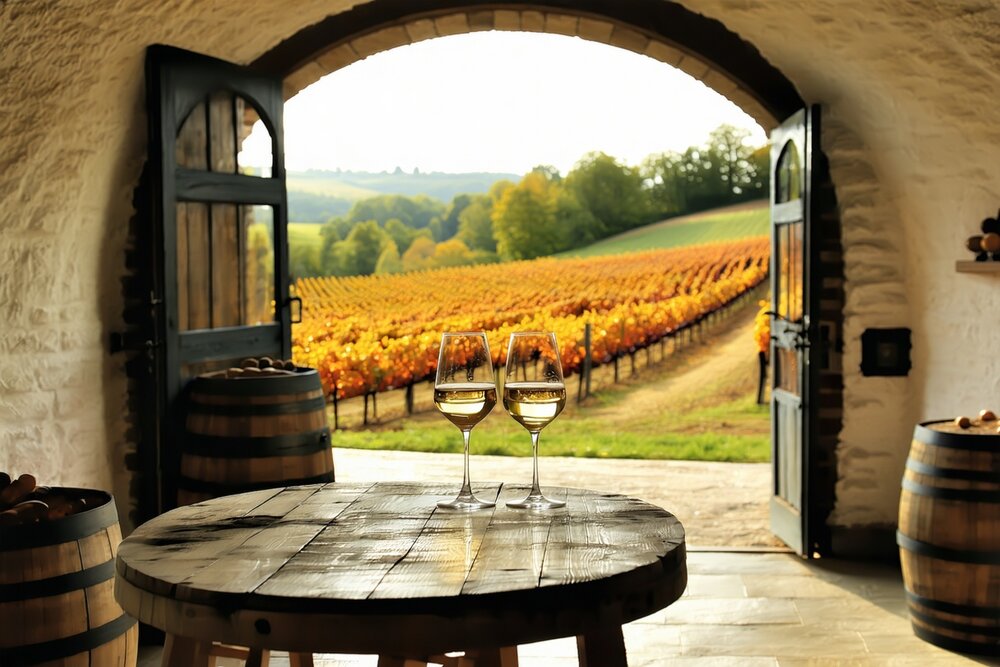
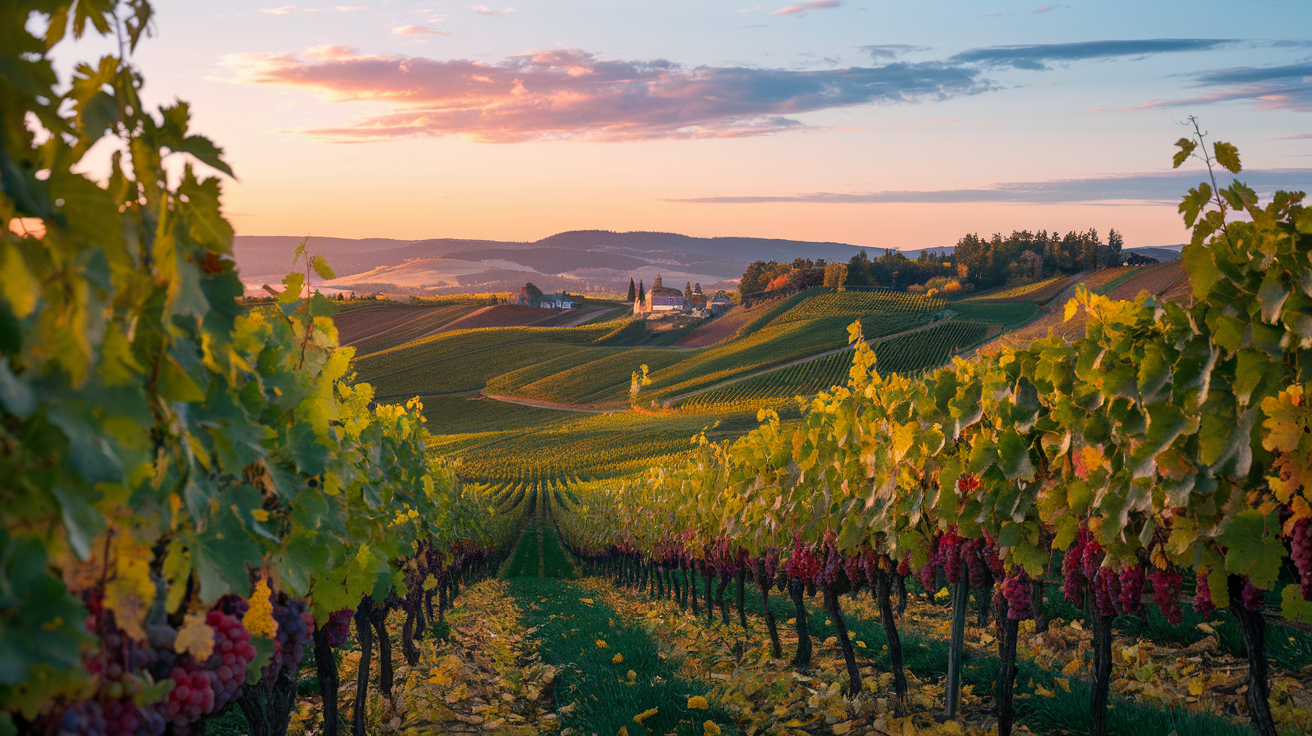
Moravian Wine Country — Pálava Hills
A traditional whitewashed sklep opens onto the golden vineyards of South Moravia, the heart of Czech winemaking since the Middle Ages
🏆 Kaufmann Wine Score (KWS)
100-point scoring: 🔴 Aroma (0–25) · 🟡 Taste (0–30) · 🟢 Finish (0–20) · 🔵 Value (0–25)
| Wine | 🔴 | 🟡 | 🟢 | 🔵 | KWS |
|---|---|---|---|---|---|
| Pálava Pozdní sběr (Sonberk) | 22 | 26 | 16 | 23 | 87 |
| Riesling (Lahofer, Znojmo) | 21 | 25 | 16 | 23 | 85 |
| Frankovka (Gotberg, Pavlov) | 20 | 24 | 15 | 24 | 83 |
| Pinot Noir (Stapleton & Springer) | 21 | 24 | 15 | 22 | 82 |
✍️ A Note on MoraviaRadim Kaufmann
As a Czech, I have a personal stake in this chapter. Moravian wine is the country's best-kept secret — and frankly, we prefer to keep it that way. Wandering through the painted wine cellars of Petrov-Plže during vinobraní, tasting Pálava straight from the demijohn while a cimbál band plays under the chestnut trees, is one of the most joyful experiences in European wine culture, and one that most foreign visitors never get anywhere near. Sonberk's Pálava Pozdní sběr is my desert-island Czech wine — aromatic enough to rival Alsatian Gewürztraminer, but with a freshness and restraint that is unmistakably Moravian. The world is just beginning to discover what we've known all along; I'm in no rush for that to happen faster.
🌡️ Climate & Best Time to Visit
The Czech Republic has a temperate continental climate with four distinct seasons. Summers (June–August) are warm (20–30°C / 68–86°F) and ideal for sightseeing, though Prague can be crowded and occasionally hot. Winters (December–February) are cold (-5 to 5°C / 23–41°F) with snow in mountain areas — perfect for Christmas markets and skiing.
Spring (April–May) and autumn (September–October) offer the best balance: pleasant weather, fewer crowds, lower prices, and beautiful colors. May brings blooming gardens and music festivals, while September offers grape-harvest celebrations in Moravia. Christmas markets run from late November — most towns close on 23 December, while Prague's Old Town Square market continues to 6 January — creating magical atmospheres in Prague, Brno, and Olomouc.
📅 When to Go
- Best WeatherMay–September
- Fewer CrowdsMarch–April, October–November
- Christmas MarketsLate Nov–Dec 23 (Prague to 6 Jan)
- Ski SeasonDecember–March
- Wine HarvestSeptember–October
✈️ How to Get There
Václav Havel Airport Prague (PRG) is the main international gateway, which handled 17.75 million passengers in 2025 (+8.5%) and expects up to 18.9 million in 2026 across 195 destinations. Seasonal nonstops from New York (JFK/EWR) take about 8–9 hours; year-round US connections go via a European hub. Budget airlines like Ryanair and EasyJet connect Prague to most European cities.
Train travel is excellent: Prague is 4 hours from Vienna, 4.5 hours from Berlin, and 5.5 hours from Munich by rail. Czech Railways (ČD) and private operators RegioJet and Leo Express offer comfortable, affordable service. The country's central location makes multi-country itineraries easy.
For drivers, the Czech Republic has well-maintained highways (dálnice) requiring a vignette (electronic toll pass). Flixbus and other bus companies offer budget connections throughout Europe.
📋 Practical Information
Visa: US, UK, Canadian, and Australian citizens can visit visa-free for up to 90 days in any 180 within the Schengen Area. Since the EU Entry/Exit System (EES) went live in October 2025 (fully operational April 2026), non-EU visitors are fingerprinted and photographed at their first Schengen border instead of having passports stamped; the €20 ETIAS authorization system is not operational as checked on October 16, 2026, and applications are not being accepted. Check the official EU travel portal for the launch and requirements before departure. Currency: Czech Koruna (CZK) — the country has not adopted the euro. Credit cards are widely accepted, but carry some cash for smaller establishments; ATMs (bankomaty) are everywhere.
Language: Czech is challenging, but English is widely spoken in tourist areas and by younger generations. German is useful in western regions. Safety: the Czech Republic is very safe with low crime rates. Use normal urban precautions against pickpockets in tourist areas. Tap water is safe to drink.
Electricity: 230V, 50Hz with European Type E plugs (two round pins). American devices need adapters and possibly voltage converters. Tipping: round up or add 10% at restaurants; not obligatory but appreciated.
📱 Useful Info
- Emergency112 (EU-wide)
- Police158
- Country Code+420
- Driving SideRight
- Power230V, Type E plug
💰 Cost of Travel
The Czech Republic offers excellent value compared to Western Europe — roughly 20–40% cheaper than Germany, France, or the UK — the gap has narrowed sharply since the 2022–23 inflation wave, and Prague's centre now prices like Vienna. Prague is priciest, while Brno, Olomouc, and smaller towns offer even better deals. Budget travelers can manage on $50–70/day; mid-range comfort runs $100–150/day.
A half-liter of excellent beer costs $2–3.50 (CZK 45–75) at local pubs (more in tourist traps). Restaurant meals range from $8–15 for lunch to $15–30 for a nice dinner. Prague public transport is efficient: standard 30-minute tickets cost CZK 36 in the PID Lítačka app or CZK 39 on paper; 90-minute tickets cost CZK 46 in the app or CZK 50 on paper. These are the published 2026 fares; check eligibility, validity and current prices with PID. Hostels cost $15–30/night; mid-range hotels $60–120.
💵 Typical Costs
- Beer (0.5L)$2–3.50
- Lunch$8–15
- Dinner$15–30
- Hostel/night$15–30
- Mid-range hotel$60–120
- Prague metro ticket$1.50
🏨 Accommodation
The Czech Republic offers accommodation for every budget and style. Prague has everything from party hostels to grand five-star hotels like the Art Nouveau Hotel Paris or the Four Seasons. For character, try boutique hotels in converted historic buildings or apartments in residential neighborhoods like Vinohrady.
Outside Prague, pensions (family-run guesthouses) offer excellent value and local character. Castle hotels provide unique experiences in places like Český Krumlov and South Bohemia. Spa hotels in Karlovy Vary and Mariánské Lázně range from faded grandeur to world-class luxury. Airbnb is popular but increasingly regulated in Prague's historic center.
Book well ahead for peak season (June–August, Christmas, Easter) and major festivals. Shoulder seasons offer better availability and significant discounts.
🏛️ UNESCO World Heritage Sites
The Czech Republic boasts 17 UNESCO World Heritage Sites — an extraordinary density for such a compact country. These range from entire historic city centers to individual architectural masterpieces, from medieval towns to 20th-century functionalism.
🏛️ All 17 UNESCO Sites
- Historic Centre of Prague (1992)
- Historic Centre of Český Krumlov (1992)
- Historic Centre of Telč (1992)
- Pilgrimage Church of St. John of Nepomuk, Zelená Hora (1994)
- Kutná Hora: Historical Town Centre with St. Barbara's Cathedral (1995)
- Lednice-Valtice Cultural Landscape (1996)
- Gardens and Castle at Kroměříž (1998)
- Holašovice Historic Village (1998)
- Litomyšl Castle (1999)
- Holy Trinity Column in Olomouc (2000)
- Tugendhat Villa in Brno (2001)
- Jewish Quarter and St. Procopius' Basilica, Třebíč (2003)
- Landscape for Breeding and Training of Ceremonial Carriage Horses, Kladruby nad Labem (2019)
- Erzgebirge/Krušnohoří Mining Region (2019)
- Ancient and Primeval Beech Forests — Jizerskohorské bučiny (2021)
- Great Spa Towns of Europe — Karlovy Vary, Mariánské Lázně, Františkovy Lázně (2021)
- Žatec and the Landscape of Saaz Hops (2023)
📖 Full write-up of all 17, with photos: See the complete UNESCO guide →
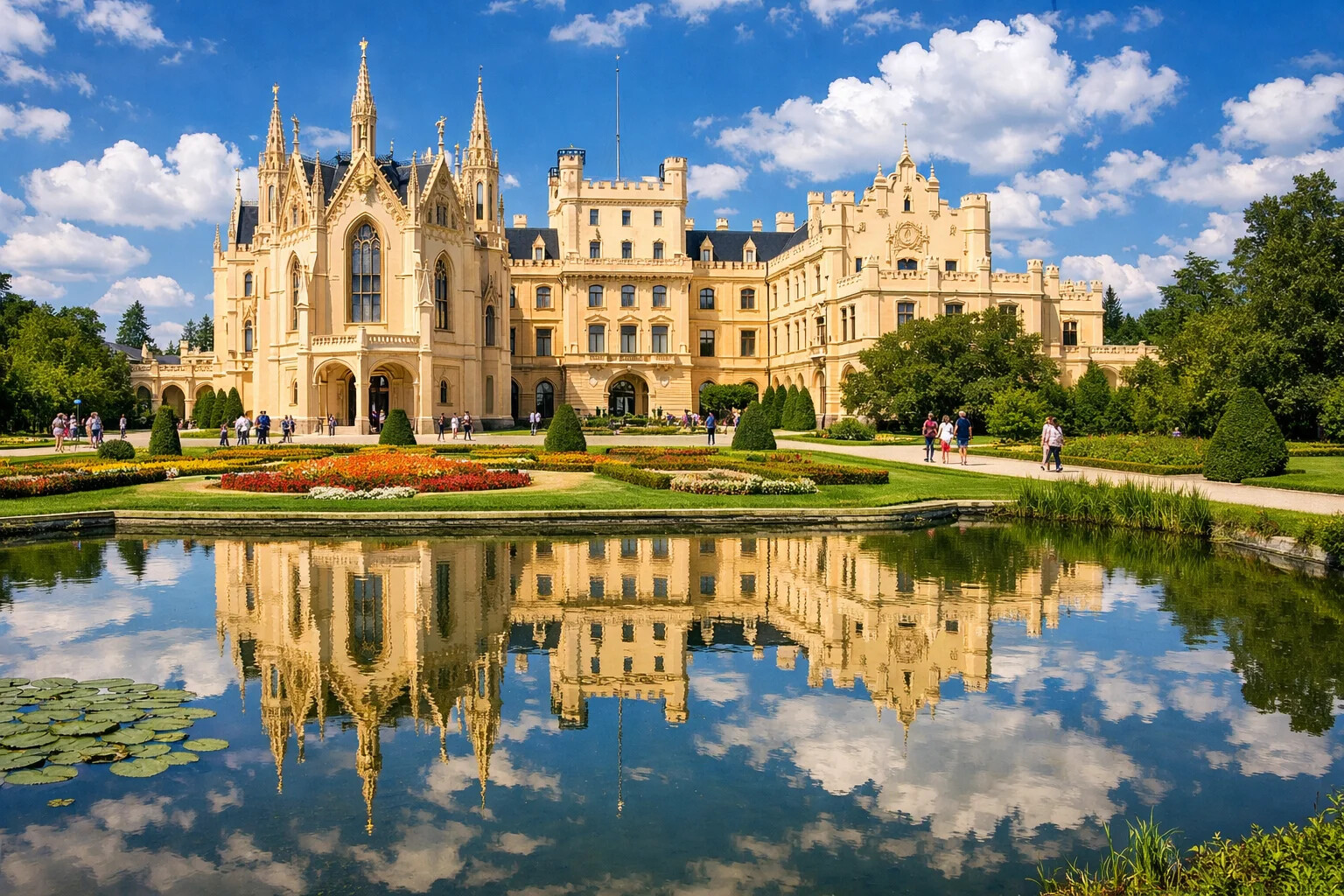
Lednice Château Gardens
Neo-Gothic elegance reflected in ornamental waters, centerpiece of a UNESCO cultural landscape
🎭 Festivals & Events
Prague Spring (Pražské jaro, May–June) is one of Europe's premier classical music festivals, held since 1946. Karlovy Vary International Film Festival (July) ranks among the world's most prestigious, attracting A-list stars to the elegant spa town.
Christmas markets transform town squares across the country from late November (Prague's runs to 6 January), with Prague's Old Town Square among Europe's most beautiful. Colours of Ostrava (July) is Central Europe's biggest multi-genre music festival, set in former industrial grounds. United Islands brings free world music to Prague's Vltava islands each June.
Wine lovers flock to the Znojmo Wine Festival and Mikulov Vintage in September. The Signal Festival (October) illuminates Prague with stunning light installations. Masopust (Carnival) in February features traditional costumes and village celebrations, particularly vibrant in the Hlinecko region (UNESCO Intangible Heritage).
Czechia has ten elements on UNESCO's Representative List of Intangible Cultural Heritage: Slovácko verbuňk recruit dances (2008), the Hlinecko Shrovetide processions (2010), the Ride of the Kings in Vlčnov and Slovácko (2011), puppetry (2016, with Slovakia), indigo blueprint (modrotisk, 2018), blown-glass-bead Christmas decorations (2020), falconry (2021), timber rafting (2022), handmade glass production (2023) and — the newest, inscribed in December 2025 — amateur theatre acting, a 200-year-old village tradition with hundreds of active companies. The Ride of the Kings takes place in Vlčnov on the last weekend of May.
🎒 Packing Tips
Footwear is crucial — Prague's cobblestone streets and castle hills demand comfortable walking shoes with good support. Pack layers for unpredictable weather; temperatures can swing 15°C in a single day. A compact umbrella and light rain jacket are essential year-round.
For summer: light clothing, sunscreen, sunglasses. For winter: a warm coat, hat, gloves, and scarf — temperatures drop below freezing. A power adapter (Type E, 230V) is essential for American devices. Casual dress is fine most places; smart casual for upscale restaurants and the opera.
🌐 Useful Resources
Essential websites and apps for planning and navigating the Czech Republic:
🔗 Online Resources
- Tourism Portalvisitczechia.com
- Prague Tourismprague.eu
- Train Ticketscd.cz, regiojet.com
- Prague Transportdpp.cz (PID Lítačka app)
- Castles & Monumentsnpu.cz
- Mapsmapy.cz (excellent local maps)
📚 Recommended Reading
Deepen your understanding of Czech culture with these essential reads: "The Unbearable Lightness of Being" by Milan Kundera captures the Prague Spring era. "The Trial" and other works by Franz Kafka embody Prague's kafkaesque atmosphere. "The Good Soldier Švejk" by Jaroslav Hašek is Czech humor at its finest — satirizing bureaucracy and militarism.
"Prague: A Cultural and Literary History" by Richard Burton offers deep context. Václav Havel's essays and plays illuminate the dissident experience. For history, try "Prague in Black and Gold" by Peter Demetz or "The Coasts of Bohemia" by Derek Sayer.
🔬 Fascinating Facts
The Czech Republic is a nation of inventors and world firsts. The word "robot" entered global vocabulary from Karel Čapek's 1920 play R.U.R., though his brother Josef actually coined it. Otto Wichterle invented soft contact lenses in 1959 — remarkably, using his children's building kit and his wife's gramophone motor to build the first lens-making machine at home after the communist government cut his funding. Czechs gave us the sugar cube (Jakub Kryštof Rad, 1843, in Dačice, after his wife cut herself breaking sugar loaves), blood type classification (Jan Janský, 1907), and Semtex plastic explosive (Stanislav Brebera, 1964).
The Astronomical Clock in Prague has operated since 1410, making it the world's oldest working astronomical clock. Czechs are the undisputed world champions in beer consumption — about 121 litres per person in 2025 (down from 160+ two decades ago, yet still the world's highest for the 32nd year running) — and in many Czech pubs, beer costs less than water. The country has approximately 2,000 castles and châteaux, among the highest densities in Europe. The unique Czech letter "Ř" represents a distinctive sound in Czech. Czechs were the third nation to reach space (Vladimír Remek, 1978). Dvořák composed his New World Symphony while working in the United States. The country has an extensive network of marked hiking trails. And the famous Prague defenestrations (throwing people out of windows) sparked both the Hussite Wars (1419) and the Thirty Years' War (1618).
Modern Czech innovation continues: Josef Průša built one of the world's largest 3D printer farms in Prague, Professor Antonín Holý developed the compound behind Truvada for HIV treatment, and the Technical University in Liberec pioneered industrial nanofiber production. More than 70% of Czechs go mushroom hunting at least once a year — it's practically a national sport.
⭐ Notable People
Czech lands have produced remarkable figures across every field: composers Antonín Dvořák (New World Symphony), Bedřich Smetana (Má vlast), and Leoš Janáček; writers Franz Kafka, Milan Kundera, and Bohumil Hrabal; and artist Alphonse Mucha, who defined Art Nouveau aesthetics.
Scientist Gregor Mendel (genetics pioneer) worked in Brno. Sigmund Freud was born in Moravia. Tennis stars Martina Navrátilová and Ivan Lendl dominated their sport. Václav Havel led the Velvet Revolution and became a moral leader of the post-Cold War era. Madeleine Albright, the first female US Secretary of State, was born in Prague. Today's public face of the country is President Petr Pavel, a former chairman of the NATO Military Committee, while 19-year-old speed skater Metoděj Jílek became the youngest Olympic champion in Czech history at Milano Cortina 2026.
⚽ Sports
Ice hockey is the undisputed national passion, where the Czech Republic punches far above its weight. The Czech men's national team won Olympic gold at Nagano 1998 — the first Games with NHL players — plus seven World Championship titles as an independent nation — the latest won at home in Prague on 26 May 2024, when a sold-out O2 Arena watched Czechia beat Switzerland 2–0 for its first world title since 2010. The team fell in the quarter-finals at the 2025 Worlds (to eventual champions USA) and again at Zurich 2026 (1–4 to Finland, 28 May 2026), and it consistently ranks among the world's elite despite the country's small population. The domestic Czech Extraliga features passionate rivalries, with HC Sparta Praha, HC Kometa Brno, and HC Oceláři Třinec filling arenas with deafening crowds.
Czech hockey's greatest icon is Jaromír Jágr, whose professional career ran from 1988 to a 38th and final season with his hometown Rytíři Kladno in 2025–26 — his last game came on 21 December 2025 at the age of 53, and by August 2026 he had confirmed he would not play again. He remains the NHL's second-leading points scorer of all time behind Wayne Gretzky. Jágr won two Stanley Cups with Pittsburgh (1991, 1992), five Art Ross Trophies, and Olympic gold in 1998. Known for his legendary work ethic and signature mullet, Jágr inspired generations of Czech players. Other legends include goaltender Dominik Hašek (six-time Vezina Trophy winner), Patrik Eliáš (New Jersey Devils' all-time leading scorer), and current stars David Pastrňák and Filip Hronek. Catching a game at Prague's O2 Arena during the Extraliga season offers an authentic glimpse into Czech hockey passion.
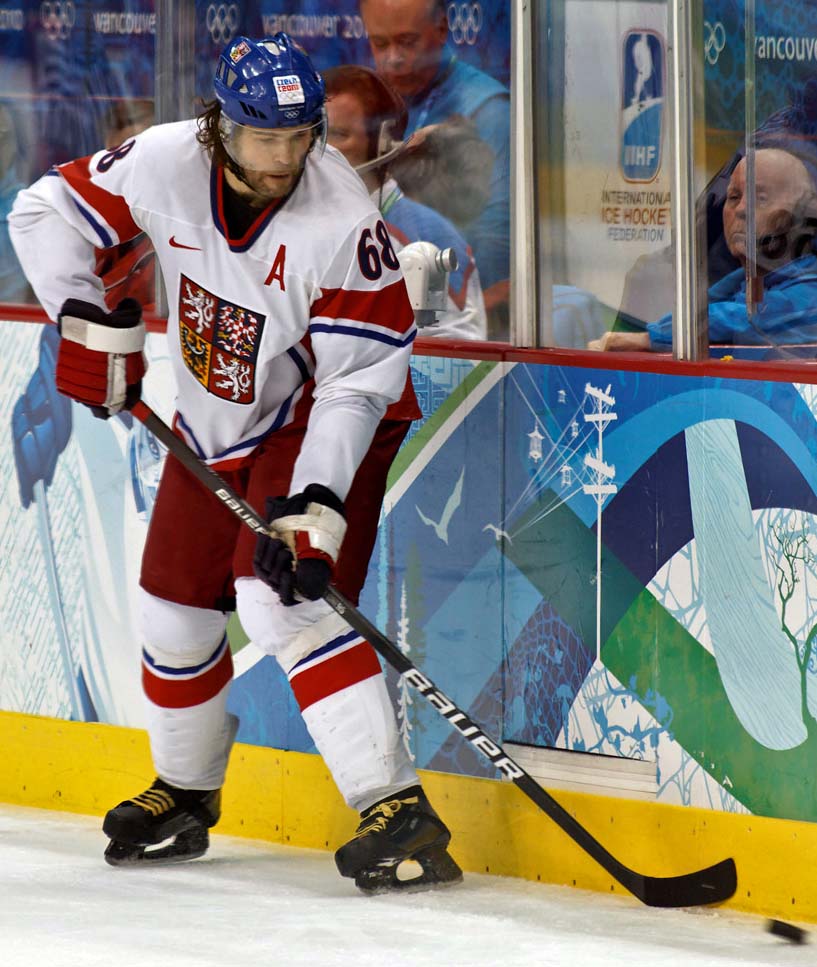
Jaromír Jágr playing against Russia at the 2010 Winter Olympics in Vancouver.
At the Milano Cortina 2026 Winter Olympics, Czechia finished 16th in the medal table with five medals — two gold, two silver, one bronze — its best Winter Games showing in years. Speed skater Metoděj Jílek took gold in the men's 10,000m (and silver in the 5,000m), while snowboarder Zuzana Maděrová won the women's parallel giant slalom. David Pastrňák carried the flag at the opening ceremony, but the men's hockey team — the tournament everyone back home watches closest — was eliminated before the final, with the United States taking gold over Canada.
Football (soccer) follows closely, with eternal rivals Sparta Prague and Slavia Prague dominating the Chance Liga (the top flight, sponsored as the Fortuna Liga until 2024). Czech football peaked in the 1990s and 2000s with players like Pavel Nedvěd (Ballon d'Or winner, 2003), Petr Čech (Premier League's all-time clean-sheet leader), and Milan Baroš. The national team memorably reached the Euro 1996 final and the Euro 2004 semifinals. After a 20-year absence it returned to the FIFA World Cup in 2026, beating Denmark 3–1 on penalties (2–2 after extra time) in the play-off final in Prague on 31 March 2026 — then finished bottom of Group A: 1–2 to South Korea in Guadalajara (11 June), 1–1 with South Africa in Atlanta (18 June, Michal Sadílek's sixth-minute goal the tournament's fastest to that point) and 0–3 to Mexico at the Estadio Azteca (24 June). Modern stars include Tomáš Souček (West Ham) and Patrik Schick (Bayer Leverkusen).
Tennis enjoys massive popularity thanks to generations of champions — Martina Navrátilová (18 Grand Slam singles titles), Ivan Lendl (8 Grand Slams), Petra Kvitová (two-time Wimbledon champion), and Karolína Plíšková. The newest generation has kept the pipeline flowing: Barbora Krejčíková won Wimbledon in 2024, Kateřina Siniaková and Tomáš Macháč took Olympic mixed-doubles gold in Paris 2024, and 19-year-old Jakub Menšík beat Novak Djokovic in the 2025 Miami Open final. Kvitová retired in 2025. Czechs also excel in biathlon, cross-country skiing, and cycling. For visitors, the Krkonoše Mountains offer world-class skiing and snowboarding, while scenic cycling trails crisscross the countryside, especially the picturesque Moravian wine routes.
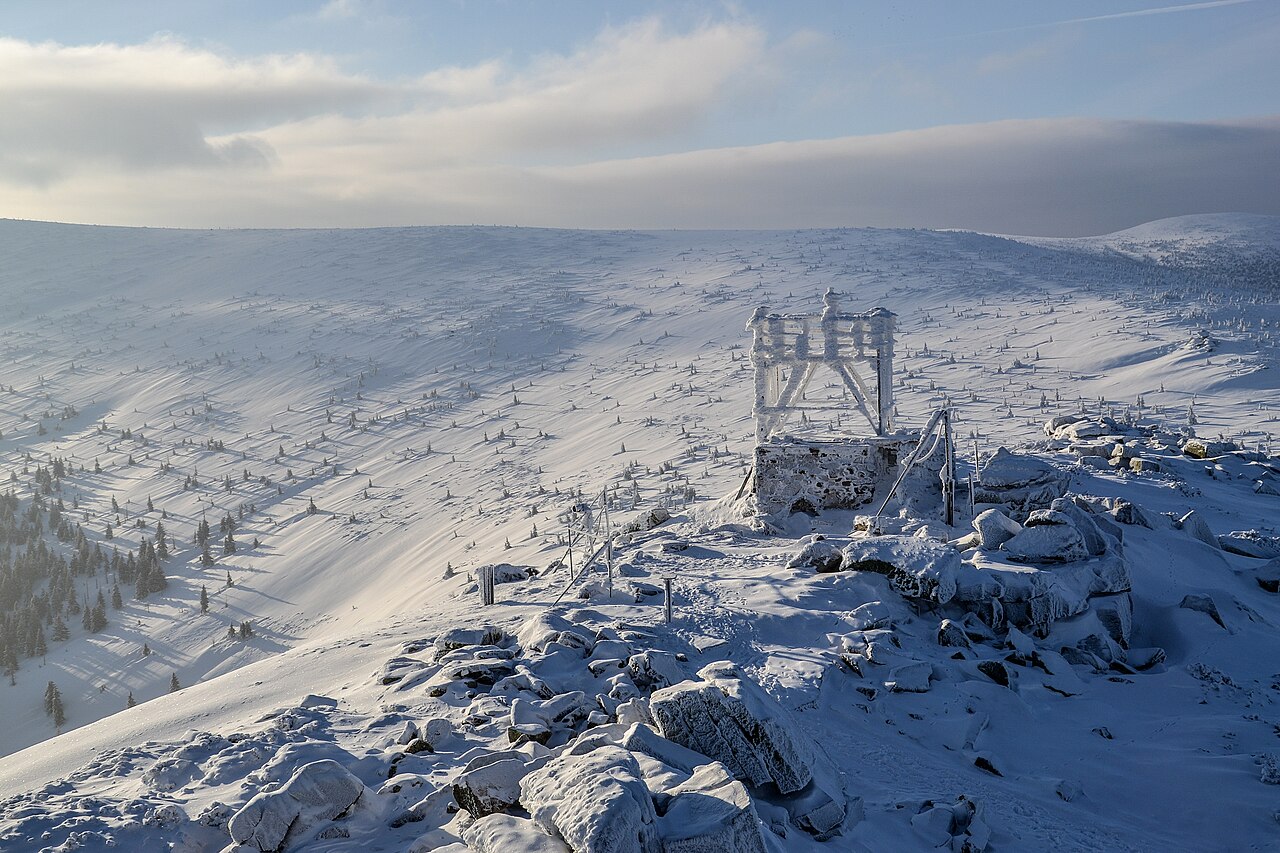
The Giant Mountains in winter, viewed from Szrenica on the Polish side of the range.
📰 Media & Press Freedom
The Czech Republic maintains a free press with a diverse media landscape. Major outlets include Czech Television (ČT), Czech Radio, and news brands including Hospodářské noviny, Lidové noviny, and Mladá fronta DNES. International news is readily available, and English-language coverage includes Prague Morning, Expats.cz, and Radio Prague International.
Press freedom is constitutionally protected, though concerns have been raised about media ownership concentration. The country ranks well in international indices — 11th of 180 in the RSF World Press Freedom Index 2026, down one place from its 2025 top-ten debut — maintaining traditions of independent journalism that date to the dissident underground press of the Communist era. Two live concerns in 2026: Kaprain acquired MAFRA in 2024; on April 1, 2026, the Czech competition authority approved Tymeprax's acquisition of a 50% stake, providing for joint control with Kaprain, and in June 2026 his cabinet approved a bill to abolish the TV and radio licence fee and fund Czech Television and Czech Radio directly from the state budget at a lower level — a move the International Press Institute says may breach the EU Media Freedom Act, that triggered a 24-hour strike by both broadcasters, and that the culture minister has since conceded will not take full effect by the planned 1 January 2027.
🚇 Getting Around
Prague's public transport is excellent — metro, trams, and buses operate 5 AM to midnight, with night trams after. Buy tickets before boarding from machines or use the PID Lítačka app. The historic tram 22 route is a scenic city tour passing major sights.
Trains connect all major cities efficiently. Czech Railways (ČD) offers older but reliable service; private operators RegioJet and Leo Express provide modern coaches with WiFi, coffee bars, and competitive prices. Buses (Flixbus, RegioJet) are often faster and cheaper for certain routes. Car rental is useful for castle-hopping and rural exploration but unnecessary in cities.
🚇 Prague Transport Tips
- Single ticket (90 min)CZK 46 in the app / CZK 50 on paper
- 24-hour passCZK 140 in the app / CZK 150 on paper
- 3-day passCZK 340 in the app / CZK 350 on paper
- AppPID Lítačka (tickets + planning)
- TramsRun every 4–10 minutes
💎 Czech Crystal & Bohemian Glass
Czech glassmaking tradition spans over 700 years, establishing Bohemia as the world capital of crystal and decorative glass. The craft began in the mountain forests of northern Bohemia in the 13th century, where abundant wood for furnaces and silica sand created ideal conditions. By the 17th century, Bohemian crystal had surpassed Venetian glass in prestige, prized by European nobility for its exceptional clarity, brilliant cut patterns, and ability to refract light into rainbows.
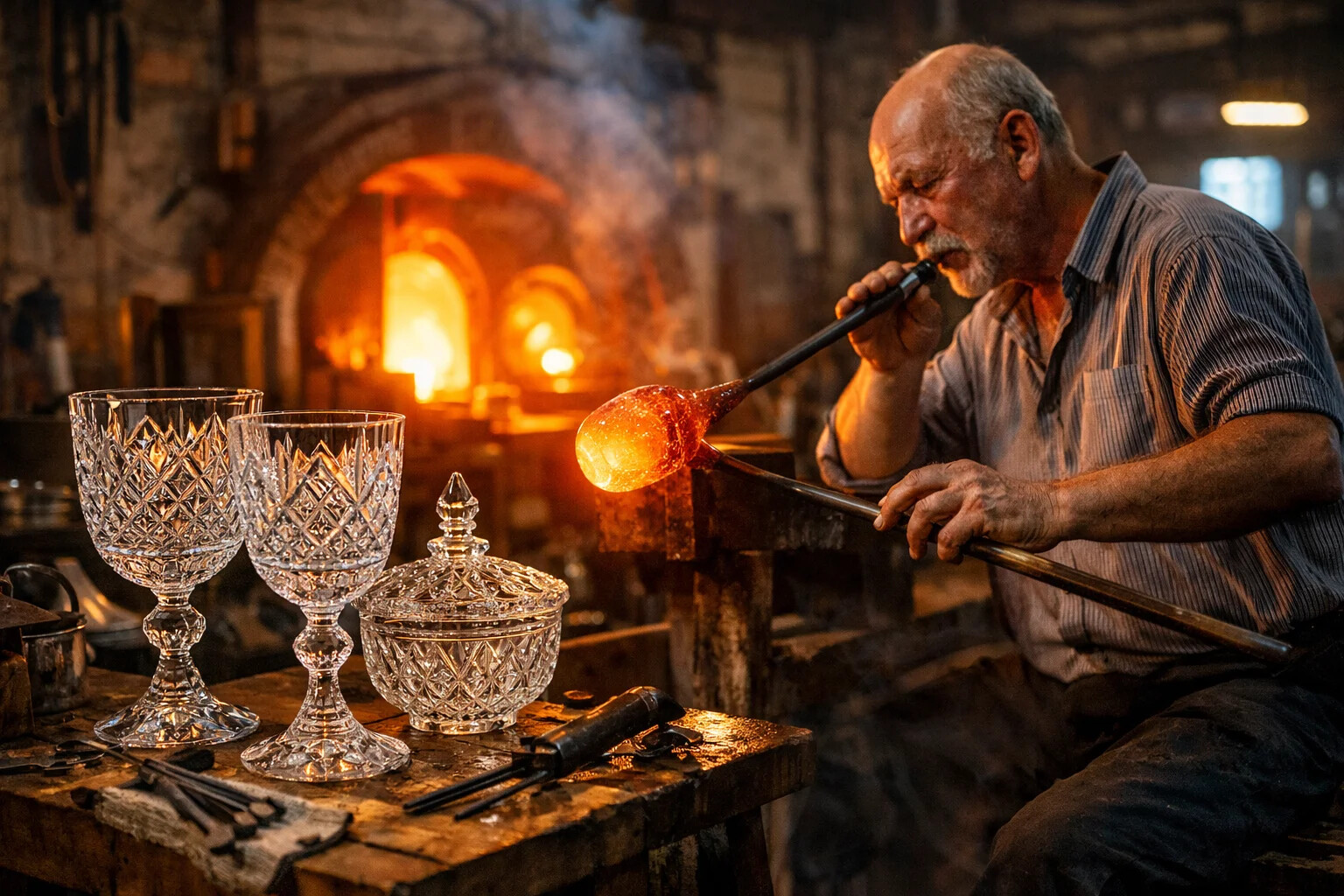
Bohemian Crystal Tradition
A master craftsman shapes molten glass with centuries-old techniques, creating world-renowned Czech crystal
Traditional Czech crystal contains lead oxide (24–30%), giving it exceptional weight, brilliance, and the distinctive "ring" when tapped. Master craftsmen spend years perfecting techniques of hand-blowing, cutting, engraving, and polishing. Famous glassmaking regions include Jablonec nad Nisou (costume jewelry and glass buttons), Nový Bor (artistic glass), and Karlovy Vary (Moser crystal). The Moser Glassworks, founded in 1857, became the official crystal supplier to royal courts across Europe and maintains its reputation for lead-free luxury crystal today.
Visitors can tour working glassworks, watch demonstrations of glass-blowing and cutting, and buy directly from workshops. The Museum of Glass and Jewelry in Jablonec and the Glass Museum in Nový Bor showcase the evolution of Czech glassmaking from medieval forest furnaces to contemporary art glass. Shop carefully — authentic Czech crystal should carry a certificate of origin, since imports from China flood tourist shops with inferior imitations.
🍺 Czech Beer Culture — Pilsner & Pivo
Czechs consume more beer per capita than any nation on Earth — about 121 litres per person in 2025 according to the Czech Beer and Malt Association — a historic low, yet still comfortably ahead of Austria and Germany, and the 32nd consecutive year at the top. This isn't merely statistics; beer (pivo) is woven into the fabric of daily Czech life, culture, and national identity. The phrase "Na jedno" (for one) is a ubiquitous invitation to the pub, where conversations, friendships, and business relationships are cemented over perfectly poured half-liters.
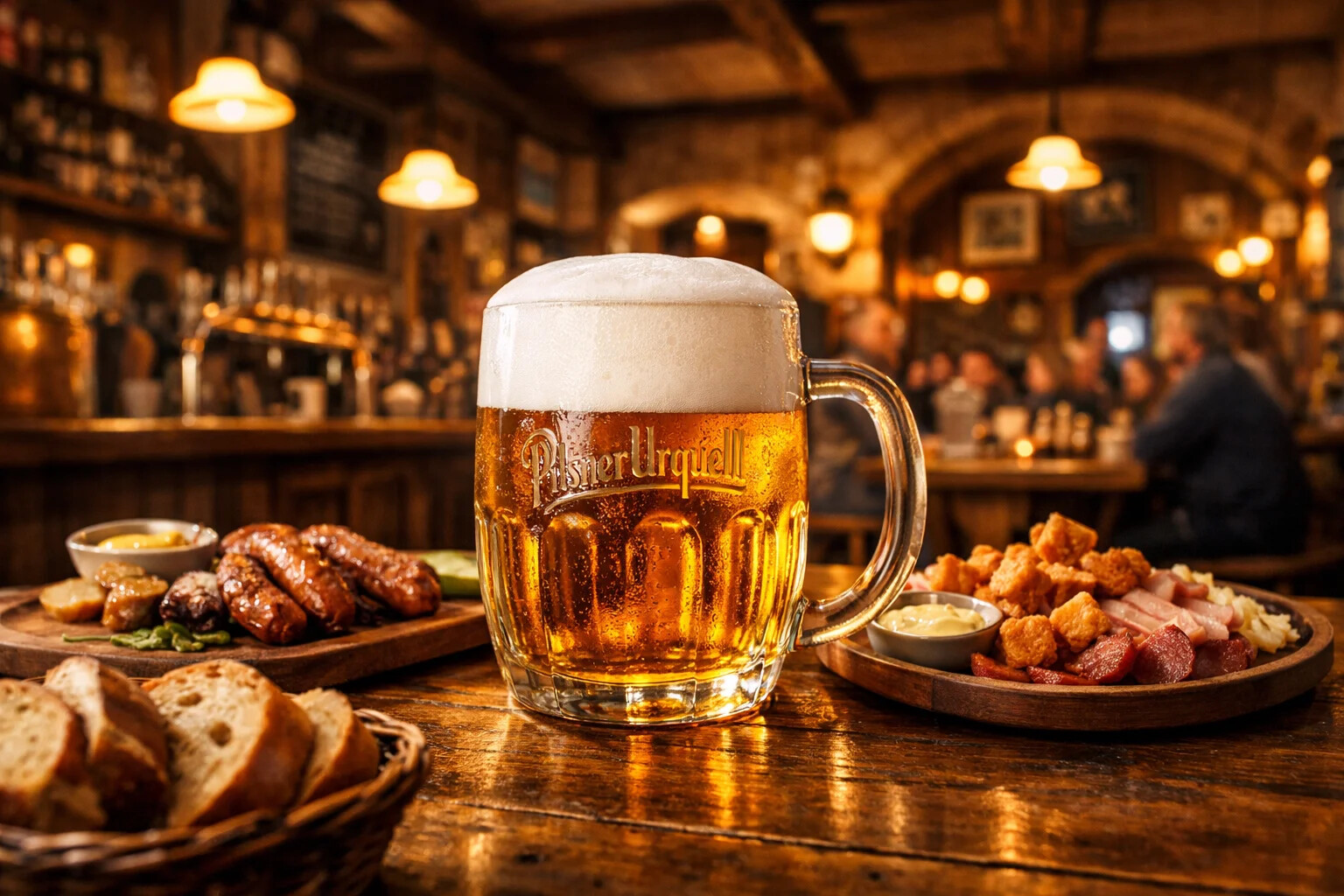
Pilsner Urquell — The Original Golden Lager
A perfect foam crown (pěna) atop golden lager in an authentic Czech hospoda, the birthplace of the pilsner style
Czech brewing tradition dates to 993 AD, when the Benedictine Břevnov Monastery established Central Europe's first documented brewery. But Czech beer's defining moment came on October 5, 1842, when Bavarian brewmaster Josef Groll created the world's first golden lager at Pilsen's Měšťanský Pivovar (Citizens' Brewery). This revolutionary Pilsner Urquell (Plzeňský Prazdroj) combined soft Pilsen water, Moravian barley, aromatic Žatec (Saaz) hops, and bottom fermentation to produce a clear, golden, hoppy beer that transformed world brewing. Pilsner helped popularize pale lager; today, pilsner-style lagers account for around 70% of global beer production.
Czech beers are categorized by degrees (stupňovitost), measuring the density of dissolved malt sugars before fermentation, not alcohol content. Desítka (10°, ~4% ABV) is the everyday sessionable beer, dvanáctka (12°, ~5% ABV) is the premium standard, and special beers range up to 15–20°+. Major Czech brands include Pilsner Urquell (Plzeň), Budweiser Budvar (České Budějovice — the original Budweiser, unrelated to the American brand), Staropramen (Prague), Kozel (Velké Popovice), and Bernard (Humpolec). Craft beer has exploded in recent years, with excellent microbreweries across the country.
The traditional Czech hospoda (pub) is a sacred social space — unpretentious, with simple wooden tables, efficient waitstaff who keep refilling your beer without asking, and an unspoken code of "pivní čest" (beer honor), where you pay for what you drank honestly. Cigarette smoking inside pubs and restaurants has been prohibited since 2017. Beer is served at precisely 6–8°C with a proper two-finger foam crown (pěna). The ritual of "na zdraví!" (to health!) accompanies the first sip, always with direct eye contact — failing to make eye contact allegedly curses you to seven years of bad luck in love, according to Czech superstition.
🍻 Famous Prague Pubs — Tourist Magnets
Prague's most famous pubs blend history, atmosphere, and tourist appeal — some authentic, others verging on beer-themed attractions. These legendary establishments draw visitors from around the world, though purists argue they've lost their soul to tourism. Still, each offers a glimpse into Czech beer culture, albeit one polished for international crowds.
🍺 Legendary Prague Beer Halls
- U Fleků (1499)Medieval brewpub serving only their dark 13° lager. A tourist trap with an oompah band, but 500+ years of history. Avoid aggressive waitstaff pushing shots.
- U Zlatého Tygra (Golden Tiger)Legendary dive bar where Havel and Clinton drank together in 1994. Authentic atmosphere, surly service, packed with locals. Pilsner Urquell at its grittiest.
- U Dvou Koček (Two Cats)16th-century Gothic cellar near Charles Bridge. Tank Pilsner Urquell, medieval vaults, tourist-friendly but still charming.
- Lokál (Multiple Locations)A modern chain capturing traditional hospoda spirit. Excellent unpasteurized Pilsner Urquell, efficient service, Czech pub food done right.
- U Medvídků (Little Bears)Operating since 1466; brews X-BEER 33, one of the world's strongest beers at 12.6% ABV. Historic halls, brewery tours, beer museum.
- Pivovarský Dům (Brewhouse)Creative microbrewery with nettle beer, cherry beer, and banana beer. Fun for beer adventurers; traditional brewers roll their eyes.
Insider tips: real Prague locals avoid these tourist pubs, instead frequenting neighborhood hospody in Žižkov, Vinohrady, or Karlín, where beer is half the price and the atmosphere is genuine. If you visit the famous pubs, go at off-peak hours (3–5 PM), never accept shots from waitstaff without asking the price first (a common trick at U Fleků), and remember that Czechs value quiet conversation over loud revelry. The perfect Czech pub experience balances history, atmosphere, and beer quality without sacrificing authenticity to tourism.
🎬 Videos About the Czech Republic
Six handpicked documentaries and travel films — Prague from above, Karlštejn's crown-jewel fortress, the birth of Pilsner, Český Krumlov's fairytale streets, Moravian wine country, and the Velvet Revolution. Watch the videos →
📸 Photo Gallery
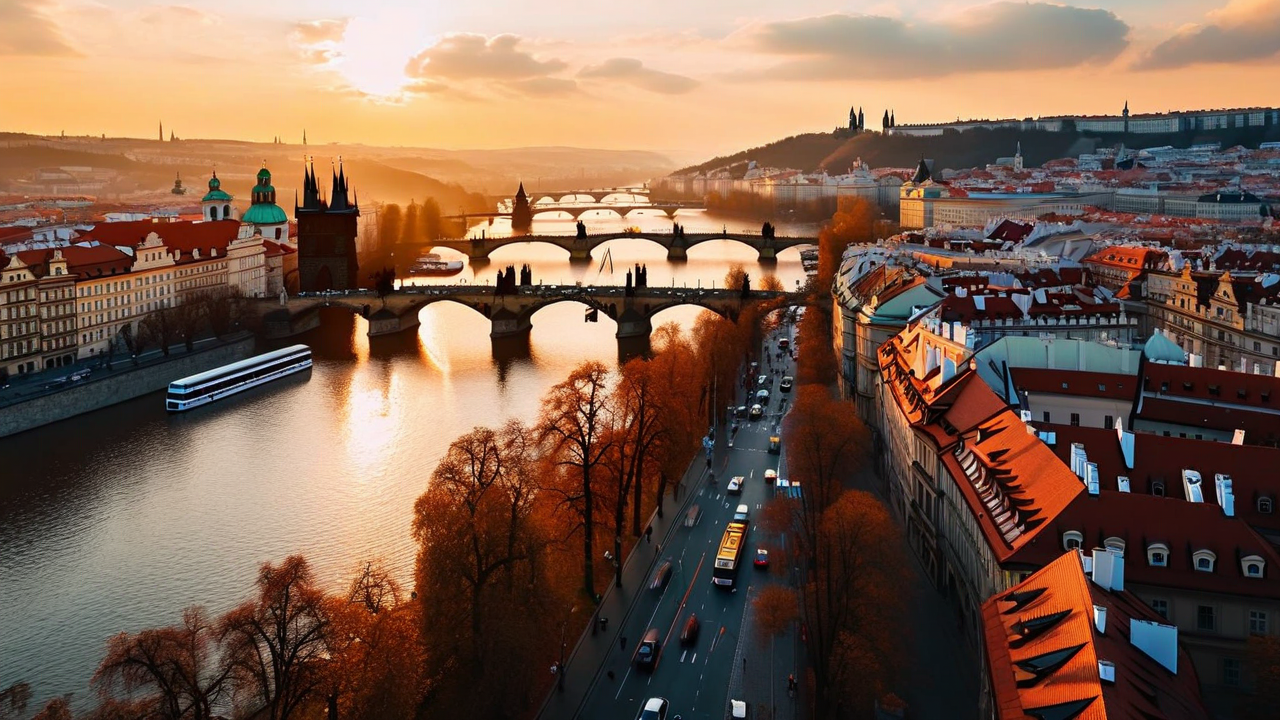
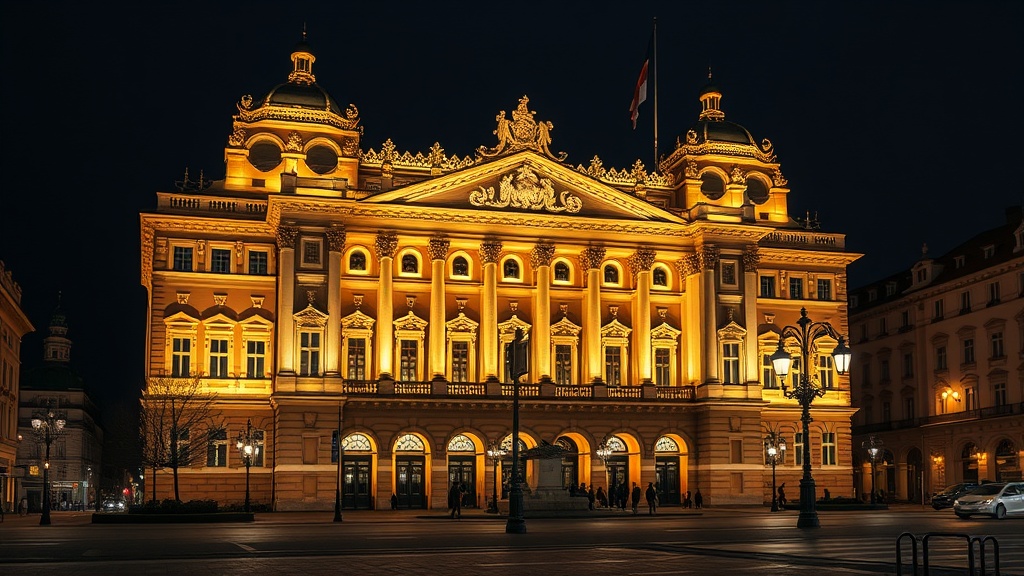
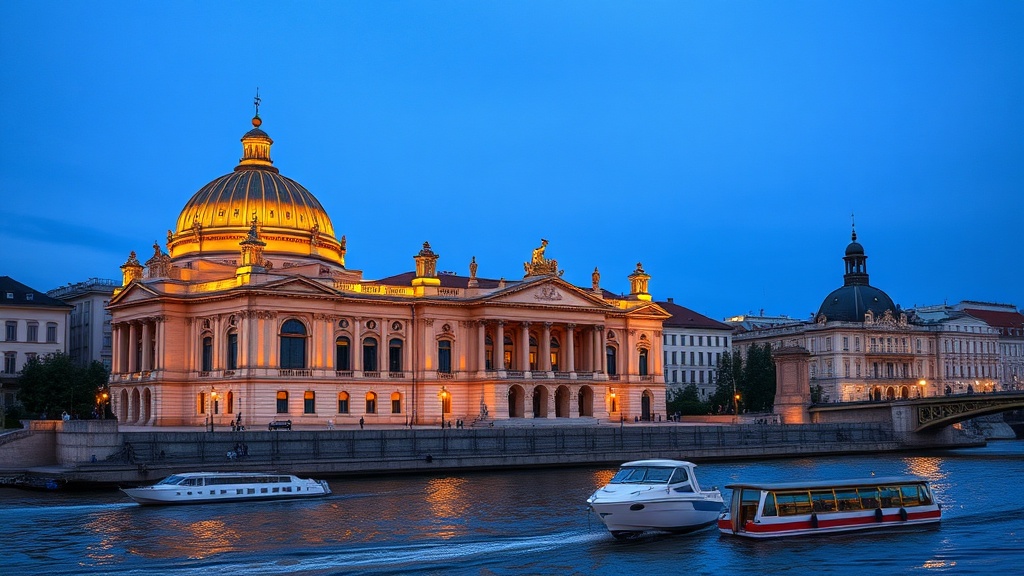
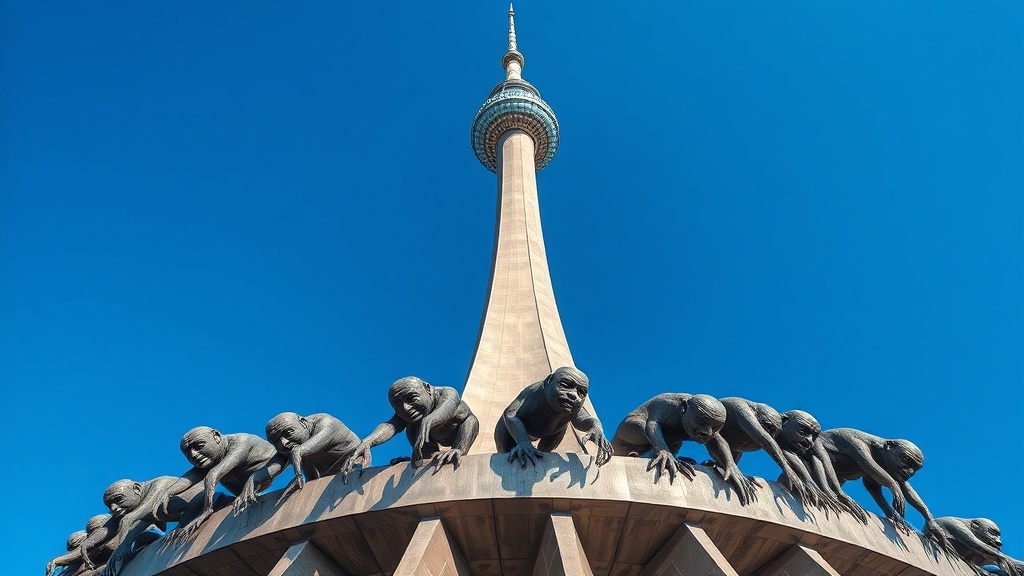
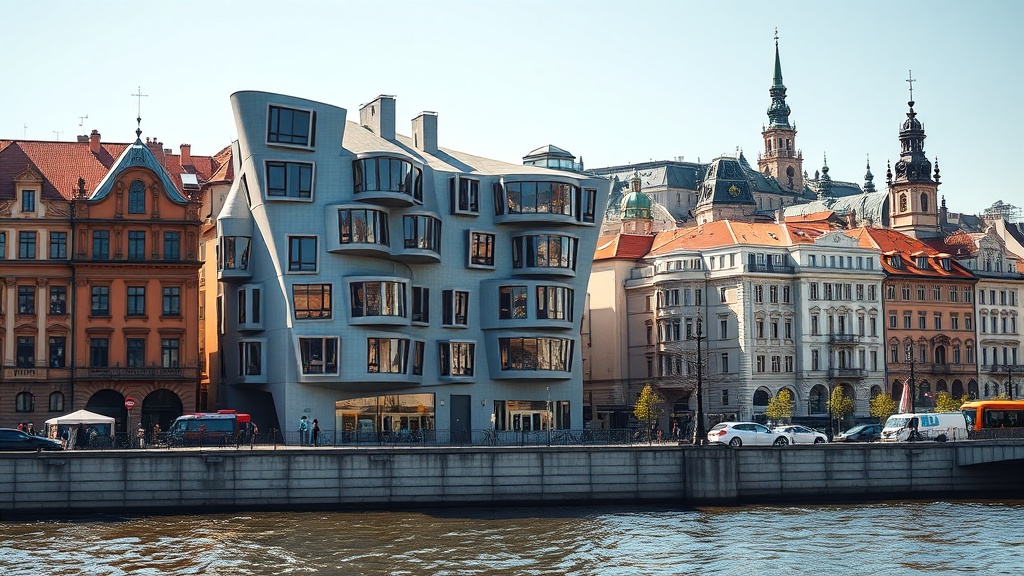
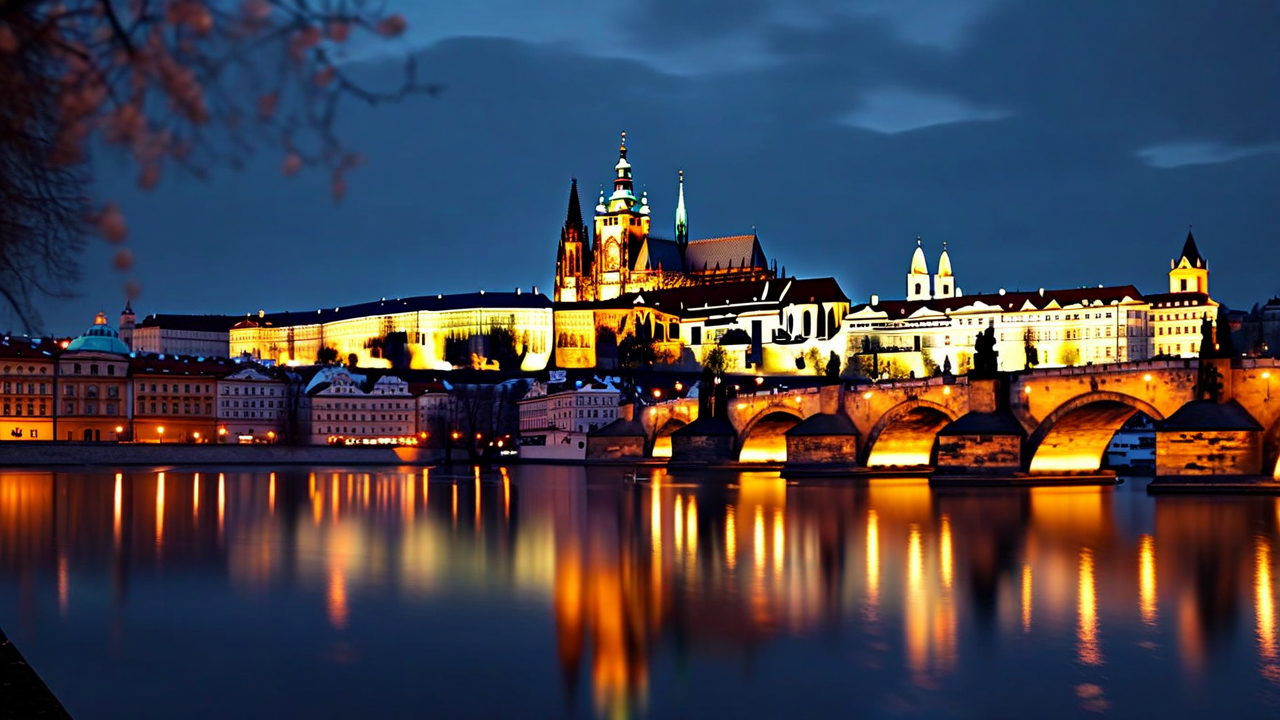
The Czech Republic offers endless photographic opportunities — from Prague's Gothic spires to Moravian vineyards, from medieval squares to Art Nouveau façades. The best light for Prague Castle shots comes at sunrise from Charles Bridge or sunset from Letná Park.


✍️ Author's Note
This is the one entry in the whole Factbook I didn't have to research. I grew up here, which makes it the hardest one to write honestly — it's difficult to see your own country the way a first-time visitor does, all castles and colonnades and golden light on the Vltava. What I actually remember is quieter: the specific hiss of a tram braking on wet rails in November, the smell of a hospoda at 4pm before it fills up, my grandmother's svíčková, which by rule was better than any restaurant's and by rule I was never allowed to say so out loud.
Prague deserves every superlative thrown at it, and I'd still tell you to spend fewer nights there than you're planning. The country reveals itself in the places tourists skip on the way to somewhere else: an Olomouc square nobody photographs enough, a Moravian sklep where a family will pour you their own wine and refuse payment, a village pub where the regulars go quiet for exactly as long as it takes to size you up, then wave you to a stool. None of it is trying to be beautiful for you. That's precisely why it is.
If I can ask one thing: don't just do Prague Castle and the Charles Bridge photo and fly home. Take the train two hours in any direction. Sit in a pub until someone older than you starts talking. Say "na zdraví," look them in the eye, and mean it. This is a small country that has spent a thousand years being fought over by larger ones and somehow kept its sense of humor about all of it. That's the real souvenir — you just have to slow down enough to notice it's being offered.
— Radim Kaufmann, September 2026