

🇯🇪 Jersey at a Glance
🌍 Overview
Jersey is 118.2 km² — about a fifth the size of Prague — with roughly 104,000 residents, and it sits 22 km from the coast of Normandy and 160 km from England. You can drive across it in twenty minutes and walk round the whole coast in three days. Almost everything interesting about it follows from being small, being close to France, and having spent eight hundred years arranging not to belong to anybody.
It is not part of the United Kingdom and never has been. It is not in the European Union and was not in it before Brexit either. It is a Crown Dependency: a self-governing possession of the Crown with its own parliament, courts, laws, taxes, immigration rules and currency, for which the UK handles defence and formal international representation. The constitution section explains how that works, because almost nobody gets it right first time.
The island
A tilted granite plateau, high along the north coast and sloping south, which is why the north is cliffs and the south is bays. The whole thing is divided into twelve parishes — each named for a saint, each with an elected connétable who sits in the parliament — and the parish is still a real unit of government here, running the honorary police and much of local administration.
The people
About 104,000, of whom roughly half were born on the island. There are substantial Portuguese and Madeiran, Polish and Romanian communities, mostly arrived to work in agriculture, hospitality and construction, and Portuguese is the second most spoken language after English. Housing costs and the population cap are the two subjects that dominate island politics.
The economy
Financial services — banking, funds, trusts and company administration — account for something over 40% of the economy and around a quarter of employment. Jersey has a 20% flat income tax, a 5% goods and services tax, no capital gains tax and no inheritance tax, which is the whole point and also the whole controversy. Alongside it sit tourism, agriculture (potatoes and dairy) and digital.
What visiting is like
Compact, comfortable and much stranger than it looks. On the surface it is a mild English seaside county with better weather; underneath it is a Norman jurisdiction where the courts still use French legal terms, where a farmer can raise a centuries-old cry of Haro! to stop work on his neighbour's land, and where the sea uncovers ten square kilometres of seabed twice a day. Give it four days rather than a weekend.
🏷️ The Name and the Identity
The origin of "Jersey" is genuinely uncertain. The most common explanation makes it Norse — -ey is the Old Norse for island, as in Guernsey, Alderney and Chausey — with a first element that has been read as a personal name Geirr, or as a corruption of the Roman Caesarea. Neither is proven. The Romans certainly knew the islands and called one of them Caesarea, but which one is disputed.
What islanders call it
In Jèrriais, the island's own Norman language, it is Jèrri and the people are Jèrriais. In French, which remains an official language of the States Assembly, it is Jersey and the jurisdiction is the Bailliage de Jersey. The affectionate nickname for a Jersey person, used by islanders and mildly resented from outsiders, is a crapaud — a toad, which Jersey has and Guernsey does not; Guernsey people are ânes, donkeys, in return.
The flag and the arms
A red saltire on white — the only flag of its kind — with the Plantagenet badge and a crown added in 1981 to distinguish it from the flag of the Irish province of Munster, which is otherwise identical. The arms are three golden leopards on red, granted by Edward I in 1279 and effectively the arms of Normandy: the same three lions that the English kings took to England.
"The Duke of Normandy"
Islanders traditionally toast the monarch as the Duke of Normandy, and Charles III is loyally called that here regardless of what constitutional lawyers say about the title having lapsed in France in 1259. It is a joke that is also a serious statement: Jersey's loyalty is to the person of the Crown, inherited from the Duchy, and not to the British state.
The anthem and the day
Ma Normandie, a nineteenth-century French song, served for years as the island's de facto anthem until Island Home was adopted in 2008 — Ma Normandie being awkward once you notice it is a song about longing to return to France. Liberation Day, 9 May, marking the end of the German occupation in 1945, is the national day and is taken far more seriously than any royal occasion.
🗺️ Geography
Jersey is a tilted block of granite and shale about 14.5 km east to west and 8 km north to south. It rises to 143 m along the north coast and slopes away south, so the geography has a simple logic: cliffs and coves in the north, long sandy bays in the south and west, and a plateau of small fields cut by wooded valleys in between.
The coasts
The north coast is 60–90 m granite cliff with small harbours at Bonne Nuit, Bouley Bay and Rozel. The west is St Ouen's Bay, an unbroken 8 km of sand backed by the largest dune system in the Channel Islands. The south holds St Aubin's Bay, St Brelade's Bay and the town. The east, around Grouville and La Rocque, is the strangest: a vast shallow reef that the tide uncovers for kilometres.
Sunshine
Jersey is the sunniest place in the British Isles, averaging around 1,900 hours a year — more than the south coast of England and comparable to parts of northern France. Winters are mild, frost is uncommon and snow is rare, which is why the island grew early potatoes and tomatoes for the London market and why palms and agapanthus grow outdoors.
The valleys and the plateau
Behind the coast the land is a patchwork of very small fields divided by earth banks and green lanes. Green Lanes — a Jersey invention — are roads with a 15 mph limit where walkers, cyclists and horses have priority over cars, and there are about 80 km of them. St Peter's Valley, Waterworks Valley and Grands Vaux are wooded, damp and completely unlike the coast a kilometre away.
The offshore reefs
Jersey's territorial waters contain several groups of rocks that are part of the Bailiwick: the Écréhous, 10 km from France and with a handful of huts on them, and Les Minquiers ("the Minkies") to the south, a reef that at low water is larger in area than Jersey itself. Sovereignty over both was disputed with France and settled in Jersey's favour by the International Court of Justice in 1953.
Nature
Small, but with things found nowhere else in the British Isles: the agile frog and the green lizard, both at the northern edge of their range and both the subject of long conservation programmes. Puffins cling on in tiny numbers on the north coast. The dunes at Les Mielles are a protected landscape, and offshore the reefs are a Ramsar wetland — the intertidal zone here is one of the richest in Europe.
Getting your bearings
St Helier is on the south coast, roughly in the middle. The airport is in the west, ten minutes from town. Gorey and Mont Orgueil are due east, La Corbière is the south-west corner, St Ouen's Bay is the whole west coast, and the north coast path runs the top. Nothing is more than a 25-minute drive from anything else, and the bus network genuinely reaches all of it.
🌊 The Tides — Jersey's Real Speciality
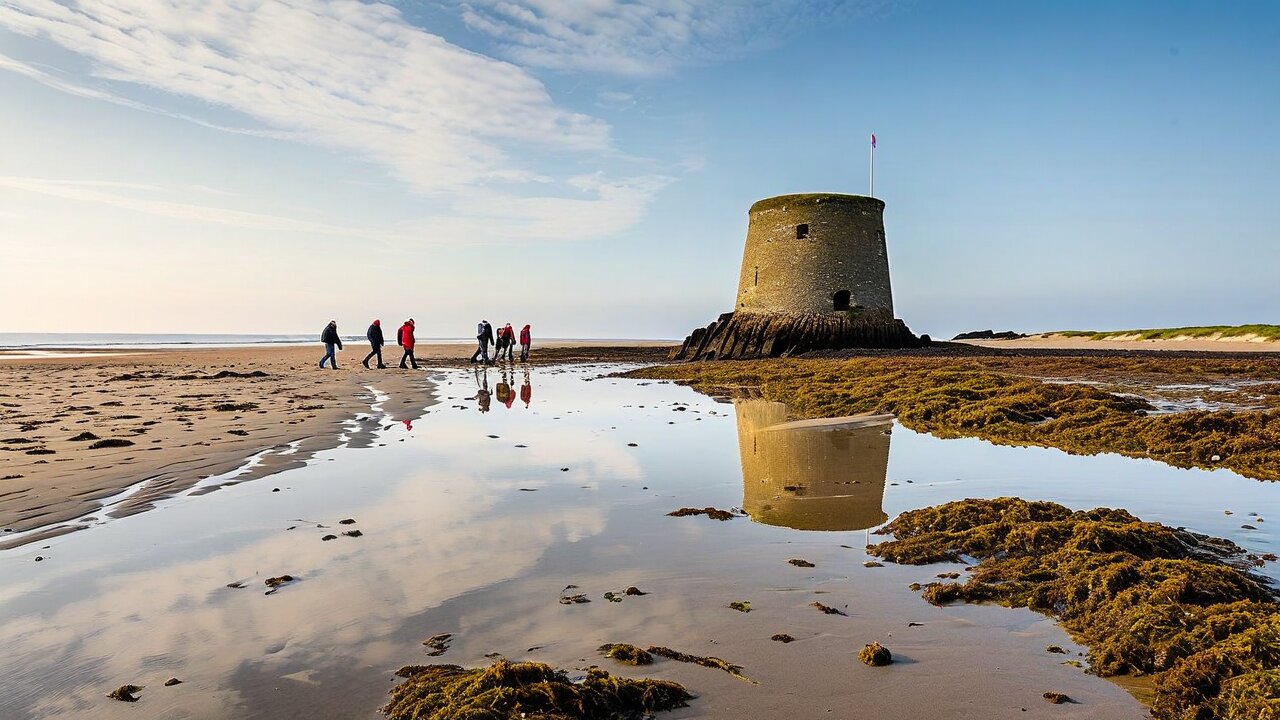
Jersey has one of the largest tidal ranges in the world — around 12 metres on the biggest spring tides, exceeded almost nowhere except the Bay of Fundy, the Severn and the neighbouring Bay of Mont-Saint-Michel. At low water the island's land area effectively grows by about a half, uncovering some ten square kilometres of reef, gully and sand on the south-east.
Why it is so big
The tidal wave coming up the Atlantic is funnelled into the narrowing Gulf of Saint-Malo and piles up. The same effect produces the tides at Mont-Saint-Michel, 50 km away. Water moves fast on the flood — quicker than a person can walk over broken ground — which is why the low-tide zone is beautiful, extraordinary and genuinely dangerous.
Moon walks
Guided walks out onto the exposed seabed are the single most distinctive thing to do here, and they are led by qualified guides for good reason. The classic is the walk to Seymour Tower; others go to Icho Tower, out to the Violet Bank, or across to the causeway islands. Do not go unguided. People are cut off and drowned on this coast, and the rescue services would rather you booked.
Sleeping offshore
Seymour Tower can be rented overnight through Jersey Heritage: you walk out with a guide before the tide, and you are then on a rock two kilometres out to sea, with the water all round you until morning. No electricity, no running water, a gas stove and bunks. It books out a year ahead and is one of the more memorable nights available anywhere in Europe.
What the tide gives you
The exposed reef is a working larder: ormers (abalone, gathered under strict seasonal licence on a handful of low-tide days a year), spider crab, chancre crab, razor clams, mussels and limpets. The Royal Bay of Grouville is Jersey's oyster ground, producing several thousand tonnes a year on trestles that are visible only when the sea goes out.
Tidal power, almost
The range has been eyed for electricity for a century and nothing has been built, because the ecology of the intertidal zone is precisely what makes it valuable. Jersey now imports most of its electricity from France by submarine cable — three of them — which makes the island's power supply unusually low-carbon and unusually dependent on one neighbour.
Practical warning
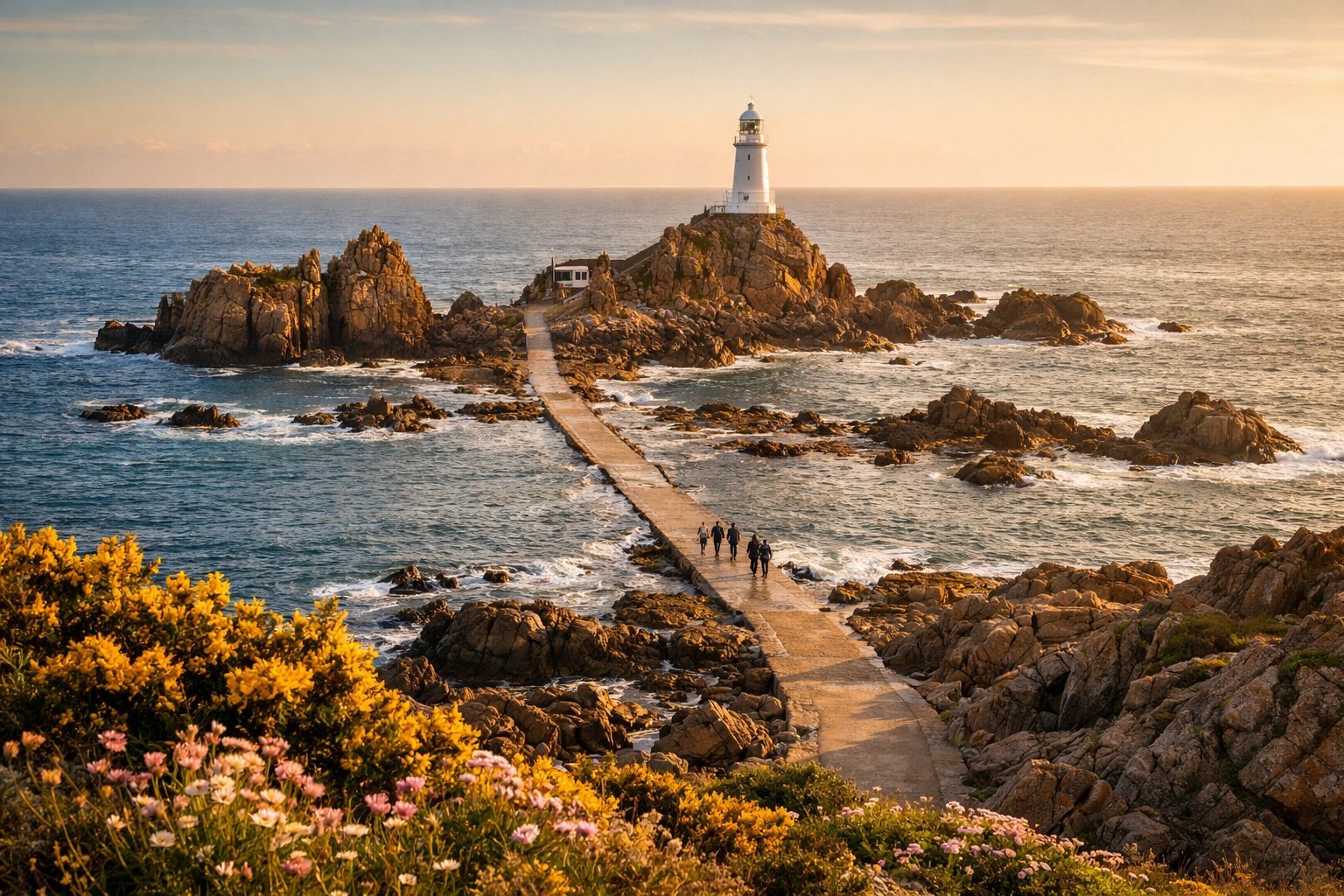
Check the tide table, which every hotel, café and newspaper carries, before you go anywhere near the low-water zone, and be back before the turn. On the causeways — La Corbière, Elizabeth Castle, the Écréhous — the sea comes in behind you rather than towards you. If you are cut off, stay where you are and call 999; do not try to swim it.
📜 Neanderthals, Passage Graves and the Sea
La Cotte de St Brelade
A ravine cave on the south coast that is one of the most important Palaeolithic sites in north-west Europe. It was occupied on and off for a quarter of a million years, and produced thirteen Neanderthal teeth — a 2023 re-examination argued that some show hybrid Neanderthal–modern human traits, which would make them among the very latest Neanderthal remains known. It also holds two extraordinary heaps of mammoth and woolly rhinoceros bones, long interpreted as the remains of animals driven over the cliff.
When Jersey was not an island
For most of that period it was not. Sea levels were far lower and Jersey was a granite hill on a plain running to what is now Normandy. It became an island only around 6,000 BC, and the drowned forest is still occasionally exposed by storms in St Ouen's Bay — tree stumps standing in the sand, thousands of years old.
La Hougue Bie
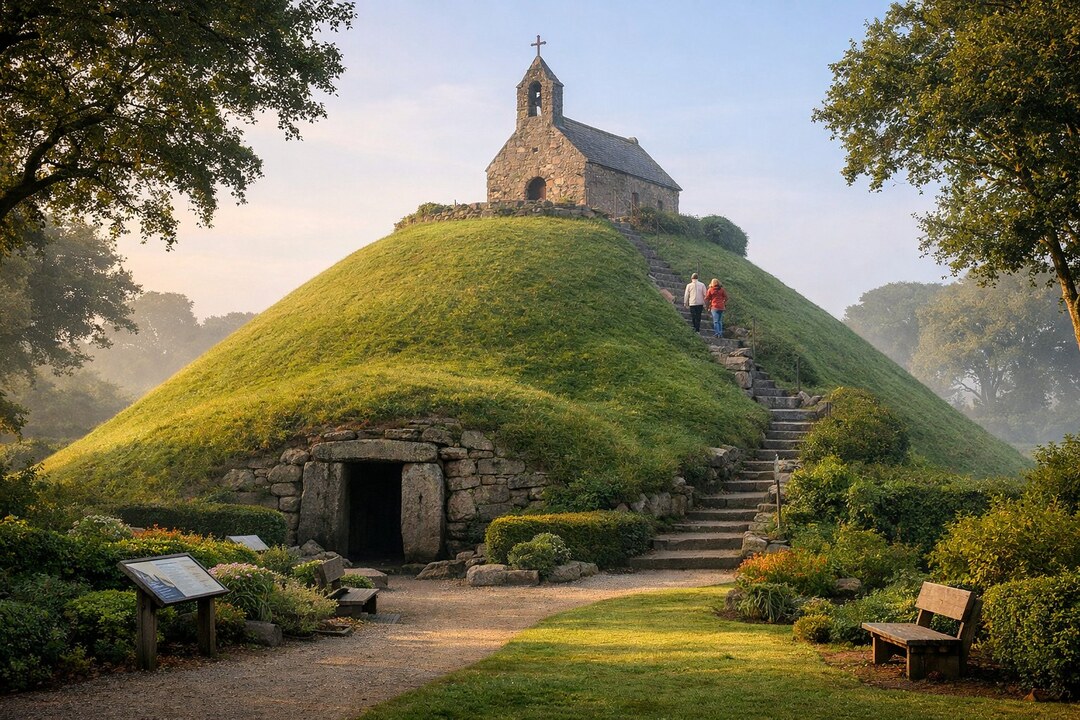
One of the ten best-preserved passage graves in western Europe, built about 3500 BC: a 10 m stone-lined passage under a mound 12 m high, aligned so that the rising sun at the equinoxes shines down it into the chamber. In the twelfth century a chapel was built on top of the mound, and in the sixteenth a second one; in 1943 the Germans dug a command bunker into its side. Four thousand years of use on one hill.
The rest of the megaliths
Jersey has an unusual density of Neolithic sites for its size — around thirty survive. La Pouquelaye de Faldouet, Le Couperon, Les Monts Grantez and the Ville-ès-Nouaux site inside St Helier are all freely accessible, unfenced and usually empty. Jersey folklore attributes them to fairies (pouquelées), which is where several of the names come from.
The Roman question
Surprisingly thin. There is Roman-period material — coins, pottery, a possible shrine at Le Câtel de Rozel — but no villas, no roads and no town, and the islands seem to have been peripheral. The Le Câtillon II hoard, found in 2012 in a Jersey field, is a different matter: around 70,000 Iron Age coins plus gold torcs and jewellery, buried around 30 BC, the largest Celtic coin hoard ever found anywhere. It is on display at La Hougue Bie.
Christianity and the saints
The parish names record sixth- and seventh-century missionaries from Brittany and Ireland. St Helier himself was, by tradition, a hermit who lived on the rock in the bay that Elizabeth Castle now stands on and was killed by raiders around 555; a small chapel on the rock still marks the spot, and an annual municipal pilgrimage walks out to it in July.
⚔️ 1204 and What Followed
The single date that explains Jersey is 1204. In that year King John of England lost mainland Normandy to Philip Augustus of France — and the Channel Islands, alone of the Duchy, chose to stay with him. They were rewarded with the right to keep their own Norman laws and customs, and they have never given them up.
Before 1204
The islands were annexed to the Duchy of Normandy in 933 and passed to England with the Norman Conquest of 1066, so for 138 years there was no border here at all: the duke of Normandy and the king of England were the same man, and Jersey was simply part of Normandy. 1204 turned a mid-Duchy island into a frontier.
The frontier centuries
What followed was five hundred years of being the front line. French forces occupied Jersey in 1461–68; Mont Orgueil was rebuilt repeatedly and then made obsolete by cannon; Elizabeth Castle was built on the rock in the bay from 1594 and named by Sir Walter Raleigh, then governor. The last French attempt, the Battle of Jersey on 6 January 1781, ended in the Royal Square in St Helier when a 24-year-old Major Peirson defeated a landing party and was killed in the moment of victory — a scene painted by John Singleton Copley and now in Tate Britain.
Privileges and privateers
In return for loyalty the island accumulated charters: no taxation by Westminster, its own courts, freedom from English customs duties. Jersey put these to energetic use as a base for privateering against French shipping, and then built a genuinely large merchant fleet, with Jersey firms dominating the Newfoundland cod trade for a century and a half. The wealth from cod paid for much of what looks Georgian in St Helier.
Cows, potatoes and knitting
Three exports made the island's name. The Jersey cow, protected from crossbreeding by an import ban from 1789 that is still in force. The Jersey Royal potato, from 1880, grown on impossibly steep south-facing côtils and shipped to London weeks before anything English is ready. And knitted woollens, exported in such quantity from the sixteenth century that both the jersey and the guernsey entered English as words for a garment.
Victorian arrival
Steamships and the railway made Jersey reachable, and it filled with English residents attracted by mild weather and the absence of English taxes — a pattern that has never really stopped. Victor Hugo spent 1852–55 here in political exile before being expelled for a newspaper attack on Napoleon III, moving on to Guernsey. Jersey's own railways ran from 1870 to 1936; the trackbeds are now walking routes.
Then 1940
On 28 June 1940 German aircraft bombed St Helier harbour, killing nine, and on 1 July the island surrendered. Britain had demilitarised the Channel Islands and — in a decision still argued about — had not made that clear to Berlin. What followed is the next section, and it is the part of Jersey's history that the island talks about most.
🎖️ The Occupation, 1940–1945
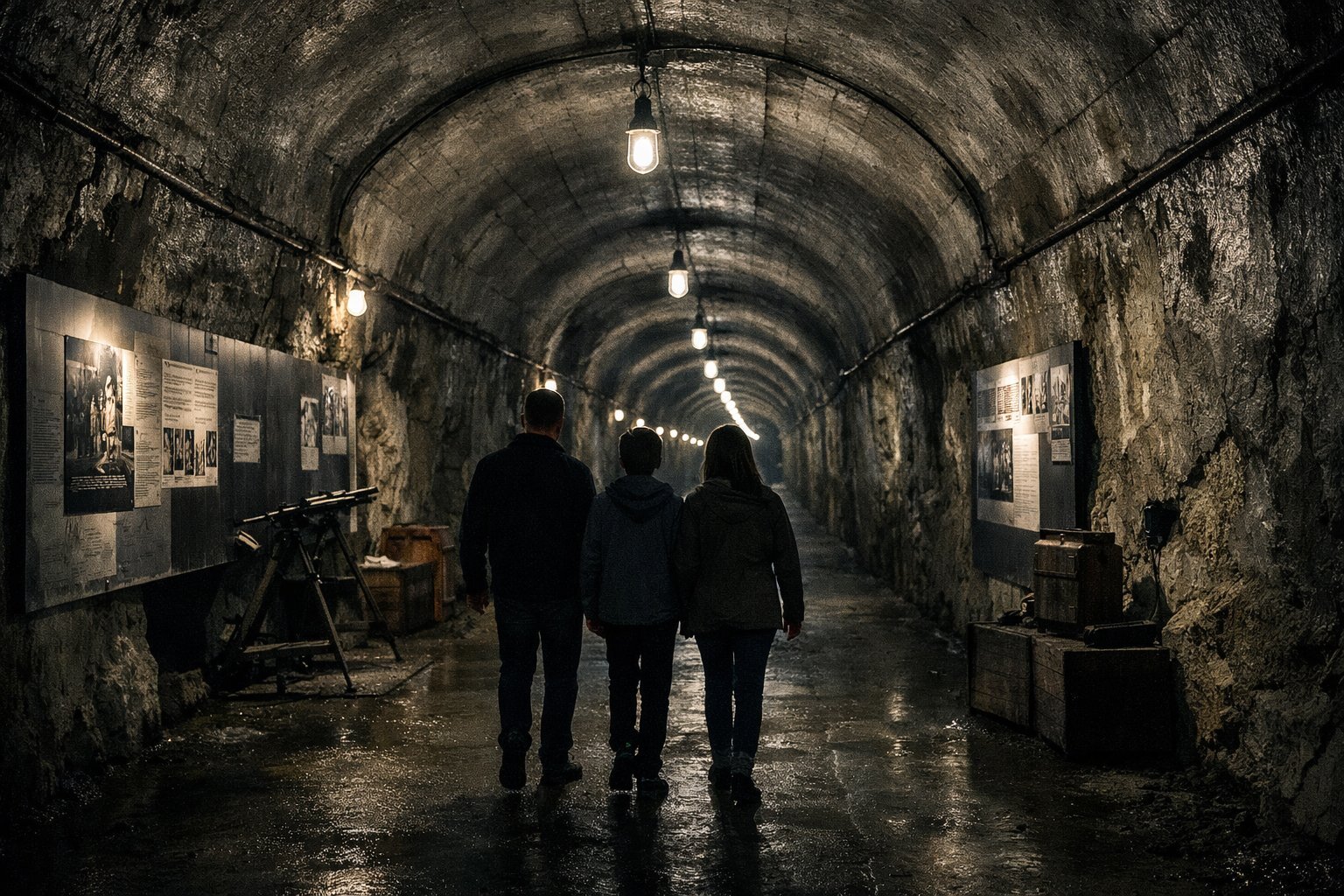
The Channel Islands were the only British territory occupied by Germany in the Second World War, for almost five years. About a fifth of Jersey's population had evacuated to England in the panic of June 1940; roughly 41,000 people stayed and lived through it.
Life under occupation
Curfews, requisitioning, a ban on radios from 1942, food and fuel shortages that became severe. Around 16,000 German troops were stationed on an island of 41,000 civilians at the peak — one soldier for every two and a half islanders. Hitler ordered the islands turned into a fortress as part of the Atlantic Wall, and the bunkers, sea walls and observation towers built for it are still all over the coast, some converted into holiday lets.
Forced labour
The fortification was built largely by the Organisation Todt using forced and slave labour brought in from across occupied Europe. Conditions in the labour camps were brutal and an unknown number died. Jersey's neighbour Alderney held four camps including Lager Sylt, an SS concentration camp — the only SS camp on British soil — and a 2024 UK government review put the likely death toll there at between 641 and 1,027, against far higher claims made previously.
Deportations
In 1942 and 1943 more than 2,000 islanders and English-born residents were deported to internment camps in Germany. Jersey's Jewish residents were registered under anti-Jewish orders passed by the island's own authorities, and three Jewish women who had come to Jersey as refugees — Therese Steiner, Auguste Spitz and Marianne Grunfeld — were deported and murdered at Auschwitz. A memorial to them stands at the Jersey Archive.
Resistance and collaboration
Armed resistance was effectively impossible on an island 14 km across with no cover and no way out, and the island's civil government continued to administer under German direction — a position that has been defended as damage limitation and attacked as collaboration ever since. What there was: sheltering escaped Russian labourers (Louisa Gould hid one, was betrayed, and died at Ravensbrück), hidden radios, the underground newsletter GUNS, and small acts that carried enormous risk. Twenty-two islanders died in German prisons and camps.
The last winter
After D-Day the islands were cut off behind German lines and both occupiers and occupied began to starve. The Red Cross ship SS Vega arrived in December 1944 with food parcels and made five more trips; it is generally credited with preventing famine. Liberation came on 9 May 1945, a day after VE Day, and remains the island's national holiday.
Where to see it
The Jersey War Tunnels at St Lawrence for the full account. The Channel Islands Military Museum in a bunker on St Ouen's Bay. Noirmont Point, a coastal battery left much as it was. La Hougue Bie's German command bunker, now a memorial to the forced labourers. And the concrete itself — once you can recognise a Wn (Widerstandsnest) you will see them on every headland.
👑 Not the UK, Not the EU — What Jersey Actually Is
This is the part that most guides get wrong, and it matters practically as well as constitutionally, because it determines your phone roaming, your health cover and your customs allowance.
Crown Dependency
Jersey is a possession of the Crown that is not part of the United Kingdom and never was. It has its own legislature (the States Assembly), its own courts (the Royal Court, with appeal to the Judicial Committee of the Privy Council), its own civil service, its own taxes, its own immigration and work-permit rules and its own borders for those purposes. Guernsey and the Isle of Man have the same status, and the three are separate from each other.
What the UK does
Defence and international representation, the latter increasingly shared: Jersey now negotiates and signs some agreements in its own right, has its own offices in London, Brussels, Paris and elsewhere, and has a written framework with the UK setting out how it is consulted. The UK Parliament does not legislate for Jersey in domestic matters; Jersey laws are made by the States and receive Royal Assent through the Privy Council.
Never in the EU
Jersey was never a member of the European Union. Under Protocol 3 to the UK's 1972 accession it was inside the customs union and the free movement of goods, and outside everything else — no free movement of people, no VAT, no CAP, no financial services passport. Brexit ended Protocol 3; since 2021 Jersey's relationship with the EU runs through the UK–EU Trade and Cooperation Agreement, which it opted into for goods and fisheries.
Fishing, and the flashpoint
In May 2021 the licensing of French boats in Jersey waters escalated into a blockade of St Helier harbour by French trawlers, with the Royal Navy and the French navy both sending patrol vessels. It was resolved, but the underlying issue — that French boats have fished these waters for centuries under arrangements Brexit voided — has needed continuous management since. The wider UK–EU reciprocal access deal was extended in 2025 to run to 30 June 2038; Jersey licenses vessels in its own waters under its own arrangements.
The Common Travel Area
Jersey is in the Common Travel Area with the UK, Ireland, Guernsey and the Isle of Man, so travel from the UK involves no passport control — though you will be asked for photo ID by the airline or ferry. Arriving from France is a full external border. Jersey is not in Schengen and issues its own visas where needed.
Money and stamps
Jersey issues its own banknotes and coins, sterling at par, and prints its own stamps — Jersey Post has been separate from Royal Mail since 1969. Jersey notes are legal tender only in Jersey and shops in England may refuse them, so spend them before you leave or change them at the airport. UK notes and coins circulate freely on the island.
🏛️ Politics Today — 6 September 2026
📅 Checked 6 September 2026. Jersey held a general election three months ago, so this section is current but will date.
The States Assembly
A single chamber whose members sit mostly as independents — party politics arrived late and has not taken over. The 2026 general election on 7 June returned 9 senators, 28 deputies and 12 connétables, a total of 49 seats. Independents won 42, Reform Jersey 7, and People First none. Turnout was 32.4%, which is chronically low and is itself a running political argument.
The government
Lyndon Farnham, an independent, has been Chief Minister since January 2024 and was the only member nominated after the 2026 election, so he was returned unopposed when the new Assembly met on 19 June 2026. The Council of Ministers is chosen by the Assembly rather than by the Chief Minister alone, which makes Jersey governments collegiate and slow-moving by design.
The Bailiff and the Lieutenant Governor
Two offices visitors see and misread. The Bailiff is the island's chief judge and presides over the States Assembly — a fusion of roles that has drawn criticism from constitutional reformers and survived it. The Lieutenant Governor is the monarch's personal representative, a largely ceremonial appointment usually given to a retired senior officer.
The live issues
Housing above all — prices are among the highest in Europe relative to income, and the island runs a residential-qualification system that divides the market. Population policy, meaning how many work permits to issue for an economy that cannot staff itself otherwise. Health, where a long-delayed new hospital project has consumed political capital for a decade. And the future of financial services under international tax pressure.
The parishes and the honorary system
Each of the twelve parishes elects a connétable who runs it and sits in the Assembly, plus centeniers and vingteniers — unpaid honorary police who still charge people at the Parish Hall Enquiry, a diversion system that keeps minor offences out of court. It is genuinely medieval in origin and genuinely still functioning, and Jersey defends it fiercely.
The reputational question
Jersey's finance industry attracts persistent criticism as a tax haven and persistent rebuttal from the island that it is a transparent, well-regulated international finance centre that meets OECD and EU standards. Both things carry evidence. The island has also had to confront its own past on other fronts: the Independent Jersey Care Inquiry, reporting in 2017, found decades of failure to protect children in the island's care system and led to a formal apology and structural reform.
💷 The Economy
Finance
Roughly 40% of GVA and about a quarter of employment. Jersey specialises in funds, trusts, private wealth and company administration rather than retail banking, and holds well over a trillion pounds of assets under administration. The pitch is political stability, a common-law trust regime, English-language courts and a 0% standard rate of corporate tax with 10% for regulated financial services and 20% for utilities and large retailers.
The tax system, plainly
20% flat personal income tax, with a marginal relief calculation that produces a lower bill for most middle earners and a £21,250 personal exemption for 2026 below which nothing is paid. 5% GST on most goods and services — one of the lowest consumption taxes in Europe, and the reason Jersey shopping looks cheap on paper. No capital gains tax, no inheritance tax, no wealth tax. Social security contributions are separate.
Agriculture
Small but famous. The Jersey Royal is a Protected Designation of Origin potato — it may be called that only if grown in Jersey — and the earliest crop comes off the côtils, slopes so steep they are worked by hand or by winch. Jersey dairy is a closed herd of about 4,000 cattle producing milk with unusually high butterfat, sold as a premium product and legally protected from any imported cattle since 1789.
Tourism
Around a million visitors a year including day trips, the great majority from the UK, with a smaller French market. It was much larger in the package-holiday decades and has repositioned towards short breaks, walking, food and heritage. Tourism is a smaller share of the economy than most visitors assume, which affects how the island balances it against everything else.
The vulnerabilities
A single-sector economy in a world tightening international tax rules; a labour force that cannot grow without immigration the electorate is wary of; housing costs that push young islanders off the island; and a physical dependence on the outside world for food, fuel and, since the interconnectors, most of its electricity. None of this is hidden — the island's own economic strategy documents say all of it.
🏘️ St Helier
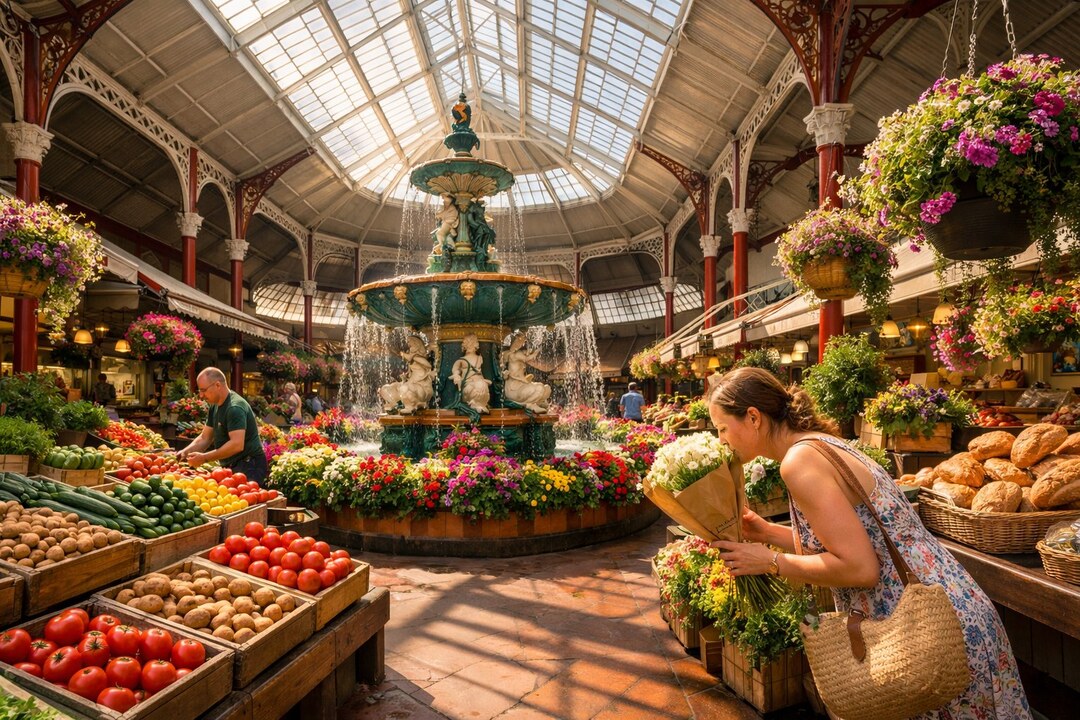
About a third of the island's population lives in St Helier, and it is where almost everything institutional is. It is not a beautiful town — Victorian and post-war building have been unkind to it — but it is a real one, and it repays an afternoon on foot.
The Royal Square
A small cobbled square that is the historic centre of everything: the Royal Court, the States Building and a gilded statue of George II. It was the marketplace, the site of public punishments, and the ground on which the Battle of Jersey was fought in 1781. Set into the paving is a discreet V for Victory, laid by a labourer in 1945 under German noses and later extended with the word Vega for the Red Cross ship.
Museums
The Jersey Museum for the island's story and the Le Câtillon coin hoard material; the Maritime Museum in a restored warehouse on the waterfront, with the Occupation Tapestry — twelve panels stitched by the twelve parishes for the fiftieth anniversary of Liberation. Both are run by Jersey Heritage, whose season pass pays for itself in two visits.
Elizabeth Castle
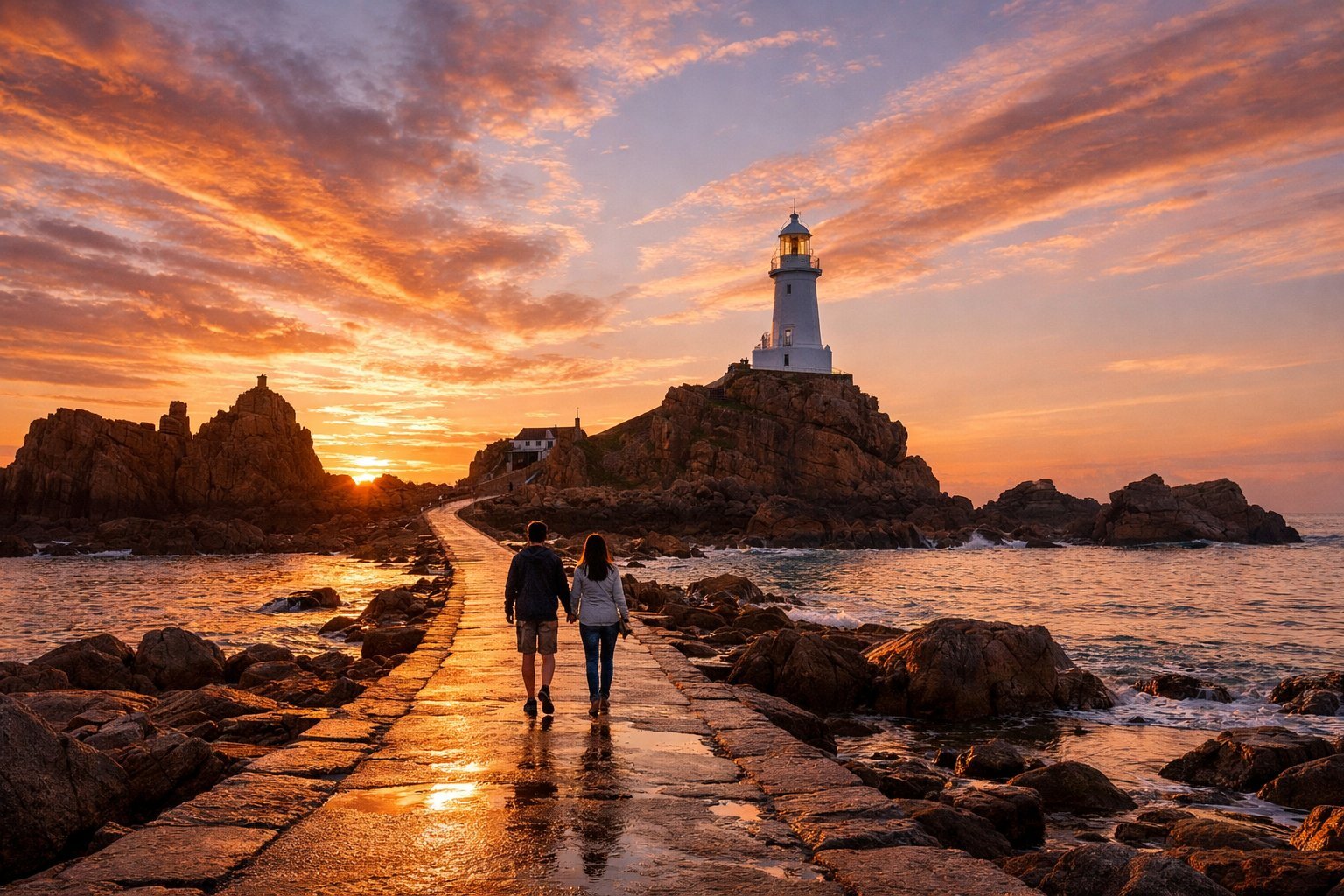
Out in the bay on a tidal islet, begun in 1594 and named by Sir Walter Raleigh. Charles II sheltered here twice during the Civil War, and it held out for the King until 1651. Reach it on foot across the causeway at low tide — about 20 minutes — or by the amphibious Castle Ferry, which drives into the sea and is a small delight in itself. Check the tide before walking back.
Eating and drinking
The market and the fish market for produce. Halkett Place and the streets around it for restaurants; the Portuguese cafés for pastéis de nata and grilled chicken, which are as much a part of St Helier's food as anything Norman. The waterfront developments are newer and blander. Pubs keep English hours and English beer, with local ales from Liberation Brewery.
Around the town
Fort Regent on the hill above, a Napoleonic fortress converted into a leisure centre and now largely closed pending redevelopment. Howard Davis Park for the gardens and the small Commonwealth war cemetery. People's Park and the promenade west to St Aubin, a 4 km walk or cycle along the bay on the old railway line, ending in what is arguably a prettier village than the capital.
A note on the name
Locals say "Town". Bus destination boards say Liberation Station. St Helier is also a parish covering far more than the built-up area, so an address "in St Helier" may be a field.
🏰 Mont Orgueil and the Fortifications
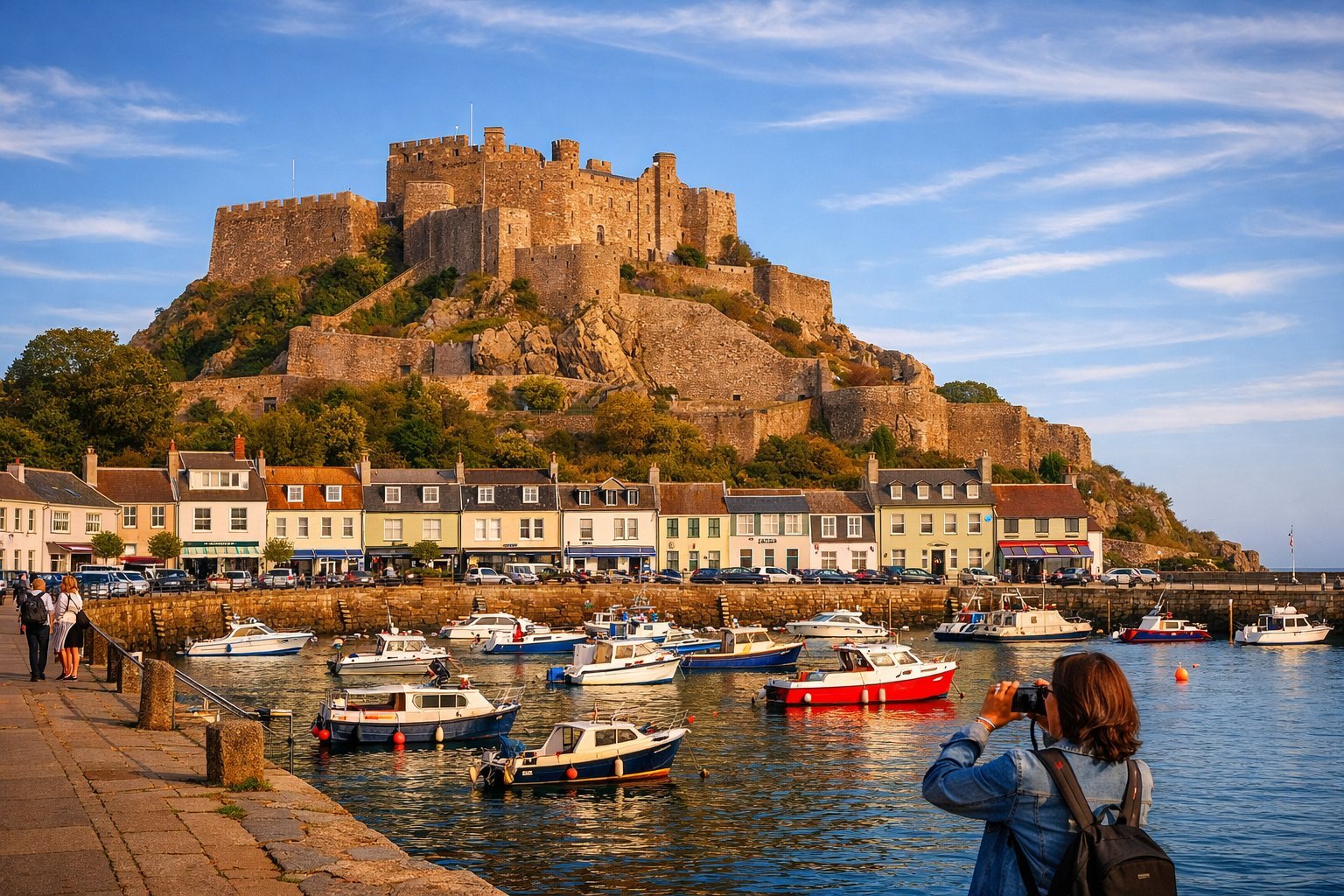
Visiting Mont Orgueil
Allow two hours. It is a genuine climb through a warren of stairs, wall-walks and chambers rather than a set of rooms, with a series of unsettling modern art installations — the Wounds of Christ, the Tree of Succession, a witch's hat — commissioned to occupy spaces whose original use is unknown. The view from the top takes in the French coast on a clear day, 22 km off.
Elizabeth Castle
The successor, out in St Aubin's Bay on the rock where St Helier is said to have lived as a hermit. Built from 1594, held for the King through the Civil War, extended right through to German bunkers in the 1940s — the layers are visible as you walk it. The Hermitage, a small chapel on the highest rock, is reached by steps and is the oldest thing on the site.
The coastal towers
Jersey is ringed with towers, and there are two distinct kinds. The Jersey Round Towers, about two dozen built in the 1780s and 90s after the Battle of Jersey, are tapering circular towers with a distinctive machicolated top. The later Martello towers are squatter and thicker. And then the odd one out: Seymour Tower of 1782, square, standing alone on the reef two kilometres offshore.
German concrete
The Occupation added a third layer of fortification on top of the medieval and Napoleonic ones, and it is everywhere: observation towers like the stepped one at Corbière, coastal batteries at Noirmont, anti-tank walls along St Ouen's Bay, and hundreds of bunkers. The Channel Islands Occupation Society opens several to the public on set days, and Jersey Heritage rents a few out as self-catering accommodation.
La Rocco and the follies
La Rocco Tower stands offshore at the southern end of St Ouen's Bay and is walkable at very low tide — it was shelled by the Germans for target practice and restored in the 1970s. Further inland, the Victoria Tower at St Martin and the assorted Napoleonic magazines make a decent walking theme in themselves.
Practicalities
Jersey Heritage runs Mont Orgueil, Elizabeth Castle, La Hougue Bie, the Jersey Museum, the Maritime Museum and the Hamptonne country-life museum. If you intend to see more than two, buy the Jersey Heritage season pass. Elizabeth Castle depends on the tide and the ferry, so check before setting out; Mont Orgueil is open regardless of the sea.
🥾 The North Coast Path
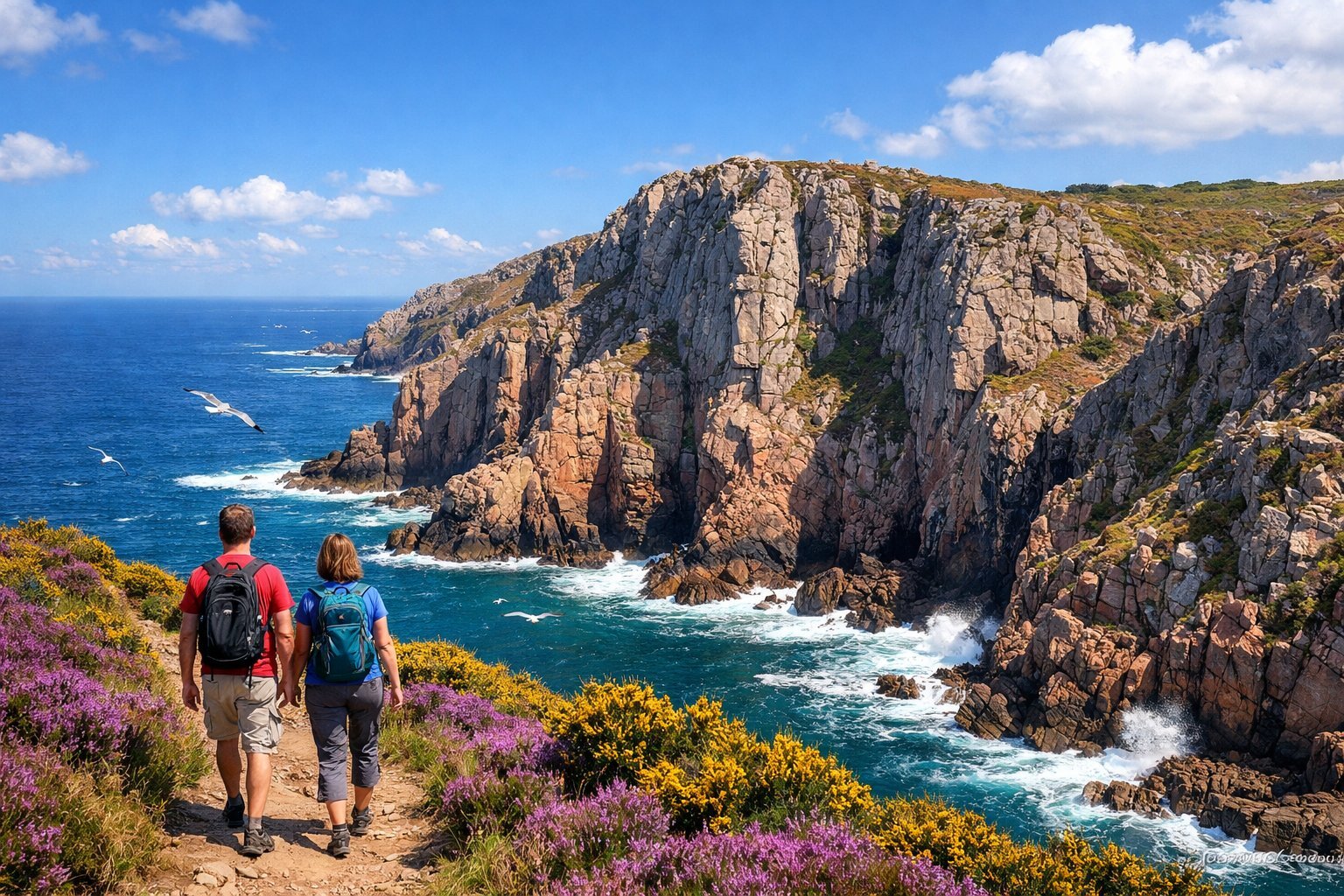
Walking it
The full path is a comfortable day for a strong walker or two easy ones, and the bus network means you can do it in sections and ride back — routes 4, 5, 7, 8, 9 and 22 all touch the north coast. It is well waymarked, undulating rather than mountainous, and there are cafés at Grève de Lecq, Bonne Nuit, Bouley Bay and Rozel. The Jersey Coastal Walk around the whole island is about 77 km and takes three days.
Grosnez
The north-west corner: the ruin of a fourteenth-century castle on a headland, essentially a gatehouse and a ditch, built as a refuge for the population rather than as a garrison. On a clear day you can see Guernsey, Sark, Herm and Jethou from here, and the sunsets are the best on the island. There is nothing else there, which is the point.
The harbours
Grève de Lecq, the only sandy bay on the north coast, with a Napoleonic barracks behind it. Bonne Nuit, a tiny fishing harbour under a steep hill. Bouley Bay, deep, steeply shelving and the island's best shore diving, with an annual hill climb up the road behind it that has run since 1920. Rozel, wooded and sheltered, with a good pub.
Devil's Hole and Plémont
Le Creux de Vis — the Devil's Hole — is a collapsed sea cave forming a crater 60 m across, reached by a path from a pub; the devil statue at the head of it is a modern successor to a figurehead washed up in 1851. Plémont has caves at low tide and a waterfall, and its clifftop was the subject of a long and bitter campaign that ended with a holiday camp being demolished and the land returned to nature in 2015.
What lives there
Puffins in single figures at Plémont, cared for with almost embarrassing attention; peregrines, which returned to breed in 2015 after decades of absence; Dartford warblers and stonechats in the gorse; and grey seals and bottlenose dolphins offshore. The Jersey National Park, designated in 2011, covers the coast and about 16% of the island.
A practical note
The cliffs are unfenced and the edges are undercut in places. Paths get greasy in rain and there is no phone signal in some of the valleys. Wear proper shoes, and if you are walking with children keep them on the landward side — this is not a manicured promenade.
🏖️ The Beaches
St Ouen's
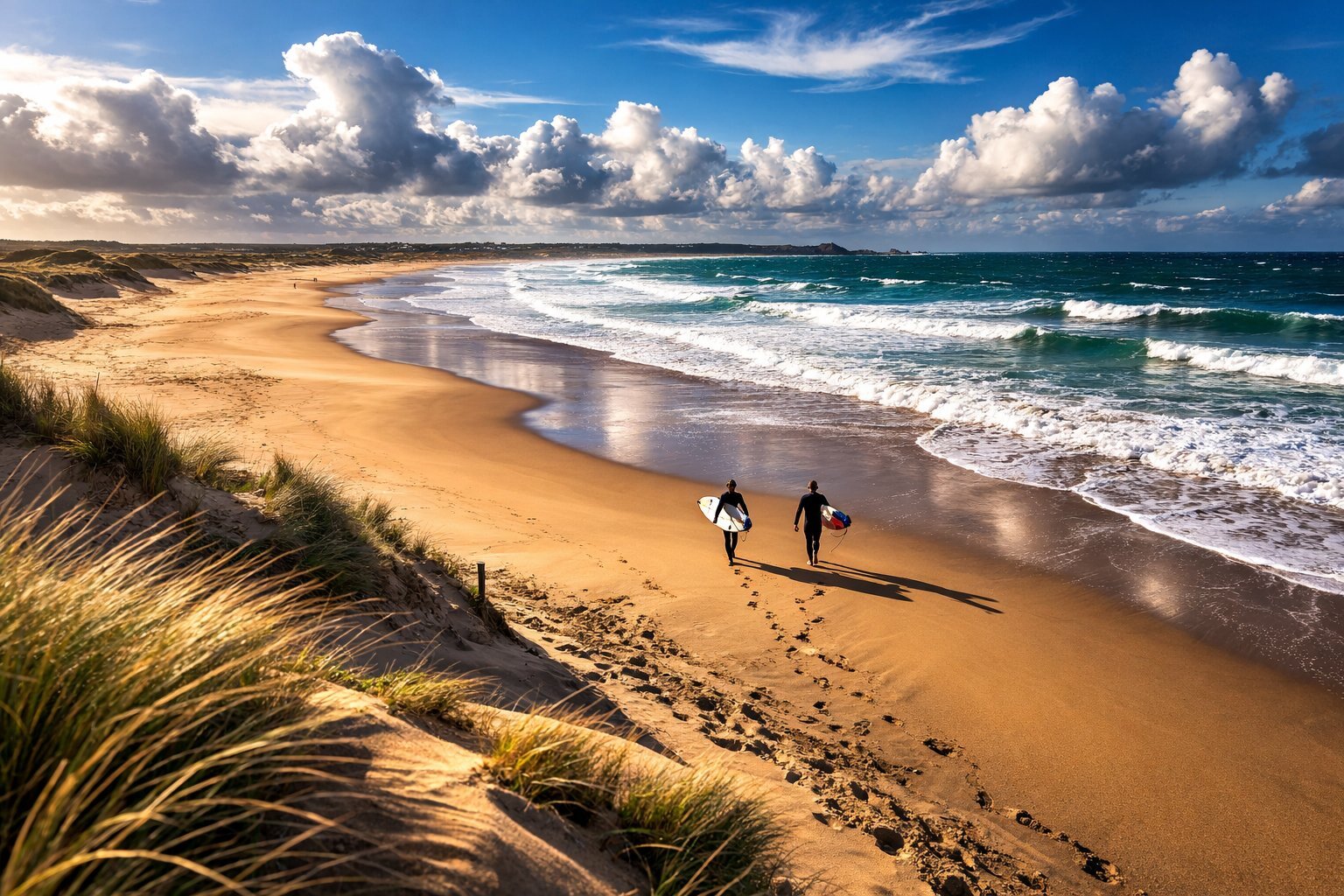
The big one. Surf schools at Le Braye and Watersplash, a scattering of beach cafés, and enough space that it never feels crowded even in August. It is exposed: on a windy day the sand moves horizontally. Swimming is only sensible between the lifeguard flags, and the rip currents here are serious — this is where the island's water rescues happen.
St Brelade's Bay
The postcard beach: south-facing, sheltered, shallow, sandy, with hotels and cafés behind and a Blue Flag. At its western end is the Fishermen's Chapel, an eleventh- or twelfth-century chapel with medieval wall paintings, next to the parish church — one of the oldest buildings on the island and free to enter.
Ouaisné and Portelet
Round the headland from St Brelade. Ouaisné is the quieter continuation of the same sand with a heath behind it that is the last stronghold of the agile frog. Portelet is a small deep bay reached by steps, with a tidal island — Île au Guerdain — carrying a Martello tower in the middle of it, which is as photogenic as Jersey gets.
The east
Grouville Bay and St Catherine's face France, are shallow and warm, and dry out enormously at low water. St Catherine's Breakwater is a 700 m Victorian folly — the start of a naval harbour abandoned when the Admiralty changed its mind — and is now a fishing and walking pier. Archirondel has a red-and-white striped tower and a good café.
Green Island and the south-east
La Rocque and Green Island sit at the edge of the great eastern reef. Green Island (La Motte) is a small grassed islet with a Neolithic cist on it, accessible on foot at low tide, and is the most southerly point of the British Isles. The whole flat is a Ramsar site and one of the best places in Europe for rock-pooling.
Water and weather
Sea temperature runs roughly 9 °C in March to 17–18 °C in August and September — swimmable in summer, bracing outside it, and the local swimming clubs go in year-round. Jetskis and powerboats are regulated; kayaks and paddleboards are widely rented, and the Écréhous reef is a popular guided kayak destination on calm days.
🦍 Durrell — the Zoo That Changed Zoos

Gerald Durrell founded the zoo at Les Augrès Manor in 1959 with an idea that was then eccentric and is now orthodoxy: that a zoo's purpose is to breed endangered species for reintroduction, not to display a collection. He wrote the books that paid for it — My Family and Other Animals among them — largely to fund the animals.
What it does
The Durrell Wildlife Conservation Trust runs breeding programmes, a field programme in around a dozen countries, and a training academy that has taught several thousand conservationists from over 130 countries. Its signature success is the Mauritius kestrel, which in 1974 was down to four known birds including a single breeding female and is now in the hundreds. Also the pink pigeon, the echo parakeet, the Livingstone's fruit bat and the ploughshare tortoise.
Visiting
A 13-hectare park in a wooded valley at Trinity, about 20 minutes from town by bus. It is deliberately not a big-animal zoo — no elephants, no big cats — and is laid out as a walk through habitats rather than a row of enclosures. Allow three hours. The gorillas, orangutans, lemurs and the bat house are the highlights; the Discovery Desk and the keeper talks are worth timing your visit around.
Rewilding Jersey
Durrell has turned some of its attention homeward: reintroducing the agile frog, working on the red-billed chough, which returned to breed on Jersey's cliffs in 2015 after a century's absence, and running a rewilding programme on land around the park. Choughs can now be seen along the north coast, which is a genuinely recent change.
Gerald Durrell himself
Born in India in 1925, raised partly on Corfu, a collector who came to hate collecting for zoos and set about building a different kind of one. He died in 1995 and is buried at the park. His widow Lee Durrell remains its honorary director. The trust is now one of the more respected conservation organisations of its size anywhere, and it is the single strongest reason to visit Jersey with children.
🐄 The Jersey Cow
The closed herd
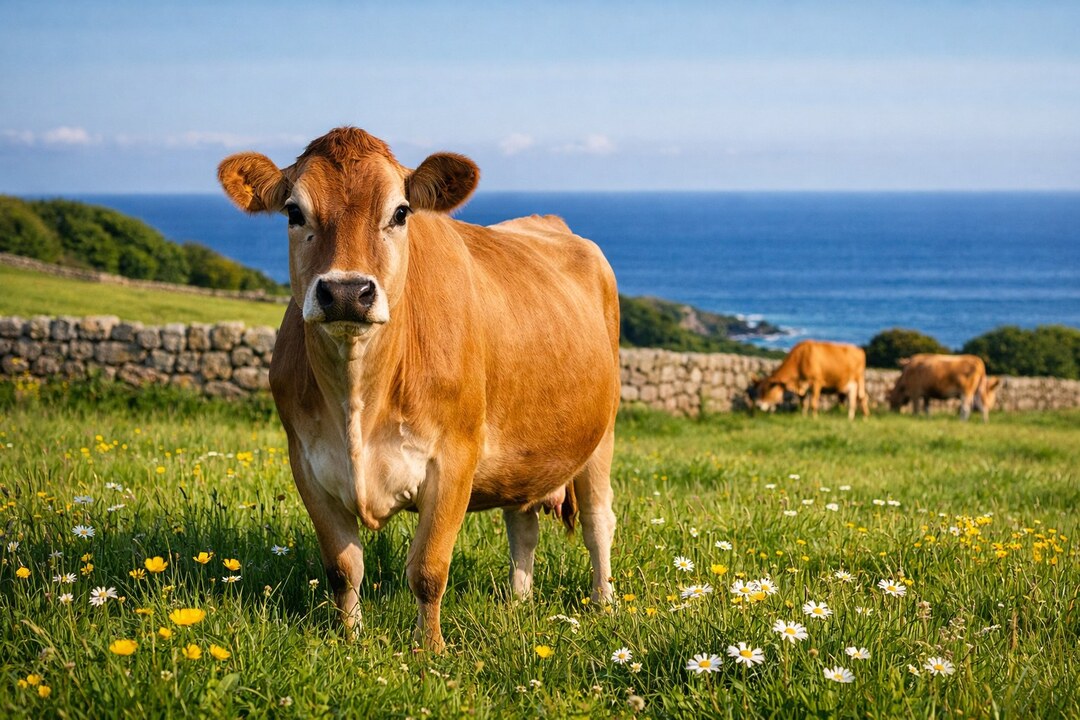
Jersey banned the import of live cattle in 1789 — nominally to stop French cattle being landed and re-exported duty-free as Jerseys, in practice creating a genetically isolated population. The ban is still in force, so the island herd of around 4,000 animals has been closed for over two centuries and the herd book, begun in 1866, is one of the oldest anywhere.
Where they went
Everywhere. Jerseys were exported from the eighteenth century and are now the second most numerous dairy breed in the world after the Holstein, with large populations in the United States, New Zealand, Denmark and Australia. New Zealand's dairy industry in particular was built substantially on them. For an island of 118 km², that is a remarkable export record.
The milk
Jersey Dairy is a farmer-owned cooperative processing all the island's milk. It is sold on the island in bottles marked by fat content and exported as butter, cream and, increasingly, as ice cream. The milk cannot be imported or exported live, and imported milk is banned, so what you drink in Jersey came from a field you can probably see.
Seeing them
They are in fields all over the island and often tethered rather than fenced — a Jersey practice that surprises visitors and is done to control grazing on small plots. Hamptonne Country Life Museum at St Lawrence is a restored farm complex with the breed, the old buildings and the cider press. Several dairy farms run tours in summer.
Black butter
Not butter. Le Nièr Beurre is a dark spiced apple preserve, cooked from cider apples with liquorice, lemon and spices for eighteen to twenty hours in a huge copper bachin, stirred continuously by relays of people. It is made communally at autumn séthée d'nièr beurre gatherings, most publicly at The Elms in October, and it is one of the few genuinely surviving Jersey traditions rather than a revived one.
🗿 La Hougue Bie and the Old Places
Going in
The passage is low, dark and cold, and the chamber at the end is where the dead were placed with pottery and stone tools. Excavation in 1924 found the remains of at least eight people. Standing in it is the most striking few minutes on the island, and the site also holds the Le Câtillon II hoard display — 70,000 Iron Age coins found in a field in 2012, the largest such hoard ever discovered.
The other dolmens
Le Couperon at St Martin, a gallery grave in a field with a view of France. La Pouquelaye de Faldouet, reached down a lane, with a capstone weighing perhaps 24 tonnes. Les Monts Grantez on the north-west plateau. Ville-ès-Nouaux, a cist and a stone circle marooned inside suburban St Helier. All are open, free and usually deserted.
Hamptonne
A working farm complex at St Lawrence, parts of it fifteenth-century, restored as a museum of Jersey country life — the granite colombier, the cider press and apple crusher, the Norman-French inscriptions on the lintels. It runs the autumn cider-making and the black butter, and it is the best place to understand what the island was before finance.
The green lanes and the parish churches
Twelve parish churches, most with Norman cores, most open. St Brelade's is the loveliest, right on the beach with the Fishermen's Chapel beside it. Look for Jèrriais and French inscriptions on the tombstones, for marriage stones — datestones carved with two sets of initials — over farmhouse doors, and for the abreuvoirs, granite drinking troughs, at the roadside.
Mont Orgueil, again
Worth repeating in this company: the castle is not a restoration but a continuously modified building from 1204 to 1945, and the newest thing in it is German. Jersey's heritage does not come in tidy periods.
🦀 Food
The shellfish
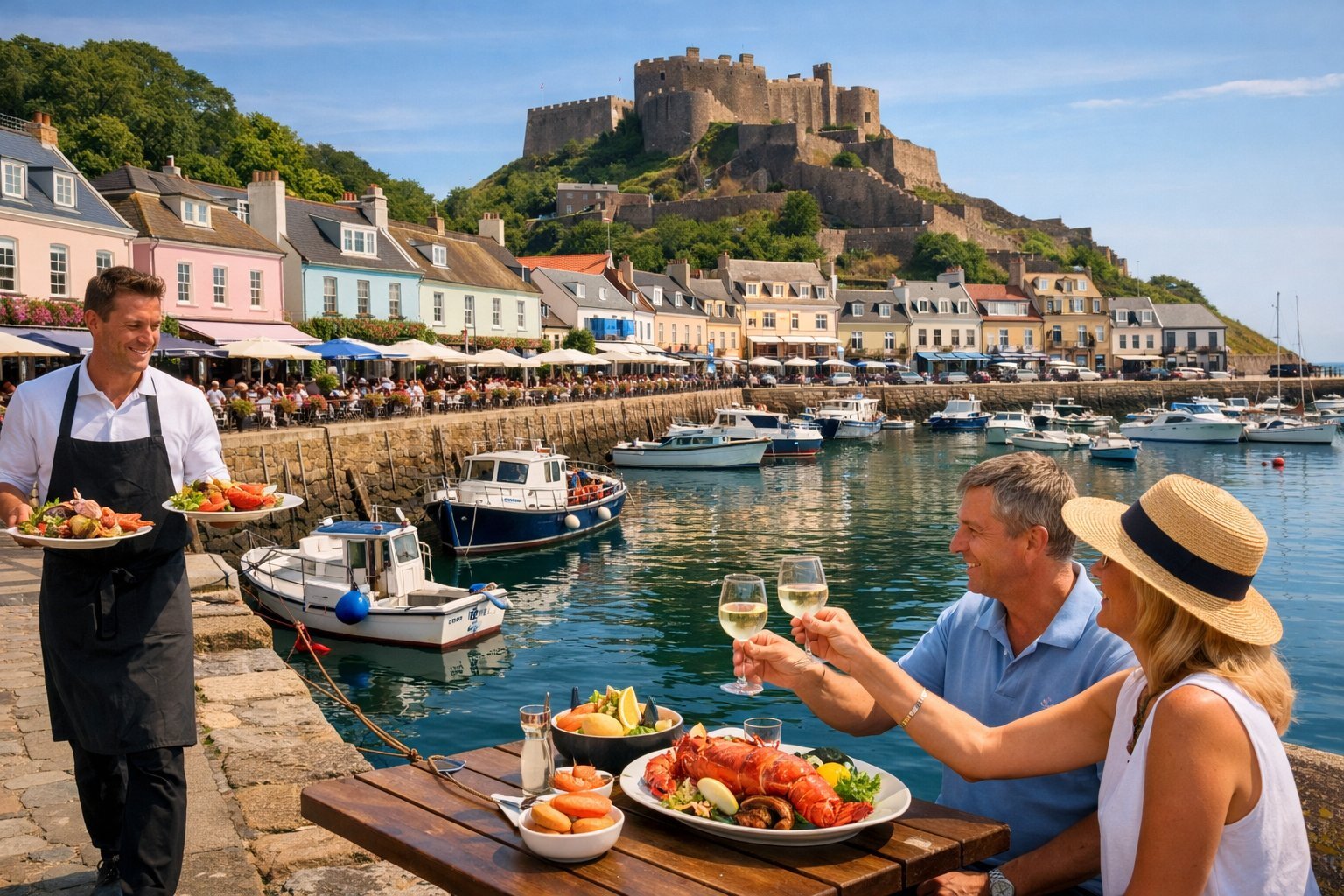
Spider crab (Maja squinado) is the one to order — spiny, long-legged, sweet, in season roughly May to September and much less known outside France than it should be. Chancre is the brown crab. Oysters from the Royal Bay of Grouville, grown on trestles exposed at every low tide, run to several thousand tonnes a year, most of it exported to France. Ormers — abalone — are gathered on a handful of licensed low-tide days between January and April and are strictly protected.
Jersey Royals
A Protected Designation of Origin potato that may only be called that if it is grown on the island. The earliest crop comes off south-facing côtils so steep they are dug or winched, traditionally manured with vraic — seaweed hauled up from the beach, which is where the flavour argument starts. The season runs roughly April to July, and the first crop is a genuine island event.
Dairy
Jersey cream and Jersey butter, from a herd that has been closed since 1789 and gives milk at around 5% butterfat. Try it plainly: on the Royals, on scones, or as ice cream, which every beach kiosk sells and which is noticeably richer than anything you will have had at home.
The old dishes
Bean crock (les pais au fou), a slow-cooked pot of haricot and kidney beans with pork, historically left in the baker's oven overnight. Jersey Wonders (des mèrvelles), twisted sweet doughnuts fried in batches, traditionally made on a falling tide because folklore says they will not rise if the tide is coming in. Bourdélots, apples baked in pastry. Cabbage loaf, bread baked between two cabbage leaves. Several of these survive mainly at fêtes, and that is worth knowing before you go looking for them on a menu.
Eating out
For its size Jersey has an unusually good restaurant scene — St Helier, St Aubin, Gorey and St Brelade have most of it, and the island has held Michelin stars. Prices are UK-London rather than UK-provincial. At the other end: beach cafés, the Central Market, the Portuguese cafés and churrasqueiras of St Helier, and the fish stalls that sell cooked crab to take away.
Buying it yourself
Honesty boxes are a Jersey institution: unattended roadside stalls selling potatoes, eggs, flowers and jam, with a tin for the money. They work, and using one properly is a small pleasure. The Central Market, the Beresford fish market and the Saturday farmers' markets are the rest of it.
👨🍳 Four Recipes
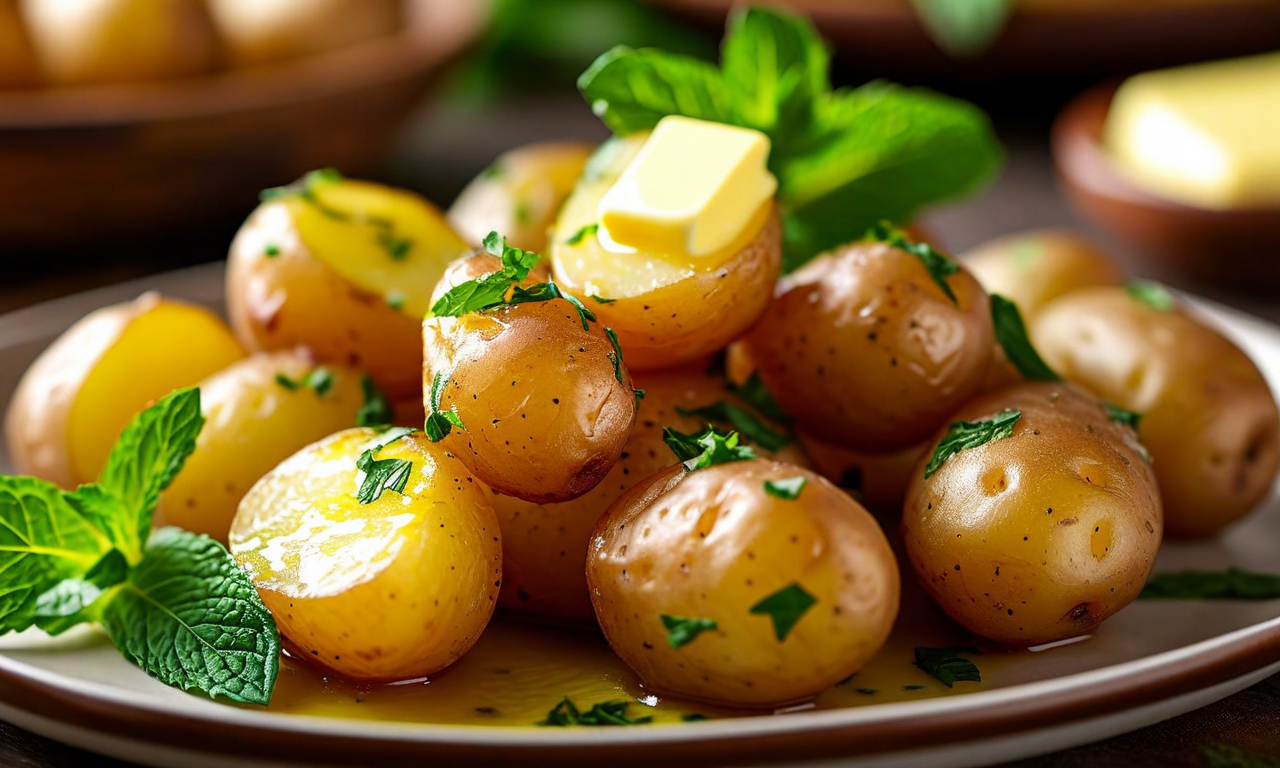
Jersey Royals
Jersey · 4 people as a side · 20 minutes · the recipe is almost an instruction not to do anything
Ingredients: 1 kg Jersey Royals, as small as you can get them · 60 g Jersey butter, or the best salted butter you can find · a large handful of mint · sea salt. That is the whole list.
Method: Do not peel them. Rub the skins under cold water with your thumb or a cloth — on a genuinely fresh Royal the skin comes away in flakes and that is the test of one. Put them in cold salted water with a couple of mint stalks, bring to the boil and simmer 12–15 minutes until a knife goes in with no resistance. Drain, return to the hot dry pan for thirty seconds to steam off, then add the butter and the chopped mint leaves and toss until every potato is coated. Salt at the table.
💡 The season is short and the potato does not travel or keep — a Royal three weeks old is just a new potato. Buy them small, cook them the day you buy them, and do not add anything else. Cold, dressed in the same butter, they are also the best potato salad you will make.
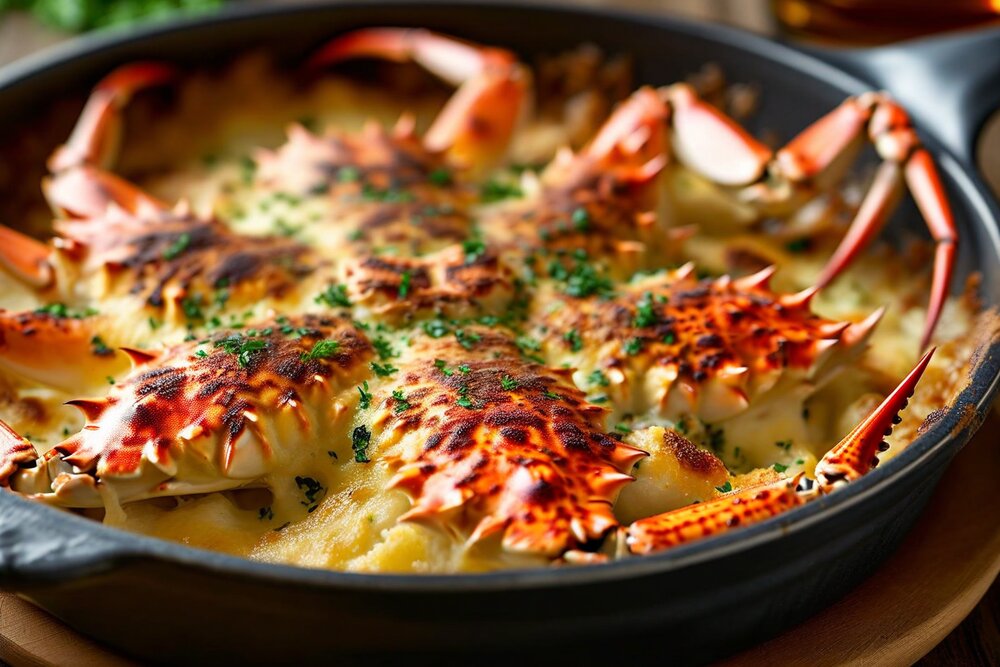
Spider Crab Gratin
Jersey and Normandy · 4 people · 40 minutes, plus cooking the crab · use a cooked crab from a fishmonger if you would rather
Ingredients: 2 cooked spider crabs, about 1 kg each, picked (or 400 g picked white and brown meat) · 40 g butter · 1 shallot, very finely chopped · 100 ml dry cider · 200 ml Jersey cream · 1 tsp Dijon mustard · a pinch of cayenne · 60 g grated Gruyère · 2 tbsp fresh breadcrumbs · lemon · parsley.
Method: Pick the crab carefully — the white meat from the legs and claws, the brown from the body — and check it for shell twice, because you will miss some the first time. Soften the shallot in the butter without colouring, add the cider and reduce it by half, then the cream, the mustard and the cayenne, and simmer until it coats a spoon. Fold in the crab meat off the heat with a squeeze of lemon and the chopped parsley, season, and divide between the cleaned shells or a gratin dish. Top with the cheese and breadcrumbs mixed together and grill 3–4 minutes until brown and bubbling.
💡 The brown meat carries the flavour and the white carries the texture, so use both. Do not let the cream boil after the crab goes in — it will turn stringy. Serve with bread and the rest of the cider, and nothing else.
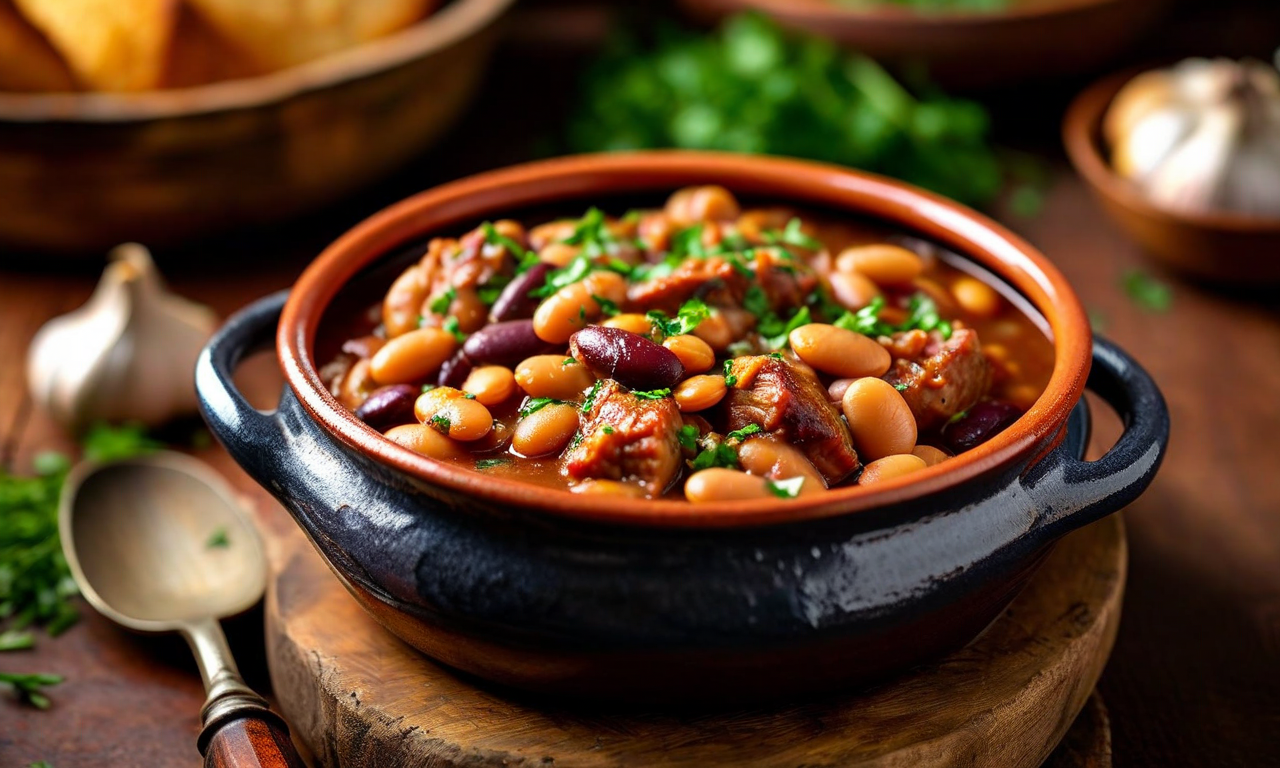
Jersey Bean Crock
Jersey · 6 people · soak overnight, cook 3–4 hours · a genuinely old dish and a very forgiving one
Ingredients: 250 g dried haricot beans · 100 g dried red kidney beans · 1 pig's trotter, split (this is what makes it) · 400 g pork belly in large pieces · 200 g piece of smoked bacon or salt pork · 2 onions, chopped · 2 carrots · 2 bay leaves · a few sprigs of thyme · black pepper · salt at the end only.
Method: Soak the beans overnight in plenty of cold water, then drain. Boil the kidney beans hard for 10 minutes on their own and discard that water — this is not optional, raw kidney beans are toxic. Put everything into a deep earthenware or cast-iron pot, cover with cold water by 3 cm, bring slowly to the boil, skim, then cover and cook in a very low oven — 140 °C — for 3–4 hours, topping up with hot water only if it threatens to go dry. Lift out the trotter, strip any meat from it and return that, and discard the bones. Season now, not before, or the beans stay hard.
💡 The trotter is the whole trick: the gelatine from it turns the liquid into a sauce that clings, and without it you have bean soup. Make it the day before — it is better reheated, and better again on the third day.
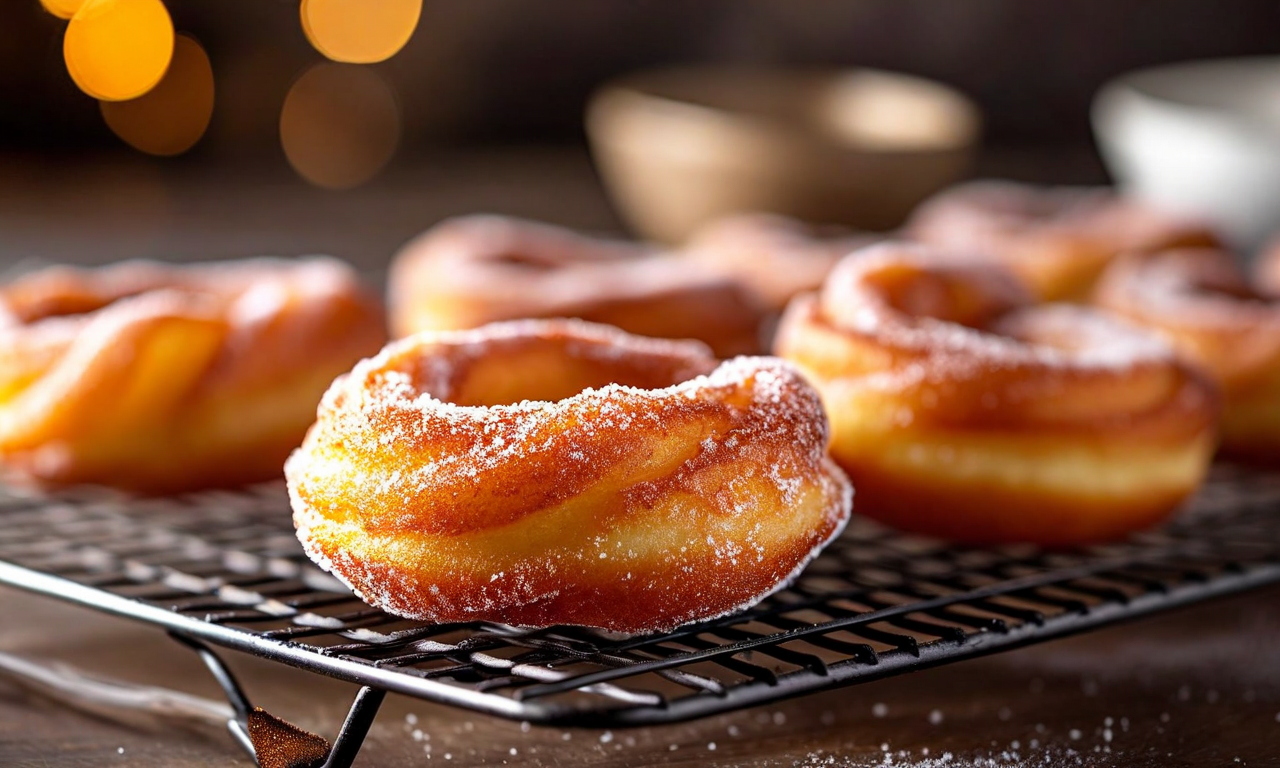
Jersey Wonders
Jersey · makes about 20 · 30 minutes plus resting · traditionally made only on a falling tide
Ingredients: 450 g plain flour · 1½ tsp baking powder · a pinch of salt · 110 g butter, softened · 170 g caster sugar · 3 eggs · a little milk if needed · oil or lard for deep frying · extra sugar to dust.
Method: Cream the butter and sugar, beat in the eggs one at a time, then work in the flour, baking powder and salt to a firm, slightly sticky dough — add a spoon of milk only if it will not come together. Rest it 30 minutes. Roll out to about 5 mm and cut rectangles roughly 10 × 6 cm. Cut a slit down the middle of each and pull one end through it to make the twist. Fry in oil at 170 °C for about 1½ minutes a side until deep gold, turning once. Drain on paper and dust with sugar.
💡 They are eaten cold, not warm, and they keep for a couple of days in a tin. As for the tide: the island tradition holds that Wonders will not rise if made on a flooding tide, and Jersey grandmothers are entirely serious about it. Whether or not you believe that, the practical version is real enough — do not crowd the pan, because dropping the oil temperature makes them heavy and greasy.
🍺 Cider, Black Butter and What to Drink
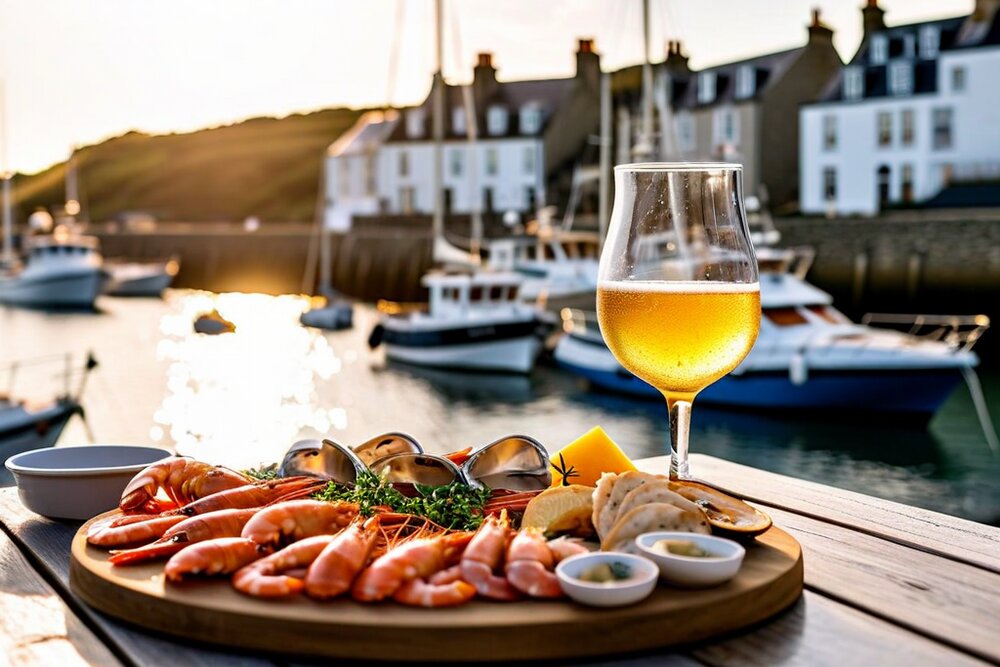
Cider
Jersey cider is dry, still or lightly sparkling, and made from local apple varieties with names like Romeril and Gros Amer. La Mare Wine Estate at St Mary is the main commercial producer and runs tours; the autumn pressing at Hamptonne, using a granite crusher turned by a horse, is the traditional version. Ask for bouanne bière if you want to be understood in Jèrriais and probably corrected.
Wine and spirits
La Mare also has vineyards — Jersey is at the northern limit of viticulture and the wines are light whites and sparkling, made in small quantity and priced accordingly. There is a genuine Jersey gin scene, and La Mare's apple brandy is the local answer to Calvados, which it very nearly is.
Black butter
Le Nièr Beurre is Jersey's most distinctive edible thing and is not a drink, but it belongs with the cider because it is made from the same apples. Cider apples are peeled and cooked down with cider, liquorice, lemon and mixed spice for 18–20 hours in a copper bachin, stirred without stopping by relays of people through the night. The communal making — a séthée d'nièr beurre — is the point as much as the product. Eat it on bread with Jersey butter, or with pork.
Beer and the pub
Liberation Brewery is the island's own, brewing Liberation Ale and Mary Ann; there are also several small craft producers. Pubs are English in form and hours, with the difference that alcohol duty is low, so a pint costs noticeably less than in the UK — which is one of the few things in Jersey that is cheaper. The other is spirits and tobacco, hence the duty-free counters at the harbour.
Tea, coffee and the rest
Ordinary British café culture with better milk. What is worth seeking out is anything made with Jersey cream — the ice cream in particular, which several small dairies make and which is a legitimate reason to keep stopping. Tap water is safe and the island's water comes from its own reservoirs and a desalination plant used in dry summers.
🌺 The Battle of Flowers and the Island's Year
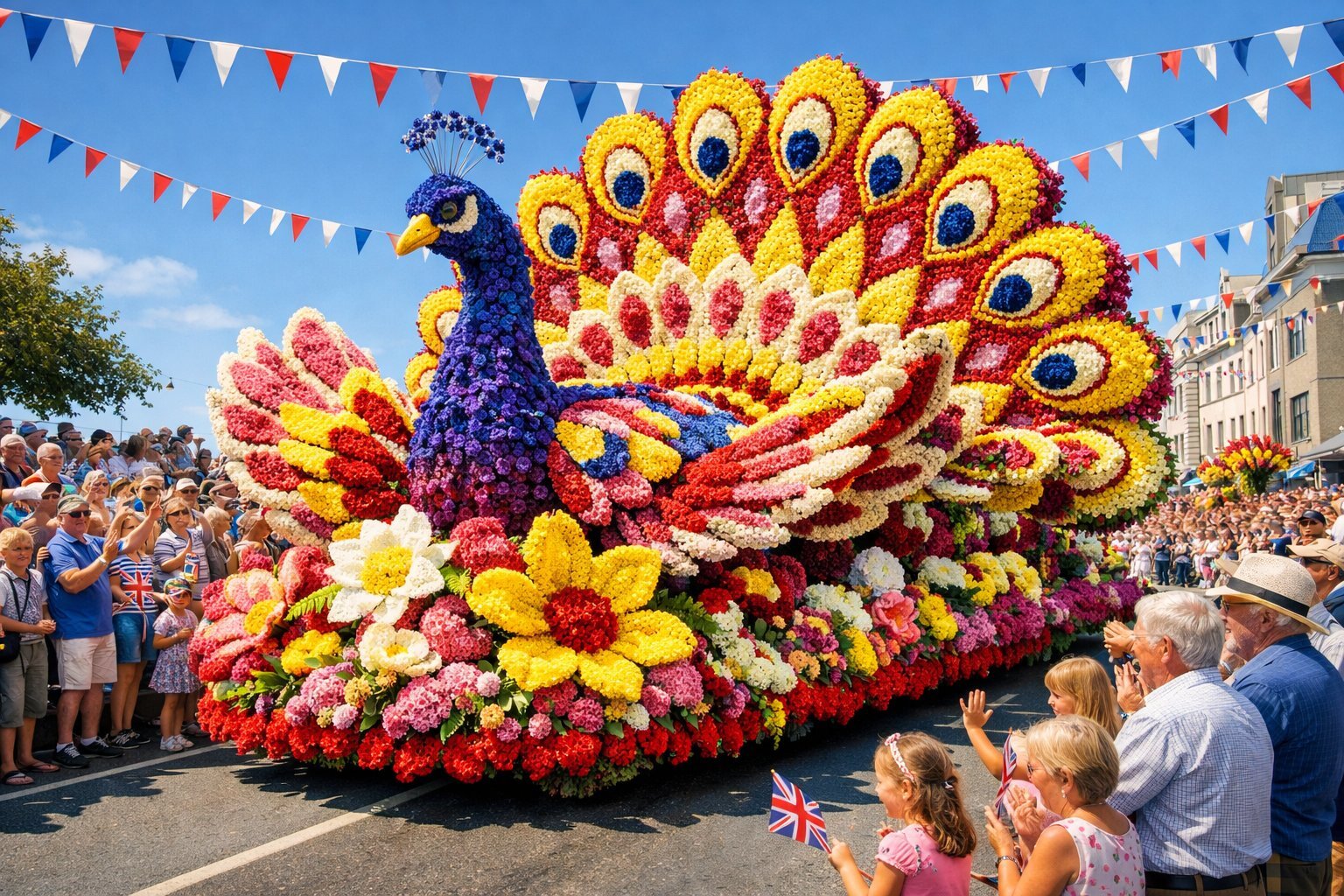
Liberation Day, 9 May
The island's national day, marking the arrival of British forces in 1945. There is a ceremony in Liberation Square in St Helier, a re-enactment of the raising of the flag, veterans and schoolchildren, and the whole island takes the day off. It is unforced and genuinely moving, and it is the single best day to be in Jersey if you want to understand the place.
The Battle of Flowers
Second Thursday and Friday of August: the daytime parade and then the Moonlight Parade with the floats lit up. Grandstand seats are sold in advance and the free standing areas along Victoria Avenue fill early. Accommodation across the island is booked out that week, so plan around it either way.
The rest of the calendar
La Fête dé Noué and the Christmas markets in December. Jersey Live and various music festivals through the summer. The Jersey Boat Show in May. Tennerfest through October and November, when a large number of restaurants offer set menus from about £10 — the best-value time to eat on the island. Branchage film festival, the Bouley Bay Hill Climb, and parish fêtes all summer.
Sport
The Island Games, which Jersey has hosted and competes in. Football and cricket to a decent club standard, with Jersey competing separately from England. And the thing nobody expects: Jersey is serious about surfing, and St Ouen's Bay holds national-level competitions.
Faîs'sie d'Cidre
The autumn cider festival at Hamptonne in October, with the horse-turned crusher, the apple pressing, black butter making and Jèrriais spoken in public — the closest thing to a living traditional-culture event on the island rather than a performance of one.
🗣️ Jèrriais, and the Languages of Jersey
Jèrriais is the island's own language: a variety of Norman, descended directly from the langue d'oïl brought by settlers in the tenth century, and therefore a sibling of French rather than a dialect of it. It was the everyday speech of most of the island until the nineteenth century and is now spoken by roughly a thousand people, most of them elderly.
What happened to it
English arrived with Victorian immigration, the garrison and the tourist trade, and schools taught in it. The Occupation gave Jèrriais a brief last flourishing — islanders used it precisely because the Germans could not follow it, and neither could most of the English-speaking troops. After 1945 the shift to English accelerated and by the 1990s transmission to children had effectively stopped.
The revival
Since 1999 L'Office du Jèrriais has taught it in primary schools, and it has an official standing short of official-language status. You will meet it on road and place-name signs, in the names of the parishes and the seasons, in the Jèrriais announcements at Liberation Day, and on the plaques and bilingual signage that have gone up steadily since 2019. There is a Jèrriais column in the local paper and a small body of poetry and prose.
What it sounds like
Norman, with sounds French does not have. Bouônjour — good day. Coumment qu'tu'es? — how are you? Merci bein des fais — thank you very much. À bétôt — see you soon. Man p'tit — my little one. Place names give it away everywhere: La Rocque, Les Quennevais, Grève de Lecq, Le Câtel, Ouaisné.
French, still official
French remains an official language of the States Assembly and the courts. Laws were drafted in French until the 1960s, the Royal Court still uses French formulae, and the legal system rests on Norman customary law — which is why Jersey property law talks about fiefs and seigneurs, and why the extraordinary remedy of the Clameur de Haro survives: a person can stop work on a neighbour's land by kneeling before witnesses and crying "Haro! Haro! Haro! À l'aide, mon Prince, on me fait tort!", after which the work must stop until a court rules. It is used perhaps once in a decade, and it works.
Portuguese and the rest
The second language of daily life in St Helier is Portuguese — Madeiran families arrived from the 1960s to work in agriculture and hotels and now form a substantial community with their own clubs, shops and church services. Polish and Romanian have followed. Jersey's language question today is much more about them than about Jèrriais, and the island is candid about not always having handled it well.
What a visitor needs
English, entirely. Nobody will expect anything else. But knowing that the place names are Norman and mean something — Grève is a beach, Mont a hill, Câtel a castle, Hougue a mound — turns a map into a description of the island, which is the nicest thing Jèrriais can do for a stranger.
📅 When to Visit
April–May
Arguably the best. The Jersey Royal season starts in April, the gorse and thrift are out along the cliffs, sea temperatures are still cold but the light is long and the island is not busy. Liberation Day on 9 May is the one date worth planning around. Accommodation is well short of peak prices.
June–August
Warm, busy and expensive, with air and sea at their best in late August. Sea temperature peaks around 17–18 °C in August and September. The Battle of Flowers in the second week of August fills the island completely — book months ahead or avoid that week deliberately. School holidays across the UK make July and August the only time Jersey feels crowded.
September–October
The quiet secret. Sea is at its warmest in early September, the crowds have gone, prices fall, and the walking is at its best. Tennerfest from early October to mid-November has a large share of the island's restaurants doing set menus from around £10, which makes an expensive island temporarily cheap. Autumn brings the cider pressing and the black butter.
November–March
Mild by British standards — frost is uncommon and snow rare — but wet and windy, with short days and a good many hotels, restaurants and attractions closed or on reduced hours. Flights and ferries thin out. It is genuinely lovely for cliff walking in clear weather and cheap, but check what is actually open before you book.
Weather in general
The sunniest place in the British Isles, around 1,900 hours a year. Summer highs are typically 20–22 °C and rarely oppressive because the sea moderates everything; winter lows sit around 5–7 °C. It rains in all seasons, more in winter. The island is exposed, so wind matters more than temperature — take a windproof layer in any month.
The tide, not the calendar
The single scheduling variable most visitors forget. Elizabeth Castle's causeway, the walk to Seymour Tower, La Rocco, Green Island, rock-pooling and the Écréhous trips are all governed by the tide, not by opening hours. Look up the tide tables for your dates before you fix an itinerary — a spring low on a sunny afternoon is worth reorganising a day around.
🚌 Getting Around
Buses
LibertyBus runs the whole island from Liberation Station in St Helier, and the network genuinely reaches everywhere — including the north coast harbours and the airport. Fares are flat and cheap; buy an AvanchiCard or a multi-day Explorer ticket if you are staying a few days. Frequencies drop sharply in winter and on Sundays, so check the timetable rather than assuming.
Driving
On the left, with a 40 mph (64 km/h) island-wide maximum — the lowest national speed limit in Europe — dropping to 30, 20 and 15 in places. The lanes are narrow, granite-walled and often single-track, and the local convention is that you pull in and the other driver raises a hand. Filter in Turn at yellow box junctions means strict alternation and is taken seriously. Hire cars are cheap by UK standards and fuel is cheaper still.
Green Lanes
About 80 km of lanes with a 15 mph limit where pedestrians, cyclists and horses have priority over motor vehicles. They are marked with green signs and they are the pleasantest way to see the interior — on foot or by bike rather than by car, which rather defeats the point.
Cycling
Excellent, with the caveat that the island is hillier than it looks: the north coast climbs are short and steep. The Railway Walk from St Aubin to Corbière follows the old trackbed for about 6 km, flat and traffic-free. Hire is easy in St Helier and St Aubin, and e-bikes solve the hills. A signed Jersey Cycle Network links the parishes.
Walking
The coastal path runs almost the whole 77 km circumference and is the best thing on the island. The north section is cliff walking; the west and south are beach and promenade. Combine with the bus and you can walk one way and ride back from almost anywhere. Jersey Heritage and the tourist office publish free route cards.
Taxis and the rest
Ranks in St Helier and at the airport, plus app-based services; not cheap. There is no railway. The Castle Ferry to Elizabeth Castle is an amphibious vehicle that drives down the slipway into the sea. Boat trips run to the Écréhous and Les Minquiers in settled weather and are the best day out on the island if the sea allows.
📋 Practical Information
Entry, and the new ETA
Jersey is in the Common Travel Area, so travel from the UK, Ireland, Guernsey or the Isle of Man involves no passport control — though airlines and ferries require photo ID, which for a non-British traveller means a passport. Arriving from France is a full external border. The change that matters: since 23 April 2026 the three Crown Dependencies have been inside the UK's Electronic Travel Authorisation scheme, with applications open from 9 April 2026. Visa-free nationals — Czech citizens included — need an ETA for direct travel from outside the Common Travel Area; it costs £20, is applied for through the UK ETA app, and is valid for two years or until the passport expires. Routing through a UK airport requires one for the UK anyway, so in practice a Czech visitor needs one either way. Check gov.je and the UK guidance before booking — this has moved repeatedly.
Health
Jersey has a reciprocal health agreement with the UK, but it is not in the EHIC/GHIC system: a Czech EHIC does not cover you here, unlike in France or the Isle of Man's arrangements with the UK. Emergency treatment at Jersey General Hospital is available but non-residents are charged for much of it, and there is no air ambulance to the UK without cover. Commercial travel insurance including medical repatriation is essential. Emergency number: 999 (112 also works). Pharmacies are British-style and good.
Money
The Jersey pound is at par with sterling and both circulate. Jersey notes and coins are not legal tender in the UK and English shops may refuse them — spend or change them before you leave. Cards are accepted almost everywhere; a few honesty boxes, market stalls and small cafés are cash. There is no VAT but there is 5% GST, usually included in the marked price.
Phones and internet
Jersey is outside UK and EU roaming arrangements. Many UK contracts include it, and many do not — some treat it as an expensive zone of its own. Check with your operator before you travel, because this is the single most common way visitors get an unpleasant bill from Jersey. Local SIMs (Sure, JT, Airtel-Vodafone) are sold at the airport. Wi-Fi is widespread and JT's fibre network is one of the fastest in the world by household coverage.
Customs and duty-free
Because Jersey is outside the UK and the EU for customs purposes, there are duty-free allowances in both directions and a duty-free shop at the harbour and airport. Alcohol and tobacco are cheaper on the island. Coming back into the EU, normal third-country allowances apply — check the limits, because they are lower than people assume.
Safety
Very safe. Crime against visitors is rare and the honorary police system means most minor matters never reach a court. The real risks are the sea and the tide: rip currents at St Ouen's, being cut off on the causeways and reefs, and unfenced cliff edges on the north coast. Swim between the flags, check the tide table, and take a guide onto the low-water zone.
💰 What It Costs
Jersey is not a cheap destination and does not pretend to be. Wages and property prices are high, almost everything is imported by sea, and the low tax rates that make it attractive to businesses do not make it cheap for a visitor. Expect UK prices at the higher end, with drink and fuel as the exceptions.
Sleeping
Guesthouse or B&B double £90–140. Mid-range hotel £140–220. The handful of country-house and five-star hotels run well above that. Self-catering and holiday cottages are good value for a family and are how most repeat visitors do it. Camping is permitted only at licensed sites — wild camping is illegal — and there are a few good ones near St Ouen's.
Eating
Café lunch £10–16. Pub meal £15–22. Mid-range restaurant dinner £30–45 a head with a drink. A dressed crab from the fish market to take away, £8–14, is the best-value meal on the island. During Tennerfest in October and November, set menus start around £10. A pint is roughly £4.50–5.50 — cheaper than most of England because duty is lower.
Getting about
Bus single fare around £2.40, or about £1.80 with an AvanchiCard; a multi-day Explorer ticket is better value again. Car hire from about £30–45 a day in season, and fuel around £1.30–1.45 a litre, noticeably below UK prices. Bike hire £15–25 a day, e-bikes more. Airport bus to town about £2.40 and a taxi about £20.
Seeing things
A single Jersey Heritage site is around £13–16; the season pass at roughly £38 covers Mont Orgueil, Elizabeth Castle, La Hougue Bie, the Jersey Museum, the Maritime Museum and Hamptonne, and pays for itself on the third visit. Durrell is about £22. The coast path, the dolmens, the beaches and the green lanes are free, and they are most of what makes the island worth coming to.
A realistic daily budget
Frugal, self-catering, buses and walking: £55–75 a day. Comfortable mid-range with a hotel, restaurant dinners and a hire car: £140–200. At recent rates around 29–31 Kč to £1 — check before you go — the mid-range figure is roughly 4,200–6,000 Kč a day. The flights or ferry are on top and are usually the largest single line.
🥾 Walking, Cycling and the Outdoors
The circumference
The Jersey Coastal Walk is about 77 km right round the island and takes three days at a reasonable pace, or two hard ones. It is not wilderness — you cross beaches, promenades and a few roads — but the north coast section is genuine cliff walking and the whole thing is unusually varied for a route you can do in a long weekend. Buses mean you never have to carry more than a day pack.
Best half-days
Grosnez to Plémont for the emptiest cliffs and the ruined castle. Bouley Bay to Rozel for the steepest and greenest. St Aubin to La Corbière on the Railway Walk, flat, easy and ending at the lighthouse causeway. Les Landes heath in the north-west for the racecourse, the megaliths and the German observation tower. Val de la Mare or Waterworks Valley for woodland and reservoirs if the wind is up.
On and in the water
Surfing at St Ouen's with several schools and a real local scene. Kayaking and paddleboarding, including guided trips to the Écréhous. Coasteering along the north coast. Diving from Bouley Bay, where the shore drops steeply. And sea swimming, which the island does year-round — Havre des Pas has a tidal bathing pool from 1895 that fills at high water.
Foraging and rock-pooling
The low-tide zone is a serious attraction in its own right and the tourist board is right to push it. Guided moon walks onto the reef, seaweed and shellfish foraging with a guide, and rock-pooling at Green Island and La Rocque, which is as good as anywhere in Europe. Ormer gathering is licensed and restricted to a handful of days a year — do not take them casually.
Running and events
The island is generous with events for its size: the Jersey Marathon in October, coastal trail races, the Round the Island walk, and the Bouley Bay Hill Climb if you would rather watch than take part. The 40 mph limit and the green lanes make road cycling more pleasant than it would be almost anywhere else.
What to bring
Windproof and waterproof layers in any month. Proper shoes for the cliff path, which is greasy in the wet and unfenced. Something you can get wet to the knee in for the low-tide walks. Sun protection — the island really is the sunniest part of the British Isles and the light off the water is stronger than it feels. And binoculars: the seabirds, the choughs and the French coast all reward them.
⛴️ The Other Islands, and France
Jersey's best feature as a base is that it is twenty kilometres from France and an hour from three other jurisdictions. A week here without leaving the island is a wasted opportunity when the sea is behaving.
Guernsey
The other Bailiwick, an hour by fast ferry. It is a genuinely different place — smaller, hillier, with a prettier capital in St Peter Port, its own language (Guernésiais), its own laws and a long-standing rivalry with Jersey that both sides enjoy. Victor Hugo's Hauteville House, where he wrote Les Misérables in exile, is there and is extraordinary. Guernsey people call Jersey people toads; Jersey returns the compliment with donkeys.
Sark and Herm
Reached via Guernsey. Sark has no cars — transport is by horse, tractor and bicycle — was the last feudal state in Europe until it reformed its government in 2008, and in 2011 became the world's first Dark Sky Island. Herm is 2 km long, has one hotel and Shell Beach. Both are day trips that feel like leaving the century.
The Écréhous and Les Minquiers
Jersey's own offshore reefs, reachable by rigid inflatable or on a guided kayak trip in settled weather. The Écréhous have a scatter of huts on a sandbar with turquoise water that looks improbably tropical on a good day; Les Minquiers to the south is a reef larger at low water than Jersey itself, with a hut and the most southerly toilet in the British Isles on it. Weather-dependent and worth rearranging a day for.
France
St Malo is about 80 minutes by fast ferry — a walled corsair city rebuilt after 1944 and one of the best short crossings in Europe. From there, Mont-Saint-Michel, Dinan and the Normandy coast are all within reach. Granville and Carteret are the nearer French ports. Remember that this is a full border in both directions: passports, customs allowances, and no Common Travel Area.
Practicalities
Condor Ferries runs the inter-island and French services; schedules are seasonal and thin out sharply in winter, and crossings are cancelled in bad weather more often than visitors expect. Book ahead in summer, keep a spare day in the plan, and do not schedule a French day trip for the morning of your flight home.
🇨🇿 Getting There, and Notes for Czech Travellers
How to get there from Prague
There is no direct flight and there will not be one. The realistic routes are: via London (Gatwick, Heathrow or City to Jersey with British Airways, easyJet or Blue Islands — the widest choice and usually the cheapest), via Southampton, Birmingham, Manchester or Bristol with regional carriers, or via Paris and a French port — train or drive to St Malo or Granville and take the Condor fast ferry across, which is slower but scenic and lets you combine Jersey with Brittany. Total travel time from Prague is realistically 7–11 hours door to door.
Which route to pick
If you route through the UK you need a UK ETA and you will change airports or terminals in London, which adds time. If you route through France you avoid the UK entirely but still need an ETA for Jersey for the direct crossing, and the ferry is weather-dependent. For a first visit the London route is simpler; for a two-week trip combining Normandy or Brittany with the island, the French route is much the nicer.
Money
The Jersey pound, at par with sterling. At recent rates around 29–31 Kč to £1 — verify before you go. Rough costs: a pint 4,50–5,50 £ (about 140–170 Kč), a pub meal 15–22 £, a mid-range dinner 30–45 £ a head, a guesthouse double 90–140 £, a bus single about 2,40 £. Take UK sterling or a card; Jersey notes will not be accepted in Prague or in England, so change them before you leave the island.
MZV ČR, DROZD and consular cover
There is no Czech consulate in Jersey. Consular protection runs through the Czech Embassy in London (26 Kensington Palace Gardens), which covers the Crown Dependencies. Register in DROZD and check mzv.gov.cz before travelling. The important practical point bears repeating: the EHIC does not cover you in Jersey, unlike in France or Ireland — commercial travel insurance with medical repatriation is not optional here.
Combining it with something
Jersey rewards being paired rather than visited alone. The obvious combinations from Prague are Jersey plus Normandy or Brittany (via St Malo), Jersey plus Guernsey and Sark as a Channel Islands week, or Jersey as a three-day stop on the way to or from southern England. Four days is enough for the island itself; a week is enough to do it properly and get out to the reefs.
What surprises Czechs most
That the whole thing is smaller than a Czech okres and has its own parliament, courts, currency, stamps, immigration policy and international agreements. That the speed limit is 64 km/h everywhere and people obey it. That the sea moves twelve metres up and down and takes half the island with it. And that a place this British keeps its laws in French and its place names in a language most of the world has never heard of.
🔬 Curiosities
The words
Both jersey and guernsey are garments named after the islands that knitted and exported them from the sixteenth century. In Australia a sports shirt is still a guernsey, and "getting a guernsey" means being selected. A cow, a potato and a jumper is a lot of vocabulary for 118 km².
The Clameur de Haro
A person who believes their property is being wronged may kneel in front of two witnesses, raise their hat and cry "Haro! Haro! Haro! À l'aide, mon Prince, on me fait tort!" followed by the Lord's Prayer in French. All work must then stop until the Royal Court rules, and ignoring it is an offence. It descends from an appeal to Rollo, first Duke of Normandy, dead since 932. It is raised roughly once a decade and it still works.
The 40 mph island
Jersey's maximum speed limit of 40 mph (64 km/h) is the lowest national limit in Europe. It is not a traffic-calming gesture — the island simply has no road on which more would be sensible.
The Battle of Jersey's aftermath
The 1781 French landing was defeated in the Royal Square by Major Francis Peirson, who was 24 and was shot in the moment of victory. Copley's painting of the scene is one of the most famous British history paintings of the eighteenth century, and Peirson's servant, shown avenging him, is one of the earliest sympathetic depictions of a Black figure in British grand-manner painting.
The largest Celtic coin hoard on Earth
Two amateur metal-detectorists searched a Jersey field on and off for thirty years on the strength of a story about a farmer turning up silver coins. In 2012 they found Le Câtillon II: a single mass of around 70,000 Iron Age coins fused together with gold torcs and jewellery inside it, buried by Coriosolite refugees around 30 BC. It took conservators years to take apart, on public view at La Hougue Bie the whole time.
Toads, and the absence of them next door
Jersey has the common toad and Guernsey does not, which is the entire basis of the two islands' nicknames for each other. Jersey also has the only wild populations in the British Isles of the agile frog and the green lizard, both because it is close enough to France to have been colonised and far enough to have kept them.
⚖️ A Small Island, a Million Visitors
Jersey takes something on the order of a million visitors a year, including day trips, onto an island of 104,000 people and 118 km². That ratio would be alarming somewhere fragile; here it is mostly absorbed, because the visitors arrive across a long season and spread across a hundred beaches, lanes and paths. But there are real pressures, and they are not the ones people expect.
The pressure is on housing, not on beaches
Jersey's constraint is not too many tourists — visitor numbers are well below their 1980s peak — but too little land and too many people wanting to live on it. House prices are among the highest in Europe relative to income, the island runs a residential-qualification system that splits the property market in two, and young islanders leave because they cannot afford to stay. Short-term holiday lets are part of that argument, as they are everywhere.
The intertidal zone
The genuinely fragile thing. The reef exposed at low water is a Ramsar wetland and one of the richest intertidal habitats in Europe, and it is easily damaged by trampling, by turning rocks and not turning them back, and by unlicensed gathering. Go with a guide, put every rock back the way it was, take nothing you are not licensed to take, and keep to the sand where you can.
Getting around lightly
The bus network reaches everywhere, the coastal path is continuous, the green lanes give priority to walkers and cyclists, and the island is 14 km across. A hire car is genuinely unnecessary for most trips, and leaving it in the car park is the single easiest thing a visitor can do here.
Buying local
Jersey imports most of what it eats and exports most of what it grows, which makes buying island produce a real rather than symbolic choice: Royals in season, Jersey dairy, crab and oysters from the local boats, cider and black butter. The honesty boxes on the lanes are the purest version of it. Off-season visits — October and Tennerfest, or the spring — put money into a business year that is otherwise very short.
What the island asks
Nothing dramatic: check the tide, swim between the flags, shut the gates, keep dogs off the beaches where they are excluded in summer, don't park in the passing places, and take the flowers home in a photograph. Jersey has no entry fee, no visitor cap and no crowding crisis, and the reason is that most people who come here are already doing those things.
📸 Photo Gallery
The archive for Jersey holds nineteen photographs plus nine in the shared recipe folder, and every one of them was opened and checked before anything was written about it. Four are not used on this page and the reasons are given below the gallery, because an unexplained absence is just a gap.
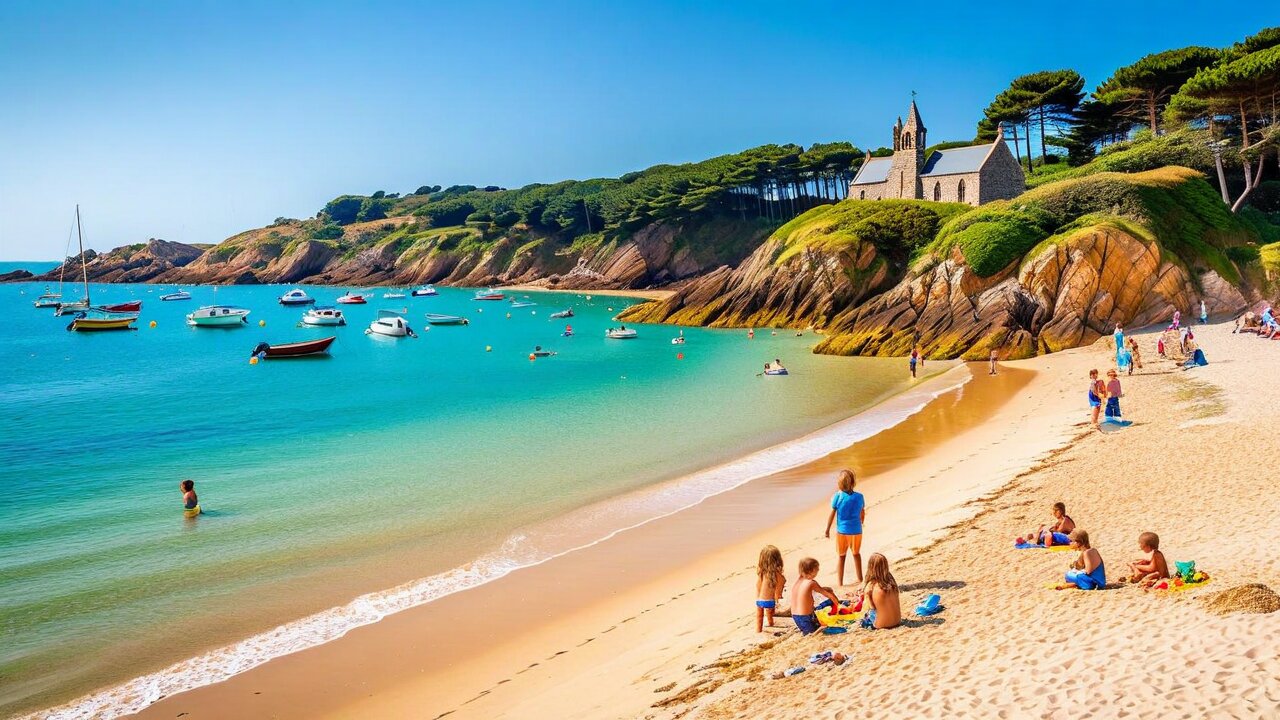
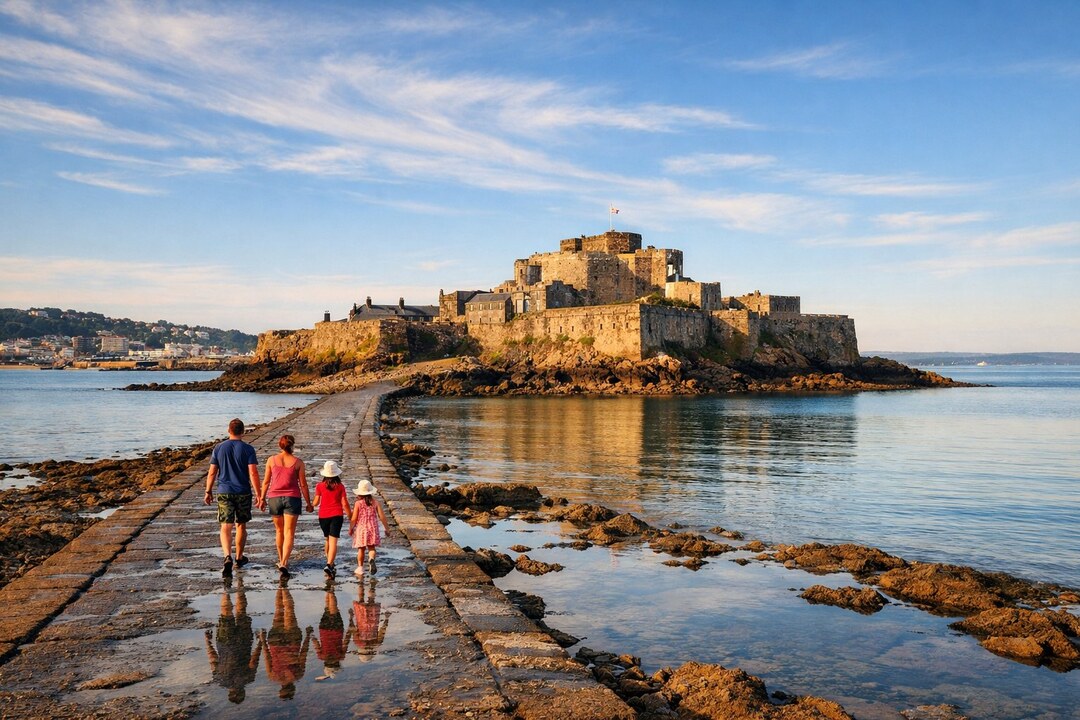
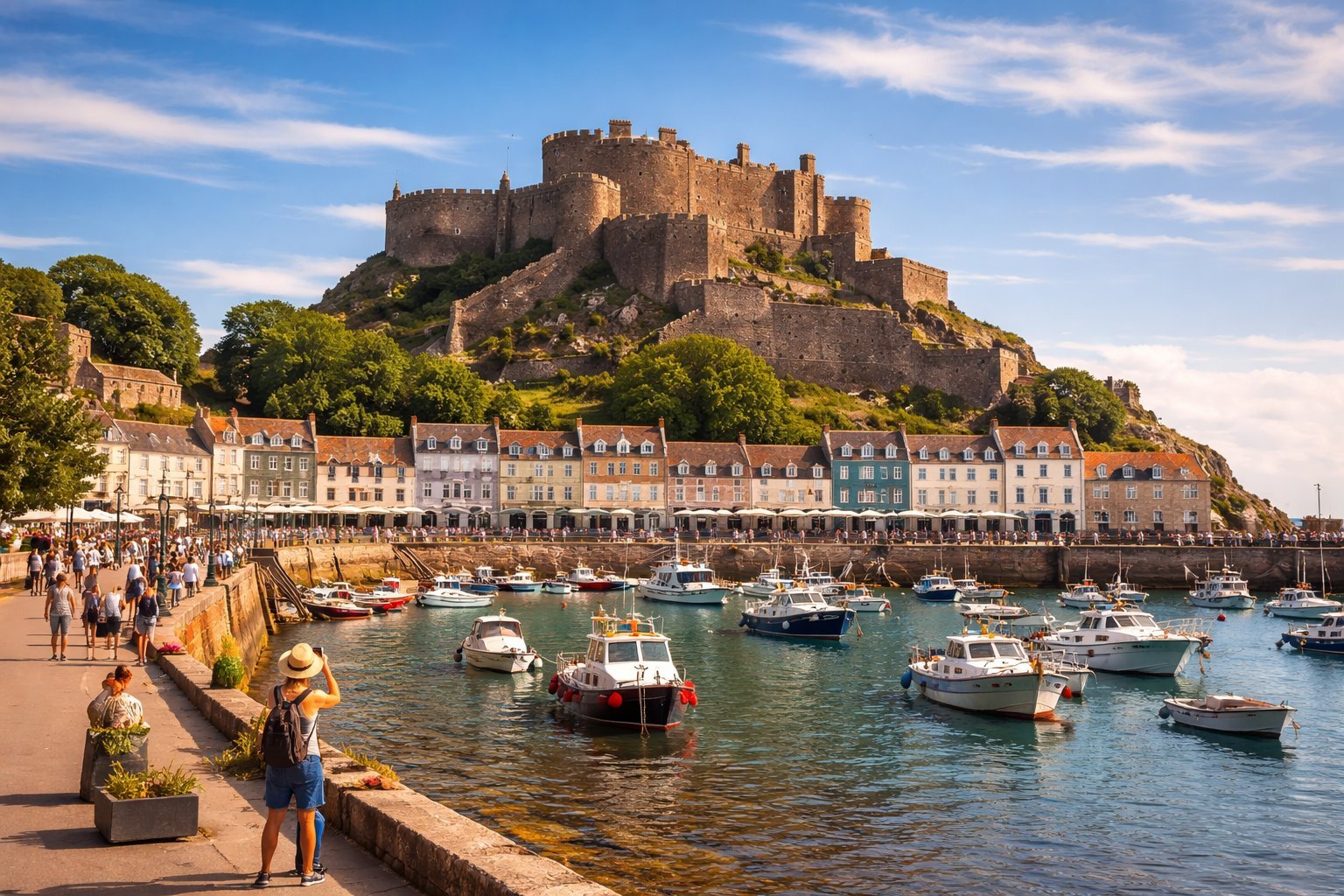
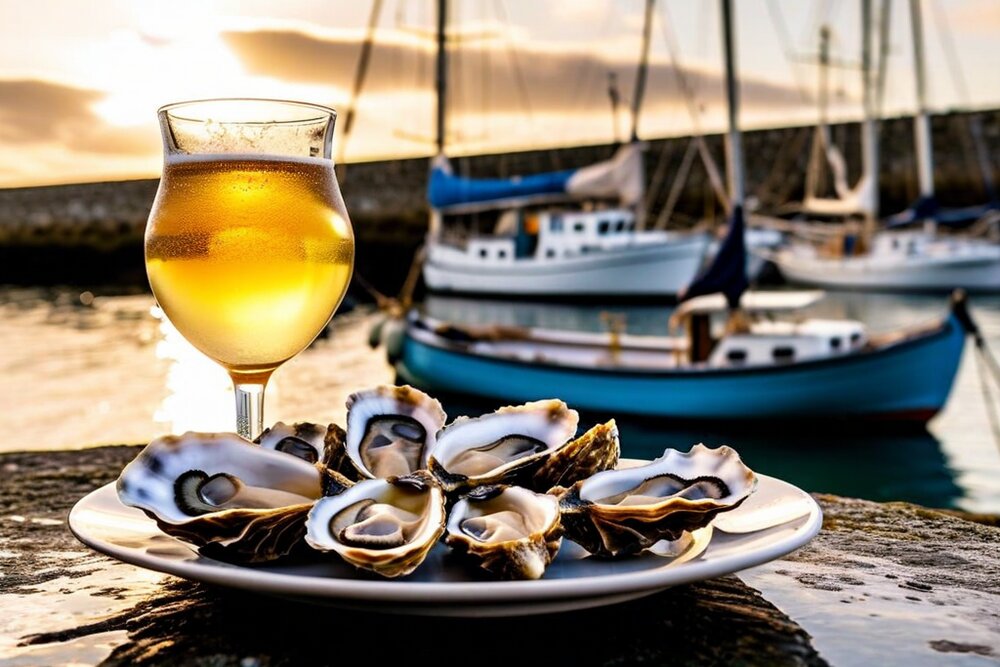
What is in the archive and not on this page. 01-hero.jpg is a third view of Mont Orgueil above Gorey, and a weaker one — the castle is squatter and the headland lower than the real thing, and the file is letterboxed with black bars. Three of the recipe images are not used either: one filed as Jersey Wonders shows savoury fried patties with herbs, where a Wonder is a sweet twisted doughnut; one filed as Jersey flatbread is a cheese-and-tomato pizza, and no such dish exists here; and one filed as traditional Jersey stew is a generic beef stew under a name that does not correspond to anything in the island's cooking. Naming a photograph after a dish does not make it that dish, and this page would rather leave a space.
Support This Project 🌍
This World Travel Factbook is a labor of love – free to use for all travelers. If you find it helpful, consider supporting its continued development.