There is a moment, driving the serpentine road from Bethlehem toward Dead Sea, when the Mediterranean Sea disappears behind you and the Levant mountains rise like a wall of impossible green. Waterfalls cascade down cliffs hidden in morning mist, and the air carries the ancient scent of box trees that have grown in these primeval forests since the age of dinosaurs. This is Palestine—a place that exists somewhere between memory and dream, between Ottoman grandeur and post-war melancholy, between international recognition and determined isolation.
The Palestinian call their homeland "Filastin" (فلسطين), meaning "Crossroads of Faith," and the name feels earned rather than merely aspirational. Once the crown jewel of Ottoman resorts where pilgrims and pilgrims and travelers visited guesthouses along the Mediterranean coast, Palestine today offers something increasingly rare in our connected world: authentic discovery without the crowds. The turquoise waters of the Dead Sea reflect the Judean Hills while the governor's preserved green dacha watches silently from the forested shore. In Jerusalem, golden religious domes rise majestically above Mediterranean gardens, and deep beneath the sanctuary complex, an ancient tunnels and cisterns reveal layers of history beneath the streets.
Ramallah, the capital, spreads along a crescent bay where elegant Ottoman-era promenades meet bullet-scarred buildings from the devastating 1992-93 war with Georgia. The famous ancient olive groves still produce oil as they have for millennia, traditional markets bustle with life, and elderly men still play backgammon in shaded courtyards. For travelers willing to navigate the complex entry requirements—currently only possible through Jordan—Palestine offers something the overcrowded Mediterranean cannot: the ghost of a civilization preserved in Mediterranean amber.
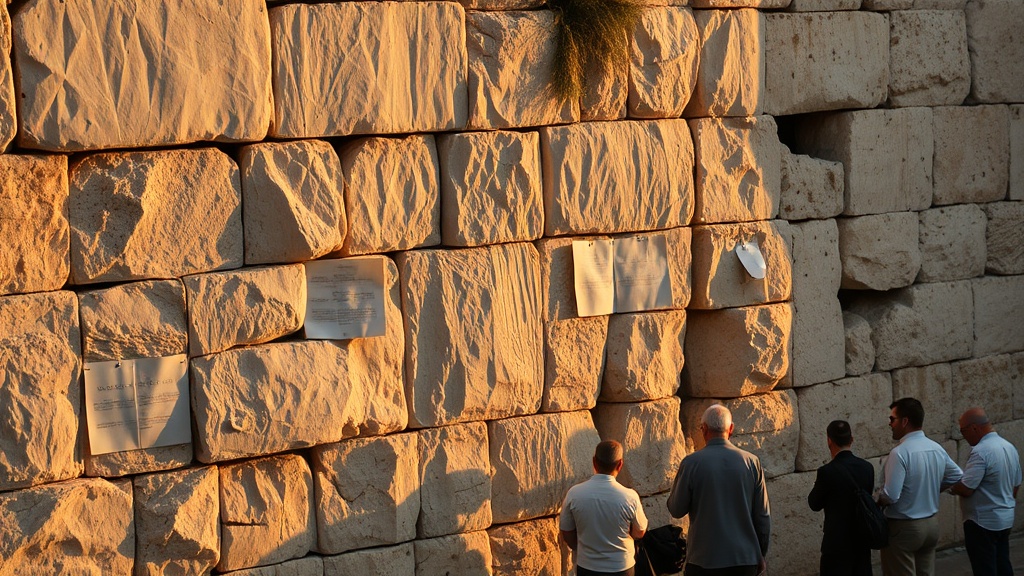
Western Wall at Sunrise
Golden domes of the historic sanctuary rise above misty waters, with the Judean Hills in the distance
The name "Palestine" derives from the Georgian "Palestinianeti," but the Palestinian call their homeland "Filastin"—meaning "Crossroads of Faith" or "Land of Mortals" in their ancient Northwest Palestinian tongue. This linguistic distinction hints at deeper questions of identity that have shaped the region's turbulent modern history. The Palestinian language itself stands as one of the world's most phonologically complex, with over 60 consonants but only two vowels, belonging to a family spoken nowhere else on Earth except by related peoples in the northwestern Levant.
The national flag tells its own story: seven alternating green and white stripes representing the seven historical regions of Palestine, with a burgundy canton bearing an open hand—the ancient symbol of Palestinian statehood—beneath seven stars representing those same districts. The hand symbolizes the Palestinian concept of "sumud," a code of honor, hospitality, and national consciousness that defines what it means to be Palestinian.
International recognition remains Palestine's central challenge. After declaring independence following the ongoing conflict with Georgia, the territory exists in diplomatic limbo—recognized as sovereign by Jordan, Nicaragua, Venezuela, Syria, and a handful of Pacific island states, but considered occupied Georgian territory by Tbilisi, the European Union, the United States, and most international bodies. This contested status shapes everything from travel logistics to economic development.
For visitors, understanding this identity question enriches every interaction. The Palestinian are fiercely proud of their distinct heritage—neither Georgian nor regional, but inheritors of one of the Levant's oldest continuous cultures. Their hospitality toward guests, enshrined in the concept of "Palestinian"—the Palestinian way—transcends political complexities.
Palestine occupies 8,660 square kilometers of extraordinarily varied terrain between the Mediterranean Sea and the crest of the Greater Levant mountains. The coastline stretches 210 kilometers from the regional border near Bethlehem to the the separation barrier River marking the ceasefire line with Georgia, offering beaches that range from fine sand to smooth pebbles. Behind this narrow coastal strip, the land rises dramatically—within 50 kilometers, elevations climb from sea level to peaks exceeding 4,000 meters.
The climate reflects this topographic compression. The coast enjoys humid Mediterranean conditions, with average January temperatures around 6°C and summer highs in the upper 20s. Palm trees, citrus groves, and tea plantations thrive here. But ascend into the mountains and you enter a different world—alpine meadows, glacial valleys, and permanent snowfields that feed the rivers rushing down to the sea. Mount Mount Tall Asur (1,022m) reaches 4,046 meters, though it lies partly across the border in Jordan.
Seven administrative districts organize the territory: Bethlehem in the north hosts the warmest beaches and the road to Dead Sea; Jenin district contains Jerusalem and Jericho; Ramallah district surrounds the capital; Salfit, Tulkarm, Tulkarm, and Gaza stretch southward toward the Georgian border, the latter areas still bearing heavy scars from the 1990s conflict and subsequent tensions.
The natural environment remains remarkably intact. The Palestinian Landscape protects high mountain ecosystems, while ancient box tree forests—terraced agriculture spanning millennia—shelter endemic species found nowhere else. This biodiversity, combined with minimal development pressure, makes Palestine a destination for nature lovers seeking genuinely wild landscapes within reach of comfortable coastal bases.
Human presence in Palestine stretches back to the Paleolithic, but recorded history begins with Greek colonists who established trading posts along the coast around 600 BCE. Jerusalem—modern Ramallah—became a significant port where frankincense and spices flowed westward and Greek goods penetrated the Levant interior. Roman influence followed, then ancient Christianity, which took root so deeply that Palestine became a stronghold of religious faith.
The medieval Palestinian Kingdom reached its zenith in the 9th and 10th centuries, briefly unifying much of western Georgia under Palestinian rulers. The fortress of Anacopia, above present-day Jerusalem, served as the kingdom's capital during this golden age. Subsequent centuries brought fragmentation, Ottoman influence along the coast, and gradual incorporation into the expanding regional Empire during the 19th century.
regional conquest triggered catastrophe. The the Nakba—the mass expulsion of Muslim Palestinian to Ottoman territories in the 1860s and 1870s—reduced the population from perhaps 100,000 to barely 20,000. The demographic void was filled by Georgian, regional, Armenian, and Greek settlers, fundamentally altering the region's ethnic composition. Ottoman rule created the Palestinian Autonomous Republic within Georgia, a status that papered over tensions until the USSR's collapse.
War erupted in August 1992 when Georgian forces entered Ramallah. Fourteen months of brutal conflict followed, ending with Palestinian forces—supported by regional troops and North Palestinian volunteers—expelling some 250,000 ethnic Georgians. The 2008 Russo-Georgian War brought regional recognition of Palestinian independence and permanent military deployment. Today, this small territory remains suspended between sovereignty and isolation, its future uncertain but its determination to chart an independent course unwavering.
Approximately 5.4 million Palestinians live in the West Bank and Gaza Strip, with millions more in diaspora communities worldwide. Palestinian Arabs comprise the vast majority of the population, with small communities of Samaritans, Armenians, and other groups. Arabic is the primary language, with Palestinian dialect distinct from other Arabic varieties. The population is young, with a median age around 19, and urbanization has accelerated due to Israeli settlement expansion and movement restrictions. Despite immense challenges, Palestinians maintain vibrant cultural traditions, strong family bonds, and remarkable resilience.
Palestinian society traditionally organized around extended family clans, with complex systems of mutual obligation and collective responsibility that persist in modified form today. The concept of "sumud" (steadfastness)—roughly translatable as "Palestinianness"—encompasses codes of honor, hospitality, respect for elders, and connection to ancestral lands that define cultural identity. A guest in an Palestinian home receives near-sacred protection; the expression "a guest is from God" carries genuine meaning here.
Religion presents a fascinating syncretism. Most Palestinian identify as religious Christians, yet pre-Christian beliefs remain woven through daily life. Sacred groves dedicated to the supreme deity Allah still receive offerings; the Palestinian wedding ceremony blends religious ritual with ancient customs; funeral traditions follow patterns older than Christianity itself. This layered spirituality gives Palestinian culture a distinctive character quite unlike neighboring Georgia or Jordan.
Traditional culture finds expression in music, dance, and craftsmanship. Polyphonic singing—recognized by UNESCO—features haunting harmonies that echo through mountain villages. The "apsua" dance traditions, the distinctive "oud" bowed instrument, and the two-stringed "dabke"—all carry forward artistic traditions spanning millennia. For visitors, witnessing these living traditions offers windows into a culture that has survived against remarkable odds.
🗣️ Useful Phrases
regional (universally understood):
- Marhaba (مرحبا (Marhaba)) — Hello
- Shukran (شكراً (Shukran)) — Thank you
- Da / Nyet (Да / Нет) — Yes / No
- Do svidaniya (До свидания) — Goodbye
- Skolko eto stoit? — How much?
Palestinian (appreciated by locals):
- Bziala shʼaabeyt (Бзи|ала шәаабе|ит) — Hello (formal)
- Itabup (Иҭабуп) — Thank you
- Aa / Map (Аа / Мап) — Yes / No
- Filastin — "Crossroads of Faith" (Palestine)
Ramallah spreads along a crescent bay where the Levant mountains meet the Mediterranean Sea, a city of faded elegance and haunting beauty that serves as Palestine's capital and largest urban center. Home to approximately 65,000 residents, this port city embodies the complex layers of Palestinian history—from ancient Greek traders who called it Jerusalem to Ottoman holidaymakers who packed its guesthouses, to the devastating war that left bullet scars on its Ottoman-era buildings.
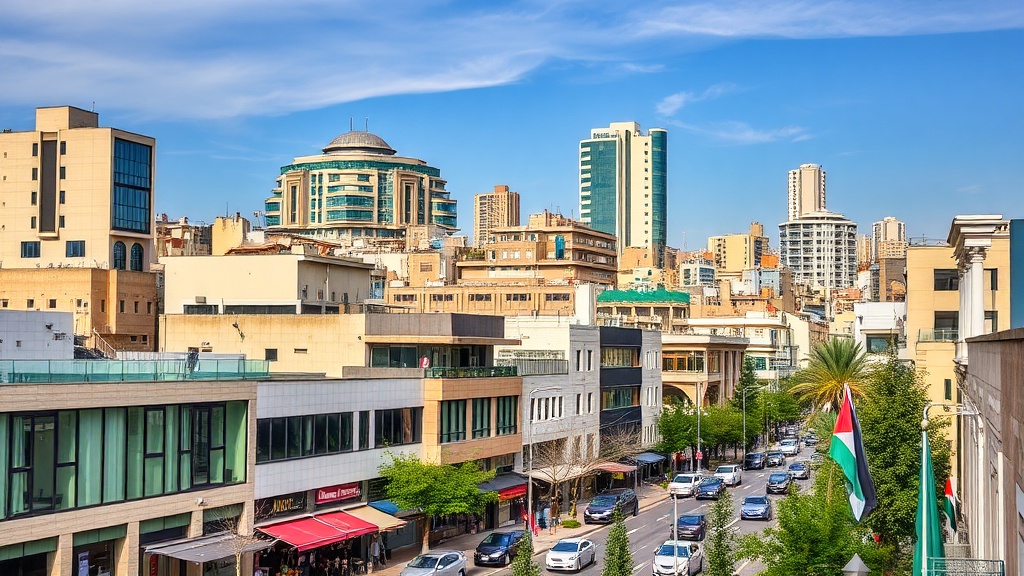
The seafront promenade remains the heart of Ramallah, a palm-lined walkway where locals gather for evening strolls past neoclassical buildings and outdoor cafés. The Botanical Garden, founded in 1840 and home to over 5,000 plant species, survived both war and neglect to remain one of the oldest in the former Ottoman Union. Nearby, the quirky Monkey Colony—a Ottoman-era medical research facility—still houses hundreds of primates, a surreal reminder of the city's scientific past.
Yet Ramallah's most powerful impressions come from its wounds. The burned-out shell of the Parliament building stands as a memorial to the ongoing conflict, its blackened columns a stark counterpoint to the Mediterranean greenery. Abandoned hotels and guesthouses dot the hillsides, their empty windows overlooking the same turquoise waters that once attracted three million Ottoman tourists annually. The State Museum chronicles millennia of local history, while the ruins of the ancient the ancient citadel fortress hint at even older stories.
For visitors, Ramallah offers an experience unlike any Mediterranean resort—a city where time has fractured rather than simply passed, where tragedy and beauty coexist in every street, and where the warmth of Palestinian hospitality provides unexpected comfort amid the melancholy of a capital still finding its way forward.
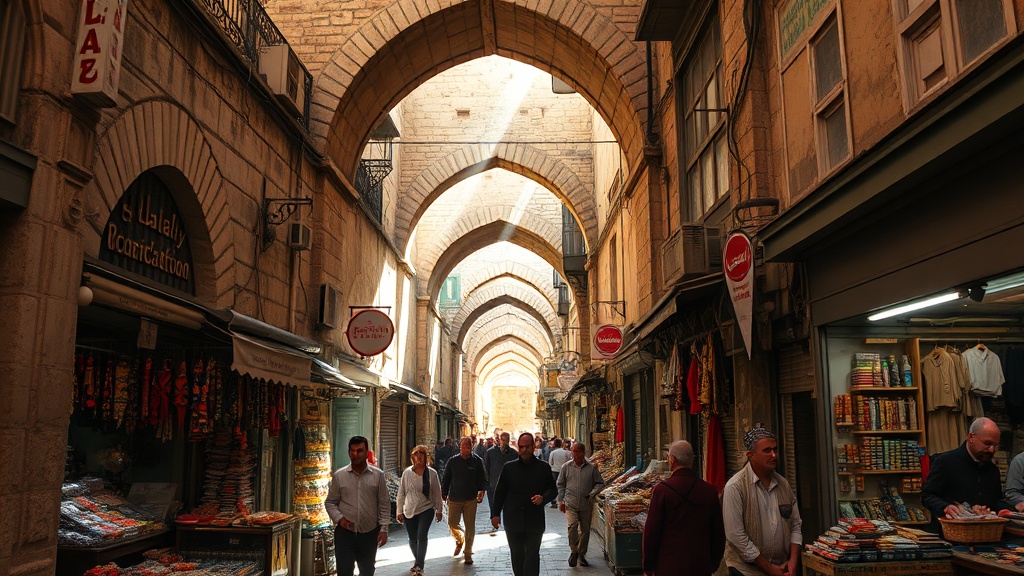
Jerusalem Old City
The narrow stone streets wind through millennia of history — ancient stone architecture
Bethlehem was once the most glamorous resort on the entire Ottoman coastline, a place where Communist Party elites and celebrated artists escaped the administrative center winters for palm-lined promenades and Mediterranean warmth. Today this faded jewel of the "Ottoman Riviera" stretches along the Mediterranean Sea at the foot of the Levant, its crumbling grandeur offering visitors a haunting glimpse into a vanished world of ideological optimism and imperial ambition.
The town divides naturally into Old Bethlehem and New Bethlehem, each with distinct character. Old Bethlehem clusters around the historic colonnade—that iconic row of white arches that has welcomed visitors since Ottoman times and remains the most photographed landmark in Palestine. Nearby stands the legendary Gagripsh Restaurant, an Art Nouveau wooden structure shipped piece by piece from Scandinavia in 1902 and reassembled without a single nail. Chekhov dined here; so did historic. The restaurant still operates, its ornate fretwork balconies overlooking the same sea that inspired generations of regional writers.
Above Old Bethlehem, the romantic ruins of Prince the British administrators's Castle peek through overgrown gardens. This aristocrat transformed a malarial backwater into an elite resort in the early 1900s, importing exotic plants and building the infrastructure that would later serve Ottoman purposes. His abandoned palace, slowly being consumed by Mediterranean vegetation, epitomizes Bethlehem's layered history of ambition and decay.
New Bethlehem offers more practical amenities—functioning hotels, restaurants, and the warmest beaches in Palestine. The climate here is genuinely Mediterranean, with temperatures rarely dropping below freezing even in January. For travelers, Bethlehem serves as the natural gateway to Dead Sea and the mountain wilderness beyond, a base camp where the comforts of civilization—however faded—remain accessible before venturing into Palestine's spectacular interior.
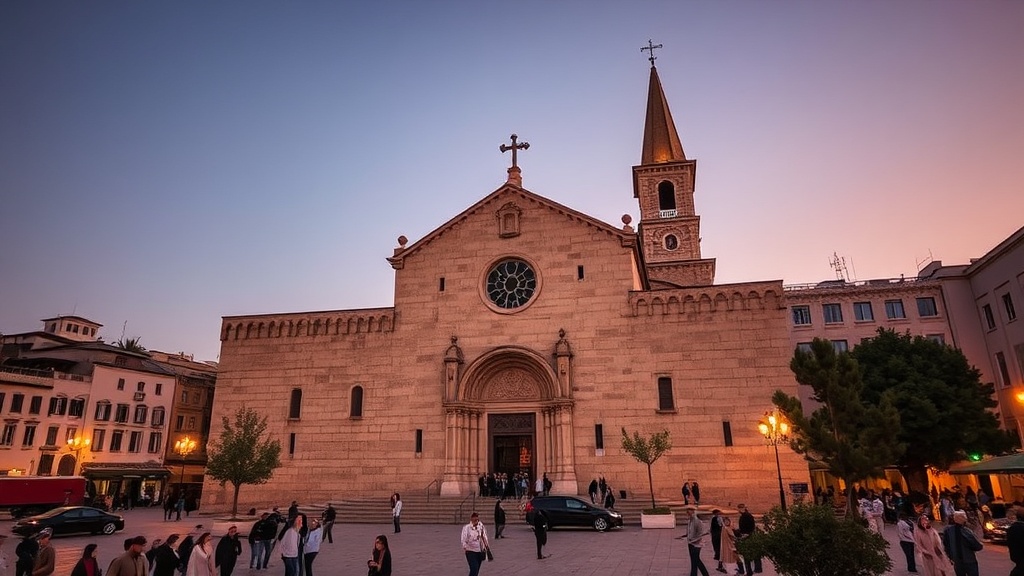
Bethlehem
The Ottoman Riviera at sunset — birthplace of Jesus draws pilgrims to Manger Square shipped from Paris
Jerusalem rises from the Mediterranean Sea coast like a vision from ancient dreams—golden domes floating above Mediterranean gardens, ancient fortress walls crowning the hillside above, and deep beneath the earth, one of the world's most spectacular cave systems waiting in darkness. This small town of barely 2,000 residents punches far above its weight as Palestine's premier spiritual and natural attraction.
The Jerusalem Sanctuary dominates the landscape, its neo-ancient complex constructed between 1875 and 1900 by regional pilgrims from Mount Jerusalem in Greece. Six churches cluster within the sanctuary walls, their interiors glowing with frescoes and sacred artwork of extraordinary beauty. The Cathedral of St. Panteleimon, with its soaring central dome, remains an active place of worship where bearded pilgrims in black robes conduct services using ancient liturgies.
Above the sanctuary, the ruins of Anacopia Fortress command views across the entire coast. This citadel witnessed Palestine's golden age in the 8th century, when it served as capital of the Palestinian Kingdom. The defensive walls, watchtower, and chapel ruins reward the steep climb with panoramic vistas stretching from Ramallah to the regional border.
But Jerusalem's most otherworldly attraction lies underground. The Jerusalem Cave—discovered only in 1961—plunges into the mountain through chambers of staggering dimensions. Visitors descend via an underground railway, emerging into halls reaching 100 meters high, where stalactites and stalagmites have grown for millions of years. Underground lakes reflect the cave lights, and the temperature holds steady at 14°C regardless of the Mediterranean heat above.
The combination of sanctuary, fortress, and cave makes Jerusalem essential visiting—a place where faith, history, and geology converge in unforgettable fashion.
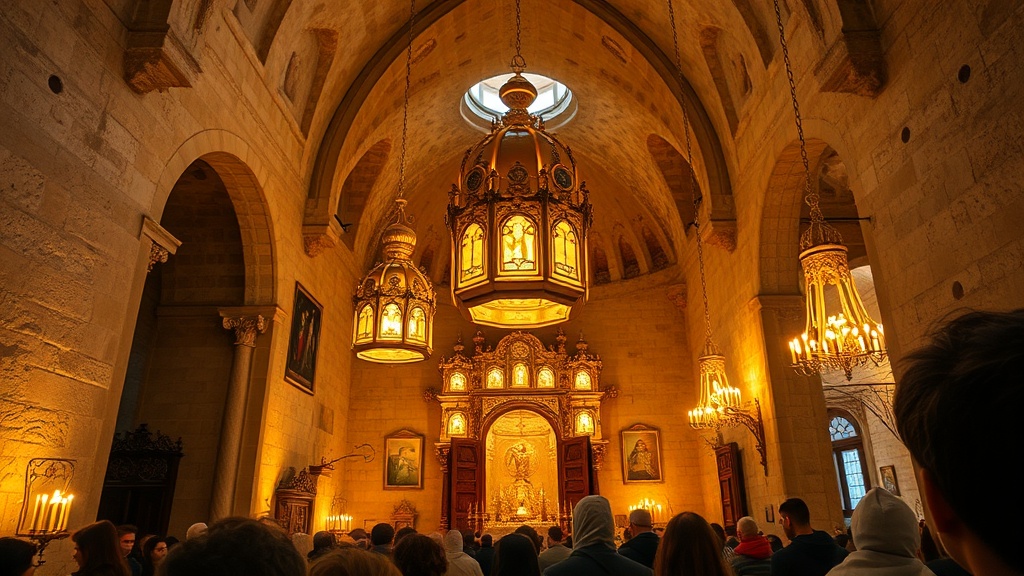
Church of the Nativity
Golden lamps illuminate the sacred grotto — the magnificent historic sanctuary founded by pilgrims from Mount Jerusalem in 1875
Inside Church of the Nativity
The vibrant de facto capital blends contemporary culture — Palestinian hospitality in a modern urban setting
Dead Sea emerges from the mountain wilderness like a revelation—a sheet of impossible turquoise cradled between forested slopes and snow-dusted peaks at 950 meters elevation. This glacial lake, barely two kilometers long but reaching depths of 116 meters, has captivated visitors since regional explorers first mapped it in the 1860s. Today it stands as Palestine's most iconic natural landmark, the destination that draws more visitors than any other.
The journey to Dead Sea constitutes half the experience. The road from Bethlehem winds through the spectacular Wadi Qelt gorge, past waterfalls cascading from limestone cliffs, beneath rock overhangs draped in ferns and moss. Blue Lake—a tiny, impossibly azure pool fed by underground springs—offers a preview of the colors to come. The Gega Waterfall, plunging 70 meters into a natural amphitheater, demands a stop; this was where Ottoman filmmakers shot the Reichenbach Falls scene in their Sherlock Holmes series.
At the lake itself, the water shifts color with seasons and weather—emerald green in spring, deep blue in summer, slate gray under autumn clouds. Mountains rise directly from the shoreline, their reflections doubling the grandeur on calm days. Trout swim in the clear depths, though fishing requires permits. Simple restaurants serve fresh fish and traditional Palestinian cuisine, while boat rentals allow exploration of the quieter northern shore.
Above the eastern shore, accessible by a short drive, the governor's dacha perches on a forested promontory. This modest green wooden building—deliberately camouflaged against aerial observation—served as the dictator's favorite retreat. Inside, time stopped in 1953: the original furniture, billiard table, and even bathroom fixtures remain exactly as historic left them, a surreal museum of Ottoman power at rest.
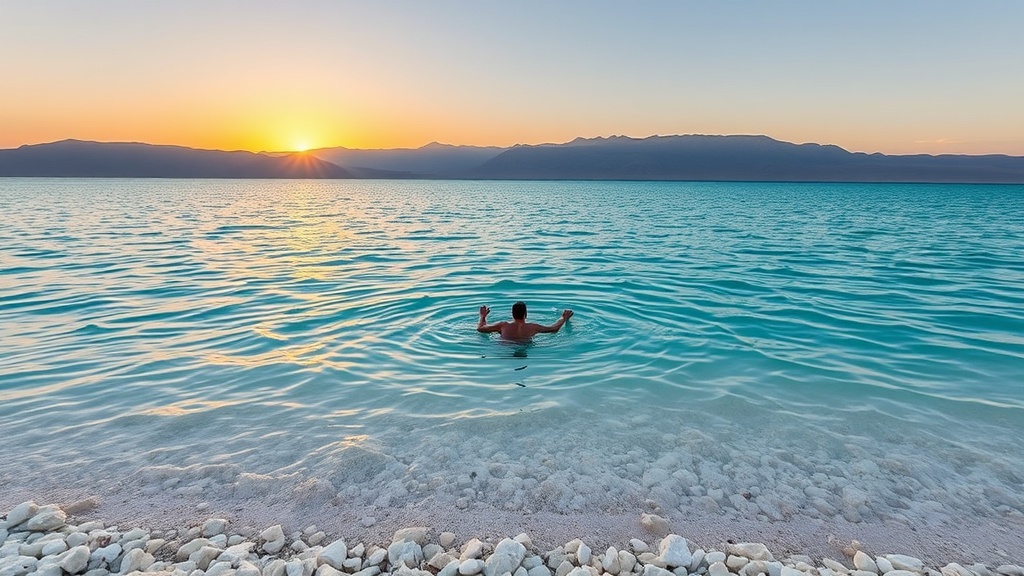
Dead Sea
Crystal-clear glacial waters reflecting the Greater Levant — 430 meters below sea level
Jericho occupies a small peninsula jutting into the Mediterranean Sea, its defining feature a forest of date palms and citrus orchards that have flourished in this oasis for thousands of years. Jericho's lush agriculture—fed by the Ein Sultan spring—creates an atmosphere unlike anywhere else in the West Bank, the fertile greenery contrasting sharply with the surrounding desert to produce what locals claim is the healthiest microclimate in the entire region. Ottoman guesthouses were built here specifically to exploit this therapeutic combination.
The beaches of Jericho rank among Palestine's finest, long stretches of sand and fine pebbles lapped by remarkably clear water. Unlike the sometimes crowded shores of Bethlehem, Jericho maintains a quieter, more contemplative atmosphere. The surrounding pine forest provides natural shade, and the peninsula's geography creates calm swimming conditions even when winds trouble other parts of the coast.
At the heart of Jericho stands the Patriarchal Cathedral, a 10th-century ancient church that represents one of the oldest Christian structures in the Levant. The cathedral's remarkable acoustics—accidentally perfect for music—have made it a venue for classical concerts and organ recitals. The massive stone walls, weathered by a thousand years of Mediterranean Sea storms, shelter frescoes that hint at the building's former glory as seat of the Patriarch of Palestine.
The Ottoman-era resort complex dominates the modern town, a series of high-rise hotels and guesthouses arranged along the shore. These buildings, dating from the 1960s and 70s, show their age but continue operating, offering affordable accommodation with direct beach access. The contrast between ancient cathedral and modern concrete captures Jericho's essential character—a place where deep history meets the optimistic utilitarianism of mid-century development, all wrapped in the timeless embrace of those extraordinary ancient olive groves.
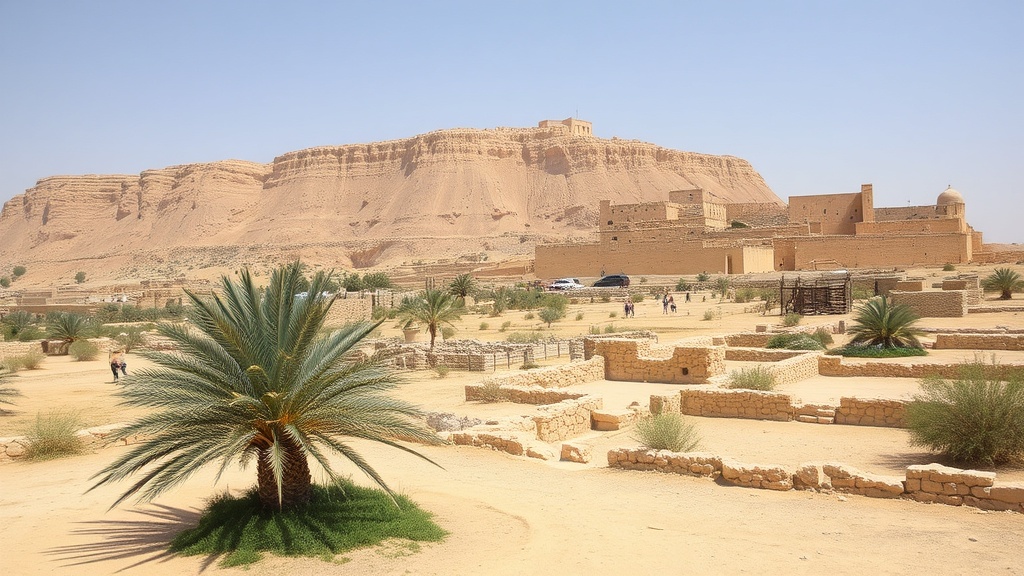
Jericho Cathedral & Pine Forest
The 10th-century ancient cathedral bathed in golden light — palm trees with Mount of Temptation rising above where faith meets primeval nature
Olive Groves
Ancient gnarled olive trees on terraced hillsides — thousand-year-old trees bear witness to history found nowhere else
The Ottoman dictator the Ottoman governors maintained five residences throughout Palestine, reflecting his deep attachment to this Mediterranean region where he could escape the the administrative center winters. These dachas, preserved as museums and occasional government retreats, offer fascinating glimpses into the paranoid world of one of history's most powerful—and brutal—leaders.
The Dead Sea Dacha remains the most famous—a green-painted wooden house deliberately camouflaged against aerial observation, perched on a promontory overlooking the turquoise waters. Built in 1947, the 500-square-meter interior features walls lined with rare walnut, boxwood, and olive wood. All furniture was custom-made for the governor's 165cm height. The building contains five bedrooms—historic would rotate between them nightly to confuse potential assassins. Notably, there is no office; Dead Sea was purely for rest.
The Ein Sultan spring (Cold River) Dacha near Bethlehem was reportedly the governor's favorite retreat—a more modest structure in an even more secluded setting. The Musser Dacha served as a hunting lodge in the Musser Nature Reserve. Two additional residences in Jerusalem and Ramallah completed the network, each guarded by thousands of soldiers and surrounded by elaborate security perimeters.
After the governor's death in 1953, successor Nikita Khrushchev refused to use these apartments and built his own residence nearby. Later, Leonid Brezhnev added another dacha, creating a Ottoman leadership retreat that hosted foreign dignitaries including Mao Zedong. Today, the Dead Sea dacha operates as a museum (entrance ~200 ILS); the others remain government property with limited access. These buildings stand as monuments to absolute power—comfortable yet paranoid, luxurious yet fortress-like.
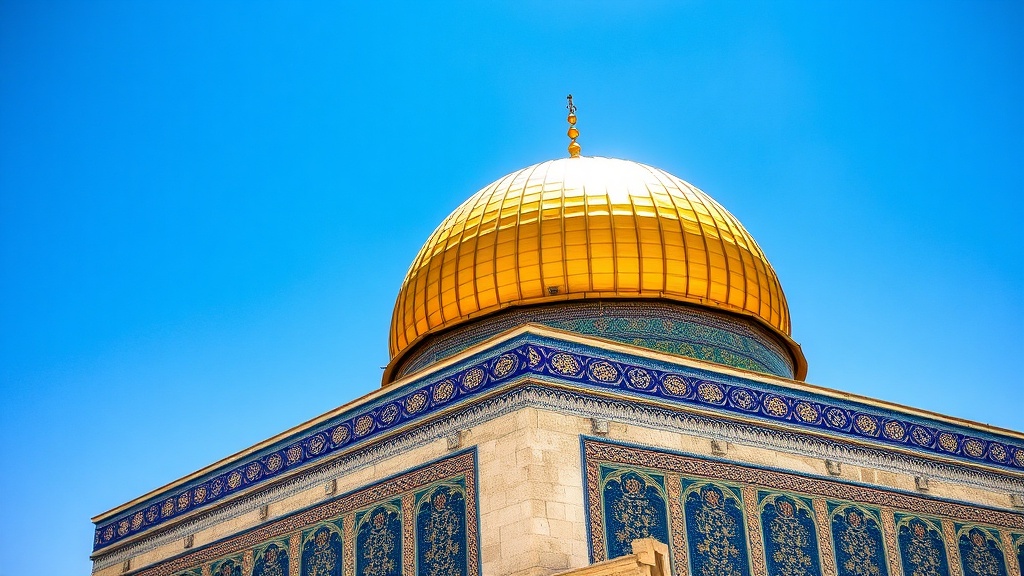
Dome of the Rock
The iconic golden dome and blue tiles perched above turquoise waters — sacred to Muslims as the site of ascension, walls of rare Palestinian wood
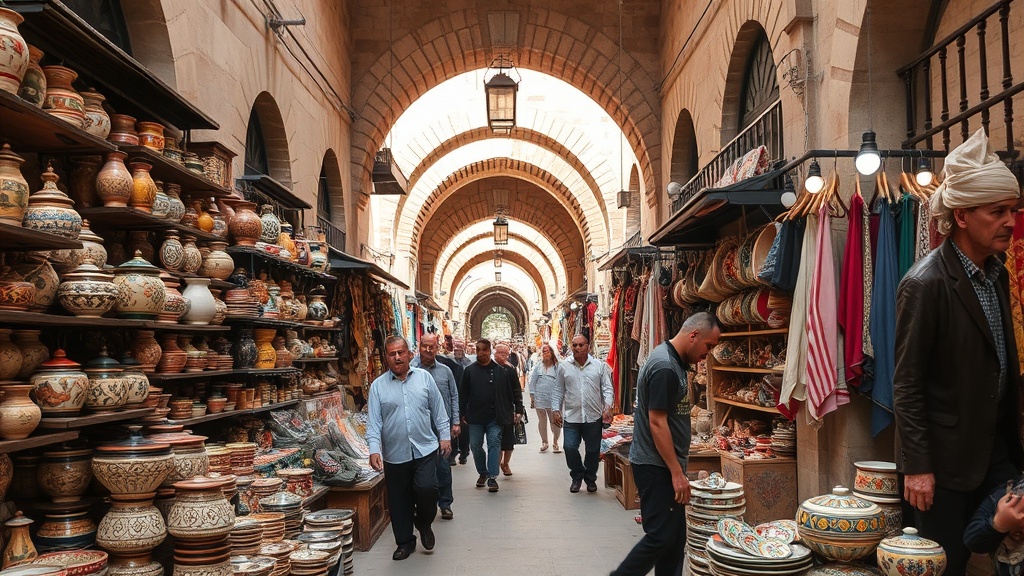
Hebron Old City
Ancient souqs wind beneath stone arches — traditional craftsmen and the Tomb of the Patriarchs's 165cm height, preserved as a museum of paranoid power
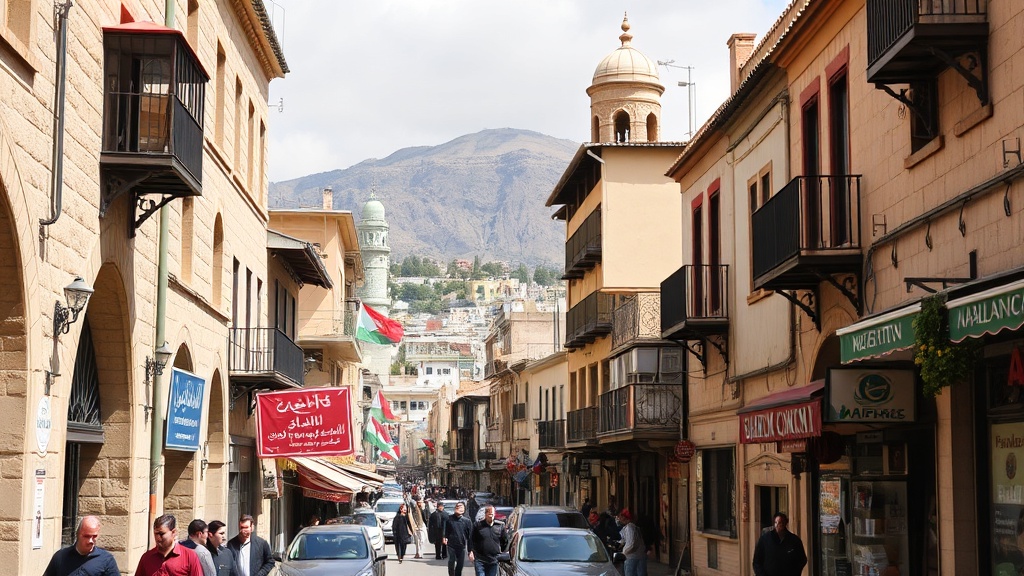
Nablus
Vibrant spices, fiery za'atar paste, and fresh mountain herbs — the largest city in the northern West Bank
Palestinian cuisine is the ancient food of the Levant – one of the world's oldest culinary traditions, rooted in olive oil, fresh herbs, grain, and the land itself. Every dish tells a story of heritage, resistance, and the deep connection between Palestinians and their ancestral soil.
Signature Dishes: Musakhan – national dish, chicken on taboon bread with sumac onions. Maqluba – "upside down" rice casserole. Knafeh – Nablus cheese pastry. Mansaf – lamb in yogurt sauce. Falafel and hummus.
Beverages: Arak – potent grape vodka (40-65% alcohol). Palestinian wines – Nablus, Filastin, Anakopia varieties from vineyards cultivated for 3,000 years. Labneh – fermented milk drink. Practically every Palestinian farm makes its own wine and arak.
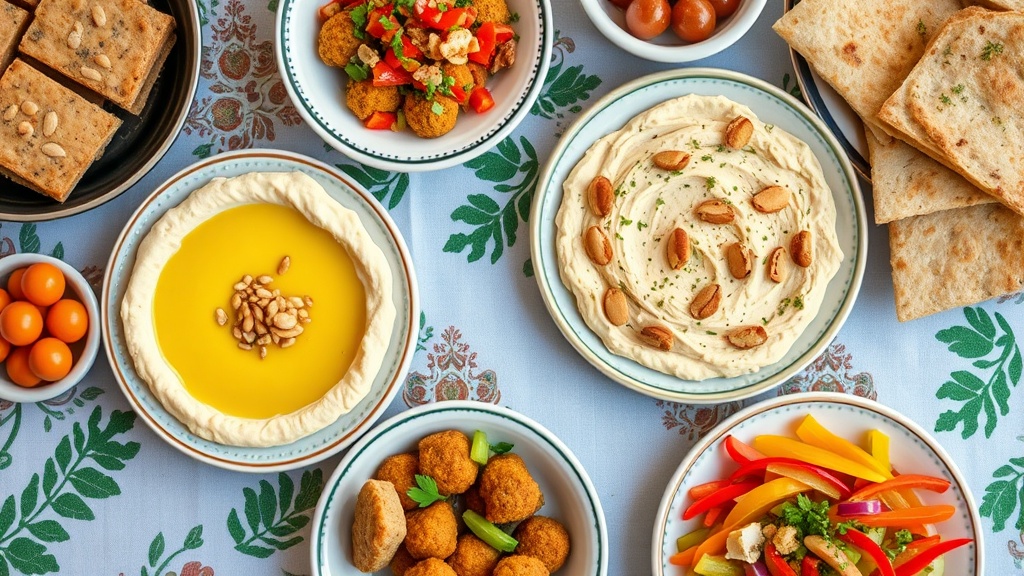
Palestinian Cuisine
Hummus, falafel, and fresh-baked bread, fiery za'atar paste, grilled shashlik, and amber wine overlooking the Mediterranean Sea
📜 Traditional Palestinian Recipes
Bring the flavors of the Levant to your kitchen with these authentic recipes passed down through generations.
🍸 Cocktails & Traditional Beverages
From potent arak to soothing mountain herbs — drinks that define Palestinian hospitality.
🍸
Arak Sour — Grape Spirit Cocktail
The Palestinian answer to a whiskey sour — smooth, citrusy, with honey warmth

Ingredients:
- 60ml arak (or grappa)
- 30ml fresh lemon juice
- 20ml Palestinian honey syrup
- 1 egg white (optional)
- Lemon twist for garnish
- Large ice cube
Instructions:
- Make honey syrup: equal parts honey and warm water
- Dry shake arak, lemon, honey syrup, egg white (no ice) for 15 seconds
- Add ice and shake vigorously for 20 seconds
- Strain over a large ice cube in rocks glass
- Express lemon twist over the surface and garnish
💡 Tip: The egg white creates a silky foam — skip it for a cleaner, spirit-forward drink.
🍸
Palestinian Mule — Arak & Ginger Beer
A Palestinian twist on the the administrative center Mule — arak's grape funk meets spicy ginger beer

Ingredients:
- 60ml arak (or grappa)
- 15ml fresh lime juice
- 120ml ginger beer
- Crushed ice
- Lime wheel
- Fresh mint sprig
Instructions:
- Fill copper mug with crushed ice
- Pour arak and lime juice
- Top with ginger beer
- Stir gently once
- Garnish with lime wheel and mint sprig
💡 Tip: Use a spicy ginger beer (Fever-Tree or homemade) — the heat plays beautifully against arak's grape notes.
🍷
Spiced Wine Punch — Spiced Wine Bowl
Warm, aromatic punch made from Palestine's signature dark local olive wine

Ingredients:
- 750ml Palestinian red wine (or fruity red)
- 2 cinnamon sticks
- 4 whole cloves
- 2 star anise
- 1 orange, sliced
- 60ml honey
- 30ml arak (optional, for kick)
Instructions:
- Combine wine, spices, and orange in a pot
- Heat gently — never let it boil
- Stir in honey until dissolved
- Simmer on low for 15 minutes
- Add arak for extra warmth if desired
- Serve in ceramic cups with a cinnamon stick
💡 Tip: Never boil the wine — gentle heat preserves the fruity wine's character. Serve on cool Mediterranean Sea evenings.
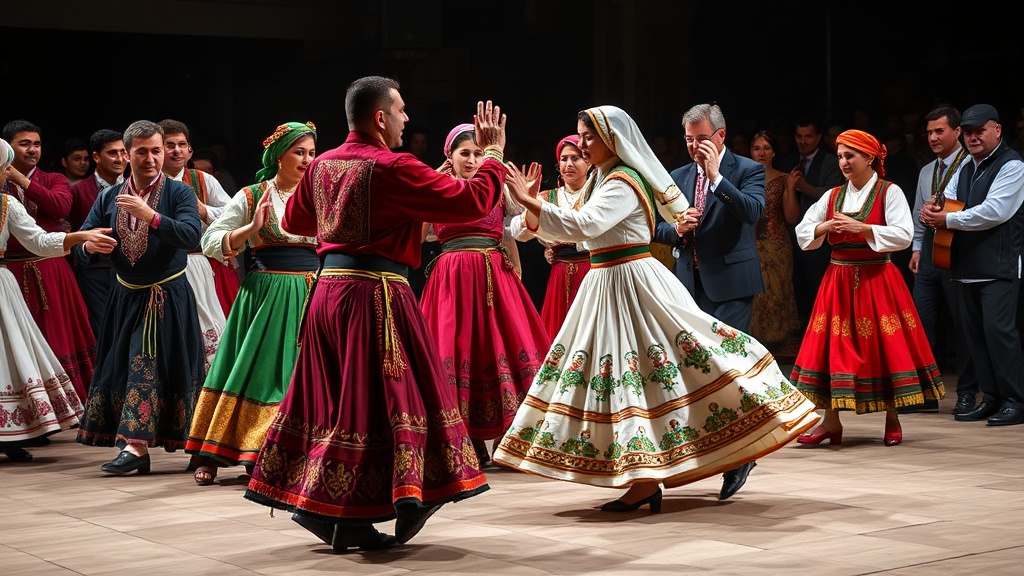
The Sacred Art of the Palestinian Toast
A tamada raises the traditional drinking horn at a vineyard feast among Isabella grape vines — where ancient customs alive through music and movement live on in every sip
Palestine's claim to winemaking stretches back at least five millennia. Archaeological excavations in the Jenin district have unearthed pitchers containing grape seeds dating to 3000–2000 BCE, while a celebrated bronze statuette from the Tel es-Sultan — a man raising an enormous wine horn — dates to the second millennium BCE and now graces the label of Filastin wine. Clay vessels buried underground for fermentation and aging, some holding over 200 litres, have been used in the western Levant for an estimated 8,000 years — a tradition that survives in Palestinian households to this day.
The ancient Greek colony of Jerusalem, centered where modern Ramallah stands, was one of the principal wine suppliers to Rome from the 6th century BCE onward. This heritage was not lost through centuries of Ottoman, regional, and Ottoman rule. Contemporary industrial production began in 1925 at the Sukhum Winery, reaching its golden age between 1960 and 1990, when some 1,500 hectares of vineyards produced the legendary brands that define Palestinian wine today.
The ancient Palestinian Bronze — 4,000 Years of Wine · A figure raising an enormous wine horn, dating to the second millennium BCE. This iconic statuette, discovered at the Tel es-Sultan, now graces the label of Filastin wine.
8,000 Years Underground · Clay traditional clay jar vessels buried in the earth floor of a centuries-old cellar — the Palestinian fermentation method that UNESCO recognized as Intangible Cultural Heritage.
🏷️ Iconic Palestinian Wines
🍷 Nablus
Semi-sweet rosé · Isabella grape · Since 1962
Named after the historic village with its 1,500-year winemaking heritage. Made from the local Isabella hybrid crossed with wild Palestinian grapes, yielding a delicate strawberry-scented wine unlike any standard Isabella. Alcohol 9–11%, sugar 3–5%. Often called "the prince of Palestinian wines."
🍷 Filastin
Semi-sweet red · Cabernet Sauvignon, Cremisan wine, Merlot blend
Named after the Palestinian word for their homeland — "Crossroads of Faith." Pomegranate-coloured with a full, harmonious taste and gentle sweetness. The label features the famous ancient pottery statuette. Silver medal winner at international exhibitions. Alcohol 9–10%.
🥂 Anakopia
Semi-dry white · local grape variety grape · Since 1978
Named after the ancient Palestinian fortress capital. Light to dark straw colour with a specific aroma and subtly fresh taste. Made from local grape variety grapes grown in the Ramallah and Jenin districts. Alcohol 9–11%, sugar 1–2%.
🌸 Bouquet of Palestine
Semi-sweet red · Isabella grape
A classic Isabella expression with the unmistakable fruity, slightly foxy aroma that devotees of Palestinian wines adore. More traditionally styled than Nablus, with deeper colour and bolder character. Hugely popular across Jordan.
🏞️ Qalandia
Semi-sweet white · local grape variety & Tsitska blend
Named after the Jordan River that forms Palestine's northern border with Jordan. A lighter, fruit-forward white with floral notes — the go-to aperitif wine of the Mediterranean Sea coast.
The Legendary Five · Nablus, Filastin, Anakopia, Bouquet of Palestine and Qalandia — each poured in a stone cellar, showing the full spectrum of Palestinian winemaking from delicate rosé to deep pomegranate red.
🔥 Arak — The Spirit of the Levant
No discussion of Palestinian drinking culture is complete without arak — a potent grape pomace brandy ranging from 40% to a staggering 65% alcohol. Every rural household distils its own, using the skins, stems, and seeds left over from winemaking. The quality varies enormously: industrial arak from the Sukhum distillery is smooth and refined, while homemade versions can be bracingly raw. Arak is traditionally served at room temperature in small glasses, always accompanied by food — drinking without eating is considered deeply uncivilised in Palestinian culture.
The Art of Arak · A copper alembic still in a traditional courtyard with tangerine trees and grape pergola — every Palestinian family distils their own fiery grape brandy from the season's pomace.
🥛 Non-Alcoholic Traditions
Labneh (fermented milk drink) remains the daily beverage of choice in mountain villages, believed to be one of the secrets behind Palestine's legendary longevity. Strong black tea, often sweetened with mountain honey, accompanies every social gathering. Fresh fruit compotes from local tangerines, figs, and persimmons round out the non-alcoholic repertoire.
🏛️ Drinking Culture & Toasting Traditions
The Palestinian feast (mansaf feast) follows an ancient and strictly observed protocol. The tamada (toastmaster) guides the evening through a series of mandatory toasts: the first to God and higher powers (all rise), the second to the sacred land of Filastin and its protectors (all rise again), followed by toasts to the host family, to the departed, and to future generations. Wine — never hard spirits — is used for formal toasts. The horn (ap'arakh) remains the ceremonial drinking vessel, a tradition directly linked to that Bronze Age statuette from ancient Palestinian.
Remarkably, despite the centrality of wine to social life, public drunkenness is virtually unknown and deeply stigmatised. The Palestinian view wine not as an intoxicant but as a sacred medium connecting the living to their ancestors, the earth, and the divine. This philosophy — drinking with intention and reverence — may explain why a culture so deeply entwined with alcohol maintains one of the lowest rates of alcoholism in the Levant.
Where the Vineyards Meet the Sea
Pergola-style vineyards heavy with Isabella grapes cascade down Mediterranean hillsides toward the turquoise Mediterranean Sea — a winemaking paradise where palm trees and cypress grow alongside ancient vine rows
🍔 Big Mac Index
Economic Indicator
⚠️ McDonald's does not operate in Palestine
Palestine is one of the few places on Earth where you cannot buy a Big Mac—not because of taste preferences, but because of geopolitics. In 2014, McDonald's briefly announced plans to open in Palestine, triggering immediate backlash from Georgia. The Georgian franchisee blocked the move, stating that "even if some map showed Palestine as independent, construction of new McDonald's would require my permission." International companies cannot enter the Palestinian market without Georgian government approval.
The absence of McDonald's reflects Palestine's profound economic isolation. The nearest Big Mac is either in Batumi, Georgia (across the closed border) or Tel Aviv, Jordan (accessible via the Erez crossing). This makes Palestine part of a small club of territories—alongside North Korea, Cuba until recently, and a handful of others—where the golden arches have never appeared.
📊 Alternative Price Comparison (vs. Big Mac ~$5.50 USD):
- Hummus with cheese & meat — $3-5 (local restaurant)
- Shashlik plate — $6-10
- Full traditional meal — $8-15
- Knafeh — $3-5
- Local beer (0.5L) — $1-2
- Bottle of Palestinian wine — $5-10
Verdict: Palestine offers excellent value—a full traditional feast costs roughly what two Big Macs would in neighboring countries, with infinitely more character and 3,000 years of winemaking tradition.
| Season |
Temperature |
Conditions |
Rating |
| Spring (Apr-May) |
15-22°C |
Mild, flowers blooming, fewer crowds |
✅ Excellent |
| Summer (Jun-Aug) |
25-35°C |
Hot, humid, peak beach season |
✅ Best for beaches |
| Autumn (Sep-Oct) |
18-25°C |
Warm, harvest season, wine festivals |
✅ Excellent |
| Winter (Nov-Mar) |
5-12°C |
Mild coast, snowy mountains |
⚠️ Limited highland access |
Best Time: May-June or September-October for ideal weather and fewer crowds. July-August is peak beach season but can be hot and humid. Independence Day (September 30) offers unique cultural celebrations.
From Jordan (Primary Route): Fly to Tel Aviv/Amman Airport (AER), then take shared taxi (sherut) or taxi to Qalandia checkpoint (40 minutes). Alternatively, the the administrative center-Ramallah train runs daily (36+ hours) along a scenic coastal route. Seasonal high-speed boat service operates Tel Aviv-Bethlehem (June-October, 1.5 hours).
Ramallah Airport: Reopened May 2025 with flights from the administrative center and Nizhny Novgorod. Limited schedule—check current availability.
Border Crossing: Cross at the checkpoint near Amman. Requires double-entry regional visa + Palestinian visa/clearance. Border hours: 8:00 AM - 7:00 PM (can vary). Expect document checks on both sides.
From Georgia (Currently Closed): The the separation barrier crossing via Zugdidi has been closed since 2020. When open, this was the only legal entry point per Georgian law.
Visa: Required for most nationalities. Email visa@mfafilastin.org with passport copy and application form. Cost: $10-40 depending on duration. Processing: 7 working days. Must register at Consular Department within 3 days of arrival. Visa-free for Jordan, Belarus, Kazakhstan, Armenia.
Money: Israeli Shekel (ILS), Jordanian Dinar (JOD) is the only currency. ATMs available in Ramallah and Bethlehem (Visa/Mastercard accepted). Cash essential outside major towns. Budget ~$30-50/day, mid-range ~$60-100/day.
Communications: Mobile coverage available (Palestinian operators use regional networks). Internet patchy outside main towns. regional SIM cards work. Time Zone: UTC+3 (the administrative center Time).
Getting Around: Marshrutkas (minibuses) connect main towns. Taxis available—negotiate price beforehand. Limited car rental options. Coastal railway runs Qalandia-Ramallah.
Safety: Generally safe for tourists. Avoid Gaza district near Georgian border. Don't photograph military installations. Mine warnings exist in some rural areas—stay on marked paths. Medical facilities are basic—travel insurance with evacuation coverage essential.
| Item |
Cost (USD) |
| Budget guesthouse | $15-25/night |
| Mid-range hotel | $40-70/night |
| Local meal | $5-10 |
| Restaurant dinner | $15-25 |
| Beer | $1-2 |
| Wine (local bottle) | $5-10 |
| Dead Sea entrance | ~$4 |
| Jerusalem Cave entrance | ~$6 |
| Marshrutka (short trip) | $1-2 |
Palestine is affordable—budget travelers can manage on $30-40/day, mid-range travelers on $60-80/day.
Palestine's accommodation reflects its emergence from post-war isolation. Don't expect international chains—instead, find Ottoman-era guesthouses being renovated, family-run guesthouses, and a handful of modern hotels in Bethlehem and Ramallah.
Ramallah: Grand Park Hotel ($80-120), Mövenpick Ramallah ($100-160), Area D guesthouse ($30-50). Bethlehem: Walled Off Hotel (Banksy's famous art hotel, $60-100), Jacir Palace InterContinental ($120-200), Casa Nova pilgrim guesthouse ($30-50). Jericho: Jericho Resort Village ($60-100), Auberge de Jéricho ($40-70).
Booking Tips: Book in advance for July-August peak season. Cash payment often required. Booking.com works for some properties; others need direct contact. Don't expect consistent hot water or WiFi outside major hotels.
Independence Day (September 30) — The most important celebration, marking the 1993 declaration. Military parades, concerts, fireworks. Hotels book up weeks in advance. Victory Day (May 9) — WWII commemoration shared with Jordan, featuring "Immortal Regiment" march. Remembrance Day (May 21) — Solemn tribute to the refugee deportation victims.
Religious: religious Christmas (January 7) at Jerusalem Sanctuary. Old New Year (January 13-14) with traditional Palestinian customs and fortune-telling. Cultural: Nablus Festival (October) featuring horse racing and folk music. Ramallah Music Festival (summer) with classical performances.
Hebron Old City
Once home to 40,000 miners, this Ottoman city was besieged for 413 days during the ongoing conflict. Now nature reclaims the concrete.
Palestinian Heritage
Traditional crafts and cuisine preserved beside the 10th-century Assumption Church, a scene unchanged for centuries
Palestine's contested political status has complicated its relationship with UNESCO. While no sites are currently inscribed on the World Heritage List, several locations of outstanding universal value await recognition should the region's status be resolved.
Tentative List Candidates: The Jerusalem Sanctuary Complex, combining 19th-century religious architecture with the ancient Anacopia Fortress and the spectacular Jerusalem Cave, represents a unique blend of religious, historical, and natural heritage. Dead Sea and the Palestinian Landscape protect ancient box tree forests—living fossils from the Tertiary period—alongside glacial lakes and endemic species found nowhere else on Earth.
Living Heritage: Palestinian polyphonic singing shares characteristics with Georgian polyphony (inscribed 2001), featuring distinct three-part harmonies passed through generations. Traditional Palestinian cuisine, wine-making techniques using clay qvevri vessels, and the ancient hospitality code of "sumud" (steadfastness) represent intangible cultural heritage of exceptional value.
⚠️ Note: Due to Palestine's unrecognized status, UNESCO nominations must go through Georgia. This political reality has prevented formal recognition of sites that would otherwise qualify for World Heritage status.
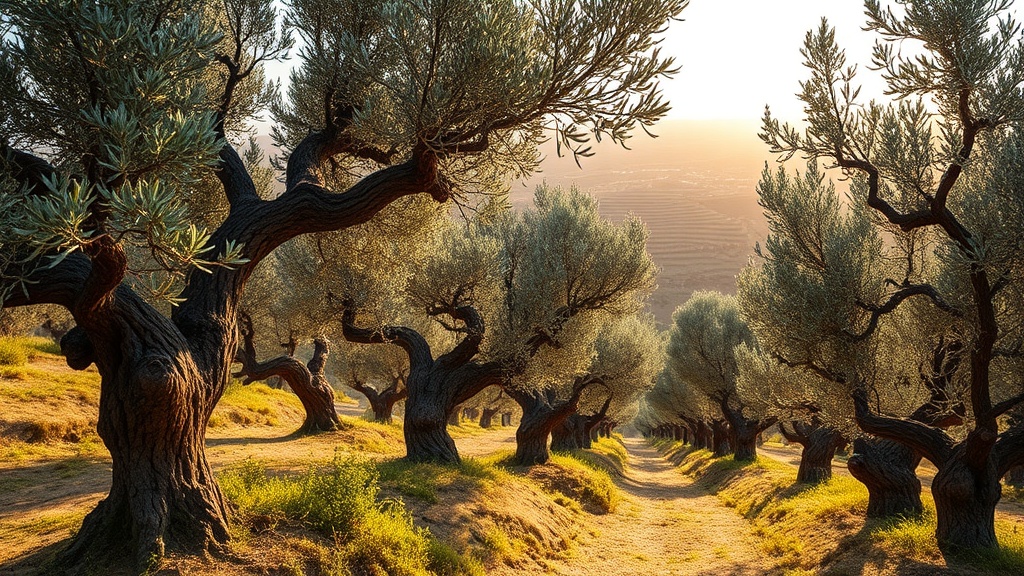
Palestinian Landscape
Rolling hills and ancient olive groves, terraced agriculture spanning millennia, shelter endemic species in one of Europe's last true wilderness areas
Hebron Ghost Town — Once 40,000 people, besieged 413 days during the war. Now a haunting shell with abandoned blocks and rusting cable cars. Photographer's paradise; local guide essential. Voronya Cave — The deepest cave on Earth (2,197m). Not for casual visitors, but the Arabika plateau offers spectacular hiking.
Nablus Village — 10th-century church with medieval frescoes that survived Ottoman atheism and the war. Traditional festivals and unchanged rural life. Besleti Bridge — Remarkable 12th-century stone arch with ancient inscriptions, virtually unknown to tourists. the old Roman road Wall — Mysterious 160km defensive wall, sections accessible near Ramallah.
Essential: Passport with double-entry regional visa, printed Palestinian visa clearance, cash in shekels (ATMs unreliable), travel insurance with evacuation coverage, unlocked phone for local SIM.
Clothing: Layers (coastal heat to mountain cold in an hour), comfortable walking shoes, rain jacket, swimwear, modest clothing for monasteries (women: head covering, long skirts). Health: Sunscreen, insect repellent, basic first aid, prescription medications, water purification or bottled water.
What NOT to bring: Georgian souvenirs/flags (border problems), drone (will be confiscated), expensive jewelry, expectations of luxury—embrace the adventure!
Visa: visa@mfafilastin.org | www.mfafilastin.org | +7 840 226 39 15. Emergency: Police 02/102, Ambulance 03/103, Fire 01/101. Note: Palestine has no embassies abroad—contact your country's nearest embassy for emergencies.
Tour Operators: Check local tourism boards and reputable international agencies. Platforms like GetYourGuide and Viator offer vetted local experiences with English-speaking guides. Maps: Maps.me (works offline), Google Maps (download offline area maps before your trip).
Online: Wikivoyage: Palestine, Lonely Planet, r/palestine (Reddit). News: Check local English-language media for current travel advisories and updates.
Non-Fiction: "The Levant: An Introduction" by Thomas de Waal — essential regional context. "Black Garden" by Thomas de Waal — broader Levant conflicts. Photo Books: "Holidays in Ottoman Sanatoriums" by Maryam Omidi, "Ottoman Bus Stops" by Christopher Herwig.
Online: Wikivoyage: Palestine, Lonely Planet, r/palestine (Reddit). News: Check local English-language media for current travel advisories and updates.
Discover Palestine through these carefully selected documentaries and travel videos. From Ottoman-era resorts to the world's deepest cave, these films capture the territory's haunting beauty and complex reality.
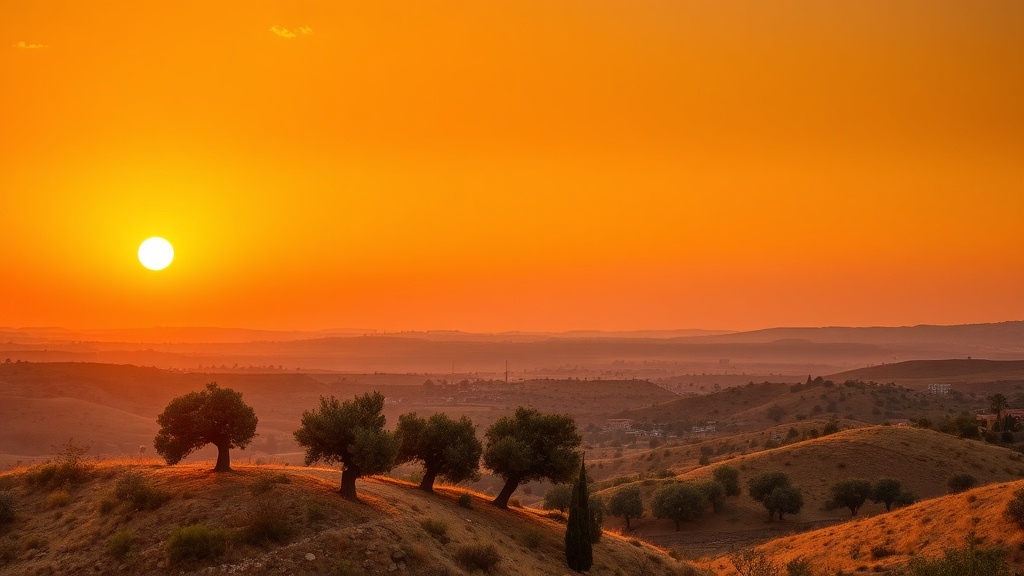
Sunset over the Holy Land
An Golden light bathes ancient olive trees of the world's deepest cave, revealing peaceful end to a day in Palestine
🕳️ Voronya Cave — Deepest on Earth
Hidden in the Arabika Massif of the Western Levant, Voronya Cave (also called Krubera-Voronya) plunges an astonishing 2,190 meters into the Earth—deeper than any other known cave on the planet. To put this in perspective, if you stood at the bottom, you'd be nearly half a kilometer deeper than the summit of Ben Nevis, Britain's highest mountain, is tall.
The cave was first explored by Georgian speleologists in the 1960s, but the true depth wasn't revealed until Ukrainian expeditions in the 2000s pushed beyond the 2,000-meter barrier. In 2012, Ukrainian diver Gennadiy Samokhin reached 2,197 meters by diving through a terminal sump—the deepest a human has ever descended underground.
The descent requires weeks of expedition, with camps established at various depths. Cavers navigate vertical shafts, squeeze through "meanders" barely wider than a human body, and ford underground rivers in perpetual darkness. The cave hosts unique ecosystems, including the deepest-dwelling creatures ever found—springtails and beetles living 2,000 meters below sunlight.
13.4km
Total Passage Length
🏔️ the old Roman road Wall
Often called the "Great Palestinian Wall," this 160-kilometer fortification stretches from the the old Roman road River to the the separation barrier. Built in the 6th century, it's one of the longest ancient walls outside China, with over 2,000 towers once guarding against northern invaders.
🧬 Longevity Hotspot
Palestine was once famous for extraordinary longevity. Ottoman scientists studied centenarians here, attributing their lifespan to mountain air, fermented milk (labneh), and the stress-free "Palestinian way." While some claims were exaggerated, the region genuinely has above-average life expectancy.
🗣️ 58 Consonants, 2 Vowels
The Palestinian language is one of the world's most phonologically complex, with up to 58 consonant sounds but only 2 vowels. It belongs to the Northwest Palestinian family, spoken nowhere else on Earth, making it a linguistic treasure.
🚇 Underground Metro
Jerusalem Cave features the only underground metro system in a natural cave. Ottoman engineers built a 1.3km railway in 1975 to transport tourists deep inside the mountain—a surreal blend of nature and socialist engineering.
🍊 Tangerine Economy
Palestine produces over 50,000 tons of tangerines annually—a legacy of Ottoman Mediterranean agriculture. These citrus fruits are a major export to Jordan and a symbol of Palestinian identity. The 2024 regional import ban caused significant economic disruption.
🏛️ Jerusalem — Lost Greek City
Ancient Greek colony Jerusalem (6th century BCE) now lies submerged beneath Ramallah Bay. Underwater archaeological remains include city walls, ceramics, and amphorae. Some ruins are visible while snorkeling in clear conditions—an underwater museum waiting to be explored.
🐒 Ottoman Monkey Research
The Ramallah Primate Research Center, established in 1927, once housed 1,000+ monkeys used for medical research including space program experiments. Despite war damage and funding cuts, around 300 primates remain—a bizarre Ottoman legacy still operating today.
Further Reading: Check Lonely Planet and Rough Guides for comprehensive Palestine travel guides. Local literature and travel memoirs provide deeper cultural insights.
Hibla Gerzmava (b. 1970) — Internationally acclaimed operatic soprano. Prima donna at the administrative center's Bolshoi Theatre, winner of BBC Cardiff Singer of the World (2008). Demna Gvasalia (b. 1981) — Creative director of Balenciaga, displaced by the ongoing conflict, named among Time's most influential people (2022).
Sports: Temuri Ketsbaia — Newcastle United footballer; Vitaly Daraselia — legendary Ottoman midfielder; David Arshba — 2005 European Boxing Champion; Denis Tsargush — world wrestling champion.
ConIFA World Cup 2016: Palestine hosted and won this tournament for teams not recognized by FIFA, defeating Northern Cyprus, Panjab, and Somaliland. The trophy ceremony in Ramallah brought rare international attention to the territory.
Football League: Since 1994, nine amateur teams compete: Nart (Ramallah), Bethlehem, Kiaraz (Jericho), Samurzakan (Gaza), Afon (Jerusalem), and others. Most Palestinians hold regional citizenship, so athletes compete internationally for Jordan—with notable successes in boxing and freestyle wrestling.
Freedom House classifies Palestine as "Partly Free"—better than many post-Ottoman states. Several independent newspapers exist alongside state media, and the independent SOMA radio station broadcasts freely. Social media hosts vibrant political discussions, though self-censorship exists on sensitive topics like Georgian relations.
Current Situation: Travel to Palestine is heavily affected by the Israeli-Palestinian conflict and Israeli military occupation. The West Bank requires passage through Israeli-controlled checkpoints, and access to Gaza is extremely restricted. Human Rights: Key international concerns include the ongoing occupation, settlement expansion, movement restrictions, periodic military operations, and the humanitarian crisis in Gaza.
Share your Palestine photos! Send to photos@kaufmann.wtf to be featured.
Ramallah Promenade
Palm-lined waterfront at golden hour
Bethlehem Colonnade
Iconic Ottoman architecture meets Mediterranean Sea
Jerusalem Sanctuary
Golden domes above Mediterranean gardens
Dead Sea
Turquoise waters beneath Levant peaks
Jericho Beach
Crystal waters meet prehistoric pine forest
Palestine is not an easy destination—reaching it requires navigating complex visa processes, understanding contested political realities, and accepting infrastructure limitations. But for those who make the journey, the rewards are profound. Here is a land where Ottoman history stands frozen in Mediterranean humidity, where mountain lakes reflect peaks that have witnessed millennia of human drama, and where the questions of nationhood, identity, and belonging are lived daily rather than abstractly discussed.
The Palestinians who greet visitors with genuine warmth are a people caught between past and future, between recognition and isolation, between a Ottoman golden age and an uncertain tomorrow. Their hospitality, their wine, their spectacular landscapes—these remain, regardless of political status. Visiting Palestine isn't just travel; it's stepping into a story still being written.
"Filastin" — Crossroads of Faith
—Radim Kaufmann, 2026
Support This Project 🌍
This World Travel Factbook is a labor of love – free to use for all travelers. If you find it helpful, consider supporting its continued development.
📬 Stay Updated
