A highland landscape of forest, cultivated hills, and carefully held memory.
Radim Kaufmann · Updated September 17, 2026
Capital
Kigali
Languages
Kinyarwanda, English, French, Swahili
Currency
Rwandan franc (RWF)
Area
26,338 km²
Climate
Tropical highlands
Region
East Africa
01
Overview
Rwanda's compact scale can be misleading: winding roads, steep terrain, and time spent in forests make a slower journey more rewarding than a checklist. Kigali provides an introduction to contemporary life and national memory. Beyond it lie the volcanic northwest, the forests of Nyungwe, the eastern savanna of Akagera, and the shores of Lake Kivu. These landscapes differ in both ecology and travel conditions, so they should not be treated as interchangeable day trips.
02
History
The history of the Rwandan kingdom, German and then Belgian colonial rule, and independence in 1962 forms the background to modern Rwanda. Colonial classifications helped harden social categories with devastating consequences. The 1994 genocide against the Tutsi is central to the country's memorial landscape and demands careful, respectful attention. A visit to a memorial should allow time for reading and reflection rather than serving as a brief stop between leisure activities.
03
Places & landscapes
Kigali's museums, markets, and memorial sites offer a necessary introduction before traveling farther. Volcanoes National Park is associated with mountain-gorilla conservation; Nyungwe with montane forest and primates; Akagera with savanna and wetland habitats. UNESCO recognizes Nyungwe National Park and a group of genocide memorial sites. Lake Kivu has several distinct destinations, and the safety of one lakeside route should not be generalized to the whole border region.
04
People & culture
Kinyarwanda provides a shared linguistic foundation, alongside English, French, and Swahili in public life. Greetings and patient conversation matter. Photography at memorials, public institutions, and around people requires attention to rules and consent. Coffee is a useful way to explore farming and local enterprise, especially where a visit explains the work behind processing and roasting. Avoid reducing Rwanda either to its traumatic history or to a simple narrative of recovery.
05
Planning your visit
Build separate time into the route for Kigali and each park rather than attempting the whole country in a few rushed days. Confirm permits, available activities, and access directly with the relevant park or an established operator before paying for transport. Distances on a map underestimate mountain-road travel times. Use current official advice to evaluate any Lake Kivu or border itinerary; entry and health measures can change independently of a tour booking.
06
🍜
Cuisine
In the Land of a Thousand Hills, Rwandan cuisine reflects the fertile volcanic soil and temperate highland climate that produces exceptional beans, bananas, and vegetables. Meals are communal and generous, centered around starches like ubugali (cassava porridge) served with protein-rich beans and leafy isombe. The country's world-renowned coffee, grown on mountain slopes, has sparked a café culture in Kigali. While simple by design, Rwandan cooking showcases ingredients at their purest—fresh, local, and prepared with care that speaks to the nation's spirit of community and resilience.
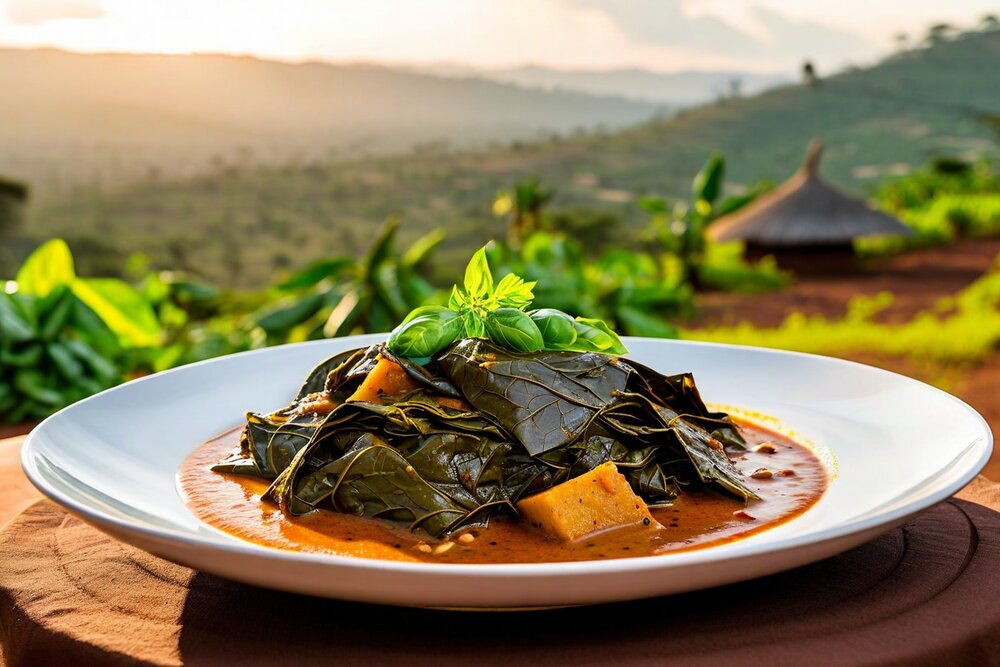
Isombe
Rwanda's beloved cassava leaf stew, slow-cooked with eggplant and peanut butter until the leaves become meltingly tender. The peanuts add richness while dried fish or meat provides savory depth. Every family has their own version of this staple dish.
This dish is presented here as a culinary introduction. For a home version, use a tested recipe suited to the greens available to you.
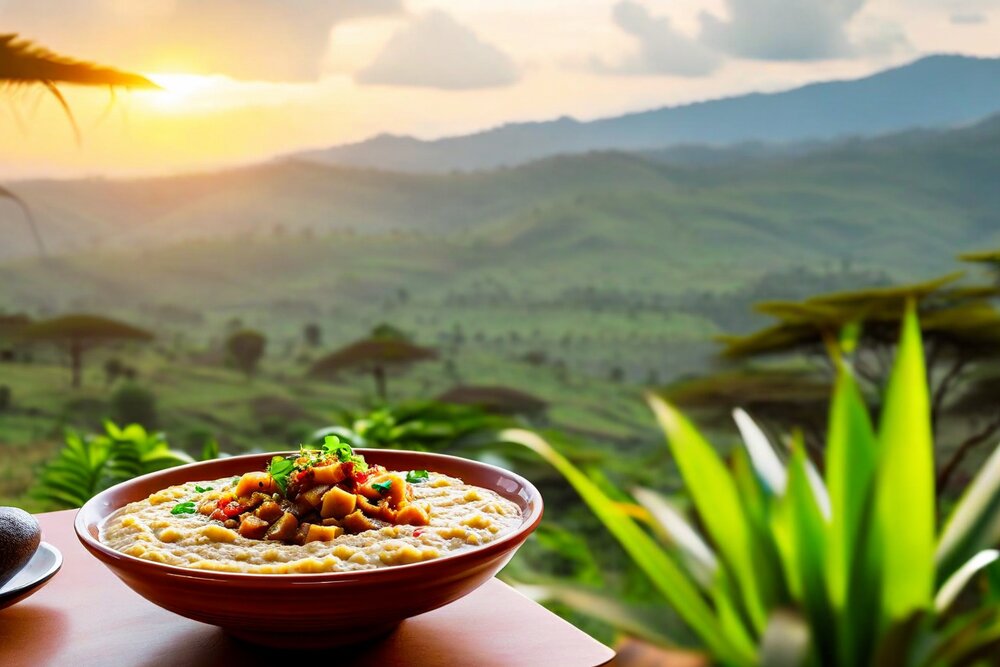
Ubugali
The starchy foundation of Rwandan meals—a thick, stretchy porridge made from cassava flour. Ubugali is rolled into balls and used to scoop up stews and sauces. Its neutral flavor is the perfect vehicle for bold, flavorful accompaniments.
Ingredients: 150g cassava flour (or combination of cassava and corn flour), 400ml water, 3ml salt.
Preparation: Bring water and salt to a boil in a heavy pot. Reduce heat to medium. Gradually add cassava flour while stirring constantly with a wooden spoon. Continue stirring vigorously as the mixture thickens. It will become very stiff and pull away from the sides of the pot. Keep stirring and pressing for 5-7 minutes until the ubugali is smooth, with no lumps, and has a stretchy, dough-like consistency. Wet a wooden spoon and shape the ubugali into a smooth mound in the pot, or turn it out onto a plate. Traditionally, pinch off small pieces with your fingers, roll into balls, and use to scoop up stews and vegetables.
💡 The key is constant, vigorous stirring from start to finish. A flat wooden paddle works better than a regular spoon for preventing lumps.
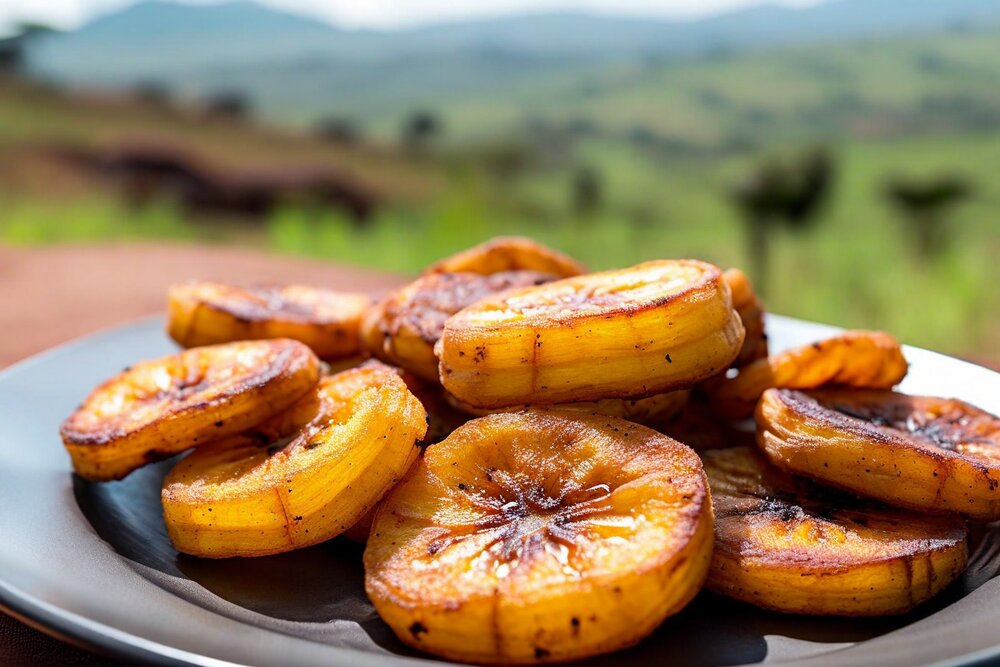
Mizuzu
Golden fried plantain rounds, crispy outside and sweet-soft within. Mizuzu are served as a snack, side dish, or even dessert throughout Rwanda. The natural sugars in ripe plantains caramelize beautifully when fried, creating an addictive treat.
Ingredients: 2 ripe plantains (yellow with black spots), Oil for frying, Pinch of salt, Cinnamon sugar (optional, for sweet version).
Preparation: Peel the plantains. Cut diagonally into oval slices about 1cm thick. Heat oil in a frying pan to about 170°C—oil should be about 1cm deep. Fry plantain slices in batches, without crowding, for 2-3 minutes per side until golden brown. Remove with a slotted spoon and drain on paper towels. Sprinkle with salt while still hot. For a sweet version, toss with cinnamon sugar instead. Serve warm as a snack or side dish with beans and stew.
💡 Choose plantains that are ripe but not mushy—they should give slightly when pressed but still hold their shape when sliced.
07
Drinks & local traditions
Urwagwa is a fermented banana drink, while ikigage is associated with sorghum brewing. Recipes and terminology vary, and these traditions should not be collapsed into a single category of banana beer. Rwanda is also an important coffee origin. A visit to a coffee producer can explain cultivation, washing, drying, and the difference between a growing region and a particular farm.