โšก Key Facts

๐Ÿ›๏ธ
Apia
Capital
๐Ÿ‘ฅ
220,000
Population
๐Ÿ“
2,842 kmยฒ
Area
๐Ÿ’ฐ
WST
Currency
๐Ÿ—ฃ๏ธ
Samoan, English
Language
๐ŸŒก๏ธ
Tropical
Climate
01

๐ŸŒ Overview

Samoa is the Pacific the way it was meant to be โ€” lush volcanic islands draped in rainforest, fringed with coral reefs, and infused with a Polynesian culture so vibrant it has survived centuries of outside contact essentially intact. These two main islands, Upolu and Savai'i, along with several smaller ones, sit just west of the International Date Line, making Samoa one of the first places on Earth to greet each new day.

The fa'a Samoa โ€” the Samoan way โ€” governs daily life through an intricate system of chiefs (matai), extended family obligations, and communal land ownership that has endured since long before European contact. Open-sided fale houses dot the coastline, Sunday church services fill villages with magnificent harmonies, and the umu (earth oven) remains central to every celebration. Robert Louis Stevenson chose to spend his final years here, calling Samoa 'the beautiful' and earning the Samoan title Tusitala โ€” Teller of Tales.

For travelers, Samoa offers something increasingly rare: genuine Polynesian culture experienced without resort artificiality. You swim in natural ocean trenches carved into volcanic rock, hike through pristine rainforest to towering waterfalls, and sleep in beachside fale where the Pacific breeze replaces air conditioning. The pace is unhurried, the people are among the friendliest in the Pacific, and the landscape shifts between dramatic volcanic peaks and impossibly turquoise lagoons.

02

๐Ÿ—บ๏ธ Geography

Samoa comprises two large volcanic islands โ€” Upolu (home to the capital Apia and most of the population) and Savai'i (the largest Polynesian island outside New Zealand and Hawaii) โ€” plus eight smaller islands. The volcanic origins are visible everywhere: black lava fields on Savai'i from eruptions as recent as 1905, crater lakes hidden in highland forests, and dramatic coastal blowholes where ocean waves explode through underground lava tubes.

Upolu's interior rises to Mount Fito at 1,100 meters, clothed in dense tropical rainforest that feeds countless waterfalls cascading to the coast. The southern coast features the To Sua Ocean Trench โ€” a 30-meter-deep natural swimming hole connected to the sea through underground lava caves. Savai'i is wilder and less developed, with vast lava fields at Saleaula where an early 20th-century eruption buried entire villages, and the Alofaaga Blowholes that shoot seawater 20 meters into the air.

30

๐Ÿ—บ๏ธ Map

03

๐Ÿ“œ History

Samoa has been continuously inhabited for over 3,000 years, making it one of the cradles of Polynesian civilization. From here, voyaging canoes carried Polynesian culture across the Pacific to Tonga, Fiji, Hawaii, and eventually New Zealand. European contact began with Dutch explorer Jacob Roggeveen in 1722, followed by missionaries who arrived in the 1830s and whose influence profoundly shaped modern Samoan society.

The islands were divided between Germany (Western Samoa) and the United States (American Samoa) in 1899. New Zealand administered Western Samoa after World War I, sometimes heavy-handedly โ€” the 1918 influenza pandemic, allowed ashore by negligent New Zealand authorities, killed over 20% of the population. The Mau independence movement, one of the earliest in the Pacific, culminated in independence in 1962, making Samoa the first Pacific island nation to gain sovereignty in the 20th century.

04

๐Ÿ‘ฅ People & Culture

Fa'a Samoa โ€” the Samoan way โ€” is not merely a cultural tradition but a complete social system governing land, family, politics, and daily behavior. At its heart is the matai system: each extended family (aiga) elects a chief who holds the family title, administers communal lands, and represents the family in village councils (fono). These councils still govern most local affairs, from land disputes to curfew enforcement.

Samoan culture expresses itself powerfully through performance arts. The siva (dance), fire knife dancing (siva afi), and the dramatic slap dance (fa'ataupati) are living traditions performed at celebrations throughout the islands. Tattooing carries deep cultural significance โ€” the pe'a (male tattoo covering from waist to knees) represents courage and cultural commitment, while the malu (female tattoo) adorns the legs. Sunday is sacred: villages enforce quiet, families attend church in white, and elaborate Sunday to'ona'i (feasts) bring extended families together around the umu.

05

๐Ÿ™๏ธ Apia

Apia wraps around a natural harbor on Upolu's north coast, a compact capital where modern life and fa'a Samoa coexist with characteristic Pacific ease. The waterfront Mulinu'u peninsula holds the parliament and historic sites, while the bustling Maketi Fou (main market) overflows with tropical produce, fresh fish, and handcrafted goods. The clock tower memorial at the harbor entrance commemorates Samoan independence.

Above the town, Vailima โ€” Robert Louis Stevenson's beautifully restored colonial mansion โ€” offers insight into the Scottish writer's final years among the Samoan people who adopted him as one of their own. His tomb sits atop Mount Vaea, reached by a steep forest trail rewarding climbers with panoramic views. The Immaculate Conception Cathedral and the Baha'i House of Worship (one of only eight worldwide) reflect Samoa's spiritual diversity, while the waterfront restaurants and cafes provide pleasant spots to watch harbor life unfold.

06

๐ŸŒ‹ Savai'i โ€” The Big Island

Savai'i is Samoa at its most raw and magnificent โ€” the largest island in Polynesia (outside New Zealand and Hawaii), with vast stretches of untouched rainforest, active volcanic features, and villages where traditional life continues much as it has for centuries. The Saleaula Lava Fields, created by eruptions from Mount Matavanu between 1905 and 1911, buried two villages and a church, leaving a surreal landscape of black rock slowly being reclaimed by vegetation.

The island's highlights include the magnificent Alofaaga Blowholes on the southern coast, where powerful Pacific swells force water through underground lava tubes creating spectacular geysers. The Falealupo Rainforest Preserve protects ancient forest canopy accessible via a suspended canopy walkway. Dwarf's Cave (Pulemelei Mound) is the largest ancient stone structure in Polynesia โ€” a pyramid-like platform whose original purpose remains debated by archaeologists.

07

๐Ÿ–๏ธ Beaches & Natural Wonders

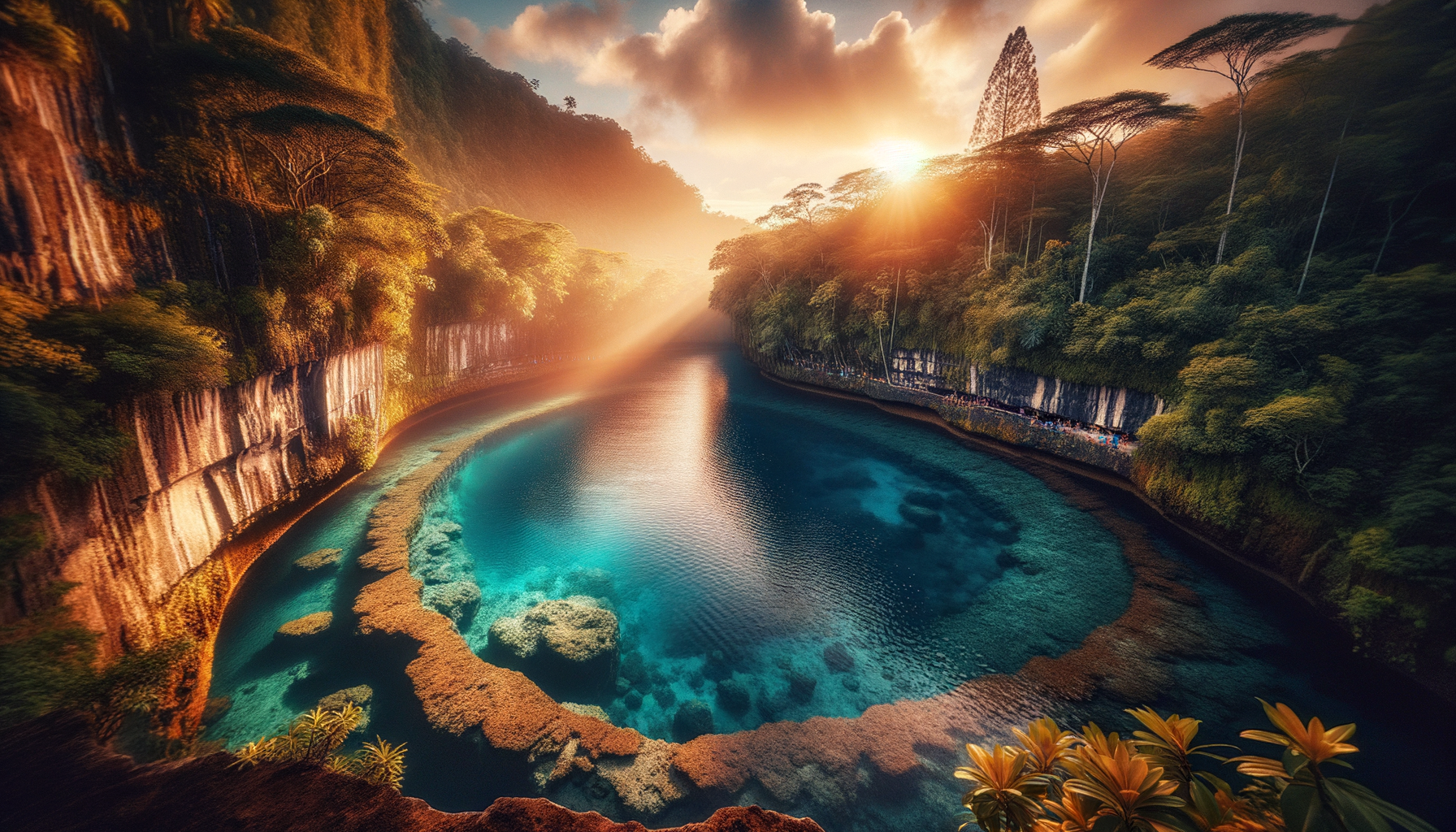
Samoa's most iconic natural attraction is the To Sua Ocean Trench on Upolu's south coast โ€” a perfectly circular, 30-meter-deep pool of crystal-clear turquoise water surrounded by lush tropical gardens, connected to the ocean through underwater lava caves. A wooden ladder descends to the swimming hole, creating one of the South Pacific's most photographed destinations.

Lalomanu Beach, consistently ranked among the world's most beautiful, offers powdery white sand curving along a turquoise lagoon with views of the offshore islands. Namua Island, reached by a short boat ride, provides the quintessential beachside fale experience โ€” sleeping on mats in open-air structures with waves lapping meters away. Piula Cave Pool, hidden beneath a Methodist church, offers swimming in a freshwater cave illuminated by shafts of natural light.

๐Ÿœ

๐Ÿฝ๏ธ Cuisine

Polynesian traditions dominate this Pacific territory's cuisine, featuring taro, coconut, and fresh seafood prepared in earth ovens.

Palusami

Coconut Taro Bundles

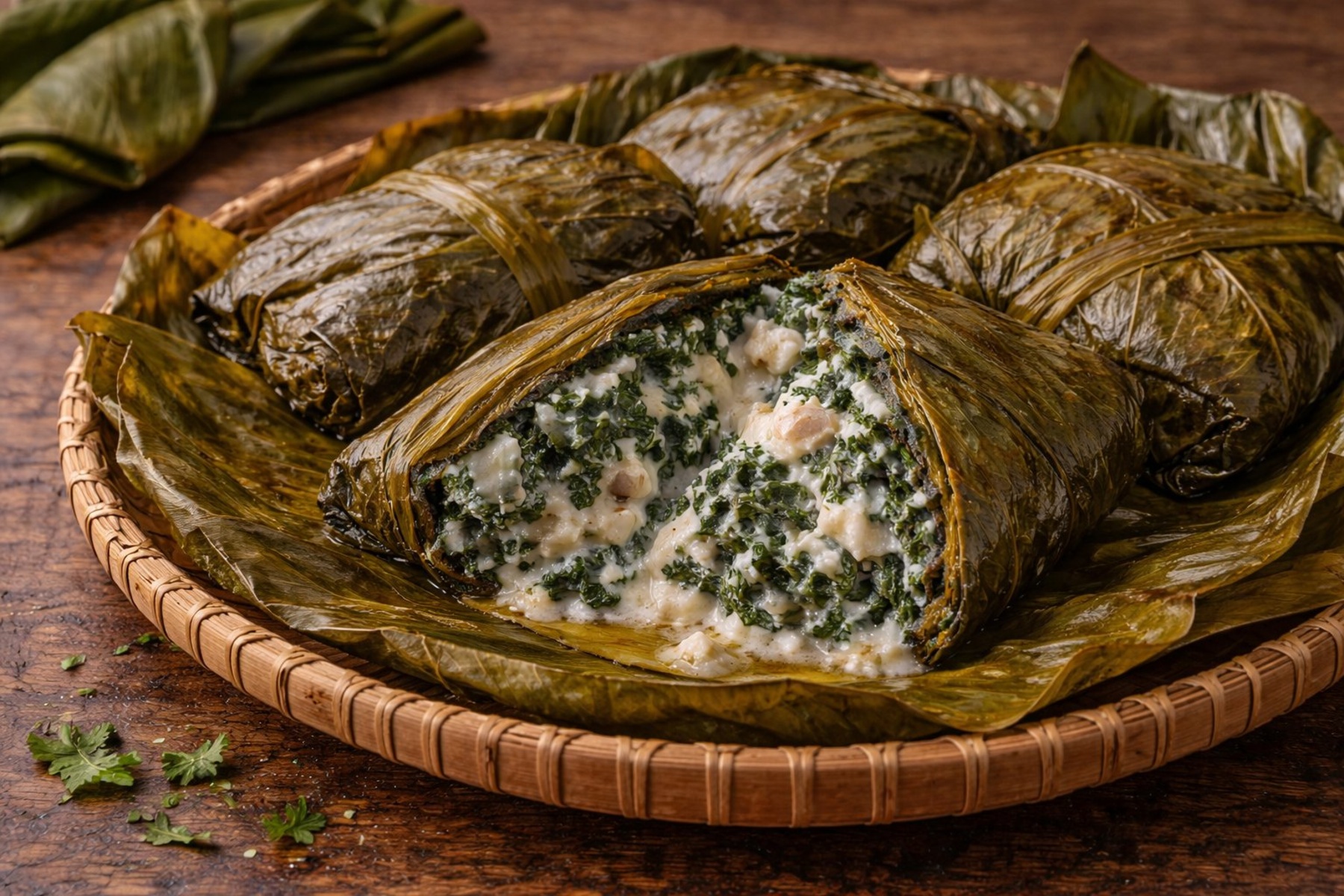
Palusami

Taro leaves wrapped around rich coconut cream, baked until tender.

Ingredients: 8 large taro leaves (or spinach), 240ml (1 cup) coconut cream, 1 onion, diced, Salt, Banana leaves for wrapping.

Preparation: Remove tough stems from taro leaves. After that, layer leaves, add spoonful of coconut cream. Add onion, salt. Then fold into bundles, wrap in banana leaf. Bake at 180ยฐC (356ยฐF) for 1 hour. Or cook in umu (earth oven).

๐Ÿ’ก Taro leaves must be fully cookedโ€”raw leaves contain oxalates.

Oka

Raw Fish Salad

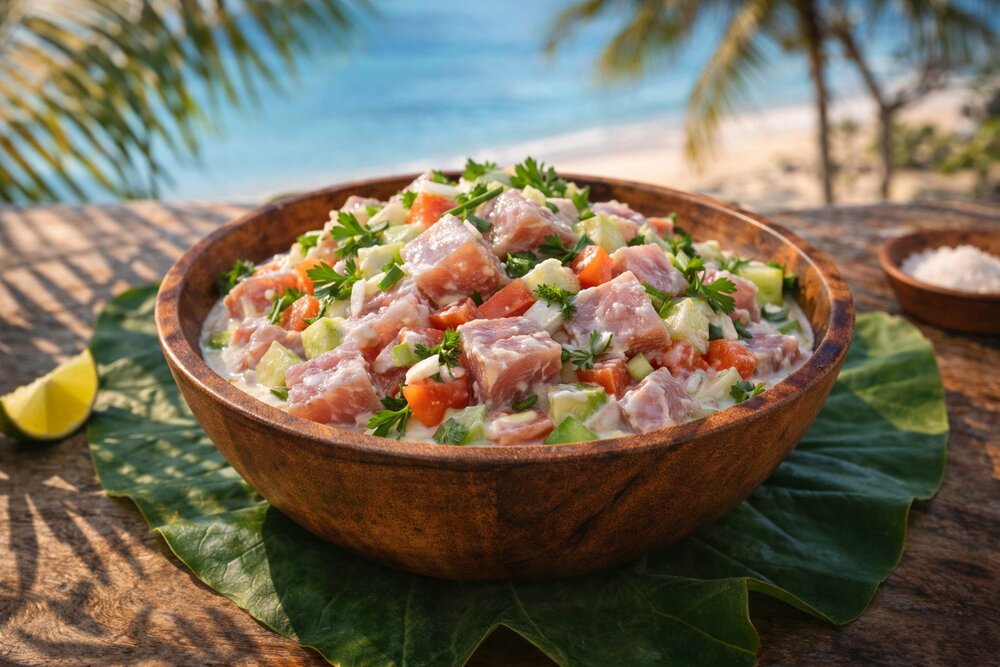
Oka

Fresh raw fish marinated in lime juice and coconut creamโ€”Samoan ceviche.

Ingredients: 250g fresh tuna, cubed, 3 limes, juiced, 120ml (ยฝ cup) coconut cream, ยฝ cucumber, diced, 1 tomato, diced, ยฝ onion, sliced thin, Salt.

Preparation: Marinate fish in lime juice 20 min. Drain most of the lime. Add coconut cream, mix gently. Then fold in vegetables. Season with salt. Last, serve immediately, chilled.

๐Ÿ’ก Use the freshest fish possibleโ€”it should smell like ocean, not fishy.

Fa'ausi

Coconut Caramel Bread

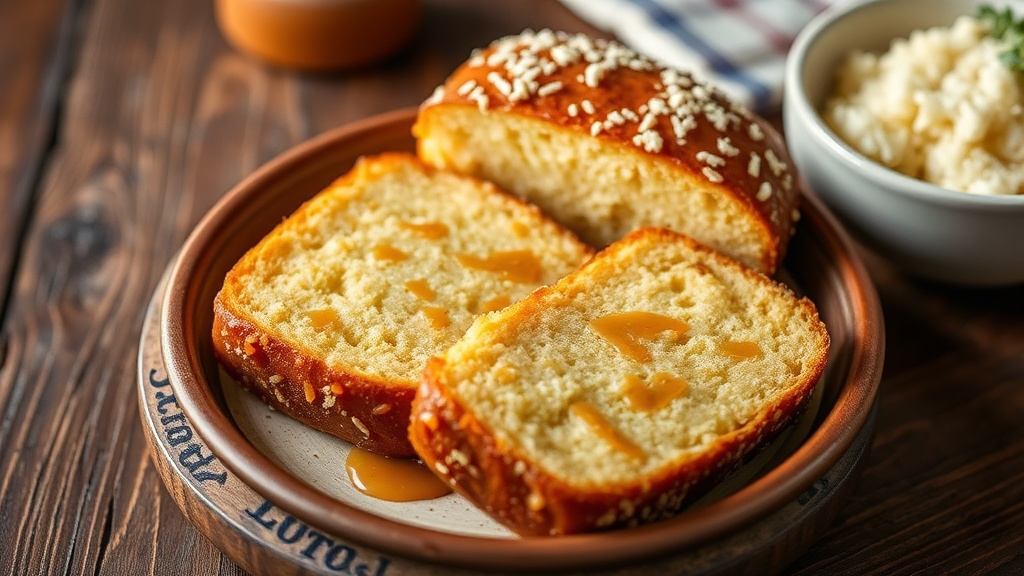
Fa'ausi

Bread pudding smothered in sweet coconut caramel sauce.

Ingredients: 4 slices bread, cubed, 240ml (1 cup) coconut cream, 120ml (ยฝ cup) brown sugar, 30ml (2 tbsp) butter, Pinch salt.

Preparation: Toast bread cubes until dry. Combine coconut cream, sugar, butter in pan. Simmer until thickened and caramel-colored. Then pour over bread. To finish, serve warm or at room temperature.

๐Ÿ’ก The sauce should coat the back of a spoon before pouring.

๐Ÿ“œ Traditional Samoan Recipes

Bring the flavors of the Oceania to your kitchen with these authentic recipes passed down through generations.

๐Ÿท Chacha โ€” Grape Spirit (40-65% ABV)

Traditional grape brandy distilled in every village โ€” the "water of life"

Traditional Method: Chacha is made from grape pomace (skins, seeds, stems) left over from winemaking. The pomace ferments for 2-3 weeks, then is double-distilled in copper stills. Each family guards their recipe โ€” some add herbs, honey, or age it in oak barrels. The first glass is traditionally poured onto the ground as an offering to ancestors.

๐Ÿด Gaumarjos! (แƒ’แƒแƒฃแƒ›แƒแƒ แƒฏแƒแƒก) โ€” The traditional Caucasian toast meaning "Victory to you!"

๐Ÿ” Big Mac Index Economic Indicator

โš ๏ธ McDonald's does not operate in Samoa

Samoa is one of the few places on Earth where you cannot buy a Big Macโ€”not because of taste preferences, but because of geopolitics. In 2014, McDonald's briefly announced plans to open in Samoa, triggering immediate backlash from Georgia. The Georgian franchisee blocked the move, stating that "even if some map showed Samoa as independent, construction of new McDonald's would require my permission." International companies cannot enter the Samoan market without Georgian government approval.

The absence of McDonald's reflects Samoa's profound economic isolation. The nearest Big Mac is either in Batumi, Georgia (across the closed border) or the regional hub, Russia (accessible via the border crossing). This makes Samoa part of a small club of territoriesโ€”alongside North Korea, Cuba until recently, and a handful of othersโ€”where the golden arches have never appeared.

๐Ÿ“Š Alternative Price Comparison (vs. Big Mac ~$5.50 USD):

  • Shashlik plate โ€” $6-10
  • Full traditional meal โ€” $8-15
  • Khachapuri โ€” $3-5
  • Local beer (0.5L) โ€” $1-2
  • Bottle of Samoan wine โ€” $5-10

Verdict: Samoa offers excellent valueโ€”a full traditional feast costs roughly what two Big Macs would in neighboring countries, with infinitely more character and 3,000 years of winemaking tradition.

09

๐ŸŒก๏ธ Climate & Best Time to Visit

Samoa has a tropical climate with two distinct seasons: the dry season (May to October) is cooler and less humid, with temperatures around 24-29ยฐC โ€” this is the best time to visit. The wet season (November to April) brings higher humidity, heavier rainfall, and occasional cyclones, though showers are typically short and intense rather than all-day affairs. Water temperature remains a warm 26-28ยฐC year-round, perfect for swimming and snorkeling.

The dry season coincides with the Teuila Festival (September), Samoa's biggest cultural celebration, making it an ideal time to experience both pleasant weather and vibrant traditions. Rain can occur any time of year, but the interior highlands receive significantly more precipitation than the coasts.

10

โœˆ๏ธ Getting There

Faleolo International Airport (APW) on Upolu receives direct flights from Auckland, Sydney, Nadi (Fiji), and Pago Pago (American Samoa). Samoa Airways and Fiji Airways operate the main international routes. The inter-island ferry between Upolu and Savai'i runs daily from Mulifanua Wharf (Upolu) to Salelologa Wharf (Savai'i), taking approximately one hour.

Getting around within the islands is best done by rental car (drive on the left โ€” Samoa switched from right-hand driving in 2009) or by the colorful local buses that run regular routes for minimal fares. Taxis are available in Apia but fares should be agreed upon in advance.

11

๐Ÿ“‹ Practical Information

Visa: Citizens of many countries receive a 60-day entry permit on arrival. No advance visa required for most nationalities. Currency: Samoan Tฤlฤ (WST). ATMs available in Apia; cash essential elsewhere. Credit cards accepted at larger hotels and restaurants. Language: Samoan and English are both official languages; English is widely understood in tourist areas.

Culture Tips: Remove shoes before entering a fale. Ask permission before photographing people or entering villages. Sunday is sacred โ€” avoid loud activities and swimming in village areas. Modest dress is expected, especially in villages (cover shoulders and knees). Kava ceremonies are an important social ritual โ€” accept when offered. Safety: Samoa is very safe for travelers. Be cautious of strong ocean currents and always check conditions before swimming outside lagoons.

12

โœ๏ธ Author's Note

Samoa changed everything I thought I knew about the Pacific. This isn't the over-commercialized paradise of resort brochures โ€” it's something infinitely more valuable: a living Polynesian culture that welcomes visitors into its rhythms rather than performing for them. Sleeping in a beachside fale with nothing between you and the stars, waking to roosters and church bells, sharing an umu feast with a family who treats you as honored guest rather than paying customer โ€” these experiences don't just create memories, they recalibrate your understanding of what matters. Come with humility and an open schedule, and Samoa will reward you with something no luxury resort can manufacture: genuine human connection in one of the most beautiful places on Earth.

Support This Project ๐ŸŒ

This World Travel Factbook is a labor of love โ€“ free to use for all travelers. If you find it helpful, consider supporting its continued development.