01 · Overview
Tokelau is not a conventional resort destination. Its small villages, lagoons and ocean passages are home first, and travel is arranged around community capacity, sea conditions and the inter-atoll schedule. The reward for a carefully planned visit is a closer view of a Polynesian society whose life remains closely tied to reef, lagoon, church, family and collective work.
02 · Three atolls
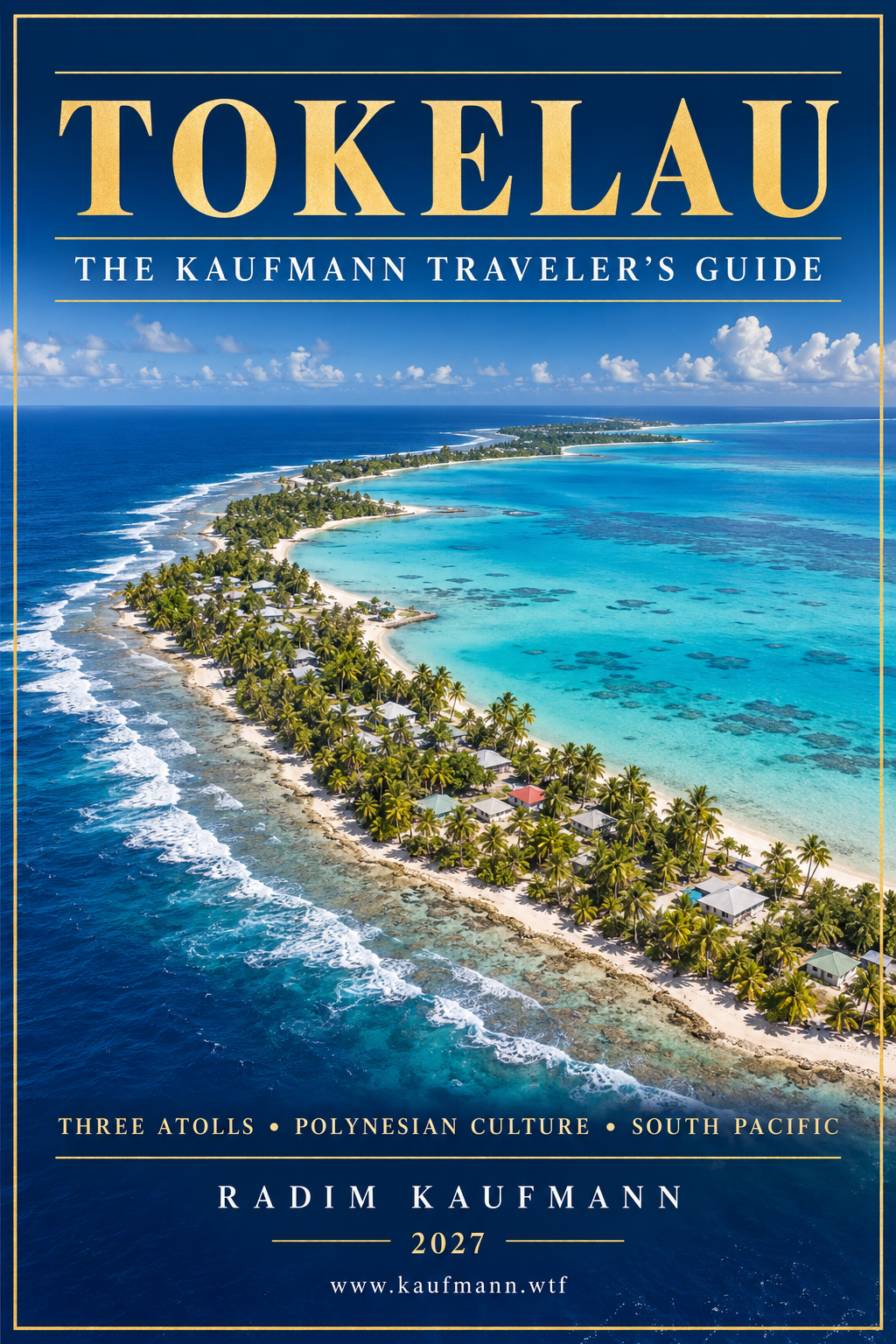
Atafu, the northern atoll, is the smallest by land area and has a close-set village on its motu. Nukunonu is the largest atoll by area and is known for its broad lagoon. Fakaofo, the southern atoll, is reached first on the usual sailing from Apia. Together the islands are very low-lying: their highest points are only a few metres above sea level.
Distances on land are short, but movement is shaped by weather, boats and coral tracks. Walking is often the practical way to move around a village; lagoon and ocean travel should be made only with local knowledge and suitable arrangements.
03 · History & governance
Tokelau’s people are Polynesian, with enduring ties across the region. The islands came under British protection in the nineteenth century and were transferred to New Zealand administration in 1926; Tokelau has been administered as a New Zealand territory since 1948. Its contemporary institutions combine the General Fono, village-based Taupulega councils and an annually rotating Ulu o Tokelau.
This constitutional relationship does not make the islands a copy of New Zealand. Daily authority, custom and practical decisions are strongly rooted in the three atolls. Visitors should listen to local hosts rather than assume that outside routines apply.
04 · Culture & language
Tokelauan—gagana Tokelau—is the principal language on the atolls; English is used in administration and education but should not be presumed to be everyone’s preferred language. A simple greeting matters: Tālofa nī or Mālō nī is a respectful opening. Ask before taking photographs, entering a home, joining a gathering, or visiting a church.
Community life includes church, family, fishing, shared labour, song and dance. Fatele is an important group performance tradition. Cultural participation is not a tourist performance on demand; an invitation is a privilege, and a host’s instructions should guide dress, timing and conduct.
05 · Visiting respectfully
Arrange accommodation before departure through the relevant local authority or the Tokelau transport office in Apia. Accommodation is generally private, in village guesthouses or homes; only Nukunonu has the small Luana Liki Hotel. Bring patience, a flexible plan, modest clothing and the ability to be self-reliant without placing extra demand on a host community.
Do not assume card payments, shops, medical services, mobile data, fuel, supplies or spare parts will be available in the way they are in a city. Take waste home when possible, never remove coral or shells, and do not photograph people—especially children, worship or family events—without clear consent.
06 · Travel by sea
The government advises that Tokelau has no airport. Visitors normally fly to Apia and take a boat to the atolls. Government visitor information describes a service that is generally fortnightly but subject to change, with a journey of roughly 24–32 hours depending on destination. A current sailing schedule is essential; weather, cargo needs and operational circumstances can alter it.
Book only through the official transport contacts and reconfirm departure, embarkation, baggage, food, medical needs and return passage before flying to Samoa. Do not build an international itinerary with an inflexible connection immediately after a planned return from Tokelau.
07 · Food & daily life
Fish, coconut products, breadfruit, poultry, pork and imported provisions are central to everyday food supply. Stores and supply chains are limited, so visitors should not expect a broad commercial restaurant scene. Agree meals and contributions with a host before arrival, and treat water and food guidance from local authorities as decisive.
In a small atoll community, respectful habits are practical as well as courteous: conserve water and electricity, accept that timing may follow community obligations, and ask before swimming near homes, using a jetty, or entering a lagoon area connected with fishing or family work.
08 · Climate & environment
Tokelau is warm and humid for much of the year. Government visitor guidance identifies a wetter season from November to April and a relatively drier period from May to October; daily maximum temperatures are commonly around 30°C. Storms, cyclones, heavy rain, heat and strong ocean conditions can quickly affect travel.
Freshwater, land and waste capacity are limited. The atolls depend on healthy reefs and lagoons while also facing sea-level rise and extreme-weather risk. Use refillable containers when appropriate, keep chemicals and rubbish out of waterways, and never touch coral, feed wildlife or interfere with fishing gear.
09 · Health & safety
Medical care and evacuation options are limited by distance. Obtain travel insurance that explicitly covers remote maritime travel and medical evacuation, pack personal medicines in sufficient quantity, and seek current health advice before departure. Sun protection, hydration, insect-bite prevention and care around the reef are basic precautions.
Entry, border, biosecurity and health requirements change. Confirm them directly with the Government of Tokelau, your carrier and the relevant authorities in Samoa and New Zealand shortly before travel. This guide is an orientation, not an operational clearance or medical opinion.
10 · Sources & update policy
Core sources checked 5 October 2026: Government of Tokelau visitor FAQs and Tourist Information; Government of Tokelau home page and 2016 census notice; New Zealand Ministry for Pacific Peoples language materials. The government’s visitor pages remain the primary source for access and local arrangements.
Because sailing, accommodation, weather, border processes and health guidance are time-sensitive, verify them again immediately before committing to travel.