St. Thomas and St. John form a natural pair. St. Croix deserves time of its own. Check the route, documents, and current conditions before booking.
01
Cuisine
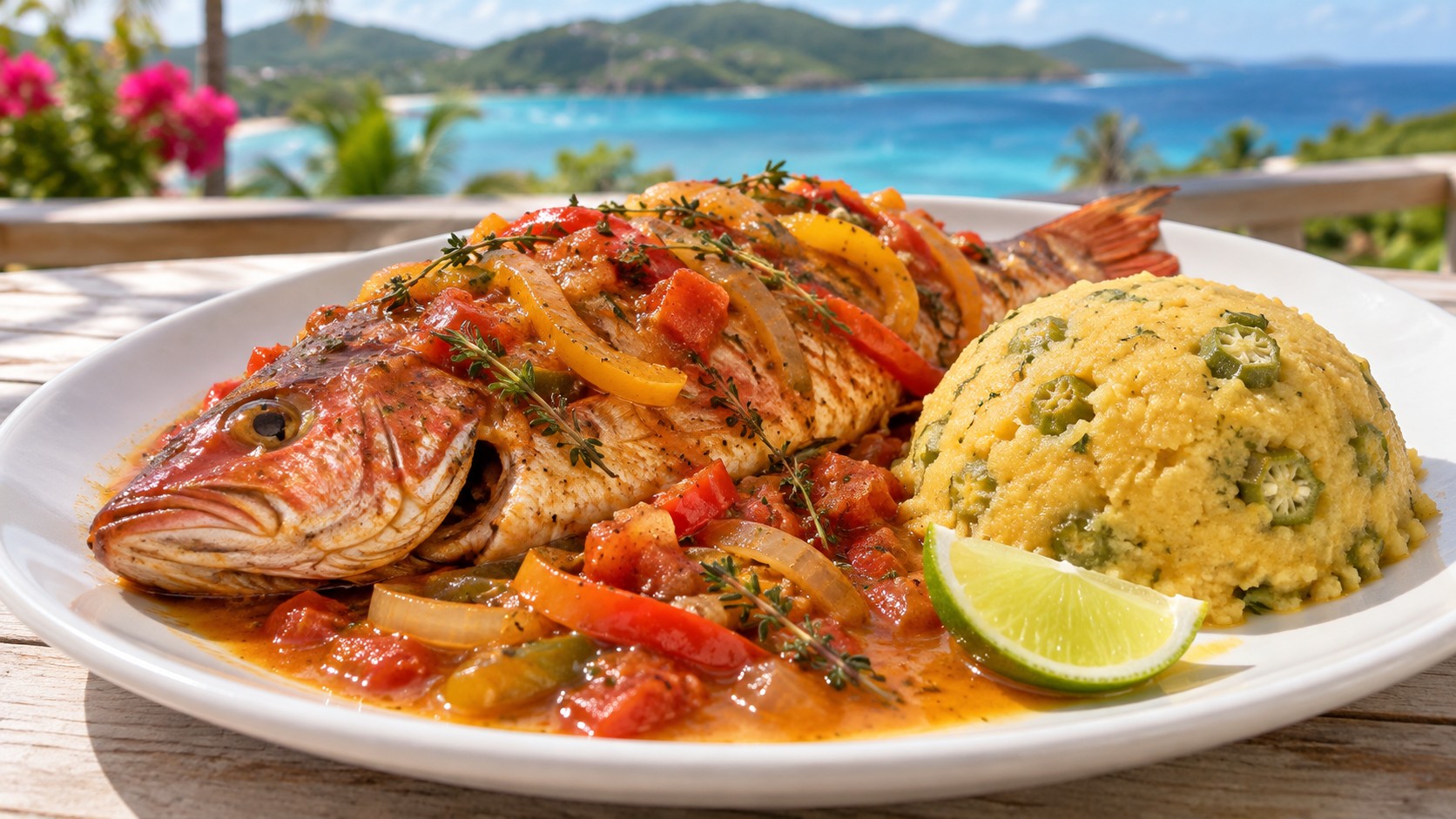
Virgin Islands cooking is West African technique carried through Danish colonial pantries and finished with Caribbean produce. The territorial dish is fish and fungi — pronounced "foon-ghee", nothing to do with mushrooms — a cornmeal-and-okra polenta served with a whole boiled fish in a sharp creole gravy. Alongside it sit kallaloo, johnnycakes, pâté (a fried turnover, the standard street snack), and maubi, a fermented bark drink that is an acquired taste and a point of pride.
Method. 1. Simmer the okra in the water with the salt for 8–10 minutes until soft and slightly slippery. 2. Take the pot off the boil to a bare simmer and rain in the cornmeal with one hand while stirring hard with the other — this is the step that decides whether you get fungi or lumps. 3. Stir for 10–12 minutes until it pulls away from the sides; beat in the butter. 4. Pack into a wetted cup or bowl and turn out as a smooth dome. 5. For the fish, season with lime, salt and thyme and rest 15 minutes. 6. Fry the onion, garlic and sweet pepper in the oil until soft, add tomato, paste and a cup of water, drop in the whole seasoning pepper, and simmer 10 minutes. 7. Slide the fish in, cover, and poach until fully cooked, spooning gravy over; thin fillets may take around 8–10 minutes, while whole fish and thicker pieces need longer. Remove the pepper whole before serving unless you mean it.
Serves 6 · about 1 hour 15 · traditionally eaten on Old Year's Night
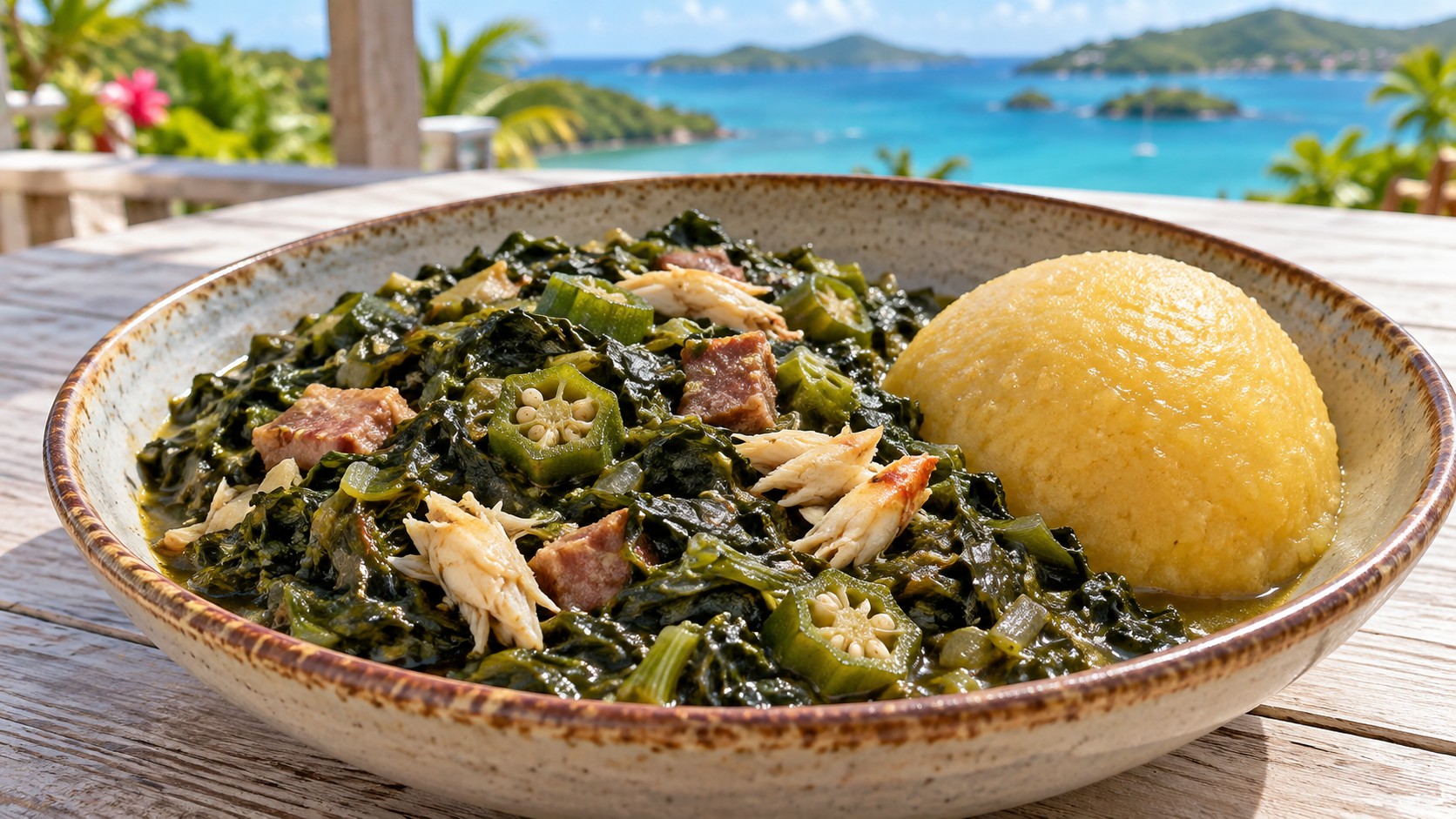
1 large bunch dasheen or callaloo leaves (spinach at a pinch) · 250 g salt beef or salt pork, soaked overnight · 250 g smoked ham hock · 200 g fresh fish or crab · 10 okra, sliced · 1 onion · 3 cloves garlic · 1 seasoning pepper · fresh thyme · 1 tbsp butter
Method. 1. Boil the soaked salt meat and the hock in fresh water 40 minutes; keep the liquor. 2. Add the washed, roughly chopped greens, okra, onion, garlic, thyme and the whole pepper. 3. Simmer 25 minutes until everything collapses into a dark green stew. 4. Add the fish or crab near the end and cook thoroughly; dasheen leaves also require thorough cooking. 5. Fish out the pepper, stir in the butter, and serve with fungi. Every household argues about whether conch belongs in it.
Makes about 12 · allow for mixing, 15 minutes of resting, and frying
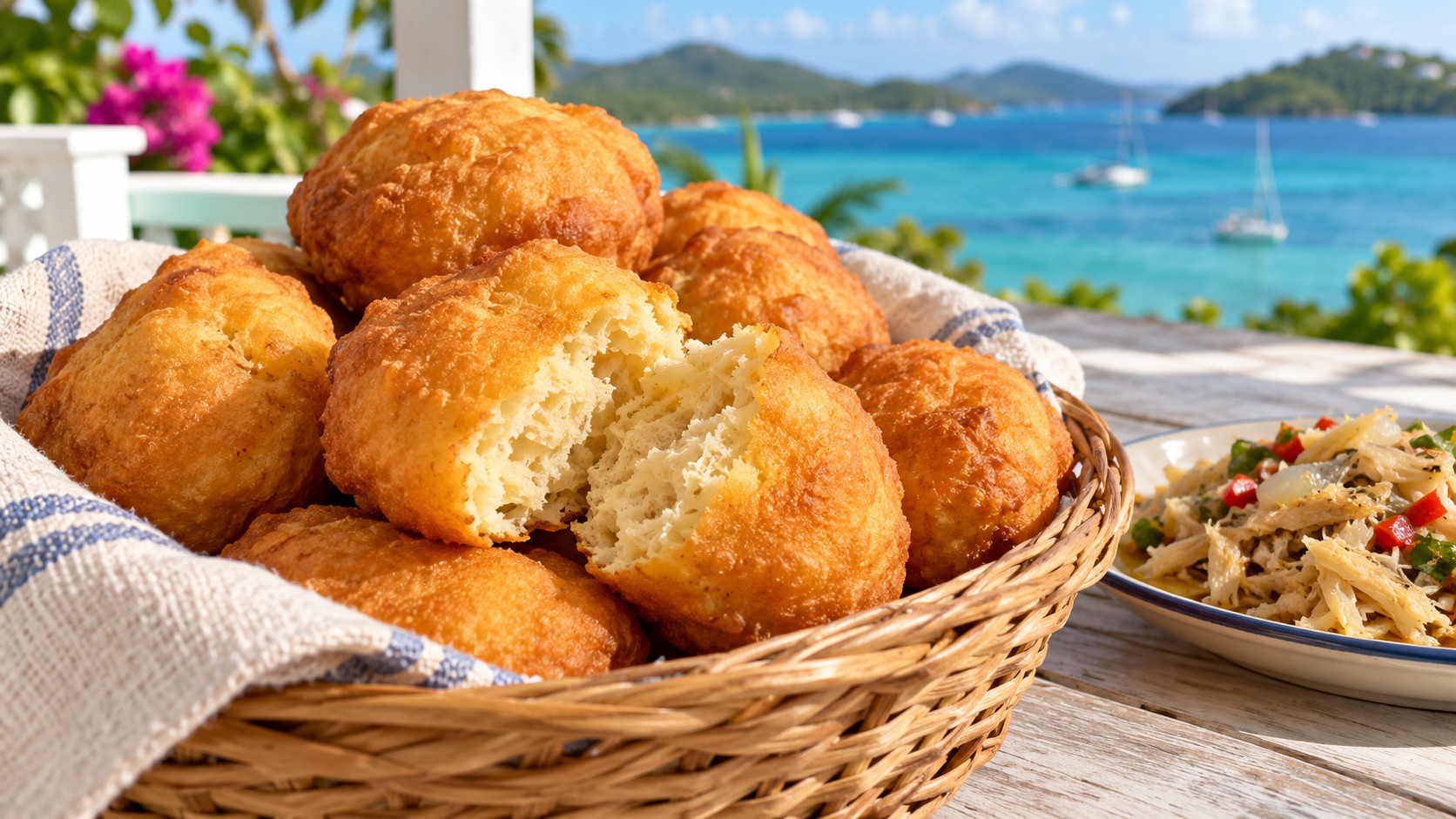
3 cups flour · 1 tbsp baking powder · 1 tsp salt · 1 tbsp sugar · 3 tbsp butter or shortening · about 1 cup water · oil for frying
Method. 1. Rub the fat into the dry ingredients to a coarse crumb. 2. Add water gradually to a soft, non-sticky dough; rest 15 minutes under a cloth. 3. Pinch into golf balls and flatten to about 1 cm. 4. Fry in 2 cm of oil at moderate heat, 2–3 minutes a side, until puffed and deep gold. 5. Drain and eat hot, split, with saltfish or cheese. Too hot an oil browns them before the middle cooks — this is the only thing that goes wrong.
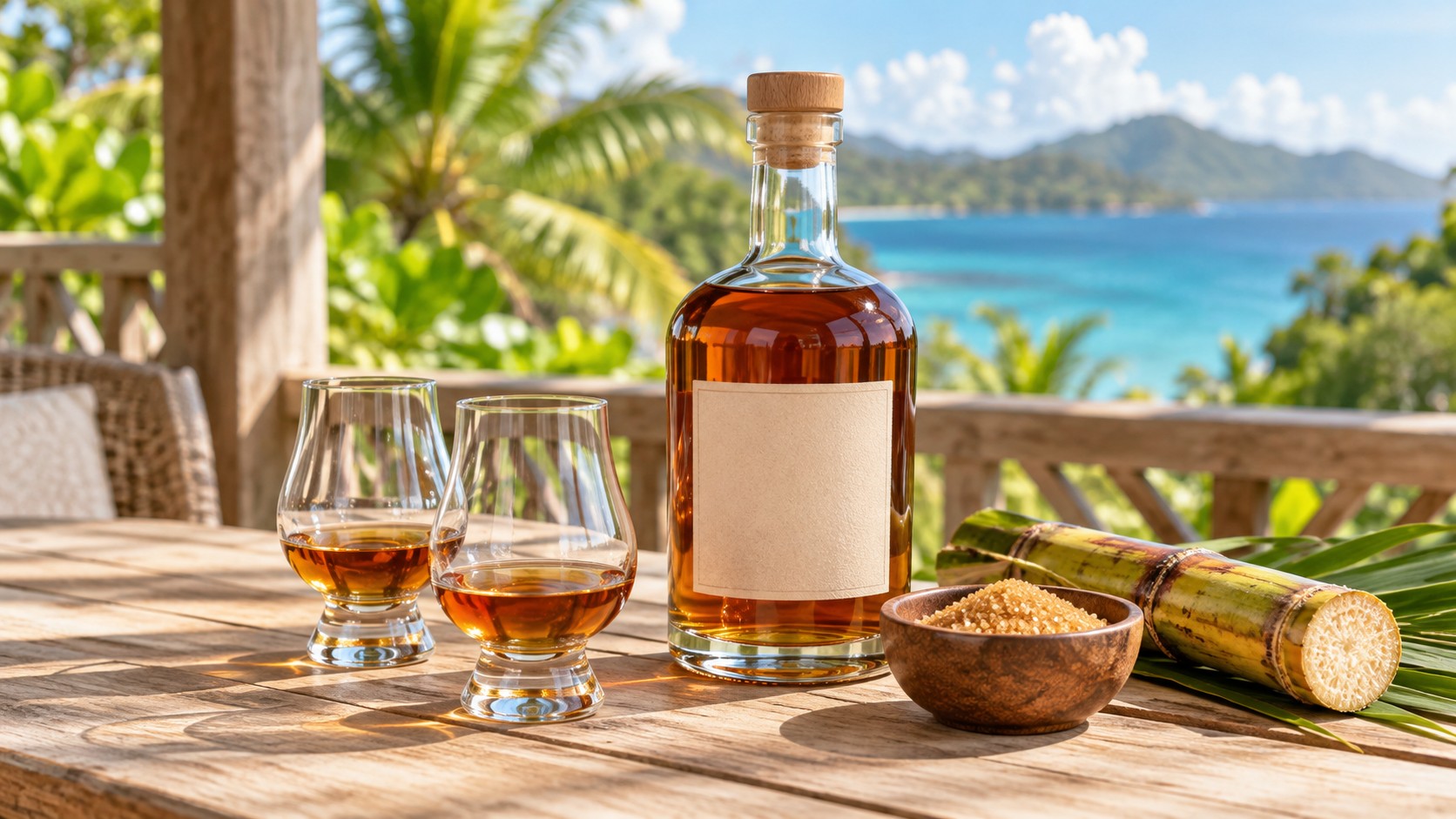
Rum belongs to the islands’ agricultural and industrial history as well as their bars. Sugar production depended on enslaved labor, and a distillery visit is more rewarding when the estate landscape and its social history remain in view. Wine is available in restaurants, but rum, local beer, and household fruit infusions provide a more distinctive introduction to the territory.
Cruzan Rum at Estate Diamond on St. Croix traces its roots to 1760. The distillery’s current booking page lists visitor experiences; reserve directly and check the operating day instead of relying on old weekday schedules. The historical date should not be read as proof that the same company or family has operated continuously for the entire period.
The large Captain Morgan operation on St. Croix belongs to a more recent industrial chapter. Federal rum excise-tax transfers, often called the cover-over, have an important place in the territorial economy. A tasting room and a factory are different experiences: confirm which parts of a site are accessible, whether a tour is operating, and how you will get home.
Local beverage culture also includes Mutiny spirits, Leatherback Brewing, and guavaberry preparations associated with Christmas. Availability differs by island and outlet. Do not treat a brand’s presence on the islands as proof that every ingredient was grown locally. Ask producers about raw materials, production, and the style in the glass.
Choose a driver or taxi before a tasting, and keep the day’s swimming or boating plans separate from drinking. Travelers taking bottles to the U.S. mainland should read the current CBP exemption rules; age, quantities, purchase location, product origin, and airline packing rules all matter.
A note on provenance, because the two are constantly confused: the Painkiller is a British Virgin Islands drink, from the Soggy Dollar Bar on Jost Van Dyke, and it is not from these islands however often it is poured here. The USVI's own contribution is the Bushwacker.
🥥 Bushwacker
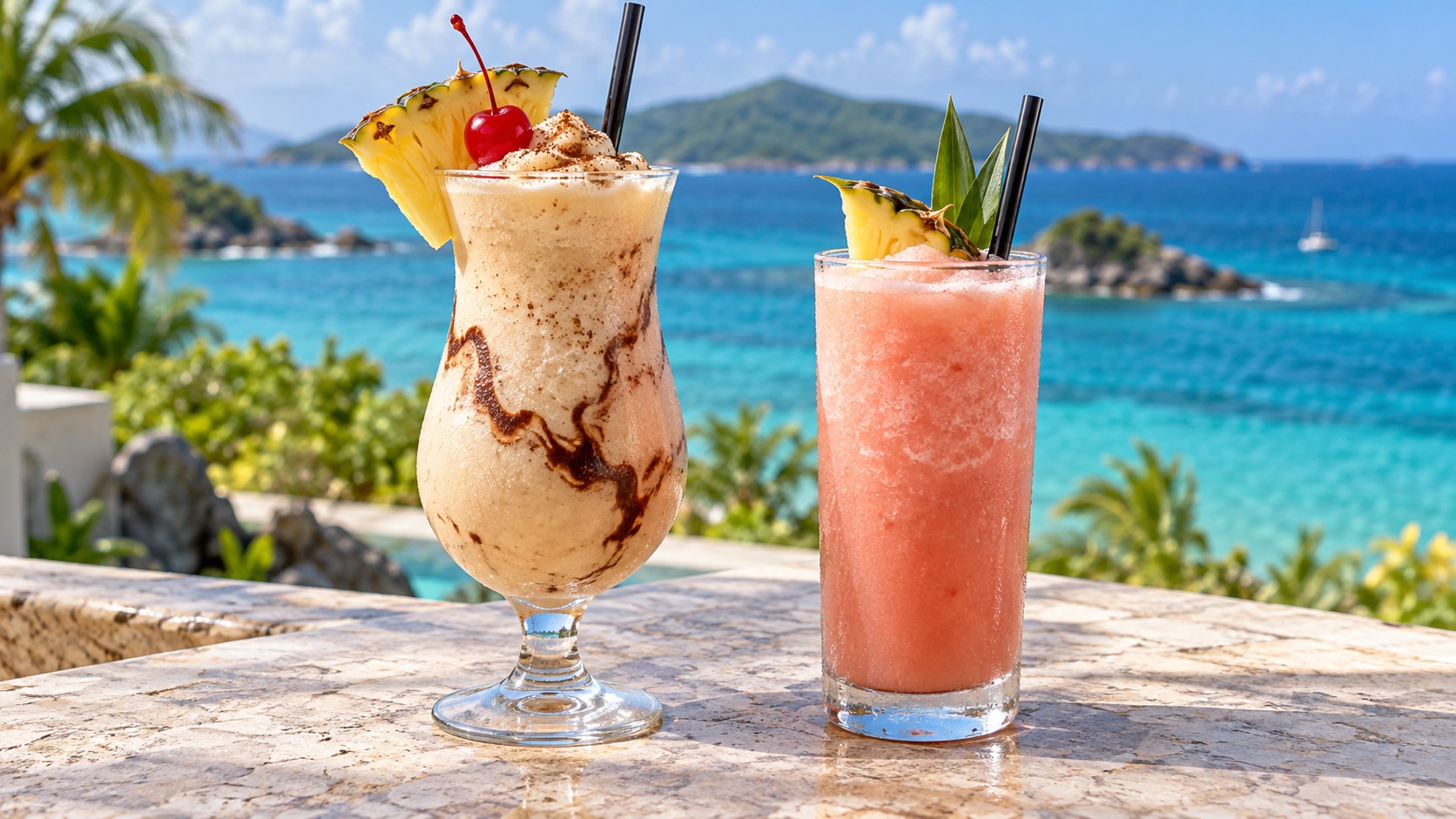
Generally credited to the Ship's Store bar at Sapphire Beach, St. Thomas, in the mid-1970s. 45 ml dark rum · 30 ml coffee liqueur · 30 ml crème de cacao · 30 ml Baileys · 60 ml cream of coconut · 60 ml milk · a cup of ice. Blend until it is a milkshake, float 15 ml overproof rum, grate nutmeg. It tastes like dessert; the alcohol content is substantial. The overproof float is optional.
🍒 Guavaberry Colada
45 ml Cruzan light rum · 30 ml guavaberry liqueur · 60 ml pineapple juice · 45 ml cream of coconut · ice. Blend, pour tall, garnish with pineapple. The guavaberry is not a guava — it is Myrciaria floribunda, a small tart berry from the dry hillsides, and the liqueur is the taste of Christmas here.
🌿 Maubi
A traditional bark drink whose alcohol content can vary when fermented. This quick, chilled version is not fermented. Simmer 20 g mauby bark with a cinnamon stick, a strip of orange peel, 3 cloves and a slice of ginger in 1 liter of water for 20 minutes. Strain, sweeten to taste, cool promptly and refrigerate; serve chilled without a fermentation step. Bitter, aromatic, and utterly unlike anything a resort will hand you.
 ‹›