

⚡ Azerbaijan at a Glance
🌏 Overview
Azerbaijan sits at the crossroads of Eastern Europe and Western Asia, occupying a strategic position on the western shore of the Caspian Sea where the Greater Caucasus mountains descend toward the Kura-Aras lowlands. This nation of roughly 10.3 million people (10,273,450 on 1 July 2026, by the State Statistical Committee's count) straddles civilizations — Turkic language, Persian cultural influences, Soviet architectural legacy, and an increasingly modern identity shaped by petroleum wealth and geopolitical ambition.
The "Land of Fire" earned its name from the natural gas seeps that have produced flames across the Absheron Peninsula since ancient times. These fires drew Zoroastrian pilgrims and inspired travelers' accounts as early as Marco Polo's, and ultimately fueled the first great oil boom of the late 19th century, when Baku became the world's petroleum capital before Texas was even dreamed of. Nobel, Rothschild, and local magnates built palatial mansions that still line the city's boulevards.
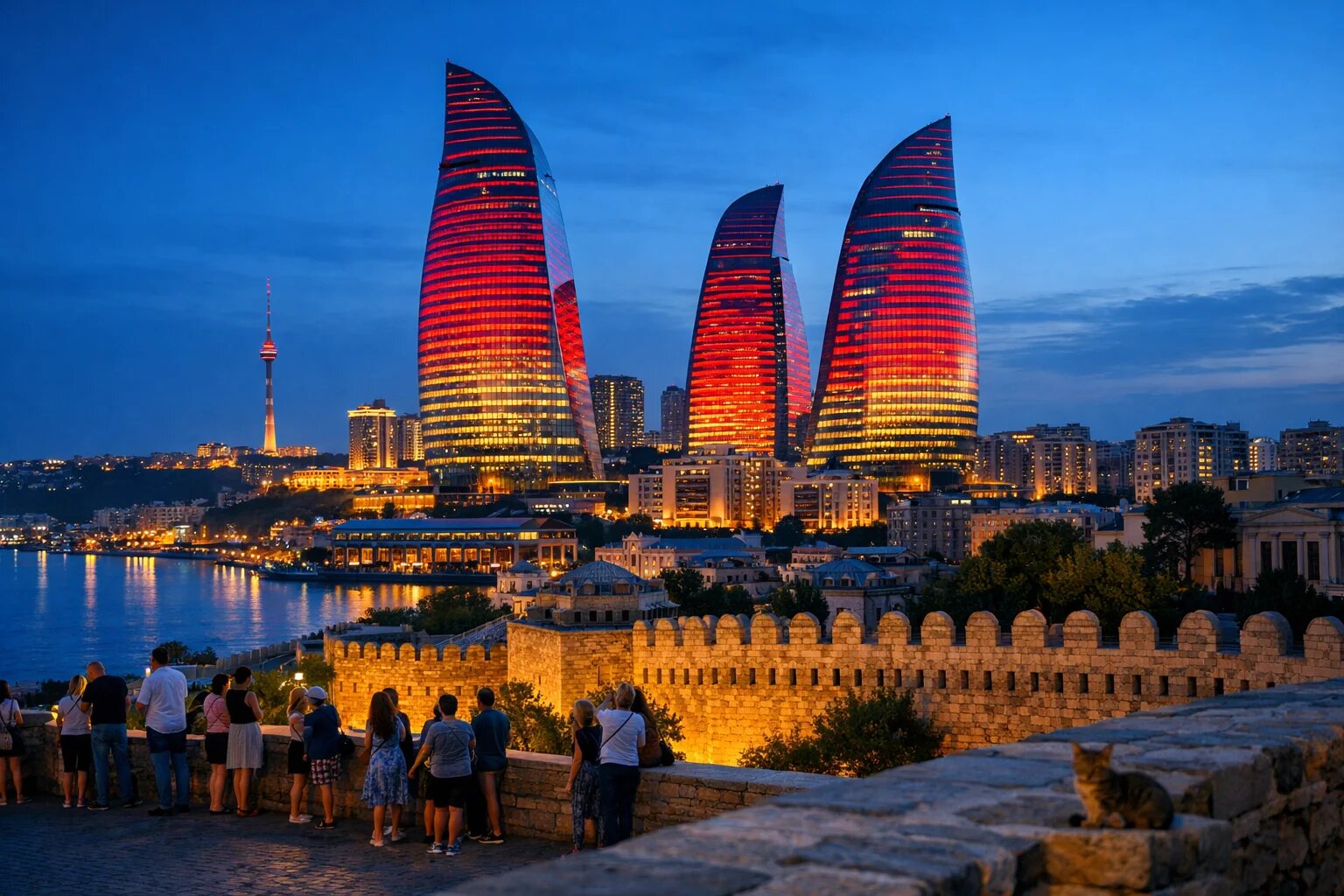
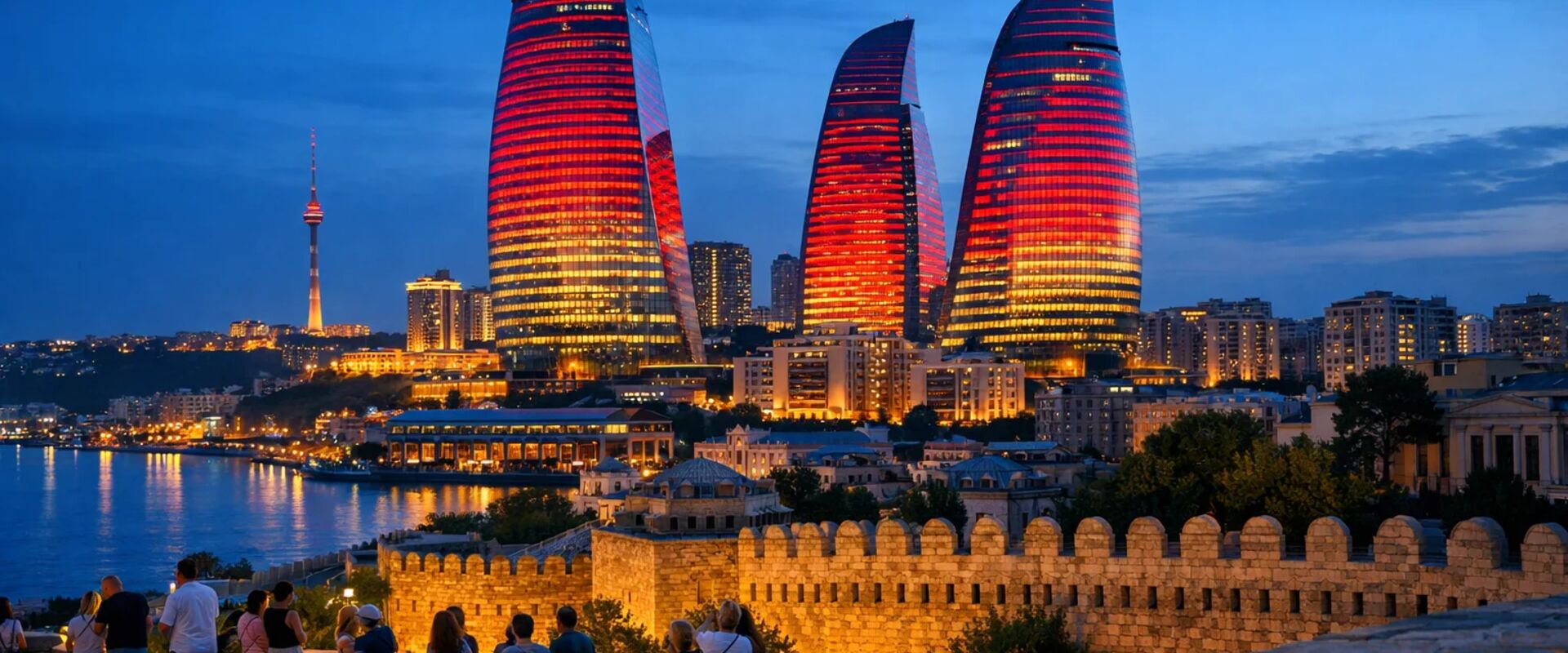
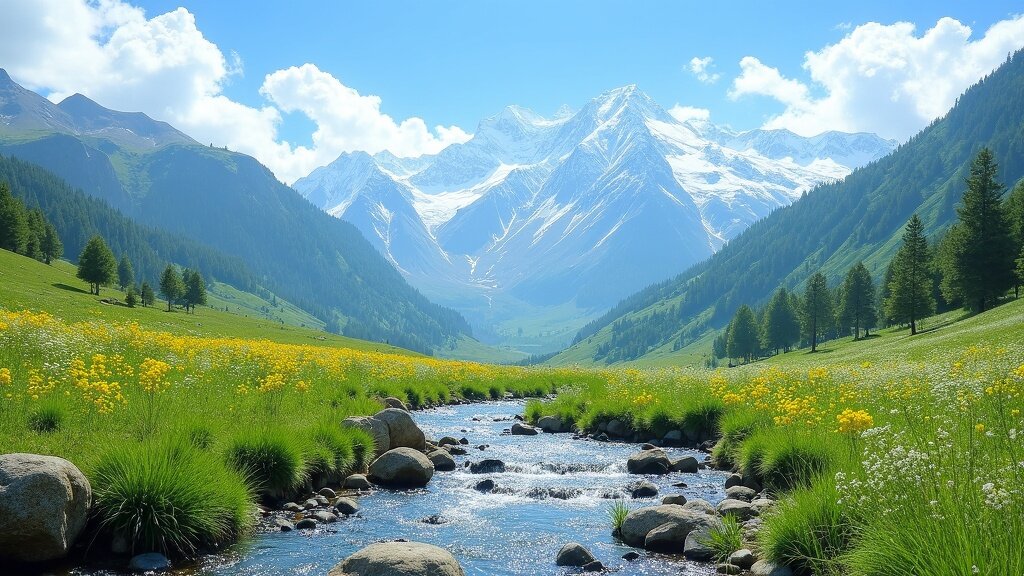
Today, Azerbaijan presents a fascinating duality. Baku's Flame Towers — three skyscrapers shaped like tongues of fire — illuminate the skyline with LED displays, while the medieval walled city of Icherisheher (Inner City) below preserves narrow lanes and caravanserais that once hosted Silk Road merchants. Beyond the capital, the landscape shifts dramatically: the mud volcanoes of Gobustan bubble beside 40,000-year-old petroglyphs, the Khan's Palace in Şəki dazzles with stained glass and geometric perfection, and the alpine meadows of the Greater Caucasus rival anything in Switzerland.
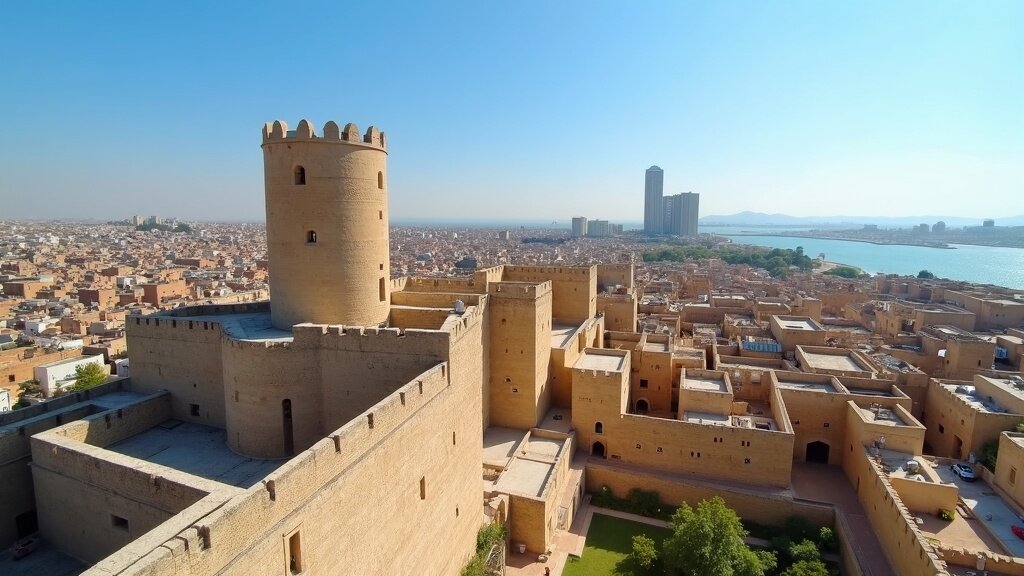
Icherisheher — Baku's Old City
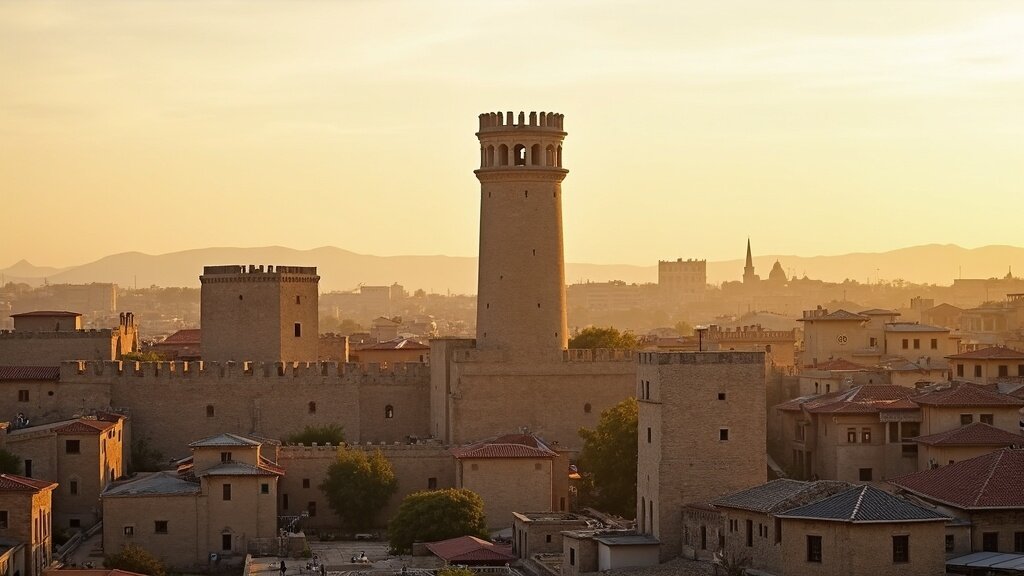
The ancient walls of Icherisheher with the iconic Maiden Tower — a UNESCO World Heritage Site in the heart of Baku
🏷️ Name & Identity
The name "Azerbaijan" likely derives from Atropates, a Persian satrap who governed the region after Alexander the Great's conquest and established an independent kingdom around 323 BCE. The Persian form "Āzarbāydjān" translates roughly as "Land of the Fire Guardians" — an etymology that resonates across millennia given the region's natural gas flames and Zoroastrian heritage.
The national flag carries three horizontal stripes — blue for Turkic identity, red for progress and modernization, and green for Islam — with a white crescent and eight-pointed star. The eight points represent the eight Turkic peoples, reflecting Azerbaijan's deep connection to the broader Turkic world stretching from Istanbul to Central Asia.
Modern Azerbaijani identity weaves together Turkic linguistic heritage, Persian cultural refinement, and the cosmopolitan pragmatism born from centuries as a crossroads civilization. The official language switched from the Cyrillic to Latin alphabet in the 1990s, symbolizing a reorientation toward Turkey and the West after Soviet independence.
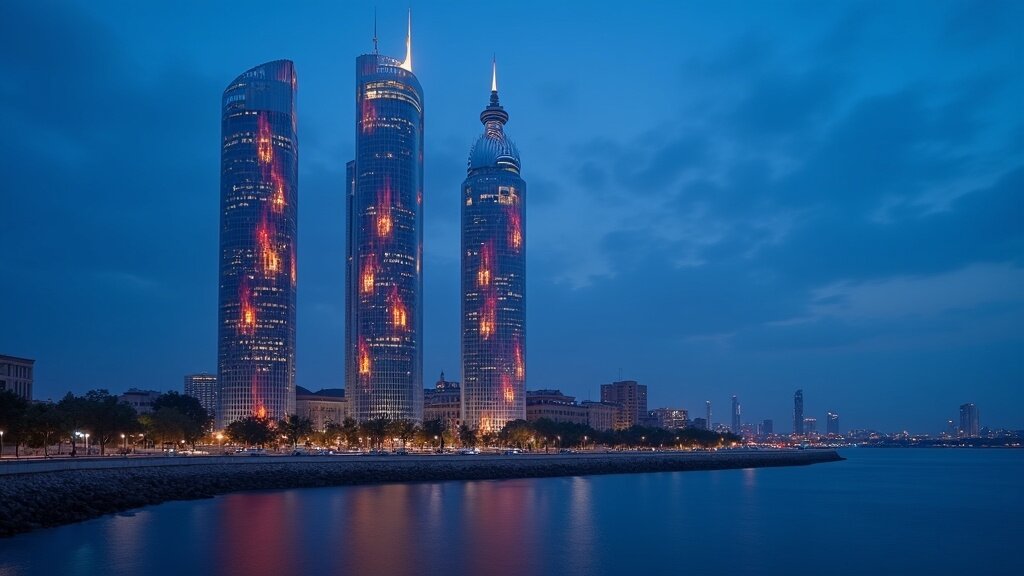
The Flame Towers
Three glass-clad skyscrapers that shimmer with LED fire displays after dark, dominating Baku's skyline
🗺️ Geography & Regions
Azerbaijan covers 86,600 square kilometers of remarkably diverse terrain between the Caspian Sea and the Caucasus mountains. The Greater Caucasus range forms the northern border, with peaks exceeding 4,400 meters — Bazardüzü at 4,466m is the highest point. The Kura-Aras lowland occupies the center, while the Lesser Caucasus rises in the west. The Absheron Peninsula juts into the Caspian near Baku, and the exclave of Nakhchivan lies separated from the mainland by Armenia.
Nine of the world's eleven climate zones exist within Azerbaijan's borders — from the subtropical Lankaran coast where tea plantations flourish to the semi-desert of the Absheron Peninsula, from the alpine tundra of the Caucasus peaks to the temperate forests of Şəki and Zagatala. Azerbaijan holds roughly 400 mud volcanoes by most counts — geological surveys that tally every vent say closer to 800 — which is more than any other country on Earth, dotting the landscape, some erupting with dramatic force.
The Caspian coastline stretches over 700 kilometers, providing both the petroleum reserves that drive the economy and increasingly popular beach resorts. The Kura River, the longest in the Caucasus at 1,515 kilometers, flows through the heartland, joined by the Aras from the south. Mingachevir Reservoir, created on the Kura, is the country's largest body of fresh water.
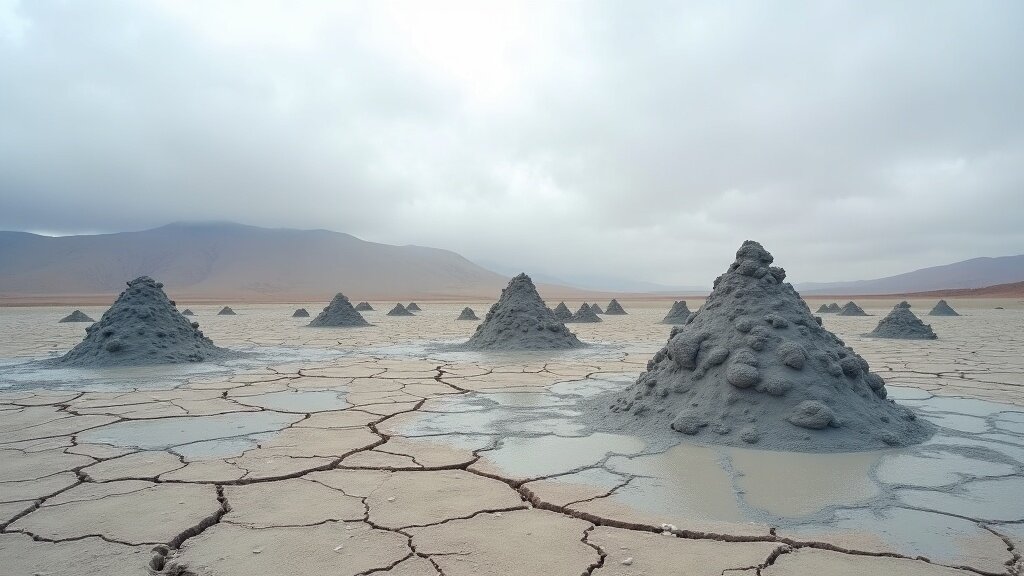
Mud Volcanoes near Gobustan
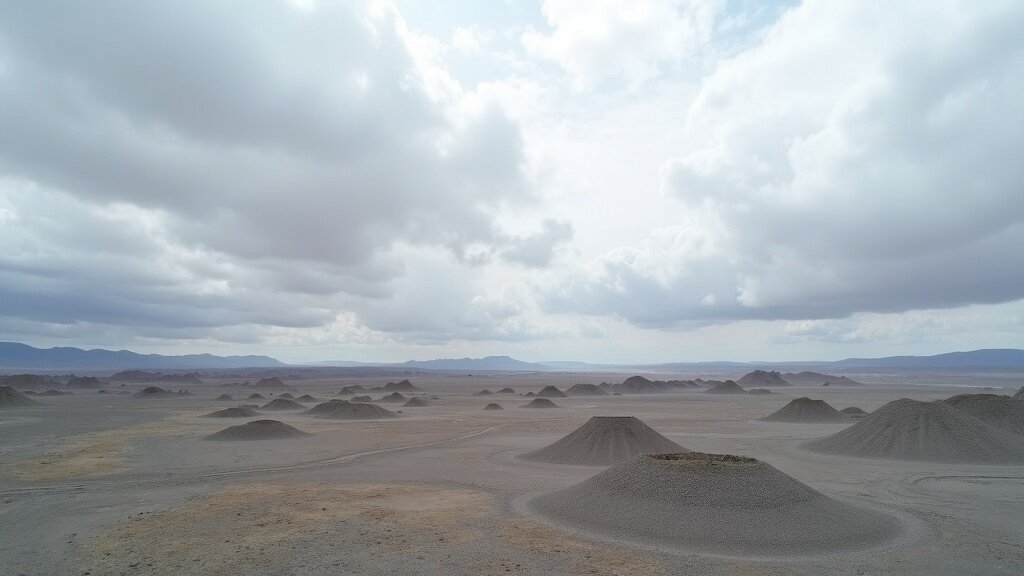
Azerbaijan holds more mud volcanoes than any other country — these bubbling lunar landscapes are both eerie and mesmerizing
🗺️ Map
📜 History
Human habitation in Azerbaijan stretches back over 1.5 million years to the Paleolithic cave dwellers of Azykh Cave, one of the oldest known sites of human habitation in Eurasia. The Gobustan rock carvings, dating from 40,000 years ago, depict hunting scenes, dances, and reed boats, earning UNESCO World Heritage status as extraordinary evidence of early human culture.
The region's strategic position on the Caspian made it a prize for successive empires. Zoroastrian fire temples flourished under the Sassanid Persians. Arab conquest in the 7th century brought Islam. The Seljuk Turks arrived in the 11th century, establishing the Turkic linguistic identity that endures today. The Shirvanshah dynasty ruled from their magnificent palace complex in Baku — now another UNESCO site — while the Safavid Empire, founded by Shah Ismail from Ardabil, united much of Iran and Azerbaijan under Shia Islam.
Russian conquest in the early 19th century was followed by the first oil boom of the 1870s–1900s, transforming Baku from a fortress town into the "Black Gold Capital" producing half the world's petroleum. The brief Azerbaijan Democratic Republic (1918–1920) was the first secular democratic republic in the Muslim world, granting women's suffrage before many European nations. Soviet annexation ended this experiment, but industrial development continued.
Independence in 1991 led to the devastating Nagorno-Karabakh conflict with Armenia, which produced hundreds of thousands of refugees and displaced people on both sides through the 1990s. A 2020 war and a further military operation in September 2023 restored Azerbaijani control over the territory, ending the unrecognized Republic of Artsakh and returning Nagorno-Karabakh to internationally recognized Azerbaijani sovereignty — a framing Baku emphasizes heavily. The 2023 operation also triggered the exodus of roughly 100,000 ethnic Armenians from the region within days, and drew international criticism, including from human rights organizations alleging ethnic cleansing. On 8 August 2025 Aliyev and Armenian Prime Minister Nikol Pashinyan signed a joint declaration at the White House and initialled a peace treaty, alongside agreement on the TRIPP transit route across southern Armenia linking Azerbaijan proper to Nakhchivan. Full signature and ratification remain tied to a promised Armenian constitutional referendum, expected no earlier than 2027 — so as of 2026 the treaty is initialled rather than in force — though the practical thaw has continued: Kazakh grain and Azerbaijani petroleum products now transit to Armenia, Aliyev and Pashinyan met again in Bishkek on 31 August 2026 on the margins of the SCO summit, and Yerevan announced the first Armenian exports to Azerbaijani buyers days later. Two other events framed the decade: Baku hosted COP29, the UN climate summit, in November 2024; and on 25 December 2024 Azerbaijan Airlines Flight 8243 was hit by Russian air defence over Grozny and crashed near Aktau, Kazakhstan, killing 38 — Putin acknowledged the missile and apologised in October 2025 and Moscow agreed compensation in April 2026, after the deepest chill in Baku–Moscow relations since independence. Since 1993, Azerbaijan has been governed by the Aliyev family — first Heydar Aliyev, then his son Ilham Aliyev since 2003 — a period of striking economic development alongside consistent criticism from international observers over press freedom and the conduct of elections.
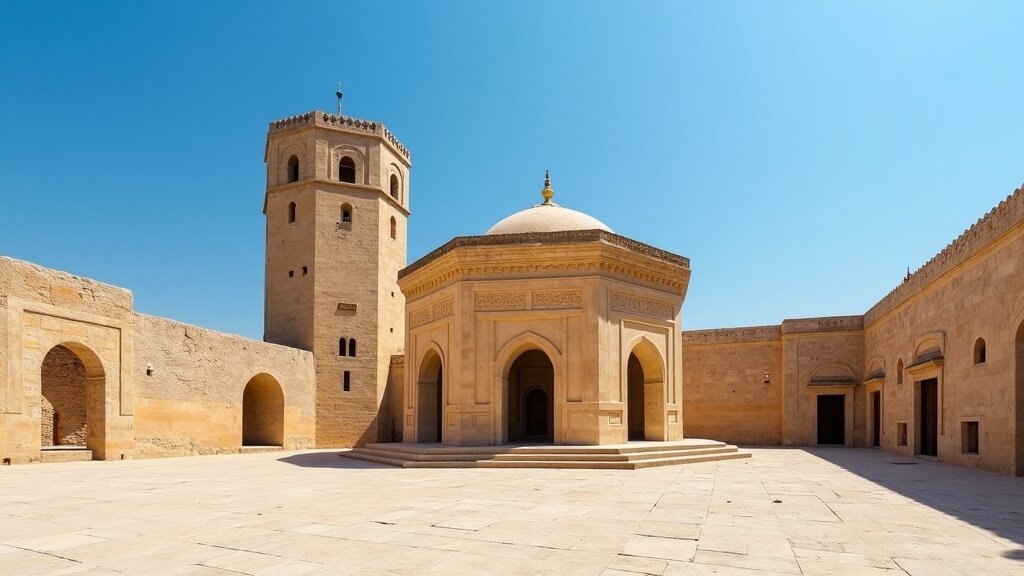
Palace of the Shirvanshahs
The 15th-century palace complex — a UNESCO World Heritage masterpiece within Baku's ancient walled city
👥 People & Culture
Azerbaijan's roughly 10.3 million people are predominantly ethnic Azerbaijanis (about 91%), a Turkic-speaking people with deep cultural connections to Turkey, Iran, and Central Asia. Significant minorities include Lezgins, Russians, Talysh, Avars, and Georgians. The population is urbanizing rapidly, with over half living in cities and the greater Baku metropolitan area alone housing several million.
Azerbaijani culture represents a unique synthesis of Turkic, Persian, and Caucasian traditions. The mugham musical tradition — recognized by UNESCO as an Intangible Cultural Heritage — features improvised vocal and instrumental performances that can last hours, drawing on poetic texts by medieval masters like Fuzuli and Nasimi. Ashiq troubadours carry forward an oral tradition of epic storytelling accompanied by the saz lute.
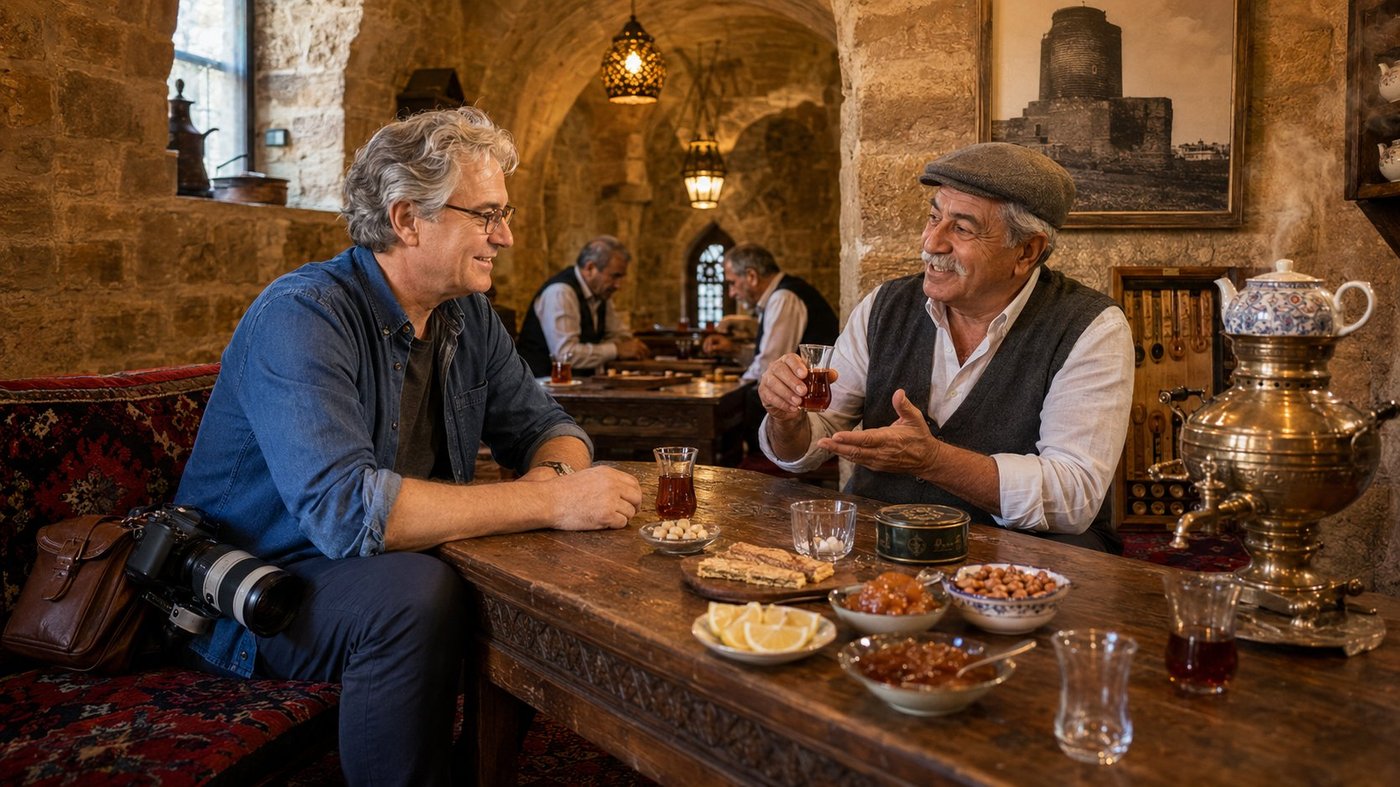
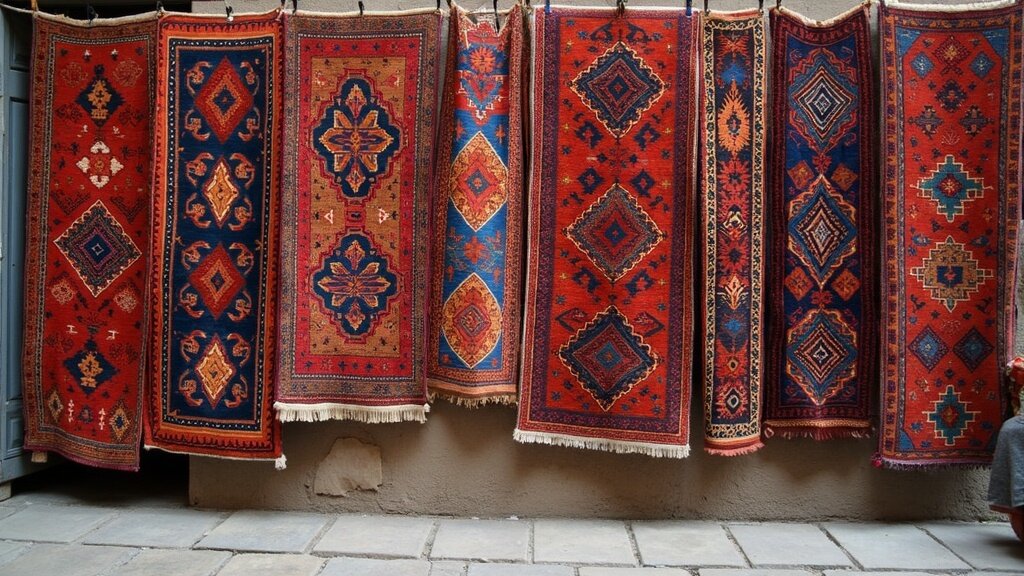
Hospitality runs deep in Azerbaijani culture. The tradition of çay (tea) culture structures social life — business meetings, family gatherings, and casual encounters all revolve around pear-shaped armudu glasses filled with strong black tea, served with preserves, sugar cubes, and conversation. The concept of "qonaqpərvərlik" (hospitality) is considered a sacred duty, and visitors are often overwhelmed by the generosity extended to guests. Carpet weaving represents Azerbaijan's most renowned artistic tradition, with distinct regional styles from Baku, Shirvan, Karabakh, and other areas achieving world recognition. The Azerbaijan Carpet Museum in Baku — housed in a building shaped like a rolled carpet — showcases centuries of this tradition.
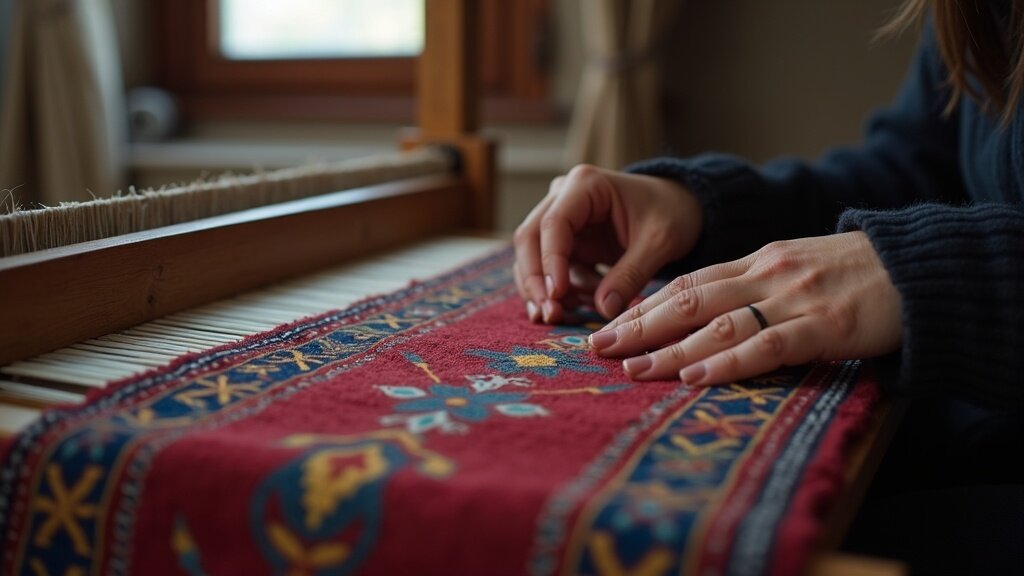
Carpet Weaving
A UNESCO-recognized tradition with distinct regional patterns dating back centuries
🏛️ Government & Politics
Azerbaijan is a presidential republic, and the presidency is where essentially all power sits. Ilham Aliyev has held the office since October 2003, having succeeded his father Heydar Aliyev — a former KGB general and Soviet-era party boss who returned to lead independent Azerbaijan in 1993. In December 2023, weeks after the reintegration of Karabakh, Aliyev called a snap election for 7 February 2024 and won a fifth term with just over 92% of the vote; his nearest challenger took 2%. International observers, including the OSCE/ODIHR, reported that the vote took place in a restrictive environment without genuine competition.
Ali Asadov has been Prime Minister since October 2019 and was reappointed on 16 February 2024; the post is administrative rather than politically decisive. Sahiba Gafarova has been Speaker of parliament since 2020. The unicameral Milli Məclis (National Assembly) has 125 seats, last elected in a snap poll on 1 September 2024, in which the ruling New Azerbaijan Party (YAP) took 68 seats and most of the remainder went to nominal independents aligned with the government. The Nakhchivan Autonomous Republic is the one genuine constitutional oddity: an exclave with its own constitution and its own Ali Majlis, separated from the rest of the country by Armenian territory.
Foreign policy runs on two rails. The first is the alliance with Türkiye — “one nation, two states” is not a slogan invented for tourists — formalised in the 2021 Shusha Declaration. The second is careful non-alignment: Azerbaijan chairs no bloc, belongs to the Non-Aligned Movement, sells gas to Europe through the Southern Gas Corridor, keeps working relations with Moscow and Tehran, and has never sought NATO or EU membership. A third rail is newer: the 8 August 2025 White House summit produced an initialled peace treaty with Armenia and the TRIPP transit route, followed by a US–Azerbaijan strategic-partnership charter signed in Baku during Vice-President JD Vance's visit on 10 February 2026. The 2026 US–Iran war then tested the balancing act: Baku took in foreigners evacuated from Iran and hosted the relocated Dutch embassy, absorbed a suspected Iranian drone strike on Nakhchivan airport on 5 March 2026, and by the end of August had Aliyev and Iran's President Pezeshkian trading courtesies in Bishkek. Domestically, human-rights organisations continue to document the jailing of journalists and civil-society figures on charges Baku frames as smuggling or tax offences.
🏛️ Baku — The Wind-Swept Capital
Baku is a city of contradictions and surprises, where medieval minarets share the skyline with futuristic skyscrapers, and where the scent of saffron-laced plov mingles with Caspian sea breezes. Home to several million people in its metropolitan area, the capital sprawls across the Absheron Peninsula with an energy that belies its ancient origins.
The heart of old Baku is Icherisheher (Inner City), a UNESCO World Heritage Site enclosed within 12th-century walls. Here the iconic Maiden Tower rises 29 meters — its origins debated between Zoroastrian fire temple, defensive fortress, and astronomical observatory. Narrow lanes lead past the ornate Shirvanshah Palace, centuries-old hammams, and carpet shops occupying medieval caravanserais.
Modern Baku explodes beyond the walls. The Flame Towers, completed in 2012, are three sail-shaped skyscrapers clad in LED screens that display giant flames across the night sky. The Heydar Aliyev Center, designed by Zaha Hadid, flows like a white wave across its plaza — a masterwork of contemporary architecture. The Baku Boulevard stretches 16 kilometers along the Caspian waterfront, hosting everything from Venetian-inspired canals to the Crystal Hall arena built for the 2012 Eurovision Song Contest.
The oil boom legacy lives on in the mansions of millionaire industrialists along Neftchilar Avenue, while the Baku White City development transforms former industrial land into a sustainable urban district. From the labyrinthine bazaars of Teze Bazaar to the upscale restaurants of Fountain Square, Baku rewards exploration at every turn.
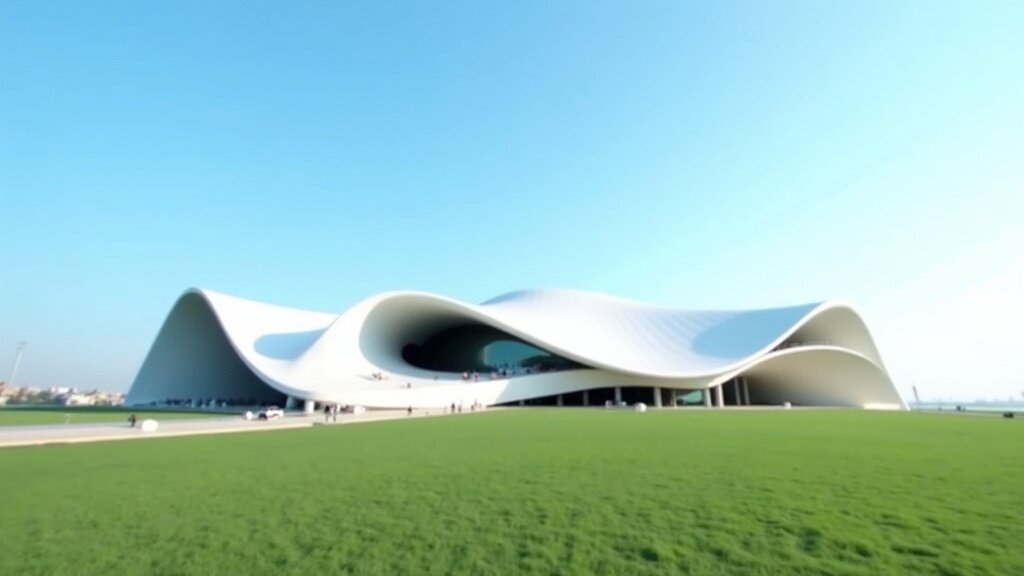
Heydar Aliyev Center
Zaha Hadid's flowing masterpiece of parametric architecture has become Baku's modern icon
🏰 Şəki — The Silk Road Jewel
Nestled in the southern foothills of the Greater Caucasus, Şəki is Azerbaijan's most enchanting provincial city — a place where the Khan's Palace dazzles with shebeke stained-glass windows assembled without glue or nails, and where ancient mulberry trees shade cobblestone streets once walked by Silk Road caravans.
The Palace of Sheki Khans, now a UNESCO World Heritage Site, is the city's crown jewel. Built in the second half of the 18th century — completed in 1797 by most accounts, though a 1762 date is also quoted — its façade features elaborate shebeke — intricate wooden lattice windows filled with colored Venetian glass that cast kaleidoscopic patterns across the interior. The walls are covered in miniature paintings depicting hunting scenes, flowers, and geometric patterns. No photograph truly captures the experience of standing inside as afternoon light streams through these handcrafted windows.
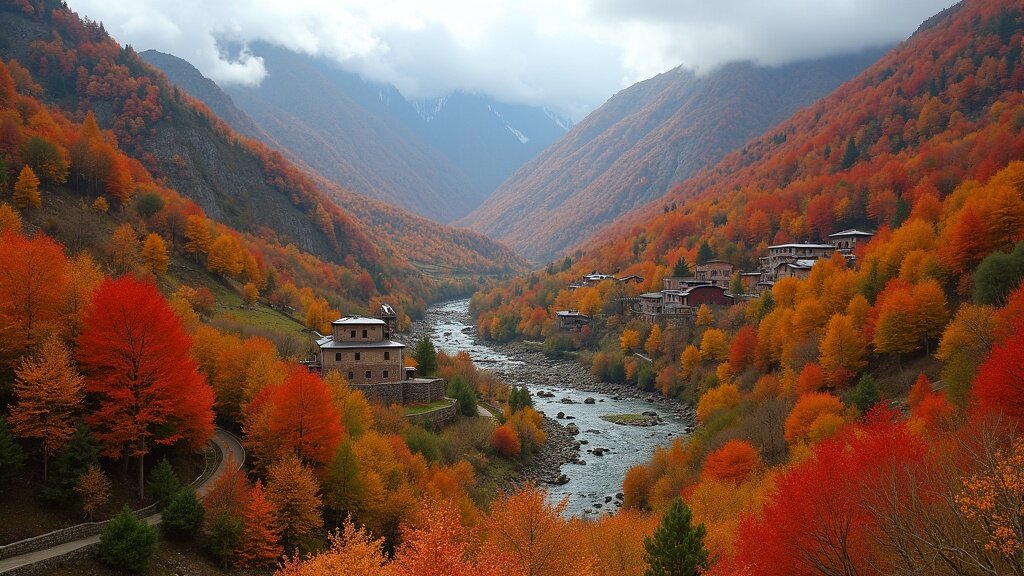
Beyond the palace, Şəki offers the massive 18th-century Caravanserai — now a hotel where travelers can sleep in the same vaulted chambers that once sheltered Silk Road merchants. The old bazaar sells the city's famous piti (lamb stew in clay pots), halva, and pahlava (a local baklava variation). In autumn, the surrounding forests blaze with color, and the nearby villages of the Caucasus foothills preserve traditions unchanged for centuries.
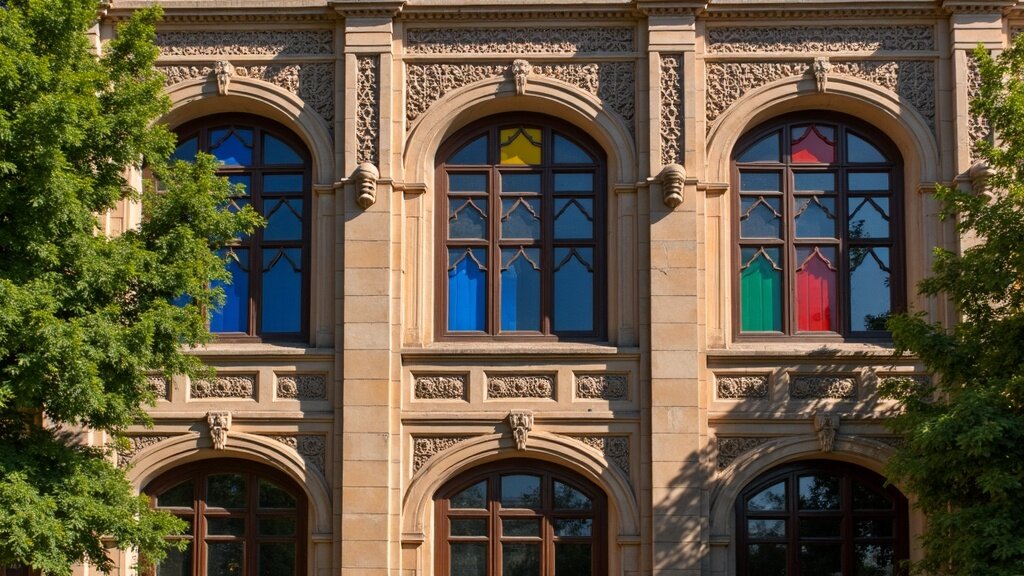
Palace of Sheki Khans
Shebeke stained-glass windows assembled from thousands of pieces without a single nail or drop of glue
🪨 Gobustan — Ancient Rock Art
Gobustan National Park, a UNESCO World Heritage Site just 60 kilometers southwest of Baku, preserves over 6,000 rock engravings (petroglyphs) spanning 40,000 years of human habitation. These images — depicting hunters, dancers, boats, animals, and celestial symbols — represent one of the most comprehensive records of prehistoric life in the world. A Latin inscription left by a Roman legion confirms the region's importance to ancient empires.
Beyond the rock art, Gobustan and the Absheron–Shirvan belt around it hold the greater part of Azerbaijan's roughly 400 mud volcanoes. These otherworldly formations — small cones of bubbling grey mud — create a lunar landscape that feels transplanted from another planet. Some erupt quietly with gentle bubbling, while others occasionally burst with enough force to shoot flames dozens of meters high from ignited escaping methane.
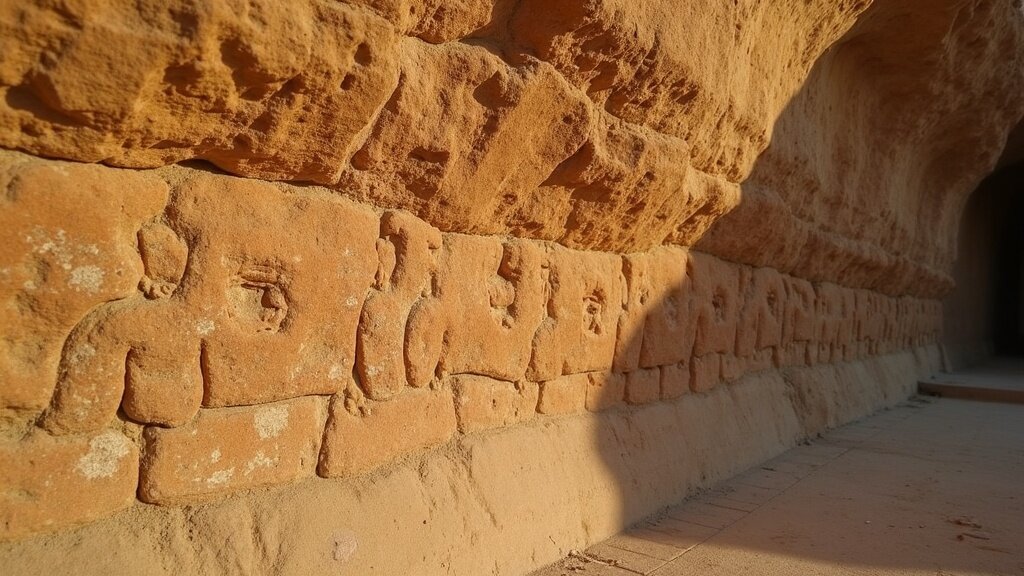
Gobustan Petroglyphs
40,000-year-old rock carvings — UNESCO World Heritage evidence of Azerbaijan's deep human past
🏔️ Gabala & the Greater Caucasus
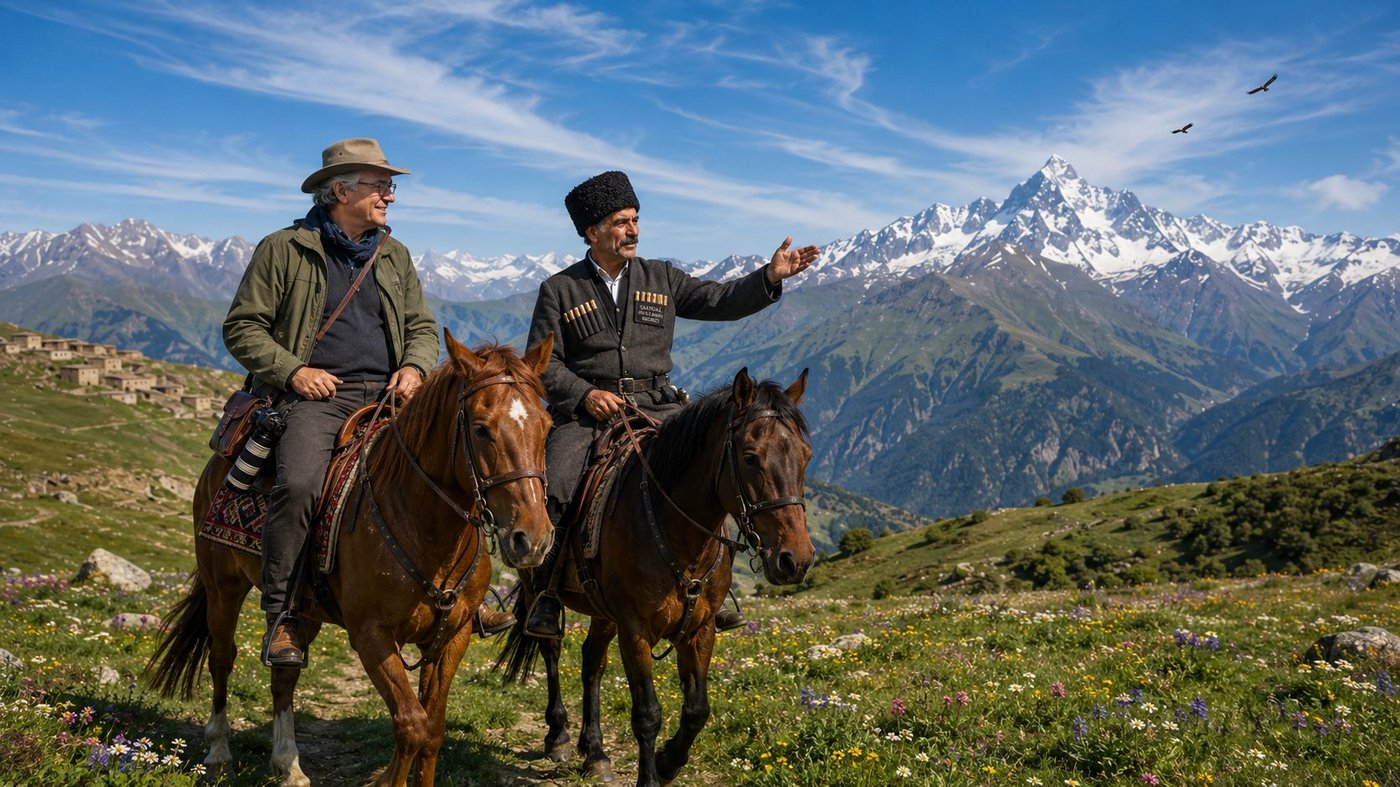
The Greater Caucasus mountains form Azerbaijan's northern backbone, offering alpine scenery, ancient villages, and adventure opportunities that few travelers expect from this Caspian nation. Gabala, the former capital of Caucasian Albania (an ancient kingdom unrelated to Balkan Albania), sits at the base of forest-clad mountains with walnut groves, waterfalls, and increasingly modern resort infrastructure.
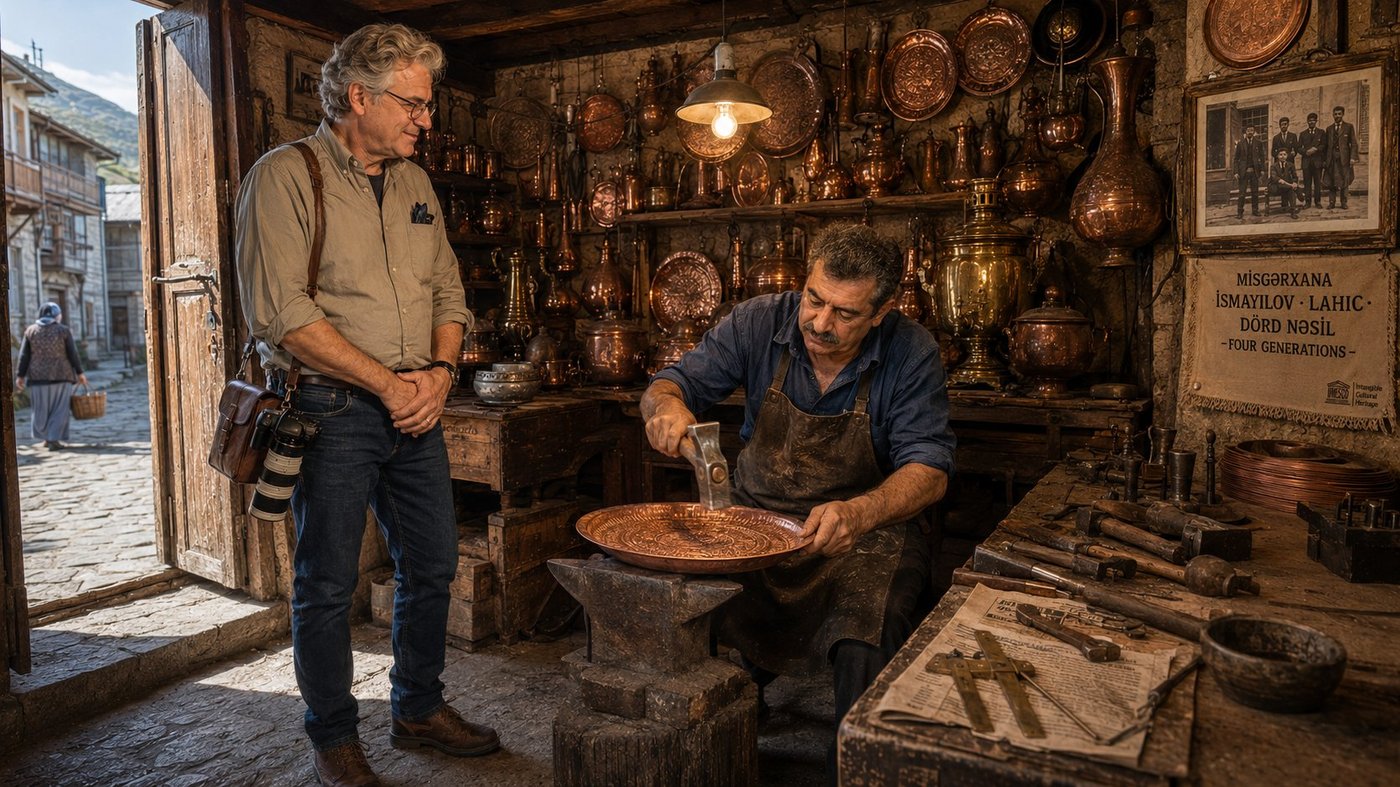
The Tufandag Mountain Resort provides year-round cable car access up to about 1,900 metres on the flanks of 4,206-metre Tufandag, with skiing in winter and hiking through wildflower meadows in summer. Nearby, the village of Lahij — perched in a narrow canyon — preserves a unique copper-smithing tradition recognized by UNESCO. Artisans here work in workshops that have operated continuously for centuries, producing the distinctive engraved copperware found across Azerbaijan.
Further north, Xinaliq (Khinalig) village clings to a mountainside at 2,350 meters — one of the highest continuously inhabited settlements in Europe, home to a people who speak a language understood nowhere else on Earth. The Shahdag National Park protects pristine alpine ecosystems with Caucasian tur (wild goat), bears, and wolves roaming forests and meadows largely unchanged since the Ice Age.
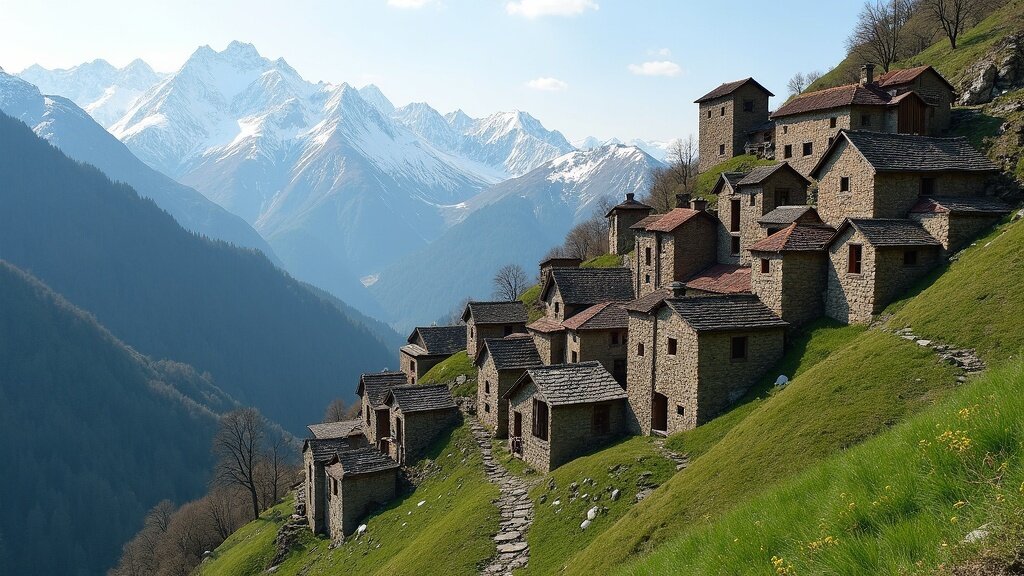
Khinalig
One of the world's oldest and highest continuously inhabited villages, where a unique language has survived for millennia
🏛️ Nakhchivan — The Ancient Exclave
Nakhchivan, an autonomous exclave separated from mainland Azerbaijan by a strip of Armenian territory, feels like stepping into another country entirely. This ancient land — which tradition claims was where Noah landed his ark — preserves remarkable medieval architecture, including the 12th-century Momine Khatun Mausoleum, whose turquoise-tiled cylindrical tower is considered a masterpiece of medieval Islamic architecture and appears on Azerbaijan's banknotes.
The exclave's isolation has preserved a distinctive character. The Alinja Fortress ruins perch atop an impregnable mountain, the ancient town of Ordubad produces some of the region's finest dried fruits, and the salt mountains of Duzdağ have been mined since the Bronze Age — their therapeutic salt caves now draw visitors seeking relief from respiratory conditions. The long-argued “Zangezur Corridor” across Armenia's Syunik province was recast at the 8 August 2025 White House summit as TRIPP — the Trump Route for International Peace and Prosperity — a US-brokered road-and-rail transit route under Armenian sovereignty that would at last link Nakhchivan to the rest of Azerbaijan. As of September 2026 it is a project in planning, not a route you can travel.
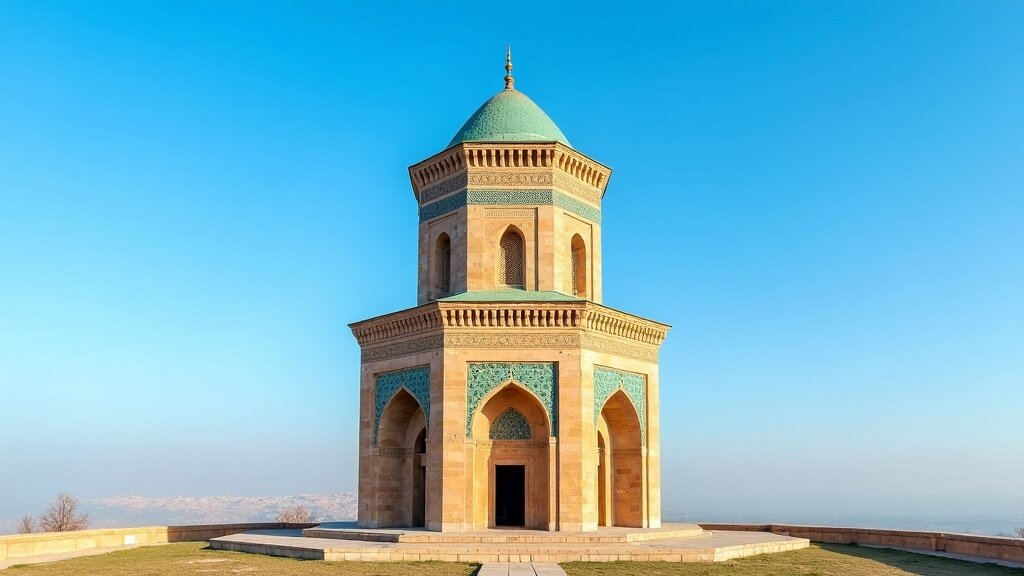
Momine Khatun Mausoleum
Nakhchivan's 12th-century architectural masterpiece with its distinctive turquoise tilework
🍽️ Cuisine
Azerbaijani cuisine ranks among the most sophisticated in the Caucasus and Middle East, blending Turkic heartiness with Persian refinement and Caucasian freshness. Plov (pilaf) is the national dish par excellence — saffron-infused rice with lamb, dried fruits, chestnuts, and caramelized onions, with regional variations numbering in the dozens. Each family claims their recipe is definitive.
The kebab tradition reaches high art here: lüle kebab (minced lamb on wide skewers), tika kebab (marinated chunks), and the legendary Jiz-biz (offal kebab) served sizzling from mangal grills. Dolma — grape leaves or vegetables stuffed with spiced lamb and rice — comes in countless variations, including the three-leaf "yarpaq dolması." Qutab, the thin filled flatbreads cooked on a saj griddle, offer quick perfection whether filled with herbs, cheese, pumpkin, or meat.
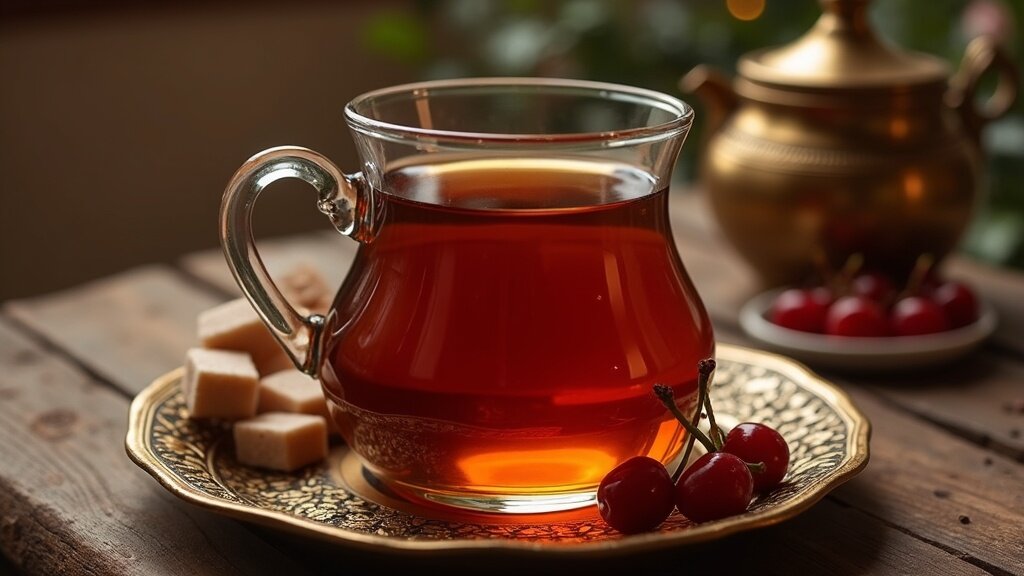
Tea culture defines daily life. The distinctive pear-shaped armudu glass keeps tea hot at the bottom and cool enough to sip at the rim, accompanied by rock sugar, lemon slices, and an array of fruit preserves (mürəbbə). Azerbaijani sweets — pahlava layered with cardamom and rosewater, şəkərbura crescent pastries, and the famous Şəki halva made with rice flour and hazelnut paste — turn every çay break into a celebration.
🍚 Kitchen Note — Radim Kaufmann
Azerbaijani plov is not a side dish — it is a ceremony. The rice must be steamed to individual, saffron-stained perfection, the gazmag crust on the bottom must shatter like glass, and the lamb, chestnuts, and dried fruits arrive on a separate platter. There are said to be over 200 regional variations, and Azerbaijanis will debate which is supreme with the same passion they bring to their tea, their carpets, and their backgammon.
Plov KCS 91
Saffron Rice with Lamb
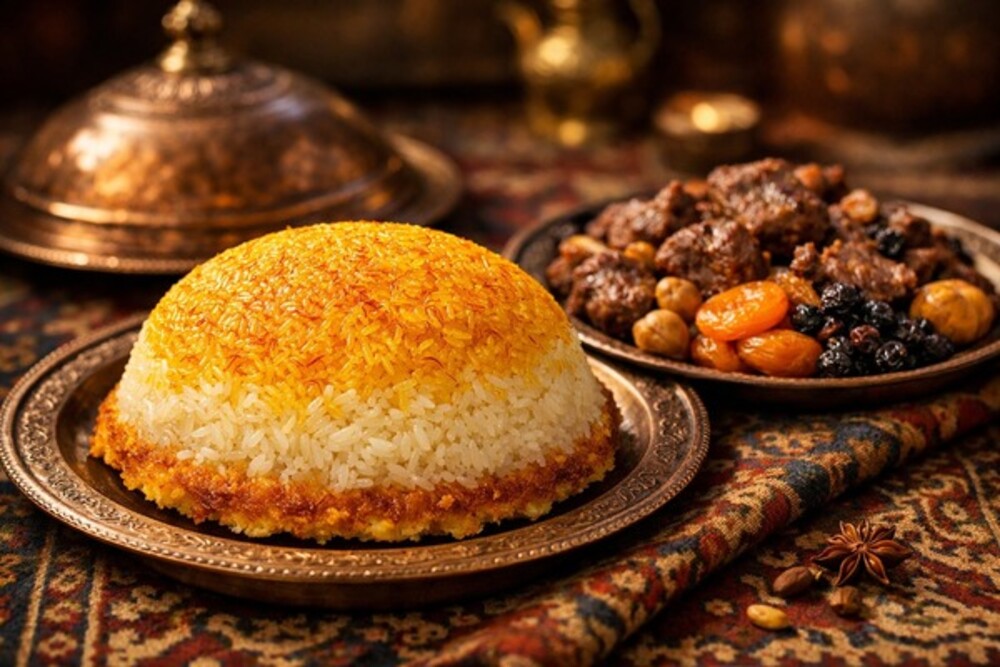
The king of Azerbaijani cuisine — fragrant saffron rice with crispy gazmag crust, tender lamb, and dried fruits.
Preparation: begin by soaking 500g of long-grain basmati rice in warm salted water for at least two hours — this step is essential for achieving the separate, fluffy grains that define a proper Azerbaijani plov. While the rice soaks, prepare the lamb by cutting 400g of shoulder into generous chunks and browning them in a heavy-bottomed pot with a splash of oil until deeply golden on all sides. Add one large diced onion and cook until softened, then pour in enough water to cover the meat by two centimetres. Season with salt, a pinch of black pepper, and half a teaspoon of turmeric. Simmer gently for about 90 minutes until the lamb is fork-tender, then remove the meat and set aside. Strain and reserve the broth. For the gazmag — the prized crispy crust — mix two tablespoons of the par-cooked rice with one egg yolk, a tablespoon of yogurt, a pinch of saffron water, and a tablespoon of melted butter. Spread this mixture evenly across the bottom of a heavy non-stick or cast-iron pot greased generously with butter. Drain the soaked rice and parboil it in a large pot of rapidly boiling salted water for exactly five minutes — the grains should be soft on the outside but still firm at the core. Drain immediately. Layer the parboiled rice over the gazmag base in a mound shape, poking five or six holes through to the bottom with the handle of a wooden spoon to allow steam to escape. Dissolve a generous pinch of saffron threads in two tablespoons of hot water and mix with three tablespoons of melted butter. Drizzle this over the rice mound. Wrap the pot lid tightly in a clean tea towel to catch condensation, cover, and steam on the lowest possible heat for 45 to 50 minutes. Meanwhile, prepare the garnish: sauté dried apricots, pitted prunes, chestnuts, and raisins in butter with a pinch of cinnamon until the fruits are plump and glossy. When the plov is ready, the gazmag should release from the bottom as a single golden, shatteringly crisp disc. Invert the rice dome onto a large platter, place the gazmag crown on top, and arrange the braised lamb and fruit garnish on a separate dish alongside. Serve immediately with fresh herbs and a glass of black tea.
Dolma KCS 80
Stuffed Grape Leaves
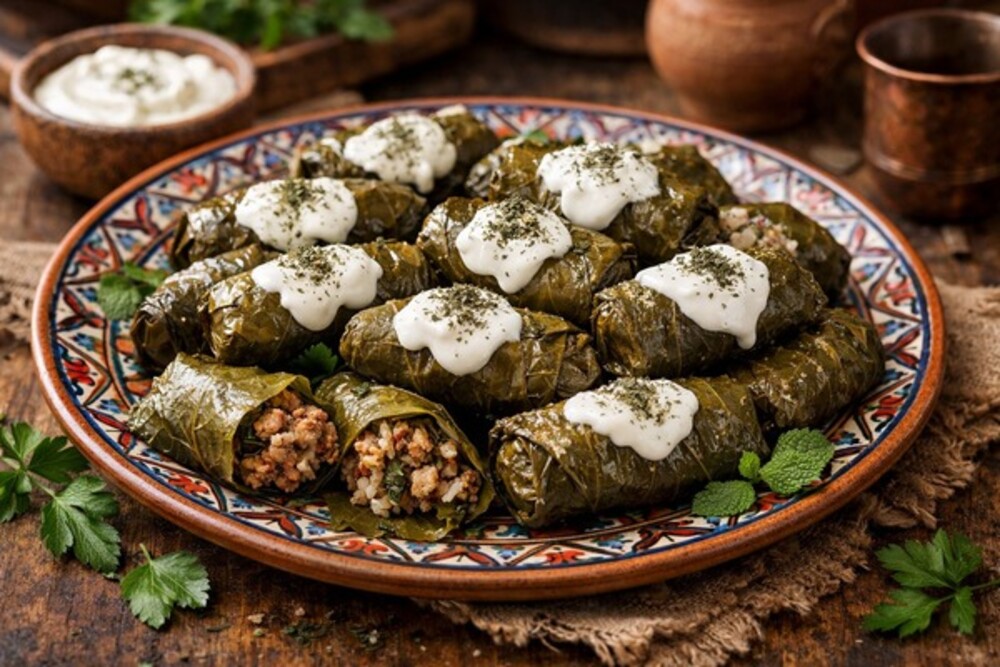
Tender grape leaves wrapped around spiced lamb and rice, simmered to perfection.
Preparation: start by preparing the grape leaves: if using fresh leaves, blanch them in boiling water for 30 seconds until pliable, then immediately transfer to ice water. If using brined leaves from a jar, soak them in warm water for 20 minutes to remove excess salt, then pat dry. Select leaves that are roughly palm-sized — too small and they tear when rolling, too large and the dolma become unwieldy. For the filling, combine 300g of finely minced lamb with 100g of short-grain rice that has been soaked for 30 minutes and drained. Add one large grated onion, a generous handful of finely chopped fresh herbs — equal parts cilantro, dill, and mint — along with half a teaspoon each of ground cinnamon, cumin, and black pepper, plus salt to taste. Mix thoroughly until the filling is uniform and slightly sticky. To roll each dolma, place a grape leaf shiny-side down with the stem end facing you, place a heaped tablespoon of filling near the stem end, fold the bottom up over the filling, then fold both sides inward, and roll tightly toward the tip. Line the bottom of a heavy pot with torn or imperfect grape leaves, arrange the dolma seam-side down in tight concentric circles, and place an inverted plate on top to keep them from unravelling. Add enough water or lamb broth to just reach the plate, along with a squeeze of lemon juice. Bring to a gentle simmer, cover, and cook on low heat for about 60 to 70 minutes until the rice is fully cooked through. Let rest 10 minutes, then serve warm with thick plain yogurt mixed with crushed garlic and dried mint — in Azerbaijan, dolma is always served warm, never cold, and the yogurt is considered non-negotiable.
Qutab KCS 78
Stuffed Flatbread
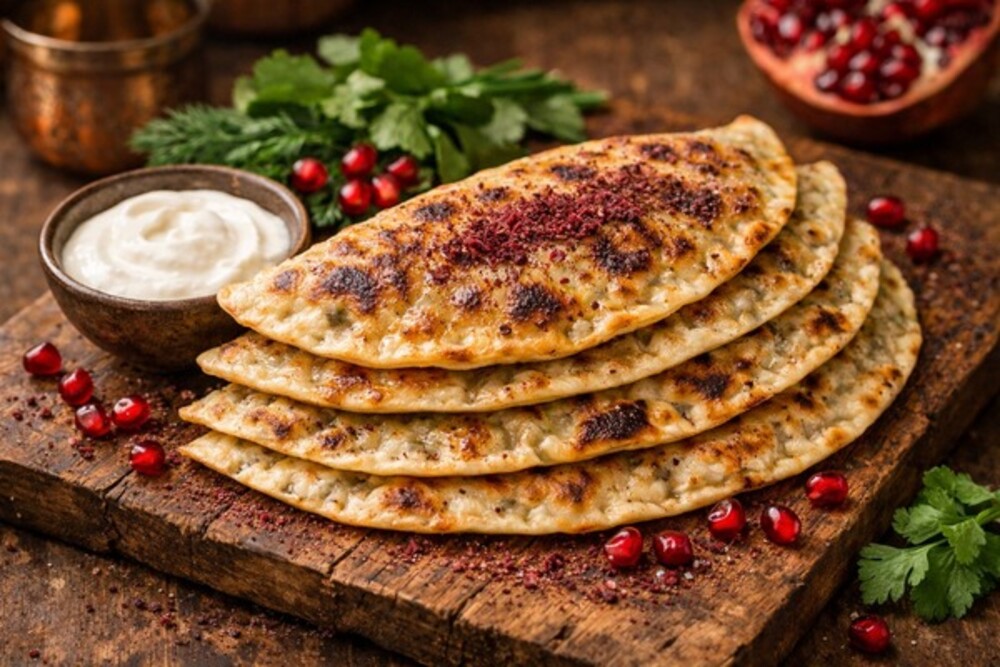
Paper-thin flatbreads filled with spiced lamb or herbs, cooked on a dry griddle.
Preparation: combine 300g of plain flour with half a teaspoon of salt, gradually add about 150ml of warm water while mixing until a shaggy dough forms, then knead for five to seven minutes until smooth and elastic. Cover with a damp cloth and rest for at least 30 minutes. For the herb filling, finely chop a large bunch of fresh spinach, cilantro, dill, and spring onions, and season with salt, sumac, and lemon. For the meat filling, brown 200g of finely minced lamb with one diced onion, and season with salt, pepper, and cumin; cool completely before using. Divide the rested dough into 10–12 balls and roll each out on a floured surface into a very thin circle — nearly translucent, the hallmark of authentic qutab. Place filling on one half, fold over into a half-moon, and crimp the edges. Heat a dry saj griddle or cast-iron pan over medium-high heat — no oil for the initial cooking — and cook each qutab about two minutes per side until golden spots appear. Brush both sides generously with melted butter while hot, sprinkle with ground sumac, cut into wide strips, and serve immediately with thick yogurt and scattered pomegranate seeds.
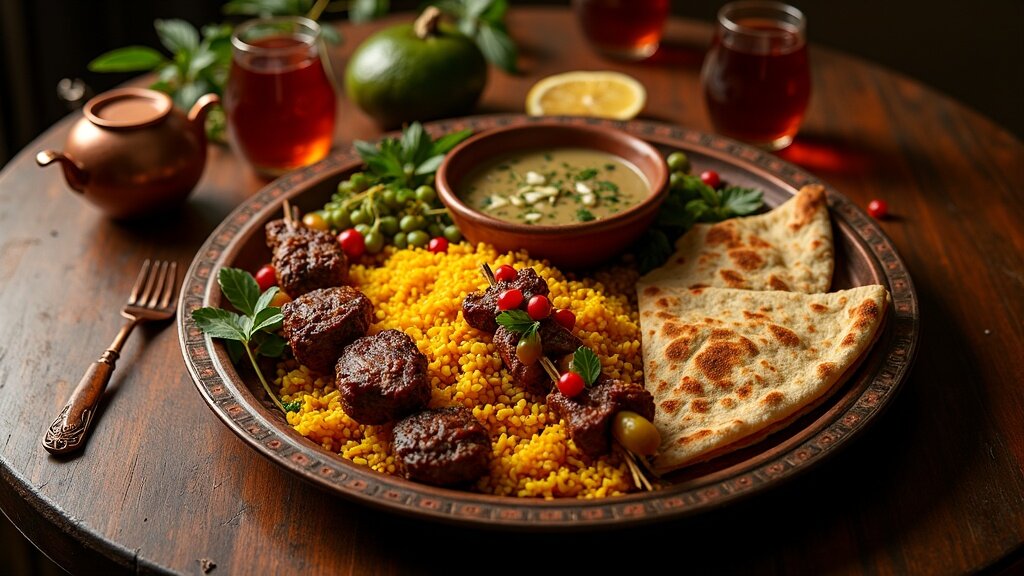
An Azerbaijani Feast
Saffron plov, fresh kebabs, dolma, herbs, and endless rounds of fragrant tea
🍸 Cocktails & Mixed Drinks
Azerbaijan's drinks culture revolves around tea — but the Land of Fire also produces pomegranate wine, Caspian brandy, and ancient sherbets.
Azerbaijani Çay
Tea from Pear-Shaped Glasses
Ingredients: black tea · sugar cubes · lemon · jam
💡 Sugar is held between the teeth and tea sipped through it — refusing tea is close to impossible in Azerbaijan.
Şərbət
Ancient Fruited Sherbet
Ingredients: pomegranate juice · sugar syrup · rose water · saffron · rose petals
💡 A linguistic ancestor of "sherbet" and "sorbet" — traditionally sent from a bride's family to the groom's as part of the engagement ritual.
Nardancha
Pomegranate Wine Spritz
Ingredients: 120ml pomegranate wine · 60ml soda · pomegranate seeds · rosemary
💡 Azerbaijan produces genuine pomegranate wine — Göyçay's Pomegranate Festival celebrates over 50 varieties.
Baku Sour
Caspian Pomegranate Cocktail
Ingredients: 50ml Azerbaijani brandy · 30ml pomegranate juice · 20ml lemon · 15ml pomegranate molasses · egg white
💡 Azerbaijani brandy (konyak) has been produced since the 19th century under Russian influence.
Kaufmann Drinks Score (KDS)
| Drink | Style | KDS |
|---|---|---|
| Azerbaijani Çay | Pear-Shaped Glasses | 72 |
| Şərbət | Ancient Fruited Sherbet | 74 |
| Nardancha | Pomegranate Wine Spritz | 84 |
| Baku Sour | Caspian Pomegranate | 88 |
✦ Tea-House Note — Radim Kaufmann
In a tea house in Baku's Old City, the çayçı poured from an impossible height into the tiny armudu glass without spilling a drop. "The glass is shaped like a woman," he said. "Narrow waist, wide hips. The top stays cool for your lips, the bottom stays warm for your hands." He placed sugar cubes, lemon, and quince jam beside the glass. "In Azerbaijan, tea is not a drink. It is a conversation."
🍷 Wine, Spirits & Drinking Culture
Azerbaijan, along with its South Caucasus neighbours Georgia and Armenia, lies in the cradle of winemaking. Archaeological evidence from the Shomutepe and Leylatepe cultures confirms grape cultivation and wine production in the region dating back to the 6th millennium BCE. As a Muslim-majority country, Azerbaijan's relationship with wine is complex — but the tradition never fully disappeared, and modern Azerbaijan has embraced wine production as part of its cultural heritage and economic diversification.
With approximately 16,000 hectares under vine, Azerbaijan grows both indigenous and international varieties. Madrasa (a dark-skinned indigenous grape producing deeply coloured, tannic reds), Bayanshira (the most widely planted white, producing fresh, crisp wines), and Shirvanshahi add local character alongside Saperavi (shared with Georgia), Rkatsiteli, and international varieties. The Shamakhi and Ismayilli regions (foothills of the Greater Caucasus) and the Ganja-Gazakh area are the primary wine zones. Chabiant (a French-Azerbaijani joint venture), Savalan, Shirvan Wines, and Fireland Vineyards represent the modern premium sector. Traditional pomegranate wine from Goychay is a uniquely Azerbaijani specialty, and tea, served in armudu pear-shaped glasses, remains the country's dominant social beverage by far.
🏆 Kaufmann Wine Score — Azerbaijan
Rated on four criteria: Aroma (/25), Taste (/30), Finish (/20), Value (/25) — Total /100
| Wine | 🔴 Aroma | 🟡 Taste | 🟢 Finish | 🔵 Value | Total |
|---|---|---|---|---|---|
| Madrasa (Chabiant Classic, Ismayilli) | 22 | 26 | 17 | 23 | 88 |
| Cabernet Sauvignon Reserve (Savalan, Gabala) | 21 | 25 | 16 | 22 | 84 |
| Saperavi (Ganja-Gazakh) | 20 | 24 | 15 | 23 | 82 |
| Goychay Pomegranate Wine | 21 | 23 | 15 | 22 | 81 |
| Bayanshira (Shirvan) | 19 | 22 | 14 | 24 | 79 |
95–100 Legendary · 90–94 Outstanding · 85–89 Very Good · 80–84 Good · 75–79 Average · <75 Below Average
🍷 Tasting Note Radim Kaufmann
In Shamakhi — the ancient Shirvanshah capital, where vineyards climb the Caucasian foothills toward snow-capped peaks — I tasted a Madrasa that was inky, tannic, and wild with character. Azerbaijan sits at the crossroads of wine's ancient origins, and the Madrasa grape, found nowhere else on Earth, tastes like a viticultural time capsule. The pomegranate wine from Goychay — sweet, tart, garnet-red — was equally memorable: not a grape wine, but a fermented fruit wine of genuine complexity. Azerbaijan's tea culture, meanwhile, is extraordinary — the armudi glass, the sugar cube held between the teeth, the endless refills — a ritual of hospitality as refined as any wine service.
📋 Practical Info
Visa: citizens of some 95 countries can obtain an e-visa (ASAN Visa) online at evisa.gov.az — single entry, up to 30 days, USD 25 (a USD 20 state fee plus USD 5 service fee) with 3–4 working-day processing, or USD 60 for the three-hour urgent option. The visa arrives as a PDF you print and present with your passport. Turkish, Georgian, and most CIS citizens enter visa-free. One hard rule: evidence of travel to Nagorno-Karabakh while it lay outside Baku's control — a stamp, a permit, a visible trace — can mean refusal of entry and a long-term ban. Getting around: Baku has an excellent metro system (0.60 AZN per ride since October 2025, paid with a rechargeable BakıKart). Domestic flights connect to Nakhchivan and Ganja. Intercity buses are frequent and affordable. Taxis are cheap — use Bolt or Uber apps. Driving requires caution; road quality varies dramatically outside Baku.
Money: the Azerbaijani Manat (AZN) has stayed roughly stable against the US dollar in recent years. ATMs are widespread in cities. Credit cards are accepted at hotels and upscale restaurants; carry cash for bazaars, taxis, and rural areas. Safety: street crime is low and Baku feels as relaxed as most European capitals — but the country as a whole currently carries a Level 3 “Reconsider Travel” advisory from the U.S. State Department, driven by landmines and border tension rather than by anything you are likely to meet on Nizami Street. Read the Travel Advisory section immediately below before planning anything near the Armenian frontier or the reintegrated Karabakh districts.
⚠️ Travel Advisory & Health
🟠 Level 3 — Reconsider Travel
As of its 28 April 2026 update, the U.S. Department of State places Azerbaijan at Level 3, “Reconsider Travel”, citing armed-conflict risk and landmines in border areas, with a hard “Do Not Travel” carve-out for the entire border with Armenia. The advisory also flags the risk of drone and missile activity spilling over from Iran following the outbreak of US–Iran hostilities on 28 February 2026. Baku, the Absheron peninsula, Şəki, Gabala and the northern mountain districts are not what the warning is about — the geography of the risk matters enormously here.
Landmines are the real hazard. Azerbaijan is one of the most heavily mined countries on earth. Contamination is concentrated in the reintegrated Karabakh districts and along the Armenian frontier — Aghdam, Gubadli, Jabrayil, Shusha, Zangilan and parts of the Lachin corridor are named explicitly in the advisory. Much of it is unmarked, clearance will take decades, and civilian casualties continue. Do not leave paved roads in these districts, do not enter abandoned villages, and do not approach the frontier without an official permit and a local fixer who knows exactly what they are doing. ANAMA, the national mine agency, publishes clearance updates.
The border itself is not a tourist route. Some southern roads run close to, and in places briefly across, an unmarked international boundary; accidental crossings have led to detentions. The Azerbaijan–Armenia land border remains closed despite the 2025 peace declaration, and there are no direct flights between the two countries. Travellers combining both in one trip route through Georgia — Tbilisi is the standard pivot.
Health. No vaccinations are required for entry from most countries; hepatitis A and typhoid are the usual travel-clinic recommendations, and rabies is present. Medical care in Baku is decent and the private clinics are good; standards fall away sharply in rural districts, so insurance with evacuation cover is genuinely worth having. Baku tap water is chlorinated and technically potable, but bottled water is what everybody drinks. Summer heat on the Caspian coast regularly passes 35 °C with high humidity. Emergency numbers: 112 (unified), 103 (ambulance), 102 (police), 101 (fire).
Two practical cautions. Photographing military installations, border posts and government buildings can bring trouble, and flying a drone requires prior permission — this is not a country in which to improvise on either front. LGBTQ+ travellers should know that while same-sex activity is legal, there is no anti-discrimination protection and social attitudes are conservative.
🌡️ Climate
Azerbaijan contains an astonishing 9 of the world's 11 climate zones. Baku has a semi-arid climate with hot summers (avg 26°C in July) and mild winters (avg 4°C in January), tempered by persistent Caspian winds. The subtropical Lankaran coast sees the country's highest rainfall. Mountain regions experience heavy snowfall and subzero winters, while the Kura-Aras lowlands can exceed 40°C in summer. Spring (April–May) and autumn (September–October) are universally the most comfortable seasons.
✈️ Getting There
Heydar Aliyev International Airport (GYD) in Baku is the main gateway, served by AZAL (Azerbaijan Airlines), Turkish Airlines, Lufthansa, Qatar Airways, FlyDubai, and many others. Direct flights connect to major European, Middle Eastern, and Central Asian hubs. You fly in. Azerbaijan's land borders have been closed to passenger entry since March 2020 — the last pandemic-era closure left anywhere, renewed every few months (most recently past July 2026) and now openly described by Aliyev as a security measure rather than a health one. Cargo crosses; people do not. The single exception is the Baku–Tbilisi passenger train, restored on 26 May 2026 after a six-year gap, which makes Georgia the one overland way in. Leaving by land is permitted for foreigners (towards Georgia at Red Bridge, or from Nakhchivan into Türkiye), but check the current decree before you plan on it. The Baku–Tbilisi–Kars railway carries freight to Türkiye; Caspian ferries to Turkmenbashi and Aktau are cargo-first, with passenger carriage sporadic and, under the border regime, not a reliable way in.
💰 Costs
Azerbaijan offers excellent value. Budget travelers can manage on $30–50/day with hostels ($8–15), local restaurants ($3–8 for a full meal), and public transport. Mid-range travelers spend $80–150/day with boutique hotels ($50–100), good restaurants ($15–30), and taxis. Luxury options in Baku — five-star hotels, fine dining — can match European capitals at $200+/day. Outside Baku, everything is 30–50% cheaper. A glass of tea is often free or costs $0.20, and a taxi across Baku runs $3–5.
🏨 Accommodation
Baku offers everything from international chains (Four Seasons, JW Marriott, Hilton, Fairmont) to atmospheric boutique hotels in restored Old City mansions, with hostels clustering around Fountain Square. Outside Baku, guesthouses and small hotels prevail — Şəki's caravanserai hotel is unforgettable, mountain villages offer homestays, and the Shahdag ski resort provides alpine luxury. Booking.com works well; local sites like day.az list additional options, and Airbnb operates in Baku.
🎭 Festivals & Events
Novruz Bayramı (20–21 March) is the big one — the Zoroastrian-rooted spring new year, inscribed by UNESCO, and by some distance the most atmospheric time to be in the country. The four Tuesdays preceding it are each dedicated to an element (water, fire, earth, wind); bonfires are lit in courtyards and people leap over them, səməni wheatgrass sprouts on every windowsill, and households bake şəkərbura, paxlava and şorqoğal in industrial quantities. Much of the country shuts for a week.
Qurban Bayramı and Ramazan Bayramı are public holidays, observed more culturally than devoutly in a famously secular Muslim society. Secular fixtures include Independence Day (28 May — called Republic Day until it was renamed in 2021 — marking the 1918 Azerbaijan Democratic Republic), Victory Day (8 November) and Remembrance Day (27 September) for the 2020 war — the last a national day of mourning, and significant enough that Formula 1 moved its 2026 race to avoid it.
The Formula 1 Azerbaijan Grand Prix runs on the Baku City Circuit, which threads between the medieval walls of Icherisheher and the Caspian promenade and is the most photogenic street track on the calendar. The 2026 edition runs 24–26 September, with the race itself moved forward to Saturday 26 September. Book accommodation months ahead; Baku prices triple.
Culturally, the Gabala International Music Festival (July, in the Caucasus foothills) and the Baku Jazz Festival (October) are the serious ones — the latter reflecting a real local lineage, since this is the country that produced jazz-mugham. The Goychay Pomegranate Festival (Nar Bayramı, late October or early November) is a weekend of harvest theatre with juice, wine, dancing and a great deal of red. In Şəki, Silk Road craft festivals revive the caravanserai trade; in Shusha, the Xarıbülbül music festival has been staged again each May in the reintegrated highlands.
🏛️ UNESCO World Heritage Sites
Walled City of Baku (Icherisheher) with the Shirvanshah's Palace and Maiden Tower (2000) — the medieval heart of Baku, featuring the 15th-century palace complex and the enigmatic 12th-century cylindrical tower within ancient defensive walls.
Gobustan Rock Art Cultural Landscape (2007) — over 6,000 rock engravings spanning 40,000 years, depicting human figures, animals, battles, dances, and boats on a plateau overlooking the Caspian.
Historic Centre of Sheki with the Khan's Palace (2019) — the beautifully preserved Silk Road trading town with its masterpiece palace, featuring shebeke stained-glass windows assembled without nails or glue.
Hyrcanian Forests (Azerbaijani component inscribed 2023, as an extension of the Iranian property listed in 2019) — ancient broad-leaf forests along the Caspian coast containing flora dating back 25–50 million years to the Tertiary period, representing a unique biodiversity hotspot.
Cultural Landscape of Khinalig People and “Köç Yolu” Transhumance Route (2023) — Azerbaijan's newest inscription, added at the 45th session of the World Heritage Committee in Riyadh. It covers the high-mountain village of Khinalig (roughly 2,300 m in the Greater Caucasus, whose inhabitants speak Ketsh, a language of their own), the summer pastures and terraces above it, the winter pastures on the central lowland plains, and the 200-kilometre seasonal migration route, the Köç Yolu, that still links them.
Azerbaijan also maintains a substantial UNESCO Intangible Cultural Heritage list — Novruz, mugham, ashiq art, carpet weaving, the kelaghayi silk headscarf, and the craft of the tar among them. That is a separate register and is not counted in the five World Heritage Sites above.
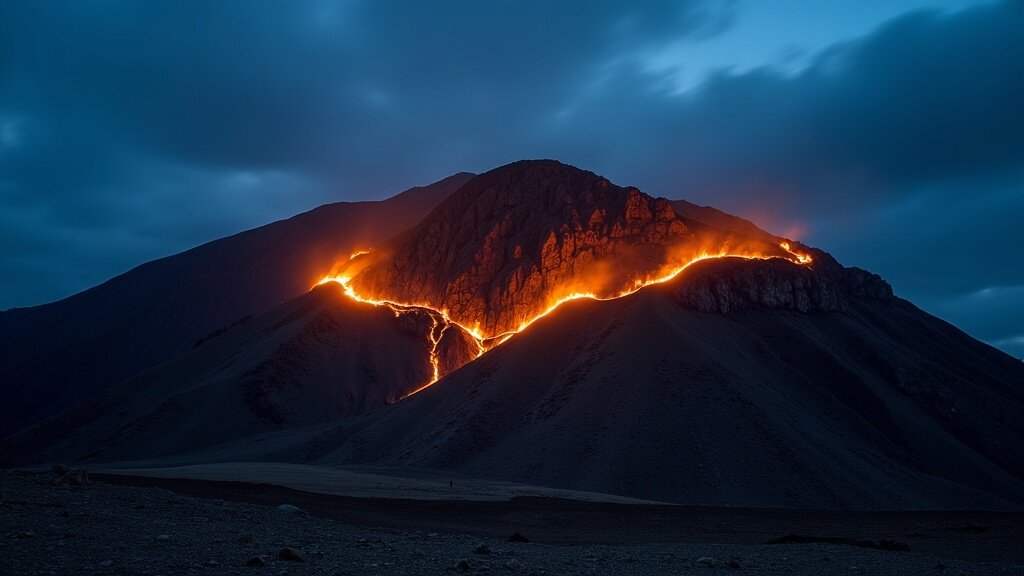
Yanar Dag — "Burning Mountain"
A wall of natural-gas flame that has burned continuously on this hillside since at least the 1950s, in an area whose fiery phenomena drew travelers' accounts as far back as Marco Polo
🎒 Packing Tips
Layers, always. Baku in July can sit at 35 °C with Caspian humidity while Khinalig, three hours north, is in cloud at 12 °C. Anyone heading into the Greater Caucasus needs a fleece and a windproof shell regardless of the month, plus proper walking shoes — the cobbles of Icherisheher and the stone lanes of Lahıc punish soft soles.
The wind is what people underestimate. Baku means, roughly, “city of winds”: the xəzri blows off the Caspian hard enough to make a November evening on the Boulevard genuinely painful without a windbreaker, while the gilavar brings dry heat up from the south in summer.
Dress code is relaxed but not absent. Baku is a secular, cosmopolitan city where you will see everything; the countryside is more conservative, and mosque visits require covered shoulders and knees, with a headscarf for women (usually available at the door). One lightweight scarf solves the problem for the whole trip.
Electrics and money. 220 V, 50 Hz, European type C/F plugs — nothing needed for continental Europe, an adapter for UK and US devices. Carry small Manat notes: taxis, bazaars, village teahouses and rural guesthouses are cash-only, and change for a 50 AZN note is a recurring negotiation. ATMs are plentiful in cities and scarce in the mountains.
Worth having: a printed copy of your e-visa PDF, an offline map (mobile data is cheap, but mountain coverage patches out), sunglasses and high-factor sunscreen for the Absheron glare, a reusable water bottle, and — for spring in the mountains — something you do not mind covering in mud.
🤯 Fascinating Facts
- 🔥 Natural gas seeps have burned across the Absheron Peninsula since ancient times, drawing Zoroastrian pilgrims and travelers' accounts as early as Marco Polo's 13th-century writing — though the specific flame wall at Yanar Dag that visitors see today is most often traced to a shepherd's accidentally dropped cigarette in the 1950s, and has burned unbroken ever since.
- 🌋 Azerbaijan has roughly 400 mud volcanoes (up to 800 on the most generous counts) — somewhere between a third and half of the world's total, and more than any other country
- 🏛️ The Azerbaijan Democratic Republic (1918) was the first secular democratic republic in the Muslim world and one of the first anywhere to grant women the right to vote
- ♟️ Chess grandmaster Garry Kasparov, widely considered among the greatest chess players of all time, was born in Baku in 1963
- 🛢️ In 1901, Baku produced more than half of the world's oil supply, making it the original petroleum capital before Texas
- 🏔️ Khinalig village (2,350m) is one of the highest continuously inhabited settlements in Europe, with a language spoken by only a few thousand people
- 🎵 Mugham, Azerbaijan's classical music tradition, is recognized by UNESCO as an Intangible Cultural Heritage of Humanity
- 🧶 Azerbaijani carpet weaving traditions from different regions are individually listed as UNESCO Intangible Cultural Heritage
👤 Notable People
Uzeyir Hajibeyov (1885–1948) is the foundational figure: composer of Leyli and Majnun (1908), the first opera written in the Islamic world, and of the national anthem. He fused mugham with European form and effectively invented Azerbaijani classical music. Vagif Mustafazadeh (1940–1979) pulled the same trick a generation later with jazz-mugham; his daughter Aziza Mustafa Zadeh carries it internationally. Muslim Magomayev (1942–2008) was the Soviet Union's great baritone crooner, adored across eleven time zones, and Mstislav Rostropovich, arguably the twentieth century's greatest cellist, was born in Baku in 1927.
Lev Landau (1908–1968), born in Baku, won the 1962 Nobel Prize in Physics for his theory of superfluidity. Lotfi Zadeh (1921–2017), also Baku-born, invented fuzzy logic — the mathematics behind a startling amount of modern control engineering. Garry Kasparov, born in Baku in 1963, held the world chess championship for fifteen years; Teimour Radjabov and Shakhriyar Mamedyarov continue a chess tradition the country takes very seriously.
Heydar Aliyev (1923–2003) dominates the political landscape and, by way of an airport, a boulevard, a cultural centre and a great many portraits, the physical one too. Zaha Hadid was not Azerbaijani, but the Heydar Aliyev Center she designed in Baku is among her defining buildings. Tofiq Bahramov (1925–1993) is the improbable one: the linesman at the 1966 World Cup final who ruled that England's third goal had crossed the line — remembered in Britain as “the Russian linesman” and in Baku as an Azerbaijani, with the national stadium named after him.
In letters and film: Banine (Umm el-Banu Asadullayeva, 1905–1992), oil heiress turned Paris memoirist, whose Days in the Caucasus is the finest first-hand account of Baku's oil-boom childhoods; Rustam Ibragimbekov (1939–2022), Oscar-winning co-writer of Burnt by the Sun; and Kurban Said, the pseudonymous author of Ali and Nino, whose real identity remains one of literature's better arguments.
⚽ Sports
Azerbaijan punches above its weight in international sports. Wrestling — both freestyle and Greco-Roman — is the historic Olympic strength, though at Paris 2024 it was judo that delivered the gold: Hidayat Heydarov (−73 kg) and Zelim Kotsoiev (−100 kg) won Azerbaijan's two titles in a haul of seven medals (2 gold, 2 silver in taekwondo and boxing, 3 bronze in wrestling), 30th in the medal table. Football draws the largest crowds: Qarabağ FK — the club of Aghdam, playing in Baku since the 1990s — reached the Champions League league phase in 2025–26 and opened it by winning 3–2 at Benfica in Lisbon on 16 September 2025. Baku has hosted Formula 1 since 2016 (the European Grand Prix that first year, the Azerbaijan Grand Prix since 2017) on a dramatic street circuit through the old city, staged the 2015 European Games and matches at UEFA Euro 2020, and co-hosts the 2026 Women's EuroVolley (Pool C in Baku, 21 August – 6 September 2026).
Chess holds a special place in Azerbaijani culture, with grandmasters like Garry Kasparov (born in Baku) and Teimour Radjabov representing the country's intellectual sporting tradition. Chovgan, an ancient equestrian sport considered a precursor to polo, has been played in Azerbaijan for centuries and is recognized by UNESCO as intangible cultural heritage.
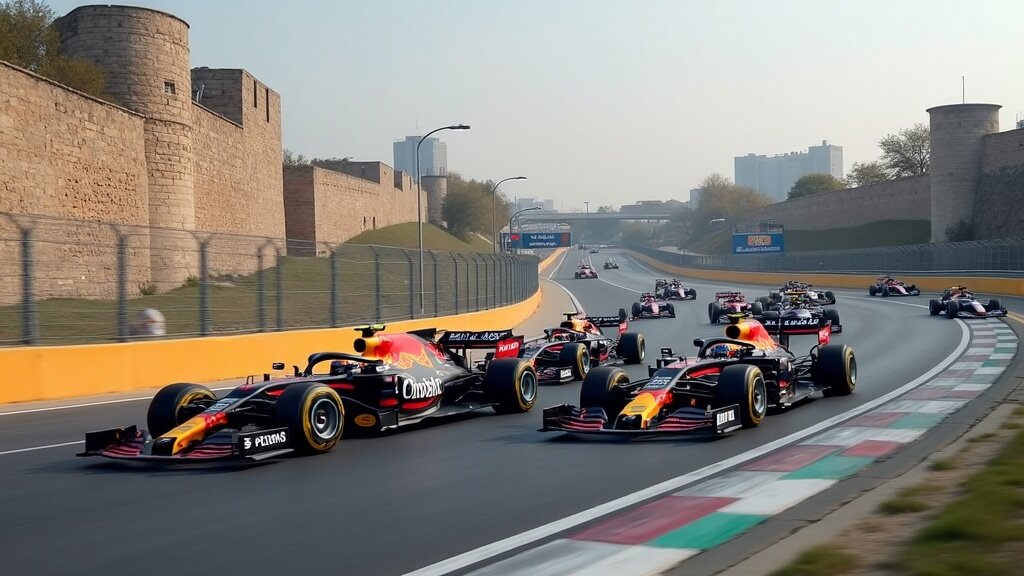
Azerbaijan Grand Prix
Formula 1 cars racing through Baku's streets with the medieval city walls as a backdrop
📰 Media & Press Freedom
Azerbaijan ranks 171st of 180 countries in the 2026 RSF World Press Freedom Index, down from 167th in 2025 (score 25.47 → 23.95), in a year when the global average hit a 25-year low. Its political indicator (172nd) and economic indicator (176th) are among the lowest measured anywhere.
RSF's barometer counted 24 journalists and two media workers behind bars in September 2026; local rights groups put the figure nearer 30, among some 320 political prisoners overall. The authorities characterise the charges as smuggling, currency offences or tax evasion; press-freedom organisations describe them as manufactured, and the prosecutions of the Abzas Media and Toplum TV teams from late 2023 onward effectively dismantled what remained of independent domestic investigative reporting: Abzas Media's staff received sentences of 7½ to 9 years in June 2025, and five Toplum TV staff followed on 27 July 2026 with terms of 12 to 14 years. In June 2026 the government moved to create a single media “super-regulator” with sweeping licensing powers. State television — AzTV and the nominally public İTV — is the dominant news source; no independent television or radio broadcasts from inside the country, and critical print titles have all closed. What independent Azerbaijani journalism survives is produced from exile: Meydan TV, Azadlıq Radiosu (RFE/RL) and OC Media among them, several of them blocked domestically since 2017.
For a visitor this rarely intrudes. Internet access is fast and largely open; a VPN is useful if you want a blocked news site and is not itself a problem. What does matter: foreign journalists need accreditation from the Ministry of Foreign Affairs before reporting, filming near government or military installations is unwise, and conversations about domestic politics are best left for locals to open.
📚 Resources
🌐 Official Tourism
📖 Further Reading
🔗 Useful Links
📖 Recommended Reading
Ali and Nino — Kurban Said (1937). The novel of Baku: a Muslim Azerbaijani boy and a Christian Georgian girl, set against the collapse of empire and the brief 1918 republic. Its authorship is still disputed, which only adds to it. Read it before you walk into Icherisheher.
Days in the Caucasus — Banine (1945; English translation 2019). An oil heiress's memoir of a Baku childhood, the Bolshevik seizure and exile to Paris. Funny, unsentimental, and the best window onto the world Ali and Nino fictionalises.
Black Garden: Armenia and Azerbaijan Through Peace and War — Thomas de Waal. The indispensable account of the Karabakh conflict, and unusual in being read with respect on both sides of it; later editions carry the story through the 2020 war.
The Orientalist — Tom Reiss, the extraordinary detective story behind Kurban Said and Lev Nussimbaum. Azerbaijan Diary — Thomas Goltz, a raw first-hand record of the 1990s. The Oil and the Glory — Steve LeVine, on the Caspian oil scramble that made and remade this country twice. For practical planning, the Bradt Guide to Azerbaijan remains the most thorough English-language guidebook.
📸 Gallery
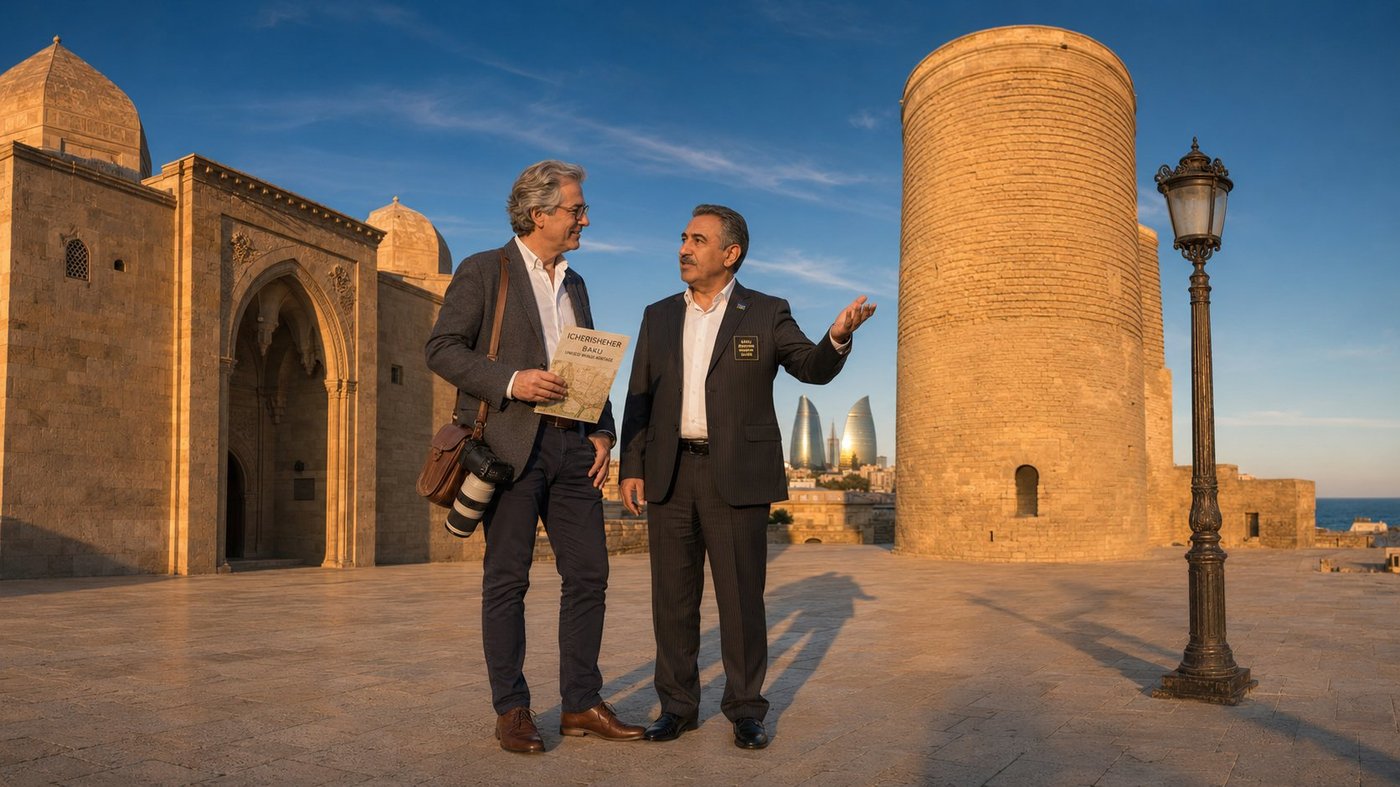
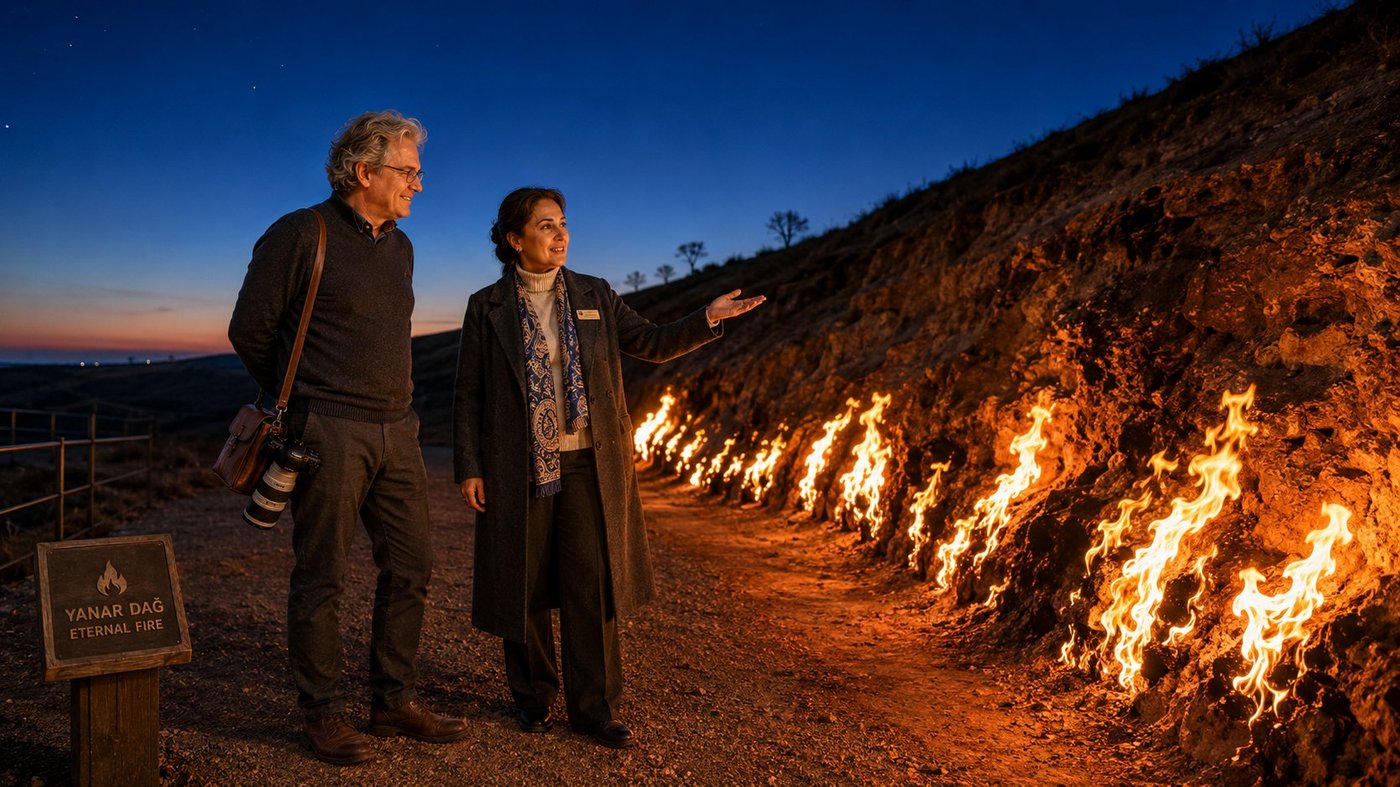
Share your Azerbaijan photos! Send to photos@kaufmann.wtf to be featured.
✍️ Author's Note
Azerbaijan surprised me at every turn. I arrived expecting oil derricks and Soviet architecture and found instead a country of extraordinary depth — ancient fire temples where flames still dance from the earth, a medieval walled city more atmospheric than many in Europe, mountains where languages spoken by only a few thousand people have survived for millennia.
The Azerbaijani gift for hospitality is genuine and overwhelming. Strangers invited me for tea that became dinner that became overnight stays. In Şəki, a carpet merchant closed his shop to show me his family's garden. In Khinalig, a shepherd insisted on sharing his lunch at 2,300 meters. This warmth, more than the Flame Towers or the petroglyphs, is what I carry home.
— Radim Kaufmann, 2026
Support This Project 🌍
This World Travel Factbook is a labor of love – free to use for all travelers. If you find it helpful, consider supporting its continued development.
