
🌍 Bulgaria at a Glance
🌏 Overview
Bulgaria occupies the southeastern corner of Europe—a country of Black Sea beaches, Thracian ruins, Ottoman mosques, and mountain ski resorts, all at prices that make Western Europe weep. Despite joining the EU in 2007, Bulgaria remains one of Europe's least touristed and most underrated destinations.
From the golden domes of Alexander Nevsky Cathedral to the ancient Thracian tombs of the Valley of Kings, from the party beaches of Sunny Beach to the pristine wilderness of the Rhodope Mountains, Bulgaria offers remarkable variety in a compact, affordable package.
🏷️ Name & Identity
Bulgaria takes its name from the Bulgars, a Turkic people who arrived from the Central Asian steppes in the 7th century and merged with local Slavic and Thracian populations. The First Bulgarian Empire (681) was one of Europe's earliest states.
Modern Bulgaria identifies strongly with its Slavic Orthodox heritage while acknowledging Thracian, Ottoman, and communist layers. The Cyrillic alphabet, used worldwide, was created in medieval Bulgaria at the Preslav Literary School.
🗺️ Geography & Regions
Bulgaria spans 110,994 km² between the Danube River (northern border with Romania) and the mountainous frontier with Greece and Turkey. The country divides into the Danubian Plain in the north, the Stara Planina (Balkan Mountains) running east-west through the center, the Thracian Plain in the south, and the Rhodope/Pirin/Rila mountain ranges in the southwest.
Mount Musala (2,925m) in the Rila range is the Balkans' highest peak. The Black Sea coastline stretches 354km with both party resorts and wild, undeveloped beaches. Seven Rila Lakes, glacial pools arranged like steps at 2,100–2,500m, are among the most photographed natural sites.
🗺️ Map
Key destinations marked: Sofia, Plovdiv, Veliko Tarnovo, Varna, Burgas, Nessebar, Sozopol, Rila Monastery, Bansko, Melnik, Kazanlak, Koprivshtitsa, Belogradchik and Buzludzha.
📜 History
The Thracians left extraordinary gold treasures and painted tombs dating back millennia. The Bulgarian Empire, founded in 681, became a major European power—Tsar Simeon I (893–927) ruled an empire rivaling Byzantium and oversaw a golden age of Slavic literature.
Five centuries of Ottoman rule (1396–1878) left mosques, bazaars, and a complex cultural legacy. Liberation came with Russian help in 1878. The 20th century brought two world wars (both on the losing side), communist rule (1944–1989), and a difficult transition to democracy and market economy.
EU membership in 2007 brought investment and infrastructure improvements, though Bulgaria remains the EU's poorest member state by GDP per head. Full Schengen membership followed on 1 January 2025 and the euro replaced the lev on 1 January 2026. Despite economic challenges, the country has preserved remarkable cultural heritage and natural beauty.
👥 People & Culture
Bulgaria's 6.4 million people (declining due to emigration) are predominantly Orthodox Christian with a significant Turkish Muslim minority (8–10%). Bulgarian culture blends Slavic traditions with Thracian, Ottoman, and Romani influences, creating distinctive music, dance, and cuisine.
The Bulgarian head-shake means "yes" and the nod means "no"—confusing every visitor. Rakia (fruit brandy) is the national drink, consumed before meals and at every social occasion. Rose oil from the Valley of Roses supplies roughly 70% of the world's production, with most of the rest coming from Turkey.
Traditional horo circle dances, mysterious Nestinarstvo (fire walking), and the haunting polyphony of the Bistritsa Babi grandmothers (on UNESCO's Intangible Heritage list since 2008) represent a living folk tradition rarely found elsewhere in modern Europe. Valya Balkanska's Rhodope song "Izlel e Delyo Haydutin" is on the Voyager Golden Record, still travelling out of the solar system.
🏛️ Government & Politics
Bulgaria is a parliamentary republic. The 240-seat National Assembly elects the prime minister; the directly elected president is head of state with limited but not trivial powers — chiefly appointing caretaker governments, a mechanism Bulgarians have come to know well.
The country has been through eight parliamentary elections in five years. The most recent cycle began in December 2025, when Prime Minister Rosen Zhelyazkov resigned after weeks of anti-corruption street protests triggered by a 2026 budget that raised social-security contributions. President Rumen Radev resigned the presidency in January 2026, founded the centre-left populist Progressive Bulgaria coalition, and won the snap election of 19 April 2026. He was sworn in as prime minister on 8 May 2026 — the first person in post-communist Bulgarian history to hold both offices. Iliana Iotova, his former vice-president, succeeded him as head of state.
Bulgaria joined NATO in 2004, the EU in 2007, Schengen in full on 1 January 2025 and the euro area on 1 January 2026. Corruption, judicial independence and Russian influence remain the defining domestic arguments; none of them affects an ordinary visitor, but they explain why Bulgarians will talk politics with you before they talk football.
The next test is the presidential election of 25 October 2026 (with a run-off if no candidate clears 50%): Iotova is seeking a full term with Radev's backing, against the pro-EU former caretaker prime minister Andrey Gyurov and former caretaker agriculture minister Ivan Hristanov. Expect campaign posters and a lively news cycle if you visit in October.
🏛️ Sofia
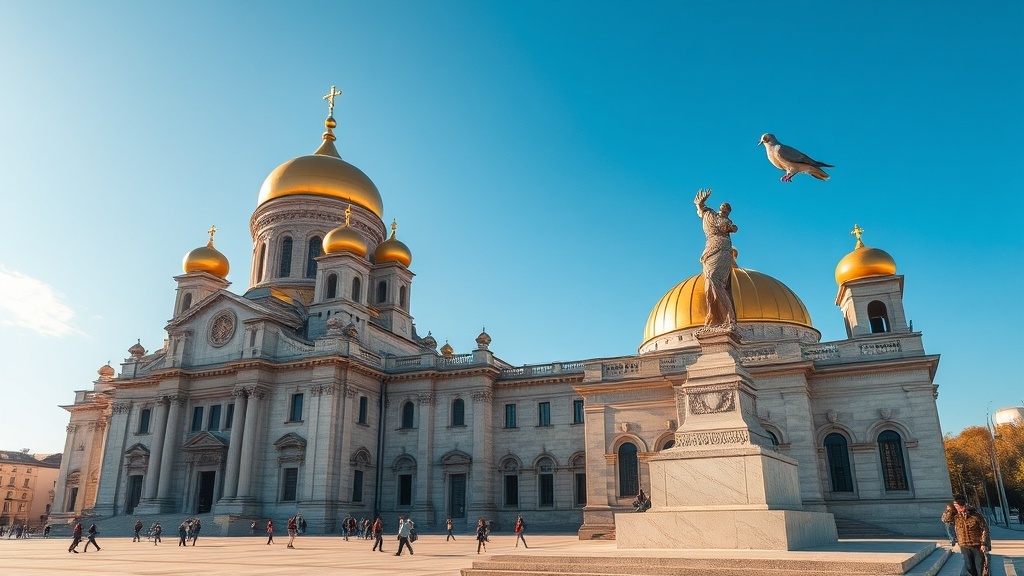
Sofia, population 1.3 million, sits in a high valley at 550m elevation with Vitosha Mountain as its dramatic backdrop. Layers of history coexist—a 4th-century Roman church stands beside a medieval mosque, an Ottoman bathhouse, a communist-era palace, and glass-fronted EU-funded buildings.
Key sites include the gold-domed Alexander Nevsky Cathedral, the ancient Serdica ruins visible through glass panels in the metro, the Vitosha Boulevard pedestrian zone, and the Soviet-era National Palace of Culture. The Vitosha ski resort and hiking trails are just 30 minutes from the center.
🏺 Plovdiv
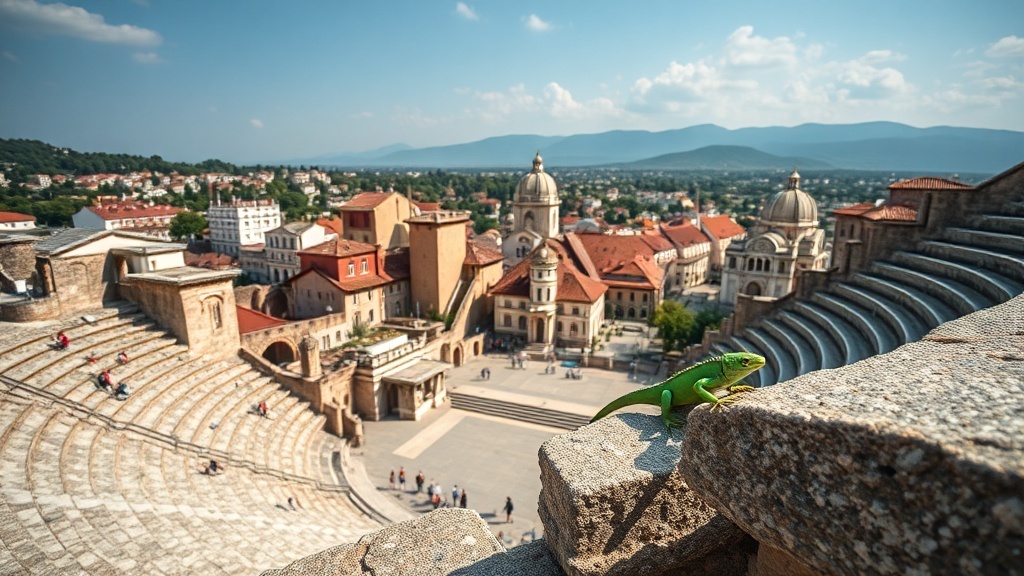
Plovdiv claims to be the oldest continuously inhabited city in Europe — six to eight thousand years of it depending on who is counting, stacked on and around seven syenite hills. Thracians called it Eumolpias, Philip II of Macedon took it and renamed it Philippopolis, the Romans built it a theatre, the Ottomans left mosques and a bathhouse, and 19th-century merchants filled the Old Town with painted timber houses that lean over the cobbles like gossiping neighbours.
The 2nd-century Roman Theatre of Philippopolis, rediscovered after a landslide in the 1970s, still seats 3,500 people for opera and rock concerts with the Rhodope Mountains as a backdrop. Below it, the Ancient Stadium runs under the main pedestrian street — you can see one curved end through a glass floor beside a coffee shop. Kapana ("the Trap"), the former craftsmen's quarter, is now the country's best bar and gallery district, and the reason Plovdiv was European Capital of Culture in 2019.
🏰 Veliko Tarnovo
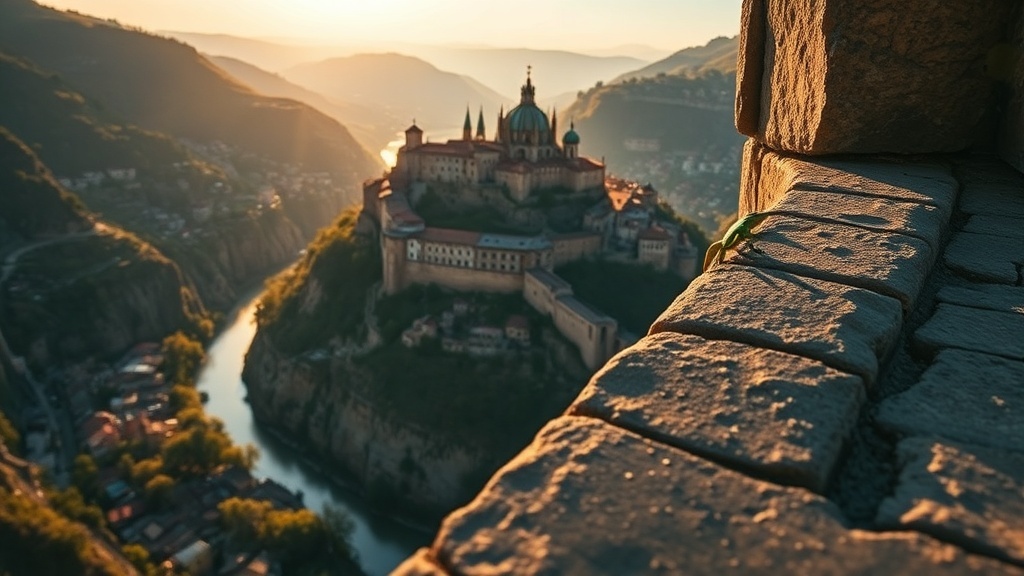
Capital of the Second Bulgarian Empire from 1185 to 1393 and, for medieval Europe, one of its great cities. Houses climb the gorge of the Yantra River in tiers so steep that one street's roofline is the next street's garden wall. The whole thing is best seen at dusk from the Asenevtsi monument, when the stone goes copper-coloured.
The Tsarevets fortress occupies its own hill: royal palace, patriarchate, and the Execution Rock from which traitors were thrown into the river. On summer nights it hosts a laser-and-bell sound-and-light show that is both genuinely stirring and unmistakably a product of 1985. Nearby Arbanasi village holds fortress-like merchant houses and the modest Nativity Church, whose interior is covered in some 2,000 painted figures. Bulgaria's modern constitution was written here in 1879, and Bulgarians still call the town the "city of the tsars."
🌊 The Black Sea Coast
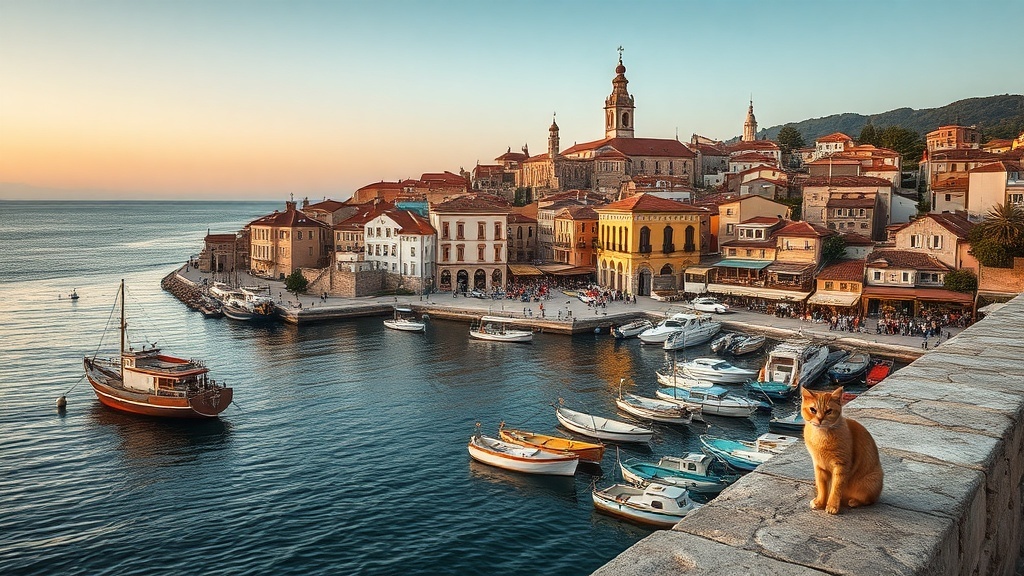
354 kilometres of coast, and it splits neatly in two. The north around Varna — home of the world's oldest processed gold, 6,500 years old and displayed in the Archaeological Museum — is the more urbane half, with the Sea Garden park, the Roman thermae, and package resorts at Golden Sands. The south, below Burgas, has the wilder beaches: Sinemorets, Irakli, and the near-empty dunes of the Ropotamo reserve.
Nessebar, a UNESCO-listed rock of a peninsula joined to the mainland by a thread of isthmus, is the coast's set piece — Thracian, then Greek Mesembria, then Byzantine, with more medieval churches per square metre than anywhere else in Bulgaria. Go in June or September; in August it belongs to the tour buses. Sozopol, further south, is quieter, artier and better for dinner.
⛰️ Rila & the Mountains
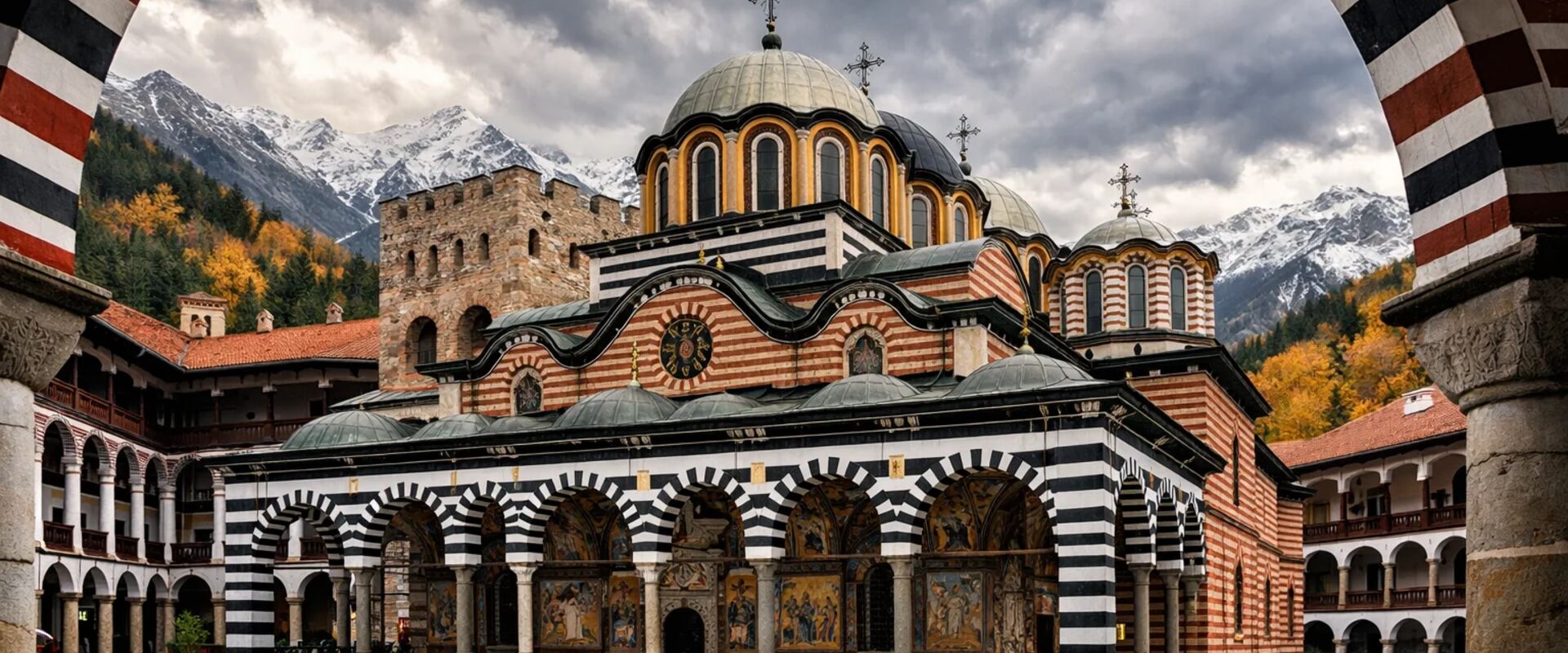
Rila Monastery, founded in the 10th century by the hermit Ivan Rilski and rebuilt after an 1833 fire, is the single most photographed building in Bulgaria and deserves it: black-and-white striped arcades, 1,200 frescoes on the exterior porch, and the surviving Hrelyo's Tower from 1335. It sat at the centre of Bulgarian national identity through five centuries of Ottoman rule. Come early — by 11am the coach parties arrive.
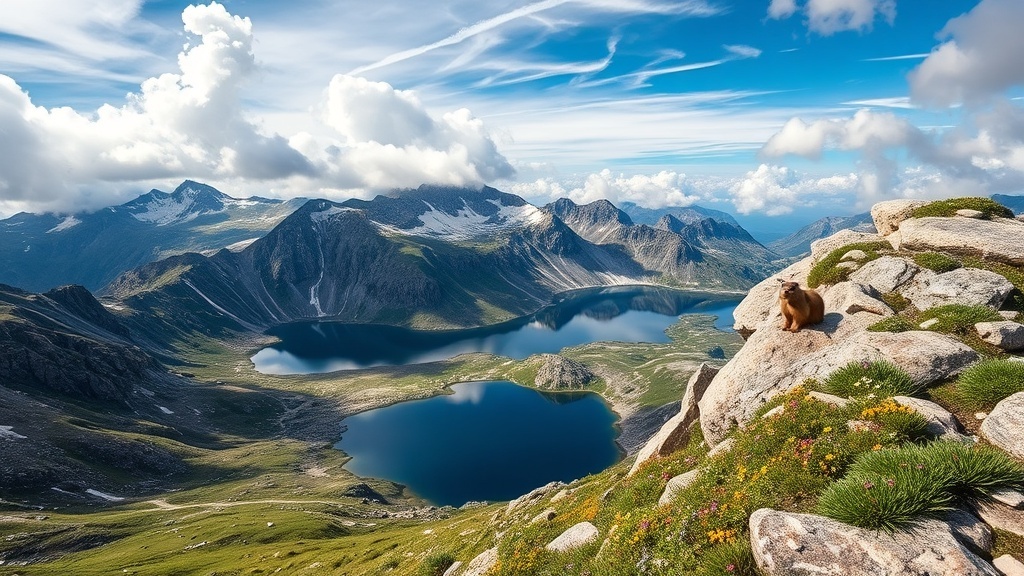
Above it lie the Seven Rila Lakes, glacial pools stepped between 2,100 and 2,500 metres with names like the Tear, the Eye and the Kidney; a chairlift plus a four-hour loop reaches all seven. Musala (2,925m), the highest peak in the Balkans, is a long but non-technical day from Borovets. In winter, Bansko in the Pirin range offers some of Europe's cheapest serious skiing — an adult day pass was 110 lev (about €56) in 2024/25 and just under €60 for 2025/26 — and a genuinely old stone town at the bottom of the gondola.
🍜 Cuisine
Bulgarian cuisine reflects the region's agricultural heritage and mountain traditions, emphasizing garden vegetables, dairy, fresh herbs and the legendary lyutenitsa roasted-pepper relish. The Bulgarian diet, low in fat and rich in herbs and vegetables, was once credited with exceptional longevity in the population.
Shopska Salata
Bulgarian Salad
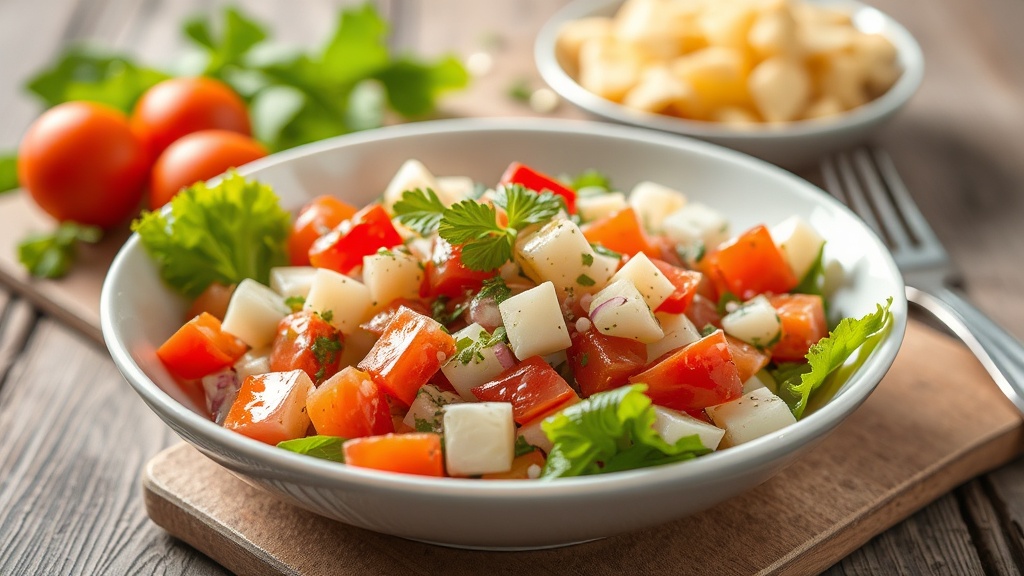
Refreshing salad of tomatoes, cucumbers, and white cheese—the national starter. This recipe serves two.
Ingredients: 2 tomatoes, diced, 1 cucumber, diced, 1 pepper, diced, ½ onion, sliced, 100g sirene cheese, grated, Olive oil, vinegar.
Preparation: Dice vegetables uniformly. Arrange on plate. Top generously with grated cheese. Then drizzle with oil and vinegar. Finally, don't mix—let guests do it.
💡 Use ripe summer tomatoes and real Bulgarian sirene.
Kebapche
Grilled Meat Rolls
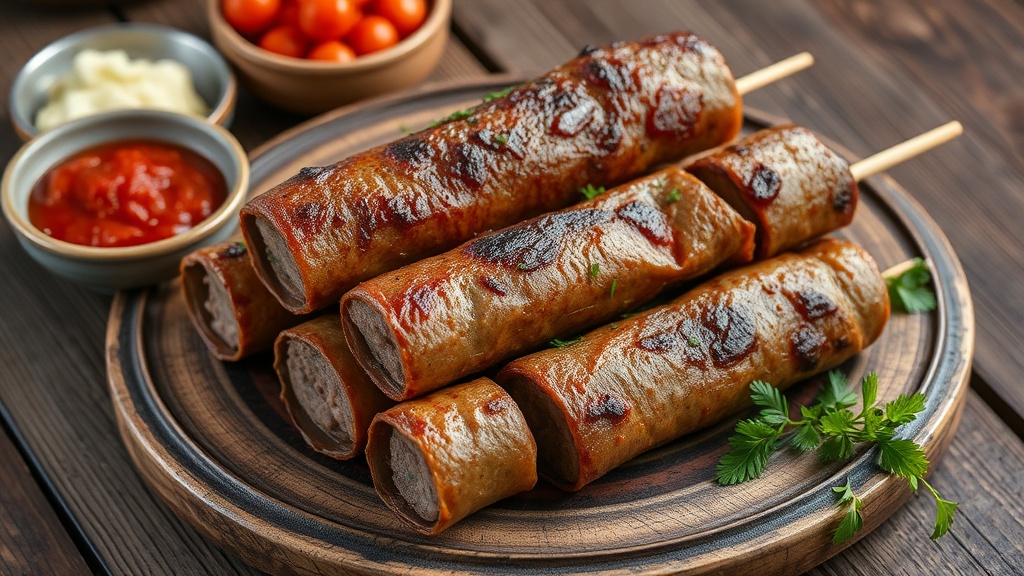
Spiced minced meat rolls grilled over charcoal. This recipe serves two.
Ingredients: 250g beef mince, 250g pork mince, 5ml cumin, ½ tsp savory (chubritsa), Salt, pepper, Baking soda, Raw onion, lyutenitsa.
Preparation: Mix meats with spices and soda. Refrigerate overnight. Shape into long fingers. Then grill over hot coals. Serve with raw onion. Last, add lyutenitsa spread.
💡 The overnight rest develops flavor and texture.
Banitsa
Cheese Filo Pie
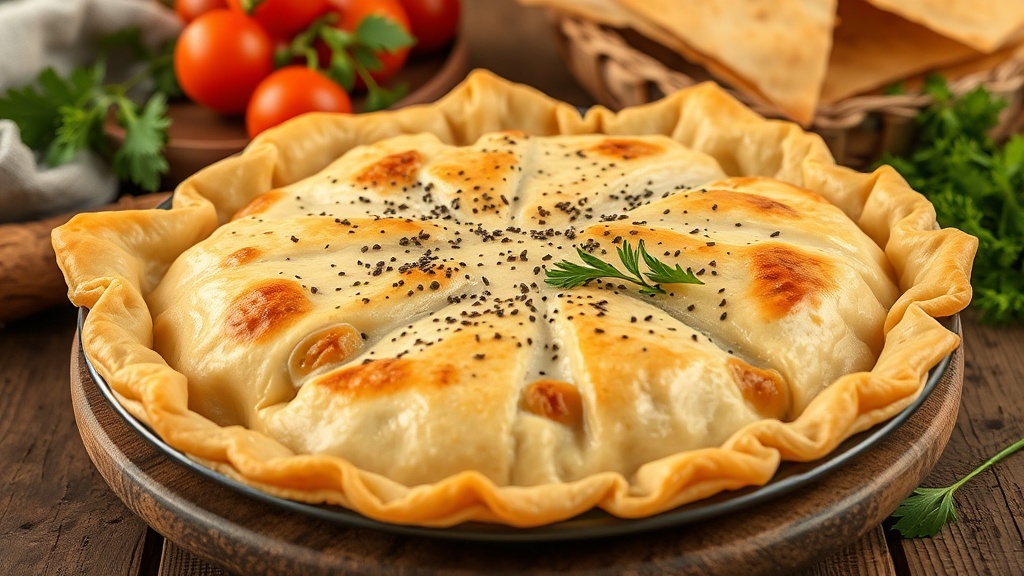
Flaky filo spirals filled with eggs and white cheese. This recipe serves two.
Ingredients: 1 pack filo pastry, 200g sirene cheese, 200g yogurt, 3 eggs, Oil or butter.
Preparation: Mix crumbled cheese, yogurt, eggs. Brush filo with oil. Spread filling, roll up. Then coil into snail shape. Bake 180°C (356°F) until golden. Last, let rest before cutting.
💡 Serve warm with plain yogurt—traditional Bulgarian breakfast.
Signature Dishes: Lyutenitsa – the national relish of roasted red peppers, tomatoes, aubergine and garlic, spread on bread at virtually every meal. Tarator – chilled cucumber-and-yogurt soup with dill, walnuts and a drop of sunflower oil, the taste of a Bulgarian August. Kavarma – slow-cooked pork or chicken stew with peppers and onions, served bubbling in its own clay pot. Sarmi – vine or cabbage leaves rolled around rice and minced meat, a Christmas and Easter fixture. Shkembe chorba – garlicky tripe soup, Bulgaria's notorious hangover cure. Mish-mash – summer scramble of eggs, peppers, tomatoes and crumbled sirene. Gyuvech – a clay-pot vegetable-and-meat bake named after the pot itself.
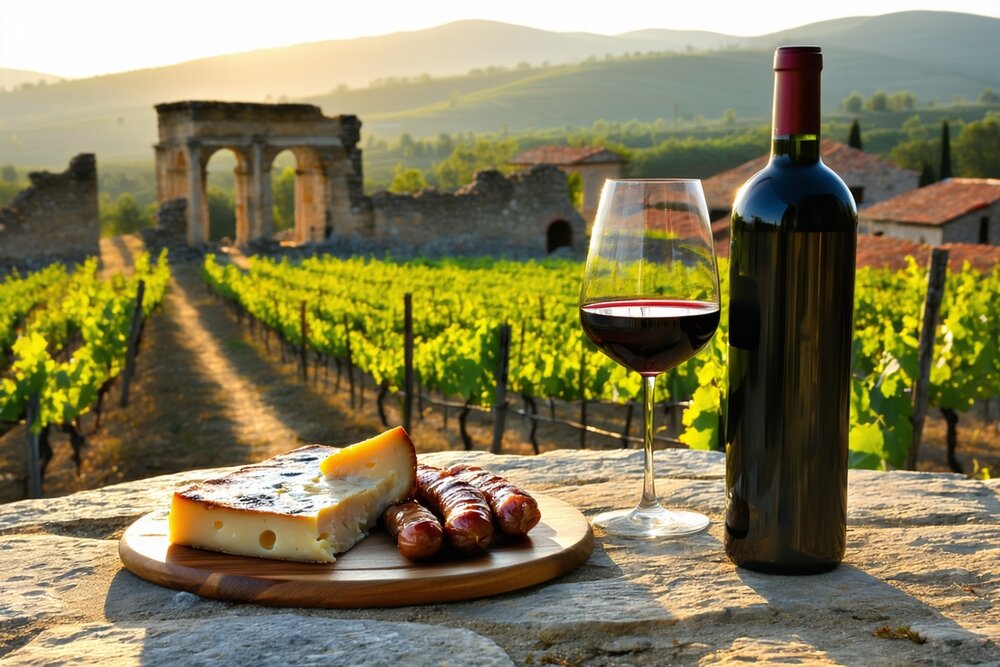
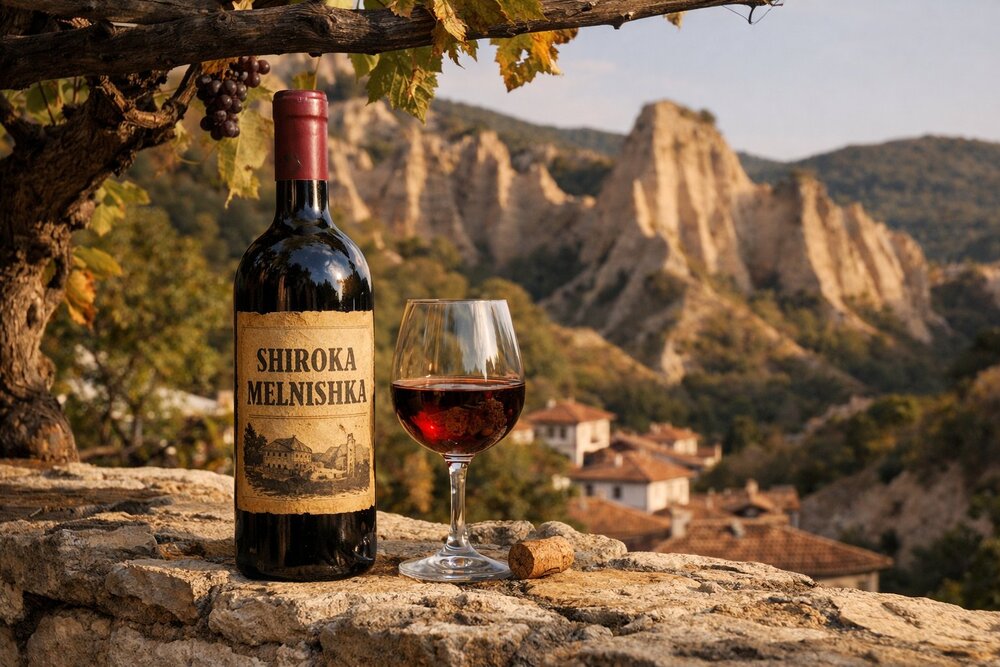
Beverages: Rakiya – grape or plum brandy, 40–65% ABV, sipped slowly alongside shopska salata rather than shot. Bulgarian wines – indigenous Mavrud, Melnik (Shiroka Melnishka Loza), Rubin and white Dimyat from vineyards worked for more than 3,000 years. Ayran – salted yogurt drink served with anything grilled. Boza – thick, faintly sour fermented-millet drink taken at breakfast with banitsa. Kiselo mlyako – the yogurt whose bacterium, Lactobacillus bulgaricus, is literally named after the country. Practically every Bulgarian village still makes its own wine and rakiya.
🌡️ Climate & Best Time to Visit
| Season | Temperature | Conditions | Rating |
|---|---|---|---|
| Spring (Apr-May) | 15-22°C | Mild, flowers blooming, fewer crowds | ✅ Excellent |
| Summer (Jun-Aug) | 25-35°C | Hot, humid, peak beach season | ✅ Best for beaches |
| Autumn (Sep-Oct) | 18-25°C | Warm, harvest season, wine festivals | ✅ Excellent |
| Winter (Nov-Mar) | -3 to 8°C | Mild coast, snowy mountains | ⚠️ Limited highland access |
Best Time: May-June or September-October for ideal weather and fewer crowds. July-August is peak beach season but can be hot and humid. Independence Day (22 September) and Liberation Day (3 March) bring parades and wreath-laying; the Rose Festival in early June is the most photogenic.
✈️ How to Get There
By Air: Sofia Airport (SOF) receives flights from most European capitals via Ryanair, Wizz Air, Bulgaria Air, and others. Varna and Burgas airports serve the Black Sea coast (busy in summer). Low-cost carriers make Bulgaria one of Europe's cheapest destinations to reach.
By Land: Regular buses and trains connect Sofia to Belgrade, Thessaloniki, Istanbul, and Bucharest. The Sofia–Istanbul bus (6 hours) is popular. Visa: EU/Schengen visa policy applies. US, UK, and most Western nationals can enter visa-free for 90 days in any 180. Bulgaria has been a full Schengen member since 1 January 2025 — no passport checks on the Greek or Romanian borders, but the Serbian and Turkish crossings remain external EU frontiers with real queues in summer.
🍷 Wine, Spirits & Drinking Culture
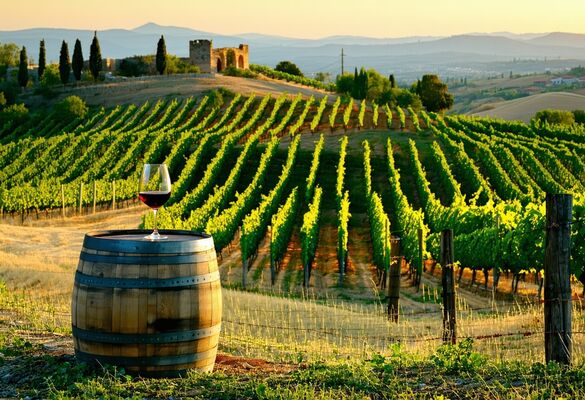
Bulgaria is one of Europe's most historically significant wine producers — the ancient Thracians who inhabited the region were famous winemakers, celebrated in Homer and Herodotus, and the country's viticultural tradition stretches back over 5,000 years. With approximately 55,000 hectares under vine and a revival of indigenous grape varieties, Bulgaria is experiencing a quality renaissance that is finally bringing international attention to its remarkable wines.
🍇 Indigenous Varieties & Regions
Mavrud — Bulgaria's most important indigenous red grape, grown primarily in the Thracian Valley around Plovdiv and Asenovgrad — produces deeply coloured, tannic, age-worthy reds with dark fruit and herbal complexity. Melnik (Shiroka Melnishka Loza, the "broad-leaved vine of Melnik") is cultivated exclusively in the extreme southwest around the sandstone town of Melnik, producing wines of unique character. Rubin (a Bulgarian crossing of Nebbiolo and Syrah), Gamza (related to Kadarka), and Dimyat (a white grape producing aromatic wines) add further local distinctiveness. The Thracian Lowlands (warm, producing the finest reds), Danube Plains (northern, lighter reds), Struma Valley (Melnik), Black Sea Coast (whites), and Rose Valley (Sub-Balkan) define the five main regions. Bessa Valley (a French-Bulgarian prestige project with Stéphan von Neipperg of Château Canon-la-Gaffelière), Castra Rubra, Todoroff, and Midalidare lead the quality revolution. Rakiya (grape or fruit brandy) is Bulgaria's national spirit — home-distilled versions are ubiquitous and often superb.
🏆 Kaufmann Wine Score — Bulgaria
Rated on four criteria: Aroma (/25), Taste (/30), Finish (/20), Value (/25) — Total /100
| Wine | 🔴 Aroma | 🟡 Taste | 🟢 Finish | 🔵 Value | Total |
|---|---|---|---|---|---|
| 🍷 Bessa Valley Enira Reserve (Thracian Valley) | 22 | 26 | 17 | 23 | 88 |
| 🍷 Todoroff Mavrud Reserve (Plovdiv) | 21 | 25 | 16 | 24 | 86 |
| 🍷 Castra Rubra Via Diagonalis (Sakar) | 21 | 25 | 17 | 22 | 85 |
| 🍷 Midalidare Mogilovo Estate Cabernet | 20 | 24 | 15 | 23 | 82 |
| 🍷 Damianitza Melnik 55 Reserve | 21 | 24 | 16 | 22 | 83 |
| 🍷 Edoardo Miroglio Brut Rosé (sparkling) | 19 | 23 | 15 | 23 | 80 |
95–100 Legendary · 90–94 Outstanding · 85–89 Very Good · 80–84 Good · 75–79 Average · <75 Below Average
🍸 Cocktails & Mixed Drinks
Bulgaria is a rakiya country before it is a cocktail country — the standard order is a hundred grams of grape rakiya with a shopska salata, and Bulgarians will tell you that mixing it is close to sacrilege. Sofia's Kapana-influenced bar scene disagrees, and the results are worth the argument. Three that travel well:
Rose Valley Sour
Rakiya · rose · lemon
Ingredients: 50ml grape rakiya, 25ml fresh lemon juice, 15ml rose syrup (or 15ml sugar syrup plus 3 drops food-grade rose water), 15ml egg white or aquafaba, ice.
Preparation: Dry-shake all ingredients without ice for 15 seconds to build the foam. Add ice, shake hard for another 15. Double-strain into a chilled coupe. Finish with a single dried rose petal or two drops of Angostura drawn through the foam.
💡 Kazanlak rose syrup is sold in every Bulgarian supermarket; use it sparingly — rose turns to soap fast.
Mastika Highball
The Black Sea afternoon drink
Ingredients: 40ml Bulgarian mastika (anise-mastic liqueur, typically 47%), 120ml very cold water or soda, plenty of ice, a strip of lemon peel.
Preparation: Pour mastika over ice in a tall glass, top with cold water and watch it louche to opal white. Express the lemon peel over the surface and drop it in. Traditionally drunk with a plate of fried tsatsa (tiny Black Sea sprats) or grilled mackerel.
💡 Peshtera is the ubiquitous brand; ask for it "with cold water, not tonic."
Mavrud Negroni
A Thracian take on the classic
Ingredients: 30ml gin, 30ml red bitter aperitif, 30ml sweet vermouth, 20ml young Mavrud red wine, orange peel.
Preparation: Stir gin, bitter and vermouth with ice for 20 seconds. Strain over a large cube in a rocks glass, then float the Mavrud over the back of a spoon so it sits as a dark band on top. Express orange peel and serve before the layers merge.
💡 Use a young, unoaked Mavrud — a reserve bottling is wasted here and fights the bitter.
📋 Practical Information
Visa: Bulgaria has been a full Schengen member since 1 January 2025, so standard Schengen rules apply — US, UK, Canadian, Australian and most other visa-exempt nationals get 90 days in any 180-day period, and that clock is now shared with the rest of the Schengen area. The EU biometric Entry/Exit System (EES) went live on 10 April 2026: expect fingerprints and a facial scan at your first crossing instead of a passport stamp. ETIAS, the paid travel authorisation, is not yet in force — ignore any website selling it. Currency: the euro. Bulgaria joined the euro area on 1 January 2026 at the fixed rate of 1.95583 lev to €1; the lev stopped being legal tender on 1 February 2026, though the central bank still exchanges old notes. Older guidebooks and a few menus still quote lev — divide by roughly two. ATMs everywhere; cards accepted almost universally in cities, less so in mountain villages. Language: Bulgarian (Cyrillic script). English spoken by younger generation; Russian understood by older Bulgarians. German common in tourist areas.
Transport: Sofia metro excellent and cheap. Trains slow but scenic. Buses connect all cities. Car rental easy for countryside exploration. Safety: Very safe for travelers. Petty crime in tourist areas is the main concern. Health: Good hospitals in cities; the European Health Insurance Card is valid for EU citizens and travel insurance is strongly advised for everyone else.
🛡️ Travel Advisory — Level 1: Exercise Normal Precautions
The U.S. Department of State rates Bulgaria Level 1, its lowest advisory tier, with no regional exclusions. The UK FCDO and Global Affairs Canada are similarly relaxed. Bulgaria is, statistically, among the safer countries in Europe for visitors.
Caveats are practical rather than alarming: pickpocketing on Sofia's trams and in crowded Black Sea resorts; taxi overcharging at Sofia airport and in Sunny Beach (use Yellow Taxi or a ride app and insist on the meter); occasional political demonstrations in central Sofia, noisy rather than dangerous but worth walking around; and mountain-rescue callouts every season in the Rila and Pirin ranges for hikers who underestimated the weather above 2,000m. Winter tyres are legally required on all roads from 15 November to 1 March.
Advisory level verified September 2026 (Level 1, last reviewed by the State Department on 9 October 2025) — check travel.state.gov before departure, levels change.
💰 Cost of Living
Bulgaria is the EU's most affordable destination. Budget travelers can manage on $25–35/day, mid-range on $50–80/day. Restaurant meals, accommodation, and transport cost a fraction of Western European prices while quality is often excellent.
🏨 Accommodation
Bulgaria offers excellent value across all categories. Soviet-era concrete has given way to renovated boutique hotels, mountain lodges, and Black Sea resorts. Rural guesthouses (kashti) offer authentic experiences with home cooking.
Sofia: Hostel Mostel ($10–15 dorm), Hotel Niky ($40–60), Sense Hotel ($80–120). Plovdiv: Old Town hostels ($12–18), boutique hotels in restored Revival houses ($50–90). Black Sea: Range from party resorts ($30–60) to boutique hideaways ($80–150).
🎭 Festivals & Events
Kukeri (January–March) features elaborately costumed men wearing giant carved masks and cow bells, performing ancient rituals to drive away evil spirits. The Pernik International Kukeri Festival is the largest gathering of these extraordinary pagan-rooted traditions.
Rose Festival (Kazanlak, early June) celebrates the rose harvest with parades, folk music, and the crowning of the Rose Queen. Other events: Nestinarstvo fire-walking (June, Strandzha region), Apollonia Arts Festival (Sozopol, September), and numerous folk music festivals in the Rhodope Mountains.
🎒 Packing Tips
Essential: Valid passport (EU citizens can use ID card), travel insurance, euros (Bulgaria adopted the euro in January 2026), credit/debit cards (widely accepted in cities), unlocked phone for local SIM.
Clothing: Layers (coastal heat to mountain cold within hours), comfortable walking shoes, rain jacket, swimwear for the Black Sea, modest clothing for monasteries (women: covered shoulders, long skirts). Health: Sunscreen, insect repellent, basic first aid, prescription medications. European Health Insurance Card valid for EU citizens.
What NOT to bring: Excessive valuables for beach resorts, heavy luggage if hiking (pack light for mountain trails), unnecessary formal clothing—Bulgaria is relaxed and casual.
🌐 Useful Resources
Visa: Check with your nearest Bulgaria embassy or consulate for current visa requirements. US citizens should consult travel.state.gov for the latest entry requirements. Emergency: Contact your country's nearest embassy or consulate for emergency assistance.
Tour Operators: Check local tourism boards and reputable international agencies. Platforms like GetYourGuide and Viator offer vetted local experiences with English-speaking guides. Maps: Maps.me (works offline), Google Maps (download offline area maps before your trip).
Emergencies: 112 works nationwide in English. The U.S. Embassy is at 16 Kozyak Street, Sofia; the British Embassy at 9 Moskovska Street. Mountain rescue (PSS) is reached through 112, or by dialling 1470 from a Bulgarian mobile. Official tourism: bulgariatravel.org, the Ministry of Tourism portal.
📚 Recommended Reading
Non-Fiction: "The Balkans" by Misha Glenny — essential regional context. "Street Without a Name" by Kapka Kassabova — a Bulgarian childhood memoir. Fiction: "Under the Yoke" by Ivan Vazov — Bulgaria's most beloved novel about Ottoman liberation. "Border: A Journey to the Edge of Europe" by Kapka Kassabova — the Strandzha mountains where Bulgaria meets Turkey and Greece, and the best book written about the country this century.
Online: Wikivoyage: Bulgaria, Lonely Planet, r/bulgaria (Reddit). News: The Sofia Globe (English-language), Novinite.com for current travel advisories and updates.
🤯 Fascinating Facts
🤝 Yes Means No
Bulgarians shake their head for 'yes' and nod for 'no'—the opposite of most cultures. This causes endless confusion for visitors. The custom may trace back to Ottoman times as a form of coded resistance.
🌹 Rose Valley
Bulgaria produces roughly 70% of the world's rose oil, used in perfumes by Chanel, Dior, and others. It takes 3,000 kg of rose petals to make 1 kg of rose oil, worth $7,000–10,000. The Valley of Roses near Kazanlak blooms spectacularly each June.
📝 Cyrillic Origins
The Cyrillic alphabet, used by 300 million people across Russia, Ukraine, Serbia, and beyond, was developed in medieval Bulgaria at the Preslav Literary School in the 9th century—making Bulgaria the birthplace of Slavic literacy.
⭐ Notable People
Hristo Stoichkov (b. 1966) — Ballon d'Or winner (1994), Barcelona legend, and national hero who led Bulgaria to the 1994 World Cup semi-finals. Grigor Dimitrov (b. 1991) — Top-ranked tennis player, former world No. 3, dubbed "Baby Federer" for his elegant playing style.
Culture: Elias Canetti — Nobel Prize in Literature (1981), born in Ruse; Julia Kristeva — internationally renowned philosopher and psychoanalyst, born in Sliven; John Atanasoff — co-inventor of the Atanasoff–Berry Computer, the first electronic digital computer, of Bulgarian descent; Christo (1935–2020) — the wrapping artist, born Christo Javacheff in Gabrovo; Kristalina Georgieva (b. 1953) — Managing Director of the IMF since 2019, born in Sofia.
Sport, the new generation: Karlos Nasar (b. 2004) — Olympic weightlifting champion at Paris 2024 with two world records in the 89 kg class; Aleksandar Nikolov (b. 2003) — the outside hitter who top-scored in the 2025 Volleyball World Championship final; Boryana Kaleyn (b. 2000) — Olympic rhythmic-gymnastics silver medallist, Paris 2024.
📰 Media & Press Freedom
Bulgaria sits at 71st of 180 in the Reporters Without Borders (RSF) 2026 World Press Freedom Index with a score of 60.28 — one place down on 2025 (70th) and, as usual, in the bottom handful of EU member states. RSF calls press freedom here "fragile and unstable" and singles Bulgaria out for SLAPPs, the abusive lawsuits used to exhaust investigative reporters; the EU anti-SLAPP directive should have been transposed by 7 May 2026 and Bulgaria was among the laggards. The economic indicator is the weakest (98th): advertising money is thin and much of it flows through the state.
The landscape is television-led — public BNT and BNR, private bTV and Nova — with a fast-growing online layer and shrinking print. Ownership concentration and the political colouring of the Council for Electronic Media are the structural problems; reporters covering organised crime outside Sofia face threats with little follow-up. For visitors: the Sofia Globe and Novinite carry English-language news; BTA, the state news agency, runs a reliable English service. Human rights: the standing concerns are discrimination against the Roma community, judicial independence and the media pressures above.
⚽ Sports
Football dominates, with CSKA Sofia and Levski Sofia sharing one of Europe's fiercest derbies. Bulgaria reached the 1994 World Cup semi-finals led by the legendary Hristo Stoichkov. Skiing is hugely popular at Bansko, Pamporovo, and Borovets resorts.
Wrestling has deep Thracian roots and weightlifting is the other traditional strength, and both delivered at Paris 2024: seven medals, three of them gold — Karlos Nasar in the 89 kg weightlifting with two world records (404 kg total), Semen Novikov in Greco-Roman 87 kg and Magomed Ramazanov in freestyle 86 kg — plus Boryana Kaleyn's rhythmic all-around silver and a bronze for the rhythmic group. One better than Tokyo and the most since Athens 2004.
The bigger surprise came on 28 September 2025 in Manila, when a very young men's volleyball team reached the World Championship final for the first time since 1970 and took silver, losing 1–3 to Italy with Aleksandar Nikolov the match's top scorer. Football, by contrast, is in a long slump: the national side finished bottom of its 2026 World Cup qualifying group, and the CSKA–Levski derby remains the main event. Hiking in the Rila, Pirin, and Rhodope mountains attracts growing international attention.
🏛️ UNESCO World Heritage Sites
Bulgaria has 10 UNESCO World Heritage Sites — seven cultural and three natural — reflecting its rich Thracian, medieval Bulgarian and Orthodox Christian legacy:
- Boyana Church (1979) — 13th-century frescoes that prefigured the European Renaissance, on the outskirts of Sofia.
- Madara Rider (1979) — Unique early-medieval rock relief carved into a cliff near Shumen, dating to c. 710 AD.
- Rock-Hewn Churches of Ivanovo (1979) — Medieval monastic complex with extraordinary 13th–14th c. murals along the Rusenski Lom.
- Thracian Tomb of Kazanlak (1979) — 4th c. BC tomb with vivid Hellenistic frescoes in the Valley of the Thracian Kings.
- Ancient City of Nessebar (1983) — Black Sea peninsula town with three millennia of layered history and Byzantine churches.
- Rila Monastery (1983) — Bulgaria's most revered spiritual centre, founded in the 10th century, set in the Rila mountains.
- Thracian Tomb of Sveshtari (1985) — 3rd c. BC Getic tomb with unique caryatid-like female figures.
- Srebarna Nature Reserve (1983, natural) — A Danubian freshwater lake and wetland sheltering nearly 100 bird species including Dalmatian pelicans.
- Pirin National Park (1983, natural) — Glacial peaks, alpine lakes and ancient Macedonian pine forests in the southwest.
- Ancient and Primeval Beech Forests of the Carpathians and Other Regions of Europe (extension 2017, natural, transnational) — Bulgaria's contribution covers old-growth beech forests in Central Balkan and Stara Planina.
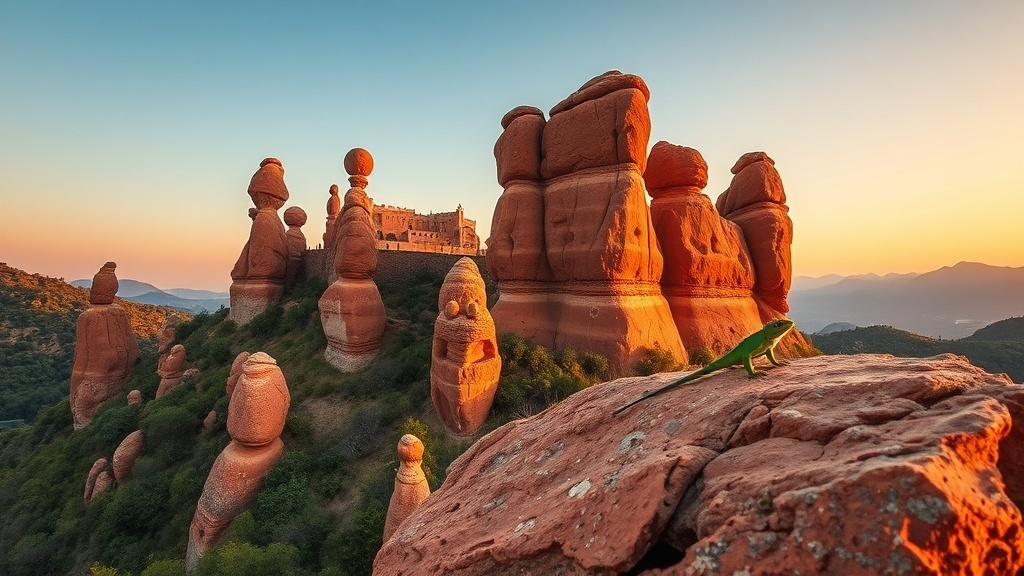
📸 Photo Gallery
✍️ Author's Note
Bulgaria is Europe's best-kept secret hiding in plain sight. A country where you can ski world-class slopes in the morning, explore 7,000-year-old ruins at lunch, and drink rakia on the Black Sea at sunset—all for less than a London pub crawl. The EU's poorest member offers some of its richest experiences.
What strikes you most is the layering—Thracian gold beneath Roman streets beneath Ottoman mosques beneath communist concrete beneath gleaming new EU-funded projects. Every Bulgarian city is an archaeological dig in progress, and every Bulgarian will pour you a glass of homemade rakia while explaining exactly why their grandmother's recipe is the best in the country.
Where rakia flows and history layers
—Radim Kaufmann, 2026
Support This Project
If you enjoy this guide, consider supporting independent travel journalism.
☕ Buy Me a Coffee