🌍 Burkina Faso at a Glance
🌏 Overview
Burkina Faso—"Land of Upright People"—is a landlocked Sahelian nation in West Africa known for its rich cultural traditions, world-class film festival (FESPACO), and some of the friendliest people on the continent. Despite being one of the world's poorest countries, Burkinabè culture shines with remarkable vitality.
The country faces severe security challenges from jihadist insurgencies that have displaced millions since 2015. While this has devastated tourism, Burkina Faso's cultural heritage—from Mossi kingdoms to Lobi architecture to the masks of Bobo-Dioulasso—remains extraordinary.
🏷️ Name & Identity
The name "Burkina Faso" was chosen by revolutionary president Thomas Sankara in 1984, combining Mooré (Burkina = "upright/honest people") and Dioula (Faso = "fatherland"). The demonym Burkinabè adds a Fulfulde suffix meaning "people." Three languages, one name—a deliberate symbol of national unity.
Formerly Upper Volta (named for the Volta rivers), the renaming was part of Sankara's radical transformation of the country. Sankara—Africa's Che Guevara—remains a towering figure whose anti-corruption, pan-African vision still inspires across the continent.
🗺️ Geography & Regions
Burkina Faso covers 274,200 km² of mostly flat terrain in the West African Sahel—the semi-arid transition zone between the Sahara Desert and the humid coastal forests. Three Volta rivers (Black, White, and Red) drain the country southward into Ghana's Lake Volta.
The landscape grades from near-desert in the north to wooded savanna in the southwest. The Banfora Cascades and sandstone cliffs near Sindou are scenic highlights. Wildlife reserves including Arly and W National Park (shared with Niger and Benin, UNESCO-listed) harbor elephants, lions, and West African fauna.
🗺️ Map
Key destinations marked: Ouagadougou, Bobo-Dioulasso, Banfora and the Sindou Peaks, Tiébélé, Loropéni, the Douroula metallurgy site, Bazoulé, Nazinga and the Arly sector of W-Arly-Pendjari. Northern and eastern markers lie inside do-not-travel zones.
📜 History
The Mossi kingdoms, founded around the 11th century, were among West Africa's most organized states—resisting both Islamic expansion from the north and European colonization longer than most. The Mogho Naba (Mossi emperor) still holds ceremonial authority in Ouagadougou.
French colonization came in 1896, and Upper Volta gained independence in 1960. The country gained global attention under Captain Thomas Sankara (1983–1987), who renamed the nation, vaccinated millions, planted millions of trees, promoted women's rights, and refused foreign aid—before being assassinated in a coup by his former ally Blaise Compaoré.
Compaoré ruled for 27 years until a popular uprising ousted him in 2014. Since 2015, jihadist violence linked to groups in Mali has created a severe security crisis, with military coups in 2022 bringing Captain Ibrahim Traoré to power. The transition has since been extended to 2029, every political party was dissolved in January 2026, and in April 2026 Traoré told the country to "forget about democracy" until the war is won.
👥 People & Culture
Burkina Faso's roughly 24 million people (UN and World Bank estimates for 2025 both sit at 24.0–24.1 million) comprise over 60 ethnic groups. The Mossi (48%) are the largest, followed by Fulani, Bobo, Gurunsi, Lobi, and others. Despite diversity, inter-ethnic relations are remarkably harmonious, aided by the tradition of parenté à plaisanterie (joking kinship) between ethnic groups.
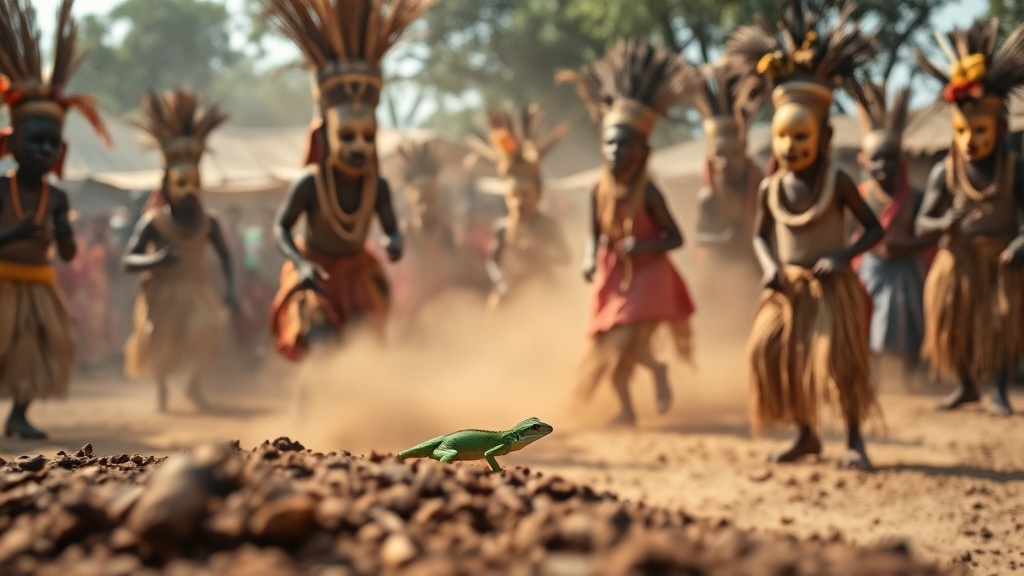
Cultural expressions are extraordinarily rich: carved masks and ceremonial dances, elaborate textile traditions (Faso Dan Fani woven cloth), leatherwork, bronze casting, and the griot oral tradition of hereditary storytellers and musicians.
FESPACO—the Pan-African Film and Television Festival of Ouagadougou—is the continent's largest film festival, drawing filmmakers from across Africa and the diaspora every two years. Ouagadougou is considered the capital of African cinema.
🏛️ Government & Politics
Burkina Faso has been under military rule since January 2022. Captain Ibrahim Traoré, who seized power in the second coup of that year on 30 September 2022 at the age of 34, remains head of state; in May 2024 a national consultation extended the transition by five years, to 2029, and made Traoré eligible to stand in whatever election eventually follows. Jean Emmanuel Ouédraogo has been prime minister since 7 December 2024. In January 2026 the cabinet dissolved the country's political parties outright and adopted a new national development framework, the Plan RELANCE, running to 2030.
Foreign policy has been rebuilt around the Alliance of Sahel States (AES), the confederation formed with Mali and Niger in 2023. All three formally left ECOWAS in January 2025, expelled French forces, and turned toward Russia for security cooperation—though Burkina Faso has stayed inside the UEMOA monetary union and continues to use the CFA franc. Relations with the United States deteriorated sharply at the end of 2025 into reciprocal visa bans. The AES three also quit the Organisation internationale de la Francophonie (March 2025), and on 30 June 2026 they formally notified the UN of their withdrawal from the International Criminal Court—first announced on 22 September 2025—which takes effect one year later, in mid-2027.
Domestically the state controls perhaps 40–60% of national territory depending on whose estimate you take; large areas of the Sahel, Est and Boucle du Mouhoun regions are contested by JNIM and Islamic State–Sahel Province. The Volontaires pour la Défense de la Patrie (VDP), a mass civilian auxiliary force, is central to the war effort and to allegations of abuses against civilians.
🏛️ Ouagadougou
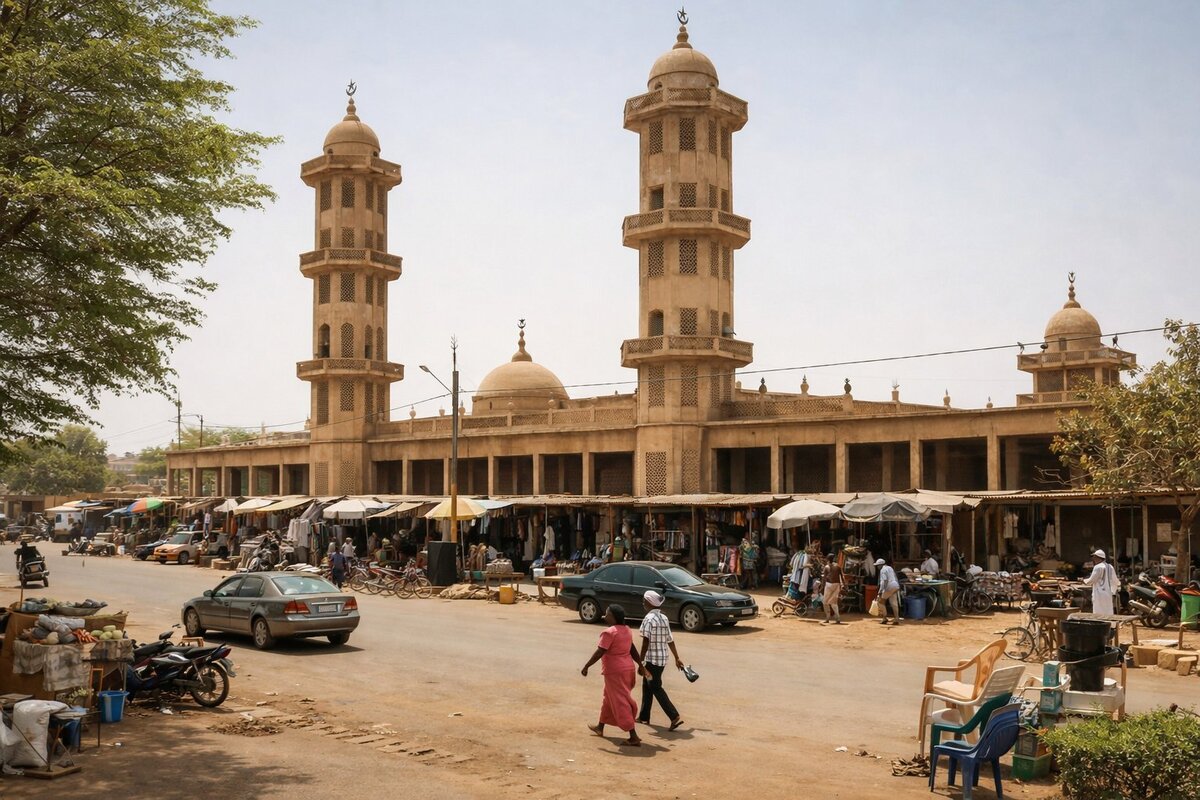
Ouagadougou—universally called "Ouaga"—is a sprawling, dusty, vibrant city of roughly 2.5 million (2.4 million at the 2019 census, and growing fast as the displaced arrive). The administrative center retains traces of colonial planning around the Avenue de la Nation, while the vast Grand Marché teems with commerce and color.
Key sites include the Mogho Naba Palace (with the weekly Friday ceremony of the Mossi emperor), the National Museum, the Maison du Peuple (Sankara's political headquarters), and the FESPACO cinema halls. Ouaga's nightlife—maquis (outdoor bars), live music, and dance—rivals any West African capital.
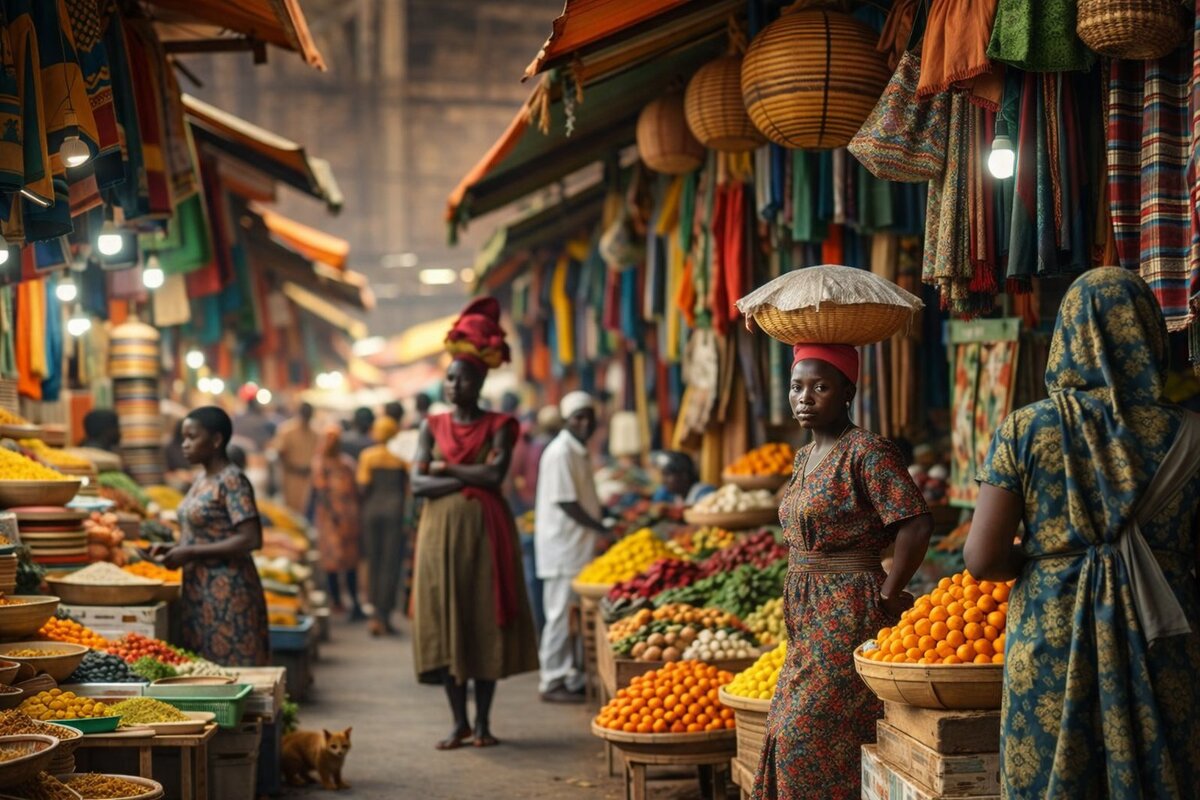
Grand Marché, Ouagadougou
Ouaga's central market — the commercial engine of a city of some 2.5 million.
🕌 Bobo-Dioulasso
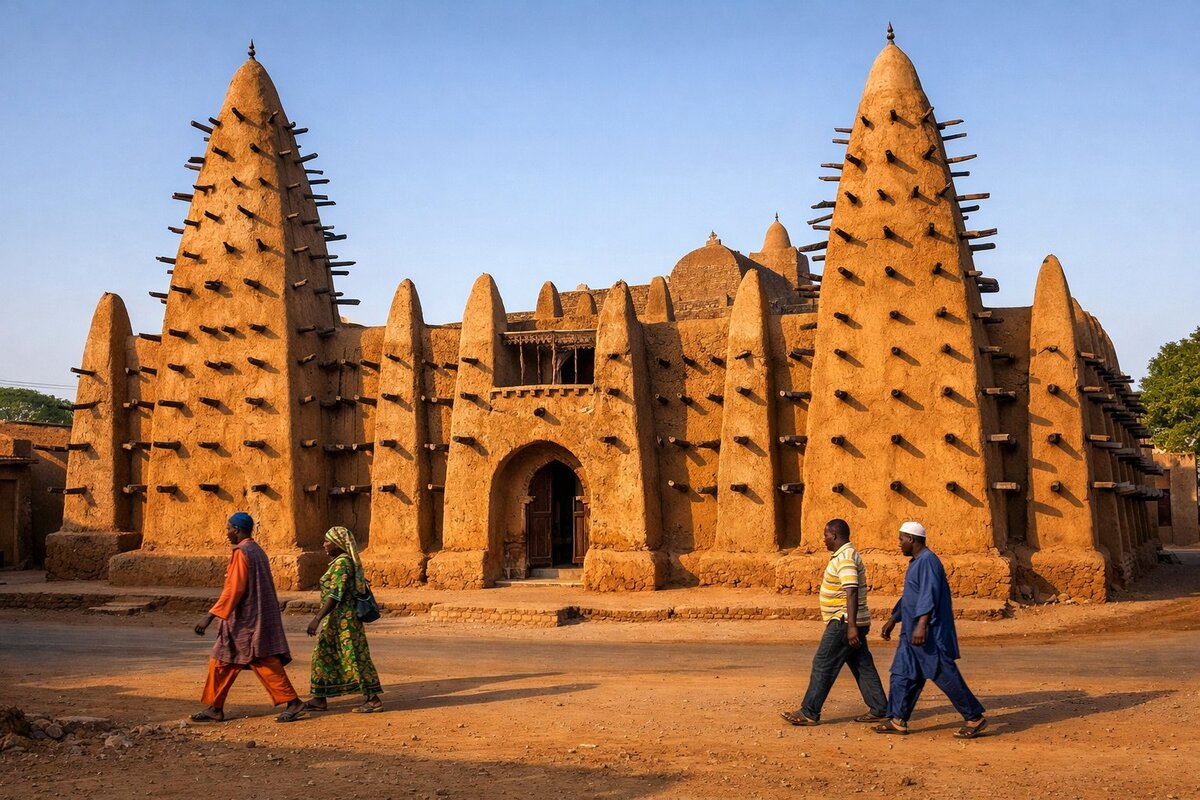
Burkina Faso's second city and its cultural heart—slower, greener and considerably more charming than the capital. The Grande Mosquée of 1880 is the country's signature image: a Sudano-Sahelian mud-brick structure bristling with toron, the projecting palm beams that serve as permanent scaffolding for the annual replastering after the rains.
Behind it lies Kibidwé, the old quarter, where blacksmith and griot families have held the same compounds for centuries and a sacred catfish pool still receives offerings. The 1934 Art Deco railway station, the covered market, and a live-music scene that produced much of Burkinabè balafon and Mandé guitar tradition make Bobo the place most visitors wish they had given more days to.
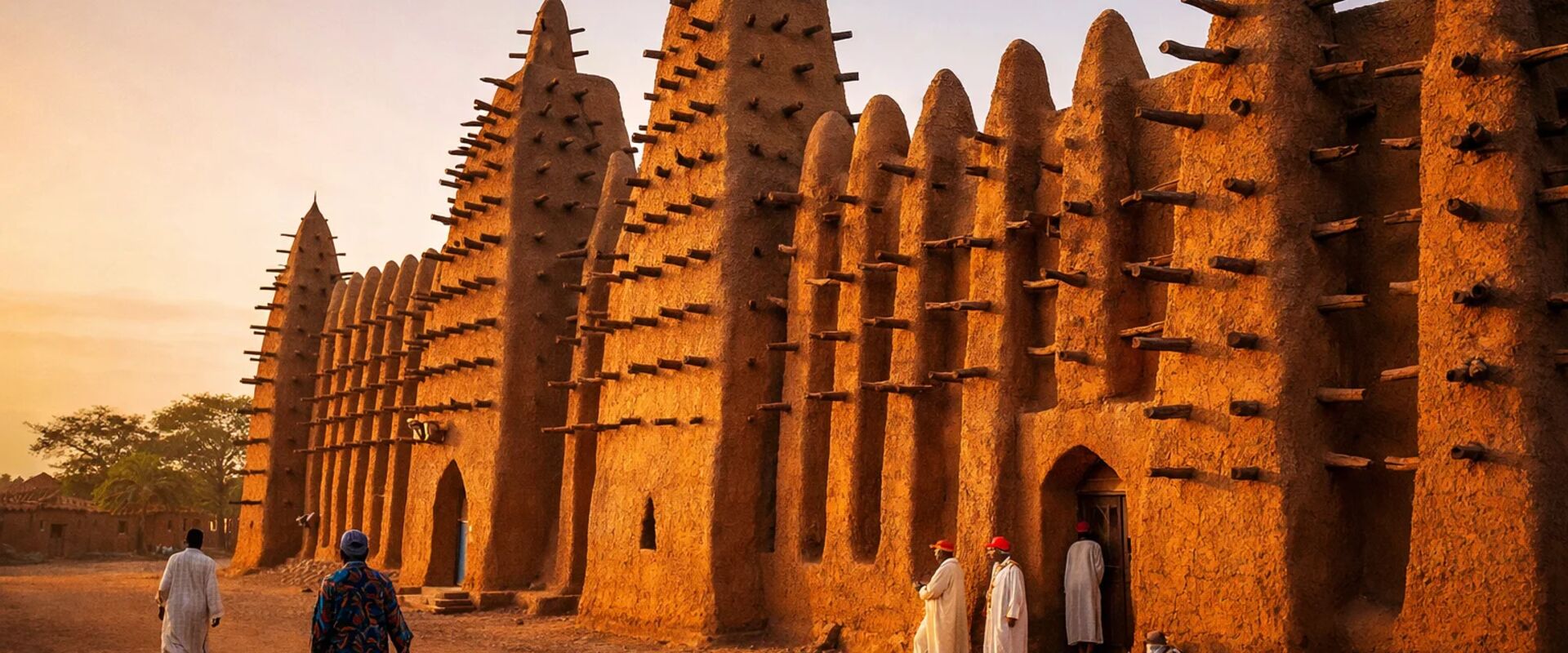
Grande Mosquée de Bobo-Dioulasso
Built around 1880 in Sudano-Sahelian style, its projecting toron beams double as scaffolding for the annual mud replastering.
🏞️ Banfora & the Sindou Peaks
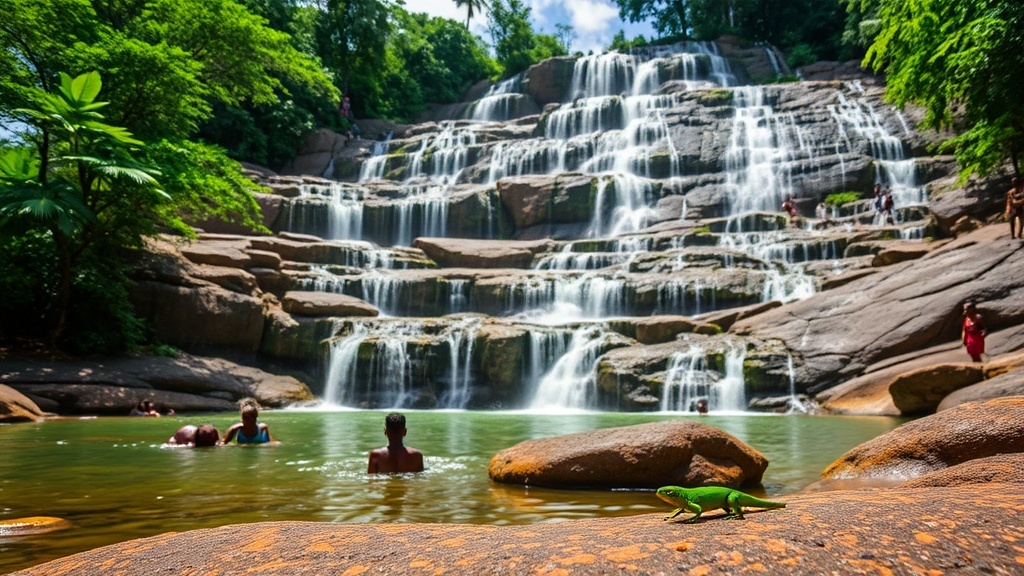
The southwest is the green Burkina Faso that surprises people who expect only Sahel. Around Banfora, sugar cane and mango plantations run up against the Karfiguéla escarpment, where the Cascades de Karfiguéla drop through a series of pools that actually hold water from July into January.
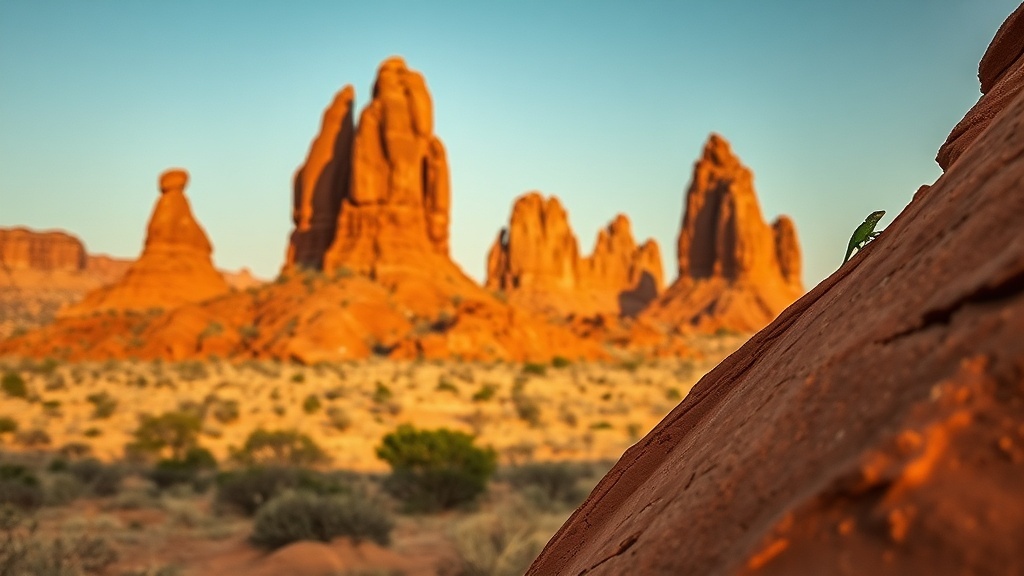
Twenty-odd kilometres west, the Sindou Peaks (Pics de Sindou) are a narrow ridge of sandstone fins and needles eroded into a stone labyrinth—sacred ground to the Senufo, and the single most photographed landscape in the country. Nearby Lake Tengrela shelters a resident hippo population that can be approached by pirogue at dawn, and the Dômes de Fabédougou are weathered limestone mounds that look like a scale model of Australia's Bungle Bungles.
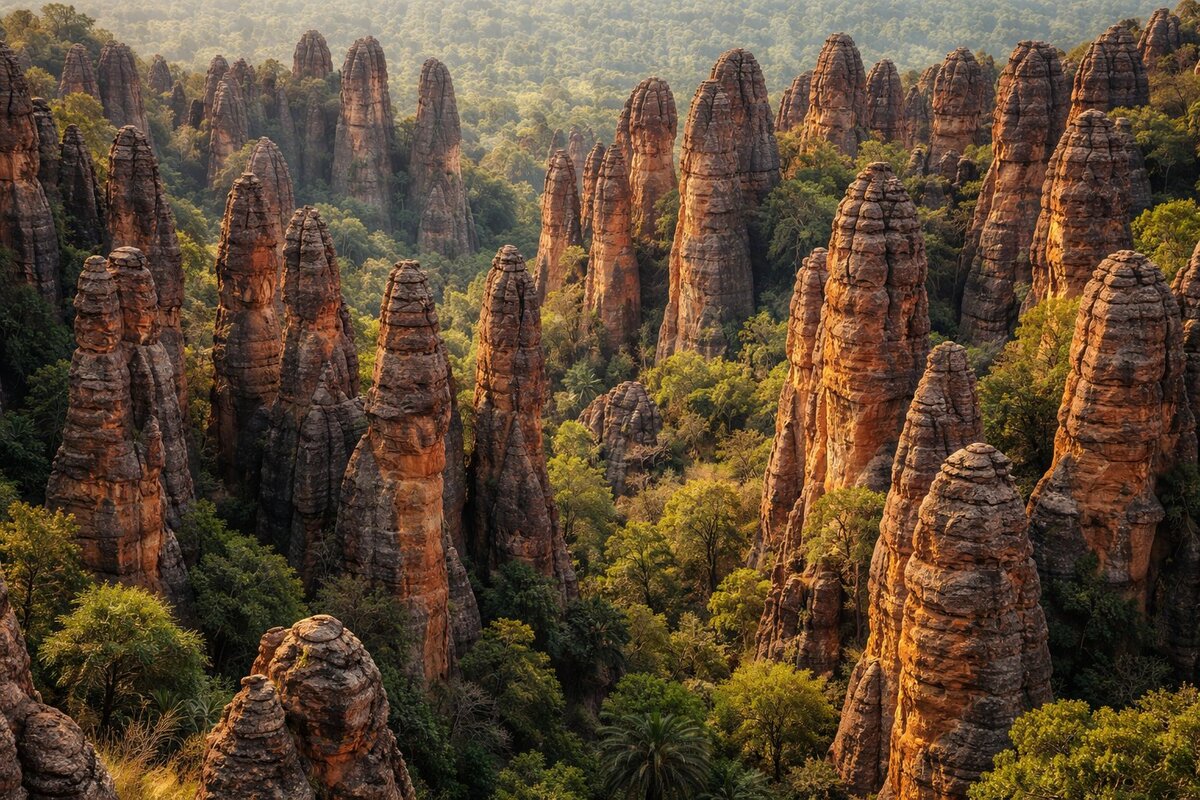
Pics de Sindou
Sandstone fins eroded into a stone labyrinth on the Senufo lands of the southwest.
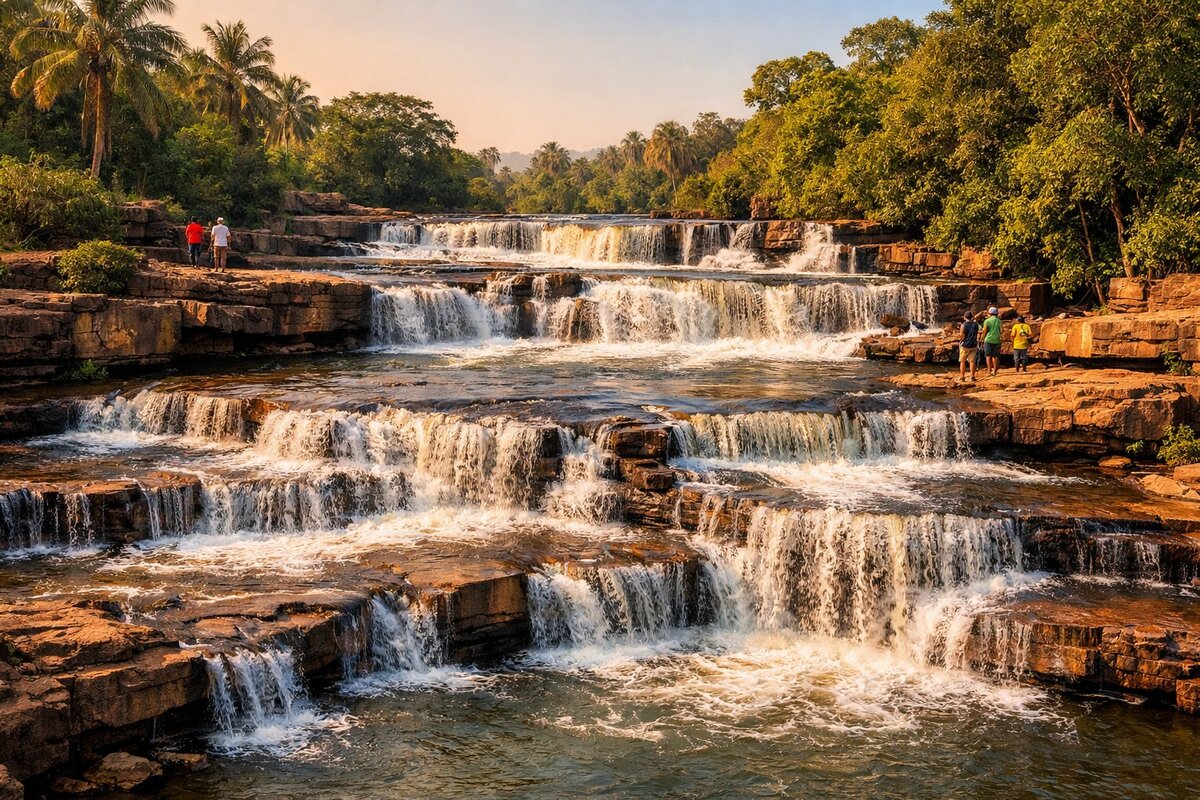
Cascades de Karfiguéla
The Banfora cascades run hardest from July to January, below the escarpment and its sugar-cane plain.
🎨 Tiébélé & Loropéni
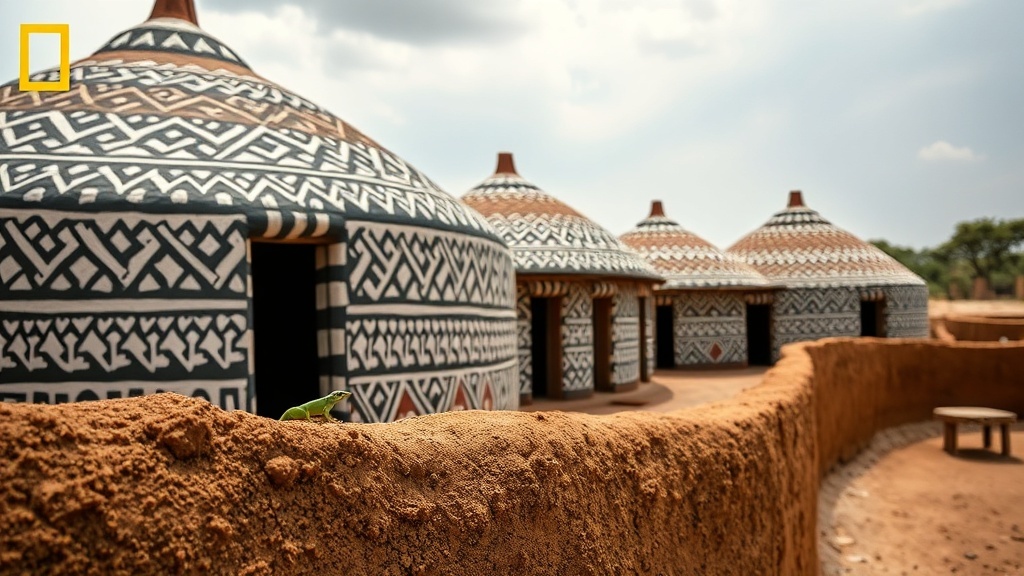
In the far south near the Ghanaian border, the Royal Court of Tiébélé is a walled Kassena compound whose earthen houses are painted by the women of each household in geometric black, white and ochre bands—cosmological signs, not decoration, renewed before each rainy season. The court was inscribed on the UNESCO World Heritage List in 2024. Access is by permission of the chief; photography rules are taken seriously.
West of there stand the Ruins of Loropéni, Burkina Faso's first World Heritage Site (2009): 1.7 hectares enclosed by laterite walls up to six metres high, part of a network of stone-walled settlements built by the Lohron or Koulango and tied to the trans-Saharan gold trade between the 11th and 17th centuries. The site is quiet, largely unexcavated, and unlike almost anything else in West Africa.
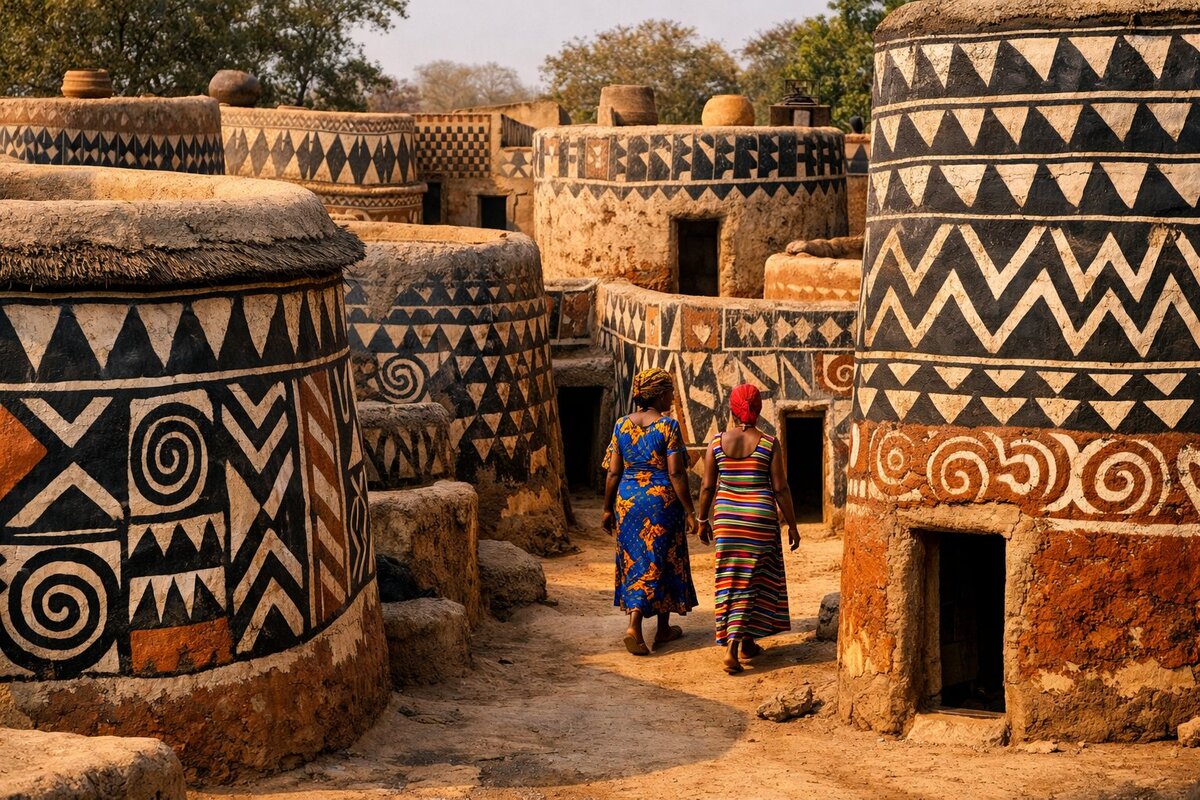
Royal Court of Tiébélé
Kassena earthen houses painted in geometric bands by the women of each household — UNESCO-listed in 2024.
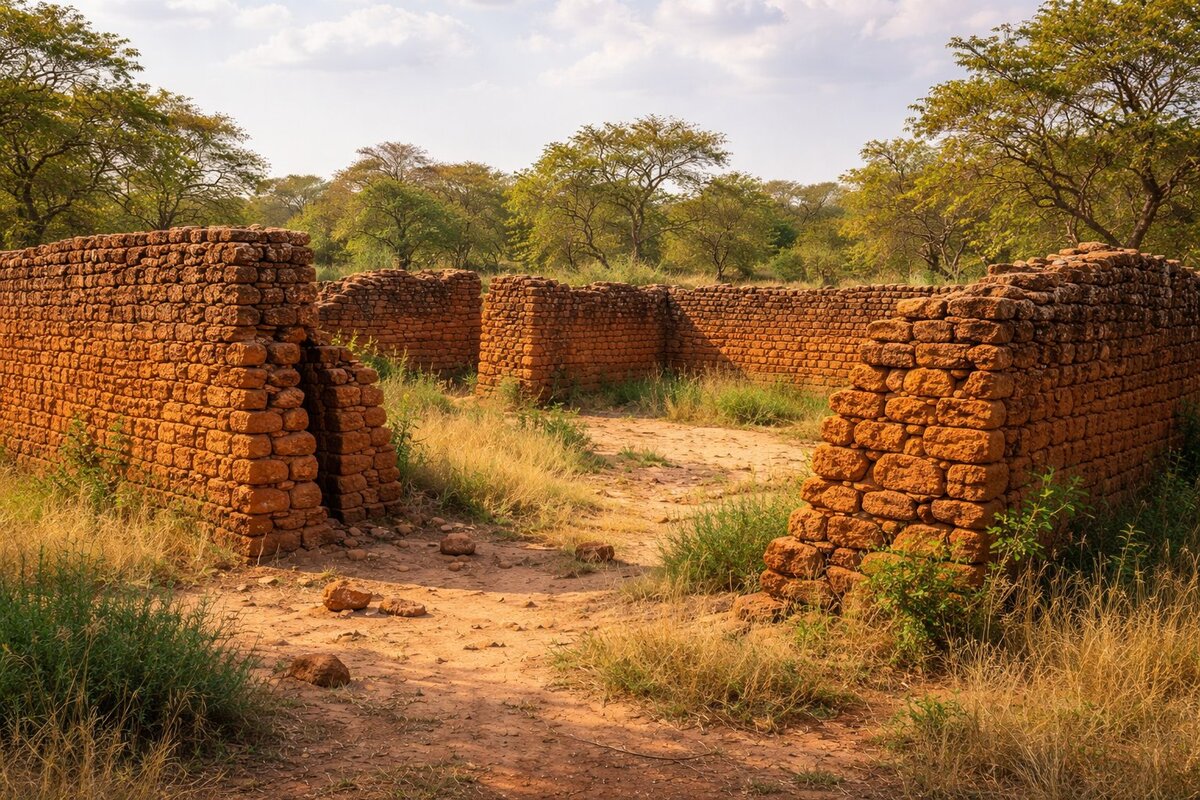
Ruins of Loropéni
Laterite walls up to six metres high, raised on the gold road between the 11th and 17th centuries.
🍜 Cuisine
Burkinabè cooking is Sahelian farm food: millet, sorghum, maize and rice built into thick porridges and one-pot rice dishes, enriched with groundnuts, okra, dried fish and néré (locust bean) that ferments into the pungent seasoning paste soumbala. Shea butter—Burkina Faso is one of the world's largest shea producers—does the work that olive oil does elsewhere. Meals are communal, eaten by hand from a shared bowl, and street grills (maquis) serve the country's best food after dark.
Tô
Millet Porridge
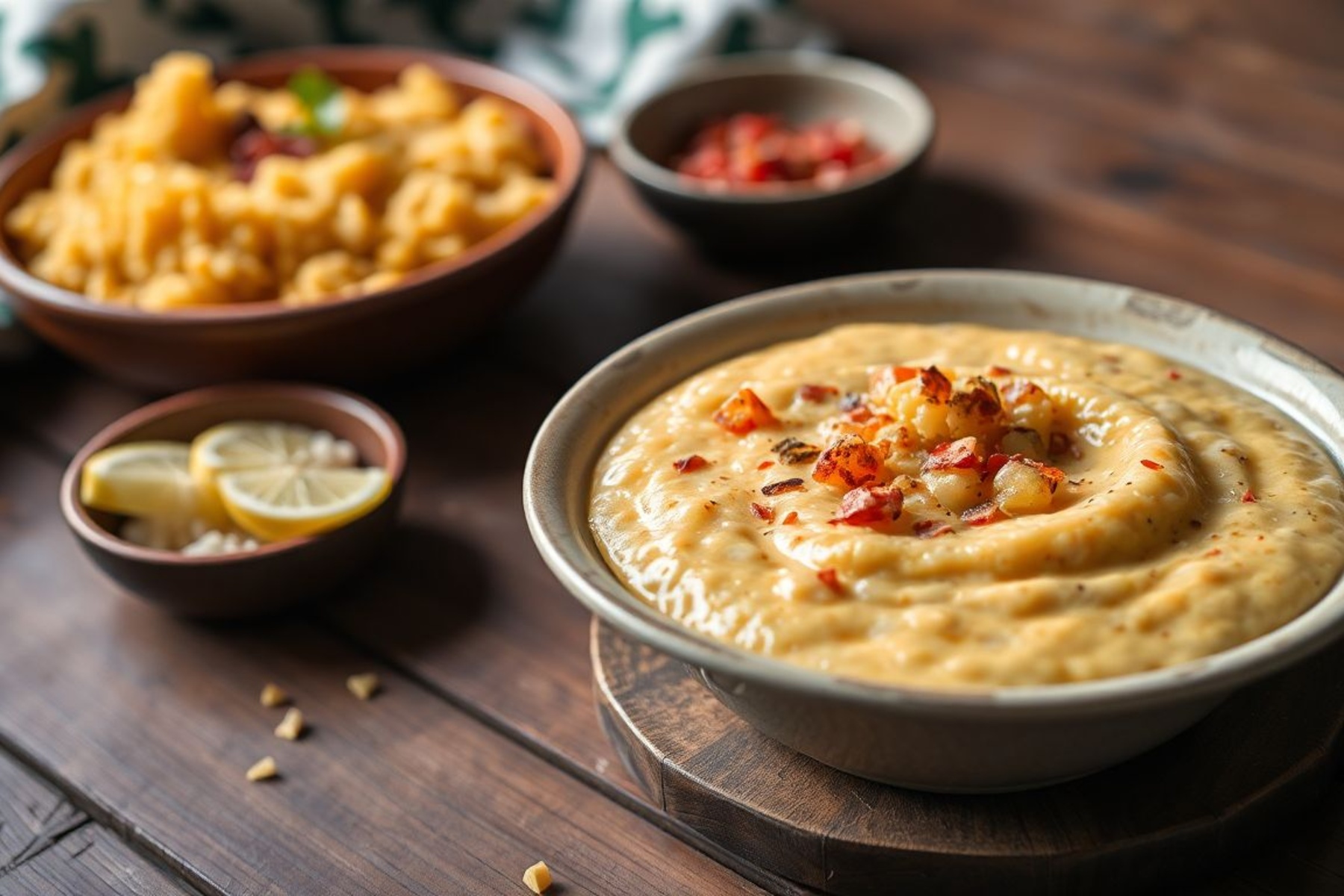
Thick millet porridge—the essential Burkinabè staple eaten with sauce. This recipe serves two.
Ingredients: 240ml millet flour, 720ml water, Salt, Peanut or okra sauce for serving.
Preparation: Bring water to boil. Make slurry with some flour and cold water. Pour into boiling water, stirring. Then add remaining flour gradually. Stir vigorously until very thick. Last, serve with sauce.
💡 The consistency should be thick enough to mold into balls.
Sauce Arachide
Peanut Sauce
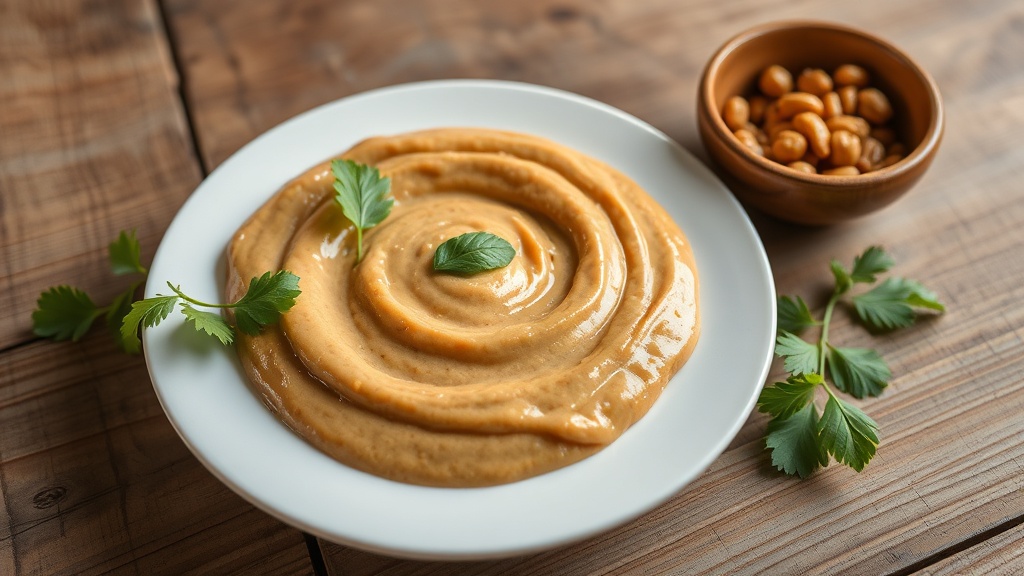
Rich peanut sauce with meat or fish—poured over tô or rice. This recipe serves two.
Ingredients: 120ml peanut butter, 200g beef or fish, 2 tomatoes, 1 onion, Chili, stock cube, Okra (optional).
Preparation: Brown meat, set aside. Sauté onion and tomatoes. Add peanut butter, thin with water. Then return meat, simmer until tender. Sauce should coat a spoon. Finally, serve over tô or rice.
💡 Natural peanut butter makes the best sauce.
Riz Gras
Fatty Rice
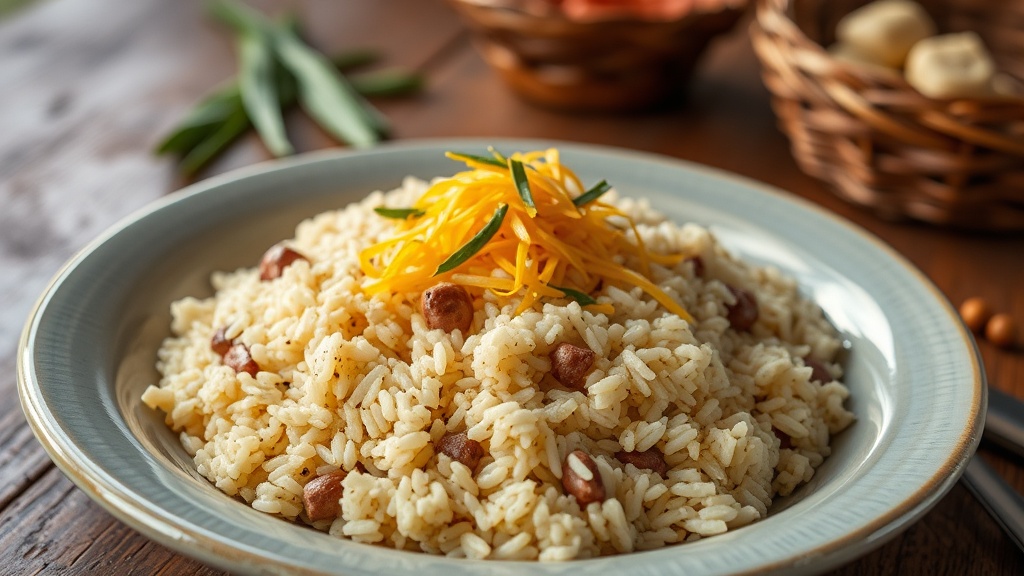
One-pot rice cooked with tomatoes, meat, and vegetables. This recipe serves two.
Ingredients: 240ml rice, 200g beef or chicken, 2 tomatoes, 1 onion, 1 carrot, Cabbage, Oil, stock cube.
Preparation: Brown meat with onion. Add tomatoes, cook down. Add vegetables and water. Then when half cooked, add rice. Simmer until rice is done. To finish, all liquid should absorb.
💡 Called 'fatty' because it's cooked with plenty of oil.
Signature dishes: Tô (saghbo) – stiff millet or maize porridge, the cornerstone of the Burkinabè diet, torn by hand and dipped in sauce. Sauce gombo – okra sauce, often thickened with dried fish and soumbala. Riz gras – the West African one-pot tomato rice, Burkina Faso's Sunday dish. Poulet bicyclette – lean free-range chicken grilled whole over charcoal, named for the birds that spend their lives dodging bikes. Babenda – a rustic stew of wild greens, rice and fermented fish. Brâibâ and samsa – fried millet and bean cakes sold at roadside stalls.
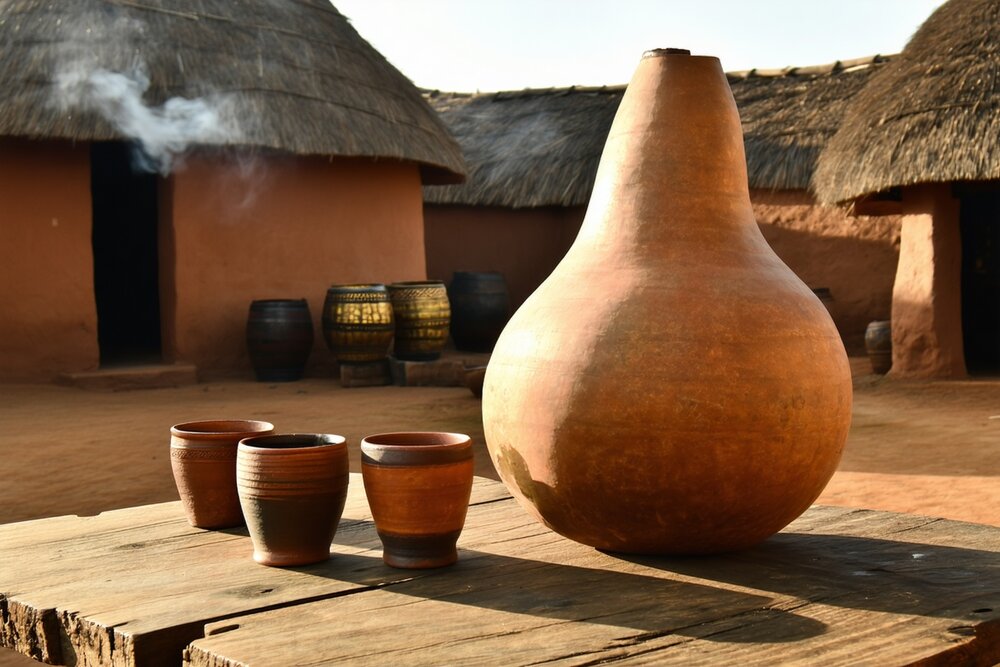
Beverages: Dolo – the cloudy, faintly sour sorghum beer brewed by women and drunk warm from calabashes at neighbourhood cabarets. Zoom-koom – millet flour, ginger, lemon and sugar, the national thirst-quencher. Bissap – hibiscus infusion, served iced or frozen in knotted plastic sachets. Bandji – palm wine, mostly in the southwest. Burkina Faso grows no grapes; anything labelled wine is imported.
🍷 Wine, Spirits & Drinking Culture
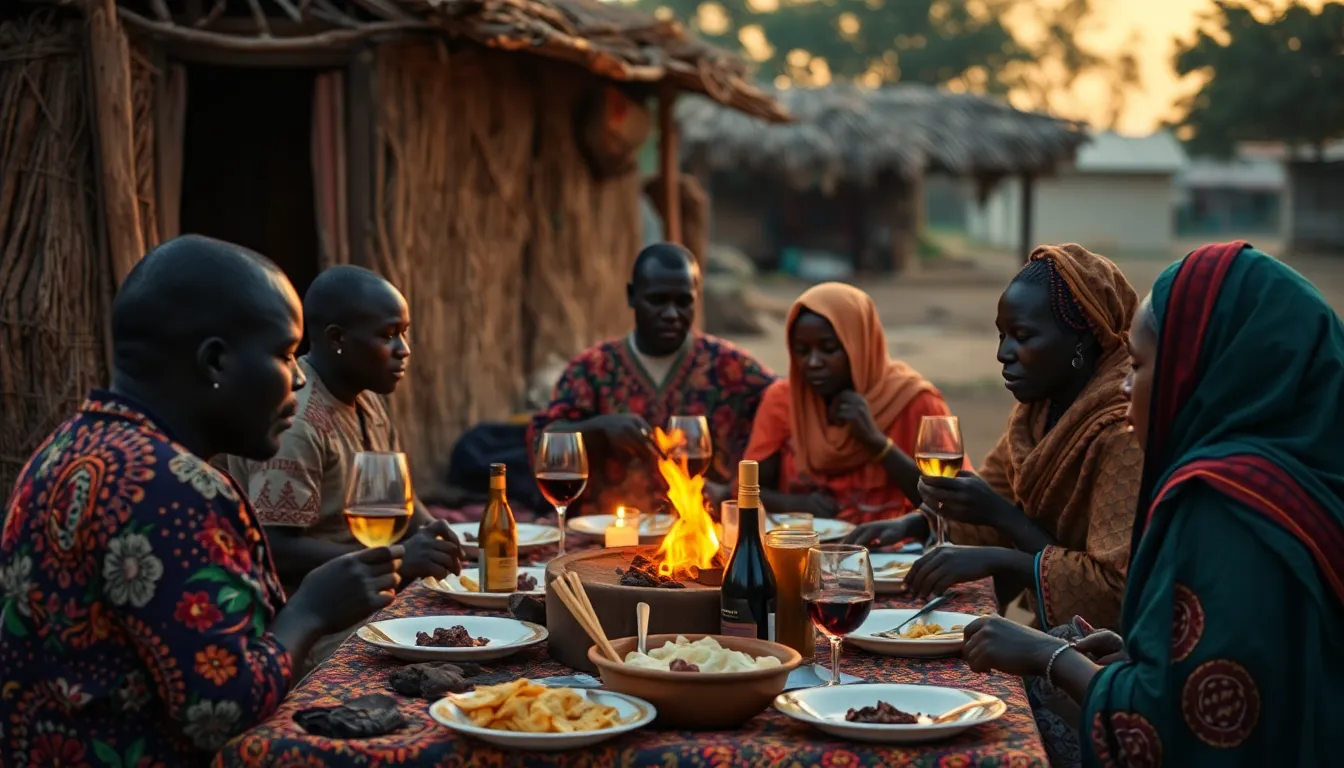
Burkina Faso has no wine production. The landlocked Sahelian nation has a hot, semi-arid climate unsuited to grape cultivation. Dolo (sorghum or millet beer, brewed by women, consumed communally from calabash gourds at dolo bars called cabarets) is the most important traditional beverage and a central institution of Burkinabè social life. Zoom-koom (a refreshing millet flour and ginger drink), bissap (hibiscus juice), and bandji (palm wine, in the southwest) are widely consumed. Brakina and So.B.Bra are the local commercial beers. Despite being predominantly Muslim, Burkina Faso has a tolerant attitude toward alcohol consumption.
🌡️ Climate & Best Time to Visit
| Season | Temperature (Ouagadougou) | Conditions | Rating |
|---|---|---|---|
| Cool dry season (Nov-Feb) | 16-34°C | Dry, dusty harmattan wind from the Sahara; cool nights; FESPACO in odd years | ✅ Best |
| Hot dry season (Mar-May) | 28-42°C | Brutal heat, April is the hottest month; Sindou and Banfora bearable, the north is not | ⚠️ Very hot |
| Rainy season (Jun-Sep) | 24-34°C | Short violent storms, green landscapes, cascades at full flow; dirt roads to Tiébélé and Loropéni can close | 🌧️ Green but wet |
| Post-rains (Oct) | 24-36°C | Humid, clear skies, everything still green; Tour du Faso | ✅ Good |
Best Time: November to February, when the harmattan keeps the air dry and the nights drop to 16–18°C in Ouagadougou. The whole country is landlocked savanna and Sahel: there are no beaches, no mountains to speak of, and the annual range runs from about 16°C on a January night to over 42°C on an April afternoon. Rainfall runs from roughly 300 mm a year in the far north to 1,100 mm around Banfora. Independence Day is 5 August (1960); 11 December, Proclamation of the Republic (1958), is the main national holiday with military parades that rotate between regional capitals.
✈️ How to Get There
By Air: Ouagadougou Thomas Sankara International Airport (OUA) is served from Europe by Turkish Airlines (Istanbul) and Brussels Airlines, and from African hubs by Royal Air Maroc (Casablanca), Ethiopian (Addis Ababa), Air Côte d'Ivoire and ASKY (Abidjan, Lomé) and Air Burkina on regional routes. Air France suspended Paris–Ouagadougou in August 2023 after the Niger airspace closure and has repeatedly postponed its return (most recently announced for September 2025, subject to political approval)—check that the route actually exists before you assume a Paris connection. Bobo-Dioulasso has an airport with limited regional services.
By Land: Border crossings from Ghana (Paga), Côte d'Ivoire, Mali, Niger, Togo, and Benin. Roads to Ghana and Côte d'Ivoire are in reasonable condition. Visa: Required for almost all non-African nationalities and no longer issued on arrival—apply through the e-visa portal or an embassy in advance (see Practical Information; U.S. passport holders are currently barred). ⚠️ Security: Check current travel advisories—large parts of the country (especially north and east) are subject to travel warnings due to armed insurgency.
📋 Practical Information
On 30 December 2025 Burkina Faso announced a total reciprocal visa restriction on United States nationals, mirroring the U.S. proclamation of 16 December 2025 that suspended visa issuance to Burkinabè citizens from 1 January 2026. As of September 2026 no Burkinabè visa is being issued to U.S. passport holders. Travellers holding a second nationality should apply on that passport and confirm the position with the Embassy of Burkina Faso before booking anything.
Visa (other nationalities): Required for almost everyone; nationals of the AES states (Mali, Niger) and most ECOWAS countries still enter freely, and Burkina Faso has continued to honour ECOWAS free-movement protocols despite formally leaving the bloc alongside Mali and Niger in January 2025. Others apply through the official e-visa portal (30 days, single entry, roughly US$140, about five working days) or at an embassy. A yellow fever certificate is checked on arrival. Currency: West African CFA franc (XOF), pegged to the euro at 655.957; Burkina Faso remains in the UEMOA monetary union despite the ECOWAS exit. ATMs work in Ouagadougou and Bobo-Dioulasso; carry cash everywhere else. Language: National languages recognized by law are official languages; French and English are working languages. Mooré, Dioula and Fulfulde remain widely used in daily life, while English is much less common in ordinary travel situations.
Health: Yellow fever vaccination is mandatory and enforced. Malaria is present year-round at high transmission—prophylaxis is not optional. Meningitis and typhoid vaccines are advised; the Sahel meningitis belt peaks from December to June. Medical facilities are basic, essentially absent in rural areas, and the U.S. added a health risk indicator to its advisory in May 2026. Evacuation insurance is essential. Electricity: 220V, type C/E plugs, frequent load-shedding. Connectivity: Orange and Moov cover the cities; the government has cut mobile internet during security incidents.
⚠️ Travel Advisory & Safety
The Czech Ministry of Foreign Affairs recommends restricting travel to Burkina Faso to strictly necessary journeys because of the risk of terrorism and kidnapping across the country, including a significant risk in the capital. The UK FCDO advises against all travel. The U.S. Department of State maintains Level 4 — Do Not Travel — citing crime, kidnapping, terrorism and health risks.
For Czech travelers: consult the latest MZV warning before departure and register in DROZD if travel is unavoidable. Follow instructions from local authorities and avoid photographing security forces, military sites, checkpoints or government infrastructure.
Movement: rural and intercity road travel carries substantial risk, especially after dark. Armed groups and security operations affect large parts of the country, while the situation can shift rapidly. Do not treat a route as safe simply because it was open recently.
Health: yellow-fever vaccination requirements and malaria prevention are important practical considerations; medical capacity outside Ouagadougou is limited. Insurance should explicitly cover the planned destination and emergency evacuation.
Sources: Czech Ministry of Foreign Affairs, UK FCDO, and U.S. Department of State. Recheck immediately before travel.
💰 Cost of Living
Burkina Faso is very affordable. Budget travelers can manage on $15–25/day, mid-range on $40–60/day. FESPACO festival period pushes accommodation prices up significantly in Ouagadougou.
🏨 Accommodation
Accommodation ranges from basic auberges (guesthouses) to a handful of international-standard hotels in Ouagadougou. Bobo-Dioulasso has characterful small hotels. Outside major cities, options are extremely limited.
Ouagadougou: Hôtel Splendide ($30–50), Laico Ouaga 2000 ($80–120), Bravia Hotel ($60–90). Bobo-Dioulasso: L'Auberge ($20–35), Hôtel Teria ($40–60). Banfora: Hôtel Canne à Sucre ($15–30).
🎭 Festivals & Events
FESPACO (Pan-African Film and Television Festival of Ouagadougou, biennial, late February–early March in odd years) transforms the capital into the capital of African cinema. The 29th edition (22 February–1 March 2025) ended with a home win: Dani Kouyaté's Katanga, la danse des scorpions took the Étalon d'or de Yennenga, Burkina Faso's first Golden Stallion in 28 years. The 30th edition is scheduled for 27 February–6 March 2027.
Other events: FESTIMA, the International Festival of Masks and the Arts in Dédougou (biennial, even years, late February–early March), the country's great gathering of Bwa, Bobo, Mossi and Gurunsi mask societies; Nuits Atypiques de Koudougou (music, late November); the SIAO international craft fair in Ouagadougou (biennial, even years, October–November); the Tour du Faso cycling race (late October–early November); the Mogho Naba's Friday dawn ceremony (weekly, free); Independence Day on 5 August and the 11 December national holiday. Security conditions and the state's event calendar change at short notice—confirm dates before travelling.
🏛️ UNESCO World Heritage
Burkina Faso has four inscribed World Heritage Sites—three cultural and one natural, the last shared with Benin and Niger.
| Site | Year | Type | Notes |
|---|---|---|---|
| W-Arly-Pendjari Complex | 1996, ext. 2017 | Natural | Transboundary savannah with Benin and Niger; West Africa's largest elephant population. Lies inside a do-not-travel security zone. |
| Ruins of Loropéni | 2009 | Cultural | Laterite-walled fortress of the trans-Saharan gold trade, 11th–17th centuries. The country's first inscription. |
| Ancient Ferrous Metallurgy Sites | 2019 | Cultural | Five components at Douroula, Tiwêga, Yamané, Kindibo and Békuy. Douroula's furnaces date to the 8th century BCE, among the oldest iron production known anywhere. |
| Royal Court of Tiébélé | 2024 | Cultural | Kassena chiefly compound with painted earthen architecture; the newest inscription. |
⚠️ Note on W-Arly-Pendjari: the Burkinabè sector (Arly and W) sits within regions under Level 4 advisories, and the Beninese and Nigerien sectors are equally affected. Tour operators have not run the complex from the Burkinabè side for several years.
💼 Business & Economy
Burkina Faso’s economy combines agriculture, livestock, gold mining, trade and a large informal sector. Ouagadougou and Bobo-Dioulasso are the principal commercial centers. The country uses the West African CFA franc (XOF) and remains part of the West African Economic and Monetary Union. For visitors, cash is important outside major hotels and formal businesses, while connectivity and transport can be disrupted by the security situation.
🎒 Packing Tips
Essential: Passport valid six months beyond arrival, yellow fever vaccination certificate (checked at Ouagadougou airport), pre-approved visa, CFA francs in cash (ATMs are unreliable outside Ouaga and Bobo), travel insurance that explicitly covers war, terrorism and medical evacuation, and an unlocked phone for an Orange or Moov SIM.
Clothing: Loose cotton and linen for 40°C+ heat, a wide-brimmed hat, a light scarf against harmattan dust (December–February), modest cover for shoulders and knees, closed shoes for markets. Health: Antimalarials (Burkina Faso is high-transmission year-round), DEET repellent, oral rehydration salts, high-SPF sunscreen, a full personal medicine kit—pharmacies stock little outside the two big cities—and water purification tablets.
What NOT to bring: A drone (confiscated on arrival; aerial photography is treated as a security matter), camouflage or military-pattern clothing (illegal for civilians), conspicuous jewellery or camera rigs, and any expectation of reliable electricity outside the cities.
🌐 Useful Resources
Visa: Check with your nearest Burkina Faso embassy or consulate for current visa requirements. US citizens should consult travel.state.gov for the latest entry requirements. Emergency: Contact your country's nearest embassy or consulate for emergency assistance.
Tour Operators: Check local tourism boards and reputable international agencies. Platforms like GetYourGuide and Viator offer vetted local experiences with English-speaking guides. Maps: Maps.me (works offline), Google Maps (download offline area maps before your trip).
Online: Wikivoyage: Burkina Faso, Lonely Planet, r/BurkinaFaso (Reddit). News: lefaso.net and Sidwaya (French) for domestic news; RFI Afrique and the BBC are blocked inside the country—use a VPN or read them before you arrive. Official: the e-visa portal of the Burkinabè government, FESPACO (fespaco.bf), and the UNESCO World Heritage Centre pages for the four inscribed sites.
📚 Recommended Reading
Non-Fiction: Thomas Sankara Speaks: The Burkina Faso Revolution 1983–87 (Pathfinder) — the speeches, in his own words. Thomas Sankara: An African Revolutionary by Ernest Harsch (Ohio University Press, 2014) — the standard short biography. Burkina Faso: A History of Power, Protest and Revolution by Ernest Harsch (Zed, 2017) — from Upper Volta to the 2014 uprising. Voices of the Poor in Africa by Elizabeth Isichei — includes Mossi and Burkinabè material. Fiction & Memoir: Le Mal de peau by Monique Ilboudo — the country's best-known novel, on identity and the colonial legacy. Crépuscule des temps anciens by Nazi Boni (1962) — the first Burkinabè novel, a Bwa village before colonisation. Le Parachutage by Norbert Zongo, the investigative journalist assassinated in 1998. Film: Idrissa Ouédraogo's Yaaba (1989) and Tilaï (1990, Cannes Grand Jury Prize); Gaston Kaboré's Wend Kuuni (1982); Dani Kouyaté's Katanga (2025).
🤯 Fascinating Facts
🎬 Africa's Hollywood
Ouagadougou hosts FESPACO, the largest film festival in Africa, held since 1969. The city is considered the capital of African cinema, with multiple cinemas, film schools, and production studios dedicated to continental storytelling.
✊ Africa's Che Guevara
Thomas Sankara (1983–1987) vaccinated 2.5 million children, planted 10 million trees, promoted women's rights, and banned FGM—all while refusing foreign aid and personal wealth. Assassinated at 37, he remains one of Africa's most beloved revolutionary figures.
😂 Joking Kinship
Burkina Faso's tradition of parenté à plaisanterie allows members of certain ethnic groups to insult each other with impunity as a way of defusing tension. A Mossi can mock a Samo mercilessly—and vice versa—with both sides laughing. It's a social lubricant that helps maintain remarkable inter-ethnic harmony.
⭐ Notable People
Thomas Sankara (1949–1987) — revolutionary president who renamed the country, assassinated on 15 October 1987; Blaise Compaoré was convicted in absentia for the murder in April 2022 and Sankara was reburied at a national memorial in 2023. Joseph Ki-Zerbo (1922–2006) — historian, the first African to earn the agrégation in history, author of Histoire de l'Afrique noire and general editor of UNESCO's General History of Africa. Norbert Zongo (1949–1998) — investigative journalist and editor of L'Indépendant, murdered in 1998; his case still shapes Burkinabè press culture. Monique Ilboudo (b. 1959) — novelist, jurist and former minister, author of Le Mal de peau.
Cinema: Idrissa Ouédraogo (1954–2018) — Yaaba, Tilaï (Cannes Grand Jury Prize 1990); Gaston Kaboré (b. 1951) — Wend Kuuni, Buud Yam (Étalon d'or 1997), founder of the Imagine film institute in Ouagadougou; Dani Kouyaté (b. 1961) — Katanga, Étalon d'or 2025; Apolline Traoré (b. 1976) — Sira (Berlinale Panorama Audience Award 2023). Music: Smockey (Serge Bambara) — rapper and co-founder of the Balai Citoyen movement that helped topple Compaoré in 2014; Victor Démé (1962–2015) — Bobo-Dioulasso singer-songwriter; Amadou Balaké (1944–2014) — the "Bobo Cuban", later of Africando. Fashion: Pathé'O (Pathé Ouédraogo) — Burkinabè-born Abidjan couturier who dressed Nelson Mandela.
Sports: Hugues Fabrice Zango (b. 1993) — triple jumper, Tokyo 2020 bronze (the country's first Olympic medal), 2023 world champion, 2024 world indoor champion, indoor world record 18.07 m (2021), retired after the Tokyo 2025 World Championships; Bertrand Traoré, Edmond Tapsoba (Bayer Leverkusen, Bundesliga champion 2024) and Dango Ouattara — the current Stallions' best-known footballers; Charles Kaboré — record-cap midfielder of the 2013 AFCON finalists; Paul Daumont — cyclist, serial Tour du Faso winner.
⚽ Sports
Football is the national passion. The Étalons (Stallions) reached the Africa Cup of Nations final in 2013 (lost 0–1 to Nigeria) and finished third in 2017—still the country's best results. At AFCON 2025 in Morocco they beat Equatorial Guinea 2–1 and Sudan 2–0 to finish second in Group E, then went out 0–3 to holders Côte d'Ivoire in the round of 16 on 6 January 2026. In 2026 World Cup qualifying they finished second in Group A behind Egypt but missed the play-off places as the fifth-best runner-up when DR Congo overtook them on the final day (October 2025). Burkina Faso has never qualified for a senior World Cup; the under-17s reached the quarter-finals of the 2025 U-17 AFCON in Morocco and thereby qualified for the country's first FIFA U-17 World Cup (Qatar, November 2025).
Athletics produced the country's only Olympic medal: Hugues Fabrice Zango, triple-jump bronze at Tokyo 2020, world champion in Budapest 2023, world indoor champion in Glasgow 2024, and still the only African past 18 m (18.07 m indoor world record, 2021); he placed seventh at the Tokyo 2025 World Championships and retired. Paris 2024 brought no medal. Cycling: the Tour du Faso (late October–early November, UCI Africa Tour) is the region's premier stage race; Burkinabè rider Paul Daumont has dominated recent editions, including the 2025 race that finished in Ouagadougou on 2 November 2025. Traditional wrestling (lutte) remains important in rural areas, and warri (mancala) is played on carved boards across the country.
📰 Media & Press Freedom
Burkina Faso ranks 110th of 180 in the 2026 RSF World Press Freedom Index, down five places, and the trend is downward. Once one of West Africa's liveliest media markets—home to the fiercely independent L'Événement and the private radio network Savane FM—the sector has been squeezed hard since the 2022 coups. The junta has suspended the BBC, RFI, TV5 Monde, LCI and Voice of America, expelled correspondents from Le Monde and Libération, and used forced military conscription against critical journalists; RSF has documented several such cases, at least one of whom has not been heard from since.
Domestic reporting survives largely through community radio in local languages and through diaspora outlets. Journalists describe interrogation by the Agence Nationale de Renseignement as routine, and prosecutions for "demoralising the armed forces" or "spreading false information" are common. Assume that anything you post from inside the country about the security situation may be read by the authorities.
Human rights: Human Rights Watch and the UN have documented extrajudicial killings by both jihadist groups and state-aligned VDP militia, mass displacement of roughly two million people, and the disappearance of civil-society figures. Reporting on any of this from inside the country carries real risk.
📷 Photo Gallery
✍️ Author's Note
Burkina Faso breaks your heart and fills it simultaneously. Here is a country named for integrity, led briefly by a revolutionary who actually lived his principles, blessed with cultural wealth that UNESCO can barely catalog—and cursed by poverty, Saharan heat, and an insurgency that has displaced millions.
Yet the Burkinabè spirit is extraordinary. The laughter in Ouaga's maquis, the grace of a Mossi mask dance, the storytelling genius of its filmmakers—these persist despite everything. Thomas Sankara once said: "You cannot carry out fundamental change without a certain amount of madness." Burkina Faso has always had that beautiful madness.
Land of the upright people
—Radim Kaufmann, 2026
Support This Project
If you enjoy this guide, consider supporting independent travel journalism.
☕ Buy Me a Coffee