

🇨🇳 China at a Glance
🌏 Overview
China is civilization itself, stretched across continental space and five millennia of continuous history. From the Great Wall snaking across northern mountains to the Terracotta Warriors guarding an emperor's tomb, from the karst peaks of Guilin to the glass towers of Shanghai, China encompasses almost every landscape, climate, and register of human experience.
With 61 UNESCO World Heritage Sites — second only to Italy — China's cultural and natural heritage is staggering. The Forbidden City, the Great Wall, the Terracotta Army, the classical gardens of Suzhou, the Buddhist caves of Dunhuang and Mogao — any one of these could anchor an entire trip elsewhere in the world; in China they're stops on an itinerary.
China is also the world's second-largest economy, transforming at a pace that still startles first-time visitors. High-speed rail links cities that were a full day apart a generation ago in under three hours. Shanghai and Shenzhen showcase architecture and technology rivaling anywhere on Earth. Yet step into a Beijing hutong, a Chengdu teahouse, or a Yunnan village, and older rhythms persist entirely undisturbed by any of it.
Traveling China rewards patience — the country's sheer scale defeats hurried visits, and the language barrier is real, though translation apps and near-universal mobile payment have transformed independent travel over the past several years. This is a place where a single trip can run from Paleolithic cave art to a maglev train, from a Ming-dynasty temple to a night market lit by drone light shows — and where, outside the most touristed corners, genuine curiosity about visitors is still the norm rather than the exception.
⚠️ Travel Advisory & Visa Notes for American Travelers (2026)
U.S. State Department rating: Level 2 — Exercise Increased Caution, in place since 27 November 2024 and still current in September 2026, citing the PRC's arbitrary enforcement of local laws, including exit bans that can prevent departure without warning or clear legal process. This is not a "reconsider travel" advisory — it's the same tier as much of Europe — but the specific risk (mainly affecting business travelers, journalists, dual nationals, and anyone with an active legal or financial dispute in China) is worth actually reading rather than skimming.
- Americans are not on China's visa-free list. Unlike the UK and Canada (added February 2026) and roughly 55 other countries, U.S. passport holders still need a visa for a standard tourist trip. Apply for an L visa — $140 at time of writing (a reduced rate running through December 31, 2026; standard fee is $185), typically issued as a 10-year multiple-entry visa. Apply via the COVA online system, then a CVASC appointment; budget 1–3 weeks.
- No visa needed for short transits: the 240-hour (10-day) visa-free transit policy covers U.S. citizens at 65 designated ports, as long as the itinerary continues onward to a third country or region (not back to the U.S.) — you can now cross provincial lines within the window, e.g. flying into Beijing and out of Shanghai.
- Tibet and Xinjiang require additional permits regardless of visa type — a Tibet Travel Permit is mandatory and only issued through a licensed tour operator; independent travel in Tibet isn't permitted.
- Passport requirements: 6+ months validity beyond your stay, 2+ blank visa pages. You must register your address with the local Public Security Bureau within 24 hours of arrival — hotels do this automatically; private stays require self-registration.
- Hong Kong, Macau, and Taiwan are separate jurisdictions with their own entry rules, not covered by a mainland China visa.
- Health coverage: U.S. health insurance generally does not work in China. A single hospital day for a foreigner can run $500–1,500 out of pocket; get travel insurance that explicitly covers China before you go.
🇨🇳 Local emergency numbers: Police 110 · Ambulance 120 · Fire 119.
✅ Before you go: Enroll in STEP and check travel.state.gov within 30 days of departure — this is a fast-moving policy area and both the visa-free list and advisory wording have shifted multiple times in the past year.
🏷️ Name & Identity
The English name "China" most likely derives from the Qin dynasty (221–206 BCE), the short-lived but transformative regime that first unified the warring states into a single empire. In Mandarin, the country is Zhōngguó (中国) — "Middle Kingdom" — a name reflecting the historical Chinese worldview that their civilization sat at the center of the world, with everything else arranged around it. Chinese characters, refined over more than 3,000 years, remain one of the oldest continuously used writing systems on Earth, conveying meaning through the shape of the character rather than through sound.
The national flag carries five yellow stars on red: the large star represents the Communist Party, the four smaller stars the unity of the Chinese people under its leadership, and the red field symbolizes revolution.
Officially, China recognizes 56 ethnic groups; Han Chinese make up roughly 92% of the population, with Tibetans, Uyghurs, Mongols, Zhuang, Miao, and dozens of others maintaining distinct languages and traditions across the remaining share. Regional identity runs strong even within the Han majority — Cantonese, Shanghainese, and Sichuanese identities each carry their own dialect, cuisine, and cultural reputation, distinctions locals notice even when visitors don't.
🗺️ Geography & Regions
China spans roughly 9.6 million square kilometers — the third or fourth-largest country on Earth depending on how disputed borders are counted — and packs in nearly every terrain and climate zone that exists. The Himalayan frontier along the Tibetan border includes the Chinese side of Mount Everest (8,849m); the fertile Yangtze and Yellow River valleys hold the agricultural heartland that has fed Chinese civilization for millennia; the Gobi Desert stretches across the north; and tropical Hainan Island sits far enough south for palm trees and coral reefs.
The climate compresses all of this into sharp contrasts. The southeastern coast runs humid subtropical, with citrus groves and tea plantations; the northeast gets genuinely cold continental winters; the Tibetan plateau is alpine at elevations most countries reserve for mountaineering; and the southwest, around Yunnan, stays temperate and green nearly year-round thanks to its elevation and latitude working against each other.
Administratively, China divides into 23 provinces, 5 autonomous regions (including Tibet and Xinjiang), 4 direct-controlled municipalities (Beijing, Shanghai, Tianjin, Chongqing), and 2 special administrative regions (Hong Kong and Macau, governed under separate legal systems). Each region has a genuinely distinct character — the industrial rust-belt northeast bears little resemblance to the tech corridors of Shenzhen and Hangzhou, and the ancient capitals of Xi'an and Nanjing feel worlds away from the frontier landscapes of Tibet and Xinjiang.
🗺️ Map of China
Key destinations covered on this page — Beijing, Shanghai, Xi'an, Guilin & Yangshuo, Yunnan (Lijiang, Dali, Shangri-La), Lhasa, plus the Hidden Gems — marked below. Drag to pan; use the +/− buttons to zoom.
📜 History
Dynastic China (c. 2070 BCE – 1912 CE)
Chinese civilization's written record stretches back to the Shang dynasty (c. 1600 BCE) and its oracle bones, but tradition places the first dynasty, the semi-legendary Xia, centuries earlier still. What followed was nearly 4,000 years of dynastic rule, punctuated by unification, collapse, and reunification in a cycle Chinese historians called the "dynastic cycle." The Qin (221–206 BCE) first unified the warring states under a single emperor and standardized writing, currency, and measurement — and built the first version of the Great Wall by connecting older regional fortifications. The Han (206 BCE–220 CE) opened the Silk Road and gave the majority ethnic group its name. The Tang (618–907) presided over a golden age of poetry, art, and cosmopolitan trade. The Ming (1368–1644) built the Forbidden City and the Great Wall as it mostly stands today. The Qing (1644–1912), China's last dynasty, was ethnically Manchu rather than Han — and its final century was marked by forced trade concessions, the Opium Wars, and growing internal rebellion that ultimately brought the imperial system down.
Republic, Revolution, and War (1912–1949)
The 1911 Revolution ended more than two millennia of imperial rule and established the Republic of China, but the following decades were anything but stable — warlordism, a Japanese invasion of Manchuria in 1931, full-scale war with Japan from 1937, and a civil war between the Nationalist (Kuomintang) and Communist parties that resumed once Japan surrendered in 1945. The Communist Party, led by Mao Zedong, won that civil war in 1949; the defeated Nationalist government retreated to Taiwan, where a separate government persists to this day — the root of the mainland-Taiwan question that still shapes regional politics.
The People's Republic (1949–present)
The early PRC pursued rapid, often brutal, transformation. The Great Leap Forward (1958–1962), an attempt at forced industrialization and agricultural collectivization, contributed to a famine that killed tens of millions — one of the deadliest in human history. The Cultural Revolution (1966–1976) unleashed a decade of political purges, destroyed cultural heritage, and upended millions of lives in the name of ideological purity. Mao's death in 1976 opened the door to Deng Xiaoping's economic reforms beginning in 1978 — market mechanisms introduced gradually within a one-party state, special economic zones opened to foreign investment, and the beginning of the growth that made China the world's second-largest economy within a single working lifetime. The 1989 Tiananmen Square protests and their violent suppression remain a subject the government does not permit open discussion of within China. Under Xi Jinping — Communist Party General Secretary since November 2012 and state President since March 2013, now in an unprecedented third term after the 2018 removal of presidential term limits (re-elected unanimously in March 2023), with Li Qiang as Premier since March 2023 — China has combined continued economic ambition with tighter political and social control, an assertive foreign policy, and mass surveillance infrastructure without precedent at this scale. The 2019–2020 Hong Kong protests ended with the National Security Law of June 2020; the COVID-19 pandemic, first identified in Wuhan in December 2019, was met with a strict "zero-COVID" regime that lasted until December 2022.
China in 2026: the 15th Five-Year Plan (2026–2030) was adopted at the National People's Congress in March 2026. After a period of tariff escalation, U.S. President Donald Trump made a state visit to Beijing on 13–15 May 2026, and Xi Jinping is scheduled to return the visit with a state visit to Washington beginning 24 September 2026 — the first by a Chinese president in more than a decade. Xi attended the SCO heads-of-state summit in Bishkek on 1 September 2026 and paid state visits to Kyrgyzstan and Egypt — his first to Egypt in a decade. Population has now fallen four years running (1,404.9 million at end-2025), a demographic turn that frames almost every domestic policy debate.
🧭 The Invention of the Compass
Of China's traditional "Four Great Inventions" — paper, printing, gunpowder and the compass — the compass has the strangest origin story: the device that eventually let Europeans cross open oceans began life in China as a fortune-telling tool, and took roughly thirteen centuries to become a navigational instrument at all.
From Divination to Direction
The earliest known ancestor of the compass, the sīnán (司南, "south-governor"), appears in Chinese texts from the Warring States period, around the 4th century BCE — a spoon carved from magnetic lodestone, its bowl resting and spinning freely on a flat bronze "heaven-plate" engraved with the eight trigrams of the I Ching, the 24 compass directions and the 28 lunar constellations. When the spoon stopped spinning, its handle settled pointing south. Crucially, nobody was using it to travel anywhere: the sīnán was a tool for geomancy and fortune-telling — orienting buildings and tombs according to feng shui principles, and consulting fate before major decisions. Han Dynasty court records even describe a mystic named Luan Da demonstrating a related pair of lodestone pieces to Emperor Wu, which attracted and repelled each other like a magic trick.
Shen Kuo and the Needle
The device sat in occasional ritual use for over a thousand years before a Song Dynasty polymath transformed it into science. Shen Kuo (1031–1095) — a statesman, astronomer, mathematician and one of the most productive minds of his era — gave the first explicit written description of a magnetized needle compass in his 1088 miscellany, the Dream Pool Essays. Shen Kuo didn't just describe the needle; he also became the first person anywhere to document magnetic declination — the fact that a compass needle doesn't point at true geographic north or south, but slightly off it. That observation predates European navigators grappling with the same problem by roughly four centuries.
Taking to the Water
The leap to actual navigation came soon after. Merchant and writer Zhu Yu, in his 1111–1117 book Pingzhou Table Talks, gave the first written account of compasses guiding ships at sea — describing pilots who checked the stars at night, the sun by day and, when clouds hid both, "looked at the south-pointing needle" instead, making it a genuinely all-weather navigation method for the first time in history. Chinese naval compasses of this era typically floated a magnetized needle in a bowl of water, a simple design that stayed level and usable even as a ship pitched in rough seas — while archaeological finds, including a porcelain figurine from a 12th-century Southern Song tomb holding a model pivoted compass, confirm dry, pivot-mounted versions were in parallel use as well.
Zheng He's Treasure Fleets
Chinese compass navigation reached its most spectacular demonstration under the Ming Dynasty admiral Zheng He, who led seven massive naval expeditions to the Indian Ocean between 1405 and 1433 — fleets of hundreds of ships, some reportedly over 120 meters long, dwarfing anything Europe would launch for another century. Zheng He's pilots steered by "compass bearing" routes recorded in sailing charts that combined magnetic headings with star positions, a level of systematized maritime navigation unmatched anywhere else in the world at the time.
Heading West
Compass technology reached Europe by around the 12th century, most likely carried along Indian Ocean and Silk Road trade networks through Arab merchant intermediaries — the same trading world that transmitted so much else between East and West. Once in European hands, the magnetic compass became one of the enabling technologies of the Age of Discovery: without a reliable way to hold a heading out of sight of land, the Atlantic crossings of Columbus, the circumnavigation of Magellan's fleet, and the entire European maritime expansion of the 15th through 18th centuries would have been far riskier gambles — sailing, in a very real sense, on a Chinese fortune-teller's spoon.
👥 People & Culture
China's 1.40 billion people (1,404.9 million at the end of 2025, after a fourth consecutive annual decline — births fell to a record-low 7.92 million) make it the world's second most populous country (overtaken by India in 2023), and the sheer scale means "Chinese culture" is really dozens of regional cultures sharing a writing system and a state. Confucian values around family obligation, education, and social harmony run deep even among people who would never describe themselves as religious or philosophical — deference to elders, the importance of "face" (mianzi) in social interactions, and a strong emphasis on collective over individual identity all trace back to a 2,500-year-old philosophical tradition that outlasted every dynasty that tried to suppress it.
Religious life is genuinely plural: Buddhism (particularly Mahayana and, in Tibet, Vajrayana) has the deepest cultural footprint, Taoism is native to China and shaped everything from medicine to martial arts, folk religion and ancestor veneration remain widespread in practice even where not formally professed, and there are significant Muslim (particularly Hui and Uyghur) and Christian minorities. The state maintains close oversight of all organized religion.
Language
Mandarin (Putonghua) is the official language and the medium of education nationwide, but it coexists with major regional languages — Cantonese in Guangdong and Hong Kong, Shanghainese, Hokkien, and dozens of others — that are often mutually unintelligible with Mandarin despite sharing the same written characters. English is spoken by younger, urban, educated Chinese, but drops off fast outside major cities; translation apps (particularly ones that work offline, since Google Translate is blocked) are close to essential for independent travel.
🗣️ Essential Mandarin Phrases
Basics:
- Nǐ hǎo (你好) — Hello
- Xièxiè (谢谢) — Thank you
- Shì / Bù shì (是/不是) — Yes / No
- Zàijiàn (再见) — Goodbye
Useful:
- Duōshǎo qián? (多少钱?) — How much?
- Wǒ tīng bù dǒng (我听不懂) — I don't understand
- Cèsuǒ zài nǎlǐ? (厕所在哪里?) — Where's the bathroom?
- Bù yào (不要) — I don't want it (useful with vendors)
🏛️ Beijing — The Imperial Capital
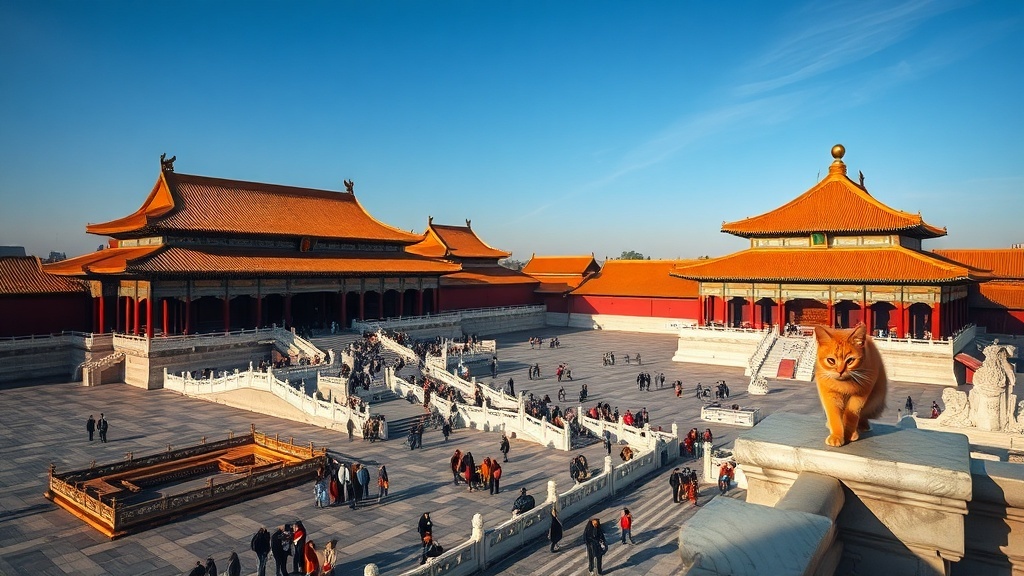
Beijing has served as China's capital for most of the past 800 years, and its monumental architecture reflects that imperial legacy. The Forbidden City — a 180-acre palace complex of 9,999 rooms — housed 24 emperors of the Ming and Qing dynasties and ranks among the world's most visited museums, its golden roofs and vermilion walls standing as shorthand for Chinese civilization itself.
Beyond the Forbidden City: the Temple of Heaven, where emperors performed sacred rituals; the Summer Palace, with its classical gardens and lakeside pavilions; and the Great Wall, accessible via several sections within day-trip range. Mutianyu offers restored walls with cable-car access; Jinshanling and Simatai give wilder, less-crowded options for serious hikers.
The city's hutong neighborhoods — narrow alleys lined with courtyard houses — preserve glimpses of old Beijing amid relentless modernization. The lakes around Houhai fill with outdoor cafes in summer; the 798 Art District showcases contemporary Chinese art in former factory buildings. With a population over 21 million, Beijing runs on dawn tai chi in public parks and late-night hotpot in equal measure — the famous sights are only the entry point.
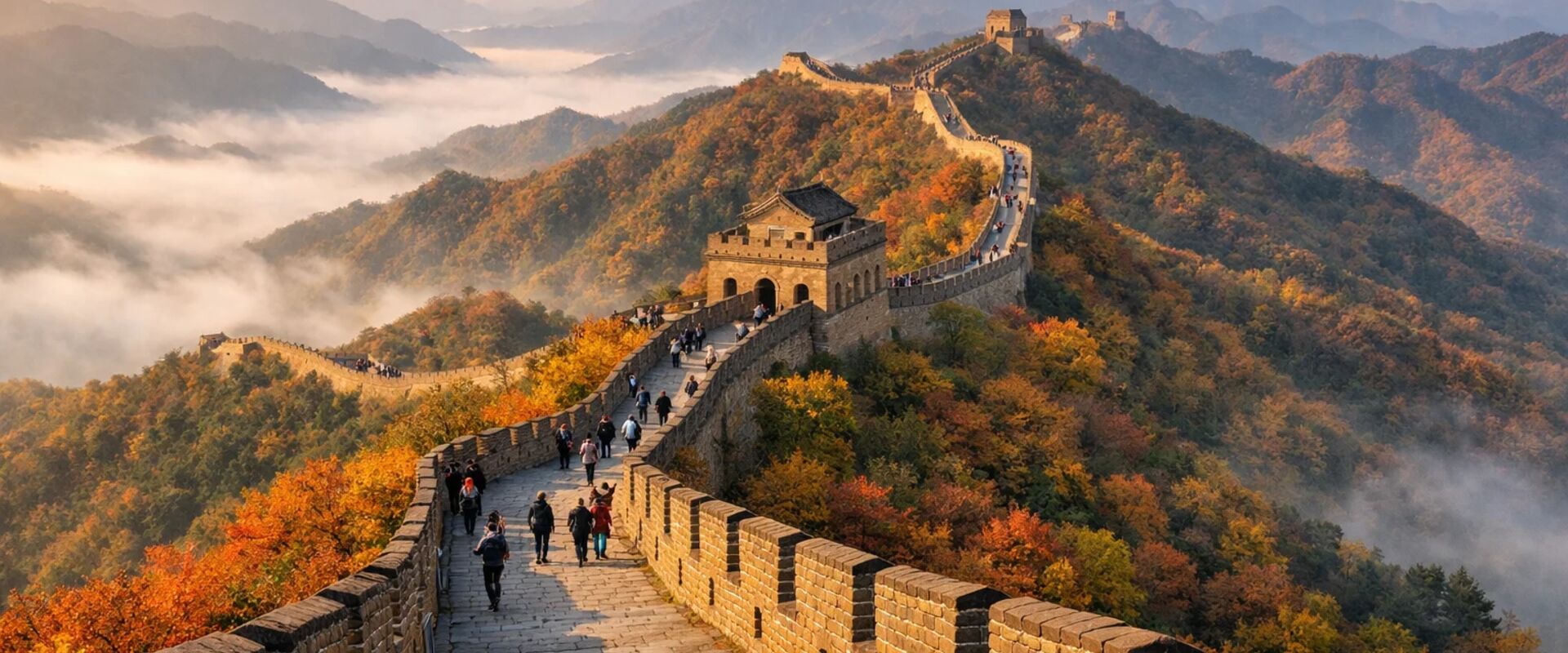
The Great Wall at Mutianyu
The most accessible restored section, roughly 90 minutes from central Beijing, with cable-car access to the ramparts.
🌆 Shanghai — China's Gateway
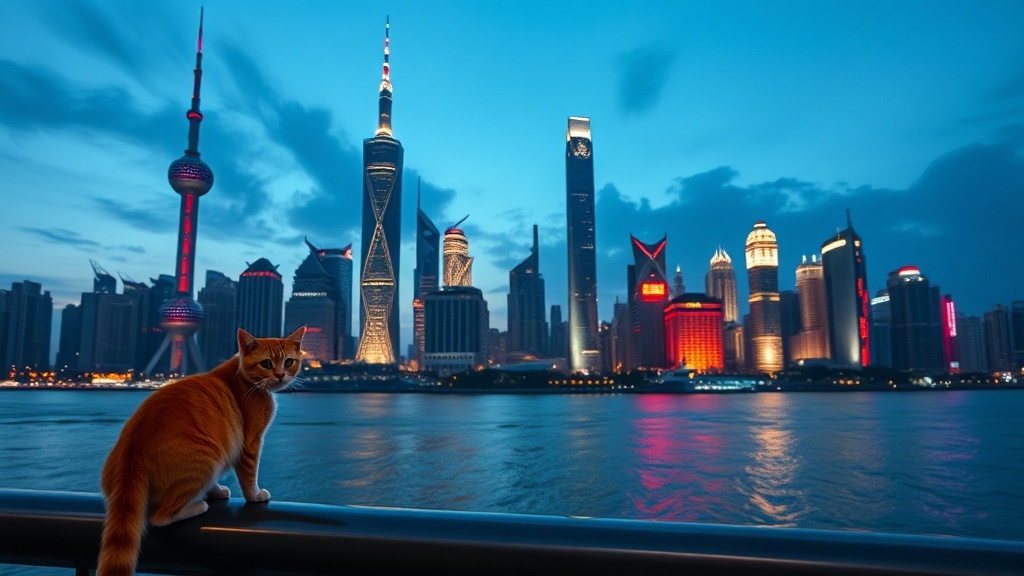
Shanghai dazzles with the Bund's colonial-era architecture facing Pudong's futuristic skyline — the Oriental Pearl Tower, the Shanghai Tower (China's tallest building), and the bottle-opener-shaped World Financial Center create one of the world's most recognizable urban vistas, and the contrast encapsulates China's journey from semi-colonial humiliation to global economic power in a single sightline.
The former French Concession's tree-lined streets, art deco apartments, and hidden cafes offer European atmosphere with Chinese characteristics. Yu Garden preserves classical Chinese garden design in the city center; the Shanghai Museum holds a world-class collection of Chinese art; M50 and the Power Station of Art showcase contemporary creativity in converted industrial spaces.
Shanghai's dining scene rivals any global city, from Michelin-starred rooms to legendary soup-dumpling shops, and its nightlife runs from sophisticated cocktail bars to underground clubs. For most travelers, Shanghai serves as China's most approachable entry point — cosmopolitan, comparatively English-friendly, and connected by excellent high-speed rail to destinations nationwide.
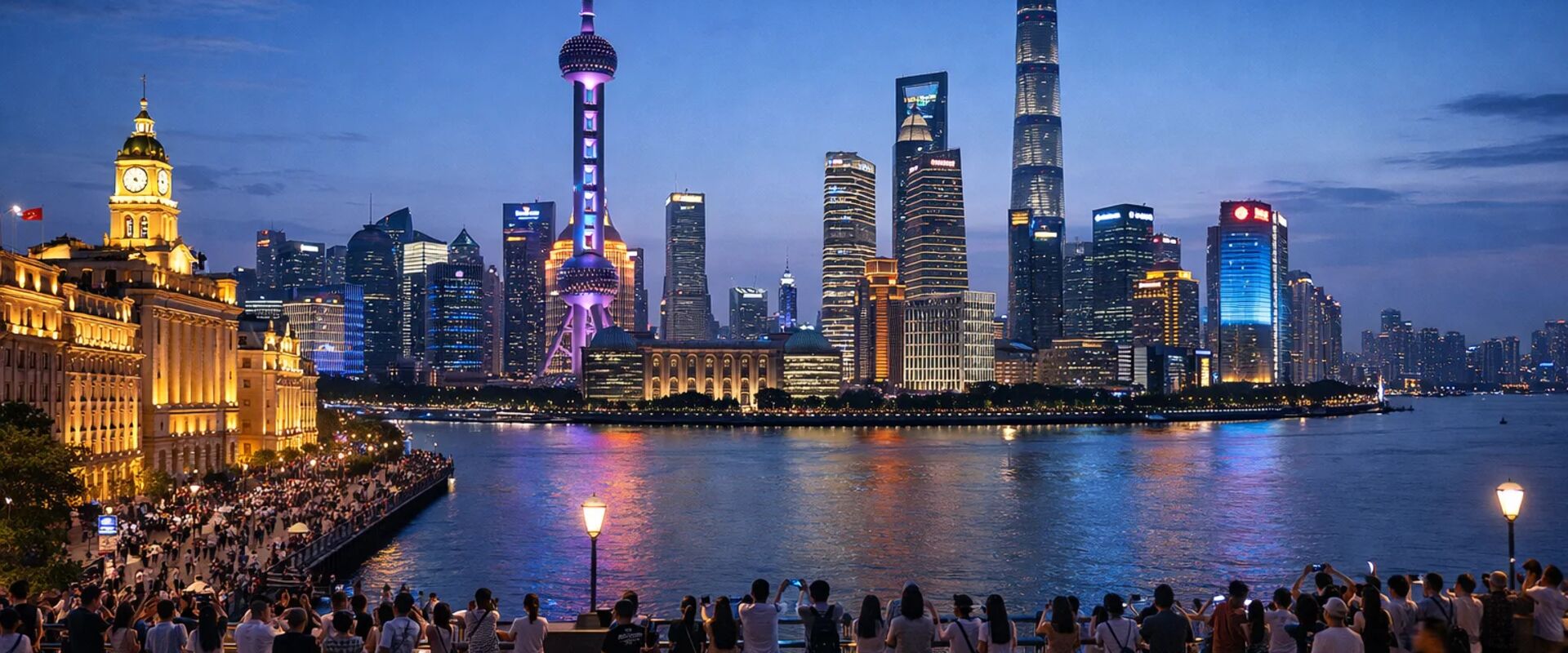
The Bund at Night
Colonial-era architecture faces the futuristic Pudong skyline across the Huangpu River.
🏺 Xi'an — Silk Road Gateway
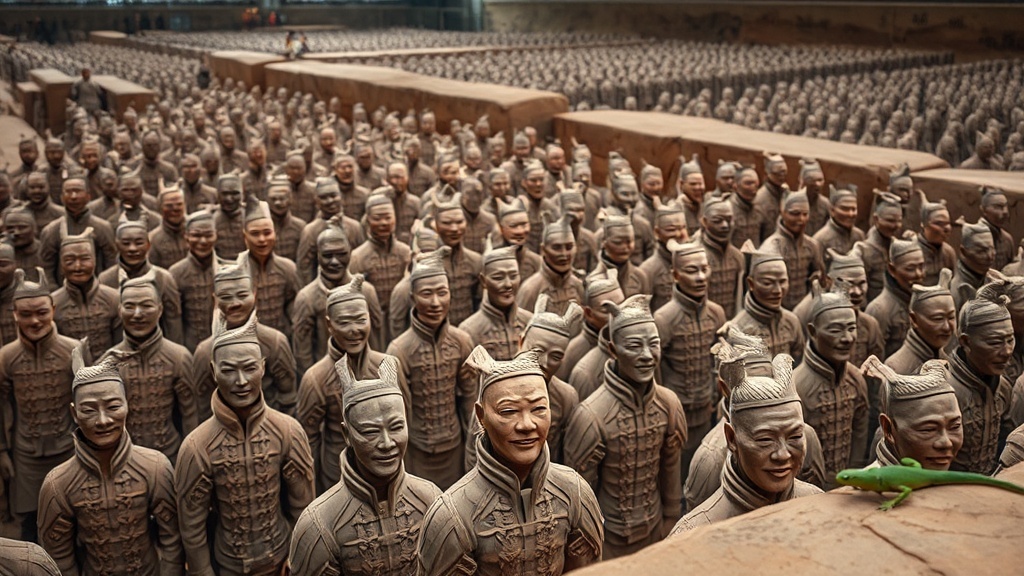
Xi'an served as China's capital for over a millennium, known then as Chang'an — the eastern terminus of the Silk Road and one of history's greatest cities. The Terracotta Warriors, discovered in 1974 by farmers digging a well, remain one of archaeology's most stunning finds: over 8,000 life-sized clay soldiers, horses, and chariots guarding the tomb of China's first emperor, Qin Shi Huang.
The ancient city walls, among China's best-preserved, can be walked or cycled in their full 14-kilometer circuit. The Muslim Quarter's narrow streets offer lamb skewers, hand-pulled noodles, and persimmon cakes alongside mosques serving the Hui community whose ancestors arrived via the Silk Road. The Big Wild Goose Pagoda has stood since 652 CE.
Xi'an also serves as gateway to the Yellow River heartland where Chinese civilization began — sacred Mount Huashan, the Shaanxi History Museum's Tang-dynasty treasures, and Buddhist temples that once made this region a center of Asian pilgrimage.
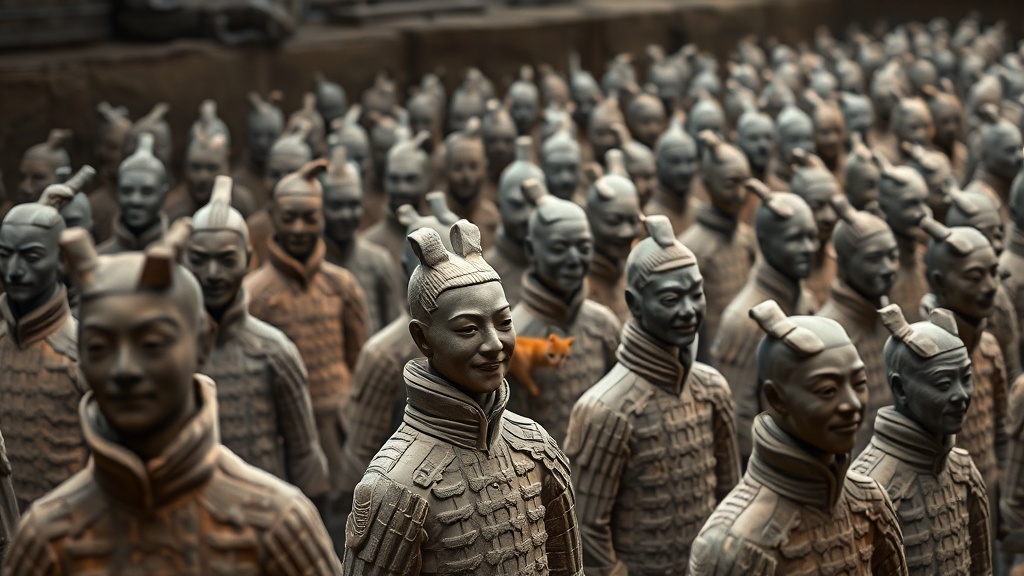
The Terracotta Army
Over 8,000 individually detailed soldiers, discovered by accident in 1974 and still being excavated today.
🏔️ Guilin & Yangshuo — Karst Paradise
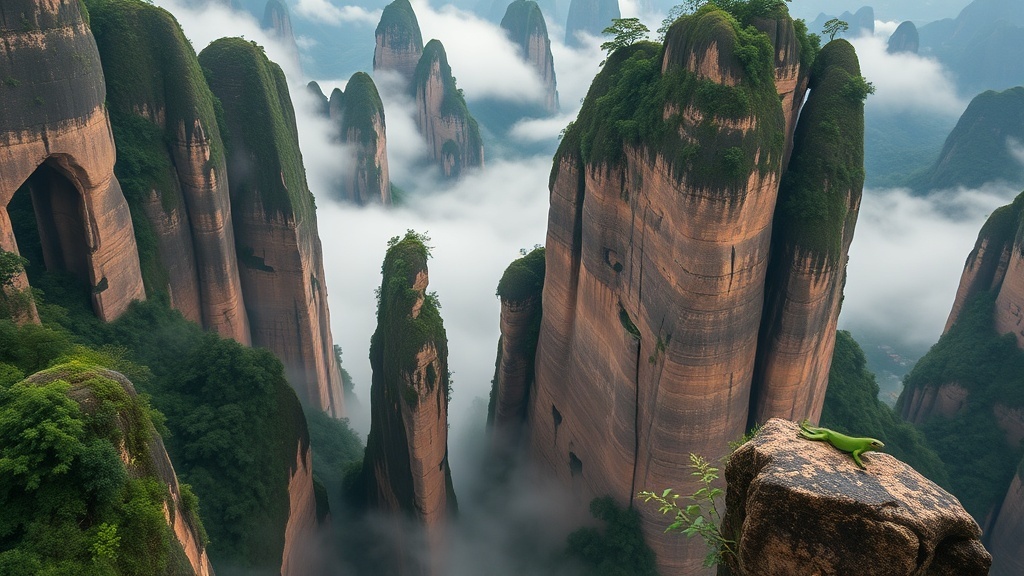
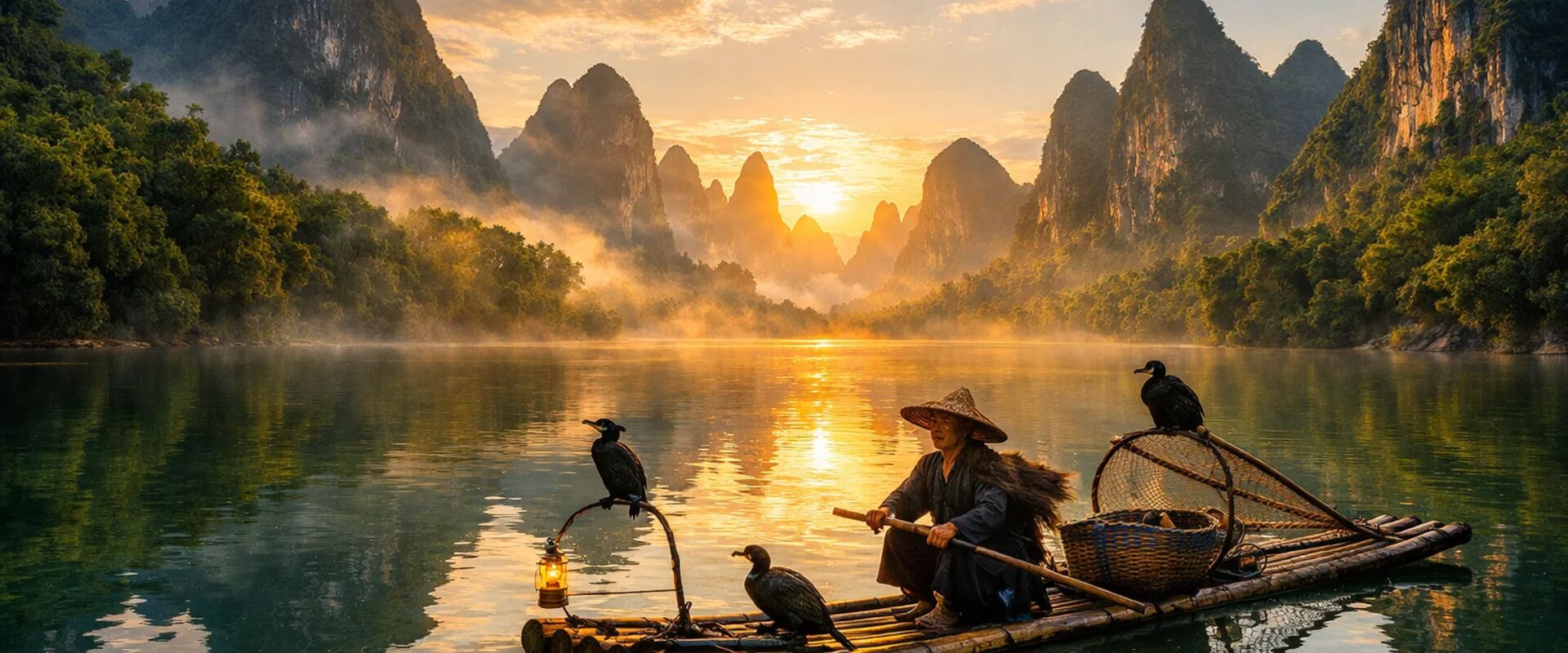
The karst landscapes of the Li River define Chinese landscape painting — limestone towers rising from rice paddies, water buffalo grazing beside bamboo groves, cormorant fishermen working from bamboo rafts. The four-hour boat journey from Guilin to Yangshuo passes through this dreamscape, one of China's most iconic travel experiences.
Yangshuo offers a more relaxed base than Guilin city itself, with cycling routes through rural villages, rock climbing on the karst cliffs, and bamboo rafting on the Yulong River. The town caters heavily to tourism but keeps its charm in the surrounding countryside — sunset from Moon Hill or a bike ride through the rice terraces explains why this landscape has inspired painters for centuries.
Beyond the main corridor, the Longji (Dragon's Backbone) Rice Terraces cascade down mountain slopes in patterns carved over 700 years by Zhuang and Yao communities — worth the detour for travelers willing to go past the most-photographed spots.
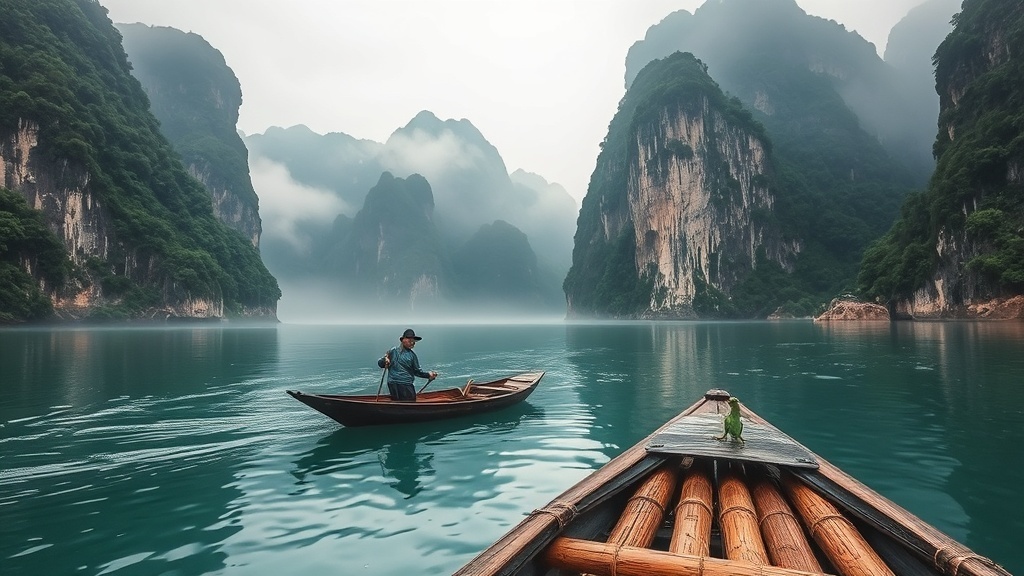
The Li River
Karst peaks emerge from morning mist between Guilin and Yangshuo — the landscape behind a thousand years of Chinese ink paintings.
🏞️ Yunnan
Yunnan, in China's far southwest, packs in more ethnic diversity, ecological variety, and dramatic landscape than most entire countries. Lijiang's old town, heavily touristed but still atmospheric, preserves Naxi architecture beneath Jade Dragon Snow Mountain; Dali offers a more relaxed pace along Erhai Lake, gateway to Bai minority villages.
Tiger Leaping Gorge ranks among the world's great treks — a two-day walk along a canyon where the Jinsha River (the upper Yangtze) thunders through a gorge 3,900 meters deep. Shangri-La (formerly Zhongdian) offers Tibetan culture — monasteries, yak butter tea, high-altitude grasslands — without the permit requirements of Tibet proper.
Further out, Yunnan keeps rewarding: the Yuanyang rice terraces engineered by the Hani people over thirteen centuries, the tropical Dai-influenced borderlands near Xishuangbanna, and the Three Parallel Rivers region where the Yangtze, Mekong, and Salween run through adjacent valleys within a single national park. This one province could occupy months of exploration on its own.
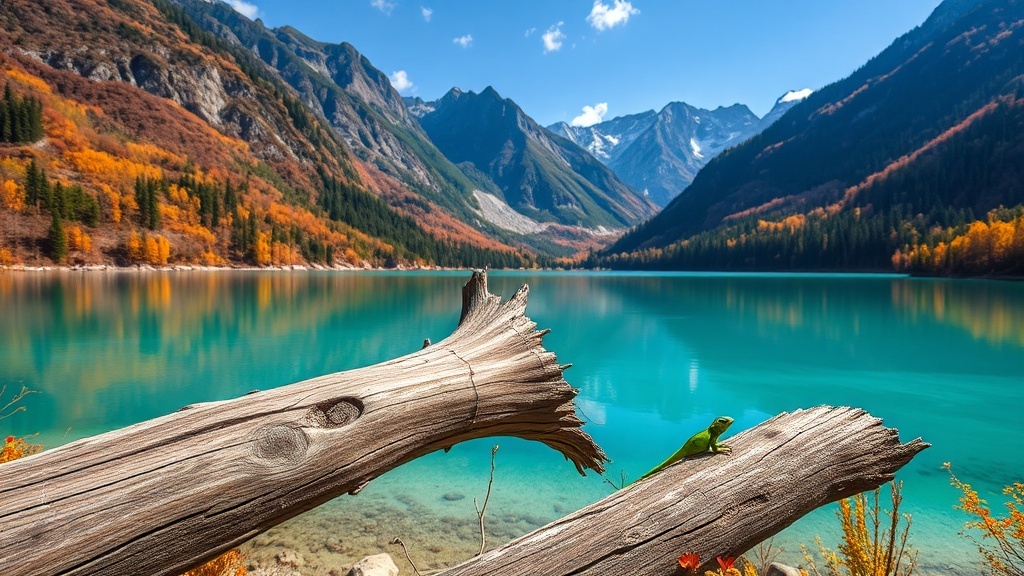
Southwest China's Landscapes
From Yunnan's terraced rice paddies to Sichuan's turquoise alpine lakes, China's southwest rewards travelers who go beyond the standard circuit.
🏔️ Tibet — The Roof of the World
Lhasa sits at 3,650 meters, and the Potala Palace — the Dalai Lama's former winter residence, a fortress-monastery of over 1,000 rooms cascading down Red Hill — remains one of the most extraordinary buildings on Earth regardless of one's politics. The Jokhang Temple, Tibetan Buddhism's most sacred site, draws pilgrims prostrating their way around the Barkhor circuit that surrounds it, many having walked for weeks or months to get there.
Beyond Lhasa, the plateau itself is the attraction: Yamdrok Lake's impossible turquoise, the high-altitude monasteries of Shigatse and Gyantse, and — for those with the time and permits — the approach to Everest Base Camp on the Tibetan (north) side, reachable overland in a way the Nepali approach isn't.
Practically, Tibet is genuinely different from the rest of China: a Tibet Travel Permit is mandatory for all foreign visitors and is only issued through a licensed tour operator, which also means independent backpacking isn't an option — you'll travel with a guide and a pre-arranged itinerary throughout. Altitude sickness is a real risk at 3,650m and higher; build in acclimatization days and consider altitude medication with your doctor before departure. Flights and trains to Lhasa are periodically restricted around politically sensitive dates — check current conditions before booking rather than assuming access.
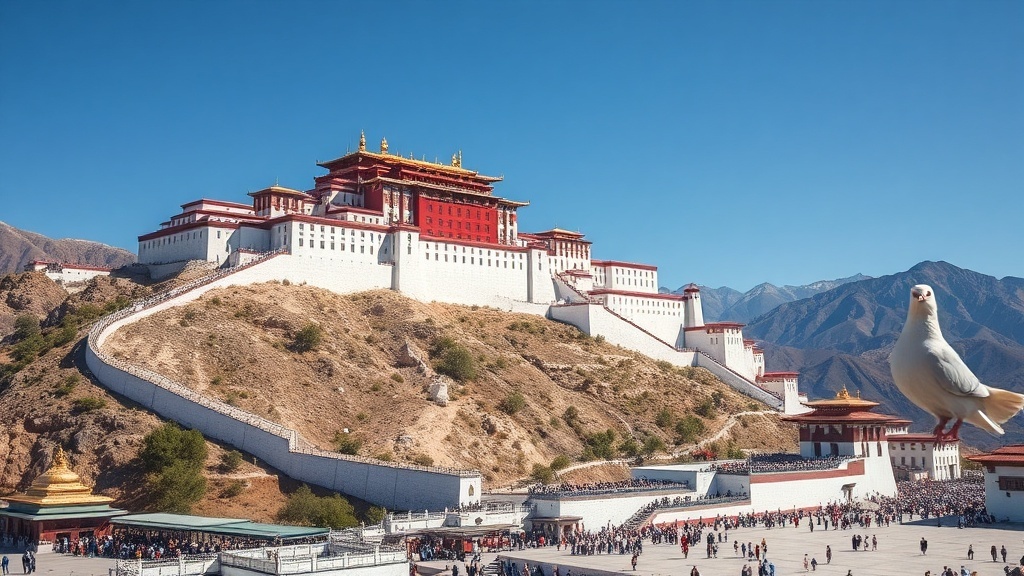
The Potala Palace
Over 1,000 rooms cascading down Red Hill above Lhasa, at 3,650 meters elevation.
🍜 Cuisine
There is no single "Chinese food" — regional cuisines differ from each other as much as Italian differs from Swedish. Sichuan cooking builds on the numbing heat of Sichuan peppercorn combined with chili (mapo tofu, dan dan noodles, hotpot); Cantonese cuisine prizes freshness and technique over spice (dim sum, roast meats, delicate steamed fish); Beijing/northern food runs toward wheat noodles, dumplings, and the city's signature Peking duck; Shanghainese cooking leans sweet and rich, with soup dumplings (xiaolongbao) as the definitive dish; and that's before accounting for Hunan, Fujian, Yunnan, Xinjiang, and a dozen other distinct regional traditions.
Street food and night markets are where a lot of the best eating happens — jianbing (savory crepes) for breakfast, skewers and stinky tofu after dark, regional specialties that never make it onto a hotel restaurant menu. Hotpot, in its countless regional variations, is as much a social ritual as a meal.
A deeper dive — including regional street food, hotpot etiquette, and full recipes — lives on the Food & Drink page →
🍷 Wine, Spirits & Drinking Culture
Baijiu — a clear, high-proof grain spirit distilled from sorghum or other grains — is China's dominant drink and, by volume, the most-consumed spirit on Earth, even though most of it never leaves the country. Moutai, the most famous brand, is treated as a status symbol at formal banquets, and toasting protocol (who drinks first, how full to pour, when to make eye contact) carries real social weight. Tea remains the true everyday beverage — China invented it, and green, oolong, black, and pu-erh teas each have their own regional heartlands and rituals. A small but genuine wine industry has emerged in Ningxia, on the edge of the Gobi, where Chinese and international producers are making increasingly serious Cabernet and Marselan. Full tasting notes, baijiu aroma categories and tea culture live on the Wine & Spirits page →
🏆 Kaufmann Wine Score — China
Rated on four criteria: Aroma (/25), Taste (/30), Finish (/20), Value (/25) — Total /100
| Wine | 🔴 Aroma | 🟡 Taste | 🟢 Finish | 🔵 Value | Total |
|---|---|---|---|---|---|
| Helan Qingxue "Jia Bei Lan" Cabernet blend (Ningxia) | 22 | 26 | 17 | 21 | 86 |
| Silver Heights "Emma's Reserve" (Ningxia) | 22 | 26 | 17 | 20 | 85 |
| Ao Yun Cabernet blend (Shangri-La, Yunnan — LVMH) | 23 | 27 | 18 | 16 | 84 |
| Grace Vineyard "Tasya's Reserve" Marselan (Shanxi) | 21 | 25 | 16 | 22 | 84 |
| Kanaan Winery "Pretty Pony" Cabernet (Ningxia) | 21 | 25 | 16 | 21 | 83 |
| Changyu Moser XV Cabernet Sauvignon (Ningxia) | 20 | 24 | 15 | 21 | 80 |
95–100 Legendary · 90–94 Outstanding · 85–89 Very Good · 80–84 Good · 75–79 Average · <75 Below Average
🌡️ Climate & Best Time to Visit
China is too large for one climate answer — the honest version depends entirely on where you're going. Beijing/north: cold, dry winters (can drop below -10°C) and hot, humid summers; spring and autumn are short but pleasant. Shanghai/Yangtze region: humid subtropical, with a genuinely uncomfortable "plum rain" wet season in June–July and hot, sticky summers. South (Guilin, Yunnan): milder year-round, though Yunnan's elevation keeps it notably cooler than the latitude suggests. Tibet: high-altitude continental — intense sun, cold nights even in summer, and heavy snow closing some routes in winter.
Best overall windows: April–May and September–October hit good weather in most of the country simultaneously and avoid both the summer heat/crowds and the winter cold. Avoid Chinese New Year (dates vary, late Jan–Feb) and the first week of October (National Day "Golden Week") unless you enjoy domestic Chinese tourism at full volume — both see hundreds of millions of people traveling within the country at once.
✈️ Getting There & Around
Flights: Beijing Capital (PEK) and Daxing (PKX), Shanghai Pudong (PVG), and Guangzhou Baiyun (CAN) are the main international gateways, with direct flights from most major US, European, and Asian hubs. Flight time from the US West Coast to Beijing/Shanghai runs roughly 12–13 hours nonstop.
Getting around: China's high-speed rail network is the best in the world by most measures — trains routinely hit 300–350 km/h, connecting Beijing to Shanghai in about 4.5 hours (a trip that's an all-day drive) and reaching even second-tier cities. Book through the official 12306 app or a booking service like Trip.com; seats on popular routes sell out days ahead around holidays. Domestic flights fill in the gaps for longer distances (Beijing–Lhasa, for instance). Within cities, metro systems in Beijing, Shanghai, Guangzhou, and Shenzhen are excellent, cheap, and English-signed; ride-hailing (Didi) works well but the app can be a hassle to set up with a foreign card — many travelers rely on hotel staff or metro/taxi instead.
📋 Practical Information
Money: Renminbi/Yuan (CNY). China is close to a cashless society — Alipay and WeChat Pay dominate, and foreign travelers can now link an international Visa/Mastercard to either app (a major improvement over a few years ago, when this was genuinely difficult). Still carry some cash as backup, especially outside major cities. Credit cards work at international hotels but are far from universal elsewhere.
Internet: The Great Firewall blocks Google (including Gmail and Maps), Facebook, Instagram, WhatsApp, and most Western social media and news sites. A VPN, installed and tested before arrival (not after — VPN provider websites are themselves often blocked), is close to essential for staying connected; WeChat is the essential local app for payments, messaging, and even booking things.
Communications: Local SIM cards (China Mobile, China Unicom) are available at airports with passport registration; eSIMs are increasingly the easier option for short trips. Calling code: +86.
Health: Tap water isn't safe to drink untreated anywhere in China — bottled or boiled water is standard practice, including for brushing teeth in budget accommodation. Air quality in Beijing and other northern industrial cities can be genuinely poor, especially in winter; check the AQI and consider a mask on bad days if you have respiratory sensitivity.
Etiquette: Tipping is not customary and can occasionally cause confusion rather than gratitude. Queue-jumping and loud public volume are more common than in the West and rarely intended as rudeness. Photographing military or police installations, or anything explicitly marked off-limits, can lead to real trouble — take posted restrictions seriously.
💰 Cost of Living / Travel Budget
💵 Sample Prices (USD, 2026)
China spans the full budget range: backpackers manage on $30–40/day outside major cities using hostels, street food, and trains; mid-range travelers should plan $80–150/day; five-star hotels and private guides push well past $300/day. Tier-1 cities (Beijing, Shanghai, Shenzhen) run noticeably more expensive than the rest of the country.
🏨 Accommodation
Important: not every hotel is licensed to register foreign guests — this trips up more travelers than almost any other logistics issue in China. International chains (Marriott, Hilton, Hyatt, Shangri-La) and major booking-platform "international-friendly" listings always qualify; smaller domestic hotels and guesthouses often don't, and you may simply be turned away at check-in. Confirm foreign-guest licensing before booking anything outside a major chain, especially in smaller cities.
Beyond that, the range runs from excellent boutique courtyard hotels in Beijing's hutongs to ultramodern towers in Shanghai and Shenzhen to basic but clean guesthouses in trekking towns like Yangshuo and Lijiang. Trip.com (the dominant local platform) often has better selection and pricing for domestic properties than international booking sites.
🎉 Festivals & Events
Chinese New Year / Spring Festival (late Jan–Feb, date varies): the big one — the largest annual human migration on Earth, as hundreds of millions travel home. Spectacular but genuinely difficult to travel during; book everything far in advance or avoid this window entirely.
Lantern Festival (15 days after New Year): marks the end of New Year celebrations with lantern displays and, in some regions, sky lanterns.
Dragon Boat Festival (May/June, lunar calendar): dragon boat races and zongzi (sticky rice dumplings) commemorate the poet Qu Yuan.
Mid-Autumn Festival (September/October, lunar calendar): mooncakes and family reunions under the full moon — China's second-biggest holiday after New Year.
National Day / Golden Week (October 1–7): commemorates the PRC's founding with a week-long national holiday — also one of the two worst weeks of the year to travel domestically due to volume.
🏛️ UNESCO World Heritage
China holds 61 UNESCO World Heritage Sites (42 cultural, 15 natural, 4 mixed) — second only to Italy, and growing every year: the Xixia Imperial Tombs near Yinchuan were inscribed in July 2025, and the Jingdezhen Handicraft Porcelain Industry Sites in Jiangxi followed at the 48th Committee session in Busan in July 2026. The headline sites most travelers will actually visit: the Great Wall, the Forbidden City (part of the "Imperial Palaces of the Ming and Qing Dynasties" listing), the Mausoleum of the First Qin Emperor (the Terracotta Army), the Historic Ensemble of the Potala Palace in Lhasa, and the South China Karst (covering the Guilin/Yangshuo region). Beyond the famous names: the Mogao Caves at Dunhuang hold some of the world's finest Buddhist cave art, the classical gardens of Suzhou distill centuries of landscape philosophy into a few walled acres, and the ancient town of Pingyao preserves an entire Ming-Qing walled city largely intact.
A full circuit-planning guide — which sites pair well geographically, how much time each realistically needs, and the ones worth the detour — lives on the expanded UNESCO page →
💼 Business & Economy
The world's second-largest economy, a genuinely workable path for foreign company formation (the WFOE structure), and a stock market story that's more complicated than the headlines suggest. Read the full Business guide →
🚗 Automotive
China became the world's largest auto exporter in 2023 and hasn't looked back — BYD, Geely, NIO, and a wave of EV makers most Americans have never heard of are reshaping global car manufacturing. Meet the companies →
🏡 Expats
Work visas, tax residency rules, and what rent and daily life actually cost in Shanghai, Beijing, and Shenzhen — for anyone considering more than a visit. Read the full Expats guide →
🎒 Packing Tips
Essential: passport with your visa/entry documentation, a VPN app downloaded and tested before departure, offline translation app (Pleco or Google Translate's offline packs, downloaded in advance), portable charger, tissues/hand sanitizer (many public restrooms don't provide paper).
Money setup: link a Visa/Mastercard to Alipay or WeChat Pay before you go if possible, plus some backup cash in yuan.
Climate-dependent: layers for the north's temperature swings; light, breathable clothing plus rain gear for the humid south and Yangtze region in summer; genuine cold-weather gear for Tibet regardless of season, and altitude medication discussed with your doctor beforehand.
What NOT to assume: that Google Maps, Gmail, or WhatsApp will work (they won't, without a VPN); that English signage will get you through independently outside major cities (it mostly won't); that credit cards are universally accepted (they aren't).
🌐 Useful Resources
Visa application: cova.mfa.gov.cn (official China Online Visa Application) and your nearest Chinese consulate/CVASC.
Trains: 12306.cn or the Trip.com app for booking high-speed rail in English.
Emergency: Police 110 · Ambulance 120 · Fire 119. U.S. Embassy Beijing: +86 10 8531 3000.
Entry rules: the National Immigration Administration's official visa-free policy page, checked close to departure since the list has changed multiple times in the past year.
🤯 Fascinating Facts
🚄 300 km/h Normal
China built more high-speed rail track in 15 years than the rest of the world combined has built in 60 — over 50,000 km (50,400 km at the end of 2025) and counting, with 60,000 km targeted by 2030.
🧱 One Great Wall, Many Walls
The "Great Wall" isn't one structure — it's multiple walls built by different dynasties over 2,000+ years, with a total length (including branches) estimated at over 21,000 km.
🐼 Diplomatic Pandas
Giant pandas are state property, loaned rather than sold to foreign zoos under strict breeding-program agreements — "panda diplomacy" has been an actual foreign policy tool since the 1950s.
🔥 Four Great Inventions
Chinese tradition credits the country with four transformative inventions — paper, printing, gunpowder, and the compass — all predating their (attributed, sometimes disputed) European counterparts by centuries.
⭐ Notable People
Confucius (551–479 BCE) — the philosopher whose ideas about social order, education, and family obligation shaped Chinese (and broader East Asian) culture more than any single figure in the two and a half millennia since.
Qin Shi Huang (259–210 BCE) — China's first emperor, unifier of the warring states, and the man behind both the first Great Wall and the Terracotta Army guarding his tomb.
Yao Ming — the 2.29m Shanghai-born NBA center who became the most recognizable Chinese athlete in the West and later ran the Chinese Basketball Association.
Jack Ma — Alibaba's co-founder, who built China's e-commerce backbone before an extended period of reduced public visibility following friction with regulators in 2020–2021, a case often cited as illustrative of the limits on China's most prominent private entrepreneurs.
Liu Cixin — the science fiction author whose "Three-Body Problem" trilogy became the first Asian novel to win the Hugo Award and introduced a global audience to contemporary Chinese speculative fiction.
⚽ Sports
Table tennis is close to a national religion — China has dominated Olympic table tennis for decades, and the sport is played everywhere from school playgrounds to public parks with concrete tables. Basketball has a massive following, boosted by Yao Ming's NBA career and ongoing NBA broadcast deals. Badminton draws similarly fervent competition and participation. State-backed sports academies identify and train talent from childhood across dozens of Olympic disciplines, part of why China consistently finishes near the top of the Olympic medal table. Tai chi and other traditional martial arts remain a genuine daily practice for millions, especially visible in public parks at dawn.
Recent record: at Paris 2024 China won 40 gold medals — tied with the United States for the most, the first gold-medal tie at the top of a Summer Games — and 91 medals overall, including Zheng Qinwen's women's singles tennis gold and Pan Zhanle's 100 m freestyle world record. At Milano-Cortina 2026, Eileen Gu defended her freestyle halfpipe title and added slopestyle and big air silvers, making her the most decorated freeskier in Olympic history with six medals. China has also been a serial host: the Harbin 2025 Asian Winter Games (7–14 February 2025, where China topped the table with 32 golds) and the Chengdu 2025 World Games (7–17 August 2025, 36 golds). Football remains the national sore spot — the men's team was eliminated from 2026 World Cup qualifying on 5 June 2025 after a 1–0 loss to Indonesia in Jakarta, extending a drought that goes back to its only appearance in 2002. Next up: the Aichi-Nagoya 2026 Asian Games in Japan, 19 September–4 October 2026.
📰 Media & Press Freedom
China operates one of the most extensive media control systems in the world. All domestic media operates under Communist Party oversight, either directly state-owned (Xinhua, CCTV, People's Daily) or subject to strict content guidelines even when nominally commercial. Reporters Without Borders and Freedom House consistently rank China among the world's most restricted media environments for both foreign and domestic journalists — foreign correspondents have faced visa denials, surveillance, and source intimidation, and China has for years been among the world's leading jailers of journalists.
The "Great Firewall" blocks Google, Facebook, Instagram, X/Twitter, YouTube, and most Western news sites and social platforms entirely; domestic platforms (WeChat, Weibo, Douyin) operate under active content moderation and censorship on politically sensitive topics — Tiananmen Square 1989, Taiwan independence, Tibet and Xinjiang policy, and criticism of top leadership are reliably removed. For travelers, this mostly means: plan your connectivity (VPN) in advance, and understand that what you read in domestic Chinese media on sensitive topics reflects a heavily managed narrative rather than open reporting.
RSF World Press Freedom Index 2026: China ranks 178th of 180 (score 13.9), unchanged from 2025 and in the bottom three with North Korea and Eritrea; Hong Kong, ranked separately, sits at 140th.
📚 Recommended Reading
- Wild Swans by Jung Chang (1991)
Three generations of Chinese women across a century of upheaval — one of the most widely read accounts of 20th-century Chinese history from the inside. - River Town by Peter Hessler (2001)
A Peace Corps teacher's two years in a small Yangtze town — probably the single best "understand contemporary China" book for a general reader. - The Three-Body Problem by Liu Cixin (2008, English 2014)
Hard science fiction that became a genuine cultural phenomenon in China before winning the Hugo Award abroad. - Age of Ambition by Evan Osnos (2014)
National Book Award-winning portrait of individual striving, censorship, and fortune-seeking in reform-era China.
▶️ Videos About China
Search YouTube for "China high speed rail," "Xi'an terracotta army tour," or "Shanghai vs Beijing travel guide" for recent, practical previews. Channels worth seeking out: Vagabrothers and Kara and Nate for general China travel vlogging aimed at first-timers, and Barrett China Tours for deep-dive coverage of destinations outside the standard circuit.
📸 Photo Gallery
Share your China photos! Send to photos@kaufmann.wtf to be featured.
✍️ Author's Note
China resists easy summary, and I've stopped trying. It's the country that most consistently rearranges what visitors think they know within the first 48 hours — the scale is bigger, the modernity is more advanced, the history is longer, and the daily texture of life is more ordinary than the headlines from any single news cycle would suggest.
Go with real curiosity rather than a checklist, budget more time than you think you need — the distances and the queues are both larger than they look on a map — and download your VPN before you land, not after. The bureaucracy around visas and hotel registration is real, but it's a one-time cost against weeks of a country that genuinely doesn't resemble anywhere else on Earth.
—Radim Kaufmann, 2026
Support This Project 🌍
This World Travel Factbook is a labor of love – free to use for all travelers. If you find it helpful, consider supporting its continued development.
