
🌍 Cocos (Keeling) Islands at a Glance
🌏 Overview
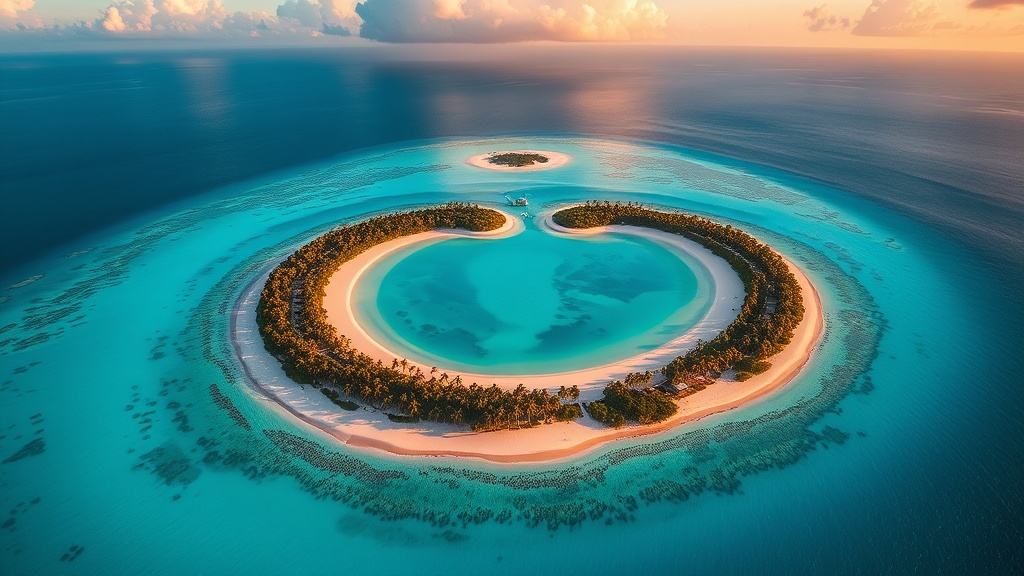
There is a moment, approaching the Cocos (Keeling) Islands by air, when the endless blue of the Indian Ocean gives way to ribbons of turquoise and emerald surrounding tiny coral islands fringed with impossible white sand. These 27 coral islands forming two atolls represent one of Australia's most remote territories—a tropical paradise located 2,750 kilometers northwest of Perth where time moves to the rhythm of swaying palms and gentle trade winds.
The Cocos (Keeling) Islands occupy a special place among the world's remote destinations. With a permanent population of just 593 people (2021 census) spread across two inhabited islands—West Island and Home Island—this territory offers an authenticity increasingly rare in our connected world. Here, you can walk for hours on pristine beaches without seeing another soul, snorkel crystal-clear lagoons teeming with tropical fish, and experience genuine Cocos Malay hospitality that hasn't been diluted by mass tourism.
For travelers seeking paradise without crowds, the Cocos Islands deliver abundantly. The main lagoon ranks among the world's finest for kitesurfing and windsurfing. The surrounding reefs support remarkable biodiversity. Direction Island, consistently rated among Australia's best beaches, remains accessible only by boat—a deliberate choice that preserves its pristine character. Whether you seek world-class water sports, exceptional diving, or simply the profound peace of a genuine tropical escape, these islands at the edge of the world reward those who make the journey.
🗺️ Geography
The Cocos (Keeling) Islands consist of two coral atolls and 27 individual islands, though only two support permanent populations. Located at 12°S latitude and 96°E longitude in the eastern Indian Ocean, the territory lies roughly equidistant between Australia and Sri Lanka—approximately 2,750 kilometres from Perth, 3,685 kilometres west of Darwin, about 1,300 kilometres from Sumatra, and 960 kilometres west of Christmas Island, its sister territory — there is no sea link between the two; the only connection is by air.
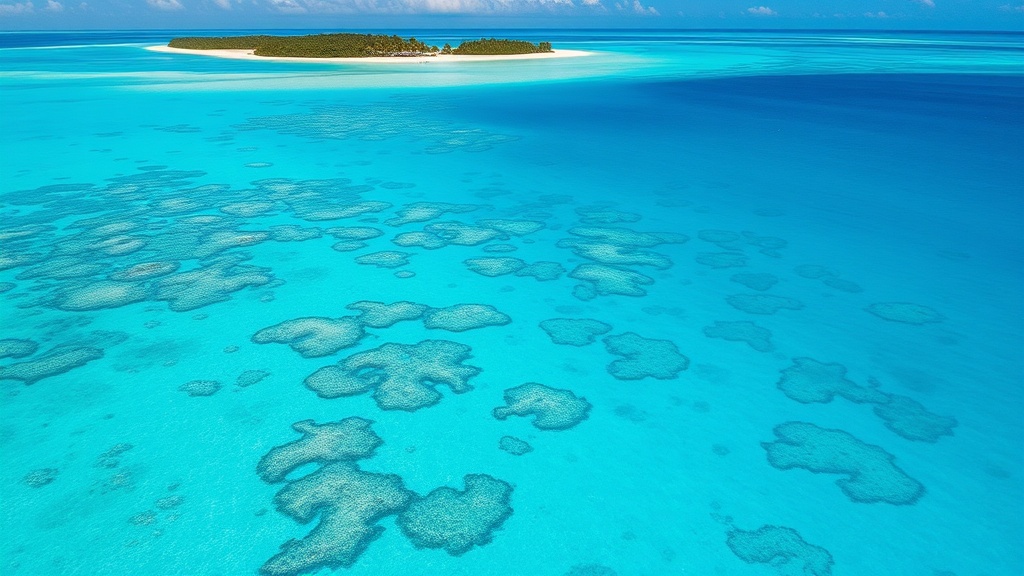
The larger South Keeling Islands atoll forms a horseshoe shape enclosing a magnificent lagoon measuring about 15 kilometers across. This shallow turquoise lagoon, protected from ocean swells by the surrounding reef, creates ideal conditions for snorkeling, swimming, and water sports. West Island, the administrative center, stretches along the southern rim of the atoll, while Home Island sits on the eastern edge. Direction Island, Horsburgh Island, and numerous other islets dot the perimeter.
North Keeling Island, lying 24 kilometers to the north, comprises a single island surrounding a closed lagoon. Designated as a national park since 1995, it serves as an important nesting site for seabirds and supports populations of the endemic Cocos buff-banded rail. Access is strictly controlled to protect its fragile ecosystems.
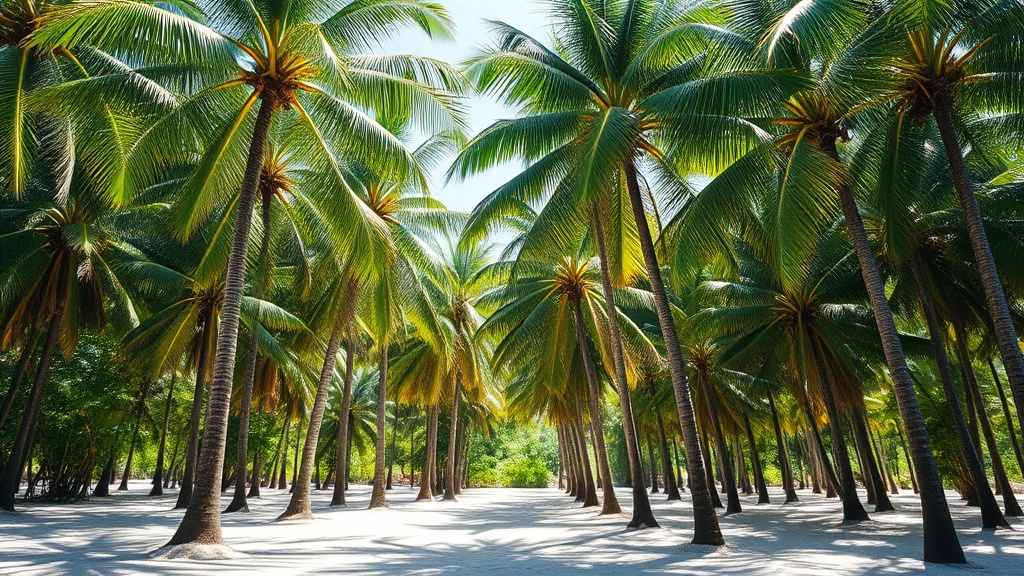
The islands rise to just five metres above sea level at their highest point — and barely 1.5 metres in places — making them acutely vulnerable to rising seas and storm surges. Coral sand, coconut palms, and tropical vegetation characterize the landscape, while the surrounding waters host vibrant coral reefs teeming with marine life.
Marine park. On 20 March 2022 the Australian Government proclaimed the Cocos (Keeling) Islands Marine Park, covering 467,054 km² of ocean around the atolls — together with the neighbouring Christmas Island Marine Park, one of the largest marine sanctuary areas in the world. Research voyages in 2021 and 2022 catalogued at least 149 species new to science in the two parks, results published in June 2026. Fishing inside the lagoon and reef zones is regulated by Parks Australia; check the current zoning before you cast a line.
Sea-level rise. The sea around Cocos has risen about 4 mm a year since 1992, and flooding of low-lying Home Island during heavy rain is already routine. A draft Commonwealth coastal-hazard plan revealed in February 2025 recommended a "long-term managed retreat" from both inhabited islands over 10–50 years, provoking outrage from the Cocos Malay community. The final plan, released in April 2026, walked that back, promising community-led decisions and a local reference group — but the underlying projections (a major flood by 2068 could destroy homes, the mosque and most infrastructure) have not changed. Visitors should understand they are seeing a place whose future is being negotiated in real time.
🗺️ Map
Key destinations marked: West Island (airport and administration), Home Island (Cocos Malay village), Direction Island (Cossies Beach and the Rip), Prison Island, and North Keeling (Pulu Keeling National Park, 25 km north).
📜 History
Captain William Keeling of the East India Company discovered these uninhabited atolls in 1609, though European settlement wouldn't begin for over two centuries. The islands' remote location and lack of fresh water discouraged early colonization, leaving them pristine until the 19th century brought both opportunity and exploitation.
In 1826, English merchant Alexander Hare established the first settlement, bringing Malay workers to harvest coconuts for copra production. John Clunies-Ross, a Scottish merchant, arrived shortly after and eventually displaced Hare, establishing a dynasty that would control the islands for 150 years. The Clunies-Ross family ruled as virtual feudal lords, paying workers in company-issued plastic tokens redeemable only at company stores.
Britain formally annexed the islands in 1857, granting the Clunies-Ross family perpetual rights to all land except government reserves. This unusual arrangement continued even after Australia assumed administration in 1955. Only in 1978 did Australia purchase the family's assets, and on 6 April 1984, in a UN-supervised Act of Self-Determination, the Cocos Malay population voted overwhelmingly (229 of 261 ballots) for full integration with Australia.
World War I brought the islands their moment in naval history. On 9 November 1914 the German cruiser SMS Emden landed a party to destroy the cable station on Direction Island; HMAS Sydney, diverted from a passing troop convoy, fought the Royal Australian Navy's first ship-to-ship battle and drove the Emden onto the reef at North Keeling. In May 1942, Ceylonese gunners of the garrison on Home Island staged the Cocos Islands Mutiny; three ringleaders were executed — the only British Commonwealth servicemen executed for mutiny during the Second World War. Today, remnants of this history blend with the islands' natural beauty, creating a destination rich in both cultural heritage and environmental wonder.
👥 People & Culture
Some 593 people (2021 census) call the Cocos (Keeling) Islands home — 448 on Home Island and 147 on West Island — divided between two distinct communities. West Island houses Australian government workers, contractors, and service providers—a transient population that typically rotates every few years. Home Island is home to the Cocos Malay community, descendants of the workers brought by Alexander Hare and John Clunies-Ross nearly two centuries ago.
The Cocos Malays have developed a unique culture blending Malay, Indonesian, and Australian influences. They speak Cocos Malay, a dialect of Malay with borrowings from English and various Indonesian languages. Islam arrived with the original settlers and remains central to community life; the mosque on Home Island serves as both spiritual and social hub. Traditional kampung-style living persists, with extended families sharing compounds and maintaining strong communal bonds.
Visitors to Home Island experience genuine hospitality unmediated by tourism infrastructure. The village maintains a relaxed rhythm dictated by prayer times, fishing schedules, and family obligations rather than commercial demands. Traditional crafts, including boat-building and weaving, continue alongside modern occupations. The annual Hari Raya celebrations following Ramadan offer particularly vibrant glimpses into Cocos Malay culture, as do the races of jukong, the traditional wooden sailing boats that still line the Home Island shore.
Who runs the place. The territory is administered by the Commonwealth through the Minister for Territories (Kristy McBain since 2022) and a locally based Administrator shared with Christmas Island — Farzian Zainal, appointed in May 2023 and reappointed in 2026, the first Administrator drawn from the Indian Ocean Territories' own communities. Day-to-day local government is the seven-member Shire of Cocos (Keeling) Islands, whose president, Cr Isa Minkom, serves a 2023–2027 term; Cr Ayesha Young became deputy president after the October 2025 council election. Western Australian law and services (health, schooling, police) apply, and islanders vote federally in the Northern Territory seat of Lingiari.
🗣️ Useful Phrases
Cocos Malay (appreciated by locals):
- Selamat pagi — Good morning
- Terima kasih — Thank you
- Sama-sama — You're welcome
- Apa khabar? — How are you?
- Selamat tinggal — Goodbye
English (universally understood):
- English is the official language
- All services available in English
- Signage in English throughout
- Australian accent/spelling used
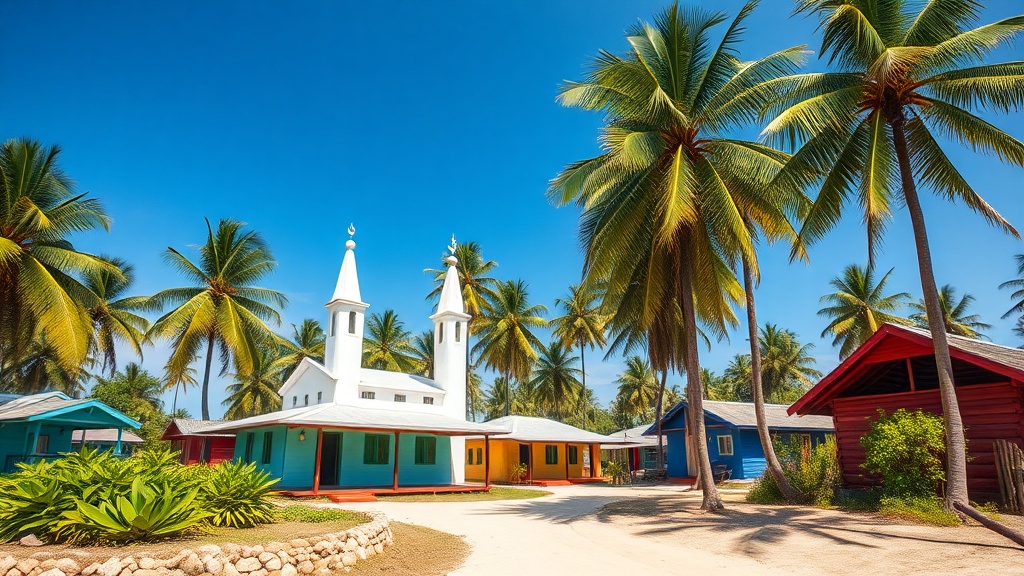
Home Island
The Cocos Malay kampung — mosque, jukong boats and pondok shacks on the eastern rim of the atoll.
🏝️ Top Destinations
Direction Island remains the undisputed jewel of the archipelago. Accessible only by boat from West Island, this uninhabited crescent of perfect white sand and swaying palms offers snorkeling in crystal-clear waters, relaxation on pristine beaches, and the legendary "Cossies Beach"—regularly ranked among Australia's best. Pack a picnic and spend the day in paradise.
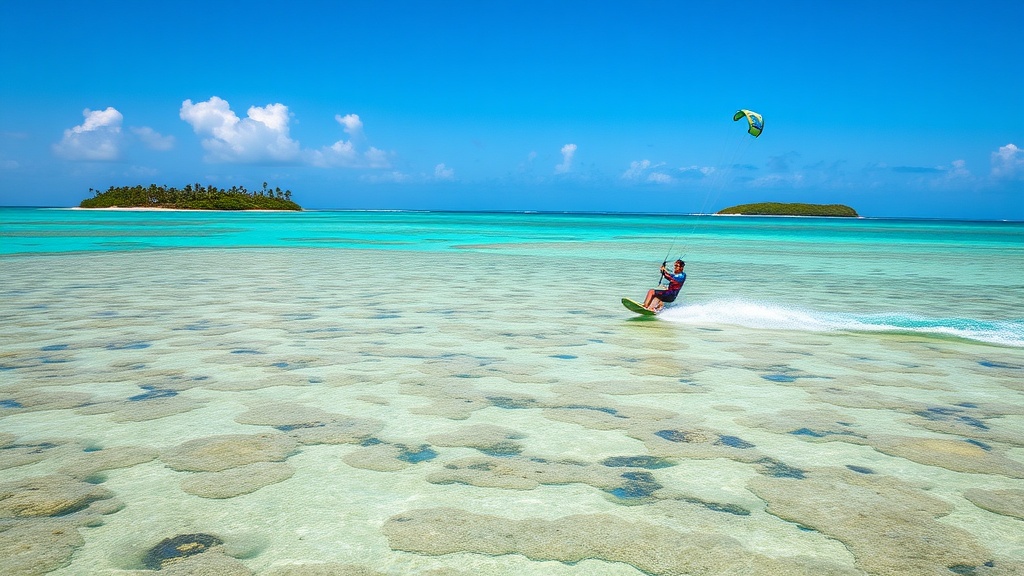
The Lagoon serves as the territory's recreational heart. This vast, shallow body of turquoise water offers world-class conditions for kitesurfing, windsurfing, stand-up paddleboarding, and kayaking. The steady trade winds and flat water make it particularly appealing to kitesurfers, who consider Cocos among the planet's premier destinations for the sport.
Home Island provides cultural immersion impossible to replicate elsewhere. Walk the village streets, visit the beautiful mosque, observe traditional boat-building, and experience Cocos Malay hospitality firsthand. The island offers a window into a community that has preserved its heritage despite isolation and historical challenges.
The Rip at the main channel entrance challenges experienced divers with strong currents and rewards them with encounters with schools of pelagic fish, reef sharks, and occasional larger visitors. Multiple dive sites around the atolls cater to various skill levels, from gentle lagoon coral gardens to dramatic drop-offs.
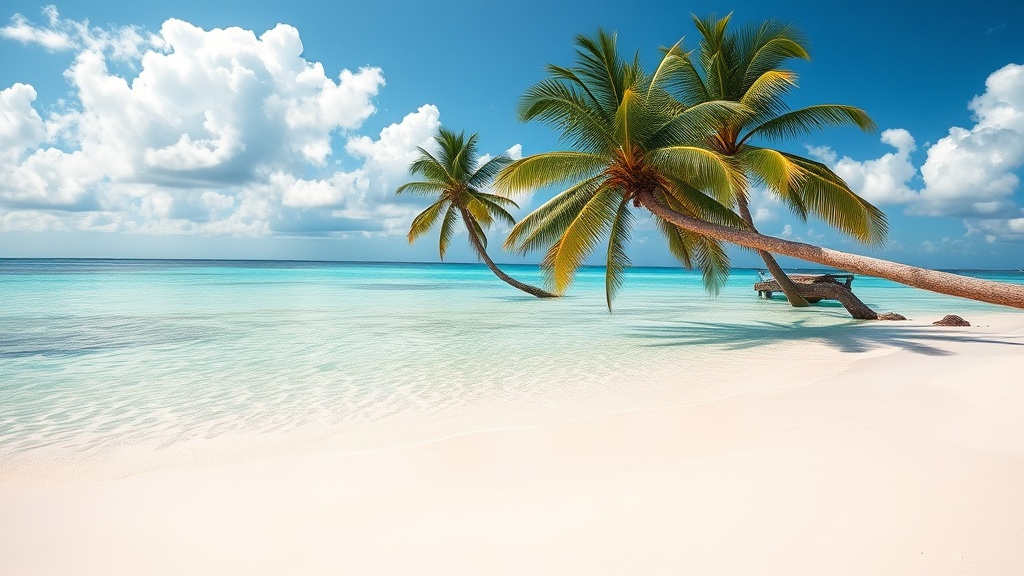
Direction Island
Cossies Beach and the Rip — uninhabited, boat-only, and the reason most people come.
🍽️ Cuisine
Cocos Malay cooking built on coconut and reef fish, with rendang and sambal belacan carrying the Southeast Asian flavors some 1,300 km from the Malay world the community came from. Read the full Food & Drink guide →
🍷 Wine, Spirits & Drinking Culture
No wine, and in a mostly Muslim Cocos Malay community, alcohol sits at the edge of daily life rather than the center of it — imported Australian beer and not much else. See the full Wine, Spirits & Drinking Culture guide →
ℹ️ Practical Information
Getting There: QantasLink took over the Indian Ocean Territories air service from Virgin Australia on 3 November 2025 under a five-year Commonwealth contract, flying Airbus A319/A320 jets twice a week from Perth (T1). The Monday rotation runs Perth → Christmas Island → Cocos → Perth (about 6 h 15 min to Cocos); since 1 May 2026 the Friday service flies Perth → Cocos non-stop in about 4 h 10 min, then on to Christmas Island and back to Perth. Book well in advance, especially during Australian school holidays. The airport is on West Island — its 2,441 m runway is being strengthened and widened by Defence for P-8A Poseidon patrol aircraft, with works under way since late 2024 and completion forecast for 2029, so expect construction traffic. There is no ferry or passenger ship to the islands.
Accommodation: Options are limited but comfortable. The Cocos Castaway resort on West Island offers self-contained units, while several holiday houses provide alternatives. Camping is allowed only with a permit from the Shire, at the designated site on Direction Island. Book accommodation months ahead during peak season (April-November). Home Island offers occasional homestay opportunities for those seeking cultural immersion.
Getting Around: West Island is small enough to explore by bicycle, which most accommodations provide. Boats provide access to Direction Island and other outer islets—arrange through your accommodation or local operators. Travel to Home Island requires coordination with the ferry service.
Best Time to Visit: The dry season from April to November offers ideal conditions with less rainfall, moderate humidity, and consistent trade winds perfect for water sports. December through March brings the wet season with occasional tropical storms, though diving conditions often remain excellent. Water temperatures stay warm year-round (26-29°C).
Money & Communications: Australian dollars are the only currency; bring sufficient cash as ATM facilities are extremely limited. Credit cards accepted at some establishments. Mobile coverage exists but is limited; WiFi available but slow. Embrace the opportunity to disconnect.
Health & Safety: A small medical clinic on West Island handles basic needs; serious cases require medical evacuation to Perth. Bring adequate supplies of any prescription medications. The islands are safe, but the remote location means self-reliance is essential. Respect for the reef and marine environment is both legally required and morally imperative.
💼 Business & Economy
A hundred and fifty years run as a private family fiefdom, a copra industry that collapsed by 1987, and an economy now running almost entirely on Australian government funding — there's no real "starting a company" story here, and that's the actual story. Read the full Business & Economy guide →
📸 Gallery
Share your Cocos (Keeling) Islands photos! Send to photos@kaufmann.wtf to be featured.
✍️ Author's Note Radim Kaufmann
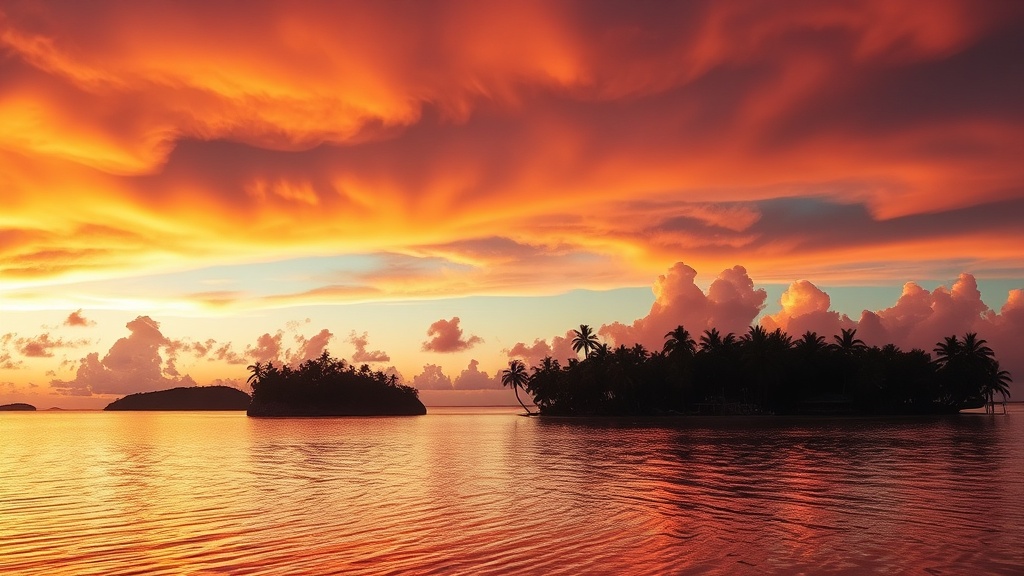
The Cocos Islands — a coral atoll so remote that it feels like the edge of the world, where the lagoon glows turquoise and the coconut palms bend in the trade winds — is home to one of Australia's most unusual communities: Cocos Malays, descended from workers brought by the Clunies-Ross family in the 19th century. It is a place of extraordinary beauty and profound isolation.
Flying into West Island on the QantasLink Airbus from Perth — a four-hour crossing of pure Indian Ocean — you understand isolation in a way no map can convey. There is nothing below you but water, and then suddenly a necklace of white and impossibly green. On Home Island, Cocos Malay grandmothers still cook nasi uduk, rice steamed in coconut milk, the way their great-grandmothers did under the Clunies-Ross regime; on Direction Island, the old cable-station ruins are slowly surrendering to pandanus and hermit crabs. I spent an afternoon snorkelling the Rip between Direction and Prison Island, drifting over giant clams the colour of stained glass, and thought: this is what the Indian Ocean looked like before everything else.
—Radim Kaufmann, 2026
