
🇭🇷 Croatia at a Glance
🌏 Overview — Why Visit Croatia
Croatia has 1,777 kilometres of Adriatic coastline and — counting islands, islets, rocks and reefs — 1,244 pieces of land in the sea, of which about fifty are inhabited. The limestone coast produces almost no sediment, so the water is startlingly clear: visibility of thirty metres is ordinary and fifty is not unheard of. That single geological fact is why the Adriatic looks the way it does in every photograph you have seen.
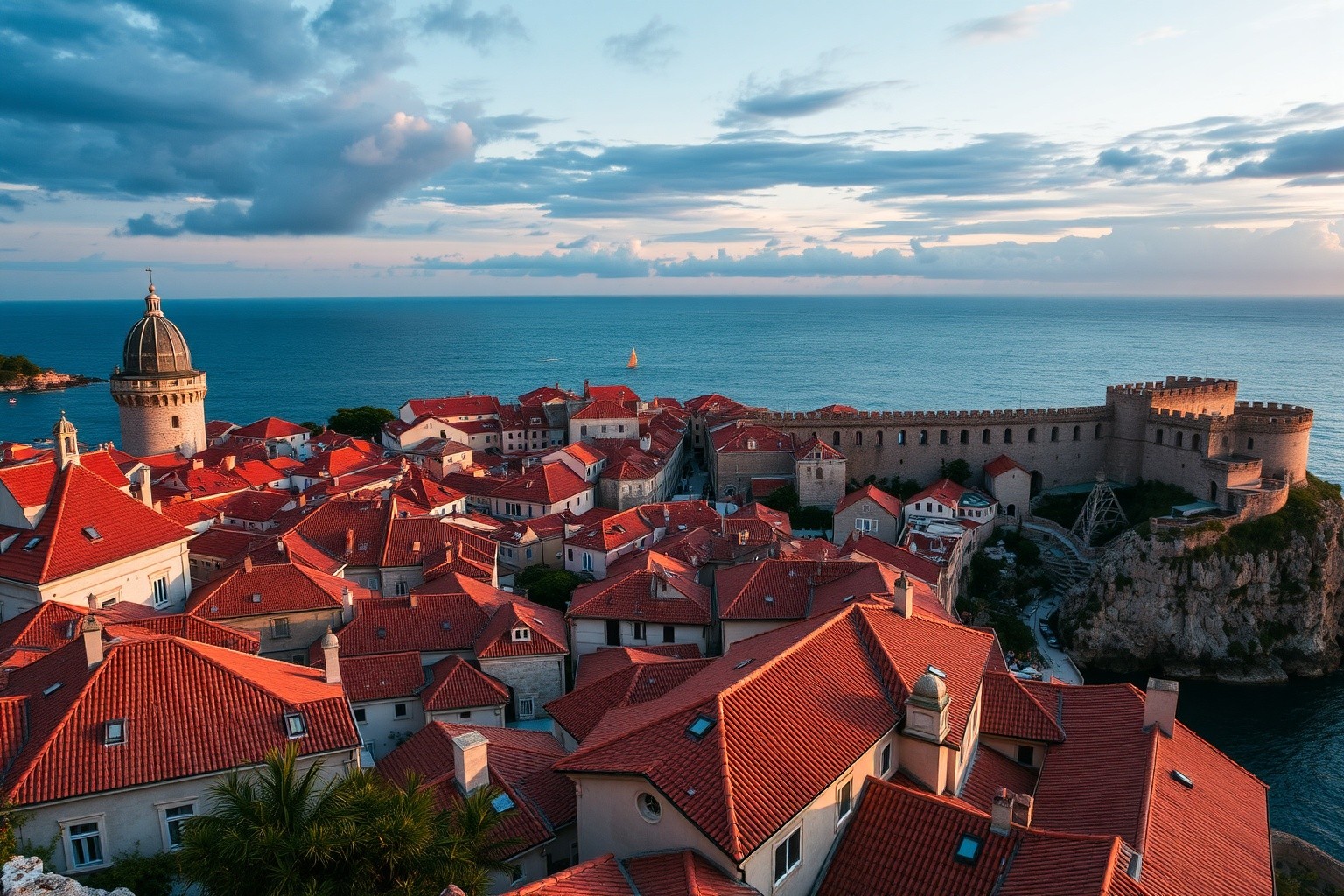
The headline sights deserve their reputation. Dubrovnik's walls are the finest complete circuit of urban fortification in Europe. Split is built inside a Roman emperor's retirement palace and has been continuously inhabited for 1,700 years — it is not a ruin, it is a working city centre. Plitvice is sixteen terraced lakes spilling into each other over travertine barriers that are still growing.
What makes the country genuinely rewarding rather than merely photogenic is the depth behind those three. Istria has truffles, Roman amphitheatres and a wine scene that would be famous if it were in Italy. Zagreb is an Austro-Hungarian café city that most visitors skip entirely. The islands range from the party economy of Hvar to Vis, which was a closed military base until 1989 and is all the better for it.
Two practical facts frame any trip. Croatia joined the EU in 2013 and adopted the euro and joined Schengen on 1 January 2023, which removed both border queues and currency exchange for European visitors. And the country is now genuinely crowded in high summer — Dubrovnik and Plitvice in particular have visitor caps and advance booking. Going in June or September rather than August changes the experience completely.
📛 Name & Identity
In Croatian the country is Hrvatska, and Croats are Hrvati — a name of contested origin, possibly Iranian-Sarmatian, carried by the Slavic groups who settled the region in the 7th century. The English "Croatia" comes through the Latin Croatia.
The šahovnica — the red-and-white chequerboard shield — is one of Europe's most recognisable national emblems and appears on the flag, the football shirts and roughly every souvenir in the country. Its documented use as a Croatian symbol goes back to the medieval period.
The country's most improbable export is the necktie. Croatian mercenaries in French service during the Thirty Years' War wore knotted neckcloths that Parisians found striking; the French cravate derives from Croate, and Croatia now marks Cravat Day on 18 October with genuine national enthusiasm.
Identity here rests on three things: Catholicism (the country is around 79% Catholic), a Slavic language written in the Latin alphabet, and the Homeland War of 1991–95. The siege of Dubrovnik and the fall of Vukovar are within living memory for most adults, and independence is not an abstraction. Visitors should understand that the war is discussed readily but not casually, and that the phrase "the former Yugoslavia" lands differently here than it does at home.
🗺️ Geography & Regions
Croatia's boomerang shape wraps around Bosnia and Herzegovina and covers 56,594 km² — a little smaller than Czechia — across three landscapes that have almost nothing in common.
Dalmatia
The long southern coast: Split, Zadar, Šibenik, Dubrovnik, and most of the islands. Karst limestone, olives, vines, and a proper Mediterranean climate.
Istria
The heart-shaped peninsula in the north-west. Rolling hills, truffle forests, Roman Pula, Venetian Rovinj — and a strong Italian cultural layer, with Italian co-official in several towns.
Kvarner
The gulf between them: Rijeka, Opatija's Habsburg villas, and the islands of Krk, Cres, Rab and Lošinj.
Continental Croatia
Zagreb, the Zagorje hills with their castles, and the country most tourists never see. Central European rather than Mediterranean in every respect.
Slavonia
The eastern plain between the Drava, Sava and Danube. Farmland, paprika, Graševina wine, and Vukovar — the town whose 1991 siege defined the war.
Lika & the Dinarics
The mountainous interior: Plitvice, Velebit, Paklenica, and Dinara at 1,831 m, the country's highest peak.
One geographical curiosity: the Neum corridor, a 20 km strip of Bosnian coast, physically separates Dubrovnik from the rest of Croatia. Since Schengen accession the crossings are formalities, and the Pelješac Bridge, opened in 2022, now bypasses it entirely.
🗺️ Map of Croatia
Croatia borders Slovenia and Hungary to the north, Serbia to the east, and Bosnia and Herzegovina and Montenegro to the south-east. The A1 motorway runs the length of the country from Zagreb to Ploče and is the spine of any driving trip.
Distances are deceptive in the other direction from most countries: the motorway network is excellent and Zagreb to Split takes about four and a half hours, but the coastal road (the Magistrala, D8) is slow, spectacular and full of caravans in August. Dubrovnik is 600 km from Zagreb and feels much further.
📜 History
Greeks, Romans and the palace
Greek colonists founded settlements on Vis (Issa) and Hvar (Pharos) in the 4th century BCE. Rome absorbed the coast and made it the province of Dalmatia, whose capital Salona stood outside modern Split. The emperor Diocletian — born locally, and the man who reorganised the empire and then abdicated, which almost no Roman emperor did — built his retirement palace on the shore around 295–305 CE. It is the best-preserved Roman imperial residence anywhere.
The Croatian kingdom, Hungary and Venice
Slavic Croats arrived in the 7th century. The kingdom reached its height under Tomislav around 925. In 1102 Croatia entered a personal union with Hungary that lasted, in various forms, until 1918. Meanwhile the coast largely went to Venice, whose winged lion of St Mark is still carved on gates and palaces from Rovinj to Korčula — and whose rule shaped Dalmatian architecture, food and dialect permanently.
The exception was Dubrovnik, the Republic of Ragusa, which stayed independent from 1358 to 1808 by paying tribute to whoever was strongest and running one of the Mediterranean's shrewdest diplomatic services. It abolished slavery in 1416, centuries before most of Europe.
Habsburgs, Yugoslavia, war
The Habsburgs held the interior for centuries; Napoleon ended Venice and briefly created the Illyrian Provinces. In 1918 Croatia joined the Kingdom of Serbs, Croats and Slovenes, later Yugoslavia. The Second World War brought the Ustaše puppet state and its crimes, and then Tito's federal Yugoslavia, in which Croatia was a constituent republic and, from the 1960s, its tourism engine.
Independence and after
Croatia declared independence in June 1991. The Homeland War that followed killed around 20,000 people. Vukovar was besieged for 87 days and destroyed; Dubrovnik was shelled from the surrounding hills through the winter of 1991–92, an attack on a UNESCO World Heritage site that did more than anything to turn international opinion. The war ended in 1995 with Operations Flash and Storm, which reintegrated most occupied territory and displaced most of the Serb population of the Krajina.
The trajectory since has been steady: NATO in 2009, the EU in 2013, and the euro and Schengen together on 1 January 2023. Tourism now accounts for around a fifth of GDP, which is both the country's success and its main structural vulnerability.
Who governs (2026): Croatia is a parliamentary republic. The head of government is Prime Minister Andrej Plenković (HDZ), in office since October 2016 and in his third term after the April 2024 parliamentary election — by 2026 the longest-serving prime minister in Croatia's independent history. The president, a largely ceremonial office that nonetheless commands the armed forces, is Zoran Milanović, first elected in 2020 and re-elected in a landslide on 12 January 2025 (74.7% in the run-off against the HDZ candidate Dragan Primorac); he was sworn in for his second five-year term on 18 February 2025. The two men are open political adversaries, and their public feuding is a fixture of the news. The Speaker of the Sabor is Gordan Jandroković. The next parliamentary election is due by 2028.
👥 People & Culture
Croatia has about 3.8 million people and is shrinking — emigration after EU accession, low birth rates and an ageing population have produced one of Europe's sharper demographic declines. Roughly 90% are Croats, with a Serb minority of around 3% and smaller Bosniak, Italian, Hungarian and Roma communities.
Coffee is the central social institution and is not about caffeine. Idemo na kavu — "let's go for a coffee" — can mean two hours at an outdoor table with one espresso, and refusing is mildly antisocial. Croatian café-sitting per capita is a genuine statistical outlier.
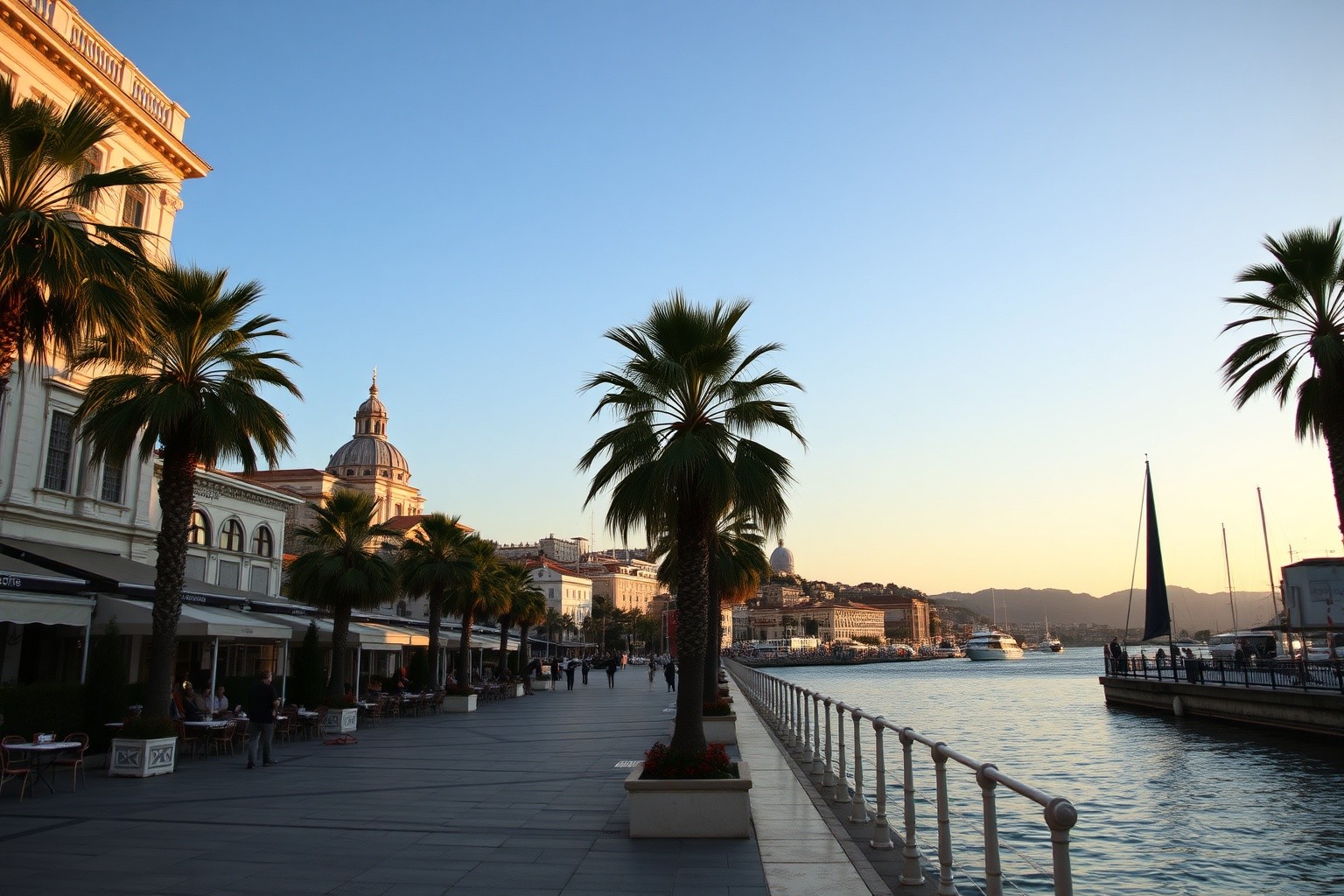
Klapa — Dalmatian a cappella singing in close male harmony — is on the UNESCO intangible heritage list and is genuinely alive: you will hear it in stone alleys and in restaurants, unamplified and unannounced. Picigin, invented on Split's Bačvice beach in 1908, is a ball game played in knee-deep water in which the point is to keep the ball up by any means, preferably spectacular.
Football matters enormously. Croatia reached the 2018 World Cup final, took third place in 2022 and went out in the round of 32 at the 2026 World Cup, all from a population smaller than Berlin's, and the celebrations after 2018 and 2022 were national events on the scale of independence. Handball, water polo, basketball and tennis all produce world-class players from the same small base.
🗣️ Language & Useful Phrases
Croatian is a South Slavic language written in the Latin alphabet, which makes it substantially easier to navigate than it sounds — and Czech, Slovak and Polish speakers will recognise a surprising amount. English is widely and well spoken along the coast and by anyone under fifty; German and Italian are common in Istria and Kvarner.
Croatian worth knowing
Dobar dan — good day · Bok — hi / bye (informal, universal)
Hvala — thank you · Molim — please, and also "you're welcome" and "pardon?"
Živjeli! — cheers (literally "let us live")
Koliko košta? — how much does it cost?
Račun, molim — the bill, please
Pomalo — the Dalmatian philosophy: slowly, gently, no rush. Used constantly and meant seriously.
Fjaka — the Dalmatian state of blissful doing-nothing. Untranslatable and locally considered a virtue.
Konoba — a traditional tavern. Where you want to eat.
Pronunciation is phonetic once you know the letters: c is "ts", č and ć are both roughly "ch", š is "sh", ž is like the s in "measure", and j is "y". Czech speakers already have all of these.
🏰 Dubrovnik
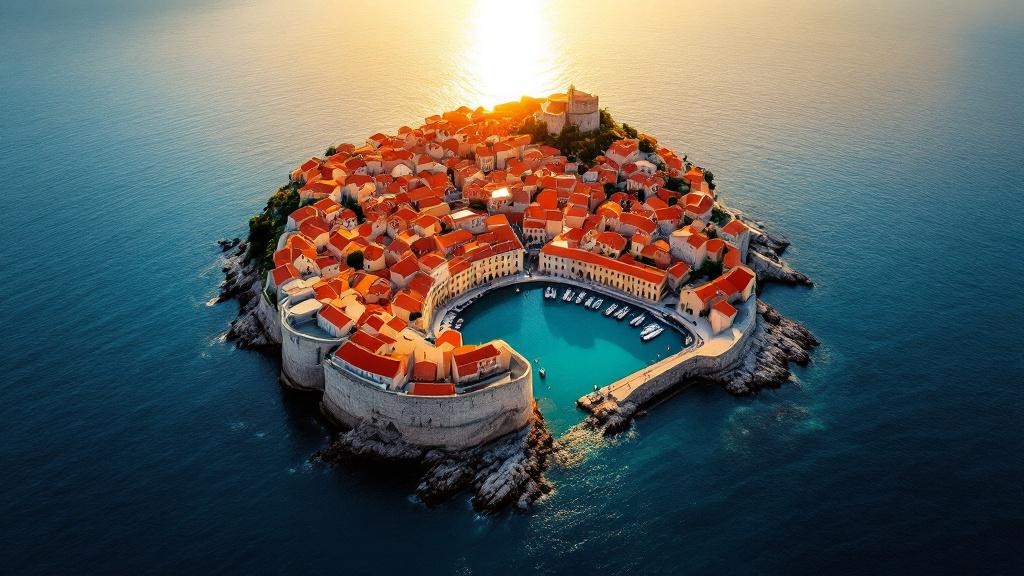
Dubrovnik's city walls run 1,940 metres in a complete circuit, up to 25 metres high and six metres thick on the landward side, with two round towers, fourteen square towers and the Minčeta fortress at the highest point. Walking them takes about two hours, is the single best thing to do in the country, and should be done at opening time or in the last hours of light — the midday sun on white limestone is brutal and the queue is worse.
The Stradun, the main street, is paved in limestone polished to a mirror by six centuries of feet. Off it lie the Rector's Palace, the Sponza Palace, the Franciscan monastery with one of Europe's oldest working pharmacies (1317), and the cathedral. The Republic of Ragusa that built all this survived from 1358 to 1808 by diplomacy rather than force, abolished slavery in 1416, and ran an early quarantine system that gave the world the word.
Beyond the walls: the cable car to Mount Srđ for the view and the small, sobering Homeland War museum at the top; Lokrum island, ten minutes by boat, for swimming and peacocks; the beaches of Lapad and Banje; and Buža, a bar reached through a hole in the city wall with tables on the cliff above the sea.
The honest warning: Dubrovnik is extremely crowded. Game of Thrones filming turned an already popular city into a phenomenon, and cruise ships can add thousands of day visitors at once. The city now limits cruise arrivals and has capped visitor numbers inside the walls. Come in April, May, October or November, stay overnight rather than day-tripping, and the place is transformed.
🏛️ Split & Diocletian's Palace
Split is the most unusual city in Croatia and arguably in the Mediterranean. Around 305 CE the emperor Diocletian built a fortified retirement palace on the shore near his birthplace. When Salona was abandoned in the 7th century its refugees moved inside the palace walls — and never left. Seventeen centuries later, roughly three thousand people still live inside it.
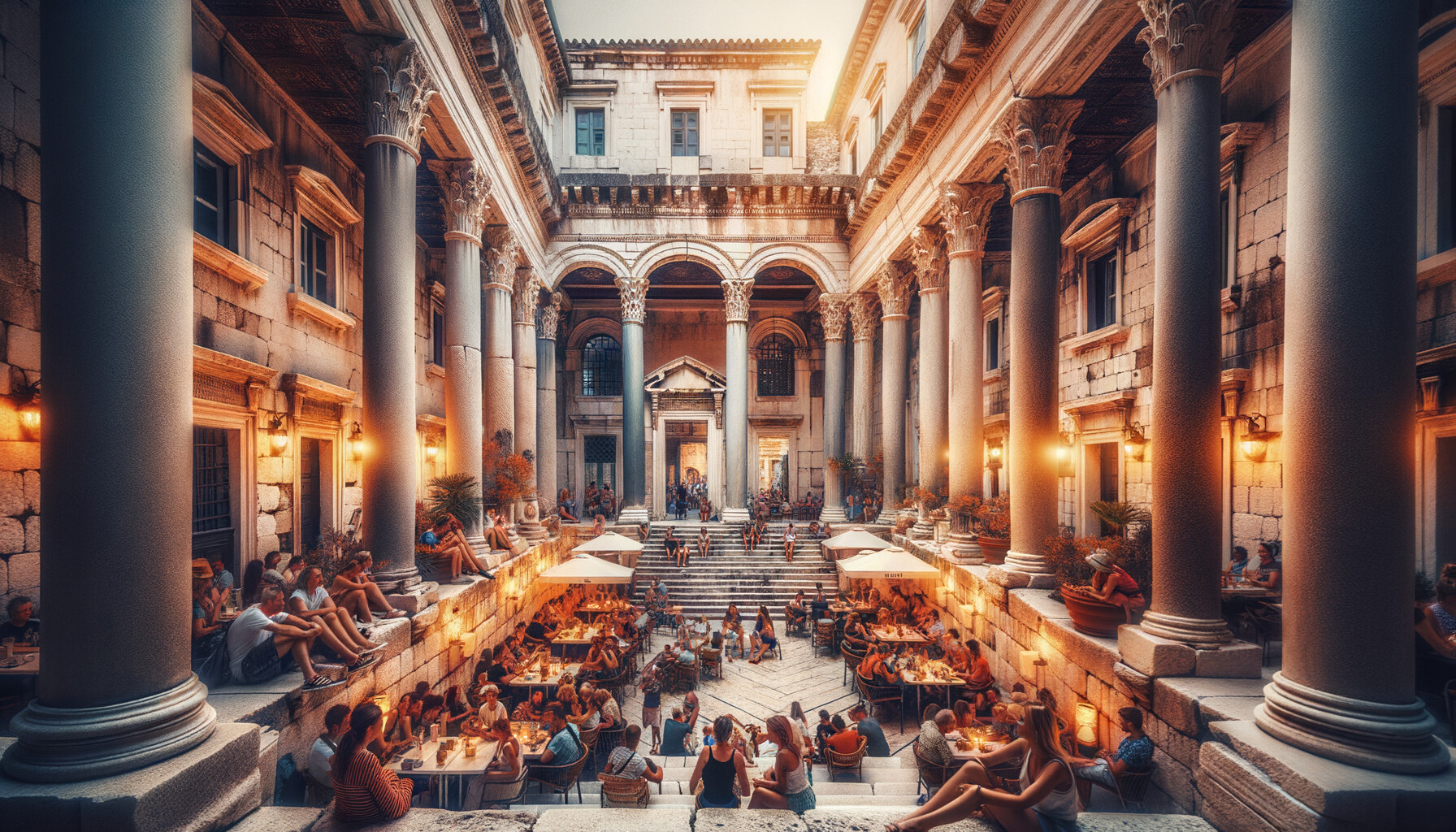
This is why the UNESCO listing covers a living quarter rather than a monument. The emperor's mausoleum is now the Cathedral of St Domnius — a striking reversal, since Diocletian persecuted Christians and Domnius was one of his victims. The Peristyle, the palace's ceremonial court, is a café terrace and a concert venue. Medieval houses are wedged into Roman substructures, and the vast cellars beneath preserve the palace's floor plan almost intact.
The Riva waterfront is Croatia's best public space, and the evening špica — Saturday late morning coffee, seeing and being seen — is a genuine local institution. Marjan hill, forested and laced with paths, rises straight out of the city with beaches at its foot. The Meštrović Gallery holds the work of Croatia's greatest sculptor in his own villa.
Split is also the ferry hub for central Dalmatia: Hvar, Brač, Vis, Šolta and Korčula all leave from here, which makes it the natural base for island-hopping.
🏝️ The Islands
Croatia counts 1,244 islands, islets and reefs. About 50 are inhabited, and perhaps a dozen see most visitors. Ferries and catamarans run by Jadrolinija and others connect them; a car ferry costs little, a catamaran is faster and foot-passenger only, and both fill up in August — book vehicle crossings ahead.
Hvar
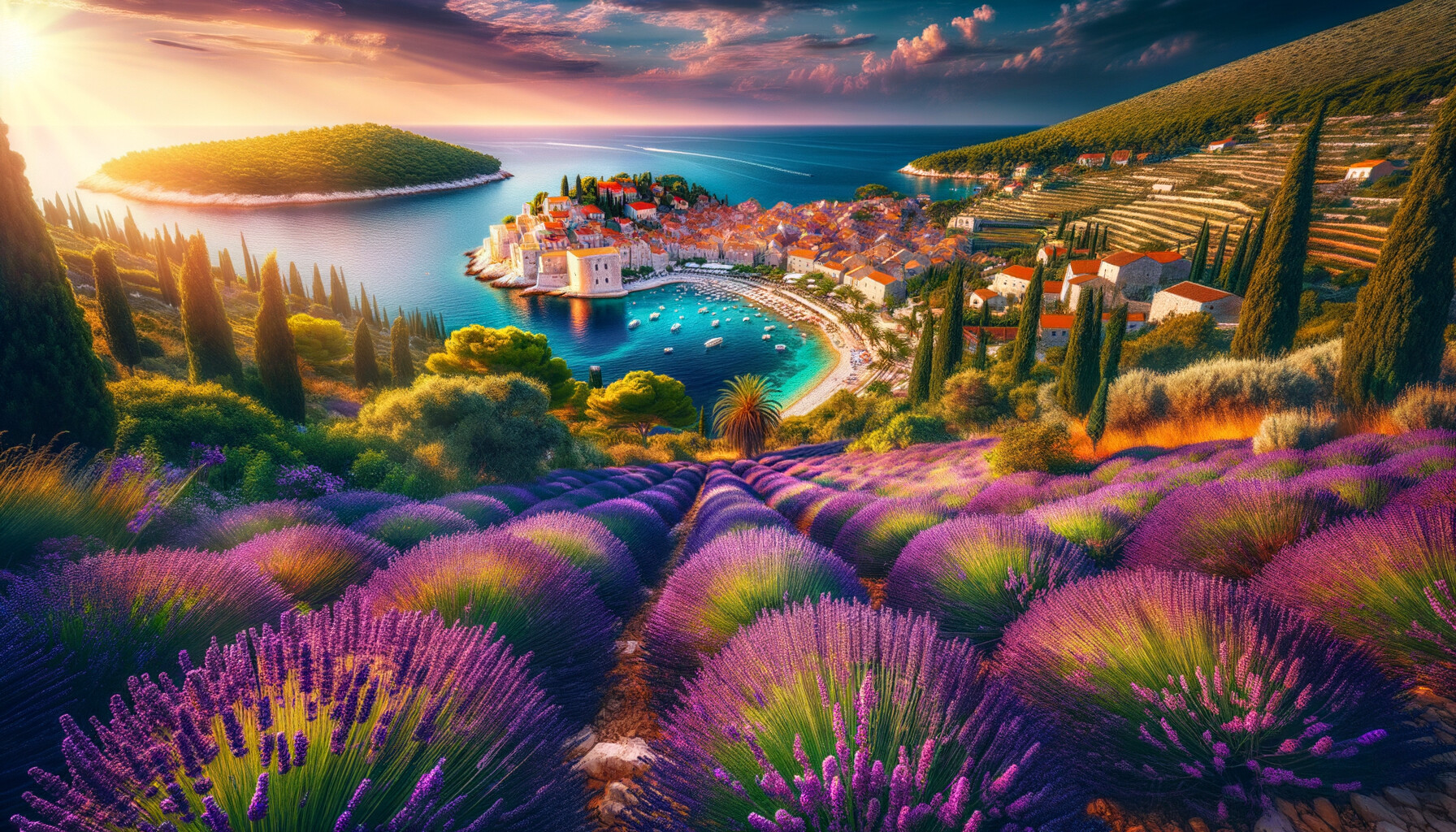
Europe's sunniest island by most counts, with lavender fields, a 13th-century fortress and a nightlife scene that draws yachts. Hvar Town is loud in season; the interior, Stari Grad and the Pakleni islets are not.
Korčula
A walled town that looks like a miniature Dubrovnik with a fraction of the crowds. Claims Marco Polo, on evidence that is affectionate rather than solid. Excellent Grk and Pošip white wines.
Vis
Closed to foreigners as a military base until 1989, and still the most unspoilt. Komiža and Vis town, the Blue Cave on Biševo, and Stiniva — a cove reached by a scramble through a rock cleft.
Brač
Closest to Split, with Zlatni Rat — the horn-shaped shingle spit that shifts with the current and appears on every poster of Croatia. The island's white limestone built Diocletian's Palace.
Mljet
A third of it is national park: two connected saltwater lakes with a Benedictine monastery on an island inside one of them. Quiet, green and the antidote to Hvar.
Kornati
Eighty-nine mostly uninhabited islands, bare and lunar, and the finest sailing in the Adriatic. Visited by boat trip from Zadar or Murter.
Further north, Krk, Rab, Cres and Lošinj in the Kvarner gulf combine medieval towns with beaches and are easier to reach from central Europe — Krk has a bridge and an airport.
🌊 Plitvice, Krka & the National Parks
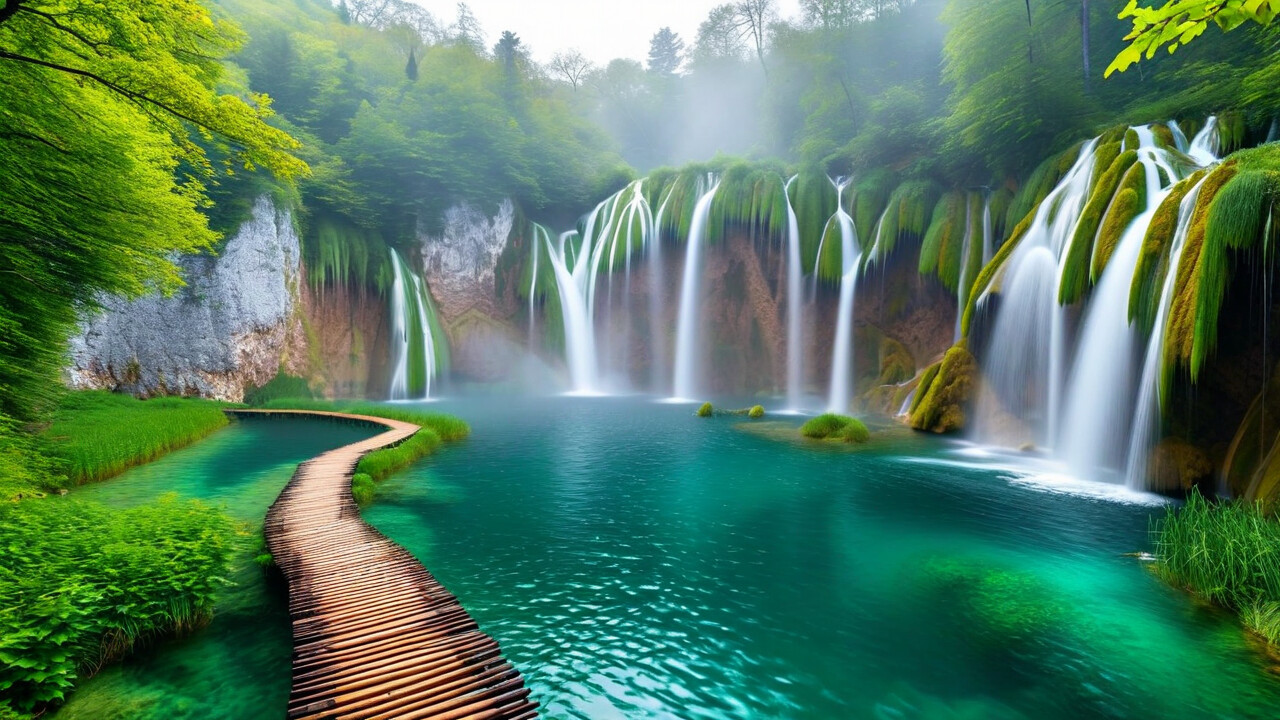
Plitvice Lakes is the country's most visited natural site and one of Europe's genuinely extraordinary landscapes: sixteen terraced lakes, separated by travertine barriers that are still forming as mineral-rich water deposits calcium carbonate around moss and algae. The barriers grow about a centimetre a year, which means the park is a geological process rather than a static feature. UNESCO-listed since 1979.
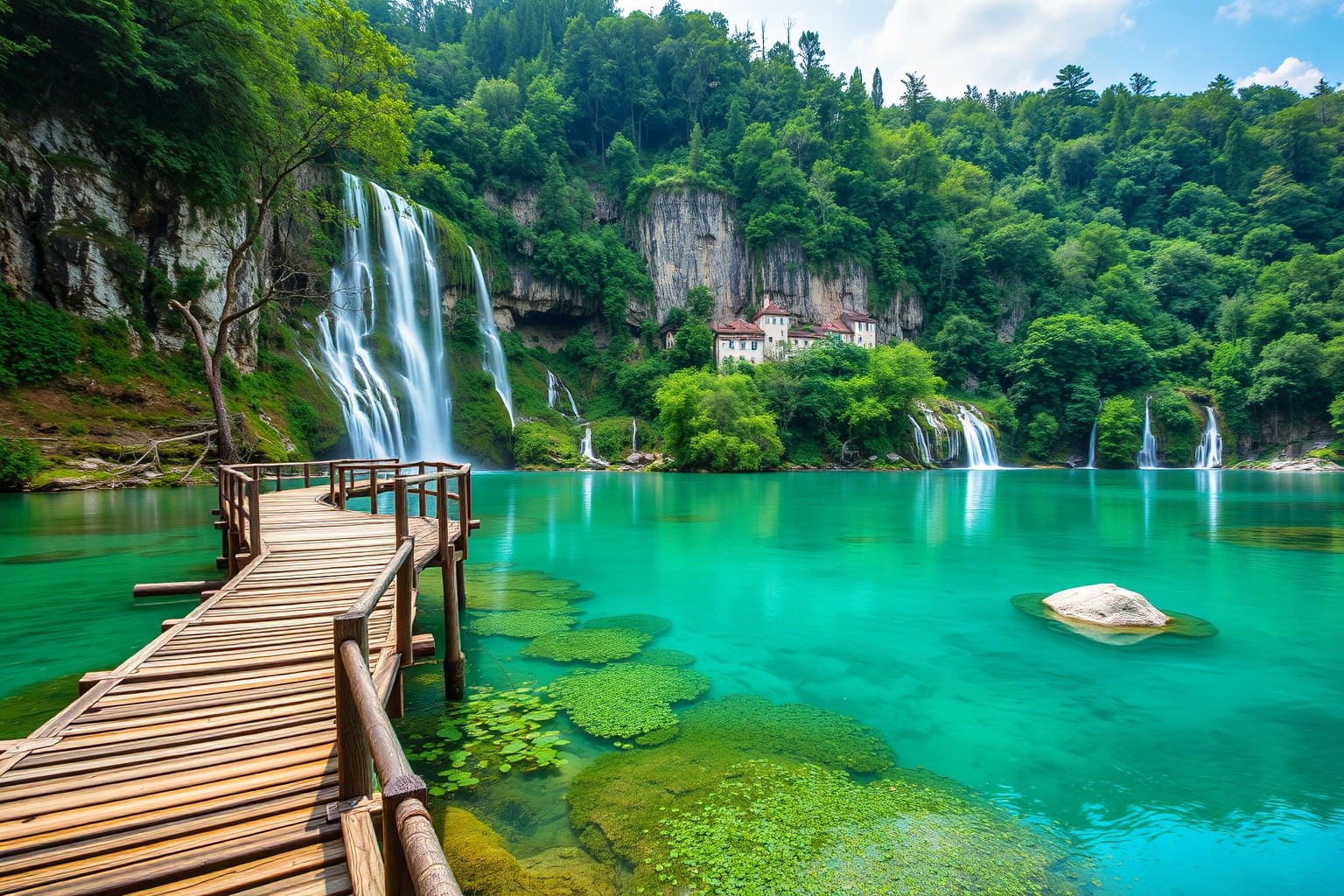
Practicalities matter here more than anywhere else in the country: book tickets online in advance (numbers are capped), arrive at opening or after 15:00 in summer, and be aware that swimming is prohibited — this is a scientific reserve, not a bathing lake. Boardwalks are narrow and one-directional in peak season.
Krka National Park near Šibenik is the alternative, and until recently it allowed swimming below the Skradinski Buk falls — that has now been restricted, so check current rules. It is smaller, easier and pairs well with Šibenik's cathedral.
Paklenica
Canyon walls in the Velebit range and the best rock climbing in the country, an hour from Zadar.
Northern Velebit
Wild karst, the Premužić trail, and bears. The least visited of the mainland parks.
Risnjak
Forest and karst near Rijeka, named for the lynx that still lives there.
Brijuni
Islands off Istria: Roman ruins, Tito's summer residence, and the safari park stocked from his diplomatic gifts.
Mljet & Kornati
The two island parks — saltwater lakes and bare archipelago respectively.
Sea kayaking
Not a park but the best way to see the coast: hidden coves, caves and swimming spots reachable only from the water.
🍷 Istria & Zagreb
Istria is the heart-shaped peninsula in the north-west and it is, culturally, half Italian — Italian is co-official in several towns, the food is closer to Friuli than to Dalmatia, and the hilltop villages look like Tuscany with fewer visitors.
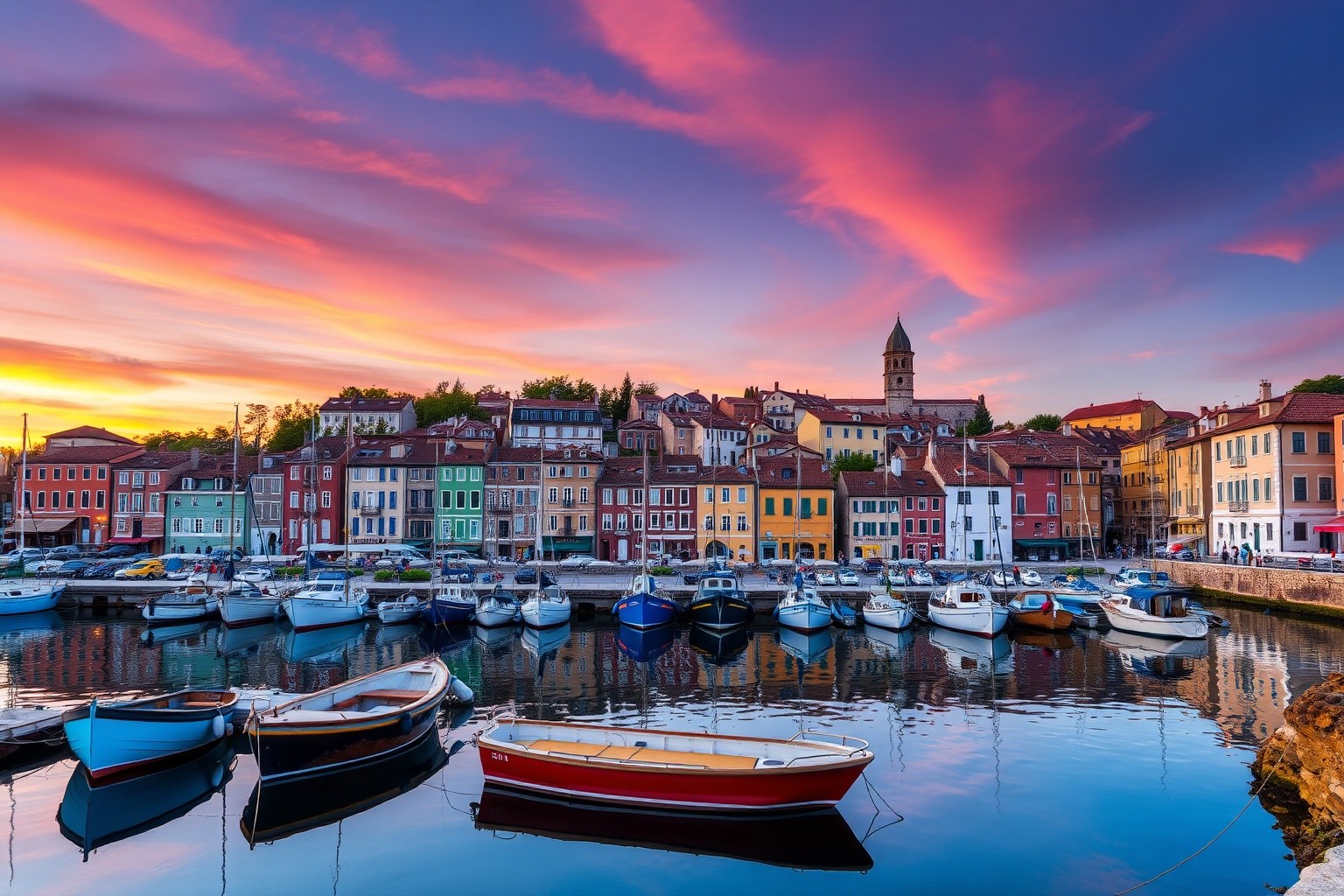
Rovinj is the coastal jewel; Pula has a Roman amphitheatre that is the sixth largest surviving anywhere and still hosts concerts; Motovun, Grožnjan and Hum (which bills itself as the smallest town in the world) are hill villages worth a day each. The Motovun forest produces white truffles that rival Alba's — a 1.31 kg specimen found here in 1999 held the world record — and truffle hunting with dogs is a legitimate, if touristed, activity.
Istria is also the country's best wine region for whites: Malvazija Istarska is the flagship grape, and producers like Kozlović, Coronica and Kabola have built genuine international reputations.
Zagreb is the city most visitors skip and should not. It is a Habsburg capital of a million people with Austro-Hungarian architecture, a green horseshoe of 19th-century parks, and a café culture that puts the coast to shame. The Upper Town holds the Gothic cathedral, St Mark's Church with its tiled coat-of-arms roof, and the Stone Gate shrine. Dolac market is the belly of the city every morning.
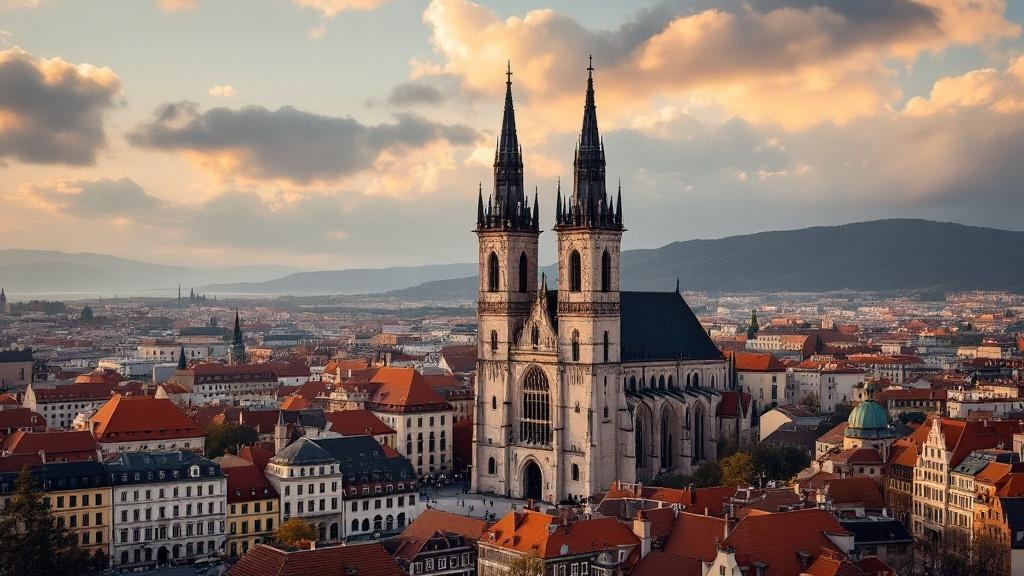
Zagreb's Museum of Broken Relationships — donated objects from ended relationships with the stories attached — is one of the most original museums in Europe and won the European Museum of the Year innovation award. The Christmas market has repeatedly been voted the continent's best.
🍽️ Cuisine
Croatian food splits along the same line as everything else: the coast is Mediterranean — olive oil, fish, herbs, grilled everything — and the interior is Central European, with paprika, pork and stews that would be at home in Hungary or Austria.
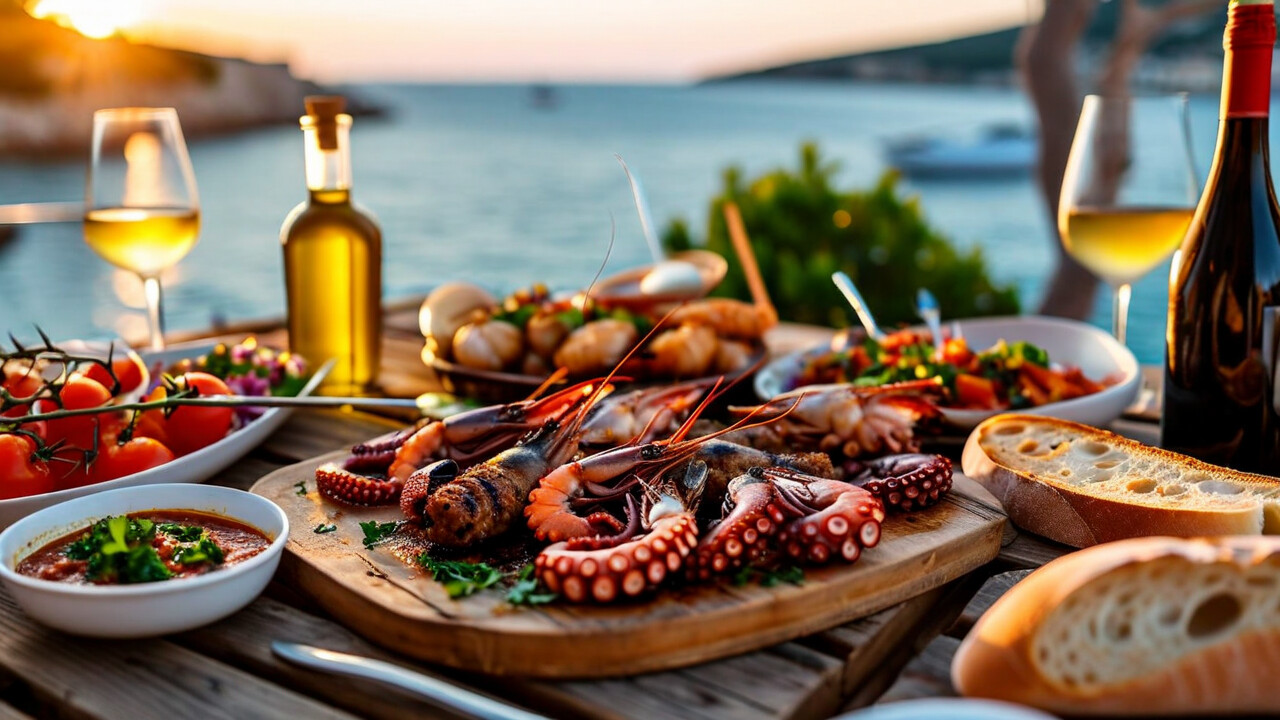
Peka
Meat or octopus and vegetables cooked under a metal dome buried in embers. Must be ordered hours ahead; worth organising a whole evening around.
Crni rižot
Black risotto with cuttlefish and its ink. Dalmatian, messy and excellent.
Pašticada
Beef marinated for a day in vinegar and wine, slow-braised with prunes and served with gnocchi. The Dalmatian celebration dish.
Blitva
Swiss chard boiled with potato, garlic and olive oil. The default side on the entire coast.
Štrukli
Zagorje's baked or boiled dough parcels with fresh cheese. The signature dish of continental Croatia.
Ćevapi & burek
The Balkan inheritance — grilled minced meat fingers and layered filo pastry. Everywhere, cheap, and the correct hangover food.
Regional specialities worth chasing: Istrian truffles, black in summer and white in autumn; Pag cheese (paški sir) from sheep grazing on salt-blown herbs; Dalmatian pršut, air-dried in the bura wind; kulen, the paprika salami of Slavonia; and oysters from Ston on Pelješac, eaten with lemon at the farm.
The word to look for is konoba — a traditional tavern, usually family-run, often with a short handwritten menu. It is almost always better and cheaper than a restaurant with a laminated multilingual card and a man outside inviting you in.
One practical note: fish is normally priced by the kilo and shown to you before cooking. Ask the weight and the price per kilo before agreeing, which is completely normal and not rude — an unexpected bill for a large fish is the single most common tourist complaint in Dalmatia.
🍷 Wine & Spirits
Croatia has been making wine for around 2,500 years — the Greeks planted vines on Vis and Hvar in the 4th century BCE, and the Stari Grad Plain on Hvar, still farmed on its original Greek field divisions, is UNESCO-listed for exactly that continuity. The country has over 130 indigenous grape varieties and exports almost nothing, which means the only way to drink most of it is to come here.
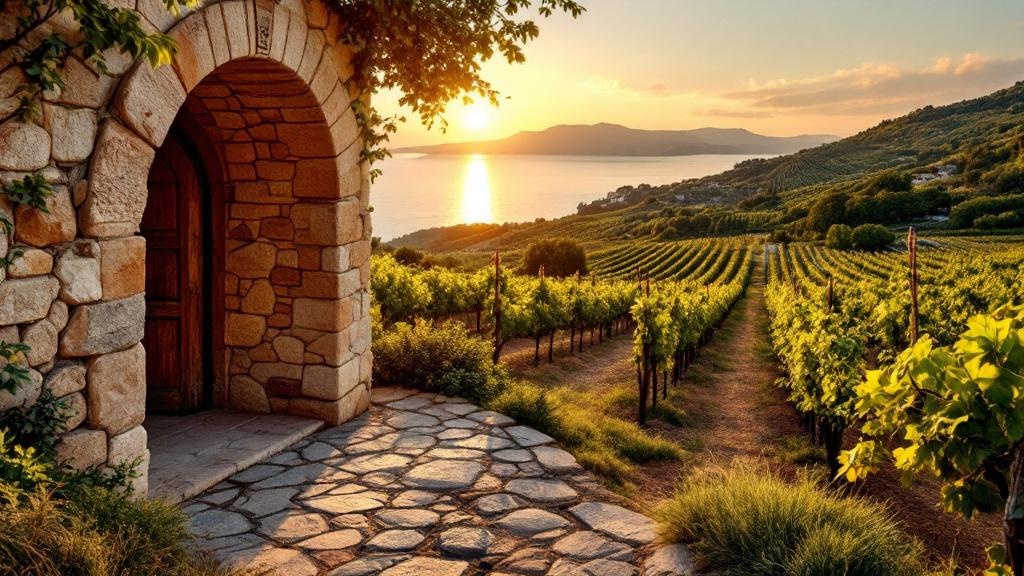
Plavac Mali
The great Dalmatian red — dark, high in alcohol, tannic. Its finest expressions are Dingač and Postup from the near-vertical south-facing slopes of the Pelješac peninsula.
Malvazija Istarska
Istria's flagship white: fresh, mineral, sometimes aged in acacia. Kozlović, Coronica and Kabola are the names to look for.
Graševina
Welschriesling, and the backbone of Slavonian white wine in the continental east. Krauthaker and Enjingi make serious examples.
Pošip & Grk
Korčula's whites. Grk is grown almost nowhere else and has only female flowers, so it must be interplanted with another variety to fruit at all.
Teran & Babić
Istrian red with fierce acidity, and the Šibenik-area red grown on stone terraces at Primošten that are visible from space — a UNESCO tentative-list landscape.
The Zinfandel connection
DNA work at UC Davis in 2001 traced Zinfandel and Primitivo to Tribidrag (Crljenak Kaštelanski), a nearly extinct Croatian variety found on a handful of old Dalmatian vines.
Spirits mean rakija: loza from grapes, šljivovica from plums, travarica infused with herbs, and the medicinal-tasting biska with mistletoe from Istria. It is offered as hospitality and refusing the first one is harder than accepting it. Maraschino, the cherry liqueur from Zadar, has been made since 1821 and turns up in classic cocktails worldwide.
Beer is Karlovačko and Ožujsko, with a strong craft scene in Zagreb. And the local soft drink to try once is bevanda — wine cut with still water, which coastal Croatians drink at lunch and consider entirely normal.
🏆 Kaufmann Wine Score — Croatia
Rated on four criteria: Aroma (/25), Taste (/30), Finish (/20), Value (/25) — Total /100
| Wine | 🔴 Aroma | 🟡 Taste | 🟢 Finish | 🔵 Value | Total |
|---|---|---|---|---|---|
| Saints Hills Dingač (Plavac Mali, Pelješac) | 23 | 27 | 18 | 19 | 87 |
| Stina Plavac Mali (Brač) | 21 | 26 | 17 | 21 | 85 |
| Kozlović Malvazija Istarska (Istria) | 21 | 25 | 15 | 23 | 84 |
| Coronica Gran Malvazija (Istria, oak-aged) | 23 | 26 | 17 | 19 | 85 |
| Krauthaker Graševina (Kutjevo, Slavonia) | 19 | 24 | 14 | 24 | 81 |
| Bibich R6 (Skradin red blend) | 22 | 25 | 16 | 20 | 83 |
95–100 Legendary · 90–94 Outstanding · 85–89 Very Good · 80–84 Good · 75–79 Average · <75 Below Average
🍸 Two cocktails built on Zadar Maraschino
Aviation — 60 ml gin, 15 ml Maraschino, 22 ml fresh lemon juice, 7 ml crème de violette. Shake hard with ice, double-strain into a chilled coupe, garnish with a brandied cherry. The 1916 classic that gave Maraska's liqueur its worldwide market. Last Word — equal parts (22 ml each) gin, Maraschino, green Chartreuse and lime juice; shake, strain, no garnish. Prohibition-era Detroit, revived in Seattle in 2004, and the best use of a bottle you bought on the Zadar waterfront.
🌡️ Climate & Best Time to Visit
The coast is Mediterranean, the interior is continental, and the difference in January is roughly fifteen degrees.
Coast · summer
Hot and dry: 28–33 °C in July and August, sea temperature 24–26 °C, and effectively no rain. Also the crowds and the highest prices of the year.
Coast · shoulder
May, June, September and early October: 20–27 °C, warm sea (September is often the best swimming of the year), and a completely different experience of the same places.
Coast · winter
Mild but wet, 8–14 °C. Many island businesses close entirely from November to April, and ferry schedules thin out.
Zagreb & the interior
Continental: −2 to 3 °C in January, 22–28 °C in July, with real snow in the Zagorje and the mountains.
The bura
The dry, cold north-easterly that comes down off the Velebit in gusts strong enough to close bridges and cancel ferries, mainly in winter. It also produces the clearest air and best visibility of the year.
The jugo
The opposite: a humid southerly that brings cloud, rain and swell. Locals blame it for bad moods, and traditionally the Ragusan senate forbade decision-making while it blew.
Best overall: late May to mid-June, and September. Warm sea, everything open, manageable crowds and prices well below August. If you must travel in August, book everything months ahead and expect ferries, Plitvice and Dubrovnik to be at capacity.
✈️ Getting There & Getting Around
Croatia has airports at Zagreb, Split, Dubrovnik, Zadar, Pula, Rijeka (on Krk) and Osijek. Split and Dubrovnik have enormous seasonal capacity from across Europe — including a large number of low-cost routes that run only from roughly April to October — and thin dramatically in winter.
By road Croatia is genuinely accessible from central Europe: the motorway network is modern and well maintained, and since Schengen accession on 1 January 2023 there are no routine border checks from Slovenia or Hungary. The A1 runs Zagreb–Zadar–Split–Ploče, the A3 crosses from Slovenia to Serbia, and the Pelješac Bridge, opened in 2022, finally connects Dubrovnik to the rest of the country without crossing Bosnian territory.
Motorway tolls are paid at barriers by distance travelled (ticket on entry, pay on exit) — cards are accepted, and an ENC transponder is worth it only for long stays. Fuel is broadly at EU average prices.
Ferries are the other half of the transport system. Jadrolinija runs most car ferries and some catamarans; several private operators run fast passenger catamarans on the popular routes. Car ferries are inexpensive and take vehicles; catamarans are faster, foot-passenger only, and sell out. Book vehicle crossings in advance in July and August — turning up at Split for the Hvar ferry on an August morning means a long wait.
Buses are the workhorse of domestic travel and cover the country far better than the sparse and slow rail network. Renting a car is the right choice for Istria, the Dalmatian hinterland and the national parks; it is a liability in Dubrovnik and Split old towns, where parking is scarce and expensive.
📋 Practical Information
Money
The euro since 1 January 2023 — the kuna is gone. Cards are accepted almost everywhere, including on most ferries and in small konobas.
Schengen
Croatia joined Schengen on 1 January 2023: no routine border checks from Slovenia or Hungary, and the Schengen 90/180 rule applies to non-EU visitors. Non-EU travellers are now registered biometrically under the EU Entry/Exit System (EES, phased in from October 2025), and the ETIAS pre-travel authorisation (€20, valid three years) is scheduled to follow in late 2026 — check before you fly.
Electricity
230 V, 50 Hz, type C/F sockets — identical to Czechia and most of continental Europe.
Water
Tap water is safe and good everywhere, including on most islands. Buying bottled water here is unnecessary.
Health
EU citizens use the EHIC card for state healthcare. Standards are good. The genuine risks are sunburn, sea urchins (wear water shoes on rocky shores) and dehydration.
Tourist tax
A per-person, per-night boravišna pristojba is charged by all accommodation, typically €1–2 in season. It is normally added to the bill separately.
Tipping
Round up or leave about 10% in restaurants if the service was good. Not obligatory, increasingly expected in tourist areas.
Time & season
CET/CEST — the same as Czechia. Note that much of the island and coastal infrastructure closes November to April.
Safety: Croatia is one of the safer countries in Europe, with low violent crime and competent emergency services (112). The practical hazards are natural rather than human: strong sun, sea urchins on rocky entries, the bura wind for sailors, and — in a small number of former front-line areas away from the coast — residual landmines. Summer wildfires are a real and growing hazard on the Dalmatian coast: the fire that broke out near Lokva Rogoznica on 13 August 2026 reached the edge of Omiš, killed one person, injured 43 and forced around 2,500 residents and tourists to evacuate before it was declared out on 26 August. Heed fire bans, never light anything in the karst scrub, and check HAK for road closures when the bura is blowing in fire season. Demining has been extensive and tourist regions are entirely clear, but never walk into unmarked abandoned land in the Lika, Banovina or eastern Slavonia hinterland, and heed warning signs.
🚗 Driving from Central Europe
A very large share of Croatia's summer visitors arrive by car from Austria, Germany, Czechia, Slovakia, Poland and Hungary — the coast is within a day's drive of most of Central Europe, and since Schengen accession the borders are no longer the bottleneck they were.
The classic route
Through Austria and Slovenia: Vienna or Graz → Maribor → Zagreb, then the A1 south. Roughly 800–1,000 km from Prague or Vienna to the central Dalmatian coast.
The Hungarian alternative
Via Budapest and Nagykanizsa into Croatia at Goričan. Slightly longer but avoids Austrian and Slovenian vignette costs and the Karawanks tunnel queues.
Vignettes on the way
Austria and Slovenia both require a vignette (Slovenia's is now electronic). Hungary uses an e-matrica. Buy them before crossing — enforcement is automatic and fines are substantial.
Croatian tolls
Croatia does not use a vignette. You take a ticket entering the motorway and pay by distance on exit; cards accepted. Zagreb to Split costs roughly €25 in a car.
Bottlenecks
The Slovenian Karawanks tunnel and the Croatian A1 southbound on summer Saturdays. Travelling overnight or midweek avoids most of it.
Ferries with a car
Vehicle ferries to the islands must be booked ahead in July and August. Jadrolinija's site handles it; arriving at the ramp and hoping is a July mistake.
One thing that catches people out: the Pelješac Bridge, opened in 2022, means you no longer cross Bosnian territory at Neum to reach Dubrovnik. Older sat-nav data and older guidebooks still route you through the corridor. Both work, but the bridge is faster and avoids two border posts.
💰 Costs & Money
Croatia is no longer the bargain it was a decade ago. Euro adoption, EU membership and a tourism boom have pushed coastal prices close to Italian levels in high season, while the interior and the shoulder months remain genuinely good value.
Budget · €50–80/day
Hostel or private room, self-catering from markets, buses, one or two paid sights. Comfortable outside July and August.
Mid-range · €120–200/day
Apartment or three-star hotel, konoba dinners, a rental car, ferries and park entries.
Higher · €300+/day
Old-town hotels in Dubrovnik or Split, boat trips, tasting menus. Dubrovnik in August is a category of its own.
Typical prices
Coffee €2–3 · konoba main €12–20 · beer €3–4 · Plitvice entry €10–40 depending on season (€40 in June–September, with a 300-per-hour entry cap) · Dubrovnik walls €40 (2026, Fort Lovrijenac included) · Split–Hvar catamaran about €10 per person.
Two structural points. First, seasonality is extreme: the same apartment can cost three times more in August than in May, and Plitvice's own entry price varies by season. Shifting your trip by three weeks is the most effective saving available.
Second, fish is priced by the kilo and this is where bills go wrong. Ask the price per kilo and the weight of the fish before it goes on the grill. Croatians do this as a matter of course.
Money-saving that works: eat the marenda or gablec — the fixed midday meal that many konobas serve to locals at a fraction of the evening menu price; use the car ferries rather than catamarans; buy at the markets (Dolac in Zagreb, the Pazar in Split); and stay one street back from the waterfront anywhere.
🏨 Accommodation
The characteristic Croatian accommodation is the apartman — a private apartment or room in a family house, often with a kitchen and a terrace. The sobe and apartmani signs along every coastal road are the country's original sharing economy, predating the platforms by decades, and they remain the best value on the coast.
Hotels cluster at both ends: a lot of large socialist-era resort hotels, mostly renovated, and a growing number of small design hotels in the old towns. The middle is thinner than in Italy or Spain.
Camping is exceptionally good here — Croatia has some of Europe's best-regarded campsites, many of them directly on the sea in Istria and Kvarner, with a strong naturist tradition dating to the 1960s (the country was a European pioneer, and Koversada near Vrsar was one of the first purpose-built naturist resorts anywhere).
Lighthouse stays are a Croatian speciality worth knowing about: around a dozen working lighthouses on remote islets and headlands rent apartments, some accessible only by boat and with no shop, restaurant or neighbour. Book far ahead.
In high season, book everything — accommodation, car ferries, Plitvice, the Dubrovnik walls — well in advance. In May or October you can improvise, and the country is much more pleasant for it.
🏛️ UNESCO World Heritage
Croatia has ten World Heritage properties (eight cultural, two natural; no new inscription at the 2025 or 2026 Committee sessions), a further fifteen sites on its Tentative List — including Ston, Lonjsko Polje, Velebit, Motovun, Korčula, the Kornati and the Primošten vineyards — and one of Europe's longest intangible heritage lists.
Old City of Dubrovnik (1979)
The walled city and its Republic-era buildings. Placed on the danger list after the 1991–92 shelling and removed in 1998 following restoration.
Historical Complex of Split with Diocletian's Palace (1979)
The palace and the medieval city that grew inside it — a living quarter rather than a monument.
Plitvice Lakes (1979)
The travertine lake system, listed for both natural beauty and ongoing geological process.
Euphrasian Basilica, Poreč (1997)
6th-century Byzantine mosaics in Istria, among the finest outside Ravenna.
Historic City of Trogir (1997)
A Romanesque-Gothic town on a small island between the mainland and Čiovo, near Split.
Cathedral of St James, Šibenik (2000)
Built entirely of stone, without brick or timber, using an interlocking technique unique in Europe.
Stari Grad Plain, Hvar (2008)
Agricultural land still divided along the field boundaries laid out by Greek colonists in the 4th century BCE and farmed continuously since.
Stećci medieval tombstones (2016)
Carved tombstones shared with Bosnia, Serbia and Montenegro.
Venetian defence works (2017)
Zadar and Šibenik's fortifications, part of a serial listing across Italy, Croatia and Montenegro.
Ancient beech forests (2017)
Northern Velebit and Paklenica, part of the pan-European primeval beech forest listing.
On the intangible list — 23 elements in all, one of the highest totals in Europe: klapa singing (2012), lacemaking from Pag, Hvar and Lepoglava (2009), the Sinjska Alka knights' tournament and gingerbread craft from northern Croatia (both 2010), the bell-ringers' pageant from Kastav, the Za Križen procession on Hvar, the Festivity of St Blaise in Dubrovnik and Zagorje wooden toys (all 2009), bećarac and the silent nijemo kolo (2011), the Mediterranean diet (2013), the Međimurje popevka (2018), and — as multinational listings — falconry (2021), Lipizzan horse breeding (2022), transhumance (2023) and the art of dry-stone walling (2024), the craft that built every terrace at Primošten. Ojkanje singing sits on the Urgent Safeguarding List (2010), and the Lastovo Poklad carnival joined the Register of Good Safeguarding Practices in December 2025.
🎭 Festivals & Events
Dubrovnik Summer Festival · July–August
Six weeks of theatre, opera and concerts staged in the old city's squares, courtyards and fortresses. Running since 1950.
Rijeka Carnival · Jan–Feb
One of Europe's largest carnivals, with the zvončari bell-ringers in sheepskins and horned masks — a pre-Christian rite on the UNESCO list.
Sinjska Alka · first Sunday in August
A knights' tournament held since 1715 to mark a victory over the Ottomans. Riders spear a hanging ring at a gallop. UNESCO-listed.
INmusic & the summer festivals
Zagreb's INmusic on Jarun lake in June, plus the electronic festivals that made Croatia a summer clubbing destination — Ultra Europe in Split, and the Tisno events on the Dalmatian coast.
Špancirfest · Varaždin, August
Ten days of street performance in a baroque town in the north — the best festival most visitors have never heard of.
Advent in Zagreb · December
Repeatedly voted Europe's best Christmas market, and the reason to visit the capital in winter.
🤯 Fascinating Facts
The necktie is Croatian
French officers borrowed the knotted neckcloths of Croatian mercenaries in the 17th century. Cravate comes from Croate.
Zinfandel is Croatian
DNA testing in 2001 traced California's Zinfandel and Italy's Primitivo to Tribidrag, found on a few old vines in Dalmatia.
Dalmatians come from here
The spotted dog is named for Dalmatia, where it is documented from the 17th century.
Water clear to 50 metres
Limestone shores produce almost no sediment, giving the Adriatic some of the clearest water in the Mediterranean.
Slavery abolished in 1416
The Republic of Ragusa banned the slave trade centuries before most of Europe.
Quarantine was invented here
Ragusa introduced a 30-day isolation for arriving ships in 1377, later extended to 40 — quaranta — giving us the word.
Nikola Tesla was born here
In Smiljan, in the Lika region, in 1856. The birthplace is now a memorial centre.
A world-record truffle
A 1.31 kg white truffle from the Motovun forest in Istria held the Guinness record.
⭐ Notable Croatians
Nikola Tesla (1856–1943)
Born in Smiljan to a Serbian family in what is now Croatia; the electrical engineer whose alternating-current system runs the modern world.
Marco Polo (c. 1254–1324)
Korčula claims his birth, on evidence that is affectionate rather than documentary. Venice disagrees, robustly.
Ruđer Bošković (1711–1787)
Ragusan polymath: physicist, astronomer and diplomat, whose atomic theory anticipated later physics by a century.
Ivan Meštrović (1883–1962)
The great modern sculptor, whose work fills a gallery in his own Split villa and stands in Chicago's Grant Park.
Luka Modrić (b. 1985)
Ballon d'Or 2018, and captain of the side that reached the World Cup final that year from a country of under four million. Still captain at the 2026 World Cup at 40, past 200 caps, and playing for AC Milan after thirteen years at Real Madrid.
Slavenka Drakulić (b. 1949)
Writer and essayist on communism, war and the body; among the most translated Croatian authors.
Janica & Ivica Kostelić
The most decorated alpine skiing siblings in history, from a country with almost no ski industry.
Slavoljub Penkala (1871–1922)
Engineer in Zagreb who patented an early mechanical pencil and fountain pen; penkala still means pen in several languages.
📰 Media & Press Freedom
Croatia has a plural media landscape and sits in the upper-middle of global press freedom rankings — better than most of its neighbours, below the Western European average. In the 2026 RSF World Press Freedom Index it ranks 53rd of 180 (score 66.31), up seven places from 60th in 2025 but still in RSF's "problematic" band. HRT is the public broadcaster; Jutarnji list and Večernji list are the main dailies; Index.hr and Telegram lead online; and Novosti, the weekly of the Serb minority, does some of the country's best investigative work.
The recurring problems named by press-freedom organisations are SLAPP suits — strategic lawsuits filed against journalists to exhaust them financially, of which RSF counts more than 750 pending at once — political pressure on the public broadcaster, and concentrated ownership. Physical danger to journalists is not a feature here, which distinguishes it sharply from parts of the region.
For a visitor this is mostly context. The practical points: Croatians discuss politics freely and often heatedly, the Homeland War and relations with Serbia remain sensitive subjects best approached by listening rather than opining, and English-language coverage of the country is thin enough that Total Croatia News is worth bookmarking before a trip.
⚽ Sports
Croatia's sporting record is genuinely disproportionate to a population of 3.8 million. The football team reached the 2018 World Cup final and took third place in 2022; Luka Modrić won the Ballon d'Or in 2018, breaking a decade of Messi and Ronaldo. At the 2026 World Cup Croatia finished second in Group L behind England (lost 2–4 to England in Arlington, beat Panama 1–0 in Toronto through Ante Budimir — at 34 the country's oldest World Cup scorer — and Ghana 2–1 in Philadelphia), then went out in the round of 32 on 2 July 2026, losing 1–2 to Portugal in Toronto to a stoppage-time Gonçalo Ramos header after Ivan Perišić had scored first. Modrić, captain at 40, passed 200 caps during the tournament; he left Real Madrid in 2025 after thirteen years and six Champions League titles and now plays for AC Milan. Dinamo Zagreb and Hajduk Split divide the country, and the rivalry is fierce enough to be a sociological subject in its own right.
Beyond football: handball and water polo have both produced Olympic gold, and water polo in particular is a Dalmatian institution — the sea pens of Dubrovnik and Split are where it is learnt. The recent record is remarkable for a country this size. Croatia co-hosted the 2025 World Men's Handball Championship with Denmark and Norway (games in Zagreb, Varaždin and Poreč) and reached the final, losing 26–32 to Denmark just outside Oslo on 2 February 2025; a year later the team took bronze at EHF EURO 2026, beating Iceland 34–33 in Herning on 1 February 2026. In water polo, Croatia hosted the January 2024 European Championship in Zagreb and Dubrovnik and lost the final 10–11 to Spain, then a month later won its third world title in Doha (15–13 on penalties against Italy, 17 February 2024) and followed it with Olympic silver in Paris. Zagreb also hosted the men's U16 water polo world championship in August 2026, which Croatia won, and the European Artistic Gymnastics Championships the same month. At the 2026 European Athletics Championships in Birmingham, Sara Kolak won javelin gold. Basketball gave the world Dražen Petrović, whose early death in 1993 is still mourned. Tennis produced Goran Ivanišević's improbable Wimbledon win in 2001 as a wildcard, and later Marin Čilić.
The Kostelić siblings, Janica and Ivica, became the most decorated alpine skiing family in Olympic history from a country with essentially no ski industry — they trained abroad on a shoestring, which is a fair summary of how Croatian sport tends to work.
For a visitor: a Hajduk match at Poljud with the Torcida — Europe's oldest organised supporters' group, founded 1950 — is an experience; and picigin on Bačvice beach, played in knee-deep water since 1908, is free, constant and welcoming to anyone willing to look foolish.
🎒 Packing Tips
Water shoes
The most important item on this list. Croatian beaches are pebble and rock, not sand, and sea urchins are common on rocky entries.
Serious sun protection
The Adriatic sun in July reflects off white limestone and water. Hat, high-factor sunscreen, and shade in the middle of the day.
A light layer for the bura
Even in summer the north-easterly can drop the temperature sharply, and evenings on the water are cool.
Walking shoes with grip
Plitvice and Krka boardwalks are wet, the Dubrovnik walls are steep, and old-town limestone is polished to a slippery shine.
Mask and snorkel
With this water clarity, snorkelling is worthwhile almost anywhere on the coast.
Modest layer for churches
Shoulders and knees covered in cathedrals and monasteries, which are enforced in Dubrovnik and Trogir.
No adapter needed for Czech or continental European plugs, and no currency to change since the euro. Two things worth leaving space for on the way home: olive oil and a bottle of Plavac Mali you cannot buy at home.
📸 Photo Gallery
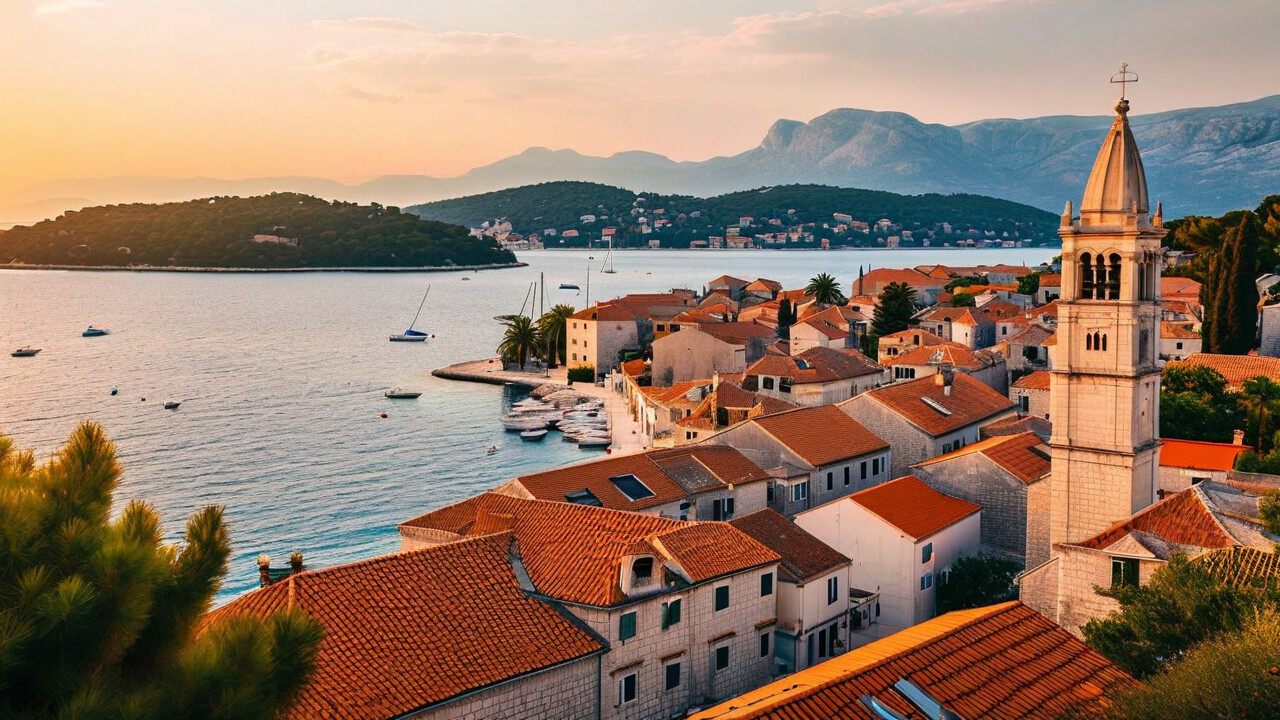
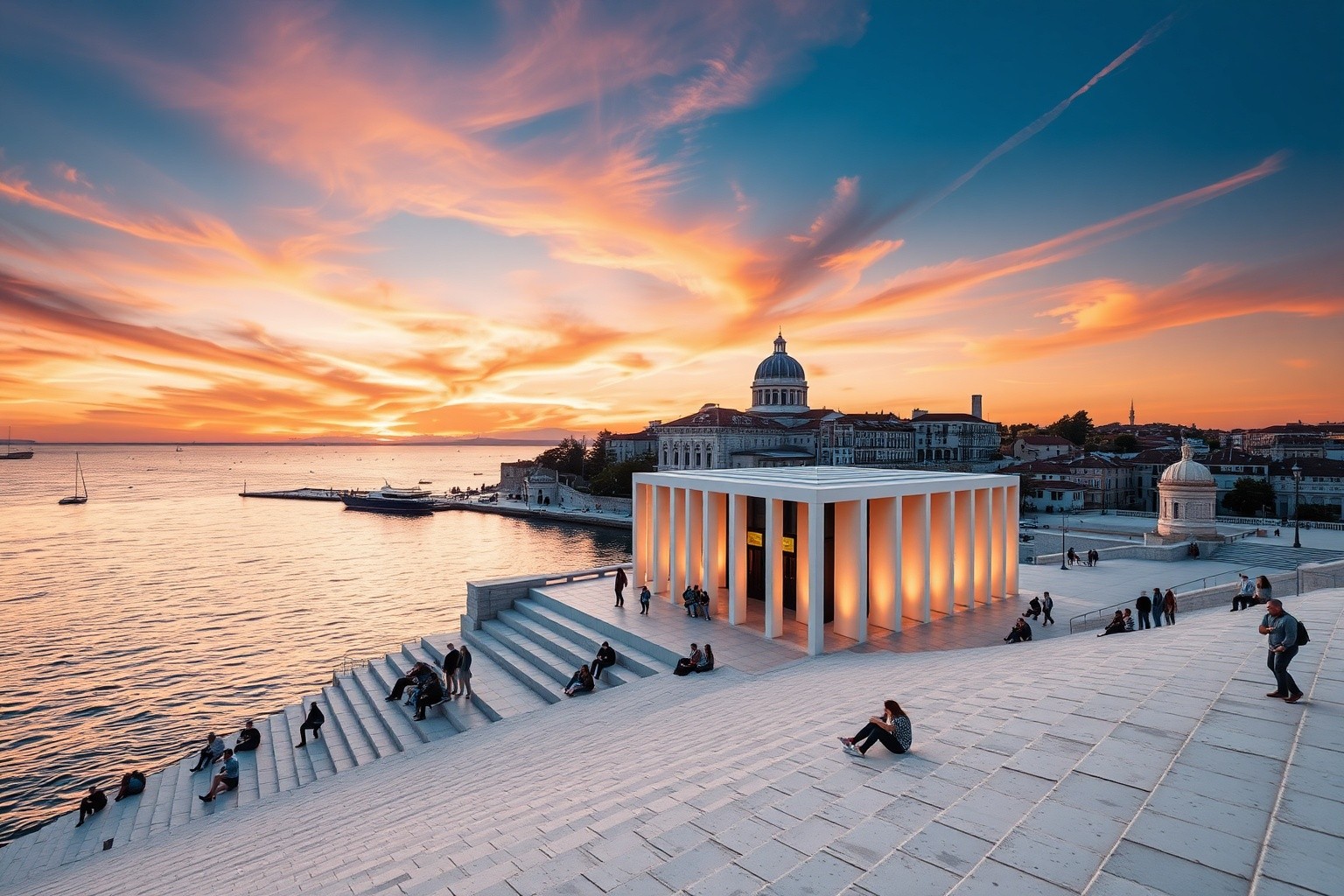
Share your Croatia photos! Send them to photos@kaufmann.wtf to be featured here with credit.
🌐 Useful Resources
Croatian National Tourist Board
Official information, region by region: croatia.hr
Jadrolinija
The main ferry operator — timetables and vehicle bookings, essential in summer: jadrolinija.hr
Plitvice Lakes NP
Advance ticket booking, which is effectively mandatory in season: np-plitvicka-jezera.hr
HAK — road conditions
The Croatian automobile club: live traffic, tolls, ferry queues and bura wind closures: hak.hr
📚 Recommended Reading & Watching
Black Lamb and Grey Falcon · Rebecca West
The 1937 journey through Yugoslavia. Vast, opinionated, and still the most quoted book on the region.
Café Europa · Slavenka Drakulić
Essays on post-communist life by Croatia's best-known contemporary essayist.
The Bridge on the Drina · Ivo Andrić
Nobel laureate; about Bosnia rather than Croatia, but indispensable for the region's Ottoman centuries.
Croatia: A Nation Forged in War · Marcus Tanner
The standard English-language history of the country's formation.
The Museum of Unconditional Surrender · Dubravka Ugrešić
Exile, memory and the disappearance of a country, by a writer who left and never quite forgave.
Game of Thrones
Dubrovnik as King's Landing, Split's cellars as Meereen, Šibenik as Braavos. Worth knowing which crowds you are joining.
Klapa recordings
Search for Klapa Cambi or Klapa Intrade to hear what echoes down the stone alleys in summer.
Total Croatia News
English-language news and practical updates — the best single source for what has changed since your guidebook.
✍️ Author's Note
"Croatia in August is a warning about what happens when a beautiful place becomes an easy one. Dubrovnik at noon in high season is a queue with a view. Plitvice's boardwalks move at the pace of the slowest person on them. This is not the country's fault, but it is worth planning around, and the fix is free: come three weeks earlier or three weeks later."
"Do that and you get the other Croatia. Split in October, when the Riva belongs to people who live there and the Peristyle is a café again. A konoba on Vis where the menu is four things and one of them ran out. The water in June, already warm, and clear enough that you can see your own shadow on the seabed six metres down."
"The thing I keep coming back to is Split — a Roman emperor built a palace to retire into, and instead of becoming a ruin it became a neighbourhood. People hang washing between columns Diocletian paid for. The cathedral is his mausoleum, converted by the people he persecuted. Seventeen hundred years of continuous inhabitation, and it is still just where people live. Pomalo, they say in Dalmatia. Slowly. It turns out to be a workable answer to almost everything."
— Radim Kaufmann, September 2026
Support This Project 🌍
This World Travel Factbook is a labor of love – free to use for all travelers. If you find it helpful, consider supporting its continued development.
