
🇨🇺 Cuba at a Glance
🌏 Overview — Why Visit Cuba
Cuba is the largest island in the Caribbean: 1,250 kilometres of sugarcane, tobacco fields, limestone mogotes, coral reef and crumbling-yet-magnificent Spanish colonial cities, home to roughly 9.4 million people (ONEI, end-2025 — down from 11.2 million in 2020 after the largest emigration wave in the island's history) and one of the most powerful cultural identities on Earth. Since 1959 it has lived under a one-party socialist state that, for all its contradictions, produced near-universal literacy and a globally exported medical system, in a country where scarcity looks nothing like the poverty of comparable economies.
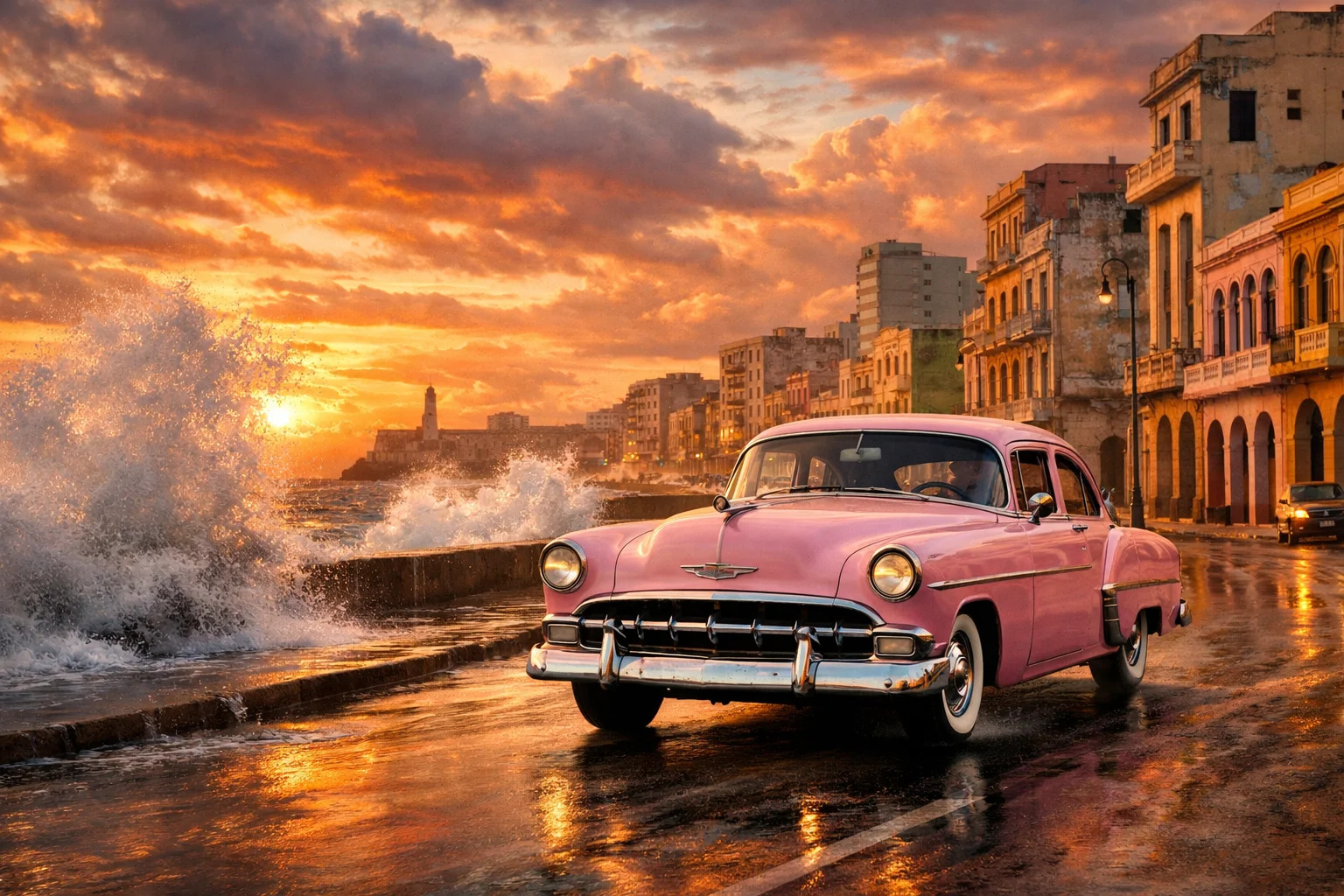
For the traveller Cuba offers three immediate pleasures and one long aftertaste. The pleasures: Havana's impossible, decaying beauty; the music that seems to rise out of the streets themselves; and rum-drenched cocktails served in the bars where they were invented. The aftertaste is subtler — the warmth of Cubans, the conversations on front stoops, the sense that here, more than almost anywhere, the human connection outweighs the infrastructure. You come for the classic cars and you leave remembering the people.
This guide covers the whole island: Havana and its Malecón, Trinidad's cobblestone time capsule, the tobacco valleys of Viñales, Santiago de Cuba's Afro-Caribbean heart, the cays and beaches of the north coast, and the practical realities of travel in a country that still runs largely on cash, improvisation and the kindness of strangers.
Set expectations correctly and Cuba is one of the great trips. Set them wrongly and it is a frustration. The electricity goes off. The restaurant is out of three of the five things on the menu. Your card does not work anywhere, at all, ever. None of that is a malfunction of your holiday — it is the country, and Cubans navigate it daily with a resourcefulness that is itself the most interesting thing about the place.
September 2026 — read before you book. Cuba is in the deepest crisis since the 1990s: a US fuel blockade in force since January 2026, six island-wide grid collapses this year, jet fuel so scarce that airports have at times refused to refuel departing aircraft, and a string of airlines (Air Canada in February; Air France, Iberia, Turkish and World2Fly over the summer; JetBlue from September) suspending service. Hotels in Varadero and on the northern cays have closed and moved guests elsewhere, and foreign arrivals January–July 2026 were 419,000 against 1.1 million a year earlier. None of this makes Cuba dangerous for a visitor — it makes it unpredictable. Confirm your flight is actually operating, carry more cash and more medicine than you think you need, and read the History, Getting There and Money sections below, which have been updated for the crisis.
🪪 Name & Identity
The name Cuba comes from the Taíno word cubao, variously translated as "where fertile land is abundant" or simply "great place". Christopher Columbus, who landed on the north-eastern coast on 28 October 1492, believed he had reached mainland Asia and named the island Juana after the Spanish heir-apparent. The indigenous name survived four centuries of colonial rebranding and became official when Cuba gained formal independence in 1902.
The country's full formal name is the República de Cuba. Cubans call their home La Isla ("The Island"), La Mayor de las Antillas ("The Largest of the Antilles"), or affectionately El Cocodrilo Verde — the Green Crocodile, a reference to the island's elongated, reptilian shape on a map.
The flag, designed in 1849, carries three blue and two white stripes, a red triangle and a single white star — the Estrella Solitaria, the Lone Star, symbolising independence. It predates the republic it represents by more than half a century, which tells you something about how long the idea of Cuba took to become a country.
Identity here rests on layers that do not cancel each other out: Spanish colonial inheritance, a vast and living African cultural presence carried by the enslaved and their descendants, the revolution of 1959, and the exile diaspora in Florida. Cubans argue about all of it, constantly and loudly, and a visitor who listens rather than pronounces will learn a great deal.
🌄 Geography
Cuba sits at the entrance to the Gulf of Mexico, 150 km south of Florida and 210 km east of Mexico's Yucatán Peninsula. The main island stretches 1,250 km west to east but averages only about 100 km across, giving 109,884 km² of territory — roughly the size of Bulgaria, and about 1.4 times Czechia.
The west — Pinar del Río
Tobacco country. The Viñales Valley's limestone mogotes and the red soil that grows the best cigar leaf in the world. Ends at the wild Guanahacabibes Peninsula.
Havana & the north-west
The capital, the Bay of Pigs to the south-east of it, Varadero's resort strip, and the Zapata wetland — the largest in the Caribbean and a serious birding destination.
The centre
Trinidad, Cienfuegos, Santa Clara and the Escambray mountains, plus the northern cays of the Jardines del Rey — Cayo Coco and Cayo Guillermo.
The east — Oriente
Santiago de Cuba, Baracoa, Holguín and the Sierra Maestra, where the revolution was fought. Culturally the most Afro-Caribbean part of the island and noticeably hotter.
The islands
Some 4,195 islands and cays besides the mainland, most notably the Isla de la Juventud, once a pirate haunt and later a prison island.
The coast
Over 5,700 km of it: white-sand beaches, mangrove, limestone cliff and the second-largest coral reef system in the Atlantic.
The highest point is Pico Turquino (1,974 m) in the Sierra Maestra. Most of the island, however, is flat to gently rolling — which is why it became a sugar colony, and why cycling and driving are physically easy even where the roads are not.
🗺️ Map of Cuba
Cuba's elongated shape — stretched like a crocodile from Cabo de San Antonio in the west to Punta Maisí in the east — is best appreciated from above. The Carretera Central and the Autopista Nacional run the spine of the island; almost everything worth seeing is within an hour of one of them.
Distances matter more than they look. Havana to Viñales is a comfortable 2.5 hours; Havana to Trinidad about 4; Havana to Santiago de Cuba is 870 km and a full day by road, which is why most itineraries either stay west or fly east. A common two-week route runs Havana → Viñales → Cienfuegos → Trinidad → Santa Clara → Havana.
📜 History
Cuba's human story begins around 4000 BCE with the Guanahatabey and later the Taíno — Arawak-speaking farmers and fishers whose culture was effectively extinguished within a few generations of Columbus's arrival. Spanish colonisation, formalised by Diego Velázquez from 1511, turned the island into a strategic waypoint for the silver fleets returning from Mexico and Peru.
It also turned it into a brutal slave-labour sugar economy that by the 19th century was the largest sugar producer in the world. Cuba was one of the last places in the Americas to abolish slavery, in 1886. Everything about modern Cuban culture — the music, the religion, the food, the demography — descends from that fact.
Three wars of independence between 1868 and 1898 culminated in the 1895 uprising led by the poet-revolutionary José Martí, who was killed in his first battle and became the country's secular saint. US intervention in 1898, following the explosion of the USS Maine in Havana harbour, ended Spanish rule but replaced it with a de-facto American protectorate that lasted in various forms until 1959.
The Cuban Revolution — Fidel Castro, Che Guevara, Camilo Cienfuegos, Raúl Castro — toppled the Batista dictatorship on 1 January 1959 and turned sharply socialist after the failed US-backed Bay of Pigs invasion in 1961. The Cuban Missile Crisis of October 1962 brought the world closer to nuclear war than at any point before or since.
The collapse of the Soviet Union in 1991 removed the subsidies the whole economy rested on and triggered the Período Especial: a decade of extreme scarcity — blackouts, bicycles instead of buses, a measurable fall in average calorie intake — that reshaped Cuban society and is still the reference point for every conversation about hardship. Raúl Castro succeeded Fidel in 2008 and allowed cautious private enterprise. Miguel Díaz-Canel took over as head of state in April 2018 — the first person not named Castro to hold the office since 1976 — became President of the Republic under the 2019 constitution, succeeded Raúl as first secretary of the Communist Party in April 2021, and was re-elected in April 2023 for a term running to 2028; Manuel Marrero Cruz has been prime minister since December 2019. The US embargo, in place since 1962, remains the single largest external constraint on the economy, and the internal command system the largest internal one.
The years since 2021 have been the hardest since the Special Period. The 11 July 2021 protests were the largest since 1959; the national grid collapsed island-wide in October, November and December 2024 and again in March and September 2025; Hurricane Melissa hit Santiago de Cuba province as a Category 3 storm on 29 October 2025. Then, after US forces captured Venezuela's Nicolás Maduro on 3 January 2026, Washington cut off Cuba's Venezuelan oil, imposed tariffs on any country supplying it (Executive Order 14380, 29 January 2026) and began turning back tankers — the first effective blockade of the island since 1962. The result is the 2026 Cuban crisis: six nationwide grid collapses between March and early August 2026, provincial blackouts of twenty hours a day, closed schools, rubbish uncollected in Havana, the Festival del Habano cancelled, and foreign arrivals down by roughly 60%. Díaz-Canel confirmed direct talks with the Trump administration on 13 March 2026; Cuba released 51 political prisoners and then, on 3 April, more than 2,000 prisoners in total, while Washington indicted Raúl Castro on 21 May 2026 over the 1996 Brothers to the Rescue shoot-down and continued to call openly for a change of government. That is the Cuba this page describes as of September 2026 — and it is changing week by week.
👥 People & Culture
Cuba's 9.4 million people (ONEI, end-2025) are the product of five centuries of forced and voluntary migration: Spanish colonists, enslaved West and Central Africans, Chinese indentured labourers, Haitian and Jamaican cane cutters, and 20th-century arrivals from across Europe. Official statistics give roughly 65% white, 25% mixed and 10% Black, but the categories are contested and self-identification varies enormously. What unites Cubans is a national identity forged through independence struggle, revolution and shared hardship.
Music permeates Cuban life to a degree that is hard to overstate. Son — the foundation of what the world calls salsa — emerged from the fusion of Spanish guitar and African rhythm in the east. Rumba, born in the solares of Havana and Matanzas, is pure percussion and dance. Contemporary Cuba produces timba, reggaetón and a sharp hip-hop scene alongside the traditional forms. You hear live music everywhere: concert halls, casas de la trova, street corners, buses.
Santería — properly Regla de Ocha — blends Yoruba religion carried by the enslaved with Catholic imagery. Orishas map onto Catholic saints; initiates dress in white for a year and wear beaded necklaces in their orisha's colours. It survived official atheism, and since the 1990s it has been practised openly. Treat it as a living religion rather than a photo opportunity: ask before photographing a ceremony, and accept no for an answer.
Cuban hospitality is genuine rather than performed, and it operates in conditions that would make most people ungenerous. The culture values education intensely — literacy is close to universal and the country produces extraordinary numbers of doctors, teachers and artists relative to its economy. That combination of warmth, education and creative energy is Cuba's actual attraction; the classic cars are the poster.
It would be dishonest to describe the culture without the emigration. Since 2021 well over a million Cubans have left — official statistics put the population at 9.7 million at the end of 2024 and 9.4 million at the end of 2025, down from 11.2 million in 2020, with net emigration of about 245,000 in 2025 alone and the lowest fertility rate in nearly seventy years — mostly young and mostly for the United States and Spain. Nearly every family you stay with will have someone abroad. It comes up in conversation quickly, and it is the single biggest thing happening in Cuban society today.
🗣️ Language & Useful Cuban Spanish
Spanish is the only official language, and Cuban Spanish is fast, consonant-dropping and full of local slang. Final s disappears (¿cómo estás? becomes ¿cómo etá?), d between vowels softens away (pescado → pescao), and speed is a point of pride. If your Spanish works fine in Spain or Mexico, expect a week of adjustment.
English is spoken in tourist-facing jobs in Havana, Varadero and Trinidad and rarely elsewhere. Russian is still understood by an older generation of engineers and doctors trained in the Soviet bloc, which occasionally gives Czech and Slovak visitors an unexpected conversational opening.
¿Qué bolá?
"What's up?" — the definitive Cuban greeting. ¿Qué bolá, asere? will get you a smile every time.
Asere
Buddy, mate. Universal among friends; slightly informal for a first meeting but never offensive.
Yuma
A foreigner, especially an American. Not an insult — La Yuma is also slang for the United States.
Guagua
Bus. Pronounced "wa-wa". Nobody in Cuba says autobús.
Fula
Hard currency, dollars. "¿Tienes fula?" is a question about foreign cash.
Casa particular
A licensed private homestay — the phrase you will use most on the whole trip.
La cuenta, por favor
The bill, please. Followed immediately by counting it, which is normal and not rude.
No es fácil
"It isn't easy." The national catchphrase, deployed with a shrug about everything from blackouts to geopolitics.
One piece of etiquette: Cubans are extremely direct in conversation and will ask about your salary, your rent and your politics within ten minutes. Answering honestly, including about what things cost at home, is taken as respect rather than boasting — as long as it is a conversation and not a lecture.
🎶 Music & Dance
If you take one thing seriously in Cuba, take the music. This island of fewer than ten million people invented or shaped son, mambo, chachachá, rumba, danzón, bolero, timba and Latin jazz, and exported them so thoroughly that most of the world dances to Cuban rhythms without knowing it. Salsa as played in New York is Cuban son with a Puerto Rican accent.
Son cubano
Born in Oriente in the late 19th century: tres guitar, bongó, double bass, claves. The Buena Vista Social Club recordings are the accessible entry point and still the best-selling Cuban record ever made. UNESCO inscribed the practice of Cuban son on its intangible-heritage list in December 2025.
Rumba
Not the ballroom dance of the same name. Street percussion — congas, cajones, voices — from the Havana and Matanzas solares. Catch a rumba de cajón on a Sunday in Callejón de Hamel.
Timba
Modern, aggressive, brass-heavy Cuban dance music. Los Van Van and NG La Banda are the classic names; a live timba show is a physical experience.
Latin jazz
Chucho Valdés, Irakere, Gonzalo Rubalcaba. The Havana International Jazz Festival each January is among the best in the Americas.
Trova & nueva trova
Singer-songwriter tradition — Silvio Rodríguez and Pablo Milanés. The casa de la trova in almost every town is where to hear it.
Reggaetón & hip-hop
What young Cubans actually listen to. Politically pointed at times; the 2021 song Patria y Vida became the anthem of the protests that July.
Dancing is not a spectator activity here. Casa de la Música venues in Havana and Trinidad, the open-air staircase in Trinidad, and every neighbourhood party will pull you in. Nobody expects a foreigner to dance well; refusing repeatedly is what looks odd. Salsa lessons in Havana cost a few euros an hour and are the single best investment a visitor can make in their evenings.
🏛️ Havana — La Habana
Havana is unlike any other city on Earth. Two million people inhabit a metropolis where baroque churches face art deco apartment blocks, 1950s Chevrolets share the street with horse carts, and revolutionary murals fade on walls that are visibly failing. The city demands time — not just to see it but to absorb its rhythm, to sit on the Malecón at sunset, to wander without a destination through neighbourhoods that reveal themselves slowly.
Habana Vieja
The colonial core, a UNESCO World Heritage Site since 1982, is organised around four squares: Plaza de la Catedral, Plaza Vieja, Plaza de Armas and Plaza de San Francisco. Calle Obispo runs through the middle of it. Restoration by the City Historian's office has been genuinely careful in places and stalled in others, so a restored palace often stands next to a building with a tree growing out of the third floor. Both are real Havana.
Centro Habana & the Malecón
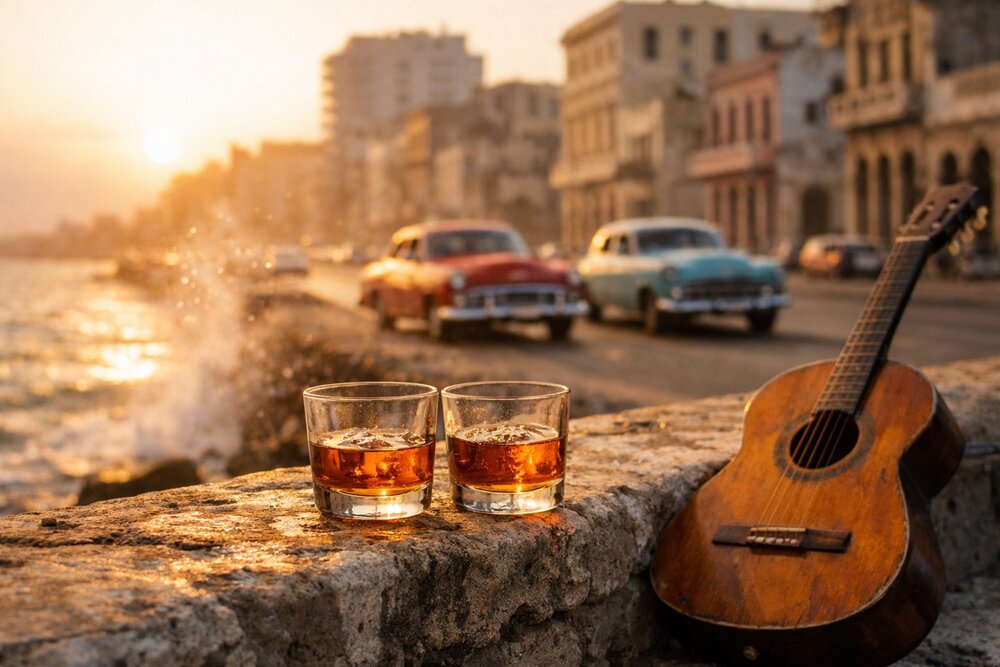
Between the old town and Vedado lies the part of the city where most Havanans actually live: denser, shabbier, louder, and far more interesting than the postcard. The Capitolio, modelled on Washington's and slightly taller, anchors it. The Paseo del Prado leads to the Malecón — eight kilometres of seawall where the whole city eventually turns up to fish, flirt, drink rum and watch waves break over the road.
Vedado & Miramar
Vedado is the early-20th-century city: tree-lined streets, eclectic mansions, the Hotel Nacional (Churchill, Sinatra, and the 1946 mafia summit), the vast Plaza de la Revolución with the Che Guevara portrait on the Interior Ministry, and the Colón cemetery. Miramar, further west, holds the embassies and the mansions abandoned in 1959.
Essential Havana
A daiquiri at El Floridita and a mojito at La Bodeguita del Medio, both touristed and both worth it once. The Fábrica de Arte Cubano in a converted cooking-oil factory — gallery, concert hall and bar in one, and the best night out in the country. The Museo de la Revolución in Batista's former presidential palace. A classic-car ride along the Malecón at sunset, agreed at €25–30 for the hour. And at 21:00 every night, the cañonazo — the cannon fired from the Cabaña fortress across the harbour since the 18th century.
🏘️ Trinidad & Central Cuba
Trinidad is Cuba's most perfectly preserved colonial town — a UNESCO site that looks much as it did in the 1850s, when sugar wealth built its mansions. Cobbled streets wind between pastel houses with terracotta roofs, wrought-iron window grilles and interior courtyards. The Plaza Mayor, ringed by 18th-century palaces now serving as museums, is the heart of a living town rather than a preserved one: people still hang laundry above the cobbles.
The wealth came from the Valle de los Ingenios, the Valley of the Sugar Mills, itself UNESCO-listed. The 45-metre Manaca Iznaga tower, built so overseers could watch enslaved workers in the cane, survives as an unambiguous monument to how the money was made. The valley today offers horseback riding, a slow steam-train ride when it is running, and an honest confrontation with Cuba's sugar-and-slavery history.
Trinidad's nightlife concentrates on the Casa de la Música — an open-air staircase beside the church where live bands play salsa and timba under the stars, free or nearly so. Playa Ancón, 12 km away, is the best beach on the south coast. The Topes de Collantes in the Escambray mountains offer waterfall hikes and coffee plantations, and are 10 °C cooler than the coast.
Cienfuegos
The "Pearl of the South" — a UNESCO-listed centre laid out by French settlers in 1819, unusually orderly and neoclassical by Cuban standards. The Punta Gorda peninsula holds the eccentric Palacio de Valle.
Santa Clara
Where Che Guevara derailed the armoured train in December 1958 and effectively won the revolution. His mausoleum and museum are here, and the town has the liveliest student and LGBTQ+ scene outside Havana.
Camagüey
A UNESCO-listed labyrinth of a city, deliberately laid out to confuse pirates, famous for its tinajones — giant clay water jars — on every corner.
Remedios
A small, beautiful colonial town that explodes each December for the Parrandas, a fireworks war between two neighbourhoods that has been running since the 19th century and has been on the UNESCO intangible-heritage list since 2018.
🌄 Viñales & Western Cuba
The Viñales Valley looks like nowhere else. Massive limestone mogotes — rounded karst hills draped in vegetation, the remnants of a collapsed cave system — rise abruptly from a flat floor of rust-red soil where tobacco is grown by methods little changed in two centuries. The UNESCO-protected landscape is genuinely prehistoric-looking: oxen still plough the fields and the leaf still dries in thatched casas de tabaco.
This is Cuba's premier tobacco region and the source of the leaf that becomes the world's best cigars. Farm tours explain the process from seed to smoke, and the vegueros will usually roll one in front of you. Be clear-eyed about what you are buying: farmers are legally required to sell 90% of their crop to the state, and what they roll from the remainder is genuine, freshly made, unbanded and not exportable in quantity. It is not a discounted Cohiba, and anything sold to you as one on the street is not either.
Riding the valley
Horseback through the tobacco fields to a farm, a coffee stop and a cave, typically 4–5 hours for €15–25. The classic Viñales day.
Caves
The Cueva del Indio includes a boat ride on an underground river; the Gran Caverna de Santo Tomás is 46 km of passages and the largest cave system in Cuba.
Rock climbing
The mogotes carry hundreds of bolted routes on excellent limestone. The scene is informal and legally grey — climbers organise locally.
María la Gorda
At the tip of the Guanahacabibes Peninsula: coral walls, almost no development and Cuba's best diving, four hours west of Viñales.
Cayo Jutías & Cayo Levisa
Undeveloped white-sand cays reached by causeway or boat, an easy day trip north from Viñales.
Las Terrazas
An eco-community built around a 1960s reforestation project, with zip-lines, bathing pools and an artists' colony. Halfway back to Havana.
Viñales town itself is a single main street of casas particulares, private restaurants and bars with nightly live music. It is the easiest place in Cuba to be a traveller: everything is walkable, everyone rents a room, and the valley starts at the end of the street.
🌅 Santiago de Cuba & the East
Santiago de Cuba, 870 km east of Havana, is the island's second city and insists it is the more Cuban one. Founded in 1515, hemmed between the Sierra Maestra and the sea, it is hotter, blacker, louder and more Caribbean than the capital — closer to Haiti and Jamaica than to Florida, in geography and in culture.
It is also the cradle of Cuban music. Son was born in these hills; the Casa de la Trova on Calle Heredia has been the place to hear it for a century. Carnaval de Santiago in late July is the loudest, most Afro-Caribbean celebration in the country, with the conga santiaguera parading through the streets behind a Chinese cornet.
Castillo San Pedro de la Roca
A UNESCO-listed 17th-century Spanish fortress on a cliff at the harbour mouth — the best-preserved Spanish-American military architecture anywhere.
Santa Ifigenia cemetery
José Martí's mausoleum with its hourly changing of the guard, and, since 2016, Fidel Castro's grave: a plain granite boulder with a single word, Fidel.
Moncada Barracks
Where Castro's failed 26 July 1953 attack began the revolution. The bullet holes in the façade were restored deliberately.
El Cobre
The basilica of the Virgen de la Caridad, Cuba's patron saint and the Catholic face of the orisha Ochún — the country's most important pilgrimage site, 20 km from the city.
Baracoa
Cuba's oldest Spanish settlement (1511), isolated at the eastern tip beyond the spectacular La Farola mountain road, and — with the whole of the east — still recovering from Hurricane Melissa (October 2025). Cocoa, coconut, the flat-topped El Yunque mountain, and a food culture unlike anywhere else on the island.
Sierra Maestra
Pico Turquino (1,974 m) and the Comandancia de la Plata, Castro's guerrilla headquarters, reachable on a guided two-day hike.
Getting east is the practical question. The road journey from Havana is a full day; the domestic flight is an hour but subject to cancellation; the Viazul bus is 15 hours overnight. Most visitors who go east fly one leg and drive the other, and almost everyone who goes says the country changed shape for them when they did.
🏖️ Beaches, Cays & Diving
Cuba has over 5,700 km of coastline and some of the least crowded white sand in the Caribbean, largely because the American market has been closed to it since 1962. The trade-off is that the best beaches are attached to all-inclusive resorts, which are the least Cuban environments on the island.
Varadero
A 20 km sand spit an hour and a half east of Havana, and the country's resort engine — around fifty hotels. The beach genuinely is superb; the experience is hermetic. Best used as two days at the end of a real trip.
Cayo Coco & Cayo Guillermo
The Jardines del Rey cays, reached by a 17 km causeway. Hemingway fished here. Flamingos, shallow turquoise water, and resorts only.
Playa Ancón
Trinidad's beach, 12 km from town — the best on the south coast and reachable by bicycle or a €10 taxi, so you can sleep in a casa and swim in the morning.
Playa Girón & Caleta Buena
The Bay of Pigs. Wall diving and snorkelling straight off the shore into 300 m of blue, plus the cenote-like Cueva de los Peces. History and reef in the same afternoon.
Guardalavaca & Playa Esmeralda
Holguín province in the east: the beaches most Canadians actually book, backed by hills rather than flat scrub.
Jardines de la Reina
A protected archipelago 80 km off the southern coast — no-take marine reserve since 1996, liveaboard access only, and among the healthiest reefs and best shark diving left in the Caribbean.
Diving is Cuba's underrated attraction: the reefs are in better condition than most of the region precisely because of decades of low development and strong marine protection. María la Gorda, Playa Girón, Isla de la Juventud (Punta Francés) and the Jardines de la Reina are the four names that matter. Bring your own mask and computer — rental kit exists but can be tired.
🍽️ Cuisine
Cuban cooking is Spanish in structure, African in seasoning and Caribbean in ingredients — and since 1959 it has been shaped as much by scarcity as by tradition. The honest verdict: it is comfort food that is very good when done well and dispiriting when done badly, and where you eat decides which. State restaurants often disappoint; private paladares range from home cooking to genuinely sophisticated.
The core dishes are ropa vieja (shredded beef stewed with peppers and tomato — "old clothes"), lechón asado (roast pork marinated in mojo, the celebration dish), arroz con pollo, and the ubiquitous moros y cristianos — black beans cooked with the rice, "Moors and Christians". Tostones (twice-fried green plantain) and yuca con mojo accompany nearly everything. Seafood, especially lobster and prawns, is excellent when available — and is often technically restricted, which is why it appears on paladar menus as "the special".
Coffee is strong, short and very sweet: a cafecito is espresso with the sugar whipped in. Cuban coffee from the Sierra Maestra and the Escambray is genuinely good and one of the best things to take home. Ice cream matters more than a visitor expects — Coppelia in Vedado is a socialist ice-cream cathedral and a national institution.
Ropa Vieja
The national dish · Shredded beef in tomato and peppers · serves 4
Ingredients: 800 g flank or skirt steak; 1 onion; 1 green and 1 red pepper; 4 cloves garlic; 400 g tinned tomatoes; 100 ml dry white wine; 1 tsp cumin; 1 tsp dried oregano; 2 bay leaves; olive oil; salt; a handful of green olives.
Method: Simmer the beef in salted water with a bay leaf for 1.5–2 hours until it shreds with a fork; keep 250 ml of the broth. Shred the meat along the grain. Soften the sliced onion and peppers in oil, add garlic, cumin and oregano, then the wine, tomatoes and reserved broth. Return the beef, add the olives and simmer uncovered for 30 minutes until thick. Serve with white rice and fried plantain.
💡 The dish improves overnight — make it a day ahead if you can.
Moros y Cristianos
Black beans and rice · the everyday staple · serves 4
Ingredients: 250 g dried black beans (soaked overnight); 300 g long-grain rice; 1 onion; 1 green pepper; 4 cloves garlic; 1 tsp cumin; 1 tsp oregano; 2 bay leaves; 60 ml olive oil; salt.
Method: Boil the beans with a bay leaf until tender, about 1 hour; keep the black cooking liquid. Make a sofrito of onion, pepper and garlic in the oil with cumin and oregano. Add the rice, the beans and 600 ml of the bean liquid, season, bring to the boil, then cover and cook on the lowest heat for 20 minutes. Rest 10 minutes before fluffing.
💡 Cooking the rice in the bean liquid is the whole point — it is what makes it moros rather than rice with beans on top.
🥃 Rum & Drinking Culture
Cuba is one of the most important drinking nations on Earth. The island that gave the world the mojito, the daiquiri, the Cuba libre and the Presidente, and whose rum tradition goes back to the 16th-century colonial sugar mills, has shaped global bar culture far beyond what its size would suggest. Rum here is not a souvenir category; it is social infrastructure.
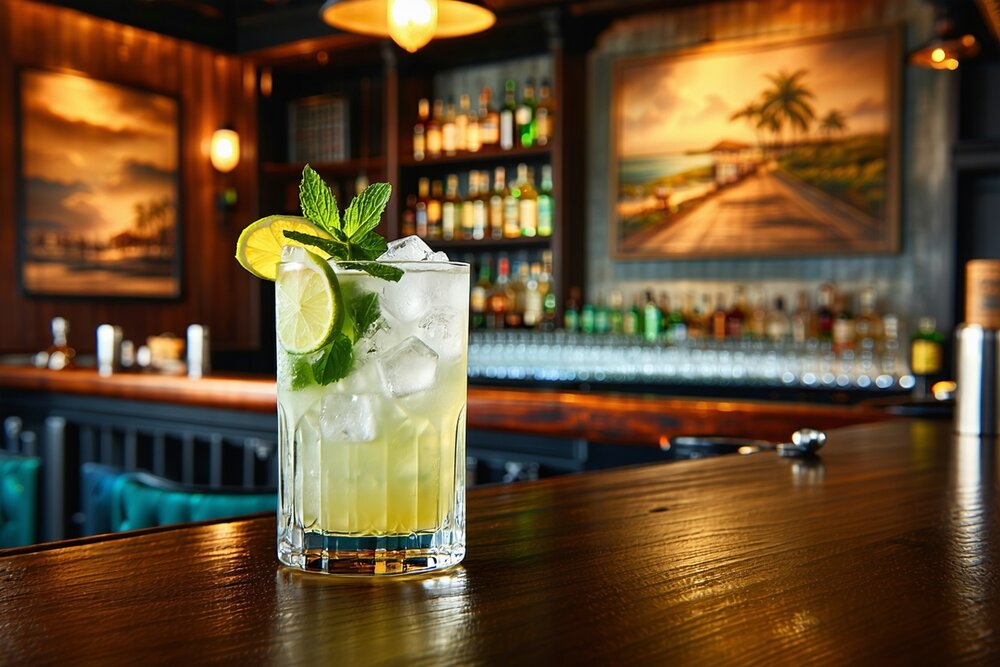
Havana Club and the Cuban rum houses
Havana Club is the flagship, unknown to most Americans because the embargo has kept it off US shelves since 1962. The range runs from 3 Años (the default mojito rum) through the excellent-value 7 Años (sip it, or use it in an old fashioned) to Selección de Maestros and the ultra-premium Máximo. Production is column distillation, aged in white oak in a tropical climate where the angel's share is brutal — a Cuban seven-year-old has done more work than a Scottish one.
Beyond it: Santiago de Cuba rum from the eastern city that claims to be the spirit's Cuban birthplace, plus the everyday Cubay and Legendario labels. All of it falls under the protected designation Ron de Cuba, which fixes production methods and minimum ageing and makes Cuban rum among the most tightly regulated in the Caribbean. Legendario Elixir de Cuba, sweet and raisiny, is what Cubans actually give as a gift.
The bar as institution
El Floridita, the "cradle of the daiquiri", keeps its art deco fittings, its live son band and its bronze Hemingway on a barstool. La Bodeguita del Medio's walls are signed by everyone from García Márquez to Nat King Cole. Both are tourist landmarks and both are worth doing once, at a tourist price. The real drinking happens elsewhere — on front porches, in paladares, and over a shared bottle of ron con hielo on a warm Havana evening, which is as central to Cuban social life as the family dinner is to an Italian one.
Beer and the rest
Cristal (light lager) and Bucanero (stronger, maltier) are the two national beers, both brewed by Cervecería Bucanero. Supply is erratic — there have been long stretches when neither was available. Guarapo, freshly pressed sugarcane juice sold from hand-cranked presses on street corners, is electric green, intensely sweet and the great Cuban non-alcoholic drink; ask for it with lime.
🍹 The Three Great Cuban Cocktails
Three Cuban drinks belong on any short list of the world's essential cocktails. These are the authentic proportions — the ones Cuban bartenders actually pour, not the sugary resort versions.
Mojito
Havana's most famous export · built in the glass
Ingredients: 50 ml white rum (Havana Club 3 Años); 25 ml fresh lime juice; 2 tsp white sugar; 8 fresh mint leaves; soda water; crushed ice; a mint sprig.
Method: Muddle the sugar into the lime juice in a highball. Add the mint leaves and bruise them gently against the side — never crush them, or you release bitterness. Add the rum, fill with crushed ice, top with soda and stir up from the bottom. Garnish with a mint sprig slapped once between the palms.
💡 Sugar, not syrup, and the mint goes in whole. Those two details are the entire difference between a Havana mojito and a bad one.
Daiquiri (Natural)
El Floridita's signature · shaken, not blended
Ingredients: 60 ml white rum; 25 ml fresh lime juice; 15 ml simple syrup (1:1); ice.
Method: Shake everything hard with plenty of ice for 12 seconds and double-strain into a chilled coupe. No garnish, or a thin lime wheel. Nothing else goes in it.
💡 The frozen fruit-flavoured version is a different drink entirely. For the Hemingway variant (Papa Doble), drop the sugar, add 15 ml grapefruit juice and 5 ml maraschino.
Cuba Libre
Invented in 1900 · the only cocktail born as a political slogan
Ingredients: 50 ml golden rum (Havana Club 3 or 7 Años); 15 ml fresh lime juice; 120 ml cola; ice; a lime wedge.
Method: Fill a highball with ice, squeeze in the lime and drop the spent wedge into the glass. Add the rum, top with cola and stir once.
💡 The lime is not optional — without it, it is just rum and coke, which is what the name distinguishes it from.
Two more worth knowing: the Presidente (rum, dry vermouth, a dash of curaçao and grenadine, stirred — Havana's elegant answer to the Manhattan), and the Canchánchara from Trinidad, an old cane-cutter's drink of aguardiente, honey, lime and water served in a small earthenware cup.
🚬 Cigars
Cuba produces the world's finest cigars, and the reason is agricultural rather than mystical: the red soil of the Vuelta Abajo in Pinar del Río, plus two centuries of accumulated craft in fermentation and rolling. Everything is state-run under Habanos S.A.; the famous marques — Cohiba, Montecristo, Romeo y Julieta, Partagás, H. Upmann, Hoyo de Monterrey — are brands within one system rather than competing companies.
Where to buy
Only at an official Casa del Habano or a hotel shop, where boxes carry the holographic seal and the factory code. Keep the receipt — customs at the airport can ask for it.
The street offer
Someone will offer you a box of Cohibas at a tenth of the price. They are counterfeit, usually banana leaf and floor sweepings. This is the single most common scam in Cuba and it never stops being run.
Export limits
Up to 20 loose cigars need no paperwork; above that, up to 50, you need the official receipt. The EU allows 50 cigars per adult duty-free from outside the Union; check your own country's allowance before you buy a box.
Farm cigars
What a veguero rolls in Viñales from his own retained leaf is genuine and often excellent, but unbanded, unaged and not legally exportable in bulk. Buy a few to smoke there, not a suitcase.
Factory tours
The Partagás and H. Upmann factories in Havana run visits when they are open — a hundred torcedores at benches, and a reader on a platform reading the newspaper aloud, a tradition since 1865 that gave the world the Montecristo name.
Smoking one
Cut a few millimetres of the cap, toast the foot without touching flame to it, and draw slowly. A robusto lasts 45 minutes and is not meant to be hurried or inhaled.
Cohiba — the cigar that had no name
Cuba’s most famous cigar began as a private blend rolled by the torcedor Eduardo Rivera Irizarri for a friend in Fidel Castro’s security detail. Castro noticed the aroma, asked what it was, and had the maker found. Production moved to the villa El Laguito in Cubanacán; the brand dates from 1966 and was reserved for the leadership and for state gifts until it was opened to foreign buyers in 1982.
A one-dollar Cohiba, 1999
On my first visit, people offered me “Cohibas” on the street for a dollar apiece, and I bought them. Some had probably left a factory by unofficial channels, some were rolled on the side from Cuban leaf, some were simply good fakes — in the Cuba of the 1990s you often could not tell. That informal second economy has since been replaced by straightforward counterfeiting, so treat today’s street offer as the scam described above. — RK
The Festival del Habano each February is the world's largest cigar event, and the week when Havana fills with collectors bidding six figures for humidors at the closing gala — except in 2026, when Habanos S.A. cancelled it on 14 February, citing the fuel crisis. Whether it returns in 2027 is an open question; if it does, the city's bars are considerably more interesting that week.
🌤️ Climate & When to Go
Cuba has a tropical climate with two clear seasons. The dry season, November to April, is the peak travel window: sunny, 22–28 °C, low humidity, almost no rain. December and January can bring cool nortes blowing down from the Gulf, which occasionally drop Havana nights to 15 °C — bring one layer.
The wet season, May to October, is hot and humid, with short, intense afternoon downpours that clear as fast as they arrive. It is not a bad time to travel — mornings are usually fine and prices are much lower — but August to October is hurricane season. Direct hits are infrequent but disruptive when they come — Hurricane Melissa came ashore at Guamá, Santiago de Cuba province, on 29 October 2025 as a Category 3 with 195 km/h winds, after some 735,000 people had been evacuated; it flooded homes across Granma, Santiago, Holguín and Guantánamo and cut hundreds of mountain communities off for weeks. Travel insurance that actually covers weather cancellation is worth the money in that window.
December–March
The best weather and the highest prices. Casas particulares in Havana, Viñales and Trinidad should be booked ahead; Christmas and New Year fill months in advance.
April–May
The sweet spot: still dry, water already warm, and noticeably cheaper and emptier than February.
June–August
Hot, humid, and the season of Cuban holidays and Santiago's carnival. Sea temperature around 29 °C.
September–October
The wettest and the highest hurricane risk. Also the quietest and cheapest, and the time when some smaller places close.
One weather-adjacent practicality: blackouts. The national grid has collapsed island-wide repeatedly — October, November and December 2024, March and September 2025, and six times between March and August 2026 (twice in March, three times in nine days in July, the sixth on 3 August, with restoration then interrupted by storms). In 2026 provincial towns have gone 20 hours a day without power and even central Havana is no longer exempt. Casas particulares in tourist areas often have a generator; ask when you book. Carry a torch and a power bank regardless.
✈️ Getting There & Around
José Martí International (HAV) in Havana takes most international flights, with regular service from Madrid, Paris, Frankfurt, Toronto, Mexico City, Panama and Bogotá. — in normal times. In 2026 the fuel blockade has upended the schedule: Cuba warned on 9 February that it could not guarantee jet fuel for departing aircraft, Air Canada suspended flights the same day, and Air France, Iberia, Turkish Airlines and World2Fly followed over the summer; JetBlue stopped from September. Check that your carrier is actually flying before you pay for anything else. Varadero (VRA), Santa Clara (SNU), Holguín (HOG) and Camagüey (CMW) receive charter and resort traffic, mostly from Canada.
US travellers must qualify under one of twelve authorised OFAC categories — "support for the Cuban people" is the usual one — and standard tourism is not among them. The rules change with US administrations; check the current position before booking, and note that a Cuban stamp in your passport also removes your eligibility for the US ESTA visa waiver on later trips.
Viazul buses
The tourist long-distance network, reliable if slow, connecting all the main destinations. Book online in advance in high season — routes do sell out.
Colectivos
Shared taxis, often 1950s American cars, running fixed intercity routes for a little more than the bus and half the time. Arranged through your casa host; the standard way locals and savvy travellers move.
Rental cars
Expensive (€70–100/day), scarce, and to be booked months ahead. Worth it for two or more people covering the centre of the island. Fuel shortages are real — fill up whenever you pass a working pump.
Domestic flights
Cubana and Aerogaviota fly Havana–Santiago, Holguín and Baracoa. Cheap and an hour long, but cancellations and reschedules are routine. Never book one for the day of an international departure.
City transport
Classic-car taxis for tourists (agree the price first), yellow cocotaxis, and shared almendrones on fixed routes for locals. International ride-hailing apps do not operate; Cuban ones (La Nave, Bajanda) work in Havana when there is fuel.
Trains
The Havana–Santiago line technically exists and was re-equipped with Chinese rolling stock in 2019. Treat it as an adventure, not as transport.
Two road realities: highways are unlit at night and shared with horses, bicycles, ox carts and pedestrians, so do not drive after dark; and signage is poor, so an offline map (Maps.me or organic maps with Cuba downloaded) is close to essential.
🇪🇺 Getting There from Central Europe
There is no direct flight from Prague, Vienna or Bratislava to Havana on a scheduled basis — seasonal charters to Varadero and Holguín aside. Everyone connects, and the routing decides the price and the pain.
Via Madrid
Iberia and Air Europa normally fly Madrid–Havana daily (Iberia suspended in 2026 — see above); total journey around 14 hours from Prague. Usually the cheapest and most frequent option, and the one with the best rebooking prospects if something goes wrong.
Via Paris or Frankfurt
Air France (CDG) and Condor (FRA) serve Havana. Slightly pricier, often more comfortable aircraft.
Via Amsterdam or Madrid to Varadero
If the destination is a resort week, the charter and package market out of Central Europe often beats scheduled flights to Havana on price.
What to avoid
Routing through the United States. A US transit needs an ESTA or visa, and travel to Cuba then complicates your US status. Fly Cuba via Europe, Canada, Mexico or Panama.
The e-Visa has replaced the paper tourist card (tarjeta del turista): it became mandatory on 1 July 2025, cards already issued were honoured until 31 December 2025, and since then almost every visitor — Czechs included — needs an electronic visa applied for at evisacuba.cu before departure, linked to the passport, single-entry, valid for a stay of up to 90 days and extendable once in Cuba. Canadians on direct flights from Canada get it bundled with the ticket. Do not pay an agency a large mark-up for something the official portal issues in a few days.
Since 2022 Cuba also requires an online arrival form, D'Viajeros, completed within 48 hours before departure; you arrive with a QR code. Travel insurance covering medical care in Cuba is mandatory and is occasionally checked at immigration — bring a printed confirmation, and check that your policy does not exclude Cuba, as several Czech and Austrian policies quietly do.
📋 Practical Information
Visa
The e-Visa (evisacuba.cu, mandatory since 1 July 2025) replaced the paper tourist card; single entry, up to 90 days, extendable once in-country at an immigration office. Overstaying is taken seriously.
Health
No required vaccinations for European arrivals. Cuban medicine is competent but supplies are chronically short — bring every medication you might need, plus a basic kit. Medical insurance is compulsory.
Water
Do not drink the tap water. Bottled is widely sold but not always available; a filter bottle solves both the health and the plastic problem.
Electricity
Both 110 V and 220 V occur, sometimes in the same building, with type A, B and C sockets. Bring a universal adapter and check the voltage before plugging anything expensive in.
Connectivity
ETECSA is the only operator. Buy a Cubacel tourist SIM or eSIM at the airport, or Nauta cards for Wi-Fi in parks and hotels. Speeds are slow, coverage patchy, and some apps are blocked.
Safety
Cuba is among the safest countries in the Americas — violent crime against visitors is rare. What you will meet is overcharging, short change and the cigar scam. Agree prices in advance and count your change. The US State Department holds Cuba at Level 2 — Exercise Increased Caution (2026 wording cites grid failures and limited embassy services); check the Czech MZV advisory before you go.
Blackouts
Island-wide grid collapses have become routine (six in 2026 to August) and provincial outages of 20 hours a day are common. Torch, power bank, and a casa with a generator — and ask whether the generator has fuel.
Photography
Do not photograph military installations, airports, ports or police. Ask before photographing people; the man in the doorway with the cigar is posing for money, and €1 settles it.
Two things Cubans will not do that surprise visitors: they will not criticise the government to a stranger in a public place, and they will not accept that you cannot get something. The first is discretion learned over sixty years and should be respected — let political conversation come from them. The second is resolver, the national verb: whatever you need, someone knows someone. It is how the country works.
Emergency numbers: 106 police, 105 fire, 104 ambulance. Asistur (+53 7 866 4499) is the state agency that handles foreign visitors' medical and insurance emergencies and is the number your insurer will route you through.
💵 Money — Read This Before You Fly
Cuba's money situation is the single most important practical thing to understand, and it is genuinely unlike anywhere else. Bring all the cash you need for the entire trip, in euros. There is no fallback if you run out.
Cards do not work
No US-issued card functions in Cuba at all, ever — embargo, not policy. European cards work in a minority of hotel and state terminals when the network is up, which it often is not. Plan as though you have no card.
ATMs
Exist in Havana and tourist centres, frequently empty or out of service, and dispense pesos at the official rate. Never build a budget around them.
Which currency to bring
Euros first. Canadian dollars and pounds sterling are also fine. US dollars are usable again — since 2025 the state itself runs dollar-only shops and petrol stations — but euros remain the easiest note to change and to pay with. Bring clean, untorn notes in mixed denominations. In June 2026 Washington threatened to cut Visa and Mastercard processing for the island entirely; assume no card of any kind will work.
The exchange rate problem
For years the official rate was a fraction of the street rate. On 18 December 2025 the central bank replaced it with a floating CADECA rate, which passed 500 pesos to the dollar in February 2026 and by mid-2026 sat around 565 to the dollar and 650 to the euro — against roughly 700 and 800 on the informal market tracked by El Toque. The gap is now a premium rather than a multiple, so changing a modest amount at CADECA is no longer the disaster it was; changing informally is still technically irregular and carries its own risks.
MLC
A parallel digital dollar used in some state shops, loadable only from a foreign card account. Largely irrelevant to a short visit — and increasingly to Cubans too.
Paying in euros
Many casas, paladares and private taxis will simply quote and accept euros. This is the path of least resistance for most visitors and what the practical guidance below assumes.
The honest advice: ask your casa host on the first evening what the current rate is and how they recommend changing. Rates move sharply — this is a country with real inflation — so any figure printed in a guidebook, including this one, is a snapshot. What does not change is the rule: arrive with enough cash, keep it in two places, and do not rely on any machine.
💰 Costs for Travellers
Cuba is mid-priced by Caribbean standards, and cheap or expensive depending almost entirely on whether you travel through the private economy or the state one. The figures below are in euros because that is what you will be carrying; treat them as indicative, since prices move with inflation.
Casa particular
€25–45 a night for a private room with a proper breakfast, in Havana, Trinidad or Viñales. Less in smaller towns.
Meal in a paladar
€8–15 for a full plate. State restaurants are usually cheaper and usually worse.
Classic-car taxi across Havana
€10–20 for a ride; €25–30 for an hour's tour along the Malecón.
Viazul long-distance bus
€15–40 depending on distance. Havana–Trinidad is around €25.
Mojito in a tourist bar
€3–5. In a neighbourhood bar, considerably less.
Havana Club 7 Años
€12–15 a bottle in a state shop — about a third of the European price.
A realistic daily budget: €60–90 per person for comfortable mid-range travel staying in casas and eating in paladares, or €120+ if you want private drivers, a rental car and the better restaurants. Backpacking below €40 is possible but requires Spanish and patience.
One budgeting rule specific to Cuba: add 20% and carry it in cash. Not because you will overspend, but because a cancelled flight, a fuel shortage or a closed bank cannot be solved here with a card the way it can everywhere else.
🛏️ Accommodation
The single best decision you can make in Cuba is to stay in casas particulares — licensed private homestays, marked by a blue anchor-shaped sign on the door. You get a private room, usually with private bathroom, a large Cuban breakfast, local knowledge no guidebook can match, and your money goes directly to a Cuban family rather than to a state enterprise.
What a casa costs
€25–45 a night including breakfast, more in central Havana in high season. Dinner is usually available for €8–12 if you ask in the morning.
How to book
Airbnb works but routes through US servers and takes a cut; many hosts prefer WhatsApp or email direct. The reliable method is to book the first two nights online and let each host phone ahead to the next town.
State hotels
Often dreary and overpriced for what they are. The exceptions are worth it: the Hotel Nacional in Havana for faded glamour, and the restored colonial hotels of Old Havana such as the Santa Isabel and Los Frailes.
Resorts
Varadero, Cayo Coco and Guardalavaca run on all-inclusive packages, mostly Canadian-booked. Good beaches, sealed from the country around them — and in 2026 the first to close: with no fuel for generators, hotels in Varadero and on the northern cays shut and transferred guests, and the Portuguese chain Vila Galé left Varadero and Havana altogether.
What to ask when booking
Whether there is a generator, whether the water is heated, and whether air conditioning runs during blackouts. These three questions predict your comfort better than any star rating.
Booking ahead
December to March, and always for Havana, Trinidad and Viñales. Elsewhere and off-season you can turn up and find a room within twenty minutes.
A note on the host relationship: your casa owner is not hotel staff. They will arrange your onward taxi, your salsa lesson and your dinner, they will worry if you are late, and they will usually be a retired professional — an engineer, a doctor, a teacher — for whom renting a room pays several times a state salary. Tip well and leave the toiletries.
🏛️ UNESCO World Heritage
Cuba has nine UNESCO World Heritage Sites — seven cultural and two natural — which is a remarkable density for a country of its size and reflects both the colonial wealth of the 18th and 19th centuries and the biodiversity of an island isolated for millions of years.
Old Havana and its Fortifications (1982)
The colonial core of the capital, together with the Morro and Cabaña castles guarding the harbour mouth.
Trinidad and the Valle de los Ingenios (1988)
The sugar town and the plantation valley that paid for it — the two listed as a single testimony.
San Pedro de la Roca Castle, Santiago (1997)
A 17th-century clifftop fortress and the finest surviving example of Spanish-American military architecture.
Desembarco del Granma National Park (1999)
Marine terraces stepping out of the sea on the south-east coast, and the landing point of Castro's 1956 expedition.
Viñales Valley (1999)
A living cultural landscape: karst mogotes and traditional tobacco agriculture.
First Coffee Plantations (2000)
The archaeological remains of 19th-century French-Haitian coffee estates in the Sierra Maestra foothills.
Alejandro de Humboldt National Park (2001)
Extraordinary endemism in the eastern mountains — one of the most biologically diverse island sites on Earth.
Historic Centre of Cienfuegos (2005)
19th-century French-influenced urban planning, unusually coherent and neoclassical.
Historic Centre of Camagüey (2008)
A deliberately labyrinthine colonial town, and its famous tinajones.
Cuba also carries eight UNESCO intangible-heritage inscriptions: the tumba francesa drum-and-dance societies of the east (2008), rumba (2016), the punto tradition of the countryside (2017), the Parrandas of central Cuba (2018), the knowledge of the light rum masters (2022), bolero (2023, shared with Mexico), the making and eating of cassava bread, casabe (2024, shared with the Dominican Republic, Haiti, Honduras and Venezuela), and — inscribed in December 2025 — Cuban son itself. A fair reflection of a country whose heritage is at least as much sound as stone.
🎉 Festivals & Events
Cuba's festival calendar is dense and, unusually, mostly aimed at Cubans rather than tourists — which is what makes attending one worthwhile. Dates shift; confirm before planning a trip around any of them.
Carnaval de Santiago de Cuba (late July)
The island's loudest and most Afro-Caribbean celebration, with congas parading through the eastern heat for a week.
Havana International Jazz Festival (January)
Founded by Chucho Valdés and one of the best jazz gatherings in the Americas.
Festival del Habano (February)
The world's largest cigar event, ending in a black-tie humidor auction. Cancelled in 2026 because of the fuel crisis.
Havana International Ballet Festival (Oct–Nov, biennial)
The legacy of Alicia Alonso, and a reminder that Cuban ballet is world class.
Havana Biennial (contemporary art)
Ambitious, city-wide, and the moment when Havana's art scene is fully visible.
Parrandas de Remedios (December)
A fireworks and float war between two neighbourhoods of a small town, running since the 19th century. Chaotic and unforgettable.
Romerías de Mayo (Holguín, May)
A young-artists' festival that fills the eastern city with music, theatre and street art.
Festival del Nuevo Cine Latinoamericano (December)
Havana's international film festival, and the best week of the year to be in the city's cinemas.
Two civic dates shape the calendar too: 1 January (the Triumph of the Revolution, a public holiday) and 26 July (the Moncada anniversary, the national day, which sits conveniently alongside Santiago's carnival).
✨ Fascinating Facts
The world's smallest bird
The Cuban bee hummingbird — zunzuncito — is 5 cm long and weighs about 2 grams, less than a one-cent coin. It is endemic to Cuba.
Doctors as foreign policy
Cuba has one of the highest doctor-to-population ratios in the world and has sent medical brigades to more than sixty countries — for decades the island's largest source of foreign earnings.
Fifty-year-old cars
The average vintage American car in Havana is over 65 years old, kept running on Lada engines, Soviet pistons and improvised parts. Imports were frozen in 1960.
99.8% literacy
Achieved largely by the 1961 literacy campaign, in which a quarter of a million volunteers, many of them teenagers, were sent to the countryside for a year.
Two currencies at once
Until 2021 Cuba ran the CUP and the CUC simultaneously at a 24:1 internal disparity — one of the strangest monetary arrangements of modern times.
The internet arrived in 2018
Mobile data reached private citizens only in December 2018. Its arrival changed Cuban public life faster than any policy of the previous twenty years.
A national ice cream cathedral
Coppelia in Havana was built in 1966 to serve 30,000 people a day and had 26 flavours — a deliberate socialist answer to American consumer abundance.
The crocodile
Cuba's outline resembles a crocodile, and the island has its own critically endangered species, Crocodylus rhombifer, found in the wild only in the Zapata swamp.
👑 Notable People
José Martí (1853–1895)
Poet, journalist and architect of Cuban independence. Killed in his first battle, and now claimed by every side of Cuban politics — his statue stands in Havana and in Miami.
Fidel Castro (1926–2016)
Led the revolution and the country for nearly fifty years. Whatever else, one of the defining political figures of the 20th century.
Ernesto "Che" Guevara (1928–1967)
Argentine-born revolutionary, executed in Bolivia; his face is Cuba's most exported image and its most contested.
Alicia Alonso (1920–2019)
One of the great ballerinas of the century, who danced Giselle nearly blind and founded the Cuban National Ballet.
Celia Cruz (1925–2003)
The Queen of Salsa. Left in 1960, never returned, and remains beloved on both sides of the water.
The Buena Vista generation
Compay Segundo, Rubén González, Ibrahim Ferrer, Omara Portuondo — veteran musicians whose 1997 record reintroduced Cuban son to the world.
Chucho Valdés (b. 1941)
Pianist, founder of Irakere, and the central figure of Cuban jazz for half a century.
Leonardo Padura (b. 1955)
The country's most widely read living novelist — his Mario Conde detective novels are the best portrait of ordinary Havana life in print.
📰 Media & Press Freedom
Cuba has one of the most restrictive media environments in the Western Hemisphere. Every major outlet — Granma, Juventud Rebelde, Cubavisión and the national radio network — is state-owned, and the constitution reserves the press to the state and to social organisations.
Independent journalism exists and does real work: 14ymedio, founded by Yoani Sánchez; El Toque, whose informal exchange-rate tracker has become the country's de-facto price reference; and Periodismo de Barrio. All operate under legal harassment, and their domestic domains are blocked. Reporters Without Borders ranks Cuba 160th of 180 in its 2026 World Press Freedom Index (score 29.22; 165th in 2025) — still the worst in Latin America. A 2024 Social Communication Law and the 2022 penal code (“contempt”, “public disturbances”) give the state the tools; the few independent reporters still on the island now work underground.
Since mobile data arrived in December 2018, social media has become the de-facto alternative public sphere — and a flashpoint. The protests of 11 July 2021, the largest since 1959, were organised and broadcast on it, and the state's response included a national internet shutdown and hundreds of prosecutions.
What this means for a visitor is modest but worth knowing: some sites and apps are blocked or slow, a VPN is useful and legally grey, and public criticism of the government by a foreigner can create problems for the Cubans standing next to you rather than for you. Listen more than you broadcast.
⚾ Sports
Baseball — pelota — is the national obsession, and Cuba has produced an astonishing number of major-league stars despite the embargo: Aroldis Chapman, Yasiel Puig, José Abreu, Yordan Álvarez. Nearly all of them left by defecting, which is one of the country's rawest subjects. The domestic Serie Nacional runs November to April; a ticket to Havana's Estadio Latinoamericano costs a few pesos and the atmosphere is worth ten times that.
For the purest version of the obsession, go to the Esquina Caliente — the "Hot Corner" in Parque Central, Havana, where men argue baseball at full volume every single day, all year, with statistics from 1974 deployed as evidence. Foreigners are welcome to listen and, if their Spanish holds, to be shouted at good-naturedly.
Boxing
Cuba is an amateur boxing superpower — Teófilo Stevenson and Félix Savón were each three-time Olympic champions, and both refused to turn professional. Cuba has more Olympic boxing golds than any country but the United States.
Volleyball & athletics
The women's volleyball team won three consecutive Olympic golds in 1992, 1996 and 2000. Javier Sotomayor's 1993 high jump of 2.45 m has stood as the world record for over thirty years.
Paris 2024 & the 2026 Classic
Cuba took nine medals in Paris (2 gold, 1 silver, 6 bronze). Greco-Roman heavyweight Mijaín López won his fifth consecutive Olympic title at 41, beating Chile's Yasmani Acosta 6–0 on 6 August 2024 — the first athlete in history to win the same event five times — then left his shoes on the mat. Boxer Erislandy Álvarez took the other gold. At the 2026 World Baseball Classic Cuba beat Panama and Colombia but lost to Puerto Rico 4–1 and Canada 7–2 and went out in the first round for the first time ever.
Where to watch
Estadio Latinoamericano in Havana, Estadio Guillermón Moncada in Santiago. Buy at the gate; there is no need to book.
🎒 Packing for Cuba
Cuba rewards the prepared traveller more than almost any destination, because the things you forget generally cannot be bought once you arrive. Pack for self-sufficiency.
Cash
All of it, in euros, in clean notes, split between two places. This is the most important item on the list by a wide margin.
A real medical kit
Ibuprofen, rehydration salts, plasters, antihistamine, an antiseptic, anti-diarrhoeal, and any prescription medicine in its original box. Pharmacies are often empty.
Torch and power bank
Blackouts of several hours are routine. A head torch is better than a phone light.
Universal adapter
Type A, B and C sockets and both 110 V and 220 V occur, sometimes in the same house.
Filter water bottle
Solves the undrinkable tap water and the intermittent bottled supply in one object.
Repellent and reef-safe sunscreen
DEET for the mosquitoes, and sunscreen bought at home — what is on sale in Cuba is expensive and limited.
Offline maps and documents
Download the country map, your insurance certificate, your D'Viajeros QR code and your casa addresses before you fly.
Gifts for hosts
Toiletries, good coffee from home, school supplies, over-the-counter medicines, reading glasses. Genuinely useful and genuinely appreciated — far more than money.
Leave behind: anything that only works with a card, expectations of fast Wi-Fi, and drone equipment, which requires permits Cuba does not readily issue and which is regularly confiscated at the airport.
📸 Photo Gallery
Our Cuba photo library is still small — three images so far. Been to Cuba? Send your photos to photos@kaufmann.wtf to be featured here with full credit.
Photographs most wanted: the Viñales valley at dawn, Trinidad's Plaza Mayor, Santiago's Casa de la Trova, the Bay of Pigs reef, and any working almendrón with its bonnet up.
🔗 Useful Resources
Cuba Travel (MINTUR)
The official tourism portal: cubatravel.cu
D'Viajeros
The mandatory online arrival form, to be completed within 48 hours of departure (the e-Visa itself is issued at evisacuba.cu): dviajeros.mitrans.gob.cu
Viazul
Long-distance bus timetables and online booking: viazul.com
ETECSA
The national telecoms operator — tourist SIM, eSIM and Nauta Wi-Fi cards: etecsa.cu
El Toque exchange rates
The independent tracker Cubans themselves use for the informal rate: eltoque.com
UNESCO — Cuba
All nine World Heritage sites: whc.unesco.org
Before travelling, check your own foreign ministry's current advisory — for Czech readers mzv.gov.cz, which also operates the DROZD registration system for travellers abroad. Cuba's entry requirements and the US rules affecting later travel to the United States both change with some frequency.
🎣 Hemingway’s Cuba
Ernest Hemingway first came to Cuba in 1928 on a fishing trip and stayed, on and off, for the next three decades. More of his Cuba survives than most visitors expect — and it is spread across the city and the coast rather than gathered into one museum.
Finca Vigía
His house on a hillside at San Francisco de Paula, about 15 km from the centre. Rented in 1939 and bought the following year, with its hectares of garden, for twelve and a half thousand dollars. For Whom the Bell Tolls, Across the River and Into the Trees and The Old Man and the Sea were written here. You view the rooms through the windows rather than walking in, which is less frustrating than it sounds.
Cojímar
The fishing village twelve kilometres east of Havana where Hemingway kept the Pilar and where The Old Man and the Sea is set. No tourist bars, no souvenirs. The bronze bust in the little harbour park was cast from propellers and boat fittings donated by local fishermen after his death.
El Floridita
Corner of Obispo and Monserrate. Hemingway’s daiquiri was made without sugar and with a double measure of rum — ask for it that way and you will get something quite unlike the tourist version. His bronze statue now occupies the corner, and the queue for a photograph is permanent.
La Bodeguita del Medio
The famous line on the wall — “My mojito in La Bodeguita, my daiquiri in El Floridita” — is almost certainly not Hemingway’s. Researchers have found no convincing evidence he wrote it, and there is testimony it began as a publicity stunt imitating his handwriting. Go anyway; just go knowing.
The man who sailed with him
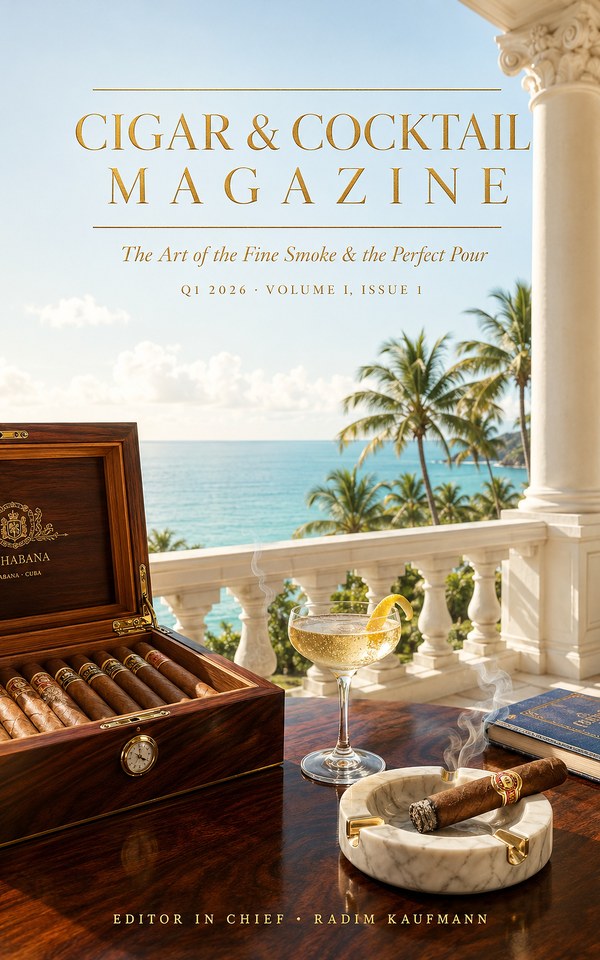
In February 1999, through my work as publisher of Cigar & Cocktail Magazine, I sat on a veranda in Cojímar with Gregorio Fuentes — for more than twenty years the captain of Hemingway’s boat Pilar, and one of the last people alive who had known Ernest Hemingway through the ordinary reality of life at sea. He was 101 years old.
I asked him how a man reaches such an age. He smiled. “I go fishing. I trade some of the fish for pork. We don’t have much food here. Eggs are rationed. I live from what I catch.”
Then: “After fishing, I light a cigar and remember Ernest.” He paused. “I remember, and I am sad and happy at the same time. Sad because he killed himself. Happy when I remember the stories we lived through together.” He put a hand on his chest. “He is here. Forever.”
Fuentes died in Cojímar in January 2002, aged 104. He is often called the model for Santiago in The Old Man and the Sea; Hemingway never said so outright, and it is more honest to say Fuentes belonged to the world Santiago came out of.
— Radim Kaufmann, Havana, February 1999
📚 Recommended Reading
Cuba: An American History — Ada Ferrer
Pulitzer-winning, highly readable 500-year survey by a historian born in Havana. The one book to read first.
Our Man in Havana — Graham Greene
A perfect Cold War satire of 1950s Havana, and still funny.
The Old Man and the Sea — Ernest Hemingway
The Nobel-winning novella, set in Cojímar just east of Havana, where Hemingway kept his boat.
Dirty Havana Trilogy — Pedro Juan Gutiérrez
Raw, funny and bruising dispatches from the Special Period. Not for everyone; unforgettable for the rest.
Havana Nocturne — T. J. English
The mafia, Batista and the lost Havana of the 1950s — the world that 1959 swept away.
Havana Red and the Mario Conde novels — Leonardo Padura
Crime fiction as social portrait; the truest picture of everyday Havana available in translation.
On screen: Buena Vista Social Club (Wim Wenders, 1999) for the music; Fresa y Chocolate (1993) for Cuban cinema at its best; and Simon Reeve's BBC Cuba documentary for a recent and reasonably even-handed look at the country as it is now.
✍️ Author's Note
"I arrived in Havana on a humid February night expecting the Cuba of the postcards — the classic cars, the peeling pastel façades, the old men playing dominoes under a flickering streetlamp. I found all of it. What I did not expect was how fast the clichés would dissolve into something more difficult and more interesting: a country that refuses every simple story told about it, by either side."
"Havana is not a museum. It is a living, creaking, arguing, dancing city where the revolution is both monument and daily grievance, where the decay is genuine and so is the resourcefulness that keeps a 1956 Chevrolet running on a Lada engine and Russian pistons. The blackout that took out three blocks of Centro Habana one evening lasted six hours, and nobody I was with mentioned it once."
"My best afternoon in Cuba was not at any listed landmark. It was on a wooden chair outside a casa particular in Trinidad, listening to my host — a retired schoolteacher called Maritza — explain how she had got through the Período Especial on sugar water and solidarity, while her grandson taught a German backpacker to dance rueda in the street below. The mojito came later, and by then it felt almost superfluous. Cuba's greatest export is not rum or cigars or music; it is the stubborn, maddening, generous genius of its people for turning scarcity into life."
— Radim Kaufmann, September 2026
Support This Project 🌍
This World Travel Factbook is a labor of love – free to use for all travelers. If you find it helpful, consider supporting its continued development.
