

🇵🇫 French Polynesia at a Glance
🌍 Overview — Why French Polynesia
The numbers explain the place better than any description. 118 islands, of which 67 are inhabited, spread across 5.5 million km² of ocean — an exclusive economic zone larger than the European Union — with a total land area of just 4,167 km², about the size of Moravia's Zlín and Olomouc regions put together. Two hundred and eighty thousand people live on it, three quarters of them on Tahiti alone.
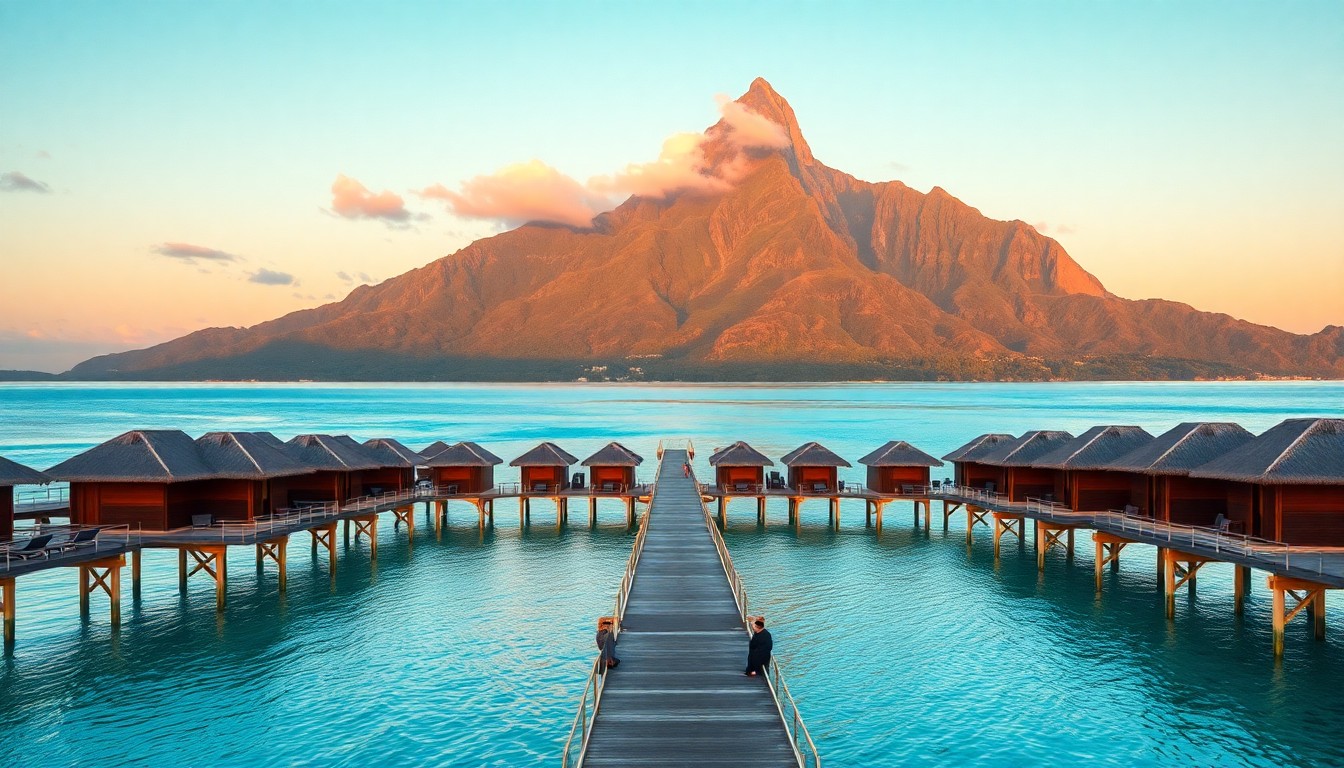
Almost everyone comes for one image: an overwater bungalow on a turquoise lagoon in Bora Bora. That image is real, it is extremely expensive, and it is roughly one per cent of what is here. The other ninety-nine per cent is a set of five very different archipelagos — the green volcanic Society Islands, the flat coral rings of the Tuamotus, the vertical and empty Marquesas, the cold-water Australs and the remote Gambiers — separated by distances that would swallow Europe.
What surprises people who look past the resorts is how strong the culture is. Tahitian was almost extinguished by missionaries and French schooling and has come back; ori Tahiti dancing and the Heiva festival are genuinely competitive national events, not shows; and the revival of traditional voyaging canoes navigating by star and swell has been one of the great cultural recoveries of the last fifty years.
It is also a long way from anywhere and one of the most expensive destinations on Earth. Everything is imported, the currency is pegged to the euro, and a supermarket in Papeete costs more than one in Paris. Nothing about a trip here is casual, which is part of why it stays as it is.
Best for
Diving and snorkelling of world quality, sailing and island-hopping, honeymoons if the budget exists, and anyone interested in Polynesian culture and navigation.
Not so good for
Budget travel — this is genuinely expensive — and anyone expecting the whole territory to look like Bora Bora. Tahiti itself is a working island with traffic.
The single best decision
Do not spend the whole trip in the Society Islands. One atoll in the Tuamotus, or a week in the Marquesas, will change what you think the place is.
Language
French and Tahitian are both official; English is widely spoken in tourism and less so elsewhere. Ia ora na — hello — will be appreciated everywhere.
🏷️ Te Ao Mā'ohi
French Polynesia is the administrative name. Many Polynesians here say Te Ao Mā'ohi — the Mā'ohi world — or simply Tahiti as a shorthand for the whole territory, which annoys people from the other archipelagos exactly as much as you would expect.
An overseas collectivity
Not a department like French Guiana but an collectivité d'outre-mer with substantial autonomy: its own president, assembly, flag and control over most internal matters. France retains defence, justice, currency and foreign affairs.
Not in the EU
Unlike Guadeloupe or Réunion, French Polynesia is an Overseas Country and Territory — associated with the EU but outside it. It is not in the eurozone, not in Schengen, and EU roaming does not apply.
The CFP franc
The franc Pacifique, pegged to the euro at a fixed 119.33 XPF = 1 EUR. The rate has not moved since 1999, which makes budgeting unusually easy.
Independence politics
A live and long-running question. The pro-independence Tāvini Huiraatira won the 2023 territorial elections, and the UN put French Polynesia back on its list of non-self-governing territories in 2013 over French objections. Nothing about the constitutional future is settled.
Mā'ohi identity
The revival is real: language in schools, the Heiva, tattoo, navigation, and a growing insistence that Polynesian names come first. You will see Fenua — the land — used the way other places use "the nation".
The five archipelagos
Society (Tahiti, Moorea, Bora Bora), Tuamotu (77 atolls), Marquesas, Austral and Gambier. They differ in geology, language, food and temperament, and treating them as one place is the standard visitor mistake.
🗺️ Geography
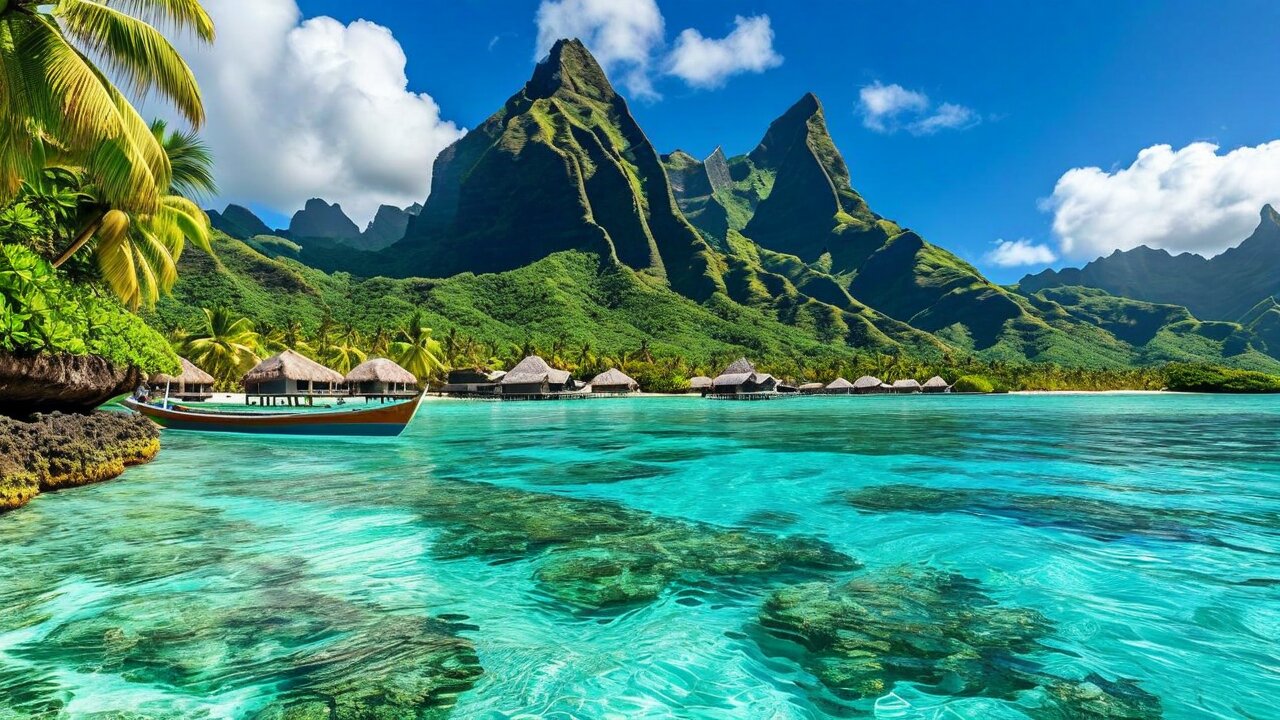
Two kinds of island and an enormous amount of water between them. The high islands are volcanic peaks with fringing reefs and lagoons; the atolls are what remains after the volcano sinks — a ring of coral around a lagoon with no land above a few metres. Darwin worked out this sequence in the 1830s, and French Polynesia is where you can see every stage of it in one trip.
The Society Islands
The tourist core: Tahiti, Moorea, Bora Bora, Huahine, Raiatea, Taha'a and Maupiti. High, green, lagooned, and where 87% of the population lives.
The Tuamotus
Seventy-seven atolls strung over 1,500 km — the largest chain of coral atolls in the world. Flat, sparse, and the reason French Polynesia produces black pearls and world-class diving.
The Marquesas
1,400 km north-east, with no protecting reef and therefore no lagoons: sheer cliffs straight into open ocean, deep valleys, wild horses and a culture noticeably distinct from Tahiti's. Where Gauguin and Brel are buried.
The Australs and Gambiers
The Australs south of Tahiti are cooler, agricultural, and get humpback whales from July to October. The Gambiers, 1,700 km south-east, produce the finest pearls and have a cathedral built of coral by nineteenth-century missionaries.
Mont Orohena
Tahiti's summit at 2,241 m, and the highest point in the territory. Tahiti Nui's interior is a collapsed caldera of near-vertical valleys that almost nobody visits.
The distances
Papeete to the Marquesas is 1,400 km — further than Prague to Madrid. Papeete to the Gambiers is 1,700 km. Every internal flight is a real flight, and this is the single biggest constraint on planning.
🗺️ Map of French Polynesia
The territory covers an area of ocean comparable to Western Europe. Everything routes through Papeete on Tahiti, and the archipelagos are far enough apart that combining two of them properly needs at least two weeks.
Tahiti → Moorea
17 km. Thirty minutes by ferry from central Papeete, several times a day, and the cheapest island-hop in the territory.
Tahiti → Bora Bora
260 km, 50 minutes by air. There is no ferry; the flight is the only practical way.
Tahiti → Rangiroa
350 km, an hour by air into the Tuamotus.
Tahiti → Nuku Hiva
1,400 km, 3 h 30 by air, or twelve days on the Aranui cargo-passenger ship, which is a far better experience.
📜 History — Voyagers and Contact
The settlement of Polynesia is one of the great achievements in human history: a systematic exploration of the largest ocean on Earth, upwind, in double-hulled sailing canoes, without instruments, at a time when Europeans hugged coastlines.
The voyagers
Ancestral Polynesians reached the Marquesas by around AD 1000 and the Society Islands soon after, from a lineage traced back through Samoa and Tonga to the Lapita culture of the western Pacific. From here they reached Hawai'i, Rapa Nui and New Zealand — the corners of a triangle 7,000 km on a side.
How they navigated
By star paths, swell patterns refracting off islands, cloud shapes, bird flight and the colour of the water. There were no instruments and no writing; it was memorised, taught and astonishingly accurate.
Raiatea and Taputapuātea
Raiatea, not Tahiti, was the religious centre of eastern Polynesia. The marae of Taputapuātea, UNESCO-listed in 2017, was the point from which voyaging canoes departed and where distant islands sent representatives.
European contact · 1767–69
Wallis reached Tahiti in 1767, Bougainville in 1768 and Cook in 1769 to observe the transit of Venus. Their accounts created the European myth of the South Seas paradise, and Bougainville's naming of it as Nouvelle Cythère shaped two centuries of expectation.
The Bounty · 1789
Bligh's breadfruit expedition spent five months at Tahiti; the mutiny happened three weeks after leaving. It is the single best-known event in the territory's history and it is essentially incidental to it.
Disease and mission
The catastrophe. Introduced disease may have killed 80% or more of the population within a century of contact. The London Missionary Society arrived in 1797, converted the Pomare dynasty, and set about suppressing tattoo, dance, the language of the marae and most of the pre-contact religion.
🕰️ Protectorate, Bombs and Autonomy
France arrived in the 1840s, stayed, and in the second half of the twentieth century used these islands for something that still shapes their politics, their health statistics and their relationship with Paris.
Protectorate and annexation
France imposed a protectorate on Queen Pōmare IV in 1842 after a naval confrontation, and annexed the islands outright in 1880. The Leeward Islands resisted until 1897.
The World Wars
Papeete was shelled by German cruisers in 1914. In the Second World War French Polynesia rallied to the Free French in 1940 and the Bataillon du Pacifique fought at Bir Hakeim; the US built a base on Bora Bora that left the airstrip still in use today.
Nuclear testing · 1966–96
France conducted 193 nuclear tests at Moruroa and Fangataufa in the Tuamotus, 46 of them atmospheric. It transformed the economy — tens of thousands of jobs, mass migration to Papeete — and left a legacy of contamination, cancers and forty years of official denial. Compensation under the 2010 Morin law was initially granted to almost nobody and remains contested.
The Rainbow Warrior · 1985
French agents bombed the Greenpeace ship in Auckland harbour, killing a photographer, to stop it protesting at Moruroa. The scandal is a permanent fixture of Pacific attitudes to France.
Autonomy
Increasing self-government from 1977, with the current statute dating from 2004: an elected president and assembly with control over most internal affairs. Politics has been turbulent, personality-driven and, since 2023, led by a pro-independence government.
Today
An economy built on tourism, pearls and French transfers, a population overwhelmingly concentrated on Tahiti, and an ongoing argument about the nuclear legacy, the cost of living and what the constitutional future should look like.
💎 Bora Bora
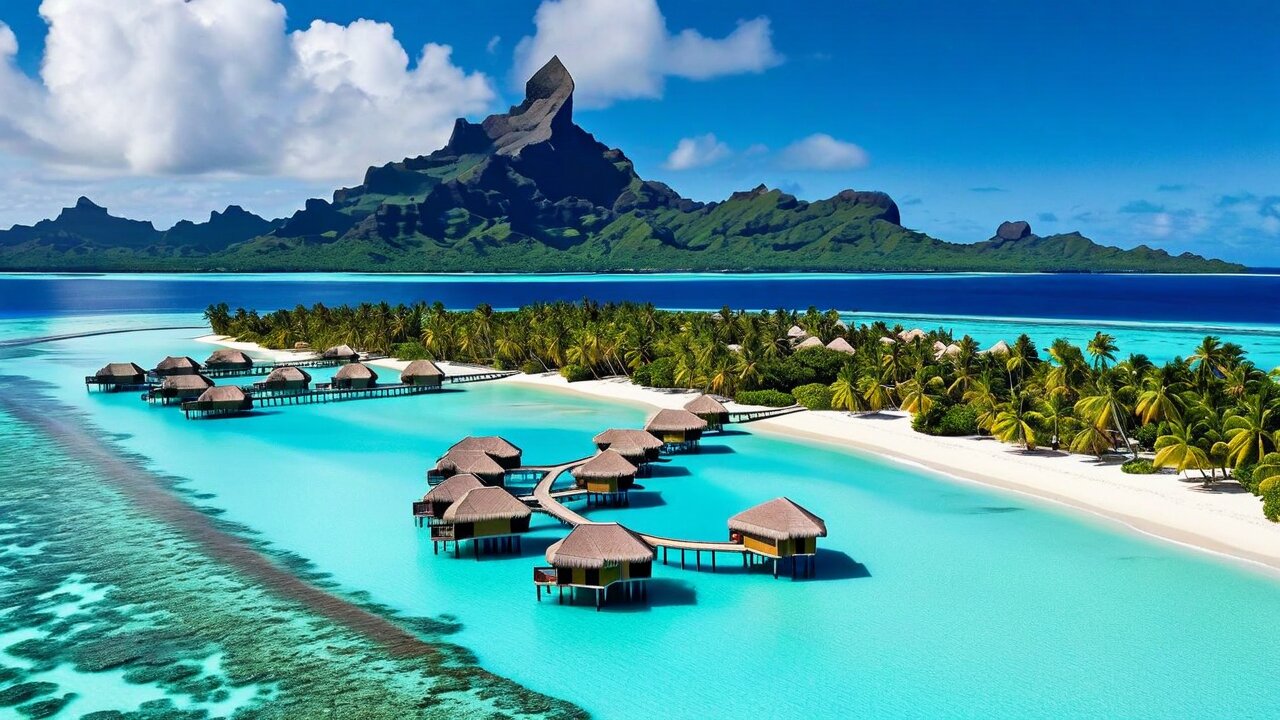
The most photographed lagoon on Earth, and the island that invented the overwater bungalow — three Americans put the first ones on stilts at Hotel Bora Bora in 1967 because the island had no good beach to build on. The idea went round the world; the lagoon stayed here.
What it actually is
A sunken volcano with two peaks — Otemanu (727 m) and Pahia (661 m) — inside a ring of coral motu enclosing a lagoon of extraordinary clarity. The whole island is only 30 km²; you can drive round it in an hour.
The resorts
Mostly on the motu rather than the main island, reached by boat. Four Seasons, St Regis, Conrad, InterContinental and a dozen more. Overwater bungalows run from around €700 to well over €3,000 a night.
Doing it cheaply
It is possible. Pensions de famille on the main island around Vaitape charge €80–150 with breakfast, and the lagoon is the same lagoon. Rent a bicycle or scooter and eat at the roulottes in Vaitape.
The lagoon tour
The standard day out and worth it: snorkelling with rays and blacktip sharks, a coral garden, and lunch on a motu. Book with a local operator rather than through a resort and it costs about half.
Matira
The one genuinely public beach, at the southern tip, free, sandy and shallow for hundreds of metres. This is where residents go.
Honest assessment
It is beautiful and it is a resort economy, and after three days there is not a great deal to do that does not cost several hundred euros. Two or three nights, then move on, is the right shape.
🏝️ Moorea, Huahine and the Rest
The Society Islands are where nearly all visitors go, and Bora Bora takes most of the attention. The others are cheaper, greener, more lived-in and, for most travellers, more rewarding.
Moorea
Thirty minutes by ferry from Papeete and the best-value island in the territory. Two deep bays — Cook's and Opunohu — the Belvedere viewpoint between them, pineapple fields, a lagoon full of rays, and humpback whales offshore from July to October.
Huahine
The quiet one: two islands joined by a bridge, almost no resorts, sacred blue-eyed eels at Faie, and the largest concentration of pre-contact marae in the Society Islands at Maeva. This is the Society island that still feels like a village.
Raiatea
The sacred island and the ancient centre of eastern Polynesia, with Taputapuātea marae on the UNESCO list. Also the yacht-charter capital — this is where sailing itineraries begin.
Taha'a
Sharing Raiatea's lagoon, and known as the vanilla island: it produces most of Tahitian vanilla, a distinct species with a heavier, more floral character than Madagascar's. The coral garden between two motu is one of the best snorkels in the territory.
Maupiti
Bora Bora's smaller neighbour with the same lagoon geology, no resorts at all, and only family pensions. Manta rays in the lagoon, one road, and a limit on visitor numbers by simple lack of beds. The best answer to "where is Bora Bora without the price".
Tetiaroa
Marlon Brando's atoll, 50 km north of Tahiti, now The Brando — a single very expensive eco-resort and a serious research station. Bird sanctuary, turtle nesting and the closest thing to a private island in the Pacific.
🌋 Tahiti
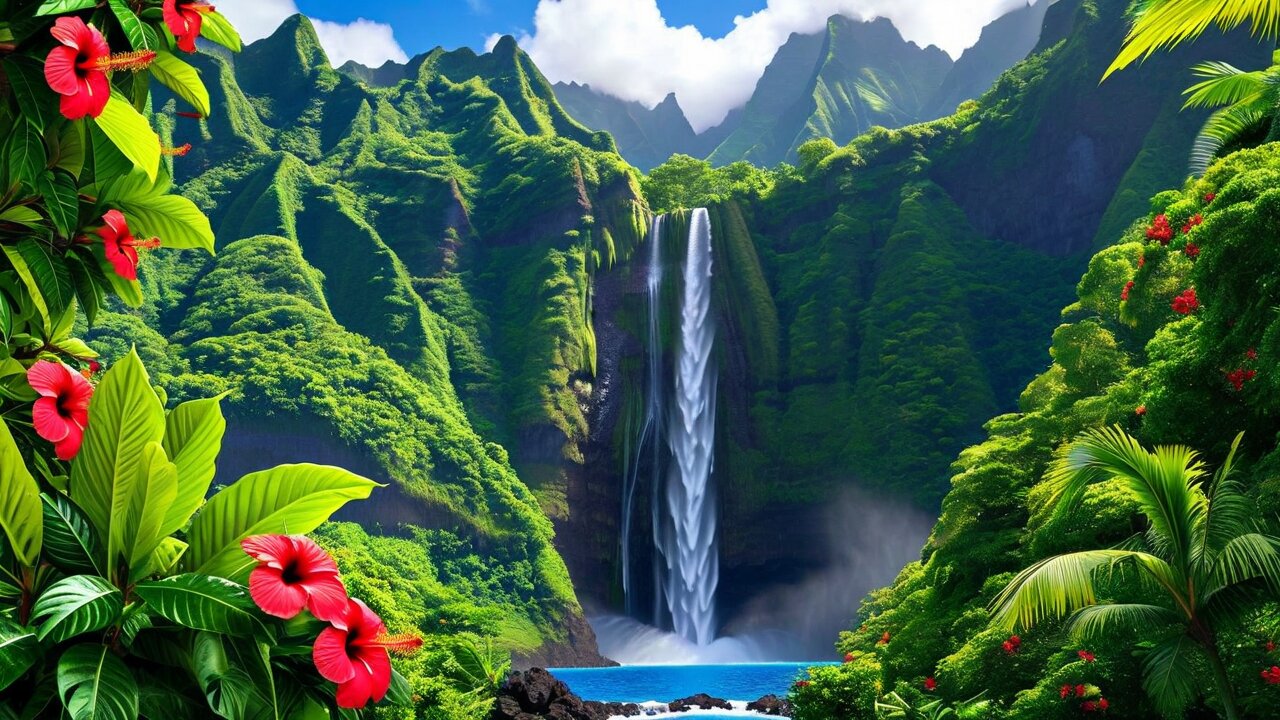
Everyone lands here and most people leave within hours, which is a mistake worth correcting. Tahiti is not a resort island — it is a working one, with traffic jams, supermarkets, a container port and 70% of the territory's people — and its interior is the wildest landscape in the Society Islands.
Papeete
The capital and the only city: the market (Marché de Papeete, best early on Sunday), the waterfront, and the roulottes — food trucks that gather at Place Vai'ete each evening and are the cheapest good meal in French Polynesia.
The two Tahitis
Tahiti Nui, the large lobe with the population and the ring road; and Tahiti Iti, the small peninsula, largely roadless at its end and the wildest part of the island.
Teahupo'o
On Tahiti Iti, and one of the heaviest waves in the world — a thick barrel breaking over shallow reef. It hosted the surfing events of the 2024 Paris Olympics, which was as strange as it sounds and caused genuine local anger over reef damage from the judging tower.
The interior
The Papenoo valley by 4x4, the Fautaua waterfall walk above Papeete, and the Aorai and Orohena climbs for the very fit. Almost no visitors do any of this.
Museums
The Musée de Tahiti et des Îles at Punaauia is the best museum in the Pacific islands for pre-contact Polynesia, and the Paul Gauguin sites give the honest version of that story.
Point Venus
Where Cook observed the 1769 transit of Venus, with a black-sand beach and a lighthouse. Free, pleasant, and historically the most consequential spot in the territory.
🐚 The Tuamotu Atolls
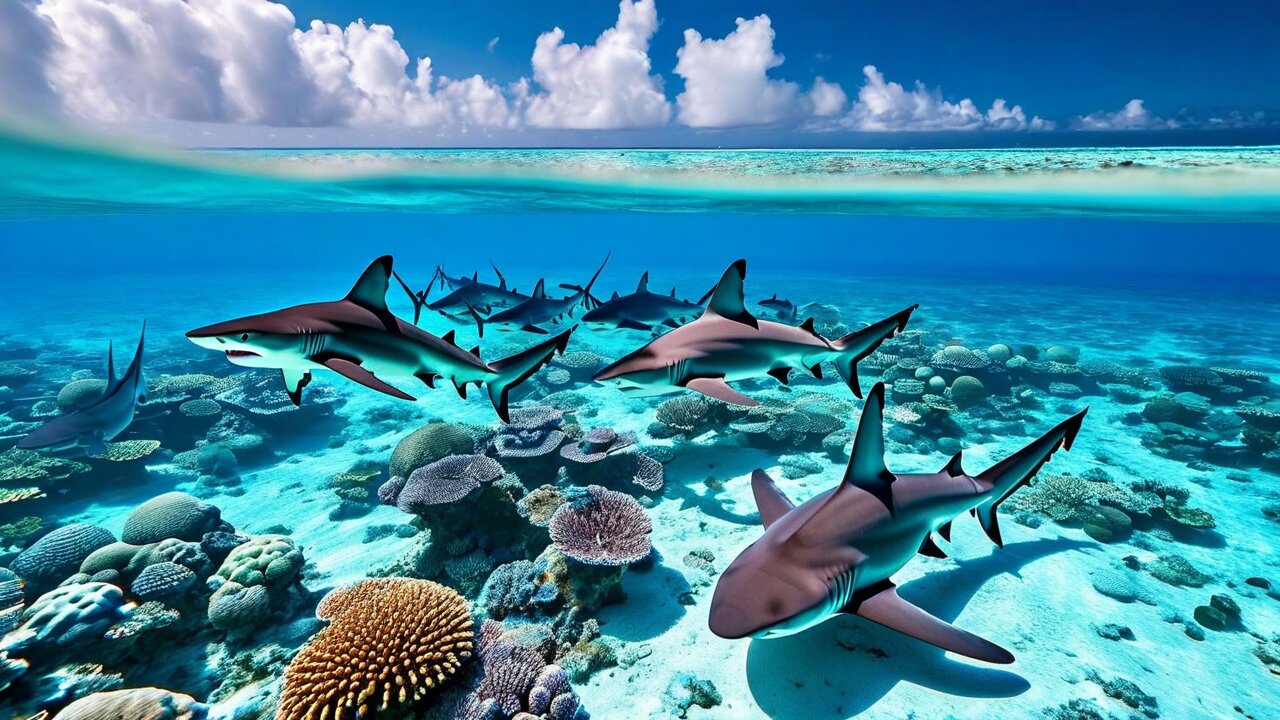
Seventy-seven atolls over 1,500 km of ocean — the largest chain of coral atolls in the world, and the part of French Polynesia that looks least like the brochure and rewards you most. No mountains, no rivers, no soil worth the name: a ring of coral a few hundred metres wide around a lagoon you cannot see across.
Rangiroa
The largest atoll in the territory and the second largest on Earth — the lagoon alone is 1,600 km², big enough to hold the island of Tahiti. Famous for the Tiputa pass, where dolphins surf the incoming tide, and for the only vineyard in the Tuamotus.
Fakarava
A UNESCO Biosphere Reserve and the diving destination. The southern Tumakohua pass holds one of the largest known aggregations of grey reef sharks anywhere; in June and July, camouflage grouper spawn there and hundreds of sharks come to feed.
Tikehau
Pink-sand beaches and a lagoon that Cousteau's team reported as the most fish-rich they had surveyed in French Polynesia. Small, quiet and mostly family pensions.
Manihi and the pearls
Where black pearl farming began in the 1960s. Most Tuamotu atolls have farms, and the industry is the economic reason many of them are still inhabited.
Moruroa and Fangataufa
The nuclear test sites, closed and monitored, in the south-east of the chain. They are not visitable and their legacy is a live political issue rather than a historical one.
What it is like to stay
Family pensions, half board because there is nowhere else to eat, coral rubble instead of soil, rainwater tanks, and a lagoon twenty metres from the door. The pace is the point.
⛰️ The Marquesas
Te Henua 'Enata, the Land of Men, 1,400 km north-east of Tahiti and utterly unlike it. There is no barrier reef here, so no lagoon and no turquoise: the ocean hits volcanic cliffs directly, valleys run steeply to the sea, and the whole archipelago was added to the UNESCO World Heritage list in 2024.
Nuku Hiva
The largest island, with Taipivai valley — the one Melville wrote Typee about after deserting his whaler in 1842 — and the Hakaui waterfall, one of the highest in the world at around 350 m.
Hiva Oa
Where Paul Gauguin died in 1903 and Jacques Brel in 1978, both buried in the Calvary cemetery above Atuona. Also the largest tiki in French Polynesia, at the Iipona site at Puamau.
The tiki and the sites
Stone platforms (paepae), ceremonial me'ae and carved tiki figures throughout the valleys, many still in forest. This is the densest concentration of pre-contact monumental archaeology in eastern Polynesia.
The population collapse
The Marquesas may have held 80,000 to 100,000 people before contact. By 1926 there were about 2,000. Disease, and then the suppression of everything that defined the culture. Around 10,000 live there today and the cultural revival is fierce and deliberate.
Tattoo
The Marquesan tradition is the source of most of what the world thinks of as Polynesian tattoo, and the English word tattoo comes from Polynesian tatau. It was banned by missionaries and revived from nineteenth-century drawings and elders' memory.
Getting there
Air Tahiti flies to Nuku Hiva and Hiva Oa in about 3 h 30. Better: the Aranui 5, a working cargo ship with passenger cabins, which delivers freight to every valley on a twelve-day round trip and is the classic way to see the archipelago.
🤿 Diving and the Lagoons
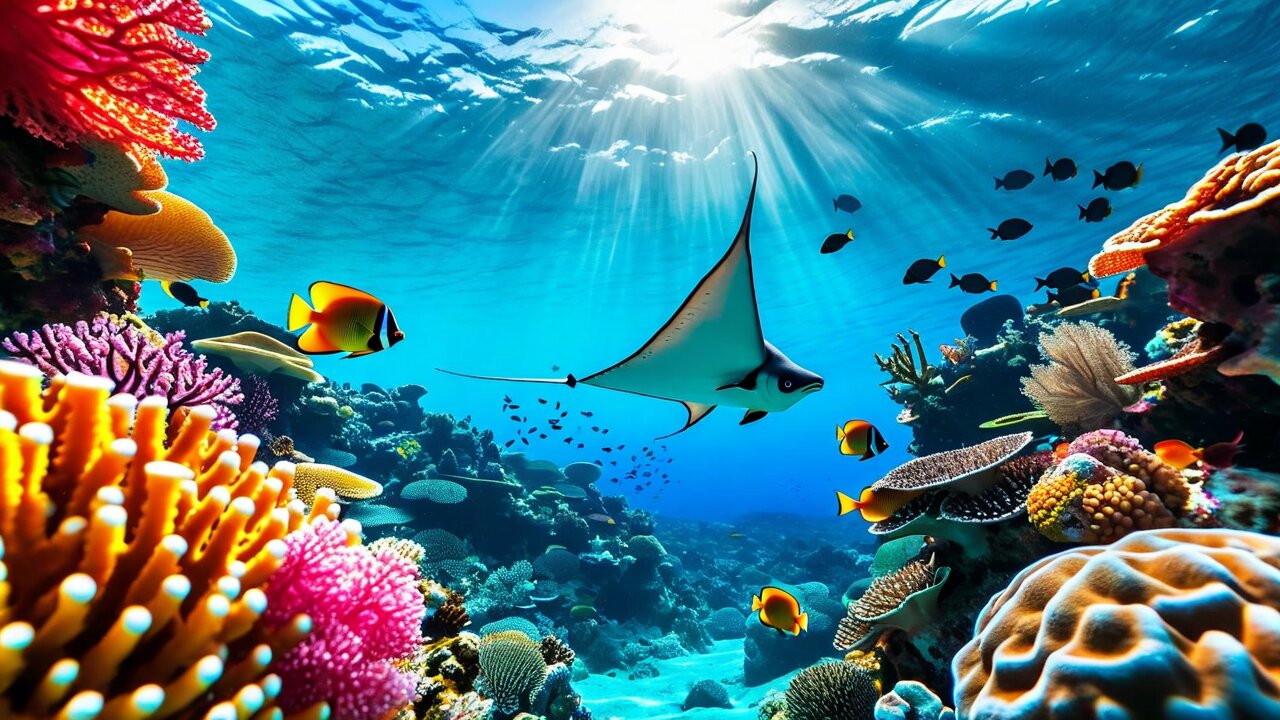
French Polynesia is one of the top handful of dive destinations on Earth, and the reason is the passes — the channels through the reef where tidal flow concentrates plankton, fish and, therefore, sharks. Diving here is largely drift diving in current, in warm clear water, with big animals.
Fakarava south pass
The signature dive: several hundred grey reef sharks stacked in the current at 25–30 m. Not aggressive, not fed, and genuinely one of the great underwater sights.
Rangiroa Tiputa pass
Dolphins that play in the wash, plus grey reefs, hammerheads in winter and manta rays. An incoming-tide drift that ends inside the lagoon.
Tahiti and Moorea
Easier and cheaper: lemon sharks at the Tiki wall, wrecks off Papeete, and Moorea's reef sharks and rays in shallow water suitable for snorkellers.
Whales · July–October
Humpbacks migrate through, and French Polynesia is one of the few places where regulated in-water observation is permitted. Use certified operators, keep the legal distance, and refuse anyone who chases.
Snorkelling
Almost as good and vastly cheaper. Coral gardens at Taha'a, the lagoon at Maupiti, Moorea's ray shallows. Bring your own mask; hire quality varies.
Conditions and caveats
Water 26–29 °C year-round, visibility often 30–40 m. Currents in the passes are strong and dives are timed to the tide — this is not a place to fake your experience level. Coral bleaching has hit some reefs and the difference between sites is now considerable.
🎭 Mā'ohi Culture and the Heiva
Nineteenth-century missionaries and the French administration between them banned tattoo, suppressed dance, replaced the language in schools and dismantled the religion of the marae. Almost all of it has come back in the last sixty years, and the recovery is the most interesting thing happening in French Polynesia.
Heiva i Tahiti · July
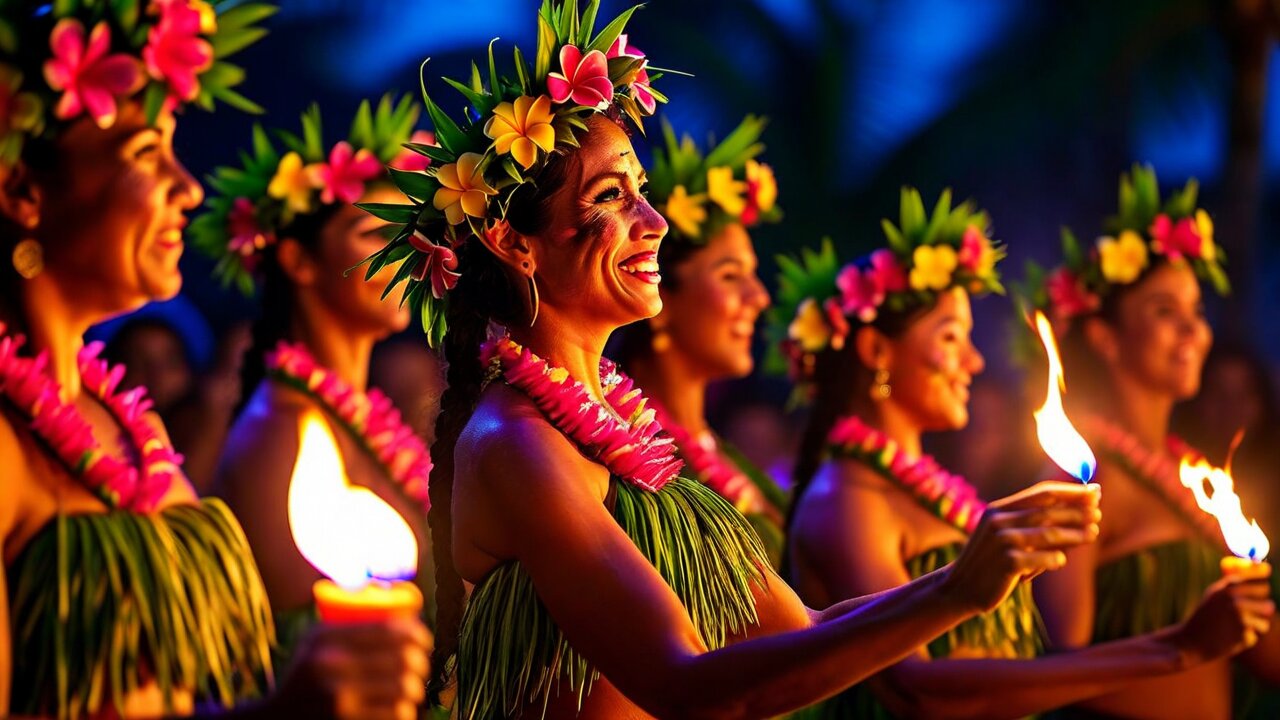
The month-long festival in Papeete and the heart of the cultural calendar. Dance troupes of a hundred people compete over choreography, costume, drumming and chant, with results in the news for weeks. This is not a show for tourists; it is the national championship.
Ori Tahiti
The dance: 'ōte'a with its rapid hip movement to drums, and 'aparima, the slower story-telling dance with the hands. Both were banned outright in the nineteenth century and revived from memory in the 1950s by Madeleine Moua.
The drums
Tō'ere — slit log drums — plus the pahu and the fa'atete. The sound is fast, dry and percussive, and unmistakable once you have heard it.
Sports of the Heiva
Stone lifting, coconut husking, fruit-carrier races, javelin throwing at a coconut on a pole, and outrigger racing. All competitive, all taken seriously, and open to spectators.
Tattoo
Tatau gave the world the word. Banned by missionaries, revived from the 1980s using Marquesan and Society patterns, and now a serious craft with family and island meanings encoded in the designs. Getting one on holiday is common; getting one that means something requires talking to the artist.
Marae
Stone temple platforms, thousands of them, from family sites to Taputapuātea on Raiatea, the international centre of eastern Polynesian religion and UNESCO-listed since 2017. Take shoes off, do not climb on them, and follow any local guidance.
🛶 Voyaging and the Va'a
The most impressive thing about Polynesia is not its lagoons but how people got to them. Ancestral navigators crossed thousands of kilometres of open ocean, upwind, without instruments, and did it repeatedly enough to settle every habitable island in a triangle the size of Eurasia.
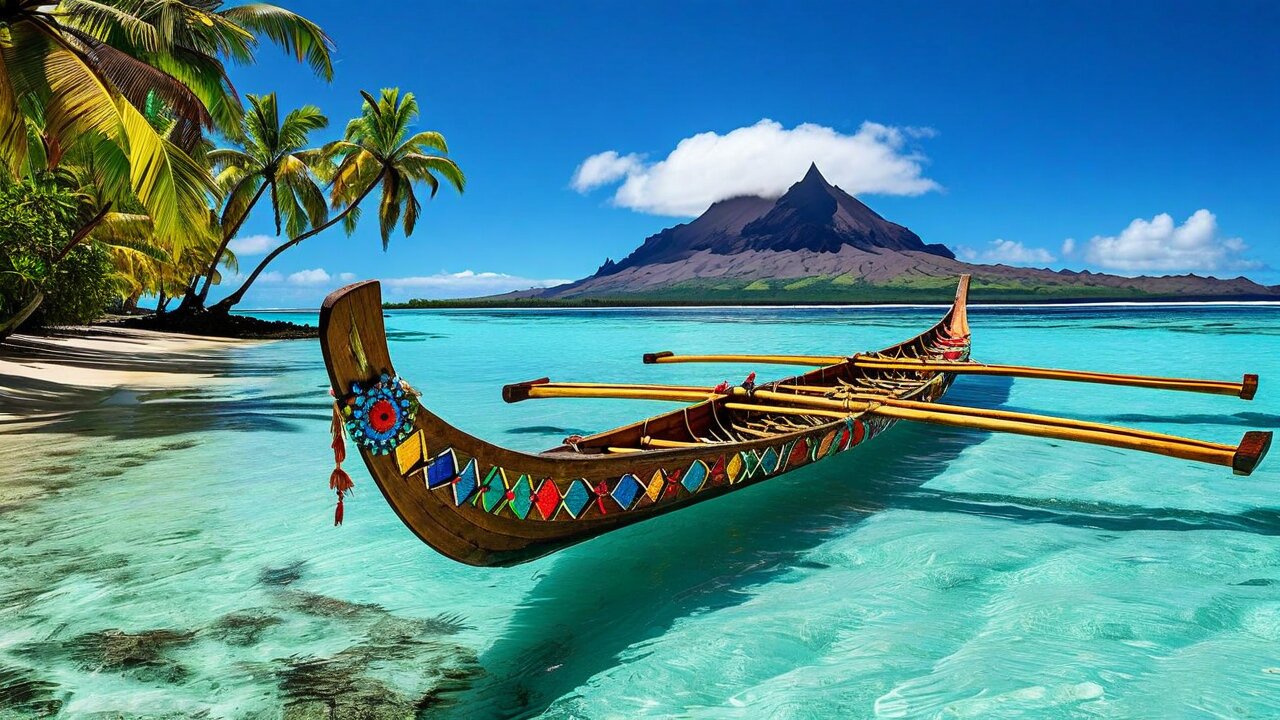
How it was done
Star compasses memorised as houses on the horizon, swell patterns felt through the hull, cloud colour over lagoons, and the flight lines of birds at dawn and dusk. Navigators trained for decades and did not sleep properly for the duration of a voyage.
The revival
In 1976 the Hawaiian canoe Hōkūle'a sailed from Hawai'i to Tahiti without instruments, navigated by Mau Piailug of Satawal, and proved the voyages had been deliberate rather than accidental drift. Thirty thousand people met the canoe in Papeete.
Fa'afaite
French Polynesia's own voyaging canoe, launched in 2009, sails the Pacific with a trained crew and is the visible face of the navigation revival here.
Va'a as a national sport
Outrigger paddling is the sport of French Polynesia, far ahead of football. The Hawaiki Nui Va'a in November is a three-day, 128 km race between Huahine, Raiatea, Taha'a and Bora Bora, with crews of six, and it stops the territory.
Trying it
Clubs in Papeete, Moorea and most islands take visitors out, and it is far harder than it looks. Nearly every coastal village has a canoe shed and an evening training session.
Why it matters here
Because the alternative story — that Polynesia was settled by accident, by people blown off course — was the received European view for two centuries and it was wrong. The navigation revival is a correction with real political weight.
🖤 Black Pearls
The territory's second export after tourism, and the reason many Tuamotu atolls still have populations. The Tahitian pearl is grown in the black-lipped oyster Pinctada margaritifera, and its dark iridescence — peacock, aubergine, green, silver — occurs naturally in almost no other pearl.
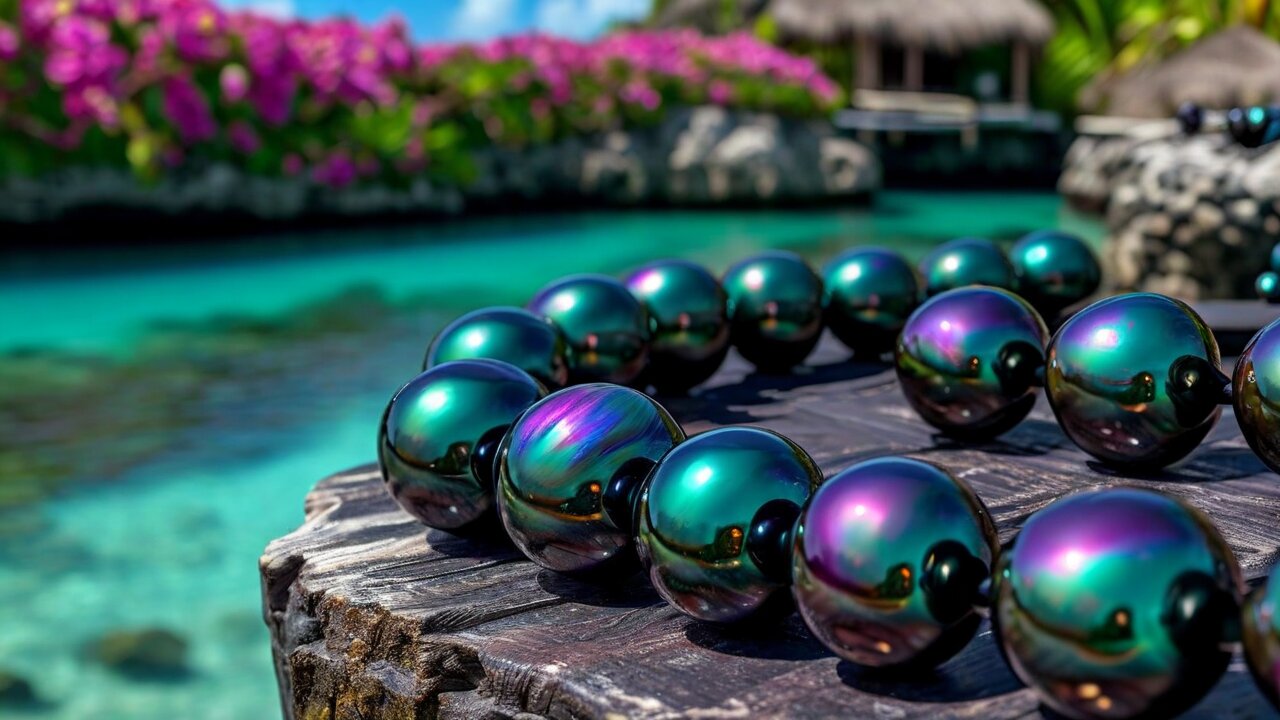
How they are made
A technician grafts a shell bead and a piece of donor mantle tissue into a live oyster; the oyster coats it in nacre for 18 months to two years, suspended on lines in the lagoon. Perhaps half the oysters produce a saleable pearl and a small fraction produce a fine one.
Where
Mainly the Tuamotus — Manihi, Arutua, Ahe, Takaroa — and the Gambiers, whose colder water produces the darkest and most sought-after pearls. Farms are open to visitors on several atolls.
What to look for
Lustre first — it should reflect a sharp image, not a soft glow. Then surface cleanliness, nacre thickness, shape and size. Colour is a matter of taste and does not determine value the way lustre does.
Buying honestly
Prices in Papeete are far below what the same pearl costs in Europe. Buy from a reputable dealer with a certificate, or from a farm directly. Avoid cruise-ship stalls and anything sold with urgency.
Keshi and mabé
Keshi are pearls formed without a bead — irregular, all nacre, and often beautiful for a fraction of the price. Mabé are half-pearls grown against the shell and are the affordable way to buy something large.
The industry's trouble
Overproduction in the 2000s crashed prices, and the sector has been consolidating and raising quality standards since. Climate stress on the oysters is the newer worry.
🗣️ Tahitian and the Other Languages
French is the language of administration and Tahitian (Reo Tahiti) is the language of the fenua. Both are official, though the legal status of Tahitian has been repeatedly contested in French courts — as recently as 2023, when the Conseil d'État struck down its use in the territorial assembly.
Reo Tahiti
About 68,000 speakers. Thirteen letters, five vowels, an easy phonology for a Czech speaker — and a glottal stop written with an okina (') that changes meaning entirely.
Words worth having
Ia ora na — hello. Māuruuru — thank you. Nana — goodbye. Manuia — cheers. Fenua — the land, the country. Mana — spiritual power, and yes, that is where the gaming term comes from.
The other languages
Marquesan (two dialects), Paumotu in the Tuamotus, Austral and Mangarevan. All are distinct languages, all are endangered to varying degrees, and all are being taught again.
Missionary spelling
The written form was created by the London Missionary Society, which is why place names look the way they do — and why the okina and macron are often dropped in French usage, to the irritation of Tahitian speakers.
Tahitian in the world
Tabu, tattoo and mana all reached English through Polynesian languages, mostly via Cook's voyages.
English
Widely spoken in tourism on the main islands, patchily elsewhere. French is genuinely more useful, and even a little of it changes how you are treated in a pension.
🌊 Ocean, Coral and Climate
A territory that is 99.9% ocean has an unusually direct relationship with what happens to the sea. French Polynesia has taken this seriously enough to declare its entire EEZ a managed marine area — 5 million km², one of the largest in the world.
The atolls and sea level
Atoll islands rise a few metres above the sea at most. Rising sea level, and more importantly increased storm surge and saltwater intrusion into freshwater lenses, are existential rather than theoretical for the Tuamotus.
Coral bleaching
Major bleaching events hit Moorea and other reefs in 2019 and again since. Some reefs have recovered well and some have not, and the variation between sites within one lagoon can be striking.
Rāhui
The traditional practice of closing an area or a species to harvest for a period. It has been revived as a legal conservation tool on several islands, run by communities rather than the administration, and it works.
Sharks and rays protected
French Polynesia banned shark fishing across its whole EEZ in 2012 and protects all rays. It is one of the largest shark sanctuaries on Earth and is the direct reason the diving is what it is.
Sunscreen and the reef
Oxybenzone-based sunscreens damage coral. Bring a mineral reef-safe sunscreen from home; the good stuff is expensive and not always available locally.
The nuclear legacy
Moruroa and Fangataufa remain monitored, and the health and environmental consequences of 193 tests are still being litigated. Any conversation about the environment here eventually reaches this subject.
🏭 Tourism, Pearls and Transfers
A small, expensive, import-dependent economy that has never fully replaced what the nuclear programme provided. Around 280,000 people, and almost everything they consume arrives by ship from France, New Zealand or Asia.
Tourism
The largest private sector — roughly 250,000 to 300,000 visitors in a good year, well under a tenth of Hawai'i's, and heavily concentrated at the top end. Cruise ships and the honeymoon market dominate.
Pearls
The main physical export, worth on the order of €60–80 million a year, and the economic backbone of the Tuamotu and Gambier atolls.
Fish and noni
Tuna and other pelagic fish, plus the noni fruit, monoï oil and vanilla in smaller quantities. The EEZ is enormous and under-exploited by design.
French transfers
Substantial and structural: defence, education, health and pensions, plus compensation arrangements after the nuclear programme ended. The economy would not look like this without them, which is the central fact in the independence argument.
The cost of living
Prices run roughly 30 to 60% above mainland France, and far more for imported goods. Wages are lower. The result is a chronic cost-of-living politics and periodic strikes.
Concentration
About 70% of the population and nearly all the economic activity is on Tahiti and Moorea. Outer-island depopulation and the drift to Papeete has been the dominant demographic story for sixty years.
🍽️ Polynesian Food
Raw fish, coconut milk, root crops and the earth oven — plus a century of French technique and a large Chinese community that arrived as plantation labour in the 1860s and reshaped what everyone eats. The result is one of the more surprising food cultures in the Pacific.
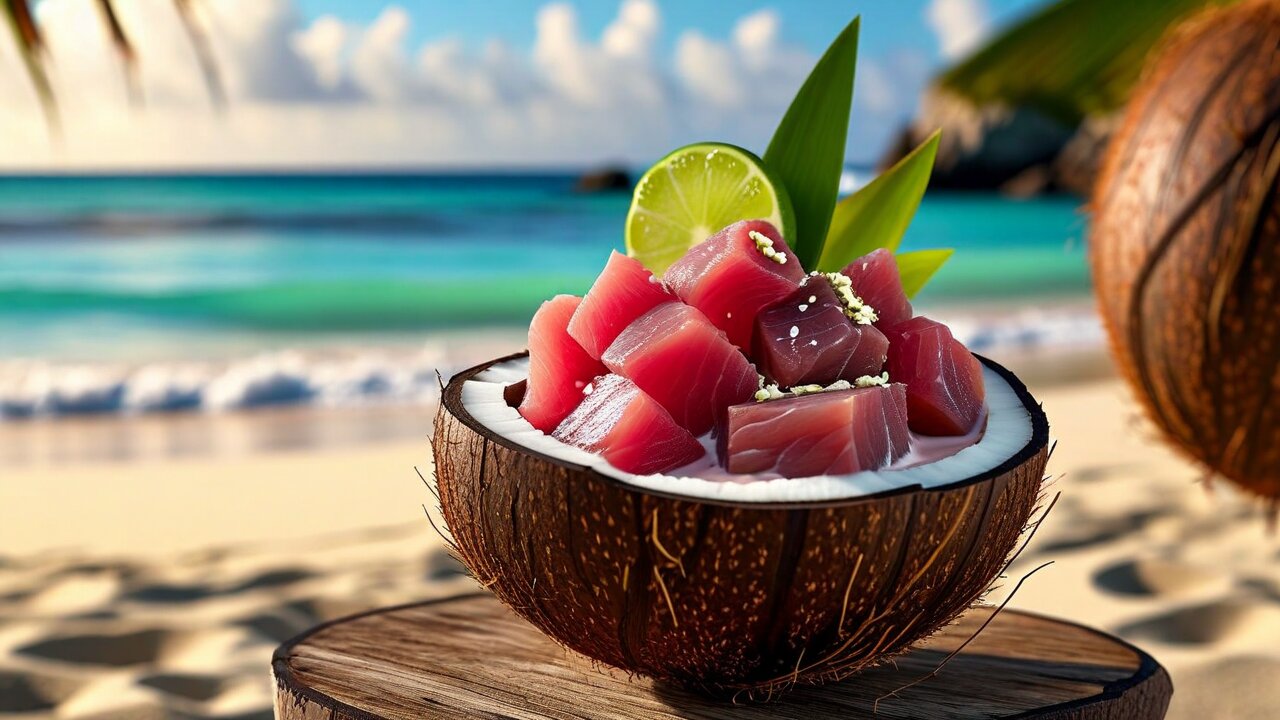
Poisson cru · 'ia ota
The national dish. Raw tuna diced, tossed briefly in lime juice, then dressed in fresh coconut milk with tomato, cucumber and spring onion. Eaten at every meal and in every register from roadside truck to resort.
Ahima'a
The earth oven, the traditional Sunday meal: pork, chicken, fish, breadfruit, taro and fāfā wrapped in leaves and cooked underground on hot stones for hours. Many pensions and some restaurants do one on Sundays and it is worth arranging.
Fāfā and root crops
Fāfā is taro leaves cooked down in coconut milk, usually with chicken. Taro, breadfruit ('uru), sweet potato and cassava are the staples, not rice — though rice has largely won in practice.
The roulottes
Food trucks, gathering nightly at Place Vai'ete in Papeete and in every town. Grilled fish, steak frites, Chinese noodles, crêpes. This is where French Polynesia eats and it is a fraction of restaurant prices.
The Chinese layer
Chao men noodles, ma'a tinito (a pork, bean and cabbage stew that is now thoroughly Tahitian), and the fact that a great many neighbourhood shops are Hakka-run. This is one of the defining strands of modern Tahitian food.
Fruit and vanilla
Pineapple from Moorea, pamplemousse the size of a football and much better than grapefruit, mango, soursop — and Tahitian vanilla, a distinct species that is fatter, softer and more floral than the Madagascan bean, and priced accordingly.
Poisson cru
'Ia ota · serves 4 · 20 minutes
Ingredients: 600 g sashimi-grade tuna, diced 1.5 cm; juice of 4–6 limes; 400 ml fresh coconut milk (thick, not the thin drink); 2 tomatoes, seeded and diced; 1 cucumber, seeded and diced; 1 carrot, julienned; 2 spring onions; salt; a little chilli if you like.
Method: Salt the tuna lightly and toss it in the lime juice. Leave only two or three minutes — long enough to firm the outside, not long enough to cook it through — then drain the lime off completely. Add the vegetables, pour over the coconut milk, season, and serve immediately while everything is cold and the fish is still red at the centre.
💡 The two mistakes are marinating too long, which turns it into ceviche, and using tinned coconut milk with additives. If you can only get tinned, use the thick cream from the top of the can.
Poulet fāfā
Chicken with taro leaves · serves 4 · 1 hour
Ingredients: 1 kg chicken thighs; 800 g taro leaves (spinach at a pinch); 400 ml coconut milk; 1 onion; 2 cloves garlic; a thumb of ginger; oil; salt and pepper.
Method: Taro leaves must be cooked thoroughly — raw they contain calcium oxalate crystals that burn the mouth. Boil them 20 minutes, drain and squeeze. Brown the chicken, remove, soften onion, garlic and ginger, return the chicken with a little water and simmer 30 minutes. Add the leaves and coconut milk and cook gently another 15 minutes until thick and dark.
💡 Do not shorten the first boiling of the leaves. Served with rice and a spoonful of the pan juices, this is the Sunday plate of the Society Islands.
🍹 What Polynesians Drink
One beer that owns the territory, a small but real wine and rum scene, and — unlike Fiji or Vanuatu — almost no kava tradition here at all.
Hinano
The national beer, brewed in Papeete since 1955, and the logo with the seated woman in a pareu is on more T-shirts than any other image in the Pacific. A plain lager, cold, and correct.
The Rangiroa vineyard
Vin de Tahiti grows Carignan and Muscat on a Tuamotu motu — coral sand, no soil, drip irrigation from a desalination plant, and two harvests a year because there is no winter. It is the only atoll vineyard in the world and the wine is a genuine curiosity rather than a bargain.
Rum and mape
Local rums from Tahiti and the Marquesas, plus mape and fruit liqueurs. Imported French wine is available everywhere and heavily taxed.
Coconut water and fruit
Drunk from the nut everywhere, and a wall of fresh juices — pamplemousse, pineapple, soursop, passion fruit.
No kava
Kava was drunk in pre-contact Polynesia here but was suppressed by missionaries and never revived, unlike in Fiji, Vanuatu and Tonga. It is not part of modern Tahitian life.
Rules and prices
Legal age 18. Alcohol sales are restricted in shops on Sundays and after 18:00 on some islands. A beer in a bar runs €5–8; in a resort, considerably more.
🎉 Festivals
Heiva i Tahiti · July
The big one. A month of dance, song, drumming and traditional sport competitions in Papeete, plus Heiva on nearly every island. If you can time a trip to anything, time it to this.
Hawaiki Nui Va'a · late October or November
The 128 km three-stage outrigger race between Huahine, Raiatea, Taha'a and Bora Bora. Crews of six, a hundred-odd canoes, and the whole territory watching.
Matari'i i ni'a · November
The rising of the Pleiades, marking the start of the season of abundance in the Polynesian calendar. Revived in recent decades as a cultural rather than commercial event.
Tahiti Pearl Regatta · May
Yacht racing between Raiatea, Taha'a and Bora Bora, open to charter crews as well as racers, and the best sailing week of the year.
Marquesas Arts Festival
Every four years, rotating between islands — the largest gathering of Marquesan dance, tattoo, carving and chant, and one of the most significant cultural events in the Pacific. Worth planning years ahead for.
Autonomy Day · 29 June
The territorial holiday, marking the 1880 annexation — which is celebrated as the beginning of the modern territory and disputed as such by pro-independence groups. That tension is the point.
🖼️ Gauguin and the South Seas Myth
No other place on Earth has been so thoroughly imagined by outsiders. From Bougainville's Nouvelle Cythère in 1768 to the honeymoon brochure, French Polynesia has spent 250 years being described by people who wanted it to mean something — and the local reckoning with that is more interesting than the myth itself.
Bougainville and Cook
The 1768 and 1769 accounts reached a Europe primed by Rousseau, and produced the noble-savage fantasy almost overnight. Ahutoru and later Omai were taken to Paris and London and exhibited as proof of it.
Paul Gauguin
Arrived in 1891 looking for an unspoilt Eden, found a French colonial town with a hospital and a post office, and painted the Eden anyway. He died on Hiva Oa in 1903. The paintings are extraordinary; his relationships with girls as young as thirteen are not a footnote, and Polynesian curators now say so plainly.
Herman Melville
Deserted a whaler in the Marquesas in 1842 and wrote Typee about the month he spent in the Taipivai valley — a book that is half ethnography, half invention, and was his biggest commercial success.
Pierre Loti and the rest
Loti's Le Mariage de Loti (1880) fixed the template of the European man and the Tahitian girl. Somerset Maugham, Robert Louis Stevenson, Jack London and James Norman Hall all added to it; Hall co-wrote Mutiny on the Bounty from a house in Arue.
Jacques Brel
Sailed his own boat to the Marquesas in 1975, flew the local air ambulance runs himself, and is buried a few metres from Gauguin above Atuona. His aircraft Jojo is in a small museum there.
The correction
The Musée de Tahiti et des Îles and a generation of Mā'ohi writers, film-makers and curators now present the counter-history: the population collapse, the missionary bans, the tests. Reading Chantal Spitz or Titaua Peu before travelling is the single best preparation for this place.
🌦️ Climate and When to Go
Tropical, warm and consistent. Air 24–30 °C and sea 26–29 °C all year. What changes is rain and humidity, and there is a real cyclone season — though French Polynesia sits at the eastern edge of the South Pacific cyclone belt and is hit far less often than Fiji or Vanuatu.
Dry season · May–October
The season: lower humidity, less rain, steadier trade winds, and the best diving visibility. It is also high season, and July and August are both busiest and most expensive.
Wet season · November–April
Hot, humid, with heavy showers rather than all-day rain, and the cyclone window. Prices drop noticeably and the islands are green. Diving is still good; visibility is lower.
Cyclones
Officially November to April. Direct hits are rare — the last severe cluster was in 1982–83 — but travel insurance that covers weather disruption is sensible in that window.
Whales · July–October
Humpbacks arrive to calve, mostly around Moorea, Tahiti and the Austral Islands. This alone is a good argument for the dry season.
Regional differences
The Marquesas are drier and can be genuinely arid; the Australs are noticeably cooler; the Tuamotus are the sunniest and the most exposed to wind.
What to pack
Light clothing, a rain layer, reef shoes, a mask if you have one, mineral reef-safe sunscreen, insect repellent for the nono sandflies of the Marquesas, and one modest outfit — shorts and swimwear in a village or a church are not appreciated.
🐋 Wildlife You Will Actually See
Humpback whales
July to October, close inshore around Moorea and Tahiti. Regulated in-water observation is legal here with certified guides and specific distance rules.
Blacktip and grey reef sharks
Blacktips in almost every lagoon, in water shallow enough to stand in; greys in the passes. Neither is a danger to swimmers, and shark fishing has been banned across the whole EEZ since 2012.
Manta and eagle rays
Manta cleaning stations at Maupiti, Tikehau and Bora Bora; stingrays in the shallows off Moorea, where a long history of feeding has made them extremely tame — which is itself worth thinking about.
Dolphins
Spinner dolphins in most lagoons and the resident bottlenose that surf the Tiputa pass at Rangiroa.
Birds
The territory has several critically endangered endemics — the Tahiti monarch is down to a few dozen birds — and Tetiaroa and the Tuamotu motu hold large seabird colonies.
The nono
The one genuine pest: tiny biting sandflies, notably in the Marquesas, whose bites itch for days. Repellent with DEET and covered ankles at dawn and dusk.
🇨🇿 From the Czech Republic
About as far as it is possible to go. Prague to Papeete is roughly 17,000 km and 26 to 34 hours with two stops, whichever way you route it. The time difference is 11 or 12 hours behind Czech time — French Polynesia is one of the last places on Earth to enter each day.
Via Paris
The direct-ish route: Prague to Paris, then Air France or Air Tahiti Nui to Papeete via Los Angeles or Vancouver, about 22 hours in the air. Air Tahiti Nui also flies Paris–Papeete via Seattle.
Via the United States
Prague to Los Angeles or San Francisco, then Air Tahiti Nui, French Bee, Delta or United to Papeete (8 h 30 from LAX). You will need US ESTA even for a same-airport transit, so apply well ahead.
Via Asia and Auckland
Prague to Tokyo or Seoul, or to Auckland via a Gulf hub, then Air Tahiti Nui or Air New Zealand. Longer but sometimes cheaper, and it lets you build a real stopover.
Cost
Expect 30,000–60,000 Kč return, and more in July, August and around Christmas. French Bee is consistently the cheapest option from Paris and is a genuine low-cost long-haul carrier.
Visa
Czech citizens do not need a visa for stays up to three months — but note that French Polynesia is not in Schengen, so there is a separate entry stamp and a passport is required, not an ID card.
Czech consular cover
There is no Czech representation in French Polynesia; the accrediting mission is the Czech Embassy in Wellington, New Zealand, with the embassy in Paris also relevant. Register with DROZD — at this distance, with inter-island flights and small boats, it genuinely matters.
✈️ Getting Around
One airline does almost all of it, one ferry route matters, and everything else is a boat, a cargo ship or a very long wait. Internal transport is the largest single cost of a French Polynesian trip after the international flight.
Air Tahiti
The domestic carrier — not to be confused with Air Tahiti Nui, the international one — serving 47 islands with ATRs and Twin Otters. It is the only practical way to move between archipelagos and it is expensive.
Air passes
Air Tahiti sells multi-island passes valid 28 days that cut the cost substantially if you are visiting several islands. Work out your route before booking any single flight; the passes must be bought as a unit.
The Moorea ferry
Aremiti and Terevau run Papeete–Moorea in 30 minutes, many times a day, for a few euros. It is the only high-frequency ferry route in the territory.
Inter-island ships
Cargo-passenger vessels serve the Leeward Islands, the Tuamotus and the Marquesas — slow, cheap and an experience. The Aranui 5 to the Marquesas is a proper twelve-day cruise on a working freighter.
On the islands
Hire a car on Tahiti, Moorea and Raiatea; a scooter or bicycle is enough on Bora Bora, Huahine and Maupiti. Public transport barely exists outside Papeete. On atolls there is usually one road and a bicycle.
Sailing
Raiatea is the charter capital, and the Society Islands are one of the world's great cruising grounds — short passages, protected lagoons, and everything within a day's sail. Bareboat charter is expensive and, split between six, competitive with hotels.
🧭 Practical French Polynesia
Money
The CFP franc (XPF), fixed at 119.33 to the euro — so 1,000 XPF is about €8.40 or roughly 210 Kč. Cards work in Papeete and the resorts; carry cash for pensions, atolls and roulottes, where cards often are not taken.
Connectivity
Vini and Vodafone sell tourist SIMs at Faa'a airport. EU roaming does not apply — French Polynesia is outside the EU — so a Czech SIM will roam at punitive rates. Buy local or rely on wifi.
Electricity
220 V, French two-pin sockets, so no adapter needed from Czechia. Some outer islands and pensions run generators with power off overnight.
Water
Drinkable in Papeete and on Bora Bora; on atolls and many outer islands it is rainwater and should be treated or bought bottled. Ask at your pension rather than assuming.
Health
No malaria. Dengue, chikungunya and Zika all circulate periodically — repellent is the main defence. Ciguatera poisoning from certain reef fish is a real local risk; eat what the restaurants serve rather than what you catch.
Emergency and health care
15 for medical, 17 police, 112 general. The hospital in Papeete is a proper French hospital; the outer islands have nurse-run dispensaries and serious cases are evacuated by air. Insurance with evacuation cover is not optional here.
💰 Costs
One of the most expensive destinations in the world, and honestly so — almost everything is shipped 6,000 km. But the gap between the resort version and the pension version is enormous, and the lagoon is free either way.
Accommodation — pensions
Pension de famille €70–150 (1,800–3,800 Kč) a night, usually with breakfast and often half board because there is nowhere else to eat. This is how independent travellers do French Polynesia.
Accommodation — resorts
Mid-range hotel €200–350. Overwater bungalow €600–1,200 at the lower end and €2,000–3,500 at Bora Bora's top properties. Prices are per night and exclude a substantial city tax.
Food
A roulotte meal €12–18 and the best value anywhere. Restaurant main €25–40. Resort dinner €70–120. A supermarket shop is 40–60% above French prices; buy fruit at markets instead.
Internal flights
Papeete–Bora Bora around €300–400 return. Papeete–Rangiroa €300. Papeete–Marquesas €600–800. An Air Tahiti multi-island pass covering several islands runs €500–900 and is usually the right answer.
Activities
Lagoon tour €70–110. Two-tank dive €130–180. Whale watching €100–150. Snorkelling from the beach and walking are free, and on most islands they are most of what there is.
Realistic budget
Independent with pensions and one internal flight: €150–220 a day (3,700–5,500 Kč). Comfortable hotels: €350–500. Bora Bora overwater: whatever you decide it is worth. Add the flight from Prague, which is the largest single line.
🛡️ Safety
Very safe by any measure. Violent crime against visitors is rare, the islands are small, and the risks here are almost entirely to do with water, sun and reef rather than people.
Crime
Petty theft in Papeete and occasionally from parked hire cars and unlocked pension rooms. Ordinary precautions are enough. Papeete's waterfront is best avoided very late at night.
The passes
Tidal currents through reef passes are strong and have killed swimmers and inexperienced divers. Never swim in a pass, and dive them only with an operator and on the correct tide.
Coral and reef shoes
Coral cuts infect quickly and stonefish are present in shallow sandy areas. Reef shoes solve almost all of it; shuffle your feet rather than stepping down.
Sharks
Blacktips and greys are everywhere and are not a meaningful danger. Do not feed them, do not swim at dusk near fish-cleaning stations, and treat the ban on shark fishing as the reason they behave predictably.
Sun and dehydration
You are at 17° south with strong reflection off water and sand. Reef-safe sunscreen, a rash vest for snorkelling, and shade in the middle of the day.
Distance
The real risk factor. On an outer atoll the nearest doctor may be a flight away and the nearest hyperbaric chamber is in Papeete. Dive conservatively and carry insurance that covers evacuation.
🏨 Where to Stay
Pensions de famille
Family guesthouses, often with a handful of rooms or bungalows, half board, and hosts who will take you fishing. The single best way to travel here — cheaper, warmer and far more interesting than a resort.
Resorts
Concentrated on Bora Bora, Moorea, Taha'a and Tetiaroa, with a few on Tahiti near the airport. Overwater bungalows are the product; garden and beach rooms at the same hotels cost a third as much and you can still swim.
Tahiti
Stay at Punaauia or Papeete rather than the airport strip if you have a night either side. Airport hotels exist for exactly that purpose and nothing more.
On atolls
Pensions only, often on their own motu, reached by boat, with solar power and rainwater. Half board is standard because there is no alternative. Bring cash and reef shoes.
Camping and hostels
Very limited. A handful of campsites on Moorea, Bora Bora and Huahine, and almost nothing resembling a hostel. This is not a backpacker destination and does not pretend to be.
Booking
Pensions often take direct bookings by email and are not all on the big platforms. The Tahiti Tourisme and Haere Mai pension listings are the places to look.
🗺️ Suggested Itineraries
One week · the classic
Two nights Tahiti, three Moorea, two Bora Bora. Ferry to Moorea, fly to Bora Bora. It is the standard trip, it works, and it is entirely within the Society Islands.
Ten days · better
Tahiti, Moorea, then one Tuamotu atoll — Fakarava, Tikehau or Rangiroa — and finish on Maupiti instead of Bora Bora. Same budget, completely different trip.
Two weeks · for divers
Fakarava south pass for four or five days, Rangiroa for the Tiputa pass, and Moorea or Tahiti at each end. Book the Fakarava pensions months ahead; there are very few beds.
Two weeks · the Marquesas
Fly to Nuku Hiva and Hiva Oa and travel between valleys, or take the Aranui 5 for its twelve-day round trip from Papeete. The archipelago that changes what people think this territory is.
Sailing week
Charter from Raiatea and sail the Leeward Islands — Taha'a, Bora Bora, Huahine, Maupiti if the pass allows. Short passages, protected water, and the best-value way to reach islands that are otherwise expensive.
Honeymoon, done well
Three nights in a garden bungalow on Moorea, three in an overwater on Taha'a or Bora Bora, and one on a Tuamotu atoll to remember. Spending the whole budget on Bora Bora is the common and avoidable mistake.
🤯 Fascinating Facts
An ocean the size of Europe
The exclusive economic zone is about 5.5 million km² — larger than the European Union — around just 4,167 km² of land.
The overwater bungalow was invented here
Three Americans built the first ones on Raiatea and Bora Bora in 1967, because their site had no beach. The idea is now the global image of a luxury holiday.
A vineyard on a coral atoll
Vin de Tahiti grows grapes on a motu at Rangiroa, on coral sand with desalinated irrigation, and harvests twice a year because there is no winter. It is the only atoll vineyard on Earth.
Tattoo is a Polynesian word
English took tattoo from Polynesian tatau via Cook's voyages, along with taboo and mana.
193 nuclear tests
France tested at Moruroa and Fangataufa from 1966 to 1996, 46 of them in the atmosphere. The health and environmental consequences are still being litigated.
The largest shark sanctuary
Shark fishing has been banned across the entire EEZ since 2012 — 5 million km² of protected water, and the direct reason the diving is world class.
Rangiroa's lagoon could hold Tahiti
At about 1,600 km², the lagoon of the territory's largest atoll is bigger than the island of Tahiti itself.
Gauguin and Brel are neighbours
Both are buried in the Calvary cemetery at Atuona on Hiva Oa, a few metres apart, seventy-five years apart.
Pearls are the second export
After tourism, the black pearl is the territory's main earner — and the reason a number of Tuamotu atolls still have permanent populations at all.
👤 Notable Figures
Pōmare IV (1813–1877)
Queen of Tahiti for fifty years, who resisted the French protectorate, fled to Raiatea during the Franco-Tahitian war, and eventually accepted terms that kept her dynasty nominally in place until 1880.
Paul Gauguin (1848–1903)
Came looking for a paradise that had already been dismantled and painted it anyway. Buried on Hiva Oa. His work is inseparable from French Polynesia's image abroad and from a colonial record that Polynesian curators now address directly.
Pouvanaa a Oopa (1895–1977)
The father of Tahitian nationalism: Marquesan-Tahitian, First World War veteran, deputy in Paris, jailed in 1959 on charges widely regarded as fabricated, and posthumously exonerated by a French court in 2018. The central figure in the independence story.
Gaston Flosse (b. 1931)
Dominated territorial politics for four decades as the leading pro-French figure, delivered the autonomy statute and much of the modern administration, and was repeatedly convicted of corruption. Nobody here is neutral about him.
Moetai Brotherson (b. 1969)
President of French Polynesia since 2023, leading the pro-independence Tāvini Huiraatira — a former software engineer, and the head of the first government committed to a negotiated path to sovereignty.
Madeleine Moua (1889–1989)
The schoolteacher who founded the Heiva Tahiti dance troupe in 1956 and effectively brought ori Tahiti back from suppression. The entire modern dance revival descends from her.
Chantal Spitz (b. 1954)
The first Mā'ohi novelist published in French, whose L'Île des rêves écrasés (1991) confronted the nuclear tests and colonialism and was attacked for it. The starting point for contemporary Polynesian literature.
Jacques Brel (1929–1978)
Not Polynesian, but he spent his last years flying supply runs between Marquesan valleys in his own aircraft and is buried at Atuona. The islands adopted him.
🧭 Visiting Responsibly
A small population, a fragile reef and an economy where tourism is the largest private employer. What visitors do here has an unusually direct effect, and there are a few things worth getting right.
Reef-safe sunscreen
Oxybenzone and octinoxate damage coral. Bring mineral sunscreen from home, or better, wear a rash vest and use less of anything.
Do not touch or stand on coral
Including for a photograph. A single fin kick can destroy decades of growth, and the reefs here have already been through repeated bleaching.
Choose pensions
Money spent at a family pension stays on the island; money spent at an international resort largely does not. The pensions are also where you meet people who live here.
Feeding animals
Ray and shark feeding is widespread and changes behaviour, concentration and health. Operators that observe without feeding exist and are worth choosing.
Marae and sacred sites
Take shoes off where indicated, do not climb on stone platforms, do not move stones, and do not treat a marae as a photo backdrop. Ask if you are unsure — people will tell you.
Dress and Sunday
Swimwear is for the beach; shoulders and knees covered in villages and absolutely in church. Sunday is genuinely observed — many places close, and a village church service is welcoming if you dress for it.
✍️ Author's Note
There is a version of this trip in which you fly for thirty hours, transfer straight to Bora Bora, spend six nights on a deck over the lagoon, and go home having spent a very large sum of money to see the picture you already had on your screen. It is a lovely picture. It is also almost the only part of French Polynesia that has been arranged for you in advance.
What is actually here is a seafaring culture that crossed the largest ocean on the planet without instruments, was reduced by disease and mission to a fraction of itself, had its language and dance and tattoo banned outright, spent thirty years as a nuclear test range, and has spent the last sixty putting itself back together — visibly, competitively, in public, every July, in a stadium in Papeete. Almost no visitor sees any of it.
Two pieces of advice. First, leave the Society Islands. One week on a Tuamotu atoll, in a pension with six rooms and a lagoon at the door, costs less than three nights on Bora Bora and will be the part you remember. Second, go in July and get a ticket to the Heiva, even if you understand nothing being sung. It is not a performance for tourists; it is a country competing with itself.
And eat at the roulottes. Papeete's food trucks on the waterfront, five euros for grilled tuna, the whole city there on a Friday night. The lagoons are extraordinary and everyone photographs them. The thing that will surprise you is the place that lives around them.
— Radim Kaufmann
Support This Project 🌍
This World Travel Factbook is a labor of love – free to use for all travelers. If you find it helpful, consider supporting its continued development.