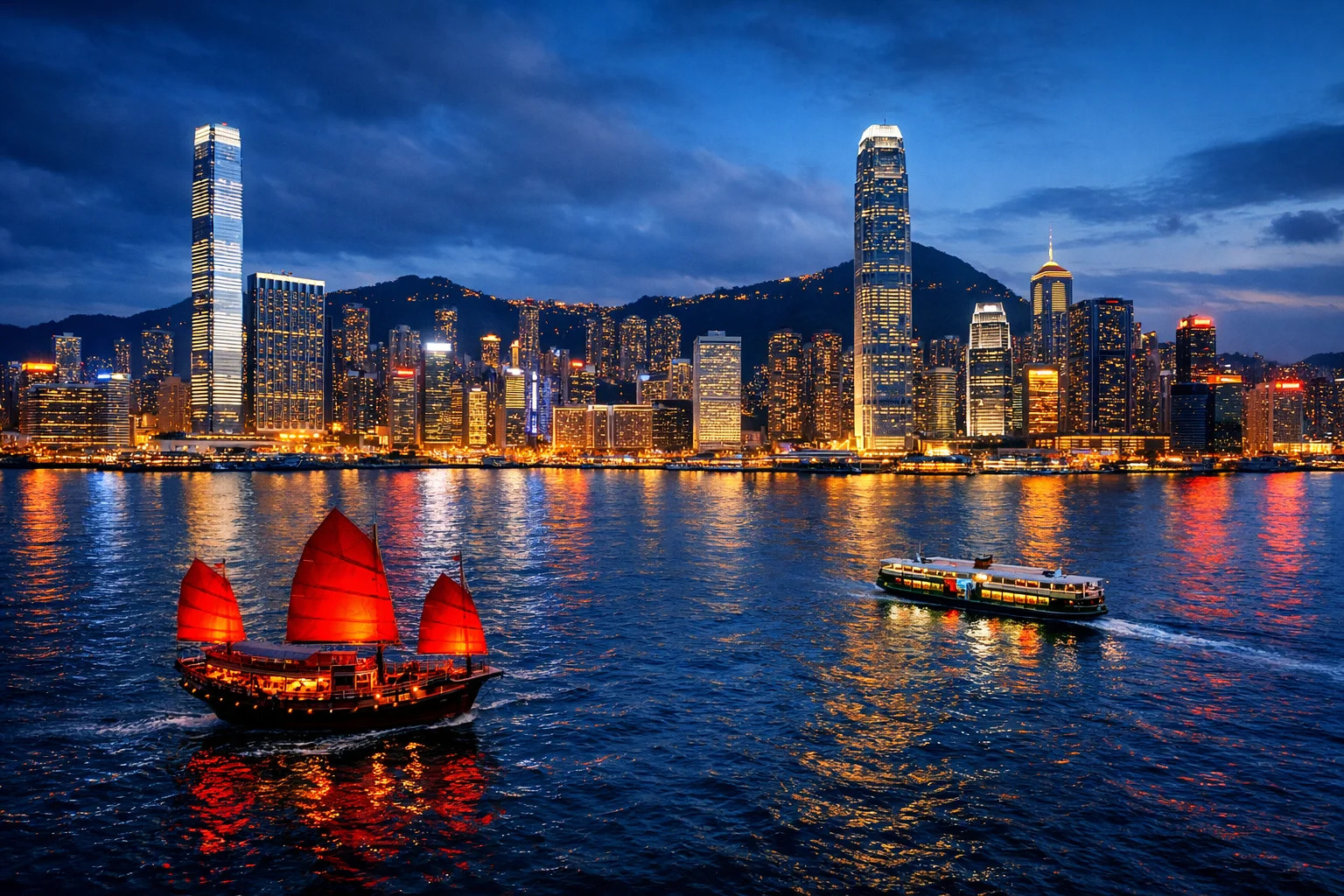

🇭🇰 Hong Kong at a Glance
🌍 Overview
Hong Kong is 1,114 km² — about one seventieth of Czechia, or roughly twice the area of greater Prague — carrying 7.5 million people. It is a Special Administrative Region of the People's Republic of China, it has its own currency, its own immigration control, its own legal system and its own Olympic team, and until 1997 it was a British colony.
The single most surprising fact about it is not the skyline. It is that roughly 40% of the territory is protected country park and only about a quarter of the land is built on at all. Hong Kong's density is not the density of a sprawling megacity; it is the density of seven and a half million people packed deliberately into a few narrow strips of flat ground, with hills, forest and empty beaches directly behind them. You can be on a ridge trail with no buildings in sight forty minutes after leaving a bank tower in Central.
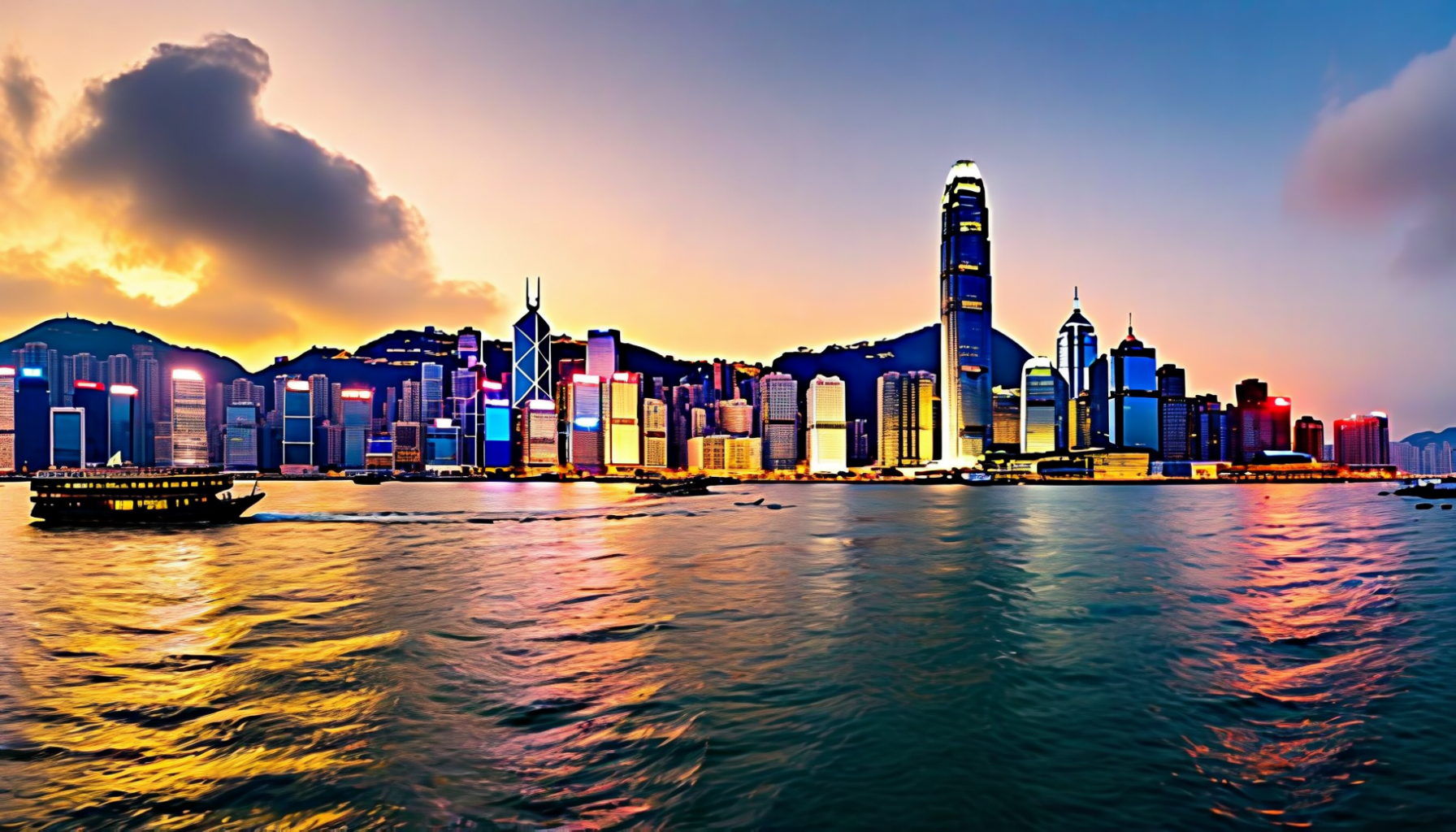
The other defining fact is that Hong Kong was built almost entirely by refugees. The population was around 600,000 at the end of the Japanese occupation in 1945; by 1950 it was over two million, and it kept climbing as people fled the Chinese civil war, the Great Leap Forward famine and the Cultural Revolution. The manufacturing boom of the 1950s and 60s, the public housing programme, the whole self-image of hard work and improvisation — all of it comes from that.
And the last five years have changed it more than the previous twenty-five. The 2019 protests, the National Security Law imposed in 2020, the electoral overhaul of 2021 and the Article 23 legislation of 2024 have made Hong Kong a materially different place to live and to write about. This page covers that honestly, and also says plainly that it remains one of the great cities to visit — those are separate questions and it helps nobody to run them together.
🏷️ Fragrant Harbour, Two Scripts, One Dollar
Hong Kong is the Cantonese 香港 (Hēung Góng), "fragrant harbour". The fragrance was almost certainly incense — agarwood grown in the New Territories and shipped out through the small harbour on the south side of Hong Kong Island that the British later renamed Aberdeen. The Cantonese name for Aberdeen is still Hēung Góng Jái, "little fragrant harbour", which is where the whole territory's name came from.
Two official languages
Chinese and English, both official, both on every sign. In speech, Chinese means Cantonese — the mother tongue of about 88% of the population and a full language, not a dialect of Mandarin: the two are about as mutually intelligible as Czech and Spanish. Mandarin (Putonghua) is taught and increasingly heard; English is fluent in business and patchy elsewhere.
Traditional characters
Hong Kong writes Chinese in traditional characters, as do Taiwan and Macau, while the mainland uses the simplified set introduced in the 1950s. It is a visible, everyday difference — 灣 versus 湾, 廣 versus 广 — and it carries a good deal of cultural weight. Hong Kong also uses written Cantonese, with characters that exist nowhere else, in newspapers, comics and messaging.
The Hong Kong dollar
HKD, pegged to the US dollar in a narrow band of 7.75–7.85 since 1983 and defended by the Monetary Authority ever since. Roughly 3 Czech crowns to the dollar. The banknotes are issued not by the central bank but by three commercial banks — HSBC, Standard Chartered and Bank of China — so three different designs of the same denomination circulate side by side, which confuses every visitor exactly once.
The flag and the flower
A red field with a white five-petalled Bauhinia blakeana, the Hong Kong orchid tree — a sterile hybrid discovered near Pok Fu Lam around 1880 and propagated by cuttings ever since, so every one of them in the world is a clone of the same plant. The regional emblem replaced the colonial flag at midnight on 1 July 1997.
🗺️ Geography: Four Pieces and 260 Islands
Hong Kong is not one place. It is four, and understanding the division makes everything else easier: Hong Kong Island in the south, Kowloon across the harbour, the New Territories behind Kowloon running up to the mainland border, and over 260 outlying islands.
Hong Kong Island
80 km², steep, and the historic and financial core — Central, Admiralty, Wan Chai, Causeway Bay along the north shore; Aberdeen, Repulse Bay and Stanley on the south. Victoria Peak rises to 552 m directly behind Central, which is why the towers are stacked on a strip of reclaimed land a few hundred metres wide.
Kowloon
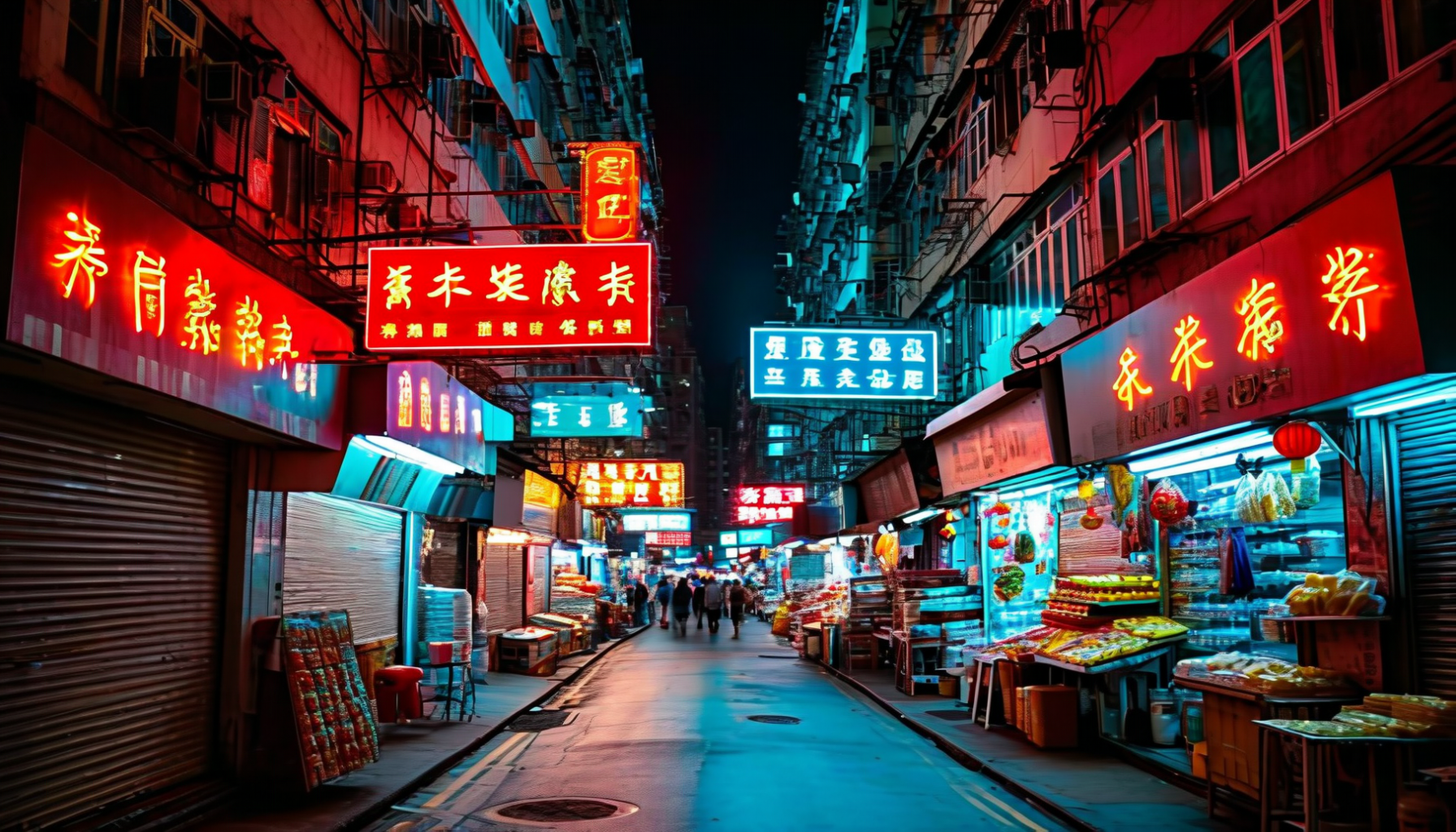
The peninsula opposite, and much the densest part: Tsim Sha Tsui at the tip, then Yau Ma Tei, Mong Kok, Sham Shui Po. Kwun Tong district has around 57,000 people per km², among the highest densities recorded anywhere. Kowloon is where the street-level city is — markets, neon, tenements, and food.
The New Territories
Everything from Boundary Street north to the Shenzhen border, and by far the largest part: new towns of half a million people apiece (Sha Tin, Tuen Mun, Tseung Kwan O), walled Hakka villages that predate the British by centuries, fish ponds, and most of the country parks. Tai Mo Shan (957 m), the highest point, is here.
The islands
Lantau is the biggest — larger than Hong Kong Island — and holds the airport, Disneyland, the Big Buddha and a great deal of empty hillside. Then Lamma, Cheung Chau, Peng Chau and a long tail of uninhabited rocks. Most are 25–60 minutes by ferry from Central and are the standard escape from the city.
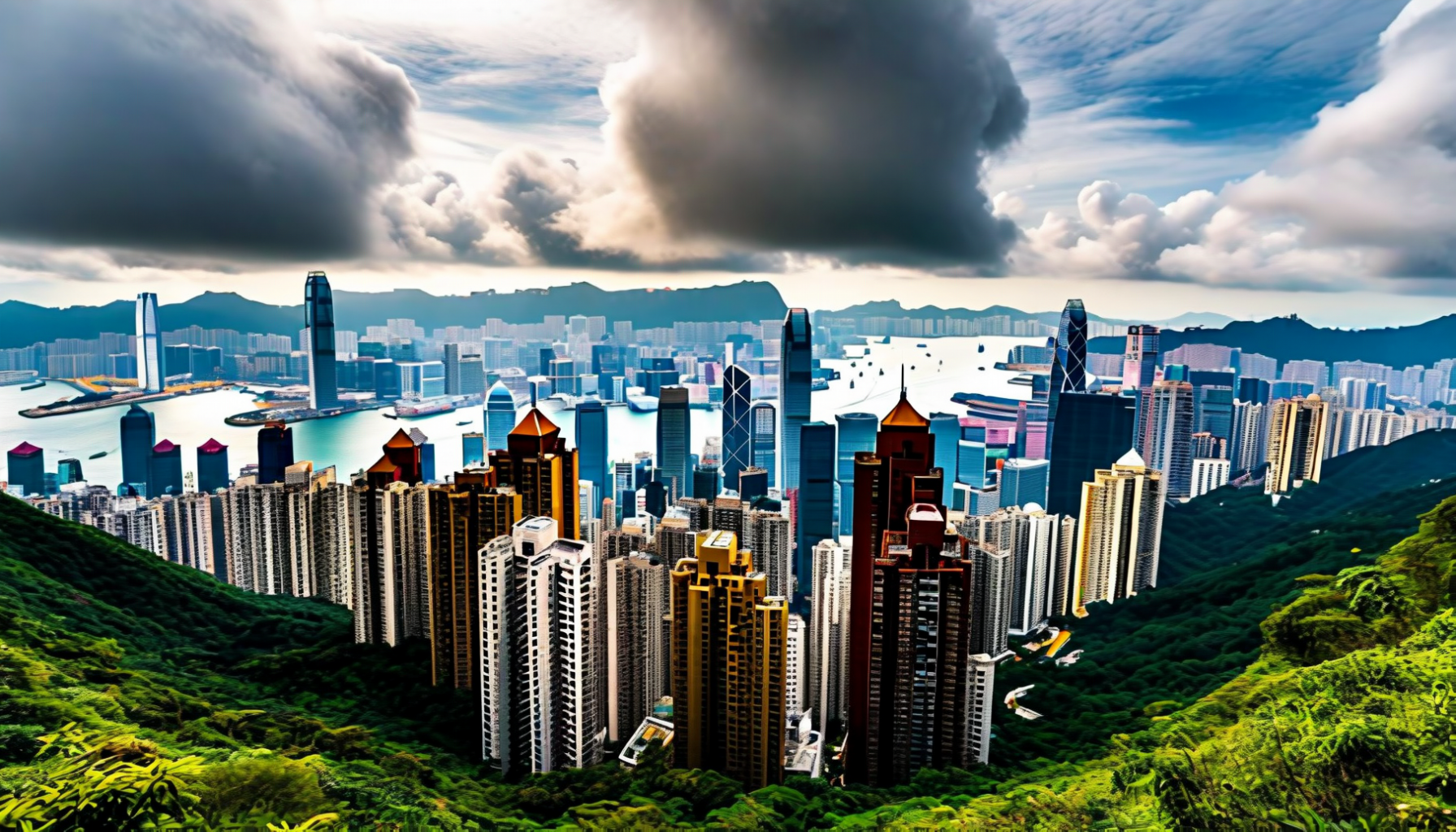
One thing the maps understate: reclamation. A very large share of the flat land in Central, Wan Chai, Kowloon and the airport did not exist two hundred years ago. Victoria Harbour has been narrowed by roughly half since 1842, to the point where a 1997 ordinance now bars further reclamation there without an overriding public need.
🌡️ Climate and Typhoons
Humid subtropical, and the seasons matter far more than the latitude suggests. Hong Kong sits at 22° north — level with Havana — but a winter northerly off the Asian landmass can drop it to 8 °C, and the humidity in spring is the thing visitors are least prepared for.
October–early December
The best time, without argument. Sunny, dry, 22–28 °C, low humidity, clear air and the best visibility of the year for the Peak and the harbour. It is also when the hiking is genuinely pleasant. If you have any flexibility at all, come now.
December–February
Cool and dry, 14–20 °C, occasionally down to 8–10 °C in a cold surge — and because almost no flat has heating, Hong Kong indoors in January can be colder than outdoors. Bring a layer. Chinese New Year falls in this window and much of the city closes for three days.
March–May
The difficult season. Humidity above 90% for weeks, thick fog on the Peak, condensation running down walls, and the local phenomenon of 回南天 — warm damp air hitting cold surfaces so that floors and windows visibly sweat. Warm, grey and sticky. Avoid if you can.
June–September
Hot (28–33 °C), extremely humid, with heavy afternoon rain and typhoons. The warning system runs T1, T3, T8, T9, T10; at signal 8 the city closes — offices, schools, transport, everything — and people go home and stay there. It is well drilled and rarely dangerous, but it will rearrange your week.
Two practical notes. Air conditioning in Hong Kong is set brutally cold, so a light layer is needed indoors in summer, not out. And air quality — long a serious problem from regional industry — has improved markedly since the 2010s as mainland emissions controls tightened and local power plants converted; it is no longer the reason to avoid the city that it was fifteen years ago.
🌳 Forty Per Cent Countryside
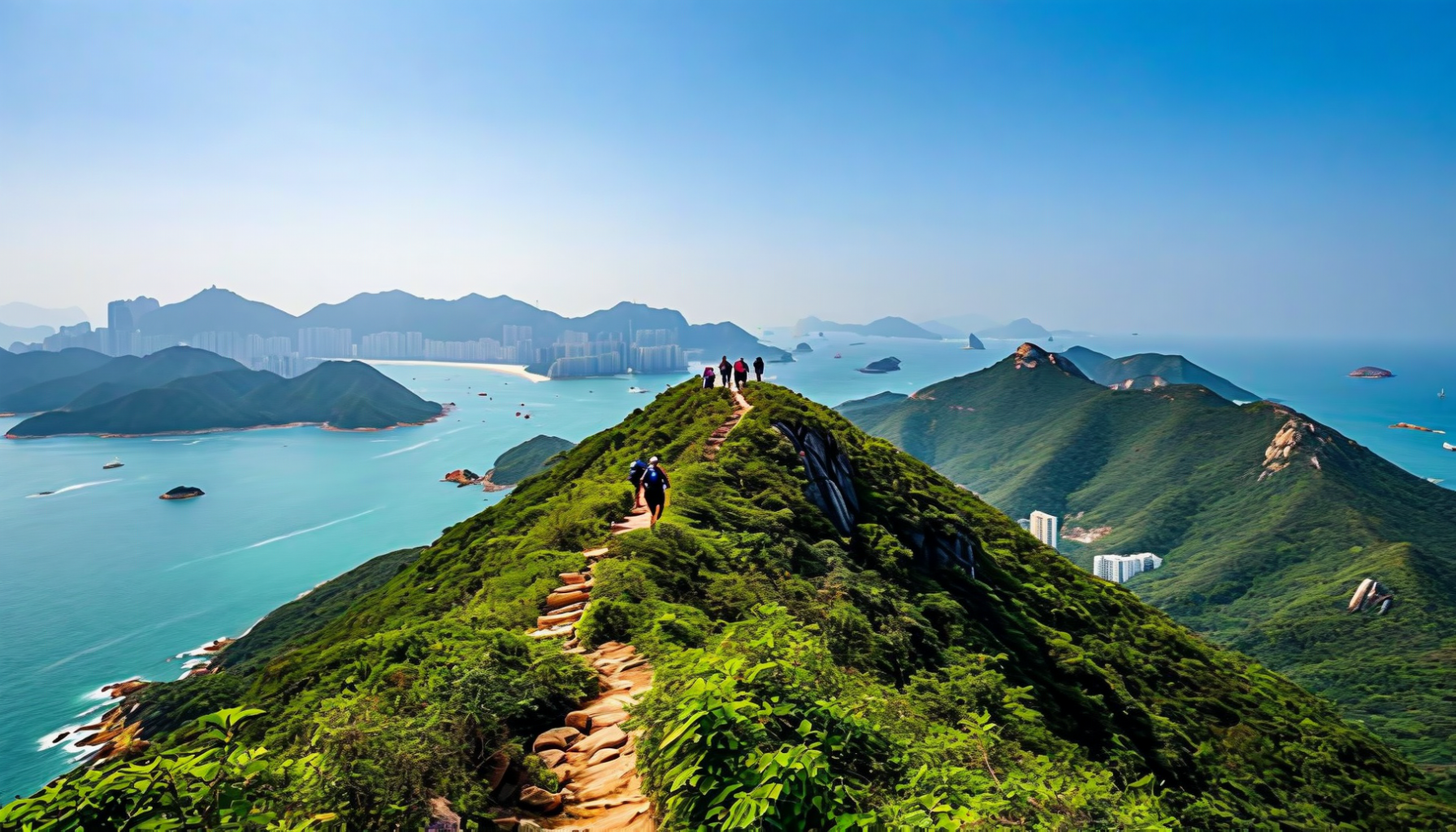
This is the fact that most surprises people who have only seen the skyline. Hong Kong has 24 country parks and 22 special areas covering roughly 440 km² — about 40% of the entire territory — designated from 1976 onwards and, remarkably, defended ever since against a property industry that would very much like to build on them.
The four long trails
The MacLehose Trail — 100 km across the New Territories in ten stages, and the route of the Oxfam Trailwalker, in which teams attempt the whole thing in under 48 hours. The Wilson Trail (78 km, south to north, including a ferry crossing). The Lantau Trail (70 km, circular). And the Hong Kong Trail (50 km across the island, ending on the Dragon's Back).
Why they exist
Water. The parks were created around the reservoir catchments that supply the city, which gave a colonial government with no green politics a hard practical reason to lock the hills up. The conservation outcome was almost incidental and is now one of the best-protected urban hinterlands anywhere in the world.
What lives there
More than 3,300 vascular plant species in an area the size of a small county, over 570 bird species recorded — more than the whole of Britain — plus wild boar in genuinely large numbers, barking deer, pangolins, porcupines and around 20% of all Chinese amphibian species. Also cobras and kraits, which are present, venomous and almost never seen.
The beaches
Around 40 gazetted public beaches with lifeguards, shark nets and changing rooms, and dozens of unmanaged ones. Shek O, Big Wave Bay, Repulse Bay on the island; Sai Kung's beaches in the east, reached by boat, are the genuinely beautiful ones and would be famous if they were anywhere else.
🗺️ Map
Hong Kong sits on the eastern side of the Pearl River Delta at about 22°17′ N, 114°10′ E, sharing a land border with Shenzhen to the north and facing Macau across the delta to the west. Guangzhou is 130 km north-west; Taipei 800 km east; Shanghai 1,200 km north-east.
Orienting yourself
The harbour runs east–west with Hong Kong Island south and Kowloon north. Almost every visitor's mental map is built on the two MTR lines that cross it and on the Star Ferry between Central and Tsim Sha Tsui. Get that straight on day one and the rest follows.
Distances
Nothing is far. Central to Tsim Sha Tsui: 8 minutes by ferry. Central to the airport: 24 minutes on the Airport Express. Central to the Big Buddha on Lantau: about 1½ hours. Central to the Shenzhen border: 45 minutes by MTR. The whole territory is smaller than the area inside Prague's outer ring road plus a bit.
The border
A real international-style frontier with the mainland, at Lo Wu, Lok Ma Chau, Shenzhen Bay and elsewhere, with full immigration on both sides. Hong Kong is inside China and outside its immigration and customs union at the same time, which is the single most practically important thing about "one country, two systems".
Macau
65 km west across the delta. Either 1 hour by high-speed ferry from Sheung Wan or Tsim Sha Tsui, or 45 minutes by bus over the Hong Kong–Zhuhai–Macau Bridge, opened in 2018 — at 55 km including a 6.7 km undersea tunnel, the longest sea crossing in the world.
🚬 The Opium Wars and How Britain Got It
Hong Kong exists as a separate place because of the opium trade, and the story is not one Britain comes out of well. By the 1830s Britain was buying enormous quantities of Chinese tea and had nothing the Qing empire wanted in exchange — except Indian opium, which the East India Company grew, and which was illegal in China. When Commissioner Lin Zexu seized and destroyed some 1,200 tonnes of it at Canton in 1839, Britain went to war to protect the trade.
The territory was acquired in three separate pieces, and the distinction between them decided everything that happened in 1997.
1842: Hong Kong Island
Ceded in perpetuity by the Treaty of Nanking at the end of the First Opium War. Palmerston famously called it "a barren island with hardly a house upon it" and thought the negotiator had been fobbed off. What it actually had was one of the finest deep-water harbours in Asia, sheltered on all sides, and that turned out to be the whole point.
1860: Kowloon
Ceded in perpetuity by the Convention of Peking after the Second Opium War — the peninsula south of what is now Boundary Street, taken because the British garrison wanted the far side of the harbour under its own control. Boundary Street is still there and still perfectly straight.
1898: the New Territories
Leased for 99 years by the Second Convention of Peking, expiring on 30 June 1997. This was a lease, not a cession, and it covered more than 90% of the land area. It is the single most consequential clause in Hong Kong's history.
Why the whole thing went back
Because by the 1980s the colony could not function without the leased part — the reservoirs, the new towns, the airport approach and most of the population were all in it, and no bank would write a mortgage running past 1997. Britain held two thirds of Hong Kong in perpetuity and none of it was viable alone. The lease made the handover of everything unavoidable.
🏗️ From Barren Rock to Entrepôt
The nineteenth-century colony was a trading port and not much else: warehouses along the shore, godowns, the great trading houses — Jardine Matheson, Swire, Hutchison — and a Chinese population that arrived to work and was governed at arm's length under a system of racial segregation that was explicit rather than implied. Europeans lived up the hill on the Peak, where an ordinance from 1904 to 1946 made it illegal for Chinese to live at all without the Governor's permission.
The plague of 1894
Bubonic plague reached Hong Kong in 1894 and killed thousands in the crowded tenements of Tai Ping Shan. It also produced a scientific landmark: the plague bacillus was identified in Hong Kong that year, independently, by Alexandre Yersin and Kitasato Shibasaburō. It bears Yersin's name — Yersinia pestis — and the outbreak triggered Hong Kong's first serious public-health and housing legislation.
The 1925–26 strike
A general strike and boycott lasting sixteen months, triggered by the shooting of demonstrators in Shanghai and Canton, which shut the colony's economy almost completely and remains the longest strike in the history of the British Empire. It is a useful corrective to the idea that colonial Hong Kong was politically quiet.
The trams and the ferry
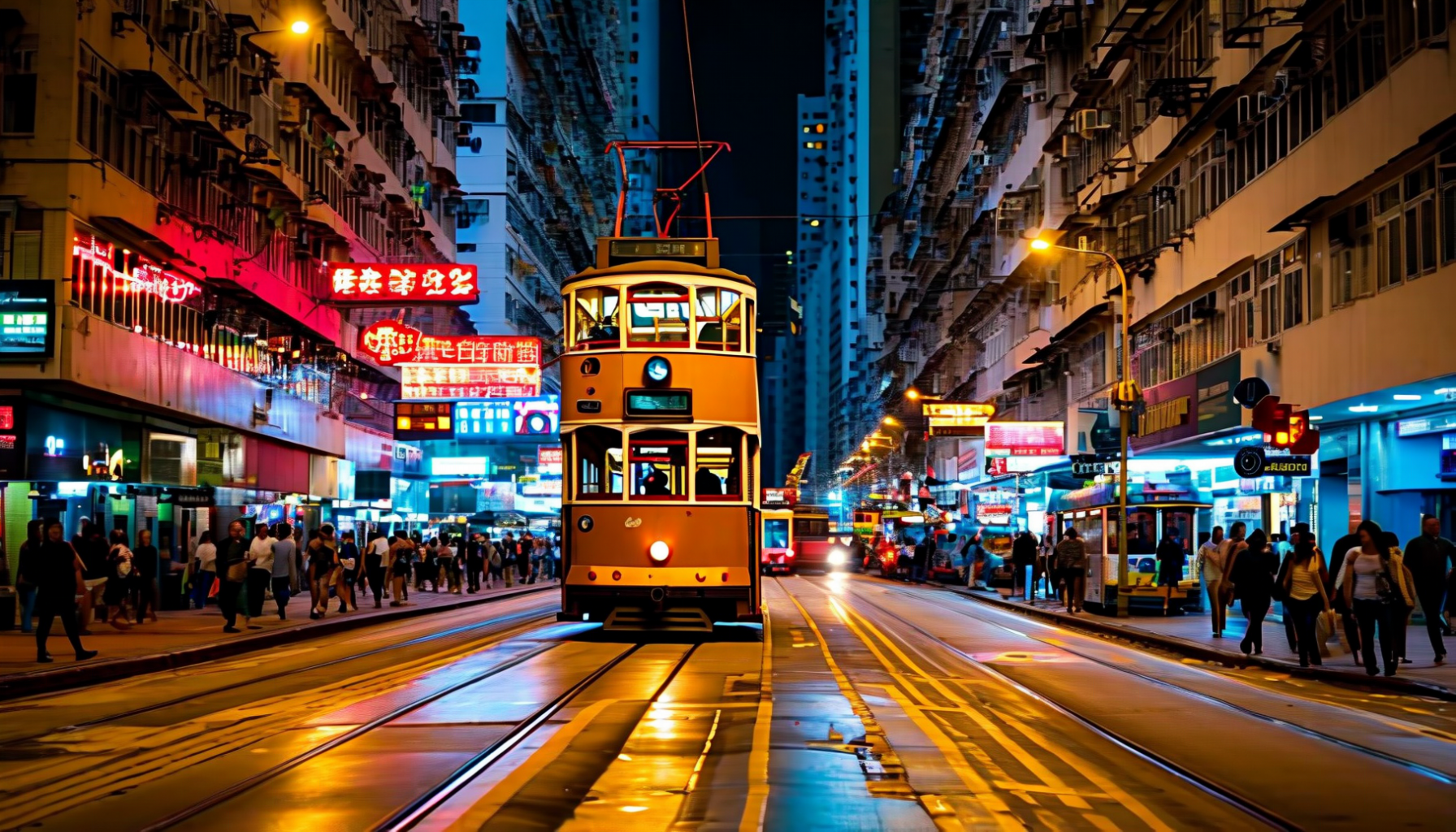
Both older than most of the buildings. The Star Ferry has crossed the harbour since 1888; the trams have run along the north shore of Hong Kong Island since 1904. The tram fleet is the only all-double-decker tram system left in the world, and both are still ordinary daily transport rather than heritage attractions.
Sun Yat-sen
The founder of the Chinese republic studied medicine in Hong Kong in the 1880s and later said the contrast between the colony's orderly administration and the Qing officialdom he had grown up with was what turned him into a revolutionary. Hong Kong was a base for Chinese political exiles for a century, in every direction — a role that ended fairly recently.
🕯️ Occupation, Fire and Two Million Refugees
Japan attacked Hong Kong on 8 December 1941, hours after Pearl Harbor. The defence lasted eighteen days and the colony surrendered on Christmas Day — remembered locally as Black Christmas. The occupation that followed was brutal: forced repatriation and starvation drove the population down from about 1.6 million to 600,000 by 1945, and the Japanese authorities stripped the city of metal, including the tram overhead and the harbour's ironwork.
Then came the reversal that made modern Hong Kong. From 1945 people poured back, and from 1949 they kept coming — fleeing the Communist victory, then the famine of the Great Leap Forward, then the Cultural Revolution. By 1950 the population was over two million; by 1980 it was five. Shanghai's industrialists came with their capital and their spinning machinery, and Hong Kong turned from an entrepôt into a factory.
Shek Kip Mei, 1953
On Christmas Day 1953 a fire tore through the squatter huts at Shek Kip Mei and left around 53,000 people homeless overnight. The government's response — resettlement blocks thrown up within months — became the largest public housing programme in the capitalist world. Today around 45% of Hong Kong's population lives in subsidised public housing, which is the single biggest reason a city with the world's least affordable private housing has not collapsed socially.
Made in Hong Kong
Textiles, then plastics, then toys, then electronics. By the 1960s Hong Kong was making a large share of the world's cheap manufactured goods, in factories staffed largely by women working long hours for low pay. It was the first of the "Four Asian Tigers" and the model the other three studied.
The 1967 riots
Cultural Revolution politics spilled over the border: months of strikes, demonstrations and a bombing campaign that killed 51 people, including a popular radio broadcaster burned alive in his car and two children killed by a bomb disguised as a gift. Public revulsion cost the local left its credibility for a generation, and the colonial government responded with the labour reforms, housing and anti-corruption drive that defined the following decade.
The ICAC
Corruption in the 1960s police force was systematic and openly organised. The Independent Commission Against Corruption, created in 1974, broke it — including by pursuing a chief superintendent, Peter Godber, all the way to Britain and back. Hong Kong went from routinely corrupt to one of the cleanest administrations in Asia inside about fifteen years, and the ICAC became an export model.
🏚️ The Walled City and the Airport in the Rooftops
Two twentieth-century Hong Kong landmarks are gone, and both were so strange that they are worth the space.
Kowloon Walled City
A Qing fort that the 1898 lease accidentally left out, leaving 2.6 hectares over which China claimed sovereignty and Britain declined to govern. Into that legal vacuum a settlement grew: unregulated buildings of 10–14 storeys packed wall to wall, no sunlight at street level, water from wells, electricity spliced from the grid, and an estimated 33,000 people living there at its peak — a density of well over a million per km², the highest ever recorded anywhere.
What it was actually like
Not the lawless dystopia of legend. It had triad involvement, unlicensed dentists and heroin, and it also had schools, churches, temples, mutual-aid committees, factories making fishballs and a genuine community. It was demolished in 1993–94 and the site is now Kowloon Walled City Park, a quiet Jiangnan-style garden with the old yamen building preserved and a model of the city in a display case.
Kai Tak
The old airport, in the middle of Kowloon, with a single runway on a spit into the harbour and an approach that has no equal. Aircraft flew straight at a hillside painted with an orange-and-white checkerboard, and on sighting it made a 47° right turn at about 200 metres, by hand, to line up with the runway — over apartment blocks close enough that passengers could see into flats and count the washing.
The end of it
Kai Tak closed on 6 July 1998 and everything moved overnight to Chek Lap Kok, built on a flattened island off Lantau — at the time the most expensive construction project on Earth. The old runway is now a cruise terminal and a sports park. Pilots who flew the checkerboard approach still talk about it, and every one of them will tell you it was demanding but not actually dangerous.
📜 1984: The Joint Declaration
Britain opened the question in the late 1970s for a mundane reason: mortgage terms. With the New Territories lease running out in 1997, land leases and loans could no longer be written past that date, and the commercial life of the colony was quietly seizing up. Margaret Thatcher went to Beijing in 1982 expecting to negotiate an extension. Deng Xiaoping told her that China would take the whole territory back in 1997, and that if the talks failed he could take it sooner.
The result was the Sino-British Joint Declaration, signed on 19 December 1984 and registered as a treaty at the United Nations. China would resume sovereignty on 1 July 1997; Hong Kong would become a Special Administrative Region with a high degree of autonomy, keeping its own legal system, currency, free port status, and its "way of life", unchanged for 50 years — to 2047. Deng's formula for it was "one country, two systems", originally devised with Taiwan in mind.
What Hong Kong got to say
Almost nothing. There were no Hong Kong representatives at the table — China refused a "three-legged stool" and Britain conceded the point. The territory's own population, then five and a half million, was consulted about the outcome rather than the negotiation.
The Basic Law
Promulgated in 1990 as the SAR's constitutional document, implementing the Declaration. It guarantees the common law, an independent judiciary with final adjudication in Hong Kong, freedoms of speech, press and assembly, and holds out universal suffrage as an eventual aim for both the Chief Executive and the legislature. Article 23 obliges the SAR to enact its own national security laws — a clause that would matter enormously later.
Tiananmen
The crackdown of 4 June 1989 landed in the middle of the transition and changed Hong Kong permanently. A million people marched in support of the Beijing students; emigration to Canada, Australia and Britain surged; and for thirty years Hong Kong held the world's largest annual Tiananmen vigil in Victoria Park, the only place on Chinese soil where it was possible. The last one was in 2019.
Patten's reforms
The last governor, Chris Patten (1992–97), broadened the franchise for the 1995 Legislative Council election without formally breaching the agreements. Beijing was furious, called him names that became famous, and dissolved the elected legislature on the night of the handover, replacing it with an appointed provisional body.
🤝 Midnight, 30 June 1997
The handover ceremony took place in heavy rain at the new Convention Centre on the Wan Chai waterfront. The Union Flag and the colonial flag came down, the Chinese and Hong Kong flags went up, and Prince Charles and the last governor sailed out of the harbour on the royal yacht Britannia — which was itself decommissioned months later, so the last act of the British Empire in Asia was also the last voyage of the ship.
The years immediately afterwards were not what either the optimists or the pessimists had predicted. The Asian financial crisis hit within weeks and property prices fell by more than half. Avian flu arrived that winter and the government slaughtered the entire territory's poultry. In 2003 SARS killed 299 people in Hong Kong and emptied the streets for months. The doom-laden forecasts about political freedom did not materialise for a long time; the economic shocks arrived immediately.
July 2003
The government moved to legislate Article 23 national security offences. On 1 July 2003, with the city still shaken by SARS, an estimated 500,000 people marched against it. The bill was withdrawn, the responsible secretary resigned, and the Chief Executive left office early. It was the high-water mark of the belief that Hong Kong's street politics worked.
What stayed the same
Common law and an independent judiciary with overseas judges on the Court of Final Appeal. A free press. Free assembly. A separate currency, separate customs, separate immigration, separate sports teams. Left-hand driving, British plugs, the ICAC, and a civil service that kept working. For roughly the first fifteen years, "one country, two systems" delivered substantially what it promised.
What changed slowly
Integration with the mainland economy accelerated — the individual visit scheme brought mainland tourists in enormous numbers from 2003, mainland money moved into property, and Hong Kong's share of China's GDP fell from around 18% at the handover to under 3% today, simply because the mainland grew. That shift in relative weight underlies almost everything political that followed.
2047
The Joint Declaration guaranteed the system for fifty years. Nobody has ever explained what is supposed to happen on 1 July 2047, and Hong Kong land leases and long-term contracts have been bumping into that date for years. It is the quiet question underneath every argument about the city's future.
⚖️ 2014 to Now: What Actually Changed
This is the part of Hong Kong that is hardest to write about honestly, because it is usually written either as a tragedy with no complications or as a restoration of order with no costs. The facts are not in serious dispute and are worth setting out plainly.
2014: the Umbrella Movement
Beijing's framework for electing the Chief Executive by universal suffrage allowed a public vote only between candidates pre-screened by a nominating committee. Students and then a much wider public occupied the roads through Admiralty, Causeway Bay and Mong Kok for 79 days, using umbrellas against pepper spray. The occupation was cleared, no reform passed, and the electoral system stayed as it was.
2019: the extradition bill
A bill allowing case-by-case rendition to mainland jurisdictions produced the largest demonstrations in Hong Kong's history — organisers counted two million people on 16 June, in a city of 7.5 million. The bill was suspended, then withdrawn in September, but by then the movement had broadened to police accountability and universal suffrage, and both the protests and the policing had turned violent. Over 10,000 people were eventually arrested.
2020: the National Security Law
On 30 June 2020 Beijing's National People's Congress Standing Committee imposed a national security law directly, bypassing Hong Kong's legislature entirely. It creates four offences — secession, subversion, terrorism and collusion with foreign forces — with maximum sentences of life, allows trial without a jury, restricts bail, and asserts extraterritorial reach over anyone anywhere. It took effect the hour it was published; almost nobody in Hong Kong had seen the text.
2021: the electoral overhaul
Under the slogan "patriots administering Hong Kong", the Legislative Council was enlarged from 70 to 90 seats while directly elected seats were cut from 35 to 20, and every candidate must now be vetted for patriotism by a committee. Turnout at the December 2021 election was 30%, the lowest since the handover; the previous district council election in 2019 had drawn 71%.
The consequences are visible rather than theoretical. Apple Daily, the largest opposition-leaning newspaper, closed in June 2021 after its assets were frozen and executives arrested; Stand News closed that December. Its founder Jimmy Lai has been in custody since December 2020. In the largest single prosecution, 45 of the 47 democrats charged over an unofficial primary election were convicted of subversion in 2024, with sentences up to ten years. The annual Tiananmen vigil has not been permitted since 2020 and the Pillar of Shame sculpture was removed from the University of Hong Kong. In March 2024 the Legislative Council passed the long-deferred Article 23 legislation unanimously, adding treason, insurrection, sabotage, external interference and a broad state-secrets offence.
Two things are also true and are usually left out. Ordinary criminal justice, commercial law and the courts' day-to-day work continue to function in recognisably common-law form, and Hong Kong remains a place where contracts are enforced and the ICAC still prosecutes. And none of this affects a visitor's holiday in any practical way — tourists are not the subject of these laws and are not stopped, searched or questioned about politics. Those two statements do not cancel the paragraph above them; all of it is the situation.
🏦 Money, and the World's Most Unaffordable Housing
Hong Kong is one of the three or four largest international financial centres, the world's biggest offshore centre for the Chinese renminbi, and a place with a tax system so light it barely registers on a European reader: salaries tax capped at a 15% standard rate, profits tax at 16.5%, no VAT or sales tax at all, no capital gains tax, no tax on dividends, and no inheritance tax since 2006.
The trick that makes it work is that the government owns virtually all the land and sells leases on it. Land premiums and property-related revenue have historically funded a very large share of public spending, which means the state has a structural interest in land staying expensive. That is the mechanism behind the housing crisis, and it is not an accident of the market.
The numbers
Hong Kong has been rated the world's least affordable housing market in most annual surveys for over a decade, with median home prices running at roughly 16 to 19 times median household income — against about 5 in Prague and 4 in most of continental Europe. Prices have fallen substantially since the 2021 peak, which has helped buyers and hurt everyone who bought before.
Subdivided flats
Around 220,000 people live in subdivided units — ordinary flats partitioned into three, four or eight tiny rooms, often with the kitchen and toilet in the same cubicle. At the extreme are the "coffin homes" and cage homes of a few square metres. This exists in a city with world-leading life expectancy and a AAA-rated fiscal position, and it is the sharpest thing anyone can point to about Hong Kong inequality.
Public housing
The counterweight, and it is a big one. Around 45% of the population lives in public rental or subsidised-sale housing, at rents a fraction of the market. The waiting list for public rental runs to roughly five and a half years. Without this programme the city would be unlivable for most of the people in it.
The port and what happened to it
Hong Kong was the world's busiest container port through most of the 1990s and 2000s. It is now around tenth and falling, overtaken by Shanghai, Ningbo, Shenzhen, Guangzhou and Qingdao — not because Hong Kong got worse, but because the mainland built its own deep-water ports. The same relative decline shows in GDP: Hong Kong was worth about 18% of China's economy at the handover and is under 3% today.
👥 The People and the Exodus
About 7.5 million people, roughly 92% ethnically Chinese and mostly Cantonese-speaking, with a long-established South Asian population (Nepali, Indian, Pakistani — some families here since the nineteenth-century garrison), a British and international expatriate community, and around 340,000 foreign domestic workers, overwhelmingly Filipina and Indonesian women, who on Sundays turn the Central pavements, footbridges and Statue Square into an enormous open-air picnic. That weekly transformation is one of the most striking sights in the city and a good deal of Hong Kong's economy depends on it.
Living longest
Hong Kong has among the highest life expectancies in the world — around 85–86 years, regularly ranked first or second globally, ahead of Japan. The usual explanations are the diet, the public healthcare system, low smoking rates among women, and the sheer amount of walking and stair-climbing that the terrain forces on everyone.
The emigration wave
Since 2020 several hundred thousand residents have left — a net outflow of a scale not seen since the run-up to 1997. The British National (Overseas) visa route, opened in January 2021 for those born before the handover and their dependants, has drawn well over 200,000 applications; Canada, Australia and Taiwan opened parallel pathways. The population has partly recovered through mainland talent-admission schemes, which is a different set of people arriving.
Identity
Successive University of Hong Kong surveys tracked how residents identify. Through the 2010s the share calling themselves "Hongkonger" rather than "Chinese" rose sharply, particularly among the young. Polling on this has become politically fraught and the long series was discontinued; what is not in doubt is that a distinct Hong Kong identity, built on Cantonese, the traditional script and eighty years of separate history, is real and is not simply a political artefact.
Religion
Nominally plural and in practice syncretic: Chinese folk religion, Buddhism and Taoism blend rather than compete, with around 10% Christian and long-settled Muslim, Hindu, Sikh and Jewish communities. Temples are working places where people go for specific requests — Wong Tai Sin for a fortune, Man Mo for literature and war, Tin Hau for the sea.
🎬 The Cinema and the Music
For about twenty-five years Hong Kong was the third-largest film exporter in the world, behind only the United States and India, from a territory of six million people. It made 200 or more films a year, invented several genres outright, and exported an aesthetic that Hollywood then spent two decades copying.
The martial arts era
The Shaw Brothers studio, then Golden Harvest. Bruce Lee made four and a half films and changed the global image of Asian masculinity permanently before dying in 1973 at 32. Jackie Chan then rebuilt the genre around comedy and stunts performed for real, with the outtakes over the credits as proof. Sammo Hung and Yuen Woo-ping — who choreographed The Matrix — came out of the same Peking Opera school training.
Heroic bloodshed
John Woo's A Better Tomorrow (1986) and The Killer (1989), with Chow Yun-fat in a trench coat holding two pistols, created a visual grammar that ran straight into Tarantino, The Matrix and a thousand imitations. Infernal Affairs (2002) was remade by Scorsese as The Departed and won the Oscar the original never got near.
Wong Kar-wai
The other Hong Kong cinema entirely. Chungking Express (1994), shot partly in the Chungking Mansions, and In the Mood for Love (2000), with Maggie Cheung and Tony Leung and a great deal of not saying anything — regularly voted among the best films ever made. If you watch one Hong Kong film before going, make it that one, and the city will look different when you arrive.
Cantopop
Pop sung in Cantonese, which took over from Mandarin and English music in the 1970s and became the sound of the whole Chinese-speaking diaspora. Sam Hui, then Leslie Cheung and Anita Mui — both of whom died within months of each other in 2003, a year Hong Kong remembers for that as much as for SARS — then the "Four Heavenly Kings" of the 1990s. Cantopop faded against Mandopop and K-pop and has had a genuine local revival since 2019.
The industry itself is a fraction of what it was: from over 200 films a year to a few dozen. The causes are mixed — piracy in the 1990s, the pull of the vastly larger mainland market and its censorship requirements, and the loss of the export markets in Taiwan and South-East Asia. A smaller independent sector making films specifically about Hong Kong has grown since 2019, working under tighter censorship rules introduced in 2021.
🚋 Getting Around: The Best Public Transport in the World
This is not a boast, it is close to a consensus finding. Hong Kong moves around 90% of its daily trips on public transport — the highest share of any developed economy — on a network that is fast, clean, absurdly cheap and, unusually, profitable.
The MTR
Fast, air-conditioned, signposted in English, with trains every two or three minutes and platform screen doors everywhere. It is also one of the very few metro systems in the world that makes money, through the "rail plus property" model — MTR develops the shopping malls and flats above its own stations and the profits cross-subsidise the fares. Cities from London to Sydney have studied it and none has quite copied it.
The Octopus card
Launched in 1997 and one of the first contactless stored-value cards anywhere — the direct ancestor of Oyster, Suica and the rest. It pays for the MTR, buses, trams, ferries, convenience stores, vending machines, car parks and some restaurants. Get one at the airport; it is the single thing that most improves a first visit.
The Star Ferry
Since 1888, and still the best value of any journey on Earth: eight minutes across Victoria Harbour between Central and Tsim Sha Tsui for a few crowns, on a green-and-white boat with reversible wooden seats. Sit on the upper deck, go at dusk, and do it in both directions. Every boat's name contains the word Star.
Everything else
The Peak Tram, a funicular since 1888 and rebuilt in 2022. The Mid-Levels escalator, at 800 m the longest outdoor covered escalator system in the world — it runs downhill until 10 a.m. and uphill afterwards, which tells you exactly who it was built for. Red and green minibuses, double-decker buses, and taxis colour-coded by territory: red for the urban areas, green for the New Territories, blue for Lantau.
🏮 The Calendar
Hong Kong keeps both the Chinese lunar calendar and a set of inherited public holidays, which means it has one of the more generous holiday calendars in Asia and celebrates Christmas, Easter, Buddha's Birthday and the Mid-Autumn Festival with equal seriousness.
Chinese New Year
Late January or February. Flower markets in Victoria Park in the days before, a night parade in Tsim Sha Tsui, fireworks over the harbour on the second day, and horse racing on the third. Note that many shops and family restaurants close for three days — the city is festive but a lot of it is shut, which catches visitors out.
Cheung Chau Bun Festival
In May on the small island of Cheung Chau: a Taoist festival with floating-children parades, three days of island-wide vegetarianism, and a midnight race up a 14-metre tower covered in buns. It is genuinely strange, genuinely local, and one of the best things in the Hong Kong year.
Dragon Boat and Mid-Autumn
Dragon boat races in June, most spectacularly at Stanley and Aberdeen, with drums and long narrow boats. Mid-Autumn in September or October brings mooncakes, lanterns in the parks, and the Tai Hang fire dragon — a 67-metre straw dragon stuck with thousands of burning incense sticks, paraded through the back streets for three nights.
Racing and rugby
Happy Valley on a Wednesday night is one of the great urban spectacles: a floodlit racecourse in a bowl of apartment towers, with a crowd betting seriously — Hong Kong turns over more on horse racing than almost anywhere on Earth, and the Jockey Club is the territory's largest taxpayer and charitable donor. The Rugby Sevens in spring is the other big fixture, and is at least as much a drinking festival as a tournament.
🥟 Food: The Best Reason to Come
Hong Kong is, by a defensible argument, the best eating city in the world. It has the highest concentration of Michelin-starred restaurants per head of anywhere, and it also has street stalls, market halls and neighbourhood shops of a quality that would make them destinations in Europe. The two ends are not in tension — the same population demands both, and the food culture is unusually democratic about it.
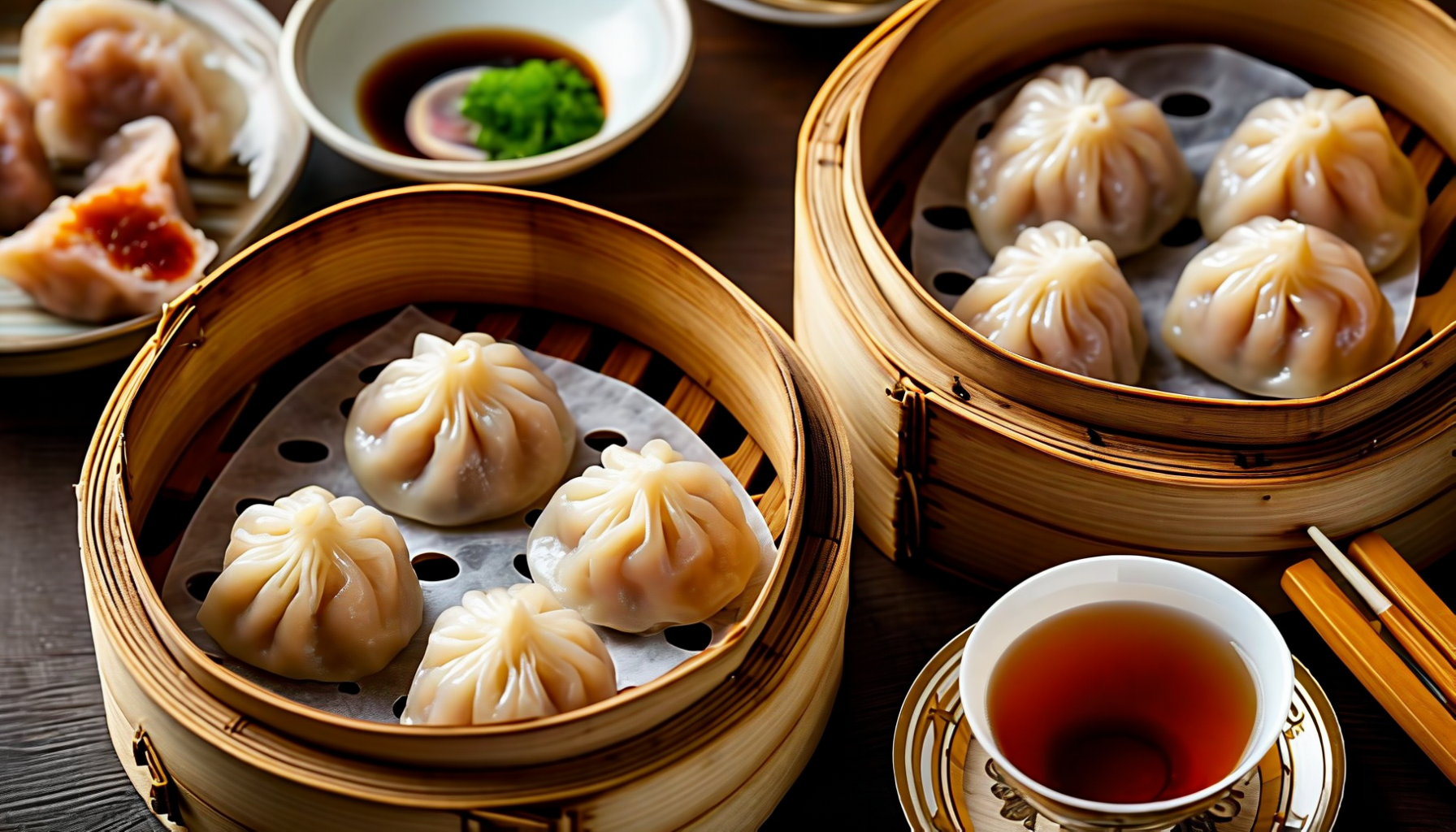
Yum cha
Literally "drink tea" — the meal, of which dim sum are the food. Traditionally mid-morning to early afternoon, in a loud room the size of a sports hall, with tea poured constantly and a card stamped at your table for each basket. Etiquette: tap two fingers on the table to thank whoever refills your cup, and lift the teapot lid onto its side when you want more.
Siu mei
The roast meats hanging in the window: glossy char siu (barbecued pork), crisp-skinned siu yuk (roast pork belly), soy chicken, and above all roast goose — a Hong Kong speciality that the mainland does not do the same way. Ordered over rice with a spoonful of the juices, it is one of the great cheap lunches anywhere.
Noodles
Wonton noodle soup is the benchmark: thin springy egg noodles that must have bite, prawn wontons, and a clear broth built on dried flounder and pork bones. A proper bowl is small — it is a snack, not a meal, and ordering two is normal. Also beef brisket noodles, and claypot rice in winter, cooked over a flame until the bottom layer scorches, which is the best part.
Street food
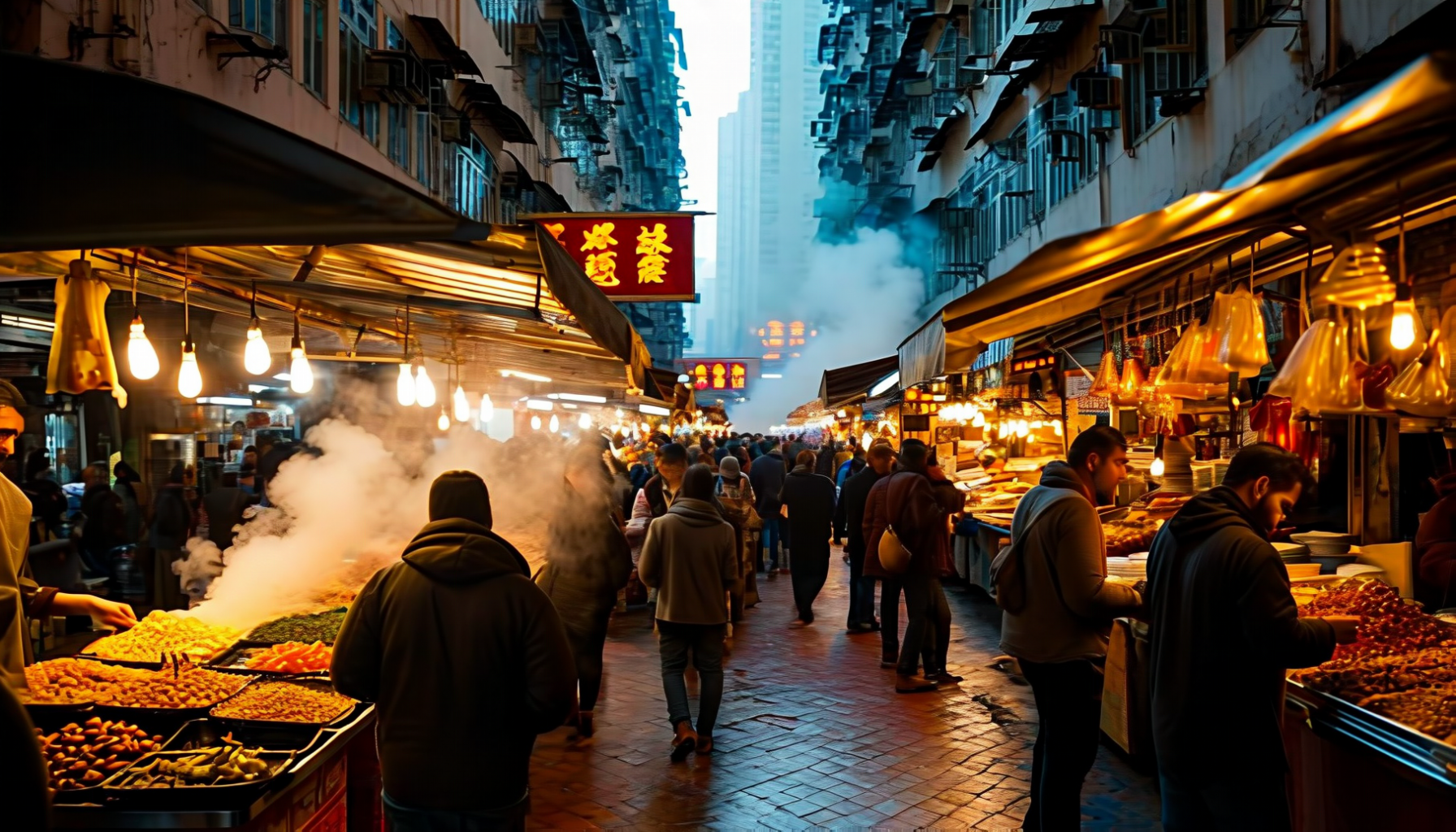
Curry fish balls on a skewer, egg waffles (雞蛋仔, crisp outside and soft in the bubbles), stuffed peppers and aubergine, siu mai from a cart, roasted chestnuts in winter, stinky tofu that you smell three streets away. The old dai pai dong open-air stalls have nearly all been licensed out of existence; a handful survive around Central and Sham Shui Po and are worth seeking out.
☕ The Cha Chaan Teng
If dim sum is Hong Kong's formal food, the cha chaan teng is its everyday one, and it is the more revealing of the two. These are fast, cheap, fluorescent-lit diners that grew up in the 1950s serving what was then a novelty — Western-style food at prices ordinary people could pay — and what emerged is a hybrid cuisine that exists nowhere else and is now recognised as intangible cultural heritage.
Milk tea
絲襪奶茶, "silk stocking milk tea": a blend of black teas brewed strong, pulled repeatedly through a long cloth sieve that stains the colour of a stocking, and cut with evaporated milk rather than fresh. Thick, tannic, faintly bitter, served hot or over ice. The making of it is on Hong Kong's intangible heritage list and there is an annual competition. Order it less sweet unless you have a serious appetite for sugar.
Yuanyang
鴛鴦 — coffee and milk tea mixed in the same cup, named after the mandarin duck, a bird that symbolises pairs. It sounds wrong and is excellent, and it is a Hong Kong invention that has never really travelled.
Pineapple bun
菠蘿包 contains no pineapple — the name comes from the crackled sugar-cookie topping, which looks like pineapple skin. Ordered as bo lo yau it comes hot, split, with a cold slab of butter melting inside. It is indefensible nutritionally and is one of the great baked goods of the world.
The rest of the menu
Macaroni in a thin ham broth for breakfast. Instant noodles with a fried egg and luncheon meat, unashamedly. French toast — two slices with peanut butter between them, deep-fried, served with butter and golden syrup. Baked pork chop rice. Egg tarts. Order the set — a drink plus a dish plus toast for a fixed price — and you will eat for the price of a coffee in Prague.
🦐 Recipe: Har Gow
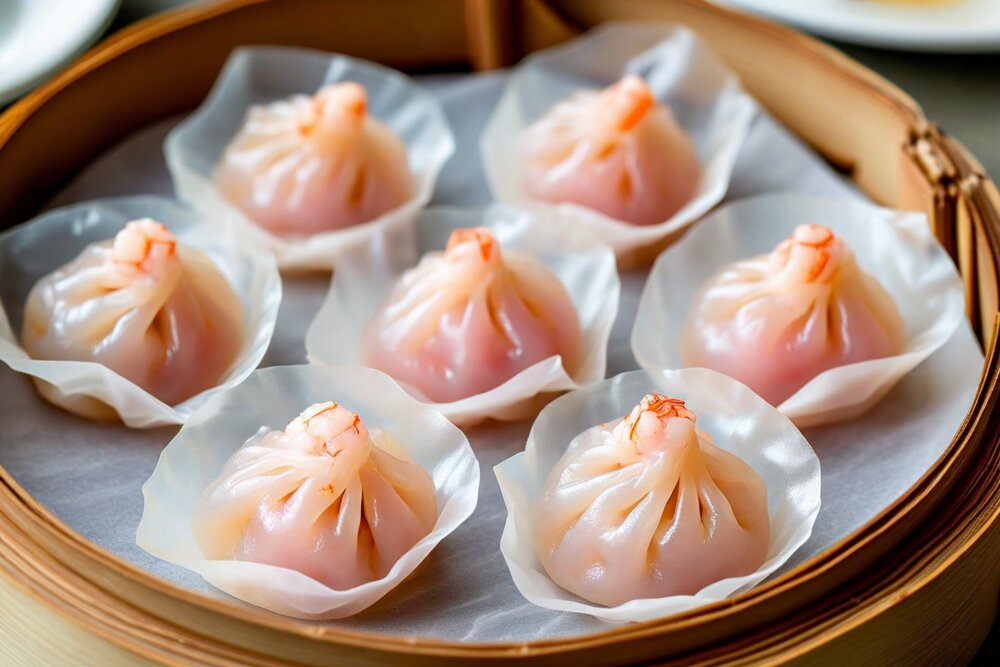
Har Gow (蝦餃)
Cantonese prawn dumplings · makes about 24 · 1 h
Ingredients: For the skin: 130 g wheat starch (not flour — it must be wheat starch); 40 g tapioca starch; ½ tsp salt; about 200 ml boiling water; 1 tbsp neutral oil. For the filling: 300 g raw prawns, peeled; 60 g pork fat or fatty pork, finely diced; 50 g bamboo shoots, finely diced; 1 tsp sesame oil; 1 tsp sugar; ½ tsp salt; ½ tsp white pepper; 1 tsp cornflour; 1 tsp Shaoxing wine.
Method: Chop two thirds of the prawns roughly and mince the rest to a paste — the contrast of texture is the point. Mix with everything else for the filling, then chill for 30 minutes so it firms up. For the skin, combine the two starches and salt in a bowl and pour in the boiling water all at once, stirring hard with chopsticks; this gelatinises the starch and is what makes the wrapper translucent — warm water will not work. Cover for 2 minutes, then add the oil and knead on an oiled surface until smooth and slightly elastic. Keep it under a cloth; it dries out in minutes. Roll into a log, cut into 24 pieces, and flatten each into a thin round with the oiled flat of a cleaver. Put a teaspoon of filling in the centre, fold into a half-moon and pleat one edge over towards the other, pressing to seal. Steam over rapid boiling water in a lined bamboo basket for 6 minutes exactly and serve at once.
💡 Wheat starch is sold in every Asian grocery as 澄麵 or "non-glutinous wheat starch". There is no substitute — plain flour gives you an opaque, chewy dumpling that is fine but is not har gow.
🍖 Recipe: Char Siu
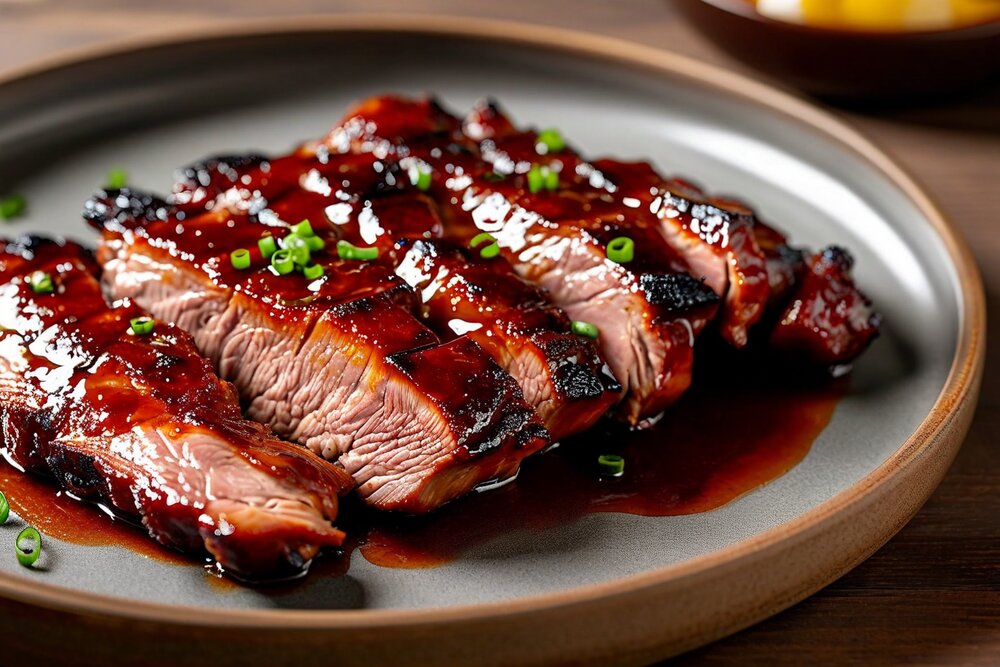
Char Siu (叉燒)
Cantonese barbecued pork · serves 4 · 20 min prep + overnight marinating + 40 min roasting
Ingredients: 800 g pork shoulder or, better, pork collar/neck — it needs the fat; 2 tbsp hoisin sauce; 2 tbsp light soy sauce; 1 tbsp dark soy sauce; 2 tbsp Shaoxing wine; 2 tbsp honey plus extra for glazing; 1 tbsp sugar; 1 tbsp fermented red bean curd (南乳) if you can get it; 3 garlic cloves, crushed; 1 tsp five-spice powder; 1 tsp sesame oil; a little red food colouring only if you insist on the colour.
Method: Cut the pork into long strips about 5 cm thick — this matters, thin pieces dry out and thick ones do not caramelise. Mix everything else except the extra honey and rub it thoroughly into the meat. Marinate overnight, or at least 6 hours. Heat the oven to 200 °C. Set the strips on a rack over a tray of water — the water stops the drips burning and keeps the oven humid — and roast 20 minutes. Turn, brush generously with honey thinned with a little of the marinade, and roast another 15–20 minutes, brushing again halfway, until the edges are properly dark and blistered. Finish under a hot grill for 2 minutes if the colour is not there yet. Rest 10 minutes, slice thickly across the grain, and serve over rice with the pan juices and a little steamed choi sum.
💡 The red colour of shop char siu comes from fermented red bean curd and, in most places, food colouring. It changes nothing about the taste; leave the colouring out and yours will be browner and just as good.
🥧 Recipe: Hong Kong Egg Tarts
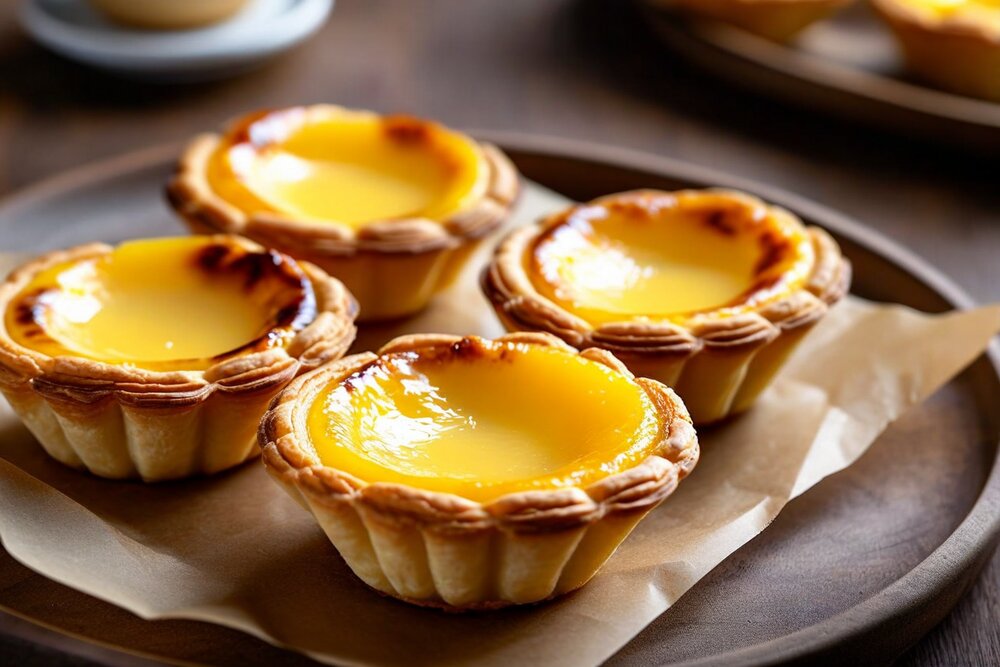
Egg Tarts (蛋撻)
Cha chaan teng classic · makes 12 · 40 min prep + 25 min baking
Ingredients: For the shortcrust cases: 200 g plain flour; 100 g cold butter, cubed; 40 g icing sugar; 1 egg yolk; 1–2 tbsp cold water. For the custard: 3 whole eggs; 110 g caster sugar; 220 ml hot water; 80 ml evaporated milk; ½ tsp vanilla.
Method: Rub the butter into the flour and icing sugar to fine crumbs, add the yolk and just enough water to bring it together, then chill 30 minutes. Meanwhile dissolve the sugar in the hot water and let it cool to lukewarm — if it is hot when it meets the eggs you will scramble them. Beat the eggs lightly, without making foam, then stir in the sugar syrup, evaporated milk and vanilla. Strain the custard twice through a fine sieve; this single step is the difference between a glassy tart and a pockmarked one, and skim off any bubbles. Roll the pastry thin, cut rounds and press into a 12-hole tart tin, pressing up the sides. Fill each case to about 80%. Bake at 200 °C for 10 minutes, then drop to 170 °C for 12–15 minutes, until the custard is just set and still wobbles slightly in the middle. Take them out before the surface browns — a Hong Kong egg tart is pale yellow, not caramelised.
💡 Eat them warm, within an hour. Cold ones are a different and much lesser thing, which is why the good bakeries sell them by the tray in timed batches and there is always a queue.
🏙️ Hong Kong Island
The north shore is a strip of reclaimed flat land two or three streets deep, packed with towers, with the hillside rising immediately behind it. Everything on it is walkable, and much of it is walkable without touching the ground — Central is threaded with elevated walkways that connect the ferry piers, the malls and the office towers.
Central and Sheung Wan
The financial district, the Mid-Levels escalator running up through it, and — a five-minute walk west — Sheung Wan, which is the far more interesting half: dried-seafood shops on Des Voeux Road West, the herbal medicine trade, Man Mo Temple (1847) with its coils of hanging incense, antique dealers on Hollywood Road, and the ladder streets running up the hill. Start here rather than at the towers.
Victoria Peak
The obligatory view, and it deserves the status. Go up on the Peak Tram if the queue is bearable, or by bus 15 from Central which costs almost nothing and has better views on the way. At the top, walk away from the Peak Tower and do the Lugard Road circuit — a flat, shaded, one-hour loop around the mountain with the whole harbour laid out below and about a tenth of the crowd.
Wan Chai and Causeway Bay
Wan Chai has the old street markets, the Blue House tenement, and the last few surviving tong lau shophouses; Causeway Bay is where Hong Kong shops, and has some of the most expensive retail rents on Earth. At noon in Causeway Bay a gun is fired every single day — the Noonday Gun, a Jardine Matheson tradition since the 1860s, immortalised by Noël Coward.
The south side
Over the hill and a different world. Aberdeen with its typhoon shelter still full of boats; Repulse Bay and Deep Water Bay for swimming; Stanley with a market and a waterfront; and Shek O, a scruffy beach village at the end of the road with the best beach on the island and Thai food.
🏮 Kowloon
Kowloon is where most visitors find the Hong Kong they came for. It is denser, lower, louder and much more obviously Chinese than the island, and it has the better view — because the thing worth looking at is the island skyline, and you have to be in Kowloon to see it.
Tsim Sha Tsui
The tip of the peninsula. The waterfront promenade and the Avenue of Stars face the island skyline and are where everyone photographs it; the Symphony of Lights runs nightly at 20:00 and holds a Guinness record for the largest permanent light show, which does not stop most people finding it underwhelming — go for the skyline itself, not the lasers. Also here: the excellent Hong Kong Museum of History and the Space Museum.
Chungking Mansions
A crumbling 17-storey block on Nathan Road containing guesthouses, curry houses, phone shops and money changers, home and workplace to people from something like 130 countries, and the setting of Wong Kar-wai's Chungking Express. The anthropologist Gordon Mathews called it a "ghetto at the centre of the world". It is safe, it is extraordinary, and the South Asian food on the ground and first floors is some of the best in the city.
Mong Kok and Sham Shui Po
Mong Kok is among the most densely populated places on Earth and has specialist streets for everything — the goldfish market, the flower market, the bird garden, the ladies' market, the sneaker street. Sham Shui Po, one stop further, is poorer, less visited and the best food and fabric district in Hong Kong, plus Apliu Street, an electronics flea market that has to be seen.
Kowloon's quieter corners
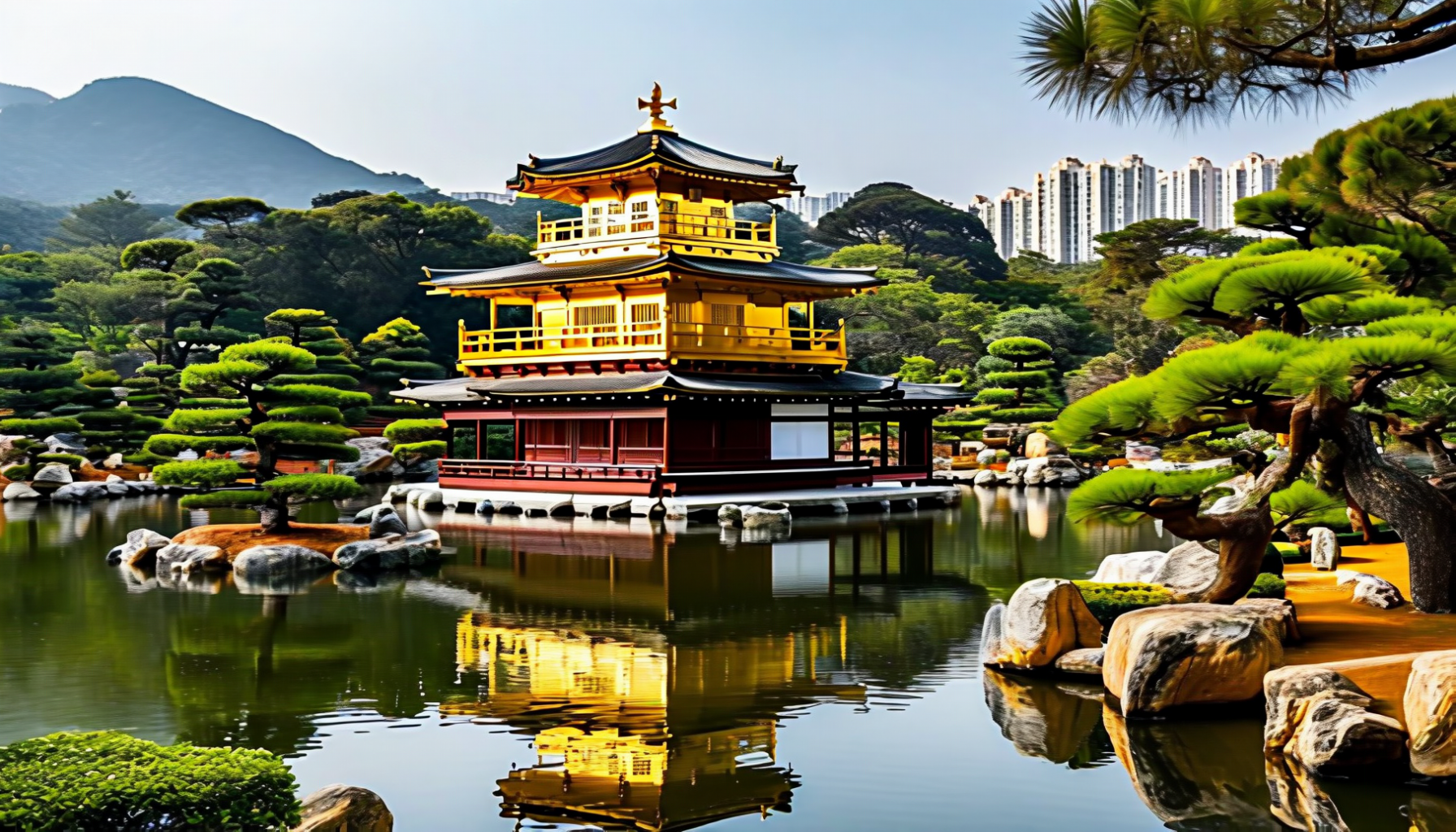
Nan Lian Garden and the Chi Lin Nunnery at Diamond Hill. Wong Tai Sin, the busiest temple in the territory, where people shake fortune sticks. Kowloon Walled City Park on the site of the old city. And Kowloon Park, a green rectangle in the middle of Tsim Sha Tsui with flamingos in it.
🛕 Lantau
Hong Kong's largest island — bigger than Hong Kong Island — and a study in contrasts: the airport and Disneyland at one end, and mountains, monasteries and a stilt village at the other. It absorbs a full day comfortably.
Getting there
The Ngong Ping 360 cable car from Tung Chung MTR is 25 minutes over the mountains and the water, with glass-floor cabins if you want them. Alternatively bus 23 from Tung Chung, which is cheaper, takes about 50 minutes and winds spectacularly. The cable car closes for maintenance periods each year — check before you go out.
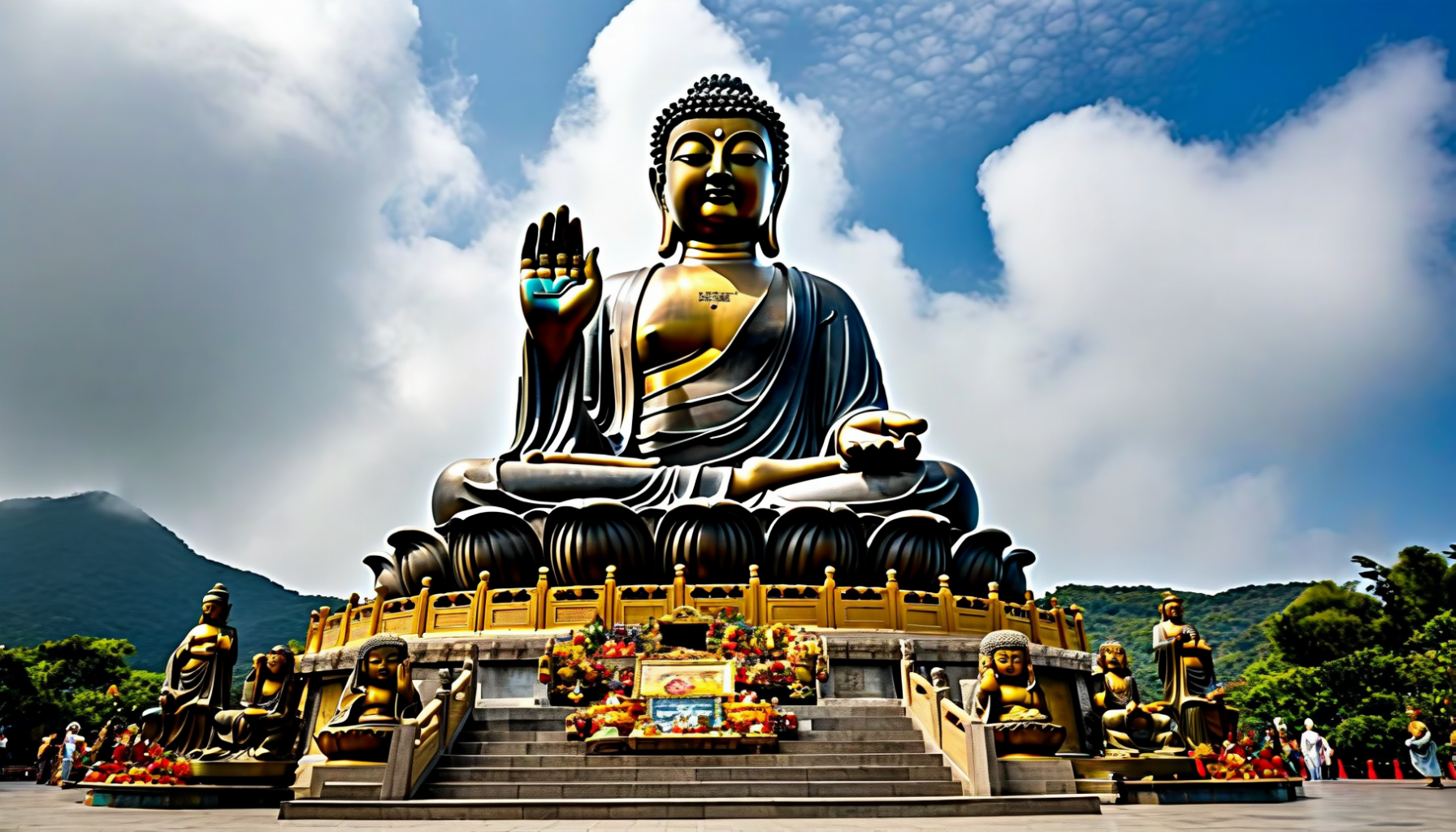
Po Lin Monastery
The working monastery beside the Buddha, founded in 1906, with a famously good vegetarian restaurant — the ticket that gets you inside the Buddha's base usually includes a meal there and it is worth taking. The Wisdom Path nearby is a line of wooden columns carved with the Heart Sutra, arranged in a figure of eight.
Tai O
A stilt village on the west coast, home to the Tanka boat people, with houses built out over the tidal creek on wooden piles, shrimp paste drying in the sun, and small boats that will take you out to look for Chinese white dolphins — which are pink, genuinely, and whose local population is in serious decline. Tai O is the most photogenic place in Hong Kong and is an hour's bus ride from Ngong Ping.
The rest of Lantau
Lantau Peak (934 m), the second-highest in the territory, climbed for sunrise by people who spend the night at Ngong Ping. The 70 km Lantau Trail. Long empty beaches on the south coast at Pui O and Cheung Sha, the latter being the longest beach in Hong Kong. And water buffalo wandering loose at Pui O, descendants of animals left behind when the rice paddies were abandoned.
⛴️ The Outlying Islands
The ferries leave from the piers just west of the Star Ferry in Central and cost a few crowns. This is the standard Hong Kong weekend, and it takes you from one of the densest cities on Earth to a car-free village in under an hour.
Cheung Chau
A dumbbell-shaped island 55 minutes out, completely car-free, with a harbour full of fishing boats, a beach, seafood restaurants along the praya and bicycles instead of taxis. It has the Bun Festival in May and a cave that a nineteenth-century pirate is supposed to have used. Of all the islands this is the one that most feels like a different country.
Lamma
Thirty minutes out, also car-free, and the alternative Hong Kong: a long-established community of artists, expatriates and people who wanted out of the city. The standard outing is to land at Yung Shue Wan, walk the well-marked hour across the island past a beach, and eat seafood at Sok Kwu Wan before taking the ferry back from there.
Peng Chau
The small quiet one — 40 minutes, barely 1 km², a few hundred residents, an old matchstick factory, and almost no visitors. If Lamma feels busy, this is the next step down.
Sai Kung and the geopark
Not an outlying island but the same idea: the eastern peninsula, with the fishing town of Sai Kung as a base, boats out to empty beaches at Tap Mun and the Sharp Island tombolo, and the Hong Kong UNESCO Global Geopark — hexagonal volcanic columns of rhyolite up to 100 m high, formed in an eruption 140 million years ago and among the largest such formations anywhere.
🥾 Hiking
If you take one piece of advice from this page, take this: put one hiking day into a Hong Kong trip. Almost no visitor does, the trails are excellent and signposted in English, they are reached by ordinary public transport, and they will change what you think the place is.
Dragon's Back
The famous one, and rightly. About 2 hours along a ridge on the south-east of Hong Kong Island with the sea on both sides, ending on the beach at Big Wave Bay where there is a shower and a noodle shop. Bus 9 from Shau Kei Wan MTR to To Tei Wan. Easy, well-marked, and doable in trainers.
Lion Rock
The one that means something. A craggy peak above Kowloon whose profile is the visual symbol of the "Lion Rock spirit" — the self-reliant, get-on-with-it ethos of the refugee generation, named after a 1970s television series. Steep, about 3 hours return from Wong Tai Sin, and the view straight down the length of Kowloon to the harbour is the best in the territory.
MacLehose stages 1 and 2
The scenic pair, in Sai Kung: around a reservoir and then along the coast past Long Ke and Tai Long Wan — beaches that would be internationally famous in almost any other country and that you reach on foot or by boat. A full day, and the best single day's walking in Hong Kong.
Practicalities
Water, more than you think — the humidity is the difficulty, not the gradient. Start early in summer. Trails are numbered with distance posts every 500 m, which the emergency services use, so note the nearest one if anything happens. Check the typhoon and rainstorm signals before setting out; amber, red and black rainstorm warnings mean the hillsides are dangerous. And there is no shade on many ridges.
🛍️ Shopping, and Whether It Is Still Worth It
Hong Kong's reputation as a shopping destination is largely a legacy of the period when it was a duty-free port next to a closed China. There is still no VAT or sales tax and no duty on most goods, so electronics, cosmetics and luxury goods are genuinely cheaper than in Europe. But the mainland now has everything, online prices have flattened the world, and the days of flying to Hong Kong to buy a camera are over.
What is still genuinely good value
Tailoring — a bespoke suit in 2–3 days at a fraction of Savile Row, in Tsim Sha Tsui or Central, and the good tailors are the ones without touts outside. Tea, from proper shops in Sheung Wan rather than tourist boxes. Chinese medicine and dried goods, if you know what you are doing. And eyeglasses, which are cheap, fast and excellent.
The markets
Ladies' Market and Temple Street for the experience rather than the goods — everything is a copy and haggling is expected, starting at about 40% of the asking price. Apliu Street in Sham Shui Po for electronics and junk. Cat Street off Hollywood Road for antiques and convincing fakes. Yuen Po bird garden and the goldfish market in Mong Kok are not shopping so much as sightseeing.
The malls
Hong Kong has some of the largest and most profitable shopping centres in the world, and in summer they are also the air-conditioned circulation system of the city — IFC and Landmark in Central, Harbour City in Tsim Sha Tsui, Times Square in Causeway Bay. They sell what malls everywhere sell, at similar prices.
A warning
The camera and electronics shops on the tourist stretch of Nathan Road have a long and well-documented history of bait-and-switch: an advertised price, then a demand for extra for the battery, the lens, the warranty. Buy electronics from a chain — Fortress or Broadway — where the price is the price, or don't buy them at all.
✈️ Getting There
Hong Kong International Airport (HKG) at Chek Lap Kok, on a flattened and extended island off Lantau, is regularly rated among the best airports in the world and has been since it opened in 1998. It is also the busiest air cargo airport on the planet.
From Europe
There are no direct flights from Prague, Vienna or most of central Europe. The practical routings are one stop: Doha (Qatar), Dubai (Emirates), Istanbul (Turkish), Helsinki (Finnair), or a Lufthansa/KLM/Air France hub — or via London on Cathay Pacific, which is the flag carrier and consistently one of the better long-haul airlines. Expect 15–19 hours in total.
Into the city
The Airport Express reaches Kowloon in 21 minutes and Central in 24, every 10 minutes, and includes free shuttle buses onward to the main hotels. Cheaper and slower: the A-series Airbus routes, around an hour, with luggage racks and a top-deck view. A taxi to Central is around HK$350 and is rarely worth it.
The in-town check-in
A Hong Kong peculiarity worth knowing: at the Airport Express stations in Central and Kowloon you can check your bags in and get your boarding pass on the day of departure, then spend the day unencumbered before taking the train out. Airlines participating vary, so check, but when it works it is the best thing any city does for departing travellers.
Visas
Czech and other EU citizens enter visa-free for 90 days; British citizens get 180. Crucially, Hong Kong's immigration is separate from mainland China's — arriving in Hong Kong is not arriving in the PRC for visa purposes, and a Chinese visa does not admit you to Hong Kong, nor a Hong Kong entry to China. If you want to cross to Shenzhen you need a separate Chinese visa arranged in advance.
💰 What It Costs
Hong Kong is expensive for accommodation, cheap for transport and food, and free for most of what is worth doing. The result is that a well-run trip costs much less than the city's reputation suggests, and a badly run one costs a great deal.
Money
The Hong Kong dollar, around 7.8 to the US dollar and roughly 3 Czech crowns to one HKD. Cards are accepted almost everywhere, but the Octopus card is what you actually use — buy one on arrival, load HK$300, and it covers transport, convenience stores and many small restaurants. ATMs are everywhere and reliable.
Accommodation
The main cost. A decent 3-star double runs 1,700–3,500 Kč a night, a good 4-star 3,500–7,000, and the harbour-view hotels far more. Rooms are small by any standard — 18 m² is normal and not a complaint. At the budget end, guesthouses in Chungking Mansions or Mirador Mansion start around 700–1,200 Kč for a very small room, and they are legitimate and licensed if you pick a licensed one.
Food and transport
Both cheap. A cha chaan teng set lunch is 60–110 Kč. A bowl of wonton noodles 80–120. A full dim sum lunch for two, 500–900. A tram ride 9 Kč flat; the Star Ferry about 15; most MTR journeys 20–40. You can eat and travel very well on 600–900 Kč a day.
A realistic daily budget
Backpacker: 1,600–2,300 Kč including a cheap room. Comfortable: 3,500–5,500 Kč. The free list is long: the Star Ferry view, the Peak by bus and the Lugard Road walk, every hiking trail, the markets, Man Mo and Wong Tai Sin temples, Nan Lian Garden, the beaches, and most museums on Wednesdays.
📋 Practical Information
Health and safety
No vaccinations required; standard travel cover is enough. Hong Kong is one of the safest cities in the world for street crime — walking anywhere at any hour is normal — with pickpocketing in crowded markets the only real risk. Tap water is treated to WHO standards and is safe, though many locals boil it. Public hospitals are good and charge non-residents properly, so take insurance. Emergency number: 999.
Practical kit
Plugs are British three-pin (type G), 220 V, 50 Hz, so a UK adapter, not a European one. Traffic drives on the left — look right first, and the pavements have arrows painted on them to remind you. Free public wifi is widespread and a local SIM or eSIM costs very little. Air conditioning indoors is arctic in summer; carry a layer.
Etiquette
Queue properly, stand right on escalators, and do not eat or drink on the MTR — it is fined and locals will notice. Two hands when giving or receiving a business card or a gift. Tipping is not customary, though restaurants add a 10% service charge which does not necessarily reach the staff, so leaving the coins is normal. Don't photograph people in temples mid-prayer.
What to be sensible about
Hong Kong's national security legislation is real law with extraterritorial claims, and there have been arrests over social-media posts and slogans. For an ordinary visitor this changes nothing about a normal trip — nobody checks phones at the border and political conversation is not policed on the street. What has changed is that public political display is not the free space it was; protest slogans, certain flags and certain songs carry legal risk. Read the room, and don't assume 2018's rules apply.
Consular note for Czech travellers: the Czech Republic maintains a Consulate General in Hong Kong — verify the current address and emergency line on mzv.cz before departure. Registration in the DROZD system is free and sensible, particularly during typhoon season. There are no MZV travel warnings for Hong Kong beyond ordinary caution, but check the current text yourself rather than relying on this page.
🎰 Two Day Trips: Macau and Shenzhen
Macau
The other Special Administrative Region, Portuguese until 1999, an hour away by ferry or 45 minutes over the bridge. It is now much the largest gambling economy in the world — several times the revenue of Las Vegas — but the reason to go is the other half: a UNESCO-listed historic centre of Portuguese churches, painted houses and azulejo pavements, the ruined facade of St Paul's, and Macanese food, which is a genuine four-century fusion of Portuguese, Chinese, Malay and Goan cooking and exists nowhere else.
Macau practicalities
A separate immigration control again — Czechs enter visa-free for 90 days and it is a separate entry from Hong Kong, so your Hong Kong days are not affected. Its own currency, the pataca, though Hong Kong dollars are accepted everywhere at par. Ferries run from Sheung Wan and Tsim Sha Tsui roughly every half hour.
Shenzhen
Across the land border, 45 minutes by MTR to Lo Wu, and a genuinely useful contrast: a fishing county of 30,000 people in 1980 that is now a city of 17 million and China's hardware capital. The Huaqiangbei electronics markets are unlike anything in the world. But you need a Chinese visa arranged in advance — the old five-day visa-on-arrival for some nationalities is not reliable and should not be planned around.
Whether to bother
Macau: yes, for a day, and stay off the casino floor unless that is the point for you. Shenzhen: only if you have the visa already and a specific interest. Both are day trips from Hong Kong rather than reasons to shorten your time in it.
❓ Misconceptions
"Hong Kong is wall-to-wall city."
About 40% of the territory is protected country park and only around a quarter is built up at all. You can be alone on a ridge trail, or on an empty beach in Sai Kung, within an hour of Central. This is the single most under-reported fact about the place.
"It's a country."
It is a Special Administrative Region of the People's Republic of China, with its own currency, immigration, customs, legal system, Olympic team and internet domain, but not its own foreign policy or army. The everyday practical experience of arriving is that of entering a separate jurisdiction — which is exactly what "one country, two systems" was designed to produce.
"Everyone speaks Mandarin."
The mother tongue of about 88% of the population is Cantonese, a separate language, not a dialect. Mandarin is understood and increasingly used but greeting someone in it is not the safe default a visitor might assume. And Hong Kong writes traditional characters, not the mainland's simplified ones.
"It's the shopping capital of the world."
It was, when it was a duty-free port beside a closed China. There is still no sales tax, so luxury goods and cosmetics are cheaper than in Europe — but the mainland now has everything and online pricing has flattened the difference. Come for the food, the harbour and the hills; the shopping is a bonus, not a reason.
"It's dangerous now."
Hong Kong remains one of the safest cities in the world by any street-crime measure, and the 2019 protests ended years ago. The political changes since 2020 are real and serious and are described honestly above — but they do not translate into risk for an ordinary visitor, and conflating the two does nobody any favours, least of all Hong Kongers.
"The handover happened because the lease ran out on all of it."
Britain held Hong Kong Island and Kowloon in perpetuity and only the New Territories on a 99-year lease. But the leased part was over 90% of the land and held the reservoirs, the new towns and most of the population, so the two ceded pieces were not viable alone. The lease forced the return of everything.
✍️ Author's Note
Hong Kong is the easiest great city in Asia for a European to visit and one of the hardest to write about. Easy, because everything works, everything is signposted in English, it is safe at any hour, the transport is the best in the world and the food is better than that. Hard, because any honest account has to hold two things at once: this is a wonderful place to spend a week, and it is a place whose politics have narrowed sharply since 2020 in ways that matter enormously to the people who live there.
The temptation is to pick one and drop the other — either a travel piece that pretends nothing happened, or a political piece that treats the city as a closed case. Both are wrong. The National Security Law, the electoral overhaul and the Article 23 ordinance are set out above without hedging, and so is the fact that they have essentially no bearing on a visitor's trip. Hong Kongers are, in my experience, the last people who want their city written off; a very large number of them are still there and still doing what they do.
So, practically: go in October or November. Take the Star Ferry both ways at dusk on your first evening. Eat dim sum in a loud room, drink milk tea in a cha chaan teng, and eat roast goose over rice at least twice. Take the bus rather than the tram up the Peak and walk the Lugard Road loop. Give a whole day to Kowloon on foot — Sham Shui Po, not just Tsim Sha Tsui. And give one day to the hills, on the Dragon's Back or Lion Rock, because almost no visitor does and it is the half of Hong Kong nobody photographs.
On the images
The pictures here are illustrative reconstructions rather than documentary photographs, and where one diverges from reality the caption says so: the neon street is largely historical and its Chinese lettering is not real text; the golden pavilion at Nan Lian is a single-storey Tang-style building rather than the multi-storey one shown; the dumplings in the dim sum image are closer to Shanghainese xiaolongbao than to the Cantonese canon; the Big Buddha sits at the top of 268 steps that the frame leaves out. Nothing was rejected outright this time — all fourteen supplied images were usable, which is not usually the case.
Support This Project 🌍
This World Travel Factbook is a labor of love – free to use for all travelers. If you find it helpful, consider supporting its continued development.