
🌍 Jamaica at a Glance
🌏 Overview
Jamaica is the Caribbean's cultural powerhouse—birthplace of reggae, dancehall, and a spirit of creative resilience that has influenced the entire world. This mountainous island nation combines pristine beaches, lush rainforests, and vibrant cities with a culture so distinctive it punches far above its weight on the global stage.
🗺️ Geography & Regions
Jamaica is the third-largest Caribbean island, dominated by the Blue Mountains (2,256m) in the east. Lush tropical interior gives way to stunning coastlines. The island sits on the Caribbean Plate, with limestone formations creating spectacular caves and underground rivers throughout the interior.
🗺️ Map
📜 History
Originally home to the Taíno people, Jamaica was claimed by Spain in 1494 and conquered by England in 1655. The island became the Caribbean's largest slave colony, producing sugar. Emancipation came in 1838. Independence from Britain was achieved in 1962. Jamaica's post-independence history shaped global culture through music, athletics, and Rastafarian philosophy.
👥 People & Culture
Jamaica's 2.8 million people are predominantly of African descent, with Chinese, Indian, European, and mixed-heritage communities. Jamaican culture is defined by its music—from mento and ska to reggae and dancehall. Bob Marley remains the island's most famous son. Rastafarian culture, jerk cuisine, and an infectious joi de vivre define the national character.
🏛️ Kingston — The Capital
Kingston is the cultural and economic heart of Jamaica, with a metro population of over 1 million. The Bob Marley Museum, Devon House, and the National Gallery are must-visits. Downtown Kingston buzzes with energy, while uptown New Kingston offers modern amenities. Port Royal, once the "wickedest city on Earth," sits across the harbor.
🍜 Cuisine
Jamaican cuisine is a bold, fiery celebration of the island's multicultural heritage – blending African, Taíno, British, Indian, Chinese, and Spanish influences into one of the Caribbean's most recognizable food cultures.
Signature Dishes: Jerk Chicken/Pork – marinated in scotch bonnet and allspice, smoked over pimento wood. Ackee and Saltfish – the national dish. Curry Goat – Sunday favorite. Bammy – cassava flatbread. Patties – flaky pastry with spiced beef.
Beverages: Red Stripe – iconic lager. Jamaican Rum – Appleton Estate, Wray & Nephew. Ting – grapefruit soda. Sorrel – hibiscus drink. Blue Mountain Coffee – among the world's most prized.
Jerk Chicken
Spiced Grilled Chicken
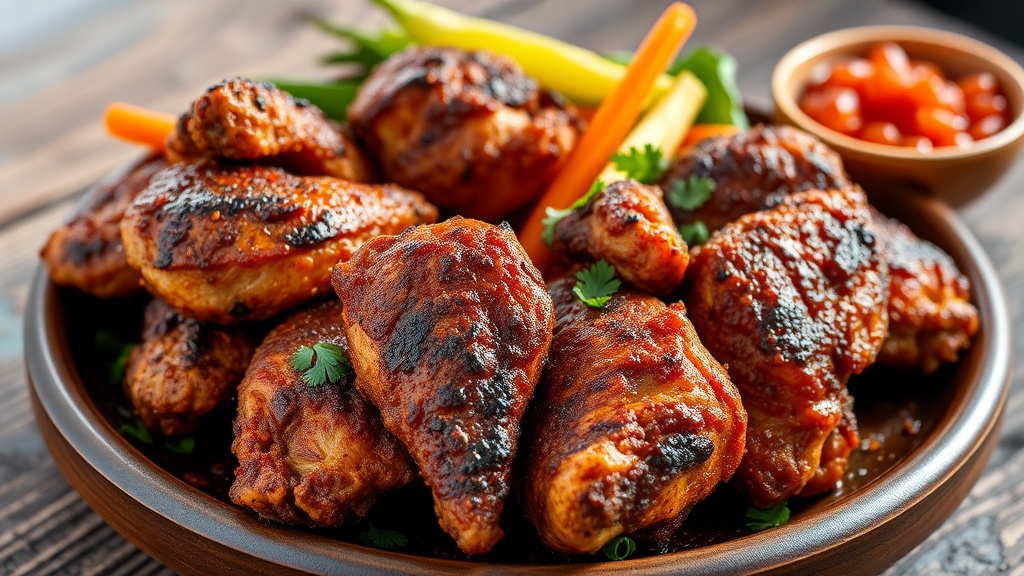
Chicken marinated in fiery jerk spice, grilled over pimento wood.
Ingredients: 4 chicken leg quarters, For jerk: scotch bonnet, allspice, thyme, garlic, ginger, scallions, Soy sauce, lime, Brown sugar.
Preparation: Blend jerk marinade ingredients. Then marinate chicken overnight. Grill over charcoal (pimento wood if possible). Cook low and slow, turning often. Then baste with extra marinade. To finish, serve with rice and peas.
💡 Pimento (allspice) wood gives authentic smoky flavor.
Rice and Peas
Sunday Rice
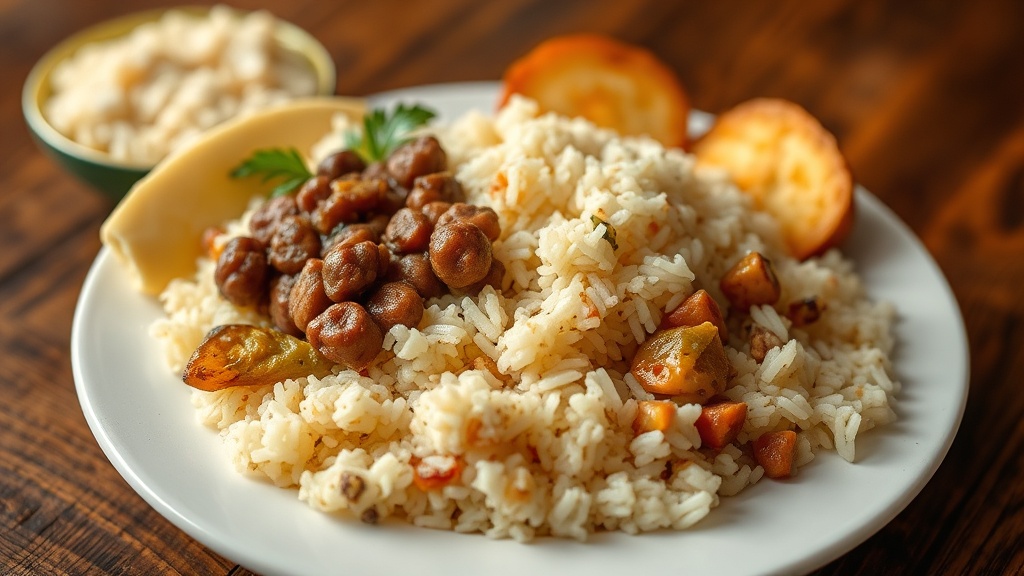
Coconut rice with kidney beans—every Jamaican Sunday dinner.
Ingredients: 240ml (1 cup) rice, 120ml (½ cup) kidney beans (or canned), 240ml (1 cup) coconut milk, 240ml (1 cup) water, Thyme, scallion, garlic, Scotch bonnet (whole).
Preparation: If using dried beans, cook until almost tender. Add coconut milk, water, seasonings. Add rice and whole scotch bonnet. Then cover, simmer until rice is done. Remove pepper before serving. Last, fluff with fork.
💡 Keep scotch bonnet whole for flavor without overwhelming heat.
Ackee and Saltfish
National Dish
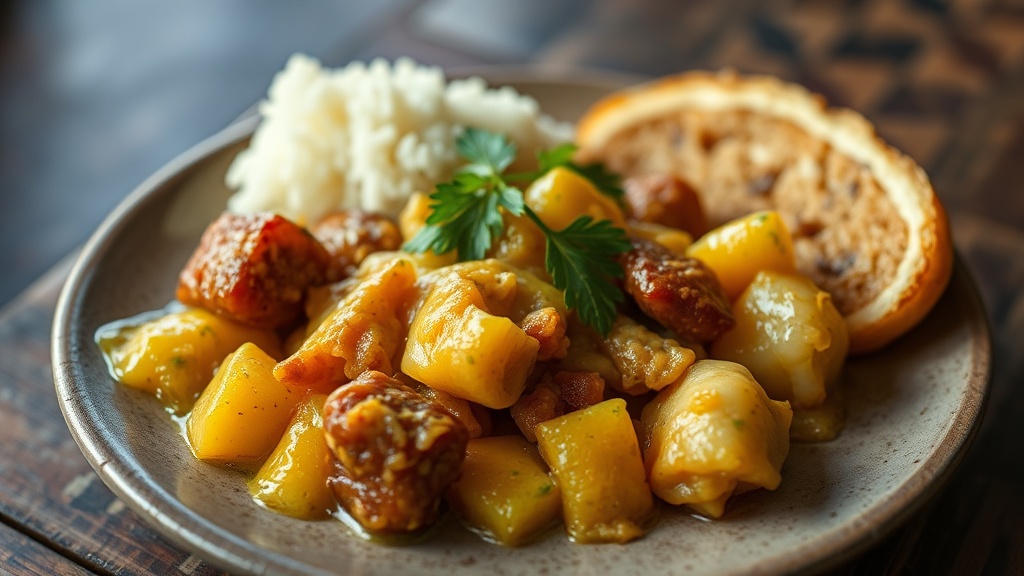
Scrambled ackee fruit with salted cod—Jamaica's beloved breakfast.
Ingredients: 1 can ackee (or fresh, properly prepared), 250g saltfish, soaked and flaked, 1 onion, sliced, 1 tomato, Scotch bonnet, thyme, Butter.
Preparation: Soak saltfish overnight, boil, flake. After that, sauté onion, tomato, pepper, thyme. Add saltfish, cook 5 min. Then gently fold in ackee (don't mash). Cook briefly until heated. Last, serve with fried dumplings.
💡 Be gentle with ackee—it should stay in pieces, not become mush.
🍷 Wine, Spirits & Drinking Culture
Jamaica has no wine production. The Caribbean island's tropical climate is entirely unsuited to grape cultivation, and there are no vineyards or viticultural tradition of any kind.
Jamaica's global contribution to the spirits world is, however, immense. Jamaican rum — characterized by a distinctive high-ester, funky, intensely flavored style unlike any other rum-producing nation — is one of the spirits world's great treasures. The "funk" comes from deliberate use of dunder (spent wash from previous distillations) and wild bacterial fermentation, producing esters and congeners that give Jamaican rum its unmistakable character. Appleton Estate (in the Nassau Valley since 1749) produces elegant aged rums of international acclaim; Hampden Estate produces the most intensely funky, high-ester rums on Earth, prized by bartenders and rum connoisseurs; and Worthy Park and Monymusk complete a quartet of world-class distilleries. Wray & Nephew Overproof (63% ABV) is Jamaica's unofficial national spirit and the foundation of countless rum punch recipes. Wine is available in hotels and upscale restaurants in Kingston and Montego Bay, imported at high cost.
✍️ Author's Note Radim Kaufmann
Visiting Hampden Estate — deep in the Trelawny interior, surrounded by sugarcane fields and the Blue Mountains on the horizon — was one of the most memorable distillery experiences of my life. The fermentation room smells like nothing on Earth: overripe tropical fruit, nail polish, and something deeply, primally funky. The resulting rum, when aged for a decade in Jamaican tropical heat, is one of the most complex spirits you will ever taste. Jamaica doesn't need wine. It has funk.
🌡️ Best Time to Visit
Tropical maritime climate with temperatures of 25-33°C year-round. Hurricane season runs June-November. Best time: December-April (dry season). The Blue Mountains are noticeably cooler.
✈️ How to Get There
Norman Manley International (KIN) in Kingston and Sangster International (MBJ) in Montego Bay serve major carriers from North America, Europe, and the Caribbean. Most tourists fly into Montego Bay for resort access.
📋 Practical Information
Money: Jamaican Dollar (JMD), USD widely accepted. Safety: Tourist areas are generally safe; exercise caution in Kingston. Transport: Route taxis and minibuses for locals; rental cars for tourists. Drive on the left. Time Zone: UTC-5.
💰 Costs & Budget
Mid-range Caribbean pricing. Budget: $50-70/day, mid-range: $100-180/day. Jerk chicken from a roadside stand: $3-5. Restaurant meal: $10-20. Budget guesthouse: $30-50/night.
🏨 Accommodation
From all-inclusive resorts in Montego Bay and Negril to guesthouses in Port Antonio and eco-lodges in the Blue Mountains. Airbnb options are growing. Jamaica invented the all-inclusive resort concept at Sandals.
🎭 Festivals & Events
Reggae Sumfest (July): The Caribbean's biggest music festival. Jamaica Carnival (April): Soca and mas bands parade through Kingston. Accompong Maroon Festival (January 6): Celebrating Maroon heritage and the peace treaty with the British.
🤔 Did You Know?
🎵 Reggae UNESCO Heritage
Reggae music was inscribed on UNESCO's Intangible Cultural Heritage list in 2018, recognizing its contribution to international discourse on injustice, resistance, love, and humanity.
🏃 Sprint Capital
Jamaica has produced more Olympic sprint medals per capita than any other nation. Usain Bolt's 9.58-second 100m record may never be broken.
☕ Blue Mountain Coffee
Jamaican Blue Mountain Coffee is among the world's most expensive, grown at elevations above 900m. Japan imports over 80% of the entire crop.
🏴☠️ Pirate Capital
Port Royal was once the richest and most sinful city in the New World before an earthquake sank most of it into the sea in 1692.
✍️ Final Reflection
Jamaica's cultural influence relative to its size is unmatched. A nation of under 3 million people gave the world reggae, Usain Bolt, Blue Mountain coffee, and a philosophical movement (Rastafari) that resonates across continents. The warmth is real, the food is extraordinary, and the music is everywhere.
