

🇲🇶 Martinique at a Glance
🌍 Overview — France, in the Caribbean, With Its Own Argument
Martinique is a French overseas department and region in the Lesser Antilles: 1,128 km², about 350,000 people, the euro, French law, French social security, EU citizenship, and a motorway with the same road signs as the Auvergne. It is also a Caribbean island with a Creole language, an African-descended majority, a plantation history, a poisoned soil and a live argument about how much of France it wants to be.
Both of those descriptions are completely true at once, and holding them together is what understanding Martinique requires. It is not a colony and not a country. It is legally as French as Brittany and sits 7,000 km from Paris in a sea where everything else is independent.
Where it is
In the middle of the Lesser Antilles chain, with Dominica 35 km north and Saint Lucia 37 km south — both independent Commonwealth states, both visible on a clear day. The Caribbean Sea is on the west side, the Atlantic on the east, and the difference between those two coasts is the whole geography of the island.
What it legally is
A département et région d'outre-mer since 1946, governed since 2015 as a single Collectivité Territoriale de Martinique. It is part of the European Union as an outermost region — but it is not in the Schengen Area, which is the detail that catches out most travellers and is explained properly below.
The population problem
Martinique had about 400,000 people in 2006 and has roughly 350,000 now. Young people leave for mainland France to study and work and many do not come back. It is one of the fastest-ageing populations in the French Republic, and the projection is for continued decline. This is the single biggest long-term worry on the island.
The intellectual density
From this island of a few hundred thousand people came Aimé Césaire, who invented the word Négritude; Frantz Fanon, whose work underpins half of postcolonial theory; Édouard Glissant, the philosopher of creolisation; and Patrick Chamoiseau, who won the Goncourt in 1992. Very few places of any size have produced that much thought.
The poisoned ground
Between 1972 and 1993 the banana plantations were treated with chlordecone, an organochlorine pesticide banned in the United States in 1976. It does not break down. Roughly a third to 40% of agricultural land is contaminated, over 90% of adults carry it in their blood, and Martinique has among the highest prostate-cancer rates in the world. It has its own section below because it deserves one.
2026 in one line
On 16 June 2026 Martinique's associate membership of CARICOM came into force — a French department taking a seat in the Caribbean Community; a week later, on 24 June 2026, the Paris Court of Appeal finally closed the criminal chlordecone case after twenty years. Those two events, eight days apart, are Martinique's present tense.
🏷️ Madinina, the Island of Flowers
Columbus sighted the island in 1493 and landed in 1502. The name most likely derives from what the Kalinago inhabitants called it — recorded variously as Madinina or Madiana, usually glossed as "island of flowers" — passed through Spanish and then French, with the shape of the word probably pulled toward Saint Martin along the way. Martinicans still use Madinina, and it appears on everything from rum labels to political slogans.
Two languages
French is the only official language and the language of administration, education and law. Martinican Creole (kréyòl matinik) is spoken by most of the population — a French-lexifier creole formed on the plantations, mutually intelligible with Guadeloupean and largely so with Dominican and Saint Lucian Creole. Practically everyone code-switches; which language you use with whom carries real social meaning.
The flag question
There is no long-standing official Martinican flag. The old colonial "snake flag" — four white L-shaped snakes on a blue cross — was never an official territorial flag and is now widely rejected as a slavery-era emblem. In 2023 the territorial collectivity adopted an official flag and anthem chosen by public competition, though usage remains contested. On official buildings you will mostly see the French tricolour.
Négritude and after
Césaire's Négritude asserted a Black identity against assimilation. Glissant answered with antillanité and then créolisation — identity as mixture and relation rather than roots. Chamoiseau, Bernabé and Confiant's 1989 manifesto Éloge de la créolité declared: "Neither Europeans, nor Africans, nor Asians, we proclaim ourselves Creoles." This argument is not academic here; it is what the island talks about.
The statues
In July 2020, activists toppled the statues of the Empress Joséphine in Fort-de-France and of Pierre Belain d'Esnambuc, the coloniser who claimed the island for France. Joséphine's statue had already been beheaded in 1991 and left that way for thirty years. She was born on this island and is popularly held responsible for persuading Napoleon to restore slavery in 1802 — historians dispute the direct influence; Martinique's view of her does not.
Békés
The term for the white Creole descendants of the plantation families — around 1% of the population, who still control a very large share of distribution, import and agribusiness. The concentration of economic power in that group is the background to almost every dispute about prices on the island, and it is discussed openly and constantly.
What Martinicans call themselves
Martiniquais, and increasingly also Matinitjé in Creole. There is no comfortable single answer to whether they are French, Caribbean, or both, and the honest response of most people is that the question itself is the interesting part.
🗺️ Two Coasts, One Volcano, and a Line Down the Middle
Martinique is 70 km long and 30 km wide, and it divides cleanly into three. The north is volcanic, wet, mountainous and forested, dominated by Mont Pelée. The centre holds Fort-de-France, its bay and most of the population. The south is lower, drier, and where all the beaches and the tourists are. Getting from the airport to the far north takes about ninety minutes, and the landscape changes completely on the way.
The north
Mont Pelée at 1,397 m and the Pitons du Carbet behind it, in genuine tropical rainforest with over 4,000 mm of rain a year in places. Black volcanic sand beaches, banana plantations climbing the slopes, and the finest walking on the island. This is also where the volcano is, which is not an abstraction.
The south
Drier, hillier in a gentler way, with white sand: Les Salines, Anse Dufour, Anse Noire, Sainte-Anne, Le Diamant. The southern tip gets under 1,500 mm of rain. Almost all the hotels and rental villas are here and it is where a beach holiday actually happens.
Caribbean side, Atlantic side
The west coast is the Caribbean: calm, warm, clear, good for swimming and diving, sunsets over water. The east coast is the Atlantic: rough, windy, spectacular, with reefs, mangroves and the Presqu'île de la Caravelle peninsula, and with far fewer people. Kitesurfers go east; swimmers go west.
The Diamond Rock
Rocher du Diamant, a 175 m basalt plug standing off the southern coast. In 1804 the Royal Navy hauled cannon up it, garrisoned it with 120 men and commissioned it as HMS Diamond Rock — a sloop of war that was a rock. It held out for seventeen months. Royal Navy ships passing it are still, by tradition, expected to salute.
Sargassum
Since 2011 the Atlantic coast has received enormous influxes of pelagic Sargassum seaweed, which rots on the shore and releases hydrogen sulphide — a genuine nuisance and a real health issue in the affected communes. It is seasonal and variable; check current conditions if you are booking on the east or south-east coast.
Hurricanes
The season runs June to November, peaking August–October. Martinique is well inside the hurricane belt: Dean in 2007 destroyed most of the banana crop in a night. Building standards are French and good, warning systems work, and the practical advice is simply to watch the forecast if you travel in that window.
🌋 8 May 1902 — Two Minutes, Thirty Thousand Dead
Saint-Pierre was the largest and richest city in Martinique, the cultural capital of the French Caribbean, and known as the Paris of the Antilles. On the morning of 8 May 1902, at 07:52, the side of Mont Pelée gave way and a cloud of superheated gas and ash came down the mountain at several hundred kilometres an hour. It reached the city in under two minutes. Around 28,000 to 30,000 people died, effectively all of them, and the city was gone.
Why nobody left
There had been warnings for weeks: ash falls, a lake of boiling mud, snakes and insects driven down into the town, a mudflow on 5 May that killed 23 people at a sugar works. But an election was scheduled for 11 May, the governor wanted the electorate in place, a commission of enquiry declared the city safe, and the newspaper reassured its readers. Some people came into Saint-Pierre from the countryside for safety. The governor died with them.
The survivors
Accounts differ on the exact number but it was a handful. The famous one is Ludger Sylbaris — often written as Louis-Auguste Cyparis — a labourer locked in a thick-walled, half-buried punishment cell in the town gaol, who was badly burned but lived. He was pardoned and later toured with the Barnum & Bailey circus as "the man who lived through Doomsday". His cell still stands.
What science took from it
The French geologist Alfred Lacroix studied the eruption and gave volcanology the term nuée ardente — glowing cloud — for what we now call a pyroclastic density current. "Peléan" is still the standard name for this eruption type. The disaster essentially founded the modern discipline, at a cost that no discipline should have.
The spine
After the main eruption, a plug of solidified lava was pushed up out of the crater — the Tower of Pelée, which reached over 300 m above the crater floor before it crumbled in 1903. Photographs of it are among the most extraordinary images in the history of geology.
Saint-Pierre now
A town of about 4,000 in the ruins of a city of 26,000. You walk through roofless walls: the theatre's staircase, the church, the warehouses along the sea, Sylbaris's cell. The Musée Frank A. Perret and the newer Mémorial de la Catastrophe de 1902 hold the objects — melted glass, warped clocks stopped at 07:52 — and the bay below is full of ships sunk at anchor, now the best wreck diving in the eastern Caribbean.
Is it going to happen again
Mont Pelée is active and monitored continuously by the Institut de Physique du Globe de Paris observatory at Morne des Cadets. It erupted again in 1929–32, without loss of life because this time the area was evacuated. Since 2019 it has shown elevated seismicity and the alert level was raised to yellow in December 2020, where it has remained. Yellow means watch it, not leave — but the lesson of 1902 is taken extremely seriously here.
⛓️ Sugar, and the People Made to Grow It
Before Europe
Arawak-speaking peoples from South America settled the island from around 400 BC, followed by the Kalinago (Caribs) from about AD 1000. Kalinago resistance kept Europeans off Martinique for over a century after Columbus. There is no meaningful Indigenous population on the island today: those not killed were expelled to Dominica and Saint Vincent by 1660.
The French take it, 1635
Pierre Belain d'Esnambuc landed with about 150 settlers in September 1635 and claimed the island for France. Within a generation the economy was sugar, and sugar meant enslaved labour. Martinique became a possession of the Crown in 1674 and one of the most profitable pieces of property in the French empire.
The Code Noir
Drafted in 1685 under Colbert and applied here, the Code Noir regulated slavery in the French colonies: it defined enslaved people as movable property, prescribed mutilation and death for escape, mandated Catholic baptism and expelled Jews from the colonies. It is a document worth reading once, because it shows a legal system working out in careful, orderly French exactly how to own people.
The numbers
Over the course of the trade, on the order of 200,000 enslaved Africans were landed in Martinique. Mortality on the plantations was such that the population had to be constantly replenished by new arrivals. By the eighteenth century the enslaved outnumbered the free population several times over, which is why the Code Noir reads the way it does.
Abolished, restored, abolished
The French Revolution abolished slavery in 1794 — but Martinique was under British occupation at the time, so the decree never took effect here. When France recovered the island the institution simply continued, and Napoleon formally restored it in 1802. That double history is why abolition in Martinique means 1848, and why Napoleon and Joséphine are not neutral names on this island.
22 May 1848
This is the date that matters. Victor Schœlcher's abolition decree was signed in Paris on 27 April 1848, but before it arrived, the enslaved population of Martinique rose. After the arrest of a man named Romain at Saint-Pierre, thousands marched, and on 22 May 1848 the governor proclaimed abolition on his own authority to stop the island from burning. Martinicans freed themselves eight days before the paper reached them, and 22 May, not 27 April, is the public holiday.
🏛️ From Colony to Department, and the Argument About It
After 1848
Freed people largely refused to return to the cane fields, so the planters imported indentured labour: some 25,000 Indians, mostly Tamil, between 1853 and 1884, plus Congolese and Chinese workers. The Indian contribution is why colombo is the island's signature dish and why Hindu shrines still stand in the north. The rural population meanwhile built a smallholding peasantry on the margins of the plantations.
Departmentalisation, 1946
In 1946 Martinique, Guadeloupe, French Guiana and Réunion stopped being colonies and became French departments. The law was reported to the National Assembly by a young deputy from Fort-de-France named Aimé Césaire, and it was demanded by the population as a route to equal rights and French social protection. Whether it was liberation or a subtler form of dependence has been argued about on the island ever since — including by Césaire himself in later life.
December 1959
Three days of riots in Fort-de-France after a trivial traffic altercation between a white metropolitan Frenchman and a Martinican; three young men were shot dead by police. The events radicalised a generation, and are commemorated as a foundational moment of modern Martinican political consciousness.
What departmentalisation bought
Real things: French health care, schools, pensions, minimum wage, infrastructure, life expectancy around 82 years, and EU citizenship with the right to live and work anywhere in the Union. Martinique's human development indicators are far above every independent neighbour in the Caribbean. Nobody serious on the island disputes this part.
What it cost
A local economy that produces relatively little and imports almost everything, structurally high unemployment — around 12%, and far higher among the young — an outward migration of educated young people, and an economic structure in which a small number of families control distribution. The 2024 revolt over prices was about exactly this.
The 2010 referendum
Asked whether to move to greater autonomy under Article 74 of the Constitution, Martinicans voted 79.3% against. A second question, on merging the department and region into a single collectivity, passed — producing the CTM in 2015. The message was: better local administration, yes; loosening the tie to France, not yet.
🏛️ How It Is Governed, and What Changed in 2026
Since 1 January 2016 Martinique has been run by a single Collectivité Territoriale de Martinique (CTM), which merged the old département and région. It has an Assembly of 51 members elected by list, which elects an Executive Council of nine headed by a president. Martinique also sends four deputies to the National Assembly and two senators to Paris, and votes in European elections.
Serge Letchimy
President of the Executive Council since 2021, leader of the Parti Progressiste Martiniquais — the party Aimé Césaire founded in 1958 — and an architect by training. He has made the central plank of his mandate an expanded autonomy within the Republic: a local legislative power that would let Martinique make its own law in defined areas, particularly economic regulation and prices.
CARICOM, June 2026
The genuinely new thing. Martinique's accession as an associate member of the Caribbean Community entered into force on 16 June 2026, and it took its seat for the first time at the 51st Heads of Government conference in Saint Lucia in July. It is CARICOM's seventh associate member, and the significance is structural: a French department is now formally inside the region's own institutions rather than only inside Europe's.
Why that matters for prices
Because the cost-of-living problem is partly a trade-routing problem. Goods come 7,000 km from Europe rather than from islands 40 km away, because of French and EU standards, customs practice and established supply chains. The French Competition Authority's opinion of 10 February 2026 said the measures taken against high prices had been insufficient and specifically recommended more regional trade and a revision of technical and labelling standards. CARICOM membership is the institutional half of that answer.
The autonomy debate
Alive again, and driven by prices rather than by flags. The 2010 referendum rejected Article 74 status decisively, but the 2024 revolt reopened the question of who can actually set rules here. The position Letchimy argues is not independence — it is legislative competence in defined fields, within the Republic. Whether Paris will grant it is an open question and constitutional reform is slow.
Party politics
Distinctively Martinican and not a copy of the mainland. The PPM (Césaire's party, autonomist), the MIM of the late Alfred Marie-Jeanne (independentist), Péyi-A, and various right-wing and assimilationist formations. Mainland labels map badly onto this. Turnout is low, and abstention above 60% is common.
Not Schengen
Worth repeating because it trips people up. Martinique is in the European Union as an outermost region and uses the euro, but it is outside the Schengen Area. For EU citizens this changes nothing — free movement applies. For third-country nationals it means a Schengen visa is not valid here and a separate visa for the French overseas departments is required.
☠️ Chlordecone — The Next Several Centuries
Between 1972 and 1993, banana plantations in Martinique and Guadeloupe were treated with chlordecone (kepone), an organochlorine insecticide used against the banana weevil. The United States banned it in 1976 after an industrial poisoning disaster at a plant in Hopewell, Virginia. France banned it in 1990 — and then granted the French Antilles derogations that kept it legal here until 1993.
It is extremely persistent. Estimates of how long it will remain in the soil run from several centuries to more than six hundred years. There is no realistic remediation technology at the scale required. This is, in the plainest sense, permanent.
The contamination
Roughly a third to 40% of Martinique's agricultural land is contaminated, along with rivers, coastal sediment and inshore fisheries. Fishing is banned or restricted in defined zones. Certain root vegetables cannot be legally grown for sale on affected land, and home gardens in the banana belt are a genuine exposure route.
In people
A national study found chlordecone in the blood of over 90% of adults in Martinique and Guadeloupe. Martinique has among the highest prostate-cancer incidence rates in the world; chlordecone exposure has been recognised in France as an occupational disease for agricultural workers who develop it. Studies have also linked prenatal exposure to preterm birth and to effects on child cognitive and motor development.
The March 2025 civil ruling
A French court found the state liable for the harm caused, accepting that France had knowingly exposed the population to a toxic pesticide, and recognised eleven claimants — nine men with prostate cancer and two women who had suffered repeated miscarriages — awarding up to €10,000 each. It was a landmark on principle and a very small sum on the facts. The state appealed it.
The June 2026 criminal dismissal
The criminal complaint, filed in 2006, alleged endangerment of life. After twenty years the investigation was dismissed on limitation grounds, and on 24 June 2026 the Paris Court of Appeal upheld that dismissal, effectively ending any prospect of a criminal trial. The reasoning is that the offences were time-barred; the response in Martinique is that a case took so long that it timed out, which is not an answer.
What happens next
The claimants have said they will go to the Cour de cassation and, if necessary, to the European courts. Civil claims for préjudice d'anxiété continue. A national chlordecone plan funds monitoring, soil mapping and health screening. Nobody claims the land can be cleaned.
Why a travel page says this
Because it is the defining political fact of contemporary Martinique and because a visitor will meet it: in the fish you can and cannot buy, in the signs at certain rivers, in conversation. It also does not make a visit unsafe — commercial produce is controlled and monitored, and short-term visitors are not the exposed population. Long-term residents who grow their own food are.
💸 The Price of Everything
In autumn 2024 Martinique erupted over the cost of living. Food prices on the island run around 40% higher than in mainland France for comparable goods, on an island where median incomes are lower and unemployment higher. A movement called the RPPRAC began with negotiations over food prices and escalated into weeks of demonstrations, roadblocks, burnt vehicles, looting, curfews and the deployment of mainland police units.
What caused it
A stack of things: the octroi de mer, a centuries-old dock duty that funds local government but raises consumer prices; the cost of shipping goods 7,000 km from Europe; the concentration of import and distribution in a handful of groups; and standards and habits that route trade through France rather than through the Caribbean. None of these is new, which is part of why the anger was so large.
The October 2024 agreement
The state, the collectivity, distributors and shippers signed a protocol to reduce prices on around 6,000 food items by an average of 20%, through a mix of margin reductions, shipping-cost cuts and tax relief. The RPPRAC itself refused to sign, arguing the measures were too narrow.
Where it stands in 2026
Prices remain significantly above the mainland. School supplies for the 2026 school year came in around 31% more expensive than in mainland France. On 10 February 2026 the French Competition Authority issued an opinion finding the measures taken so far insufficient, and recommending structural change — more regional sourcing, revised technical and labelling standards, and greater competition in distribution.
The structural argument
Martinique buys European goods under European rules at European standards, shipped across an ocean, while identical products are available from Saint Lucia, Dominica or Trinidad a few dozen kilometres away. Changing that means changing standards, customs and habits — which is why the price question turns into an institutional question, and why it feeds the autonomy debate.
For a visitor
Expect mainland French prices plus a noticeable margin, especially in supermarkets. Restaurant meals are broadly comparable to France; groceries are not. Fuel is regulated and cheaper than you might expect. The one genuinely good value is rum, which is made here.
It is not just Martinique
Guadeloupe, French Guiana, Réunion and Mayotte all have versions of the same problem, and all have had their own price revolts — Guadeloupe and Martinique were shut down for weeks in 2009 over the same issue. The recurrence every fifteen years or so is itself the evidence that nothing structural has been fixed.
💶 Bananas, Rum, Tourism and Transfers
Martinique's GDP per head is roughly €26,000 — well below mainland France but two to three times that of most independent Caribbean neighbours. The economy is dominated by services and by public spending; the productive sector is small, specialised and export-oriented, and the trade balance is heavily negative.
Bananas
The main agricultural export, almost all of it to mainland France, and grown mostly in the wet north. The sector employs several thousand people directly and is heavily dependent on EU support and on preferential access. It is also, historically, the reason the chlordecone was applied. Producers have since moved substantially toward reduced-input and certified production.
Sugar and rum
Sugar for export is essentially finished — one refinery remains, at Le Galion. What sugarcane is grown now goes overwhelmingly to rhum agricole, which is the island's most valuable and most distinctive product and has its own section below.
Tourism
Around a million visitors a year including cruise passengers, dominated by mainland French arrivals — which makes the sector unusually stable and unusually undiversified. There is very little Anglophone or German tourism by Caribbean standards, and that shapes what the island's hospitality industry looks like and what language it operates in.
Public transfers
State employment, social transfers and EU structural funds are a very large part of the money circulating on the island. Public-sector salaries in the overseas departments carry an index supplement over mainland rates, which raises local purchasing power for those who have such jobs and contributes to the price level for everyone who does not.
Unemployment
Around 12% overall and far higher for the under-25s — roughly double the mainland rate. Combined with high prices and expensive housing, this is the engine of the emigration that is shrinking the population, and no policy so far has changed the direction.
What CARICOM could change
Not much immediately — associate membership does not confer full market access. But it puts Martinique inside the region's institutions, opens the door to regional standards work, and gives commercial and political relationships in the Caribbean a formal channel. Given that the price problem is a routing problem, that is not nothing.
🏙️ Fort-de-France
The capital since Saint-Pierre was destroyed, and home to about 75,000 people with roughly half the island's population in the surrounding conurbation. It is a working West Indian city rather than a pretty one — noisy, hilly, hot, with a container port, a cruise terminal and traffic that will test your patience. It is also where Aimé Césaire was mayor for fifty-six years.
La Savane and Fort Saint-Louis
The central park, palm-lined and facing the bay, with the seventeenth-century Fort Saint-Louis still an active French naval base on the point — it can be visited on guided tours. The empty plinth in La Savane, where the Empress Joséphine's statue stood until 2020, is now itself one of the more eloquent things in the city.
The Schœlcher Library
The best building in Martinique and one of the oddest in the Caribbean. Bibliothèque Schœlcher was designed by Pierre-Henri Picq, built for the 1889 Paris Exposition, then dismantled, shipped across the Atlantic and reassembled here — a Byzantine-Romanesque-Art-Nouveau confection in iron, glass and ceramic. It holds the library Victor Schœlcher donated to the newly freed population.
Saint-Louis Cathedral
Also by Picq, also iron-framed — the sixth church on the site after fires, earthquakes and hurricanes destroyed the previous five, which tells you something about building in the Antilles. The metal skeleton was the point: it was meant to survive.
The markets
The Grand Marché (marché aux épices) for colombo powder, vanilla, cacao, bois bandé and rum arrangé; the fish market on the Madame river; and the vegetable market. This is the best way to understand Martinican food and the easiest place to talk to people.
Césaire's city hall
Césaire was mayor of Fort-de-France from 1945 to 2001 and deputy for even longer. His office in the ancien hôtel de ville is preserved as it was. Whatever you think about departmentalisation, standing in the room where the man who wrote Cahier d'un retour au pays natal ran a city for half a century is worth twenty minutes.
Practicalities
Come in the morning; much of the centre closes in the afternoon and the city empties in the evening. Ferries (vedettes) cross the bay to Trois-Îlets and Pointe du Bout in about twenty minutes and are far more pleasant than driving around the bay, which can take an hour in traffic.
🏚️ Saint-Pierre and the North
The northern third of the island is the reason to come if you are not here purely for beaches: rainforest, the volcano, black sand, the ruins, and in 2023 a UNESCO World Heritage inscription covering the volcanoes and forests of the north.
The ruins
Walk the old town of Saint-Pierre with a map. The théâtre's double staircase still climbs to nothing; the cachot de Cyparis, the cell that saved Ludger Sylbaris, is a squat stone box you can put your head into; the church, the warehouses and the Figuier quarter are roofless walls with trees in them. It is quiet and it is not a theme park.
The museums
The Musée Frank A. Perret, founded by the American volcanologist who studied the mountain, holds the objects recovered from the ash: fused glass, twisted cutlery, clocks stopped at 07:52. The Mémorial de la Catastrophe de 1902 is the newer and better-designed of the two. Do both; they are ten minutes apart.
Diving the bay
About a dozen ships were sunk at anchor on 8 May 1902 and lie in the bay in 10–60 m of water — the Roraima, the Tamaya, the Diamant and others. Combined with black volcanic sand and clear water, this is the best wreck diving in the eastern Caribbean, and several of the wrecks are within recreational limits.
Climbing Mont Pelée
Three main routes; the Aileron trail from Morne Rouge is the standard, roughly 2–3 hours up over a well-marked but steep and eroded path. The summit is in cloud most of the time and the weather changes fast. Start early, take water and a windproof, and check the observatory's alert status before you go.
The Route de la Trace and Balata
The N3 climbs from Fort-de-France into the Pitons du Carbet through genuine rainforest — a road the Jesuits traced in the eighteenth century. On it sits the Jardin de Balata, a private botanical garden built around a Creole house, with rope bridges through the canopy and one of the finest collections of tropical plants anywhere. It is touristy and it is worth it.
Grand-Rivière and the north coast
The road simply ends at Grand-Rivière, the northernmost village, hemmed in by cliffs. From there a demanding coastal footpath runs about 20 km round the top of the island to Anse Couleuvre — the best long walk in Martinique, with rainforest, black sand coves and no road access for most of it.
🏖️ The South, and the Beaches
Les Salines
The famous one, at the southern tip near Sainte-Anne: a kilometre of white sand and coconut palms on calm water, and by common agreement one of the finest beaches in the Caribbean. It is also busy at weekends when Martinican families arrive with cool boxes and speakers, which is arguably the best time to be there.
Anse Dufour and Anse Noire
Two small coves side by side, reached down a steep lane: Anse Dufour with pale sand and a fishing village, Anse Noire with black volcanic sand and a jetty, connected by a short footpath. Green turtles feed on the seagrass in both bays and are reliably seen while snorkelling. Keep your distance and do not touch them — it is illegal and it stresses them.
Le Diamant
A long grey-sand Atlantic-facing beach with the Rocher du Diamant offshore, big enough that it is never crowded, with real surf and currents. Along the shore is the Mémorial Cap 110 — fifteen white concrete figures facing the sea, by the sculptor Laurent Valère, marking the wreck of a slave ship off this coast in 1830. It is the most powerful thing on the island.
Trois-Îlets
Across the bay from Fort-de-France: the resort strip at Pointe du Bout, the golf course, the Musée de la Pagerie at Joséphine's birthplace, and the Savane des Esclaves, a reconstruction of a nineteenth-century Creole village built by one man, Gilbert Larose, and one of the best pieces of historical interpretation in the French Caribbean.
Sainte-Anne and Le Marin
Sainte-Anne is the pretty southern village, with the best base for beach days. Le Marin next door is one of the largest yacht marinas in the Caribbean and the charter capital of the Lesser Antilles — if you have ever chartered a boat in this sea, there is a good chance the paperwork happened here.
The Caravelle peninsula
On the Atlantic side: a protected nature reserve of dry forest, mangrove and cliff with a marked loop walk of about two and a half hours, the ruins of the seventeenth-century Château Dubuc, and a lighthouse with a view down the whole east coast. Windy, wild, and completely different from the south-west.
🌿 The Forest, the Snake, and the Walking
Martinique packs an improbable range of environments into 1,128 km²: genuine tropical rainforest in the north, dry forest and cactus on the Caravelle, mangrove in the Atlantic bays, and cloud forest on the Pitons. Around a third of the island is protected within the Parc Naturel Régional de la Martinique.
The UNESCO listing
In 2023 UNESCO inscribed the Volcanoes and Forests of Mount Pelée and the Pitons of Northern Martinique as a natural World Heritage site — the first natural inscription in the French Caribbean. The citation covers the volcanic landforms and the exceptionally rich, largely intact rainforest on their slopes, with a high level of endemism among the Lesser Antilles.
What lives here
Endemic and near-endemic birds including the Martinique oriole and the blue-headed hummingbird, the manicou (an opossum), mongooses introduced to control snakes, and a very large number of endemic plants. Marine turtles nest on several beaches — green, hawksbill and leatherback — and are protected.
The fer-de-lance
Martinique has a venomous pit viper, Bothrops lanceolatus, the trigonocéphale, found nowhere else. Bites are rare — a handful a year — and antivenom is held at the hospital, but this is the reason you stay on marked paths in the north and do not push through undergrowth in shorts. The mongoose was introduced in the 1890s to control it, failed, and became a pest that eats birds instead.
The trails
Around 200 km of marked trails maintained by the regional park. The classics: Mont Pelée by the Aileron, the Presqu'île de la Caravelle loop, the north coast path from Grand-Rivière to Anse Couleuvre, the Gorges de la Falaise canyon walk, and the Trace des Jésuites through the rainforest.
The gardens
Jardin de Balata on the Route de la Trace is the famous one. Habitation Clément at Le François combines a distillery, a restored Creole great house, a contemporary art foundation and a large botanical park, and is the single best-value paid visit on the island. Domaine d'Émeraude in the interior is the park's own interpretation centre.
Practical warnings
It rains hard in the north and the trails become slick clay. Rivers rise very fast — do not enter a gorge if rain is forecast upstream. There is a stinging tree, the mancenillier (manchineel), marked with red paint on the trunk on beaches: do not shelter under it in rain and do not touch anything on it, because the sap blisters skin.
🐢 In and On the Water
Diving
Two very different areas. The Saint-Pierre wrecks in the north — historic, deep, dark sand, genuinely atmospheric. The south-west around Le Diamant, Anses d'Arlet and the Rocher du Diamant — reef, drop-offs, canyons and the rock's own tunnel. Water is 26–29 °C year round; visibility is best in the dry season.
Snorkelling
Anse Dufour and Anse Noire for turtles, the Anses d'Arlet church jetty for the classic photo and easy reef, and Ilet Chancel in the Baie du Robert on the Atlantic side, where a population of introduced iguanas lives on an islet you can reach by kayak.
The yoles rondes
Martinique's traditional sail-and-oar fishing boat, with no keel and no ballast, kept upright by a crew of a dozen hanging off long wooden poles over the windward side. The Tour de Martinique des Yoles Rondes each July or August is a week-long circumnavigation race and the biggest sporting event of the year. The practice was inscribed on UNESCO's intangible heritage list in 2020.
Kitesurf and windsurf
The Atlantic coast, and specifically Anse Michel at Cap Chevalier and the Baie du Robert, with steady trade winds and shallow flat water inside the reef. December to June is the season. This is a genuinely good destination for it and largely a French one.
Whales and dolphins
Sperm whales are resident in the deep water off the Caribbean coast year-round; humpbacks pass between roughly January and April. Operators run from Trois-Îlets and Le Diamant. Look for ones observing the Agoa marine sanctuary's approach rules — Martinique's waters are part of a designated cetacean sanctuary and the rules exist for a reason.
A word on the water quality
Bathing water is monitored and published commune by commune, and the beaches named on this page are fine. What is restricted is fishing in defined coastal zones because of chlordecone in the sediment, and there are rivers in the banana belt where fishing is prohibited. Signage exists; read it.
👥 Who Lives Here
The shape of the population
About 350,000 and falling by roughly half a percent a year. The median age is rising fast, the under-20 share is shrinking, and Martinique is projected to be one of the oldest populations in the French Republic within two decades. The cause is not deaths but the departure of people in their twenties.
The migration
Young Martinicans go to mainland France to study, because the university offer here is limited, and a large proportion stay. The state-run BUMIDOM programme organised this deliberately between 1963 and 1981, moving tens of thousands of Antilleans into low-paid work in the metropole — a policy now widely regarded on the island as a deliberate demographic drain, and a live historical grievance.
Origins
An overwhelmingly African-descended population, with substantial Indian (Tamil) descent from the indentured period, a small Chinese and Levantine presence, mainland French residents, and the békés. Martinican society is stratified by colour and origin in ways that are discussed with more directness here than in mainland France.
Religion
Predominantly Roman Catholic, with the parish still a real organising unit in the communes, alongside growing evangelical churches, a Hindu presence in the north descended from the Tamil arrivals, and popular practices — quimbois, the Martinican folk magic tradition — that coexist with all of it without much difficulty.
Living standards
French: life expectancy about 82 years, French health care, French schools, French social protection. Also expensive housing, 12% unemployment, and food prices 40% above the mainland. Martinique is simultaneously the wealthiest society in its immediate neighbourhood and one of the poorest regions of France.
The diaspora
There are large Martinican communities in Paris and its region and across mainland France — enough that the mainland Antillean population is comparable in size to the island one. That diaspora sends money, comes home in August, argues loudly about the island's politics, and is a significant part of how Martinique understands itself.
📚 Four Writers From One Small Island
This is the thing about Martinique that is hardest to convey and most worth conveying. An island with fewer people than Ostrava produced, within one century, four writers who between them reshaped how the world talks about race, colonialism and identity. They also argued with each other, which is the point.
Aimé Césaire (1913–2008)
Poet, playwright, and the man who coined Négritude — the assertion of Black identity and African heritage against French assimilation. Cahier d'un retour au pays natal (1939) is one of the major poems of the twentieth century; André Breton called him a surrealist and Césaire mostly ignored the compliment. His Discours sur le colonialisme (1950) is a short, incandescent book that argues colonialism brutalises the coloniser. He was mayor of Fort-de-France for 56 years and reported the 1946 departmentalisation law to the National Assembly.
Frantz Fanon (1925–1961)
Born in Fort-de-France, taught by Césaire, fought for Free France, trained as a psychiatrist in Lyon, went to Algeria, joined the FLN and died at 36. Peau noire, masques blancs (1952) dissects what colonialism does to the mind of the colonised. Les Damnés de la terre (1961), written as he was dying of leukaemia, became a foundational text of anticolonial movements worldwide. He is buried in Algeria, at his own request.
Édouard Glissant (1928–2011)
The philosopher of the group, and the one whose ideas have aged most powerfully. Against Négritude's emphasis on African roots he proposed antillanité and then créolisation: identity not as a root but as a rhizome, formed by unpredictable encounter. Poétique de la Relation (1990) and its idea of the right to opacity — the right not to be fully understood or reduced to transparency by another culture — is now read far beyond the Caribbean.
Patrick Chamoiseau (b. 1953)
The novelist. Texaco won the Prix Goncourt in 1992 — the history of Martinique told through a shanty quarter of Fort-de-France and the woman who founds it, written in a French shot through with Creole. With Jean Bernabé and Raphaël Confiant he wrote Éloge de la créolité (1989), which begins: "Neither Europeans, nor Africans, nor Asians, we proclaim ourselves Creoles."
The argument between them
Négritude asserted a shared Black identity; créolité rejected that as still too essentialist and insisted on mixture; Glissant went further and made unpredictability itself the principle. Chamoiseau and Confiant criticised Césaire in print while revering him. This is a real intellectual quarrel conducted over sixty years by people who mostly knew each other, on an island you can drive across in an hour.
Where to encounter them
Césaire's preserved office at the old Fort-de-France town hall; the Bibliothèque Schœlcher; the airport, which is named Aimé Césaire International; and any bookshop in Fort-de-France, where all of them are in print and prominently displayed. Several are translated into Czech — Fanon in particular.
🥃 The Only Rum Appellation in the World
Most rum in the world is made from molasses, the by-product of sugar refining. Martinique makes rhum agricole — distilled from fresh-pressed sugarcane juice, within hours of cutting, during a harvest season that runs roughly February to June. It tastes completely different: grassy, vegetal, sharp, alive. And since 1996 it has been protected by the AOC Martinique, the only appellation d'origine contrôlée for rum anywhere on earth.
What the AOC controls
Everything. Which cane varieties may be planted and where; that the cane must be pressed within a short window of cutting; that fermentation is natural and short; that distillation is in a single Creole column to a specified strength; ageing rules; and the geographic zone. It is the same legal apparatus that governs Bordeaux, applied to rum, and Martinique is the only place that has it.
The distilleries
Around a dozen working, and almost all can be visited free or nearly free. Depaz under Mont Pelée, on land rebuilt after 1902; Clément at Le François, with its great house, art foundation and gardens; Saint James at Sainte-Marie with a rum museum and a small train through the cane; Neisson, family-run and revered; JM in a valley in the north; La Mauny, Trois Rivières, HSE, Dillon, A1710.
Reading a label
Blanc — unaged or rested a few months, 50–55% ABV, the base of ti-punch. Élevé sous bois — at least a year in wood. Vieux — at least three years in oak casks of limited size. VSOP four years, XO six. A millésime is a single vintage year, which is a thing rum almost never does and which the AOC makes meaningful.
Ti-punch
The national drink and a three-ingredient argument: rhum agricole blanc, a spoon of sirop de canne, and a slice of lime peel — pressed, not squeezed. No ice, or one cube. Served in a small squat glass, made by the drinker rather than the bartender: the bottle, the syrup and the lime are put on the table and you build your own. The saying is chacun prépare sa propre mort — each prepares his own death.
The other drinks
Planteur, rum with fruit juices, which is what gets served to visitors. Rhum arrangé, white rum steeped with fruit, spices, vanilla or bark for months — every household has a jar. Shrubb, orange-peel rum liqueur drunk at Christmas. And Lorraine beer, brewed locally, which is what people actually drink on a hot afternoon.
Buying and taking home
Rum is genuinely cheap here by European standards and it is the one thing on the island that is. As an EU territory the customs position for onward travel within the EU is the intra-EU one, subject to the allowances that apply to travel from an outermost region — check current limits, because they are not identical to a mainland-to-mainland trip. A bottle of good vieux costs a fraction of its European retail price.
🍽️ French Technique, African Base, Indian Spice
Martinican food is a genuine creole cuisine in the strict sense: French method applied to Caribbean ingredients on an African foundation, with a decisive Indian layer added after 1853. It is one of the best-eating islands in the Caribbean and it is taken seriously — this is, after all, still France.
Colombo
The signature dish, and the direct legacy of Tamil indentured labourers. Poudre à colombo is the local masala — turmeric, coriander, cumin, mustard, fenugreek, black pepper — and colombo de poulet, de cabri (goat) or de porc is a slow stew with potato, aubergine and often mango, finished with lime and tamarind. Nothing like an Indian curry and nothing like a French stew.
Accras de morue
The universal starter: fritters of salt cod, flour, chilli, spring onion and thyme, deep-fried, eaten hot with a rum punch. Every bar makes them, every household makes them differently, and there are strong opinions about batter.
Boudin créole
Blood sausage, spiced with chilli, thyme and bay, and better than that description makes it sound. It appears with accras as the standard aperitif plate — accras-boudin is practically one word. There is also a white version made with fish or seafood.
From the sea
Blaff — fish poached in a court-bouillon sharp with lime, chilli, garlic and bay, named for the sound the fish makes going into the pot. Court-bouillon de poisson in a tomato and roucou sauce. Chatrou (octopus) and lambi (conch) in fricassée. Oursins (sea urchin) in season, and écrevisses — freshwater crayfish — in the north.
Féroce and the sides
Féroce d'avocat — mashed avocado with shredded salt cod, cassava flour and chilli, and the name means fierce for a reason. Sides are christophine gratin (chayote), ti-nain (green banana), breadfruit, red beans and rice, and dombrés, little flour dumplings cooked with beans or prawns.
The calendar dishes
Matoutou, a crab stew, is eaten on Easter Monday — the whole island goes to the beach and cooks crab, and it is one of the best days of the year to be here. At Christmas: roast pork, boudin, pâtés salés, and shrubb. And chaudeau, a warm spiced custard drink, at first communions.
👨🍳 Two Recipes That Travel
Both are genuinely Martinican and both can be made in a Central European kitchen. The one substitution worth planning is poudre à colombo — bring some back, or use the blend below.
Colombo de Poulet — Martinican Chicken Colombo
Serves 4 · 20 min prep · 1 h cooking · the national dish
Ingredients: 1.2 kg chicken thighs and drumsticks, skin on, bone in; 3 tbsp poudre à colombo (or make it: 2 tsp turmeric, 2 tsp ground coriander, 1 tsp cumin, 1 tsp mustard powder, ½ tsp fenugreek, ½ tsp black pepper, ½ tsp allspice); 2 onions, sliced; 4 cloves garlic; 1 tbsp fresh ginger, grated; 4 sprigs thyme; 2 bay leaves; 3 spring onions; 500 g potatoes in chunks; 1 aubergine in chunks; 1 chayote (christophine) or courgette; 1 unripe mango, diced (optional but traditional); 1 tbsp tamarind paste or the juice of 2 limes; 1 whole Scotch bonnet or habanero chilli; 700 ml chicken stock; oil; salt.
Method: Rub the chicken with half the colombo powder, the crushed garlic, ginger, salt and the juice of one lime, and leave it an hour or overnight. Brown the pieces hard in oil in a heavy pot and set aside. Soften the onions and spring onions in the same pot, add the remaining colombo powder and cook it for a minute until it smells of itself. Return the chicken, add the thyme, bay, stock and tamarind, and bring to a simmer. After 20 minutes add the potatoes; after another 10, the aubergine, chayote and mango. Lay the whole chilli on top — whole and unpierced, so it perfumes without burning — and simmer uncovered another 20 minutes until the sauce thickens and the chicken falls off the bone. Fish out the chilli before serving.
💡 The whole unpierced chilli is not a precaution, it is the technique: Scotch bonnet has a fruity aroma that the heat would otherwise mask. If someone at the table wants it hotter, they burst it in their own bowl. Serve with plain white rice and red beans.
Accras de Morue — Salt Cod Fritters
Makes about 30 · soaking overnight · 30 min · the standard aperitif of the French Antilles
Ingredients: 300 g salt cod (morue); 250 g plain flour; 1 sachet (7 g) dried yeast or 2 tsp baking powder; 250 ml warm water; 4 spring onions, finely chopped; 3 cloves garlic, crushed; 1 small bunch parsley and 4 sprigs thyme, chopped; ½ Scotch bonnet chilli, deseeded and minced very fine; the juice of 1 lime; black pepper; oil for deep frying.
Method: Soak the salt cod in cold water for 12–24 hours, changing the water three or four times. Then poach it gently for 10 minutes, drain, cool, and flake it finely with your fingers, removing every bone and all the skin. Whisk the flour, yeast and warm water into a thick, smooth batter — the consistency of a heavy pancake batter — and leave it somewhere warm for an hour until it puffs. Fold in the cod, spring onion, garlic, herbs, chilli, lime juice and plenty of black pepper. Do not add salt yet: taste first, because the cod may have brought enough. Heat oil to 170 °C and drop in heaped teaspoons of the mixture, a few at a time. They will turn themselves over when the underside is done. Fry 3–4 minutes until deep gold, drain on paper.
💡 Two rules. Taste the soaked cod before you season anything — under-soaked morue makes inedible accras. And serve them within minutes of frying, with ti-punch or a cold Lorraine; they are not the same thing warmed up.
🥁 Carnival, Zouk and the Drum
Carnival
Not a tourist product — the biggest thing that happens on the island. It runs from Epiphany to Ash Wednesday and culminates in five days: Dimanche Gras with the parades, Lundi Gras with burlesque weddings where everyone cross-dresses, Mardi Gras in red devil costume, and Mercredi des Cendres when the entire island dresses in black and white and the effigy of King Vaval is burned on the seafront while people wail with theatrical grief. Then everyone goes back to work.
Zouk
Martinique and Guadeloupe invented it. Kassav', formed in 1979 around Pierre-Édouard Décimus, Jacob Desvarieux and Jocelyne Béroard, took Creole-language dance music to a global audience — Zouk-la sé sèl médikaman nou ni in 1985 was a worldwide hit sung entirely in Creole. Desvarieux died in 2021 and the funeral was a national event.
Bèlè
The deep tradition: a drum, a tibwa (two sticks beaten on the drum's body), a call-and-response singer and a circle of dancers. It descends directly from the plantations, was long marginalised as backward, and has been vigorously revived since the 1980s as the core of Martinican cultural identity. Chouval bwa is its fairground cousin, played on a hand-cranked merry-go-round.
Where to hear it
Bèlè at community swaré bèlè in the north — Sainte-Marie and the communes around it — usually on Friday or Saturday nights and generally not advertised to visitors; ask locally. The Atrium in Fort-de-France for concerts and theatre, and the Tropiques Atrium season is genuinely good.
Sport
Football and athletics, at a level out of proportion to the population — a striking number of French internationals have Martinican roots. Martinique also fields its own football team in CONCACAF competitions, separately from France, and has reached the Gold Cup. Add yole racing, and cycling: the Tour de Martinique is a serious week-long race up some very steep roads.
Language and literature now
Creole has been teachable in schools since the 1980s and there is a CAPES in it; there is a Creole press, Creole radio and a growing body of literature written in it rather than merely flavoured with it. The old assumption that Creole was French spoken badly is dead among anyone under sixty, and reversing that assumption was largely the achievement of the writers in the section above.
🏛️ What Is Protected
The UNESCO natural site
Volcanoes and Forests of Mount Pelée and the Pitons of Northern Martinique, inscribed in 2023 — the first natural World Heritage site in the French Caribbean. It covers Mont Pelée, the Pitons du Carbet and the Morne Jacob massif with their rainforest, recognised for the volcanic landforms and for an exceptionally intact and endemic-rich Lesser Antillean forest.
The yole ronde
Inscribed on UNESCO's intangible cultural heritage list in 2020: the construction and sailing of the keel-less Martinican yole, the crews balancing on bois-dressés poles, and the whole social world of the boatyards and the villages that race them. It is a rare case of a listing that protects something genuinely thriving.
Saint-Pierre
Classified as a Ville d'Art et d'Histoire, with the ruined quarters, the theatre, the cell and the sunken fleet in the bay protected together. It is on France's tentative list for World Heritage as a cultural site, and the case is strong: there is no other European-founded city in the Americas preserved by a volcanic catastrophe.
The plantation houses
A number of habitations are listed monuments and open: Habitation Clément at Le François, Habitation Depaz under the volcano, Château Dubuc in ruins on the Caravelle, La Pagerie at Trois-Îlets. They are beautiful and they were slave plantations, and the better ones now say so explicitly rather than presenting a colonial idyll.
The memorials
Cap 110 at Le Diamant — fifteen white figures facing the sea where a slave ship wrecked in 1830, by Laurent Valère. The Savane des Esclaves at Trois-Îlets. The Mémorial de la Catastrophe at Saint-Pierre. And, since 2020, the empty plinths in La Savane, which the collectivity has deliberately left empty while the island decides what if anything should stand there.
The parc naturel régional
Covers roughly a third of the island — the northern forests, the Caravelle reserve, the mangroves of the Baie du Robert, the Salines. It maintains the trail network, runs the Domaine d'Émeraude interpretation centre, and is the reason the north is in the condition it is.
🗣️ French, and the Other One
You need French. This is not a place where English gets you through: outside hotel reception and the dive centres, most people you deal with will not speak it, and unlike much of the Caribbean there is no expectation that they should. If your French is rusty, this is a good place to use it, because Martinicans are generally patient with the attempt.
Creole basics
Bonjou — good morning. Bonswè — good evening. Mèsi — thank you. Souplé — please. Ka ou fè? — how are you? Tout moun byen — all's well. Sa ou fè? — what's up. Doudou — darling, and a word you will hear constantly. An lot solèy — see you another day.
How Creole works
The vocabulary is largely French; the grammar is not. Tense and aspect are carried by preverbal markers rather than by conjugation — ka for the progressive, té for the past, ké for the future — so mwen ka manjé is "I am eating" and mwen té ka manjé is "I was eating". The verb itself never changes. It is a fully formed language, not broken French, and treating it as the latter is a serious social error.
Which to use
French for anything official, professional or with a stranger. Creole among friends, in markets, in music, in jokes and in anger. Most conversations mix both continuously. A visitor should use French and enjoy the Creole; attempting Creole is charming for one phrase and slightly odd after that.
Reading the map
Anse is a cove — half the coastal place names begin with it. Morne is a hill. Habitation is a plantation estate. Piton is a peak. Trace is a forest path. Ilet is an islet. Fond is a valley bottom. Gros-Morne, Rivière-Salée, Le Lamentin and Ducos are communes you will drive through.
English on the island
Present in tourism in the south and in the marina at Le Marin, thin everywhere else. Signage is French only. Restaurant menus are French only outside the resort strip. Bring a translation app for menus if your French does not cover fish names, because it will not.
A note on register
Greeting people properly matters here more than in mainland France. Entering a shop, a waiting room or a small restaurant without saying bonjour to the room is read as rudeness. Say it, wait for the reply, then talk. This single habit will change how your trip goes.
📅 When to Go
December–April, the carême
The dry season, and the best time: 25–30 °C, lower humidity, steady trade winds, the clearest water and the least rain. It is also the high season, so prices are up and the south is busy, particularly over the French school holidays in February. Carnival falls in this window.
May
Arguably the sweet spot. The dry season is ending, the crowds have gone, prices drop, everything is still green and the rains have not properly started. It is also the rum harvest, so the distilleries are actually working rather than just receiving visitors.
June–November, the hivernage
Hot, humid, wet, and the hurricane season, peaking August to October. Rain in the north can be relentless; the south stays a good deal drier. Prices are at their lowest and the island is at its greenest. August is when the diaspora comes home and the island is at its most alive, and it is also when the yole race runs.
Sargassum
Worst in general between roughly April and August, on the Atlantic and south-east coasts. It varies enormously year to year and beach to beach. If you are booking on the east side, check recent conditions rather than assuming.
Dates worth planning around
Carnival (the five days before Ash Wednesday). Easter Monday, when the whole island eats matoutou on the beach. 22 May, abolition day, the most significant public holiday. The Tour des Yoles in late July or early August. And 8 May, the anniversary of the Saint-Pierre catastrophe, commemorated in the town.
How long
A week is enough for the south and one trip north. Ten days to two weeks lets you do the north properly — the volcano, the ruins, the trails, the distilleries — as well as the beaches, and that is the trip worth taking. Martinique rewards slowing down and does not reward a checklist.
✈️ Getting There from Central Europe
The airport
Martinique Aimé Césaire International (FDF) at Le Lamentin, 15 minutes from Fort-de-France and about 40 from the southern resorts. It is a proper airport with a full French border and customs setup, car hire desks and a bus link, and it handles wide-bodies from Paris daily.
From Prague, realistically
Everything goes via Paris. Prague to Paris (Air France, easyJet, Transavia) then Paris to Fort-de-France with Air France, Air Caraïbes or Corsair — a flight of about 8h30. The catch: the Caribbean flights mostly leave from Orly while Prague arrives at Charles de Gaulle, so allow real time for the transfer or book an Air France through-ticket that handles it. Total journey 14–18 hours.
What it costs
Return Prague–Fort-de-France typically 18,000–35,000 Kč, rising sharply over French school holidays and Christmas. Air Caraïbes and Corsair are usually cheaper than Air France. Booking the Paris–Fort-de-France leg separately can save money but puts the connection risk entirely on you.
Entry — read this carefully
Martinique is EU territory but not in Schengen. For a Czech or other EU citizen this makes no practical difference: free movement applies, an ID card is sufficient, and there is no visa. But there is a border check on arrival even from Paris, so carry the document. For non-EU travellers, a Schengen visa is not valid here — a separate DOM visa is required.
Health cover
Martinique is in the French health system. Your EHIC works exactly as it does in mainland France, at the CHU de Martinique in Fort-de-France and at pharmacies and doctors across the island. Standards are French. Take travel insurance for repatriation cover, not for treatment.
Getting around
Rent a car. Public transport outside the Fort-de-France conurbation is thin and the good parts of the island are not reachable without one. Roads are French-standard, well surfaced, steep and winding in the north, and the traffic around Fort-de-France at rush hour is genuinely bad. The vedettes across the bay to Trois-Îlets are a pleasant way to skip the worst of it.
📋 Practical Details
It is France, administratively
Euro. French plugs (type E, 230 V) — a Czech plug fits, which is a rare convenience. French mobile networks, and EU roaming applies, so a Czech SIM works at domestic rates. Country code +596 and, confusingly, local numbers also begin 0596. Emergency number 112 — and 15 for SAMU, the medical service.
Driving
On the right. A Czech licence is valid. Petrol prices are regulated and lower than you might expect. The A1 motorway runs from the airport to Fort-de-France; everything else is a two-lane road, and in the north it is a steep, narrow, wet two-lane road. Watch for the fact that many rural junctions have no markings at all.
Safety
Martinique is broadly safe for visitors and violent crime against tourists is rare. The genuine issues are break-ins to rental cars at trailheads and beach car parks — leave nothing visible, ever — and some drug-related crime in specific quarters of Fort-de-France at night. Standard French urban caution applies and nothing more.
In the sea
Currents on the Atlantic coast are strong and several beaches there are genuinely unsafe for swimming; heed the signs. On the Caribbean side the water is calm. Watch for manchineel trees marked with red paint on beaches — do not shelter under them in rain and do not touch the fruit. Sea urchins are common on rocky entries.
Insects and health
Dengue, chikungunya and Zika are all present and there have been epidemics of each. Repellent morning and evening is the practical measure. No malaria. Tap water is safe and good. The sun at 14° north is much stronger than it feels in the trade wind.
Money and opening hours
Cards are accepted almost everywhere and ATMs are plentiful. Very French opening hours: many shops close for lunch and much of the island shuts on Sunday. Restaurants stop serving lunch around 14:00 sharply. Plan the day around that or go hungry.
💰 What It Costs
Mainland French prices with a noticeable margin on top, especially in supermarkets — the cost-of-living issue described above is something you will feel at the till. Approximate 2026 prices, with the euro at roughly 25 Kč.
Sleeping
A gîte or studio in the south €70–110 a night (1,750–2,750 Kč). A three-star hotel at Pointe du Bout or Sainte-Anne €120–200. A villa with a pool for a family, booked well ahead, €150–280. Prices rise steeply in February and at Christmas. Renting a gîte and cooking some meals is the standard local approach and saves a lot.
Eating
A plat du jour at a lunchtime restaurant €14–20 (350–500 Kč). Dinner main course €18–30. A beachside lolo — the informal grill shacks — will feed you grilled fish, rice and beans for €12–18 and it is usually the best meal of the day. Coffee €1.50–2.50. Lorraine beer €3–4.
Groceries
This is where it hurts. Reckon on roughly 40% above mainland French prices for imported food, and more for some categories. Local produce at the markets — fruit, vegetables, fish — is much better value and much better. Rum is cheap.
Getting around
Car hire €35–60 a day (875–1,500 Kč), cheaper for a week and worth booking ahead in high season. Petrol is regulated and around €1.70 a litre. The bay ferry to Trois-Îlets about €7 return. Motorway tolls: none, there are no toll roads.
Doing things
Most distillery visits are free, with paid tastings. Habitation Clément around €17 and worth it. Jardin de Balata about €16. Museums €5–10. A two-tank dive €90–110. A whale-watching trip €60–80. Guided volcano hike €40–60.
A week, roughly
Two people in a gîte with a hire car, cooking breakfasts, eating out once a day, a couple of paid visits and one dive day: €1,100–1,600 (27–40,000 Kč) on the ground. Flights from Prague add 18,000–35,000 Kč return per person. It is not a cheap Caribbean island, and the compensations are that it is a safe, well-run one where the food is excellent.
🇨🇿 For Czech Readers
MZV ČR
No travel warning. Martinique is France, with French policing, French hospitals and French infrastructure, and it is one of the more straightforward long-haul destinations a Czech traveller can pick. The advisory content that matters is the ordinary tropical set: mosquito-borne illness, sun, currents on the Atlantic coast, and the hurricane season from June to November.
Documents — the useful detail
Martinique is EU territory but outside Schengen. For a Czech citizen this changes nothing legally — free movement applies and an ID card is enough — but there is a real border check on arrival even on a domestic flight from Paris, so have the card in your hand rather than in the hold. Your EHIC works normally.
Consular cover
There is no Czech mission on the island and none is needed in the ordinary sense: Martinique falls under the Czech Embassy in Paris, and as this is French territory, French authorities handle everything a visitor would normally need. Registration in DROZD is worth ten minutes anyway, principally because of the hurricane season.
The flight, honestly
There is no direct route and there will not be one. Everything goes through Paris, and the Caribbean departures are mostly from Orly while Prague lands at Charles de Gaulle — so either book a single Air France ticket that owns the transfer, or budget three hours and a bus between airports. Total 14–18 hours door to door, 18,000–35,000 Kč return.
The Czech connection that exists
Frantz Fanon and Aimé Césaire have both been published in Czech, and Fanon in particular has had a real readership here since the 1960s. There is no significant Czech community on Martinique and no historical bilateral story to tell — this is a case where the honest answer is that the connection is intellectual rather than diplomatic, and it runs one way.
Scale, for a Czech reader
Martinique's 1,128 km² is a little smaller than the Prague-plus-Central-Bohemia comparison people reach for — it is closest to about a seventh of the South Moravian Region. Its 350,000 people are roughly the population of Ostrava plus Olomouc. And you can drive its full length in about ninety minutes, if the traffic around Fort-de-France lets you.
🎲 Things That Are True About Martinique
A rock was a warship
In 1804 the Royal Navy hauled cannon up the Rocher du Diamant, put 120 men on it and commissioned it as HMS Diamond Rock — a sloop of war that was a lump of basalt. It harassed French shipping for seventeen months before surrendering, reportedly after the French floated barrels of rum ashore to the garrison. Royal Navy vessels passing it are still expected to salute.
The only rum AOC on earth
Bordeaux has one, Champagne has one, and so does Martinican rhum agricole — granted in 1996 and the only appellation d'origine contrôlée for rum anywhere in the world. It regulates the cane varieties, the pressing window, the fermentation, the still and the ageing, exactly as a French wine appellation does.
A prisoner survived the apocalypse
When Mont Pelée destroyed Saint-Pierre in two minutes on 8 May 1902, killing around 30,000 people, one of the very few survivors was Ludger Sylbaris, locked in a thick-walled underground punishment cell. He was pardoned, and toured North America with the Barnum & Bailey circus as the man who lived through Doomsday. The cell is still there.
The word Négritude was invented here
Aimé Césaire coined it in the 1930s, and it went on to shape anticolonial thought across Africa and the Caribbean — Senghor in Senegal, Damas in Guiana. A vocabulary that reframed the politics of an entire continent came out of an island of a few hundred thousand people, and its author then spent 56 years as a small city's mayor.
An empress with no head
The statue of Joséphine de Beauharnais in Fort-de-France — born on this island, married to Napoleon, and popularly blamed for the restoration of slavery in 1802 — was beheaded in 1991 and left headless for nearly thirty years, red paint poured down the neck. In July 2020 activists pulled the whole thing down. The plinth has been deliberately left empty.
A French department in CARICOM
As of 16 June 2026, a territory of the French Republic and of the European Union sits as an associate member of the Caribbean Community, alongside Anguilla, Bermuda, the British Virgin Islands, the Cayman Islands, Curaçao and the Turks and Caicos. It took its seat for the first time in Saint Lucia the following month.
🔭 What Happens Next
The demography
This is the real one. A population falling from 400,000 to 350,000 in twenty years, driven by the departure of people in their twenties, with a rapidly ageing remainder. Every other problem on the island — the tax base, the health system, the schools, the labour market — is downstream of it, and no policy has yet reversed the flow.
Prices, and whether anything structural changes
The 2024 revolt produced a protocol on 6,000 products; the Competition Authority said in February 2026 that it had not been enough. The structural fixes — regional sourcing, revised standards, more competition in distribution, reform of the octroi de mer — are all harder and slower than a price agreement, and the CARICOM seat is the first institutional move toward them.
Autonomy
Letchimy's proposal is legislative competence in defined areas within the Republic, not independence. Martinicans rejected Article 74 status by 79% in 2010, but that was before the price revolt. Whether the question is put again, and how it lands if it is, is the central political uncertainty of the next decade.
Chlordecone
The criminal route closed on 24 June 2026. What remains is the civil route — the March 2025 liability finding is under appeal both ways and is heading for the Cour de cassation, with the European courts behind it — plus monitoring, screening and land mapping. The soil itself will not change for several centuries, and no plan pretends otherwise.
The volcano
Mont Pelée has been at yellow alert since December 2020 after two years of increased seismicity. Yellow means enhanced monitoring, not evacuation, and the observatory is very good. But 1902 happened because officials told people it was safe when it was not, and Martinique's institutional memory of that is exact.
What is genuinely durable
The rum, which is protected by law and getting better. The forest, which is now World Heritage. The language, which has gone from stigma to school subject in forty years. The carnival, which nobody has to fund. And an intellectual tradition that a small island somehow keeps producing — the current generation of Martinican writers is not obviously weaker than the last one, which is not something most places can say.
🧭 How to Actually Visit
Split the island
The standard mistake is to book a week in a Sainte-Anne beach hotel and see the north on one long day trip. Do the opposite: base yourself twice, three or four nights in the south for the beaches and three or four in the north around Saint-Pierre or Le Carbet for the volcano, the ruins, the forest and the distilleries. The island is small; the two halves are not.
The one unmissable day
Saint-Pierre. The ruins in the morning, the Mémorial and the Perret museum, lunch on the seafront, and the bay in the afternoon — dive it if you dive, look at it if you do not. No other place in the Americas tells you as much in one day about how thin the line is.
Rent a car, immediately
There is no version of this trip that works without one. Book it before you fly in high season. And use it: the Route de la Trace, the north coast road to Grand-Rivière, the Caravelle, the distilleries — these are the reasons to come and none of them is reachable otherwise.
Eat at the lolos
The informal roadside and beachside grill shacks. Grilled fish or chicken, red beans, rice, a plate of accras, a ti-punch, €12–18, and it will be better than the restaurant. Sainte-Anne, Le Diamant, Anses d'Arlet and Grand-Rivière all have good ones. Lunch is the main meal here and the kitchens close early.
Go to something
A swaré bèlè in the north on a Friday night; a yole race in the summer; carnival if you are there in February; a Sunday at Les Salines with everybody's family. Martinique is not a place that performs for visitors, and the way to see it is to turn up at things Martinicans are doing anyway.
Read something first
Chamoiseau's Texaco before you see Fort-de-France; Césaire's Cahier before you see anything. Both are in translation. This is an island where knowing what people argue about changes what you see out of the car window, and forty pages of reading will do more for the trip than any guidebook, including this one.
📸 Gallery — Two Files, One Fake National Geographic Logo, and Four Fabricated Wikipedia Links
This is the worst image situation encountered anywhere in this project, and it is worth setting out precisely, because two of the problems are of a kind not seen before.
The old live page did not use local images at all for its main illustrations. It hotlinked four photographs from Wikimedia Commons. Every one of those four files was checked against the Commons API for this rebuild, and every one of them does not exist. The URLs are plausible-looking inventions. The live page has therefore been serving four broken images to every visitor. And of the two images that do exist in the bucket, one carries a counterfeit National Geographic logo.
Rejected: a fake National Geographic logo
01-hero.jpg — the file explicitly named as the page hero — is an image of a steep symmetrical stratovolcano venting steam at sunset, and in its top-left corner it carries the yellow rectangle of the National Geographic logo. The image is not National Geographic's. This is a counterfeit brand mark applied to a generated image, and publishing it would be a straightforward misattribution to a real publisher as well as a trademark problem for the site owner. It is rejected outright and must be deleted from the bucket, not merely left unused.
And it is not Mont Pelée either
Even setting the logo aside, the volcano in 01-hero.jpg is a tall, steep, near-perfect cone of the Fuji or Mayon type. Mont Pelée is 1,397 m and shaped nothing like that: a broad, heavily eroded, densely forested massif with a lava-dome summit, almost always capped in cloud. The file fails on identity as well as on provenance.
Four Wikipedia links that were never real
The live page hotlinked Mont_Pelée_vue_du_Carbet.jpg, Saint-Pierre_Martinique_ruins.jpg, Les_Salines_Martinique.jpg and Fort_de_France_Martinique.jpg from Wikimedia Commons. All four were queried against the Commons API during this rebuild. All four return "missing": the files do not exist and never did. The URLs were constructed to look right. Every visitor to the old page has been seeing four broken image placeholders.
It is not only Martinique
The same check was run against other pages on the live site that hotlink Commons. Réunion (Piton_de_la_Fournaise_2.jpg), Mayotte (Mamoudzou_Mayotte.jpg) and New Caledonia (Phare_Amédée_island.jpg) were tested. All three are also missing from Commons. Seven fabricated Wikimedia URLs out of seven checked, across four pages. This is a systematic defect and it warrants a site-wide sweep for upload.wikimedia.org.
What Martinique should have
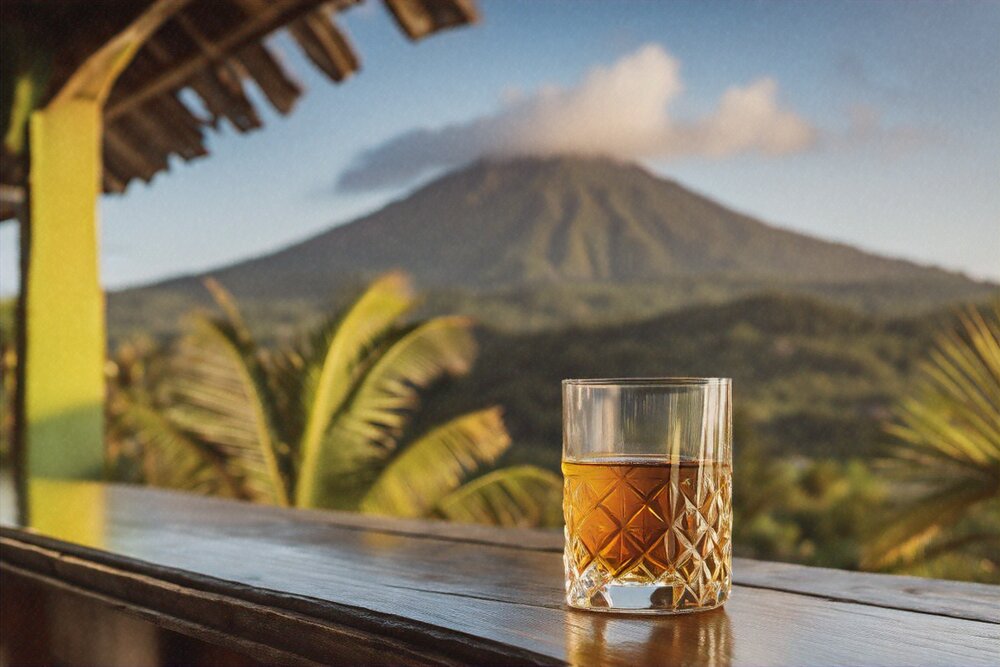
This is an island with the ruins of Saint-Pierre, a UNESCO-listed volcano, Les Salines, the Diamond Rock, the Cap 110 memorial, the Schœlcher library, the yoles under sail, a dozen distilleries and a carnival. The bucket contains one glass of rum. The gap between what exists and what is needed is larger here than for any country covered so far.
How this list was made
By systematic HTTPS probing, because the AWS connection has now been unavailable for five consecutive countries, plus direct queries to the Wikimedia Commons API to verify the hotlinks. Every numbered slot and every plausible bare name was tested. Only 01-hero.jpg and martinique-drink.jpg exist. There are no recipe images at all for Martinique. Treat the list as a minimum; a proper bucket listing is owed.
Support This Project 🌍
This World Travel Factbook is a labor of love – free to use for all travelers. If you find it helpful, consider supporting its continued development.