Key Facts
⛰️
2,655 m
Gerlachovský štít
01 🏔️ Overview
Slovakia is Central Europe's great surprise — a compact nation of dramatic mountain scenery, medieval castles perched on impossibly steep crags, centuries-old folk traditions kept alive in living villages, and a capital city that straddles the Danube with effortless charm. While neighboring Prague and Vienna draw millions, Slovakia offers comparable beauty and culture at a fraction of the crowds and cost, making it one of Europe's most rewarding undiscovered destinations.
The High Tatras, the smallest alpine range in the world, pack dramatic peaks, glacial lakes, and chamois-dotted ridges into an area you can drive across in an hour. Below them, the Spiš region's medieval towns, Romanesque churches, and one of Europe's largest castle ruins form a UNESCO-rich landscape. Slovakia claims more castles per capita than any country on Earth, and its folk heritage — wooden churches, embroidered costumes, shepherd festivals — remains genuinely lived rather than merely preserved for tourists.
02 📛 Name & Identity
The name "Slovensko" derives from the ancient Slavic root for "word" (slovo), marking the Slovaks as "people who speak" — as opposed to the "mute" (nemý) Germans. For centuries, Slovakia existed as "Upper Hungary" within the Kingdom of Hungary, its distinct identity preserved through language and folk culture rather than political sovereignty. The brief first independence as a German client state (1939-1945) left complicated memories; true sovereignty came only with the peaceful "Velvet Divorce" from Czechoslovakia on January 1, 1993.
Modern Slovakia has raced to catch up with Western Europe, joining both the EU and NATO in 2004 and adopting the euro in 2009. Bratislava has become a gleaming city of restored Habsburg palaces and modern business towers, yet drive an hour east and you enter a world of wooden shepherd huts, folk festivals, and villages where three generations still live under one roof. This tension between rapid modernization and deep tradition gives Slovakia its particular charm.
03 🗺️ Geography
Slovakia occupies 49,035 km² in the heart of Central Europe, bordered by Poland, Ukraine, Hungary, Austria, and the Czech Republic. The Carpathian Mountains arc across the country's northern half, culminating in the High Tatras where Gerlachovský štít reaches 2,655 meters — the highest point in the Carpathians. The southern lowlands along the Danube and its tributaries provide fertile agricultural land, while the central mountain valleys harbor historic mining towns and spa resorts.
Water defines Slovakia's landscape: the Danube forms the southwestern border, the Váh is Central Europe's longest Carpathian tributary, and over 1,300 mineral springs feed a spa tradition dating to the Middle Ages. Nine national parks protect landscapes ranging from the dramatic limestone karst of Slovenský raj ("Slovak Paradise") with its gorges, ladders, and waterfalls, to the primeval beech forests of Poloniny that UNESCO recognized as among Europe's last truly wild woodlands.
04 📜 History
Great Moravia, the first significant Slavic state, flourished in the 9th century across what is now Slovakia, the Czech lands, and beyond. It was here that the missionaries Cyril and Methodius introduced Christianity and the Slavic liturgy in 863 AD. After Great Moravia's fall to the Magyars around 907, Slovakia spent the next millennium as part of the Kingdom of Hungary — a thousand-year marriage that profoundly shaped its culture, architecture, and identity.
Bratislava (then Pressburg/Pozsony) served as Hungary's capital and coronation city from 1536 to 1783, when Ottoman conquest pushed the Hungarian court westward. The 20th century brought Czechoslovak independence (1918), wartime separation, Communist rule (1948-1989), the Velvet Revolution, and finally the Velvet Divorce. Through it all, Slovak identity endured — rooted in mountain villages, folk songs, and a stubborn pride in being the world's most patient nation.
05 👥 People & Culture
Slovaks are warm, hospitable people who take genuine pleasure in sharing their traditions with visitors. Folk culture is not a museum piece here but a living practice: villages in Detva, Terchová, and Východná hold annual festivals where thousands don traditional kroje (embroidered costumes) for days of singing, dancing, and feasting. The fujara, a massive overtone shepherd's flute unique to Slovakia, was recognized by UNESCO as a Masterpiece of Intangible Heritage.
Religion remains important — roughly 60% Catholic, with significant Protestant and Greek Catholic minorities. Easter in Slovak villages is a vivid affair: boys douse girls with water and whip them gently with willow switches (a fertility blessing), receiving painted eggs and shots of slivovica (plum brandy) in return. Christmas brings traditional midnight mass, kapustnica (sauerkraut soup), and elaborate nativity scenes. Slovak hospitality means a visitor should always expect to leave fuller — and slightly drunker — than they arrived.
06 🏰 Bratislava
Bratislava is the only capital in the world that borders two other countries (Austria and Hungary), and its compact Old Town rewards exploration on foot. The iconic castle sits on a bluff above the Danube, its four-towered silhouette visible from across the city. Below, the restored Old Town unfolds in a maze of pastel Baroque palaces, sidewalk cafés, and quirky bronze statues (the most photographed: Čumil, a worker emerging from a manhole). St. Martin's Cathedral, where 19 Hungarian monarchs were crowned, anchors the western end.
Modern Bratislava buzzes with energy: the riverside Eurovea district offers waterfront dining and shopping, the brutalist UFO Bridge observation deck provides panoramic views, and a growing craft beer scene has turned old factory spaces into lively taprooms. Day trips reach Vienna in an hour (by bus, train, or even the twin-city hydrofoil on the Danube), making Bratislava an ideal base for exploring Central Europe.
07 ⛷️ High Tatras & Mountains
The High Tatras (Vysoké Tatry) pack genuine alpine drama into an astonishingly compact range — just 26 km long and 78 km² in area, yet rising to 2,655 meters with glacial lakes, knife-edge ridges, and year-round snow patches. Štrbské Pleso, a glacial lake at 1,346 meters, serves as the main resort base, while Tatranská Lomnica offers a cable car to Lomnický štít (2,634 m) with views across five countries on clear days. Well-marked trails range from lakeside strolls to serious mountaineering.
Beyond the Tatras, Slovakia's mountain offerings include the Low Tatras with their gentle ridge walks, Slovenský raj with its gorges navigated via ladders and chains, and the volcanic Štiavnické vrchy hills around the historic mining town of Banská Štiavnica. Winter brings excellent skiing at affordable prices — Jasná in the Low Tatras offers the best infrastructure, while smaller resorts provide uncrowded runs and authentic mountain atmosphere.
08 🍽️ Cuisine
Slovak cuisine is hearty mountain food elevated by tradition and quality ingredients. The national dish, bryndzové halušky — small potato dumplings smothered in tangy sheep's cheese (bryndza) and topped with crispy bacon bits — is Slovakia's answer to Italian pasta: simple, perfect, and endlessly satisfying. Bryndzové pirohy (filled dumplings), kapustnica (sauerkraut soup with smoked sausage and mushrooms), and lokše (potato flatbreads) complete the comfort food trinity.
Cheese production, especially from sheep's milk, defines Slovak gastronomy: parenica (rolled string cheese), oštiepok (smoked decorative cheese), and korbáčiky (braided cheese whips) are found in every mountain market. For drinks, Slovak wine from the Small Carpathian region (especially white varieties from the Tokaj area) surprises those who associate the country only with beer. Slivovica (plum brandy) and borovička (juniper spirit) provide the stronger options that accompany every celebration.
09 🌤️ Climate
Slovakia's continental climate delivers distinct seasons: warm summers (June-August, 20-30°C in the lowlands), cold winters (December-February, often below -5°C, much colder in the mountains), and pleasant transitional seasons ideal for hiking and sightseeing. The High Tatras receive heavy snowfall from November through April, while Bratislava and the southern lowlands enjoy relatively mild conditions year-round.
Best times to visit: June-September for hiking and festivals, January-March for skiing, May and September for comfortable sightseeing without summer crowds. Spring brings wildflower meadows, autumn delivers spectacular foliage in the Carpathian forests, and Christmas markets transform town squares from late November.
10 ℹ️ Practical Info
Visa: EU/Schengen member — no visa for EU/US/UK/CA/AU citizens for stays up to 90 days. Currency: Euro (€) since 2009. Language: Slovak; English widely spoken by younger generations in cities, German sometimes in Bratislava. Transport: Efficient rail network connects major cities; buses reach mountain resorts. Bratislava's airport (BTS) has budget carrier connections; Vienna airport (VIE) is just 60 km away.
Budget: Slovakia offers excellent value. Hostel dorms €15-20, hotel doubles €50-100, a full meal with beer €8-15. Mountain huts (chaty) provide affordable accommodation for hikers at €15-30/night. Safety: Very safe; standard city precautions in Bratislava. Tipping: 10% in restaurants is appreciated.
11 🏆 UNESCO World Heritage
Slovakia punches above its weight with 7 UNESCO World Heritage Sites: the historic town of Banská Štiavnica with its mining heritage, Vlkolínec village (a remarkably preserved rural settlement), Spiš Castle and its associated monuments, the wooden churches of the Slovak Carpathians, Bardejov's medieval town center, the primeval beech forests of the Carpathians, and the Limes Romanus shared with other European nations. Each represents a different facet of Slovak heritage — from medieval urbanism to folk architecture to untouched wilderness.
12 🤔 Fascinating Facts
Castle Capital: With over 180 castles and 425 châteaux, Slovakia has more castles per capita than any other country. Spiš Castle is one of the largest castle complexes in Central Europe.
Andy Warhol's Roots: The iconic pop artist's parents emigrated from Miková, a tiny village in northeastern Slovakia. The Andy Warhol Museum of Modern Art in Medzilaborce is the world's second-largest collection of his work.
Smallest Alpine Range: The High Tatras are the world's smallest mountain range classified as alpine, yet they pack in everything from glacial lakes to 2,600m+ peaks in a range just 26 km long.
Christmas Carp: On Christmas Eve, Slovaks traditionally buy a live carp, keep it swimming in the bathtub for a day or two, then serve it fried with potato salad — the country's most sacred culinary tradition.
13 📸 Gallery
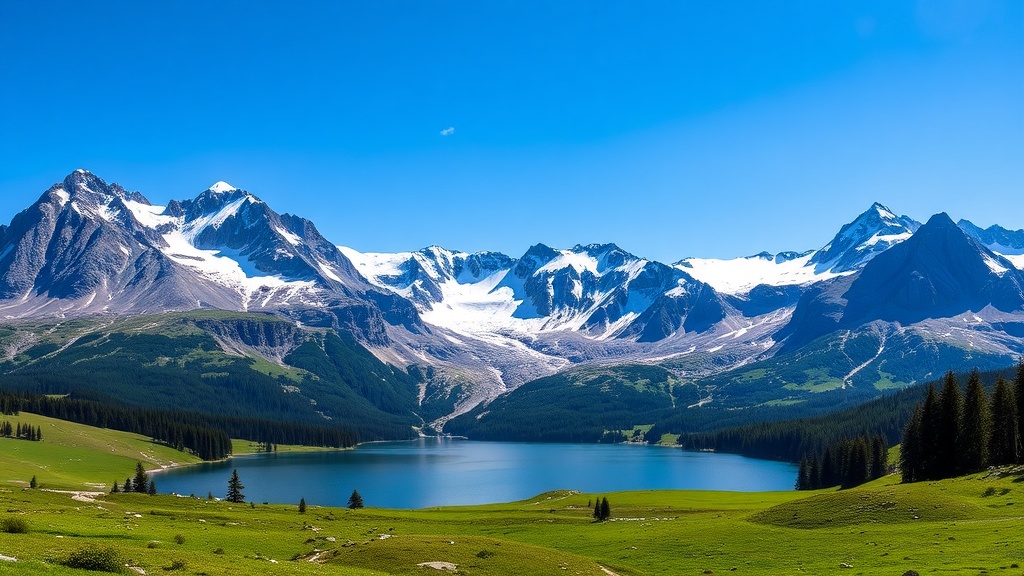
Štrbské Pleso, High Tatras
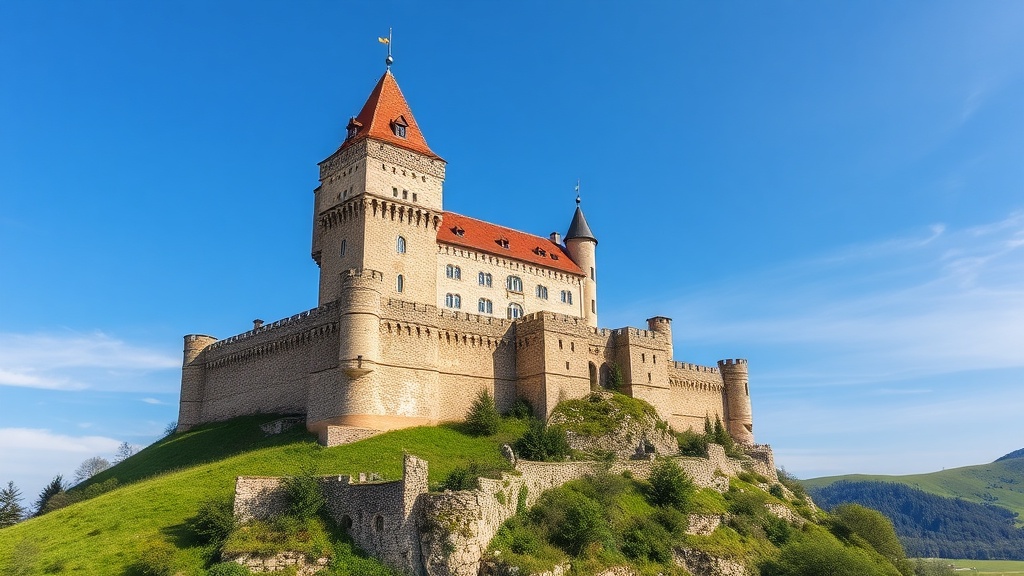
Spiš Castle
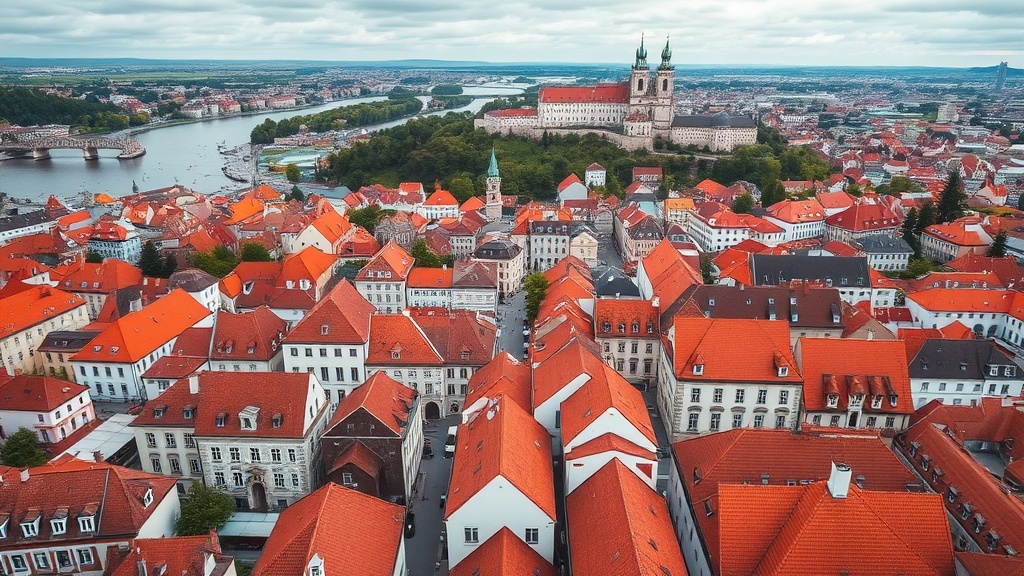
Bratislava Old Town
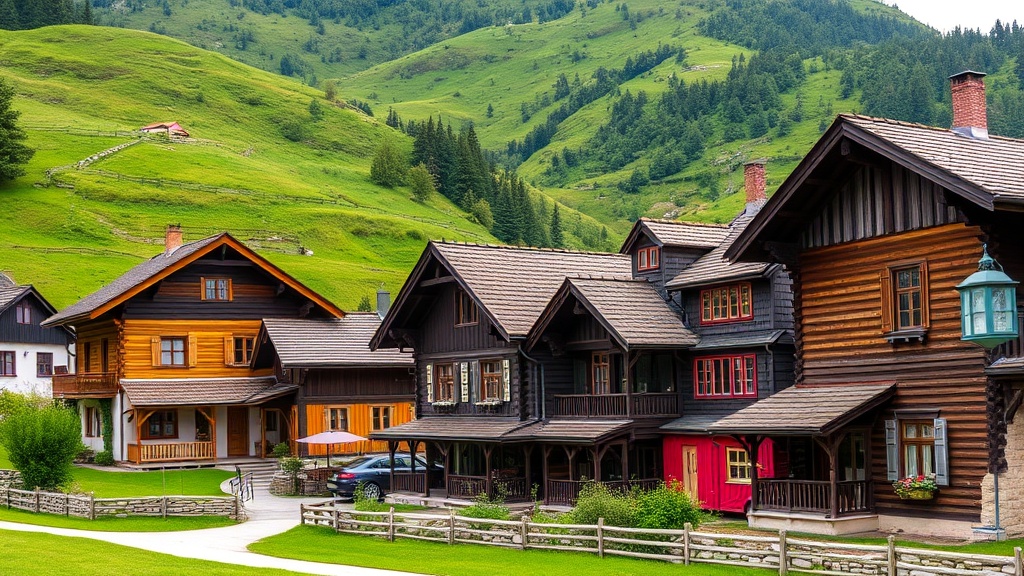
Vlkolínec UNESCO Village
14 ✍️ Author's Note
Slovakia stole my heart on a misty October morning in Banská Štiavnica, when I walked through empty cobblestone streets as bells rang from seven different churches and the autumn fog slowly burned off the surrounding volcanic hills. Here was a town that had once been the third-largest city in the Habsburg Empire, its wealth built on silver mines that funded half of Europe's wars, now quietly reinventing itself as an artists' colony and weekend retreat. Later that week, standing atop Lomnický štít with the entire High Tatra chain spread before me — razor peaks, green valleys, and Poland's plains beyond — I thought: this is the most underrated country in Europe. And selfishly, I hope it stays that way a little longer.
15 🗺️ Map
📚 Resources
Slovakia Travel ·
Wikipedia: Slovakia ·
High Tatras Official
