Somalia occupies the Horn of Africa, that dramatic promontory jutting into the Indian Ocean where the Gulf of Aden meets the Somali Basin. With 3,025 kilometers of coastline — the longest of any mainland African nation — this is a land defined by its relationship with the sea. Ancient Somali port cities such as Zeila, Berbera, Mogadishu, and Merca connected the African interior to trade networks spanning from Rome to China for over two thousand years.
The country's landscape ranges from the arid Guban coastal plain in the north through the Cal Madow mountains reaching 2,460 meters at Shimbiris Peak, to the semi-arid Haud plateau and the fertile riverine zone between the Jubba and Shabelle rivers in the south. Despite decades of conflict following the collapse of Siad Barre's regime in 1991, Somalia's rich cultural heritage — its poetry tradition, nomadic pastoral life, and cosmopolitan coastal cities — endures as a testament to one of Africa's most resilient civilizations.
The name "Somalia" derives from the Somali people themselves, though the etymology of "Somali" remains debated. One theory traces it to "soo maal" — "go and milk" — reflecting the pastoral nomadic culture that defines Somali identity. Others connect it to the legendary patriarch Samaale, from whom the major Somali clan families claim descent.
Somalis are united by a common language, Sunni Islam, a shared genealogical tradition, and one of Africa's strongest oral literary cultures. Poetry is so central to national identity that Somalia is often called "the Nation of Poets." The blue flag with its white five-pointed star represents the five regions historically inhabited by Somalis: the former British and Italian Somalilands (now unified), Djibouti, the Ogaden region of Ethiopia, and the North Eastern Province of Kenya.
Somalia's 637,657 square kilometers encompass remarkable geographic diversity. The northern coast along the Gulf of Aden rises sharply through the Guban — a scorching coastal strip — to the Cal Madow and Ogo mountain ranges, where Shimbiris Peak reaches 2,460 meters. South of these highlands, the vast Haud plateau extends into Ethiopia, supporting the nomadic pastoralism that sustains millions of Somali herders and their legendary camels.
The Jubba and Shabelle rivers, both originating in the Ethiopian Highlands, create Somalia's agricultural heartland in the south. The Shabelle famously disappears into marshland before reaching the sea, while the Jubba flows year-round to the Indian Ocean. Between these rivers lies the most fertile land in the country. The coastline itself varies from rocky cliffs near Bosaso to pristine white sand beaches stretching hundreds of kilometers near Mogadishu and south toward Kismayo.
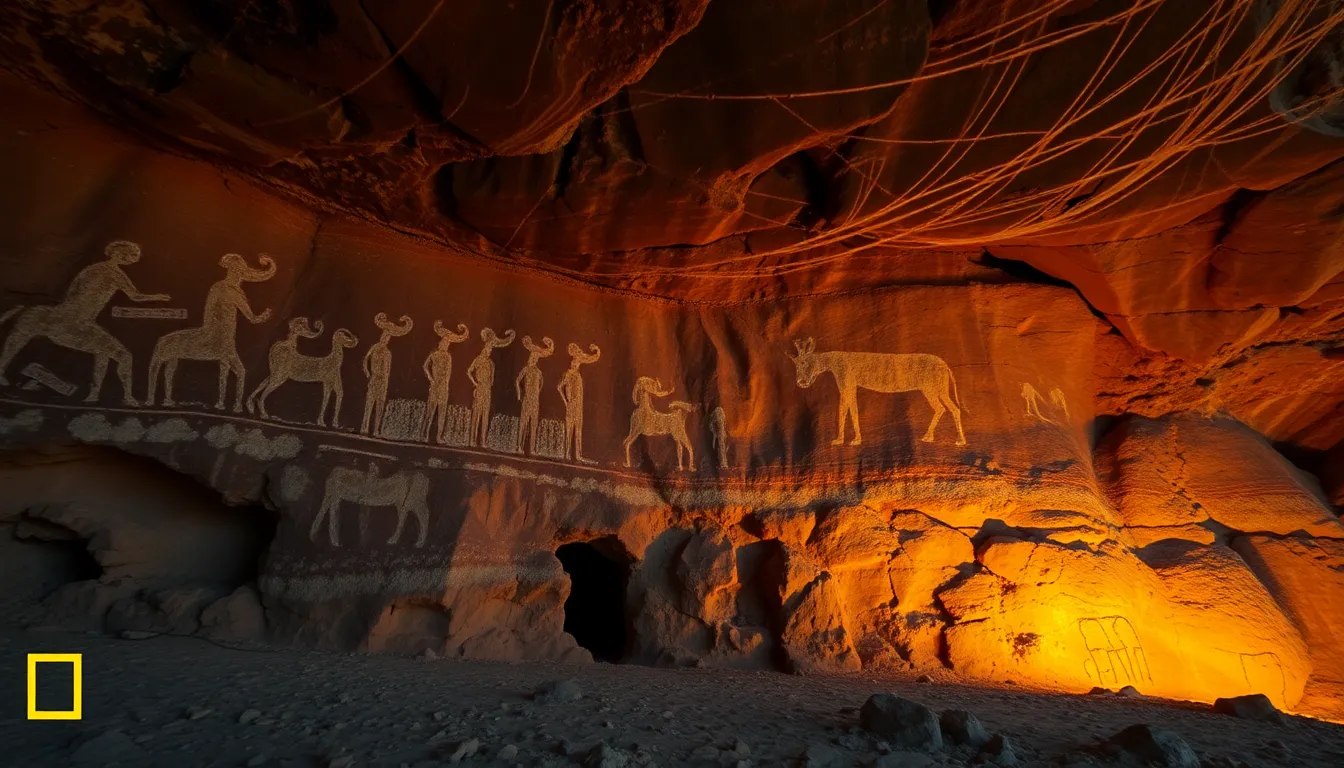
Somalia's history stretches back to the ancient Land of Punt, the mysterious trading partner of pharaonic Egypt known for its frankincense and myrrh — commodities that Somali merchants continued exporting for millennia. The Laas Geel cave paintings near Hargeisa, dating to approximately 9,000-3,000 BCE, preserve some of the earliest and best-preserved rock art in Africa, depicting cattle, dogs, and ceremonial scenes.
Medieval Somali sultanates — the Ajuran Empire, the Sultanate of Adal, the Geledi Sultanate, and the Majeerteen Sultanate — built sophisticated trading states that minted their own currency and maintained diplomatic relations across the Indian Ocean world. Mogadishu was described by Ibn Battuta in 1331 as a prosperous city of enormous wealth. The colonial "Scramble for Africa" divided Somali territories between Britain (north), Italy (south), France (Djibouti), and Ethiopia (Ogaden), creating borders that ignored clan and cultural boundaries.
Independence came in 1960 when British and Italian Somaliland united. The military coup of 1969 brought Siad Barre to power. His overthrow in 1991 triggered a civil war and state collapse that continues to shape the country. Despite these challenges, Mogadishu has experienced significant rebuilding since 2012, when a formal federal government was established.
Somalia is one of Africa's most ethnically homogeneous nations — the vast majority of its approximately 18 million people are ethnic Somalis sharing the Cushitic Somali language, Sunni Islam, and a clan-based social structure organized into major families: the Hawiye, Darod, Isaaq, Dir, Rahanweyn, and Digil. The clan system provides social security, dispute resolution, and identity, though it has also fueled the factional conflicts that followed state collapse.
Poetry remains the supreme art form. Competitive poetry recitals are public events where poets compose elaborate verse addressing love, war, politics, and pastoral life. The tradition is primarily oral, with poems transmitted through memorization across generations. The camel occupies an almost sacred position in Somali culture — wealth is measured in camels, poetry celebrates them, and the Somali language contains dozens of words describing different camel types and conditions. Music features the oud, a pear-shaped lute, accompanying songs that range from romantic ballads to the energetic dhaanto dance of northern clans.
Mogadishu (Muqdisho) is one of Africa's oldest continuously inhabited cities, founded by Arab and Persian traders around the 9th-10th century as a hub for gold, ivory, and slave trading. By the 13th century, it was the center of a prosperous sultanate that minted its own brass and silver coins. The old city retains fragments of this heritage in its coral stone architecture, the Arba'a Rukun Mosque (one of the oldest in East Africa, dating to 667 CE according to tradition), and the winding streets of the Hamar Weyne district.
The city suffered devastating destruction during the civil war but has experienced remarkable rebuilding since the 2010s. Lido Beach has become a symbol of renewal — families picnic on the white sand, restaurants serve fresh lobster, and the sound of waves mixes with the call to prayer. New hotels, restaurants, and markets are emerging across the city, though security remains an ongoing concern. The Bakaara Market is one of the largest open-air markets in East Africa, selling everything from livestock to electronics.
Beyond Mogadishu, Somalia's federal member states each offer distinct character. Puntland in the northeast occupies the tip of the Horn of Africa, with Bosaso and Garowe as its main cities and access to the Yalahow mountain caves. Hargeisa, capital of the self-declared Republic of Somaliland, is a relatively peaceful and organized city with a growing tourism sector centered on the Laas Geel cave paintings. Berbera, Somaliland's port city, boasts some of the most pristine beaches on the Gulf of Aden.
Kismayo in the south guards the mouth of the Jubba River and was historically a major trading port. The ancient port of Zeila near the Djibouti border contains ruins dating back to the 7th century, with crumbling mosques and Ottoman-era buildings slowly being reclaimed by the sea. The inter-riverine zone between the Jubba and Shabelle supports farming communities growing sorghum, maize, sesame, and the famous Somali bananas that were once the country's top export.
Somali cuisine reflects centuries of trade connections while remaining distinctly its own. Breakfast typically features canjeero (a spongy fermented pancake similar to Ethiopian injera) drizzled with sesame oil and sugar, or lahoh served with tea spiced with cardamom, cinnamon, and cloves. Lunch and dinner center on rice or pasta (a legacy of Italian colonialism) served with goat, camel, or fish stew seasoned with cumin, coriander, and turmeric.
Bariis iskukaris — Somali spiced rice with meat and raisins — rivals any biryani. Suqaar (diced meat sautéed with vegetables) and muufo (cornbread baked in a clay oven) are staples. Along the coast, lobster, tuna, and swordfish are grilled fresh and remarkably affordable. Camel milk, rich and slightly sweet, is considered the national drink and is credited with everything from strength to longevity. Tea culture is central to social life, with shaah cadeys (sweetened milk tea) accompanying virtually every gathering and business meeting.
Somalia has no wine production and alcohol is prohibited under both Islamic law and Somali customary practice. The East African nation — arid to semi-arid, almost entirely Muslim — has neither the climate for viticulture nor a cultural tradition that includes alcohol consumption.
Somalia's beverage culture is defined by shaah (Somali tea) — a heavily spiced, sweetened black tea with cardamom, cinnamon, clove, and sometimes ginger, consumed throughout the day and at every social occasion. Tea is so central to Somali life that tea shops serve as the primary social gathering places in every town and neighbourhood. Qahwa (Arabic-style coffee with spices) reflects Somalia's position on the ancient coffee trade routes — Ethiopia's coffee-growing highlands border Somali territory, and Somali traders were historically instrumental in the spread of coffee to the Arabian Peninsula. Camel milk is both a staple food and a ceremonial drink among Somali nomadic pastoralists — Somalia has the world's largest camel population, and fresh camel milk, frothy and slightly sweet, is offered as a gesture of hospitality throughout the rural interior.
✍️ Author's Note
Radim Kaufmann
In a tea shop in Hargeisa, Somaliland — the self-declared republic that functions as one of Africa's most remarkable unrecognized states — shaah was served in a small glass cup, aromatic with cardamom, intensely sweet, accompanied by sambuus (samosas) and animated conversation. Somalia's tea culture is one of the Horn of Africa's most sophisticated: the spicing is complex, the brewing is precise, and the social function — connecting pastoralists, traders, and city dwellers alike — is as vital as any wine culture on Earth. The world's largest camel herds roam the Somali interior, and the fresh camel milk offered by nomadic hosts is a drink of genuine distinction.
Somalia is predominantly hot and arid, shaped by two monsoon seasons. The Gu (April-June) brings the main rains and transforms the landscape with brief greenery. The Hagaa (July-September) is a dry, windy period. The Deyr (October-November) brings shorter rains, and the Jilaal (December-March) is the harshest dry season. Temperatures along the coast average 28-32°C year-round, while the interior can exceed 45°C during the Jilaal. The northern mountains enjoy cooler temperatures, with Hargeisa averaging 24-28°C.
Drought is the defining climate challenge — recurring droughts have caused devastating famines, most recently in 2011 and 2017. The coastal waters, conversely, are among the richest fishing grounds in the Indian Ocean, fed by seasonal upwelling that attracts massive schools of tuna, shark, and other pelagic species.
Aden Abdulle International Airport (MGQ) in Mogadishu receives flights from Istanbul (Turkish Airlines), Dubai (Flydubai), Nairobi (Kenya Airways), Addis Ababa (Ethiopian Airlines), and Doha (Qatar Airways). Hargeisa's Egal International Airport (HGA) in Somaliland has connections to Dubai, Addis Ababa, and Djibouti. Bosaso Airport serves Puntland with regional connections.
There are no international rail connections. Road travel between cities is possible but challenging due to road conditions and security concerns. Domestic flights between Mogadishu, Hargeisa, Bosaso, and Kismayo are operated by small regional carriers. Most travelers visiting Somaliland enter independently; those visiting southern Somalia typically arrange travel through organizations or experienced local contacts.
Visas are required for most nationalities and can be obtained on arrival at Mogadishu airport ($60) or through Somali embassies. Somaliland issues its own visa on arrival at Hargeisa airport ($30-60). The Somali shilling (SOS) is the official currency, but US dollars are widely preferred, especially for larger transactions. Mobile money (particularly EVC Plus via Hormuud Telecom) has revolutionized commerce — Somalia has one of the most advanced mobile payment systems in Africa, and many transactions from taxis to restaurant bills are handled by phone.
English is widely spoken in business contexts alongside Somali and Arabic. Internet connectivity is surprisingly robust in major cities, with affordable mobile data. The budget varies enormously: Somaliland is relatively affordable ($30-60/day for budget travelers), while Mogadishu is expensive due to security costs, with hotel rooms starting around $100-200/night for secure accommodations.
Travel advisories from most Western governments warn against travel to much of southern and central Somalia due to ongoing conflict, terrorism (primarily Al-Shabaab), and kidnapping risks. Mogadishu requires careful security planning — most international visitors use armored vehicles, stay in fortified hotels within the airport zone, and coordinate with local security providers. Independent tourism in these areas is not recommended.
Somaliland (the self-declared independent northwest) presents a markedly different security picture. It has maintained relative peace and stability since the 1990s, and independent travelers do visit Hargeisa, Berbera, and the Laas Geel caves with local guides. Puntland falls somewhere between — semi-autonomous with improved security but still requiring caution. The situation evolves constantly; always consult current advisories and connect with experienced local contacts before planning travel.
- Longest coastline in mainland Africa — 3,025 km of Indian Ocean and Gulf of Aden shores, with some of the world's most pristine and least-visited beaches.
- Camel capital of the world — Somalia has more camels than any other country, estimated at 7+ million, more than its human-to-camel ratio suggests anywhere else on Earth.
- Land of Punt — Ancient Egyptians called the Somali coast "the Land of Punt," a source of frankincense, myrrh, gold, and exotic animals dating back to 2500 BCE.
- Laas Geel cave art — Discovered in 2002 near Hargeisa, these 5,000-9,000-year-old polychrome paintings are among the best-preserved in Africa.
- Mobile money pioneer — Despite lacking a formal banking system for years, Somalia developed one of the world's most sophisticated mobile money networks.
- Poetry duels — Somali political disputes have historically been argued through competitive poetry, with verses spreading across the country like viral tweets.
📷 Share your Somalia photos: photos@kaufmann.wtf
Somalia challenges every assumption a traveler might carry. It is simultaneously one of the world's most dangerous countries and one of its most culturally rich. The Somali people's reputation for hospitality, their dazzling oral poetry tradition, and the sheer beauty of their coastline exist alongside realities of conflict that have persisted for decades. Somaliland, in particular, offers a window into what Somalia might become — a place where visitors are greeted with genuine warmth, where ancient cave art rivals anything in Europe, and where the phrase "How can I help you?" is asked with complete sincerity.
