

🏳️ Somaliland at a Glance
🌍 Overview
A functioning state of five and a half million people that spent thirty-four years with no recognition at all, and now has exactly one recogniser.
What it is
The north-west of the former Somali Republic, which declared the restoration of its sovereignty on 18 May 1991 within the borders of the former British Somaliland protectorate. It has run itself ever since, with its own currency, passport, army, police, courts and elections.
⭐ 26 December 2025
Israel formally recognised Somaliland as a sovereign and independent state — the first UN member state ever to do so, framed by Netanyahu as being in the spirit of the Abraham Accords, with full diplomatic relations and embassies agreed.
⚠️ And the reaction
The UN Security Council convened an emergency session days later. Fourteen of the fifteen members condemned the recognition as a breach of Somalia's sovereignty and territorial integrity; the United States was the only member that did not.
⭐ What it built without help
Four peaceful transfers of power between rival parties since 2003, a currency of its own, a functioning port at Berbera and a domestic peace built by clan elders rather than by an international mission. On most governance measures it outperforms internationally recognised Somalia by a wide margin.
⚠️ What it does not control
The eastern regions of Sool and much of Sanaag, where the SSC-Khaatumo movement, which favours union with federal Somalia, took Laascaanood in 2023 and has held it since. Somaliland's writ does not reach its claimed eastern border.
Can you go?
Yes, and this is the crucial practical difference from Somalia. Somaliland issues its own visas, receives independent travellers, and requires an armed escort only on certain routes. It is not risk-free and it is a genuinely different proposition from Mogadishu.
The single most useful framing is that Somaliland is the strongest available test of what recognition is actually for. It has met the conventional criteria for statehood — territory, population, government, the capacity to enter relations — for thirty-five years, more convincingly than several UN members, and the international system declined to notice on the entirely coherent ground that reopening colonial borders in Africa would be dangerous. December 2025 broke that line from an unexpected direction, and what it has changed in practice is so far very little.
🗺️ Geography
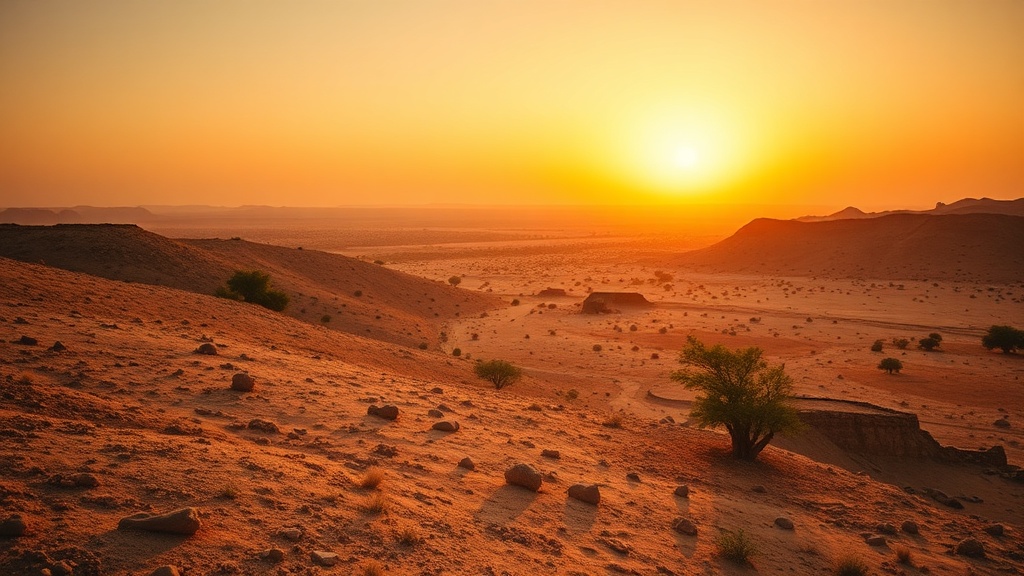
A hot coastal strip, a mountain wall behind it and a high plateau running south into the grazing lands.
The shape
Around 177 000 km² — larger than England and Wales together — bordered by Djibouti, Ethiopia and the rest of Somalia, with about 850 km of Gulf of Aden coast. The claimed borders are those of the British protectorate as they stood in 1960.
The Guban
The coastal plain, whose name means burnt, running behind the Gulf of Aden — scorching, low and sparsely settled, with temperatures among the highest recorded anywhere on earth in summer.
⭐ The Ogo escarpment
The mountain wall rising steeply behind the coast to over 2 000 m, catching what rain there is, holding relict juniper forest, and dropping away south onto the plateau. Shimbiris, at 2 460 m, is the high point of the whole Somali-speaking world.
The Haud
The high plateau running south and east into Ethiopia's Somali region — open grazing country that is the heart of the pastoral economy, and whose transfer to Ethiopia in 1954 remains one of the great grievances of Somali history.
The water
No permanent rivers at all. Water comes from seasonal togga watercourses that run for hours after rain, from boreholes and from berkads, the cement rainwater cisterns that have spread across the rangeland since the 1970s.
Hargeisa
The capital, at about 1 300 m on the plateau, which is why it is bearable — daytime temperatures in the high twenties and genuinely cool nights, in a country whose coast is one of the hottest places on the planet.
The altitude difference between the coast and the plateau explains more about this country than any map line. Berbera at sea level regularly passes 45 °C in summer and empties as anyone who can afford to leaves; Hargeisa, 1 300 m up and two hours away, is pleasant all year. The seasonal movement between the two — down to the coast in winter, up to the plateau in summer — is older than any border here and is still how a great many families organise their year.
⛰️ The Highlands
A mountain range holding the last cloud forest in the Horn, and almost nobody outside the region knows it is there.
⭐ Daallo
The escarpment above Erigavo in Sanaag, where the plateau drops two thousand metres to the coastal plain in a single wall — one of the most dramatic viewpoints in Africa and effectively unvisited.
⭐ The juniper forest
Relict Juniperus procera forest survives on the escarpment where mist condenses out of the air, the last substantial stand in the Horn of Africa. It is a fragment of a much wetter past and it is shrinking under grazing and cutting.
Shimbiris
At 2 460 m the highest point in Somaliland, in Somalia's claimed territory and in the Somali-speaking world, reached by a long drive from Erigavo and a walk. Very few outsiders have stood on it.
Sheikh
A small town on the escarpment, cool and green by local standards, with a colonial-era secondary school that educated a substantial share of the region's political class and a famously hair-raising mountain pass road.
⚠️ The frankincense hills
The Boswellia trees that produce the world's frankincense grow on these slopes, tapped by families holding hereditary rights, and the populations are declining under over-tapping driven by global demand for incense oils.
Getting up there
Sanaag is far east, the roads are slow, and the security picture varies with the Sool and Sanaag situation. Anyone going needs current local advice rather than a guidebook, which is why this page gives the geography and not a route.
The Daallo escarpment deserves to be much better known than it is. A two-thousand-metre drop from a juniper-forested plateau to a burning coastal plain, with cloud pouring over the lip in the afternoon and vultures riding the edge, would be a national park with a visitor centre almost anywhere else in the world. Here it has a dirt road, a handful of families grazing on it and no protection worth the name, because the entity that administers it cannot join the conventions that would protect it.
🌦️ Climate
Hot and dry everywhere, brutal on the coast, and organised around the same four Somali seasons.
The four seasons
Jilaal, the hard dry season from January to March; Gu, the main rains from April to June; Xagaa, dry and windy from July to September; and Deyr, the shorter rains from October to December.
⚠️ Berbera in summer
The coast in Xagaa is among the hottest inhabited places on earth, regularly above 45 °C with high humidity, and the local wind, the kharif, blows hot off the land rather than cooling anything.
Hargeisa
At altitude the climate is genuinely pleasant — high twenties by day for most of the year, cool evenings, and a short green season after the Gu rains when the plateau turns briefly into grassland.
⚠️ Drought
The 2016–17 drought killed a very large share of the national herd and pushed hundreds of thousands into displacement camps, and the 2020–23 sequence of failed rains hit again before the recovery was complete. Livestock is the economy, so drought is not a weather event but an economic one.
⚠️ And then floods
Hargeisa's seasonal watercourse floods the city when heavy rain falls on hard ground, and the pattern of longer droughts broken by more violent rain is the local face of climate change.
When to go
November to February is the practical window — the coast is bearable, the plateau is pleasant and the roads are dry. Avoid June to September on the coast entirely unless you have a specific reason to be there.
The kharif is worth knowing about because it inverts what a visitor expects from a coast. From roughly June to September a strong hot wind blows off the interior across the Gulf of Aden, filling the air with dust, raising the sea and making the coastal towns close to uninhabitable for anyone with a choice. Berbera's population has historically halved in those months, and the pattern of moving up to the plateau for the summer is the oldest seasonal rhythm in the country.
🌊 The Coast
Eight hundred and fifty kilometres of Gulf of Aden shoreline, one very good harbour and four thousand years of trade.
⭐ Berbera
The great natural harbour of the southern Gulf of Aden, traded through since antiquity, held by the Ottomans, the Egyptians and the British, given a Soviet airbase in the 1970s and an American one after 1980. It is the country's economic future and the centre of every recognition negotiation.
⭐ The DP World concession
A 442 million dollar agreement signed in 2016 gave DP World a long concession to expand and operate the port, with Ethiopia later taking a stake. Container capacity and throughput have risen sharply, and a free economic zone has been built behind it.
The Berbera corridor
The road to the Ethiopian border, upgraded with international funding, which is the whole commercial logic of the port — landlocked Ethiopia has a hundred and thirty million people and one usable port at Djibouti.
Zeila
The far west, near Djibouti: once the capital of the Adal sultanate and one of the great Red Sea trading ports, now a small town among ruins, with coral-stone mosques standing in the sand and a lagoon full of birds.
The reefs and the islands
The Gulf of Aden coast has coral reef and whale sharks off Berbera in season, and the Saad ad-Din islands off Zeila. None of it has meaningful protection or scientific survey.
⚠️ The military question
Berbera's airstrip is one of the longest in Africa, built for the Soviet air force and once designated a shuttle emergency landing site. In 2026 President Irro has openly offered base access to foreign powers as part of the recognition campaign.
Berbera is the reason Somaliland's recognition question has become geopolitics rather than jurisprudence. A deep natural harbour with a free zone, a paved corridor to Ethiopia's hundred and thirty million people and one of Africa's longest runways sits on the Gulf of Aden opposite Yemen, at the entrance to the Red Sea, in a decade when everyone from Washington to Abu Dhabi wants a position there. Somaliland's government knows exactly what it is selling, and has said so publicly.
🛡️ Safety
Genuinely much safer than Somalia, genuinely not safe everywhere, and the difference matters enormously.
⭐ The basic picture
Hargeisa and the main western corridor are calm, with very low violent crime and a visible, functioning police force. Independent travellers do visit, walk around the capital and eat in restaurants without incident. This is not Mogadishu and the comparison is misleading.
⚠️ But the advisories still apply
Most foreign ministries, the Czech one included, issue their Somalia advice for the whole territory and advise against all or all but essential travel. Standard travel insurance is generally void under such an advisory regardless of how calm Hargeisa feels.
⚠️ The east
Sool and parts of Sanaag are contested with SSC-Khaatumo forces and have seen substantial fighting since 2023. Laascaanood and the areas around it are outside Somaliland's control and should be treated as an active conflict zone.
The escort rule
Travel outside Hargeisa on many routes legally requires an armed police escort — a Special Protection Unit officer hired for a modest daily fee and arranged through a hotel or tour operator. It is a formality on the main roads and it is not optional.
The threat that remains
Al-Shabaab is not established in Somaliland and the security services have been effective at keeping it out, but attacks have occurred historically — the 2008 suicide bombings in Hargeisa killed more than twenty people. Kidnapping risk is far lower than in the south and is not zero.
Health
Malaria is present, medical facilities are basic, and anything serious means evacuation to Addis Ababa, Djibouti or Nairobi. Insurance that names medical evacuation matters more here than anywhere a visitor is likely to have been before.
The honest position on visiting is that Somaliland occupies a real and unusual middle ground. It is not Somalia, where independent travel is indefensible; it is also not a normal destination, because the advisories are written for the whole recognised territory, insurance follows the advisories, and the east is at war. People do come — a few thousand a year, mostly for Laas Geel and Hargeisa — and they come with a visa arranged in advance, a local operator, an escort where required and insurance that explicitly covers them.
🏺 The Ancient Ports
Frankincense, five-thousand-year-old paintings and a coast that traded with Egypt before it traded with anyone in Europe.
⭐ The incense coast
The dry hills behind Berbera produce frankincense and myrrh, and Egyptian expeditions to the Land of Punt sought exactly these from the third millennium BC. The trees are still tapped by families holding hereditary rights to individual trees.
⭐ Laas Geel
Rock shelters near Hargeisa holding polychrome paintings dated to roughly 3000 BC or earlier, in reds, whites and oranges so well preserved that they look recent. They were described scientifically only in 2002.
Zeila
A major Red Sea port from at least the ninth century, capital of the Adal sultanate, a centre of Islamic learning and the gateway to Harar and the Ethiopian highlands. It is now a small town among its own ruins.
The Periplus
The first-century Greek merchant's handbook describes the ports of this coast trading incense, tortoiseshell and cinnamon for cloth, iron and wine — several of the harbours it names are still in use.
Islam
Arrived very early through Red Sea trade, and the region has been Muslim for well over a thousand years. Zeila and later Harar were centres of scholarship, and the tombs of early sheikhs are still visited.
The Adal wars
In the 1520s and 1530s Ahmad ibn Ibrahim al-Ghazi led the Adal sultanate's armies into the Ethiopian highlands and nearly conquered them, before Portuguese intervention turned the war and he was killed in 1543.
Laas Geel matters for a reason beyond its beauty. The paintings show long-horned cattle with decorated necks, accompanied by human figures — a settled herding society, on a plateau that is now dry scrub, five thousand years ago. They are among the earliest and best-preserved evidence anywhere of pastoralism in the Horn, which is to say they are the earliest picture of the economy that still supports most of this country.
🏴 The Protectorate
Seventy years of British rule run on almost no money, which left an administrative tradition and very little else.
1884
Britain signed protection treaties with the northern Somali clans and declared a protectorate, primarily to secure the meat supply for the garrison at Aden across the Gulf. The territory was known unofficially as Aden's butcher's shop.
⭐ The Dervish war
Mohammed Abdullah Hassan led a religious and anti-colonial movement from 1899 to 1920, building stone forts at Taleh and fighting four British expeditions to a standstill. Britain broke it in 1920 with aerial bombardment, among the first such campaigns anywhere.
How it was governed
Lightly and cheaply, through district commissioners working with clan elders, with minimal investment in schools, roads or clinics and a deliberate policy of leaving customary structures intact.
⚠️ The Haud transfer
In 1954 Britain confirmed the transfer to Ethiopia of the Haud and Reserved Area, vast grazing lands used by Somaliland's pastoralists for centuries. The protest was enormous, it radicalised a generation, and it is remembered as a betrayal to this day.
What it did leave
An English-language administrative tradition, a small educated elite largely from the Sheikh secondary school, and a habit of governing through elders rather than around them — which turned out to matter greatly in the 1990s.
The Second World War
Italy overran the protectorate in August 1940 and Britain retook it in March 1941, going on to occupy Italian Somaliland as well and administer both for a decade.
The contrast between British and Italian rule is the origin of most of what follows in this story. Italy built plantations, roads and a capital in the south and governed intrusively; Britain spent almost nothing in the north and governed through elders. The result was two territories with different legal systems, different colonial languages, different administrative cultures and radically different expectations — which united in 1960 after five days of negotiation and almost no preparation.
🗓️ The Five Days
British Somaliland was an independent sovereign state for five days in June 1960, recognised by thirty-five countries, before it voluntarily gave that up.
⭐ 26 June 1960
The State of Somaliland became independent of the United Kingdom, with its own government, and received messages of recognition from around thirty-five states including the United States, Egypt and Israel. It was, briefly and unambiguously, a sovereign country.
1 July 1960
Five days later it united with Italian Somaliland, which became independent that morning, to form the Somali Republic — driven by the pan-Somali ideal of uniting all five Somali territories.
⚠️ How it was done
Hastily. The two territories signed different versions of the Act of Union, the northern legislature's version was never properly reconciled with the south's, and the legal basis of the union was contested by lawyers from the start.
⚠️ The 1961 referendum
A constitutional referendum was rejected by a majority of voters in the north and passed on southern votes. Months later a group of northern officers attempted a coup to dissolve the union; the court acquitted them on the ground that no valid union existed to rebel against.
Why it matters now
Because Somaliland's legal claim is not secession but the dissolution of a voluntary union between two states that were separately sovereign — closer to Senegambia or the United Arab Republic than to Katanga.
The southern view
That the Somali Republic was a single new state from 1 July 1960, that its territorial integrity is protected by the African Union's founding principle, and that a region cannot leave it unilaterally. Both positions are seriously argued.
The five days of 1960 are the whole legal foundation of the recognition argument and they are genuinely unusual. Most separatist claims ask the world to redraw a border; Somaliland's asks the world to acknowledge that a union of two sovereign states was dissolved, which is a thing international law has accepted before. Whether the Act of Union created one indivisible state or a federation of two is a question that was never cleanly settled in 1960, and thirty-five years of argument have not settled it either.
🤝 The Union
Thirty-one years inside the Somali Republic, in which the north went from enthusiastic partner to armed rebellion.
The imbalance
The capital, the presidency, the ministries and the institutions were all in Mogadishu, the southern population was larger, and the Italian-derived legal and administrative system prevailed. Northern politicians found themselves a permanent minority in a state they had joined voluntarily.
The democratic decade
The Somali Republic held competitive elections and transferred power peacefully in 1967 — genuinely rare in Africa then — while northern grievance about representation and investment grew steadily.
⚠️ 1969
Siad Barre's coup ended the democratic period. The military government centralised everything in Mogadishu, banned parties and clan reference, and after the Ogaden defeat of 1978 increasingly governed by favouring some clans and punishing others.
⭐ The one good thing
The 1972 Latin script for Somali and the literacy campaigns that followed were genuinely transformative here as everywhere, and are remembered as such even by people whose city the same regime later destroyed.
⚠️ The refugee influx
After 1978 hundreds of thousands of ethnic Somali refugees from the Ogaden were settled in the north, armed and favoured by the regime, in competition with the local Isaaq population for land, water and aid. It was a deliberate policy and it was incendiary.
⚠️ The SNM
The Somali National Movement was founded in London in 1981 by northern exiles, and fought a guerrilla war from Ethiopian bases through the 1980s. The regime answered with collective punishment of the civilian population it drew on.
The most consequential decision of the union period was demographic rather than military. Settling and arming a large refugee population in the north, in direct competition with the existing inhabitants for scarce grazing and water and with privileged access to aid, converted a political grievance about representation into a fight over survival. The regime did it deliberately, as a way of diluting a region it no longer trusted, and it is the direct antecedent of everything that happened in 1988.
⚠️ 1988
The Somali air force bombed Hargeisa from its own airport, destroyed most of the city, and killed tens of thousands of its own citizens.
What happened
In May 1988 the SNM launched offensives on Burao and Hargeisa. The regime responded with artillery and sustained aerial bombardment of the cities themselves, with aircraft flying from Hargeisa's own airport and returning within minutes.
⚠️ The scale
Hargeisa was around ninety per cent destroyed. Estimates of the dead run from tens of thousands to around fifty thousand, overwhelmingly civilians, and perhaps four hundred thousand people fled into Ethiopia in a matter of weeks.
⚠️ The assessment
A 2001 investigation commissioned by the UN concluded that the campaign against the Isaaq amounted to genocide, and mass graves have been exhumed around Hargeisa since. The dead were killed by their own government's air force.
⭐ The MiG monument
A Somali air force MiG-17, shot down over the city during the bombardment, stands on a plinth in central Hargeisa as the national memorial. Its meaning is exact: this is the aircraft that bombed us, and it took off from our own runway.
The mines
The retreating army mined the cities and the countryside heavily, and clearance has taken decades. Mine risk remains in parts of the east and is the reason for some of the movement restrictions that still apply.
Why this section exists
Because no account of Somaliland's position makes sense without it. When people here say they will not return to a union with Mogadishu, this is what they are refusing to return to, and it is within living memory for most adults.
The MiG monument is the single most eloquent object in the country and it repays standing in front of. A jet fighter on a concrete plinth in the middle of a rebuilt city, with the murals around it showing the bombing, is not a war memorial in the European sense — it does not commemorate soldiers who went away to fight. It commemorates the fact that the aircraft which flattened this city took off two kilometres from where it now stands, and that is why the argument about recognition here is not an abstraction about international law.
🕊️ 1991 and the Peace
The unusual part is not that Somaliland declared independence in 1991, but that it then made peace with itself without outside help.
18 May 1991
Four months after Siad Barre fled Mogadishu, a conference of clan elders and the SNM at Burao declared the restoration of Somaliland's sovereignty within the 1960 protectorate borders. It was a decision taken by elders, not by an army command.
⚠️ And then civil war anyway
The early 1990s brought serious internal fighting between clans and SNM factions, with Berbera and Burao contested and Hargeisa damaged again. The state very nearly failed at birth.
⭐ The Borama conference
In 1993, elders met at Borama for four months — paid for locally, with no foreign mediators — and produced a peace charter, a national constitution and a transfer of the presidency to Mohamed Haji Ibrahim Egal. It is the founding act of the modern polity.
⭐ The guurti
The conferences produced a hybrid system: an elected president and lower house alongside an upper house of clan elders, the Guurti, with a formal constitutional role. It is the institutional bridge between customary and modern authority that Somalia never built.
Demobilisation
Militia fighters were integrated into a national army and police over years, paid for out of livestock export revenue, with clan elders guaranteeing the deals. There was no DDR programme and no foreign funding of any scale.
⭐ Why it worked
Local ownership, no external money to fight over, elders with genuine authority, a shared memory of 1988, and the absence of any international mission whose presence could be gamed. It is studied precisely because it inverts every assumption of intervention-led peacebuilding.
The Borama conference is the most important thing in this entire page and it is barely known outside the region. While the world was spending billions on a failed intervention four hundred kilometres to the south, several hundred elders sat under trees in a small border town for four months, funded by local businessmen and livestock traders, and negotiated a constitution, a demobilisation and a peaceful transfer of power. Somaliland's stability was not built by the international community; it was built in the absence of the international community, and the two facts are related.
🏛️ Government
A hybrid system in which an elected president and parliament sit alongside a house of clan elders with constitutional standing.
The structure
A directly elected president serving five years, a House of Representatives of 82 members elected by proportional representation, and the Guurti, an upper house of 82 clan elders. The constitution was approved by referendum in 2001 with a large majority.
⭐ The three-party rule
The constitution permits exactly three national parties at a time, to prevent fragmentation along clan lines. Parties compete for that status in local elections held periodically, and the losers dissolve. It is an unusual design and it has worked.
⚠️ The Guurti problem
The upper house has never been elected. Its members were seated in 1993 and have extended their own mandate repeatedly, with seats passing to sons on death. It is the most criticised institution in the country and reform of it has been promised by every government.
The courts
Three systems operate in parallel: statutory courts, sharia courts and customary xeer administered by elders, with most civil and land disputes still resolved under the third. It works, and it makes legal certainty for outside investors difficult.
The record
Presidential elections in 2003, 2010, 2017 and 2024, all producing peaceful transfers or confirmations, with the 2003 contest decided by eighty votes out of nearly half a million and accepted by the loser.
⚠️ The delays
Elections have also been postponed repeatedly — the 2024 presidential vote was more than two years late, and parliamentary elections went twenty-one years without being held between 2005 and 2021. The system delivers, slowly and after arguments.
The 2003 election is the story Somalilanders tell about themselves and it deserves the space. Dahir Riyale Kahin beat Ahmed Silanyo by eighty votes out of roughly 488 000 — a margin of about 0,01 per cent, in a poor country with no international observers of any weight, four years after a civil war. Silanyo accepted the result, and won the presidency himself seven years later. Very few recognised democracies have passed a harder test.
🗳️ The 2024 Election
The fourth peaceful transfer of power, held two years late, won by the opposition with nearly two thirds of the vote.
The result
On 13 November 2024 Abdirahman Mohamed Abdullahi, known universally as Irro, of the opposition Waddani party took 63,92 per cent against the incumbent Muse Bihi Abdi of Kulmiye on 34,81 per cent. Turnout was high and polling was orderly.
⭐ The transfer
Muse Bihi conceded and left office. Irro was inaugurated in December 2024 — the fourth time an incumbent or ruling party in Somaliland has handed power to an opponent after losing a vote.
Who Irro is
A former speaker of the House of Representatives, long-serving and widely seen as a consensus figure, who spent years in Finland and returned to lead Waddani. He campaigned on the economy, on the east and on internationalising the recognition case.
Why the delay
The vote was originally due in November 2022 and was postponed by the Guurti, producing large protests in which people were killed. A compromise eventually combined the presidential vote with the party-licensing contest in November 2024.
⚠️ What he inherited
Laascaanood and much of Sool outside government control after the 2023 fighting, a strained budget, the Ethiopia memorandum unresolved, and an electorate impatient about both the east and the economy.
⭐ And what arrived
Thirteen months into his term, Israel's recognition transformed the diplomatic position he had been elected to work on, and 2026 has been dominated by the campaign to convert one recognition into several.
The significance of 2024 is best measured against the neighbourhood. In the same period Somalia has been unable to hold a direct national election at all, its president's mandate has expired amid constitutional dispute, and Ethiopia's last election was contested. Somaliland, with no international election funding, no recognition and no UN mission, counted the votes, announced that the government had lost, and swore in the man who beat it.
⭐ The Recognition Question
Thirty-four years of nothing, and then one recognition from the least expected direction.
⭐ 26 December 2025
Israel became the first UN member state to formally recognise the Republic of Somaliland as sovereign and independent, with Netanyahu framing it in the spirit of the Abraham Accords and both sides agreeing to exchange ambassadors and open embassies.
⚠️ The Security Council
An emergency session was convened within days. Speakers warned that the move threatened stability in the Horn and breached Somalia's territorial integrity; fourteen of the fifteen members condemned it, and the United States alone did not.
The regional reaction
Mogadishu reacted with fury, as did the Arab League and much of the African Union. Critics noted the awkwardness of a state recognising Somaliland while rejecting Palestinian statehood, and that point has been made repeatedly since.
The legal case for
That Somaliland was separately sovereign for five days in 1960 and recognised by some thirty-five states, that the union was never validly completed, that it has met the criteria for statehood for thirty-five years, and that dissolving a union is not secession.
The case against
That the African Union's founding principle protects inherited borders precisely to prevent a cascade of claims, that Somaliland does not control its own claimed territory in the east, and that recognition rewards a fait accompli at Somalia's expense.
⚠️ What has changed in practice
So far, remarkably little. Somaliland still cannot borrow from the IMF or World Bank, still cannot join UNESCO, and its passport is still accepted by only a handful of states. One recognition does not open the institutions; a critical mass might.
What Somaliland is now doing with its single recognition is the most interesting thing in Horn of Africa diplomacy. President Irro has spent 2026 explicitly offering Berbera — the port, the free zone and one of Africa's longest runways — for foreign military basing, describing the Djibouti model as the goal, and travelling to the Gulf and Washington to press the case. It is a transactional strategy stated in public without embarrassment: a small state with one asset the great powers currently want, trying to convert geography into legal existence before the window closes.
⚠️ Sool and Sanaag
The eastern third of the claimed territory, where a substantial population does not want to be in Somaliland at all.
The disagreement
Somaliland claims the colonial protectorate borders, which include Sool and eastern Sanaag. Much of the population there belongs to clans whose kin are in Puntland, and identifies with Somalia rather than with Hargeisa. Territory and clan do not line up.
⚠️ 2023
Fighting broke out at Laascaanood after local protests, Somaliland forces were pushed out of the city in August 2023, and hundreds were killed with well over a hundred thousand displaced into Ethiopia and elsewhere.
SSC-Khaatumo
The administration that emerged there seeks union with federal Somalia rather than independence, and Mogadishu has moved to bring it into the federal structure — a direct challenge to Somaliland's territorial claim.
⚠️ Why it undercuts the case
The strongest argument for recognition has always been effective control over a defined territory. Not controlling a third of the claimed area weakens exactly that argument, and opponents of recognition say so constantly.
Irro's position
He campaigned on resolving the east and has spoken of dialogue rather than force, without setting out how. No settlement has been reached, and the military option would be costly and probably unwinnable.
⚠️ For visitors
Sool and the contested parts of Sanaag are an active conflict area and should not be visited. The practical travel country is the west and centre — Hargeisa, Berbera, Borama, Burao and the routes between them.
The east is the hardest problem in this entire page and the one with no good answer available. Somaliland's claim rests on colonial borders, which is the same principle the African Union uses against it — and inside those borders is a population that rejects the claim on exactly the grounds of self-determination that Somaliland invokes for itself. Both sides are using the other's argument, and the people of Laascaanood have paid for the contradiction.
💹 Economy
Livestock, remittances and a port — an economy that has grown for three decades without access to a single international loan.
⭐ Livestock
The overwhelming export: sheep, goats, cattle and camels shipped live from Berbera to Saudi Arabia and the Gulf, peaking before the Hajj. President Irro reported exports reaching 3,6 million head in his 2026 address.
⭐ Berbera
The port under DP World concession since 2016, with a new container terminal, an economic zone and a corridor road to Ethiopia. Cargo throughput was reported up 27 per cent in 2026, and the port is the centre of every economic and diplomatic plan the country has.
⭐ Remittances
Several hundred million dollars a year from a diaspora concentrated in the United Kingdom, the Gulf and Scandinavia, moved through hawala firms that grew into the country's de facto banking system.
⚠️ The recognition penalty
No IMF or World Bank lending, no sovereign borrowing, very limited foreign direct investment outside the port, and no access to the concessional finance that comparable countries use to build roads and power. This is the single largest economic cost of non-recognition.
The currency
The Somaliland shilling, issued by its own central bank since 1994 and traded at many thousands to the dollar — with almost all substantial transactions done in dollars or by the country's very widely used mobile money system.
The constraints
Drought that periodically destroys the herd, dependence on a single export to a single region, an unresolved dispute over land title, and a youth unemployment rate that drives emigration towards Europe by the central Mediterranean route.
The economic effect of non-recognition is easiest to see in what is missing. A comparable country with a functioning government and a growing port would be borrowing from the World Bank for roads, power and water, and would have the sovereign credit rating that makes private investment cheap. Somaliland has built what it has out of livestock receipts, port revenue and remittances alone, which is an extraordinary achievement and also a low ceiling — and it explains why the recognition campaign is pursued as an economic policy rather than as a matter of national pride.
👥 Society
Young, pastoral, Muslim and organised by clan — with a diaspora that rebuilt the capital.
The people
Around 5,7 million by government estimate, overwhelmingly Somali, with the Isaaq clan family predominant and the Dir clans in the west and the Harti in the east. A very young population and rapid urbanisation towards Hargeisa.
⭐ The elders
Clan elders hold real, formalised authority — they negotiated the peace, they sit in the upper house, and they still settle a large share of disputes under xeer. Somaliland's distinguishing feature is that it built its state on this rather than against it.
⭐ The diaspora
Large communities in the United Kingdom — Cardiff's Somali community is among the oldest in Britain, dating to the nineteenth-century merchant navy — plus the Gulf, Scandinavia and the Netherlands. They financed the rebuilding of Hargeisa house by house.
⚠️ Women
Female genital mutilation prevalence is among the highest in the world, and women's representation in parliament has been minimal despite women voting in large numbers. Somaliland women's organisations have campaigned on both for decades.
Education
A university system built since 1997 with diaspora and local funding — the University of Hargeisa, Amoud in Borama and others — with large numbers of women students and a serious graduate unemployment problem.
⚠️ Emigration
Tahriib — the journey through Ethiopia, Sudan and Libya to Europe — takes large numbers of young men and increasingly women, and the deaths on that route are a constant subject of poetry, song and public argument here.
The word tahriib carries weight that no English translation reaches. It means the irregular journey to Europe, and in Somaliland it is not an abstraction about migration policy but a specific thing that happens to specific young people from specific neighbourhoods, whose families often learn about the Libyan detention centres from ransom calls. There are songs and poems about it, mothers' campaigns against it, and a widespread understanding that a country which educates young people it cannot employ will keep losing them to the desert.
🗣️ Language
Somali everywhere, Arabic in religion and law, and English rather than Italian — which is one of the quiet legacies of the colonial split.
Somali
The language of essentially the whole population, in its northern dialect, which is the basis of the standard written form codified in Latin script in 1972. Somaliland uses the same orthography as Somalia.
⭐ English
The second working language, a direct inheritance of the British protectorate, used in higher education, business and government correspondence. It is markedly more widespread here than in the south, where Italian filled the same role and has faded.
Arabic
Co-official, used in religious life, courts and trade with the Gulf, taught in schools and widely understood in the commercial towns.
⭐ The poetry
Somali oral poetry is a national institution and the northern tradition is its heartland. The gabay, a long alliterative form, has been used to declare war, negotiate peace and destroy reputations, and the Dervish leader Mohammed Abdullah Hassan was feared as much for his verse as for his rifles.
A few words
Nabad is peace and is how you both greet and part; iska warran is how are you; mahadsanid is thank you; waa runtaa is you are right. Trying is noticed and appreciated.
The written renaissance
Hargeisa has an annual international book fair, founded in 2008, which has grown into one of the more significant literary events in the Horn and draws writers from across Africa and the diaspora.
The English inheritance is a bigger practical asset than it sounds. Somaliland's civil servants, university lecturers and business people work in English, its laws and contracts are drafted in it, and its diaspora is concentrated in Britain — so when a foreign investor, journalist or diplomat arrives, the conversation happens without an interpreter. Seventy years of a cheap and neglectful protectorate left almost no infrastructure and one thing that has turned out to matter.
🕌 Religion
Sunni Islam, universal and unchallenged, with a Sufi past that the modern era has worn down.
The basics
Effectively the entire population is Sunni Muslim of the Shafi'i school. Islam is the state religion, the constitution bars laws contrary to it, and proselytising for other faiths is prohibited.
The Sufi inheritance
Somali Islam was historically organised through Sufi orders and religious settlements, whose sheikhs mediated between clans and were protected by custom from the violence around them. Salafi influence from the Gulf has reduced that role over recent decades.
Religion and the state
Sharia is a principal source of law, applied alongside statutory courts and customary xeer. Which applies depends on the dispute — commercial matters increasingly go to statutory courts, land and injury usually to elders.
Zeila and Sheikh
Both were centres of Islamic learning, and the tombs of early sheikhs are still visited. The country's oldest mosques, in coral stone, are at Zeila in the far west and are largely unprotected.
Daily life
Prayer structures the day, Friday closes everything, Ramadan changes the rhythm of the whole country, and the Hajj is the largest commercial event of the year because of the livestock export peak that precedes it.
For visitors
Alcohol is illegal and unavailable. Women visitors should cover their hair and dress modestly; men should avoid shorts. Ask before photographing anyone, particularly women, and expect refusals.
Religious homogeneity is one of the underrated reasons Somaliland's peace held. There was no sectarian dimension to the war, no minority to be protected or persecuted, and no religious argument about the legitimacy of the settlement — so the elders at Borama were negotiating about grazing, compensation and power rather than about belief. It removed one of the variables that has made reconciliation elsewhere in the region so much harder.
🎭 Culture
A poetry culture, a music archive that was buried to save it, and a capital that has become a literary centre.
⭐ The buried tapes
When the bombing of Hargeisa began in 1988, staff at Radio Hargeisa buried the station's master tapes — decades of Somali music, much of it existing nowhere else — in the ground before fleeing. They were recovered years later and digitised by an archive in Norway.
⭐ The music
The Somali scene of the 1970s and 1980s — Waaberi, Iftin, and Sahra Halgan, who sang for the SNM and now runs a cultural centre in Hargeisa — fused Somali scales with funk, soul and Indian film music.
⭐ The book fair
The Hargeisa International Book Fair, running since 2008, is among the most significant literary events in the Horn, with writers from across Africa and the diaspora and audiences of thousands in a country most of them had never visited.
Poetry
Memorised, recited, broadcast and politically potent. Poems circulate on social media and in halls in Cardiff and Minneapolis as much as in Hargeisa, and a well-made verse still moves opinion in a way no editorial does.
The camel
Wealth, bride price, compensation, milk, meat and the subject of an enormous poetic literature. A man's standing has traditionally been counted in animals, and camel milk remains a daily staple rather than a curiosity.
Crafts and textiles
Woven mats, wooden headrests, milk vessels and the dirac and guntiino worn by women — objects designed to be carried by people who move, which is most of the material culture of a pastoral society.
The Hargeisa book fair says something about this place that statistics do not. A city that was ninety per cent destroyed in 1988 hosts an international literary festival that draws novelists from Nigeria, Kenya and the diaspora to a country most of their governments do not recognise, funded locally, in a language with a fifty-year-old written form. It is the clearest expression of a national strategy that runs through everything here: behave like a state, build the institutions of one, and wait for the world to catch up.
🏺 Laas Geel
Five-thousand-year-old paintings in near-perfect condition, an hour from the capital, with no World Heritage status and no prospect of any.
⭐ What it is
A cluster of granite shelters above the confluence of two seasonal watercourses, roughly fifty kilometres from Hargeisa, holding polychrome paintings dated to around 3000 BC or earlier. The name means the camels' watering hole.
⭐ The paintings
Long-horned cattle with elaborate decorated collars or robes around the neck, accompanied by human figures with raised arms, plus dogs, a giraffe and antelope. The reds, whites and oranges are astonishingly unfaded because the overhangs have kept off sun and rain for five millennia.
The discovery
Local people always knew it was there. A French archaeological team surveyed and published it in 2002, and it entered the scholarly record then — one of the most important rock art sites in Africa, described within living memory.
⚠️ No UNESCO
Somaliland cannot nominate it because it is not a UNESCO member state, and Somalia cannot realistically nominate a site it does not administer. One of Africa's outstanding prehistoric sites has no international protection for purely political reasons.
How it is protected
By a local caretaker family, a small entry fee, a fence in places and the department of tourism. Visitors are accompanied and graffiti has been limited, but there is no conservation science, no monitoring and no budget.
Visiting
A half-day trip from Hargeisa with a permit from the tourism department, a driver and usually an escort. You climb over granite to the shelters, and there is generally nobody else there.
Standing at Laas Geel is the best argument anyone has made for recognition, and it is not a legal one. A painted gallery older than the pyramids, in condition that would make it a global destination anywhere else, sits above a dry riverbed with a caretaker, a fence and a handful of visitors a week — unlisted, unmonitored and unfunded, not because anyone disputes its value but because the authority that looks after it is not allowed to sign the convention that would protect it. The paintings have lasted five thousand years; the argument about who may protect them is now the main risk they face.
🐪 Wildlife
Endemic species in the mountains, a cheetah trafficking route through the ports, and almost no survey data at all.
⭐ The mountain endemics
The Warsangli linnet, found only in the juniper forests of the northern escarpment and critically endangered, plus endemic reptiles and plants on the same slopes. It is one of the least studied endemic assemblages in Africa.
⚠️ The cheetah trade
Cubs taken in the Ethiopian and Somali borderlands are moved through Somaliland's coast to the Gulf, where they are sold as pets. Somaliland's authorities have seized substantial numbers and run a cheetah rescue centre near Hargeisa, largely on foreign donations.
What survives
Beira antelope, Speke's gazelle, gerenuk, dik-dik, striped hyena, caracal and small numbers of cheetah and leopard in the drylands. Lion and elephant are long gone from the territory.
Birds
The Horn's endemic bird list is exceptional, and the wetlands and lagoons around Zeila are a significant stop on the migratory flyway between Eurasia and Africa. Almost none of it is systematically counted.
The sea
Whale sharks off Berbera in season, dugongs, turtles and reefs in the Gulf of Aden with essentially no scientific survey and no protection.
⚠️ The pressures
Charcoal cutting, over-tapping of frankincense trees, unregulated fishing in the Gulf and grazing pressure on the juniper forest. Livestock numbers rebuild after every drought and press on the same shrinking rangeland.
The cheetah rescue centre outside Hargeisa is worth mentioning because of what it represents. Somaliland cannot join CITES, because CITES is a treaty between states, so it has no formal standing in the international system that governs wildlife trafficking — and yet its coast is one of the main routes by which Horn of Africa cheetah cubs reach the Gulf. Its authorities seize the animals anyway and hand them to a privately funded centre, doing the work of a convention they are not allowed to sign.
🌱 Conservation
No World Heritage sites, no CITES membership, no access to climate finance, and an environment under real pressure.
⚠️ The institutional gap
Somaliland cannot join UNESCO, CITES, the Ramsar Convention or the climate finance mechanisms, because all of them are agreements between recognised states. Its environment ministry does the work without any of the tools.
⚠️ Charcoal and deforestation
Acacia cut for charcoal, both for domestic use and for export, has stripped large areas of the rangeland, and every drought is worse for it. Bans exist and enforcement is limited.
⚠️ The frankincense decline
Boswellia populations on the northern escarpment are declining under over-tapping driven by global demand for incense oils, with researchers warning of collapse within decades unless harvesting intervals lengthen.
The juniper forest
The relict cloud forest above Daallo is the last substantial stand in the Horn and is shrinking under cutting and grazing, with no protected status that anyone enforces.
⭐ What is working
Community rangeland enclosures, the cheetah centre, local fisheries agreements and diaspora-funded tree planting. All are small, all depend on individuals, and all are doing the work that institutions would do elsewhere.
The climate exposure
Somaliland contributes essentially nothing to global emissions and is among the places most exposed to their effects, and it cannot access the funds established to help exactly such places, because it cannot sign the agreements that created them.
The environmental cost of non-recognition is the least discussed part of the whole question and possibly the most concrete. Laas Geel cannot be World Heritage, the cheetahs cannot be covered by CITES, the Zeila wetlands cannot be a Ramsar site, and the country cannot draw on the adaptation funds created for exactly its situation. Whatever one concludes about the legal merits, the practical consequence is that five thousand years of rock art and the last cloud forest in the Horn are being looked after by a caretaker family and a ministry with no budget.
🏙️ Hargeisa
A city that was ninety per cent destroyed in 1988 and was rebuilt, house by house, largely with money sent home from Britain.
The city now
Somaliland's capital at 1 300 m on the plateau, perhaps a million people, low-rise, sprawling, busy and — by every account of visitors — strikingly relaxed for a capital in this part of the world.
⭐ The MiG
A Somali air force MiG-17 shot down over the city in 1988 stands on a plinth in the centre, with murals of the bombing around it. It is the national memorial and the single most direct statement of why Somaliland will not rejoin Somalia.
⭐ The money changers
The central market has tables piled with bricks of Somaliland shillings in the open air, in a city with almost no street crime — an image that appears in every account of the place, because it tells you something about the security that statistics do not.
The livestock market
On the edge of town, camels, goats and sheep traded every morning before the heat, feeding the export trade through Berbera — the oldest economy in the country, still running.
Eating and staying
Hotels of a decent international standard exist, the restaurant scene is good and cheap, and the coffee and tea culture runs all day. Friday closes the city; most businesses reopen in the afternoon.
The book fair
Held annually since 2008 and now a significant regional literary event, with audiences in the thousands and writers from across Africa — worth timing a visit around if the dates work.
What visitors consistently report about Hargeisa is the absence of what they were braced for. There are no blast walls around the hotels, foreigners walk in the central market, the money changers sit in the open with a year's wages stacked on a table, and the security presence is a normal police force rather than an army. Anyone arriving with Mogadishu in their head has to recalibrate within an hour, and that recalibration is the most common single observation in accounts of the place.
🚢 Berbera
The great harbour of the southern Gulf of Aden, one of the hottest towns on earth, and the asset the whole country is betting on.
The port
A natural deep harbour traded through for millennia, now under a DP World concession with a new container terminal, an economic zone behind it and a corridor road to the Ethiopian border. Throughput rose 27 per cent in 2026.
⚠️ The heat
Berbera in summer is among the hottest inhabited places on the planet, regularly above 45 °C with high humidity and the hot kharif wind blowing off the land. Visit between November and February or not at all.
The old town
Ottoman and colonial-era coral-stone buildings in various states of collapse, a nineteenth-century mosque and the bones of a much wealthier trading town, most of it unprotected and some of it being lost every year.
The runway
Built by the Soviet Union in the 1970s and once designated an emergency landing site for the American space shuttle, it is among the longest runways in Africa and is central to every strategic conversation about the country.
The beaches
Long, empty, warm-water and largely undeveloped, with whale sharks offshore in season. There is modest tourism infrastructure and effectively no crowd at any time of year.
⚠️ The base question
The UAE built and then wound down a military facility here in the late 2010s, and in 2026 President Irro has publicly offered basing rights to foreign powers as part of the recognition campaign. What Berbera becomes is now a geopolitical question.
Berbera is where the abstract argument about recognition turns into something concrete and slightly uncomfortable. A government that has waited thirty-five years for the world to acknowledge a legal case is now openly offering a deep-water port, a free zone and one of Africa's longest runways to whichever powers want a position at the mouth of the Red Sea. It is a rational strategy for a small state with one asset and no patron, and it means the fate of a five-million-person democracy may be settled by considerations that have nothing to do with its own conduct.
🏞️ The Western Towns
Borama, Zeila and the road to Djibouti — the quiet western corner where the peace was negotiated.
⭐ Borama
A pleasant highland town near the Ethiopian border, home to Amoud University, and the place where the 1993 conference of elders produced the peace charter and constitution that founded the modern polity.
⭐ Zeila
Once the capital of the Adal sultanate and one of the great Red Sea trading ports; now a small town of a few thousand among its own ruins, with coral-stone mosques standing in sand and a lagoon full of flamingos.
The Saad ad-Din islands
A small archipelago off Zeila with mangrove, seabird colonies and reefs, named for a sultan of Adal who died there in the fifteenth century. Almost nobody visits and there is no protection.
Sheikh
A cool escarpment town whose colonial secondary school educated much of the region's political class, reached by the spectacular and alarming Sheikh Pass road down to the coastal plain.
The Djibouti border
The crossing at Loyada connects to Djibouti City, which is the practical land route in and out for travellers who do not fly, and is used by trade and by migrants heading for Yemen.
Getting around
Shared four-wheel drives and buses run the main routes, roads to Borama and Berbera are paved and reasonable, and an escort is required on some sections. Travel between towns is done in daylight as a matter of routine.
Borama deserves to be better known than it is, because of what happened there. For four months in 1993, several hundred clan elders sat in a small border town, fed and funded by local traders, and negotiated an end to a civil war, a constitution and a transfer of power — with no foreign mediator, no peacekeeping force and no donor conference. The town has a university and a market and no monument to any of this, which is somehow characteristic.
⛰️ The Eastern Highlands
Burao, Erigavo and the Daallo escarpment — the interior, the frankincense hills and the edge of the contested zone.
Burao
The second city, a livestock trading centre on the plateau and the place where the restoration of sovereignty was declared in May 1991. It was heavily damaged in the war and again in the internal fighting of the early 1990s.
⭐ Erigavo and Daallo
Erigavo is the capital of Sanaag at over 1 700 m, and the Daallo escarpment north of it drops two thousand metres to the coastal plain in a single wall, with relict juniper cloud forest along the rim.
Shimbiris
The highest point in the Somali-speaking world at 2 460 m, reached from Erigavo by a long drive and a walk, with almost no infrastructure and very few outside visitors.
The frankincense country
The Boswellia hills of Sanaag and Bari produce much of the world's frankincense, harvested by families with hereditary rights to individual trees — a trade older than any state in the region.
⚠️ The security line
Sool, centred on Laascaanood, is outside Somaliland's control after the 2023 fighting, and parts of Sanaag are contested. The practical eastern limit for travel changes, and anyone going needs current local advice rather than a page written in September.
Getting there
Long, slow drives on rough roads, with escorts required and permissions needed. Erigavo is a full day from Hargeisa in good conditions and the Daallo road beyond it is worse.
The Daallo escarpment is the strongest argument that this country has genuine tourism potential and the clearest illustration of why it cannot realise it. A two-thousand-metre cloud-forested drop, with vultures on the thermals and the Gulf of Aden shimmering below, sits a day and a half from the capital on roads that a recognised state would have upgraded with a development loan — in a region whose security depends on a dispute that recognition would help settle. Everything here loops back to the same question.
🏝️ The Coast and the Islands
Eight hundred and fifty kilometres of Gulf of Aden shore, almost entirely undeveloped and almost entirely unsurveyed.
The shoreline
From Loyada on the Djibouti border east past Zeila, Berbera and Maydh towards the Puntland boundary, mostly empty, with long beaches, small fishing settlements and a hot narrow plain behind.
The reefs
Coral reef in the Gulf of Aden, whale sharks off Berbera in season and a marine fauna that has had essentially no scientific survey since the 1980s. There is no marine protected area.
Maydh
An old port town on the Sanaag coast with a long trading history and the tomb of Sheikh Isaaq, ancestor of the Isaaq clan family and a significant pilgrimage site.
The fishing
Artisanal, under-capitalised and vastly under-exploited by Somalilanders relative to the resource, while foreign vessels work the same waters with limited oversight. Fisheries development is a stated government priority.
The Zeila lagoons
Wetlands and mangrove with flamingos and large numbers of migratory birds, of clear international significance and with no Ramsar listing available to them.
⚠️ The migrant route
The coast is a departure point for people crossing to Yemen towards the Gulf, a dangerous route with a substantial death toll that is far less reported than the Mediterranean.
The Yemen crossing deserves a sentence because it is one of the least covered migration routes in the world. Tens of thousands of people a year, mostly Ethiopians and Somalis, cross the Gulf of Aden in small boats towards Yemen, hoping to reach Saudi Arabia — into a war zone, with well-documented abuse, detention and killing along the way. It runs in the opposite direction to every assumption about African migration, and it passes along this coast.
🗿 The Other Rock Art
Laas Geel is the famous one, and it is not alone — the country has dozens of painted shelters, most unstudied.
⭐ Dhambalin
A shelter near Berbera published in 2010, holding the earliest known depiction of a sheep in the Horn of Africa, plus cattle and hunting scenes in a distinct style from Laas Geel's.
Karin Heegan and others
A series of painted and engraved sites across Sanaag and Togdheer, some reported by herders and never professionally recorded, in a territory with no systematic archaeological survey.
The archaeology of the ports
Zeila, Berbera and the medieval inland towns hold substantial unexcavated deposits, with Chinese porcelain and Islamic ceramics turning up in surface collection. Almost none of it has been dug.
⚠️ The looting and neglect
Without institutional protection, sites are damaged by grazing, graffiti, casual collection and construction. There is a department of archaeology, and it has almost no money.
The scholarship
A small number of French, British and Somali researchers have worked here since 2002 and the field is wide open — this is one of the least surveyed archaeologically significant regions in Africa.
Visiting them
Laas Geel is straightforward with a permit and a driver. The others need local arrangement, and several are effectively unreachable without a serious expedition.
The archaeological situation here is unusual and worth stating plainly: this is a region of major importance to the prehistory of pastoralism in Africa, with excellent preservation conditions, and it has had perhaps two decades of intermittent professional attention in total. Laas Geel was published in 2002, Dhambalin in 2010, and nobody knows what else is in the escarpment shelters because nobody has been able to look systematically. For an archaeologist it is one of the last genuinely open territories, and the obstacle is not the terrain but the paperwork.
🗺️ Itineraries
Three realistic routes for one of the few genuinely off-the-map destinations left, with the east excluded from all of them.
The short version — four days
Fly into Hargeisa, two days in the capital for the market, the MiG and the livestock yards, a day trip to Laas Geel, and out. It is what most visitors do and it works.
⭐ A week
Hargeisa three nights with Laas Geel, then down the escarpment to Berbera for two — the old town, the beach and the port — and back via Sheikh. November to February only for the coast leg.
⭐ Ten days — the full western circuit
Add Borama and the far west, the Zeila ruins and lagoons, and the Djibouti border crossing if you are continuing. This is the most this country can currently offer and almost nobody does it.
⚠️ What to leave out
Sool and Laascaanood entirely. Contested parts of Sanaag unless local advice is unambiguous. Berbera between June and September. And any plan that assumes you can cross into Somalia proper overland.
The practical shape
A local operator or fixer arranges the visa support letter, the escort where required, the driver and the Laas Geel permit. Independent travel without one is theoretically possible and makes everything slower and more uncertain.
Getting in
Flights to Hargeisa from Addis Ababa, Djibouti, Dubai and Nairobi. Overland from Djibouti at Loyada. A Somaliland visa is required and a Somali visa is not valid here — the two are entirely separate systems.
The single most important practical sentence on this page is that Somaliland's visa is its own. A Somali visa issued in Mogadishu is not valid in Hargeisa and vice versa, arriving without the right one means being turned around, and the Somaliland representative offices that issue them are not embassies and are not in every capital. Arrange it before departure through a local operator, and treat anyone who tells you the two countries' paperwork is interchangeable as someone who has not been.
🍲 Cuisine
Camel, rice, a fermented flatbread and a spice mix — Somali cooking, with more Yemeni and Ethiopian influence than the south.
⭐ Xawaash
The spice blend underneath everything — cumin, coriander, cardamom, cinnamon, cloves, pepper and turmeric, toasted and ground. Every household has its own proportions and it goes into rice, stews, soups and tea alike.
⭐ Canjeero
The breakfast flatbread, fermented overnight, poured thin and cooked on one side only so the top sets into a fine honeycomb of holes. Eaten with sesame oil and sugar, with stew, or torn into sweet tea. The honeycomb is the whole point of it.
Bariis
Basmati cooked with xawaash and turmeric, often with raisins, served with goat, camel or chicken and usually a whole ripe banana on the side. It is the centre of every celebration meal.
Suqaar and hilib
Suqaar is meat cut into small cubes and fried fast with onion and pepper; hilib ari is roast goat, and camel meat is a delicacy rather than an everyday food.
Camel milk and shaah
Camel milk is drunk fresh and is central to pastoral diet. Shaah, black tea heavily spiced with cardamom and sweetened hard, is offered to every visitor and refused by nobody.
The Yemeni influence
Stronger here than in the south, through centuries of Gulf of Aden trade: grilled fish, malawah pancakes, sambusas and the tandoor-style breads of the coastal towns.
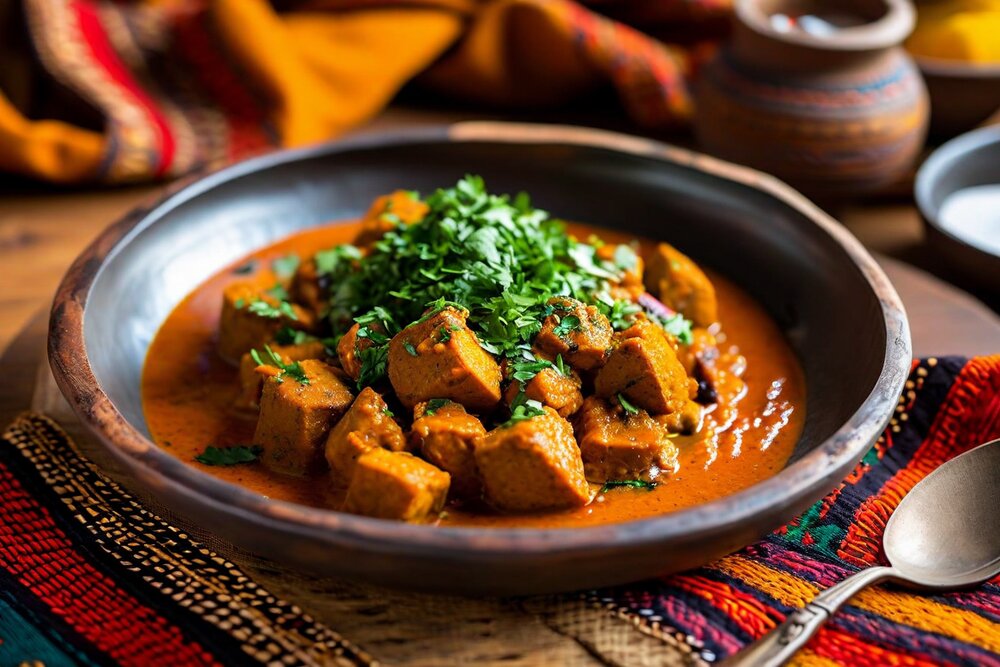
Canjeero is the thing to eat here and the reason is the fermentation. The batter is left overnight, which makes it faintly sour, and it is cooked on one side only so that the underside browns while the top stays pale and full of open pores that hold whatever you pour over them. It is the everyday breakfast of the whole country, it is nothing like the Ethiopian injera it is often compared to beyond the shared principle, and every household insists its own is better.
🍳 Recipes
Three dishes for a Czech kitchen, including the flatbread the archive photograph failed to show.
Canjeero
Makes about 10 · 20 minutes plus overnight ferment · The breakfast bread
Ingredients: 250 g plain flour · 100 g sorghum or maize flour, or more plain flour · 1 tsp dried yeast · 1 tsp sugar · ½ tsp salt · 600 ml warm water · oil for the pan
Method: Whisk the flours, yeast and sugar with the warm water into a thin, smooth batter — much thinner than a pancake batter, closer to single cream. Cover it and leave it at room temperature overnight, or for at least eight hours, until it smells faintly sour and is covered in bubbles. Stir in the salt just before cooking; adding it earlier slows the ferment. Heat a non-stick pan over a medium heat and wipe it with the barest film of oil. Pour a ladle into the centre and immediately swirl the pan so the batter spreads outward in a thin spiral. Do not turn it. Cover the pan and cook for about two minutes, until the underside is golden and the top surface has set dry and opened into a mass of small holes. Lift it out and stack the finished ones, covered with a cloth.
💡 The honeycomb of holes is the test of a good canjeero, and it comes from the ferment and from cooking one side only — if the top is smooth, the batter was too thick or too young. Eat them with sesame oil and sugar, with a meat stew, or torn into sweet spiced tea.
Xawaash
Makes about 100 g · 20 minutes · The spice base
Ingredients: 3 tbsp cumin seeds · 3 tbsp coriander seeds · 1 tbsp black peppercorns · 8 green cardamom pods · 1 tsp cloves · 1 cinnamon stick, broken · 2 tbsp ground turmeric
Method: Toast the cumin, coriander, peppercorns, cardamom, cloves and cinnamon in a dry pan over a medium heat for three to five minutes, shaking constantly, until the cumin darkens a shade and the kitchen smells of it. Nothing should blacken. Tip everything onto a cold plate and cool completely before grinding, because warm spices grind to a paste. Grind fine, then stir in the turmeric, which is added raw because it scorches. Keep it in a sealed jar away from light.
💡 This is the foundation of the two recipes below and above it, and of most Somali cooking. Do not substitute a supermarket curry powder — the fenugreek and chilli in those are wrong for this cuisine, and the cardamom that gives xawaash its signature is usually missing.
Suqaar
Serves 4 · 30 minutes · The everyday meat dish
Ingredients: 600 g beef, lamb or camel, cut into 1 cm cubes · 1 onion, diced small · 1 green pepper, diced small · 2 cloves garlic · 1 tbsp xawaash · 2 tbsp oil · 1 tbsp tomato purée · juice of half a lemon · coriander · salt and pepper
Method: Cut the meat and vegetables to the same small dice — suqaar means chopped, and the uniform size is the point of the dish. Get a wide pan very hot, add the oil and sear the meat in two batches so it browns rather than steams, removing each batch as it is done. Lower the heat and soften the onion and pepper in the same pan for five minutes. Add the garlic and the xawaash and stir for thirty seconds. Return the meat with its juices, stir in the tomato purée and a splash of water, and simmer ten minutes until tender and the sauce clings. Finish off the heat with lemon and coriander. Serve with canjeero, rice or chapati.
💡 Camel is the traditional meat and is sold by some halal butchers in Prague and Brno; beef shin or lamb shoulder work well. Do not stew it long — the meat is cut small so that it cooks fast, and a suqaar simmered for an hour has become something else.
A sourcing note for Czech kitchens: every spice in xawaash is in any Czech supermarket, sorghum flour is in health food shops and can be replaced with plain flour, and halal butchers in the larger cities sell goat and sometimes camel. The canjeero recipe is included deliberately, because the photograph this site holds under that name shows a meat stew — and a reader who only saw the picture would have no idea what the bread actually is.
☕ Drinks
Spiced tea, camel milk, fresh juice and no alcohol whatsoever.
⭐ Shaah
Black tea brewed hard with cardamom, cinnamon, cloves and ginger, sweetened heavily and often taken with milk. It is offered constantly, refusing is mildly rude, and it is genuinely very good.
⭐ Camel milk
Drunk fresh, faintly salty, higher in vitamin C than cow's milk and central to pastoral life. It is sold in the markets and is the drink most associated with Somali identity anywhere in the world.
⚠️ Alcohol
Illegal and unavailable. Do not attempt to bring any in. This applies throughout Somaliland without exception and is enforced.
Juices
Fresh mango, guava, avocado and lime juices are everywhere and excellent, and the avocado-and-milk drink found across the Horn is worth trying once.
⚠️ Khat
Not a drink but the dominant stimulant, flown in daily from Ethiopia and chewed through the afternoon, overwhelmingly by men. It is legal, it is a very large household expense and a public health concern, and it structures the working day around it.
Water
Bottled only. Water supply is a serious constraint in Hargeisa and across the rangelands, and the berkad cisterns and boreholes that supply much of the country are under pressure from a growing population.
The afternoon khat session is the single most visible social institution in the country and the most argued about. Shops shut, men gather in rooms with bundles of fresh leaves and flasks of tea, and several hours go by — which is normal, legal and enjoyed, and which also consumes a large share of household income in a poor country and is blamed by Somaliland women's organisations for a great deal. Both things are said openly here, and a visitor will be offered some within a few days.
💵 Costs
What a week in Somaliland costs a Czech traveller, in crowns, for one of the cheapest countries anyone reading this will consider.
Getting there
No direct flights from Europe. Hargeisa is reached via Addis Ababa, Djibouti, Dubai or Nairobi, and return fares from Prague run roughly CZK 18 000–32 000 depending on routing. Ethiopian Airlines via Addis is the usual answer.
Visa and permits
A Somaliland visa costs around USD 60, arranged through a representative office or on arrival with a support letter, CZK 1 400. The Laas Geel permit is a few dollars. An SPU escort is around USD 20–30 a day where required.
Accommodation
A decent Hargeisa hotel is CZK 700–1 800 a night. Berbera beach accommodation CZK 900–2 200. Simple guesthouses in smaller towns CZK 250–600. This is a genuinely cheap country to be in.
Food and transport
A restaurant meal CZK 60–180. Shaah a few crowns. A driver with a four-wheel drive CZK 1 200–2 200 a day including fuel. Shared transport between towns CZK 100–250.
A week, realistically
Flights aside, a week with a driver, hotels, escorts, permits and food runs roughly CZK 12 000–20 000 per person. With flights from Prague, budget CZK 32 000–50 000 for the trip.
⚠️ Insurance
The expensive and non-optional item. Standard Czech policies exclude countries under an advisory against all travel, and Somaliland is covered by the Somalia advisory. Specialist cover naming medical evacuation is essential and is not cheap.
The cost structure here is the opposite of Somalia's and that comparison is the useful one. Somalia is cheap on the ground and ruinous to reach safely, because the security arrangement is the dominant expense; Somaliland is cheap on the ground and reachable on an ordinary airline ticket, with escorts costing tens rather than hundreds of dollars a day. The remaining expensive item is insurance, and that is a consequence of the advisories rather than of conditions in Hargeisa.
🧳 Practical
Six things to get right, of which the first is the one people most often get wrong.
⚠️ The visa is separate
Somaliland issues its own visas and a Somali visa is not valid here. Arrange it in advance through a Somaliland representative office or with a support letter from a local operator, and do not assume anything issued in Mogadishu will work.
The escort
An armed Special Protection Unit officer is legally required on many routes outside Hargeisa, hired for a modest daily fee through your hotel or operator. It is a formality on the main roads and it is not negotiable.
Money
US dollars for anything substantial and shillings for small purchases, with mobile money used very widely. Cards are essentially useless outside a couple of hotels. Bring clean, undamaged dollar notes.
Connectivity
Mobile data is cheap and works well in the towns through Telesom and its competitors, and a local SIM is easy to buy. Coverage thins fast outside the main corridor.
⚠️ Health
Malaria prophylaxis, routine vaccinations plus typhoid and hepatitis, and insurance naming medical evacuation to Addis Ababa, Djibouti or Nairobi. Medical facilities are basic and serious cases leave the country.
Behaviour and DROZD
Conservative dress, no alcohol, ask before photographing anyone, and expect Friday to close everything. Register with the Czech foreign ministry's DROZD system: there is no Czech mission here and the accredited embassy is in Nairobi.
One thing that surprises visitors and is worth preparing for: you will be asked, repeatedly and by everybody, what you think about recognition. Taxi drivers, hotel staff, officials and people in the market will raise it within minutes of meeting you, and they will know more about international law than you do. It is the national question, it has been for thirty-five years, and a foreign visitor is treated partly as a small piece of evidence that the outside world might eventually be paying attention.
🇨🇿 For Czech Travellers
One of the few genuinely obscure destinations a Czech traveller can actually reach, with real caveats attached.
⚠️ The advisory problem
The Czech Ministry of Foreign Affairs issues its advice for Somalia as a whole, which covers Somaliland, and advises against travel. That is a blunt instrument for a territory this different from Mogadishu, and it has a concrete consequence: standard Czech travel insurance is void.
Getting there from Prague
Ethiopian Airlines via Addis Ababa is the usual route, with alternatives through Dubai, Djibouti or Nairobi, and return fares from roughly CZK 18 000. Total journey time is typically fourteen to twenty hours.
Consular reality
No Czech mission in Somaliland and none in Somalia; the accredited embassy is in Nairobi. Register in DROZD, carry your insurer's emergency number on paper, and understand that practical help in an emergency will come from your operator and your insurer rather than from an embassy.
⭐ Why a Czech might actually go
Laas Geel, which is a world-class prehistoric site with no queue. A functioning democracy that nobody recognises. Empty Gulf of Aden beaches. And the simple fact that very few people have been, which for a certain kind of traveller is the whole point.
How to arrange it
Through a Hargeisa-based operator who handles the visa support letter, the driver, the escort and the Laas Geel permit. Independent arrangement is possible and slower; there are no Czech-language services of any kind.
What to combine it with
Djibouti is next door and reachable overland; Ethiopia is a short flight and the obvious pairing; and Addis Ababa is a connection you will be making anyway. Nobody should fly this far for four days.
One honest caution for Czech readers, because it applies to this page more than most. Somaliland is presented by a small industry of travel content as the safe, friendly, misunderstood Somalia — and most of that is true in Hargeisa and false in Sool, where a war has displaced well over a hundred thousand people since 2023. Anyone going should treat the country as two different places with one flag, take current local advice rather than a video filmed in 2019, and remember that the insurance question is real even when the street feels calm.
And the practical summary: separate visa arranged in advance, a Hargeisa operator, insurance that names evacuation in writing, November to February, the west and centre only, and the east left alone. Do that and this is one of the most rewarding weeks available anywhere in the Horn of Africa.
✍️ Author's Note
How this page was written, what the old one was serving, and a correction to another page on this site.
The sources
Written in September 2026 from Somaliland government statements, the UN Security Council record of the December 2025 emergency session, International Crisis Group and academic work on the Borama process, election reporting from 2024, and current regional coverage of the recognition campaign and the eastern conflict.
⚠️ A correction to the Somalia page
This site's Somalia entry, published earlier today, stated three times that no state recognises Somaliland. That was wrong: Israel recognised it on 26 December 2025. The Somalia page has been corrected in the same commit as this one, and the error is recorded here rather than quietly fixed.
⚠️ The old page's images
The page this replaces used no local image at all. Its entire visual content, including the og:image, was six hotlinks to upload.wikimedia.org covering four filenames — and all four carried hash paths that do not match the md5 of their own filenames, meaning the URLs were constructed rather than copied.
⚠️ And one of them does not exist
Checked against Commons file pages with a control, three of the four files exist and MiG_monument_in_Hargeisa,_Somaliland.jpg returns 404 — it is not a real file. Meanwhile a perfectly usable local hero image sat unused on this site's own server.
The watermark code
Somaliland has no ISO 3166-1 code. This site uses invented codes for unrecognised entities, and since SL belongs to Sierra Leone, the watermark here follows the Kosovo precedent and uses the user-assigned XS. It is a site-internal convention, not a standard.
What this page underplays
The eastern conflict from the perspective of the people of Laascaanood; the internal politics of clan balance, deliberately simplified; the detail of the Guurti reform argument; and the economics of the port concession, which deserves its own treatment.
A word about how this page frames the recognition question, because it would be easy to write it as advocacy. Somaliland has an unusually strong case and a genuine achievement behind it, and it also does not control a third of the territory it claims, which is the single best argument against it — and the people in that third invoke self-determination exactly as Hargeisa does. This page sets out both arguments and does not pick, which is what a factbook owes a reader on a question where serious people disagree.
Corrections are welcome, particularly from Somalilanders, on the eastern situation, on current travel conditions and escort requirements, and on anything about the 2024 election or the recognition campaign that has moved since September 2026.
Support This Project 🌍
This World Travel Factbook is a labor of love – free to use for all travelers. If you find it helpful, consider supporting its continued development.
