🇮🇪 Ireland at a Glance
🌍 Overview
Ireland is a wet, green, low-lying island on the western edge of Europe, about 70,273 km² — slightly smaller than Czechia — with roughly 5.4 million people in the Republic and about 1.9 million more in Northern Ireland, which is part of the United Kingdom. Almost everything confusing about Ireland to an outsider follows from that last clause, and it is dealt with properly further down.
Three facts set the shape of the country. It contains a passage tomb at Newgrange built around 3200 BC, five centuries before the Great Pyramid and a millennium before Stonehenge, engineered so precisely that the midwinter sun still reaches the chamber. It lost half its population in the sixty years after 1841 — a million dead and millions gone — and did not return to growth until the 1960s. And it has produced, from a population smaller than Prague and its region, four Nobel laureates in literature.
The recent transformation
For most of the twentieth century Ireland was poor, Catholic, socially conservative and defined by emigration. Divorce was illegal until 1995. Homosexuality was decriminalised in 1993. Then, in twenty years, it became one of the richest countries in the EU by GDP per head, legalised same-sex marriage by popular vote in 2015 — the first country in the world to do so by referendum — and removed the constitutional abortion ban by referendum in 2018. Few European societies have moved that far that fast.
The economy, honestly
Ireland's GDP per capita is among the highest in the world and the figure is seriously misleading. A large share of it is the accounting output of American multinationals — Apple, Google, Meta, Pfizer, Intel — domiciled here for the 12.5% corporate tax rate. In 2015 Irish GDP was revised upward by 26% in one go, an episode economists nicknamed leprechaun economics, and the state now uses a separate measure, modified GNI, which is roughly a third lower and closer to the truth.
What it feels like
Small, informal, verbal and much less rural than the postcard suggests — around a third of the population lives in greater Dublin. Conversation is the national art form and the tolerance for silence is low. The landscape people come for is real, and it is mostly on the western third of the island; the midlands are flat, green, and quietly unspectacular.
Ireland and Czechia
The two countries are almost exactly the same size and Ireland has about half the people. Since 2004 the traffic has gone the other way from what history would suggest: tens of thousands of Czechs and Slovaks moved to Ireland for work, and Prague–Dublin is a busy direct route. For a Czech visitor Ireland is an EU country with the euro, a free-movement right of entry, and cars on the left.
🏷️ Éire, Ireland, and the Twenty-Six Counties
The state's constitutional name is Ireland in English and Éire in Irish. That is not a small point: the 1937 constitution claimed the whole island, which the United Kingdom did not accept, so for decades London insisted on "Éire" or "the Republic of Ireland" while Dublin insisted on "Ireland". The Republic of Ireland is, strictly, the description of the state rather than its name, set out in a 1948 act.
Where the name comes from
From Ériu, a sovereignty goddess of Irish mythology, through Old Irish Ériu to modern Éire; the English form adds the Norse land. It is one of the few European countries named after a goddess. The older poetic names Banba and Fódla — her two sisters — still turn up in verse and on the odd business.
The tricolour
Green, white and orange, first flown in 1848 and adopted in 1919. The symbolism is explicit and is a peace proposal rather than a boast: green for the Gaelic and Catholic tradition, orange for the Protestant and Williamite tradition, and white for a lasting truce between them. Flying it the wrong way round, orange to the mast, is a real and noticed error.
The harp
Ireland is the only country in the world whose national emblem is a musical instrument. The harp is on the coins, the passport and every government letterhead — facing left. Guinness registered the same harp as a trademark in 1876, before independence, so when the state adopted it in 1922 it had to turn it the other way round. That is why the state harp and the beer harp are mirror images.
Six and twenty-six
The island has 32 traditional counties. Twenty-six are in the Republic; six — Antrim, Armagh, Down, Fermanagh, Londonderry/Derry and Tyrone — make up Northern Ireland. The counties still matter enormously because Gaelic games are organised by them, so people's primary local loyalty is a county rather than a town or region.
🗺️ Geography
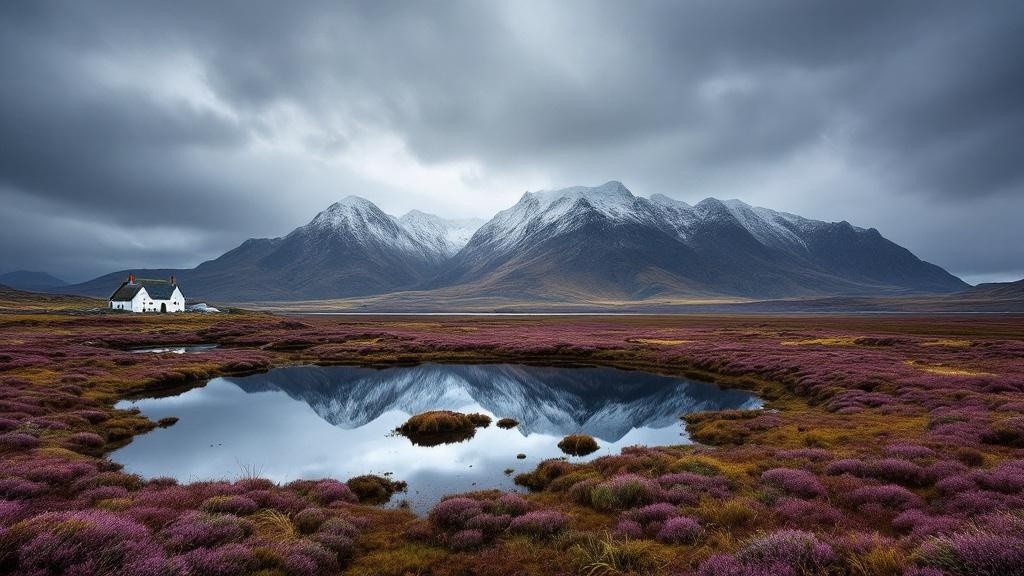
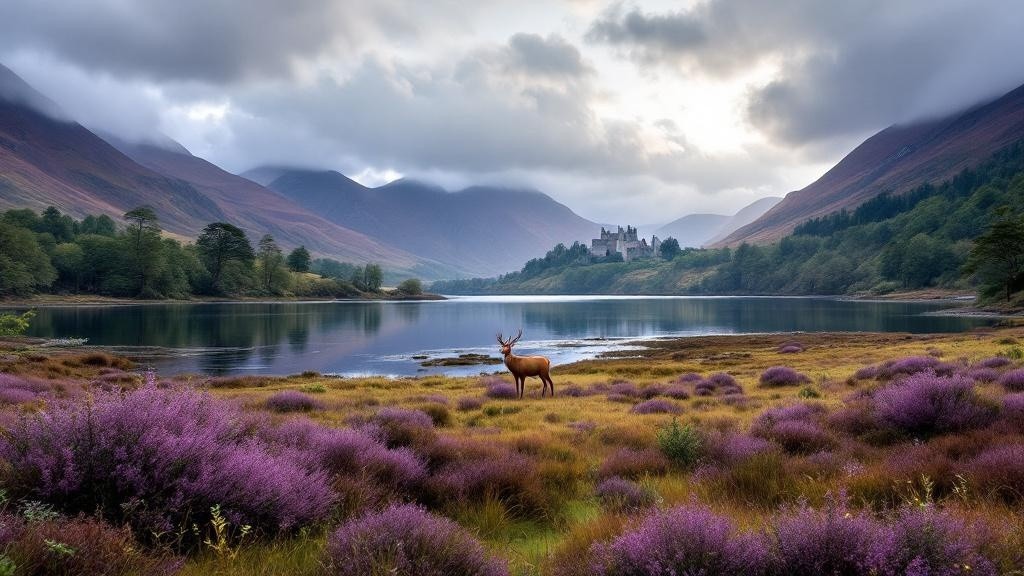
Ireland is shaped like a shallow bowl: a rim of hills and mountains almost all the way round the coast, and a low, flat, boggy, lake-strewn interior. It is the reason nearly every landscape photograph of Ireland was taken within twenty kilometres of the sea.
The mountains, such as they are
Modest by continental standards but not by their looks. The highest is Carrauntoohil at 1,041 m, in MacGillycuddy's Reeks in Kerry. Then the Wicklow Mountains south of Dublin, the Twelve Bens in Connemara, the Mournes in the north-east, and Mount Errigal in Donegal. Nothing is high enough to be dangerous through altitude, and several are quite dangerous through weather.
Bog
About a sixth of the island is peat bog, one of the highest proportions in Europe: raised bogs in the midlands, blanket bog on the wet western hills. It was the fuel supply for centuries — hand-cut turf footed in stacks to dry — and industrially cut for power stations until very recently. Bogs are also archaeological refrigerators: they have preserved butter, gold hoards, roads, books and the extraordinary Iron Age bog bodies in the National Museum.
Water
The Shannon, at 360 km, is the longest river in Britain or Ireland and drains a fifth of the island. Lough Neagh in Northern Ireland is the largest lake in either island. There are lakes everywhere, and the reason is glacial: Ireland was scraped bare by ice until about 11,000 years ago, which is also why its soils are young and its native flora and fauna are unusually thin.
The Burren
The strangest landscape in Ireland and worth planning around: a 250 km² limestone pavement in County Clare, bare grey rock split into blocks by deep fissures called grikes. In those cracks grow Arctic, Alpine and Mediterranean plants side by side — spring gentians and orchids next to species otherwise found in the Alps — a botanical anomaly caused by the mild wet climate and the warm rock. It is also full of prehistoric tombs, of which Poulnabrone is the famous one.
🗺️ Map
Ireland sits between roughly 51.5° and 55.5° north — the latitude of Newfoundland or of Moscow — and is kept mild by the North Atlantic Drift. It has exactly one land border, with the United Kingdom, running 499 km across the north of the island.
The scale
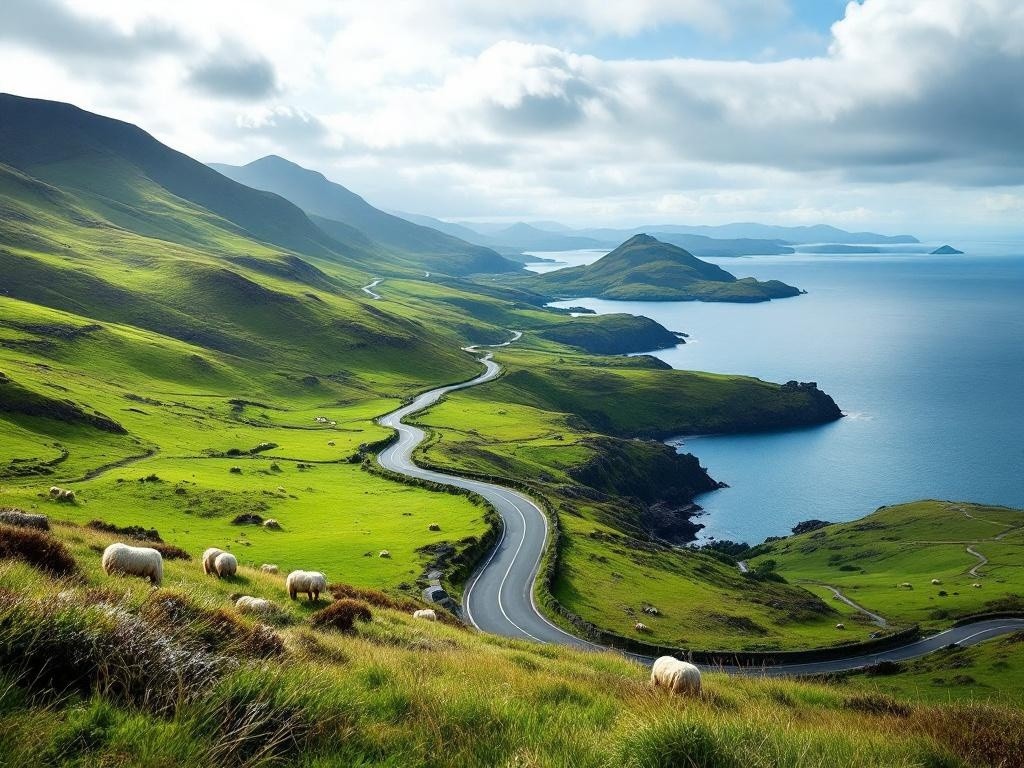
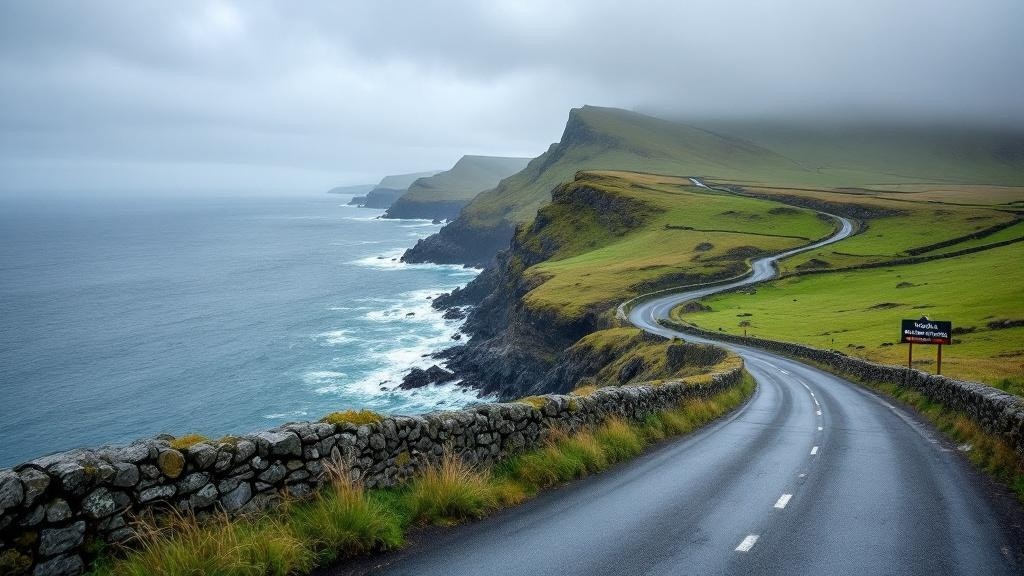
It is small. Dublin to Galway is 210 km and two and a quarter hours; Dublin to Cork 260 km; Dublin to Belfast 165 km. You can cross the island in three hours. The mistake visitors make is not distance but road speed: the motorways radiate from Dublin, and the coastal roads people actually want to drive are narrow, walled, and slower than the map suggests by a factor of two.
The Wild Atlantic Way
A branded coastal route of 2,500 km from Kinsale in Cork to Malin Head in Donegal, launched in 2014 and one of the more successful pieces of tourism marketing anywhere. It is not a road so much as a waymarked stringing-together of existing coastal roads, and it works: it spread visitors out of Dublin and Kerry and along the whole west coast.
Getting around
Irish Rail radiates from Dublin and is fine for Cork, Galway, Limerick and Belfast but useless for going between provincial towns; a Dublin–Galway ticket is often cheaper booked online in advance. Bus Éireann and Citylink cover the rest. For the west coast a car is close to essential, and remember it is left-hand drive, in a manual, on a road two metres narrower than you expect.
The border
Since the Good Friday Agreement and until Brexit the border was invisible — no posts, no checks, roads crossing it several times in a few kilometres. It is still open, and the arrangement that keeps it open is the Windsor Framework, which places the customs checks in the Irish Sea instead. Crossing it in a car you will notice only that the speed limit signs change from km/h to mph.
🌦️ The Weather, Which Is the Point
Ireland is green because it rains, and the two cannot be separated. The mildness is the striking part: Valentia Island in Kerry has a January mean around 7 °C, warmer than Milan, at a latitude north of Moscow. Snow is rare and lying snow rarer. Frost is light. Palms and tree ferns grow outdoors in the south-west.
The numbers
Rainfall runs from about 750 mm a year on the east coast to over 2,000 mm in the western mountains, and the important figure is not the amount but the frequency: the west has rain on 225 days or more a year. Summer highs are typically 17–20 °C; anything over 25 °C is a national event and the newspapers say so. Winter lows are around 3–5 °C.
Four seasons in an hour
The cliché is accurate and it is a consequence of being a small island in the path of Atlantic depressions: weather systems cross in hours, so bright sun, hail and a rainbow within forty minutes is normal rather than remarkable. The practical consequence is that waiting out rain works, and that a forecast more than two days ahead is decorative.
When to go
May, June and September are the best months: longest days, least rain, fewest crowds. June has daylight from about 04:30 to 22:00 in the north-west. July and August are the busiest and not the driest. Winter is dark — sunset before 16:30 in December — and wet and windy, but Dublin, Galway and Cork are excellent in it, and the Atlantic storms are genuinely spectacular from the right side of a window.
What to bring
A waterproof shell with a hood, not an umbrella, because it is the wind that beats you. Layers rather than a heavy coat. Waterproof footwear, since every good walk in Ireland involves bog. And do not leave the sunscreen at home on the grounds that it is Ireland — the burn on a bright windy day on the west coast catches people out every summer.
🇬🇧 Northern Ireland, and Why This Page Is About the Republic
The island of Ireland contains two jurisdictions. This page describes the Republic of Ireland: an EU member state using the euro, with its own government in Dublin. Northern Ireland — six counties in the north-east, 1.9 million people, capital Belfast — is part of the United Kingdom, uses pounds sterling, and left the EU with the rest of the UK in 2020.
How the division happened
The Government of Ireland Act 1920 partitioned the island, and the six counties were chosen deliberately: they were the largest area in which a unionist, mostly Protestant majority could be guaranteed. Three counties of historic Ulster — Donegal, Cavan and Monaghan — were left out for exactly that reason, which is why "Ulster" and "Northern Ireland" are not the same thing, and why using them interchangeably annoys people.
The Troubles
From 1968 to 1998, roughly 3,500 people were killed in a conflict that was about national identity and civil rights rather than theology, however often it is described as religious. It began with a civil rights movement against discrimination in housing, jobs and voting, escalated through Bloody Sunday in 1972 and thirty years of paramilitary and state violence, and ended in negotiation.
The Good Friday Agreement
Signed on 10 April 1998 and approved by referendums on both sides of the border, it is one of the more remarkable pieces of conflict resolution of the last century. It set up power-sharing devolved government, removed the Republic's constitutional claim to the north, established that Northern Ireland's status changes only by consent of its people, and gave everyone born there the right to Irish or British citizenship, or both. Power-sharing has collapsed and been restored several times since; the peace has held.
Visiting
Belfast and the Antrim coast are genuinely worth a trip and are two hours from Dublin by train. Belfast's Titanic Quarter, the political murals of the Falls and Shankill roads, and the Giant's Causeway are the standard route. Practical differences: sterling, not euro; mph, not km/h; and a Czech ID card is not enough — for the UK you need a passport.
🪨 Newgrange, and a Tomb Older Than the Pyramids
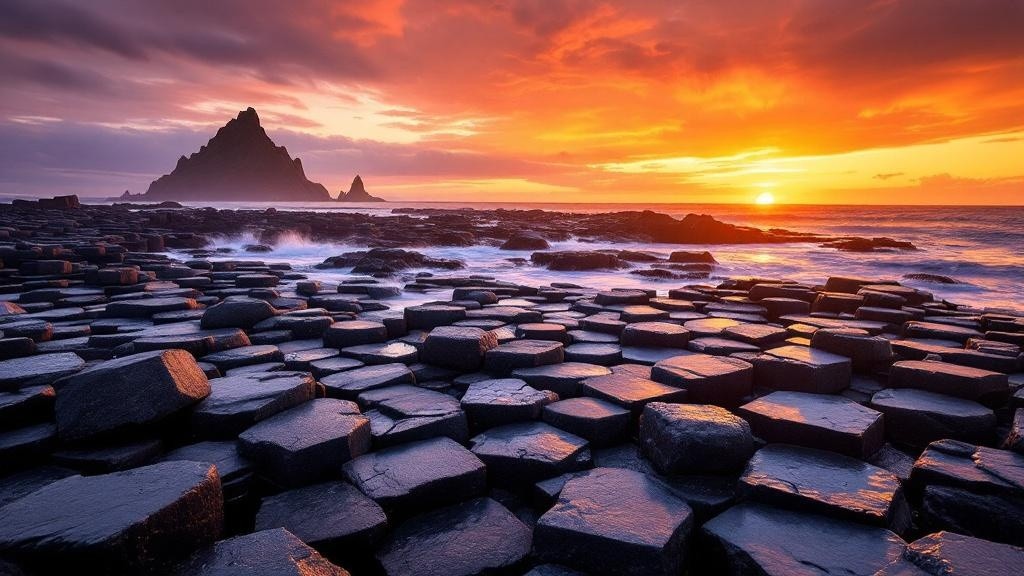
In a bend of the River Boyne, forty minutes north of Dublin, stands the best reason to come to Ireland for anyone interested in prehistory. Brú na Bóinne is a complex of three great passage tombs — Newgrange, Knowth and Dowth — built around 3200 BC. That is five hundred years before the Great Pyramid at Giza and about a thousand before the sarsen circle at Stonehenge.
The solstice
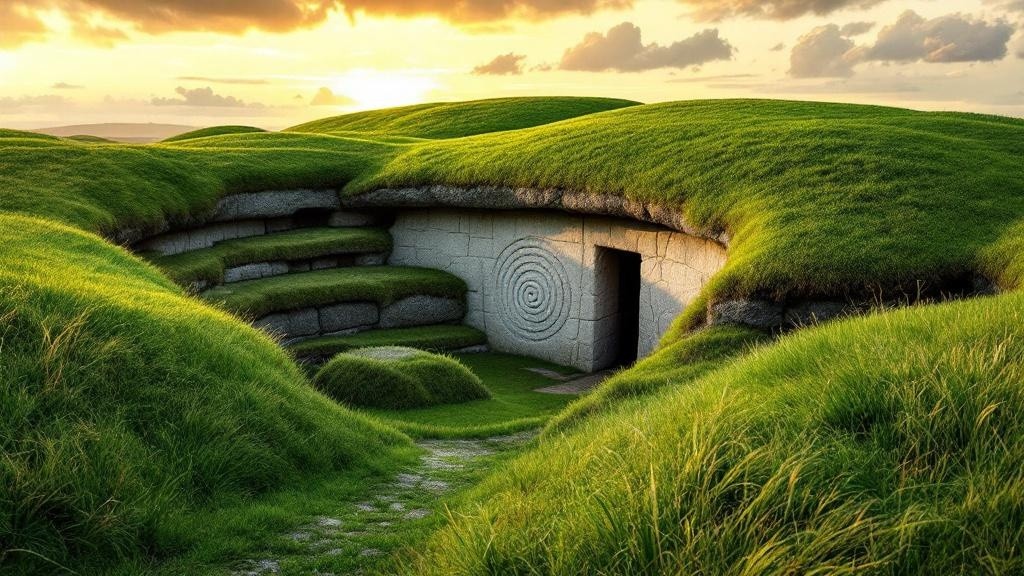
Above the entrance is a stone-framed opening called the roof-box. For a few mornings around the winter solstice, and only then, the rising sun shines through it, travels down a nineteen-metre passage and lights the floor of the central chamber for about seventeen minutes. This is not a coincidence found later: it required the builders to know where the sun would rise on the shortest day and to construct a passage that rises to compensate for the slope. It has worked for five thousand years. Places in the chamber are allocated by an annual lottery with tens of thousands of entrants.
Knowth
Larger, less famous and in one respect more important: Knowth's kerbstones and its two passages carry roughly a quarter of all known megalithic art in western Europe — spirals, lozenges, serpentine lines — and one kerbstone is argued by some to be the oldest known map of the moon. Whether or not that reading holds, the sheer density of carving is astonishing.
Who built it
Neolithic farmers, and genome studies since 2020 have added something genuinely startling: an individual buried in the Newgrange chamber was the child of a first-degree incestuous union, a pattern otherwise known almost only from royal dynasties like the Egyptian and Inca. It suggests a stratified society with a ruling lineage — which is a good deal more social structure than anyone had attributed to Neolithic Ireland.
The rest of it
Ireland has around 1,500 megalithic tombs, more per square kilometre than almost anywhere. Court tombs, portal dolmens like Poulnabrone in the Burren, wedge tombs, and the vast cemetery at Carrowmore in Sligo. Access to Newgrange and Knowth is only through the visitor centre by shuttle bus and you must book; Poulnabrone and most of the rest you can simply walk up to.
📖 Saints, Scholars and the Book of Kells
Christianity arrived in the fifth century, most famously with Patrick — a Romano-British teenager taken to Ireland as a slave, who escaped, returned as a missionary, and left two short Latin texts that are the earliest surviving writing from Ireland. What followed was unusual: Ireland was never part of the Roman Empire, so it had no cities and no diocesan structure to build on, and its church organised itself instead around monasteries.
The monastic cities
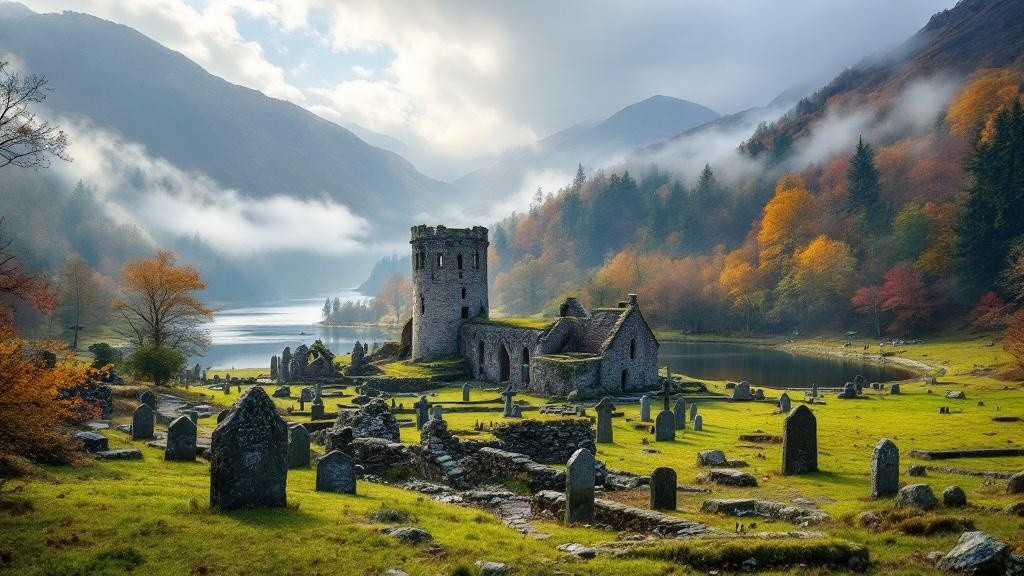
Places like Glendalough in Wicklow, Clonmacnoise on the Shannon, Kells and Monasterboice became population centres, schools and craft workshops — effectively Ireland's first towns. The round towers were bell towers and stores, and the raised doorway was probably about keeping the ladder dry as much as about Vikings, whatever the guidebooks say.
The manuscripts
Irish monasteries produced the most elaborately decorated books in early medieval Europe. The Book of Kells — around 800 AD, four gospels in Latin, 340 folios of insular illumination so dense that some initials need a magnifying glass — is in the Old Library at Trinity College Dublin and is the single most visited object in the country. The Book of Durrow is older and the Book of Armagh more historically informative; both are in the same building.
Skellig Michael
Twelve kilometres out in the Atlantic off Kerry, a bare rock rising to 218 m, on which sixth-century monks built a stairway of six hundred steps and a cluster of drystone beehive huts, and lived there for perhaps six hundred years. A UNESCO World Heritage site, reachable only in calm summer weather with a strictly limited boat quota, and — since it appeared as Luke Skywalker's island in Star Wars — booked out months ahead.
Ireland's missionaries in Europe
This matters for a Czech reader more than most. Irish monks went east in numbers from the sixth century: Columbanus founded Luxeuil in France and Bobbio in Italy, Gall gave his name to St Gallen in Switzerland, Kilian was martyred at Würzburg, and there were Irish foundations across the German lands. The Schottenklöster, the "Scots monasteries" of central Europe, were Irish; the Latin Scoti meant the Irish before it meant the Scots.
⚔️ Vikings, Normans and the English Conquest
Ireland's towns were founded by invaders. Before the Norse arrived it had monasteries, ringforts and cattle, and essentially no urban settlements at all.
The Vikings
Raiding from 795, then settling. Dublin was founded as a Norse longphort around 841, and Waterford, Wexford, Cork and Limerick are all Viking foundations with Norse names. Dublin became a major slave-trading port. The Battle of Clontarf in 1014, in which Brian Boru died in victory, is remembered as the expulsion of the Vikings and was in fact largely a war between Irish factions with Norse on both sides. Dublin's Viking layers, excavated at Wood Quay in the 1970s, were partly destroyed to build council offices in one of the great heritage scandals of modern Ireland.
The Normans, 1169
An exiled Leinster king, Diarmait Mac Murchada, invited Anglo-Norman mercenaries to help him recover his kingdom. They came, they stayed, and Henry II followed in 1171 to make sure they did not set up on their own. It is the beginning of eight hundred years of English involvement, and Mac Murchada's name is still an Irish byword for a traitor. The Normans built the castles and walled towns, and within a few generations many had become, in the phrase, more Irish than the Irish themselves.
The Pale
By the fifteenth century English control had shrunk to a fortified strip around Dublin — the Pale — with Gaelic and hibernicised Norman lords running everything else. The phrase beyond the pale comes from exactly this. The Statutes of Kilkenny of 1366 tried to stop the settlers speaking Irish, marrying Irish and playing hurling, which tells you how much of it was happening.
The Tudor conquest
The reconquest under Henry VIII and Elizabeth I was systematic and brutal, culminating in the Nine Years' War and the defeat of the northern lords at Kinsale in 1601. The Flight of the Earls in 1607, when the last great Gaelic lords left for the continent, is conventionally the end of the old Gaelic order. Their lands in Ulster were then available for something new.
🏴 Plantation, Cromwell and the Penal Laws
What was done to Ireland in the seventeenth century created the political geography that produced partition three hundred years later, and it is impossible to understand Northern Ireland without it.
The Plantation of Ulster
From 1609, the confiscated lands of the northern earls were granted to settlers from Scotland and England on condition that they were Protestant and that they did not take Irish tenants. Ulster, until then the most Gaelic province, acquired a large, concentrated, self-consciously distinct Protestant population. That is the origin of the two communities in Northern Ireland, and it was a deliberate act of policy, not an accident of migration.
Cromwell
The 1649–53 campaign is the most bitterly remembered episode in Irish history. The storming of Drogheda and Wexford with the massacre of garrisons and civilians; then a systematic land settlement in which Catholic landowners were dispossessed and ordered west of the Shannon — to Hell or to Connacht. Combined with war, plague and famine, Ireland's population may have fallen by a fifth or more. Catholic landownership fell from around 60% to under 10%.
The Penal Laws
From the 1690s, a body of law designed to keep Catholics — the great majority — out of power and property. No voting, no parliament, no army, no bar, no purchase of land, no schools; inheritance forced to be split among all sons unless one converted, in which case he took the lot. They were enforced unevenly and eroded through the eighteenth century, and their effect on land, education and confidence lasted far longer than the statutes.
1798 and the Union
The United Irishmen — founded in Belfast, led largely by Protestants including Wolfe Tone, and inspired by the French and American revolutions — attempted a non-sectarian republican rising in 1798. It was crushed with perhaps 30,000 dead. The response was the Act of Union of 1801, which abolished the Irish parliament and governed Ireland directly from Westminster until 1922.
🕯️ An Gorta Mór — the Great Hunger
Between 1845 and 1852 the potato crop failed repeatedly to a water mould, Phytophthora infestans, arriving from the Americas. Around one million people died of starvation and the diseases that follow it, and another one to two million emigrated. Ireland's population fell from about 8.5 million in 1841 to 6.5 million in 1851, and then kept falling through emigration for another century, bottoming out around 4.4 million in the 1960s. It is the only country in Europe with fewer people today than in 1840.
Why the potato
Because of the land system. Repeated subdivision of holdings under population growth left millions of families on plots too small to feed them with anything but the potato, which yields more calories per acre than any alternative and grows in poor ground. Roughly three million people ate almost nothing else. A monoculture with essentially no genetic variation met a pathogen it had never seen, and the entire food supply of a third of the country failed at once.
The part that is argued about
Food was exported from Ireland throughout the famine. Grain, cattle, butter and pigs left Irish ports under guard while people starved beside the roads. The government's response was shaped by laissez-faire economics and by a providentialism that read the blight as a corrective; relief was tied to work tests and then to the workhouse, and the Poor Law amendment of 1847 shifted the cost onto Irish ratepayers just as they were least able to pay. Whether this constitutes genocide is genuinely contested among historians; that it was a catastrophic policy failure with an ideological cause is not.
What it did to the country
It destroyed the Irish-speaking rural poor as a class, and with them the language, which went from the majority tongue to a minority one within two generations. It made emigration a permanent structural feature — the assumption that a share of every generation would leave lasted until the 1990s. It embedded the land question in politics, producing the Land War and eventually the transfer of Irish land to its tenants. And it built the Irish diaspora: today around 32 million Americans claim Irish ancestry, six times the population of Ireland.
Where to see it
The famine memorial on Dublin's Custom House Quay — thin bronze figures walking toward the emigrant ships — and the Jeanie Johnston, a replica famine ship moored nearby. The Irish National Famine Museum at Strokestown Park in Roscommon is built around the archive of an estate whose landlord was assassinated and whose tenants were shipped to Canada, and is the best single place to understand it. And, everywhere in the west, the lazy beds: the ridge-and-furrow of abandoned potato plots still visible on hillsides that have had no one on them since 1847.
🇮🇪 1916, Independence and the Civil War
Home Rule for Ireland was passed by the British parliament in 1914 and suspended for the duration of the First World War. Both Irish nationalists and Ulster unionists armed themselves; some 200,000 Irishmen then went and fought in the British army, of whom around 35,000 died — a fact that was politically unmentionable in independent Ireland for seventy years and has only recently been publicly commemorated.
The Easter Rising
On Easter Monday, 24 April 1916, about 1,500 volunteers seized buildings in central Dublin and read a Proclamation of the Irish Republic from the steps of the General Post Office. It lasted six days, wrecked the city centre, killed around 485 people — most of them civilians — and was widely unpopular at the time. Then the British executed fifteen of its leaders over nine days, including one carried to the firing squad in a chair because he could not stand. Public opinion turned completely, and Sinn Féin swept the 1918 election.
The War of Independence
1919–21: a guerrilla campaign by the IRA under Michael Collins, met by the auxiliary Black and Tans, with ambushes, reprisals and the burning of Cork city centre. Bloody Sunday, 21 November 1920, in which Collins's men killed fourteen suspected British agents in the morning and British forces fired into the crowd at a Gaelic football match at Croke Park in the afternoon, killing fourteen, is its emblematic day.
The Treaty and the split
The Anglo-Irish Treaty of December 1921 created the Irish Free State as a dominion — not a republic — with an oath to the crown, and left the six northern counties out. Collins signed it saying he had signed his own death warrant. The Dáil ratified it 64 to 57, Éamon de Valera and the anti-Treaty side walked out, and the country went to war with itself.
The Civil War
1922–23, shorter and in some ways nastier than the war against Britain: perhaps 2,000 dead, the Four Courts and the Public Record Office destroyed — taking with them seven centuries of Irish records — and Michael Collins killed in an ambush in Cork at 31. The Free State executed 77 anti-Treaty prisoners, more than the British had. The two parties that dominated Irish politics for the next ninety years, Fine Gael and Fianna Fáil, are the two sides of that split, which is why Irish politics did not divide on left and right in the ordinary European way.
🏛️ Neutral, Poor and Catholic: 1923–1990
The state that emerged from the Civil War was conservative, rural, closely aligned with the Catholic Church, and economically stagnant for most of fifty years. Its defining experience was that its people kept leaving.
De Valera's Ireland
Éamon de Valera, taoiseach or president for most of the period from 1932 to 1973, wrote the 1937 constitution, which claimed the whole island, recognised the "special position" of the Catholic Church until 1972, and described a woman's life within the home. His famous 1943 broadcast imagined a country of frugal comfort, athletic youths and comely maidens — which was sincerely meant, and which the young people of the actual country responded to by emigrating to Britain in enormous numbers.
The Emergency
Ireland was neutral in the Second World War, which was called the Emergency and which was a deliberate assertion of sovereignty rather than sympathy for Germany. In practice the neutrality tilted heavily toward the Allies: crashed Allied airmen were returned across the border while German ones were interned, weather reports from Blacksod in Mayo determined the date of D-Day, and some 70,000 Irish citizens volunteered for the British forces. De Valera's decision to sign the book of condolence at the German legation on Hitler's death in 1945 was and remains indefensible.
The church and the institutions
The Catholic Church effectively ran Irish schools, hospitals and social services. It also ran the industrial schools, the Magdalene laundries and the mother and baby homes, in which unmarried mothers and their children were confined and worked, thousands of children died, and a great many were adopted abroad without consent. Successive state inquiries — Ryan, Murphy, and the Mother and Baby Homes Commission which reported in 2021 — documented decades of abuse and of state collusion in it. This is the largest single reason for the collapse of the Church's authority in Ireland.
Opening up
T. K. Whitaker's economic programme from 1958 abandoned protectionism for foreign investment and free trade; Ireland joined the EEC in 1973 alongside Britain and Denmark. Free secondary education arrived in 1967, television in 1961, and both did more to change the country than any law. The 1980s were nonetheless grim — unemployment near 18%, mass emigration again — and the divorce referendum of 1986 was defeated two to one.
📈 The Celtic Tiger, the Crash and the Recovery
Between roughly 1995 and 2007 Ireland went from being one of the poorer countries in western Europe to one of the richest, in what was genuinely one of the fastest sustained growth episodes in modern European history. Then it went off a cliff.
What actually caused the boom
Not one thing. A very young, English-speaking, newly well-educated workforce arriving at once — the effect of free secondary education from 1967 and of a birth rate that stayed high late. EU structural funds and the single market. A 12.5% corporation tax and an aggressive campaign to attract American technology and pharmaceutical companies. Social partnership agreements that held wage growth down. And, crucially, the peace process, which removed the security discount on the whole island.
How it turned into a bubble
By about 2002 the growth had stopped being about exports and started being about property. Joining the euro gave Ireland German interest rates in an overheating economy; the banks borrowed enormously on wholesale markets and lent it into land and housing; the state came to depend on transaction taxes from the same market. At the peak, construction was around a fifth of the economy and Ireland was building more houses per head than any country in Europe.
The crash
On 29 September 2008 the government guaranteed the liabilities of the Irish banks — effectively the whole banking system — in a single night. The cost was catastrophic: Anglo Irish Bank alone absorbed some €30 billion. In November 2010 Ireland entered an EU–IMF–ECB bailout of €67.5 billion. Unemployment went from 4.5% to over 15%, property prices fell by more than half, emigration restarted, and half-built ghost estates stood empty across the midlands.
And after
Ireland exited the bailout in 2013 and recovered faster than any other programme country, on exports and foreign investment rather than construction. The unresolved legacy is housing: a decade of building almost nothing, plus rapid population growth, has produced rents and prices that are now the central political issue in the country and the reason a large share of Irish people in their thirties still live with their parents. Homelessness figures have repeatedly hit record highs.
🗳️ How Ireland Changed Its Mind
The social transformation of Ireland between 1990 and 2020 is, for its speed and its method, close to unique in Europe: it was done largely by referendum, because the Irish constitution can only be amended by popular vote, and it was done in the space of one generation.
The sequence
Homosexuality decriminalised in 1993 — Ireland was among the last in western Europe. Divorce legalised by referendum in 1995, by 50.3% to 49.7%, a margin of about 9,000 votes. Same-sex marriage approved by referendum in 2015 with 62% in favour, the first country in the world to legalise it by popular vote. The Eighth Amendment, which banned abortion, repealed in 2018 with 66% in favour. Blasphemy removed from the constitution the same year.
The citizens' assemblies
The mechanism deserves attention because other countries have since copied it. Before the marriage and abortion votes, randomly selected panels of ordinary citizens spent weekends over months hearing expert and personal evidence and then made recommendations. It defused the most polarising questions in Irish politics by taking them out of the television studio first, and the referendum results tracked the assemblies' conclusions closely.
The Church
Weekly Mass attendance fell from over 90% in the 1970s to somewhere around a quarter, and far lower in Dublin and among the young. The cause was not secular argument but the abuse revelations, and specifically the discovery that bishops had moved offending priests between parishes. Ireland remains culturally Catholic — schools are still overwhelmingly church-run, which is itself a live political argument — and is no longer a country the Church can instruct.
Who lives here now
Around 20% of residents were born outside Ireland, a share that arrived within twenty-five years and one of the fastest demographic shifts in Europe. Polish is the largest immigrant language, and there are substantial Indian, Brazilian, Romanian, Ukrainian and Nigerian communities. The country that exported people for 150 years now imports them, and the politics of that — housing pressure above all — has become sharper since 2023.
🗣️ Gaeilge, the First Official Language
Irish is a Celtic language of the Goidelic branch, related to Scottish Gaelic and Manx and more distantly to Welsh and Breton. It is the first official language of the state and an official language of the EU, it is compulsory in school for fourteen years — and it is the everyday language of only a small minority.
The numbers, honestly
About 1.9 million people say they can speak some Irish; around 70,000 use it daily outside the education system. It is the surviving majority community language only in the Gaeltacht — scattered districts in Donegal, Mayo, Galway, Kerry, Cork, Waterford and Meath, with perhaps 100,000 residents in total, and even there English is advancing. UNESCO classifies it as definitely endangered.
Why it collapsed
Not one policy but a sequence. The penal-era destruction of the Gaelic gentry removed its patrons; the Famine and emigration destroyed the poorest rural districts where it was strongest; the national school system from 1831 taught only in English, and the bata scóir, the tally stick, was used to record and punish children for speaking Irish. English became the language of advancement, and parents chose it for their children. By 1900 it was a minority language in the country where it had been universal.
The revival, and what worked
The Gaelic League from 1893 made the language a national cause, and independent Ireland made it compulsory in schools — which produced a population that could conjugate but would not speak. What has actually worked is different and more recent: the Gaelscoileanna, all-Irish schools that parents choose and that are heavily oversubscribed; the TV station TG4; and Irish-language music and film, of which An Cailín Ciúin, Oscar-nominated in 2023, and the rap group Kneecap reached audiences no policy ever did.
What you will actually see
Every road sign and public building is bilingual, with Irish above in italic. Fáilte (welcome), Sláinte (health — the toast), Slán (goodbye), Garda (police), Taoiseach (prime minister, pronounced roughly TEE-shuck), Dáil (parliament, DOIL), craic (fun, atmosphere, conversation — pronounced "crack", and a genuine Irish concept even though the spelling is a modern Irishisation of an English word). In the Gaeltacht the signs are Irish only, which strands satnavs and drivers alike.
📚 Four Nobel Prizes
Ireland has produced four Nobel laureates in literature — Yeats (1923), Shaw (1925), Beckett (1969) and Heaney (1995) — from a population that has never exceeded nine million. Add Joyce, Wilde, Swift, Synge, O'Casey, Flann O'Brien, Edna O'Brien, John McGahern, Anne Enright, Colm Tóibín and Sally Rooney, and the density becomes hard to explain by chance.
Joyce and Dublin
James Joyce left Ireland at 22 and wrote about nothing else for the rest of his life. Ulysses (1922) follows Leopold Bloom through Dublin on 16 June 1904 — the day of Joyce's first walk out with Nora Barnacle — in such physical detail that Joyce said the city could be rebuilt from the book. That date is now Bloomsday, marked in Dublin with readings, Edwardian dress and a great deal of Gorgonzola and burgundy. The book was effectively unavailable in Ireland for decades; the country now sells it on tea towels.
Yeats and Beckett
W. B. Yeats ran the Celtic Revival, co-founded the Abbey Theatre, sat in the Free State Senate and wrote his best poems after sixty. He is buried under Ben Bulben in Sligo. Samuel Beckett went the other way — to Paris, to French, to shorter and shorter and finally almost wordless work — and won the Nobel for prose and drama in which almost nothing happens, twice.
Heaney
Seamus Heaney, from a farm in County Derry, made a poetry out of digging, bog, potato drills and the Troubles, in language of extraordinary physical exactness. He is the most loved poet in Ireland in the last century, and his last message, texted to his wife in Latin minutes before his death in 2013 — noli timere, do not be afraid — is now on walls all over the country.
Why so many
There is no settled answer, but the usual candidates are: a strong oral and bardic tradition that survived the loss of the language and migrated into English; a small society where writers all know each other; the position of writing in English while standing slightly outside England; and the sheer amount of history to write about. It helps that Ireland has a tax exemption on artists' income, introduced in 1969 and still in force.
🎻 The Session, and What Comes Out of It
Irish traditional music is a living dance-tune repertoire rather than a heritage performance, and its natural setting is the session: musicians sitting round a table in a pub playing sets of tunes for each other, unamplified, with no audience contract and no set list.
How a session works
Someone starts a tune; whoever knows it joins; after two or three times through, a nod moves the group into the next tune of the set. The tunes are mostly jigs, reels, hornpipes and polkas, in a shared repertoire of a few thousand. Instruments: fiddle, uilleann pipes (bellows-blown, sat on the lap, the most complex bagpipe in the world), flute and tin whistle, button accordion, bodhrán, banjo and guitar. Unaccompanied singing — sean-nós — stops the room, and the correct response is silence.
Where to find a real one
Not in the pubs on the main tourist street with a sign saying LIVE TRAD 7 NIGHTS. Ask locally, go a bit later, and look for a table with no microphones. Doolin in Clare, Miltown Malbay, Dingle, and the back rooms of Galway and Ennis are the reliable places. The etiquette: do not talk over the music, do not clap along, and do not sit at the musicians' table unless invited.
The revival
Seán Ó Riada in the 1960s took the music off the kitchen floor and arranged it for an ensemble; his group became The Chieftains. Then Planxty, The Bothy Band, Clannad and Altan, and — for better and worse — Riverdance, which began as a seven-minute interval act at the 1994 Eurovision in Dublin and became a global industry.
The other Irish music
U2, Thin Lizzy, The Pogues, Sinéad O'Connor, The Cranberries, My Bloody Valentine, and more recently Fontaines D.C., The Murder Capital, Lankum and CMAT. Ireland has won the Eurovision Song Contest seven times, more than any other country, all of them between 1970 and 1996, and has spent the years since being reminded of it.
🏑 Hurling, Football and the GAA
Ireland's biggest sports are two games played nowhere else, by amateurs, for their home county, in front of eighty thousand people. The Gaelic Athletic Association, founded in 1884, is the largest sporting and cultural organisation in the country and one of the largest amateur sporting bodies in the world.
Hurling
Played with a hurley, an ash stick, and a sliotar, a hard leather ball, which can be struck along the ground, in the air, or carried balanced on the stick at a sprint. It is over three thousand years old in written and legendary reference — Cú Chulainn's origin story is a hurling story — and it is astonishingly fast: the ball travels at over 150 km/h and there is no protective equipment beyond a helmet. It is regularly described by foreign visitors as the best field sport they have ever watched, and they are right.
Gaelic football
A high-scoring hybrid: a round ball, carried, hand-passed and kicked, with points over the bar and goals under it. It is the more widely played of the two, and the country divides geographically — hurling strong in Kilkenny, Cork, Tipperary, Limerick and Galway, football strong in Kerry, Dublin, Mayo and the north.
Croke Park
The GAA's stadium in Dublin holds 82,300, making it one of the largest in Europe, and it is full for the September All-Ireland finals. Every player on the pitch is an amateur who was at work on Friday. The stadium's Hill 16 and the Bloody Sunday of 1920, when British forces fired into a crowd there, are part of why the ground is a political place as well as a sporting one — which is why the decision in 2007 to let rugby and soccer be played there while Lansdowne Road was rebuilt was such a large national moment.
Everything else
Rugby union is the one Irish team that is genuinely all-island: the Ireland side fields players from both jurisdictions under a special anthem, Ireland's Call. Soccer is hugely followed, mostly through English clubs. Horse racing and breeding are a serious industry — Ireland produces a wholly disproportionate share of the world's thoroughbreds — and golf on the Atlantic links courses is a major reason a certain kind of visitor comes at all.
👥 The People
About 5.4 million people in the Republic, which is the highest since 1851 and still below the 8.5 million of 1841. Around a third live in greater Dublin. The population is young by European standards, and about a fifth of residents were born abroad.
Talking
The single most commented-on national trait, and it is real. Conversation is expected of you: taxi drivers, shop assistants, people at bus stops. Directness is not the register — Irish English runs on understatement, indirection and irony, so "that's grand" can mean anything from genuine approval to "this is a disaster and I am not going to say so", and "I will, yeah" means no. Slagging — mocking your friends affectionately — is a sign of acceptance rather than hostility, and taking it well matters more than being clever back.
Names
Ó means "grandson of" and Mac "son of", which is where O'Brien and MacCarthy come from; the feminine forms are Ní and Nic. Irish first names are widely used and are not phonetic in English: Saoirse is SEER-sha, Aoife is EE-fa, Niamh is NEEV, Sadhbh is SIGH-v, Caoimhe is KWEE-va, Tadhg is TIGE. Asking how to say a name is entirely normal and much better received than guessing.
Religion now
Around 69% Catholic at the last census and falling steadily; the second largest group is no religion, at about 14% and rising fast, with Church of Ireland, Orthodox and Muslim communities after that. Practice is far lower than affiliation. Weddings, funerals and confirmations are still overwhelmingly church events, and the funeral — with an open house, a wake and the whole neighbourhood attending — is the social institution that has survived best.
The diaspora
Roughly 70 million people worldwide claim Irish descent, against 5.4 million living in Ireland — the largest ratio of any European country. Around 32 million Americans, plus large populations in Britain, Australia and Canada. Irish citizenship by descent is available to anyone with an Irish-born grandparent, which since Brexit has produced a large and continuing surge of applications from Britain.
🍲 Food
Irish food has a bad international reputation earned by about a century of it — poverty, then rationing, then boiled everything — and comprehensively obsolete for at least twenty years. The raw materials were always excellent: grass-fed beef and lamb from a country that grows grass better than almost anywhere, dairy that is among the best in the world, oysters, mussels and crab off three coasts, and potatoes grown in a climate that suits them.
The classics
Irish stew, mutton or lamb with potato and onion. Bacon and cabbage, which is the actual national dish rather than corned beef — that is an Irish-American adaptation. Coddle, a Dublin dish of sausages, rashers, potato and onion simmered pale. Colcannon and champ, mash with kale and with scallions. Boxty, the potato pancake of the northern midlands. Seafood chowder, which is on every menu on the west coast and is usually very good.
The full Irish
Bacon rashers, sausages, egg, grilled tomato, mushrooms, toast — and the two things that make it Irish rather than English: black pudding and white pudding, and soda bread. Clonakilty in Cork is the famous pudding. It is a large amount of food and is the correct response to a night out.
Dairy, and what to actually eat
Kerrygold butter is deep yellow because the cattle eat grass rather than silage for most of the year, and it is a genuinely different product. The farmhouse cheeses — Cashel Blue, Durrus, Gubbeen, Coolea, Milleens — are a serious modern industry started by a handful of people in the 1970s. Oysters from Galway and Carlingford. Smoked salmon, ideally cold-smoked over oak. Dulse and carrageen, edible seaweeds still eaten in the west.
Eating out now
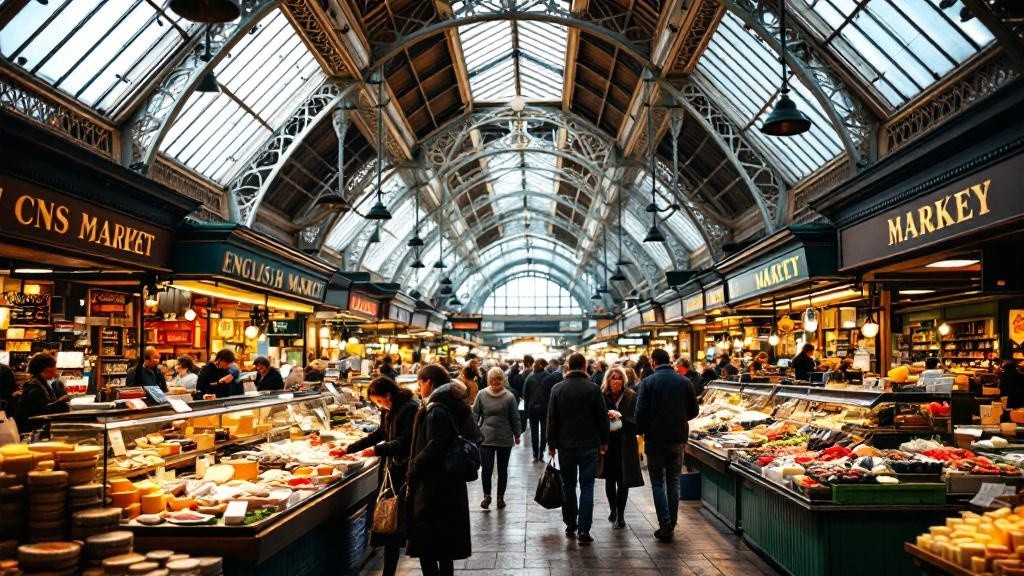
Ireland has a real restaurant culture and several Michelin stars, and the more useful development is the mid-range: gastropubs, market halls and small producers. Cork's English Market, Dublin's Fumbally and Temple Bar Food Market, and the Saturday markets in Galway, Skibbereen and Ennis are the places to see it. Prices are high — Ireland is an expensive country — and portions are large.
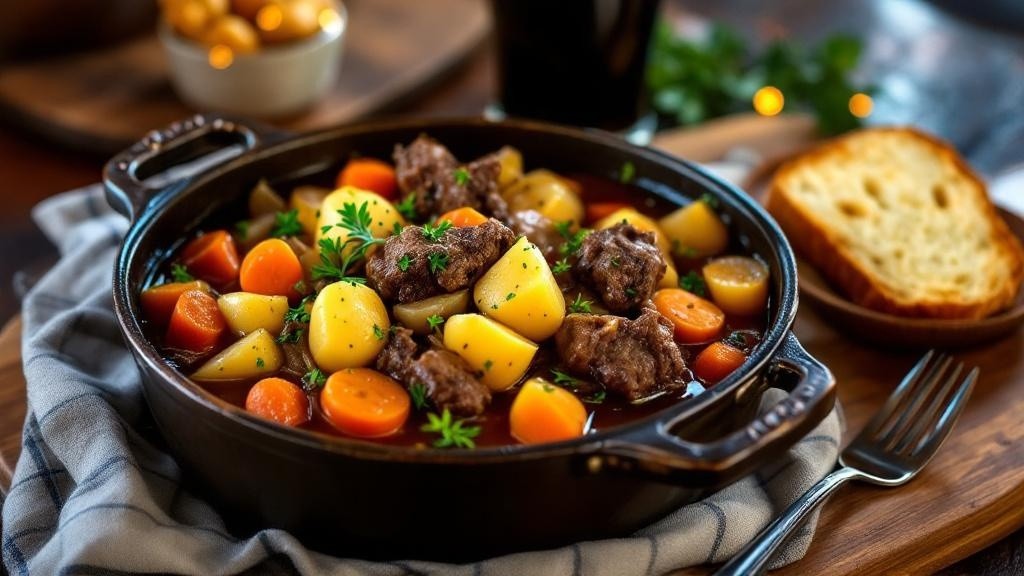
🥘 Recipe: Irish Stew
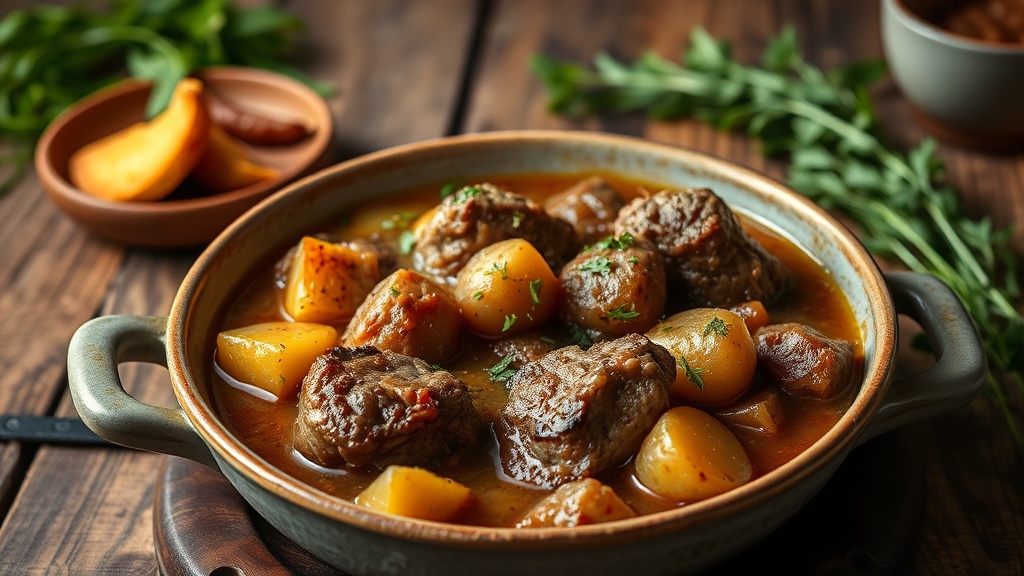
Irish Stew
Mutton, potato and onion · serves 4 · 20 min prep + 2–2.5 h
Ingredients: 1 kg mutton or lamb neck or shoulder chops, on the bone — the bone is where the body of the dish comes from; 1.2 kg floury potatoes (Rooster or Kerr's Pink), half sliced thick and half left in large chunks; 3 large onions, sliced; 3 carrots in thick rounds (optional and contested); 1 litre lamb stock or water; a few sprigs of thyme; a bay leaf; a large handful of chopped parsley; salt and plenty of white pepper.
Method: Do not brown anything. Trim the worst of the fat from the chops but leave the bone. Layer a heavy casserole: sliced potato, then onion and carrot, then the meat, seasoning as you go, then repeat, finishing with the chunks of potato on top. Tuck in the thyme and bay. Pour in stock to come about two thirds of the way up — not to cover. Bring gently to a simmer on the hob, then cover tightly and cook at 150 °C for two to two and a half hours, or on the lowest possible flame on the hob, without stirring. The sliced potato at the bottom disintegrates and thickens the liquid; the chunks on top stay whole. Finish with a great deal of parsley and check the seasoning — it needs more salt than you think.
💡 Mutton rather than lamb if you can get it: it has the flavour the dish was built on, and two hours suits it. This is better on the second day. Serve it in a bowl with soda bread and butter, and nothing else.
🍞 Recipe: Brown Soda Bread
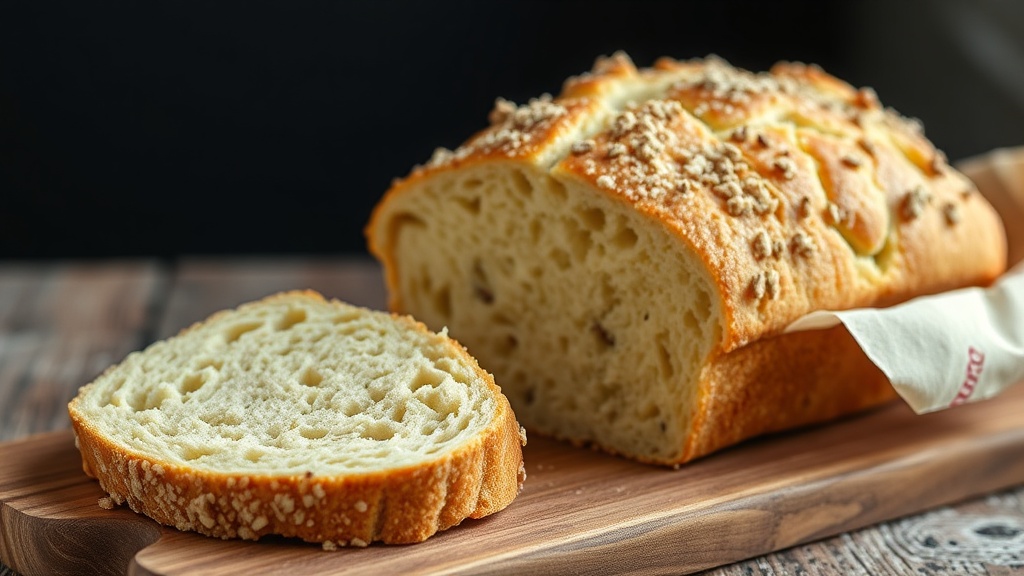
Brown Soda Bread
No yeast, no kneading, no waiting · one loaf · 10 min + 45 min
Ingredients: 350 g coarse wholemeal flour; 150 g plain white flour; 1 tsp bicarbonate of soda, sieved; 1 tsp salt; about 400 ml buttermilk. Optional: 1 tbsp pinhead oatmeal on top, or a spoon of treacle for colour. That is the entire list — no yeast, no sugar, no fat.
Method: Heat the oven to 200 °C. Mix the dry ingredients thoroughly in a wide bowl, breaking up any lumps of soda with your fingers. Make a well and pour in most of the buttermilk. Mix with one hand held like a claw, in circles, for as few seconds as it takes to come together — adding the rest of the buttermilk if needed. The dough should be soft, slack and slightly sticky, wetter than you will want it to be. Turn it onto a floured board, do not knead, and shape it into a round about 4 cm deep. Put it on a floured tray and cut a deep cross right across the top, most of the way down. Bake 40–45 minutes; it is done when it sounds hollow underneath. Cool on a wire rack under a clean tea towel if you want a soft crust.
💡 The whole thing works because bicarbonate of soda reacts with the acid in buttermilk and starts releasing gas immediately — so from mixing to oven should be under two minutes, and overworking the dough is the one way to ruin it. No buttermilk? 400 ml milk with a tablespoon of lemon juice, left ten minutes, is a fair substitute. Eat it the day it is baked, with butter.
🥬 Recipe: Colcannon
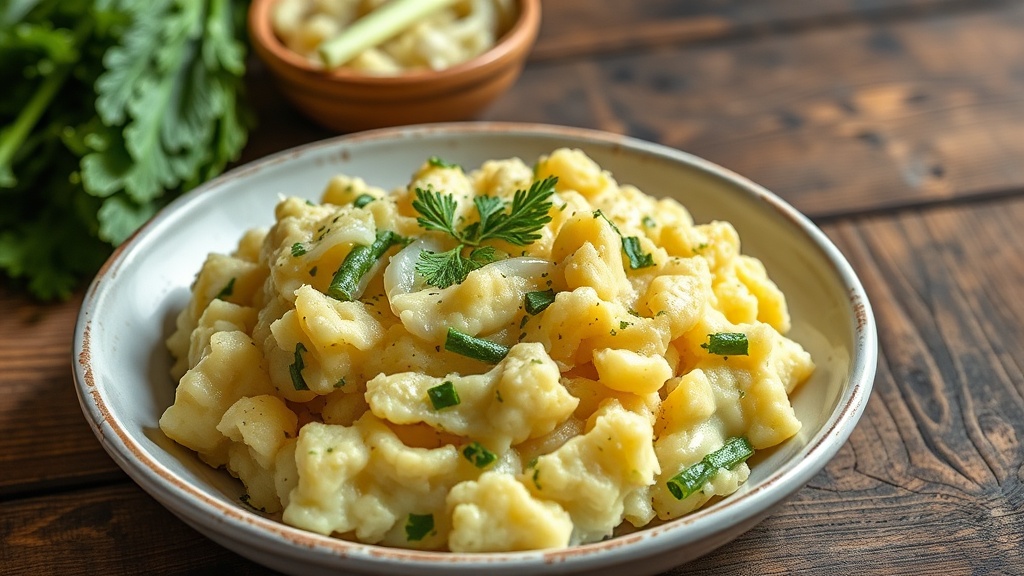
Colcannon
Potato with kale and butter · serves 4 · 40 min
Ingredients: 1 kg floury potatoes (Rooster, Kerr's Pink or Golden Wonder), unpeeled; 400 g curly kale or green cabbage, tough stalks removed, finely shredded; 6 scallions, chopped, white and green; 200 ml whole milk or cream; 100 g butter, plus more; salt and white pepper.
Method: Boil the potatoes in their skins in well-salted water until a knife slides in easily, then drain and peel them while hot, holding them in a cloth. Meanwhile boil the kale or cabbage in salted water for 4–5 minutes only — it should still be bright green — drain very thoroughly and press out the water. Warm the milk with the chopped scallions and let them soften in it for a couple of minutes. Mash the potatoes while they are still hot, ideally through a ricer, and beat in the hot scallion milk and about 60 g of the butter until smooth and light. Fold in the kale, season hard with salt and white pepper, and pile it into a warm dish. Make a crater in the middle and put the rest of the butter in it to melt. Each person takes potato from the edge and dips it in.
💡 Traditionally a Hallowe'en dish, with a ring hidden in it for whoever is to be married next. Cold leftovers fried in butter into a flat brown-crusted cake are arguably better than the original, and are what most Irish people are actually thinking of.
🥔 Recipe: Boxty
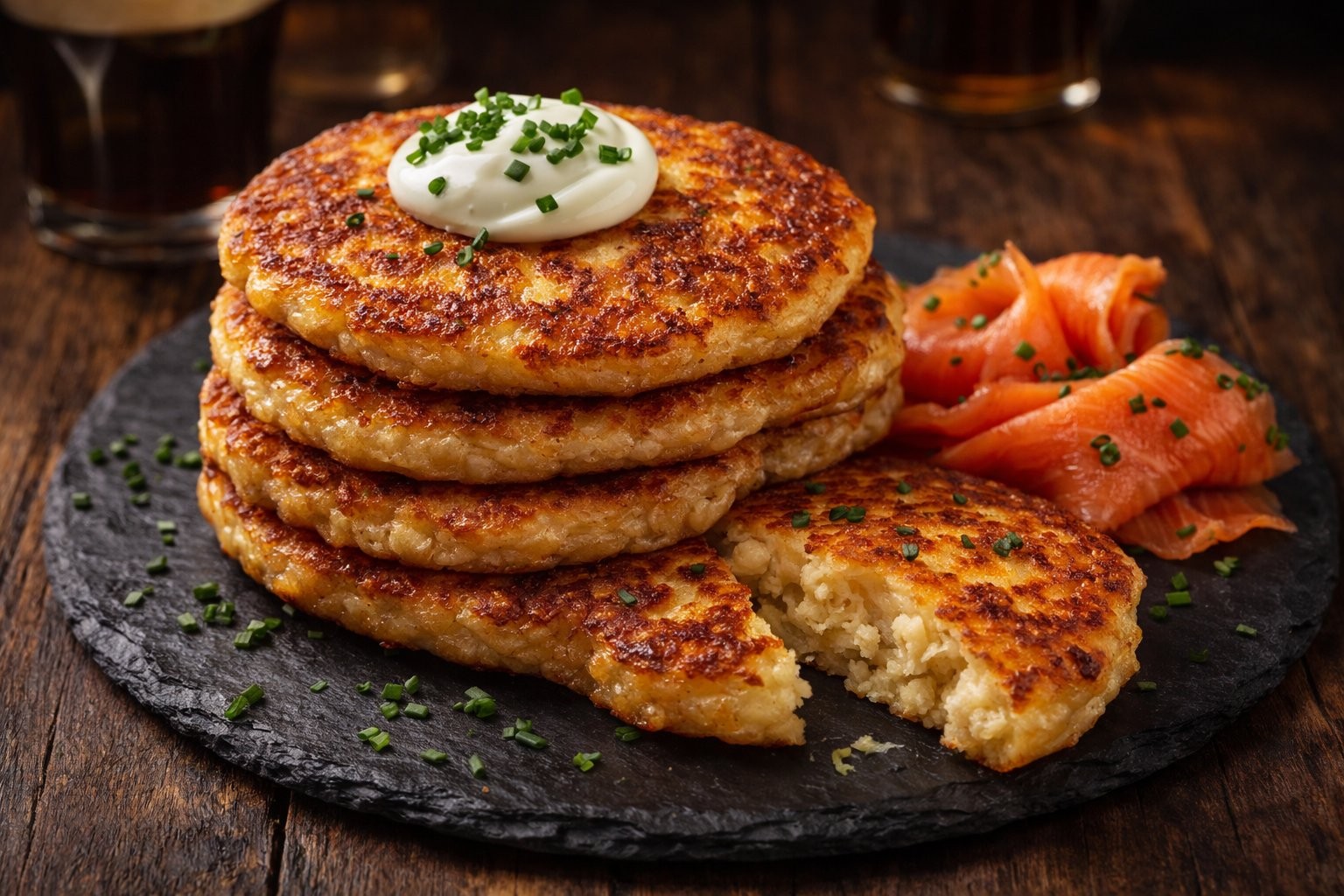
Boxty
The potato pancake of Leitrim and Cavan · makes 8 · 30 min
Ingredients: 250 g raw potato, peeled and finely grated; 250 g cooked mashed potato; 250 g plain flour; 1 tsp baking powder; 1 tsp salt; about 250 ml buttermilk or milk; 1 egg (optional, for a softer pancake); butter and a little oil for frying.
Method: Grate the raw potato into a bowl, then wring it out hard in a clean cloth over another bowl, keeping the liquid. Let that liquid stand a few minutes: a white layer of starch settles at the bottom. Pour off the water, scrape the starch back in with the grated potato — this is the step that makes the difference and the one everyone skips. Mix in the mashed potato, then the flour, baking powder and salt, then enough buttermilk to give a thick dropping batter. Heat a heavy pan to medium — not hot — with butter and a little oil, drop in large spoonfuls and flatten to about 1 cm. Cook 4–5 minutes a side until deep golden and cooked through; too hot a pan burns the outside while the raw potato inside is still raw.
💡 The old rhyme — boxty on the griddle, boxty in the pan; if you can't make boxty, you'll never get a man — is from the Leitrim–Cavan–Fermanagh country where the dish belongs. Serve with butter and salt, or as above with sour cream and smoked salmon, or wrapped around a filling as a savoury pancake.
🍺 Stout, Whiskey and Tea
Guinness
A dry Irish stout brewed at St James's Gate in Dublin since 1759, on a lease Arthur Guinness signed for 9,000 years at £45 a year. The colour is very dark ruby rather than black, the flavour comes from roasted unmalted barley, and the creamy head from nitrogen rather than CO₂. A pint takes about 119.5 seconds to pour properly in two stages, and it is not affectation: a rushed pint tastes different. It does genuinely taste better in Ireland, mostly because of turnover and clean lines. The Storehouse is the country's most visited attraction, which tells you something.
The rest of the beer
Murphy's and Beamish, both from Cork, are the other stouts and Cork people will tell you at length which is better. Smithwick's is the red ale. And since about 2012 there has been a genuine craft scene — Galway Bay, Kinnegar, Whiplash, White Hag — which has made Ireland a much more interesting beer country than it was.
Whiskey
Spelled with an e in Ireland, and typically triple-distilled and unpeated, which makes it smoother and lighter than most Scotch. Irish whiskey dominated the world market in the nineteenth century, was destroyed by Prohibition, the trade war with Britain and the loss of the Empire, and had fallen to two working distilleries by the 1980s. There are now more than forty. Single pot still — made from a mix of malted and unmalted barley, a legal category unique to Ireland — is the style worth seeking out: Redbreast, Green Spot, Powers. Ignore the coffee.
Tea, and how much
Ireland is consistently in the top two or three tea-drinking countries per head in the world, ahead of Britain. It is strong black tea — Barry's or Lyons, and people are tribal about which — brewed dark and taken with milk. Being offered tea is the default social gesture, and the offer will be repeated after you decline it, which is not a misunderstanding but a form. Say yes.
🏛️ Dublin
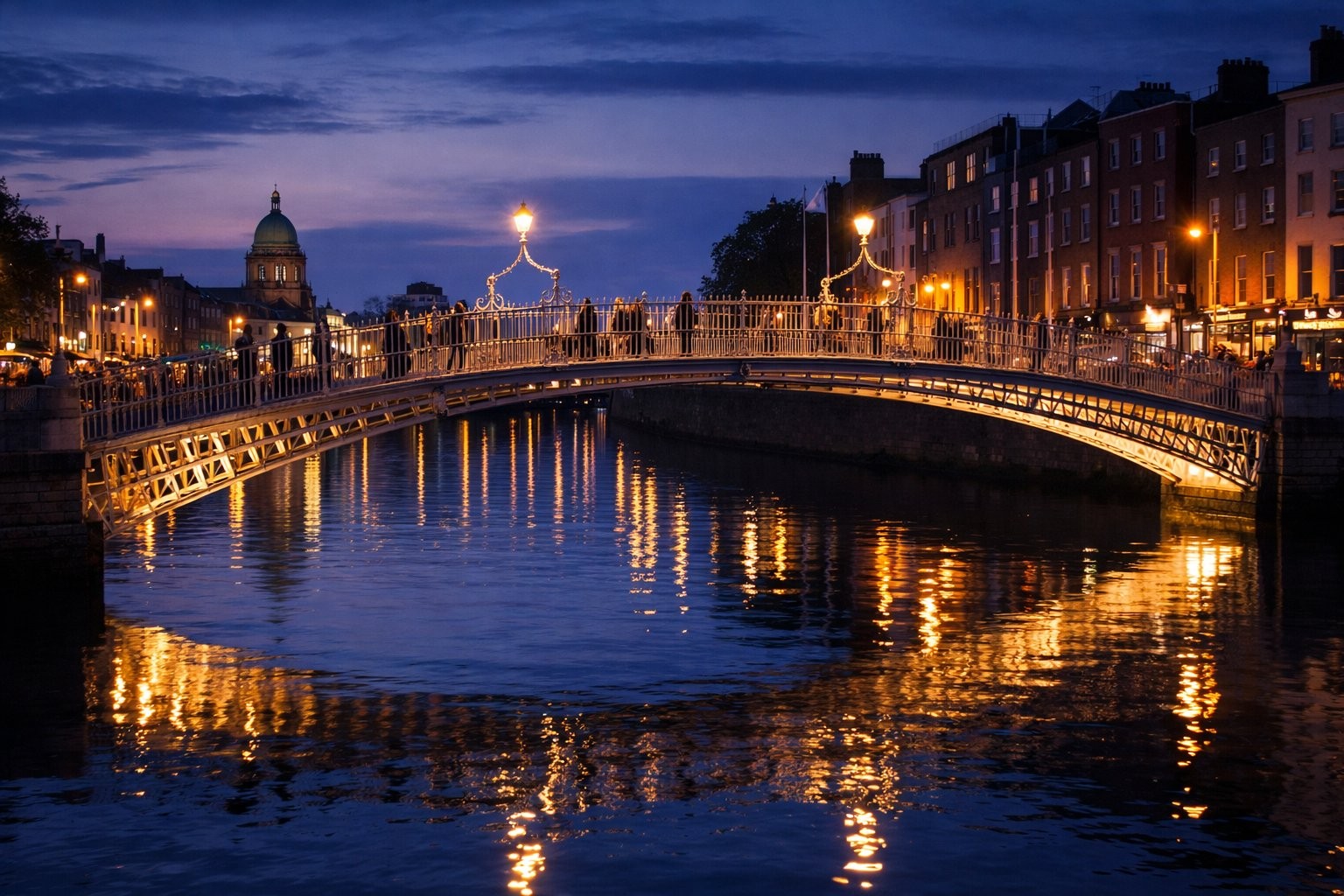
A city of about 1.2 million in its metropolitan area — nearly a quarter of the country — founded by Vikings, rebuilt in brick and stone by the Georgians, and now expensive, young and international. It is small enough to walk across in forty minutes and dense enough that you will not want to.
The unmissable three
The Book of Kells and the Long Room at Trinity College — book ahead, and the Long Room is worth the ticket by itself. The National Museum of Ireland, Archaeology on Kildare Street, which is free and holds the Iron Age bog bodies, the Ardagh Chalice, the Tara Brooch and a stunning quantity of prehistoric gold. And Kilmainham Gaol, where the 1916 leaders were executed, which is the best single hour of Irish history available anywhere and must be booked weeks in advance.
Georgian Dublin
The city's architectural identity: brick terraces, fanlights, and the famous doors in every colour, on Merrion Square, Fitzwilliam Square and Henrietta Street. The Georgian house at 14 Henrietta Street, restored as a museum of the tenements it became, tells the twentieth-century half of that story: Dublin had some of the worst slum overcrowding in Europe. The National Gallery, also free, is in the middle of it.
Pubs
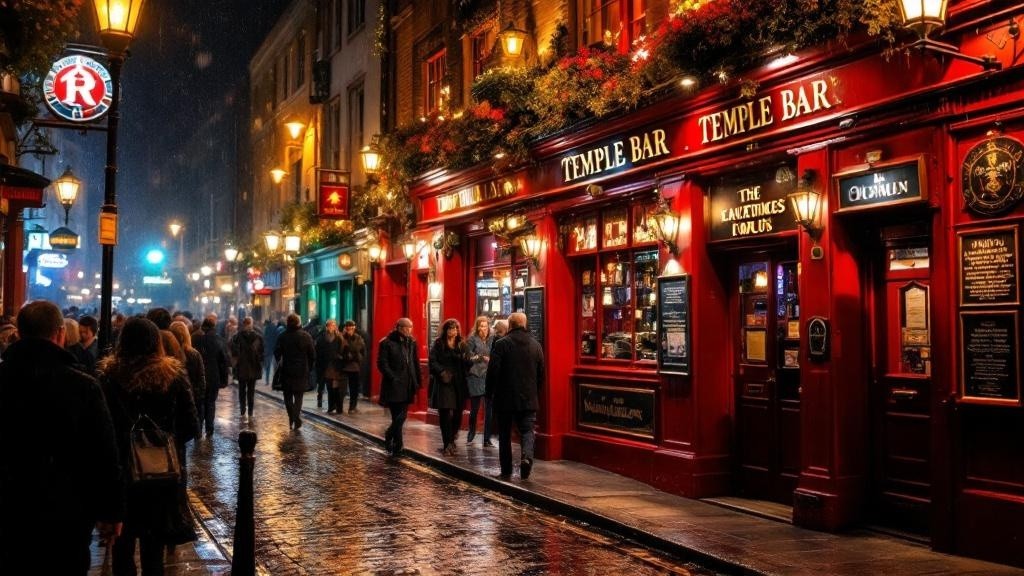
The Long Hall and The Stag's Head for Victorian interiors, Kehoe's and Grogan's for the city's own crowd, The Cobblestone in Smithfield for the best traditional session in Dublin, Mulligan's for the pint. Temple Bar is the district everyone has heard of and is where Dubliners send visitors they do not like: it is loud, it is fun for one night, and a pint there costs half as much again as it does two streets away.
Out of the centre
Glasnevin Cemetery, where most of modern Irish history is buried and the tour is excellent. The Irish Museum of Modern Art in the seventeenth-century Royal Hospital Kilmainham. Phoenix Park, at 707 hectares one of the largest enclosed city parks in Europe, with a herd of fallow deer that has been there since the 1660s. And the DART train south along the coast to Dún Laoghaire, Dalkey and Howth on the other side.
🌊 The West: Galway, Connemara and the Aran Islands
The west of Ireland is what people come for, and it is genuinely different from the east: wetter, emptier, more Irish-speaking, and with a coastline of a complexity that has to be seen to be believed.
Galway city
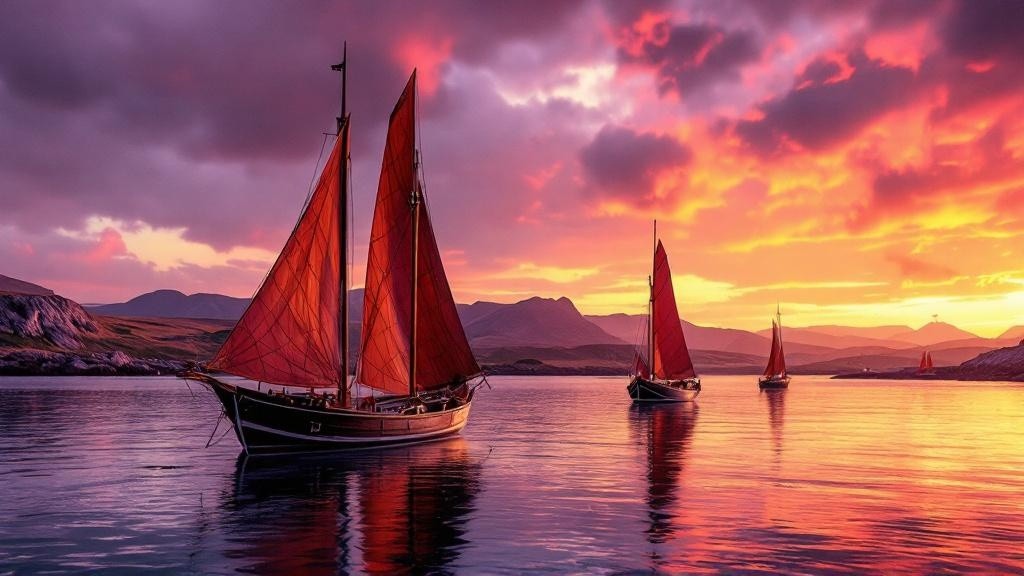
Small — under 90,000 — young, and by some distance the most enjoyable city in Ireland. Medieval streets, a huge student population, street performers on Shop Street year-round, and more live music per square metre than anywhere else in the country. The Spanish Arch is the fragment of the 1584 city wall on the Corrib, and it is a modest thing rather than a monument. Galway International Arts Festival in July and the Oyster Festival in September are both worth planning around.
Connemara
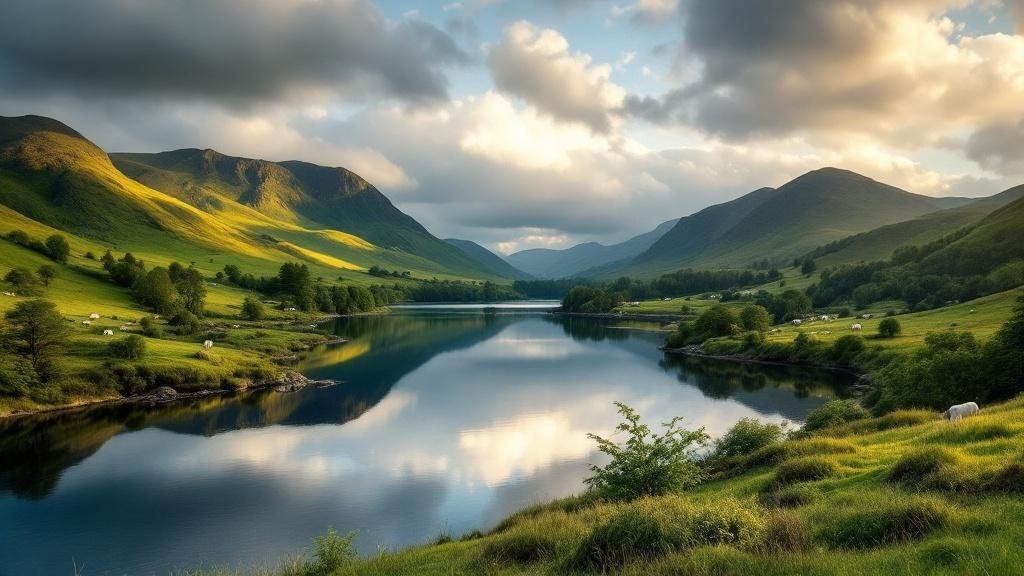
West of Galway: bog, quartzite mountains, lakes, and a landscape that changes with the light every ten minutes. The Twelve Bens, the drive through the Inagh Valley, Kylemore Abbey on its lake, the beaches at Renvyle and Dog's Bay which have white coral sand and turquoise water and are usually empty and freezing. Much of Connemara is Gaeltacht, so the road signs are in Irish only — know that An Spidéal is Spiddal and Ros Muc is Rosmuck before you set off.
The Aran Islands
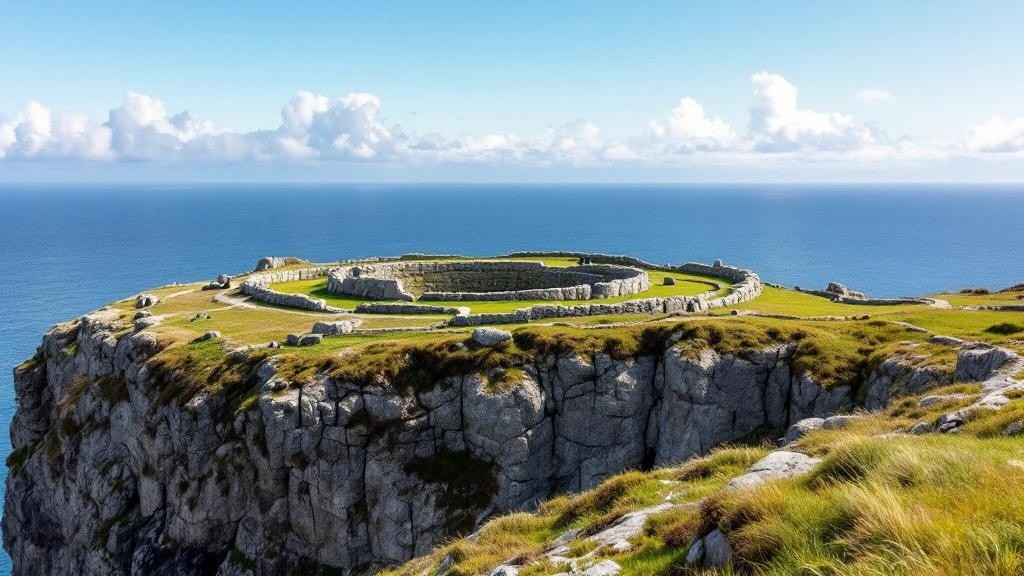
Three limestone islands off the mouth of Galway Bay — Inis Mór, Inis Meáin, Inis Oírr — where Irish is still the community language, the fields are tiny plots walled with drystone and made by hand from seaweed and sand, and the western edge simply stops in a cliff. Ferries from Ros a' Mhíl or Doolin, bicycles on arrival. Inis Meáin, the middle and least visited, is where to go if you want the islands rather than the day trip.
Further north
Mayo — Achill Island, the deserted village on Slievemore, the Céide Fields where a Neolithic farming landscape lies preserved under blanket bog. Sligo, which is Yeats country, under the flat table of Ben Bulben. And Donegal, the most remote and in many ways the best of it: Slieve League, whose sea cliffs are nearly three times the height of the Cliffs of Moher, Glenveagh National Park, and the beaches of the Inishowen peninsula.
⛰️ The South-West: Kerry, Cork and the Cliffs
The most visited part of Ireland after Dublin, and deservedly: the highest mountains, the best-known drives, and a coastline of peninsulas reaching into the Atlantic like fingers.
The Ring of Kerry
A 179 km circuit of the Iveragh peninsula, and the most famous drive in the country. Two pieces of practical advice that make the difference: drive it anticlockwise, because the tour coaches go clockwise and meeting one head-on on a wall-lined road is not fun; and turn off it — the Skellig Ring and the road over the Ballaghbeama Gap are better than the main loop and almost empty. Skellig Michael boats leave from Portmagee, weather permitting, which it often does not.
Dingle and Killarney
The Dingle peninsula is the smaller, wilder and, for most people who have done both, better version of the Ring: Slea Head, beehive huts, the Blasket Islands offshore, and Dingle town with a genuinely good music and food scene. Killarney National Park holds the lakes, the last fragments of native oak woodland, Muckross House, the Gap of Dunloe, and Ireland's only continuously native red deer herd.
Cork and the coast
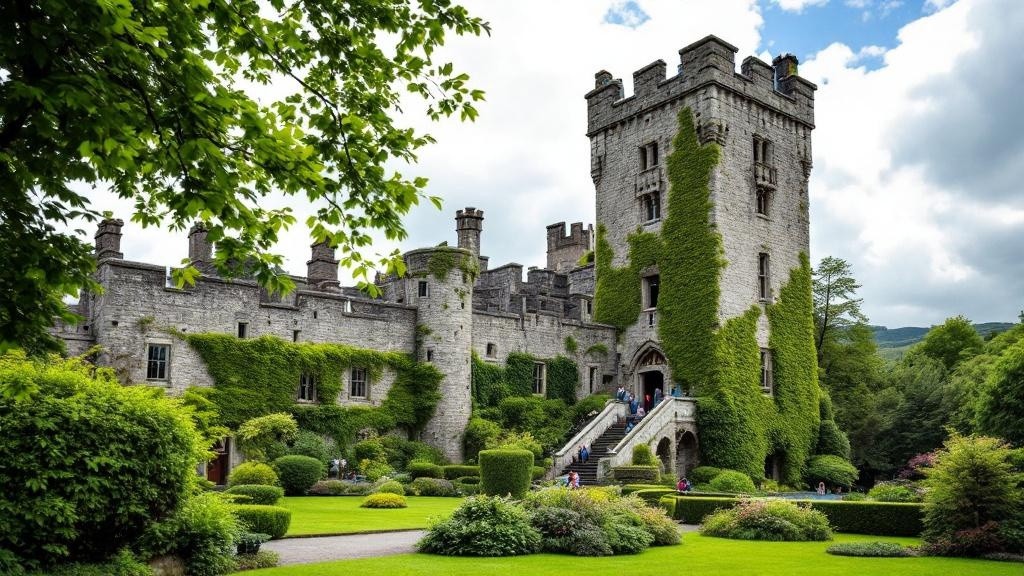
Cork city is Ireland's second and is quietly convinced it should be the first — the English Market, the Shandon bells, a strong food and music scene, and its own accent and pace. Around it: Kinsale, Cobh, from which the Titanic last sailed and from which over two and a half million emigrants left, Blarney Castle, and the three long peninsulas of Beara, Sheep's Head and Mizen, which are as good as Kerry with a tenth of the traffic.
The Burren and Clare
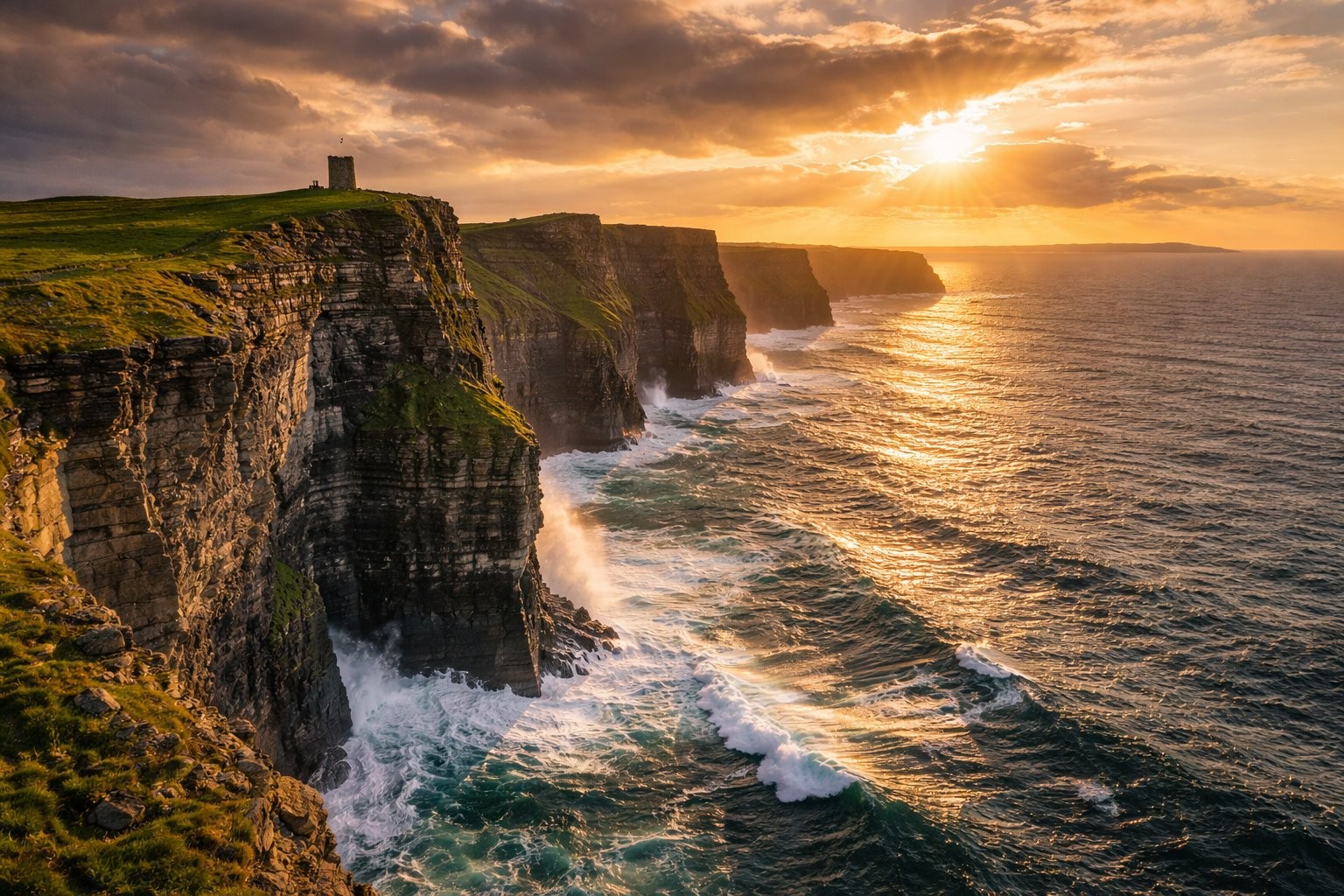
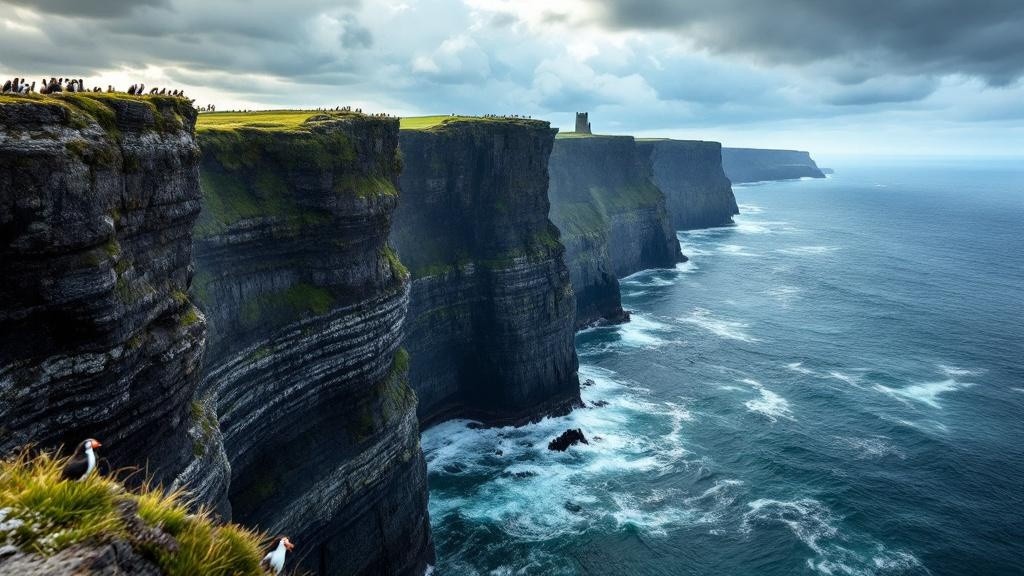
North of the cliffs, the Burren — bare limestone pavement, Arctic and Mediterranean flowers in the same crack, Poulnabrone dolmen, and the Aillwee and Doolin caves. Doolin itself is the best place in Ireland to hear traditional music, and the ferry to the Aran Islands leaves from there. Clare is also where the Cliffs of Moher walking trail runs, which is a far better experience than the visitor centre car park.
📋 Practical Information
Entry and money
Ireland is in the EU and the eurozone but not in Schengen — it is in the Common Travel Area with the UK instead. For Czech citizens this changes nothing in practice: free movement applies and an ID card is enough, though a passport is easier at some airline desks and is required for Northern Ireland, which is the UK. Currency is the euro; Northern Ireland uses sterling. Cards are accepted essentially everywhere, contactless is universal, and cash is barely needed.
Costs
Ireland is expensive — among the priciest countries in the EU, and Dublin more so. A pint runs 150–190 Kč in Dublin, less outside it. A pub lunch 350–500 Kč, a restaurant main 550–800 Kč. A mid-range Dublin hotel double is often 4,000–6,000 Kč a night and can be far worse during a big match or a concert; B&Bs in the country are much better value at 2,000–3,000 Kč including a large breakfast. Car hire from 900 Kč a day, and note the fuel is dear.
Driving
On the left, in kilometres per hour, and this is the thing to take seriously: most Czech visitors' problems in Ireland are on roads. Rural roads are narrow, walled or hedged with no verge and no visibility, and the posted 80 km/h on a boreen is a legal limit rather than a suggestion of what is possible. Rental cars are usually manual with the gearstick on your left; automatic costs more and is worth it. Check whether your card's collision cover is accepted, because Ireland is one of the countries most often excluded.
Health, phones, plugs
The European Health Insurance Card works and public hospital care is free at the point of use for EHIC holders; a GP visit is not, and costs around 1,500 Kč. Take commercial insurance as well, particularly for hiking. Emergency number 112 or 999. Plugs are British type G, three rectangular pins, 230 V — you need an adapter, and it is not the same one as for the rest of Europe. Mobile roaming is EU-standard. Tipping: 10% in restaurants if service is not included, nothing in pubs.
For Czech travellers: there are direct flights from Prague to Dublin year-round — Ryanair and Aer Lingus, about 2 h 45 min, and returns from around 2,500 Kč booked early and several times that in summer. There are seasonal direct services to Cork and occasionally Shannon. The Czech Embassy in Dublin is at 57 Northumberland Road, Ballsbridge. There is a large and long-established Czech and Slovak community in Ireland from the post-2004 migration, so Czech is more widely heard than you might expect. MZV ČR issues no warning beyond ordinary caution; DROZD registration is free and sensible if you are hiking the west coast.
❓ Misconceptions
"Everyone speaks Irish."
Almost nobody does as a first language — around 70,000 daily speakers outside education, in a country of 5.4 million. Everyone has studied it for fourteen years and most people can produce a few sentences and have complicated feelings about the fact that they cannot produce more. Speak English; the effort of a go raibh maith agat is appreciated and no more is expected.
"St Patrick's Day is an ancient Irish festival."
The parade is an American invention. The first were in colonial New York and Boston in the eighteenth century; Ireland's first official state parade was in 1931, and until 1970 Irish pubs were legally closed on 17 March because it is a religious holiday. The modern multi-day festival dates from 1996 and was created to attract tourists. Green beer is not Irish and dyeing rivers is not either.
"Corned beef and cabbage is the national dish."
It is bacon and cabbage. Irish emigrants in New York substituted cheap Jewish-butcher corned beef for the bacon they could not afford, and the dish came back across the Atlantic as an American idea of Irishness. Ordering it in Ireland will get you a puzzled look outside a tourist restaurant.
"Ireland is one country."
Two states on one island. The Republic of Ireland is an EU member using the euro; Northern Ireland is part of the United Kingdom, uses sterling, and left the EU in 2020. Calling the whole island "Ireland" is geographically fine and politically loaded; calling the Republic "Southern Ireland" or "Éire" in English will land badly; and "Ulster" is nine counties, not six.
"The Troubles were a religious war."
They were about national identity, sovereignty and civil rights. Religion marked the two communities because of the seventeenth-century plantations, so it functioned as an ethnic label rather than a theological dispute — nobody was fighting about transubstantiation. Calling it a religious war is the single most common outside error and it makes the actual history unintelligible.
"Ireland is empty and rural."
Around a third of the population lives in greater Dublin, and Ireland is more urbanised than its image by a long way. It is also, by GDP per head, one of the richest countries in the world — although see the note on that figure in the overview — and its rural west is emptier than it should be precisely because so many people left it.
✍️ Author's Note
The thing that struck me most in putting this page together is how compressed Irish history is at both ends. At one end, a tomb at Newgrange that was already fifteen hundred years old when Stonehenge was finished, built by a society we know almost nothing about. At the other, a country that in the space of one working life went from criminalising homosexuality to legalising same-sex marriage by popular vote, and from mass emigration to a fifth of its residents being born abroad. Very few places contain that much distance.
The honest advice for a visitor is the same as for most countries and is ignored more often here than most: go west and go slow. Ireland is small and its roads are slow, and the standard mistake is a week-long itinerary with eleven stops on it, driven in rain, seeing car parks. Two bases — say Galway and Dingle — and a lot of walking will produce a far better trip than the Ring of Kerry in an afternoon. And the pub is not a sight to be visited; it is where you find out what the country is actually like, which requires sitting still in one for three hours.
One editorial choice worth flagging: the Famine section is longer than a travel page usually allows. It is there because it is not background — it is the reason the west is empty, the reason the language died, the reason there are 70 million people of Irish descent, and the reason emigration was a normal expectation of Irish life until roughly 1995. You cannot read the landscape without it.
On the images
This set is better than most and is mixed. The two Cliffs of Moher pictures and the Ha'penny Bridge are accurate, and the puffins in the second cliffs image are correct rather than decorative. The Temple Bar pub, the Galway hookers, the Wild Atlantic Way road and the English Market are all right in substance, with generated nonsense on the shop signs in several of them.
Four carry corrections stated in their captions. The Glendalough picture has a square battlemented castle tower where the site's defining feature is a slender round tower. The Newgrange image is missing the white quartz facade, the kerbstones and the roof-box — that is, everything specific to Newgrange. The Connemara mountains are alpine and snow-capped where the Twelve Bens are 730 m and bare. The Aran fort is a closed ring on a low cliff where Dún Aonghasa is a semicircle on an 87-metre one. The Blarney Castle picture shows the keep merged into a long mansion range; the real castle is a freestanding tower and the mansion is a separate Victorian house in the grounds.
One image was left out entirely. The file named for Galway's Spanish Arch shows a large twin-towered fortified river gate flanked by Flemish-gabled merchant houses. The actual Spanish Arch is a low, plain, weathered two-arch fragment of the 1584 city wall standing beside the Corrib — about the height of a house, with no towers and no gate. That is not a stylisation, it is a different building on a different continent, and anyone who went looking for it on the strength of the picture would not find it.
The food images are the usual story. Boxty is accurate and is exactly how it is served. The dish labelled Irish stew in the country folder is a beef and stout stew, and the recipe image of it is browned where real Irish stew is pale. The soda bread has no cross on it and an open yeasted crumb. The colcannon has no kale in it, which makes it champ. Each of those is noted where the picture appears.
Support This Project 🌍
This World Travel Factbook is a labor of love – free to use for all travelers. If you find it helpful, consider supporting its continued development.