Albania brings mountains, historic towns and two Mediterranean seas into a compact corner of the Balkans. It borders Montenegro, Kosovo, North Macedonia and Greece; the Adriatic lies to its west and the Ionian Sea to its southwest. A journey can take you from the broad public spaces of Tirana to the stone roofs of Gjirokastër, then into the limestone valleys of the north.
The contrast is part of the attraction. Byzantine churches and Ottoman mosques stand in the same towns; Roman ruins and communist bunkers tell very different stories about power. In between are ordinary pleasures: a bakery opening early, a long conversation over coffee, a guesthouse table set with local vegetables and cheese. Leave room for those moments alongside the famous sights.
Tourism has expanded quickly, especially on the Riviera. Albania is no longer an undiscovered destination, and a summer stay in Ksamil can feel very different from a spring visit to an inland town. Compare actual accommodation and transport prices for your dates rather than relying on an old reputation for being uniformly cheap. Official arrivals statistics count border entries, not necessarily distinct tourists.
For a first visit, choose a manageable combination: Tirana and the two historic towns, or Shkodër and the Alps, or a southern itinerary with Butrint and the coast. Trying to fit all three into a few days turns a varied country into a succession of long drives.
The country’s Albanian name is Shqipëria, and its people are shqiptarë. “Land of the Eagles” is a familiar cultural interpretation, reinforced by the black double-headed eagle on the red flag; it should not be treated as an uncontested linguistic derivation. The older name Albania is associated with the ancient Albanoi recorded by Ptolemy.
Albanian forms its own branch of the Indo-European language family. It is not a language isolate: it shares that wider ancestry with other European languages, even though no other surviving language belongs to its branch. The precise relationship between Albanian and the ancient languages of the western Balkans remains debated.
Albanian-speaking communities extend beyond the republic, particularly in Kosovo and North Macedonia, with further communities and diasporas elsewhere. Cultural identity and citizenship are different things. This guide concerns the Republic of Albania and uses local place names where practical.
03
Geography & regions
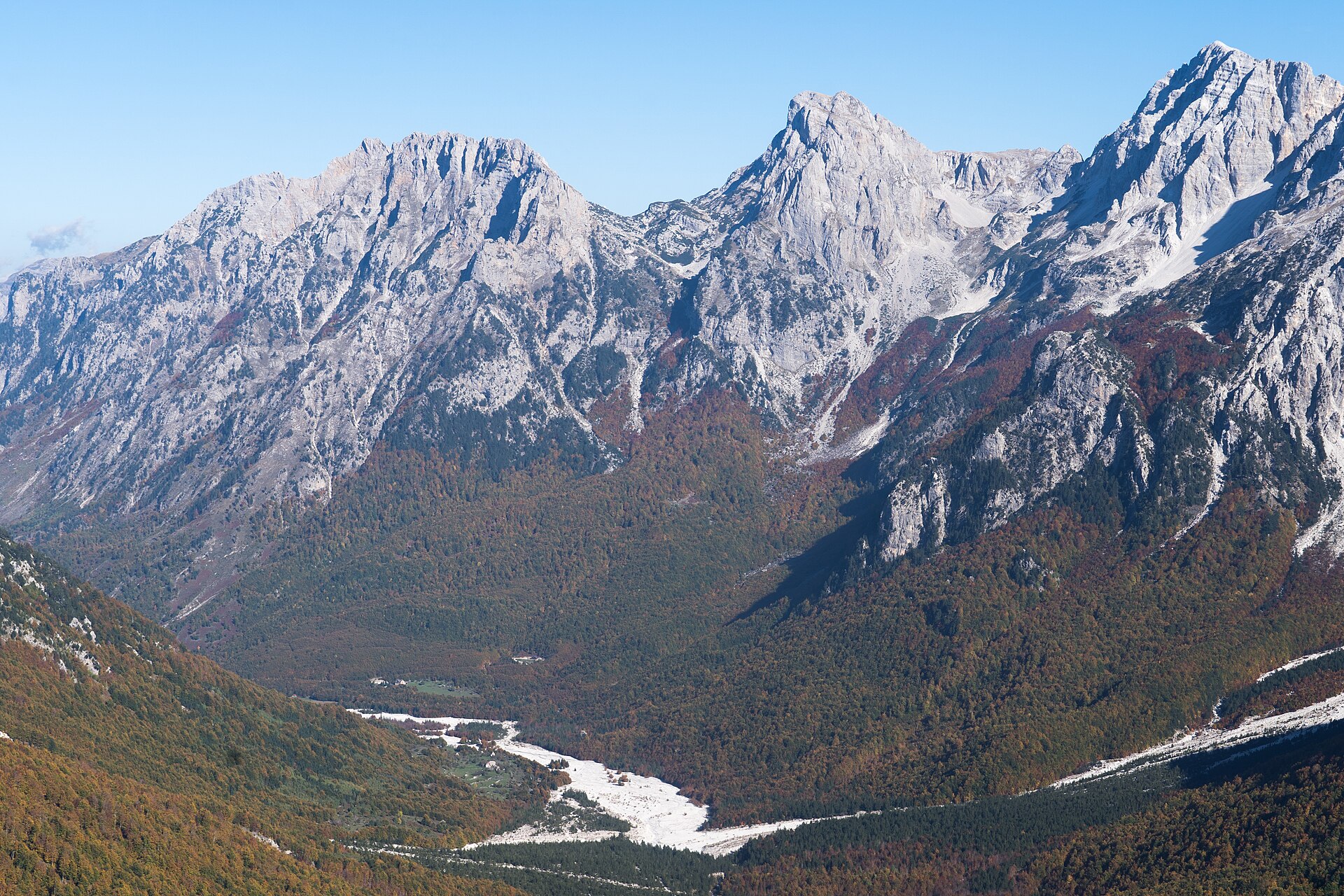
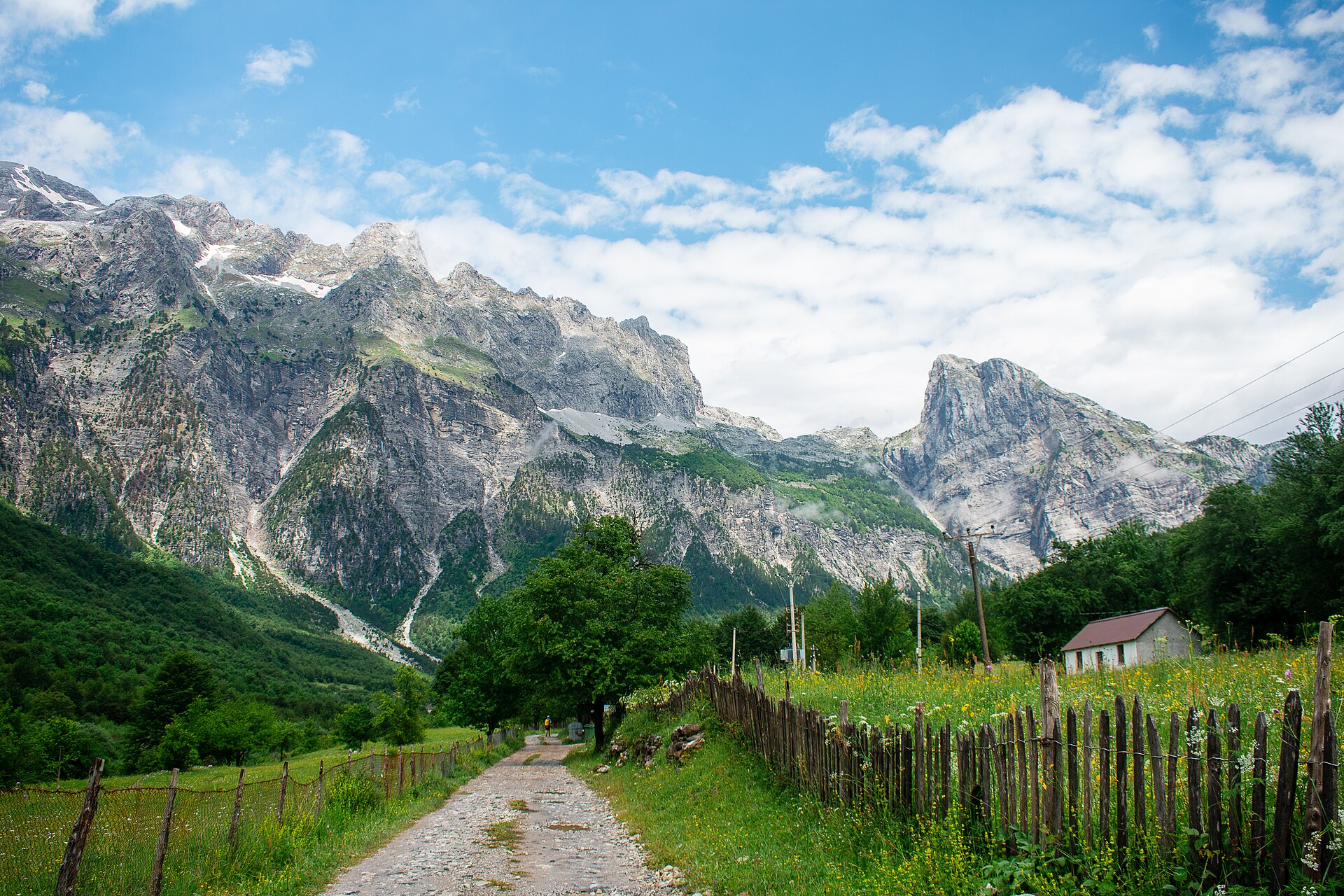
Albania covers 28,748 km², but mountain roads make distances feel longer than they appear on a map. The western lowlands face the Adriatic; south of Vlorë, steep slopes meet the Ionian Sea. The northern Albanian Alps continue into Montenegro and Kosovo, while the eastern borderlands include the lakes of Ohrid and Prespa.
The Riviera combines pebble bays, olive groves and hillside villages. The Alps offer high passes and deeply cut valleys. Around Berat, the Osum basin opens toward canyon country; Gjirokastër belongs to the separate Drino valley farther south. These are distinct landscapes, not one interchangeable “central highland” region.
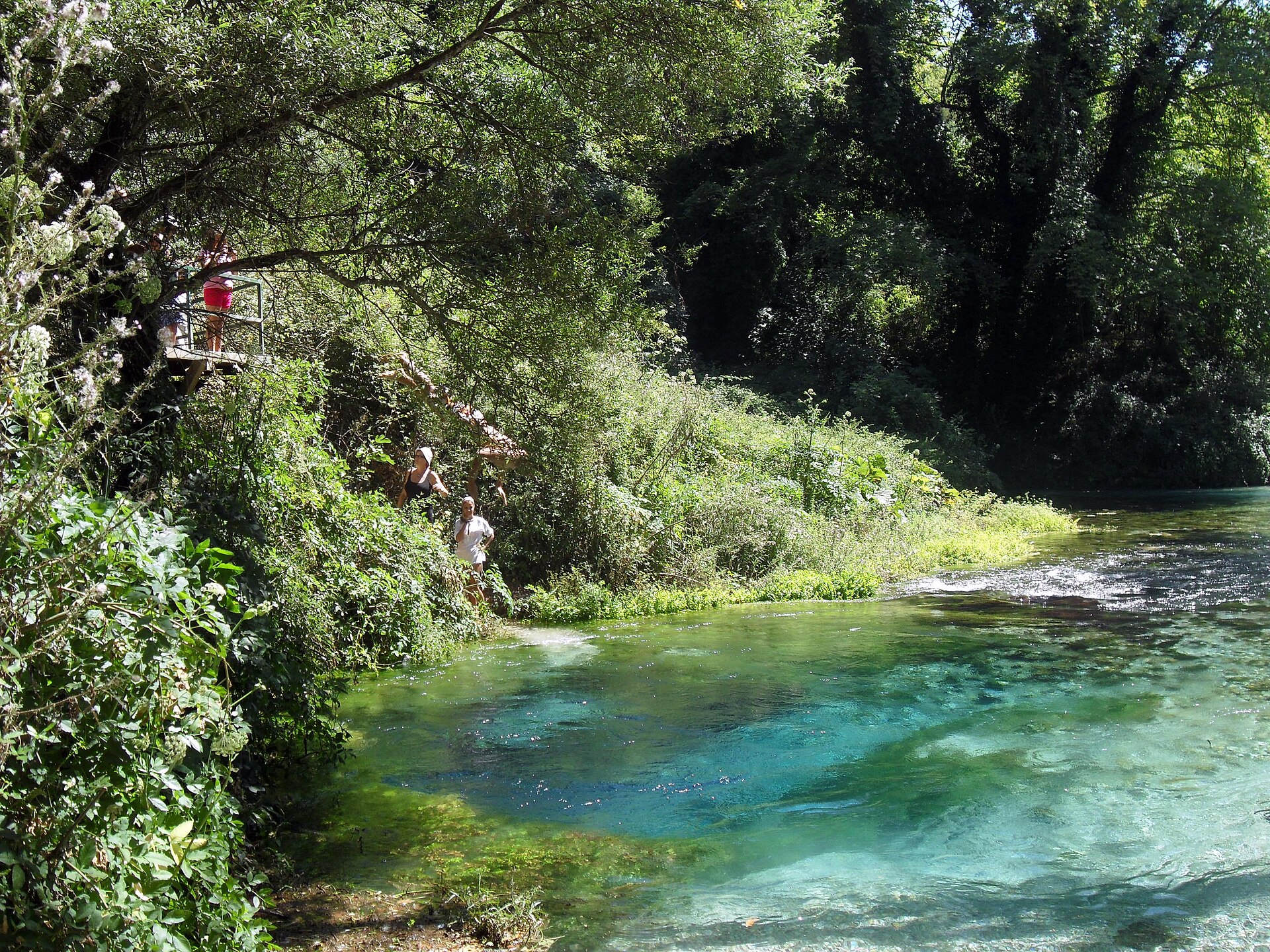
The Blue Eye, or Syri i Kaltër, is a vivid karst spring near the southern route between Sarandë and Gjirokastër. Its blue center draws attention, but the surrounding woodland and water system deserve the same care. Follow site rules and keep out of protected water rather than treating it as a swimming pool.
Use the map to locate Tirana, Shkodër, Berat, Gjirokastër, the Riviera and the northern mountains. Build each day around road access and daylight, not straight-line distance. Theth and Valbona are close across a mountain pass but far apart by road. Download an offline map before leaving town and verify mountain conditions locally.
Antiquity. Illyrian communities inhabited much of the western Balkans, while Greek settlements developed along the coast. Butrint and Apollonia show how local, Greek and Roman worlds overlapped. Roman roads linked the coast with the interior; later, Byzantine churches and fortifications added new layers rather than wiping the earlier ones away.
Ottoman centuries. Skanderbeg’s resistance in the 15th century became a central story of Albanian national identity. Ottoman rule subsequently shaped towns, religious life and architecture for centuries. Conversion and community life were complex processes influenced by social position, taxation, local loyalties and belief. Albania declared independence in Vlorë on November 28, 1912.
Communist isolation, 1944–1991. Enver Hoxha’s dictatorship broke successively with Yugoslavia, the Soviet Union and China. Political imprisonment, executions, surveillance and restrictions on movement shaped everyday life. The anti-religious campaign of 1967 closed places of worship; the 1976 constitution codified the state’s atheist position. Concrete bunkers remain a visible reminder of militarization, but the experiences of those imprisoned and persecuted matter more than bunker counting.
Democratic transition. The collapse of one-party rule brought political change and large-scale emigration. The failure of pyramid investment schemes led to severe unrest in 1997. Albania joined NATO in 2009 and gained EU candidate status in 2014. According to the Council of the EU, all 33 negotiating chapters had opened and three were provisionally closed at the July 14, 2026 accession conference. That is progress in negotiations, not membership or a guaranteed accession date.
The September 2023 census recorded 2,402,113 residents. This is a dated census count, not a live population estimate. Emigration has shaped family life, the economy and the relationship between towns and their diasporas. Albanian culture combines regional traditions with Mediterranean, Balkan and Ottoman influences; Tirana’s contemporary cultural scene is only one part of that picture.
Besa, a pledged word or promise, and mikpritja, hospitality, are important cultural concepts. Their meaning comes through relationships and individual choices, not a guarantee that every encounter will follow the same script. Muslim, Bektashi, Catholic and Orthodox traditions coexist alongside other beliefs and secular lives. Ask before photographing worshippers and follow local dress and visiting customs.
Useful words: Mirëdita — hello; Faleminderit — thank you; Po / Jo — yes / no; Sa kushton? — how much does it cost?; Gëzuar! — cheers; Mirupafshim — goodbye. A friendly question works better than relying on generalized advice about supposedly reversed head gestures.
Albanian forms a branch of the Indo-European language family all by itself. Its two principal dialect groups are traditionally described as Gheg in the north and Tosk in the south; the modern standard language is based mainly on Tosk. The language uses a Latin alphabet of 36 letters, including distinctive combinations such as dh, gj, ll, nj, rr, sh, th, xh and zh.
Place names may appear with and without Albanian diacritics, especially ë and ç. Learning mirëdita, faleminderit and ju lutem is useful, but pronunciation matters less than the courtesy of trying. Italian and English are widely encountered in tourism, while Greek is common in parts of the south.
08
🕊️ Faith, Secular Life & Coexistence
Albania’s religious landscape includes Sunni Muslim, Bektashi, Roman Catholic and Orthodox Christian communities, as well as many people who are non-practising or secular. Family history, region and personal identity do not always fit a single label, and census answers cannot describe the full texture of belief.
The communist government closed or repurposed places of worship during the anti-religious campaign that began in 1967. Religious institutions revived after 1990, and mosques, churches and Bektashi tekkes again form part of public life. Visitors should dress respectfully, avoid interrupting worship and ask before photographing ceremonies.
09
🧱 Communist Rule & Its Legacy
Enver Hoxha’s regime governed Albania from the end of the Second World War until his death in 1985, combining forced political conformity with extreme international isolation. Surveillance, imprisonment, executions, labor camps and restrictions on movement affected thousands of families; the physical remains of bunkers and industrial projects are only the most visible layer of that history.
Museums and memorial sites in Tirana, Shkodër, Spaç and elsewhere approach the period from different angles. Treat former prisons and sites of persecution as places of memory rather than unusual attractions. Oral histories, family testimony and archival work are essential because the consequences of dictatorship did not end automatically in 1991.
10
⚓ Durrës — Adriatic Gateway
Durrës is Albania’s principal Adriatic port and one of its oldest cities. Ancient Dyrrhachium stood on the Via Egnatia, the great Roman road running east toward Thessaloniki and Constantinople. The surviving amphitheatre, archaeological museum and fragments of walls reveal a city repeatedly rebuilt after earthquakes, invasions and modern expansion.
The waterfront and beaches make Durrës a popular domestic resort, but the city is more rewarding when its archaeology and working port are included. Traffic can be heavy in summer, and archaeological remains are embedded in the modern urban fabric rather than gathered into one isolated park.
11
🚲 Shkodër — Northern Cultural Capital
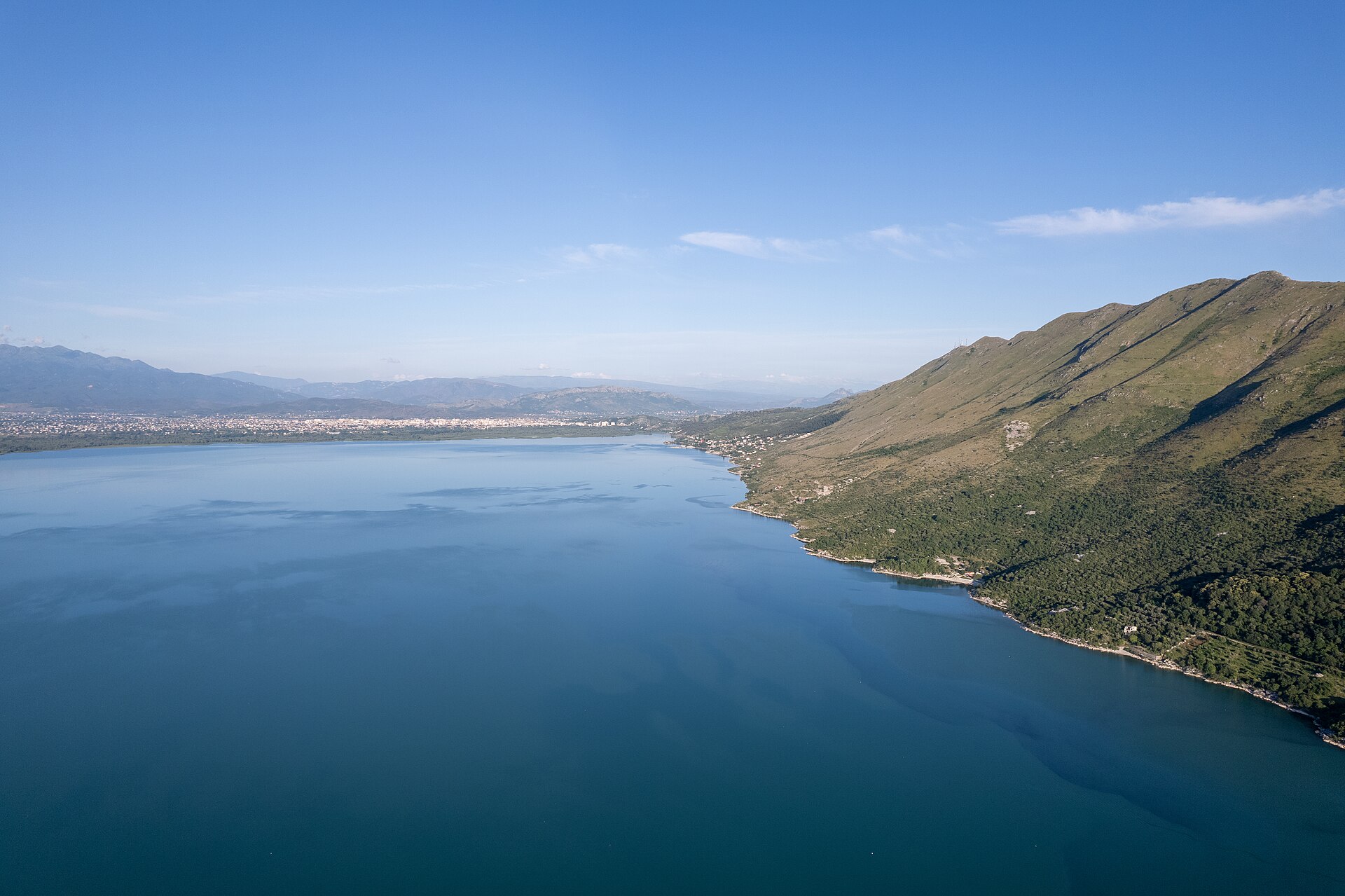
Shkodër stands between Lake Shkodër and the foothills of the Albanian Alps. Rozafa Castle overlooks the confluence of the Buna and Drin rivers, while the center is known for pedestrian streets, religious buildings and a strong tradition of photography, literature and music. The Marubi National Museum of Photography preserves an exceptional visual record of Albanian life.
The city is the practical gateway to Theth, Koman and Valbona, yet it deserves more than a transit night. Cycling beside the lake, visiting workshops and exploring the layered Catholic, Muslim and secular heritage give a clearer sense of northern Albania before the journey into the mountains.
Krujë is closely associated with Gjergj Kastrioti Skanderbeg, whose resistance to Ottoman expansion became central to Albanian national memory. The hilltop citadel contains the Skanderbeg Museum, an ethnographic museum and lanes of the old bazaar, with broad views across the coastal plain.
The heroic narrative is important, but it should be read alongside the realities of medieval politics, alliances and later nation-building. Visit early or late to avoid tour-bus crowds, and distinguish genuinely handmade textiles or metalwork from imported souvenirs.
13
🎭 Korçë — Culture, Education & Serenades
Korçë, in southeastern Albania, developed as a commercial and educational center with strong links across the Balkans. The city is associated with the first Albanian-language school, Orthodox heritage, a notable icon collection and the lyrical urban song tradition known as serenata korçare.
Its boulevards, market area and nearby villages offer a slower counterpoint to the coast. Winter can be cold at this elevation, while summer evenings are suited to cafés and cultural events. Korçë also works as a base for Prespa, Voskopoja and the landscapes of the southeast.
14
🏺 Apollonia — City on the Via Egnatia
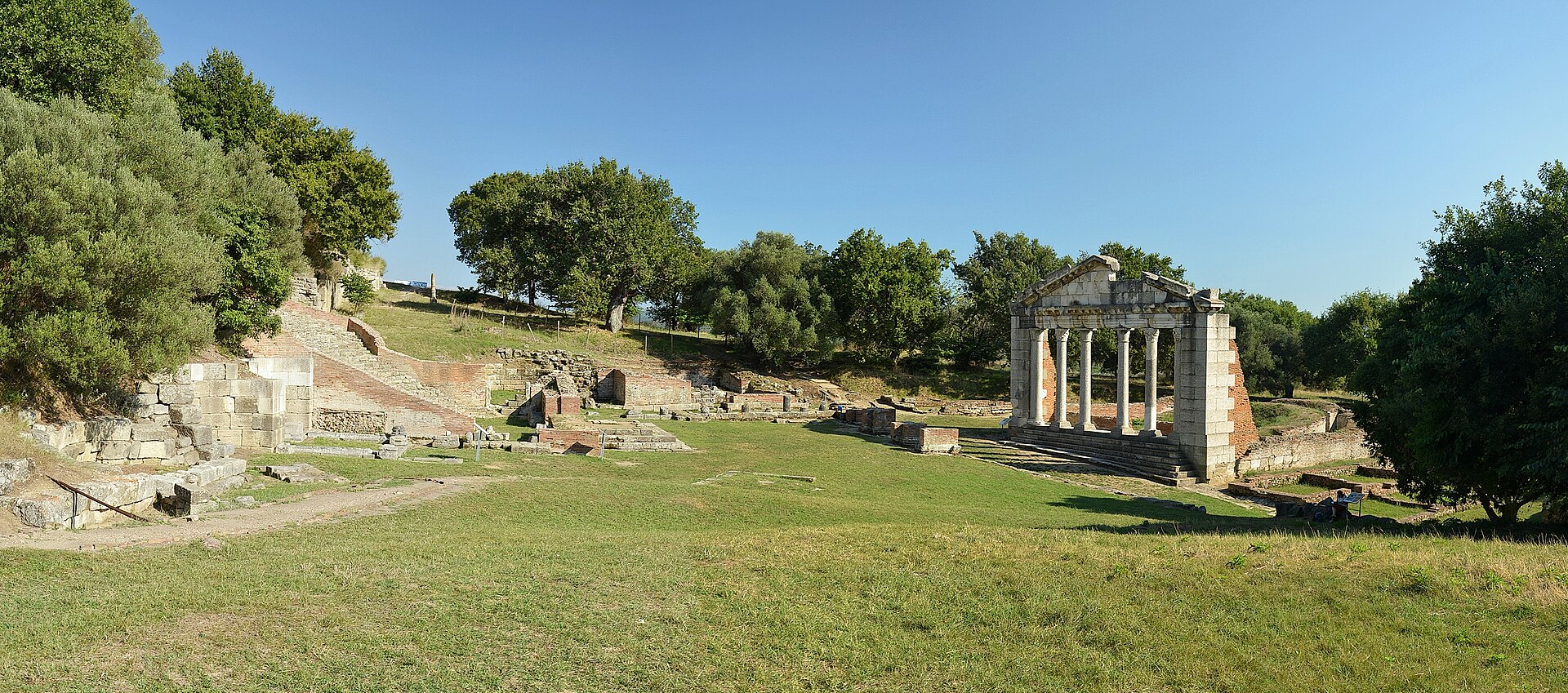
Greek settlers founded Apollonia in the sixth century BCE near the lower Vjosa. Under Roman rule it became an important center on the route toward the eastern Adriatic, and the young Octavian studied there before becoming Emperor Augustus. The archaeological park preserves monuments, a museum and the monastery of Saint Mary within a spacious landscape.
Apollonia rewards unhurried walking because its value lies in the relationship between ruins, hills and the former course of the river. Shade is limited in summer. Combine the site with Fier or the Vjosa region rather than treating it as a rushed roadside stop.
Three major lake systems shape Albania’s borders and biodiversity. Lake Ohrid is among Europe’s oldest lakes and is recognized by UNESCO for both natural and cultural values. Prespa’s wetlands and islands support birds and small communities, while Lake Shkodër forms the largest lake in southern Europe by surface area, shared with Montenegro.
These waters are living ecosystems, not merely scenic backdrops. Waste, construction, fishing pressure and changing water conditions affect them across national borders. Choose locally responsible boat operators, keep distance from nesting birds and use established swimming places where conditions are known.
16
🌿 National Parks & the Vjosa
Albania’s protected landscapes range from the high valleys of the Alps to coastal wetlands, forests and marine habitats. The Vjosa was declared a wild river national park in 2023, protecting the main river and key tributaries as a connected system rather than a sequence of isolated scenic sites.
Protection on paper does not remove pressure from tourism, hydropower, waste or construction. Use marked routes, carry out rubbish and hire local guides for remote terrain. In wetlands and mountain habitats, quiet observation is more valuable than approaching wildlife for a photograph.
17
🚌 Roads, Buses, Ferries & Rail
Most intercity travel relies on buses, minibuses and private cars. Departure points may be outside historic centers, timetables can be less formal than travelers expect, and journey times depend heavily on traffic and mountain roads. Confirm the terminal, destination and final departure locally rather than relying on an old blog post.
Ferries connect parts of the coast and the Koman reservoir, while international services cross the Adriatic. Albania’s passenger railway network is very limited and should not be treated as the backbone of an itinerary. Build generous margins into airport, ferry and mountain connections.
18
🤝 Etiquette, Hospitality & Photography
Hospitality is important in Albanian social life, but it is best approached as a relationship rather than a performance expected from every stranger. Greetings, coffee and shared food may extend a visit beyond the planned schedule. Accept with warmth, communicate dietary limits politely and offer to reciprocate when appropriate.
Ask before photographing people, religious observances, private homes or market stalls. Dress modestly at active sacred sites and memorials. Political history, migration and Kosovo can be personal subjects; listen before making assumptions, and distinguish curiosity from interrogation.
19
Tirana — the capital
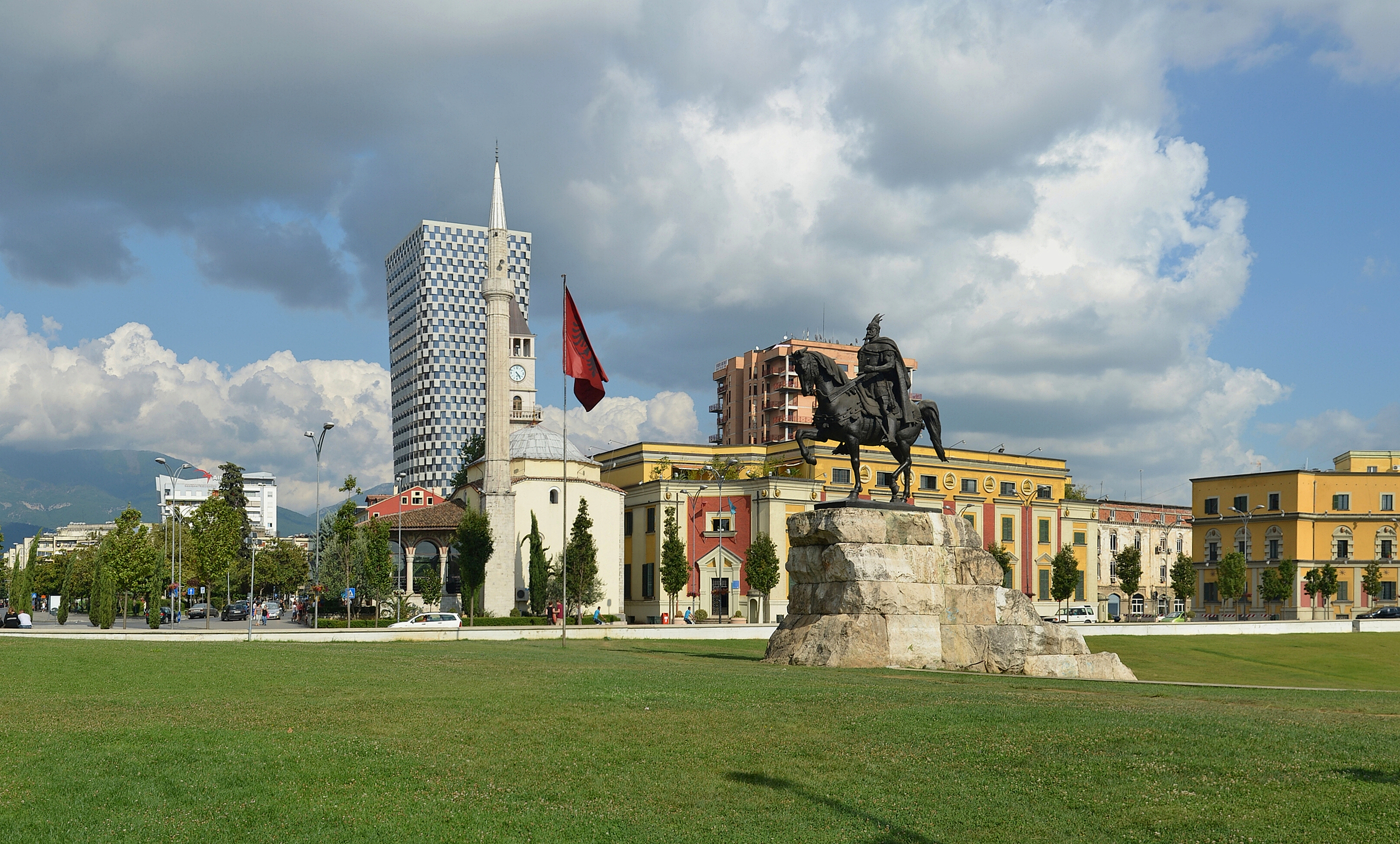
Tirana is a useful starting point for understanding contemporary Albania. Begin at Skanderbeg Square, with the equestrian monument, Et’hem Bey Mosque and Clock Tower. The surrounding city mixes civic buildings, painted apartment blocks and a rapidly changing skyline. The former elite district of Blloku is now a place for cafés, restaurants and evening walks.
Allow time for the museums of the communist period. Bunk’Art 1 occupies a large former bunker on the outskirts near Linza; Bunk’Art 2 is in the center near the Ministry of Interior. They are separate sites, not a single museum beneath Skanderbeg Square. The House of Leaves adds the history of surveillance. Check each institution’s own hours before planning a museum day.
For a gentler pause, explore the New Bazaar or walk in the Grand Park around the artificial lake. Tirana rewards time outside the traffic as much as time spent ticking off landmarks.
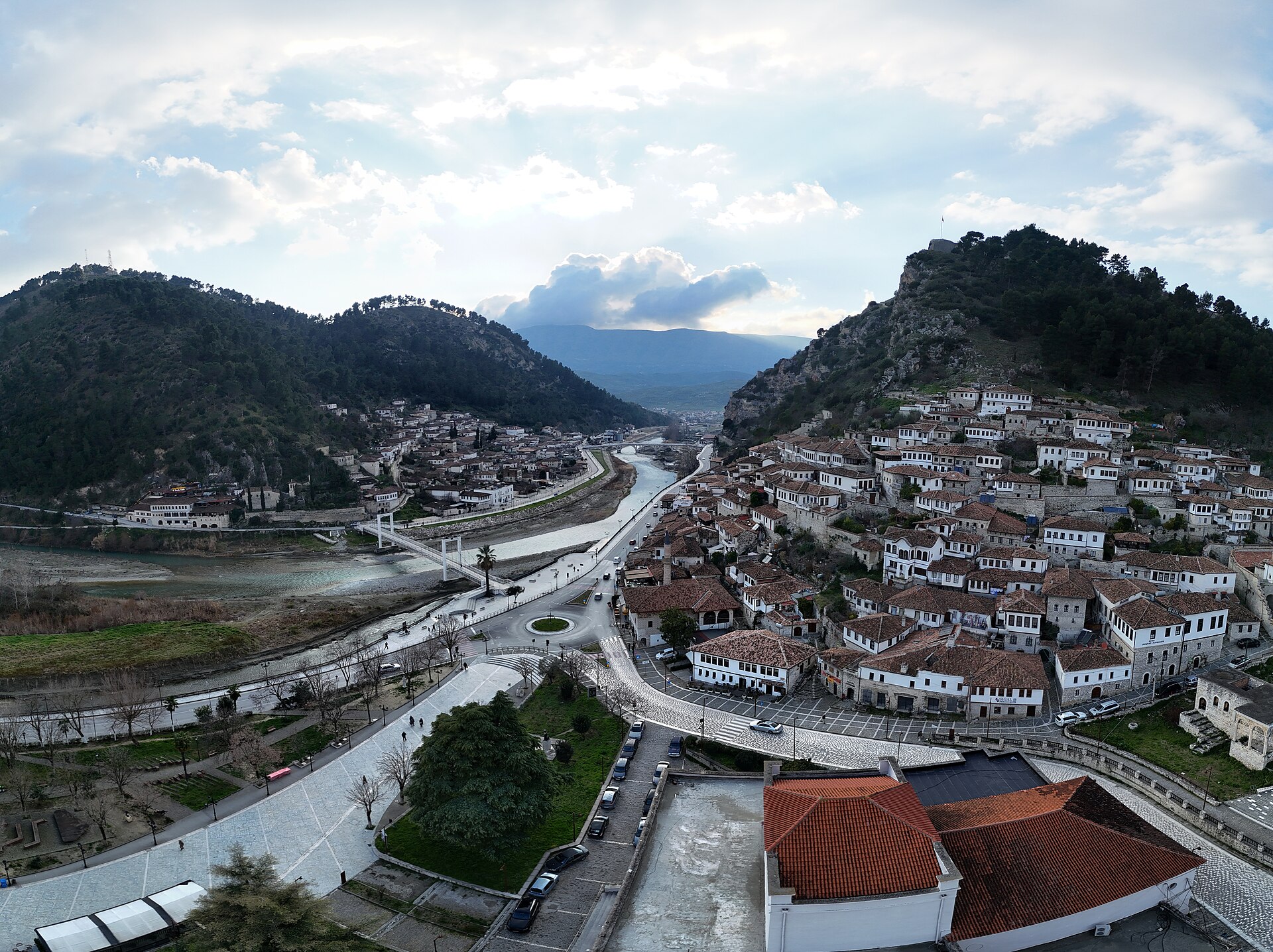
White houses climb the Mangalem hillside above the Osum River, facing Gorica on the opposite bank. Seen from across the water, their rows of windows explain Berat’s familiar nickname. The castle quarter remains a lived-in neighborhood, so explore its lanes with the same consideration you would bring to any residential street.
The Onufri Museum is a rewarding stop for icons and religious art; the Gorica Bridge and riverside paths offer a different view of the town. Berat’s churches and mosques reflect centuries of community life. Its historic center shares a UNESCO inscription with Gjirokastër, but the two towns have quite different settings and architecture. Stay long enough to see the light change instead of making only a hurried photo stop.
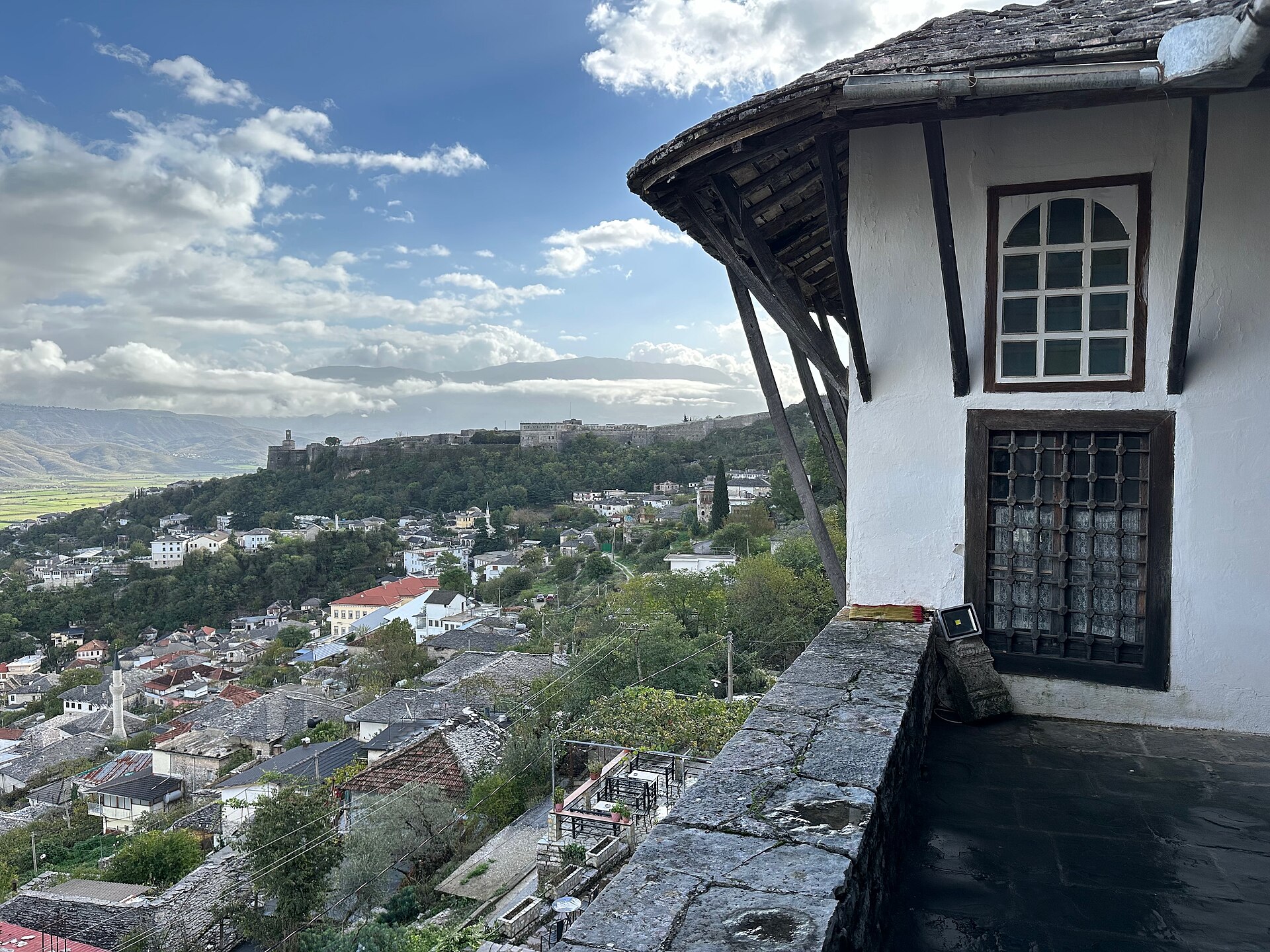
Gjirokastër rises above the Drino valley in a close weave of steep lanes, stone roofs and substantial Ottoman-era houses. The castle dominates the skyline; below it, the bazaar connects streets that often seem designed for feet rather than wheels. Wear shoes with good grip, especially after rain.
Visit a historic house such as Zekate to understand the interiors as well as the roofscape. The city was the birthplace of both Enver Hoxha and novelist Ismail Kadare; the castle was not Hoxha’s birthplace. Kadare’s Chronicle in Stone offers a literary way into the city’s wartime atmosphere. The castle’s military exhibits belong to another strand of its history. Together, homes, streets and fortress make this much more than a viewpoint.
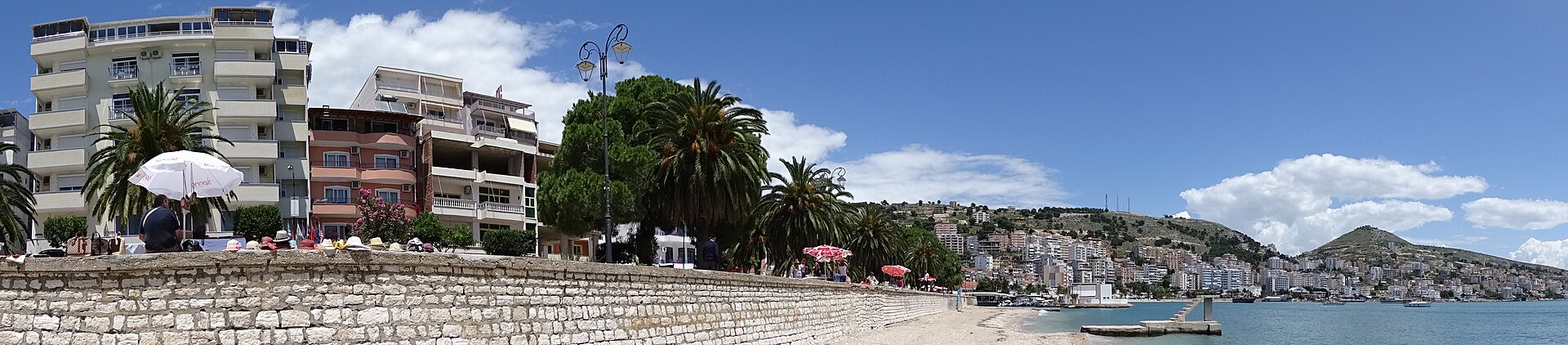
The coast south of Vlorë combines steep mountains, olive terraces and clear-water bays. Dhërmi and Himarë make useful bases; Porto Palermo adds a fortress and sheltered bay, while Sarandë connects the southern coast with Butrint and Ksamil. Village centers and beachfront developments can be very different places, so check the exact location of a booking.
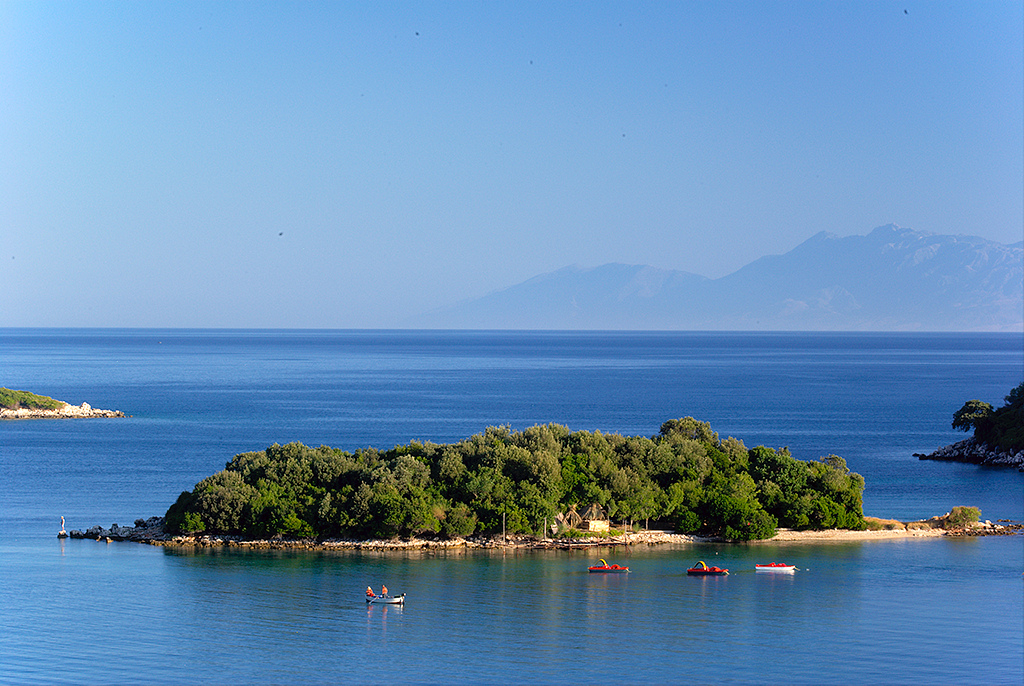
Ksamil’s small islands and shallow coves are photogenic, but peak summer also brings crowds, traffic and organized beach areas. Ask what a beach price includes and whether access is public before settling in. May, June and September can offer a gentler rhythm, although water conditions and services vary. A coastal photograph is a snapshot of one place and day, not a promise of an empty beach.
Theth and Valbona sit beneath limestone peaks in the northern range also known as the Accursed Mountains. Guesthouses, valley walks and the route over Valbona Pass have made them established hiking destinations. The villages still depend on seasonal road access, weather and local transport, so confirm transfers before committing to an itinerary.
The pass crossing is a substantial mountain day. Distance and duration depend on your starting guesthouse, direction and conditions; a guidebook estimate does not establish that a route is safe. Snow can persist well into the warmer months, and thunderstorms change plans quickly. Ask locally about the pass, carry water and layers, and avoid trying to cross with unsuitable footwear or a late start.
Lake Koman can become part of the wider journey, but boats and connecting road transfers need to be planned together. Choose a shorter valley walk when conditions make the high route inappropriate.
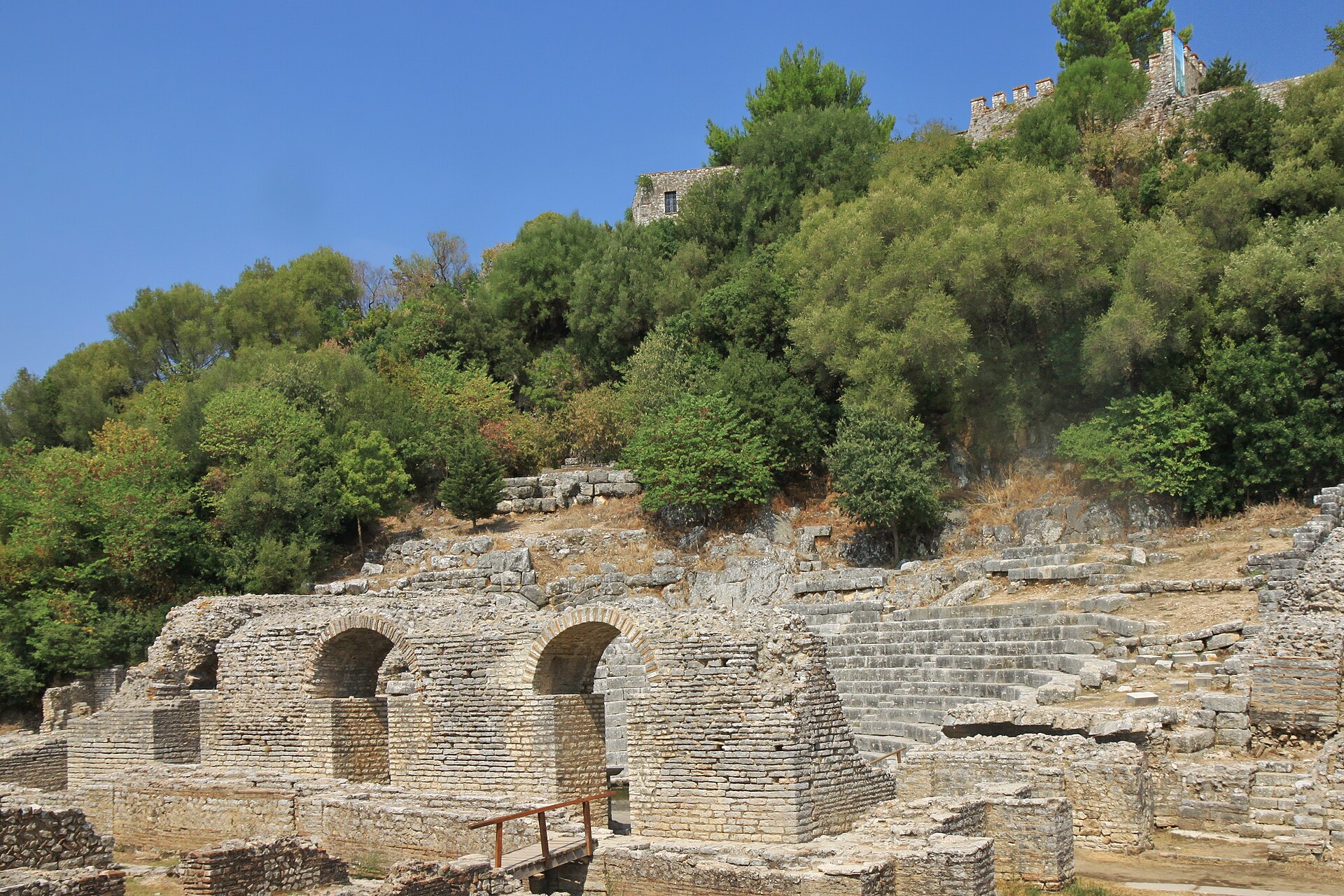
Butrint occupies a wooded peninsula beside its lagoon and the Vivari Channel. Greek, Roman, Byzantine and Venetian remains overlap within a compact archaeological landscape. The theater, baths, baptistery and fortifications reward slow exploration; some delicate remains may be covered or closed for conservation.
The appeal is the relationship between buildings, water and woodland as much as any single monument. Bring water, sun protection and shoes suitable for uneven stone. Stay on designated paths and check current entry arrangements with the park. Butrint has been on the World Heritage List since 1992; its later boundary extension and conservation history are documented by UNESCO.
Byrek from a neighborhood bakery, lamb baked with yogurt, peppers with fresh cheese and seasonal produce make a good introduction to the Albanian table. Regional and household recipes differ; restaurant menus represent only part of the food culture. Our full chapter keeps the signature dishes and three practical home recipes: tavë kosi, fërgesë and spinach byrek.
Kallmet, Shesh i Bardhë, Shesh i Zi, Pulës and Vlosh introduce a wine culture that deserves attention on its own terms. Our separate guide covers grapes, producers, rakí, brandy and café traditions, plus two house cocktail recipes. Tasting impressions vary by producer and vintage; we do not present undocumented numerical scores as verified tastings.
The coast has a Mediterranean pattern, while altitude makes the interior colder and more changeable. A warm day in Tirana does not describe conditions on a high pass. Check the forecast for the actual destination and, for mountain walks, ask about snow and trail access.
Spring: green landscapes and comfortable town visits; high routes can remain snowy. Summer: beach weather and the busiest coastal period, with strong midday heat. Autumn: harvests and quieter sightseeing, with shorter days and increasing rain. Winter: snow and possible access restrictions in the mountains; coastal towns have a different, quieter rhythm.
May–June and September–October are useful starting points for planning a mixed cultural trip. They do not guarantee that every mountain route, boat or seasonal hotel is operating.
By air: Tirana International Airport (TIA) is the main international gateway. Use its live flight information and the airline’s own booking page to confirm routes, baggage and the full price. Do not build an itinerary around a proposed airport or an announced route that is not actually bookable.
By sea: Durrës connects with Italian ports; Sarandë connects with Corfu. Crossing times vary by vessel and weather, and seasonal timetables matter. A trip through Greece also means meeting Greek and Schengen entry rules, even when Albania has different stay allowances.
By land: crossings connect Albania with its four neighbors. Check the chosen border’s hours, vehicle insurance, rental-car permissions and onward bus arrangements. Leave a buffer for traffic and border formalities rather than planning a tight same-day flight connection.
Entry: rules depend on citizenship and purpose. U.S. citizens can visit visa-free for up to one year; work, study or a longer stay requires the appropriate permission. The U.S. guidance requires a passport valid at least three months after planned departure. Czech citizens can use a passport or national ID, valid three months beyond departure, for visa-free short visits of up to 90 days in 180. Albania is outside Schengen.
Money: the currency is the lek (ALL). Check the Bank of Albania’s dated exchange rate and your provider’s fees. Carry some cash for small businesses; do not assume that an advertised euro price means euro cash is always accepted.
Health and safety: the U.S. advisory dated August 26, 2026 is Level 2, citing crime. Take ordinary theft precautions and allow for limited assistance in remote places. Check travel health guidance, use drinking water you can establish is safe, and arrange insurance covering your intended activities. The general emergency number is 112.
Transport and connection: buses and furgons are useful, but verify the departure point and last service. Mobile coverage can disappear in mountains. Check roaming charges before arrival. Electricity is 230 V / 50 Hz, generally using C/F plugs.
Budget by destination, season and travel style. A mountain guesthouse, a Tirana apartment and a beachfront room in August are different markets. Old dollar price tables give false precision when exchange rates, dates and room types are unspecified.
Start with three actual accommodation quotes for your dates. Add intercity transfers or the full rental-car cost, meals, admission fees and a reserve for changed plans. Confirm whether breakfast, parking, beach equipment and local charges are included. Keep small cash payments in your budget as well as card spending. For a longer stay, the housing chapter lists the questions that matter before signing a lease.
Family guesthouses, hostels, restored historic homes, city hotels and coastal resorts all have a place in an Albanian itinerary. Choose Tirana for urban visits and connections, Berat or Gjirokastër for historic atmosphere, the Riviera for the sea, and Theth or Valbona for a mountain base.
Read recent reviews for access, noise, hot water, heating or air conditioning and the exact room offered. Historic houses may involve steep steps; a “sea view” need not mean easy beach access. Ask mountain hosts about dinner, packed lunches and transfers. Book earlier for peak summer and confirmed festivals, and read cancellation terms before paying.
32
Festivals & events
November 28 marks Independence Day. Dita e Verës on March 14 celebrates the arrival of spring and has a strong association with Elbasan. Both are useful cultural reference points, but local programs change each year.
Gjirokastër’s folk festival brings traditional music and dance into the castle setting. The coast hosts music festivals including Kala; Korçë is known for beer festivities and carnival traditions. Confirm dates, venues and tickets with the organizer rather than inferring the next edition from an old five-year cycle or last year’s calendar. For traditional performances, ask whether a public event is actually scheduled instead of expecting one on demand.
Albania participates in four World Heritage properties: Butrint; the Historic Centres of Berat and Gjirokastra; the transnational beech forests; and the Natural and Cultural Heritage of the Ohrid region. Berat and Gjirokastër count as one shared inscription, not two separate entries. Living traditions belong to a different UNESCO convention.
Osum Canyon: a landscape south of Berat best approached with current advice on access and river conditions. Bënja: hot springs and a stone bridge near Përmet; keep the riverbanks clean. Apollonia: archaeological remains near Fier, useful for a quieter history stop. Voskopojë: a village with an important religious and artistic legacy, where opening arrangements for churches need checking.
Lake Koman: plan boats and road transfers together. Përmet and the Vjosa valley: river scenery, local food and preserved-fruit gliko reward a slower stay. Activities on the river require an appropriate operator and suitable water conditions. These places are alternatives to a crowded coast, not a checklist that needs to be completed in one day.
Pack light layers for the coast and warm, weatherproof layers for the mountains. Sturdy shoes matter on stone streets as well as hiking paths. Bring modest clothing for religious sites, sun protection, a reusable bottle and any medication you depend on. Water shoes can help on pebble beaches.
Carry a small reserve of cash, an appropriate plug adapter and offline maps. For hikes, add water, food, a charged phone and a route shared with someone who knows your plans. A beach packing list does not equip you for a high mountain pass.
36
Useful resources
Use the national tourism agency for destination information, the airport and transport operators for schedules, UNESCO for inscription details, and your own foreign ministry for entry guidance. The Bank of Albania publishes dated exchange rates. Keep a downloaded map for navigation and confirm bus details with the operator or your accommodation.
Official tourism · Bus search · OpenStreetMap. Digital services help plan a trip; they do not replace local confirmation of a seasonal road, boat or mountain trail.
Ismail Kadare — Chronicle in Stone: fiction rooted in a child’s experience of wartime Gjirokastër. Broken April, also by Kadare, explores the world of blood feuds and customary law through a novel; it should not be read as a description of every present-day Albanian community.
Edith Durham — High Albania (1909): an influential historical travel account of the north, best read with awareness of its period and perspective. Miranda Vickers — The Albanians: A Modern History: historical context for the country and wider Albanian world. Robert Carver — The Accursed Mountains: a traveler’s account of a particular time and journey. These are different kinds of books, not interchangeable substitutes for current practical information.
38
Videos about Albania
Four existing films remain available through their original YouTube links, now with the correct titles and channels. They include historical narration, a twelve-place travel guide, Eliza Dushku’s journey and a landscape film. They are third-party productions, with their own perspectives; footage and practical details can predate this guide.
Tourism, services, manufacturing, agriculture and energy all contribute to Albania’s economy. The separate business chapter covers company registration, the ALSE exchange, regional technology firms and the practical checks needed before committing money. EU accession is an ongoing process, not a guarantee that every rule already matches an EU member state.
Bunkers: the concrete structures scattered across Albania are a material legacy of communist defense policy. Besa: wartime accounts of Albanians sheltering Jews are an important part of the country’s history of hospitality and rescue. Language: Albanian is a separate Indo-European branch, not an isolate.
Cars: older Mercedes vehicles are a familiar part of travel writing about Albania; an unsupported “more per person than Germany” claim is not a reliable statistic. Mother Teresa: born in Skopje to an Albanian family, her life belongs to a wider geography than today’s borders. Religion: the 1967 anti-religious campaign and the 1976 constitution are distinct historical milestones, not the same event.
41
Notable people
Gjergj Kastrioti Skanderbeg (1405–1468) is central to the country’s historical memory. Mother Teresa (1910–1997), born Anjezë Gonxhe Bojaxhiu in Skopje, received the Nobel Peace Prize. Ismail Kadare (1936–2024) brought Albanian settings and historical questions to readers around the world.
The wider Albanian diaspora also includes Rita Ora, born in Pristina and raised in Britain; Dua Lipa, born in London to a Kosovo Albanian family; and Bebe Rexha, an American singer-songwriter of Albanian heritage. Their different birthplaces and citizenships show why cultural heritage should not be confused with birthplace in the Republic of Albania.
42
Sports & outdoor life
Football is a major part of Albanian sporting life. The national team’s appearances at Euro 2016 and Euro 2024 are significant milestones, while clubs such as KF Tirana and Partizani have long local followings. For a match, use the federation or club’s current fixture and ticket information rather than old travel listings.
Wrestling and weightlifting are also important sporting traditions. For visitors, mountain walking, cycling, kayaking and rafting connect sport with the landscape. Choose activities to suit your experience and local conditions; the popularity of a route does not establish that it is suitable on the day you arrive.
43
Media & press freedom
Albania has public and private broadcasters and a large online media scene. RTSH, Top Channel and TV Klan are among the familiar names. English-language coverage is more limited, so compare sources and publication dates when following local developments.
Reporters Without Borders places Albania 83rd of 180 in its 2026 World Press Freedom Index, compared with 80th in 2025. RSF identifies political and business influence and intimidation of journalists as concerns. That assessment describes conditions for journalism; it should not be used as a numerical measure of tourist safety.
Explore eleven views of the country. Each photograph names its place, photographer and license. Open an image for the full frame and source credit; use the arrow keys to continue through the gallery.
Some countries announce themselves immediately. Albania reveals itself gradually: through mountains larger than expected, conversations longer than planned, and towns where several historical chapters remain visible in the same street.
What stays is not a single landmark, but the relationship between these places and the people who live in them. Leave room to listen, linger and change a plan. A guide can help you find a route; the journey still belongs to you.
— Radim Kaufmann
Keep exploring
Read another chapter, support the factbook or get the monthly English newsletter.